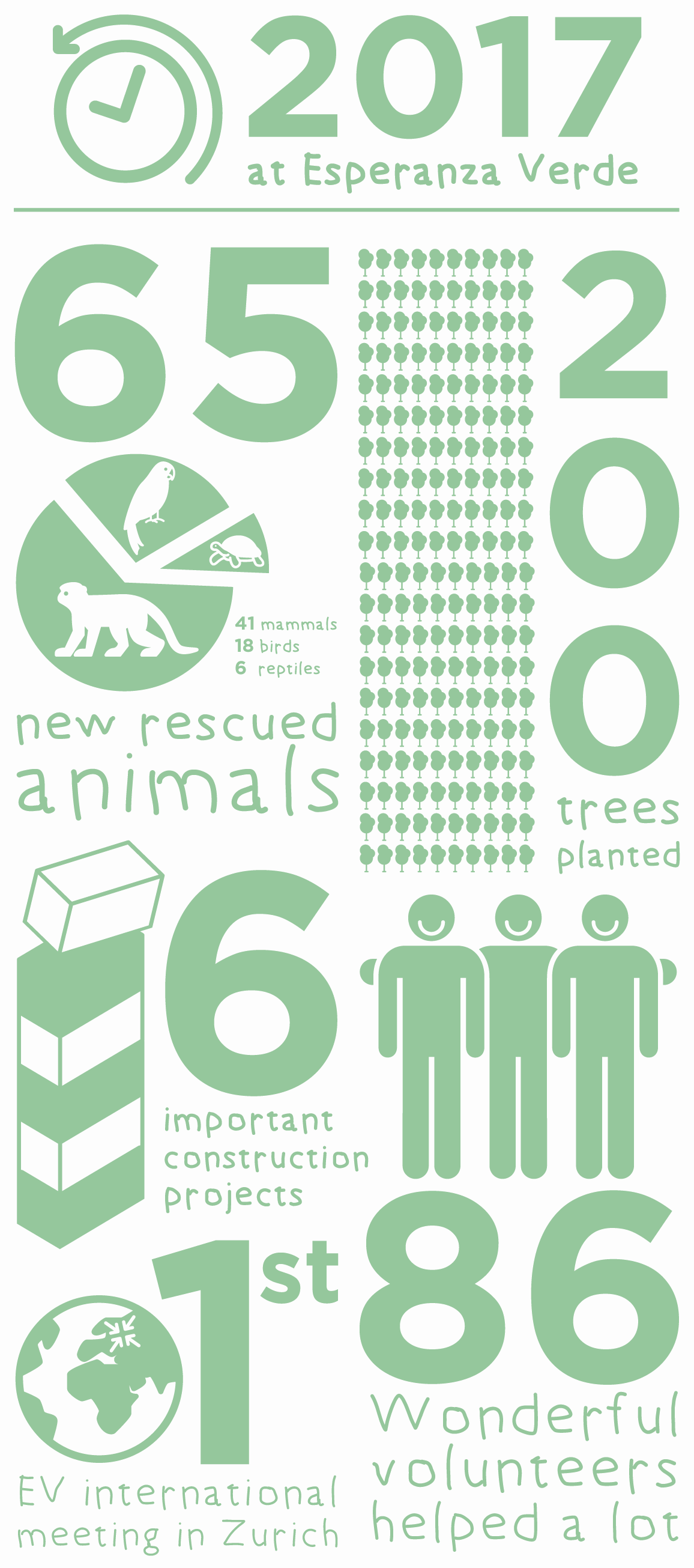
Esperanza Verde Update / December 2017

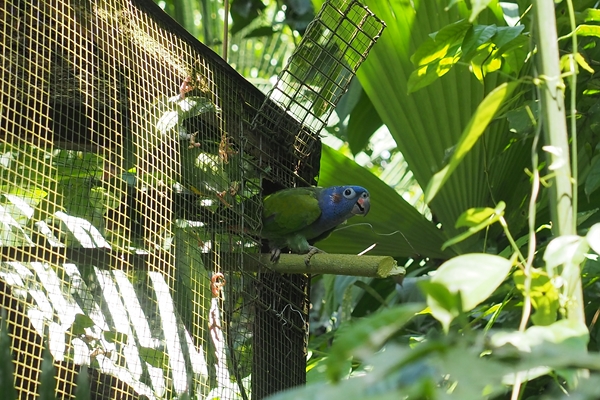
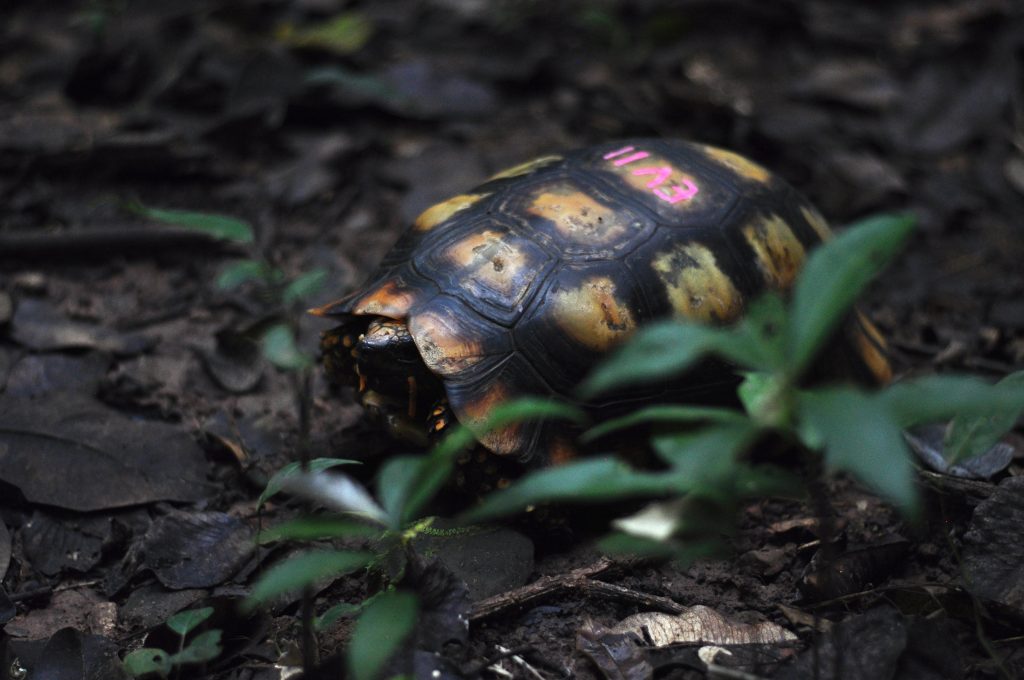
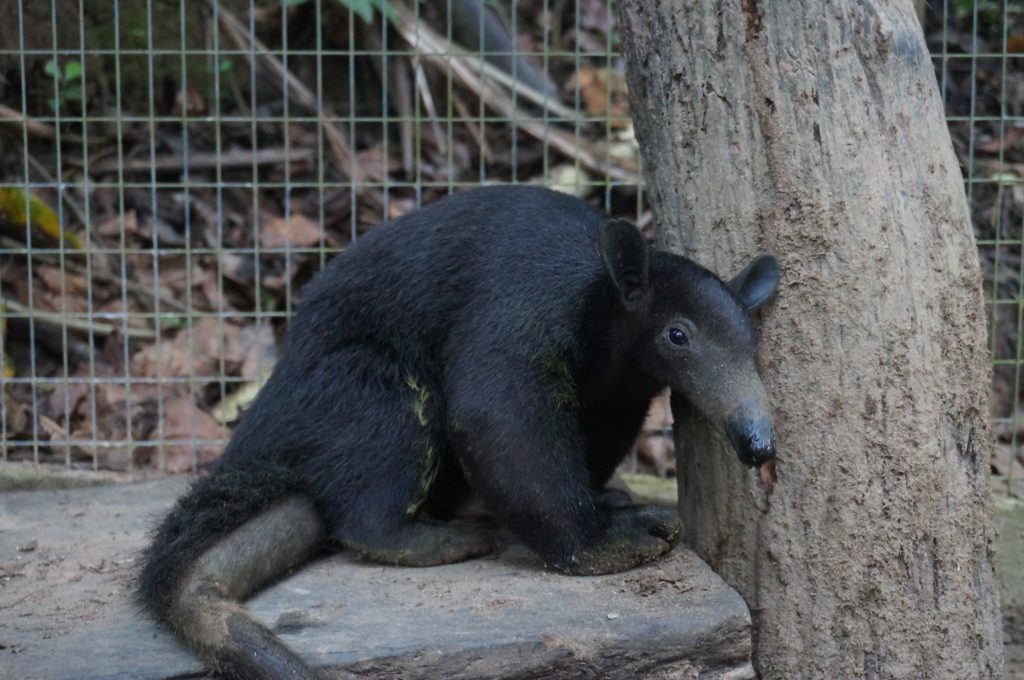
December! Grab your poncho, the rain has arrived! The Ministry of Pucallpa visited for a few days this month; they completed relevant documents and government checks. During their stay they also witnessed the release of several animals, including a very young yellow spotted tortoise, three spider monkeys; Cumala, Camu and Yanay and lastly some white winged parakeets, a blue headed parrot and a palm tanager.
The wet season has arrived and the mosquito population has definitely increased. However to our delight, the amount of monkeys seen with botflies has decreased. Although we are always constantly monitoring the monkeys for them and we are ready to remove any that are discovered. All the monkeys at Esperanza Verde have received deparasitation medication and it seems to be having a positive effect.

.

 Monkeys

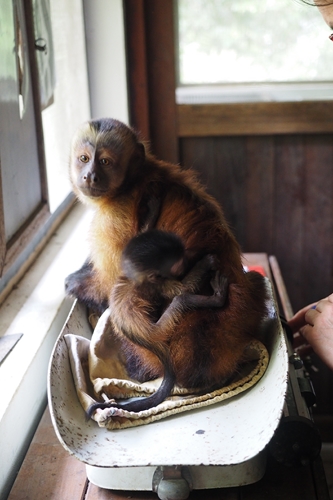
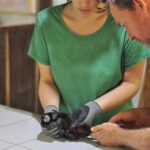
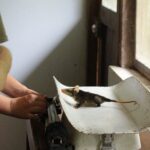
Mika and newborn being weighed

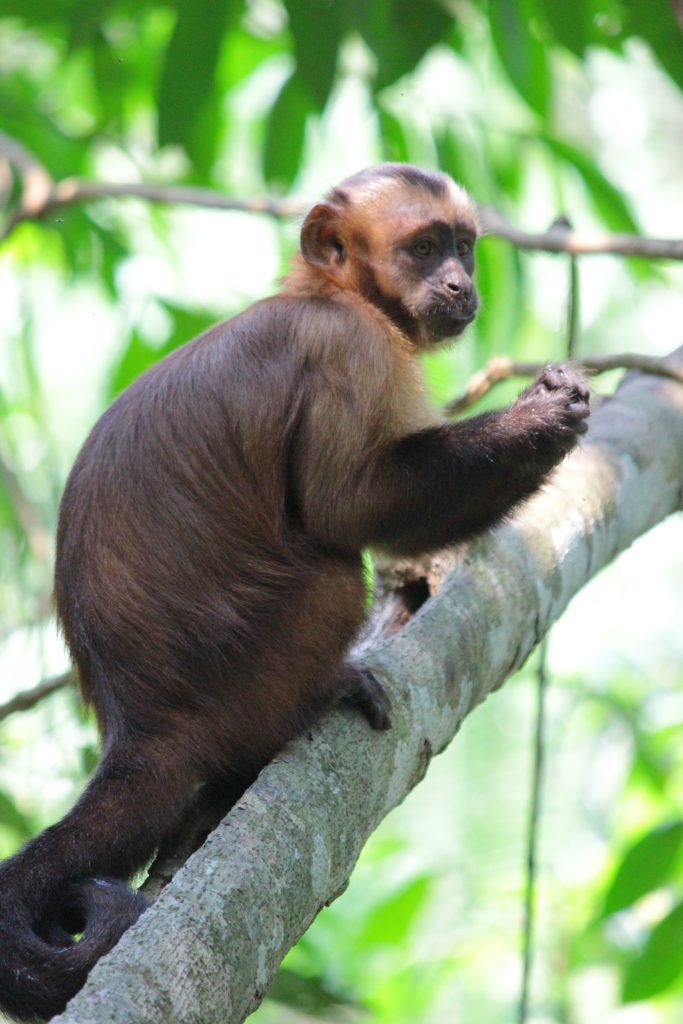
We had some amazing news to report this month – the birth of the first brown capuchin monkey at EV!
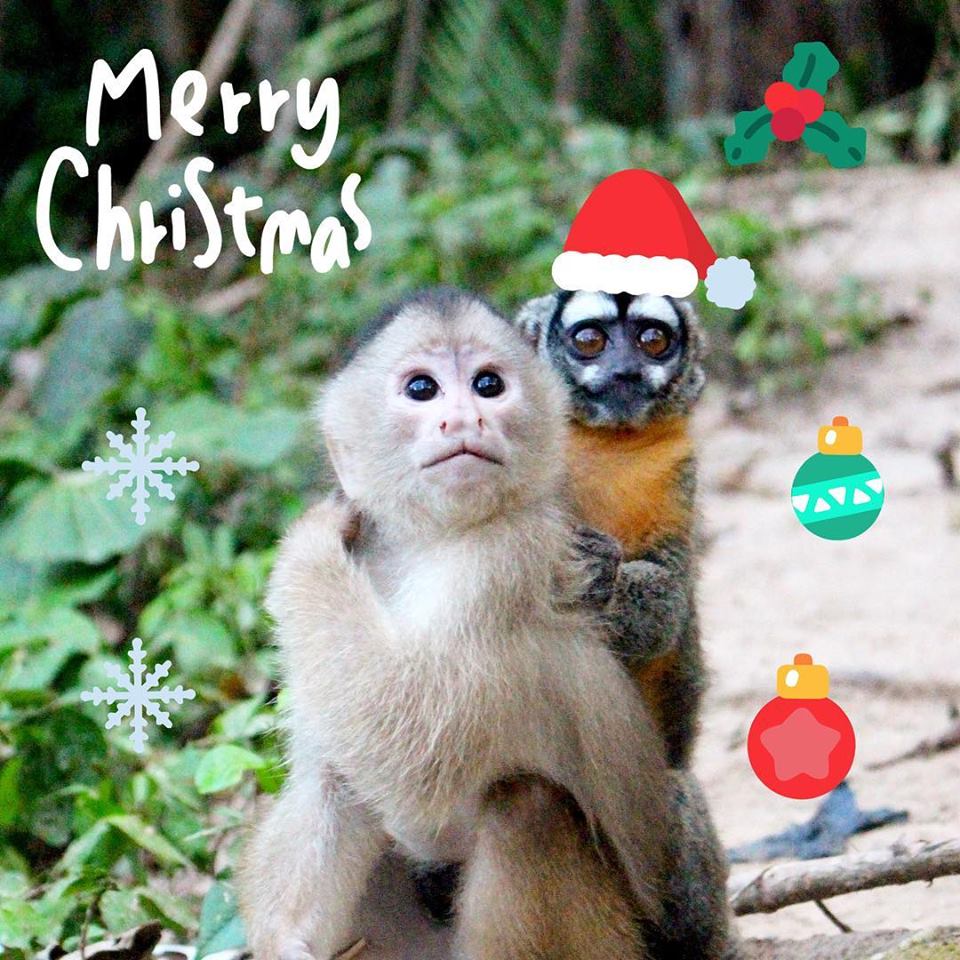
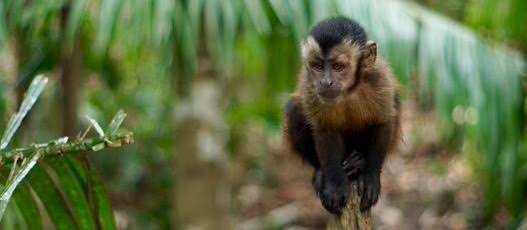
Mica, the 7 year old female brown capuchin who we raised here but is now released, gave birth to a healthy female baby, just two days before Christmas. She seemed very tired on the day, and since she has been given a bit of special treatment, to make sure that she eats enough.
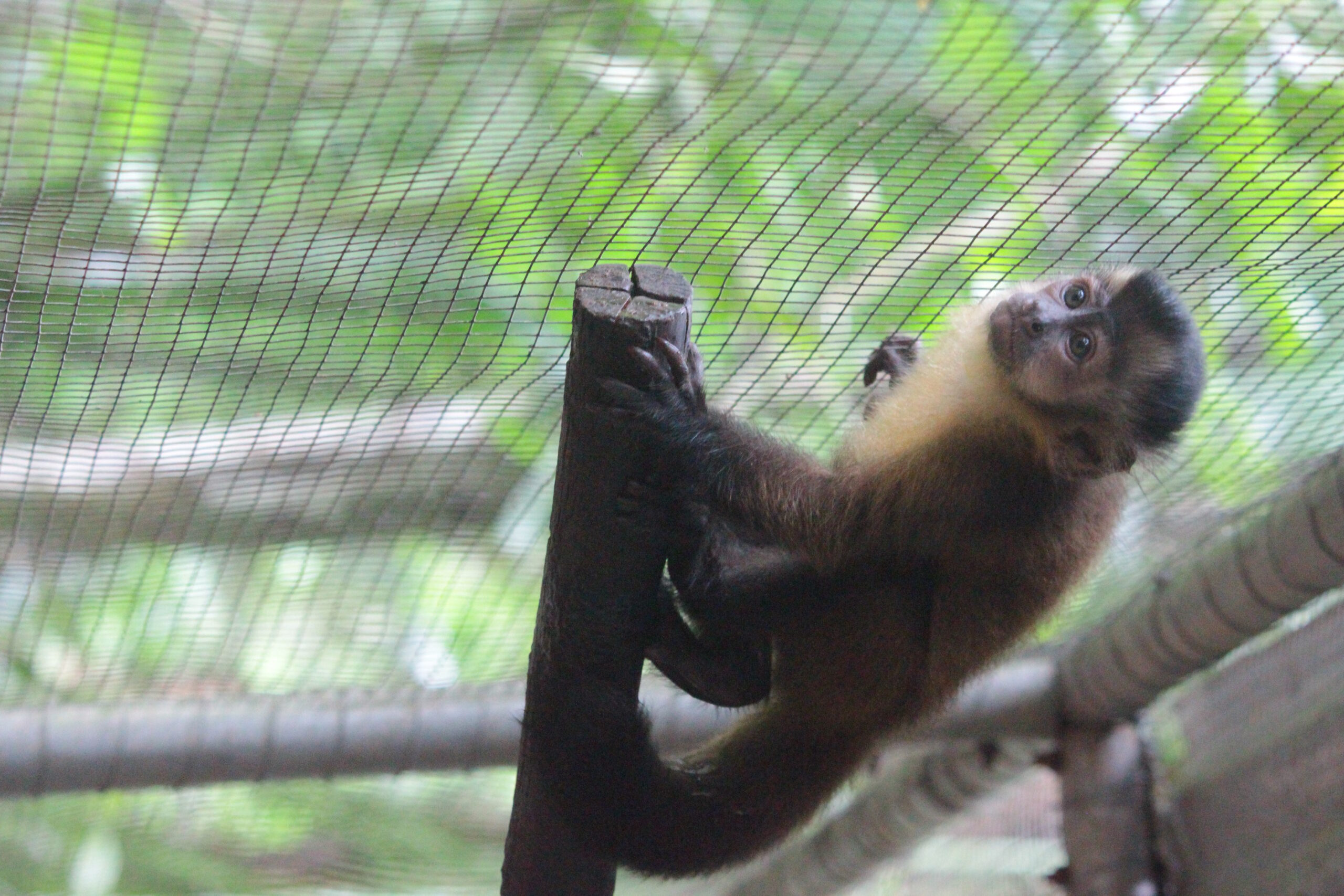
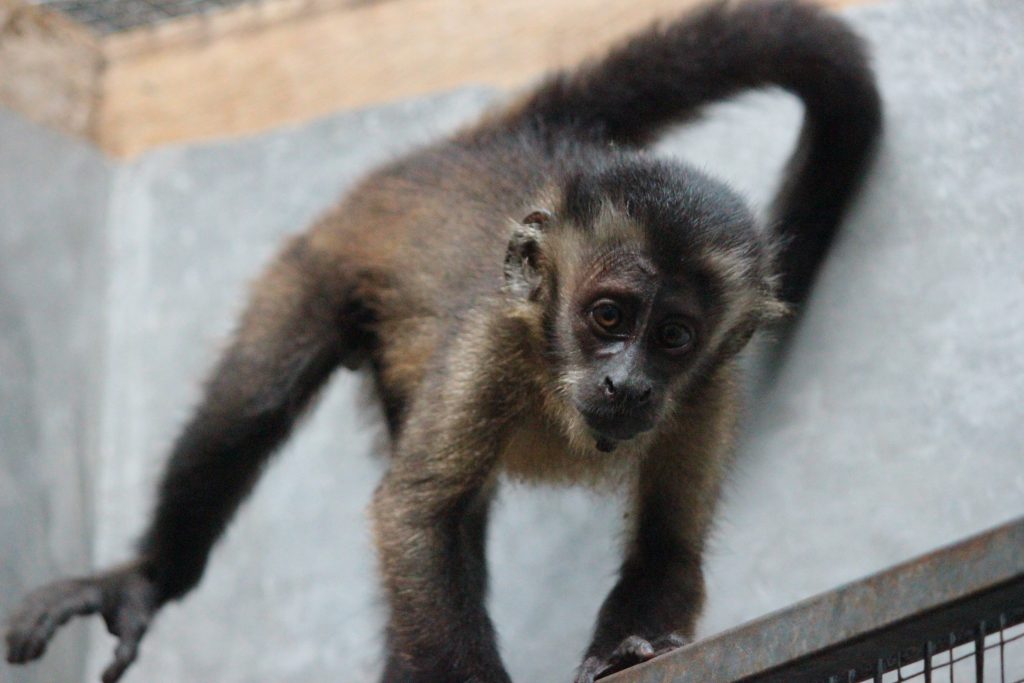
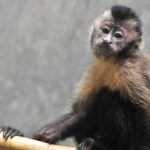
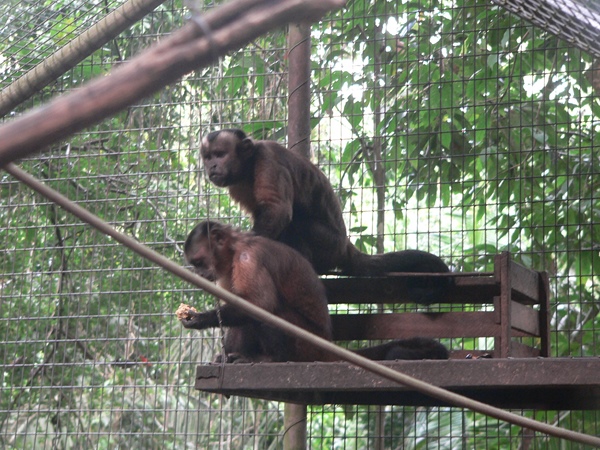
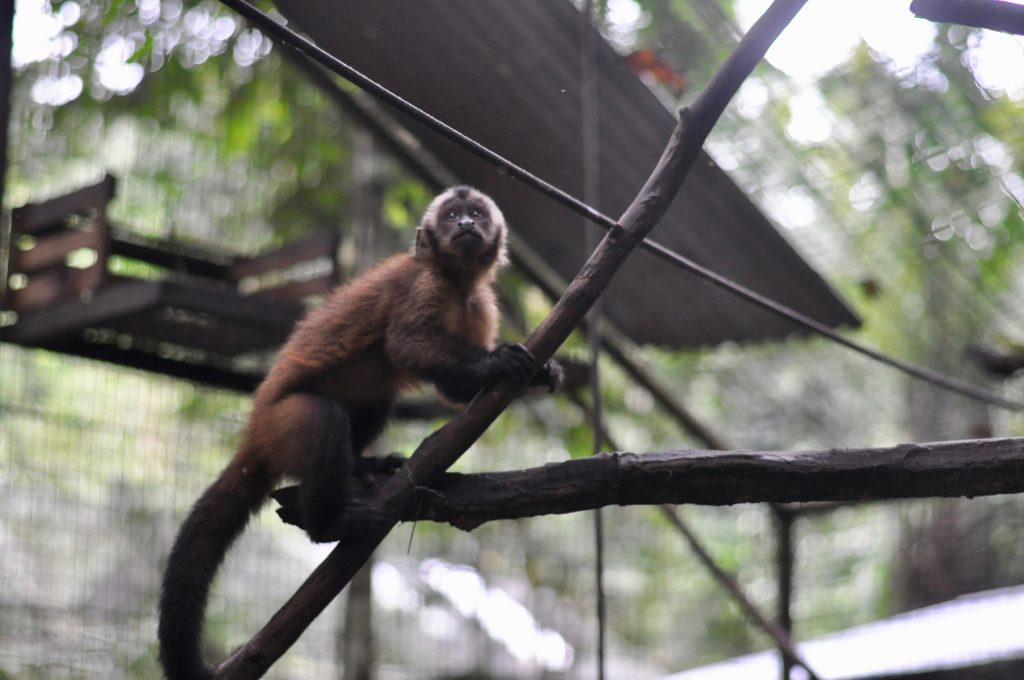
Kurima and Capu (female and male brown capuchin) have been released from Pepe cage and are fitting in well with the other capuchins; they are still receiving milk twice a day and now eat from the monkey tables.

Wallace

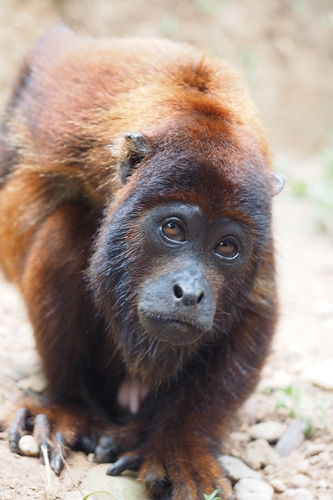
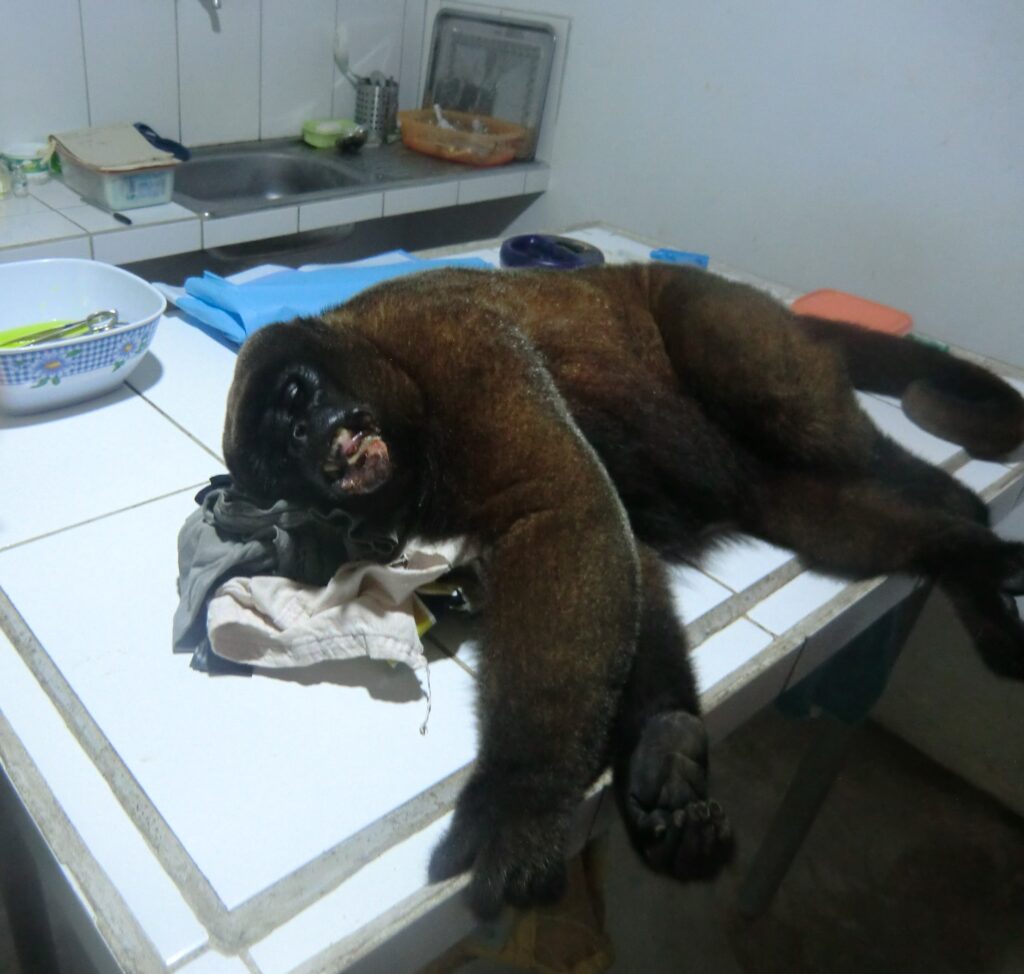
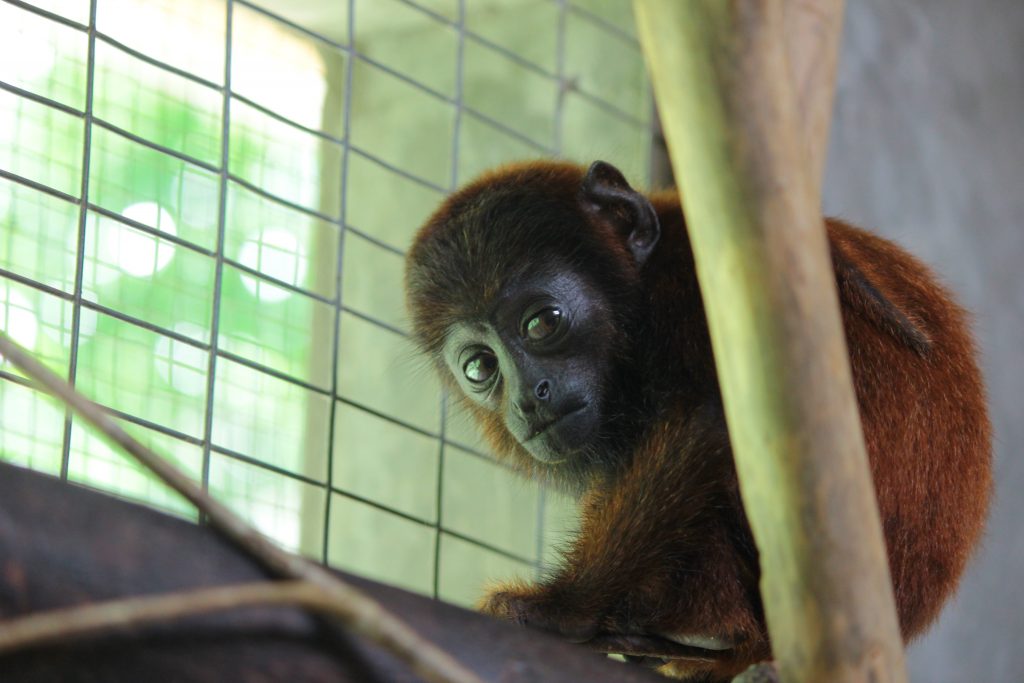
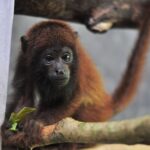
Wallace (male howler monkey) has started to show an improvement in his behavior and morale, after dealing with an injury to his arm. His arm is still not in perfect condition and we speculate one of the bones has been fractured. However he has been seen climbing while using both arms which he wasn’t doing before. Additionally he has also been playing with the other monkey´s which suggests he is not as uncomfortable anymore. He has integrated more deeply into the monkey society and he is taking the first steps towards becoming an independent monkey.
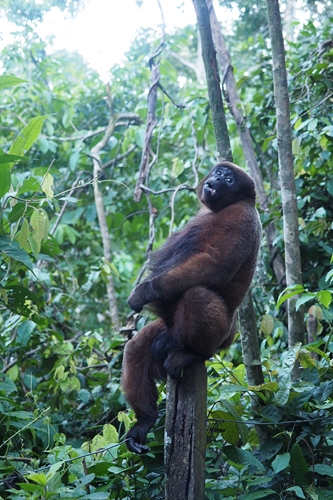
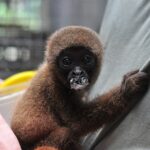
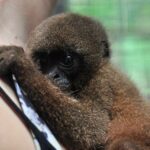
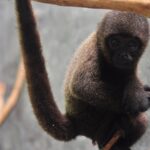
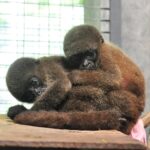
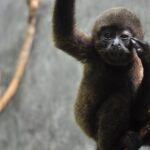
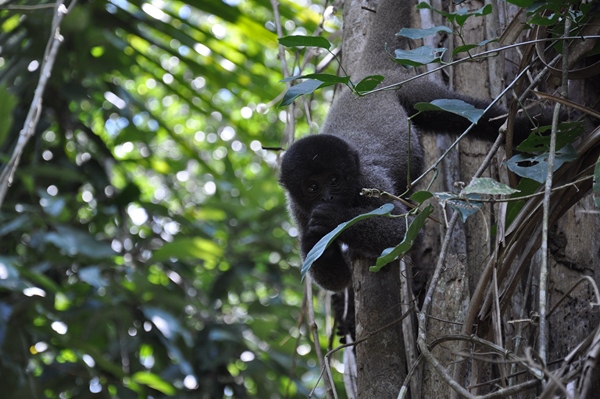
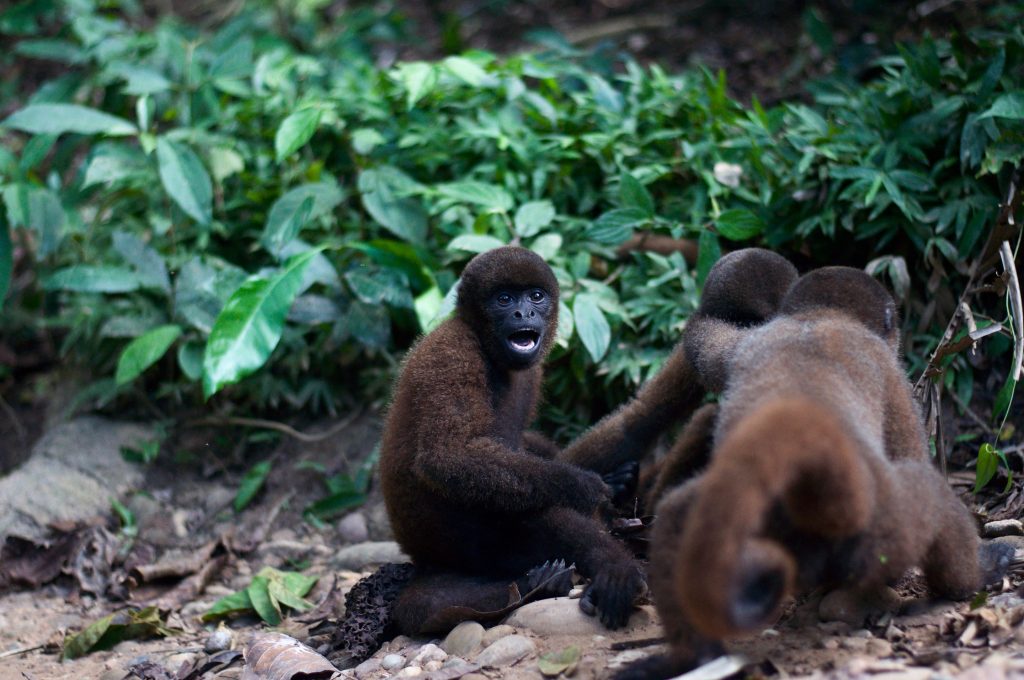
Tawaki and Naka (male and female woolly monkey) remained in Pepe cage after Kurima and Capu´s release. Tawaki seemed to be trying to make contact with the volunteers. To help discourage this behavior, we put Loki (male woolly monkey) into the enclosure with them.
We then witnessed a strong bond develop between Loki and Tawaki. With this positive progress, we decided to release the three monkeys. Kamari has been seen taking Tawkaki up into the trees during the day, however not unfortunately to sleep at night. Likewise Naka seems happy to play during the day, however no monkey has invited him to sleep with the group either, so we decided it’s safer to put them into the cage at night for now.

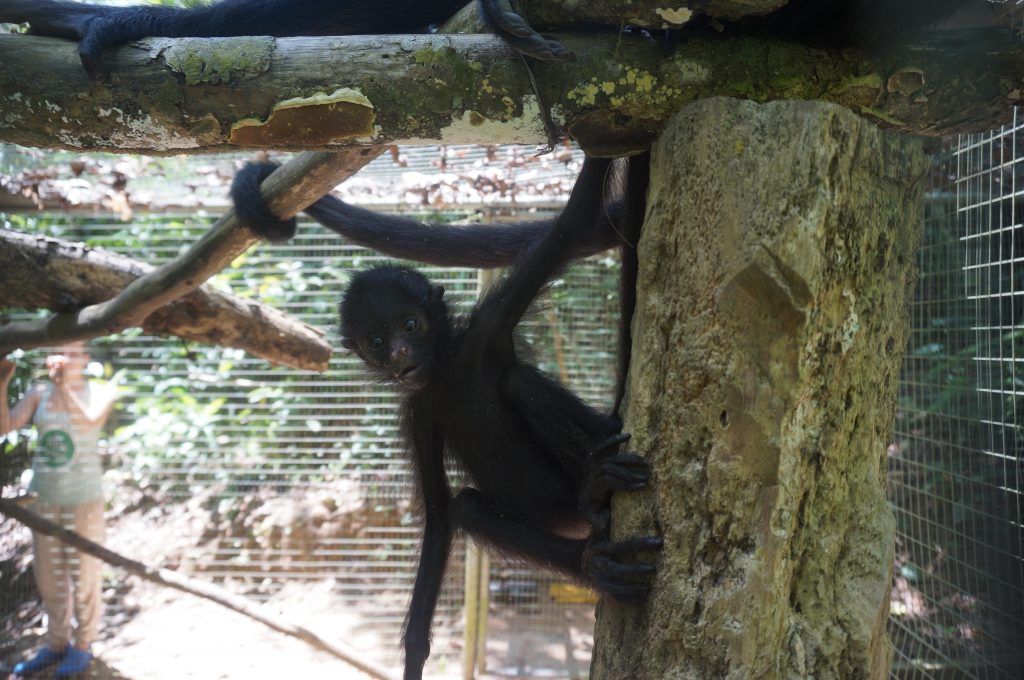
Cumala and Camu

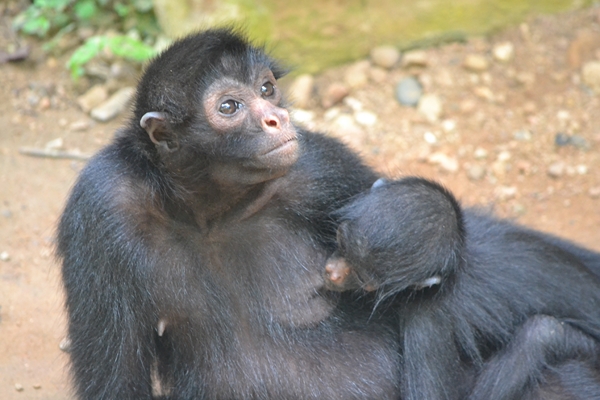
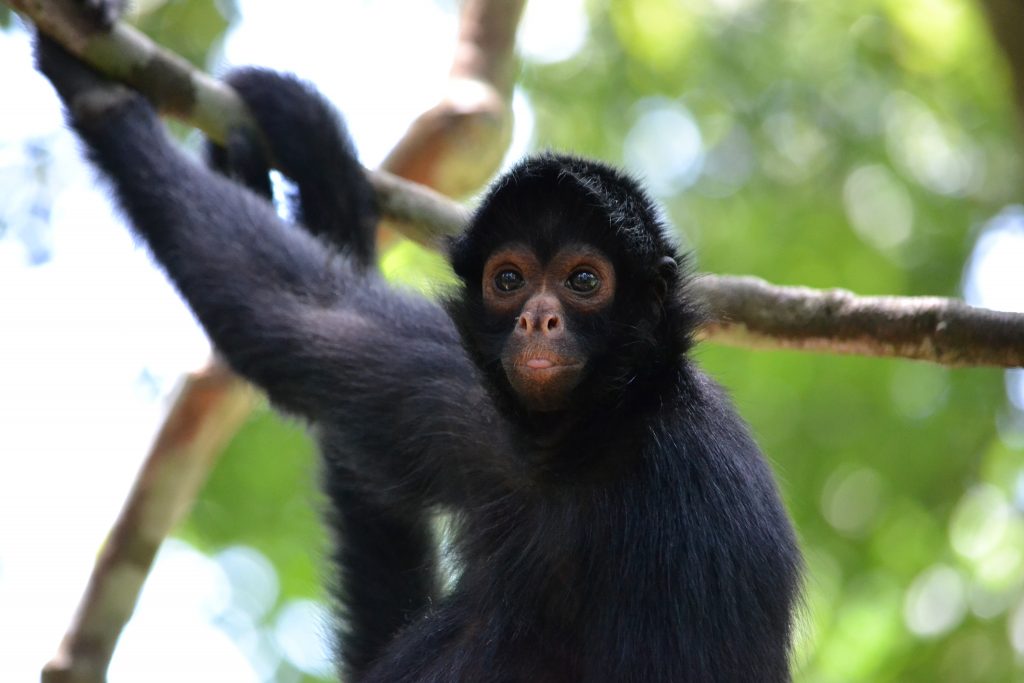
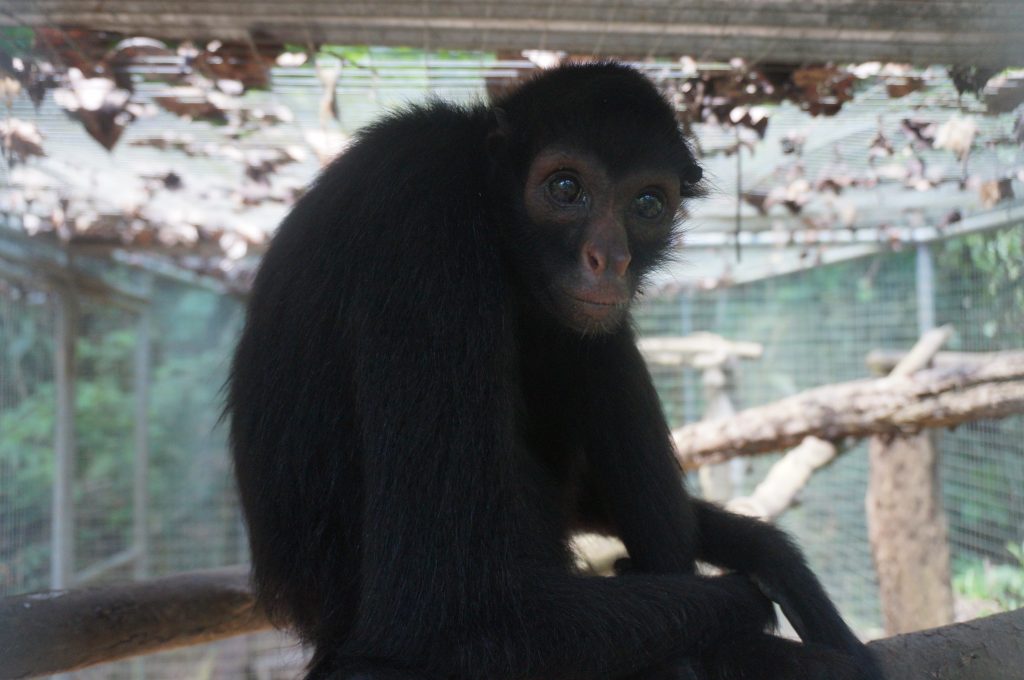
Cumala, Camu and Yanay (female, young male, and female Spider Monkey) were all released from La Sapa cage, with the ministry present. All three are slowly finding their feet outside of the cage. Cumala and Camu are very close and we are almost certain that they are related now. They have all been seen climbing to the monkey tables to feed which is promising. After a week of being out of the cage they have been seen playing and interacting with the other monkey species which is great. Updates to follow!

.

 Other mammals

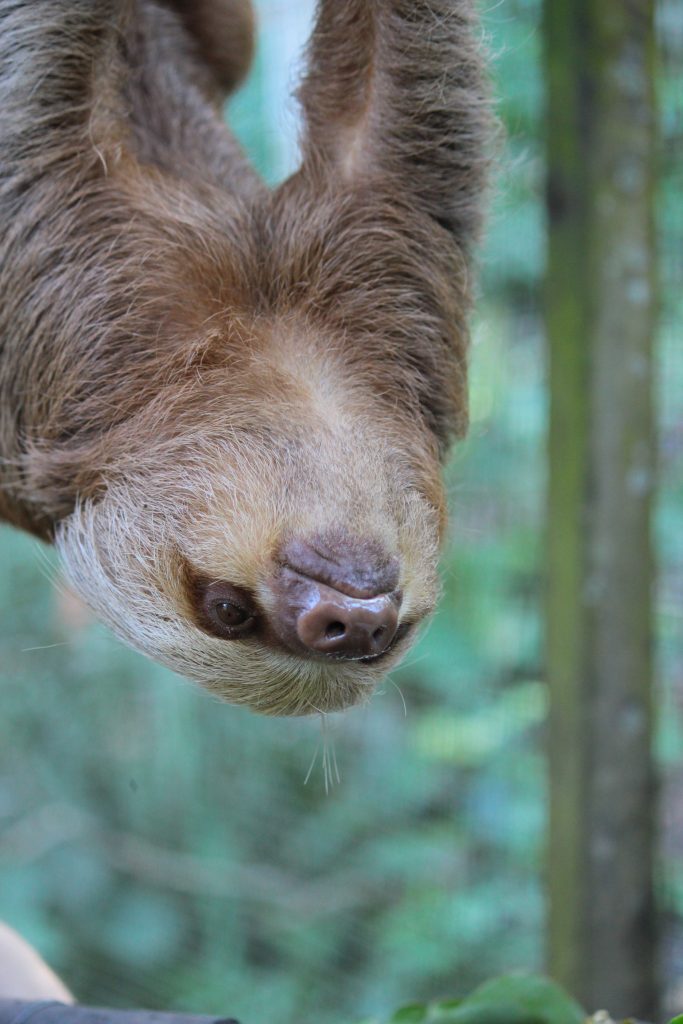
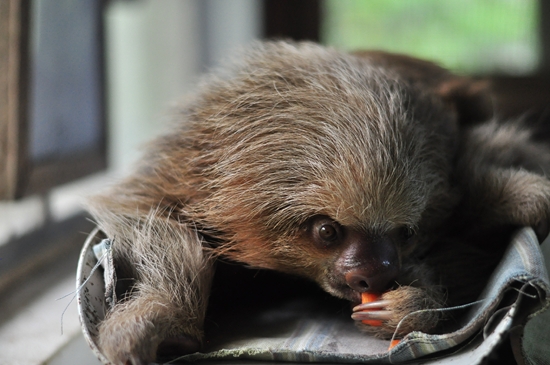
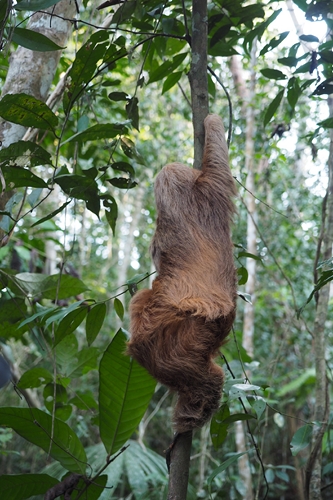
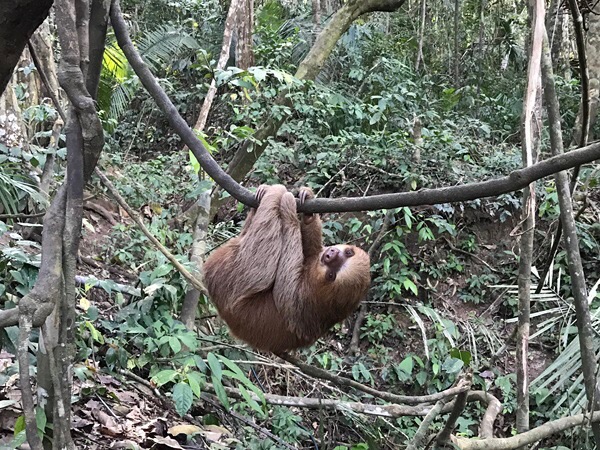
After her weight having fluctuated in the past few weeks, Lulu (female two toed sloth) had finally put on weight and it was decided she was in a healthy condition to be released again. She has been provided with a bed and foods every night as a precautionary measure. It is lucky we did this because she was spotted about 3 weeks after her release; eating from the food table and she has put on weight yet again!

.

 Birds

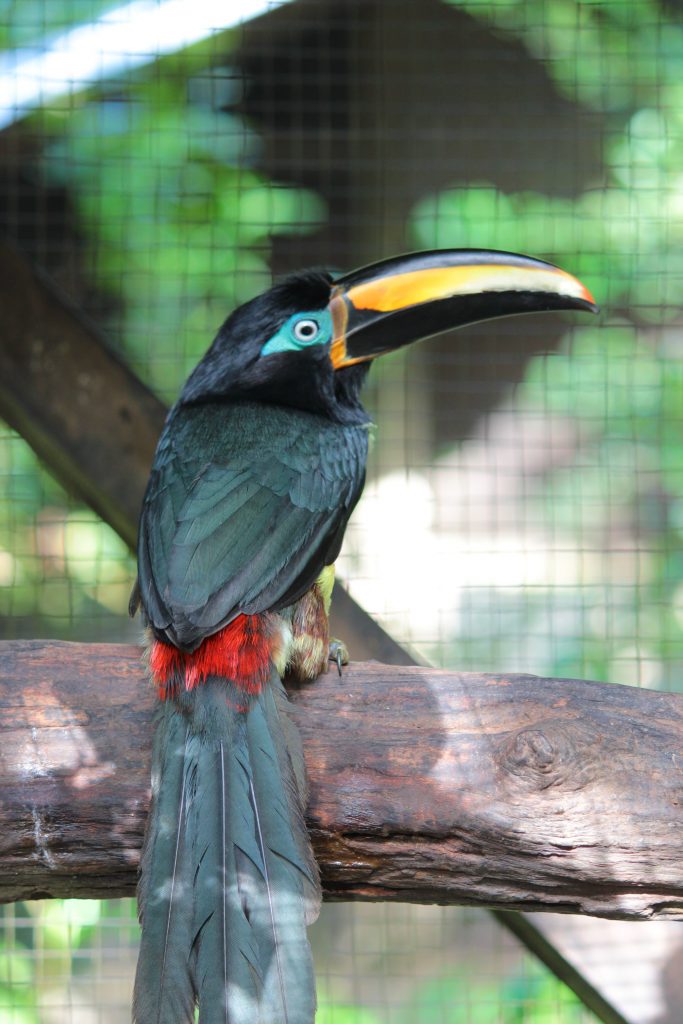
Churi back in his own cage again

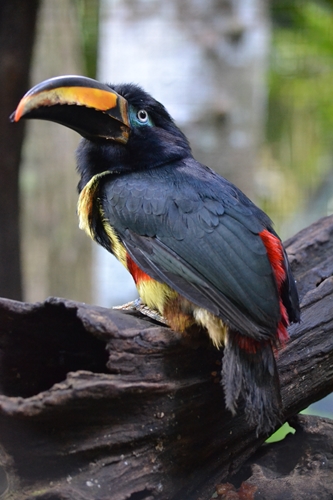
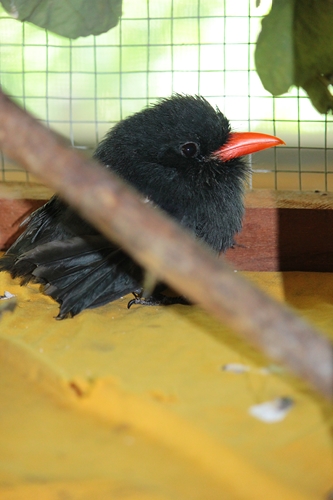
Churi (female many-banded arasari) is now in Lucia cage again; his problem with his feet resulted in him not feeding from the flat surface his plate sits on. As a result, one of our volunteers fitted a branch over his plate. This has been a very successful addition to the cage as he often sits on the branch to feed. Our volunteers also spend extra time with him to ensure he consumes enough food.
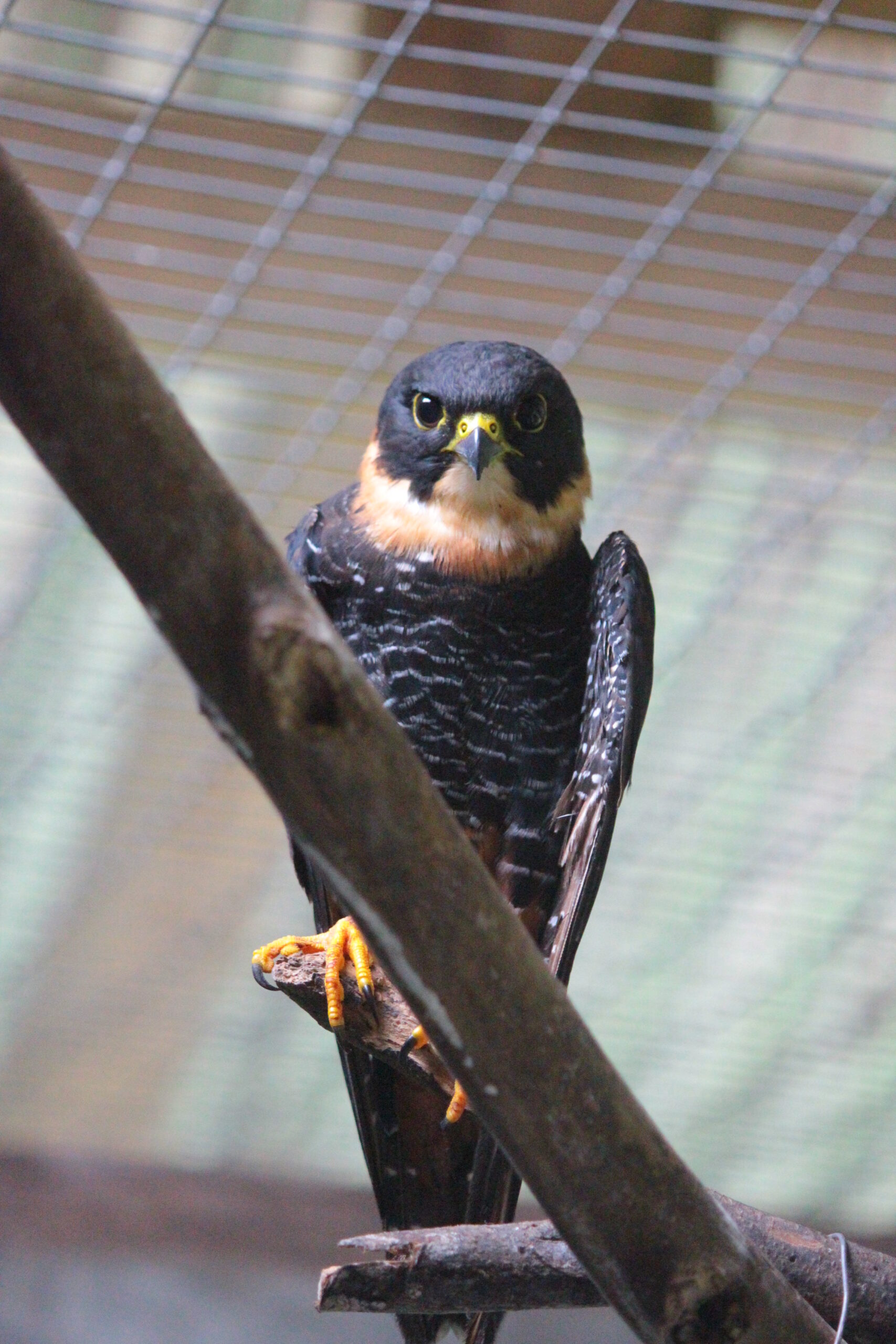
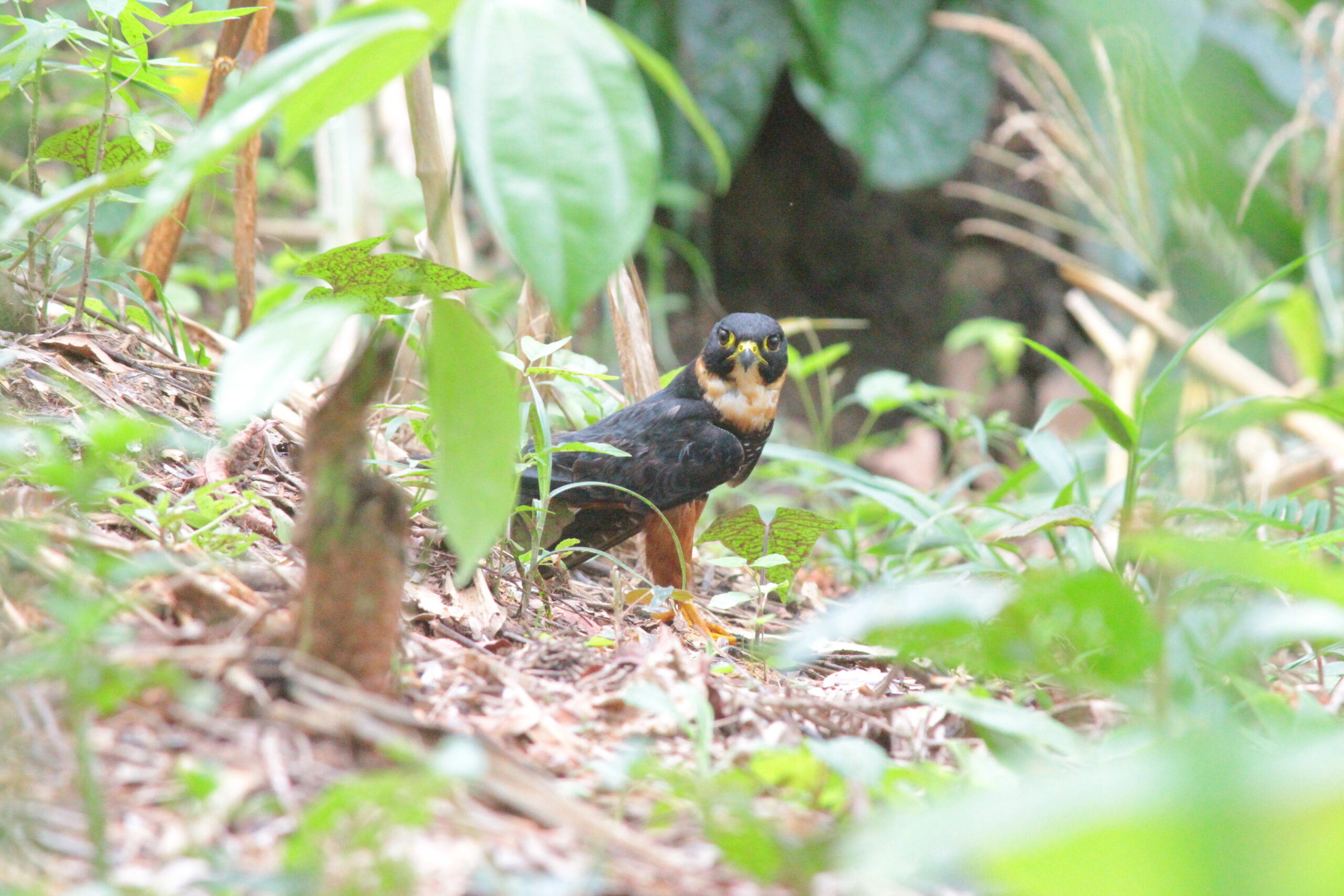
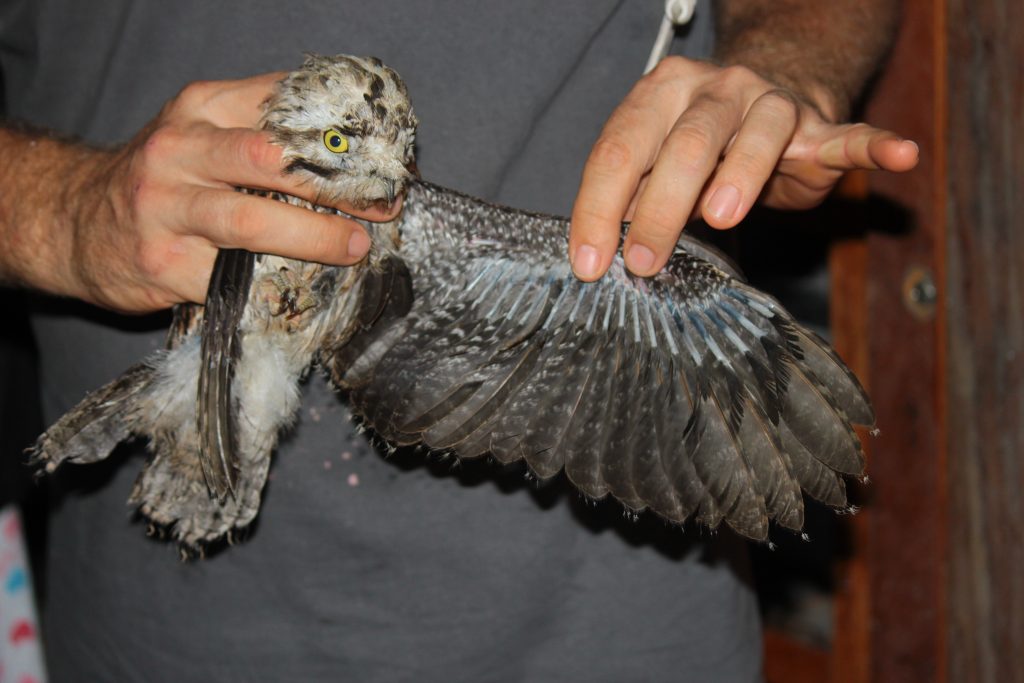
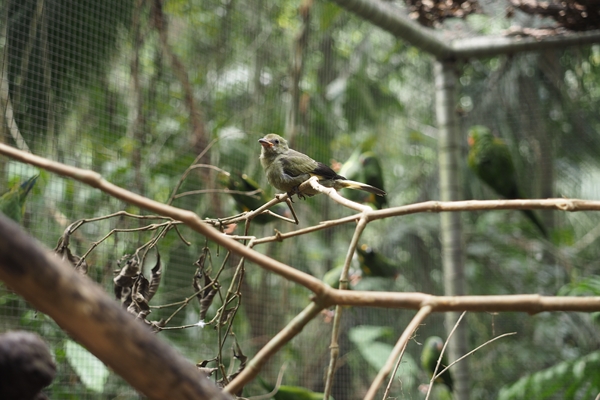
Severus (the bat falcon) was moved from the clinic to Tupak cage. After a few days of close analysis of her flight, she was released. She flew perfectly out of the cage and has not been seen since! Good luck Severus!
After Severus was released a black shiny cowbird arrived, and after establishing it would eat and only needed to learn to improve it’s flying, it was put into the release cage, Tupak. When released fully he flew straight out of the door. Although we had high hopes for him, we are sad to report that a few days after the release she was killed by one of the capuchins in the area.
The Igor cage is now the cage for non-flying birds. We took several white-winged parakeets that could fly out of the cage in preparation for their release.

Dario going out

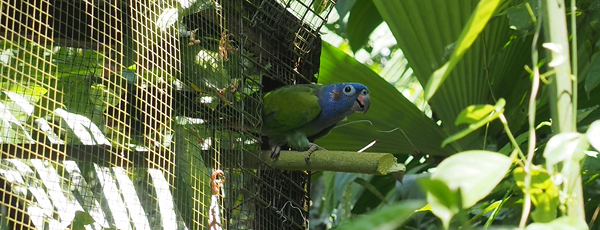
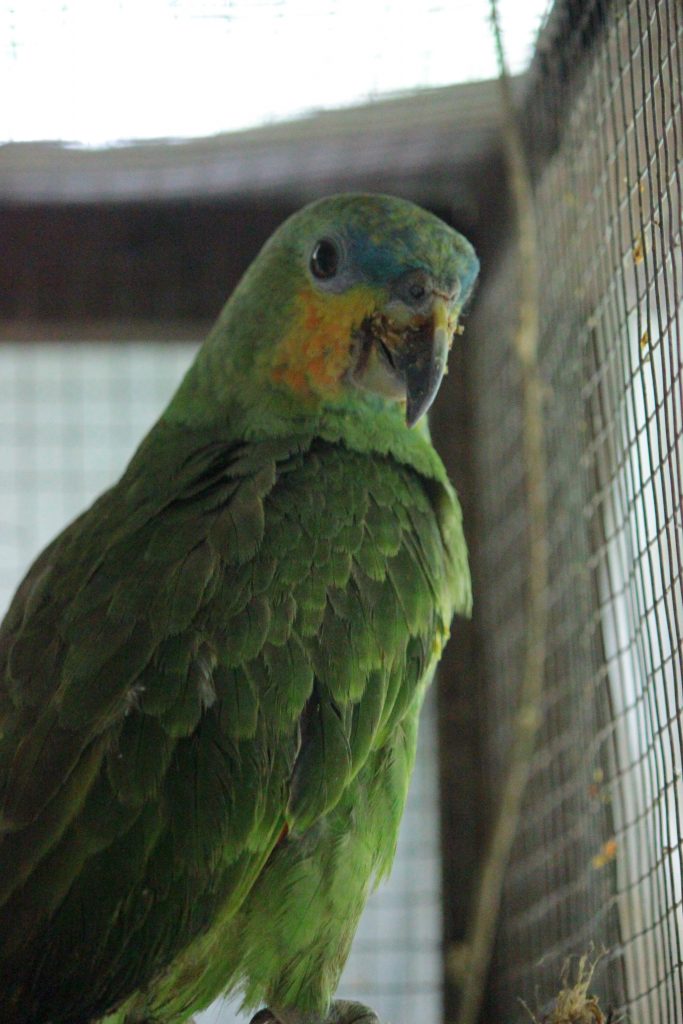
As well we decided to release Zazu, the palm tanager and the blue headed parrot, Dario. Both were hard to catch, not being tame, and fly very well. All were brought to another cage and a few days later a small hatch was opened. They all left within an hour. Neo (orange winged Amazon parrot) was moved from the clinic to join the non-flying birds in Igor cage and seems to be bonding well with Pichu, one of the white eyed parakeets.

.

 SUST Animal Orphan Hospital

Darwin, Cesar & Kaya

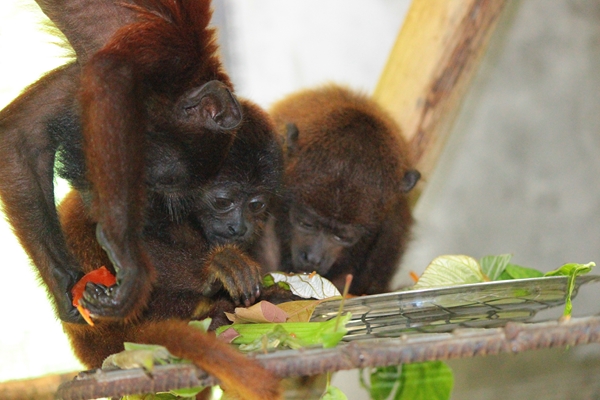
After busy recent months the clinic is now quieter. At the moment we are left with the three howler monkeys Darwin, Cesar and Kaya, the young female brown capuchin Mayantu and a porcupine which had to have part of its tail amputated due to rot. He is now recovering well and is starting to eat.
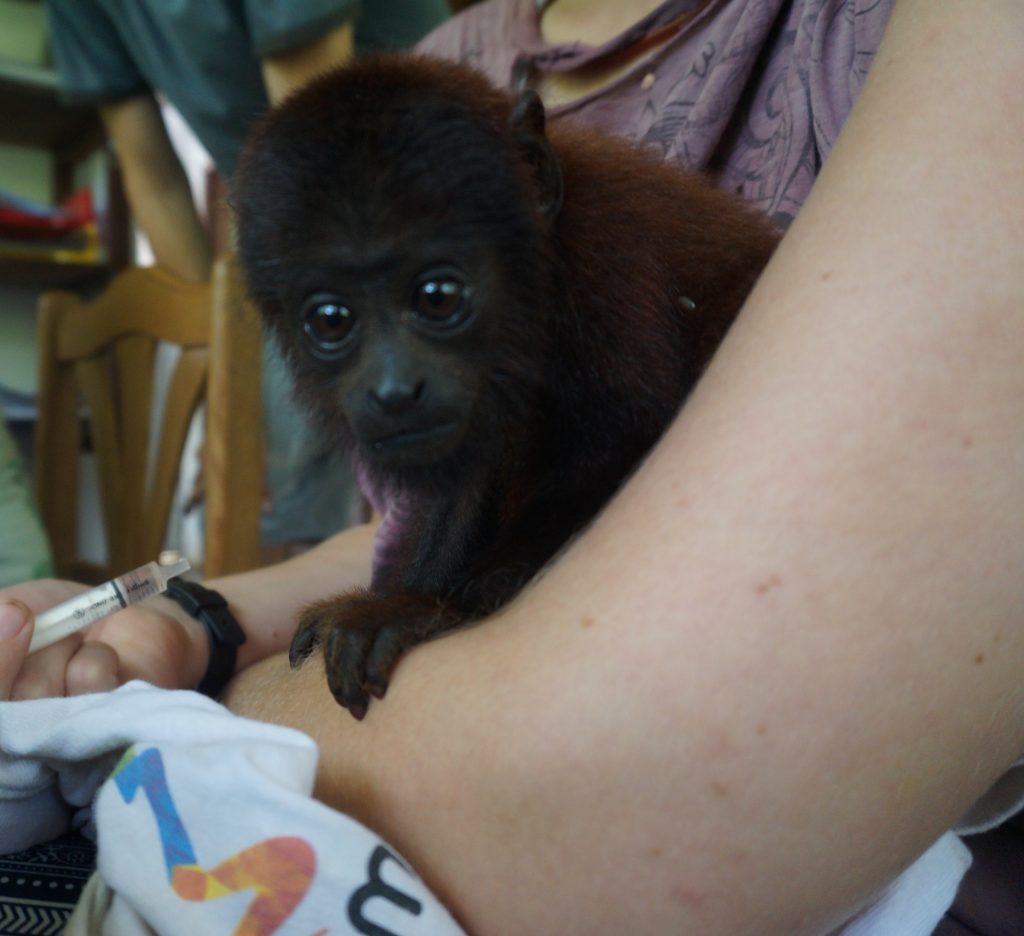
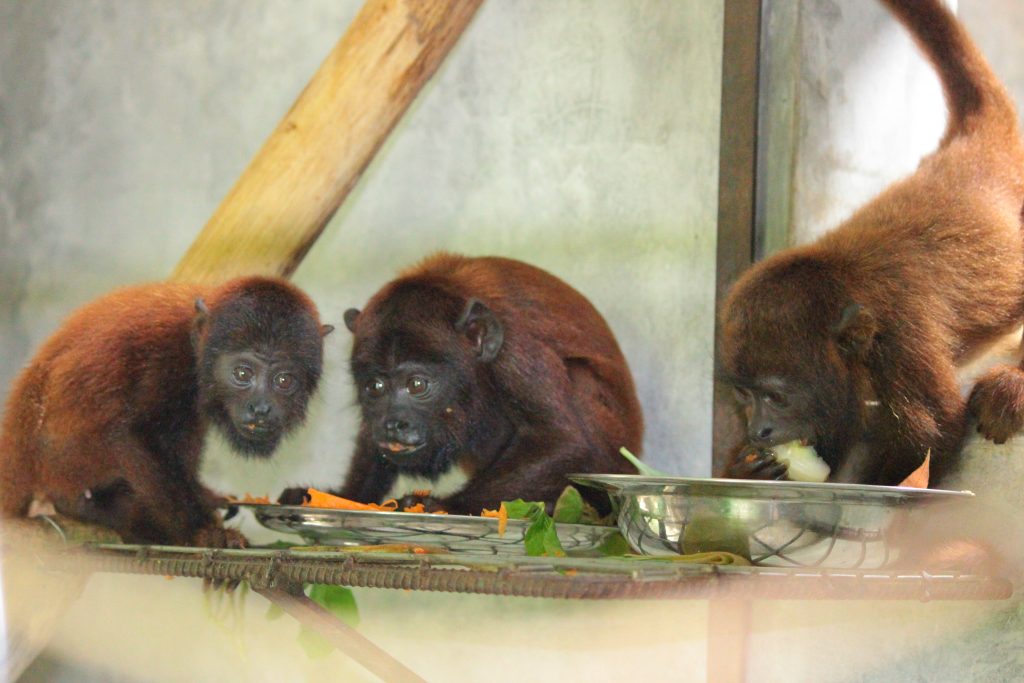
This has provided us with more time to care for the howler monkeys. They are now taken to the outside cage Roko for most of the day. There they can enjoy the sun while climbing, playing or resting and have some contact with the troop of outside monkeys. They are all, together with Mayantu, taken for a leaf walk to collect sufficient leaves for them to eat.

Kamari outside again

Kamari, the alpha woolly monkey who had been seen with a split lip, was consequently sedated and Douwe operated on him. After successfully repairing his lip, we put Kamari into La Sapa cage where he remained for one and a half weeks while on antibiotics. He has since been released and has retained his alpha male status.
Chiquita (female woolly monkey) was discovered to have a bite on her left leg. The wound was serious enough to hinder her from using the leg so it was decided that she would be moved to Pepe cage with the baby monkeys. Her wound was cleaned up and has been healing well. It seemed there was another problem going on, so she was moved to the clinic where she could be watched more closely. She is coping with several parasites among them the, for us, famous and disturbing: Prosthenorhis Elegans. She has been administered antibiotics and deparisitation, and given extra vitamins. Although improving medically, being deprived of her freedom and friends, she was mainly sitting in a box on the floor and looked depressed. Fearing for her mental state, we released her and we hope that she will able to recover fully and continue to gain weight outside.

.

 New arrivals

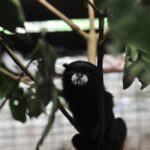
Otis, a male night monkey, was rescued by a man from a nearby town and handed into our care. This is the same man who brought us Luna (female night monkey) and Curima (female brown capuchin). A family had killed Otis’ mother, so the man talked to the family, and they gave the baby with him. Knowing it was so young he decided to take it straight to us the next morning. We estimated Otis to be not even 2 weeks old. Douwe and Olivia took him into their care. He has been growing nicely and starts to crawl around a bit.
A young armadillo was given to the daughter of Machico, one of our workers. The daughter brought him straight to us. The condition of the animal was not great to start, and although at first it seem to do well on the milk we provided, we are sad to say that he died due to his malnourished state.

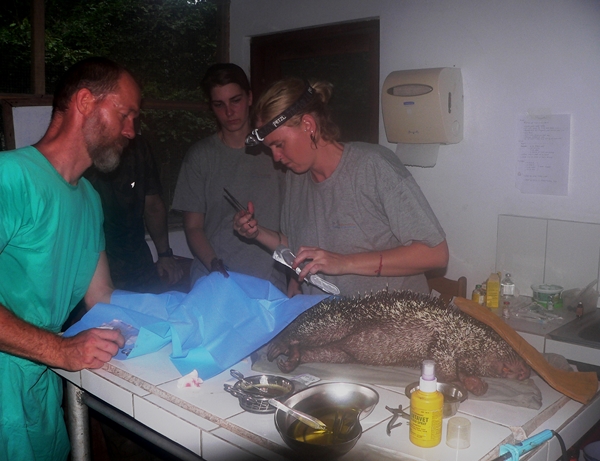
Donna and Douwe operating wild porcupine

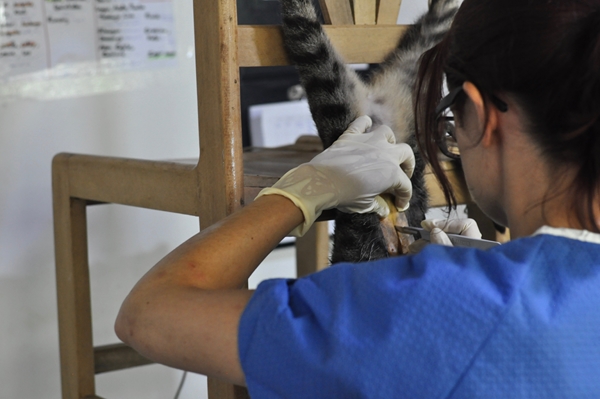
One day Geiler, another of our workers, found a wild porcupine hidden under the plastic that covers our sand for constructions. He warned Douwe and when they went for a better look, they noticed a very bad smell. On closer inspection, the tail of the porcupine was half severed and with infected maggots. They caught it and with the help of the vet student, Donna from Australia, Douwe prepared for an operation. The tail had to be partly amputated. However the wound is now looking better and the porcupine is almost ready to be released again. In many ways he was lucky that he was found, as he might have not survived from this injury.

.

 Volunteers

Christmas

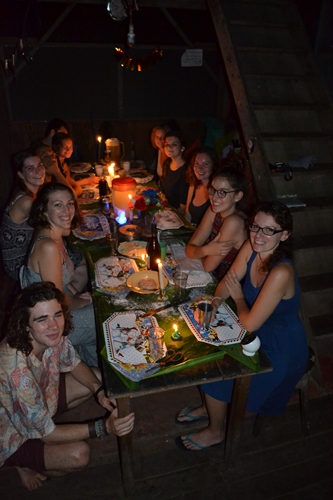
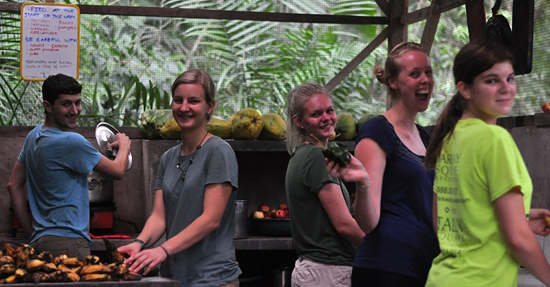
December is also the month of celebrations. As the family is Dutch, we enjoyed the celebration of a typical Dutch holiday, San Nicolas. Everybody made presents with a poem and some surprises, and we had a great evening with some Dutch sweets and music!
Christmas was celebrated with a nice cheese-fondue dinner, and special made gifts for everyone. Here in the jungle you get very creative, and so everybody got a special stone with their favorite animal painted on it. At New Year, after having pizza, some oliebollen (a typical Dutch sweet dough ball) we all went to the port for some fireworks, and then had a campfire with the local traditional burning of a puppet!

Esperanza Verde Update / November 2017

With the end of the year coming up, the rainy season starts. No more pumping of water from the river to supply us with water, as fresh water is coming in fully. With fewer volunteers we have long days, as animals need to be fed, cages cleaned and special care given. On top of this, this month has been and still is a lot about taking care of our young howlers as they are having some health issues.

Very good news did Olivia bring us from Holland. There she met with the board of the Jaap van de Graaf Foundation, which donated this year so generously for the costs of animal caretaking at Esperanza Verde. They now have decided to help us again, by financing something we are most in need of at this moment; a quarantine. So far we have been using our clinic as well as quarantine for the arrival of new animals. When something happens to one of the resident animals, we always have to take extra care, or find another cage to treat them. We are so happy that the Jaap van de Graaf Foundation, is helping us with this, and on top of that they will also help finance, the costs for the general animal caretaking (food, utensils and equipment like buckets, plates etc.) for the coming three years. Thank you so much for helping us with our work to improve the wellbeing of the many animals in need.


Monkeys


We can now confirm that Mica (female capuchin) is pregnant, as well are Lia and Nera (female capuchin monkeys)! Macu, the wild male, who came to us several months ago, has been busy! We expect some Christmas babies this year!

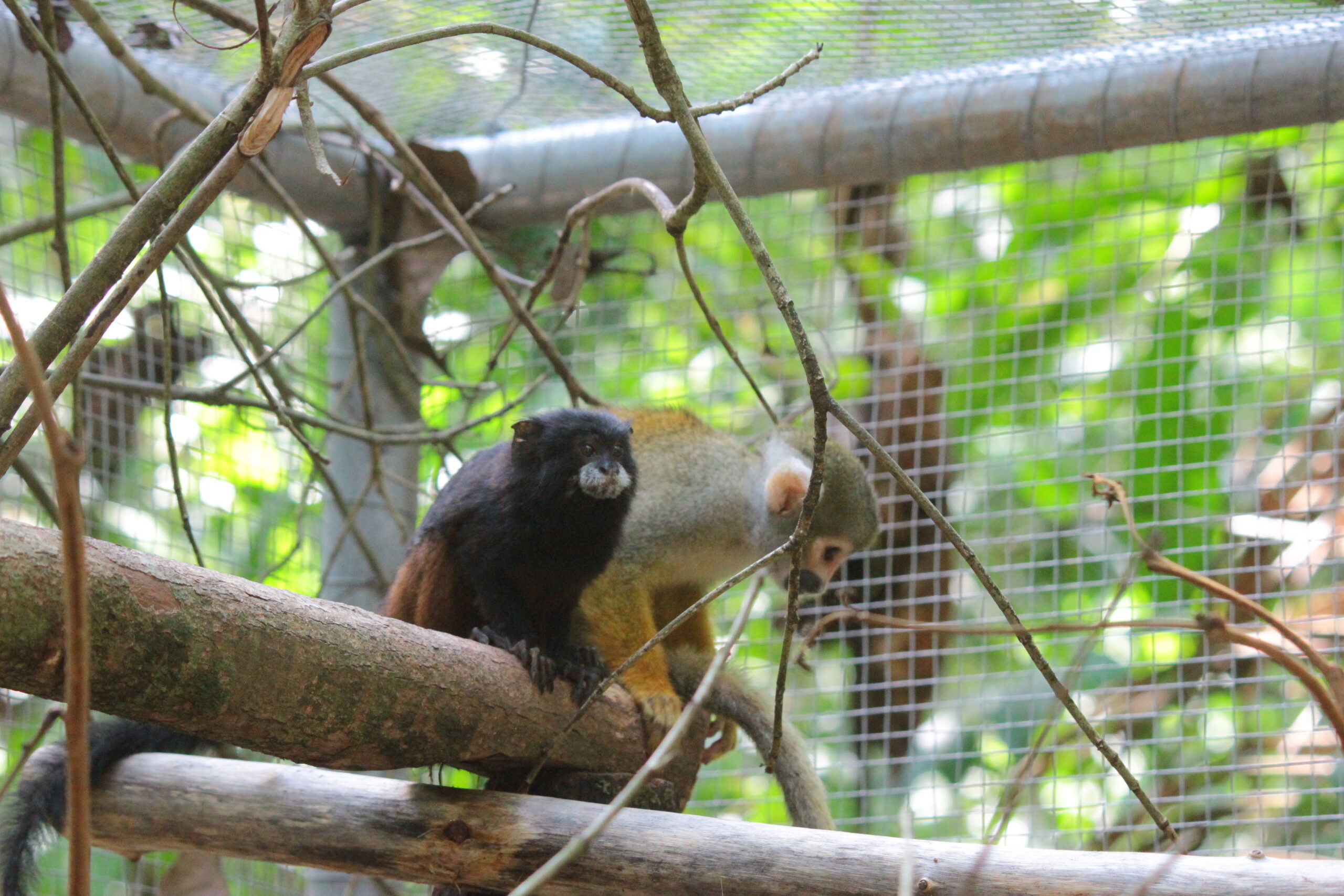
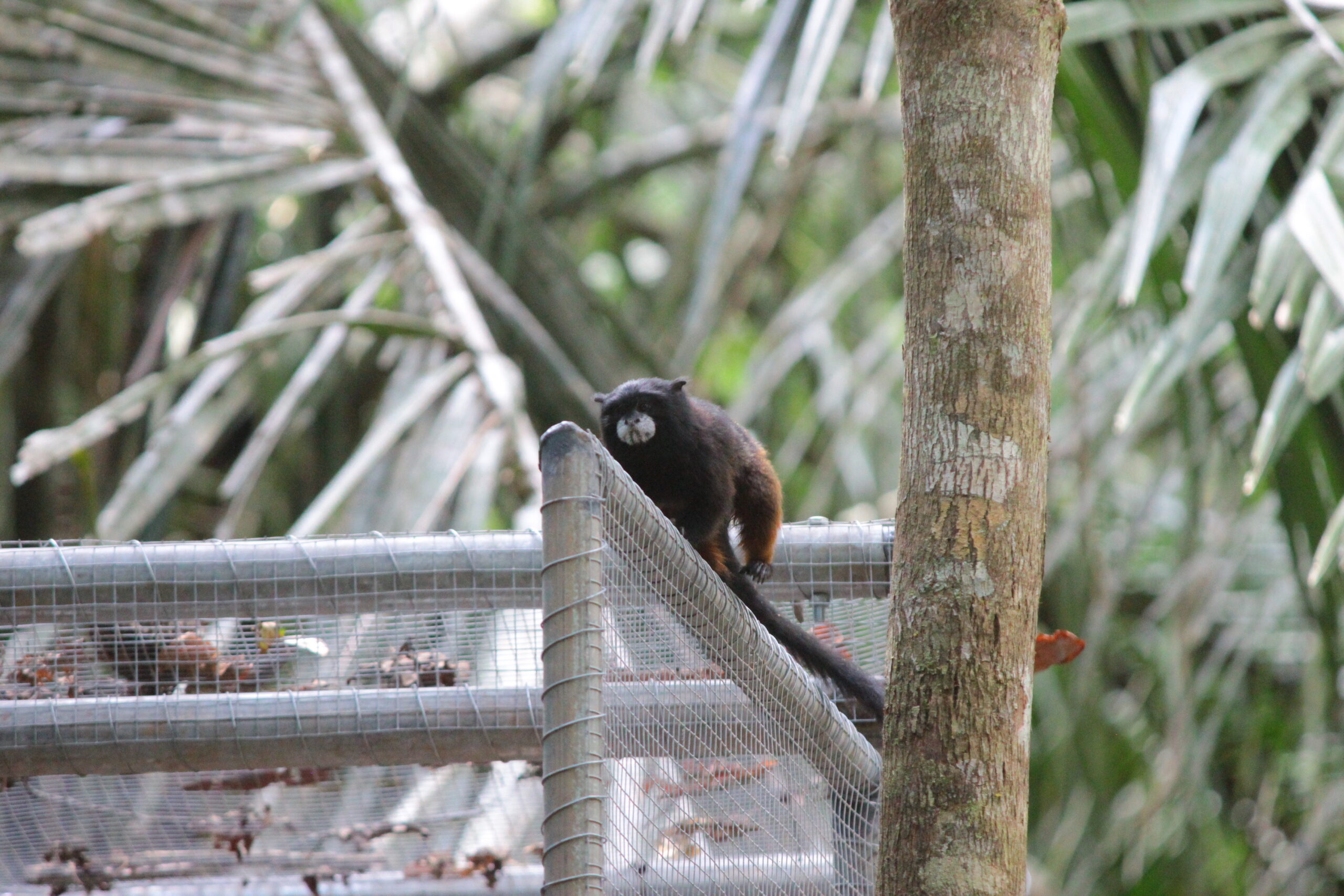
Tokay, Tiriko (male saddleback tamarins) and Noema (female squirrel monkey) have been released. After a few weeks of getting used to their new environment we have opened the cage. We believe Noema joined the group of squirrel monkeys resident in Esperanza Verde and enjoys life as a free monkey again. Tokay and Tiriko are roaming in the trees at daytime, and seek the safety of their cage at night.


Other Mammals

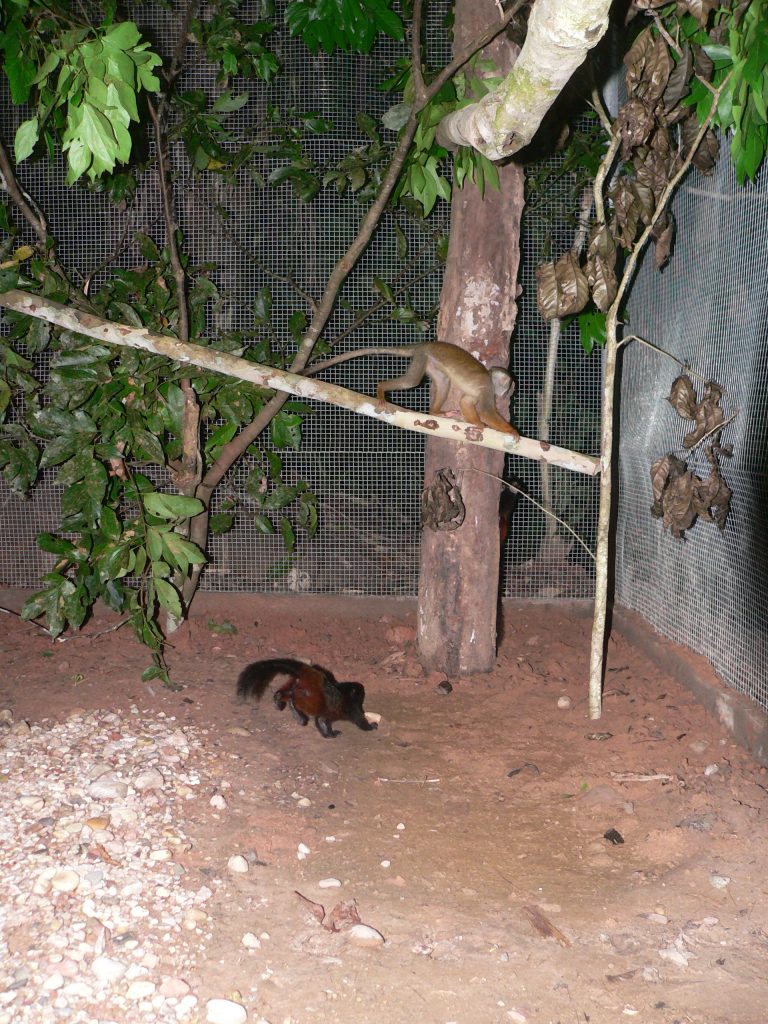
Rabito (male red brocket deer) was finally moved to the new deer enclosure (which we have Lush Cosmetics to thank for!), named Pepito. He directly was exploring and eating all the fresh leaves that he encountered in the spacious enclosure.


SUST Animal Orphan Hospital

In the last months the clinic has been very full, and it generally takes two persons to care for all the animals. This month we could move out several animals, but still it is a busy day at the clinic!

The new young howler monkeys, Kaya (female), Darwin and Cesar (male), got sick over the last month. Kaya got better after several treatments and intensive care, but then Cesar fell ill. We started him on the same treatment, but it took a bit longer for him to finally get up again. After a week of being force-fed and medicine, he is eating well by himself again. Kaya unfortunately fell ill again, and is under watchful eye and care of Claire. These monkeys give us a lot of worries, they are very sensitive to stress and become depressed quickly. Their intestinal flora is very special so they need a specific diet and it is not always easy to convince them that leaves are better than fruit It takes a lot of work as they are pretty stubborn! Darwin fell slightly ill as well, but he reacted well on the medicine and extra time spent by our clinic-volunteers with him.


Wallace (male howler monkey) is doing great outside generally, but as if we did not have enough on our hands with the other howlers, he as well got into some trouble. He showed up one afternoon with a swelling of his left arm, most likely from a fall and could not use his hand for some time. Thanks to the medical treatment given he is slowly getting better and is even seen hanging on both hands again. We hope he will fully recover the use of his hand again.

Kurima, the young female brown capuchin, has joined our baby monkey group in the outside cage (Capu (male young brown capuchin, Naka and Tawaki (resp. female and male woolly monkey). They are doing great together, while Tawaki being the smallest at night is still brought to the clinic for a good and warm night of sleep in a transport box.

Mayantu, the baby female brown capuchin, could now take Kurima’s place in the clinic, so she has a bit more climbing space during the day and night, when she is not with her ‘mum’-volunteer or in with the other babies in the outside cage.

yanay
yanay

Cumala, the new female spider monkey, and Camu, her infant male, were moved to La Sapa cage, where they were joined by Yanay. We would have left them for some weeks together before releasing them all. Unfortunately we had to change this plan, as Kamari got hurt.

Kamari under anestesia

He was seen just before dark with half of his lip hanging down. As it was getting dark and he was up in the trees it took us till the afternoon the next day to get him in the La Sapa cage. The spidermonkeys got moved in the morning to be able to lure Kamari in. Douwe anaesthetized him with the blowpipe, and could stitch his lip up (a cut from top till chin). We hope it will heal well or at least nicely enough so he will be able to eat normally. He might not be the most handsome anymore, but time will tell. For now we keep him in for his treatment and observation.


Churi (many-banded aracari), has been of big worry lately, and after a lot of research and communications with veterinarians in Europe, we all agreed there is not much we can do for his problem of his toes. He does not seem to have pain and is still his happy old self. So we adjusted his cage to see in which way we can help him best. We moved him back to his outside cage (the Lucia cage) where the branches are broad enough, so he will be able to fly to them and sit steadily enough on them. The volunteers come in three times a day to eat feed him and give him some attention and enrichment.


New arrivals

Severus, a bat falcon, was found by workers of the gas company and brought to us. His wing is intact but swollen and he can’t use it well enough. He is doing better after a week, but needs to move to a outside, bigger cage, to try to fly again. As soon as we have a cage empty we will be able to move him out of the clinic.

Again a new baby monkey joined us; it seems it is that kind of season! New comer is Luna, a baby female night monkey. Healthy and active, reminding us of the arrival of Sira, our adult female night monkey now living outside.


School

A special thank to Irene Bonte and Kees Kampschuur and their friends from Holland who donated 20 new desks and chairs for the primary school in in Bello Horizonte. Irene and Kees learned of the needs for this while volunteering at Esperanza Verde last year. The kids were very thrilled to receive the new furniture.


Selva Dormida

We have bought 200 small shihuahuaco trees to be planted in this rain season in Esperanza Verdes surrounding forest “Selva Dormida”. Shihuahuaco is a hardwood timber species that has been highly predated upon but has not only for its fruits a high ecological value.

Esperanza Verde Update / October 2017

The fun never stops here at Esperanza Verde! Since their previous visit, the Ministry of Pucallpa has returned twice, this time with a new batch of reptiles, birds, and monkeys.

As wet season approaches and the mosquito population rises, an increasing number of monkeys have been spotted with botflies, which lay their eggs under the skin of animals via mosquito bites. We have begun preventative treatment with several of our monkeys, and are keeping a sharp eye out for any monkeys already in need of botfly removal.

.

Monkeys

Cinty & Mica (females capuchin)

Mica, maybe pregnant

was recently chipped, and treated for botflies along with Mica, another capuchin. While it´s still too early to tell, Mica has not been given any medication as a precautionary measure because… wait for it… she might be pregnant! Stay tuned for further updates on this exciting development !

Wallace (male howler monkey)

was also chipped, and had quite a few botflies removed. Wallace has been a bit slow this month, was often spotted alone, and was occasionally in need of hand-feeding by the volunteers. While this is sadly not uncommon, as howler monkeys are difficult to maintain under human care, Wallace has been doing surprisingly well and we continue to be optimistic. He has been eating daily, socializing more with the other baby monkeys, and is gradually being weaned off human contact in order to develop more independence.

.

Birds

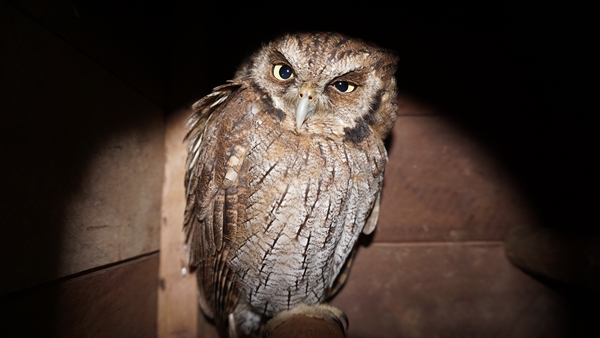
Sheena (tropical screech owl)

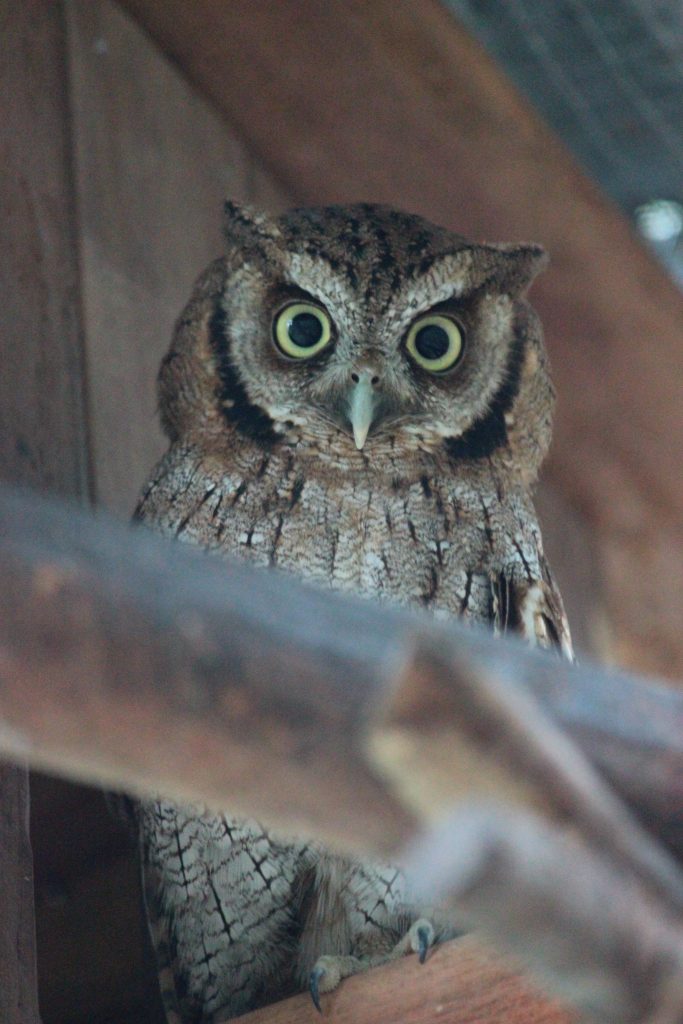
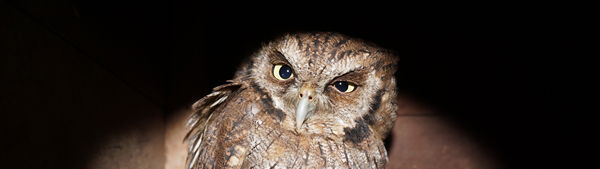
Sheena, tropical screech owl before release

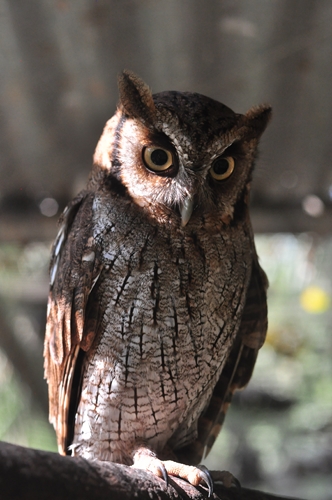
has been released after weeks of training of cricket catching and careful attention from both Douwe and the volunteers. We decided to give it a go, and on the first day of release she was still seen, although did not come to get fed. We hope she learned enough to survive while being with us!

.

Other Mammals

Lulu (female two-toed sloth)

Lulu, two toed sloth

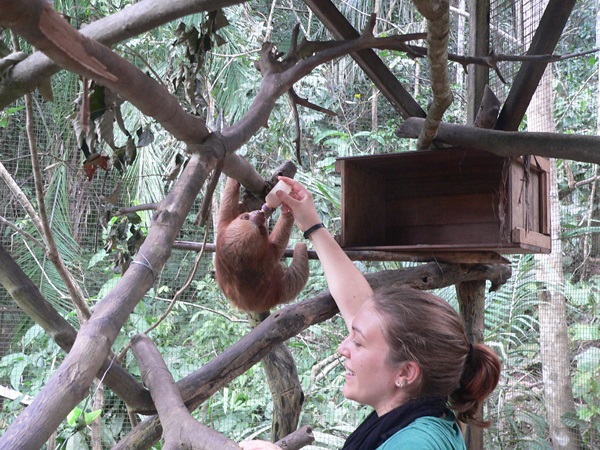
has once again returned to her cage after losing a bit of weight since her previous release. She remains active, and our volunteers are monitoring her diet to ensure that she eats a healthy amount of leaves upon her next release. We are now teaching her to eat more wild leaves, by means of steaming some of them. She seems to do well on this, so we will soon try to release her again.

Tamana,

our previously released female tamandua, has been seen roaming the grounds at night more frequently, and appears to be happy and healthy!

.

SUST Animal Orphan Hospital

In the last months the clinic has been very full, and it generally takes two persons to care for all the animals.

New arrivals

Release of a Tamandua

The first new arrival, and also our quickest release of the bunch, was a male tamandua, a species of anteater. He arrived healthy and un-injured, and since their diet of termites and ants can be difficult to accommodate, he was released the same night and has yet to return, which we believe is a good sign that he is thriving in the wild.

Neo, a yellow-winged Amazon,

Neo, orange winged Amazon

arrived with two missing toes and clipped wings. All things considered, he remains in good spirits, is eating daily, and will remain in the clinic for the time being.

Kaya, a baby female howler monkey,


Kaya, baby female howler monkey
Kaya on the first day

is currently under the careful watch of Olivia, Douwe, and Claire, our head volunteer. After having diarrhea for a couple of days, she is being fed a special diet and we are routinely checking for parasites, as we do with most of our new arrivals.

Cesar, a young male howler monkey,

Kaya, Cesar, and Darwin, new howlers

was brought by private persons, after having been a pet for several months. As the neighbors were treating him badly, the owner decided to bring him to us.
Cesar is now the fourth howler monkey in our care, along with Kaya, and Darwin, a relatively new arrival who still remains in the clinic, and Wallace, one of our younger monkeys roaming free on the grounds. We eagerly hope to one day introduce our howler monkeys to each other, as they are a social species that often shows signs of depression under human care, especially when alone. While this will no doubt be a lengthy and challenging process, we remain optimistic and will keep you updated on any further developments!

Then we had another arrival, a young female brown capuchin, Kurima.

Kurima, female brown capuchin

She was bought in Curimana by a man who met Olivia during the weekly shopping. They talked and he decided to hand the monkey over. We hope he will not buy an animal again. People think often they are doing well by buying an animal from the animal trade, saving it’s life. But while saving this animal it means the hunter just received more motivation (as people are paying) to go back into the jungle to hunt more. This often means, in case of e.g. a monkey, that a mother will be killed to get to the baby.

Wolfgang and Vivil are Esperanza Verde´s newest reptile inhabitants!

Vivil, yellow footed tortoise
twist-necked turtle
twist-necked turtle

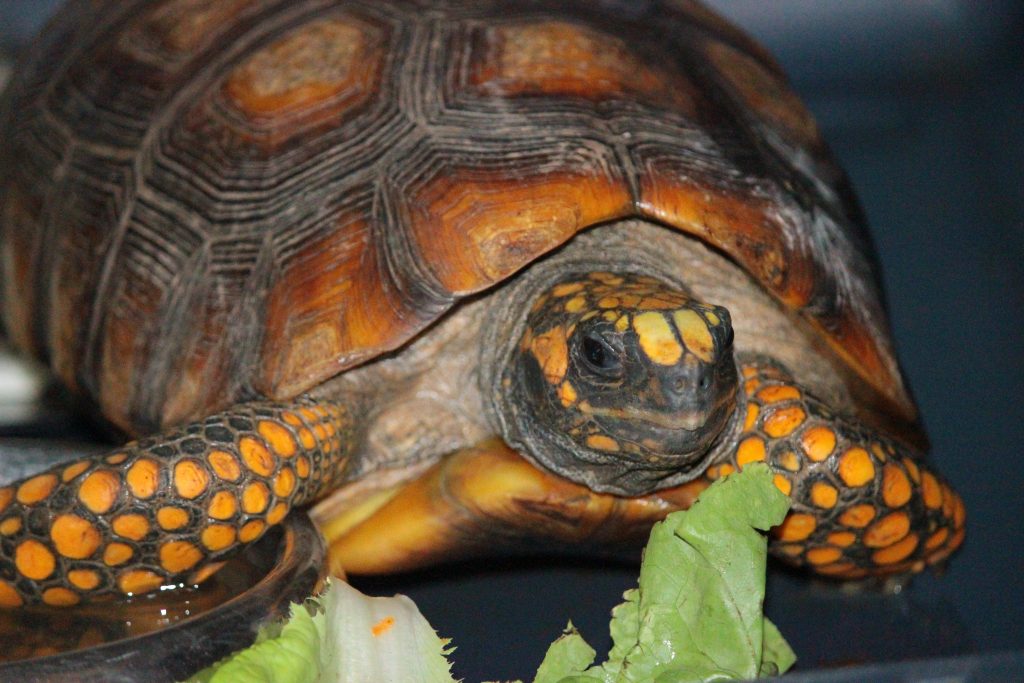
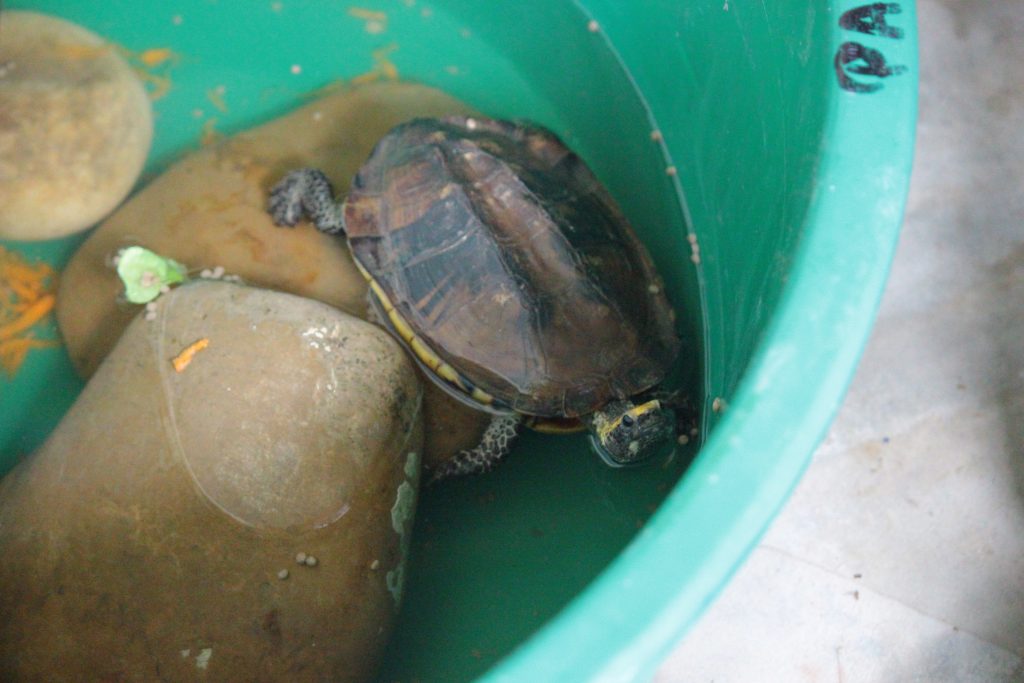
A twist-neck turtle and yellow-footed tortoise respectively, they arrived relatively unharmed, with the exception of a hole in the back of Vivil´s shell, presumably drilled by traders for the purpose of tying up the animal. The quarantine period for reptiles usually lasts a minimum of three months, so they will remain in the clinic until it is safe to add them to our reptile enclosure.

The last of our new arrivals are Cumala, a female spider monkey, and Camu, an infant male spider monkey.

Cumala female spider monkey
Camu, young male spidermonkey

They were roaming outside near the zoo of Pucallpa, most likely escaped and there was no effort taken to recapture them. The ministry finally got the change, as they most have been getting hungry, and caught them. They are both being held in the same enclosure, and we were told that Cumala is the infant´s mother. At first we doubted a bit whether Cumala was really Camu’s mother, as they she seemed to shove him off very frequently. But at some point we saw Camu drink with her and she does take him on her back from time to time. Both of them are skinny, but are eating twice daily and have shown an active curiosity in our volunteers. With any luck, we can eventually introduce Cumala to our other female spider monkey, Yanay, who is currently the only one of her species living released here at EV.

Churi (many-banded aracari),

Churi, many banded aracari

one of the favorite animals of many volunteers, has unfortunately developed a problem in his feet. He lost his grip on branches and seems to be in pain when trying to bend the toes. We are still not sure what caused this lameness/stiffness of all his toes, but are in contact with several veterinarians to find the best treatment. For now we placed him in the clinic to control his diet, as well for treatment and close observation.

Balou, the common potoo,

Balou, common potoo
Balou, common potoo

was injured on a routine weigh check. She broke her wing severely. We could fix the break and the wound looked good, but she died after 2 days, it was too much stress and strain on her body.


Kiriko, Tokay and Noema in outside cage
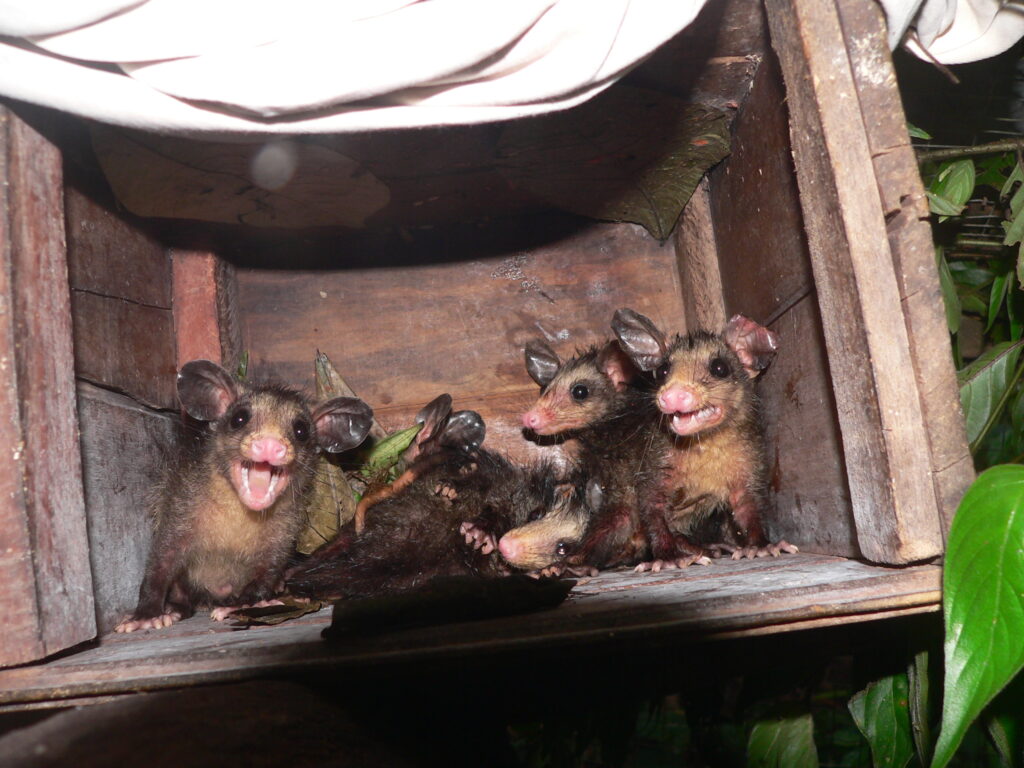
Opossums before release


Esperanza Verde Update / September 2017

It’s been a busy month for Esperanza Verde both here in the Peruvian amazon but also back in Europe! Last month Olivia travelled to Holland for visiting not only family and friends, but for the first time Olivia could meet up with several people which have been helping EV for a long time now out of Europe. They all came together in Europe, and had a great meeting, reunion, visit to the Zurich Zoo, thanks to organizer Philipp Zerbe (president of Esperanza Verde International). Olivia finally got to meet Susy Utzinger, who offered her office space for our meeting and invited us all for a lovely brunch at a mountain farm. As well in Holland there was time for a reunion with old/volunteers. It is so great to see all people again and still seeing all have a warm heart for all the work we do here.

Here at the Rescue Centre we were visited by the ministry who delivered a brown capuchin, a squirrel monkey, two saddle back tamarins, a howler monkey, two woolly monkeys and seven
opossums, busy month in all!

We also got a visit from two school classes from the Bello Horizonte primary school, giving us the opportunity to show them around the rescue center and teach them about certain species. The kids seemed to really love seeing the animals and it’s nice to be able to educate the next generation about animal conservation.

Below you are able to read more…

.

Monkeys

Our baby monkeys are not such babies anymore!

Chiquita, Lupa and Samara (all female woolly monkeys)

They drank this month their last bowls of milk. They’re now old enough to be fine without it. The other woolly monkeys have had their milk reduced as well.

Uma

newly introduced is doing well, she is quickly understanding the way of the monkeys here and following along on their daily excursions deeper into the forest

Mayantu (female baby brown capuchin monkey)

Last month a girl from Kayla’s school came to Esperanza Verde with a little baby brown capuchin. We determined her age to be around 5-6 weeks and she was named Mayantu. Due to her young age she is staying at the family house so she can get care in the late evening and mornings. During the day she is brought to the clinic where she has her own enclosure and volunteers help take care of her. A bit of her tail was cut off with a machete when her mother was killed for bushmeat. She needed to learn how to adapt with a missing balance, but she after some weeks she started climbing and did really well. She is great at climbing up, but sometimes she can have some problems finding her way down, good thing we always have a watchful eye on her!

.

Other Mammals

Lulu (female two-toed sloth)

Lulu
Lulu

The last week Lulu has been in her cage. She came down while a volunteer was putting out food for her, and we decided to weigh her. Unfortunately she had lost some weight, so we put her in her cage again and now our focus is on getting her to eat more leaves. Each afternoon volunteers collect leaves and we hope that steaming them will help her start eating them  better.

Soraya (female western amazonian dwarf porcupine)

Our resident porcupine Soraya has recently been enjoying palm fruits! It can be difficult to develop enrichment for porcupines, but we have found that Soraya loves tearing through the tough outer covering to get to the fruit inside at night when she is active. Guava season is also on its way, another favourite of Soraya.

.

Birds & Reptiles

Sheena (tropical screech owl)

With plans of release in her future, Sheena has been moved to a cage further away from the monkeys. The volunteers are still working hard to catch crickets for her everyday. We have found that larger crickets or grasshoppers can be released in her cage and she will hunt them herself. This is great practice for when she is released!

Zazu (palm tanager) & Chanti (ruddy ground dove)

Last month Zazu joined the birds in Igor cage and has been doing really well, this month he was joined by the ruddy ground dove Chanti. Due to the full clinic we decided to let Chanti try out life in Igor cage where he could also enjoy the company of the other ruddy ground dove Chipi. He quickly got adapted to a bigger cage with more birds and seems to have bonded a bit with Chipi as well.

Martha (yellow footed tortoise)

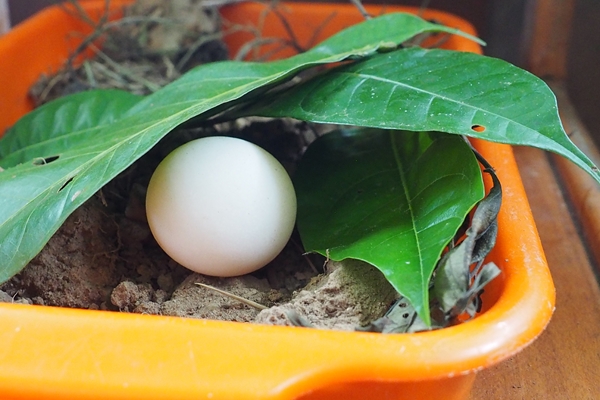
After months in the clinic beloved Martha is finally parasite free! We had gotten used to having her around and were curious to see when she would lay new eggs. She has now joined the other tortoises in the reptile cage and she seems to be getting along with Pepito very well. During her time in the clinic she laid a total of 8 eggs, 5 of which we got to before they were broken, so time will tell if we will have tortoise babies or not…

.

SUST Animal Orphan Hospital

As usual, just when we think we have a calm moment in the clinic to get some work done on administration, boom, we are full again! This month we received several young monkeys and opossums from the Ministry of Flora & Fauna Ucayali. All of the animals arrived in hastily made cages and with empty bellies and hearty appetites. As sad as it is to see animals in this state, and to think of how they may have got there, we are happy that they arrived and hopeful for their futures.

Darwin (male red howler monkey) & Wallace (male red howler, juvenile)

The veterinarian of the local zoo, Parque Natural Pucallpa, joined the ministry to hand over a baby howler monkey. His wife was the one who took care of Wallace (male red howler, juvenile) and handed him over, earlier this year. He has been doing a great job taking care of him and we hope Darwin and Wallace will become good friends. For the moment Darwin stays in a cage alone in the clinic. We don´t have him together with the other baby´s yet since he is doing really great being on his own. He is eating by himself and is not too dependent on humans at all, a great sign!

2 Woolly monkeys (male and female) and 1 brown Capuchin (male)

Two woolly monkeys, a young female and even younger male, as well as a young male capuchin were also part of the delivery from the ministry. They are used to being kept together so they are being housed in roomy cage 4 in the clinic. The young woolly male is very dependant on the woolly female and craves contact since he is so young and motherless. Thankfully he is also very eager to eat and drink his milk so we are hoping that with continued attention he will thrive. Sadly the female woolly came to us with a finger that had the tip cut off and a broken leg that had healed in an incorrect position. She is slightly weary of humans, and rightly so given what she has been through, but she is warming up to us with every passing day. The male capuchin was also a bit nervous around us, and was the slowest to take to the milk but he too is progressing each day. They are having some skin problems with require some handling, but we´re trying to keep it as positive as possible. We have high hopes for these young monkeys!

2 male saddleback tamarins & 1 female squirrel monkey

Adding to the array of young monkeys brought by the ministry is a female squirrel monkey and two male saddleback tamarins. The squirrel monkey came to us very thin but she is eating and very active, often playing around with the tamarins. One of the tamarins is blind in one eye, but otherwise seems to be doing well. They’re getting plenty of food in the clinic, as well as some crickets.

1 female opossum with 6 babies

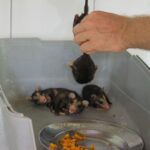
The mother opossum was found in an attic in Pucallpa. We don’t know how long she was kept in captivity but wanted to release her into the wild as soon as possible as it can be extremely  stressful for a mature wild animal to be kept in a cage. She was kept for one night and we decided to release her and her babies the following night. As some may know, opossums play dead when frightened so we didn’t react too much when she didn’t immediately run away with her babies. Unfortunately the next morning we found her dead, most likely due to stress. All of the babies were located near her and brought back to the clinic, where they are doing well in a cage together. We are trying to restrict human contact with them as much as possible and as soon as they’re big enough they will be released.

.

Construction

Tupak Cage

Recently we started constructing a new cage that will be named Tupak after the Toucan that used to live here. The building of the cage has been underway over the past month and is moving swiftly! Douwe and the workers have completed much of the cage and the sign has already been painted by volunteers. It´s important to have available cages so that we are ready to help new animals since they can arrive at any moment, as this month has proven.

Aviary table

The aviary has received some upgrades! The rear wooden feeding table has been replaced with a new tiled one that will be easier for volunteers to clean and has plenty of space for the birds to perch and eat. A second tiled table has also been made and is ready to be put in, which will mean that all three feeding tables in the aviary will be the new tiled version.

.

Volunteers

working in bodega

We’ve now said goodbye to Alexandra from Sweden who has been our assistant manager since September of last year. She originally came for two months last June but decided that she wanted to dedicate more time to Esperanza Verde. Both the humans and the animals here will miss her and all the great work she has done. We all wish Alexandra the best of luck and are confident that Claire from France will do great with the job going forward!
The volunteers have been busy with all of the new animals in addition to the resident animals. It turns out that cricket catching at night is a great time to view animals. Some of the animal  sightings over the past month have included coral snakes, a rainbow boa, an olingo, opossums, a crab eating raccoon, an armadillo, and a tamandua.

Esperanza Verde Update / August 2017

This last month has been one of the toughest ones for Esperanza Verde and it is with heavy hearts we’ve had to say goodbye to some of our dearest animals…
Willow, Rincay, Zambo and Camila all had a special place in our hearts and we will miss having them around. You can see a special homage for them on our Facebook page.
And as if it was not enough we lost two of the new baby birds, as well as Crickie, one of our yellow footed tortoises. All and all a hard month here….
But we’ve carried on and thanks to a lot of hard work from Douwe, Olivia, the workers and volunteers, we have finished the turtle pond AND the deer enclosure! As well we welcomed a very young newcomer. Read about it all below…

.

Monkeys

With Willow gone (male woolly monkey) there has been a lot of changes in our outside group.
Kamari (also male woolly monkey) has had to step up in his role as leader and all together we see a more united group. Nakoya, female woolly monkey, who’ve had some problems with parasites before is looking healthier and seems to become more dominant. Losing a monkey is never fun but we are happy to see that the outside group is still doing fine.

Uma (female woolly monkey)

Uma
Uma

Uma, who spent her quarantine period up in the SUST Animal Orphan Hospital, was moved to an outside cage so she could have contact with the outside monkeys. We brought Maruja, a female woolly monkey of the same age, in the cage with Uma in hopes of a friendship. It sort of worked but still Uma seems to have connected the best with is Loki, male woolly monkey, who had contact with her from the outside through the fence. And when the time for release came it was Loki she straight away teamed up with. Now she has gotten to know everyone better but it is still with Loki we find her at the end of the day.

Rioma, Tisha, Lia (female brown capuchins) & Maku (male wild brown capuchins)

In March we received five capuchin monkeys when the ministry of flora and fauna made a surprise visit. After being introduced to the outside group only three of them stayed around. And we are happy to tell you that the remaining ones; Lia, Tisha and Rioma all have adapted well. They have especially taken a liking to the wild male Maku.

Mayantu (baby female brown capuchin)

Mayantu, as we named the very young baby of about 6 weeks old, was carried here on the arm by a young girl from the village. Her mother was shot and eaten by the family and she was taken home as a pet.  Dajeli, one of the other children of the village, and godchild of Douwe and Olivia, convinced her to come here. Very skinny, but alert and active, we took her under our care. It brings back memories of the beginning, when we took care of the first monkey of Esperanza Verde, Mica, now a healthy adult female brown capuchin.

.

Other Mammals

Kiko & Kila (male and female Kinkajous)

Kiko
Kiko

The kinkajous got a bit of an environmental change. Further down you can read about our plans for Sheena (tropical screech owl) and because of this Sheena and the kinkajous swapped cages.
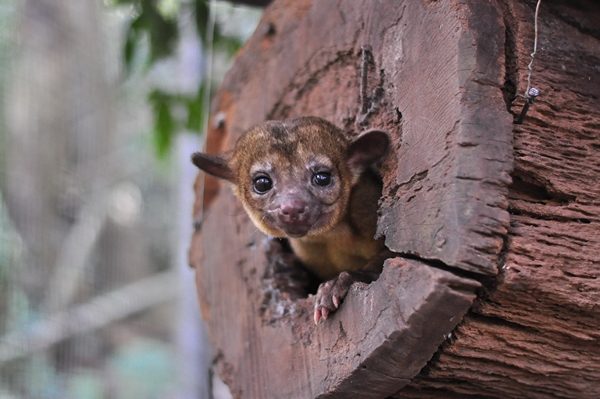
We are stalling their release for now until we come up with a plan that doesn’t involve Kiko getting hurt once again… For now though the volunteers enjoy having them closer to the kitchen and Kiko and Kila seem to enjoy Pepe cage!

Lulu (female two-toed sloth)

Lulu
Lulu

Last month we took the step to let Lulu spend the nights outside of her cage. This turned out to be three nights and when she finally showed up one day by the clinic she had lost a lot of weight. We believed this was because Elmo (male two-toed sloth released about 4 years ago) kept stealing her food. She got put in Roko cage and once she was a bit heavier again we let her out. This time we put her food table in a different location to avoid Elmo eating from it, and it has worked! So far no sign of Elmo, but for a few days no signs of Lulu either… Until she once again showed up hanging under the clinic roof. We are a bit unsure how she got there but our guess is she has gotten over the fence, walked along the ground and has gotten up to the roof by climbing on the wire mesh of one of the cages, pretty creative sloth. For now we will let her gain weight and try to release her again.

.

Birds & Reptiles

Sheena (tropical screech owl)

Sheena
Sheena

The plans of releasing Sheena are set in place. She has now gotten moved to Tiliku cage, which is further away from the monkeys and as well has a hatch for releasing birds. She seems to enjoy her cage as there are not as many distractions (monkeys) over there. The family cat Simba seems to have taken a liking to her though… We will see how that develops, so far she reacts well and flies away. Now she needs to get used to that area and hopefully she will soon be ready for semi-release!

Five baby birds

(Two ruddy ground doves, two palm tanagers and one of the seedeater sp.)
Last month we received, within two days, five baby birds! After a lot of intensive care with round the clock feeding they all became independent and good flyers after some weeks. About the two tanagers (named Yagu & Zazu now found out to be palm tanagers) and the bird of unknown specie (we believe he is some sort of seedeater and we named him Buco!) you can read more about further down under SUST Animal Orphan Hospital, unfortunately not a happy ending for all of them…
The two doves we managed to release quite soon after they could eat independently. Nicely done by everyone involved.

Crickie (yellow footed tortoise)

Our old friend Crickie who spent a lot of time with us up in the clinic unfortunately is not with us anymore. In the making of the new turtle pond we didn’t anticipate that the tortoises would have such a hard time to walk on the cement compared to the previous mud floor. So when we walked by the next morning we found Crickie dead in the pond since he was unable to get out. We have since that improved the pond too make it safe for tortoises and volunteer Andreas from Germany has taken the job in training the tortoises daily to the pool. This way all of them will learn what to do in case they fall in. Also tortoises can receive some water-survival-training!

.

SUST Animal Orphan Hospital

At the moment only Martha (yellow footed tortoise) and Rabito (red brocket deer) are at the clinic, but that doesn’t mean it is less busy! At this moment we have a lot of time to focus on faeces samples and the overall health of the other animals!

Buco (Seedeater sp.)

Unfortunately one day the smallest bird with us was found dead on the floor in the cage. After necropsy we believe the cause of death was some sort of accident, it might have involved the other birds (the palm tanagers) but we do not know. Buco arrived last month tiny, and even though he got some feathers he remained tiny (4 gr when he arrived and 8 gr at death) and we were not able to figure out his exact specie.

Yagu & Zazu (palm tanagers)

Zazu
Zazu

They spent a few more days in the clinic and then it was time to introduce them to an outside cage. Since the parakeets quickly accepted the dove Chipi a few months ago we hoped that it would go well with the tanagers as well. And it did, but unfortunately the outside didn’t treat one of them well and a monkey managed to grab on to Yagu’s leg through the wire mesh and rip it off. He was later euthanized since there was nothing we could do for him.
Zazu is doing fine together with all the birds in Igor cage and seems to have learned the hard way to stay away from the fence when there are monkeys around.

Martha (female yellow footed tortoise)

Martha's egg
Martha’s egg

We were all surprised one morning finding out that Martha had laid an egg! Unfortunately it got crushed by her but she has since then laid six of which we were able to save three. Martha came here in May, from the wild. Tortoises can lay fertile eggs still several years after isolation from males, so there is a big change these ones might be fertile. Time will tell. The eggs we managed to rescue are now safely stored with Claire in the cabin, until we find out if they are fertile.
And for Martha, we will see if she lays more eggs and meanwhile we are continuing her medication but hope that she soon can join the other tortoises in Reptile cage.

.

Construction

Deer enclosure

The new home for Rabito and Ringo (our two male red brocket deer) is done thanks to Lush Cosmetics! The new cage will be named ‘Pepito’ after our beloved yellow footed tortoise, and Rincays favourite companion. Now we are just waiting until the treatment of Rabitos skin (who still has problems with fungus) will be effective so we can introduce them to each other in their new enclosure.

Turtle pond

Turtles release
Turtles release

Earlier this year we already started saving for the necessary renewal of the turtle pond, and received a donation from the children of the Nuts Basis school Teteringen.  With the donation from Lush Cosmetics we could finance the total costs so we could start. After the preparations, which involved a lot of sand carrying, searching for all the tortoises and turtles to get them out during the time of construction, and more.  After that it went fast and this month we could finish the pond.
Unfortunately we realized it was not safe enough for the tortoises, which are sharing the enclosure with the turtles, so again we took the turtles out and made some improvements. The edges around the pond have gotten a bit more levelled out so the chance of falling in is not as big and as well climbing out will be easier. Also instead of smooth cement along the bottom we have added a layer of cement mixed with sand to give it more friction for the tortoises. We have let some tortoises test it after that and they are able to get out. But so far it seems like we have a successful pond and a lot of happy turtles!

.

Volunteers

This last month we’ve had the company of Lauren and Iain from England and two of their good friends Camila and Luke.  Lauren and Iain have been part of Esperanza Verde now for several years, and Lauren has now been our communication manager for some time as a volunteer, looking for sponsors, as well as the big job in handling all the email correspondence with volunteers.
They spent several weeks with us, helping us with all the tasks, as well as preparing another video of Esperanza Verde.  Thank you all for your hard work!

Enrichement
Enrichement

One of the things they got going was the making of enrichment again for our resident animals. There was a friendly competition of who could come up with the best enrichment and team ‘Playviary’ won. And as the name gives away it is a playground for the Aviary. It is yet to be made but we look forward seeing the birds enjoying it. Iain and Lauren have now left but the enrichment making is still continuing, the spider monkeys, the kinkajous, the birds and Churi are all enjoying their new toys.

We have also enjoyed some wildlife; seeing a meter long coral snake, spotting opossums on our nightly cricket hunts and enjoying a sunny trip to the regalia.

Alexandra, Swedish long term volunteer, is now back and together with French Claire, her replacement in the position as assistant manager, and Douwe they will take care of things while Olivia leaves for Holland in the mid of September for a month.

Esperanza Verde Update / July 2017

What a busy month it has been at Esperanza Verde! We have had to say goodbye to volunteers, and welcome many more. New baby birds have arrived, as well as a young woolly monkey will join our ever increasing monkey group. The excitement never seems to stop, and our volunteers are working hard every day to keep the centre running at top speed. Read on to find out more of what´s been going on with your favorite animals! Great news we received in the last month that the Dutch foundation Jaap vd Graaf decided to support Esperanza Verde with a huge donation. Thank you!

When someone enjoys walking in the forest a lot, there is enough opportunity here, and, if lucky, can encounter several animals. This way Philip from Switzerland has seen an otter, a king vulture, a caiman and spotted our Elmo.

000

Monkeys

Uma (female woolly monkey)

Once more, a new baby monkey joins our family! Douwe and Olivia received a call from former volunteer Enrico, who currently lives in nearby Pucallpa. A woman he knew had her and Enrico was able to confiscate Uma and hand her over to Esperanza Verde. Uma came to us in good health; she is around ten months old. For now, Uma lives in the SUST Animal Orphan Hospital.

Mica, Kres & Maku (female brown capuchins and male brown capuchin)

Kres
Kres

The three capuchins we put in the La Sapa cage a few weeks ago are doing well. Volunteers have been keeping an eye out to see if Mica and Maku are interested in each other. Mica originally had to be enclosed because her attraction to our assistant manager Alex led to Mica biting her in a moment of jealousy. We hope this time of forced enclosure will bond Mica enough with Maku, and even better get her pregnant. They were already sleeping together on the first night! We decided to keep them in the cage for a few more weeks, but alas, Mica showed us how smart she was when she snuck out of the cage one morning at a moment of unawareness of the volunteer feeding. With little reason to keep Maku enclosed, he was released later that day. Kres went out as well, and had some good moments with Nera (female capuchin monkey) outside. Unfortunately as soon as she hears or sees Olivia she starts following her. She seems to see her as her main caregiver, so now Olivia will need to start hiding.

Monano (male woolly monkey)

After getting his foot caught in a tree a while back, Monano seems to have fully recovered from the ordeal. He spent some time in the clinic, and has now been released again. Volunteers kept a close watch on him when feeding the baby monkeys milk. We were worried for a while when Monano seemed to have a hard time climbing down from the trees, but we are happy to report he has returned to normal, continuing to play with the other woolies and monkeys who live around Esperanza Verde.

Wallace (male howler monkey)

Wallace continues to steal the hearts of our volunteers, despite his grumpy attitude. He gave us a scare one morning, and we found him with a torn ear from the capuchins. We were worried the ear could get infected, but Wallace has recovered well from the incident. Other than that, Wallace continues to grow bigger and more independent each week, and we have adjusted our care for him to encourage him to be with the monkeys more than humans. He spends the days outside playing with Yanay the spider monkey, Willow the adult woolly monkey, or any number of our baby woolly monkeys.

Sira (female night monkey)

Sira gave us quite a scare these past few weeks. Volunteers noticed she wasn´t eating in her cage, and everyone realized they hadn´t seen her in a while. A watch was put out for Sira, and it was going on a week when someone spotted her near Sheena´s cage. After a few more brief appearances, Sira seems to have returned. Olivia caught and weighed her, and she has been gaining weight! This is an excellent sign, as it means Sira was able to find food for herself. We´re still keeping an eye out for Sira, but for now it seems like she will be staying with us for a while longer.

000

Other Mammals

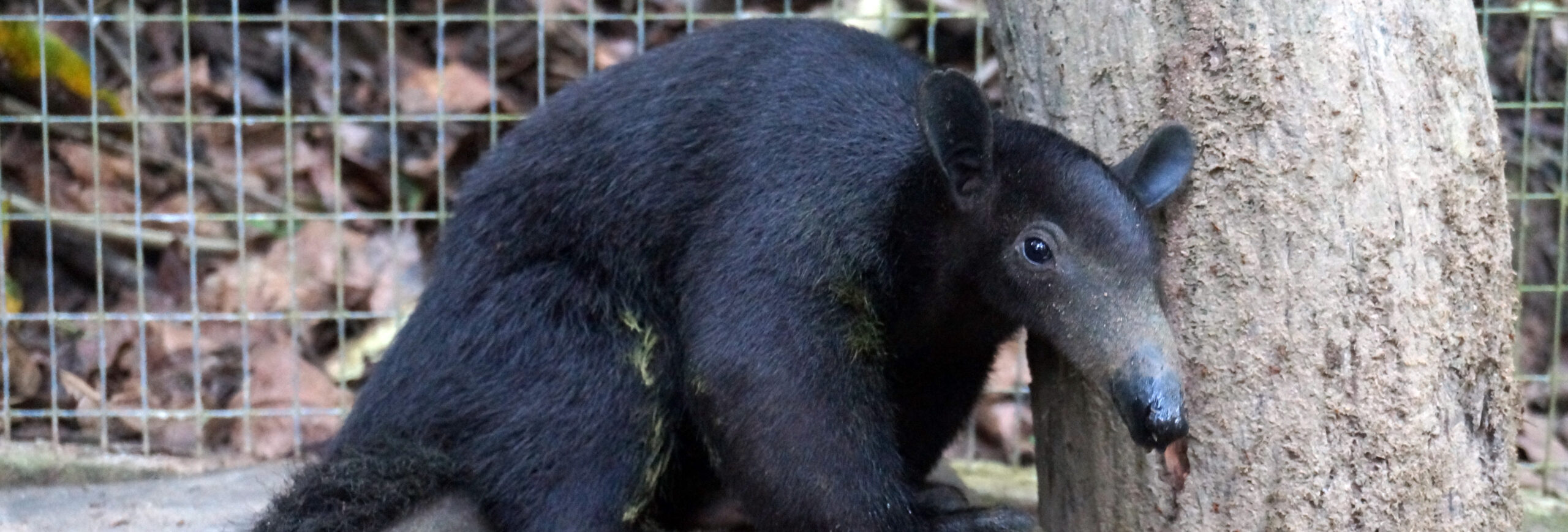
Rincay (male Brazilian tapir)

Rincay
Rincay

Rincay has fallen ill recently. During his regular feedings, volunteers noticed he was eating considerably less than usual and wasn´t waiting by the gate like he usually does for his food. Olivia and Douwe have been checking on him frequently, giving him chamomile tea, forest leaves and extra spinach to help him. Normally playful and in the way, Rincay started acting skittish when people came near him. He stopped showing up at the gate for his food, causing more concern for his health. He is currently under treatment, and we hope we will get him back to his normal self soon.

Lulu (female two-toed sloth) and Elmo (male two-toed sloth)

Lulu
Lulu
Chipping Lulu
Chipping Lulu

Lulu has been doing exceptionally well in her new cage. Recently, we have started taking her outside in the afternoons to practice her climbing. She caused some panic with how she was climbing, but this a great sign! One day, Lulu wasn´t coming down when we called her, and reluctantly, she was left outside for the night, too high up for anyone to get her. Everyone was looking for her the next day. To our surprise and delight, we saw Elmo in a tree past one of the bird cages. Lulu was found a few hours later, when Douwe built a small table for her to find her food. It´s a great sign Elmo was near Lulu, and we hope the two of them will continue to be friends. Now Lulu is outside and we see her every other day, so we can keep on checking up on her, sometimes taking her into the clinic to weigh.

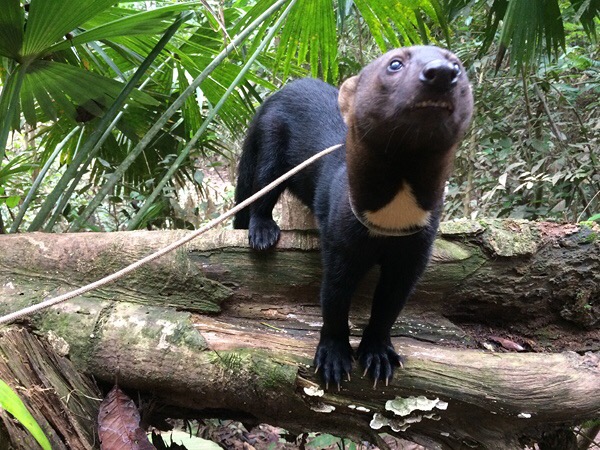
Zambo (male tayra)

Zambo
Zambo

Our resident tayra has been a hot conversation topic around Esperanza Verde as of late. As you may know, Zambo is leashed up twice a day to be taken outside for a walk. Once he is far enough away from the center, he is unleashed and allowed to walk freely for a few hours. Volunteers have encountered a problem when it comes time to re-leash Zambo, and he becomes difficult to walk with, constantly trying to play or jump at them. We have been throwing ideas around with Douwe, speculating if the harness leash was rubbing him wrong or if he was growing bored from walking the same paths. The people who walk Zambo continue to come up with different methods to deal with Zambo. We´ve started providing enrichment for Zambo every day, including putting pieces of rotten wood in his cage for him to claw and find insect larvae.

Tamana (female tamandua)

One night Claire heard some noise outside of the cabin, and while searching we were happily surprised to find Tamana in a palm tree enjoying termites from a big nest hanging there. We weighed her quickly and let her enjoy the rest of the termites again. She is doing very well.

000

Birds

Sheena (tropical screech owl)

Sometimes animals are easy to care for, and sometimes it takes a village. Sheena has adapted well to living outside of the clinic. She is fed crickets and meat three times a day, which means our volunteers continue catching crickets for her each day, although this has become quite an endeavor with crickets being harder and harder to find at the plantation. Nonetheless, we continue catching them to feed our favorite screech owl. Sheena continues practicing hunting the crickets in her cage. The better she gets, the more chance she will have of a successful release in the wild. For now, we are continuing with our efforts with the cricket farm and looking for new places to catch crickets.

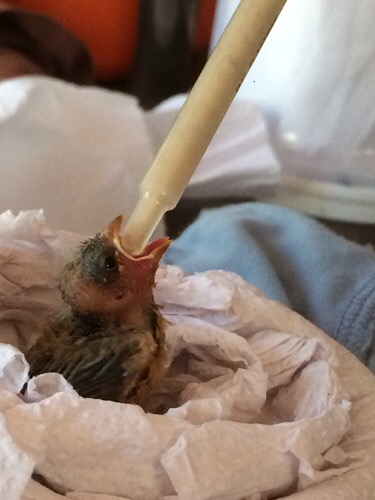
Five baby birds (two doves, two tanagers and one of yet unknown species)

Baby Bird feeding
Baby Bird feeding

In a matter of two days, five young birds have joined our midst. Two boys from the village were climbing a coconut tree when a nest fell out, containing two baby birds. They hid them in the bushes, but another child warned Kayla and with the help of a teacher found they were handed over to Kayla to bring to Esperanza Verde. The birds were fairly bold the first day and after 5 days got beautiful green feathers.
The same day of their arrival, a young girl from Bello found a broken nest with two young doves and passed them to Kayla. The next day, a boy found two birds. Unfortunately, one of them died but the other seems to be doing well. A very tiny bird, the smallest we have had in our care ever with only 5 grams. The species cannot be determined yet.
All of the birds require round the clock feedings. The doves are old enough to live in the clinic now, while the other three are being cared for at the family house.

000

SUST Animal Orphan Hospital

Marlen with Misha and Manchon

For a time, Pinto (the small tortoise) was the only resident until the arrival of Uma. We said goodbye to the two house cats who are now both at a local family.
We decide to use this time to do a deparasitation campaign in the village, with a lot of success and followed by the visit of two dogs from the village for castration.

Pinto (yellow footed tortoise)

After spending a long time in the clinic, Pinto was finally ready for a new home! Pinto came to us in April, and he got his name because his shell had been painted over (thankfully the paint could be washed off). He remained in the clinic to be treated for parasites, and after checking him over one last time, he was deemed healthy enough join the others in the reptile enclosure.

Deparasitation campaign

Team SUSY
Team SUSY
Marlon with a Puppy
Marlon with a Puppy

With the sponsorship of the Susy Utzinger Stiftung in Switzerland, Esperanza Verde was able to conduct a deparasitation campaign in Bello Horizonte. It was hugely successful, with many people from the village bringing their dogs (and a few cats) to be treated. French head volunteer Claire, German veterinary volunteer Marlen, and Swiss volunteer Philip also helped Olivia and Douwe during the day. Overall, 41 animals were successfully treated. We hope to have more campaigns in the future, because it not only helps the animals directly but helps us to educate their owners about the importance of their pets’ health and their own safety.

000

Construction

Deer enclosure

Thanks to an incredibly generous donation from Lush Cosmetics in England, our vision of an enclosure for the two deer, Rabito and Ringo, can become true. The enclosure will be built across from the spider monkeys´ cage. Already construction has begun, with posts being put up around the area. More work will be done when building materials arrive in a few weeks from Lima. We are incredibly thankful to finally have a proper home for the red deer, who have waited patiently since their arrival in early 2016 for a place of their own.

Cricket farm

Babies have been heard in our cricket farm! Everyone was delighted by this success, but of course it couldn´t be that simple. The cricket babies were so small that they could escape through the fine wire mesh of the boxes. Thankfully, with the farm being in the bodega, volunteers are able to catch some of the escaped crickets. We are loathe to give up on the farm after so much work has been put into it, but our efforts are not producing the results we wanted. It may be time to look elsewhere for more crickets.

Monkey table

At long last, construction on one of the three monkey tables has finally been completed. A cement platform was built underneath the wire table used for feeding the monkeys. Douwe felt inspired to finish it when volunteers complained it was difficult to clean up the food that was dropped. It´s important that we clean up the food as best as possible or ants and other insects will be attracted to the area, putting people and animals at risk of getting bitten by bullet ants.

000

Volunteers

Last month our Swedish volunteers led us in a celebration of Mid-summer, and this month our group of Americans decided to throw a party for the Fourth of July. They made the jungle version of food they would eat at home and sang the national anthem a few times. Everyone had a great time with a bonfire, cake, and playing Bingo, which Douwe won both times.

Earlier this month, most of our volunteers went on a day trip to the Regalia, a large waterfall upstream of the main river that cuts through Bello Horizonte and Esperanza Verde. They all had a great time, even when a storm broke on their way back. The water level was so low, they had to get out several times to push the boat across the surface and wade through the river until it got deep enough again. Of course, it was back to work as usual when they made it back.

Our long-term volunteer-assistant manager Alex has left for a month to explore Peru with another volunteer, and we are excited to welcome back Claire Gillant from France as her replacement. Claire has extensive volunteer experience, having been a volunteer two years ago at Esperanza Verde as well as spending time at Merazonia. She will be staying with us for several months, and taking over from Alex when she leaves for home to start studying.
Esperanza Verde Update / June 2017

Monkeys being released, monkeys being closed in and the Dalton, (5 cobalt winged parakeets) which we raised from young, finally got to see a life outside of a cage. The running of a wildlife rescue center gives a lot of joy & sense of accomplishment but not all of the decisions are easy ones and this month we unfortunately had to make one of the harder ones. You can read more about all of it below…
.

Monkeys

Lia, Rioma & Tisha (female brown capuchins)

The three females which were lured back into the cage after it had accidentally been left open are now released. They enjoy their freedom and are hanging out with the other capuchin monkeys. Of Selma (female brown capuchin) and Kaito (male white fronted capuchin) we have only heard that Machico saw them possibly with a group of squirrel monkeys at the plantation. We hope it was them and that they are doing well.

Mica, Kres & Maku (female brown capuchins and a male brown capuchin)
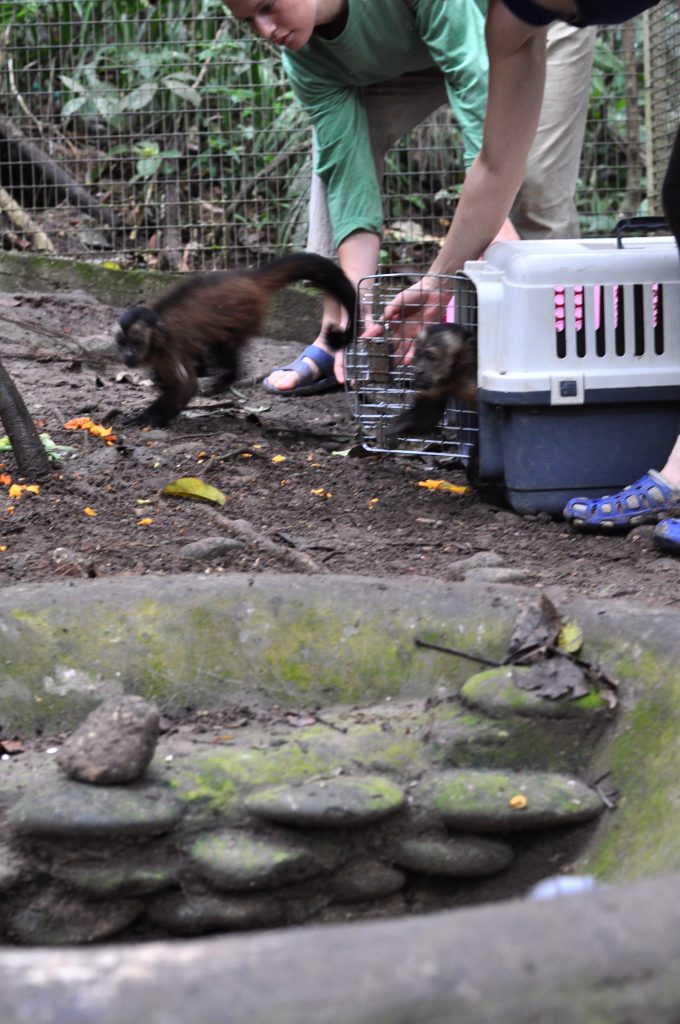
Mica and Maku
Mica and Maku
Kres and Mica going with Maku
Kres
Kres

Micas attraction to Alexandra, our assistant manager, continued to stay strong and once again she managed to get to Alex in order to give her a ’love’ bite. It was unfortunately placed around the Achilles tendon so Douwe had to make some crutches for her to be able to move around. As we can´t keep going on like this we decided to catch the big new male Maku and match him up with Mica. They are now together with Kres, the young female brown capuchin we received last month, in La Sapa cage. It was not love at first sight, but at least they spend the first night sleeping close to each other. And after two days she was giving him a full grooming session. We hope it will work out, and Mica finally stops searching among us for a mate. Who knows, we might have the first baby capuchin in about 6 months!!

Monano (male woolly monkey)

Monano released
Monano released

The baby monkey group is just growing and growing! Monano spent some time in Lucia cage but has now joined the others on the outside. In the beginning we were a bit worried since he seemed to like following the humans everywhere but he quickly realized who his real peers are and him and Pashko seem to get along really well. At the moment though he is having some trouble with his right hind leg. Volunteers heard a monkey screaming and it was Monano that had gotten his foot stuck in a fork of a tree. A volunteer quickly got him out of there and we gave him a check up; nothing seems to be broken so we hope he will heal himself.

.

Other Mammals

Ossi (Male olingo)

Since a couple of weeks back Ossi has not been back to his cage during the day. He was encountered recently by a local worker, so we hope that there are other Olingos nearby and he can join them. We wish him the best!

.

Birds

The Daltons (cobalt winged parakeets)

Two daltons on arrival
Luke and the Daltons on arrival
Daltons going out
Daltons going out

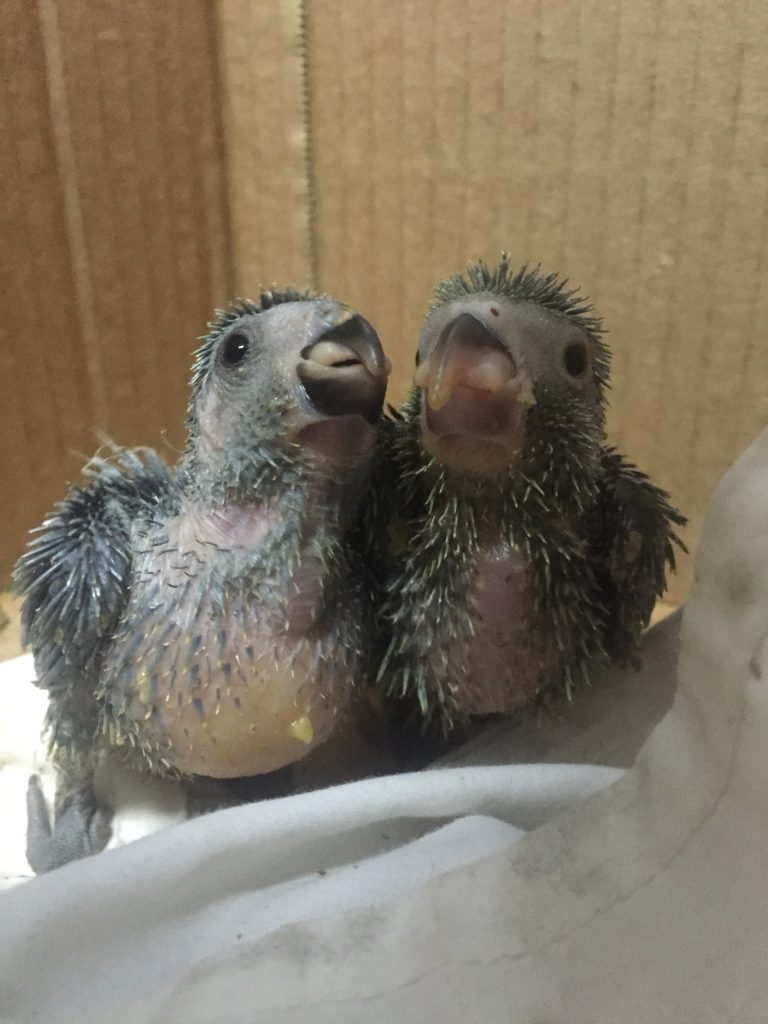
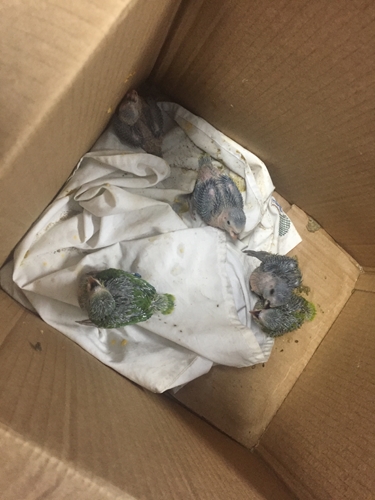
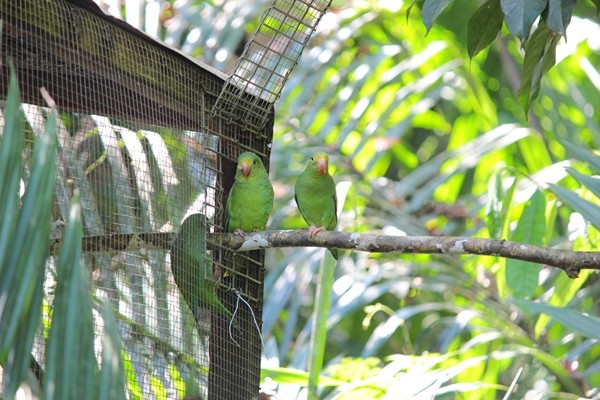
Luke, Jack, Everell, William & Joe are finally released! They started their journey back in September last year when they arrived here as small chicks. Hand fed by syringe they were raised by us. And in hope of not getting them to tame (we never petted them or let them get on us) they were put together with the non-flying parakeets and have been with them since. It seemed they were learning more and more to stay away from us. In the beginning they would still fly toward us at feeding time, but in time you could not even catch them when we tried. So the time came to do another separation between flyers and non flyers. We thought The Daltons should get their chance and together with the other flyers they quickly made their way out to freedom! Unfortunately it did not entirely turn out this way. On the second day, one of The Daltons was unfortunately caught by Axira (female white fronted capuchin) and killed. Because of this we’ve reviewed our release policy and birds considered too tame will be recaught. So by now we have two Daltons back, and two are still out with several white-winged parakeets. Let’s hope they learned and will be able to make it on their own with the help of the other outside parakeets.

.

SUST Animal Orphan Hospital

This month there were a lot of animals leaving the SUST Hospital. Even our long-term Lulu is now gone, although she is still been taken care for by the clinic-person. And Pinto is still a guest as well as Rabito. We had some new arrival, not all wildlife, but also two house-cats.

Sheena (tropical screech owl)

Sheena in her box
Sheena in her box

After some time in the clinic Sheena has now moved to an outside cage, where she can fly a longer distance in order to strengthen her wing muscles. Sometimes it is a bit hard for her with all the distractions that comes from living outside, such as interested monkeys jumping on the cage and even the wind! But she is eating well and seems to enjoy her new temporarily home.

When Sheena first arrived we believed her to be a tawny-bellied screech owl but after having her here for a couple of months we have now determined her to be a tropical screech owl.

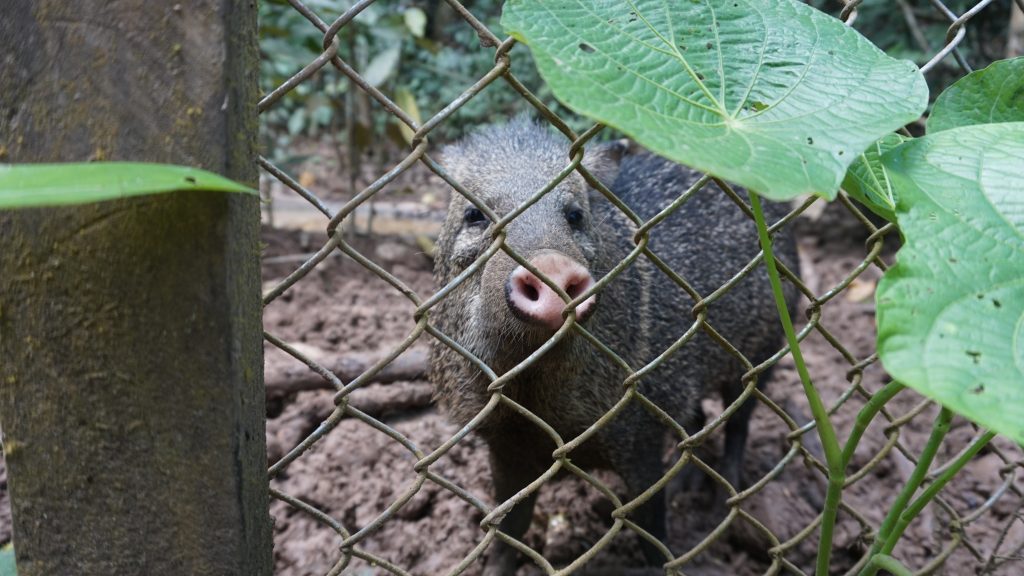
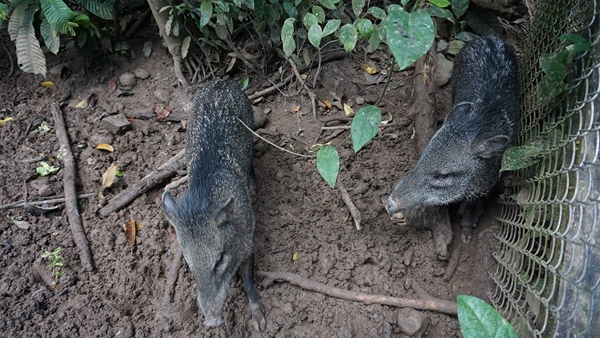
Quintisha, Kohana and Timo (Collared Peccaries)

Quintisha
Quintisha
Peccaries
Peccaries

This month the turn came to the peccaries to be chipped! The only one that got successfully chipped so far is Timo (no strange thing since he is the youngest and tamest one & he has the smallest tusks!). Douwe, together with the help of Kayla, got him closed in against the fence with a piece of wire mesh and was able to chip him! Now only awaits the two bigger ones!

Lulu (young female two-toed sloth)

Lulu in Roko cage
Lulu in Roko cage

Due to the capuchins being in La Sapa cage the move of Lulu has, once again, been delayed. That’s just how it works in the jungle, you never know what might happen! But as we had another cage empty we decided to make the Roko cage ready for her. A bit smaller but a good start for a first outside cage since it is closer to the volunteer kitchen so we can keep a good eye on her. She is doing well, adapted very quickly and has even begun to eat her raw green beans!

Chili (Black fronted Nun-bird)

Chili
Chili

After treating Chili (with the splintered bone fracture in his wing), it still showed too little progress. The wing would have to be amputated, and if Chili would survive this operation and long and hard recovery it would still only be able to live either in a small cage or in a outside cage on the floor with other birds above him. After a lot of contemplation between our volunteer veterinarian Marlen from Germany, Alex, Douwe and Olivia, we could not see a future for this not tame bird and could not see him being happy with either situation so we decided for euthanasia. As always these decisions are one of the hardest to make. We hope people can understand, and how important it is to educate children and adults about these problems. The children who caused this (shooting him with a slingshot) simply have no idea about the pain they cause. We see education as one of our priorities here at EV. Kayla and Marlon form an important part in this already, as they go to the local school and explain to the children about our work. They do a great job as many rescued animals have been brought home by them from school

Yellow footed tortoise

new tortoise released

With help of the local community we are able to save a lot of animals, this time it was one of our workers who had found a tortoise on his plantation. For fear of being taken by people he brought it here. And not a small one, almost 7 kg! The problem with tortoises of this size is that they are valuable for their meat and are easily encountered. After a feces sample we saw that it was without parasites so we decided to release it in the woods behind the family house where we hope it will not encounter humans.

Martha (yellow footed tortoise)

After several weeks in the clinic trying to get rid of various parasites she is now almost completely clean. And even thought she is not rid of all of them we have decided to give her some more space by moving her to Momo cage (the enclosure that surrounds the long term volunteer cabin). Once she is ready she will be the new companion of Pepito, also yellow footed tortoise, and Rincay, the tapir!

Misha

Misha on the scale
Misha on the scale
Marlen doing castration

A surprise visit we did not expect: a house cat! One day a grey cat was seen at our plantation, and later near the garbage burning oven. Then some time later she followed one of the volunteers and we got her into the clinic. We asked around in the village if someone was missing a cat, but no one came forward. Very skinny and full of parasites we took her in. We have now found a good home with a local family. They said they would take her, but as they also had a male, they would prefer not to have kittens. Marlen castrated her (yes, you do say this also with females when you cut out the ovaries) and treated her for parasites and now she is almost ready to go home again. Someone also brought the male cat over, to be castrated, and to get to know Misha, before they go home together. Since we began to go to the village a few years ago as part of a deworming program, people come to us more and more for help with their pets. Through this programme we have been able to help with deworming, infections and castrations to keep the growth of abandoned dogs and puppies down. This has all been possible thanks to the ‘Susy Utzinger Stiftung’ in Switzerland, as they financed these programs as well as all the running costs of the Hospital.

.

Construction

Storage Building

Since the Guest house is now completely finished and ready for use the work has started on the storage building. The construction of the storage building was started late last summer and was paused due to the construction of the guesthouse. The purpose of the storage building is to have a place to store tools and the food for the volunteer kitchen. It will also have a roofed area outside which will make it easier to construct things during rainy days.

Cricket farm

The crickets got their first offspring. Well done Kaspar, Nico and Rob! After we heard them singing for the first time several weeks ago we had high hopes. The outside-cricket catching takes a toll on all, as it gets harder and harder to find them. It is as if they know we are coming! So with this progress we hope we can put less pressure on the outside crickets as well as on the volunteers catching them.

If you have any experience from breeding crickets and could give us some tips e-mail us at info@esperanzaverdeperu.com

.

Volunteers

This month the volunteers went on a walk in Selva Dormida with Geiler, one of the local workers. Also Bert-Jan from Holland has constructed a boot rack where we can store our boots. They are stored upside down so hopefully the will dry faster (and prevent monkeys to pee and poo in them!). A job many already thought of and tried, but finally it got there!

Since we have two Swedish volunteers here at the moment we also got to experience Midsummer, a tradition which is celebrated in Sweden each summer on 23 of June. And to mix it all up the day after we celebrated San Juan, a Peruvian tradition, where you eat food made in a leaf package, called Juanes. It represents his head, as this saint gave his head up to help people. We ate our juanes at the waterfall and had some nice relaxing moments in the water and sun!

Esperanza Verde Update / May 2017

Another eventful and exciting month has passed here in the jungle! We’ve had visits from both new and old animals. Elmo made a quick appearance and Olivia and Douwe were able to weigh him and make sure he was okay. It is always a great pleasure to see old residents of Esperanza Verde living a thriving independent life. A wild male capuchin also showed up and for a brief moment we thought it might be Jordi. Jordi, one of our older male capuchins had been missing for several weeks, but this was a new face! It seems he replaced Jordi as the alpha male.
And special wildlife sightings: a king vulture and a caiman (1,5 meter long) living in the stream near the family house!

M

Monkeys

Cappuchins cage
Cappuchins cage

Kaito (male white-fronted capuchin), Lia, Selma, Rioma & Tisha (Female brown capuchins)

Just like animals we humans are not perfect. The main lock on La Sapa cage, where our newest capuchins are staying, was not properly locked. As intelligent as the capuchins are they quickly figured this out and were able to escape! Three of the females were quickly located and lured back into the cage. But Kaito and Selma are at the moment still out and about. We were not planning on releasing them until the beginning of June, to give them some time to adjust to their new home and let the already existing monkeys safely get familiar with the new group through the cage. So now we all have our eyes and ears open for Kaito and Selma and if the other monkeys are acting up around them.

Babymonkeys (4 woolly monkeys (Lupa, Samara, Pashko, Chiquita), 3 capuchin monkeys (Axira, Khali, Cinty) and one baby red howler monkey (Wallace)

Our group of baby monkeys that just seems to grow and grow is doing very well. They bask in the sun on nice days, climb high up in the treetops with the grown-ups, play around and enjoy each other’s company. They are all evolving into their own personalities and it is incredible to observe their progress.

Loki & Maruja (Woolly monkeys)

The two young woolly monkeys were adjusting fine in the outside cage and have been released to join the outside group! They are working well with their fellow monkeys, Maruja especially with Kamari (grown male woolly). You will often see her hanging out on his back teaching her the ways of life. At times Loki will fall back into his old habits and either reach for volunteers or grab on to them, but he is getting more and more interested in his monkey friends and less occupied with humans which is a good sign.

Wallace (Baby howler monkey)

Maruja and Wallace playing

This month our baby boy took a big step forward. At times he left the safety of Alex’s cabin and slept outside with the other monkeys. He is still under surveillance during the days though, as his mood can quickly change and he slips into a depression. He is one moody monkey who has stolen everyone’s heart.

O

Other Mammals

Soraya (female porcupine)

After so much time, and with some outside help, we finally figured out the exact species, and no wonder that it was hard, as apparently this species has not often been seen. She is a western Amazonian dwarf porcupine or Coendou ichillus. She has adapted well to living in an outside cage again, after the long period of stay at the hospital. The wound on her leg has recovered but she is still weak with her right hind leg (when she arrived she could not move it at all), so we fear we will not be able to ever release her.

Ossi (Male olingo)

We have now started to open Ossi’s cage during the night, which has been quite successful. At times he will stay out in the jungle for a week and then decide to make a short appearance and shows his cute face. We see this as great progress as he arrived as a baby, was raised by humans and now can be out in the wild all on his own!

B

Birds

King vulture
King vulture

This month the birds have not caused too much ruckus!

Hoatzin
Hoatzin

We received 2 hoatzins that died shortly after they arrived. The necropsy later revealed that both of the birds had a lot of food in their crop that they should not have eaten, possible causing problems. They were beautiful birds, taken out of their nest so young and we did our best and hoped, but were not able to keep them alive. It is very hard for any young animal to survive the first human intervention!

Churi (many-banded aracari)

Churi in aviary
Churi in aviary

tested his wings again in the large aviary cage but was later taken back to Pepe cage where he now stays alone. This time it was Churi who was intimidated and stressed by the other birds, not the other way around as it has been before, what goes around comes around! He was supervised during his short visit in the aviary but still managed to disappear into the cage and after a couple of minutes of intense searching he was located and taken back to Pepe cage. This process will be repeated a few times a month to try and ease Churi in with the other birds so he does not have to live a life alone in his cage.

S

SUST Animal Orphan Hospital

Lulu (young female two-toed sloth)

Lulu and Elmo
Lulu and Elmo
Elmo and Olivia
Elmo and Olivia

Our young female sloth is no longer a baby; she slowly is taken of off her milk and is stimulated to eat more raw vegetables and wild-leaves. She is taken out still twice a day for a walk and for climbing in trees, and soon she will be moved out of the hospital to a big outside cage. As it fits a sloth we prepare her slowly for her release. This month she had a first encounter with a con-specific: Elmo (our released male sloth). While weighing Elmo we got them acquainted, and Lulu had a chance to smell and lick Elmo’s face.

Sheena (tawny-bellied screech owl)

Our very own Sheena is excelling at her training and now eats up to 50 crickets a day! This means more frequent visits to the plantation to catch crickets for the volunteers. Our Swiss volunteer Kaspar and French volunteer Nico have now, with some help from Douwe, finished the cricket farms. We are still in a trial period trying to figure out how it will be the most effective. So far the farm has not successfully produced any new crickets, but we are hopeful and optimistic about its possibilities.

Chili (Black fronted Nun-bird)

Chili in SUST AOH EV
Chili

Chili is another addition to the SUST Animal Orphan Hospital this month. Just like Sheena he eats crickets, thankfully not as many! He is one little nervous guy who we are looking forward to treat and take care of. He was shot out of the tree with a catapult. The stone splintered one of his wings and he might never be able to fly. We are treating him and will wait….sometimes animals show amazing recovering!

Monano (Male baby woolly monkey)

Monano
Monano

This month we received another baby woolly monkey! He came from a local family in Bello Horizonte, after Olivia had spoken to the family about how he could have a better life over here at Esperanza Verde with his own species. They realized she was right and brought him over a couple of days later. He is named Monano and is a 14 month old male who right now stays in the SUST Animal Orphan Hospital.

When he arrived his checkup showed that he was healthy, except for a couple of sand flea eggs in his foot that Douwe quickly removed. He was chipped and now spends his time playing in the hammock in his cage. At times you will find Maruja (baby woolly) or Loki (young woolly monkey) sitting outside of his cage observing and curios about their future new friend.

Chipping of the outside monkeys

Chipping Camila
Chipping Camila
chipping Yanay
chipping Yanay
chipping Nikita
chipping Nikita

The process of chipping all our un-chipped animals was also set in motion during May. We successfully chipped several monkeys and we were at the same time able to find out the sex of Camilas (female squirrel monkey) baby, and it’s a female! She is now named Canila.

Camila with her baby

The monkeys we managed to chip were Camila and her baby (female squirrel monkeys), Sira (female nightmonkey), Yanay (female spider monkey), Nikita (female capuchin), Nakoya and Chiquita (female woolly monkeys) and Monano – our new baby woolly monkey. So far the most difficult one left, is our big woolly monkey friend and strong male, Kamari.
And then the peccaries……..

The chipping is a stressful moment for both animals and humans but is a necessity if the case ever comes that we have to be able to identify our animals.

Mica is continuing to show an affectionate behavior towards our assistant manager Alexandra, and we took the moment in act of being able to get close to her to catch her, and she will stay with the new capuchins in the La Sapa cage. This way we hope she will bond with them, so they can be released together.

C

Construction

Guest House

Porch of the guest house

The guest house is nearly complete! There are some finishing touches that need to be done but in the near future it will be ready to welcome its first guests.

Cricket farm

Kaspar and Nico have been working hard to get the cricket farms ready and we have finally started the process and put our first couple of crickets in. Right now we are having some issues with ants entering the boxes and killing several crickets. We are working on different solutions to prevent this. Hopefully this will be the permanent solution to “The cricket situation”, but for now we are still hunting on the plantation every day. Our estimation is that we have caught approximately 2000 crickets during this month already!

V

Volunteers

Another successful trip to the Regalia waterfall was done. A night walk with Douwe was also organized, which is always appreciated and exciting. A month filled with many nice bonfires, laughs and good meals from our new chef Doña Flor!