The latest news (05.11.15 – 19.11.15)

General Info

Tupak Door
Kitchen Door

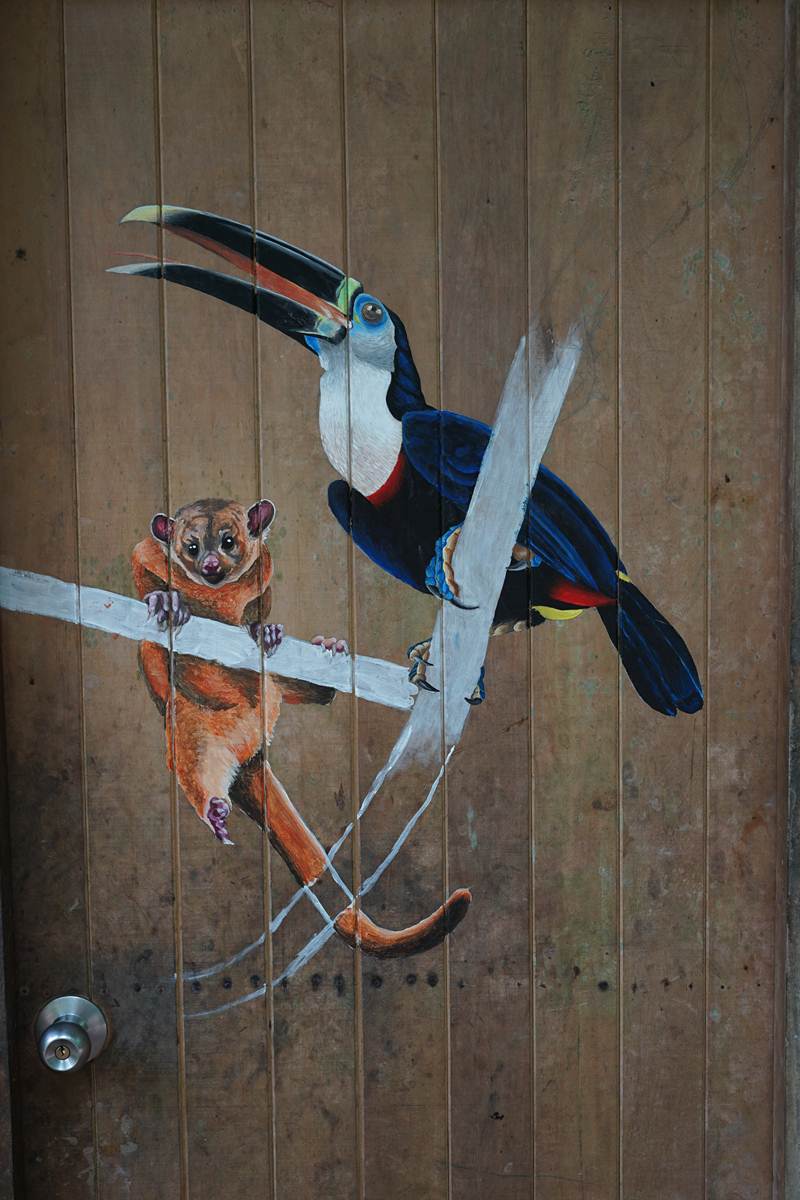
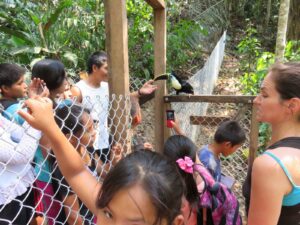
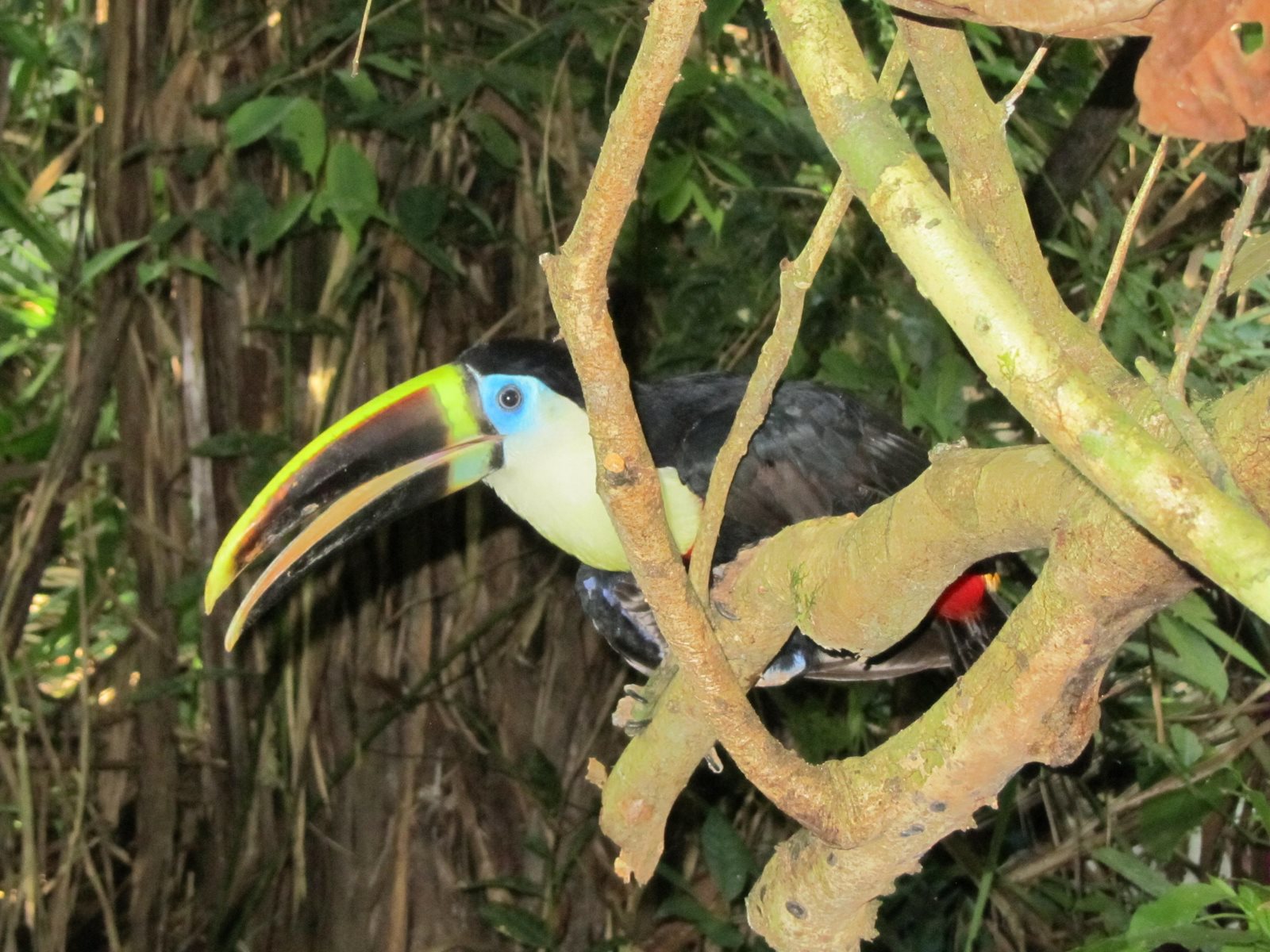
After nearly three weeks the paintings on the doors at the kitchen are nearly finished. Elmo got companionship of a squirrel monkey and in Tupaks portrait Kiko makes a cameo.

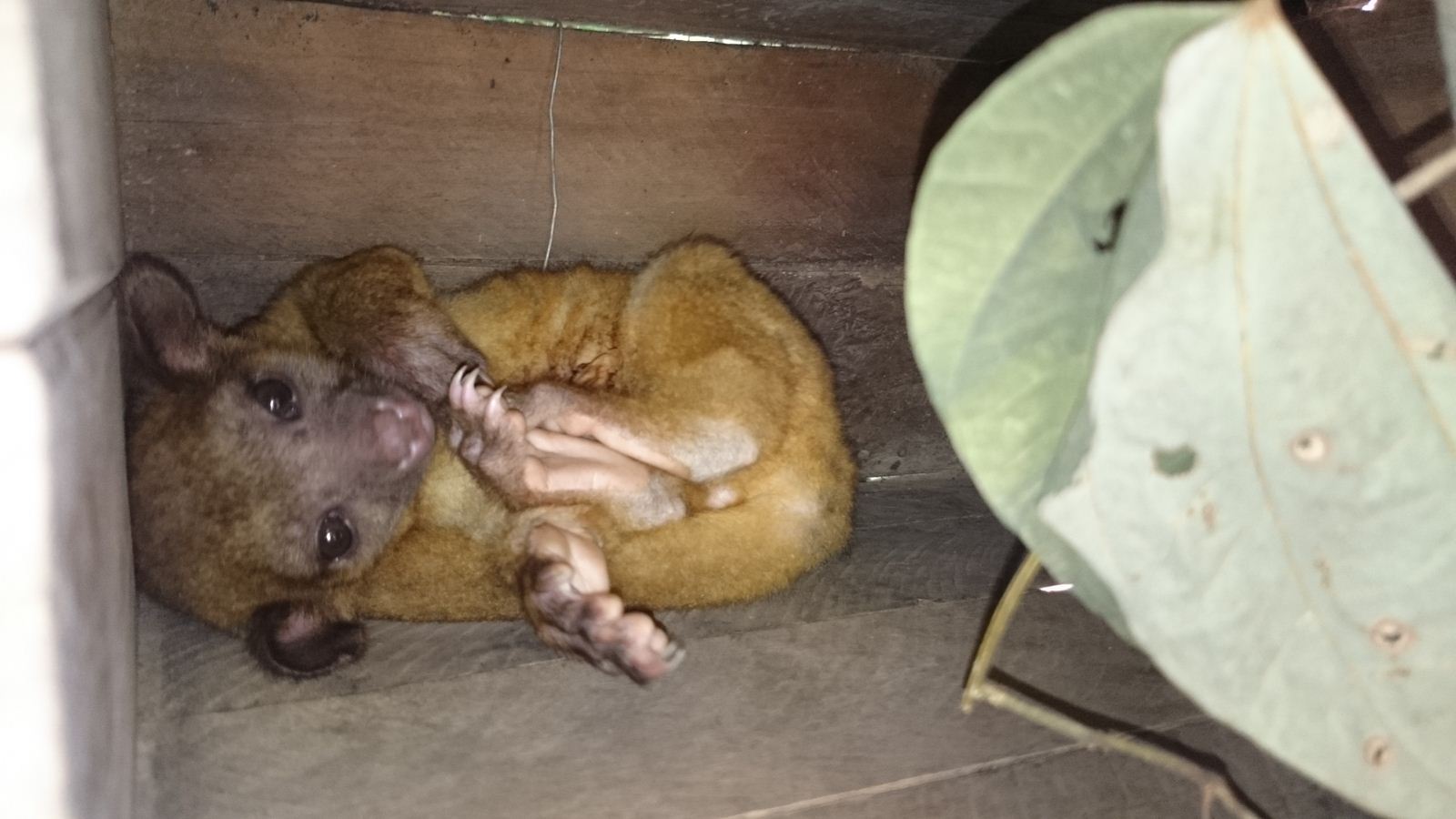
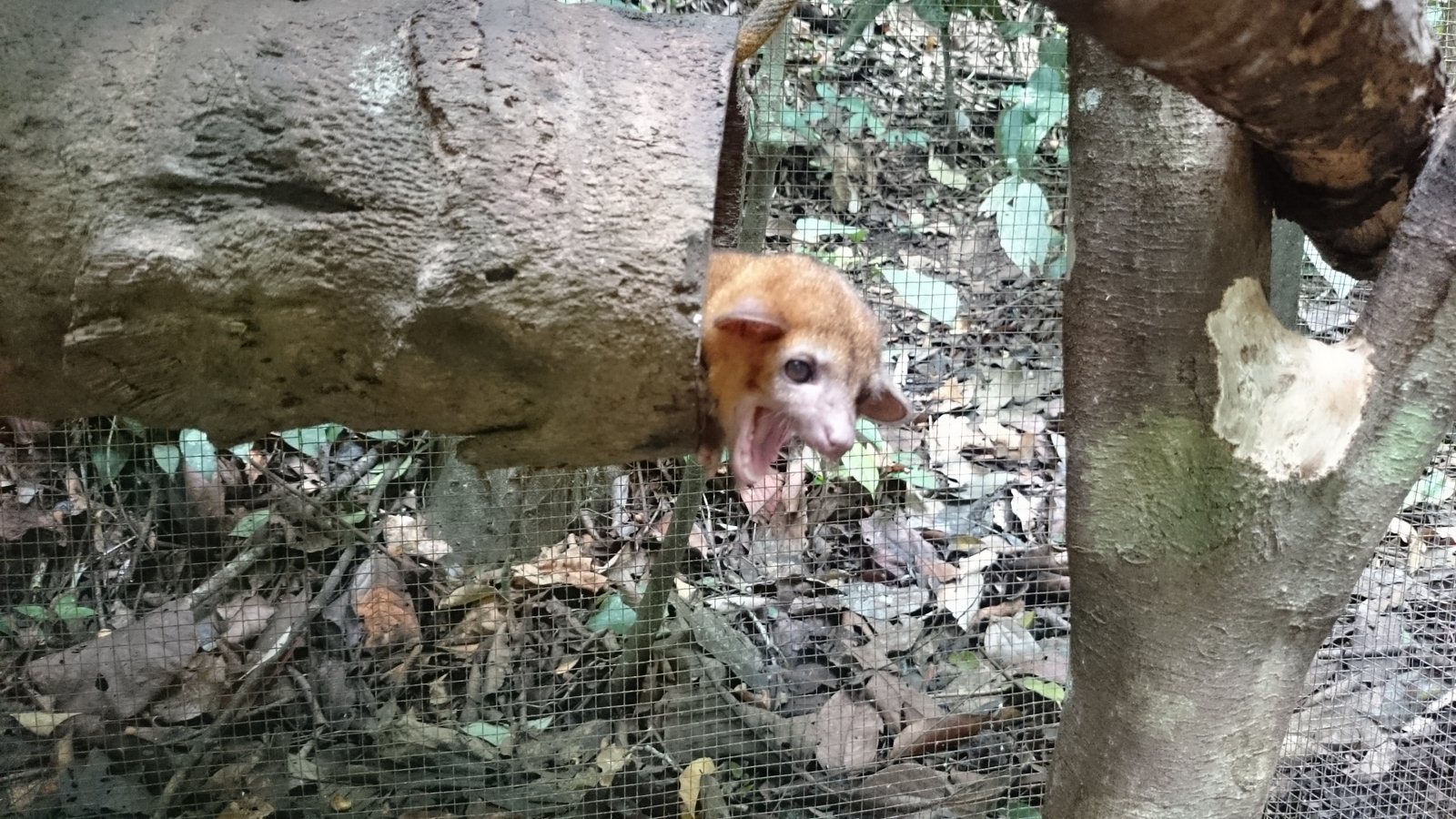
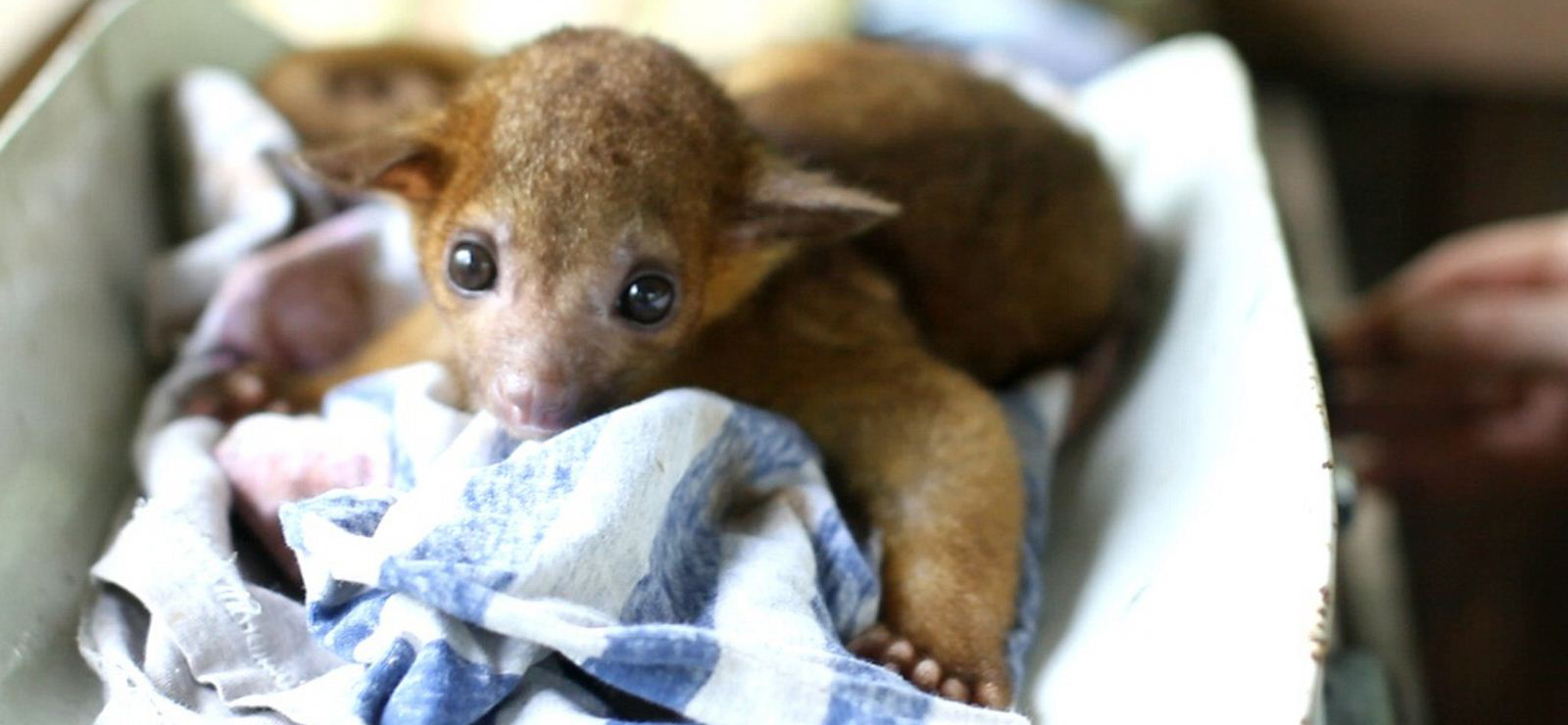
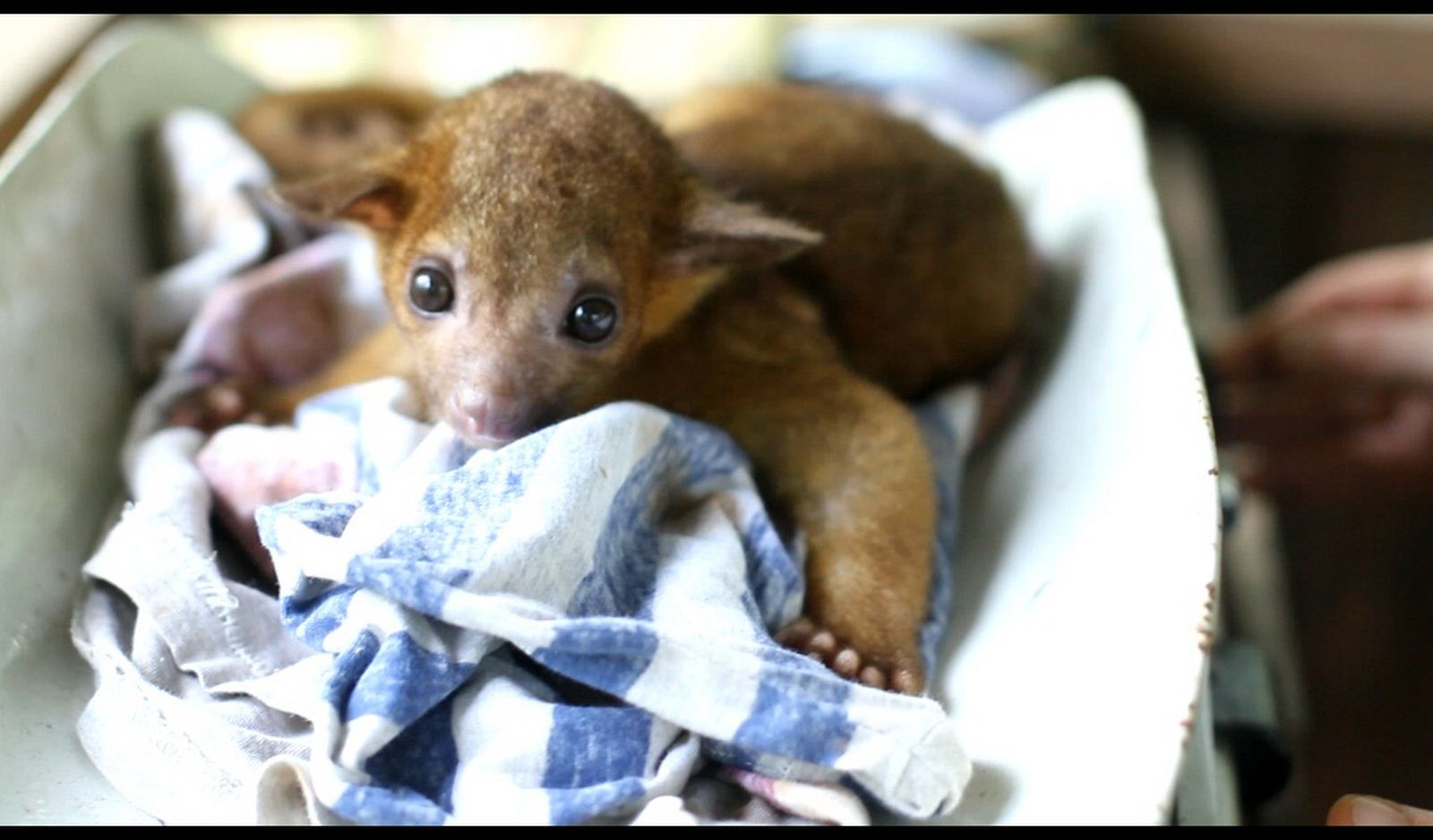
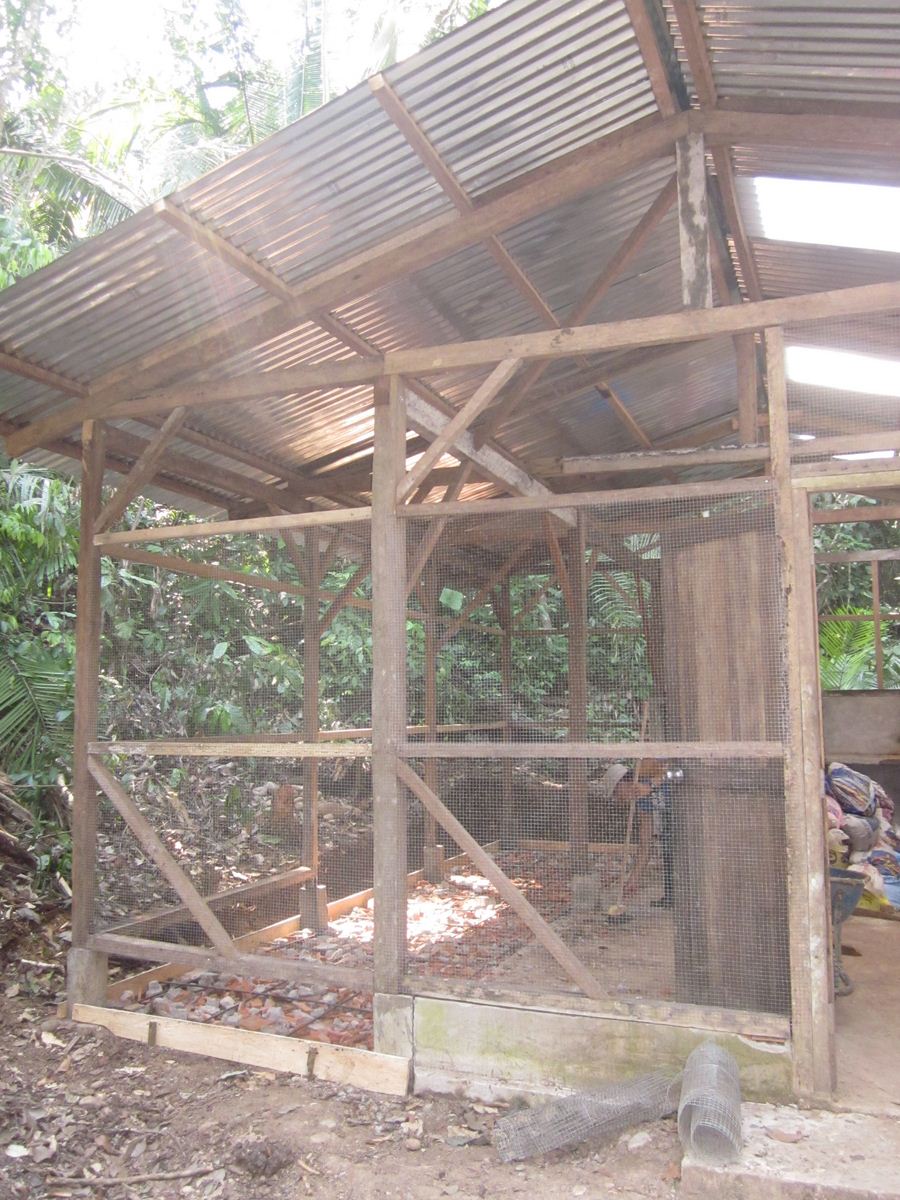
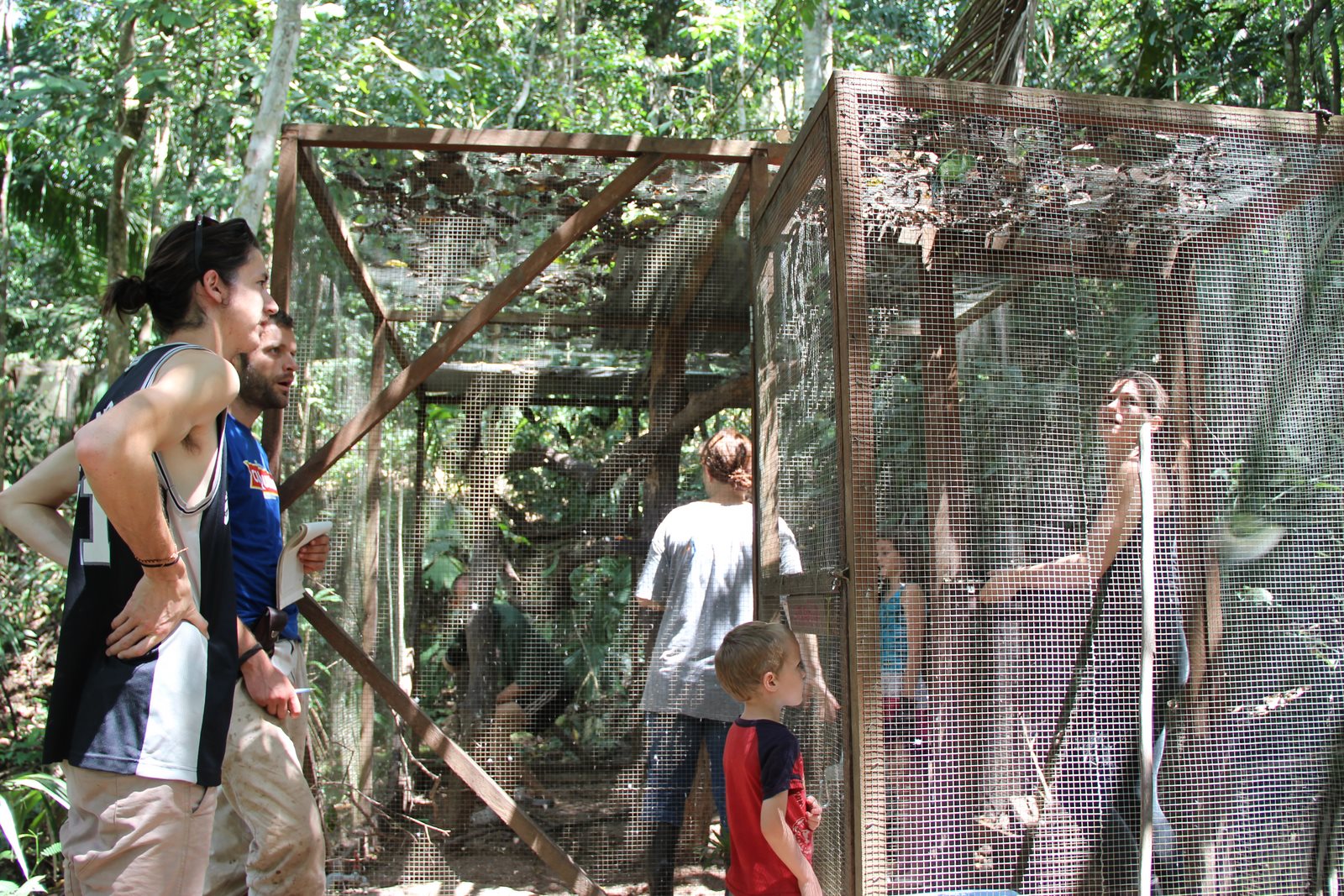
One of the oldest cages in Esperanza Verde (Pepe) is out of use and is currently being demolished. The wood of the cage was old and mouldy, so we moved the inhabitant (Kiko, the young kinkajou) to a better and bigger cage and started to break it down. Pepe cage served well for a long time and always reminded us of the small and humble beginnings of Esperanza Verde.

Two women from the ministry of Pucallpa came by to inspect our project and stayed for a while in the kitchen dorm room. Of course we expect everything to be in order, while giving Olivia a bit more of administration.

M

Monkeys

Yanay with Kamari
Yanay with Kamari

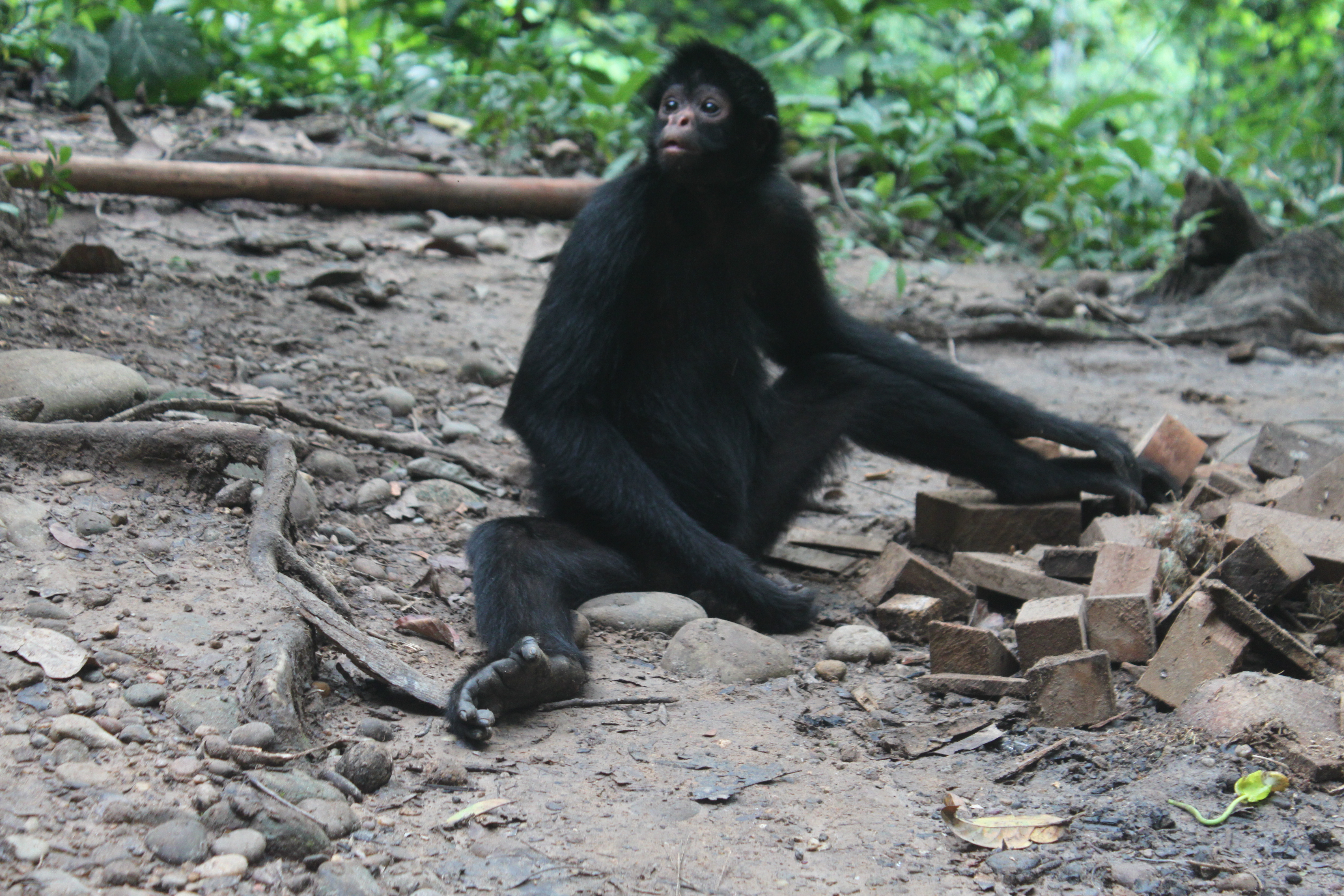
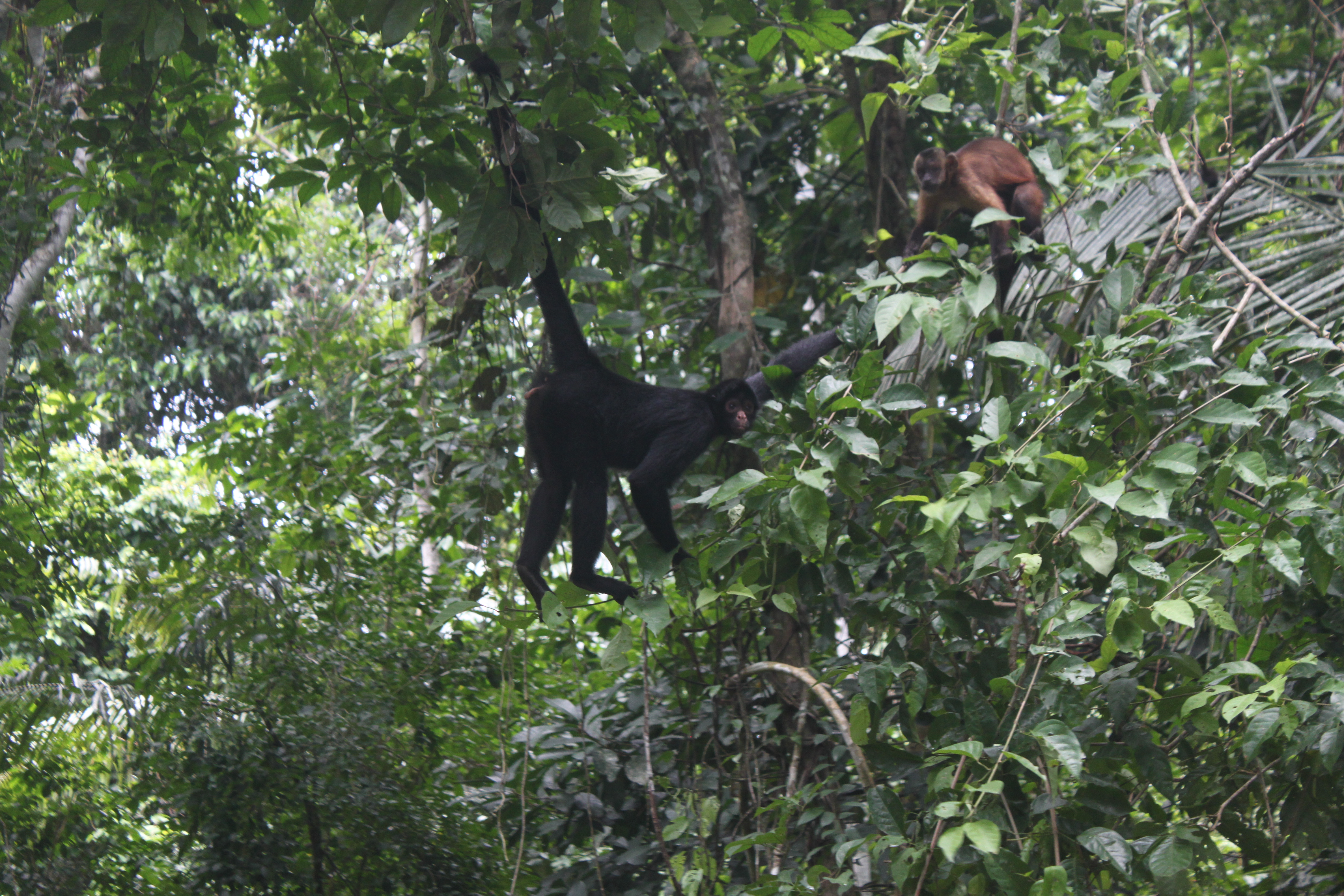
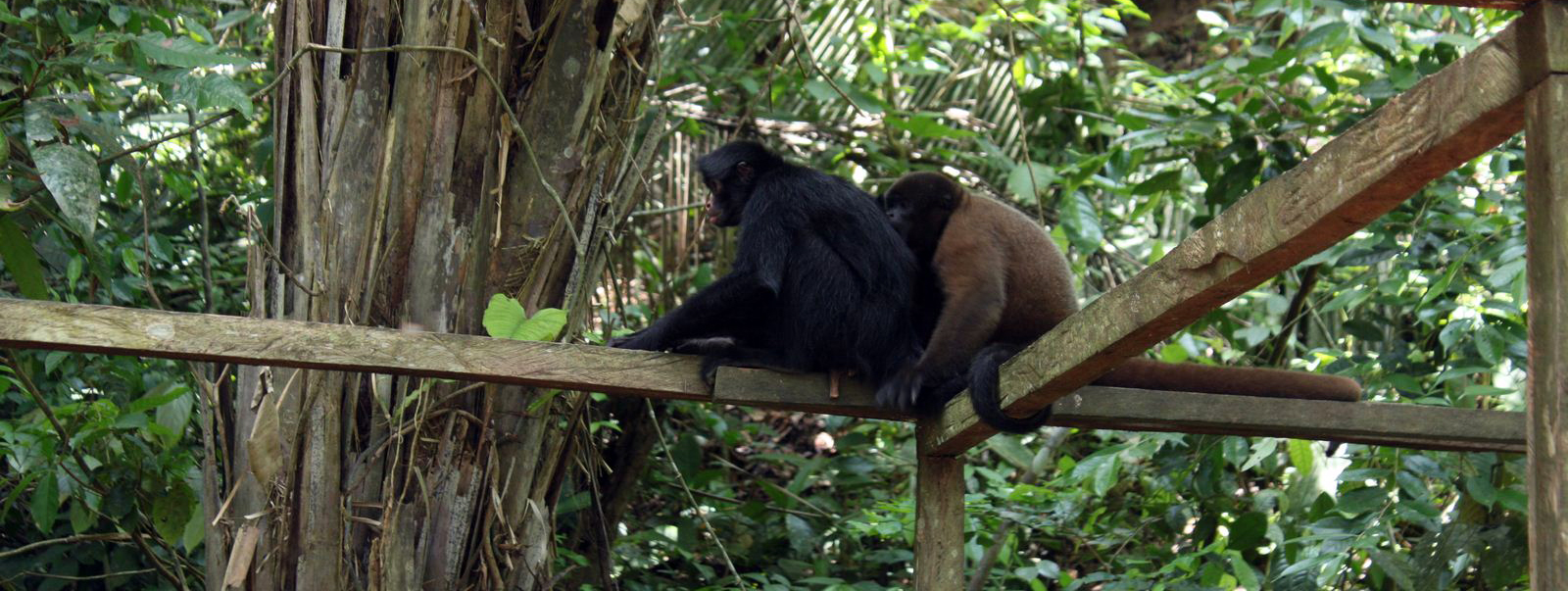
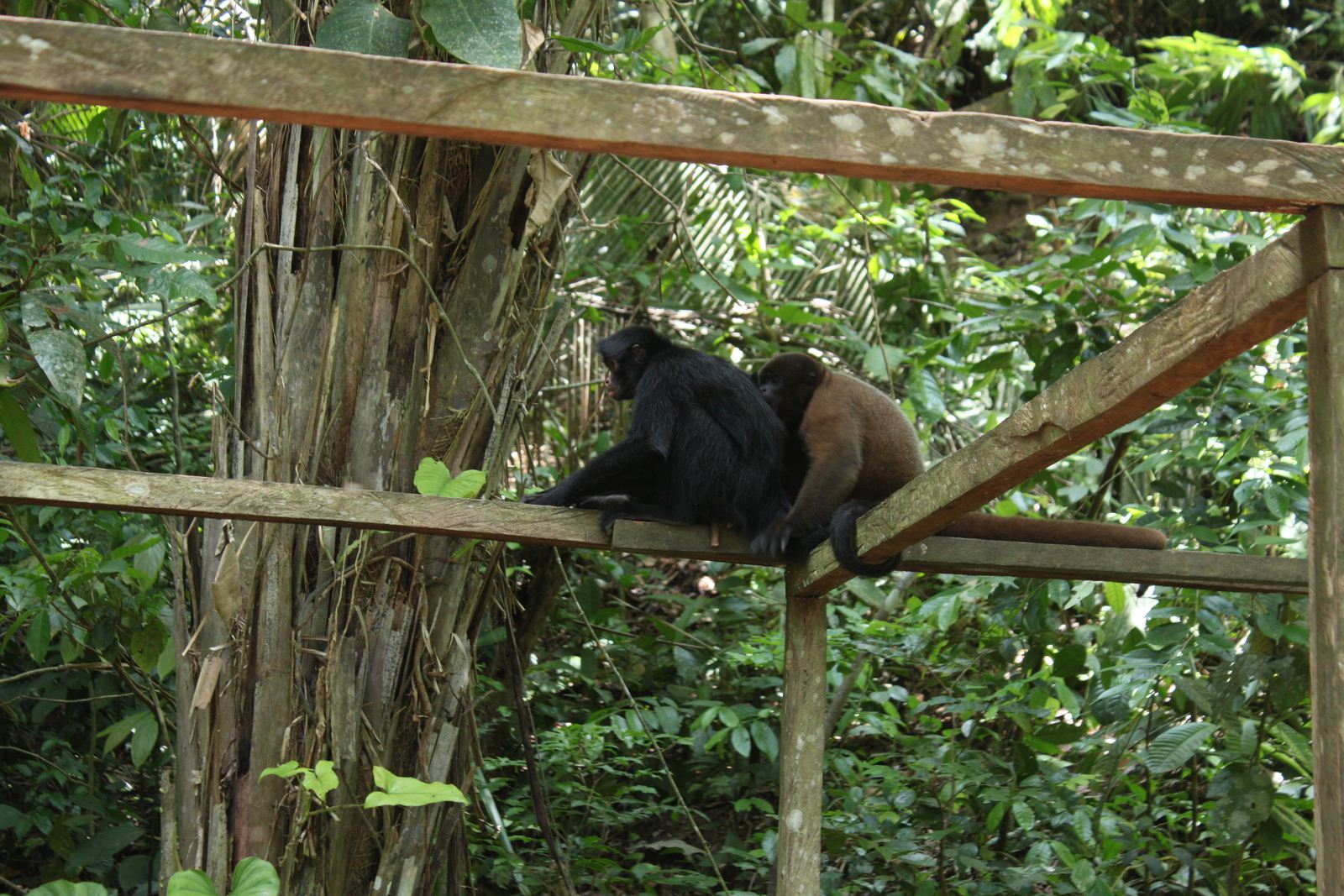
We did it! After long discussions we decided to release one of the spider monkeys. Her name is Yanay, the only female spider monkey, and until now she lived her whole live in captivity. We were afraid that she may run away because she might have trouble interacting with the other monkeys. But as she most likely has been living a big party of her baby life with people in a house, she might want to stick around the houses and us humans.
It took her only one day to get used to living outside of the cage though. It was really interesting to see her face while discovering the outside world. Her thoughts were probably: “what is this”, “what is that” and “I wonder what this is”. Nevertheless, we have to be very careful in this crucial time. We don’t want her to be too familiar with the humans, so we forbid every interaction between her and the volunteers. The goal is that she knows she can live with us but not among us. Now she lives in the Esperanza Verde area with all the other monkeys. Especially Kamari (a male woolly monkey) seems to be a good friend to her. She already knows where she can get food, on the monkey table, at Rincay (tapir) bowl or on Tupak’s (toucan) table. We still keep an eye on Yanay but it seems that she does really well outside of the cage.
We won’t be able to release the male spider monkeys, as they are so tame, they would be a danger to us humans. They have huge canines and if something goes we would not want to risk someone getting bitten.

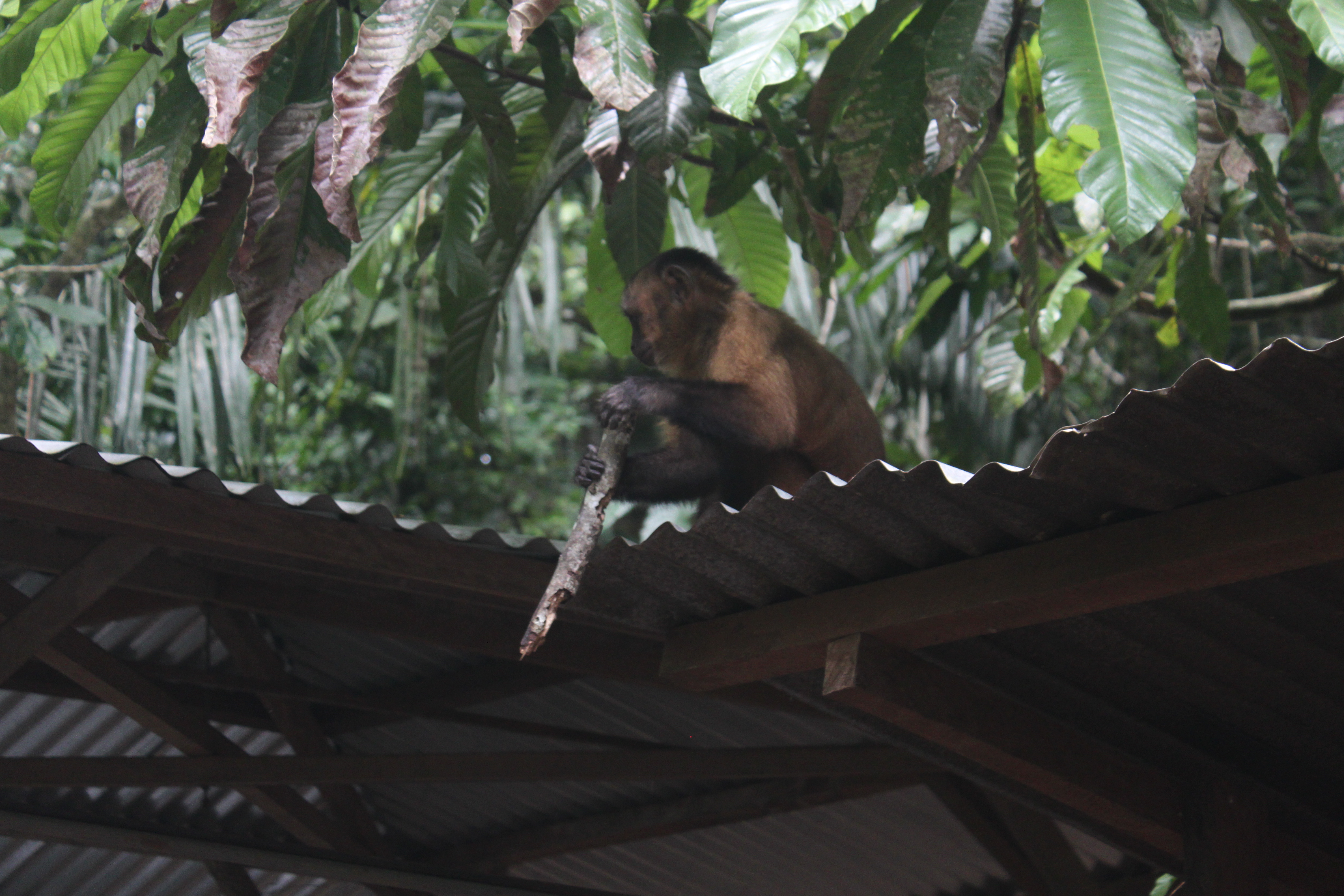
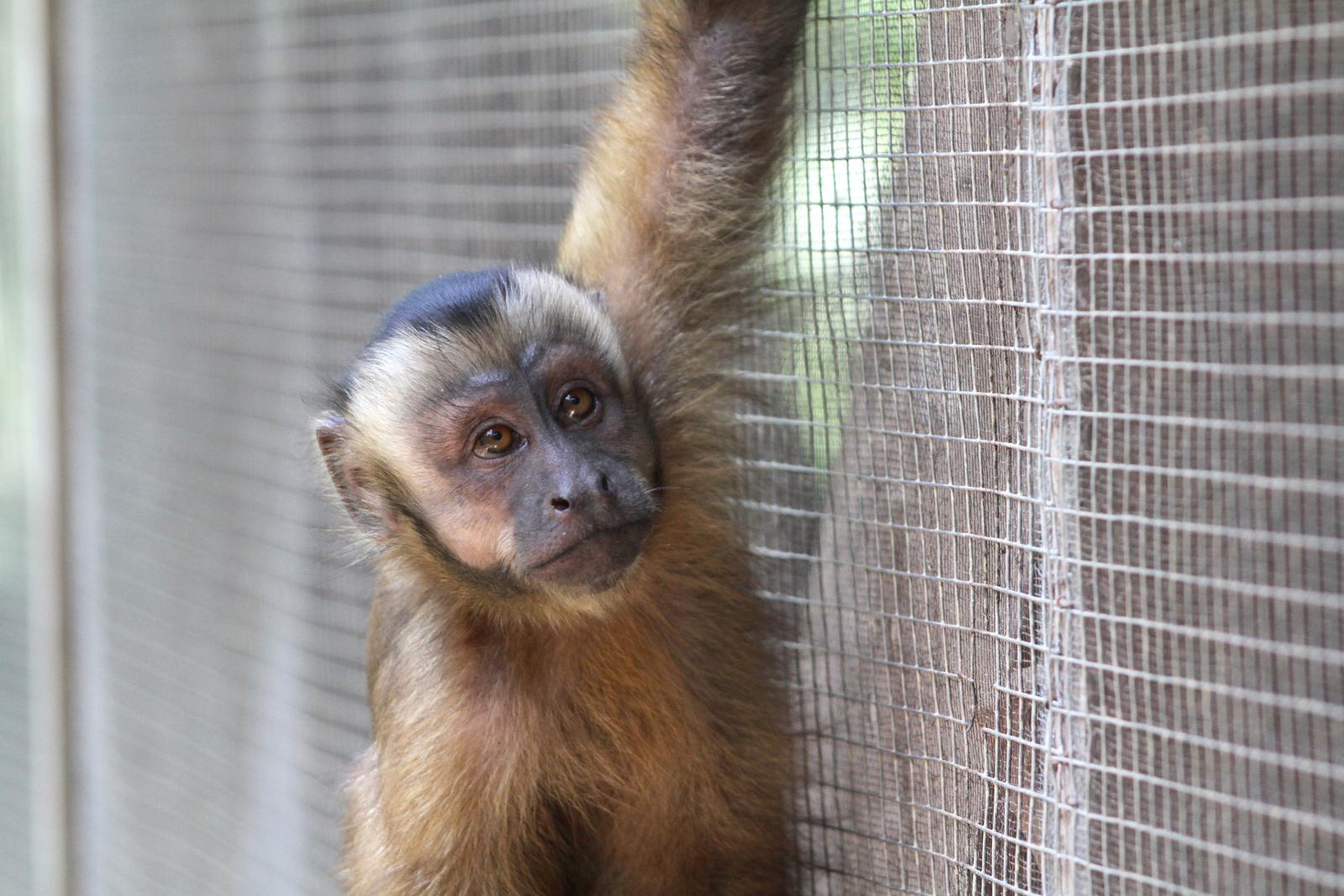
Mica, the female brown capuchin, again fell in love with another volunteer. Probably because she was raised her from very young with no monkeys around at that time, she also tries to mate with them. Sounds cute, but can be very stressful for the chosen person. What she does is follow the person around all the time trying to get his attention. If that means to give him a hearty bite, then so be it. Additionally, she can be very jealous. At night she would knock and bite on the wooden posts of the windows where her chosen one sleeps (or at least tries).
Luckily it seems we got it now under control by giving her a hormone injection. We still have hopes that, while controlling her with this, she will at one time decide to go with Jordi, the male capuchin (not yet in reproductive age, but hopefully in a year).

O

Other Mammals

Kiko
Kiko

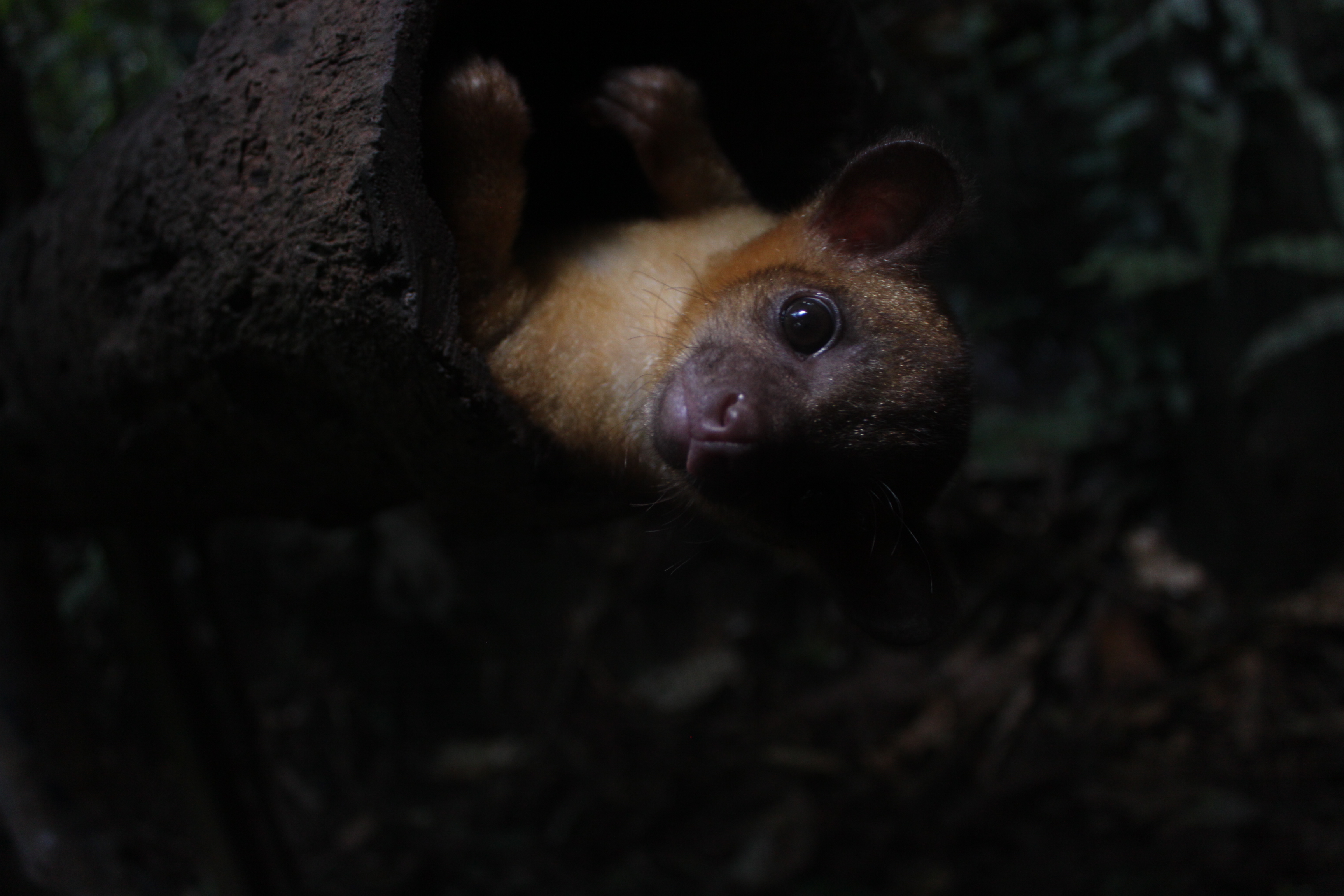
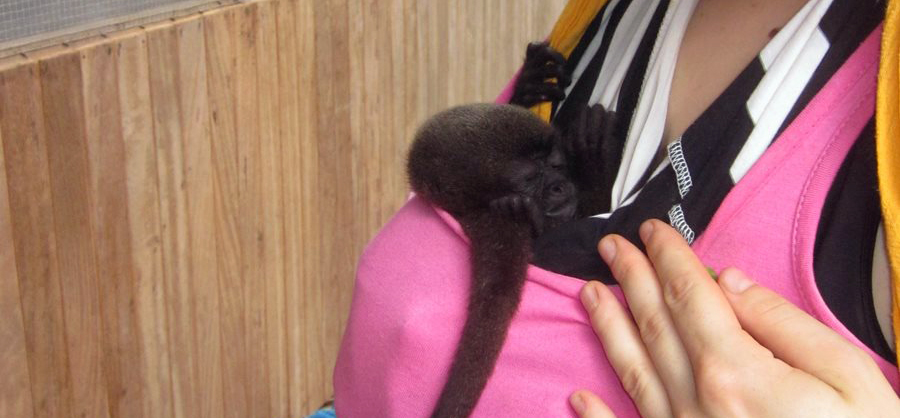
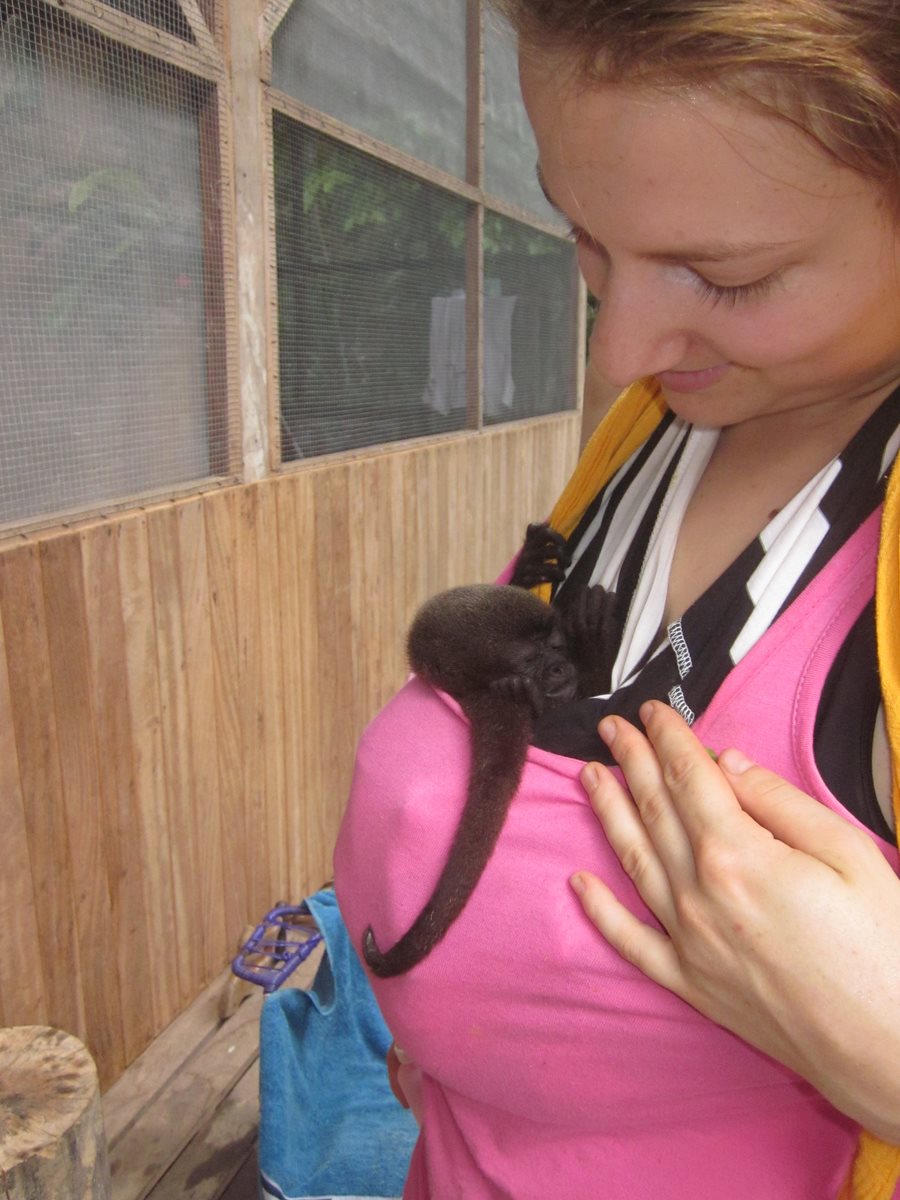
Because Pepe cage is not in use anymore we had to move little Kiko (kinkajou) to a new cage. He lives now in the bigger and better Lucia cage right beside the kitchen. He is doing very well and in fact gained some weight since he´s here.

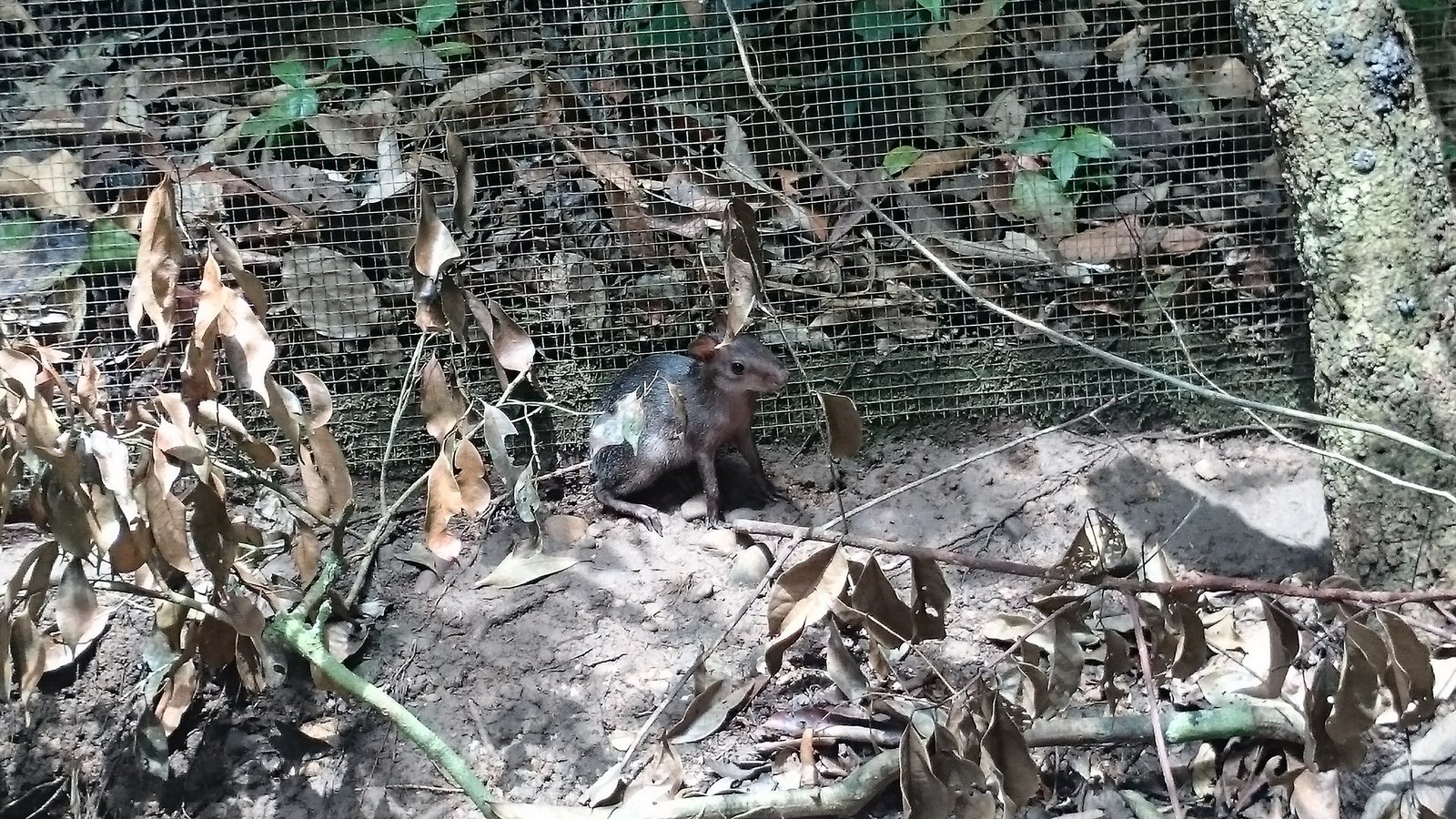
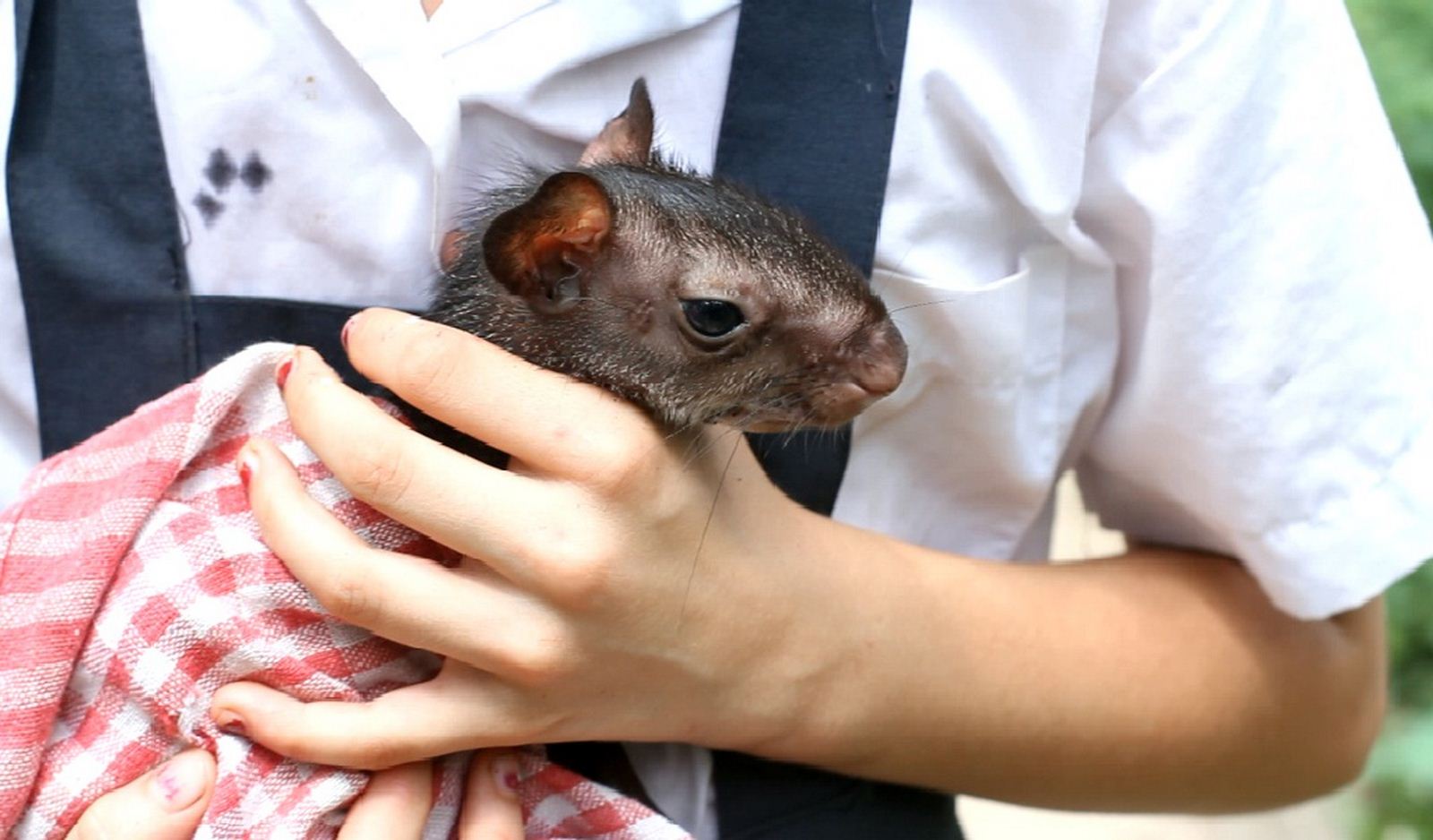
Sadly, Mishki (agouti) escaped. One of the volunteers was not focused for a second, and in this instant Mishki took his chance and run away. One of the reasons Pepe cage was ready to be demolished, as it was lacking the necessary double door system. He has a good survival chance, because he was never too fond of people and always wild. We wish him the best and hope he mates with another agouti out there in the wilderness.

mouse opossums
mouse opossums

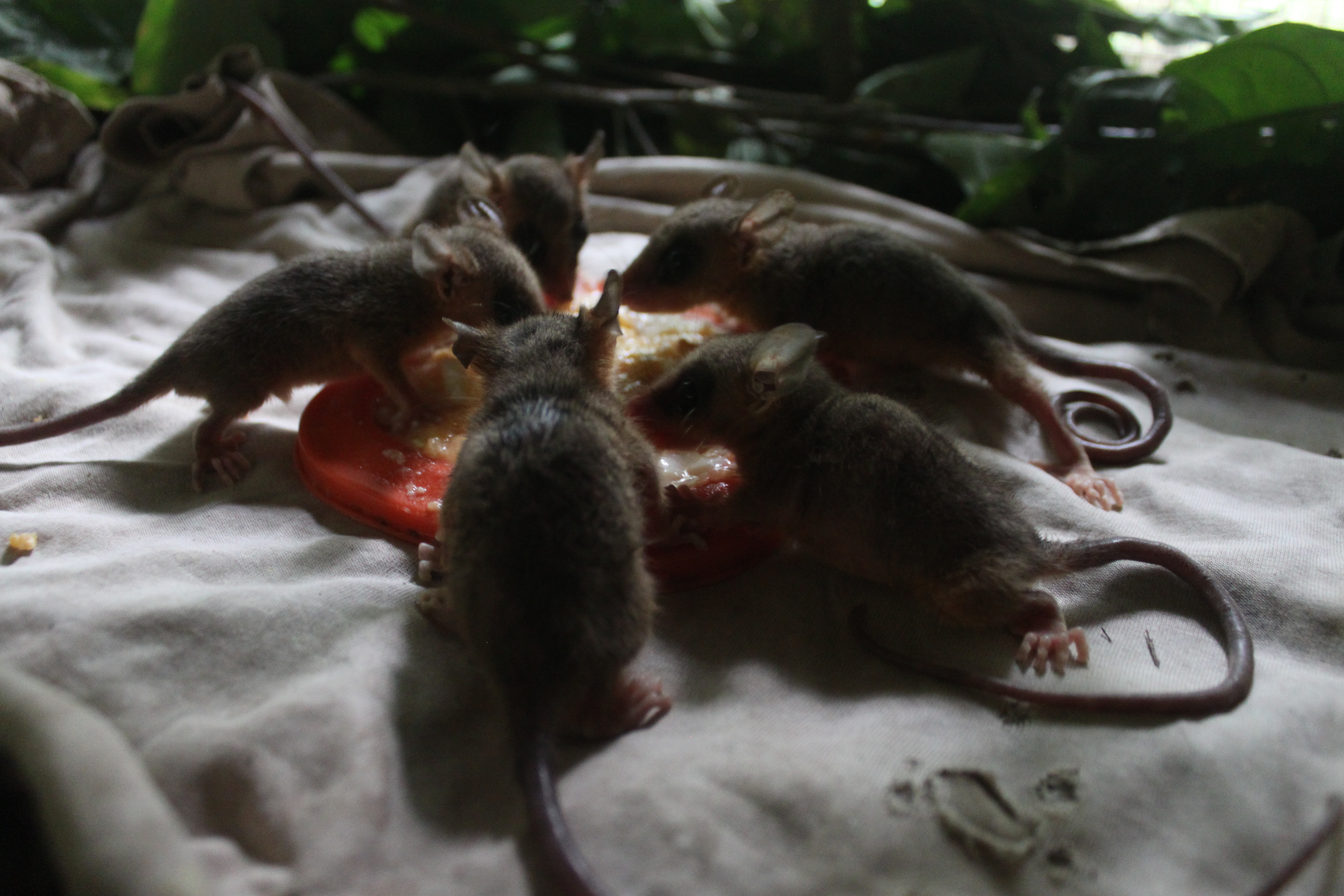
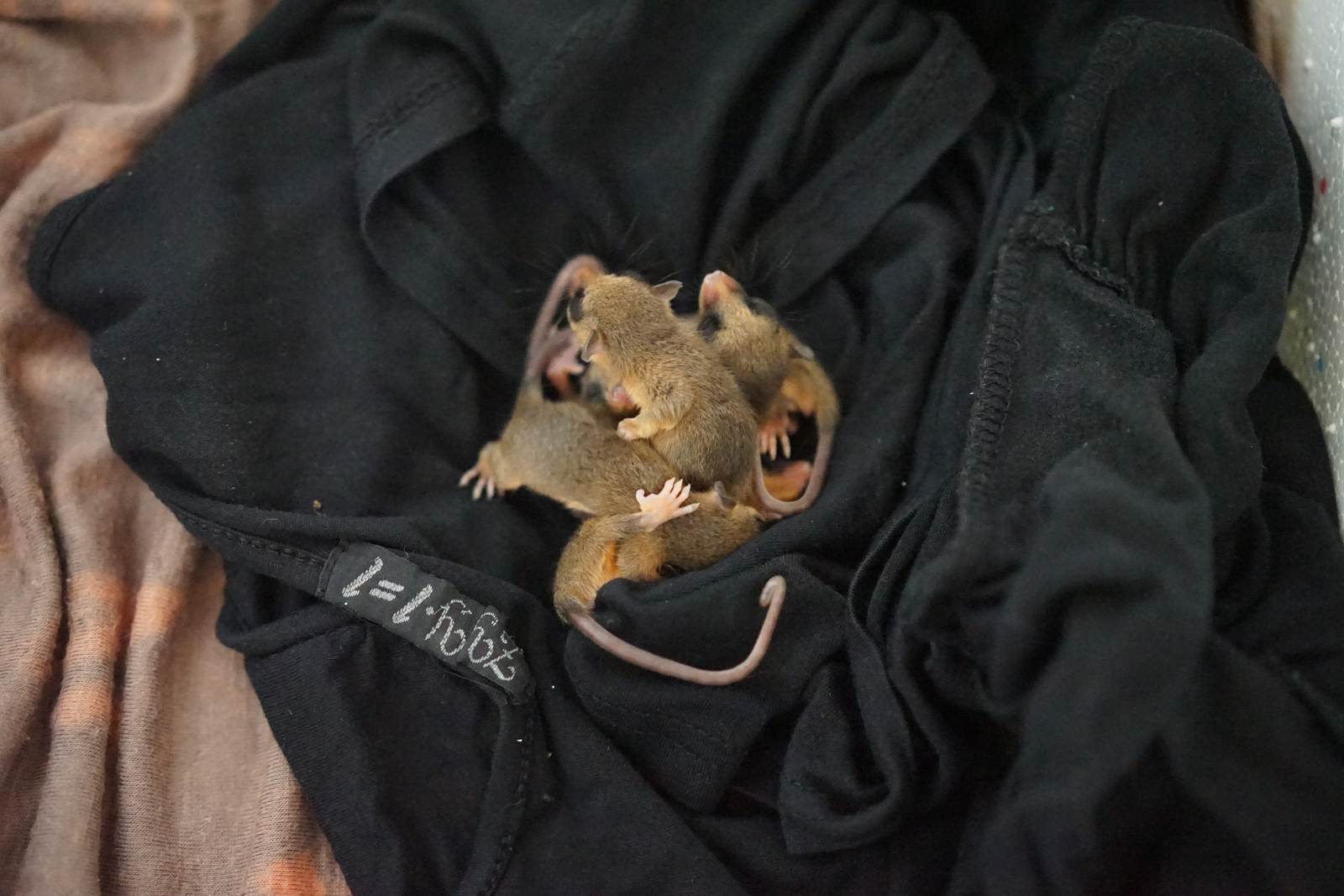
We have some new animals, too : Some of the volunteers found a bunch of tiny mouse opossums, six in total. There is no sign of the mother and we decided to take care of them. They live now in a box in the volunteer House.

B

Birds

Pauki
Pauki and Rincay

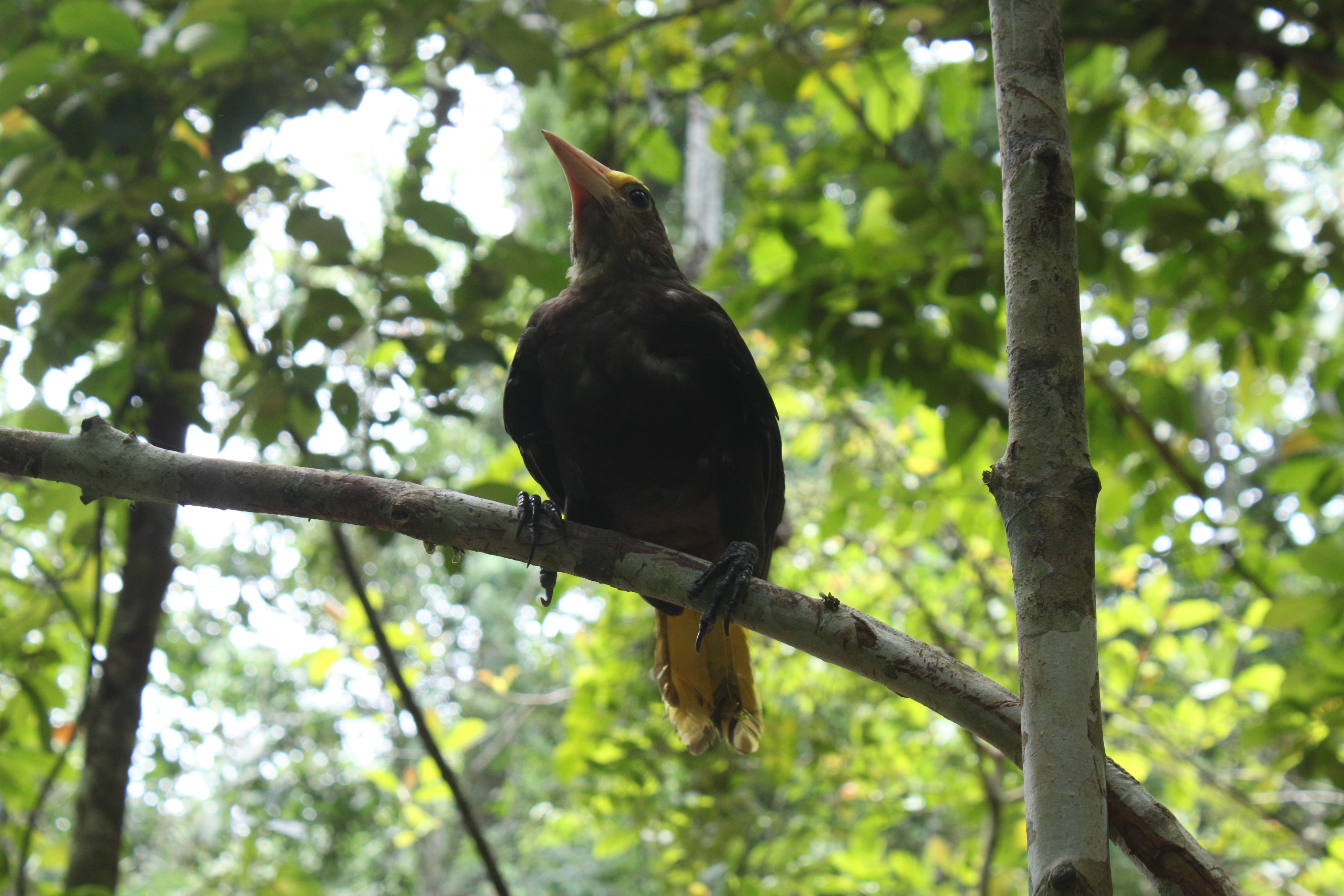
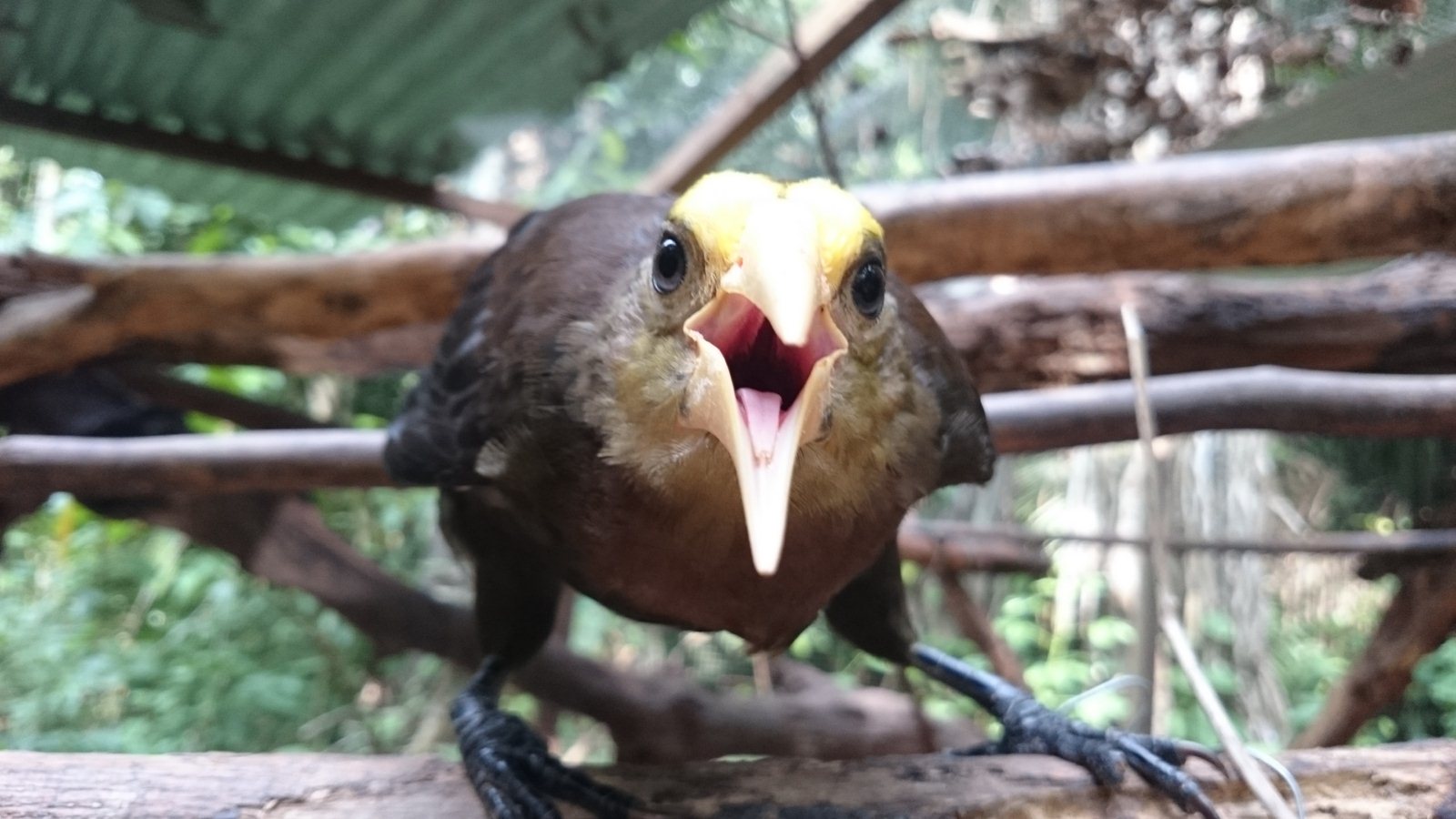
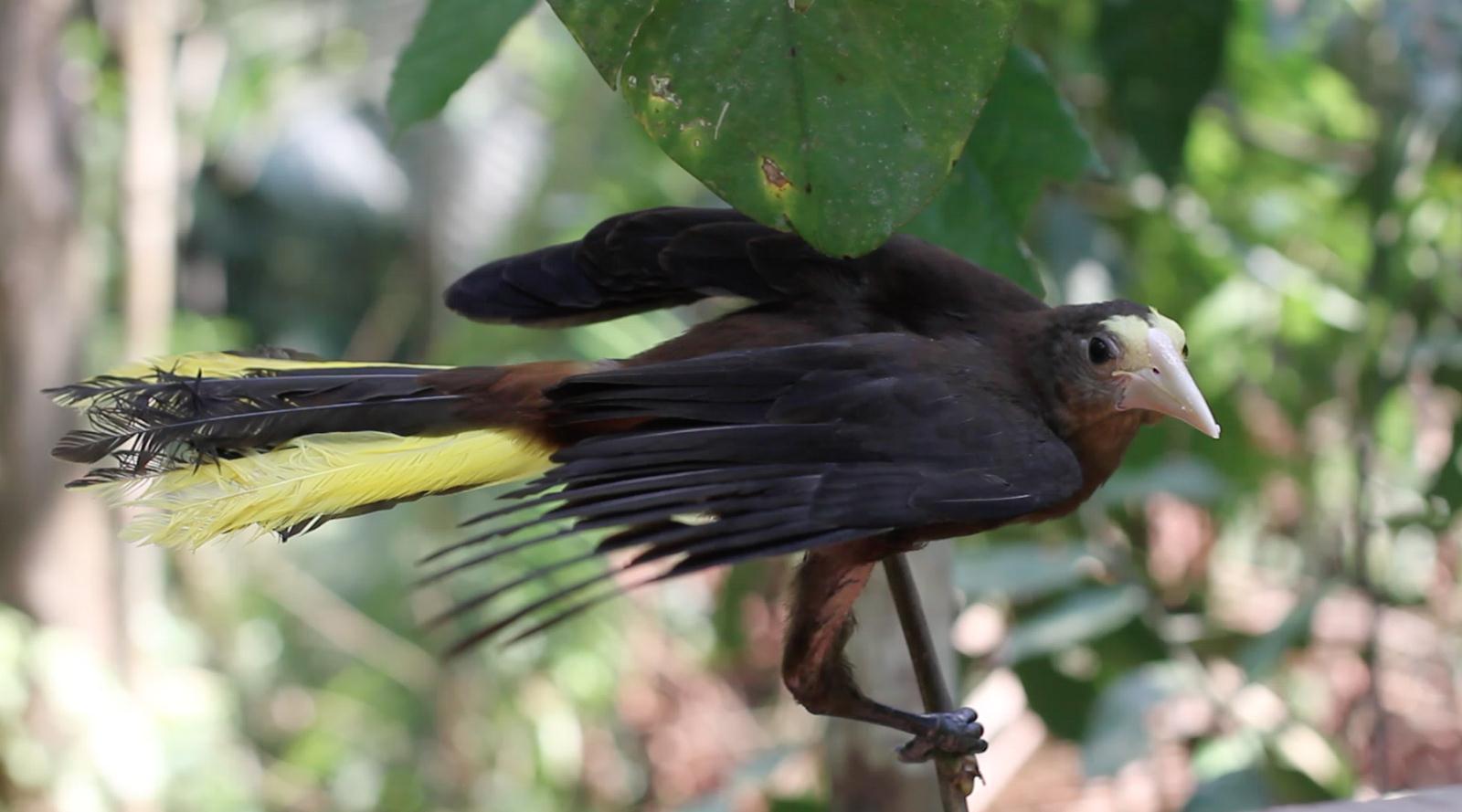
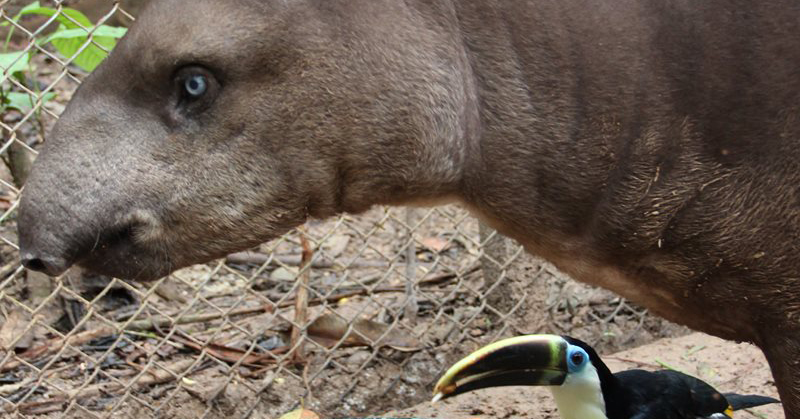
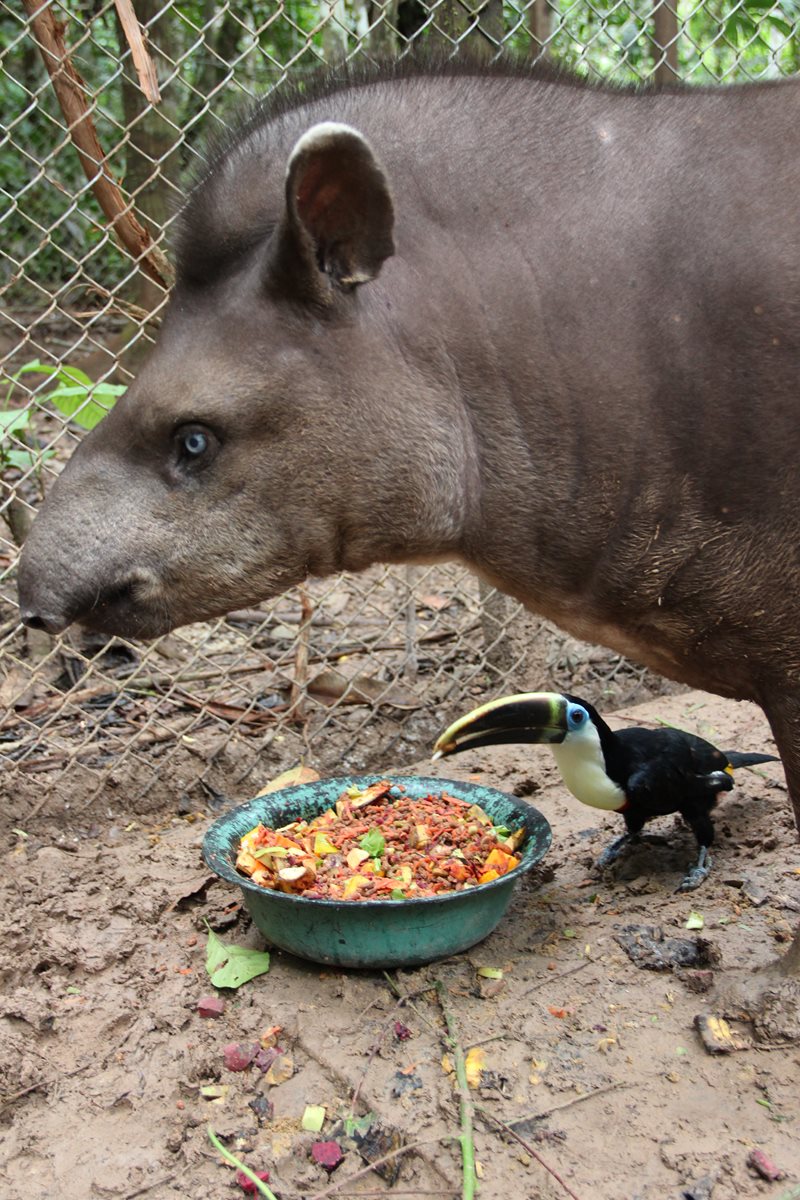
Pauki (oropendola) gets more active and brave every day. He copied a lot of Tupaks (toucan) behaviour, like stealing from Rincays (tapir) bowl or even bullying him. He already chases insects himself and doesn’t need humans to do this for him anymore. He extended his territory up to the aviary and down to the river. The volunteers are having lots of troubles to get him back in his cage in the afternoon. The day when he is fully released is getting closer and closer.

There were two deaths in one of the parakeet cages. One probably drowned in a little pond in the cage and the other seemed to have had a lung infection. We separated this parakeet cage in the feeding tour, just to be safe. For safety we changed the pond and made tiny stairs in the cement.

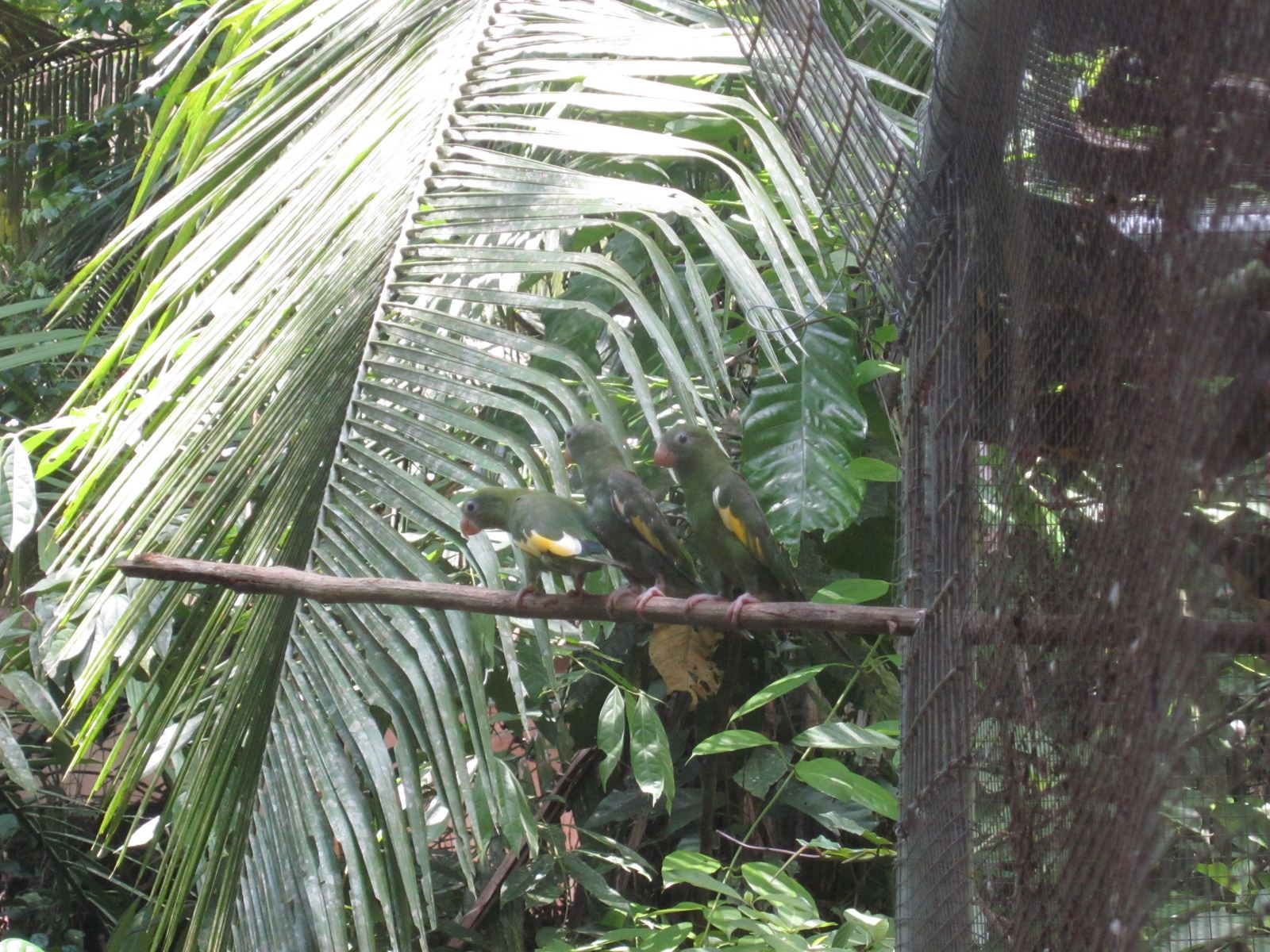
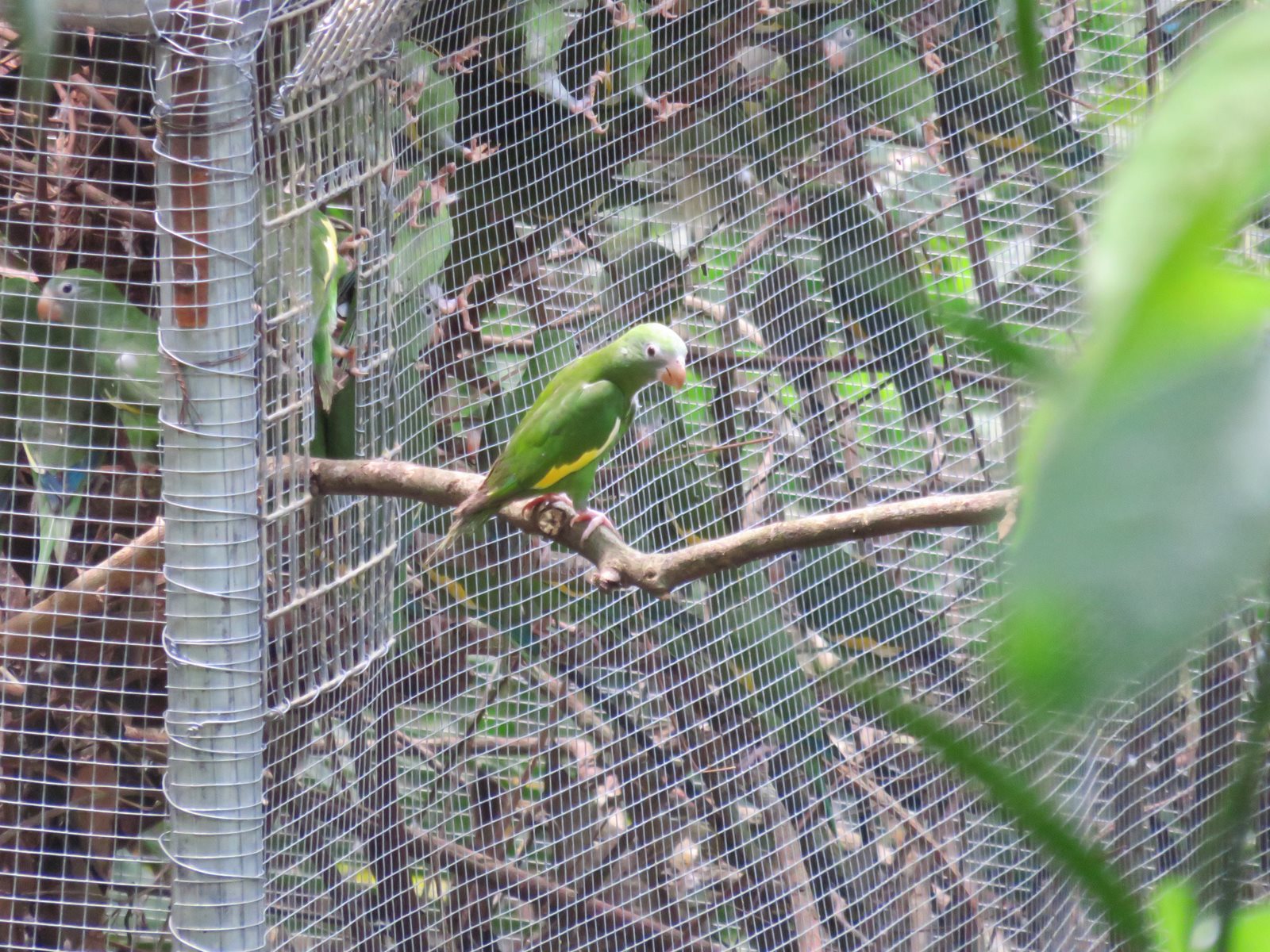
The white-eyed parakeets (aratingas) we separated are doing well and all of them look healthy. Pichu is in there and is always the first to eat the food.

Parakeets going out
Parakeets going out

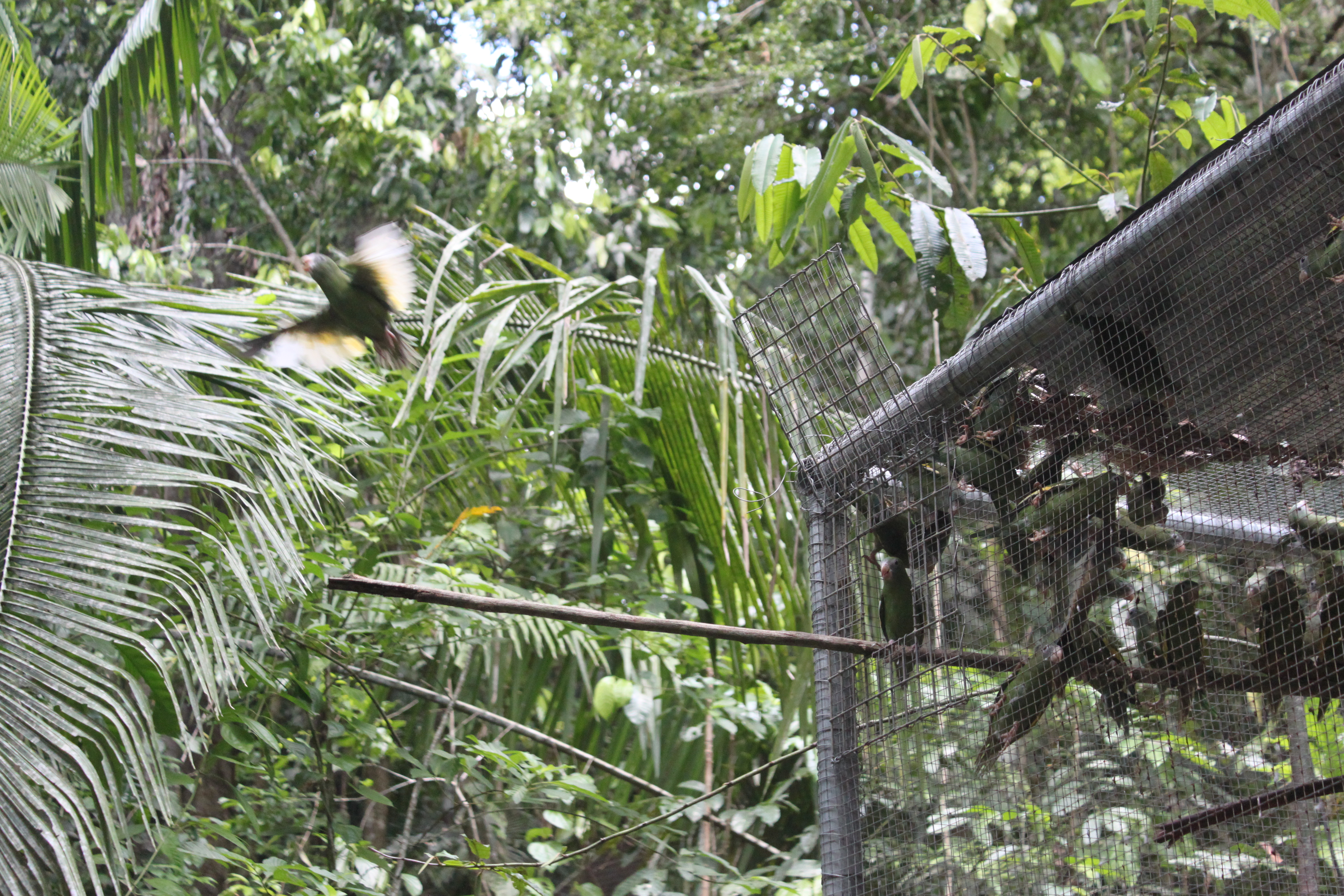
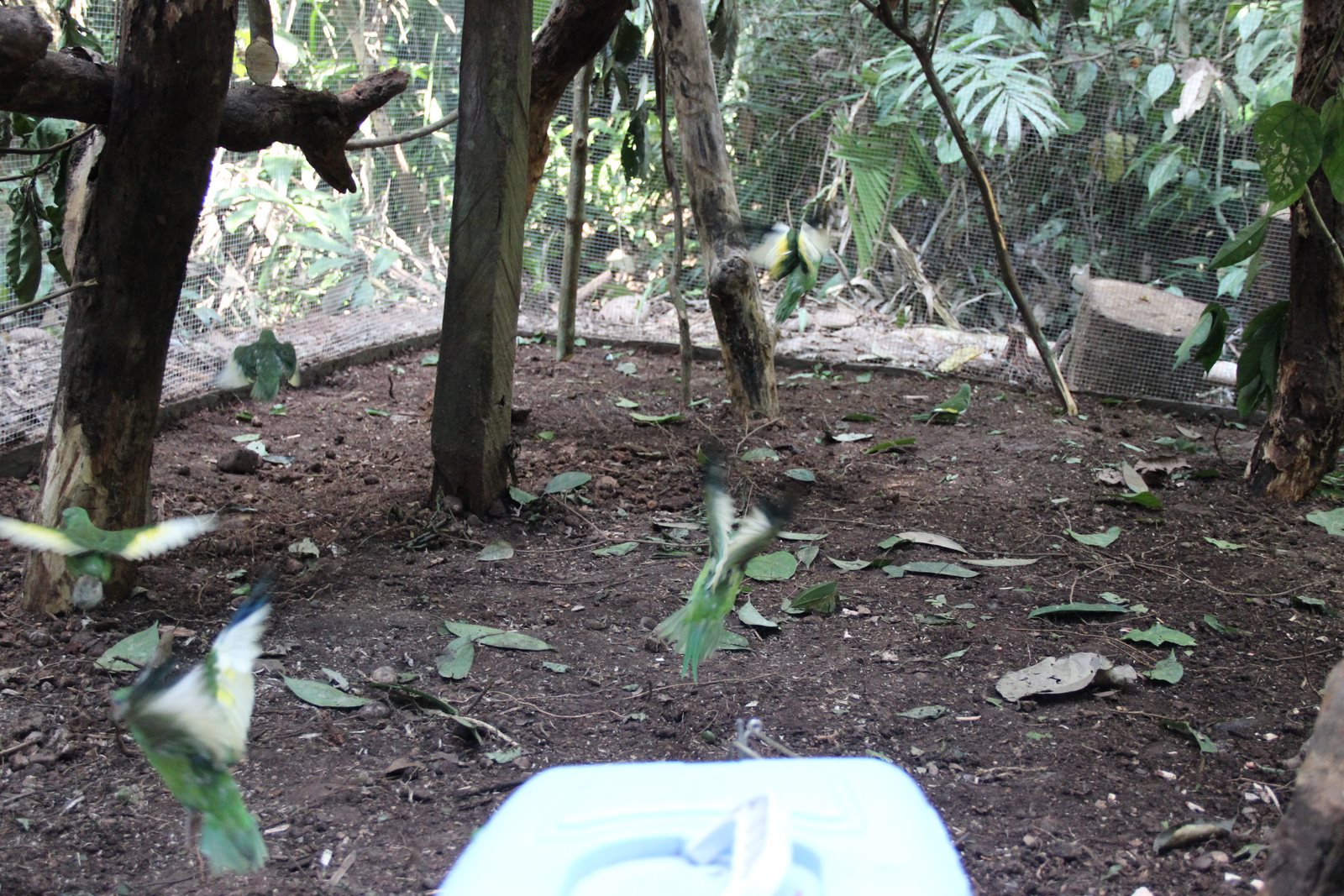
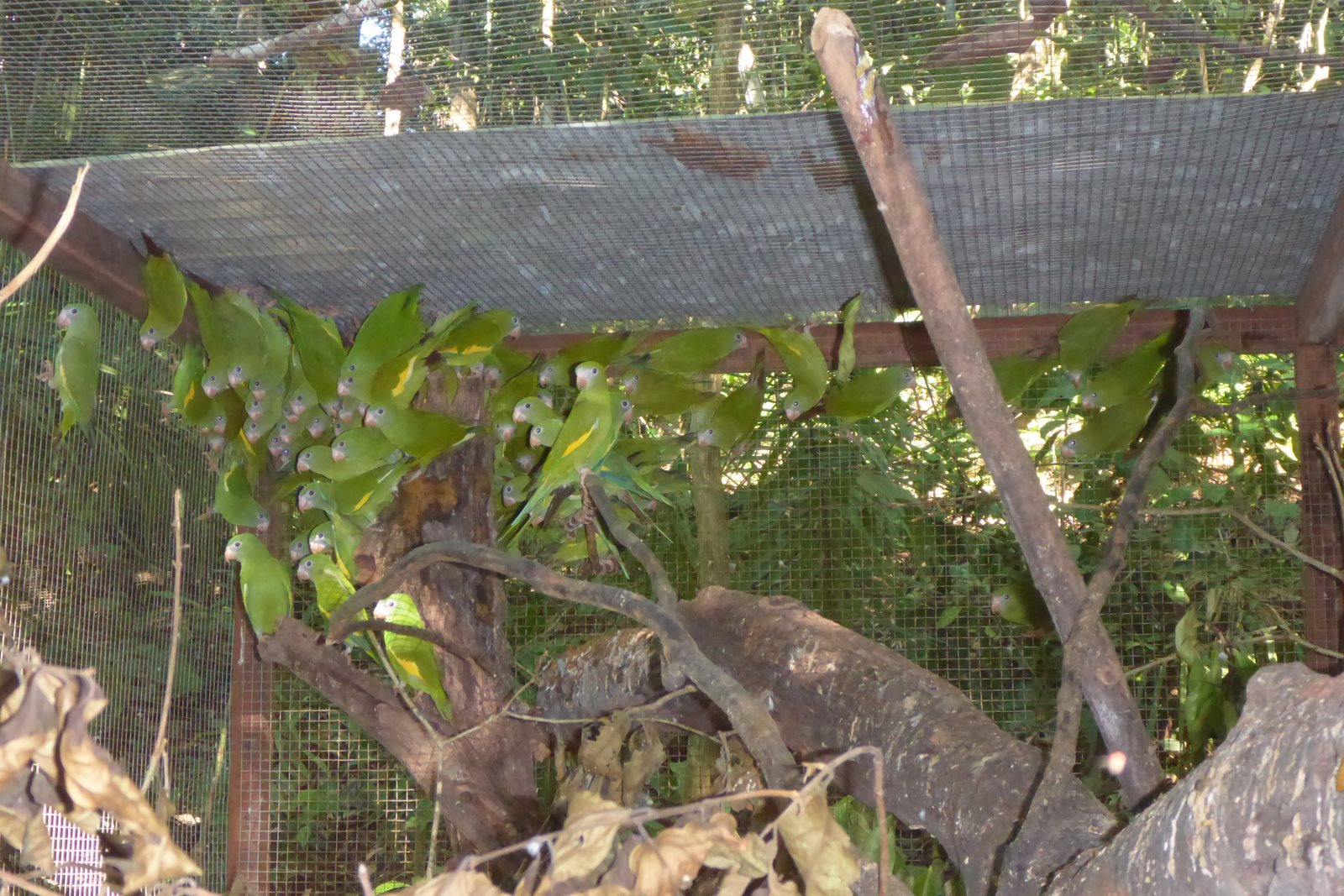
Thanks to the visit of the women of the Ministry of Fauna and Flora we now have permission to start releasing the parakeets, which are healthy and able to fly again. We started with the group of 118 parakeets in the IGOR-cage (the new release cage), under the eye of the Ministry. That day most of them decided to take their chance to go out, leaving about 35 parakeets behind. We will open the little door in the back of the cage every day and let them slowly get used to the outside living, giving them the choice to come back. This group has a good chance outside, as they were wild-caught animals, and only were in captivity now for 4 months, growing back their feathers and health.

R

Reptiles

Splinter
Splinter

Splinter, the mata mata turtle, has finally been released. After having him in a small cage during quarantine, he was moved to the reptile enclosure with the big pond. We recently found him there and got a chance to weigh him. As the pond was getting dryer because of the long draught, there were not enough fishes for him, and he lost some weight. We decided to give him a change outside, and release him at the small stream near Douwe and Olivia’s house.
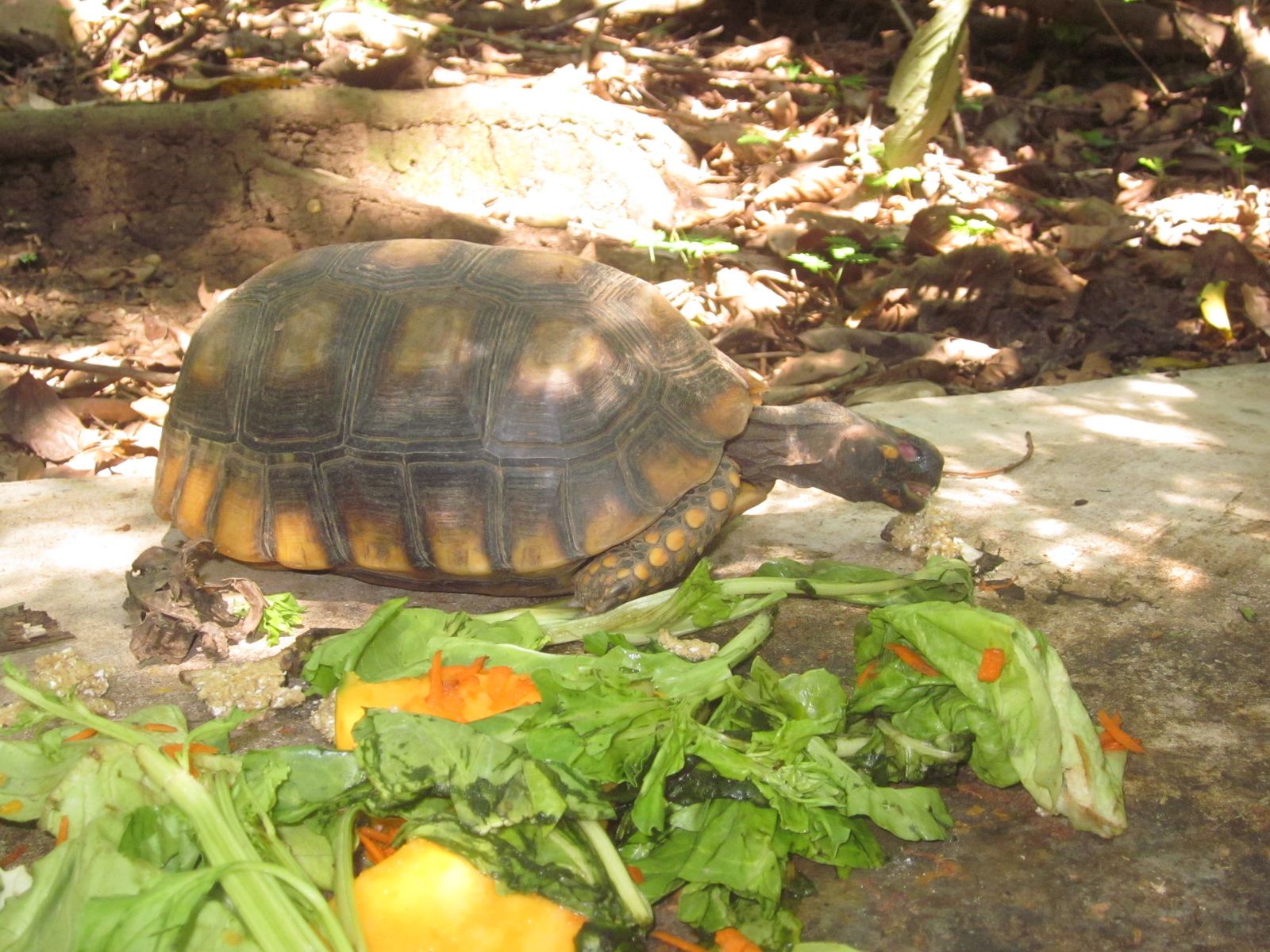
Nasca, the new yellow footed tortoise, gained weight since her arrival. We are looking forward to releasing her in Rincays cage with Pepito (Tortoise).

C

Construction

Clinic
Clinic

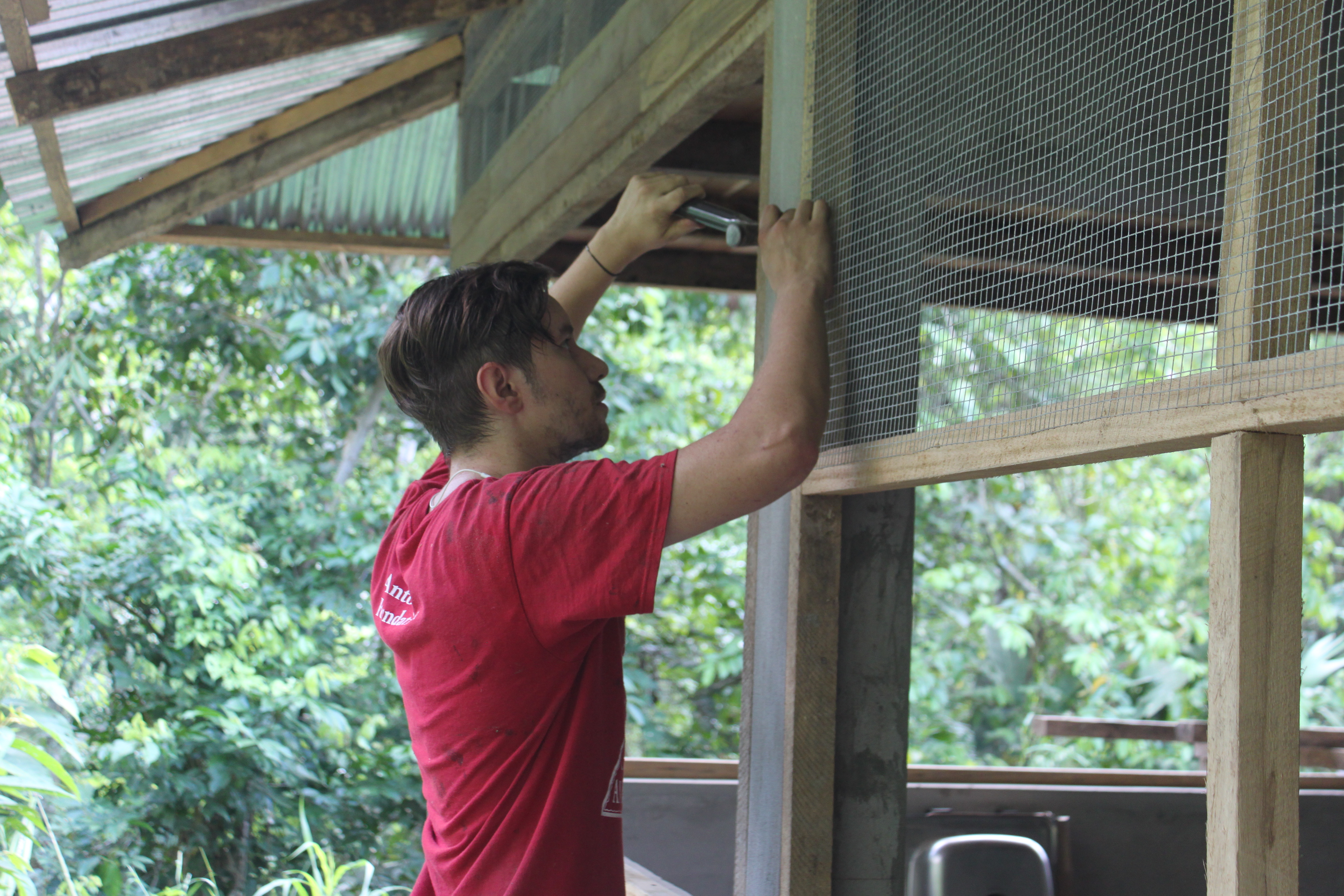
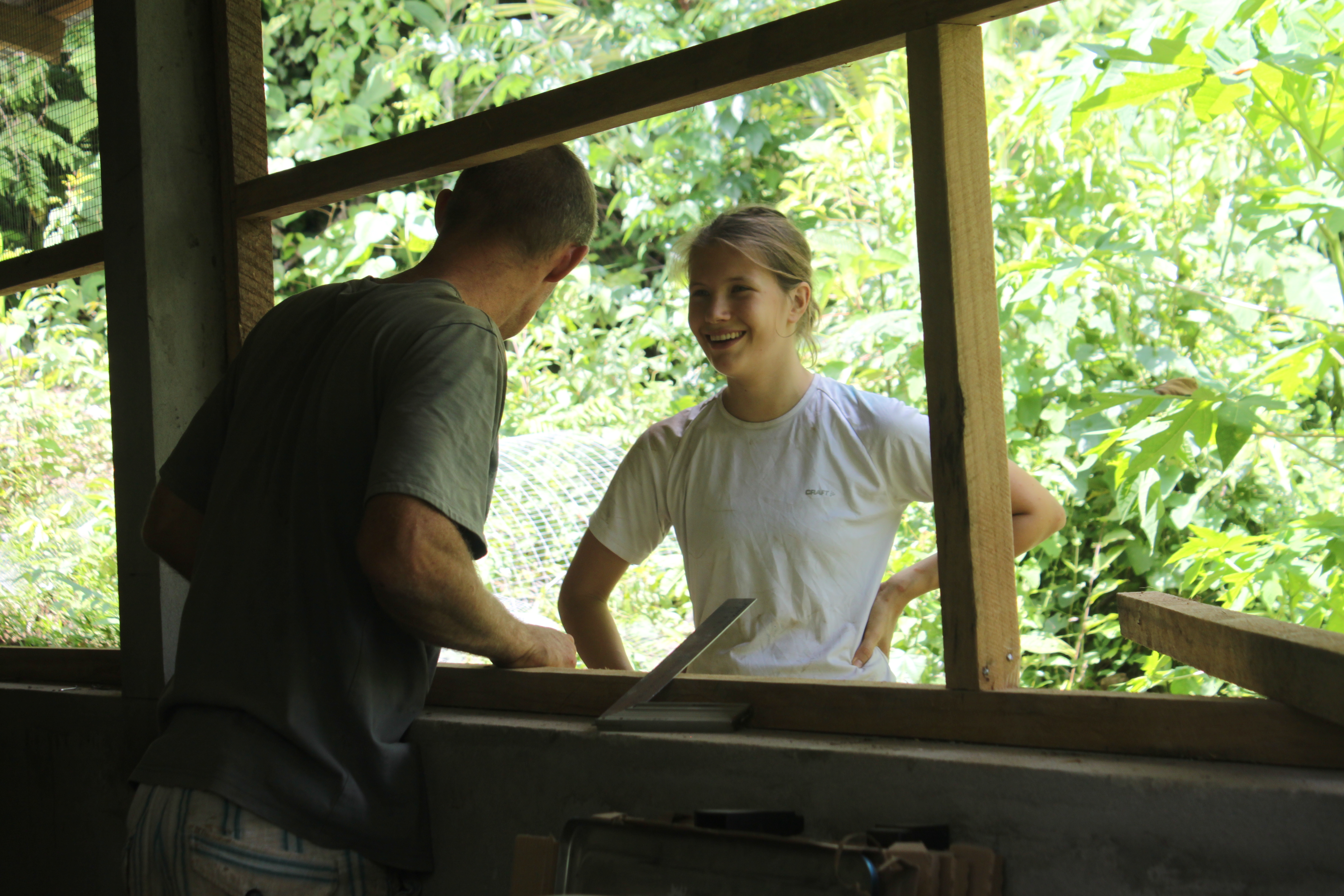
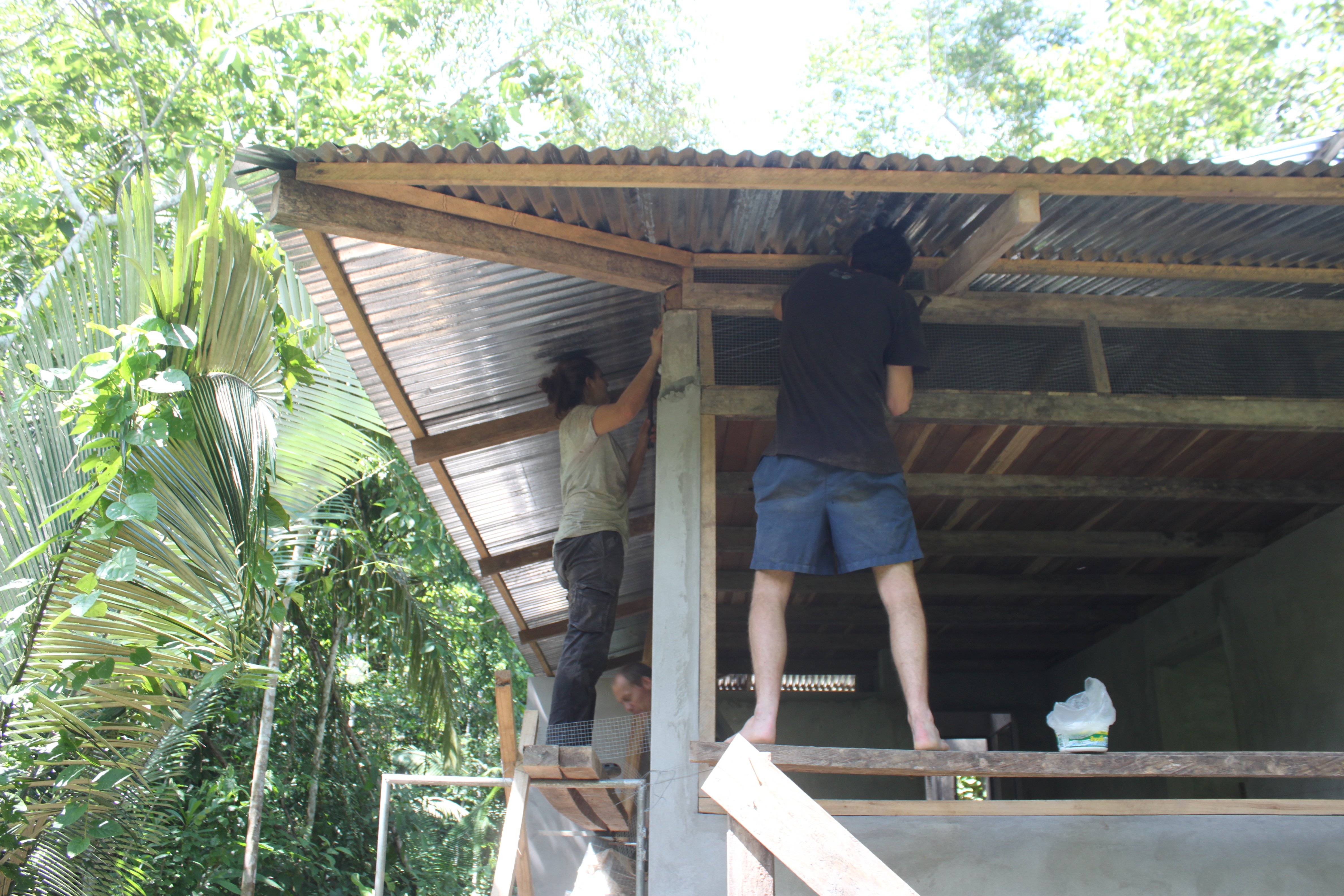
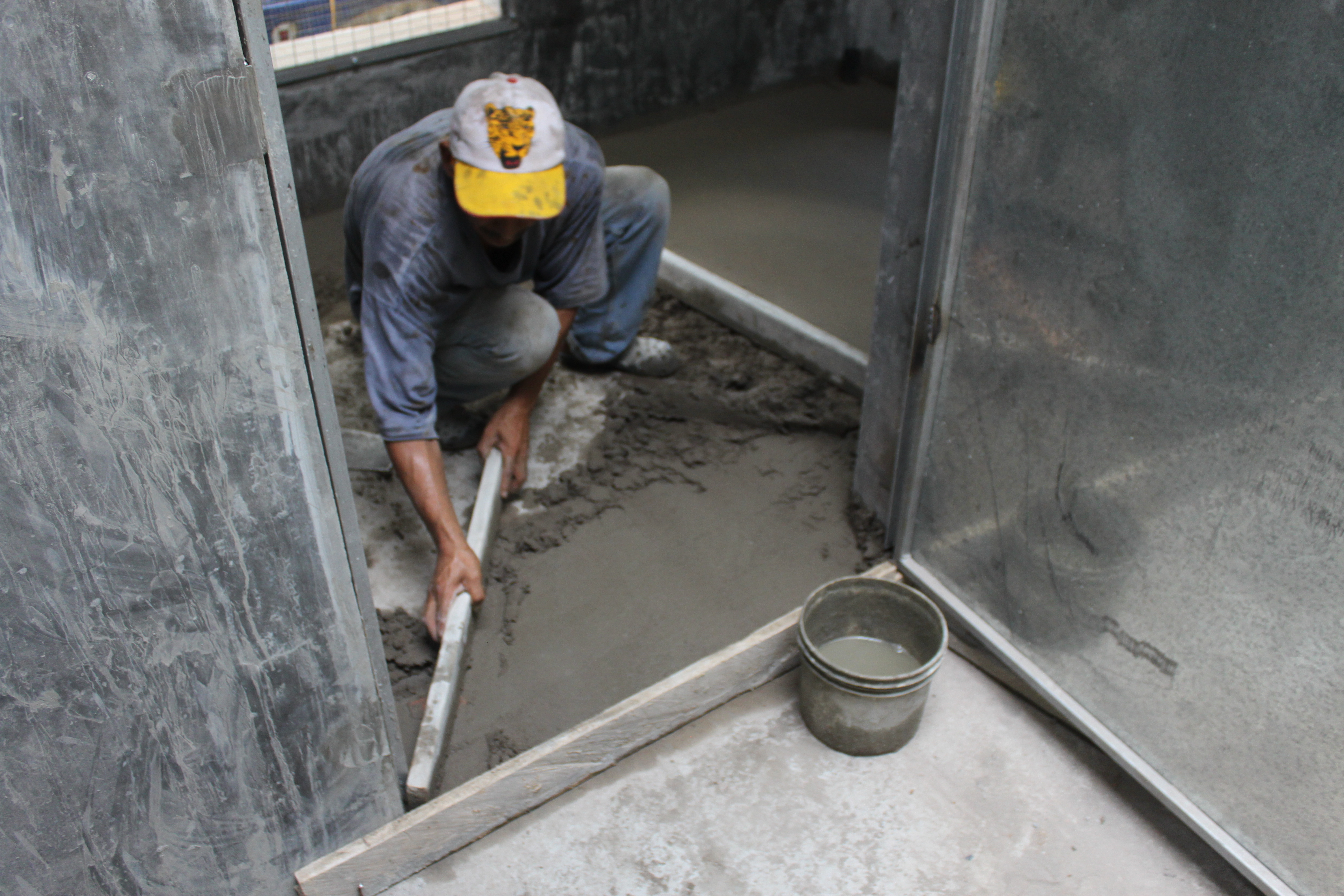
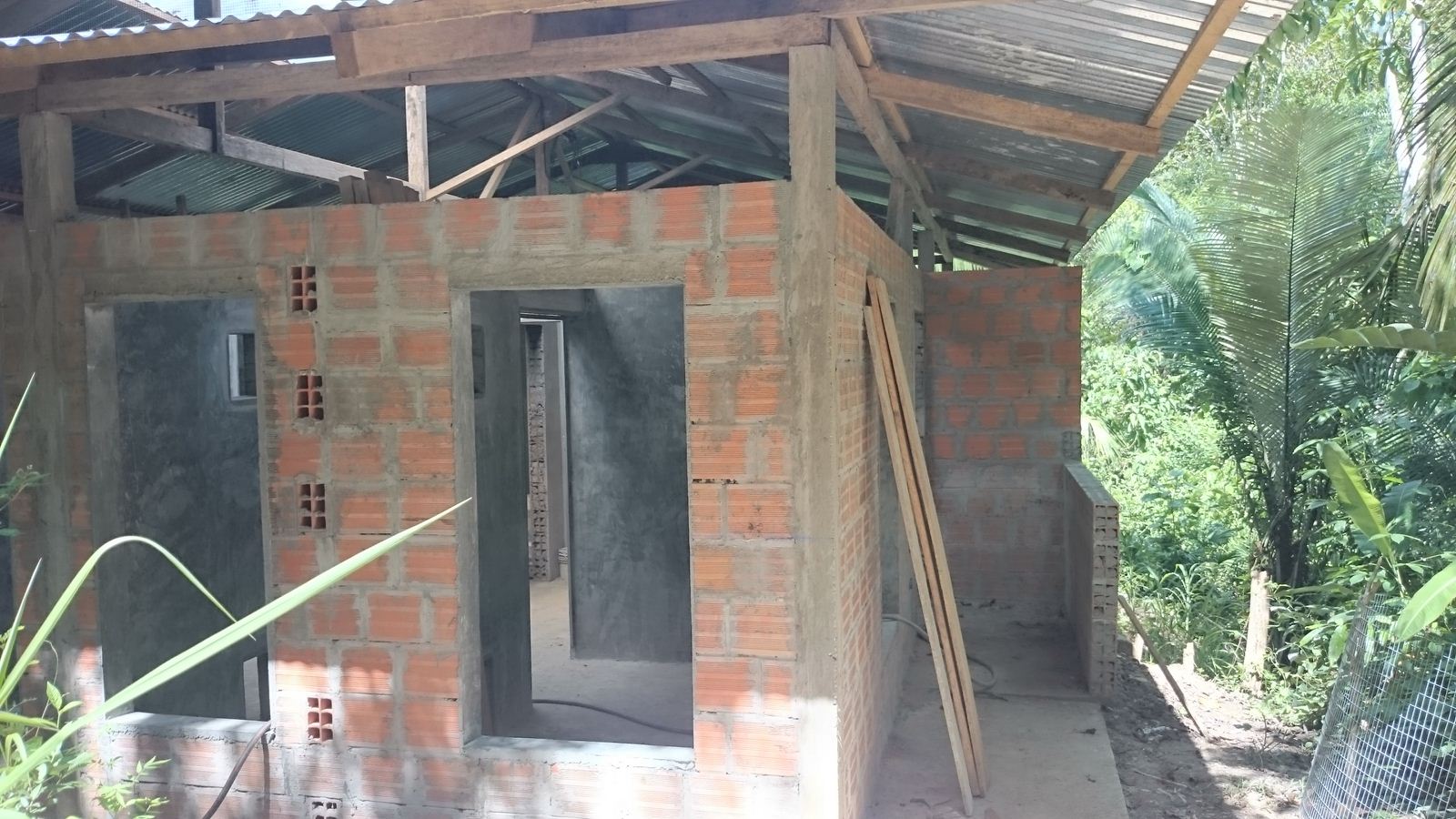
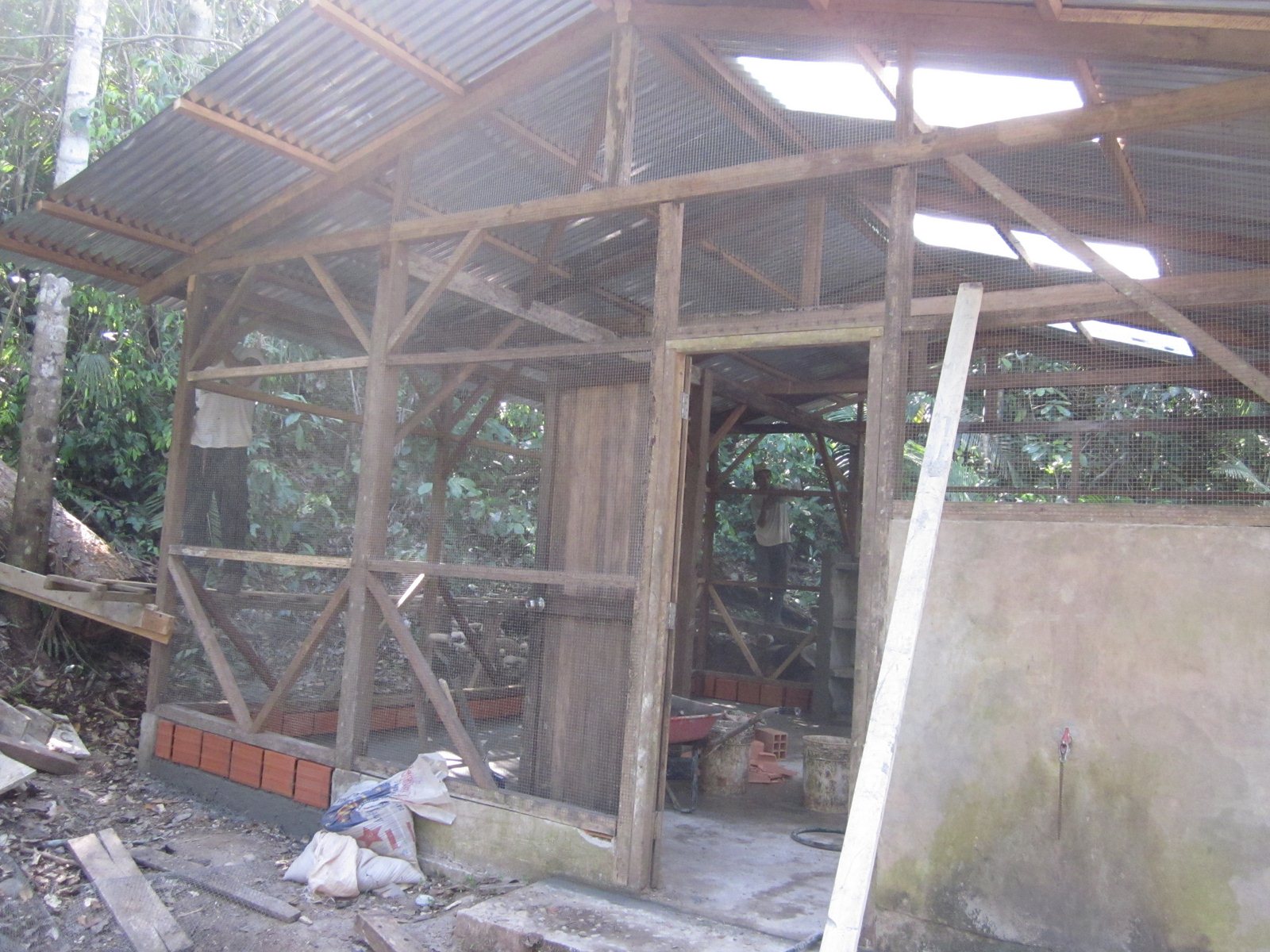
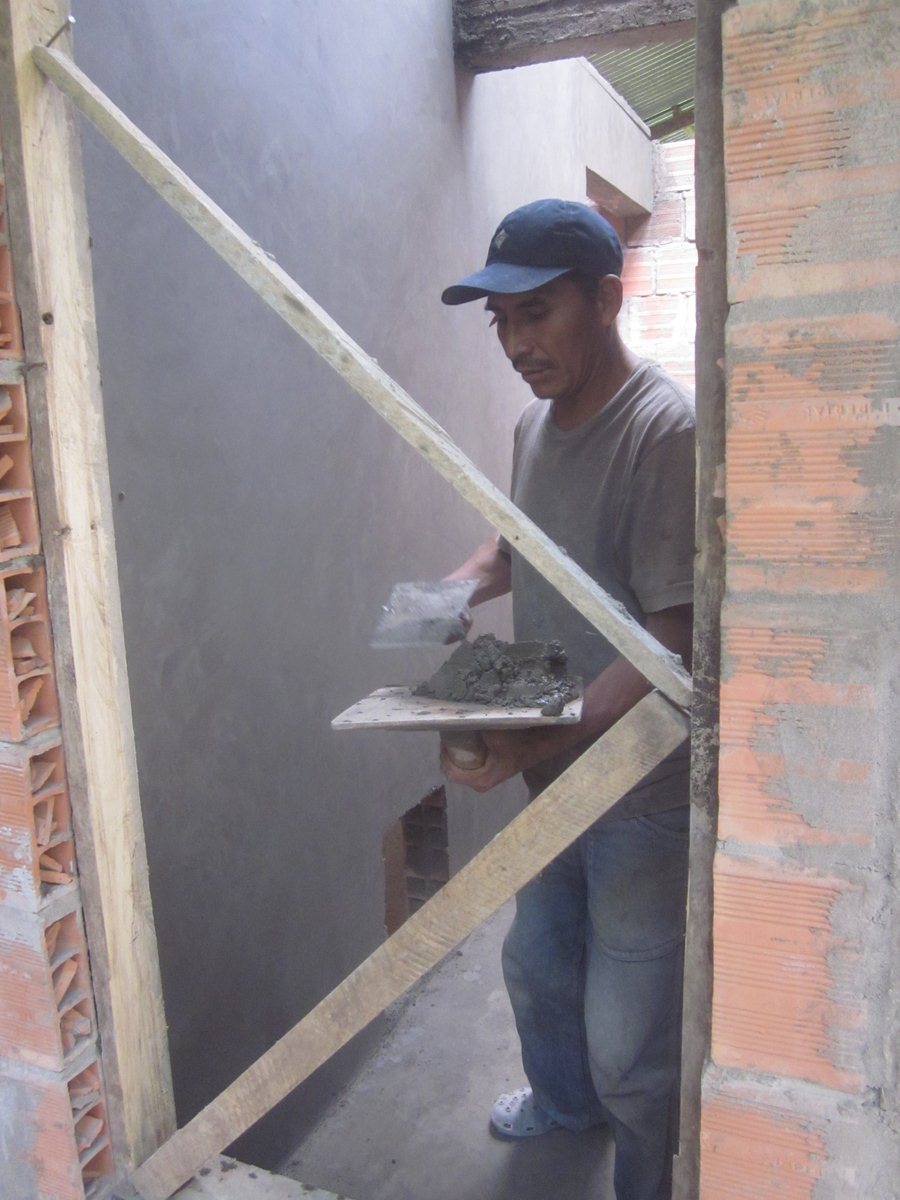
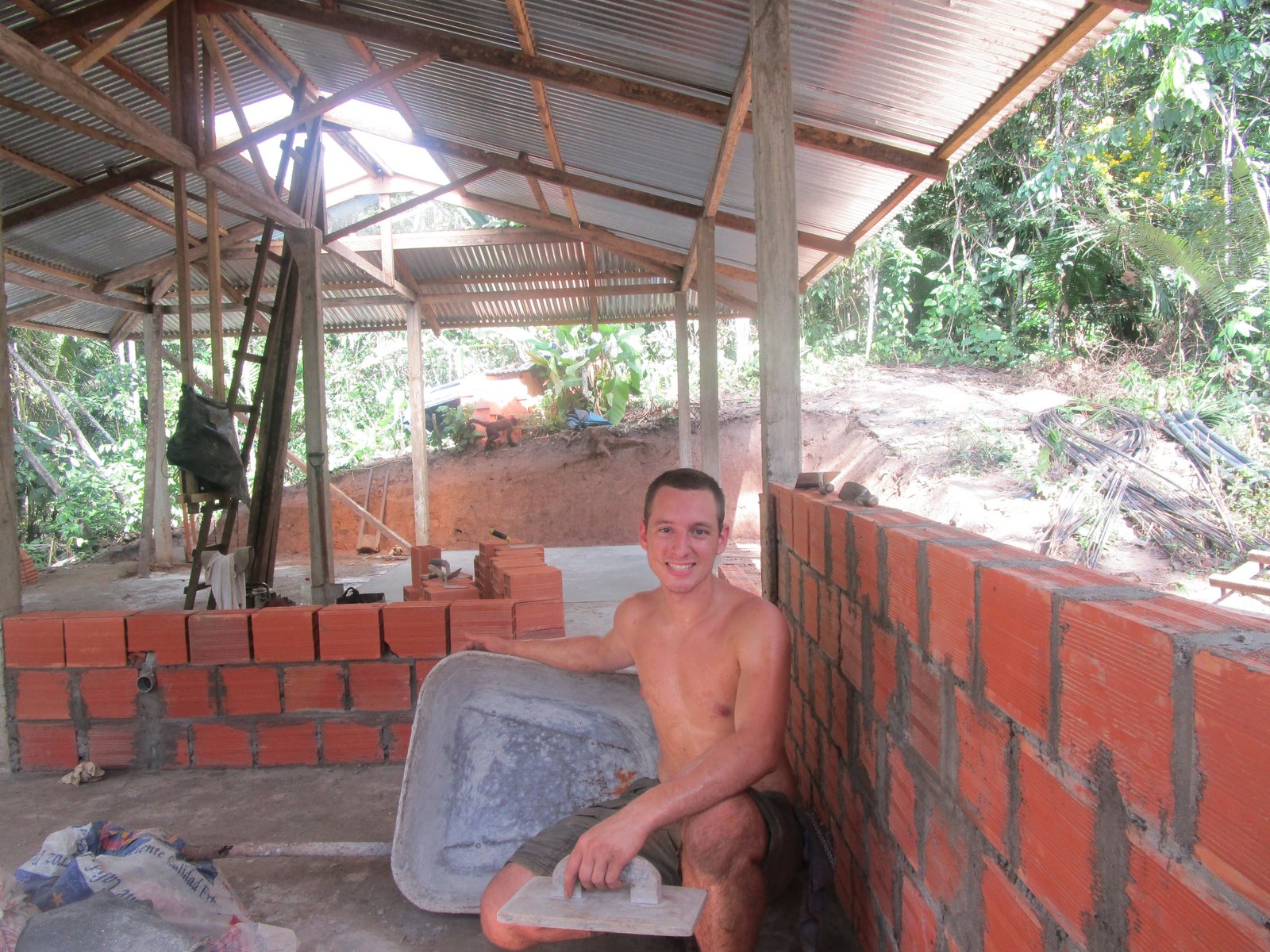
The clinic is progressing fine. The workers are finishing up the walls and will start with the floors soon. Besides that and the breakdown of Pepe cage other mentionable things are the build-up of three more steps on the way to the port and the new pathway to the compost. And finally the volunteer Linus Martensson could install a charging station in the volunteers’ house. We can now charge our electronic devices in our house!
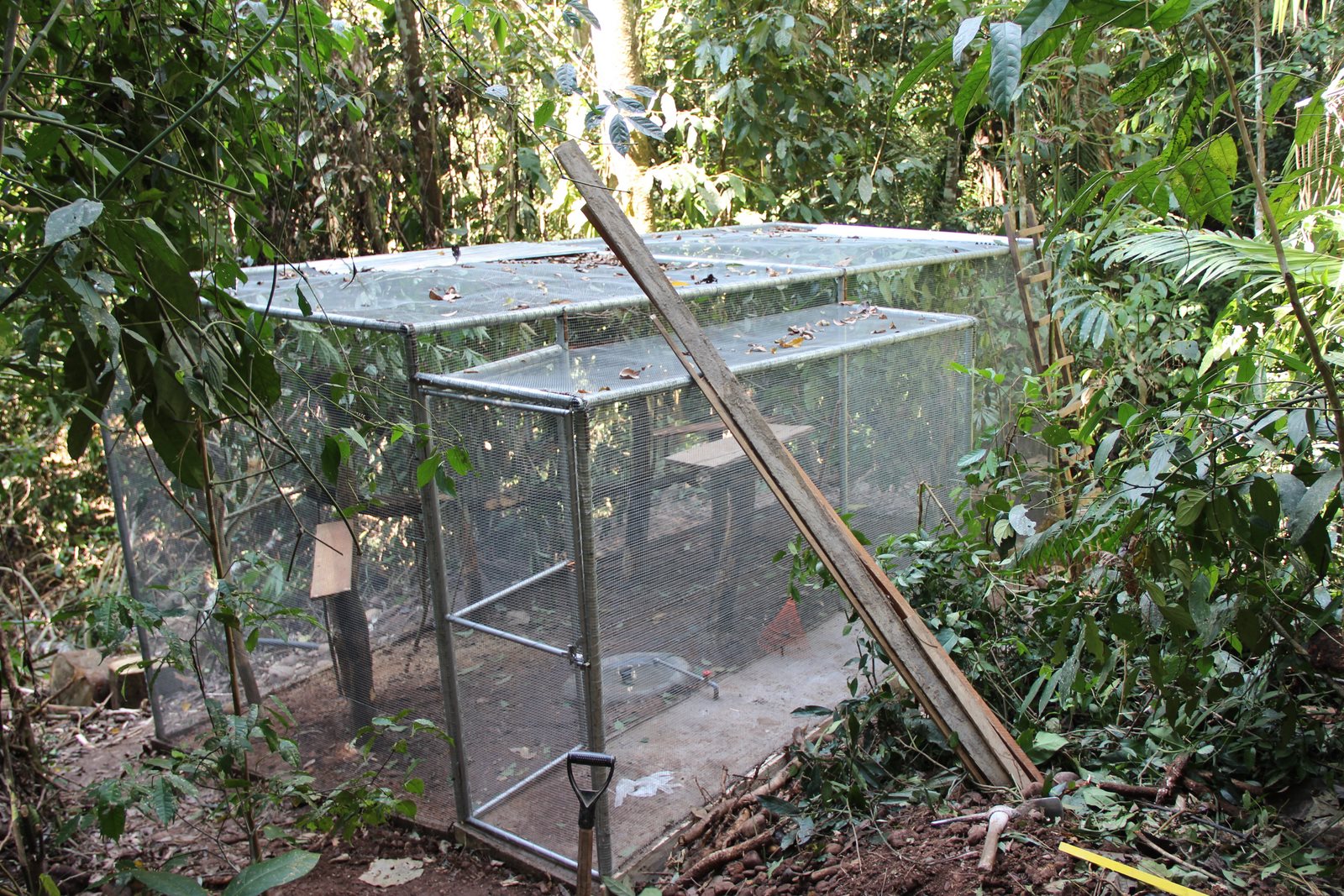
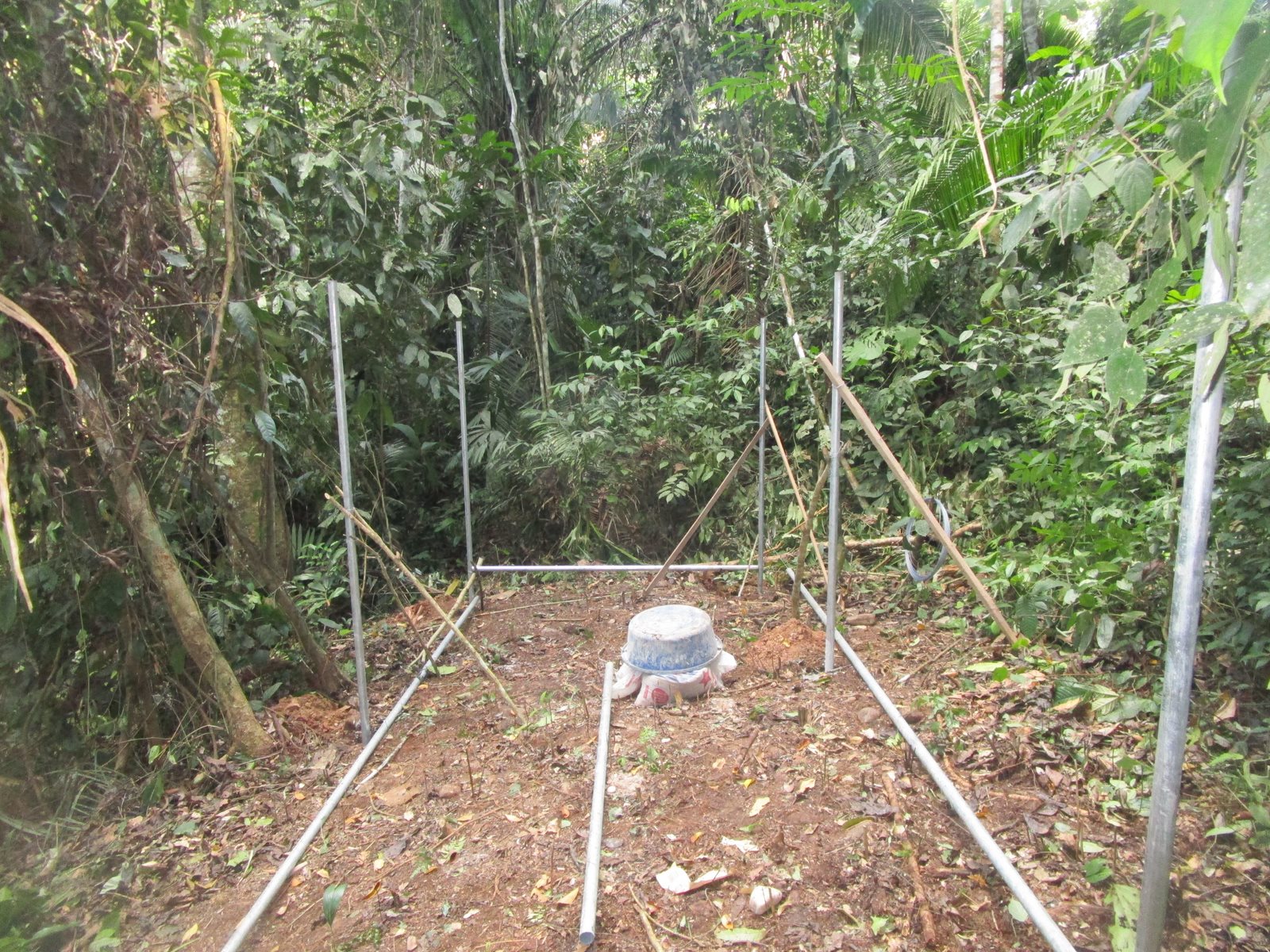
While progressing with the clinic, we will start the construction of a new Pepe-cage, this time of long lasting material, metal tubes and cement.

V

Volunteers

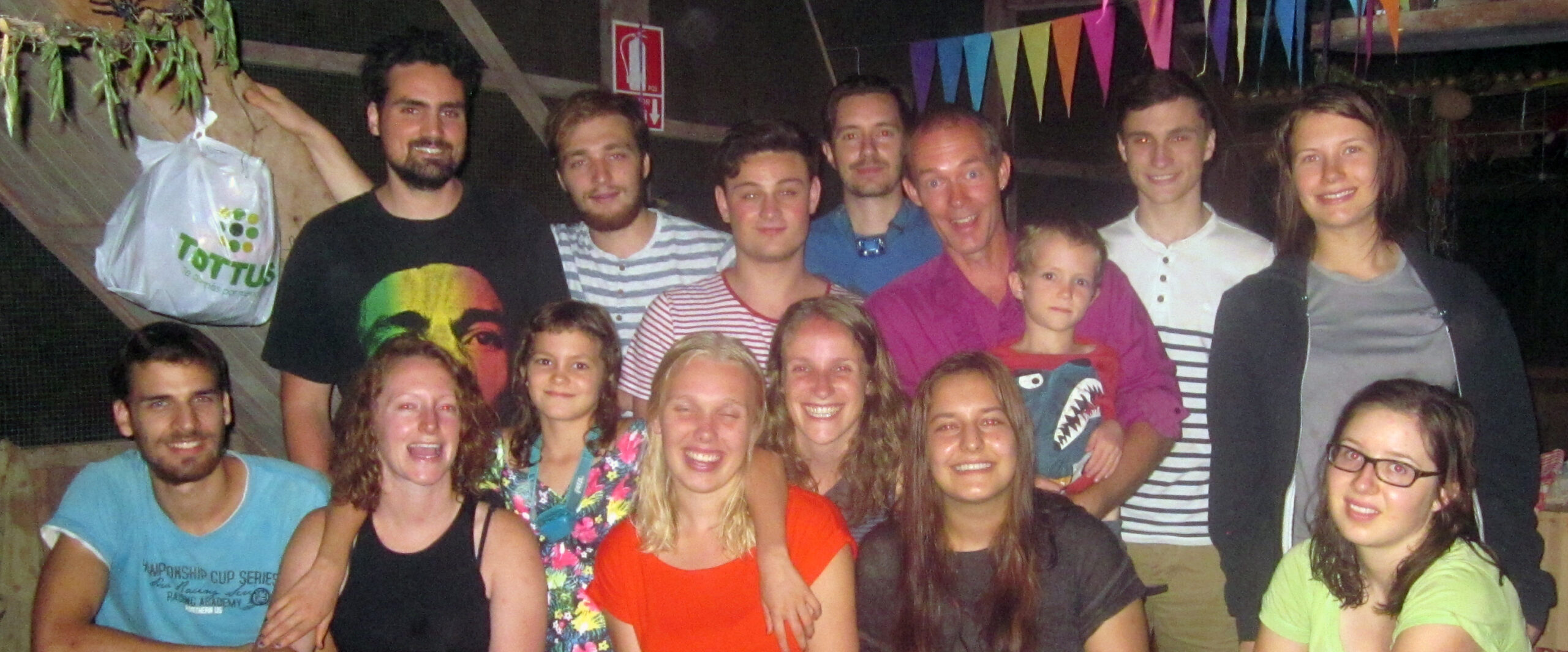
We are currently a big group of 11 people. Food runs out quicker than before and we have to be aware of our water management, but we can also get stuff done faster and more efficient. Of course everybody still needs to learn new and different things every day. In the end we are a big community, in which each and every one contributes for the project and has a big heart for nature and animals. This, naturally, counts for all of the ex-volunteers out there too.

The latest news (11.10.15 – 05.11.15)

General Info

After a long period of draught, the rain season finally started. The rain came perfectly on time, because we were running out of water again. We even could get to the Volunteer House by boat one day ; so many bags of sand could be taken by boat nearer to the clinic for making concrete. That saved us from a lot of manual labor, carrying!

Tupak Portrait
Tupak Portrait

Additionally we have now more art at Esperanza Verde! Tupak (toucan) got a portrait on the kitchen door, while Elmo (sloth) will be on the kitchen toilet door. We also will get a painting of Asan (macaw) on the Bodega entrance. That is all thanks to Enrico, from Italy, the volunteer artist.

Monkeys

Nakoya
Nakoya

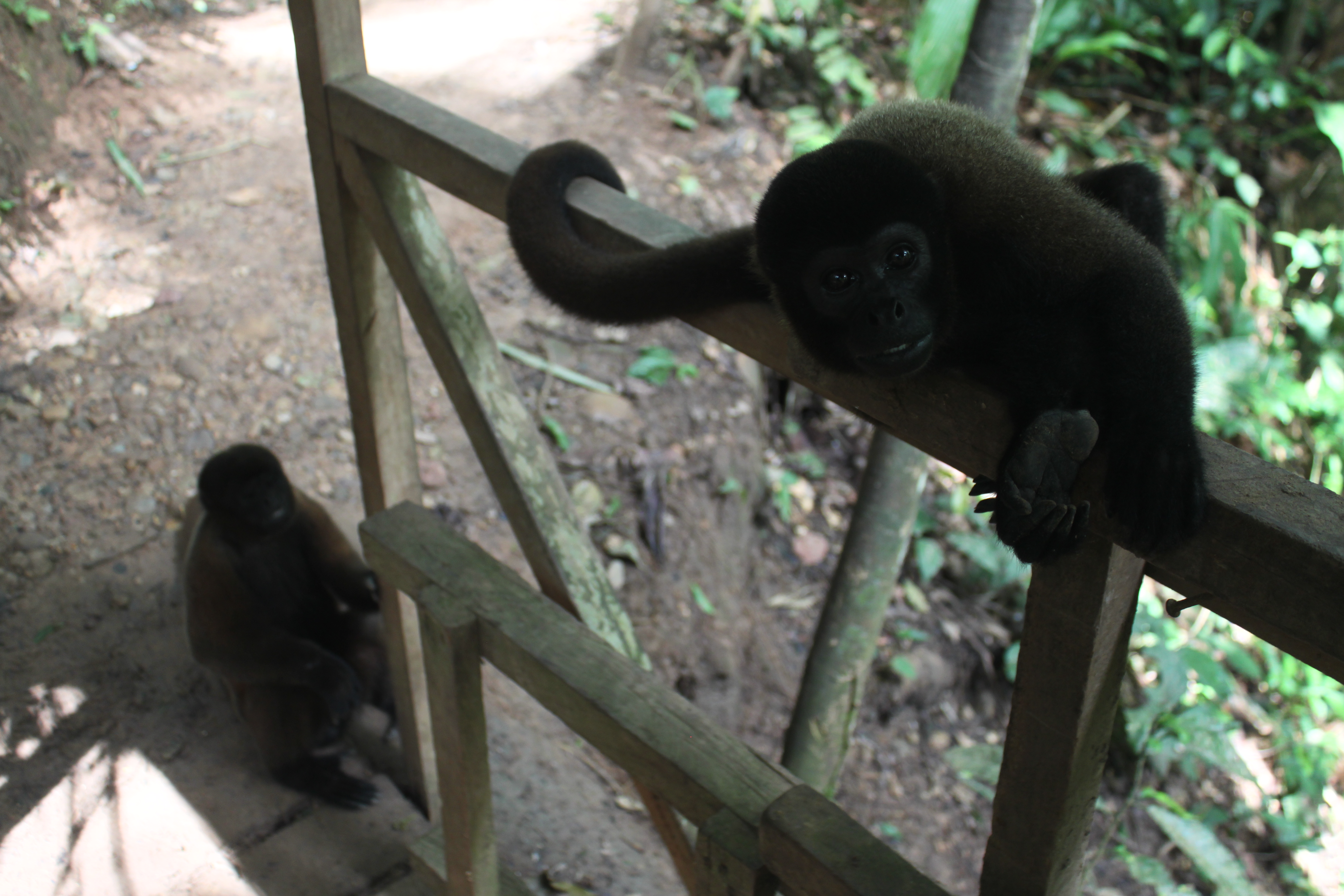
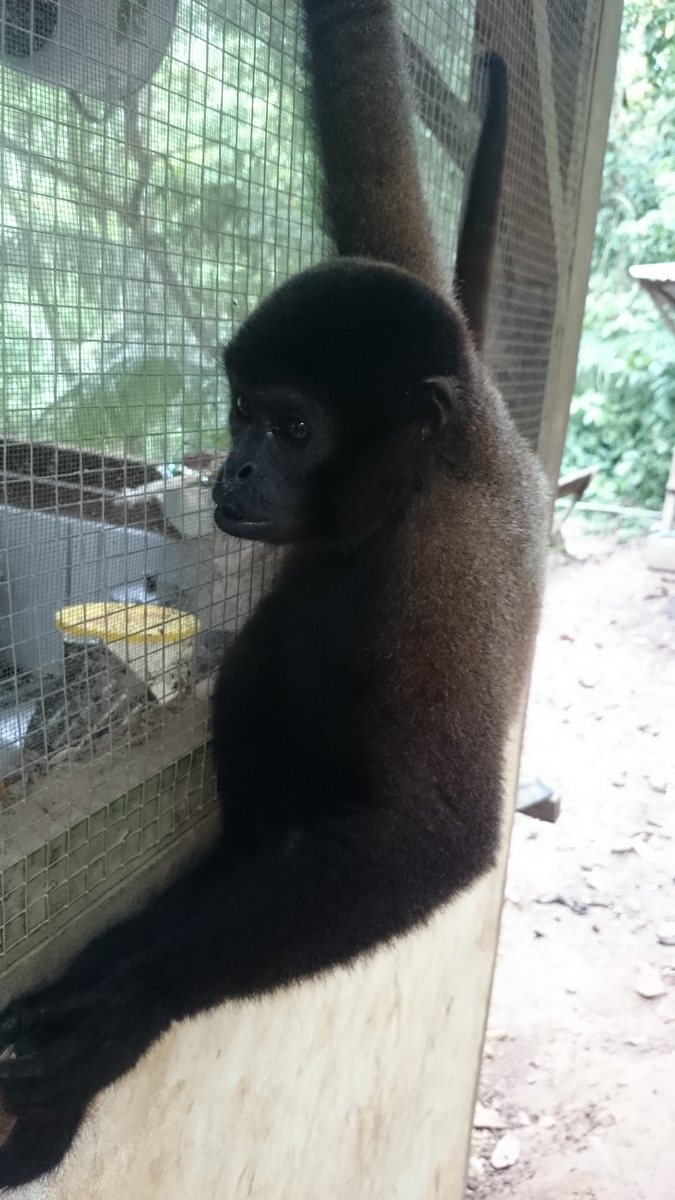
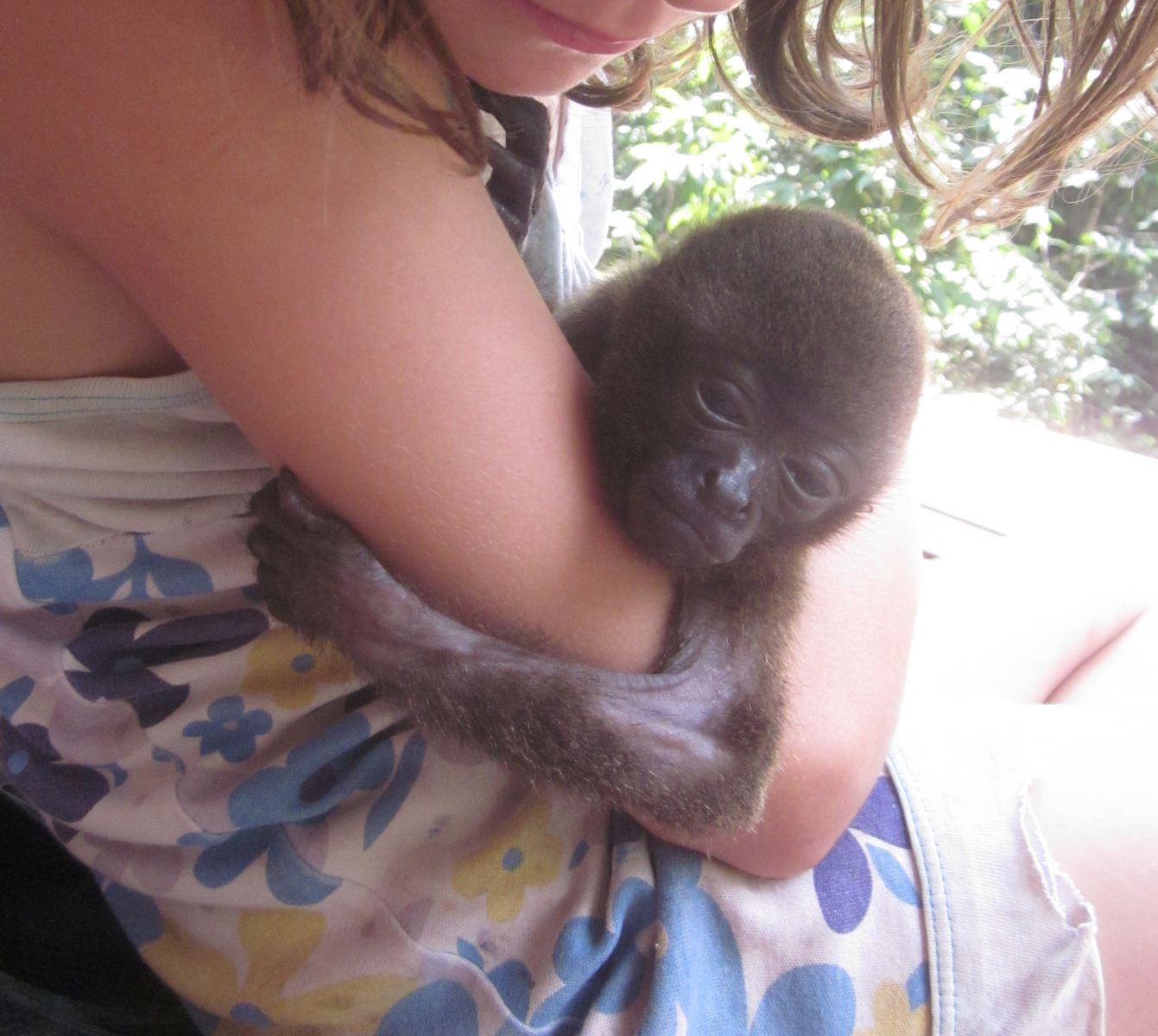
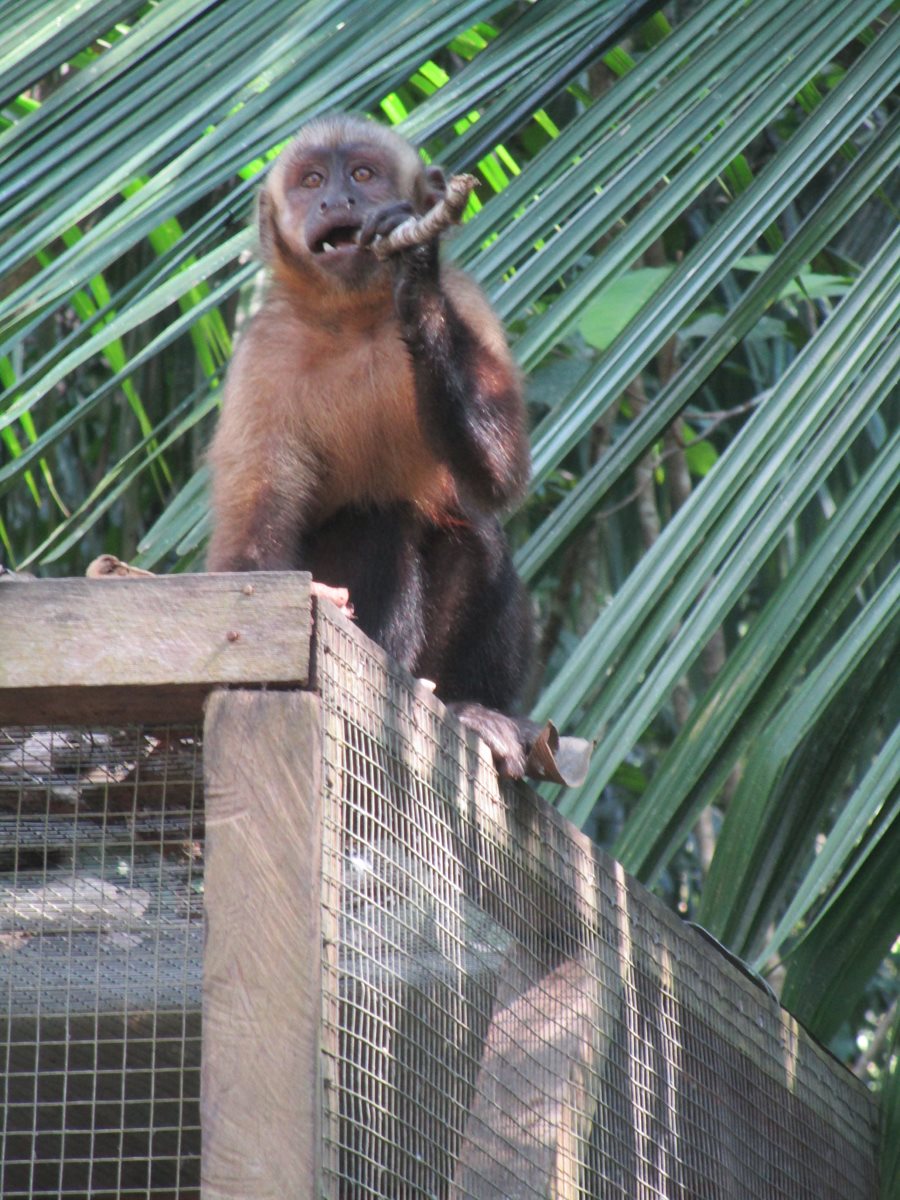
While there were few volunteers around (it ranged from 3 to 6), we could minimize the contact between human and monkeys even more. This resulted in the monkeys being more by themselves and living higher in the trees. But of course, Willow (woolly monkey) is still annoying especially to every new volunteer. As for the others: Nakoya (woolly monkey) still gets her milk twice a day, Mica and Jordi (capuchin monkeys) hang out with the squirrel monkeys, but still in the Esperanza Verde area and Camilla (squirrel monkey) still bites volunteers sometimes. Nikita, the youngest capuchin female monkey, joined Jordi`s group.

Rimaq, Lucio and Yanay (spider monkeys) are doing fine. We are still waiting for the right moment (enough people to watch) to let Yanay out in the centre. The males would be too dangerous for people to have outside, as they are so tame and the risk of a bite with their huge canines is too big.

Other Mammals

The bad news first: Creeper (baby bat) did not make it through October. He suffered from one injury well-hidden below his wings and another injury in his stomach. We realized that he got weaker, but could not do anything in the end. Creepers death came by surprise, in spite of all great efforts of many volunteers.

Kiko
Kiko
Mishki
Mishki

Kiko (kinkajou) and Mishki (agouti) adapted well to the life at Esperanza Verde. They are both healthy. Especially Kiko enjoys it when people are in his cage and tries to climb on them. As he is still young, he craves for attention and play time with humans. We try to avoid contact, but it is not always easy. Also because he is so adorable.

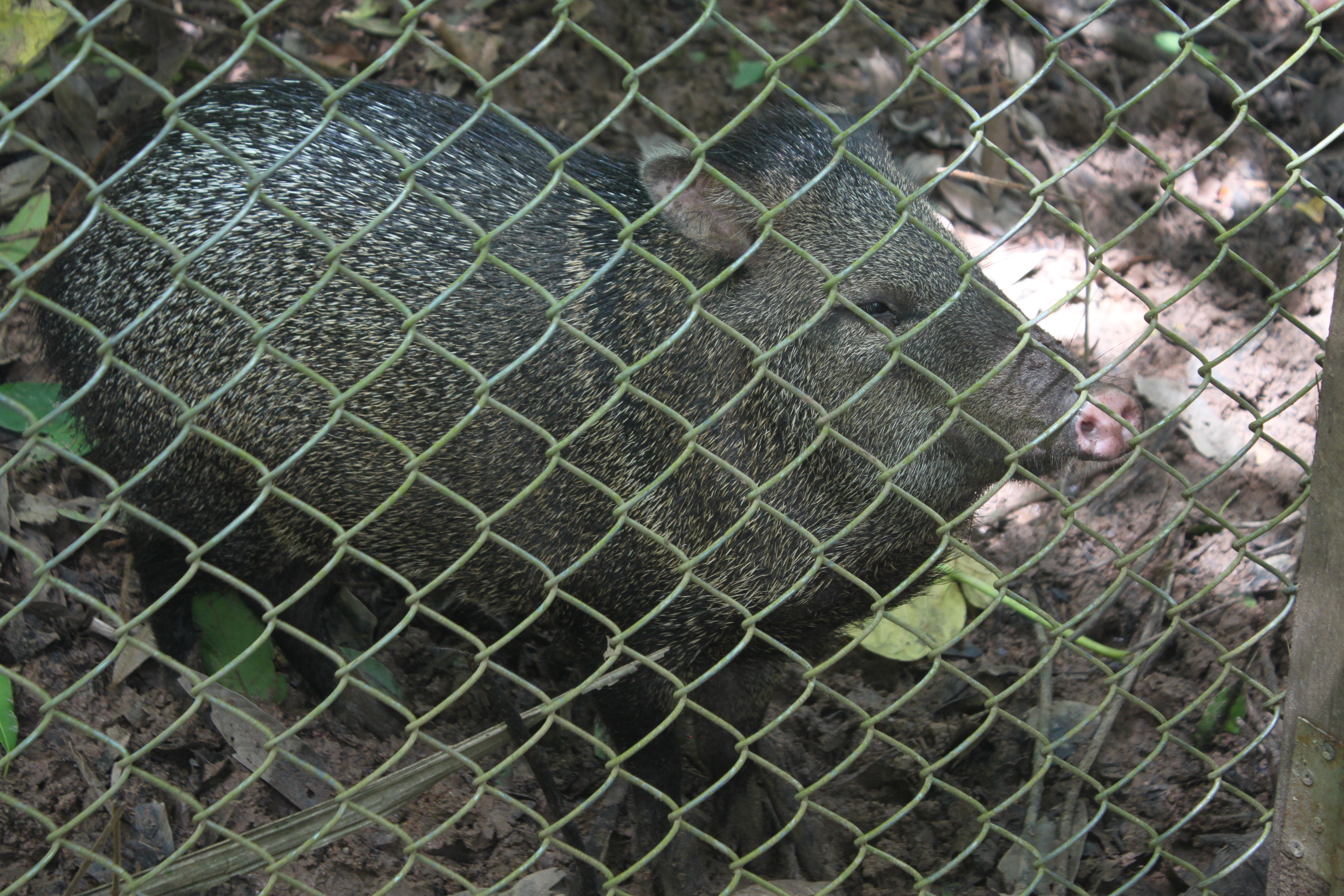
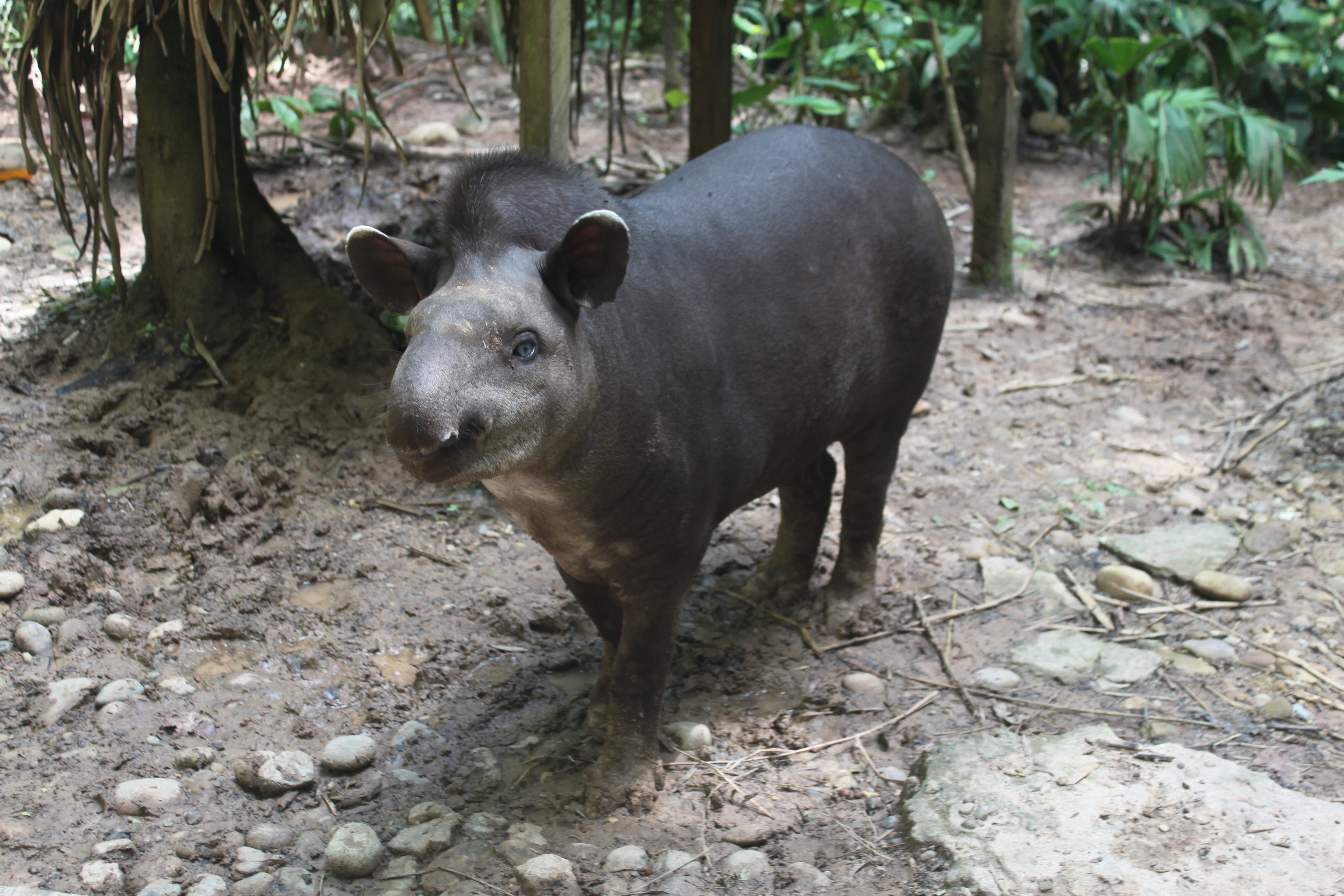
Rincay (tapir) and Quintisha (peccary) are both doing great; both of them get to enjoy many back scratches from the volunteers.

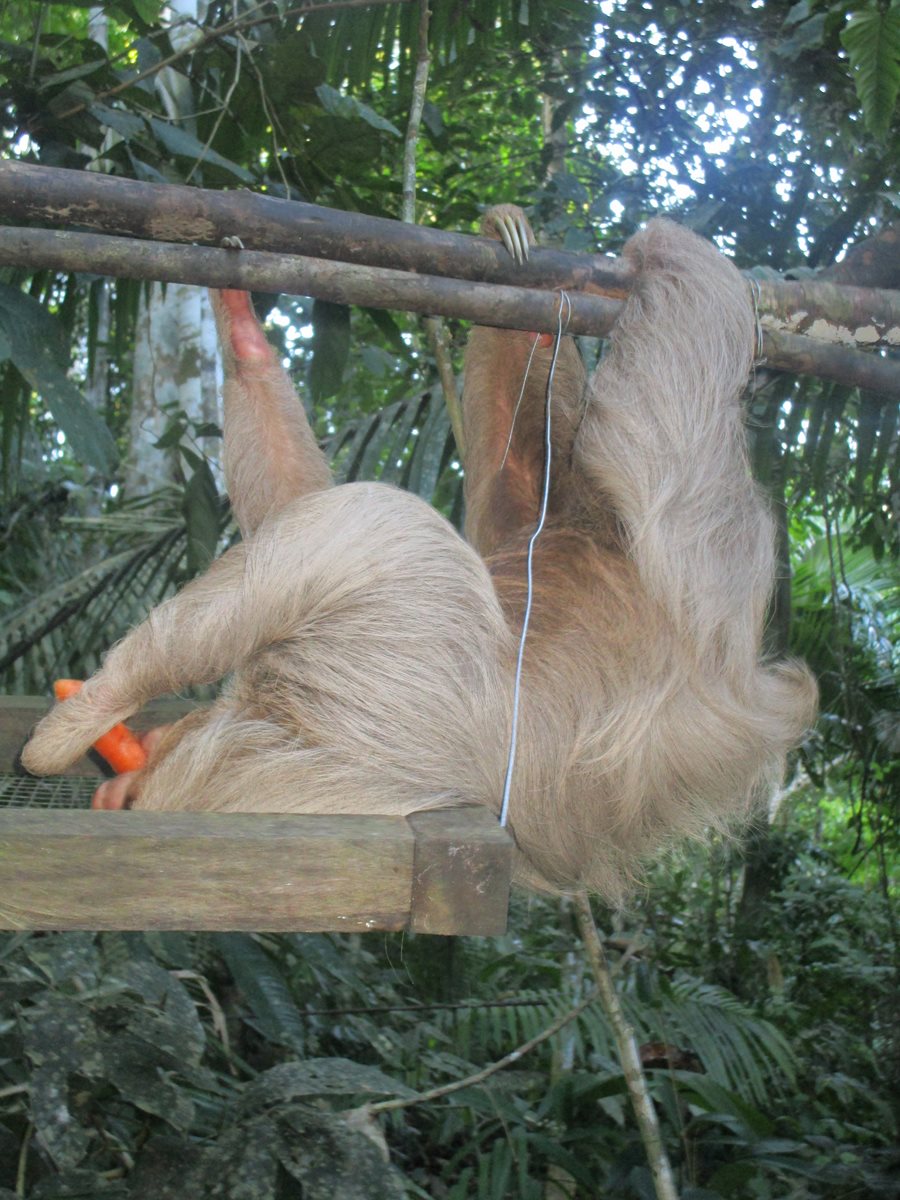
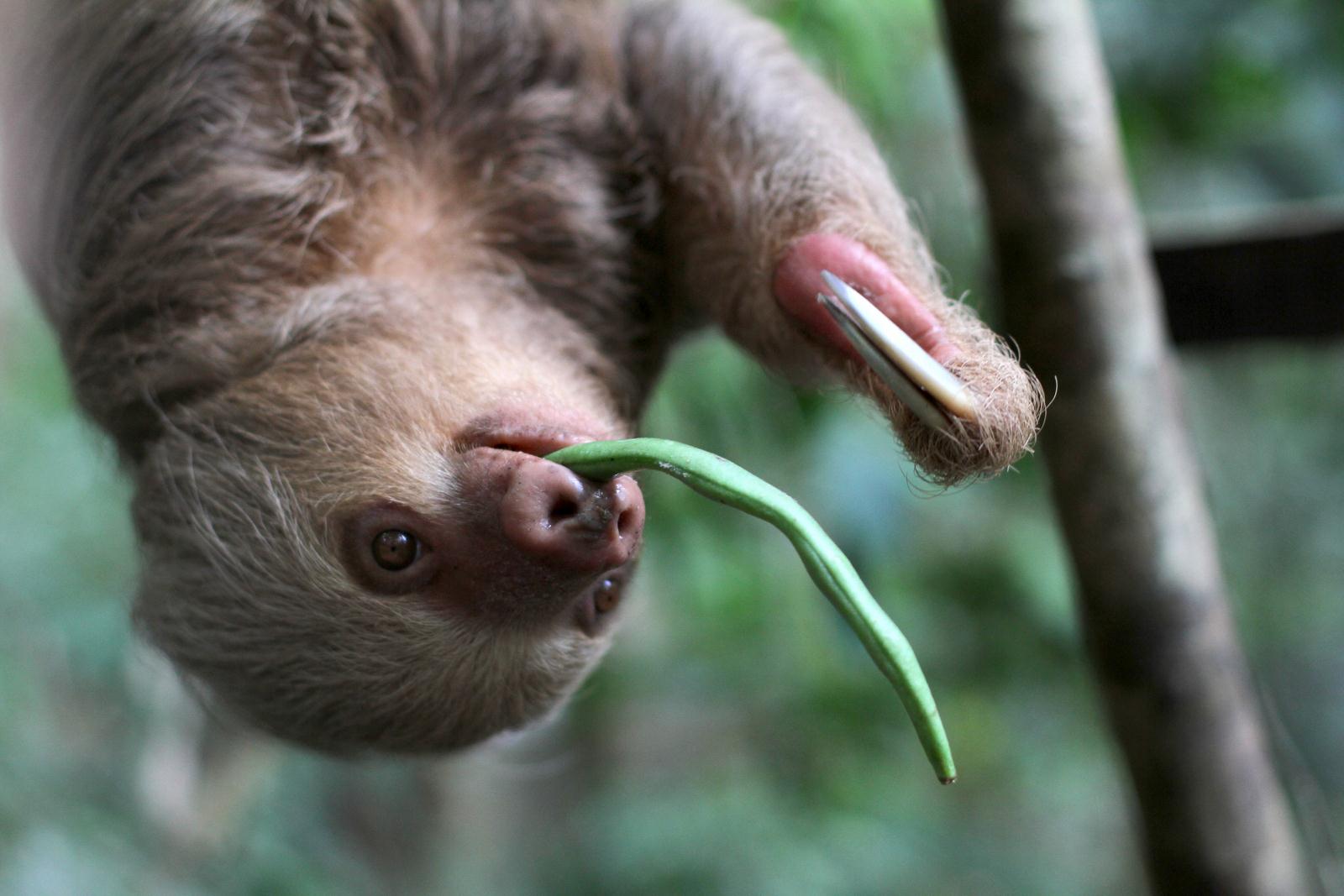
Elmo (sloth) shows up two or three times a week to eat some carrots and some of his beloved sweet potatoes.

Some of the bats, which we released last month, are still around. One lived in the kitchen for a short period of time and another two visit the volunteer house every now and then.

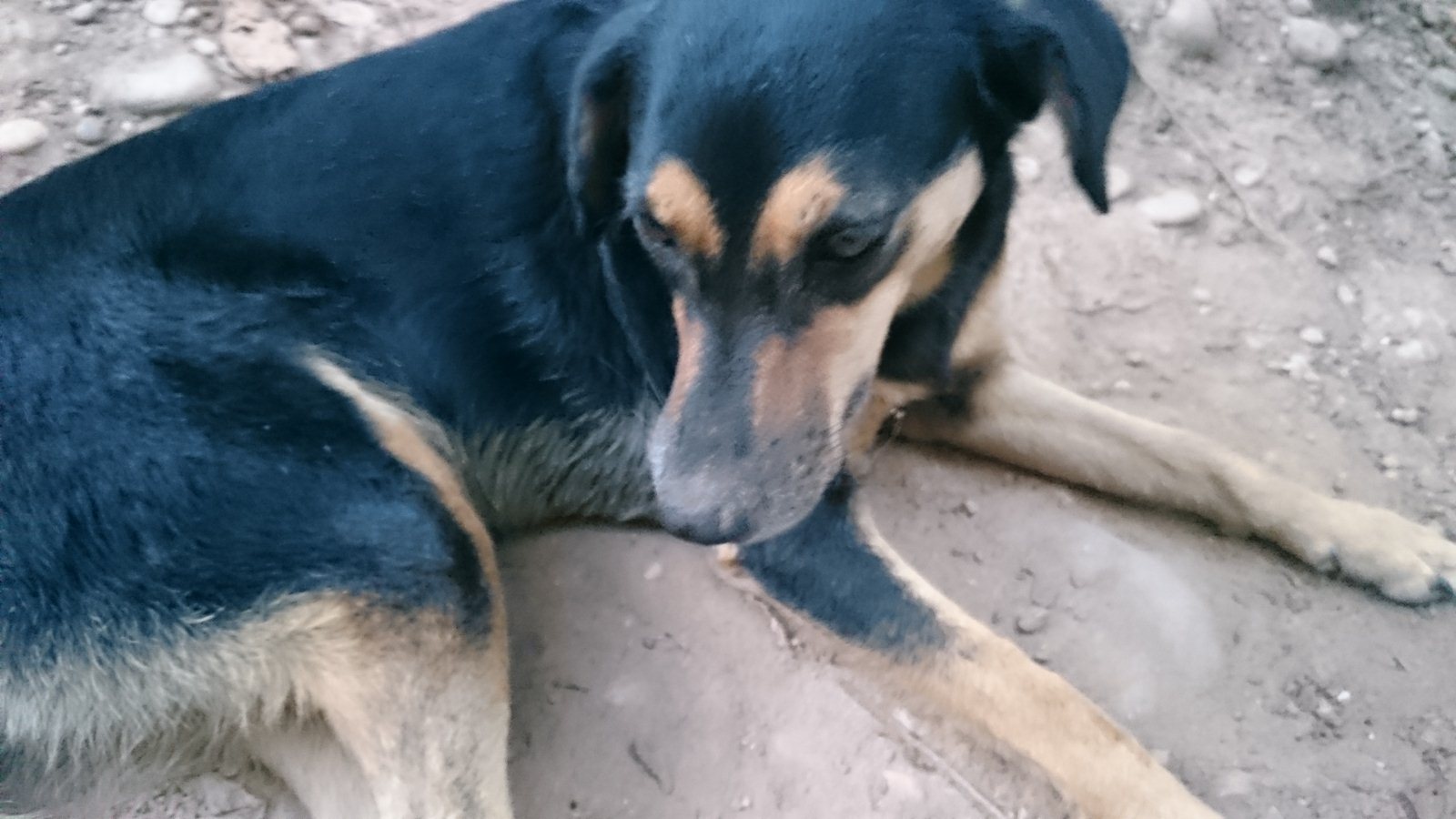
Yara
Yara

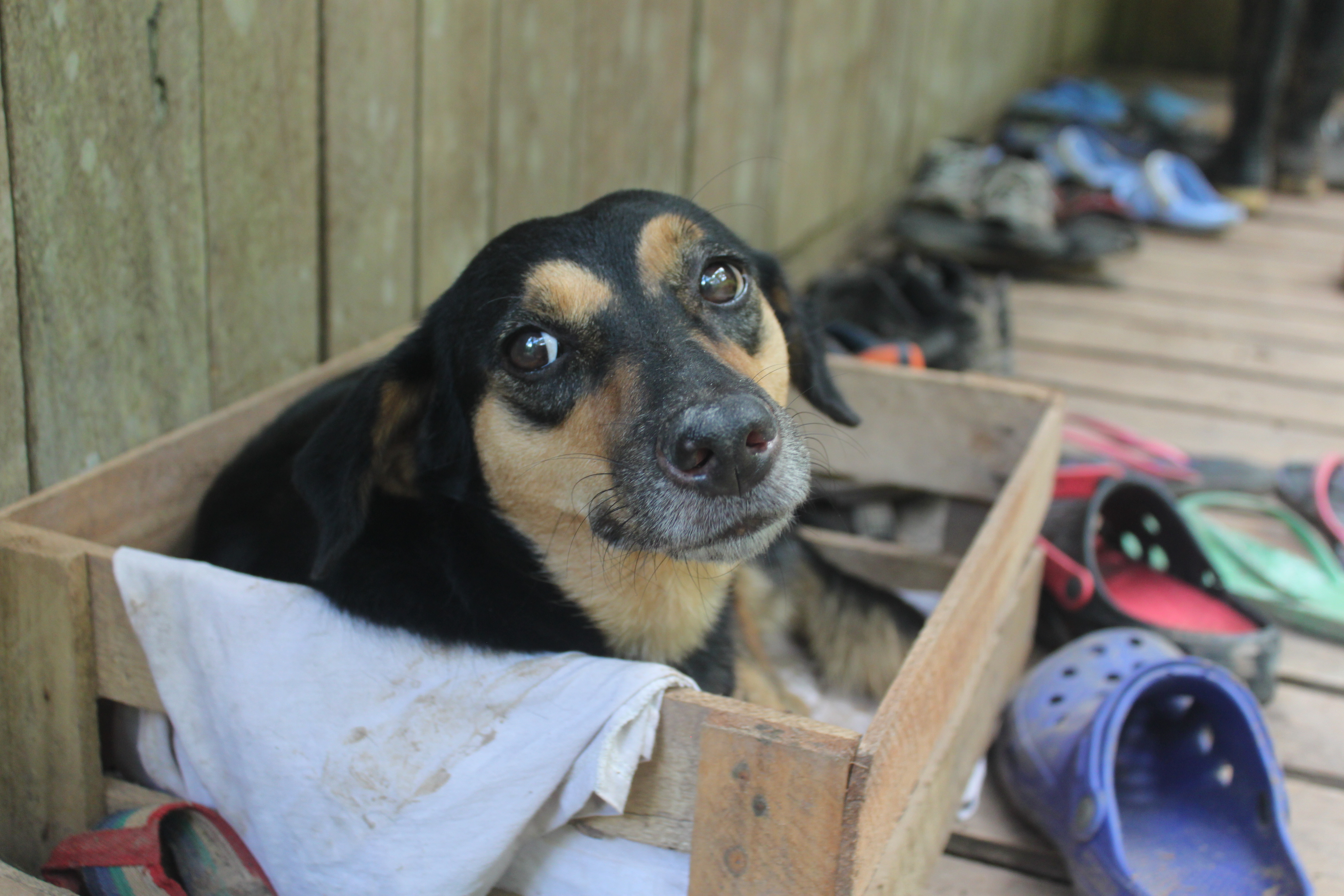
And last but not least, Yara (volunteer`s dog) sends her regards to all the ex-volunteers out there.


Birds

Pauki
Pauki

Pauki`s (Oropendola) training had a small holdup. He injured his wings and didn’t want to use them for a while. But after a rest of two weeks he is better than ever and his flying territory already covers Rincay’s cage and smaller parts of Xena cage (where Quintisha lives). Pauki still likes to be around people though. He picks on clothes, shoes and books to look for probable insects and he is not afraid of throwing stuff on the ground in his quest for discovery. He still likes to be handfed, although he can perfectly eat for himself. We suspect laziness. The volunteers watch over him around 4 hours a day, so he can fly around in this time. We wonder if Tupak (toucan) sees Pauki as a kind of little brother. He bullies the little bird a bit, but never injures him. Isn`t that, what we all do with our little brothers or sisters?

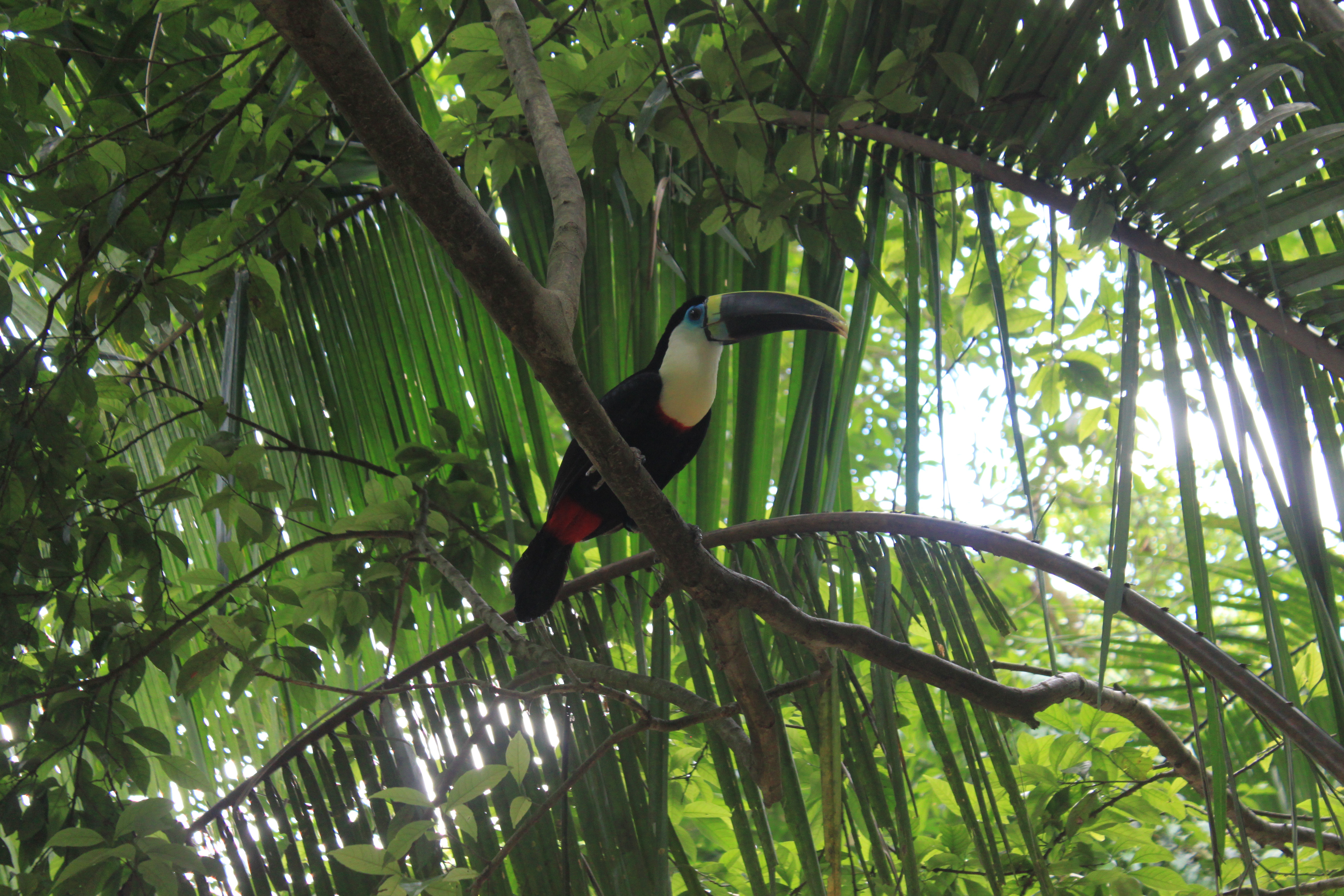
There are some interesting speculations around Tupak. Douwe said, there is a good chance for Tupak to be a female. Of course we will only be 100% certain when she would lay eggs. (Wouldn’t that be wonderful? Also: google baby Toucans, they are endlessly cute).

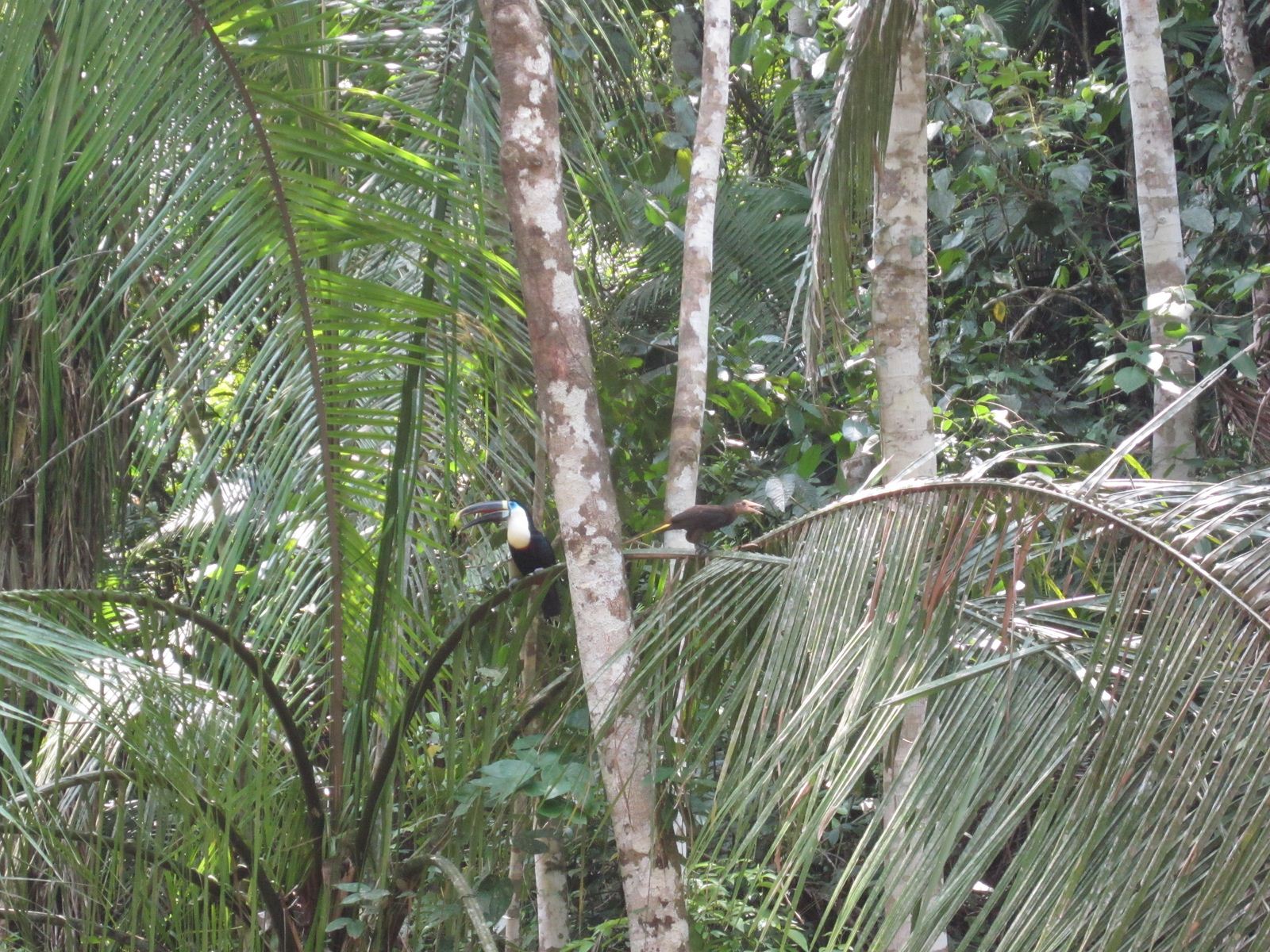
Tupak disappeared twice this month. Both times for about 2 days. We were worried and unsure whether she! found some friends, or he got captured. At the moment she is back in the Esperanza Verde area and likes to fly around from the family house up to the kitchen.

Supay (shiny cowbird) enjoys life in the aviary. Although he is the smallest in the cage, he teases all the other birds and sometimes the volunteers too. No wonder they named him `Devil’.

There were two deaths in one of the bird cages lately, among the last big group of parakeets brought by the Ministry. The first one was a white winged parakeet. The autopsy suggested an infection of the liver led to the bird’s death. And the second one was an white-eyed parakeet (aratinga). Even though one of the volunteers recognized, that it looked really ill and it was brought immediately for treatment to the office, it was already too late. Her name was Nina, and she only survived 2 days in the office.

Simultaneously another aratinga was transferred to the office. His name is Apu and he is now under observation and treated. This bird also seemed weak and under-nourished (his weight was less than half its normal), but he is getting better. Out of fear for a bacteries and-or parasites, we decided to separate all the aratingas in a different cage into quarantine and under medication. Just as a security procedure. As soon as the quarantine is over and all parakeets are healthy again, we can start to release more parakeets again.

Reptiles

There is a new tortoise in Sepa cage (the cage in between the aviary and reptiles). Her name is Nasca, and she was held as a pet in town. But because she has 13 plates on the back, the owner considered her as an omen for bad luck for breeding with her and gave her to us. She now stays in Sepa for 3 months (quarantaine) and then she will become the new female friend for Pepito (another tortoise of the same size). She is in good shape and eats a lot.

Pepito decided that if Rincay steals his food, he is going to steal Rincays food. They seem to have a good synergy and it`s interesting to see Rincay, Pepito and Willow eating from the same bowl.

The other tortoises and also the turtles are doing well, too.

Construction

almost finished bodega
The bodega
The bodega
Inside the bodega
Inside the bodega

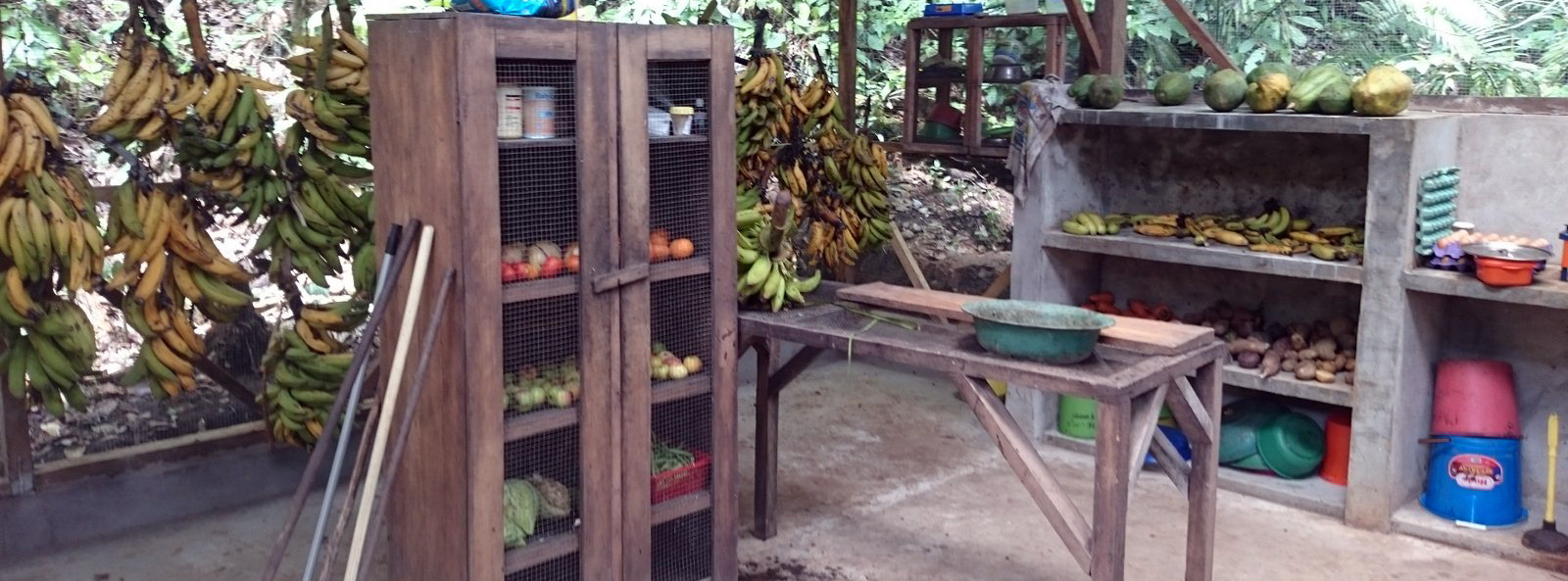
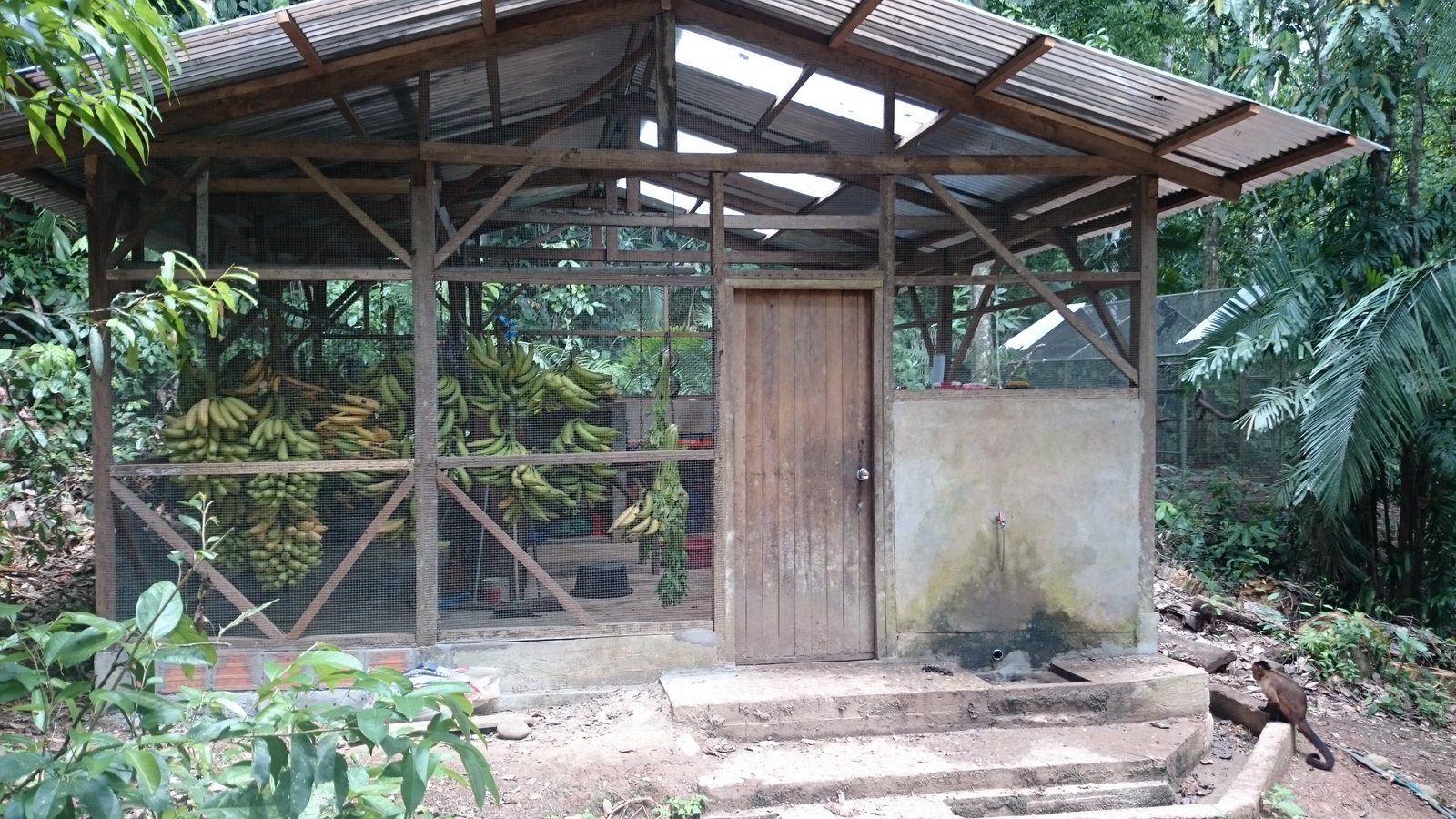
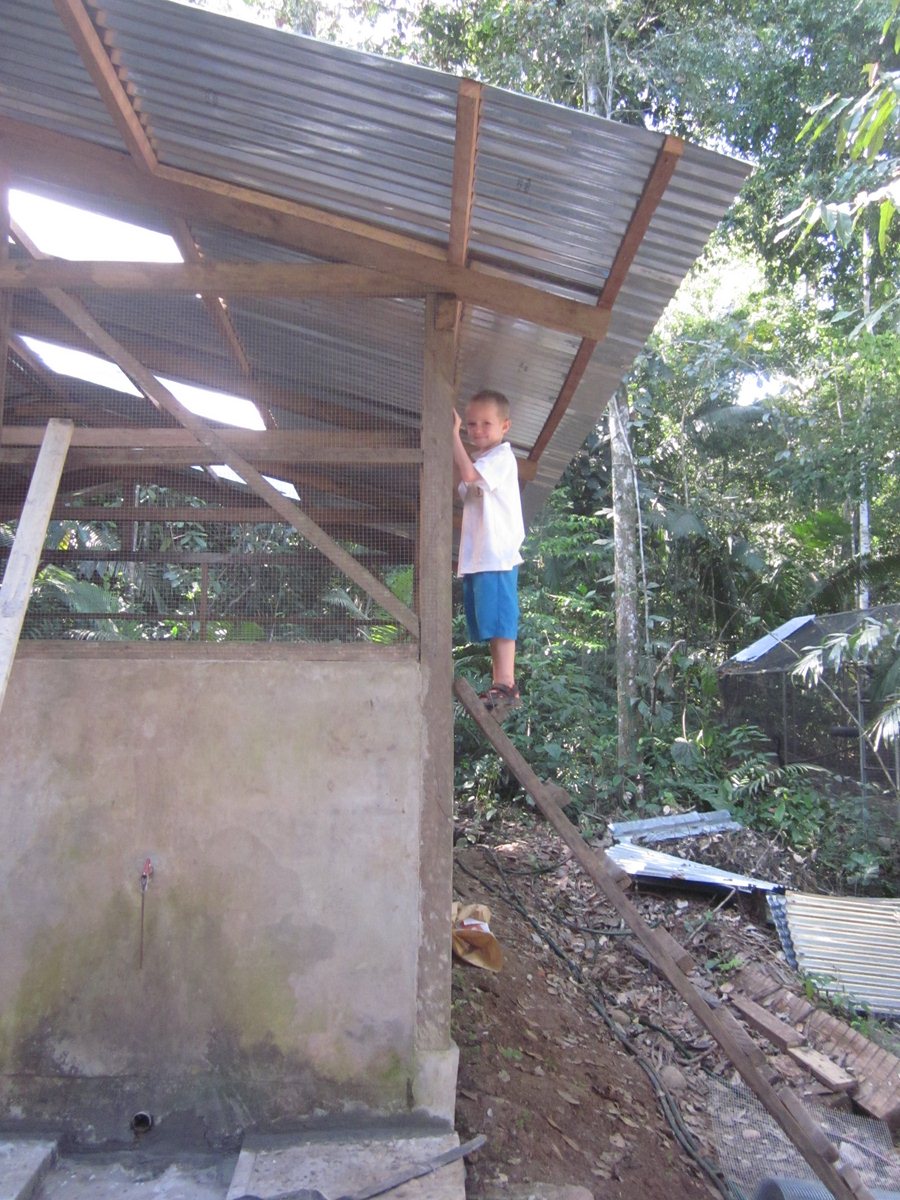
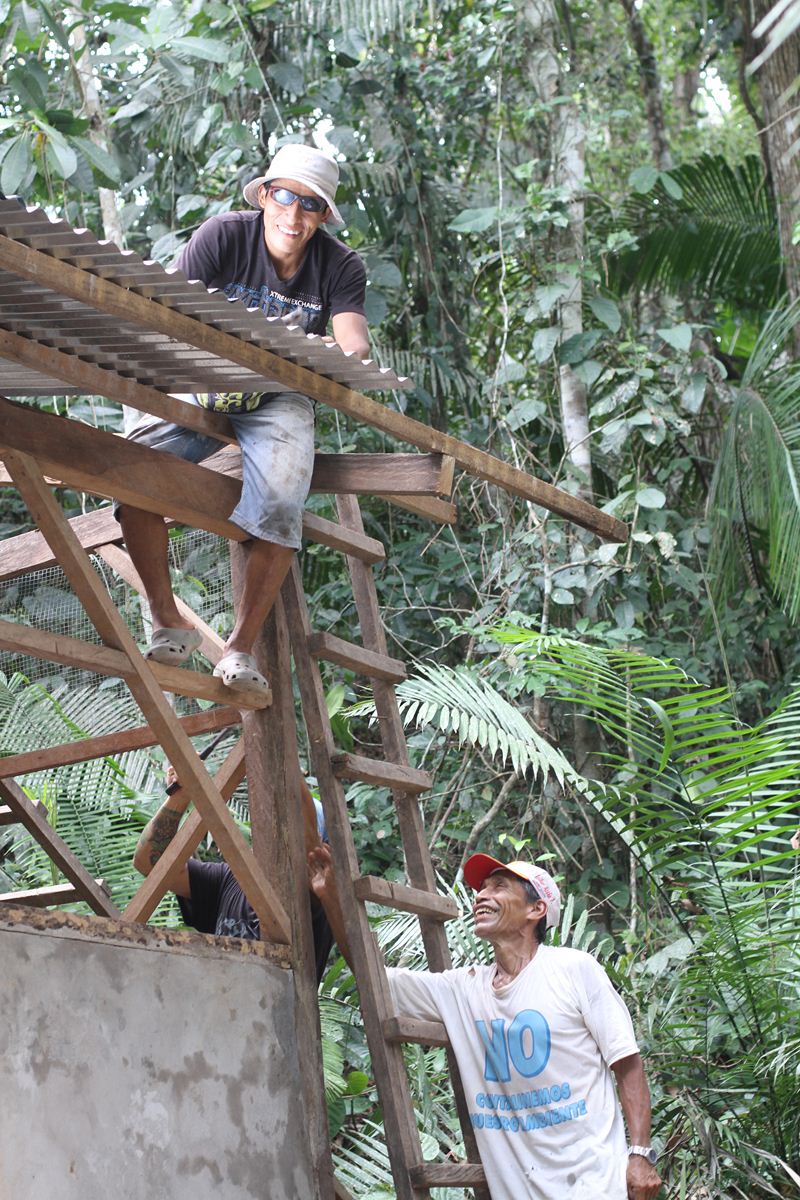
The bodega has been rebuilt again. It took Douwe and the muchachos (Machico, Geiler and volunteers) around 3 weeks to finish and extend it. There is now lot of space for bananas and papaya. The volunteers are glad, that they don’t have to use the front cage of the aviary and Igor front cage anymore as a substitute bodegas.

Yance at work in the clinic
Marlon helps as well

With the bodega done, we could focus on the clinic again. Douwe hired two extra workers to regain some of the lost time. One of them is a specialist in brick laying and plastering. He builds and finishes the walls of the clinics in the next few weeks. Also, there are enough volunteers to help out on the construction side again. The goal is, to finish the clinic before the New Year, so let’s hope there won’t be another delay.

Volunteers

The group grew to 9 persons, but we are expecting another Volunteer to arrive soon, and till end of February we will be always in between 10 or 12. It is getting crowded in the kitchen, especially during lunch during the week. But as you probably know, more people mean more progress in work and also more fun in the evenings.

There are now two new Dutch interns (animal management) which will try to run a bit of management around here. Together with Dominik, from Switzerland, who will stay 9 months, and two German girls, Anouck and Tabeal (also staying for 3 months) we will have a great long-term team to get a lot of stuff done.

Volunteers needed !

amazon2

We are in desperate need of volunteers for October and November
so if you’re interested or know someone who is
please contact us and email info@esperanzaverdeperu.com

The latest news (18.09.15 – 04.10.15)

General info

This last week it has rained finally, so the well that provides water to the houses and cages started filling the tanks again. The nearby stream has now become a small river again. As a precaution, we are still washing ourselves and the dishes there. It is still the dry season after all!

Bodega destruction
Bodega destruction

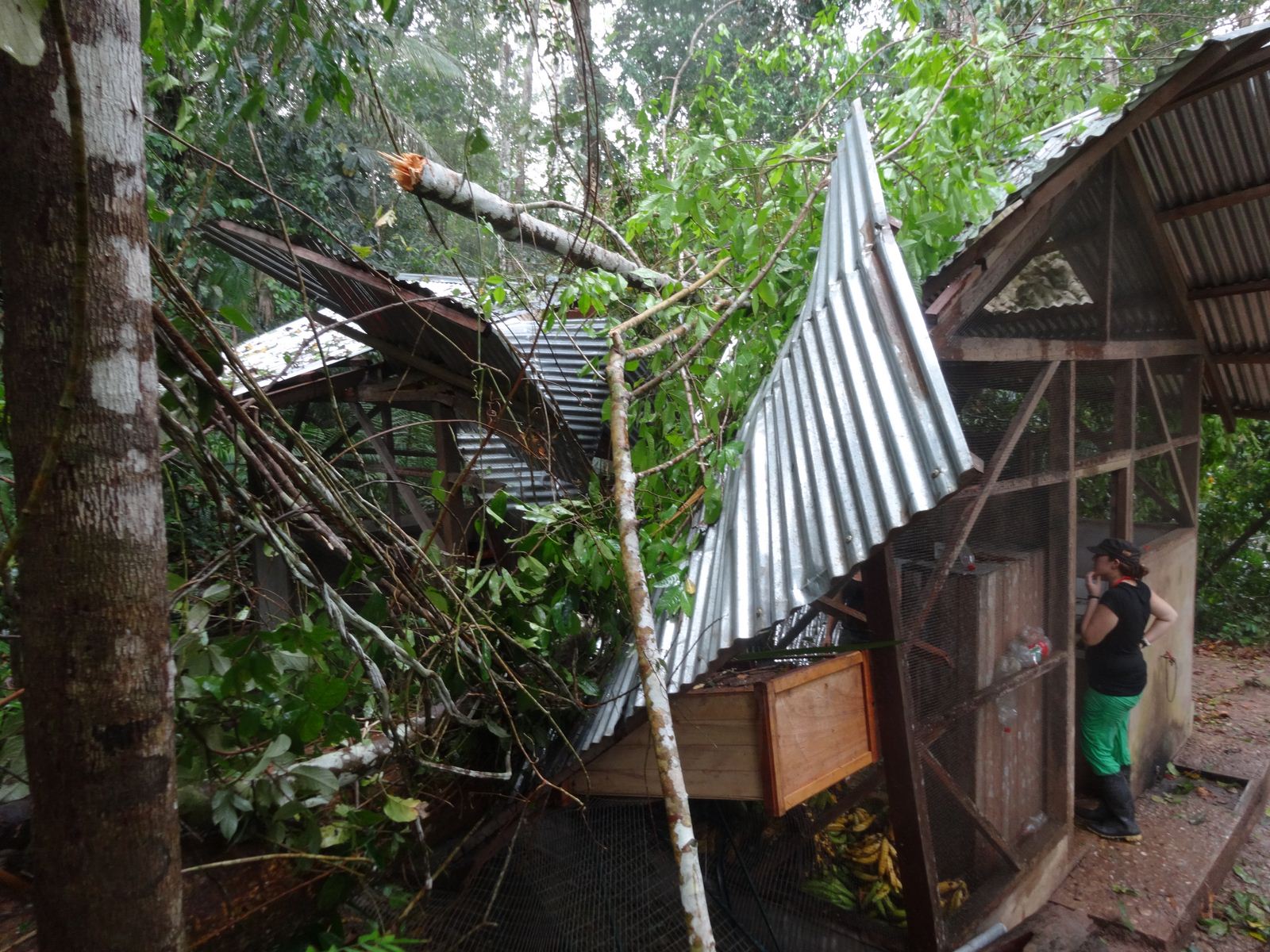
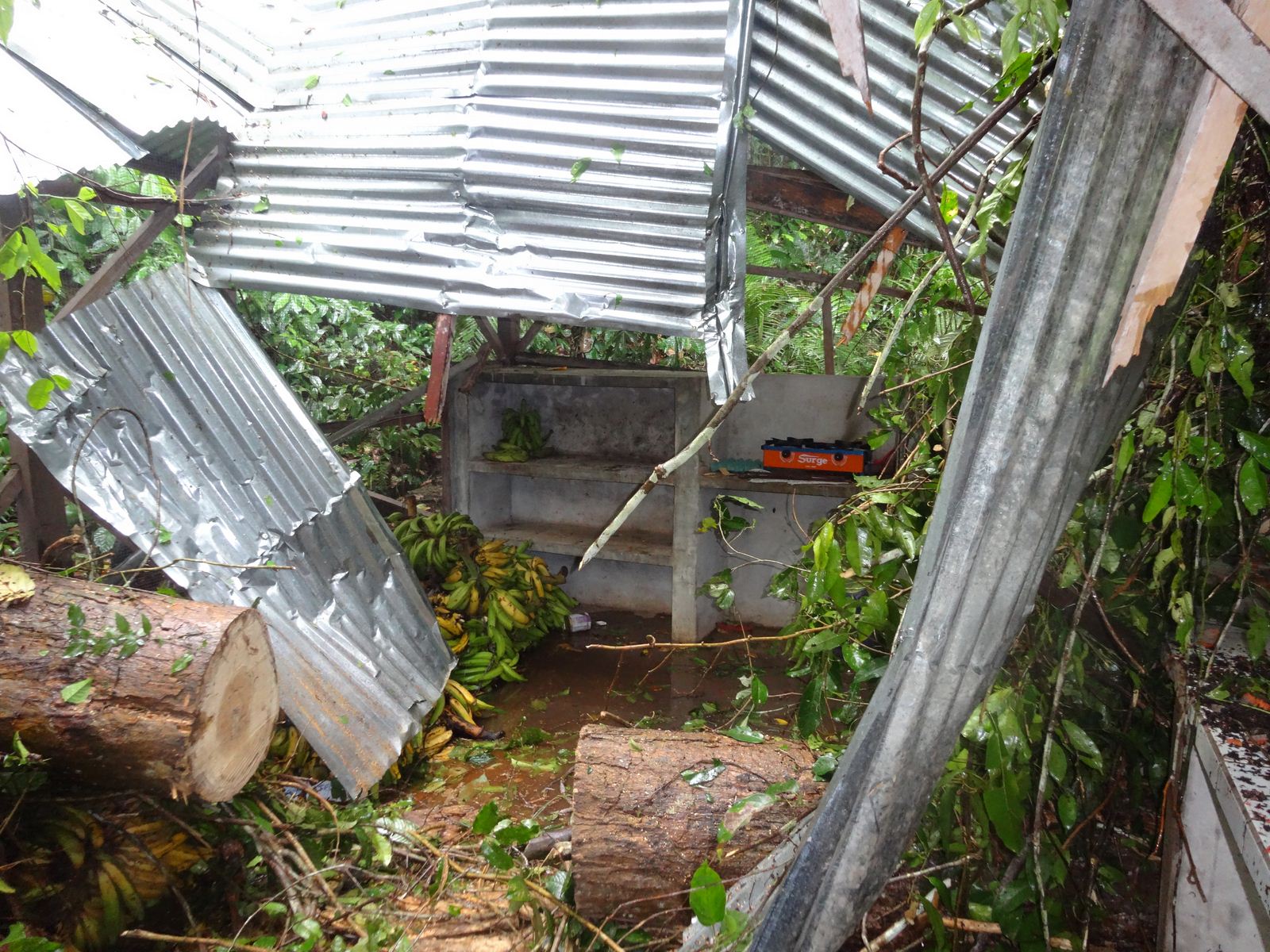
And with the rain came a huge wind, which took down a big tree, unfortunately it fell on the bodega. The whole roof destroyed, but luckily most of the cement wall was still standing. We are enormously lucky that no one was in the bodega at the moment it happened. Douwe started directly with the planning of the re-construction of the bodega. To make something positive out off a negative thing, it gives us now the opportunity to make the bodega slightly bigger to be able to give more room for all the bananas.

M

Monkeys

Ramona in her last week

Ramona, our baby wooly monkey, unfortunately suffered through a condition that persistently deteriorated. During her last week she lost all of the weight she gained while she was here. We tried to feed her as much as possible, mainly by force feeding. From off the beginning we suspected something was wrong with her skull. Most likely she fell on her head when her mother was shut and fell down. The last months of her life we gave her all the love and attention she deserved, but after two months of nurturing her we were forced to give tearful goodbyes and let her go. This is one of the hardest decisions to make. At autopsy we found out that she would not have been able to live long. Part of her skull was squeezed below the rest. This was probably the cause of all her problems. She tried, we tried….but it would just not be.

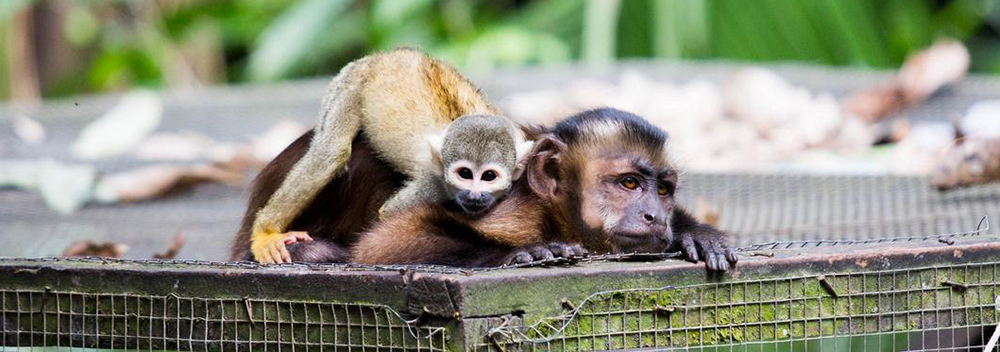
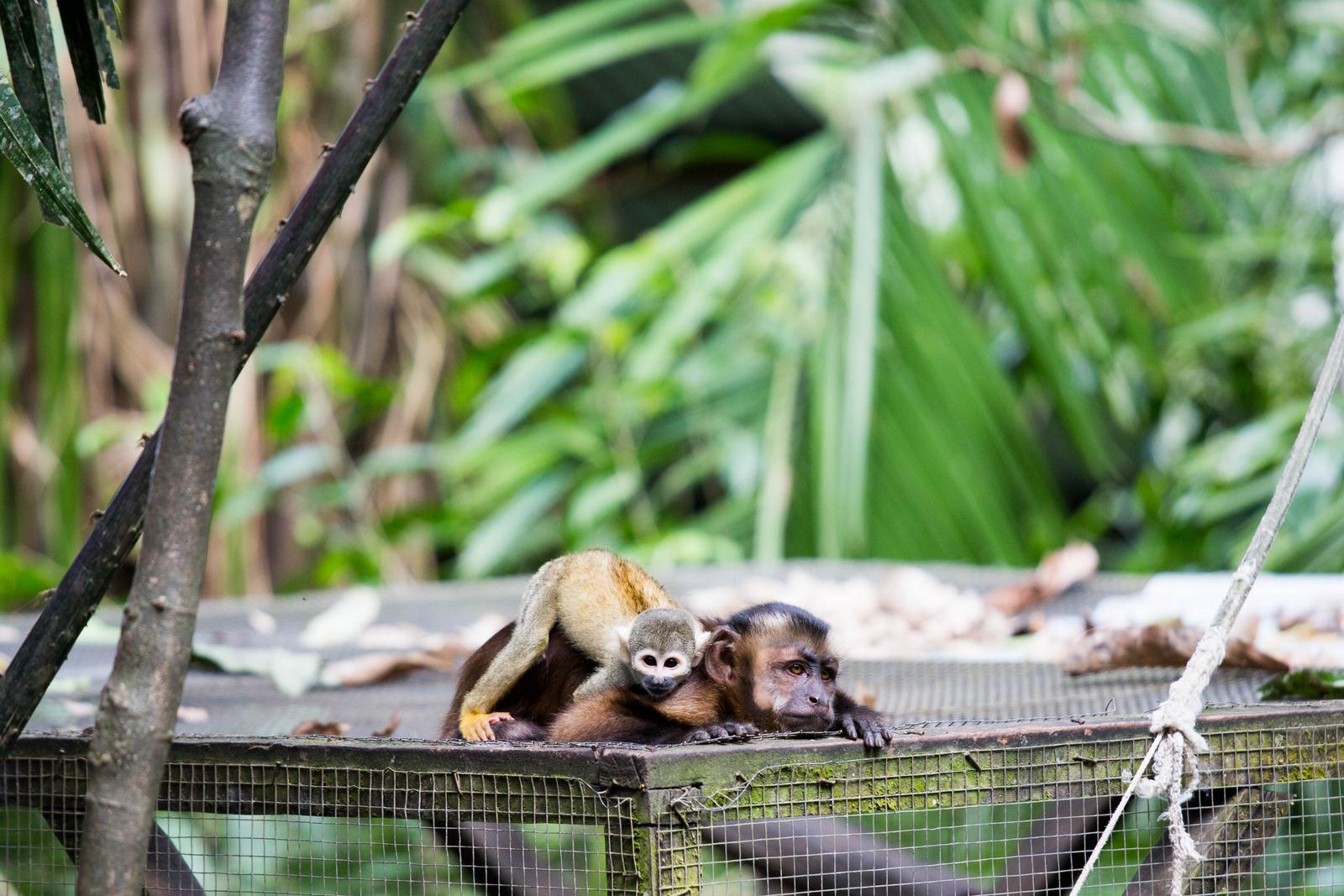
Mica is doing fantastic. She interacts great with the other monkeys and she doesn’t even follow anyone anymore. We have yet to see any “special” interaction between Jordi and Mica, but we hope that it will happen. Mica continues to look after the squirrel monkeys, acting as their surrogate mother.

O

Other mammals

Mishki, young aguti
Mishki, young aguti
Kiko, young kinkajou weighting

We had two new arrivals! One is a young kinkajou and one a young black agouti. The kinkajou came from a nearby village, where it was held as a pet, and is very tame. The agouti was held as a pet by one of Kayla’s school friends, who some weeks ago visited Esperanza Verde, and decided to give her to us. We are going to try to maintain the smallest amount of contact as possible, to be able to give them as much chance of a successful release as possible. We are hopeful they can have a normal life in the wild. The kinkajou is called Kiko, and the agouti Mishki.

Elmo now visits us at least three times a week, but most of the time he likes to just hang around in the area. Rincay (the tapir) and Quintisha (the peccary) are both doing fine.

Creeper, baby bat
Creeper, baby bat
Release of adult bats

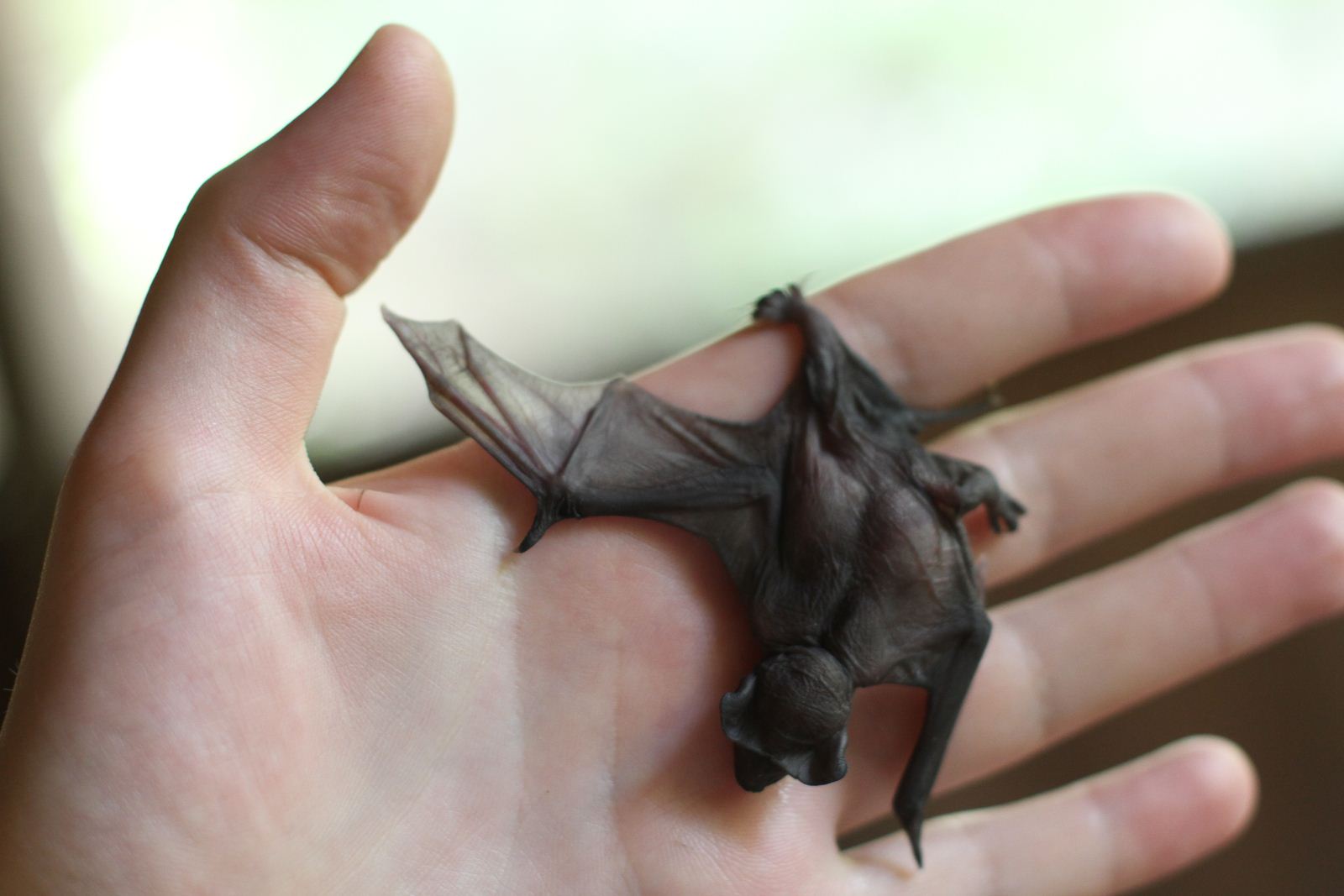
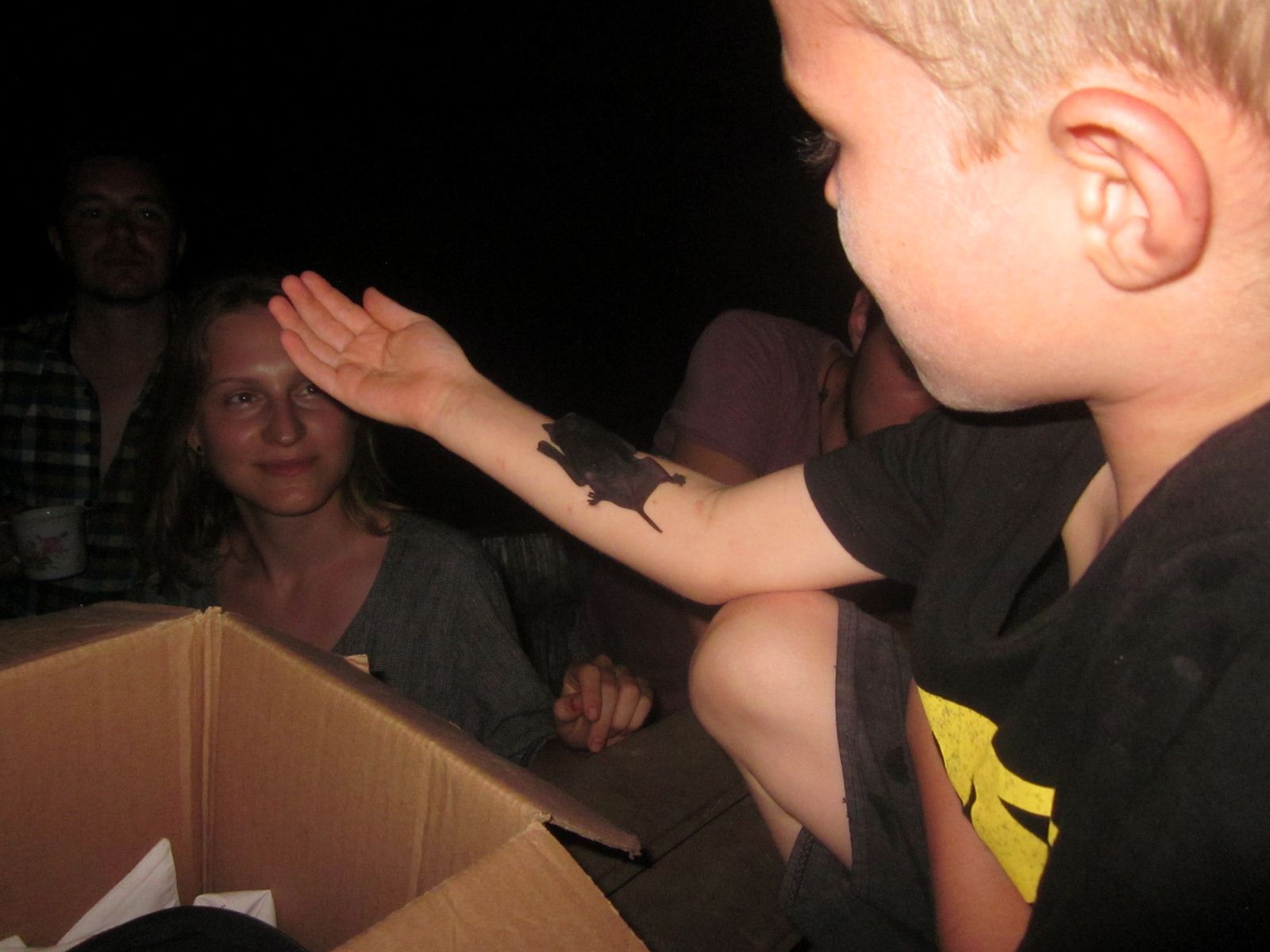
Creeper, the baby bat, found by Kayla two weeks ago, is progressing well. He is very active when we feed him. He likes to hang upside down on the feeder´s hand and he has already spread his wings a few times!
Thanks to some other new arrivals, about 20 bats from Kayla’s school we now know the exact species, Molossus molossus. These bats were bound to end up dead, as they were talking about spraying insecticide there to get rid of them. So Kayla decided, together with her school friends, to catch them and bring them home. This took some convincing, as many believe all bats are bloodsuckers and don’t dare to touch them. But Kayla is good at convincing….. Anyway when night fell we released them all safely at the family house, outside of course….

B

Birds

Supay in the aviary
Supay in the aviary

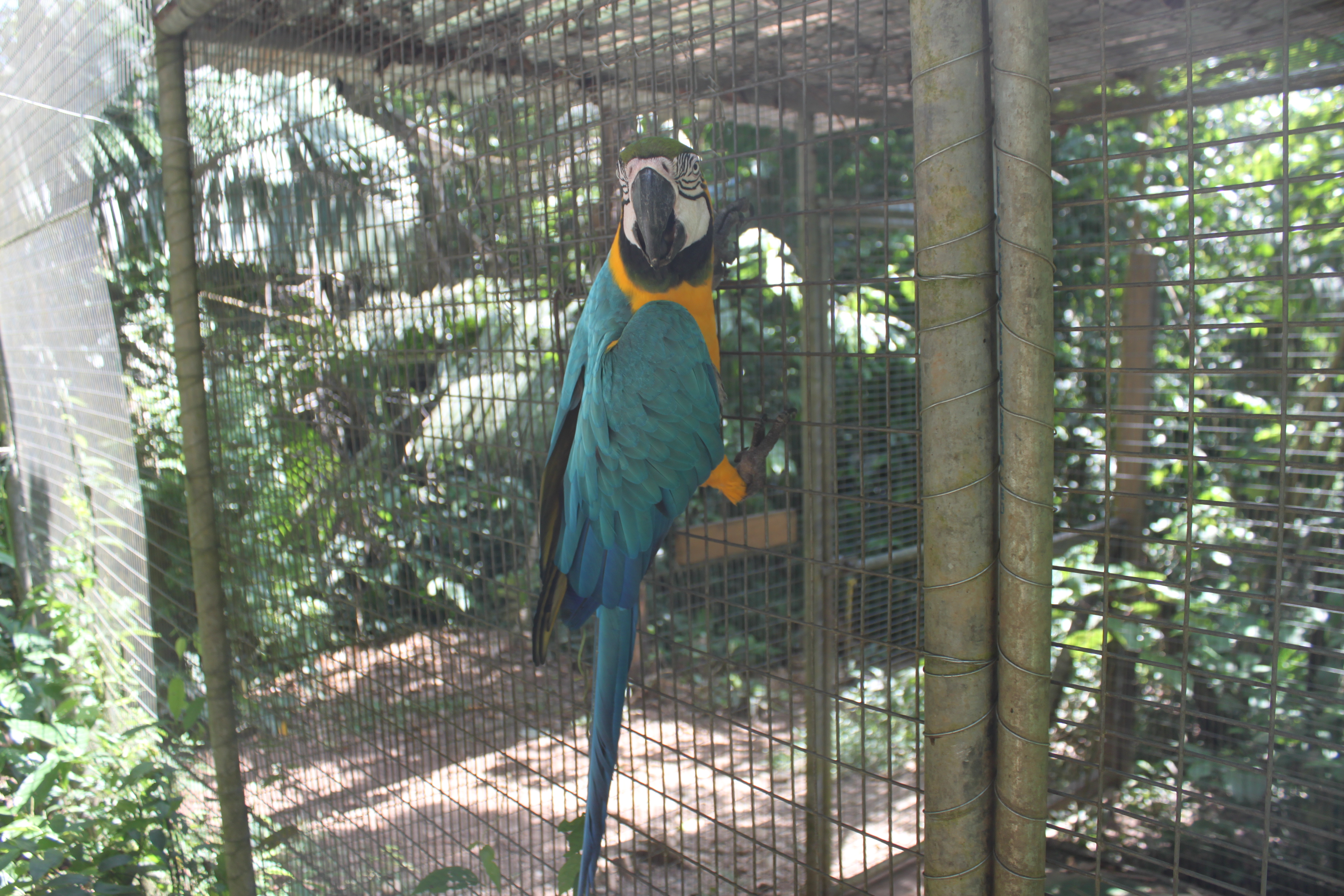
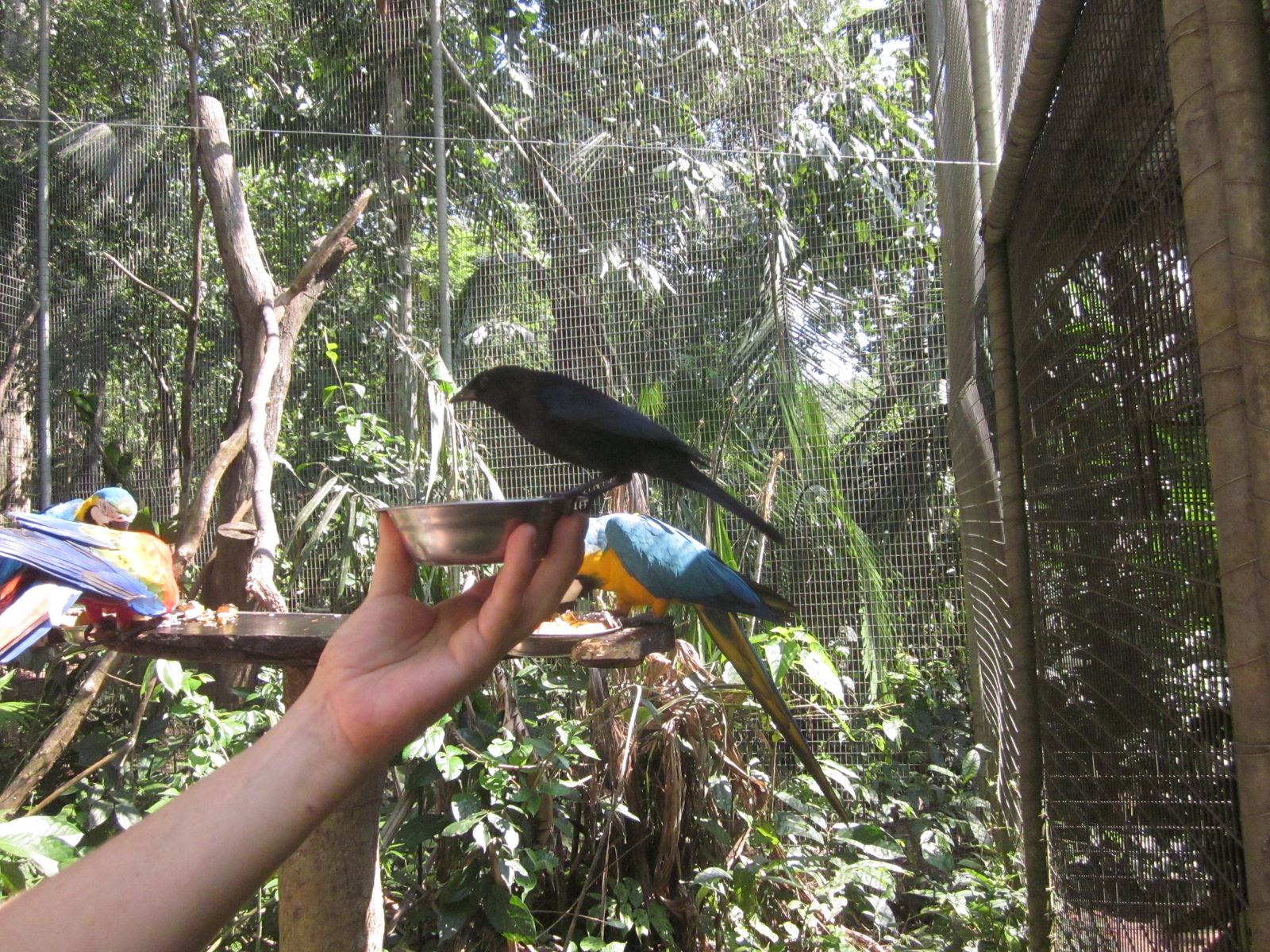
We were considering the release of Supay (shiny cowbird) into the wild, but as he is so used to humans, even flies on our heads, we decided not to take the risk. He might know how to find insects but he is not afraid of anything and the monkeys or other animals would be able to catch him easily. We still wanted to give him more space and decided to transfer him to the aviary cage with the macaws, which is also big enough for him to fly around and catch insects. He has been there now for almost one and a half week and has been doing fine. He even eats from the plates of the macaws when there are no birds around. He does play fly and catch with the amazons, but he is way too quick! A volunteer made him a special bowl for his food so the other birds can’t get to it. He seems to enjoy it and the others seem to enjoy this quick and swift bird flying around.

Pauki and Tupak, growing friendship!

Pauki´s (the oropendola) training is going strong. He already knows what he is supposed to do and he has some favorite spots where he likes to sit. We are trying to leave him out a bit more so he can become familiar with his surroundings, also allowing him to get used to life outside the cage.
Even Tupak, the toucan, is getting used to him, and while outside they seem to look for each other’s company.

All parakeets from the Igor-cage went out. We hope they are all doing fine outside and had enough time, being able to go in and out, to adapt slowly to living in freedom again.
As the Pepe-cage (with the 3 compartments) was falling apart we moved the aratingas and parakeets (all from the group of the 800 parakeets) to the Igor-cage. Here they have time to let their feathers grow and then we will also start their release.
We moved Pichu (the aratinga with a breast wound), fully recovered now, but still waiting for his feathers to grow, to the Igor-cage as well. After a bit of bullying by the other aratingas he seems to have found a place in the group.

R

Reptiles

The tortoises and turtles are all doing well. The turtles are enjoying their pond where they reside most of the time. Pepito, the tortoise that lives in the enclosure with Rincay, is doing great as well. He always enjoys the oat balls we give him; it is really nice to see him eating them with so much pleasure.

Pothos, tortoise with one missing eye, enjoying oatball

Pothos, the tortoise which was injured on the head and lost one eye, is back in the reptile cage. His wound has healed almost completely, his eye socket slowly closing. Even though he has only one eye we think he can once again adapt well in the reptile cage with the other tortoises.

C

Construction

Bodega destruction
Bodega destruction
repairing bodega
repairing bodega

With the incident of the bodega the work shifted from the clinic to repairing the bodega, so another delay. But thanks to the quick response of many friends and especially the Susy Utzinger Stiftung in Zwitserland, we received money to buy all the material to repair the bodega. At first we fought the re-building would take about two months, but with all the hard work of Douwe, Machico and Geiler and the volunteers, we will be able to get it finished in before the end of October.

Bodega, after 2 weeks, on its way again, now a bit bigger

V

Volunteers

We are now with a group of only six volunteers, which is also one of the reasons we are not getting very much construction work done. Fortunately we will welcome more volunteers next week, and with any luck the bodega will be finished in no time!

The latest news (04.09.15 – 18.09.15)

General information

We are running low on water again, luckily Douwe can pump up water, with the newly bought pump, so we will not be without drinking water. We are trying to save as much water as we can by doing the bodega dishes in the river and flush the toilet with river water.

Monkeys

Ramona, the baby woolly monkey’s health is not getting any better, neither worse. She does not eat as much as she is supposed to, and has only gained a tiny bit in the last two weeks. Ramona is now under care of mainly Olivia with some help of two permanent volunteers. She is not stable enough to be treated by too many hands. She is on a strict diet, and so far it seems to get her stabile. Now we hope her body starts to get the nutrients out of the food given. No medicine is given anymore.

Mica with Louie
Mica with Louie
Mica outside again
Mica outside again

We released Mica (female capuchin), because the volunteer she followed has gone home. When she went out she almost immediately began to follow one female volunteer. We ignored her but that didn’t stop her from starting again, picking out a new victim. After two sleepless nights of her knocking on the walls of the volunteer house and kitchen we decided that we needed to put her back in again.
To be able to release Mica again we needed to try something different. So we gave her contraceptive injection to control her hormonal behavior. We released Mica two days after her injection, and so far she is doing fine. We will know after three months for sure if the contraceptive injection works. After three months contraceptive will not work anymore she might be looking for a partner again. Lets hope this time it will be Jordi ( male capuchin).

Mica is still taking good care of all the little ones (squirrel monkeys), carrying them on her back and giving them a lot of love.

Camilla (female squirrel monkey), who some months ago had epileptic attacks is doing great. She hasn’t got any attacks the last 3 months. She is always in the trees, playing with the other squirrel monkeys and still sometimes acts as the body guard of Olivia and Douwe.

Other mammals

Elmo eating
Elmo eating

Elmo (male two-toed sloth), Rincay (male tapir) and Quintisha (female peccary) are all doing great. Rincay enjoys it when Willow (male woolly monkey) comes by and gives him an inspection on ticks. Elmo always gets lots of attention of everybody when he comes by.

Birds

The last two weeks the parakeets in the Igor cage (the newly build cage) are going out towards freedom more and more. There are only twelve parakeets left from the 215. We are hoping that the last ones didn’t get too used to life in a cage too much, and will go out soon. Outside there is now a lot more noise of parakeets flying around, so far they seem to do fine. We started using another outside feeding table, hanging in between the trees, so they can find at least some food,  in case they still need to.

Pauki outside
Pauki outside

Pauki the baby oropendola is growing quickly; we decided that it is time to train him for the outside life. We started training him in the cage where we would call him to come towards us for food, which he picked up very quick. After a few days it was time to go outside. This was very exciting because we didn’t know if he would follow or fly away. Luckily everything went as planned. We will continue the training, but of course the best thing would be if he will join a group of oropendolas that lives here in the area. But it will take some time to get him there, but Pauki is a smart one so we have good hopes.

baby bat feeding
baby bat feeding

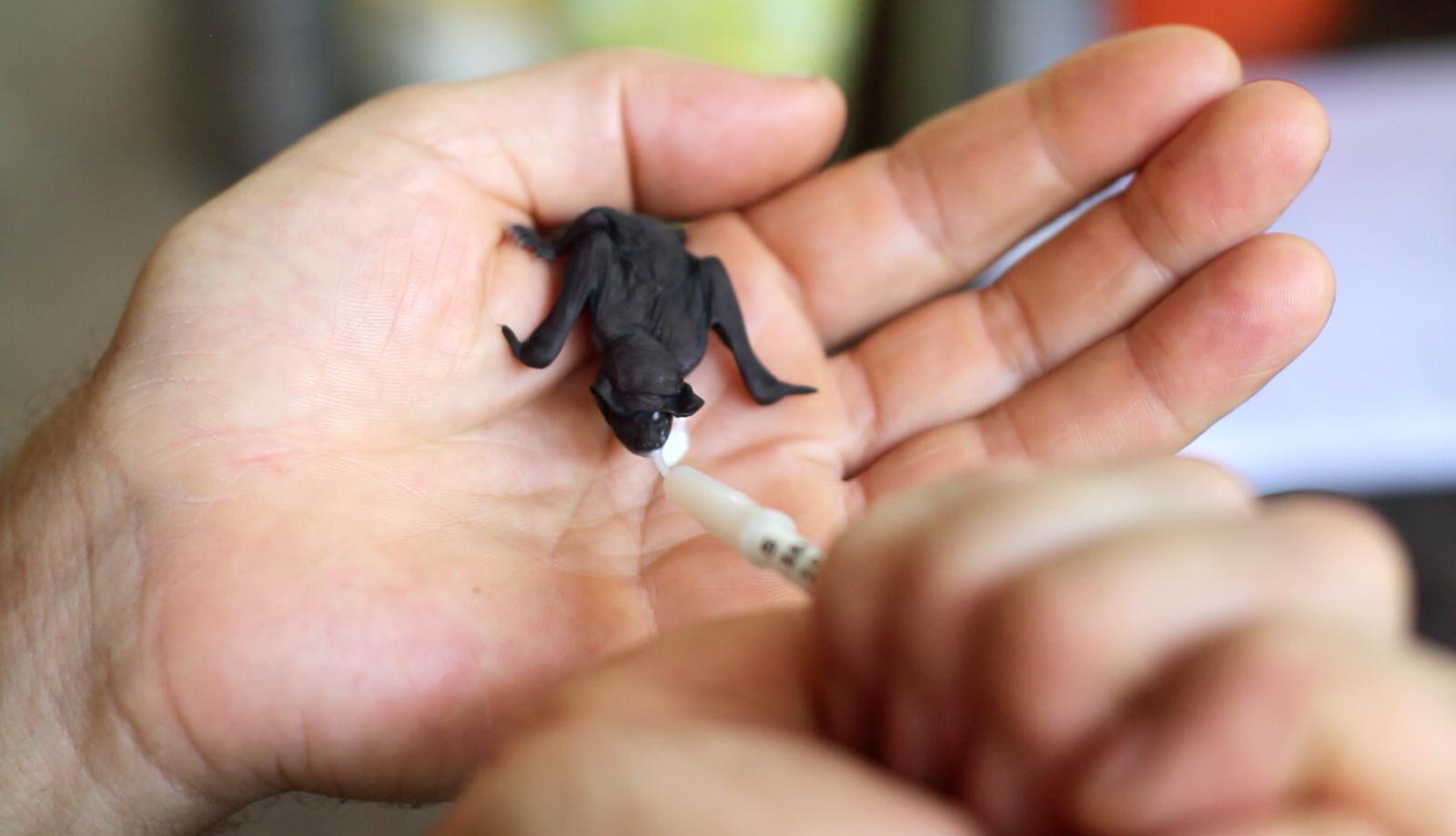
We have a new arrival, a baby bat. Kayla was sitting in her classroom when she saw something small, black falling from the roof and she decided to have a look. The baby bat probably fell quite hard from such a distance, but luckily he was not harmed. We could determine it as an insectivore bat, but not the exact species. We will have to wait till he is fully grown and hope we have a photo of this species (as there are so many bat species in Southern America). He is under care of a few experienced volunteers because he’s so little so you could easily harm him. We feed him baby milk every three hours. With a tiny syringe so he doesn’t get too much milk at once. We’ll wait until he’s a bit older before we give him insects. And we hope that we can see by then what species he is so we can give him a more specific diet.

Reptiles

Pothos, the injured yellow-footed tortoise is doing fine, his wound is healing very well.
And he even gained a bit weight. He still has his own enclosure, we’ll hope that he can get back soon with the other nine tortoises in the reptile cage where he has a lot more space.

Construction

veterinary clinic in construction

Construction work is going great. The work at the clinic is advancing with so many volunteers at work. The hardest part of the construction is always the carrying. At the moment it is very hot and humid, so carrying sandbags (of about 25 kg), bricks, and cement (45 kg) is a tough job all the way from the port to the construction site (about 10 minutes) is not that easy. Bit by bit we are getting all the material over, and volunteers enjoy helping to build, laying bricks, measuring, sawing etc. etc. Here volunteers often have a change to learn a lot of new skills and find it often very exciting and enjoyable to see something being build up from scratch.

Volunteers

making pizza
making pizza
Machiko and Geiler
Machiko and Geiler
Volunteers at Regalia

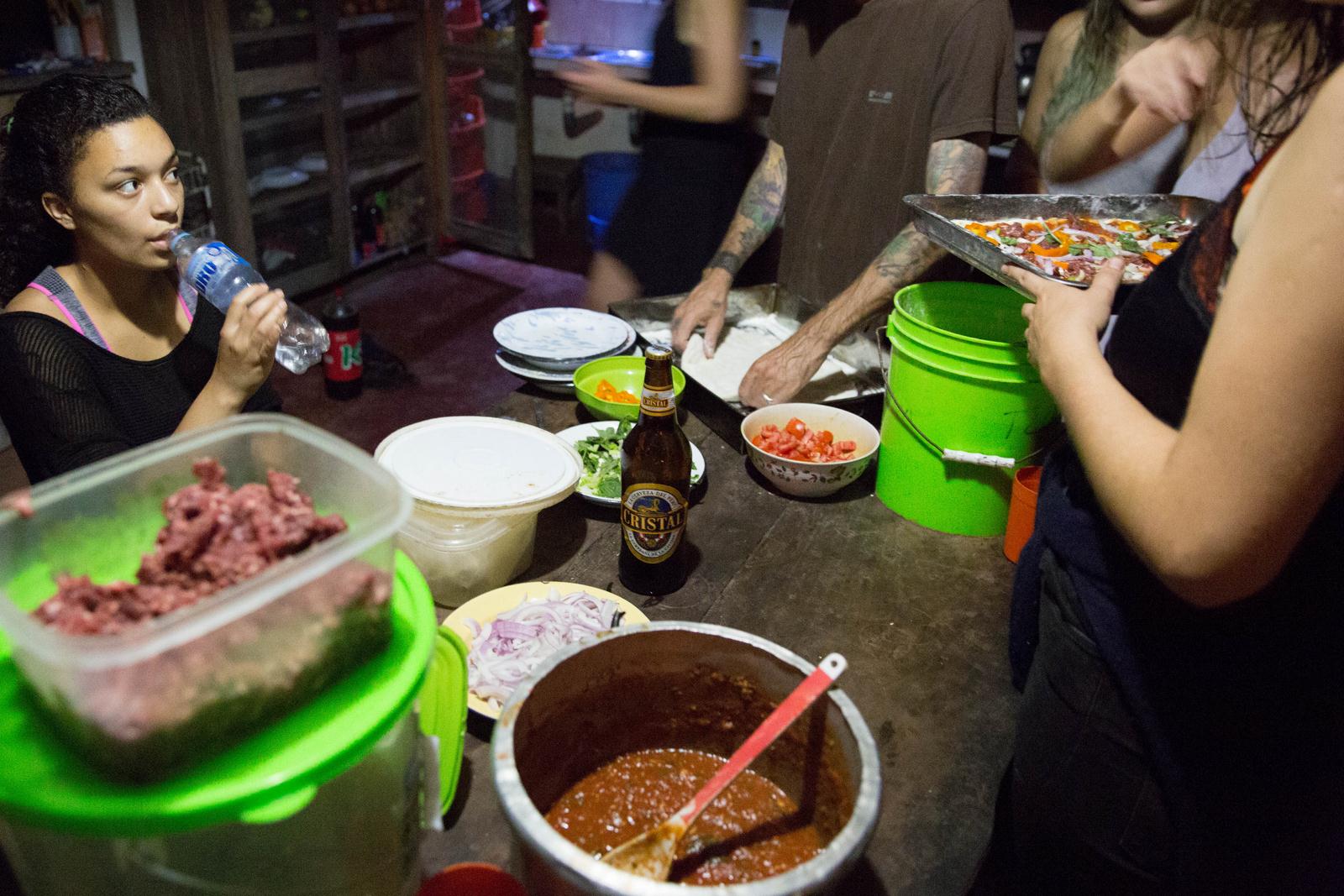
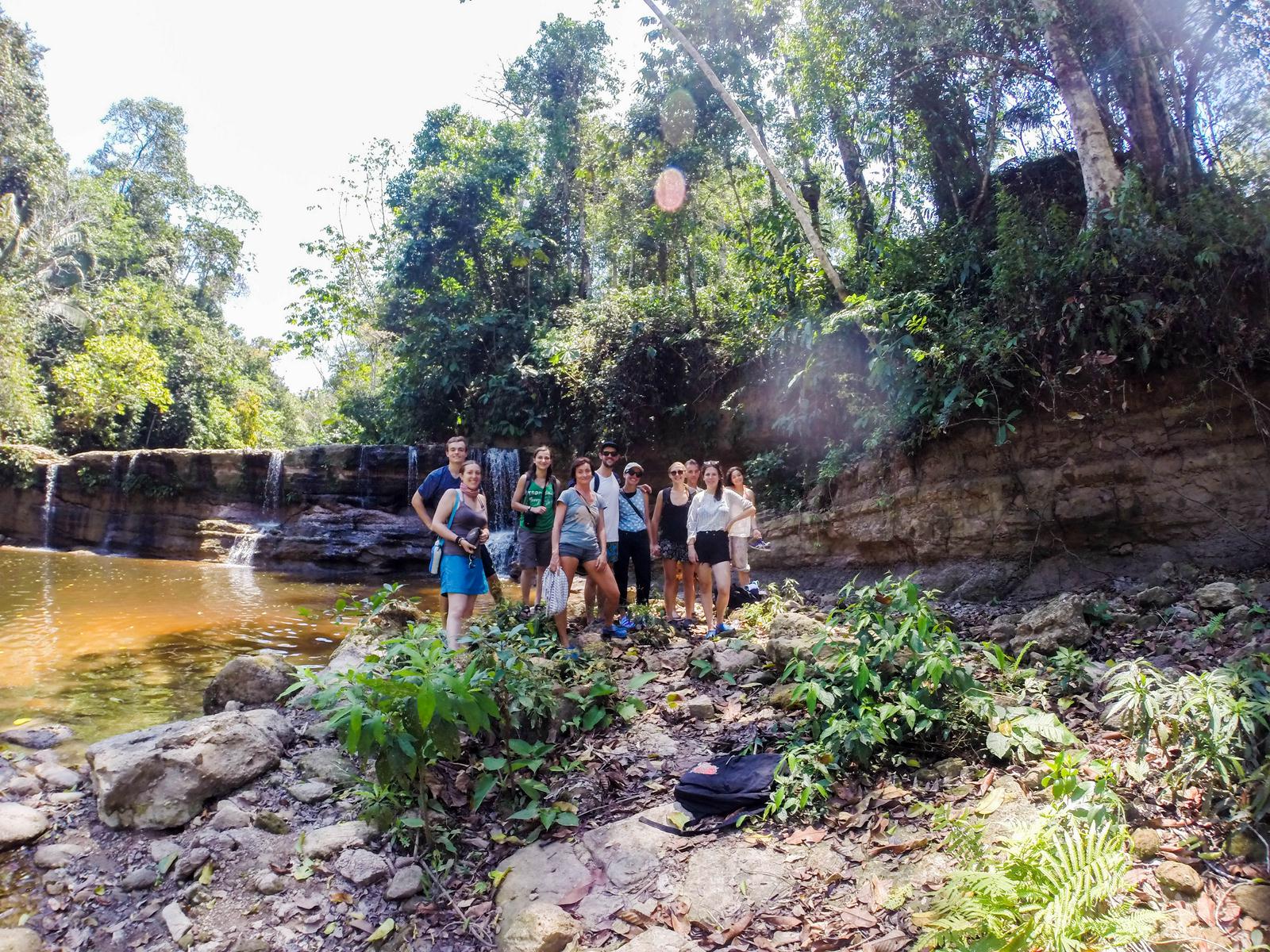
We did al lot of fun things with the group of volunteers. We went to the Regalia waterfall. The way there is just amazing as well as the waterfall itself. We needed to walk on some spots of the way because the water was just too low. We also had a night walk with Douwe and a forest walk with Machiko, both were a lot of fun. We organized a pizza night with the family and the volunteers and Douwe’s mother. We used the stone oven and the pizza’s where just delicious (thanks to our Italian volunteer Enrique). We enjoyed the rest of the night at the campfire.

amazon3
NEWSLETTER N°8

A new update from Esperanza Verde !
“A lot of time has passed and we have achieved many things in this beautiful peruvian jungle.”

CLICK HERE TO READ IT !

The latest news (17.08.15 – 04.09.15)

General information

It finally rained again after almost three weeks of no rain. It still is not enough to take a shower, but we have enough drinking and cooking water again.

Monkeys

Ramona, the baby woolly monkey

Ramona the female baby woolly monkey who arrived two weeks ago, is having ups and downs with her health. She has somebody looking after her 24/. We feed her leafs, papaya, banana and other fruit and vegetables. We also feed her milk and electrolytes (which help to balance her system). We think that the main problem is her digestions. Before she arrived she was treated with too many medicines, and now she has a problem with absorbing nutrients from her food. Woolly monkeys are very sensitive, especially so young. We hope she will get better soon with all the love and care of all volunteers.

Birds

Six birds from the office (where we keep the weak birds) have been transferred back to the one of the outside cages. One bird has come back into the office for further treatment but the other five are doing great and are happy to be back with the rest of their group.

In the new small aviary, where we started releasing parakeets, there are now about 70 left from the original 215.  The cage has a small whole that is opened in the morning after feeding time (about 9:30 am) and we close it in the afternoon (around 4:00 pm). The birds can go and come back if they want. The last days they are coming out very slowly or some days don’t go out at all.

Reptiles

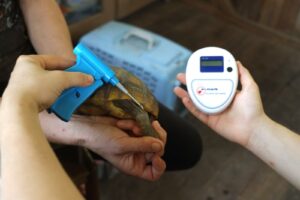
We chipped all nine tortoises with identification chips. We did this in order to identify and track their health better as a lot of the tortoises look very similar. The device we used is a gift from the Swiss company vet-ID from Laurent and Sandrine Schwarz.
We are very happy that we have received this gift and we will make good use of it. The chipping of the tortoises went very well. The chips are the size of a grain of rice so the animal shouldn’t be able to feel it.
We are unsure if we will be able to release these tortoises into the wild as the people in the nearby village often walk through the rainforest and like to make turtle soup! The tortoises are now back in their big enclosure enjoying their days.

Volunteers

The group of volunteers is growing quickly, we now have a group of twelve volunteers. With Elena, Geiler, Machico and the family it is a pretty full house at lunch time! It is fun having lots of people around especially when there are so many jobs to do. Because of the increased number of people and the rain the construction project of the clinic can begin again.

Student guide tour

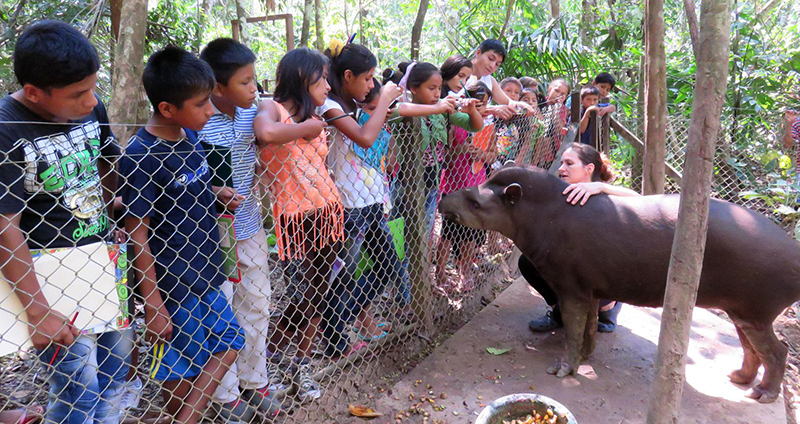
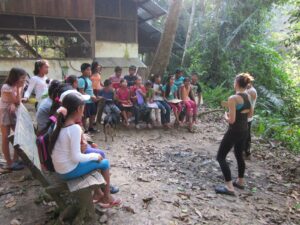
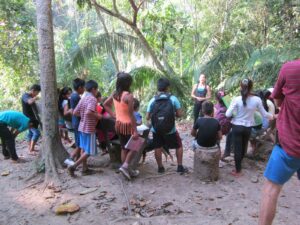
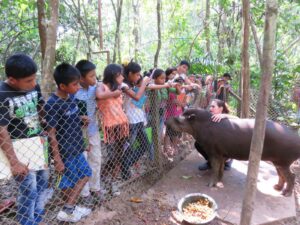
Last week the 5th and 6th graders from the local school in Bello Horizonte came over to Esperanza Verde. With 30 kids in total it made for a fun day. The kids got a guided tour from Olivia and Douwe and were told what Eperanza Verde is, what we do and why we do it. This was received well by the children and they left enthused about the project. During the tour the children were given a worksheet where they were required to classify the animals. This proved to be a successful exercise as it prompted a lot of questions from the children. They really enjoyed it and were very curious about all the animals. The children especially liked the macaws and Rincay the tapir. The day before Kayla baked lots of chocolate cookies for her classmates which they enjoyed with a drink. After this refreshment they helped in finding all the tortoises in the reptile enclosure. They were very good at searching and found all of them very quickly. They were then given a demonstration of one of the caught tortoise getting chipped.
A  few of the children helped the volunteers catch grasshoppers for Pauki the oropendola and Tupak the white-throated toucan. The kids were natural grasshopper catchers; we had fifteen grasshoppers in two minutes!

Construction

As we had to deal with the problem of not having enough water, Douwe was mainly putting efforts and time to fix it. He went looking for new wells, but they were either too far or not providing enough water. But with a new pomp, new hoses, we now will pomp once in a while water from the nearby stream up to the water tanks.
As we needed water for construction to proceed with the clinic, again there was a delay. This week, with a lot of volunteers and the water pomp, we will be able to get going again.

The latest news (24.07.15 – 17.08.15)

General information

It is dry season here and it really is! Getting the experience of having no running water makes you think of how fortunate we are to always have water at home (e.g. carrying buckets for flushing the toilet). Luckily here we always have the big river, the stream at the house and the waterfall!

Monkeys

Mona carrying Ramona

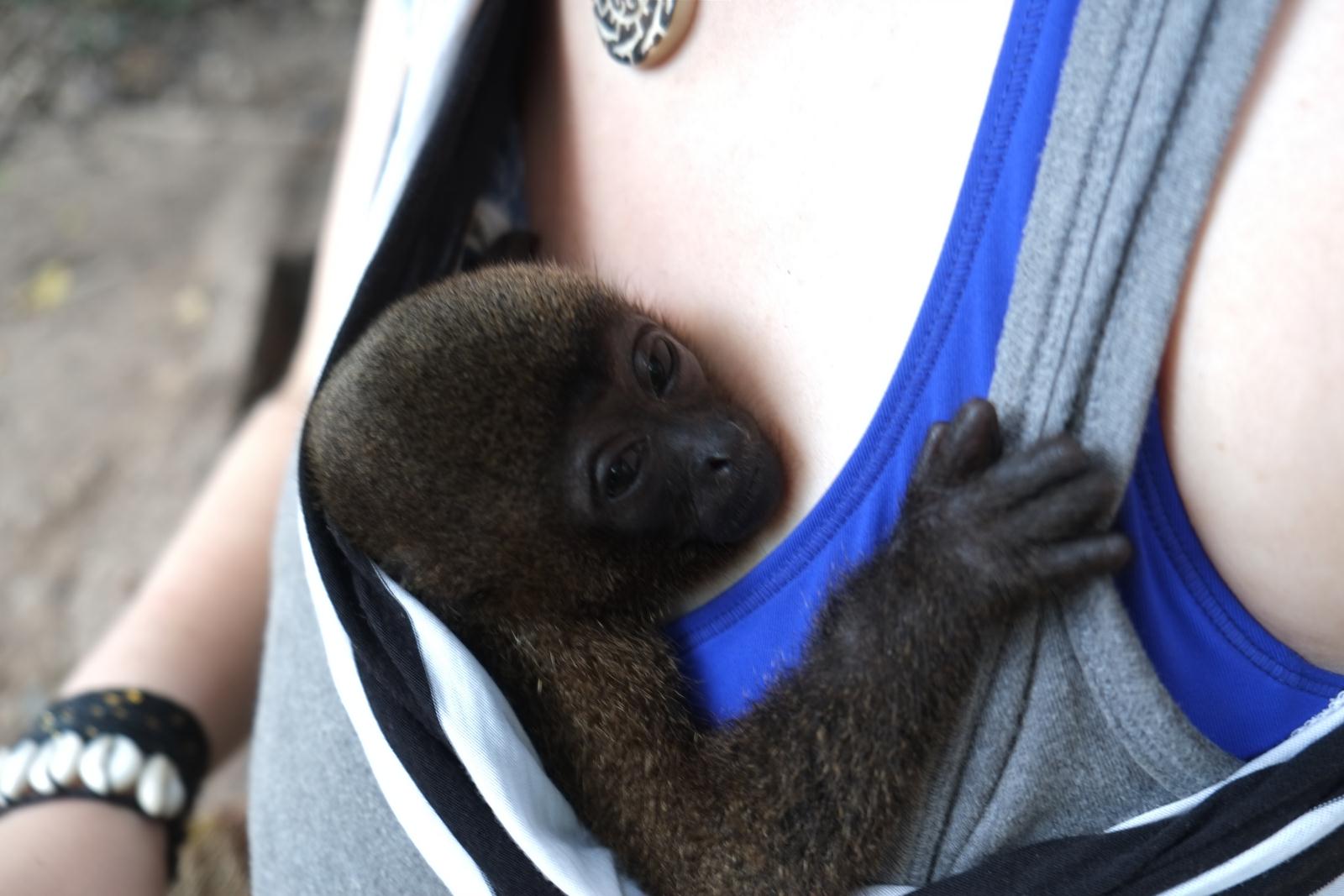
A new arrival: Ramona, a baby female woolly monkey. Olivia was contacted by a family in Pucallpa, about a sick monkey. The family bought her from the local market and had her for a month as a pet. When she became weak, they contacted a veterinarian and Ramona got treated for parasites, received antibiotics and vitamins. Unfortunately she did not get better, even got worse. When Olivia arrived at the family, Ramona was very weak. She has probably an age of about 4 months, very underweight, and a bit dehydrated. With some medicine and the right food, she started getting better, gaining some weight and no more diarrheas.  Carrying her around, sitting with her and making her eat and drink is now one of the daily jobs. But she is still weak and sometimes has bad days. We really hope that we can say by the next update she is doing fine….a young baby like this is very sensitive. She did not receive the milk of her mother, with the necessary antidotes to give her protection, and a lot of care has to be taken to keep her healthy and warm.

Our ‘big momma’, Mica (female capuchin), has been falling in love in the last months with volunteers. She follows them, trying to touch or even jump them, and does not let him or her sleep at night, as she is banging the mesh of the window or the wooden posts. At first it seemed funny, but after being stalked some time the fun ends, especially when she started to bite, not really hard, but hard enough to break skin.
She seems to have her hormonal period, becoming of age. As she has been raised from very young with us, she sees us still too much as her group. Jordi, our male capuchin, is still too young to convince her she should go with him!
So Mica is enclosed for now. We hope we can let her out again after some time, when her hormonal period is over. We really would not like to have her closed in forever. She is a beautiful monkey and always takes really good care of new young monkeys, carrying them around, protecting them.
For the time being we will keep her busy in her cage, packing her food in packages, giving her challenges to find food or making other kind of toys.

Other Mammals

Tupak and Rincay
Tupak and Rincay

Rincay (male tapir), Quintisha (female peccary), and Elmo (male two-toed sloth) are all fine.
Elmo now leaves for some days and then comes back again. Quintisha is always happy when a volunteer comes to scratch her neck, and of course Rincay always loves some physical attention.

Birds

parakeets going out
parakeets going out

The last month was all about the parakeets!
The group of parakeets we already had could go  (at least the ones which could fly again) to the new cage (now named Igor-cage, after a tamarin monkey we released 2 years ago). After adapting some days in the cage we opened a small door in the back upper corner.
In the first days about 90 went out, but also some came back in again.
There is a lot of sound at Esperanza Verde now, either from the cages of parakeets or from the ones hanging around outside. We hope most of them will adapt well again to living in the wild.

catching, treating, counting, and moving parakeets
arrival in new cage
arrival in new cage

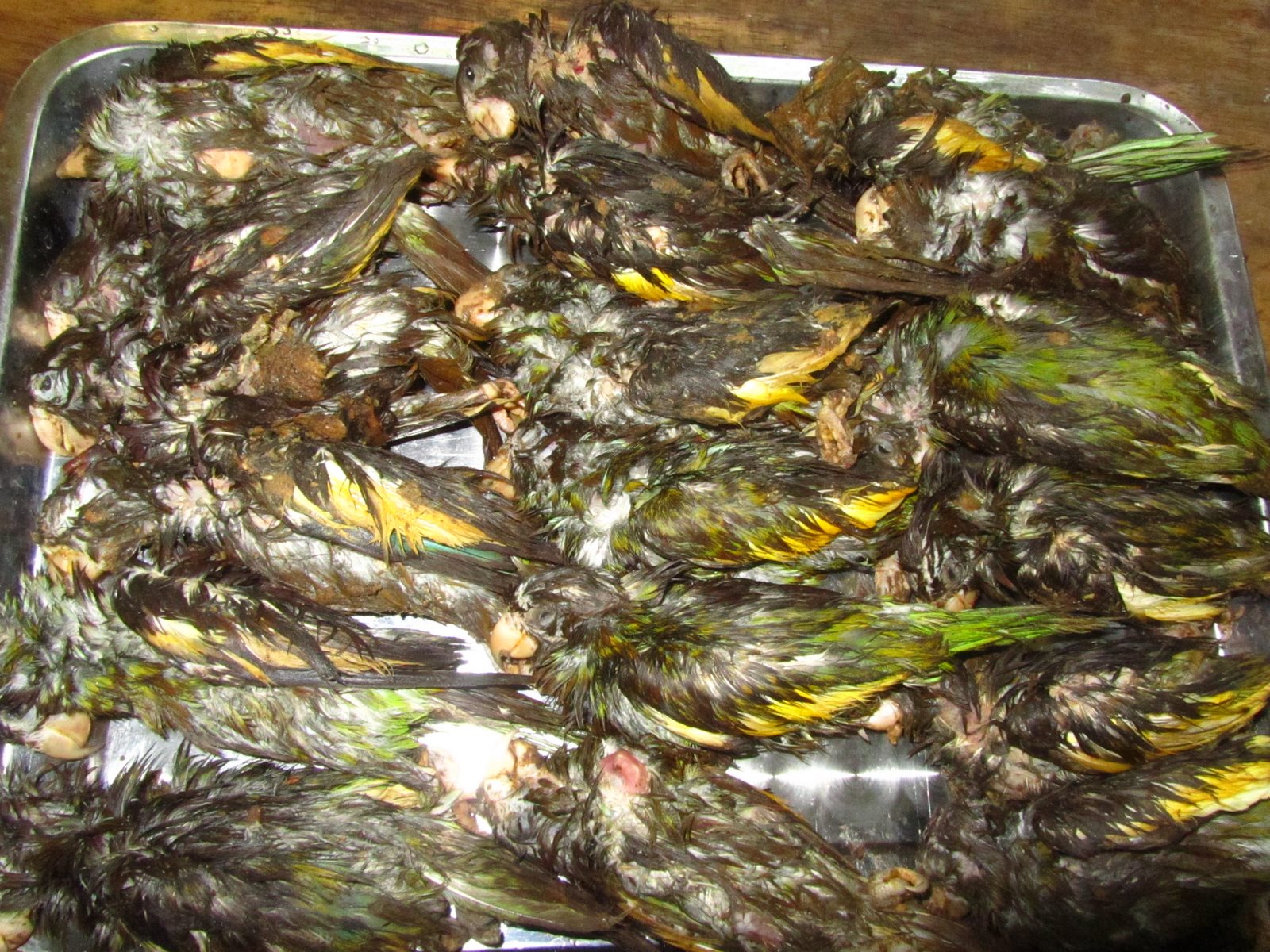
After this change we could move a lot of the parakeets (from the big group of about 700) out of the small cage and in bigger cages. The cages are still pretty full, but finally after all the moving, and treating each one of them, we got the group under control. We also found out that the first count (of the Ministry) was wrong, there were not around 700, the total had been 812 birds! For some days we did not have any deaths at all, so all efforts we made seemed to have worked. But still, knowing we had a total of 300 deaths is heavy on the heart.
We just have to keep focusing on the ones which survived! And they made it thanks to all the efforts and hard work of the volunteers!

Tupak outside
Tupak outside

Tupak (white-throated toucan) is doing great outside. He even sometimes visits the center of Esperanza Verde. He is not afraid of the monkeys, even likes to go after Willow (male woolly monkey). We just hope he will grow smart and gets to understand they could really harm him as well. But he generally just stay a bit and flies back towards Olivia´s and Douwe´s house (where his cage is), or stays nearby visiting Rincay.

One day Kayla came back home, with the news that some persons in Bello Horizonte cut down the last large and beautiful tree in the village, just to use the wood for some planks. This tree was the home for many birds, oropendolas and caciques which had their hanging nests in the tree, but as well as for many bats, which used the old nests.
They all went down. While adults could fly away, young nestlings could not and died, as well as many bats, which got literally squashed by the falling tree.
A very depressive sight, Kayla was crying of the fought of so many lives, ending just like it was nothing. Douwe and Kayla went collecting the nests next morning, checking each of them. They did not find any surviving birds, probably already taken out by people, or hopefully the nestlings were ready enough to fly to safety. They found many dead bats.
In that afternoon, Kayla was handed over the last surviving bird, a young oropendola with a broken leg. One of her friends had taken the nest and gave it in her care.

Pauki, oropendola
Pauki, oropendola

So for some weeks the oropendola (named Pauki) was in a small cage in Kaylas room (as no space was available anywhere else). It now is slowly learning to eat by itself and spends the day in Tupaks cage to learn to fly. In the night it goes back in the small cage as Tupak still sleeps in his cage. Paukis leg had healed, although crooked but he can use it. He already had some visits of wild oropendolas while he was in the outside cage.

Reptiles

Pothos, the injured yellow-footed tortoise, was brought to an outside cage. The wound is healing and he started to eat by himself again. Every time he got treated he got stronger. He did not like the handling one bit! Now he has some space to roam around and be in the sun when he wants to. He gets checked once in a while now.

Construction

We had several handy volunteers in the past months that helped a lot in the clinic. So the work has been progressing again. The river was very low again, so a lot of sand was available on the beaches at the big river.
At the moment we have less volunteers, and a lot of work with the animals, so it is mainly Douwe, Geiler and Machico working at the construction-site.

new cage (IGOR-cage)

In the last month we also finished the new aviary (Igor-cage), and provided the spider-monkeys with a new door.
But of course always something new pops up here! We need water! It sometimes does not rain for weeks, although we are only in the beginning of the dry season. The family baths always in the nearby stream, to spare the little water they have at their house. Volunteers more often have to go to the waterfall for bathing, and even will have to wash most of the clothes in the stream. Basically there is water enough surrounding us, but we might have to start pumping it up from the stream again, like we did some years ago, to provide water enough for the cages, volunteer house and kitchen.

Volunteers

At the moment we have a small group of volunteers, all really dedicated to the work. Soon we will have more again, and hope to get more done in construction, as well as to do more forest walks, and another visit to the big waterfall Regalia.

The latest news (16.06.15 – 24.07.15)

General information

Life at Esperanza Verde is very busy as usual. We have had to deal with unexpected animal arrivals and a slight shortage of volunteers. We are all working very hard, carrying sandbags and caring for all the animals which are building a nice atmosphere between the volunteers. We celebrated Kayla’s birthday on the 20th of July. We had a nice party at Olivia and Douwe’s house and enjoyed Olivia’s home-made lasagna.


Monkeys

Good news for our three Spider Monkeys, we are making a second door for their cage. This will mean that we can regularly clean up the bigger area in the cage without any danger for the animals or Douwe and Olivia. Also this way we can give more kinds of enrichment for the big monkeys. Soon the door will be fixed and that will be a nice improvement on their living conditions.

Mica
Mica

Unfortunately we have had some problems with Mica, our female brown capuchin monkey. Twice, since some months, she picked a male volunteer, to follow around as a love sick monkey. Trying to touch him, making a lot of high pitched screams, trying to jump him, not letting him sleep at night (making squeaking sounds from outside the mesh) etc. It stopped after some time, but then she picked another guy. At the moment all is quiet, but you can imagine she can be a bit scary sometimes.


Other Mammals

Tupak visiting Rincay

Rincay, our Brazilian tapir, has had a lot of ticks recently and all the volunteers have been helping out to try and remove them. These parasites can make animals sick and we try to remove them twice a day. We keep an eye on him and hopefully the ticks will wear off.

Elmo, eating from his table

Elmo, the two-toed Sloth, has been doing pretty well lately. He comes back now and then for his food and then goes back in the forest for fresh leaves from the trees. During a heavy rainfall a few days ago his food table snapped and he fell on the ground. Luckily a volunteer found him quickly and he managed to climb up the volunteer and went back to his branch. The food table was fixed the same day.


Birds

There is a lot happening with birds at Esperanza Verde, there are a lot of new arrivals and there are also releases.

A few weeks ago we decided that it was time for Tupak, our white-throated toucan, to spread his wings and explore the area a bit. So on one day we set the cage open and we watched. He looked somewhat interested and came out after a few minutes to eat the food we put just outside his cage. After he finished his food he explored the outsides of his cage and went back in the cage. Now every day we open his door in the morning and watch him while he practices his wing muscles. At night he flies back to his cage to spend the night there. So far the release is a success and he explores the area everyday a bit more. He loves visiting Rincay, while stealing his food. Rincay does not seem to mind, just another companion to spend the day with!

Logan, Yamara
Logan, Yamara

We decided that the two new orange-winged amazons, Logan and Yamara, were ready to set foot in the big aviary with all the other parrots. After their release in the aviary they were a bit timid and climbed up to the top to see everything. At first one of the macaws took a look and after that the amazons got reunited with their own species. The now five amazons are forming a nice group and they are almost always sitting close to each other.
A week ago we got a large amount of white-winged parakeets and white-eyed parakeets, 677 in total. The birds were brought by the ministry of Fauna and Flora from Pucallpa. They were all confiscated while being illegally transported from Pucallpa to Lima. They arrived unannounced in really small cages and each cage had a chunk of papaya to eat. The birds are most certainly wild-caught and were supposed to be sold as pets. The birds were put in the only cage still available, with the three compartments (PEPE-cage) right after we put a lot of branches in.

many deaths in the first week after  their arrival ...
many deaths in the first week after their arrival …

Every day, after their arrival we find dead birds, on bad days more than 25. All were in very bad state and might not have been given food or water for days. All together they eat four (!) full buckets of fruit mixed with vitamins and medicine. And still it seems not to be enough. We try to provide them with everything they need and we take special care of the weaker ones.
It is hard to think of those people who caught them in nets and treated them so badly just to get some money for the ones which survive. We see the results in a very harsh way. Every morning we go to the cage, afraid of the amount of parakeets that died over night still as a consequence of being deprived of food and water too long, and being packed in little cages for several days till weeks.
At the moment after 1,5 week it seems they are all improving and we are working hard on the new small aviary to create more space for them. They all had some of their feathers pulled out, so it will take several months before they will be able to fly again. And then hopefully their release.

white-winged parakeets

Other news is that the big group of white-winged parakeets, which arrived in Esperanza Verde a few months ago, is ready to be released. We made a small door in two of the three cages to let them out bit by bit. The doors are made in a way that only the birds that can fly properly could fly out. We opened the small doors in the cages a couple of days ago, but none of them seemed to have gone out yet. We hope that soon some of them will fly out and others will follow their lead.


Reptiles

Pothos
Pothos

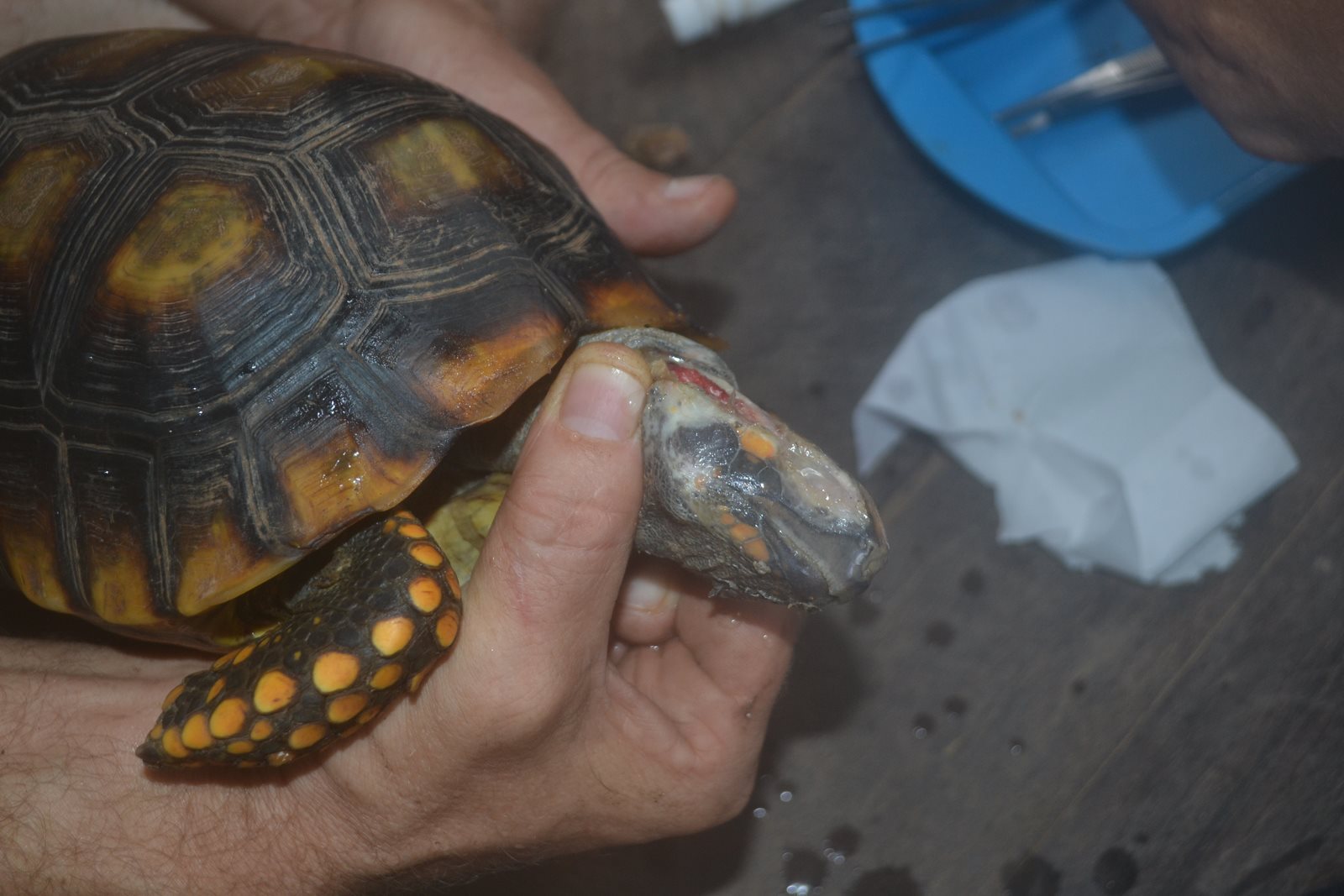
Pothos, our yellow-footed Tortoise, that was injured on his head and lost an eye, is still in an enclosure in the office. We started force-feeding him as he was not eating by himself. With this and the medical treatment he is receiving he seems to get stronger. We first were afraid he would lose his other eye as well, but fortunately we were able to safe it. He is doing quite well and you can see that the injured skin is healing. He gets a bath now twice a week with vitamins to give his skin more strength. He is getting more strength and showing signs, like trying to destroy his cage, that he feels better. We also put him in the sun now and then to make sure that he doesn’t get a lack of vitamins.


Construction

start of small aviary
Tanner building walls at the clinic

A lot of work has been done on the clinic, but of course something came up again; the arrival of the big group of parakeets. At that moment it was all hands on deck for taking care of them.
So we started to build a small aviary as quick as possible, as the parakeets are now in too overcrowded cages. We hope to finish it soon, so we can start moving them to more space.
Thanks to the donation of the VARA (Dutch television) and the volunteers of the Royal Burger’s Zoo it made it possible for us to get all the material for the aviary.


Volunteers

at the waterfall regalia

The last couple of weeks we have been running out of hands, but we manage with the right commitment to keep all the animals happy and do as much construction as we can. Next to volunteers we also have trainees who are helping out. Together we have a nice group of people who are willing to do the best for all the animals and have a lot fun while doing that!

The latest news (27.05.15 – 15.06.15)

General information

working on the new clinic

The past few weeks have been aimed extensively toward constructing the new animal clinic, a process that has been moving at a rather quick pace.
More animal cages have been repaired or altered in order to better accommodate the animals living within.
With a surprising low amount of rain revealing vast sand beds, we hasten our work to dig as much of the substance we can to finish the clinic foundation.
Due to the lack of rain, travel is not a grievous issue any longer. Although sporadic power outages have been occurring in the nearby city of Bello Horizonte and Curimana, we anticipate no serious problems arising from this.


Monkeys

Kiru on the back of Willow

We recently oversaw the release of two of our monkeys, Kiru (Tamarin), and Leo (Squirrel monkey), at Esperanza Verde. The hope was, after extensive observations of the primate interaction through the cage they resided in, that both tiny monkeys would be easily assimilated into the wild groups that inhabit our area.

Mica with Leo on her back

Our maternal capuchin monkey named Mica is a wonderful host mother to smaller monkeys who lack parents. She is well known to take care of her group, protect them, and she is the key piece in integrating a captive monkey into a free-roaming one. By leaning on Mica as a crutch, we allowed her and another woolly monkey named Willow to enter the small monkey cage and socialize with both of them without the separation of any walls. The process couldn’t have been better executed. Leo immediately took to riding on Mica’s back, just as many other squirrel monkeys have done in the past.

Willow and Kiru
Willow and Kiru

Kiru, however, took to clinging desperately to Willow’s back, much to Willow’s primary disdain. Willow tried at first to remove Kiru from him, but Kiru held tighter still. To our astonishment this only lasted for a short time before Willow grew to love Kiru, picking him up and replacing him onto his back if he had fallen to off. In a sense, Willow became his father and caretaker-exactly as we had hoped. Leo is thriving out of captivity.
Unfortunately after 2,5 days with Willow, Kiru has disappeared from our sights at one morning. The night before he was seen still clinging on to Willow. We are clueless in what happened.
Several of the woolly monkeys have been given medicine to combat certain parasites such as Giardia that we found during routine feces examinations. Nikita, another female capuchin monkey, has had her milk intake reduced to twice a day from three times daily as she grows more and more independent.


Other Mammals

Quintisha, our peccary, received a nice surprise when we altered her cage to allow our workers to actually touch her. She yearns for volunteers to pet her (especially behind her ears) and the lower wall ensures that feeding her food with medicine will make it into her belly and not just the ground.


Birds

Our legions of parakeets are coming along wonderfully. They eat (a lot!) and we seem to have reached a point where finding a dead parakeet isn’t expected anymore. They are still held in quarantine until they are cleared for diseases.
Pichu, the white-eyed parakeet in the office, has healed well under careful medical supervision. His chest wound is treated daily with a topical ointment, he receives a daily dosage o oral antibiotics, but his injured leg is completely healed.
Tupac, the toucan, grows larger every day. New colorful plumage is sprouting on his chest, a sign that our baby is growing up fast! We hope that he continues to improve and grow so that release can happen very soon.


Reptiles

The tortoise living in the office, Pothos, remains in critical condition. His eye wounds, though healing slowly without any apparent sign of infection, has left him with one missing eye and one that is unable to open. He will not eat any food we try to give him. In the beginning his strength was much greater than his current state. He still maintains a will to live, and for that we will strive to help him as much as we can. As recovery goes slowly we keep up our hopes, we can help him recover, while trying to save his last eye.


Construction

Sandbags for construction, carried by all from the port
Ben digging the septic tank

Oh, what a time it has been for construction! The low levels of the river have given us the wonderful opportunity to dredge for sand for days at a time. The clinic will require an egregious amount to finish, a number we can only pray to achieve sometime in the next couple of weeks. On the bright sight, two entire tiles (out of six) of flooring have been laid and set with plumbing. Soon the walls on those patches will be complete as well so we can work on ironing out the smaller details once we have an inside to work in rather than only a roof and mud. Our septic tank for the clinic is also almost finished thanks to the strong hands of so many volunteers helping us dig. The end result will be somewhere around three meters. We have two and a half completed so far.
Regular maintenance such as re-lining paths and cages with rocks to stem the flow of mud never ends, but that’s part of the life we live here. As soon as the clinic is completed and our cages improved on, more and more animals will be able to be taken care of here with better equipment than what we use now.


Volunteers

So many volunteers these past few weeks, counting is hard! With all the extra hands we’ve managed to do so much to improve the project with more yet still to come. Obviously the clinic will be our crowning achievement, but who can really guess what more we can think of to help the animals after this building? As long as more volunteers continue to write us, looking for a place to spend some time giving back to nature and helping the many vulnerable species of animals residing here, our work will be abundant and an indescribable help to everything involved here in Esperanza Verde.