Esperanza Verde Update / July 2018

It’s been a tough month here at Esperanza Verde. We’ve had to say goodbye to some of our older animals but also welcomed new additions to our family.

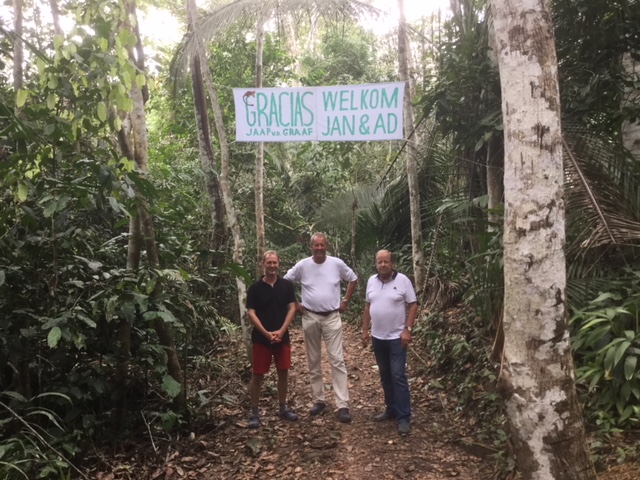
Visit Jan and Ad, Jaap vd Graaf

We had several visitors during this month. Ad Boom and Jan Plaisier from the Foundation Jaap van de Graaf came to visit us to see our project and the start of the quarantine which they are financing.
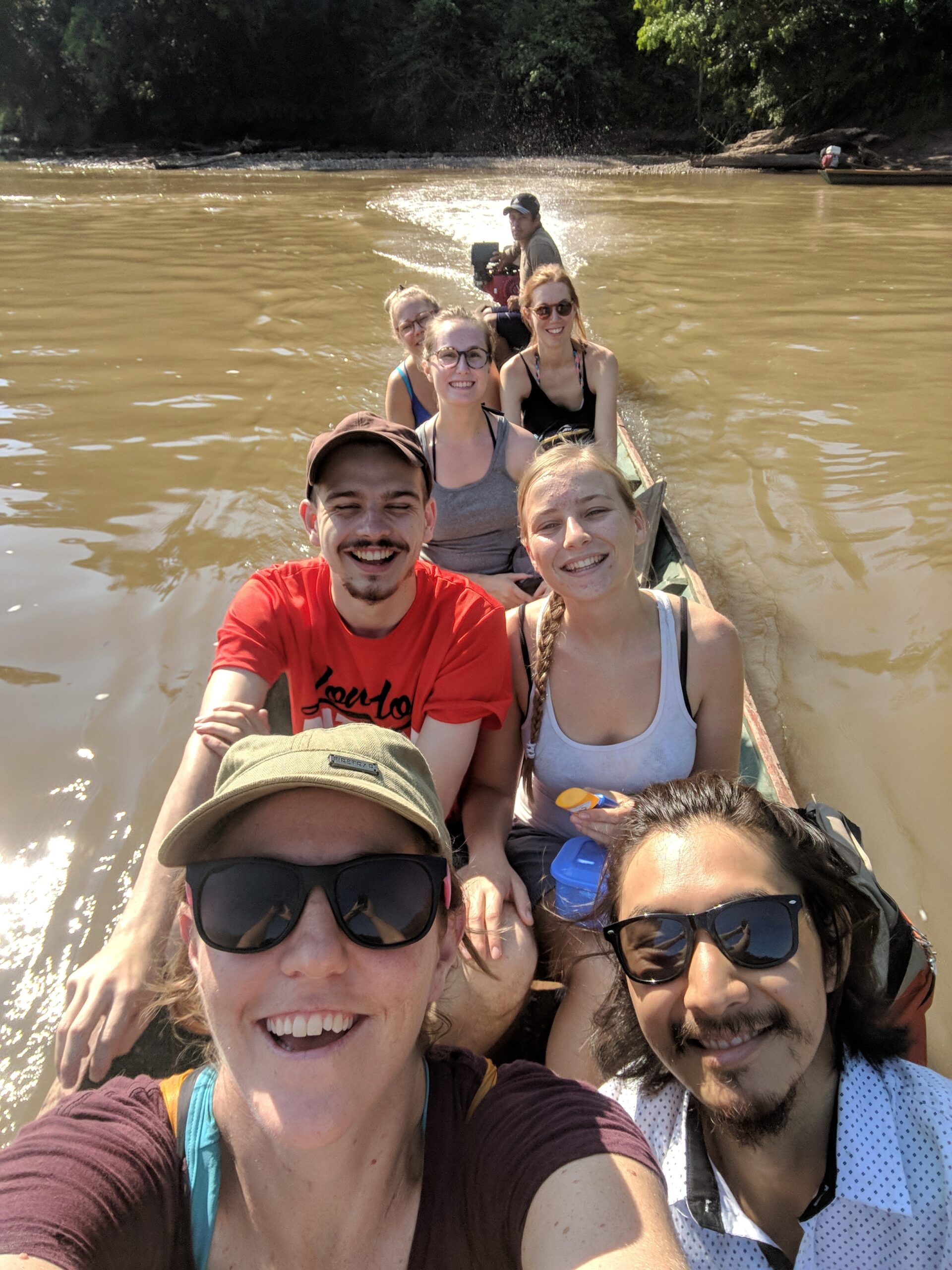
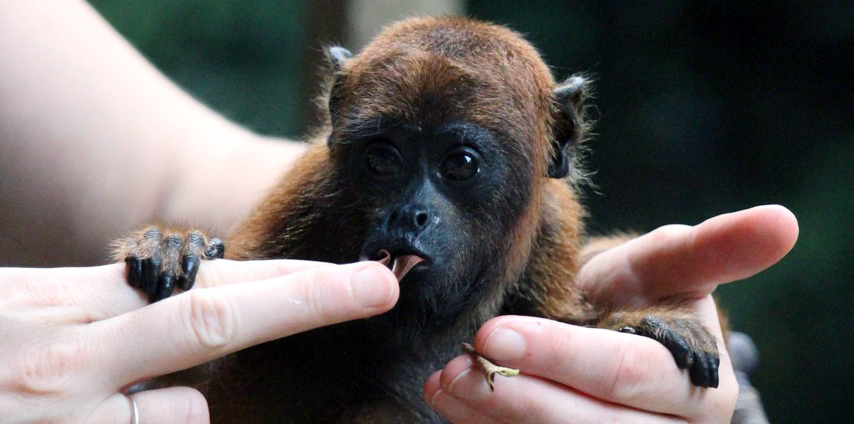
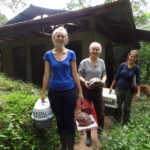
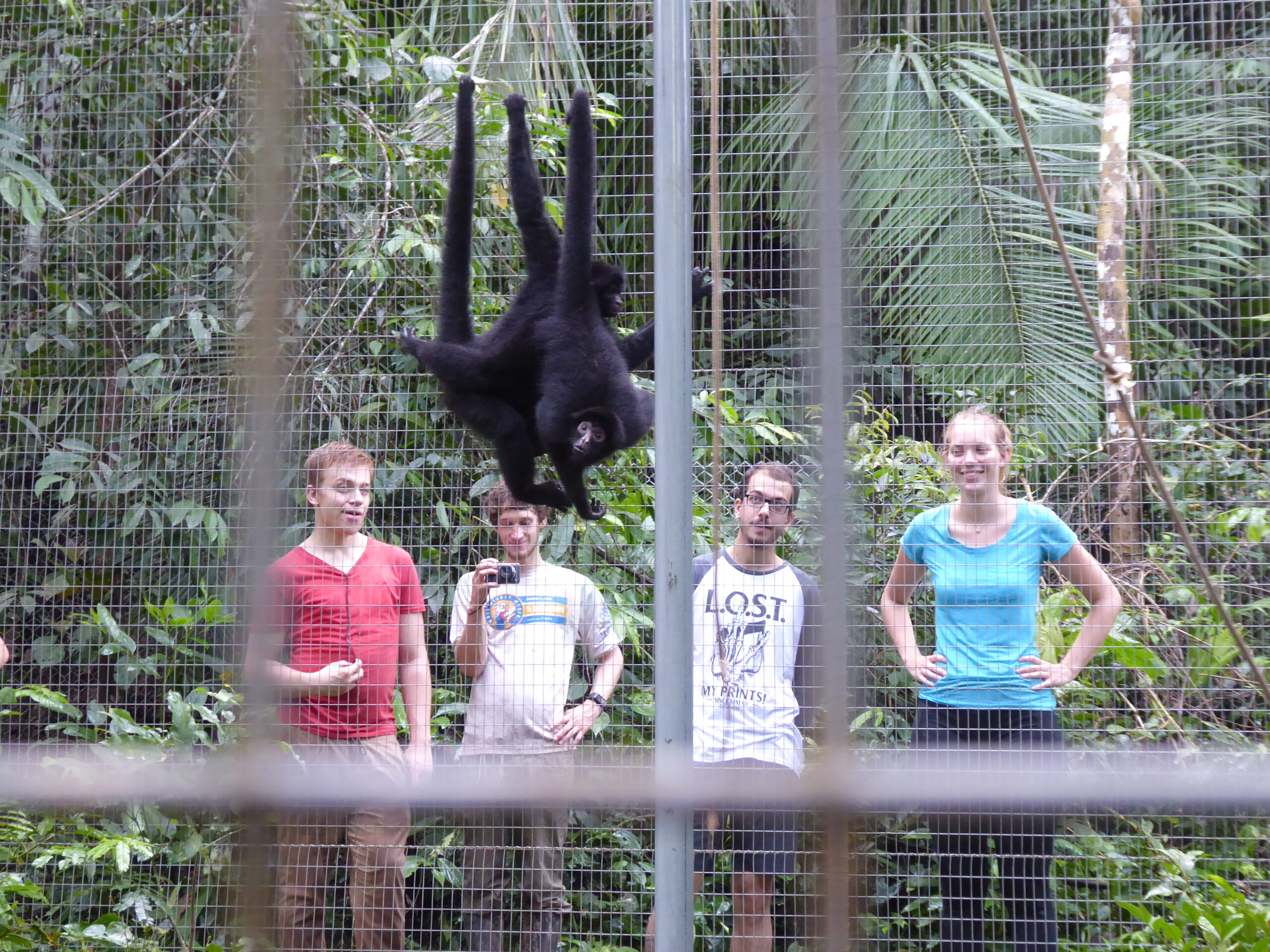
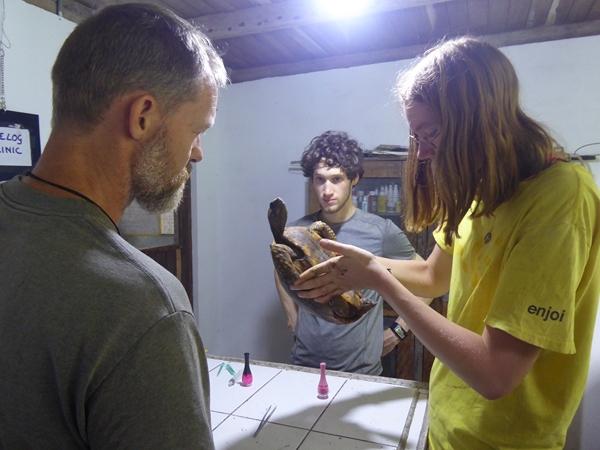
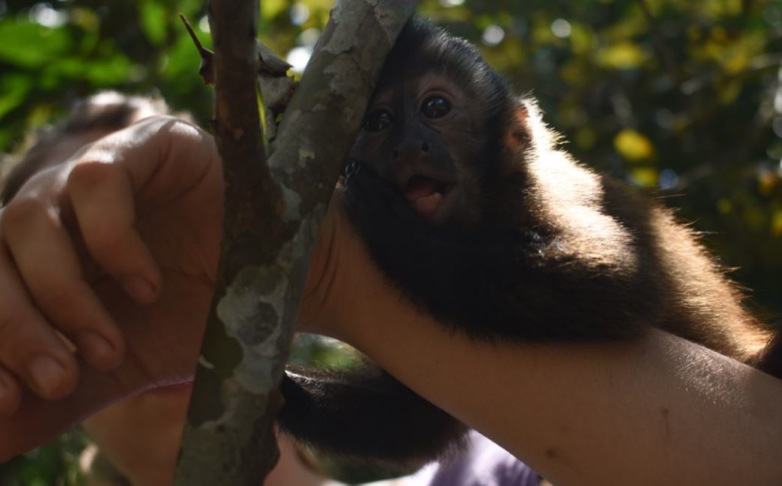
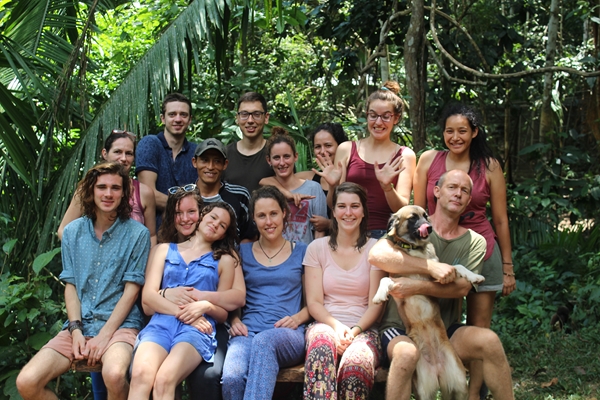
Lauren and Iain came over from England to give us a hand with everything, and Silvia Canelos (from amaZOOnico) and her boyfriend Leonard came to visit and helped us with new arrival baby Ramon (male howler monkey).
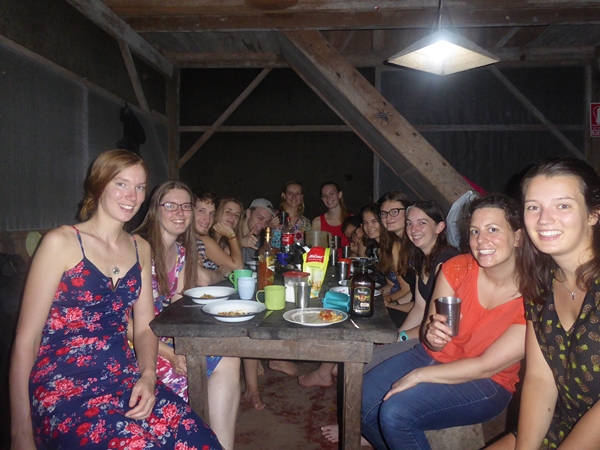
With enough volunteers here and Lauren and Iain back again, the family got a chance for a quick holiday in Pucallpa.

.

Monkeys

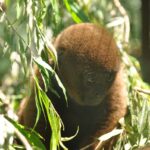
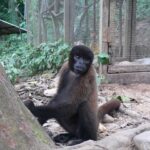
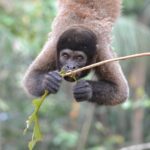
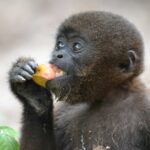
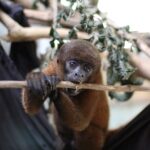
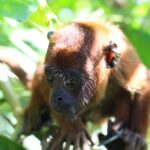
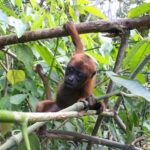
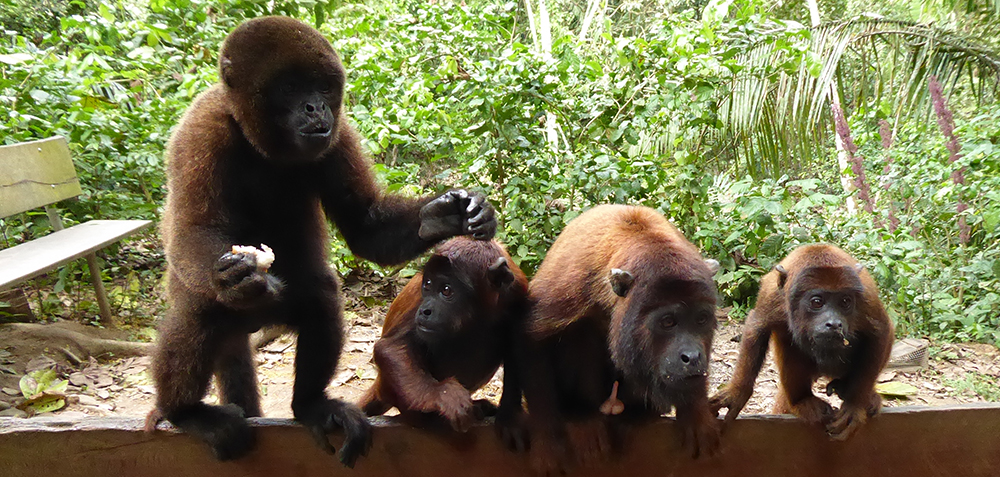
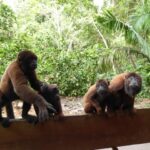
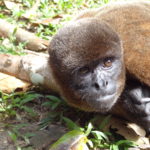
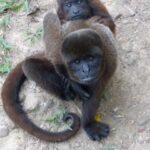
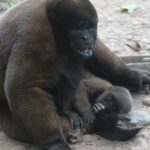
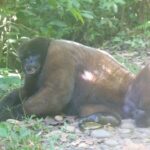
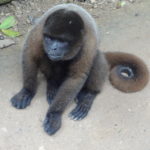
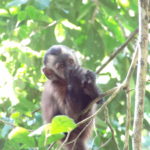
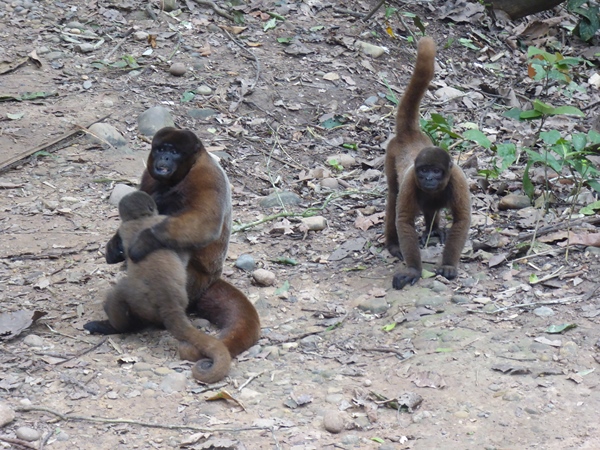
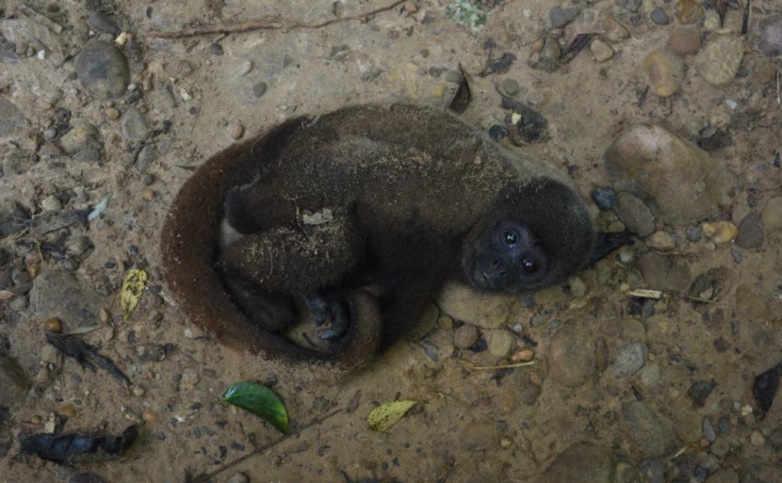
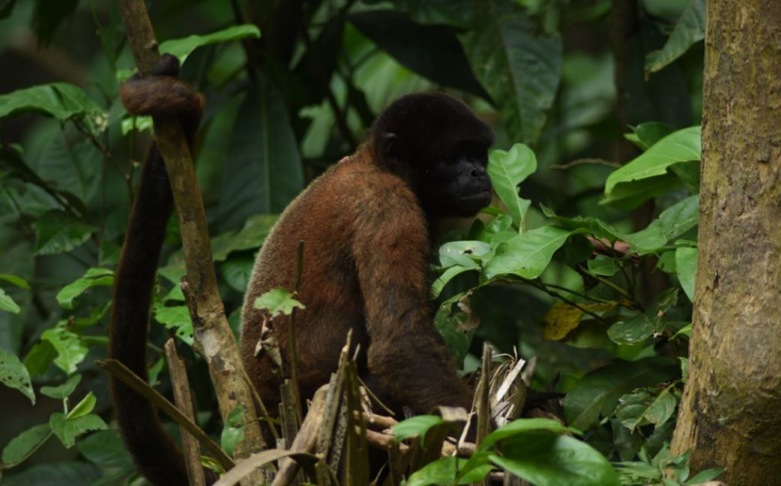
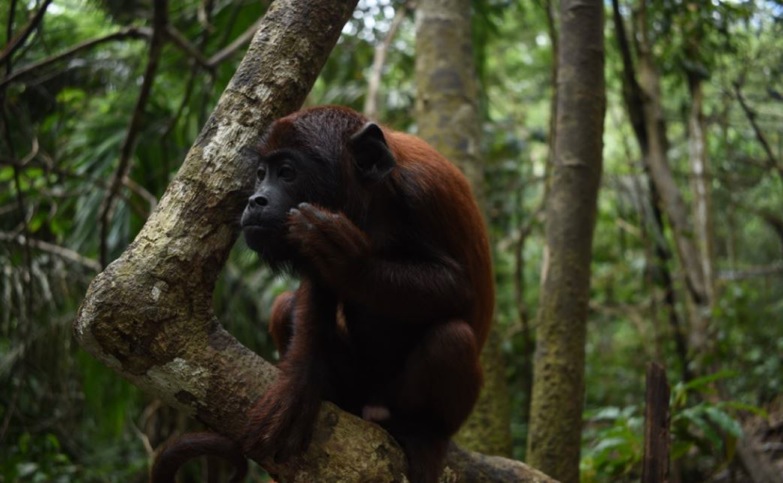
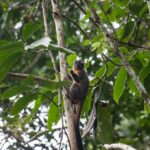
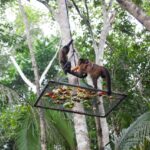
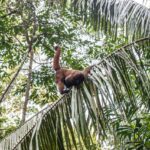
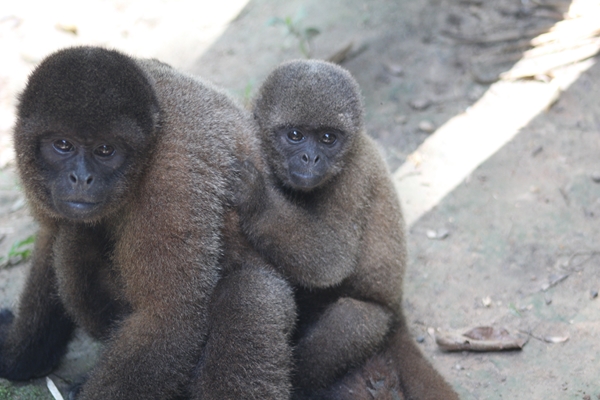
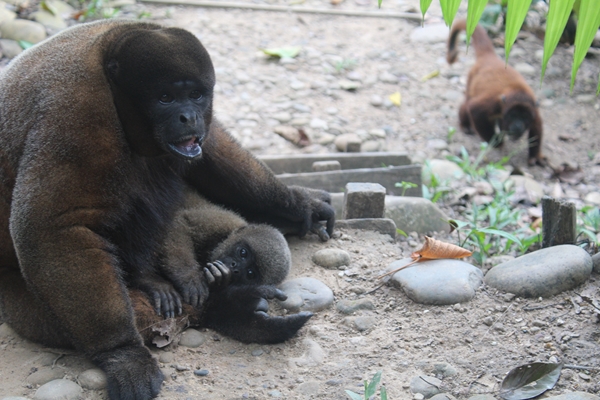
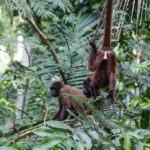
Talisha, female woolly monkey, was released together with Nakoya and Samara (female woolly monkeys). She has been regularly carried by Loki (male woolly monkey) and is playing a lot with the rest of the woollies, as well as with Darwin and Kaya (male and female howler monkeys). In the first nights we brought her in to stay with Darwin and Kaya, but soon she got adjusted and she is now staying outside with the others.
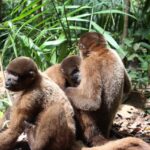
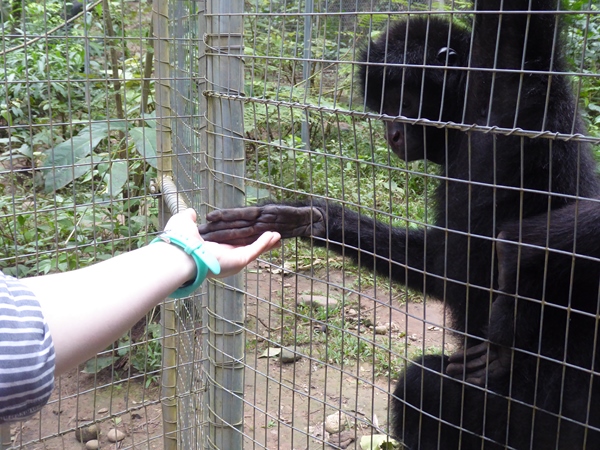
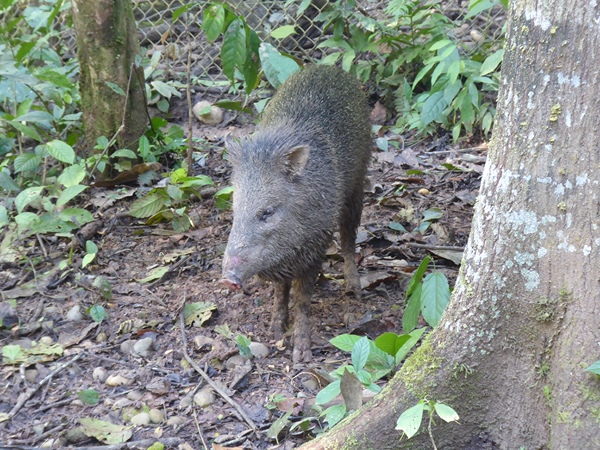
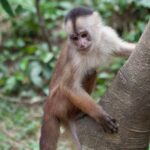
Samara, female woolly monkey, has been fully recovered and was happy to be outside again. Unfortunately, we lost her closest friends in the woolly monkey group – Pashko and Nakoya (male and female) were both bitten by the peccaries while they were trying to steal food from the peccary enclosure and we were unable to save them. The way the peccaries are being given there food has now changed to make sure that this kind of accident will not happen again. After a short period of being a bit of a loner, Samara now is hanging out more with Chiquita and Lupa (female woolly monkeys).
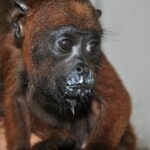
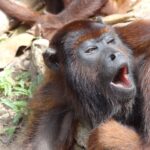
Cesar, one of our male howler monkeys had been sick on and off for a long time. Recently his condition became worse, he was very ill for over a month and was staying for intensive care at at Douwe and Olivia’s. He became unresponsive and after 24 hours we made the tough decision to help him go.
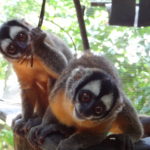
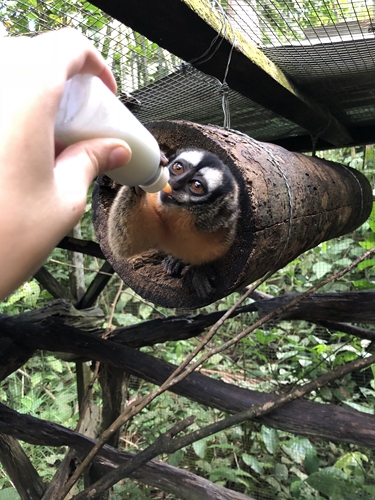
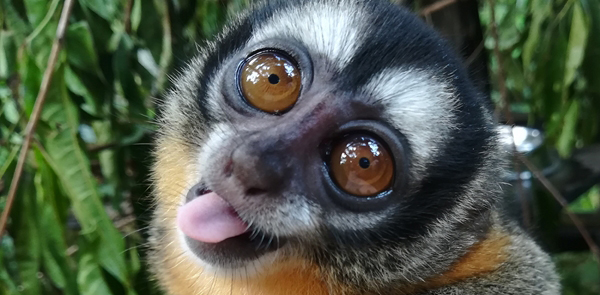
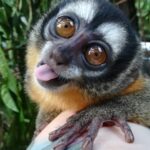
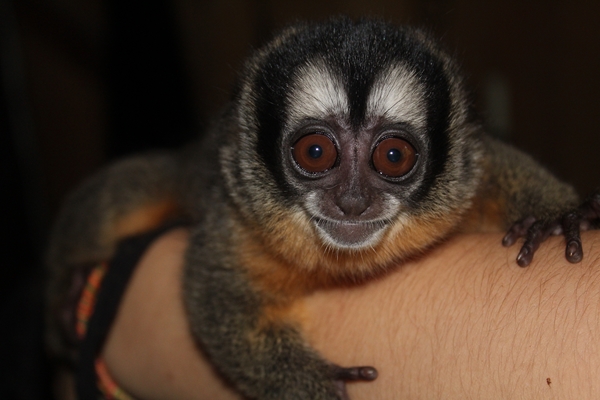
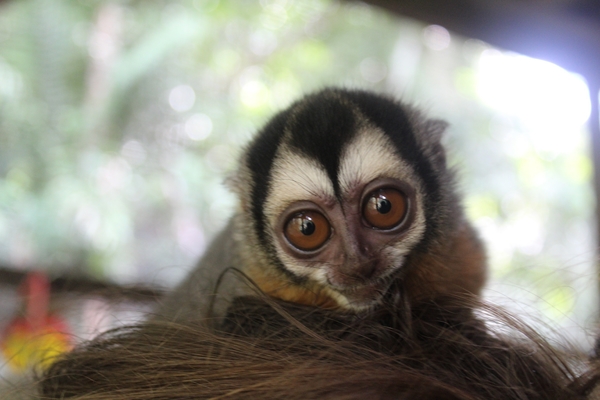
Luna and Otis (female and male night monkeys) were moved to a more suitable cage for their release, the Roko cage, from which we released Sira (female night monkey now living outside) almost two years ago. After some time adjusting they we will let them explore life outside at Esperanza Verde.

.

Other Mammals

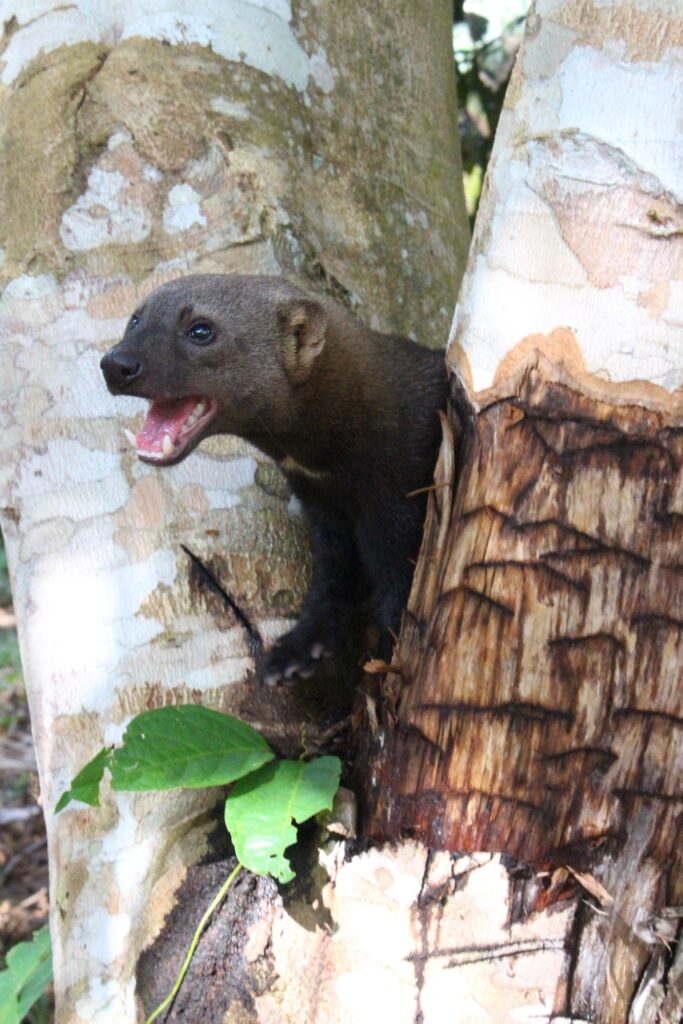
Ruena

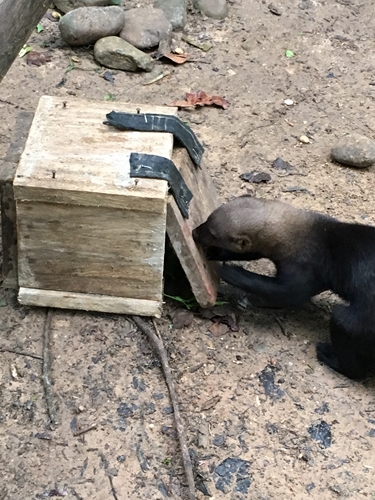
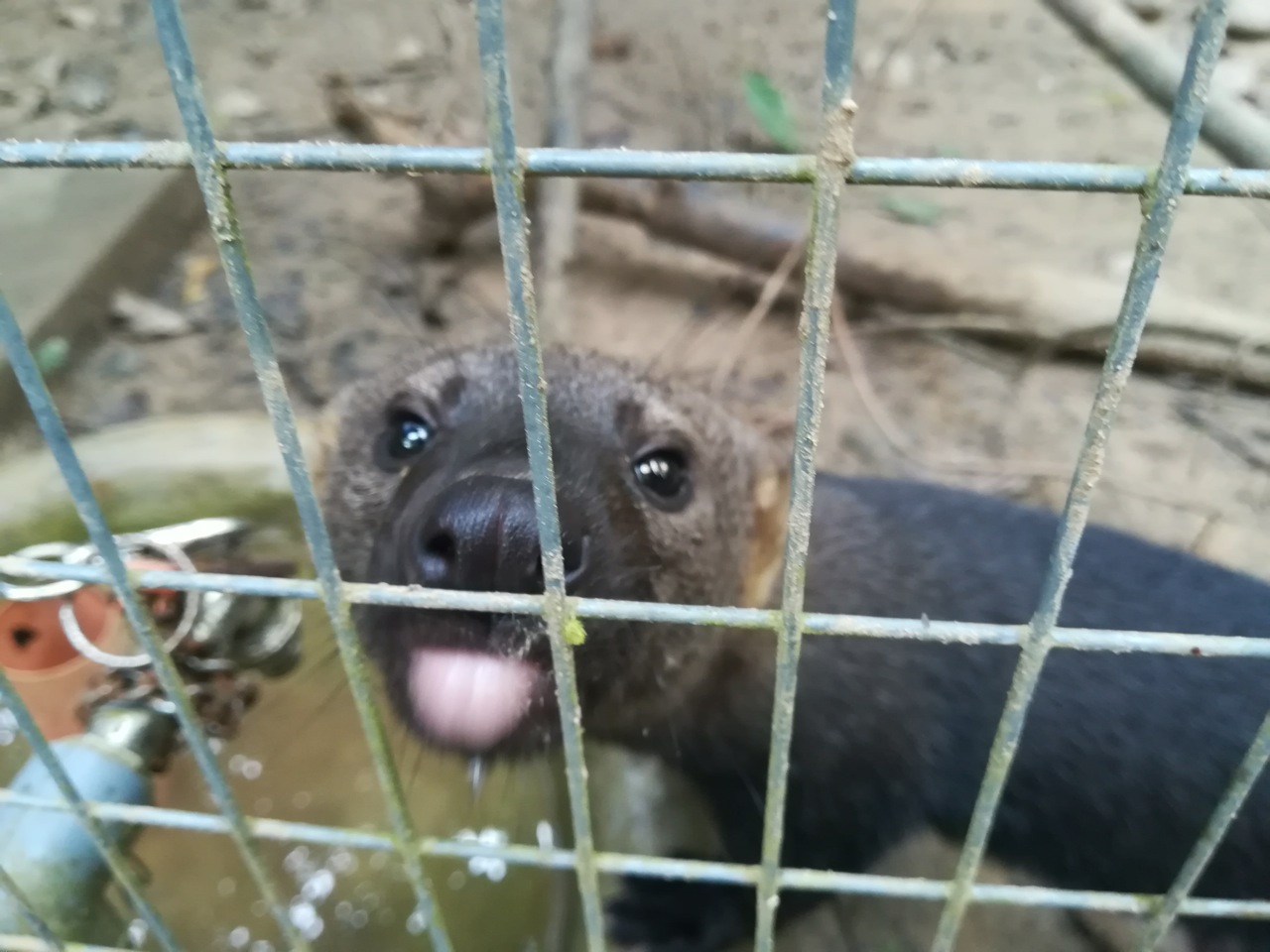
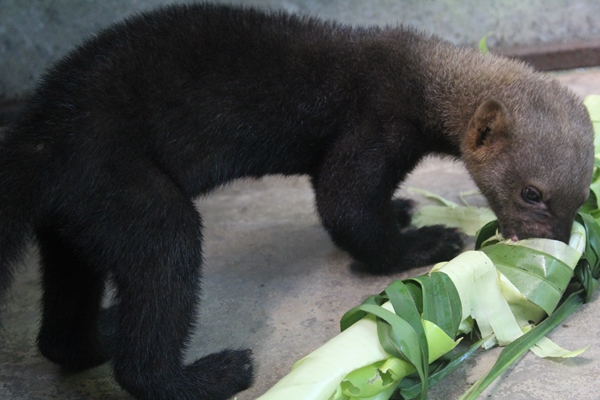
Ruena our female tayra has had a tiring month as Douwe has been teaching a few volunteers to walk her. The walks have been very successful and she loves finding new smells and discovering new fruits from jungle. She is learning the ropes of being a wild Tayra and we hope that these walks will hone her skills for life in the jungle. As she explores, the trees and rotting wood provide her with many climbing experiences as well as natural enrichment.

.

Birds
Parakeet Move

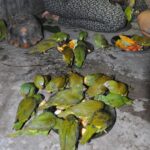
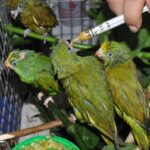
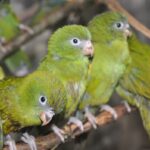
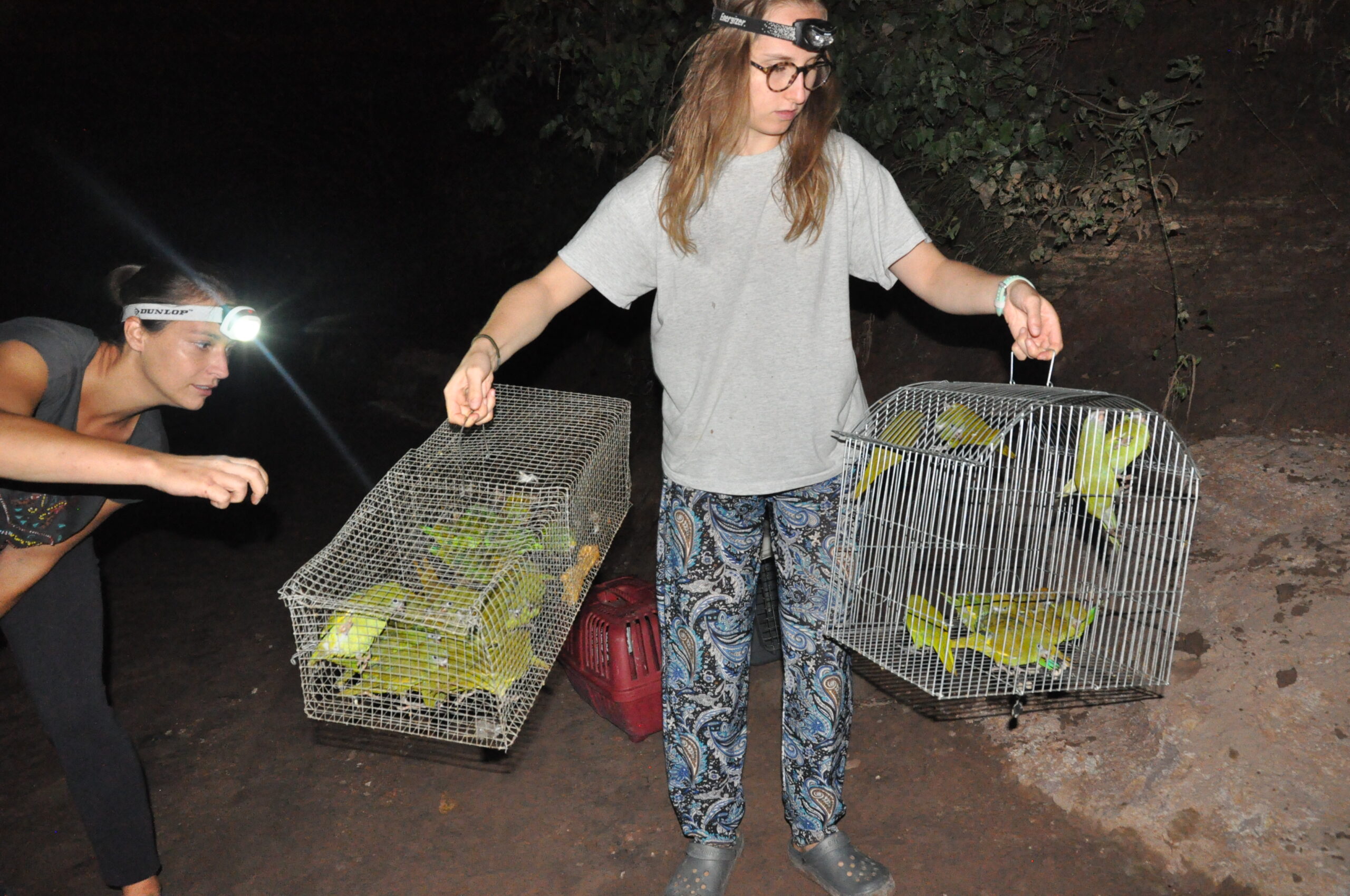
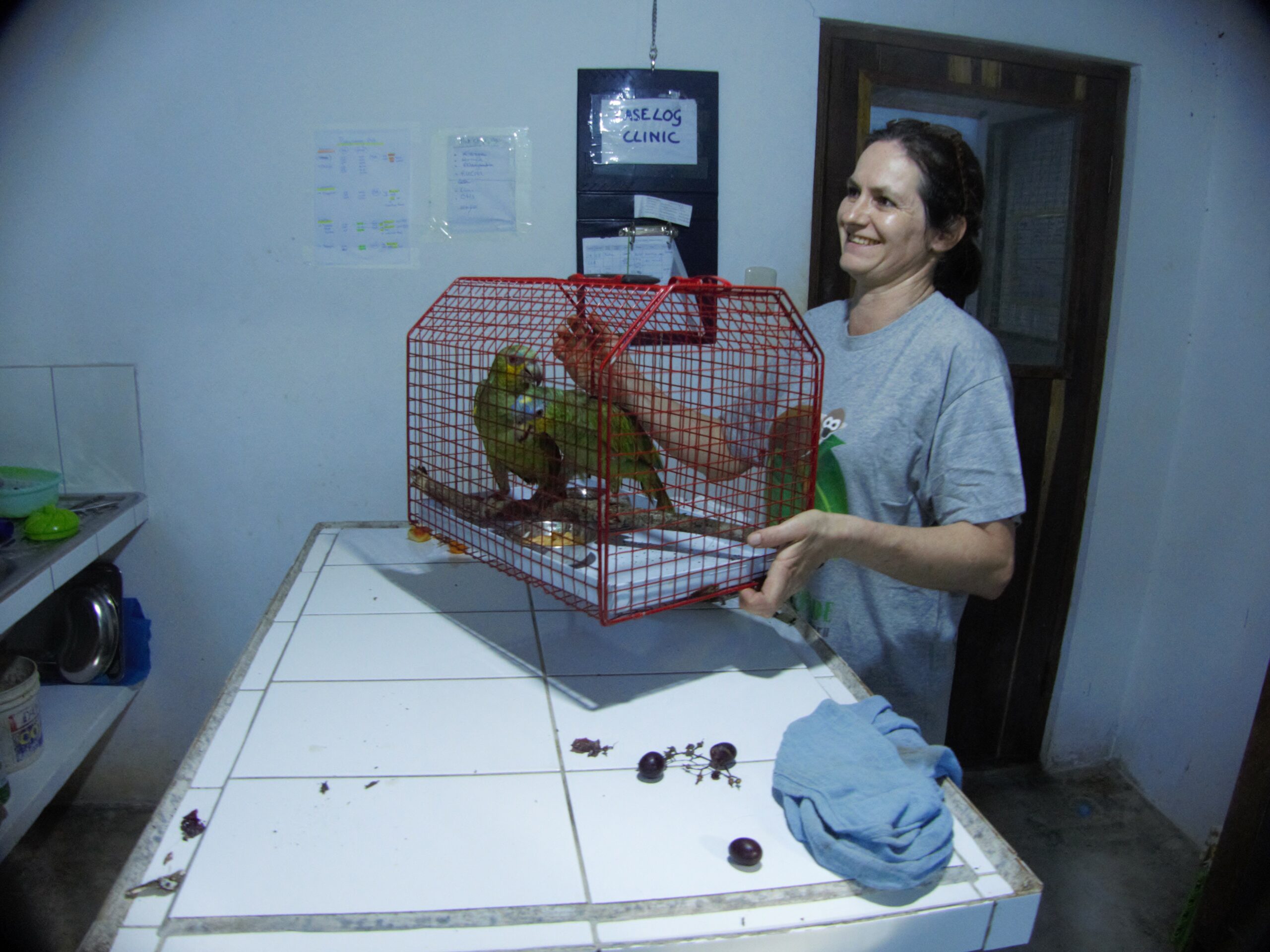
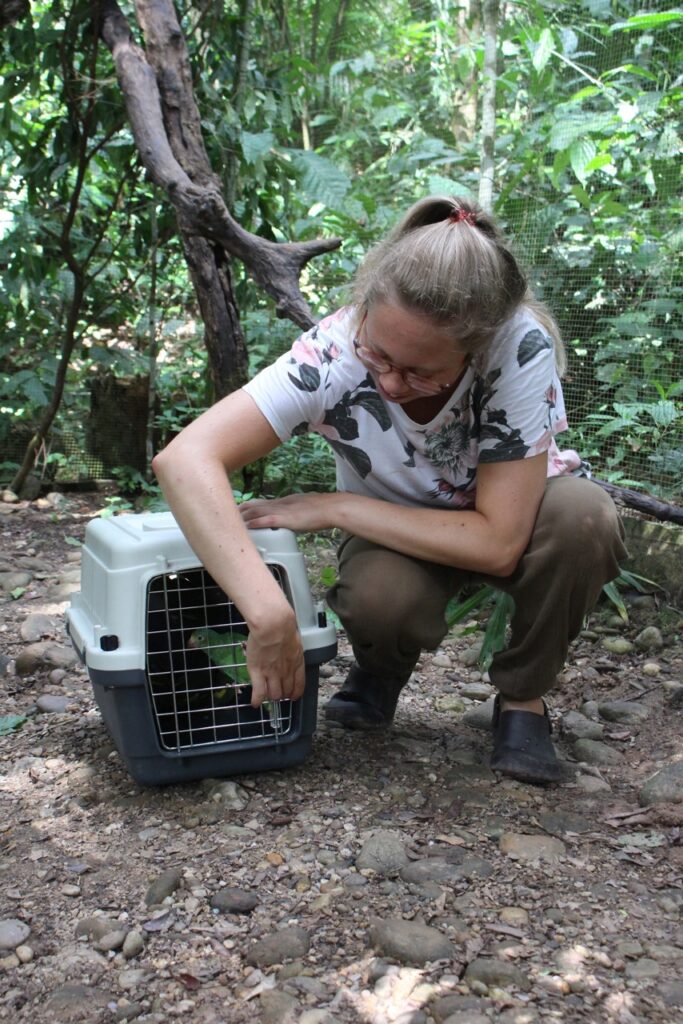
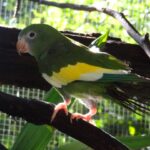
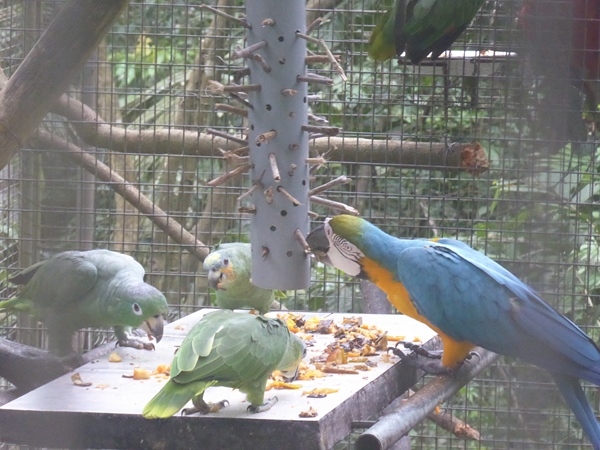
Our non-flying parakeets have been moved to a new enclosure. The Igor enclosure is slightly more isolated than our other enclosures and will give them a more natural setting as they continue their rehabilitation. They have already been visited by some of our already released white eyed parakeets (Aratinga Leucophthalma). This was a really positive experience for both the birds and people as this shows that our work is having a continued effect on local wildlife. It’s always nice to have some of our released animals drop in from time to time.

.

SUST Animal Orphan Hospital

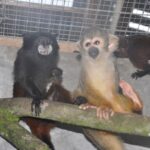
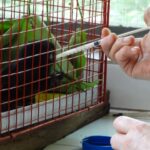
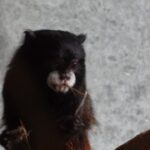
Benito and Tagu, our two saddleback Tamarins continue to do well. When the SUST Hospital was built, we had dividing doors placed between cages to allow for controlled introduction of similar species. This seemed an excellent opportunity to use this system as introducing Tamarins is often a stressful experience. Fortunately Tagu and Benito have quickly taken to each other and have become good friends. Tagu has become more relaxed and Benito has become less tame as Tagu teaches him the ropes of being a wild Tamarin.

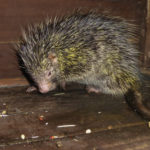
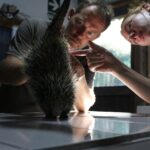
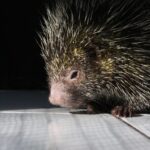
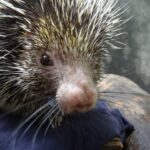
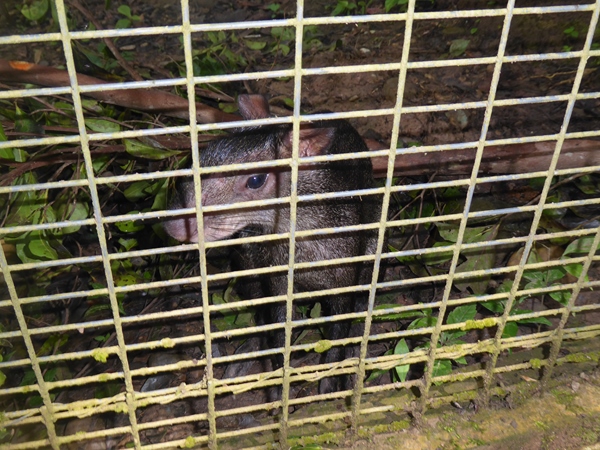
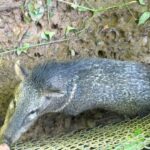
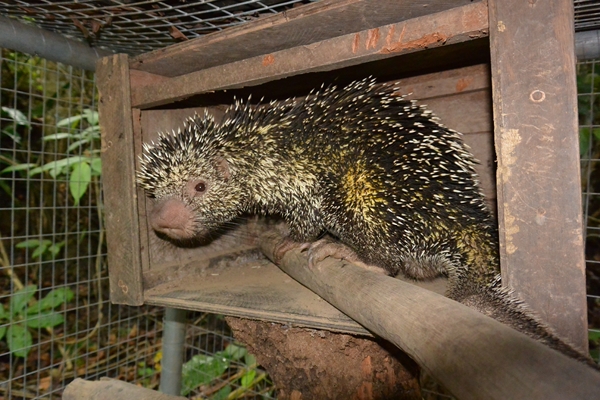
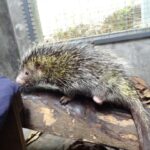
Soraya our Amazonian dwarf porcupine has been moved out of the SUST animal hospital and moved to an outside enclosure to help with her recovery. She seems to be enjoying her outside enclosure, moving around a lot chewing on the wood inside her enclosure and the volunteers are enjoying making new enrichment for her.

.

New arrivals

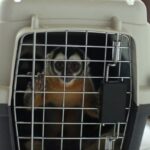
Suly is a new female woolly monkey who was brought to us by a woman from the village. She recognized that she was unable to care for the monkey properly and had wanted to sell her, but was encouraged by some of the locals to bring Suly to Esperanza Verde. This is a really encouraging sign that attitudes toward wildlife conservation are improving in the local community. While she has spent time with humans, she is showing a few wild characteristics such as sleeping on branches rather than in one of our sleeping boxes. We have high hopes for her and look forward to introducing her to released woolly group.

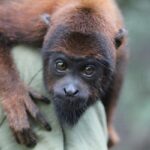
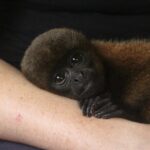
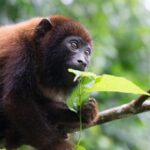
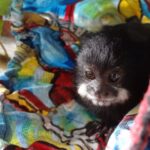
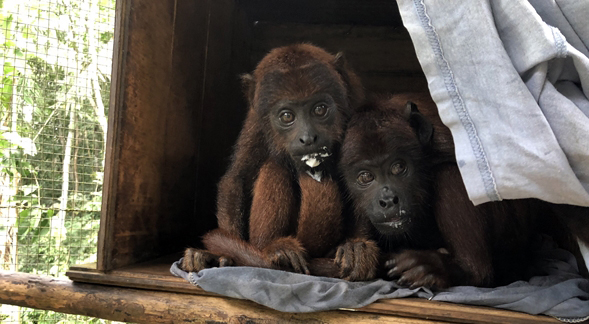
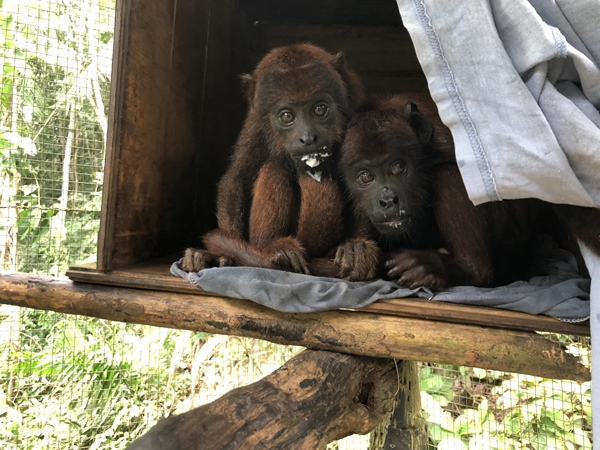
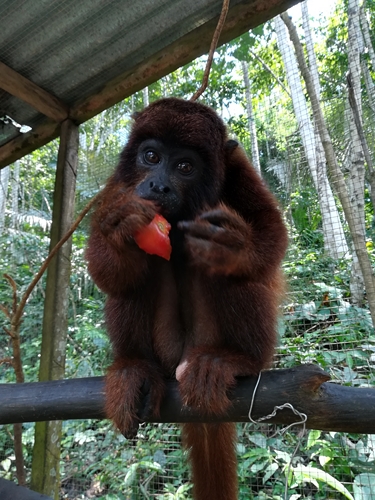
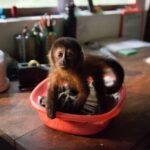
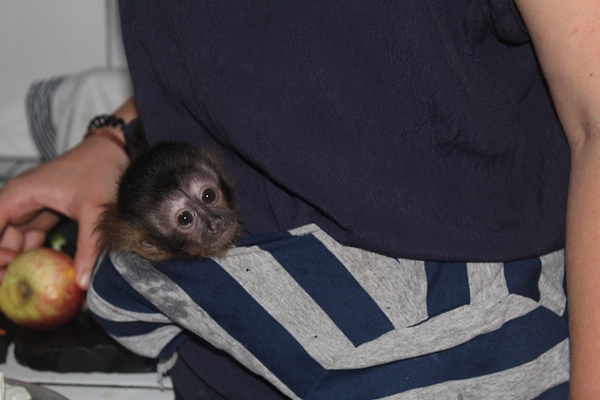
Ramon, our newest baby howler monkey, has been doing great. He spends the night with Lauren and Iain and his days with the volunteers. He is a very playful and happy young monkey who particularly likes men with beards. He has already started to play in the trees and spends his day eating wild leaves and playing outside. He always has someone with him to take care of him as he is still too young to be outside alone. He regularly spends time inside the Howler enclosure so that he gets a chance to get used to Darwin and Kaya. Howler monkeys are particularly susceptible to depression, so when they are this young they are one of the few animals that receive human contact here at Esperanza Verde as our hands off policy would, in this instance, be detrimental to the animal. Fortunately Ramon is already becoming more independent by the day.

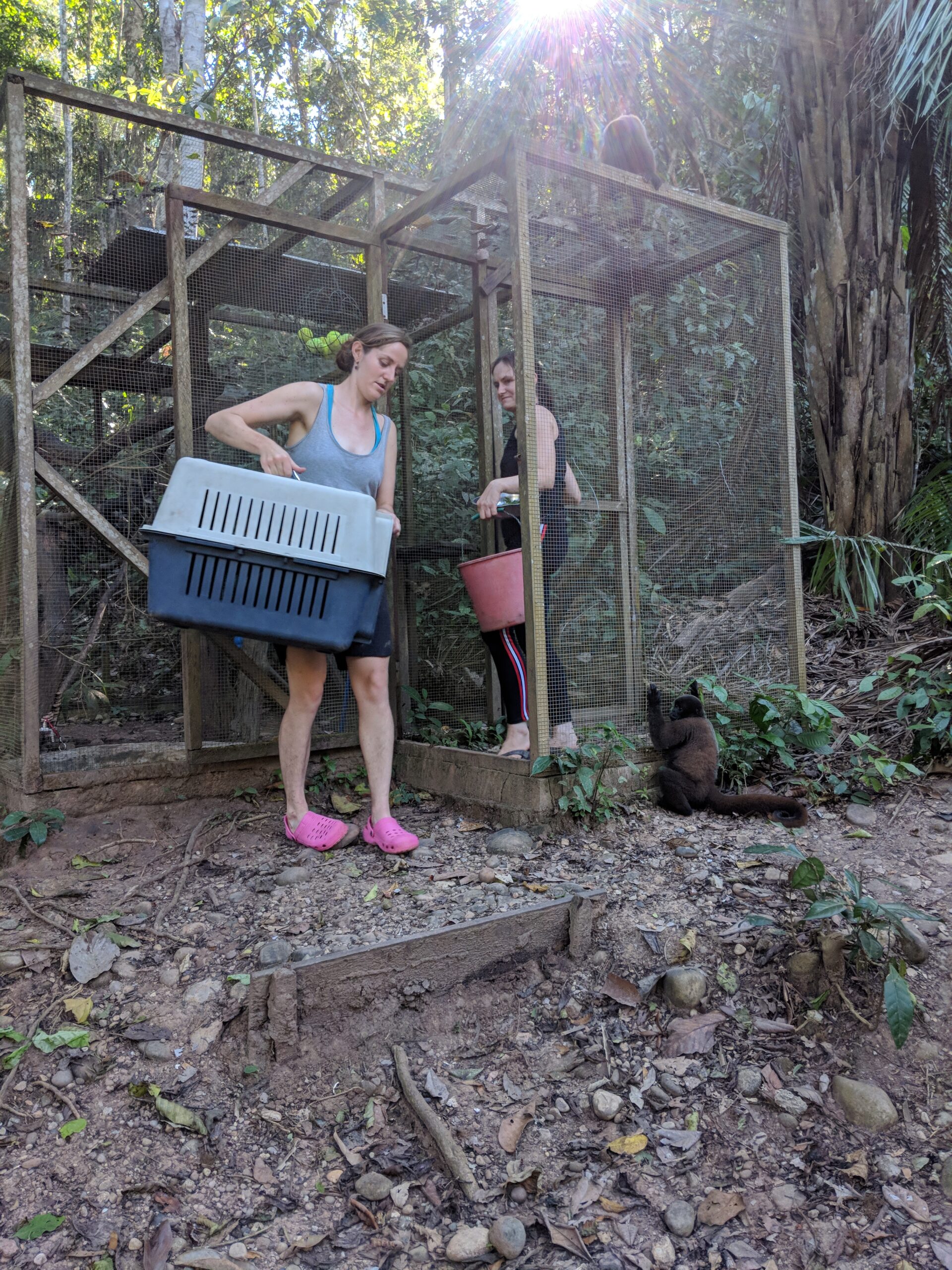
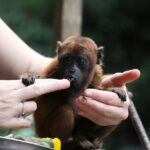
Moyo is a new male woolly monkey who was brought to us by a local Peruvian woman from the nearby town of Curimana. He is 4 years old but currently very submissive. He spent his quarantine period in the SUST animal hospital where he was received a lot of attention from some of our released woolly females. He was then moved to one of our re-introduction enclosures where he is developing a friendship with Maruja and Tawaki.

.

Volunteers

Enrichment is a very important part of working with animals. During her time here, Rachel one of our volunteers created enrichment manual to help new volunteers to understand the requirements of certain animals. This manual has been instrumental in the improvements in enrichment for the animals with loads of toys and activities to help the animals practice the skills they will need when they are released back into the wild. These enrichments range from foraging activities, behavioural enrichment, or sometimes just moving parts of the enclosure around to give different jumping and play opportunities. It’s always important to keep our enclosed animals mentally and physically stimulated, no matter how long they spend with us here at Esperanza Verde.
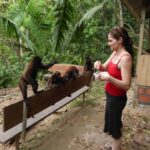
Some children and adults from the local village of Bello Horizonte were given a tour by Douwe. Showing the animals that are around Esperanza Verde and educating them on their behaviour and why they need to be kept wild.
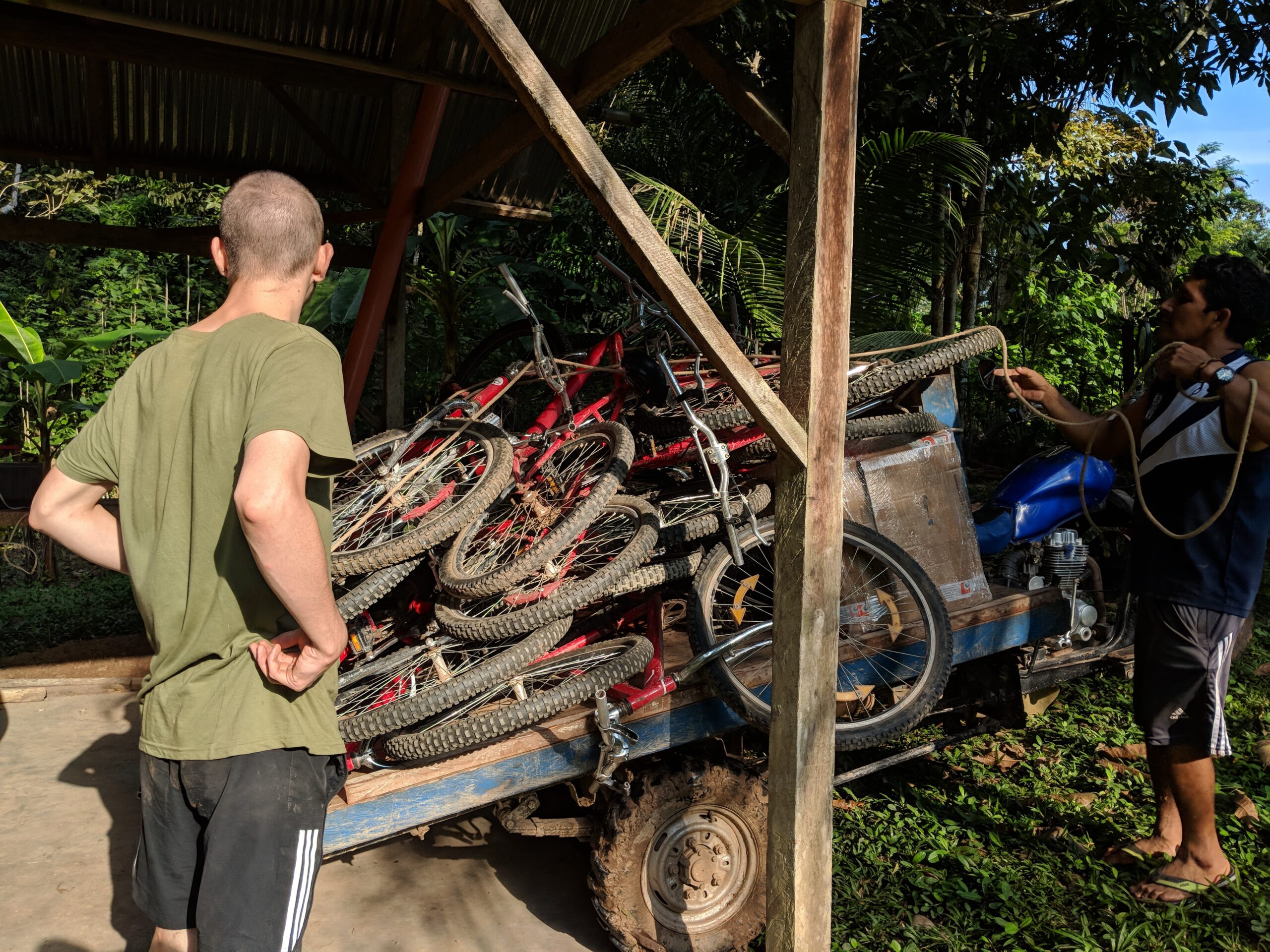
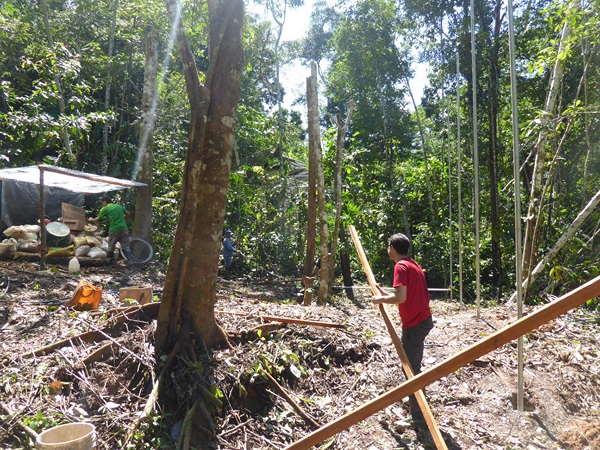
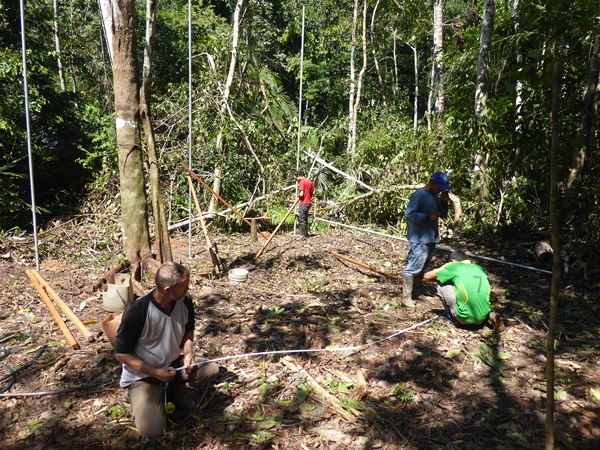
The construction of the quarantine building is coming along at quite a pace with so many volunteers here to lend a hand. The cement pillars have been poured, and the ever popular job of digging the septic tank hole completed. Of course it wouldn’t be a real Esperanza Verde construction project without sandbags. Our volunteers have been working extra hard to pile up over 200 bags of sand ready to make the floor once the roof is on. The wood for the roof beams arrived this week so the next stages of the construction are ready to begin, once everything has been carried up from the port.

Esperanza Verde Update / June 2018

It has been another busy month here in Esperanza Verde, with funny, loving, as well as very sad stories.


Monkeys

Nakoya and Kamari went missing near the start of the month; Geiler and Machico were out most mornings looking for them both in the surrounding area to no avail. After a couple of weeks one of the local neighbors said that they had seen 2 Woolly monkeys around his house so with a full party of four (Douwe, Olivia, Machico and Geiler) they went to their land. No sign unfortunately of the monkeys. The next day the neighbor came by to tell us he had managed to capture one so Douwe and Geiler went and managed to bring back Nakoya, a bit skinnier than when she left but overall in good health. Kamari has not been seen since we hope the best for him, but as monkey meat is still one of the favorite meat sources locally we do not have high hopes. Nakoya is now recovering in Pepe enclosure.
Wallace our oldest male howler monkey, who was with us for about 1,5 year, recently passed away. He was found by one of our volunteers, Douwe performed an examination but no clear cause of death was identified. He had been very healthy so we assume he either died from a fall or perhaps from a snake bite. We will miss him a lot; he was our first successful effort of raising a howler monkey.


Other Mammals

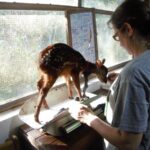
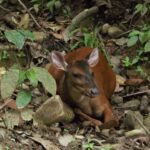
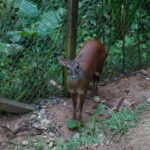
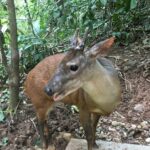
Ringo the male red brocket deer that has been living around the family house was also moved this month to Xena enclosure which borders Rabito´s, another red brocket deer. The hope is that they will become friends so that they can be moved in together at a later date.
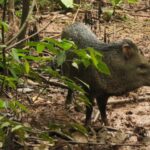
Quintisha, the oldest female collared peccary, died after being ill for some time. She has been with us for nearly five years, arriving when she was about a year old. Necropsy showed a probable tumor in her nose. Timo, Kohana (the male and other female peccary) and all of us will miss her calm and kind character. She was always excited for a scratch whenever we walked past.


Birds
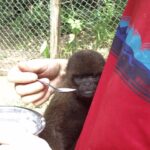
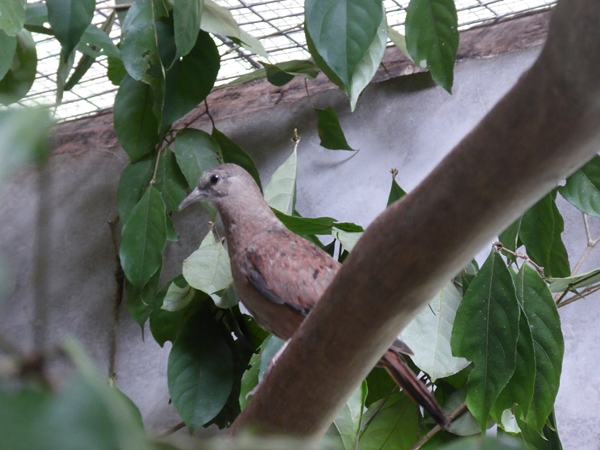
Once again the white winged parakeets have been moved to another cage in order to separate flying birds and non-flying birds. Also Chipi, the ruddy ground dove was moved with them as well as Singas and Pichu, the two white eyed parakeets. This time it seems that all parakeets were either unable to fly or too tame to be released so they have just been moved to the new Tupak cage where they will stay for now. This will allow the Igor cage, our non-release bird cage, to be disinfected properly. Even with some recent shortages of volunteers we have still found time to make some enrichment for these birds so that they don’t get bored in their new cage.
 

SUST Animal Orphan Hospital

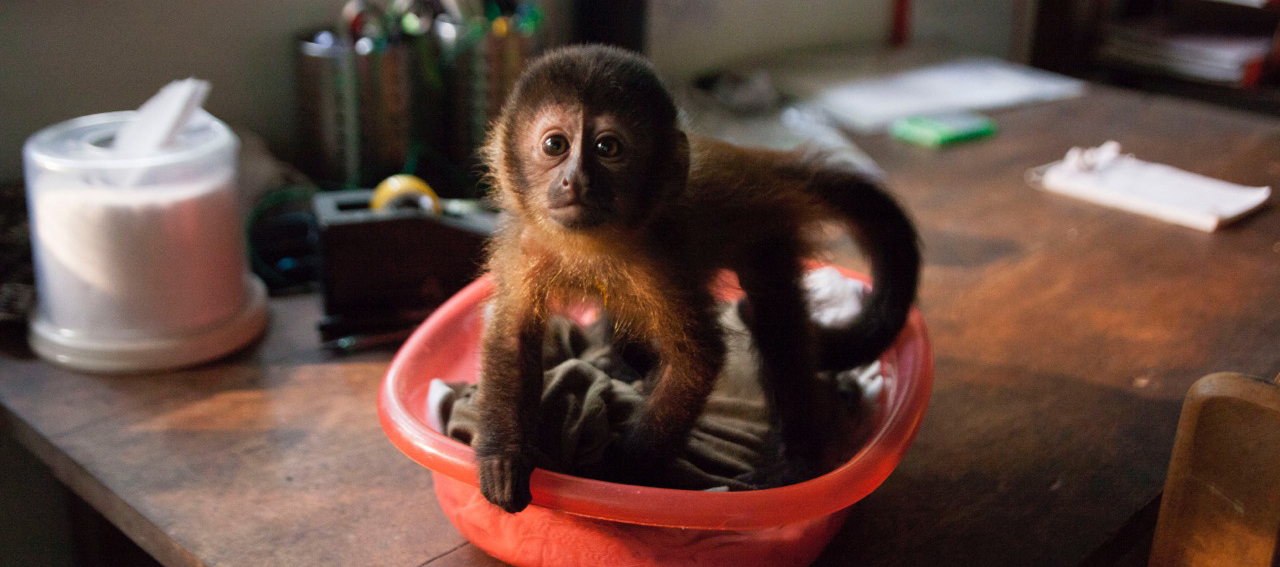
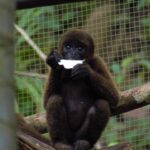
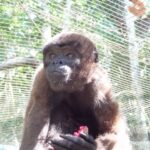
Talisha a new young female woolly monkey who was recently brought to us from one of the local villagers. She spent a few weeks up in the clinic receiving milk and learning the ropes of being a wild monkey and not a pet. After a few weeks she was moved down into Pepe cage along with Nakoya to try to help them to bond and to give Talisha a bit more contact with our outside monkeys and less with humans. At first she didn’t like this and kept trying to follow volunteers out of the cage and sometimes clinging to them while giving her milk but now she is settling nicely. Hopefully she will be released soon and can join more of her own kind in the trees.
Samara one of the female juvenile woolly monkeys was recently wounded on her right arm. Olivia heard her scream in the late afternoon at the peccary cage, and found her with her right arm hanging. She was probably trying to steal food from the peccaries and Timo or Kohana did not take that well. Thanks to the expertise of Olivia, Douwe and Lisa (Vet), Samara is now making a recovery in Pepe cage with Talisha and Nakoya. Although she has trouble moving her arm we are hopeful she will make a full recovery.
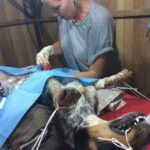
Soraya our Amazonian dwarf porcupine is still recovering from her recent amputation of her foot. Her wound gets cleaned and bandaged daily. She is able to move around with her leg which is a good sign, but for now will stay in the clinic till the wound has fully healed.
Icarus, the new ruddy ground dove was taken to the Tupak cage at the time of moving all parakeets, and Chipi the resident ground dove. They quickly formed a nice couple.


New Arrivals

Our new arrivals are Benito and Tagu, two male saddle back tamarins. Tagu an adult male and Benito a baby tamarin were recently brought in. Tagu arrived first and about 2 weeks later Benito arrived. We tried introducing them to see if they would bond but Benito was too scared and it was decide they would not share a cage. Benito stays in a small cage and is enjoying the enrichment that is put in daily; he is a very active and playful monkey. Tagu is very scared of us humans, but loves the grasshoppers in the bottle which is delivered to him every day.


Volunteers

Keeping good relations with the local village is very important here at Esperanza Verde and with Ines a Spanish volunteer it seemed like a good time to give a fresh face a go at helping to educate the village in animal welfare. She was received very well by the local school and was invited back to give another talk. This is very good news for the local village and Esperanza Verde as hopefully this will encourage more people to stop hunting endangered animals or keeping them as pets. Lisa our head volunteer and vet has also been castrating local cats and dogs. Lots of people were bringing their pets forward which is very good news.

Esperanza Verde Update / May 2018

Volunteers having pizza party

With 13 volunteers at the project there is plenty of time for extra jobs. The head volunteer moved into her own place (the cabin) recently, after a successful ‘housewarming’. There has also been plenty of time for enrichment projects and construction jobs. Some recent examples of enrichment are: a puzzle box for Ruena (female tayra), a football for the spider monkeys and a construction with sticks that encourages the birds to work to get the seeds hidden inside. Everyday some of the volunteers are on construction duties. These volunteers help Douwe and the local workers with whichever construction is currently the priority. This can range from cutting iron tubes to fit their purpose, to carrying sandbags to where they are needed. Most of the volunteers have also had the opportunity to go on a jungle walk with Machico, where he demonstrates his immense knowledge about plants and trees.
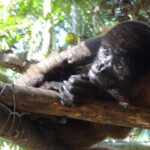
Unfortunately, at this moment Machico has had to take some time off due to a personal loss. Our thoughts are with him at this difficult time.

.
Constructions

Preparations for the construction of the new quarantine area have begun. The area has been cleared, sand is being collected, and the materials have been ordered. We hope to lay the foundations soon.

At work at Elmo construction
At work with the first poles

Simultaneously a new space has been cleared out for another enclosure, thanks to the donation of Lush Cosmetics. In the last year they have already financed the reptile pond, the TUPAK-release cage and the deer enclosure. This new enclosure will be named after Elmo, one of the sloths, that has been successfully released back into the wild. At Esperanza Verde we often encounter incredibly smart animal behavior, which makes us believe that the animals are very aware of their surroundings! Sure enough, as soon as we started clearing out space for the ´Elmo´ enclosure, Elmo showed up high in one of the trees, almost as if he knew what was going on! This enclosure will be similar to the big spider monkey cage (Rimaq).
A project that was recently finished is the beautiful painting of Asan (blue-yellow-macaw) on the storage building wall. Although it was sometimes difficult to paint with monkeys around (they like to get their fur painted blue and green!) it has turned out to be a great success. Everyone at Esperanza Verde really appreciates the new sight, a big thanks to Janick from Switzerland!

.

Monkeys

Rimaq, spider monkey presenting his injured hand

Rimaq, one of our enclosed male adult spider monkeys, was found to have a small cut on his hand. The treatment of this minor injury has been going very well. In the mean time, one of our volunteers who has experience with training monkeys in her job (Rachel Henson from Monkey World in UK) is teaching both the spider monkeys to respond to a ‘clicker’ and introducing them to positive reinforcement training.

Otis, nightmonkey drinking milk

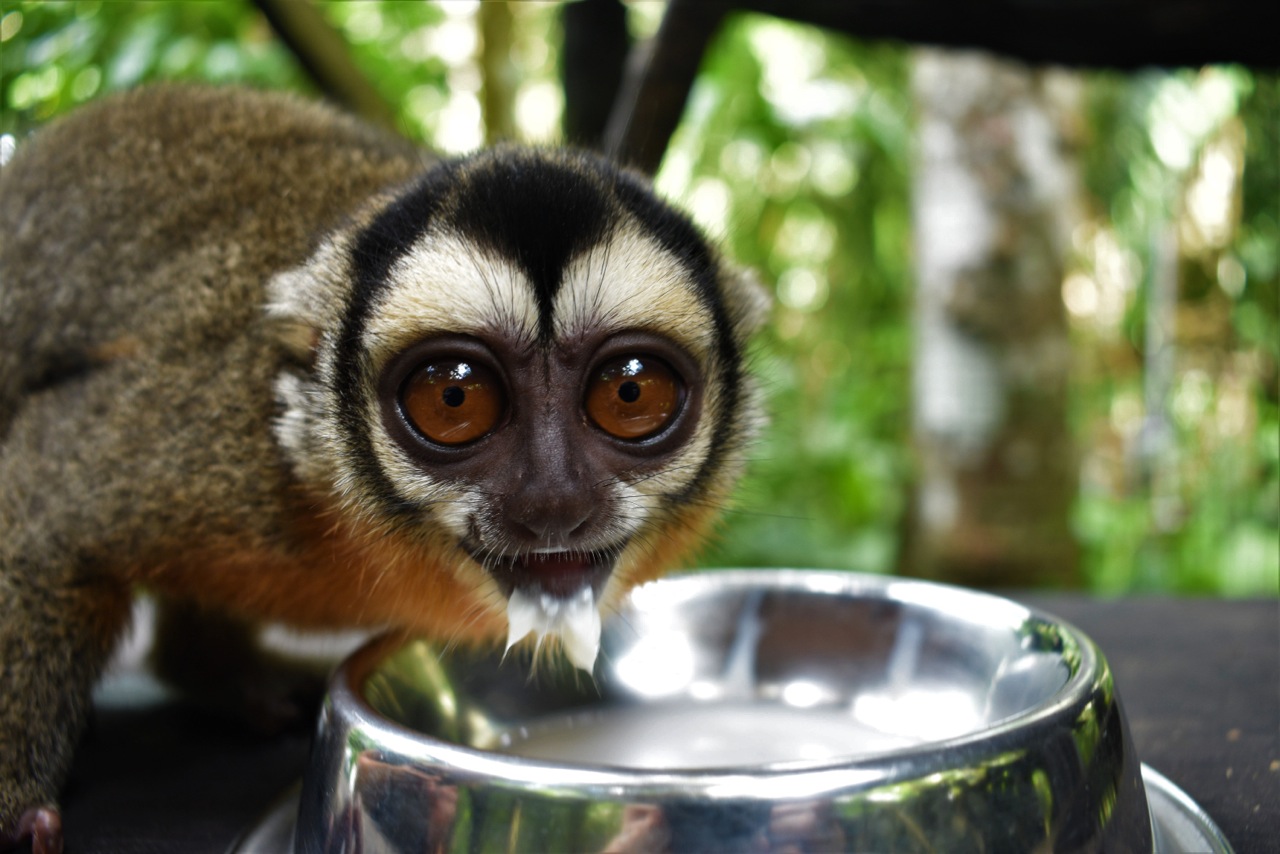
Luna and Otis, the young female and male night monkeys are doing very well. Recently, we decided to stop feeding Otis milk separately. Before, we always fed Otis milk from a baby-pet-bottle. But since he seems old enough now, we´ve tried to start feeding him from a bowl. This has worked out very well. We are excited to see how fast these monkeys are becoming independent. It won’t be long before we can let them out to join Sira (our adult female night monkey).

Kaya & Cesar

As for the howlers, Darwin and Kaya, have also been doing very well. Cesar, however is looking somewhat less healthy. He does not drink as much milk as his companions and sometimes refuses to eat. Some poo samples were investigated but unfortunately the reasons for this strange behavior remain unclear. He was looking very skinny so we have to carefully watch how much he is eating and how he is behaving. After some treatment he does seem to be a bit more active and he has started eating a cereal mix with extra proteins instead of his regular milk.

Woolly monkeys, Kamari with Tawaki, Pasho in the back

.

Other Mammals

Tayra Ruena investigating enrichment

Due to all the construction work going on it has been hard to find time to continue the walks with Ruena (female juvenile tayra). We have managed to squeeze a few walks in and hope to do more of it soon. Luckily, we have enough volunteers who can keep her busy with enrichment projects, like the puzzle box mentioned earlier.

Quintisha, peccary

Quintisha (female adult collared peccary) was doing better with the antibiotic treatment. First she stopped breathing heavily and then she bled a bit from her nose only occasionally. The decision was made to stop giving her antibiotics, but after a few days the bleeding returned. Shortly afterwards, the heavy breathing also worsened and she was anesthetized to perform a better investigation into her nose. Unfortunately the cause of the bleeding was not found. Antibiotic treatment has been restarted and she has been moved to another cage temporarily to be able to treat her better.

.

Birds

Koru, the purple gallinule bird who was recently introduced to the aviary, seems to be delighted to be there. He is eating more and more from the food we give him, but has also been spotted eating insects from the ground often. Due to volunteers calling for him, some of the parrots have developed the habit of yelling Koru as well, making it easier for us to find him. With some great roommates like these, it seems all the more likely that he will gain a permanent spot in the aviary, “Pichu” cage.

.

Reptiles
Checking tortoises

For a long time the yellow footed tortoises have been roaming around their residence freely. Even though they all seem as healthy as ever, we decided to organize a tortoise hunt to enable us to count them, weigh them and give them a general health check. Only Pinto and Aramis, the two smallest ones, were missing, but due to the size of the enclosure it is not surprising that we could not find them! We suspect they might be hiding somewhere. This was also a great opportunity for us to refresh the data we have about the tortoises and we found all of them in good health during the inspection.

.

SUST Animal Orphan Hospital

Unfortunately there is some sad news regarding Ronya, the baby brown capuchin monkey. She was enjoying going on the leaf walks and was becoming more and more trusting, also towards new volunteers. Sadly, she got spooked by something on a leaf walk and decided to run off on her own. Despite the combined efforts of volunteers she knew dearly, she did not come down from the tree she climbed into and spent the next nights outside. For a while we hoped she was rescued by the local capuchin group, but she has not been seen since. Although we always hope for the best, we do fear the worst as would not make it on her own, being so small.

Enrichment for macaws and amazons

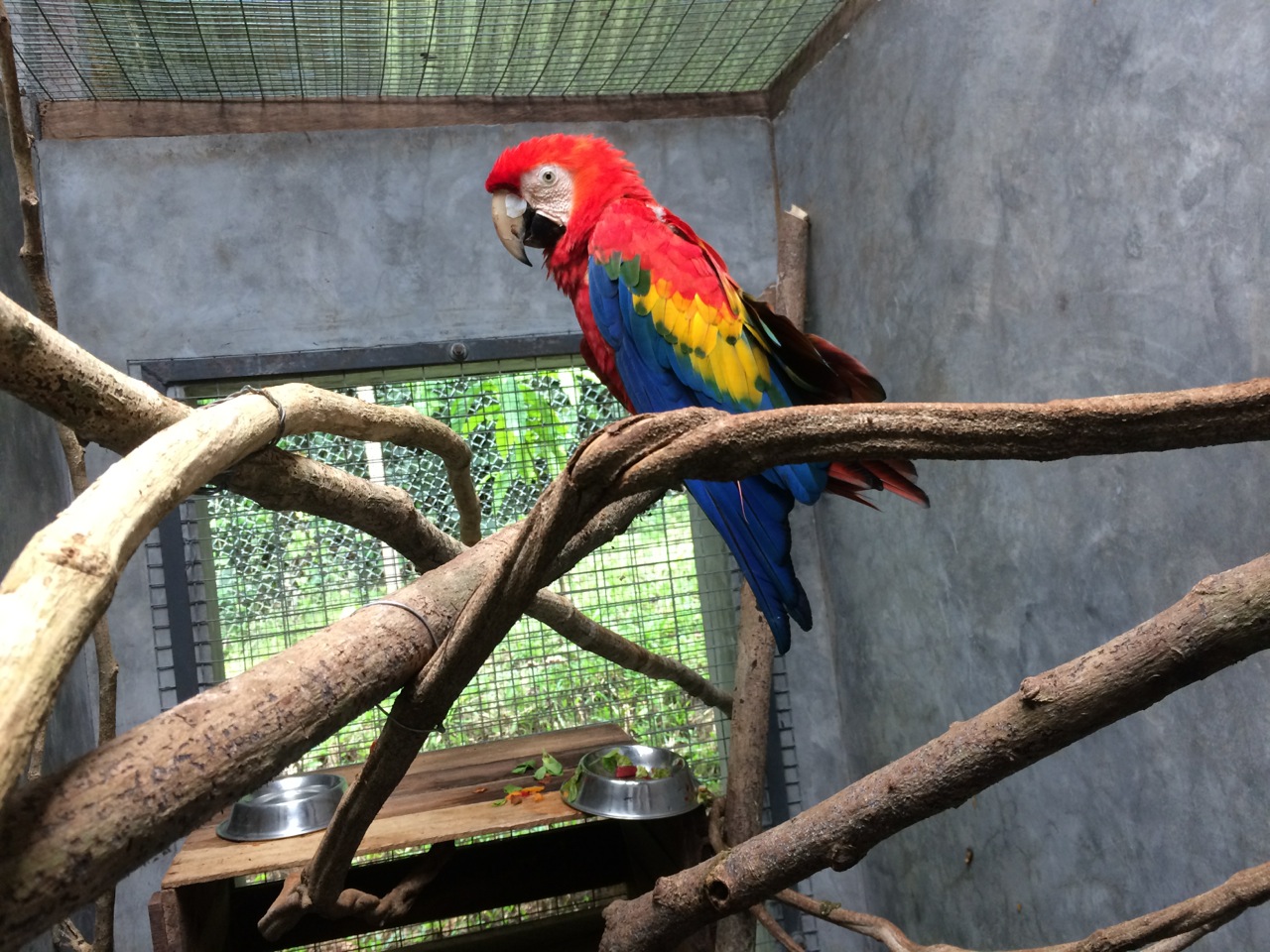
Ermina, the scarlet macaw, has had a successful recovery period. She has received an identity chip from Lisa, our veterinarian. The spot where her beak was repaired seems to be holding up well and her appetite has been good. Therefore she has been transferred back to the aviary cage again. She spent some time in the front cage at first, and shortly after we put her back into the big aviary with all the other birds. So far, this transfer has gone smoothly and we have not yet spotted any aggressive behavior towards her.

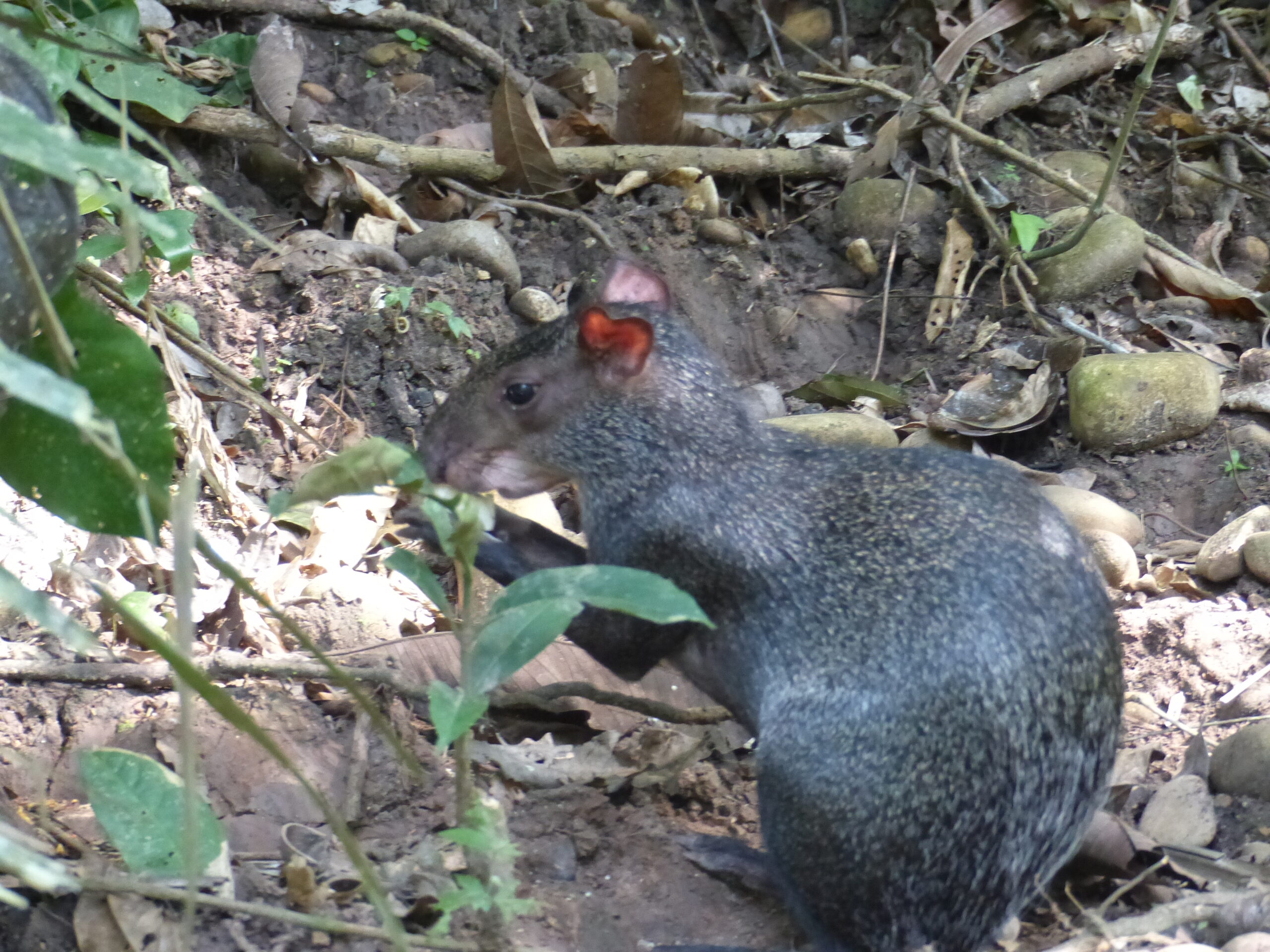
Agout Doquino

A new mammal we received is a male agouti, Doquino, who was raised as a pet. He was given up into our care as he was becoming too big and started stealing eggs. He spent a few days in the clinic. As this is an animal which enjoys digging for its food, being on a cement floor is not the nicest. So after a health check we moved him in to the empty, more spacious, La Sapa enclosure. With some adequate enrichment and shelter, it is now a nice home for Doquino.

.

New Arrivals at the Hospital

Pygmy anteater

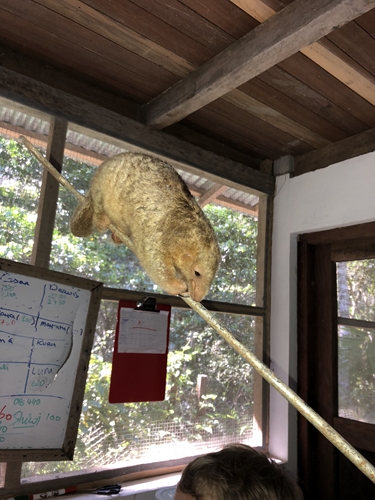
In the hospital but only for a short stay was a pygmy-anteater, captured by some people from Bello Horizonte who were cutting down a tree. Although she has an adorable arrival that made the volunteers go “aww”, she could be quite aggressive. After inspecting her we concluded she was healthy and so we decided to release her into the wild again almost immediately. Sometimes this is for the best as we never want to risk acclimatizing a wild animal to people. But her capture didn’t seem to bother her and she climbed up the tree slowly but surely, enjoying her regained freedom.

Icarus, exploring bigger cage

A more permanent cage has been made for two ruddy ground doves that were brought here by one of the workers. Their mother was in a fight with a duck which was trying to get to the young birds. The doves are in between nestlings and fledglings, which is why they still need to learn how to peck food from the ground. Birds as young as these get cold easily and so it is important to provide them with sufficient warmth during the night. Unfortunately, one of the doves did not survive. The other dove, Icarus, is doing very well. The question still remains as to whether we will be able to release it, or if it will be too tame to survive in the wild.

In memory of Lulu

Lulu, a two-toed Hoffman sloth arrived at our rescue centre in August 2016. Sadly in May of this year she passed away. Lulu was confiscated from the illegal wildlife trade and brought to  Esperanza Verde as a small baby. Our dedicated team hand-raised her; they bottle fed her milk, taught her which leaves to eat and eventually successfully released her back into our protected area of jungle. She always stayed nearby and unfortunately life in the jungle can be cruel. Despite our best efforts one day Lulu was taken ill and later died. During her time at EV she was a favourite of many volunteers and will be dearly missed.

Kees Kampschuur and Irene Bonte share their memories :

In memorandum of Lulu, the two-toed sloth.

Just back from Namibia we have red the sad news that Lulu suddenly passed away. That is really sad news, especially for all the volunteers and the family who has taken care of Lulu.
During our stay at EV I was asked to take care of Lulu because we stay longer than most of the other volunteers. This means cleaning her cage, feeding her, walking wit Lulu around my neck around EV, teaching her to climb in a tree, showing her which leaves she could eat. (both with help from Kayla and Marlon)

I never took care of a tow-toed sloth. So Oliva shows me how to act like a sloth mother. For example, take her out of her cage, carrying her and feeding her. The feeding is special; you could not  feed her like a monkey or a dog. First you have to put your nose against her nose (eskimo-kiss) and make noises (smacking of the lips). Than give her some vegetables or leaves and she started to eat.

After some days Lulu start to recognize me. When she saw me, or heard me, she came to the door of her cage and her handling became easily.

In the beginning Lulu only hang around my neck. We feed her in the clinic and take her for a walk outside. When I stood still next to a tree she did not want to climb into it.
After some days she reach out to a branch touch it but hold the other arm firmly around my neck.
But she gets more and more interested in the branches and the trees In the beginning she hangs at a branch for a minute or two and then come back to me. Or she heard a strange noise and the return really quick to me. Later on, she started to enjoy climbing in a tree. First low and nearby, later high up in a tree climbing from one to the other. For me this means standing under the tree for hours and looking which way she goes.

In a certain week it was raining day after day. Lulu was kept close to the clinic.
instead of going for a walk, because I was told she didn’t like rain. But after the third day I took her under my raincoat for a walk. Only her head was outside the raincoat. In the beginning she hangs there quietly, but after a little bit more than 10 minutes she became restless. She wants to go out and want to climb.
I bring her to one of her favorite trees and there she goes. After more than two hours (I was already soaking wet) she returns.

At the end of our period as volunteers at EV Lulu spend almost a full day in the trees.
Climbing for one to another giving me and the other volunteers a head time to follow her on the ground. For me It was a great joy the experience of teaching her and to see her development.

When we were back in the Netherlands we follow her development true the monthly updates. We were happy for her that she was released in August 2017 but after some weeks under surveillance because of her weight. And then the sad news was there: Lulu suddenly passed away.

Irene and Kees
The Netherlands

Esperanza Verde Update / April 2018

Life in the jungle is getting even cozier than usual ! With a large number of volunteers now it means we have more time for enrichment and other projects. We also started new wall painting at the Almacén (the food storage room), which will be done in the upcoming weeks. Some early preparations have also been made for a few new construction projects, which we hope to be able to tell you more about in the not too distant future.

The winning enrichment

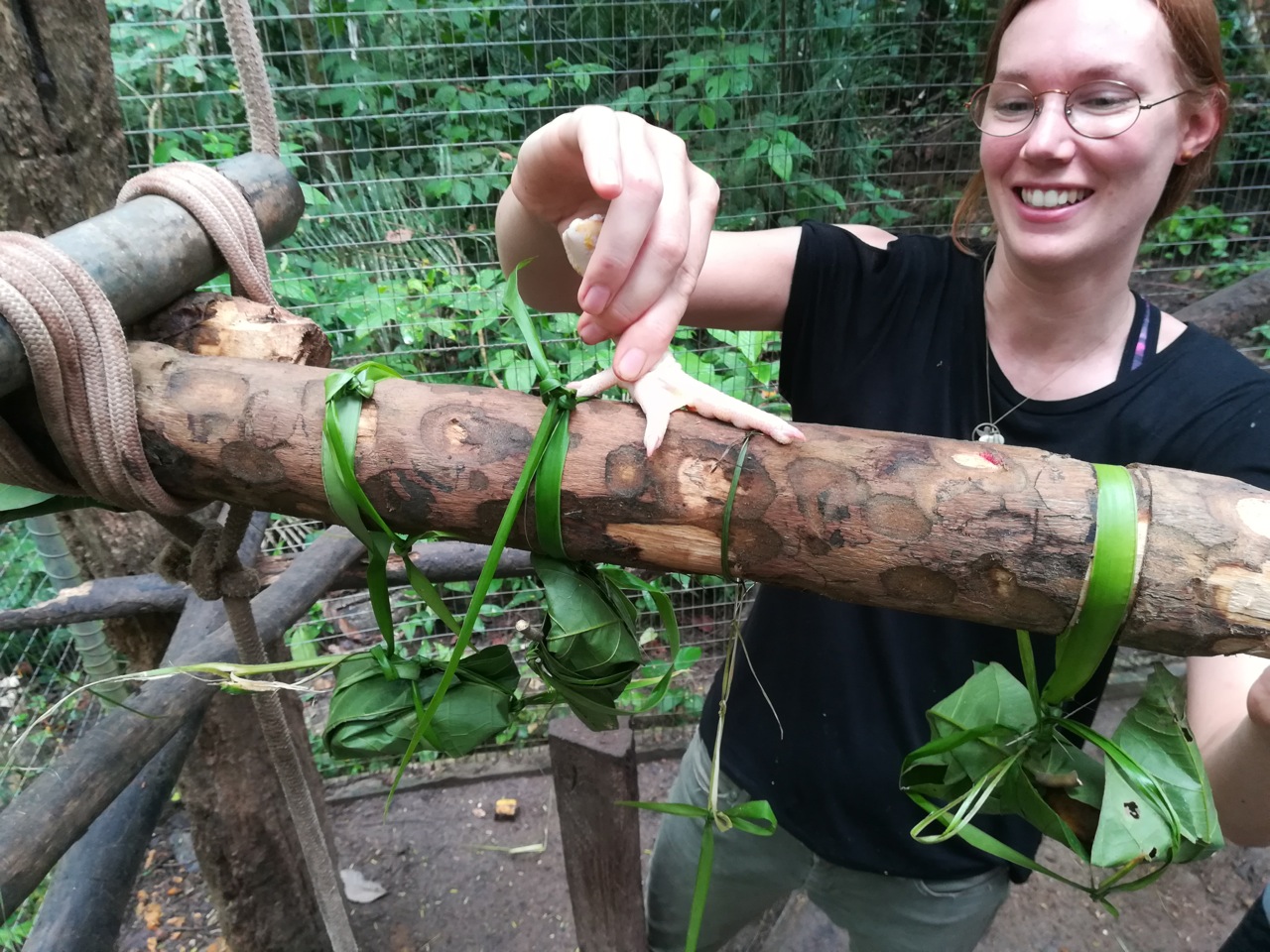
In addition, we started the month with an enrichment competition between all the volunteers, divided into two teams. Team A made an enrichment game with peanuts for the Aviary cage and team B created a hanging playing obstacle with leaf food packages for Ruena, our tayra. Though it was a friendly competition, there can only be one winner. Our esteemed and objective judges, Olivia and Douwe, eventually gave team B the prize. The prize consisted of the most valuable product one can find at Esperanza Verde: chocolate sweets!

.

Monkeys

Tawaki on the ground

Tawaki, our male baby woolly monkey, is still being trained to sleep in the safety of the trees instead of on the ground. So far, he is making slow process.
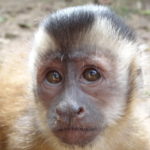
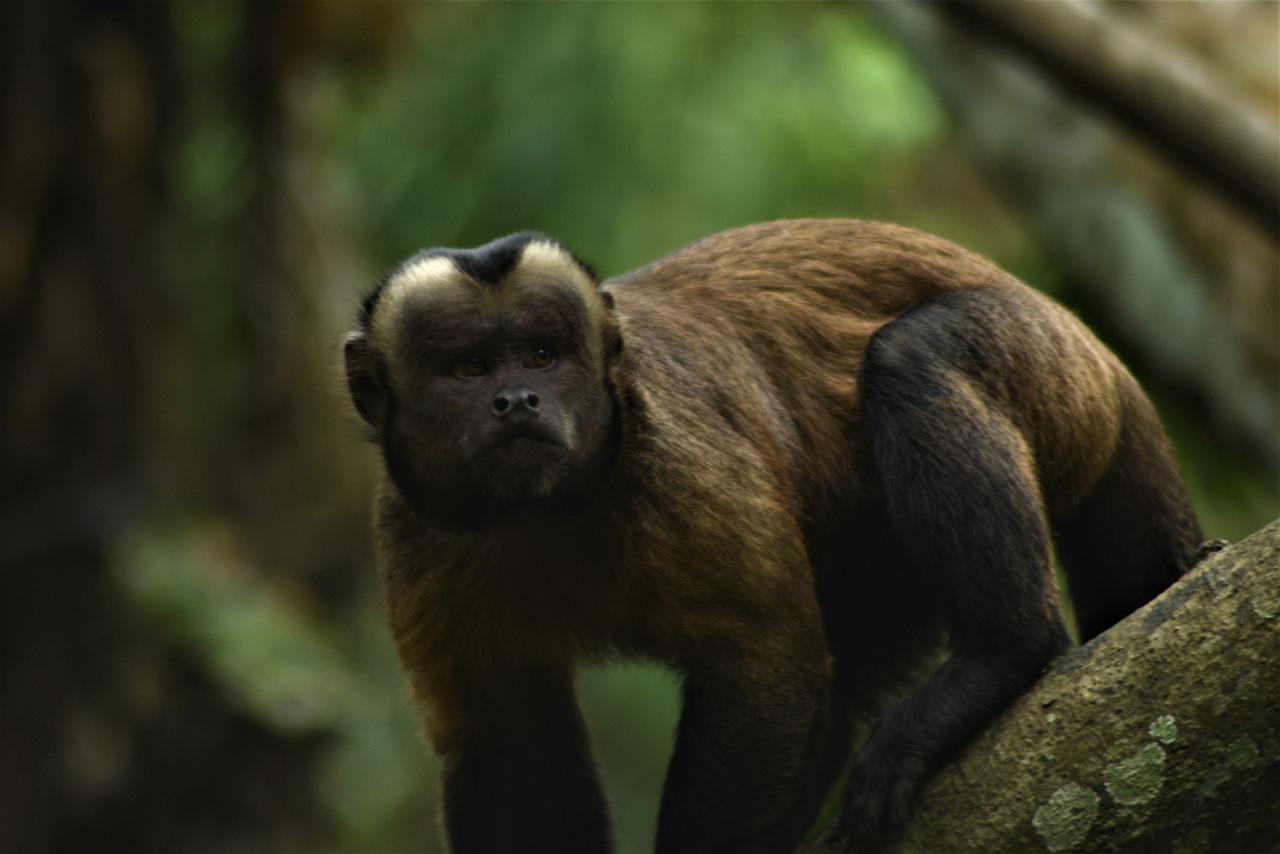
Mica, one of the adult female brown capuchins, received treatment for botflies (who lay eggs under the skin of different animals), however the larvae were already gone when we cleaned out the skin on her side.

Samara

Samara, an older female woolly monkey was treated for P. Elegans, a species of parasites in the intestines which caused her to lose fur on her legs.

Luna drinking her milk

Luna and Otis, two Night Monkeys are still doing well in the outside Lucia cage. They are not big enough yet to be released, but we hope it wont be too long. Luna has not been gaining any weight over the past couple of weeks, so for now we have to keep a close eye on her.

Cesar, young male howler

The howler monkeys, Darwin, Kaya and Caeser, have also been making small steps toward release. They are staying outside of their cage during lunch time and even during the night more and more. Caeser and Kaya especially are often unwilling to come down when we call them, which is the first sign of them becoming independent.

Maku, alfa male of the capuchins

.

Other Mammals

Ruena in her cage

Douwe has started to do the first walks outside with Ruena, a Tayra. She is kept in an enclosure currently and desperately needs the enrichment! Tayra’s are a species that would normally maintain relatively large home ranges, with areas of up to 24km2 having been recorded. Her enthusiasm is definitely not contained by the fact that she is being walked on a leash. She is exploring her surroundings with lots of interest and excitement.
Recently we had a sudden medical situation with one of the peccaries: Quintisha appeared to bleed from her nose and was breathing very heavily. We are not entirely sure what she is suffering from, as it is difficult to inspect her properly and we can only observe from the outside and often from a distance. We think she has some type of infection in her nose. She has been receiving antibiotics, first orally but later by injections with darts as she was not swallowing the oral medication. She is doing a little better, but is still under close observation.

.

SUST Animal Orphan Hospital

Ronya on leafwalk

Ronya is still going on leaf walks with the volunteers every day, and she has started to climb a little. She is still quite nervous and very attached to the volunteers, but she does show more and more interest in the outside world. She is also learning to adjust to male volunteers, as it has often been difficult for male volunteers to hold her or even feed her. Slowly though, our guys have started to win her trust.

Ermina in the clinic after operation

Ermina, one of the macaws, has been bullied a lot by the other birds over the past couple of weeks, especially by the other two macaws, Ruiz and Mabu. At one point, we had to remove her from the Aviary cage and take her into one of the cages in the clinic. She had an impressive puncture wound on her beak, received by one of the macaws. The damage was repaired as well as possible and she received antibiotics. She is currently doing very well in the clinic, while regaining her strength and enjoying her own space and all of the extra attention.

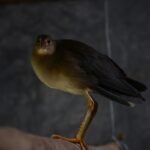
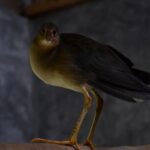
Koru, the purple gallinule bird which arrived in February, has been doing very well. So well in fact that he or she was introduced to the Aviary, the big bird cage. As far as we can tell, he has been having the time of his life, chasing down insects, hiding in the bushes and taking lots of baths in the pond. If he keeps doing great, he will stay in the Aviary permanently, as he would be too tame to survive in the outside world.

Esperanza Verde Update – March 2018

Lots of work with fewer volunteers means that the main focus of the project turns to feeding and taking care of the animals. Since we were joined by several new volunteers, more time is available for the important extra tasks, such as enrichment for the animals, constructions or maintenance. This month we also had the pleasure of being visited by Philipp Zerbe, the president of the international EV-association and veterinarian, his parents and his brother Adrian (also former volunteer of EV).

Monkeys

Darwin enjoying a tomatoe

Tawaki and Naka, the baby male and female woolly monkeys, are now staying outside for the whole night. Naka does not have any problems with this, but Tawaki needs a little bit more time to get used to it. He is now in a training period to teach him to sleep in the trees and not on the floor.
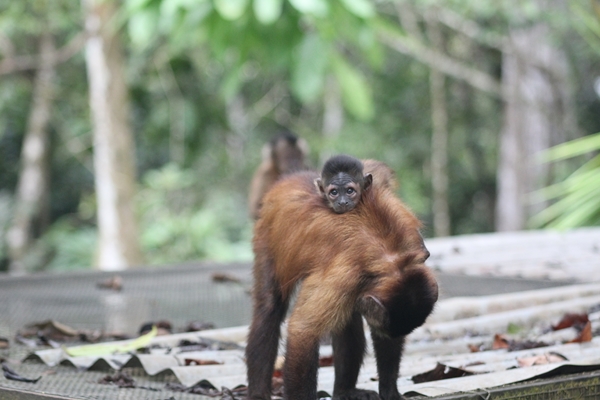
Mayantu also stays outside for the whole day and night. She likes to be carried by Kress, another female capuchin, who is only a bit bigger, and also hangs out with Macu, the wild male capuchin.

Luna and Otis, the baby night monkeys, are living together in the Lucia cage now. Luna is already drinking out of a bowl, but Otis is still drinking his milk out of the bottle.

Other Mammals

Lulu, the two-toed sloth, who was released some time ago, recently made an appearance and was weighed. As her weight was low, we made the decision to take her into the clinic for observation. Sadly and very suddenly she passed away. She was at Esperanza Verde for 1,5 years, and we will all miss her a lot.

Elmo happy outside

On the positive side, Elmo, the other two-toed sloth who was released years ago, showed up to check if any food was available for him. Last time we saw him was almost a year ago! He looked healthy and left a day later.
Ruena is doing fine and we hope to start the training for her future release soon. Until then, we try to keep her busy with enrichment to prevent her from getting bored.


SUST Animal Orphan Hospital

Philipp Zerbe, who has been part of the EV-family now for years now, recently visited us for a few weeks. We got a lot of work done thank to him as he likes to keep us all busy! Sitting still is not one of his best qualities but we love him for it! Thank you Philipp and Susy Utzinger for all the material you donated to our clinic.
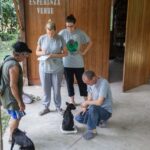
Tara, the family dog, needed a castration, so who better to do this than our most trusted veterinarian, Philipp! Philipp and Douwe went to the village to deparasite several dogs, and gave our volunteers some training in hygiene and enrichment for animals. The volunteers also joined Philipp on several of his night walks. Thank you Philipp, for always being there for us. You are the best!
Ronya, the baby capuchin, is growing bigger and bigger. Last month, she was moved to a bigger enclosure inside the clinic. Every day, she is taken on the leaf walk with a volunteer. During our walks we try to stimulate her to climb in the trees. Although still a bit afraid, she does her best and is starting to climb the trees more often.

Koru, the purple gallinule bird which arrived last month, is growing really fast. However, he is still not as big as his feet suggest he should be. He already has his adult feathers and wings and he is sleeping on top of the branches in his cage. Soon we will have to decide where we will bring him, as releasing is not an option anymore for such a tame bird.

In Memory of Churi

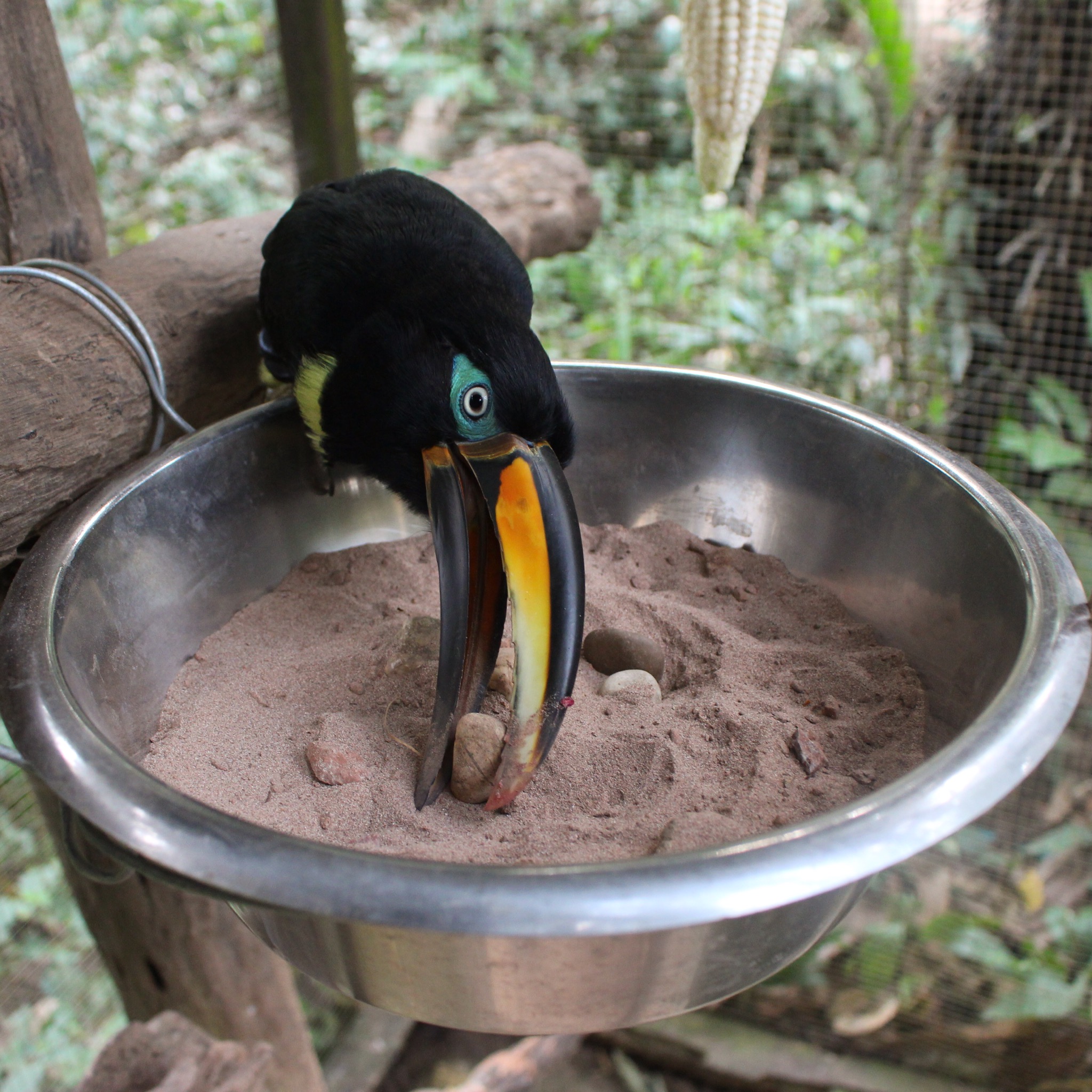
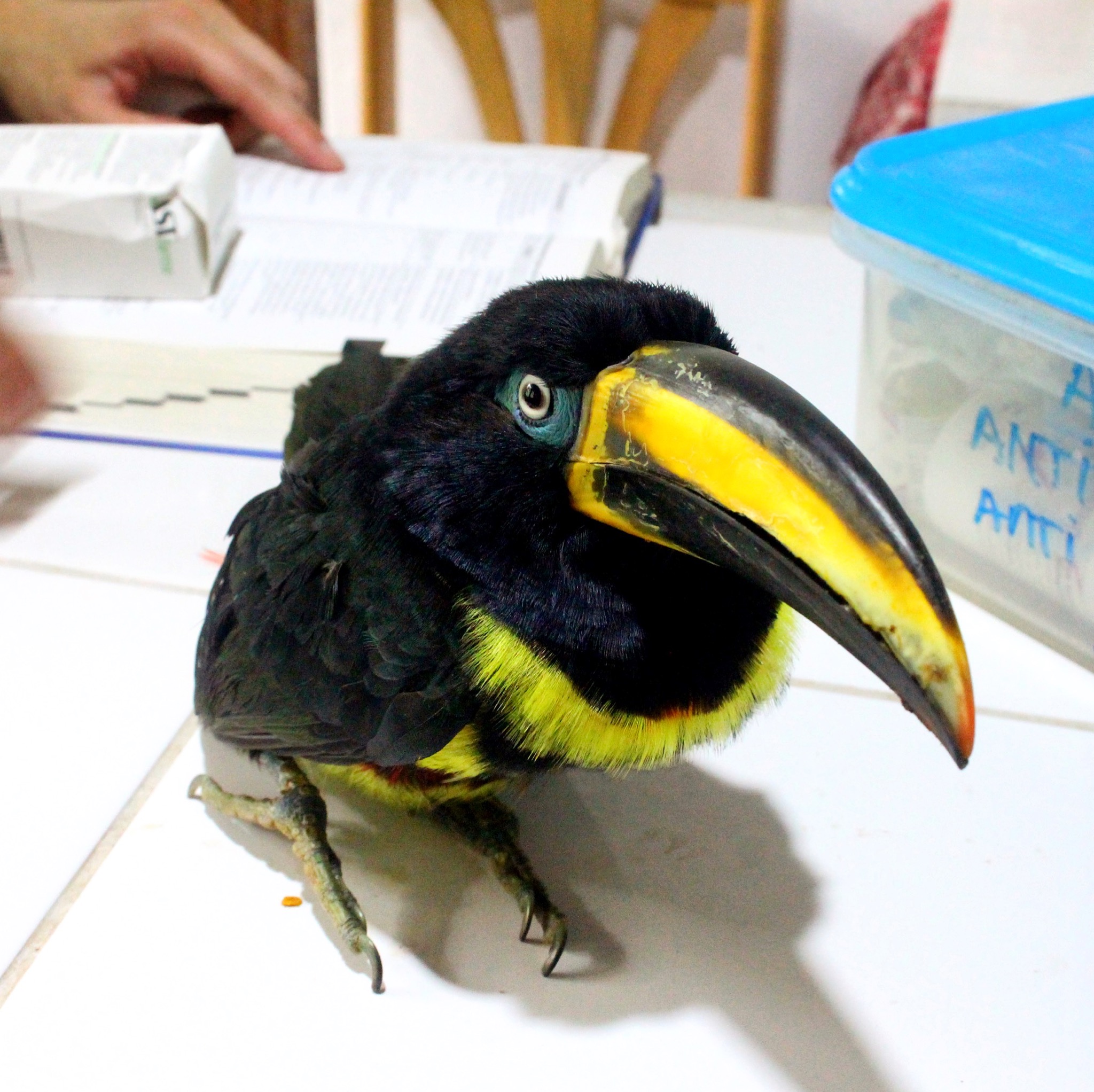
Churi, a many-banded aracari arrived at our rescue centre in February 2016. Sadly in January of this year he passed away. Churi was confiscated from the illegal wildlife trade and later brought to Esperanza Verde by the local authorities. Unfortunately his species is not native to our region and so he could not be released back into the wild. During his time at EV he was a favourite of many volunteers and will be dearly missed. Kees Kampschuur and Irene Bonte share their memories :

Churi has passed away.

We have red the sad news about Churi in the update Januari 2018 while we are volunteering in Namibia. I still remember the first time I entered his (or is it her?) cage with a plate of food. It was my first or second day as volunteer. I was told before that it was a friendly bird, a little bit lonesome, so he needed more attention than others. It was not possible to set him free because he was to much focused on humans. Besides that this kind of aracari doesn’t lives in the Esperanza part of Peru.

With that information I entered the cage. Suddenly Churi came out of a corner and jump on the plate. I didn’t expect that, so everything (including Churi) fell on the ground. Fortunately I only let the plate go and didn’t move; Churi sat on the ground just between my feet, looking in my direction and the look in his eyes told me; “Got you!”

After that experience I first look where he was sitting, so I knew from which side he will come. Most of the time he jumped on my arm and than start eating from his plate. Sometimes he sits on my arm and looked to the food and than to me. That was repeated several times. And suddenly I knew; I had to feed to him. Okay it takes some time but why not.

After he has eat his meal. He turned his back to me. I gently pat him ons his back. From his reaction I knew he liked it. And when he likes it, he makes a funny low sound, snoring almost like when you are patting a cat.

We became good friends. If I had some spare time I went to Churi’s cage. Sometimes I took some fruit with me, to hide in his cage or put in one of my shirt pockets. He must find the food. When he smells it, he became excited and try to find out how to get the food.

After a while Churi recognise me and talk “Aracari” to me when he saw me or heard me. At his cage I answered in a combination of Dutch, some English an a little Spanish or making soft click sounds. It must be looking strange. But Churi look to me if he understood me.

As I mentioned before we became good friends. This was quite handy when I want to take some pictures of him. So with my camera I entered the cage. He looks at me and than at the camera, maybe thinking;”That is a strange thing to hide food. Never seen that before, lets have a look.” So he sits quietly and I was able to take some nice pictures.

Because of the fact that he was alone we tried to set him in the cage with the parrots and later with the parakeets. Both didn’t work out, so he returned to his own cage. Somewhere in October 2017 we heard that Churi has an infection on one of his feet and was getting a treatment. Unfortunately the infection took his life. What is staying behind are the memories and of course the pictures.

Kees and Irene

Esperanza Verde Update / February 2018

It has been a busy month at EV in which even Douwe and Geiler got to join in the feeding-tours. Rainy season is in full swing, but luckily the mosquito population has decreased.

.
Monkeys

Nera (female adult capuchin) gave birth this month to a healthy baby, of which the gender is still unknown.
Milana, the baby of Mica is growing fast, and has even been seen carried by the alpha male Maku, which is not an ordinary thing within capuchins.
It is amazing to walk outside at EV and see all these monkeys of different species swinging through the trees. We now have 14 brown capuchins, 2 white-fronted capuchins, 12 woolly monkeys, 4 howler monkeys, 3 spider monkeys and 1 night monkey. So far they all get along well.
Of course there are some quarrels but our ‘king’ Kamari (alpha male woolly monkey) has it all under control. The three howler monkeys, Darwin, Cesar, and Kaya (only female) are doing well within the group. They are outside during the day and sleep at night in the Roko-cage. There they are joined by Mayantu (female young brown capuchin) at night. All four happily in a sleeping box! The now young night monkey Luna (female) has been moved to an outside cage to get acquainted with the outside monkeys.
Sira (our outside female night monkey) has been visiting her already. Otis, the young male is still being kept at the family house but is brought daily to spend some time with Luna, till he moves around confident enough to join her full time.

.

Other Mammals

We hardly every mention them but our peccaries Quintisha, Kohana and Timo, are doing well. We tried moving them to the Rincay-enclosure, so we could move Ringo (male deer) to theirs, but they wouldn’t have it. They are strong willed and are very capable of digging under the fence to get back to their own enclosure! So for now we have given up trying, and Ringo stays (temporarily) in the enclosure surrounding the family house.
Rabito (male deer) is doing fine in the deer enclosure. Unfortunately he still copes with a skin problem, so we decide to stall the introduction of Ringo for now.
Ruena (female tayra) was moved to the Zambo-cage, and has been taken on her first walk outside with Douwe to get to know the forest.
After a full recovery and gaining sufficient weight, Lulu (female two-toed sloth) has been released again.
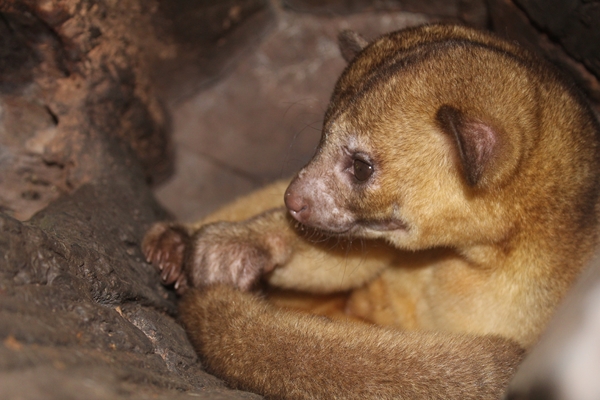
Kila and Kiko (female and male kinkajous) have been released again, and so far so good. We found out that Kila has been in a fight with an adult wild female, and we just hope that at some point they come to an understanding!

.

Birds

Neo (orange winged amazon) has found the company of the two white-eyed parakeets (one of them a well-known bird named Pichu) in the non-flyer cage (IGOR). For some time there was a white-eyed parakeet on the outside. We assume this is one of a group which we released more than a year ago, and decide to visit his old friends.

.

SUST Animal Orphan Hospital

With the three howler monkeys, Darwin, Cesar, and Kaya having moved out, as well as Ruena and Lulu gone, the clinic has been quiet for a while. However even with most of the cages empty in is still always busy enough at the clinic. Milk is being prepared and distributed from there, faeces samples are being examined, and a general deworming of all outside monkeys has been carried out.
New young Ronya (female brown capuchin baby) has been moved permanently to a small cage in the clinic, and is taken on daily walks through the forest.
For a week we closed in Samara, Uma and Maruja. Especially Samara had several botflies and lost a lot of weight. All three were treated for Prosthenorchis Elegans, a parasite that regularly causes health problems and is very difficult to get rid of.

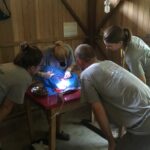
Donna Simmons (an Australian veterinarian and old friend) came back for a visit, and together with Douwe and Janneke (our student volunteer) they performed several castrations of dogs in the village. Several families from the village have been asking for our help, so as soon as Donna arrived we put her skills to good use. We set up an operation table in our building in the village. Thank you Donna for doing a great job!

.

New Arrivals at the Hospital

Koru, purple swamphen

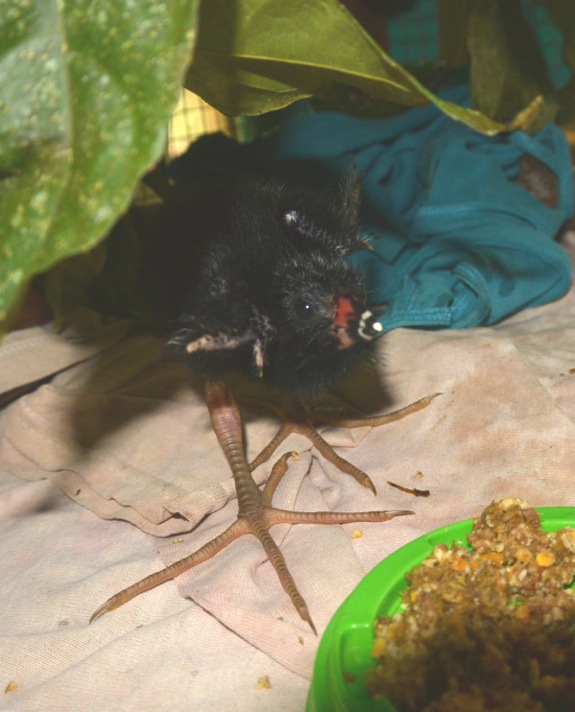
One new arrival this month was Koru, a purple gallinule or purple swamphen. It is very young and still has baby feathers, so it was taken in at the family house for intensive care. After a week he or she was already eating on their own and could be moved to the clinic.

Esperanza Verde Update / January 2018

2018 at Esperanza Verde is off to a busy start! With both new animals and old animals, exciting things are always happening here.

.
Monkeys

Milana, baby of Mica

Mica (female adult capuchin) and her baby which has been named Milana (female) are doing great! They are both healthy and Milana was recently seen spending time off of her mother and practicing pushing up on her arms which is excellent progress for such a young capuchin.

Loki taking care of Tawaki
Kamari and Tawaki, Wallace in the back

Tawaki and Naka (woolly monkeys) are also doing well. They spend their days outside playing and exploring with the other monkeys and go to sleep at night in Pepe cage.

Otis, male baby nightmonkey
Luna

The two baby night monkeys, Luna (female) and Otis (male), are still being kept at the family house but now spend some time each night in an outside cage with a volunteer to help them get used of being outside. Luna will be the first to be moved outside and Otis will soon follow once he grows a bit bigger.

.

Other Mammals

Rufus, just before release

We are excited to announce that Rufus (wild male porcupine) has successfully been released from Zambo cage into the wild with his tail healed! Good job Douwe and Donna!
Lulu (female two-toed sloth) has unexpectedly had to return to the clinic due to an abscess in her nose. She is currently receiving antibiotics and being monitored.

Kila in the trunk

Due to Kila being found with an injured tail, both her and Kiko (both kinkajous) have been enclosed but she has just completed getting treatment and they are going to be let out again so they can roam in the area around their cage.

.

Birds

We have some very sad news that unfortunately Churi (many-banded aracari) has passed away. We know this news will be sad for many volunteers as it has been for us: he will be greatly missed. He had ongoing problems with his feet which seemed to be doing well for a while but in the end took his life.

.

Reptiles

Vivil (male yellow-footed tortoise) just completed his three month quarantine and is now parasite free. He has been moved to the reptile cage to be with the other tortoises.

.

SUST Animal Orphan Hospital

The three howler monkeys, Darwin, Cesar, and Kaya (only female) have been doing great. They are currently transitioning out of the clinic into Roko cage full time. They have been spending most of their days outside playing and climbing with the other monkeys.
Mayantu (female young capuchin) has also been spending most of her days outside but still sleeps in the clinic. She often joins the capuchin group outside and stays with them for long periods of time playing and following the group.

.

New Arrivals at the Hospital

On a recent trip to Pucallpa the ministry gave three new animals to Esperanza Verde. The animals were donated to the ministry after a recent campaign working to educate people on why wild animals’ shouldn´t be kept as pets.

Ronya

The first is a baby female capuchin (on arrival about 6 weeks old) that is doing very well. She has just received a name after much collaboration and will be called Ronya. She is currently being cared for by volunteers at the volunteer house at night and then in the clinic during the day.
The second was a baby male tamandua which unfortunately passed away a few days after arriving possibly due to an infection in his intestines.

Ruena, female tayra

And thirdly we received a young female tayra that has been named Ruena. She has been keeping the volunteers busy trying to come up with new enrichment to satisfy her high energy. Ruena is completing a quarantine period in the clinic after which she will be moved to the Zambo cage. From there we will start to introduce her to daily walks through the forest.

.

Volunteers

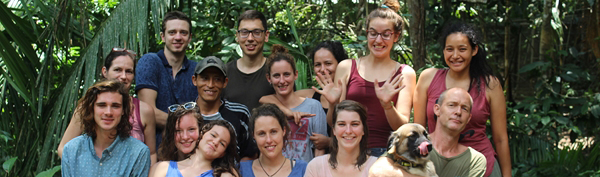
Our happy volunteers

Annual Newsletter 2017

This annual newsletter comes to you in a new form and layout. We decided to share with you only the most important happenings over the last year, as the rest is shared with you through our regular  month-updates on our blog.

We received very good news from our Communications Manager in England, Lauren Young, that Lush Cosmetics was willing to finance several of the necessary constructions. Some that have been  finalized are the new deer enclosure for Rabito and Ringo, the reptile pond and a new release cage for small mammals/birds. Thank you Lush Cosmetics !

From Holland we got news from the  “Jaap van de Graaf” foundation for the welfare of animals. They decided to contribute to the welfare of the animals at Esperanza Verde with a huge donation for the general animal care taking. After meeting them in Holland, they decided to help us build the so much needed quarantine and as if this was not enough they also committed to helping us  with the general animal caretaking costs for the next three years! Thank you foundation “Jaap van de Graaf” !

Thanks to the continuous support of the Susy Utzinger Stifting, in Switzerland, we have been helping many animals in the clinic. This year the “Susy Utzinger Stiftung” also financed one of our  release cages, the Tiliku cage. Thank you !

But not all was good this year, as we had some severe loses, some of them happening within a month. We had to say goodbye to one of our favorites, our beloved tapir Rincay. As well ZamboWillow and Camila were among the ones we lost in this short time. Those moments make it very hard; especially with the ones we so intensively took care for in the beginning and were doing so  well.

Unfortunately the illegal animal trade is still a huge problem so there is not much time to mourn. When new animals, arrive, we get up and start helping again. And thanks to all the hard working  and dedicated volunteers and support from outside, morally as well as financially we can make a change for so many animals.

.

construction mini Constructions

Thanks to several donations we have been able to build the following enclosures and buildings :

– Reconstruction of the turtle pond in the reptile cage.
– A deer enclosure, for our two male deer, Rabito and Ringo.
– A guesthouse for special visits from outside Peru or within Peru, e.g. veterinarians, people from the Ministry, etc.
– A new release-cage for birds or small mammals.
– A storage building with two compartments, one for human food supplies and one for the tools for constructions.
– Reparation of the Rincay and Xena enclosures.

.

vet copie SUST Animal Orphan Hospital

Our clinic was never empty. It has been very often used as quarantine for new animals, but also served for many treatments necessary for our resident animals. It made us realize how important it  is becoming that we start planning for a real quarantine. With the amount of resident animals growing, it is necessary to keep a strict separation from those animals with new animals.
Thanks to Susy Utzinger, we are now also able to help the dogs and cats in the village. As we did last year we had a deworming campaign in the village, Bello Horizonte. Many people came with  their dogs or cats, and it was a big success. Not only because we could deworm so many, but as important is the educational aspect of the campaign. Making people aware of the importance of taking good care of their pets is a first start in giving all animals a better life. We will now make this a yearly campaign as part of the SUST clinic at  Esperanza Verde.

.

new copie New Animals

From December 2016 till December 2017 we have received a total of 65 new animals. 29 animals arrived from the Ministry of Flora and Fauna in Pucallpa, their origin mainly being confiscated within the illegal trade (on markets). 36 animals arrived from private persons, mainly from people who live in the surrounding (from Bello Horizonte to Curimana) who had them as pets. Two were born at Esperanza Verde. For more specific details on each individual you can read their story in our blog on our website.

monkey copie Mammals (41) :

– 4 Howler monkeys (Alouatta sara), 3 males (Wallace, Darwin, Cesar), 1 female (Kaya).
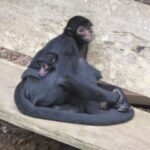
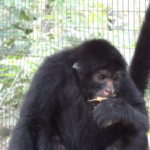
– 2 Spider monkeys (Ateles chamek), 1 female (Cumala), and her son (Cuma), about to be released in the centre.
– 1 White fronted capuchin (Cebus albifrons), Kaito, released and disappeared.
– 8 Brown capuchins (Cebus apella), 7 females (Rioma, Tisha, Lia, Selma, Mayantu, Kres, Kurima), 1 male (Capu). Except for Selma, who dissapeared after release and Mayantu, who is a baby and thus still under intensive care, the rest is together with the rest of the monkeys outside.
– 6 Common woolly monkeys (Lagotrix lagotricha), 3 females (Uma, Maruja, Naka), 3 males (Loki, Monano, Tawaki). Tawaki and Naka are still in an outside cage, while the rest already joined the outside group.
– 2 Saddleback tamarins (Saguinus fuscicollis), 2 males (Tokay, Tiriko), released.
– 3 Squirrel monkey (Saimiri sciureus boliviensis), 2 females (Noema, released, Culina (born at EV, mother Camila), 1 unknown (born at EV, mother Silvana).
– 2 Night monkeys (Aotus micomax), 1 female (Luna), 1 male (Otis)
– 1 Armadillo (Dasypus novemcinctus), female, died after several days.
– 2 Tamandua (anteater, Tamandua tetradactyla), 2 females (Tamana, unnamed) released.
– 8 American Opossums (Didelphils marsupialis), 3 died, 5 released
– 1 Giant anteater (Myrmecophaga tridactyla), released.
– 1 Olingo (Bassaricyon alleni), male (Ossi), released.

Getting to know howler monkeys !

A lot of this year was about howler monkeys, starting with the arrival of Wallace in January. As we already had several, not so good, experiences with howler monkeys, we were determined to make  it work this time. Luckily Wallace arrived already pretty healthy, and he has been growing nicely. He has been some time (several months) under intensive care of Alex (our long-term Head  Volunteer/Assistant). He is now outside and living well with the other monkeys. Recently he broke one of his arm bones, most likely from a fall. But this does not get him down, and he slowly is able to use his arm again, and is still happily outside playing with the woollies. With the success of Wallace, we felt we would be ready for others. Well it did not take long, and as if we were tested, we received within a month three new howler monkeys, Darwin, Cesar and Kaya. Darwin and Cesar were doing well together, while Kaya had health issues from the beginning. As soon as Kaya got better, Cesar started having problems. They have been on and off in intensive care of Claire (who took over after Alex left), Olivia and volunteers. At the moment both are gaining a bit of weight,  and seem to do better. Darwin in between this all, stayed healthy and is happily playing in the clinic. He is the one who is less attached to humans. We often have seen this, that the animals less  attached to humans are the stronger ones. This is one of the reasons, we have a non-touching policy, meaning that as soon as we can (health wise, and age wise) we will leave the care of a monkey to the other monkeys. This way they learn best how to behave and where to find good food and shelter. For now all three howler monkeys, stay during the day in one of the clinic cages, together with Mayantu (the female baby brown capuchin). A volunteer sits with them several times a day to stimulate them to eat. Once a day they are all taken to the baby monkey outside cage (at this moment with Tawaki and Naka, two woolly monkeys), and once they are taken to the plantation to climb and find some wild leaves themselves. During the night Cesar and Kaya stay in a sleeping box at Douwe and Olivia’s house, while Darwin and Mayantu are in the clinic. We really hope they all will get totally healthy soon, and are able to join Wallace and the other monkeys outside. So far so good……

birds copie Birds (18) :

– 1 Orange winged amazon (Amazona amazonica), Neo, will be joining the non-flyers in an outside cage soon.
– 1 Bat falcon (Falco rufigularis), released, after recovery of a hurt wing.
– 1 Common potoo (Nyctibius griseus), died.
– 6 Ruddy ground doves (Columbina talpacoti), 3 released, 2 died, 1 enclosed in non-flyers cage.
– 2 Palm tanagers (Thraupis palmarum), 1 died, 1 in non-flyers cage.
– 1 Seedeater sp. (Sporophila sp.), died.
– 1 Black fronted nunbird (Manosa nigrifrons), died.
– 2 Hoatzins (Opisthocomus hoazin), died.
– 2 Purple gallinule (Porphyrio martinica), died.
– 1 Shiny cowbird (Molothrus bonariensi), fledging, waiting for release.

Baby birds.

Most of the birds we receive come from people in the village. Most come as nestlings, like the hoatzins, and the gallinules, very young, and very sensitive. The outcome is always unsure, as it all  depends on the state of the animal at arrival and the adaptation to the handling and the diet. Sometimes it happens that a bird nest fell out of a tree, while someone was cutting the tree, or playing  in it. Unfortunately the hoatzins and gallinule, died within the first days of arrival, while several doves and the tanagers were raised till they could fly and some even be released. Sometimes birds  are shot down with catapults, one of the favourite toys of local children. Last year we had a few, this year one. Our children who attend the local school might have helped encourage this decline,  we do hope so, as it would mean children take care more of animals, and see that they, as we, can hurt. This said, we can see the, although sometimes small, change there is in people around us.  They see us care for all these animals, come and visit us, and see the efforts we take for helping these animals.

reptile copie Reptiles (6) :
– 4 Yellow footed tortoises (Chelonoidis denticulata), 1 released, 2 in reptile enclosure, 1 in quarantine.
– 1 Twist-necked turtle (Platemys platycephala), released.
– 1 Common toad-headed turtle (Phrynops nasutus), released.

Pinto, the painted tortoise.

Well sometimes people do funny things. First, take a tortoise as a pet, ok this is maybe understandably, but then why not paint it! This is how a yellow footed tortoise of 150 grams, came to us, fully  colored, and a foot hurt by a lawnmower. His wound recovered well, and after cleaning his carapace he is now roaming around with the other tortoises in the reptile enclosure.

.

sloth copie How are all  the “old” animals ?

Elmo, male two-toed sloth Even though he is no longer a resident at Esperanza Verde, roaming around as he wishes in the forest, Elmo is spotted from time to time. On one of these occasions, we  had the opportunity to weigh him. We were glad to see that he is doing really well! It was a joyful moment for Olivia, Douwe and the volunteers to see the result of such a successful release. We also took the moment to introduce Lulu, female two-toed sloth, to him. They seemed friendly towards each other, with Lulu licking Elmo’s nose. We hope that Lulu’s release will be as successful  and she can find a friend in Elmo.

Jordi, our male brown capuchin, disappeared. We believe he is still alive, and even might have been seen by Machico, while out in the forest planting trees. Although it is hard to distinguish all those different monkeys, Jordi has been so long with us, and Machico knew him well. We believe he might have been chased away by our new comer from the wild : Maku, a fully adult male and wild capuchin. He found himself a kingdom here, with so many females to take care of ! He directly got busy and impregnated three of our female capuchins, Mica, Nera and Tisha.

Mica, who was the very first monkey to arrive at our Rescue Centre, gave birth to a healthy baby just before Christmas! We were so joyful to see a capuchin monkey who we hand raised, successfully bring a new life into the wild monkey troop.

Of course there are many more to write about, but for this we ask you to visit our blog and find the animal you want to know more about. If you can’t find anything feel free to write us. We are always happy to tell you their story.

.

mammal copie Animals we have had to say goodbye to

After almost seven years we had to say goodbye to our beloved tapir, Rincay. After a month of illness, treatments, consults with several veterinarians, we took the tough decision to help him go. We  still miss him dearly, his whistles, his splashes in the water, him laying down for a nice petting……

Willow (male woolly monkey) disappeared mysteriously one day, and although we of course hope he is fine, realistically we doubt his days ended well. After searching for him for several days we  had to give up. He was a bully at times, but so great with all the new young monkeys. Kamari is now on his own as big chief for the woollies.

Seven months after giving birth to her first baby, Camila died of defensive wounds. Most likely bitten by one of the male squirrel monkeys, during mating season. We found her dead on the floor in  the morning. Her daughter has been taken care for by Nikita, a female brown capuchin, and we hope she is doing well. It is hard to recognize her, as Camila did a great job. Culina, as we named her, is not at all tame, as her mother was when she arrived in 2012.

Zambo, our partly blind tayra, did not come back after one of his walks with a volunteer. Although searching for him for some days, there was no sign. He normally always would return, so we  feared for the worst. A month later we heard from a local that his dog got into a fight with a tayra. We had to assume this was Zambo, and he most likely was too hurt to be able to return home.

.

volunteer copie Volunteers and Work

Esperanza Verde now is supported by several foundations and associations within Europe, set up by several volunteers, so it was time to bring all heads together ! Philipp arranged we could all  meet and stay in Switzerland. As Olivia was visiting Holland, several meetings were arranged, including meeting with Susy Utzinger. We started at the Zurich Zoo, being guided by Nadja and  Philipp. It was great being there, thank you for your many interesting and funny explanations! During the meeting representatives of the Dutch foundation, the English foundation, the Swiss and  the German association, as well as our webmasters all came together to get to know each other, as well as to talk about several issues for the future for Esperanza Verde. Thank you Susy Utzinger  for making your office available for our meeting and inviting us to a beautiful brunch in the Swiss country side. Several old-volunteers joined and later we met at a get-together at Bigna’s place  (thank you for opening your house for us !). It was great to see everybody again ! Thank you Philipp, for the great organization.

Then it was time for a visit to England, with the main reason a visit to the Monkey Sanctuary in Cornwall. Olivia and Lauren had a great meeting with Rachel Hevesi, who has many years of experience working with monkeys, especially woolly monkeys. We learned  a great deal from her, and hope to share our experiences in the future. It is a beautiful place and a great job they are doing there in Looe. Thank you Rachel for giving us so much of your  time and knowledge.

In Holland we had a great reunion with several old-volunteers while having a great meal at Toko Klein Java. Thank you Irene Bonte and Kees Kamschuur for this beautiful afternoon. Last year we  enjoyed having Alex Fredblad from Sweden here. She started as a normal volunteer, went on a holiday, came back, and so she joined us as a long-term volunteer-assistant to Olivia. Thank you Alex for all the good work you have done for us and the animals here. We are happy you decided to stay involved and help Lauren to help EV from out of Europe.

Lauren and Iain from England and two of their good friends Camila and Luke, visited us. Lauren and Iain have been part of Esperanza Verde now for several years, and Lauren has now been our  Communications Manager for some time as a volunteer, looking for sponsors, as well as the big job in handling all the email correspondence with volunteers. They spent several weeks with us,  helping us with all the tasks, as well as preparing another video of Esperanza Verde. Thank you all for your hard work !

And as every year, our loyal volunteer and good friend, Theres, joined us again from Switzerland ! It was perfect timing as we were short of hands with all these baby animals ! With all the work, we did find time to celebrate a typical Dutch holiday : San Nicolas, and had a beautiful evening with gifts and surprises for everyone.

As every year the Ministry of Flora and Fauna will visit us to do their inspection. At this visit in December we got to release the two new spider monkey in semi-captivity, Cumala and Camu.

.

forest copie Selva Dormida, The Sleeping Forest

Selva Dormida, is doing good, and word got out that there is more wildlife around here, as we are taking care of many animals as well as the forest. Of course this should be good news, but not all  people have the same idea as us. Friends in Curimana warned us that there might be others coming to hunt in our area, so we started to arrange more walks by Machico, and put up  several signs along the property. A special walk, with signs (wooden white arrows) was made by Douwe and Marlon, so volunteers can now walk on their own in the forest, and being able to find  their way back! This way it is shown to people that this forest is protected, and should not be disturbed by hunters or loggers. Again this year, as we do every rain season, several young seedlings of wood (200) were planted.

.
family copie Family Life

This year, Olivia went to Europe on her own, leaving Douwe, Kayla and Marlon at home. She had several meetings, while also enjoying the company of friends and family.
Big news is that Kayla will be starting her life in Holland next year. She will finish her high school there, so she will be better prepared for further education. It will be a big change, for her as well as for us as a family.  Olivia’s best friend Catelijne and her husband Ron, children Fee and Lau, were so great to offer her to live with them as a family. Also a big step for them! Thank you so much for taking Kayla in. A  school has been picked, all preparations are made, so in August 2018 Olivia will come to Holland with Kayla and Marlon, and leave Kayla behind. Not only us as a family but also Esperanza Verde  will miss her a lot!
Marlon grew a lot this year, not so much in length, but in character! He is a big talker and can explain you everything about the forest and the animals here. He joins volunteers  regularly on leaf-walks (picking leaves for the howler monkeys or Lulu the sloth), and goes fishing with mostly the guy-volunteers.

.

futureplans copie Future plans and how you can help

Thanks to the Jaap van de Graaf Foundation we now started to plan the construction of the quarantine. This will be the biggest construction after the clinic, for the coming two years.
Another project we now started is the preparations for a manual for Rescue Centres, consisting of several protocols for different species that could be received in a rescue centre like ours. With the help of  several students we now started preparing already some of these protocols. We will work together for the completion with two other rescue centres in Ecuador : Merazonia and amaZOOnico.
If you want to learn something about constructing houses and cages, building a clinic, taking care of different species of animals, living in the jungle, seeing some wildlife, etc., come and help out  or spread the word. If you like animals, enjoy a simpler lifestyle, and you’re not afraid of getting a bit dirty sometimes, come and help out! You don’t need any special skills, just your willpower and  enthusiasm is enough.

You can also help us in other ways :

– Donating, not only for special projects, but also for general caretaking. We always need funding for feeding and maintenance.
– Linking our web page to yours and mentioning us in blogs. Or inviting people to like our facebook page www.facebook.com/esperanzaverdeperuen or our instagram page http://instagram.com/esperanzaverdeperu
– Spreading the word around to people who might be interested in volunteering, or handing out the flyers to people interested in coming to help out, e.g. at universities, schools, or among friends. They are available on the website of the German association.
– Become member of the German or Swiss association, and join the reunions to meet all other volunteers.
– Organizing a fundraising event at your school, work, with friends, or any other activity to raise money (e.g. for a specific project). You can always write to us if you need more information or photos to help you with this.

.

thankyou copie Thank you !

Esperanza Verde would not be possible without all the help we have been receiving, physically, morally and financially.

Volunteers and local helpers

– Thank you to all the volunteers who have stayed with us and helped us in everything :
Liesbeth Ramslag, Niels van Eeten, Linda Koos, Karole Leenen, Jordan Burnett, Jeroen v. Son, Aze Peters, Sanna-Reeta Meihahti, Jennifer Mandersloof, Leontien koene, Vince Mulder, Ridge  Droste, kees Kampschuur, Irene Bronte, Anna Gruyters, Laura Tuk, Winnie Gut, Luke Fiore, Niels de Wit, Quirine Smith, Nina V. Diesen, Mathilde Mombel, Melanie Quartier, Nora Luedi, Sanne Boot, Jolien v. Barlingen, Marlon de Vos, Kaspar Spillman, Lucie Desfarges, Mireille Galonnier, Nicolas Bouille, Robert Jan Driehuis, Twyla Liden, Solene Menard, Robert Hilton, Marlen Pietsch,  Jaqueline Brunmans, Bert-Jane Robbe, Wies Robbe, Peter Adema, Megan Quinn, Andrea Williams, Danielle Johnson, Chase Daftary, Donna Simmons, Philip Stettler, Ben Steiner, Christelle Havegeer, Maelle Idrovo, Evelien v. Maarseveen, Johanna Pirker, Andrew MacNeil, Andreas Gess, Melissa Marmet, Sabine, Pfommer, Kristin Keunen, Chelsea Chagnon, Aruna Fernando, Anne  Swep, Lisette Stock, Luke Hazelwood, Camila Martinez, Brian Esposita, Inge Buitengad, Johanna Karlsson, Marie Batzdorf, Tim Lorenz, Idoia Jauregui, Louen Coupa-Dufau, Louissa Fjellborg, Elodie Sapet, Bradley Carr, Janneke Merkens, Luis Araya Durán, Hannah Kopf, Theres Zigerlig and Harry Tear.
– A special thanks to Alexandra Fredblad who has been now with us almost a year, and is going home for studying. We are sure we will see her back! It is great she is now part of the EV-family !
– Thank you Claire Gilant for joining us again. Claire has been with us for several months in 2015, and is staying with us till January 2018, and come back for a longer period again in May 2018! We are so happy to have her back again and helping us.
– Thank you to our permanent staff : Dona Flor, our cook and help with everything, Machico and Geiler, helping out Douwe in everything, construction, maintenance and more.
– Thank you Dylan Lobaton Garcia, Esperanza Verde’s veterinarian and our good friend, for helping us at all times, and teaching us the Peruvian ways.
– Thank you Enrico Cazullo for your beautiful paintings, you are our artist! Thanks to you, Mica and Camila have a beautiful place in our home.

Support from outside of Peru

– Thank you Philipp Zerbe for being there for us at all times, as adviser, as president of the Swiss Association, as a colleague, a veterinarian and a very good friend. You always have our back, thank you!
– Thank you Lauren Young, for doing such a great job representing us from out of UK. Thank you for always being there for us and volunteering so much time to help us at Esperanza Verde.
– Thank you Lauren Young and Iain Braid for your ongoing support from back home and for keeping our Facebook page live and updated. It was great having you here this year and helping us out with all the work, and you did a lot ! Thank you.
– Thank you Noë Brand and Lukas Bischofsberger for all the hours you spent voluntarily working on our website, as well as on the international for all European support groups. Also thank you to Noë for helping to put together this newsletter.
– Thank you Catelijne Maij-Cortlever for your ongoing financial support for the website.
– Thank you Manuel Krauss for promoting us at the 13th of the Convention on Biodiversity that took place on December 2016, in Mexico.
– Thank you Laurie Vaxelaire for the beautiful design for our first official EV-t- shirts.

Support from other organisations

– Thank you Susy Utzinger and the Susy Utzinger Stiftung für Tierschutz for your ongoing support and help at all times. Thank you for financing the Tiliku-enclosure and and your ongoing support for the SUST Animal Orphan Hospital. Thanks to you we will always be ready with the correct equipment and medicine needed for helping animals here.
Thank you Lush Cosmetics for your generous donations to finance several enclosures at Esperanza Verde; the deer enclosure, the release cage Tupak, the reptile pond and the yet to be build big mammal enclosure.
– Thank you Schweizer Vereinigung für Wild-, Zoo- und Heimtiermedizin for your donation financing a new enclosure.
– Thank you DGHT Zürich for supporting our ongoing effort in rescuing reptiles and amphibia in EV.
– Thank you DELI-CAAT in Amsterdam for selling local Peruvian necklaces and bracelets to support Esperanza Verde.
– Thank you, Lauren Young and Alexandra Fredblad for helping out with this newsletter, writing sections, adjusting text and photos, checking grammar, and the layout.
– Thank you FVV Uni ZH and students of the 4 th year for your generous donation.
– Thank you to the children of the Nuts Basis school Teteringen, Irene Bonte and Kees Kampschuur for getting the start money for the new reptile pond. Because of you it got pushed up on our priority list, and with the donation of Lush Cosmetics we could finish it.
– Thank you Irene Bonte and Kees Kampschuur for collecting money with friends for the very necessary new desks and chairs for the children of the Primary school in Bello Horizonte.
– Thank you Stichting It Eibertshiem in the Netherlands for your generous donation.
– Thank you Bowle-Club Chur for your donation and support.

Donations

– Thank you Erich Hausammann for your generous donation, to help financing the release-cage Tiliku.
– Thank you Tobias Humbel for your generous donation to our organization.
– Thank you Peter de Graaf and Willemijn Bakker for your donations, both financial and materials.
– Thank you Katja Schönbächler for taking over the costs of taking care of Chiquita.
– Thank you Wellantcollege in Gouda, The Netherlands, and veterinarian, Isabelle van Eijk for your generous donation of various material and medications for the animals.
– Thank you Marijn Schrieken, Camila Martinez, Luke Hazelwood, Sean Glynn, George Jesson, Holly Baldock, Corry Stubbs, Philipp Zerbe, Isabelle van Eijk, Louk en Marian Conrads, Susy Utzinger Stiftung, Jorik Kordess, Lodewijk Conrads, Anne-marie Wieringa, Manuel Krauss, Theres Zigerlig, Lauren Young, Iain Braid.
– Thank you to our periodical donators: Jule Ritz, Eva van Andel, Nico von den Benken, Nadja Morf, Annelies Gerber, Trijn Mulder, D.M. de Ron, Eva Hartmann, Susanne Priess, Morgan Roussel, Lena Fredblad.

Advice and support

– Thank you to the Monkey Sanctuary (Wildlife Futures), for your time and knowledge given to us while visiting. Thank you Rachel Hevesi and Tjark Plat for sharing with us your knowledge and time.
– Thank you International Animal Rescue and Alan Knight for your advice and support.
– Thank you Prof Jean-Michel Hatt and the team of the clinic for zoo animals, exotic pets and wildlife for your ongoing support and advice.
– Thank you Dr. Morena Wernick from www.exoticvet.ch for your time, knowledge and help with our special cases.
– Thank you Frank Rietkerk, Anouk Fens and Warner Jens from Apenheul in Holland, for your time, information and advice.

Esperanza Verde International

– In Switzerland we are supported by the Swiss association “Förderverein Esperanza Verde Schweiz”. Thank you Philipp Zerbe, Carole Schuppisser, Lukas Bischofberger, Katja Schönbächler, Bigna Schulthess and Annelies Gerber for all your help, support and work you do. Thank you to all members and donators. We hope we will get many new members this year to support us. Check their website. The association is very active in finding sponsoring for any new project necessary, or material in need at Esperanza Verde. Various people support us surplus to their normal member’s fee : Sabrina Lejeune, Rahel Hufenus, Florian Schärer Florian, Tamara Schwager Juri Dosenbach, Bigna Schulthess, Katja  Schönbächler and Mirjam Bär.
A special thanks to the families Carisch and Schwarzmann. It’s great to have support of all of your family members.
– In Germany we are supported by the German association “Förderverein Esperanza Verde e.V.”. Thank you Jule Ritz and Nico van den Benken for your enthusiasm in helping and supporting us. Thank you also to all members and donators. You can become a member and get regular updates. You can also help them with sponsoring activities, or just get in touch with old volunteers. Membership fees and income of any PR-activities are entirely given to Esperanza Verde. Check their website.
– In Holland we are sponsored by the foundation “Esperanza Verde”. Thank you Sven Groenen and Anne-Marie Wieringa for the time and work you are putting in for Esperanza Verde. All donations are given to Esperanza Verde for projects in needs or materials needed.

.

We want to apologize in advance in case we forgot to mention any supporters, financially or morally. We got a lot of things done with all your help and we will continue to work hard to realize all the things we have been dreaming of…

.

We hope you enjoyed reading all the news from Esperanza Verde and of course we hope to see many of you here (again) in this small paradise in the Peruvian jungle.

.

love copie Abrazos, Douwe, Olivia, Kayla and Marlon.

.

If you want to write us a letter, send a postcard, or send us some local sweets from your country, we are always happy to receive anything :

Esperanza Verde
c/o Olivia Conrads/Douwe Bakker
Apartado 85 (P.O. Box)
Pucallpa, Peru