Blog
Esperanza Verde update / 11.06.16 – 01.07.16
Babies becoming kids, a released animal being attacked, a new part-time daddy is born and an all-time favorite returns for a visit – these are only a few of the last week’s big happenings. As you see, it never gets boring here at Esperanza Verde with all the cages being full and plenty of animals living freely around the house. Everybody is enjoying the beginning of the dry season and the beautiful, peaceful jungle surrounding that makes you feel as far from civilization as only imaginable.
Monkeys
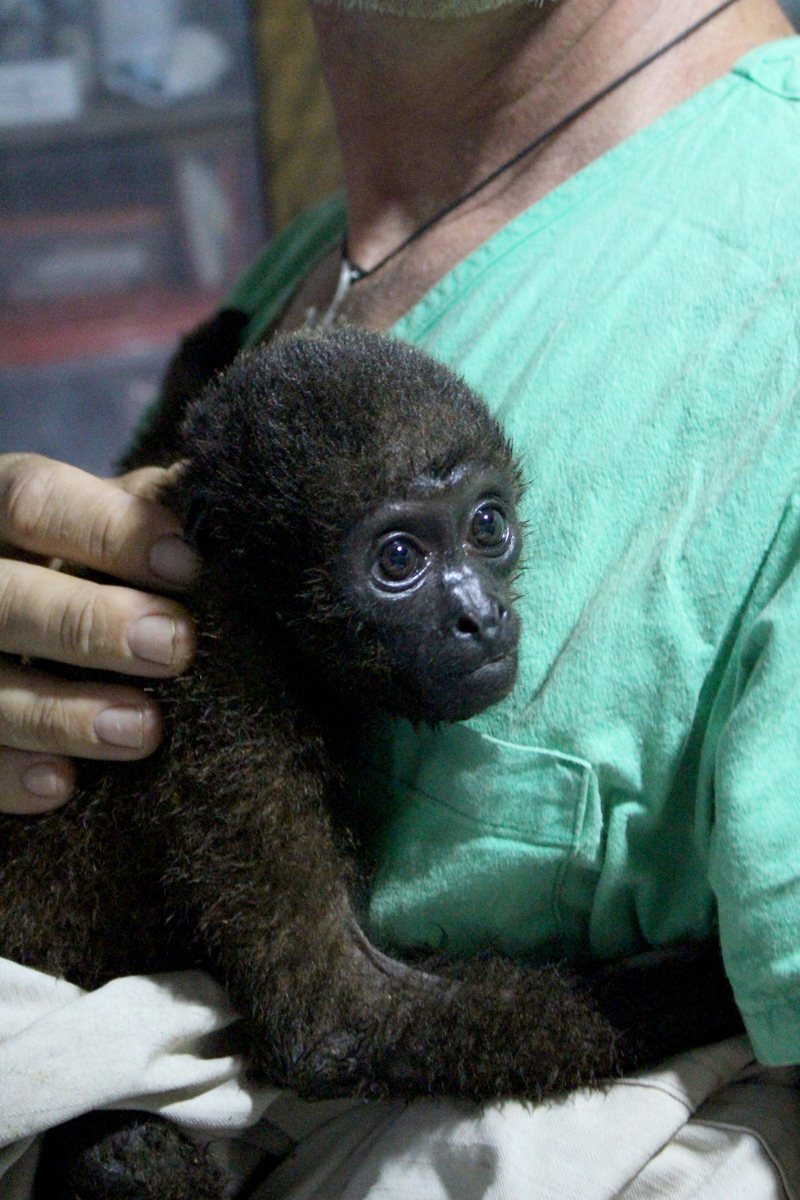
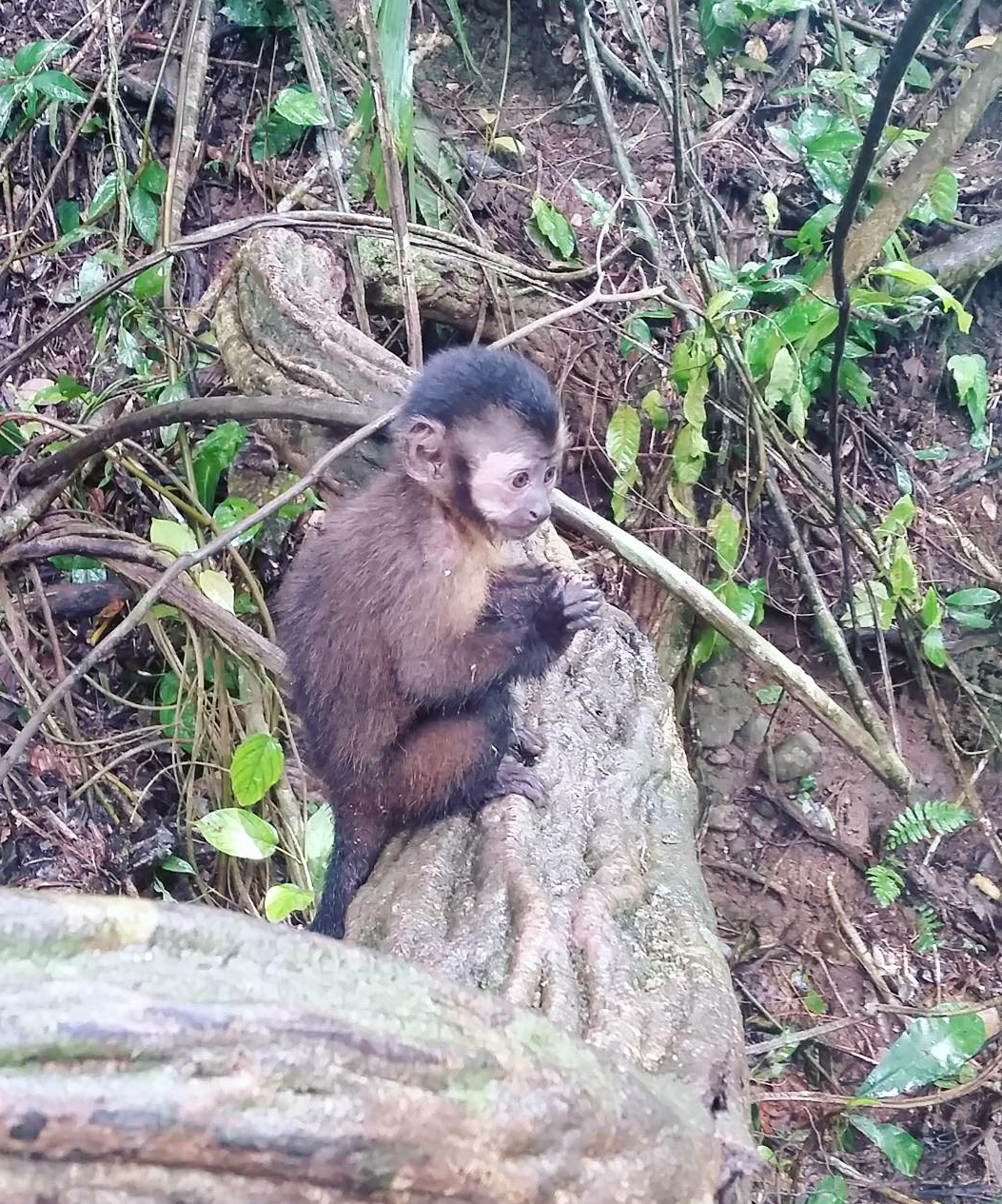
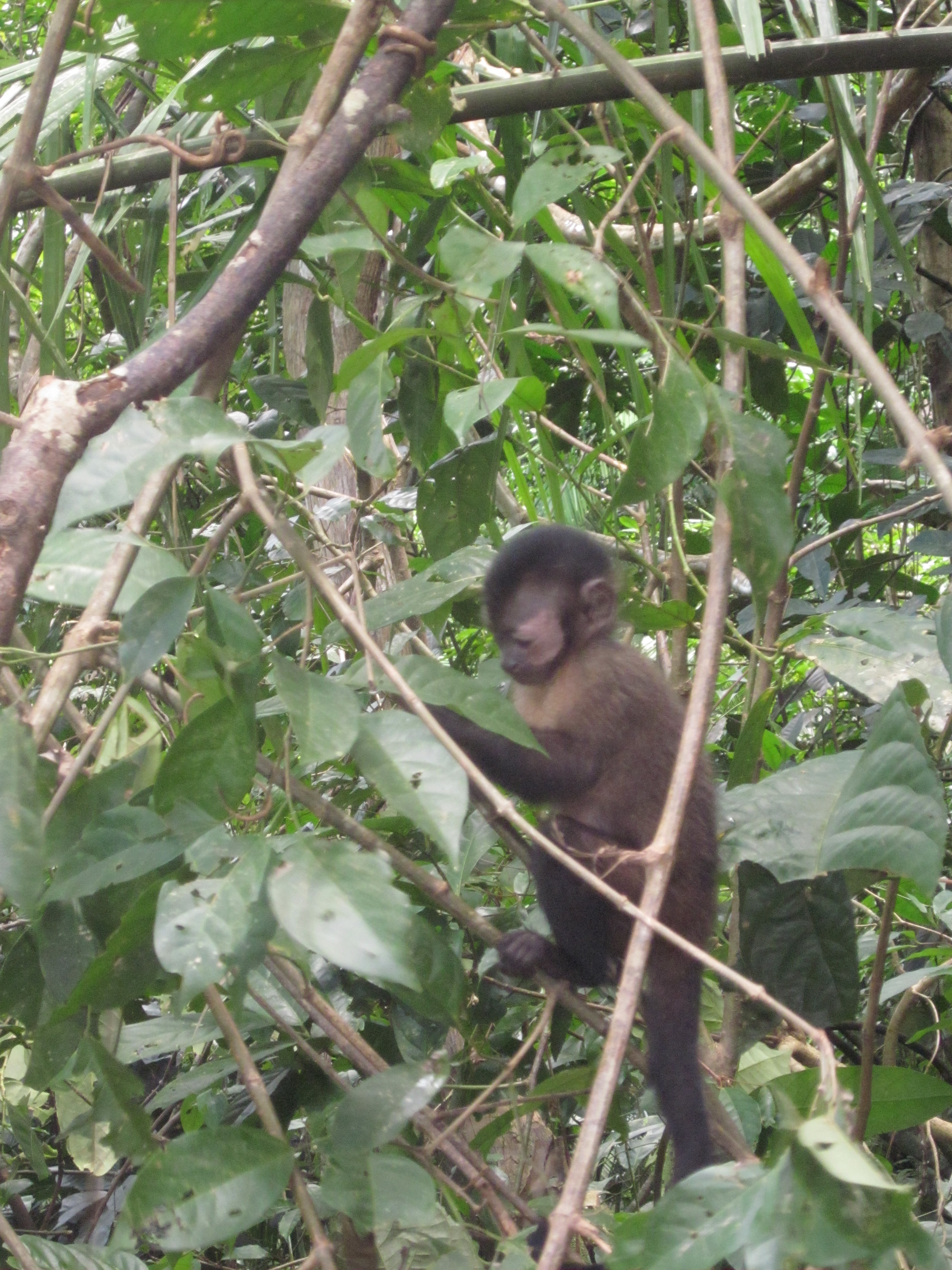
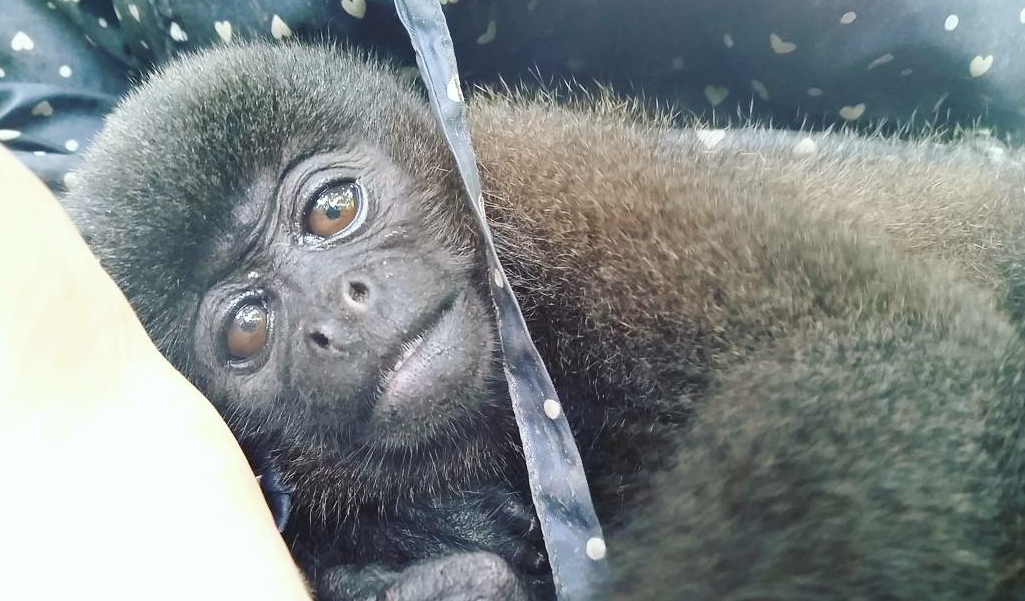
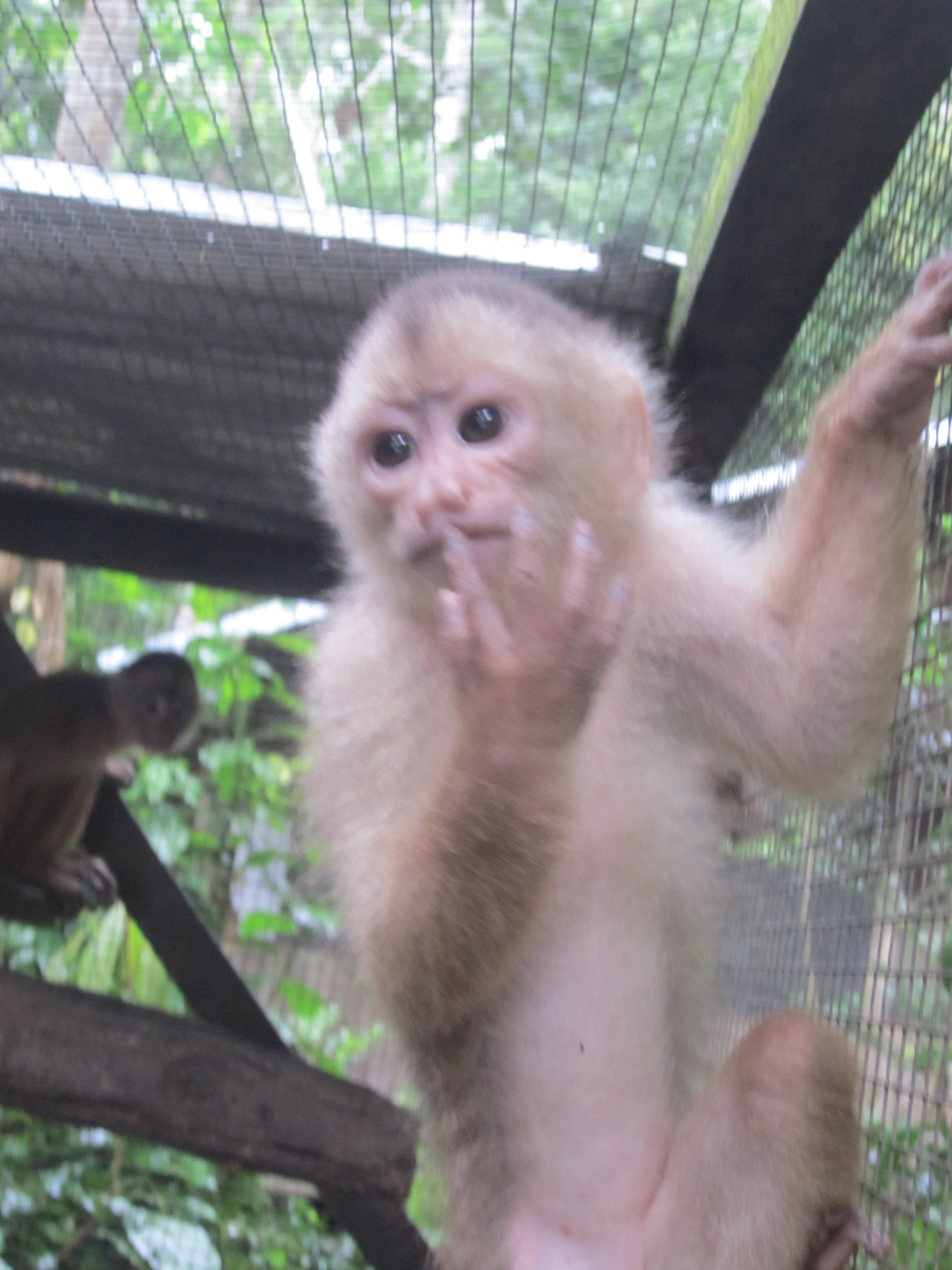
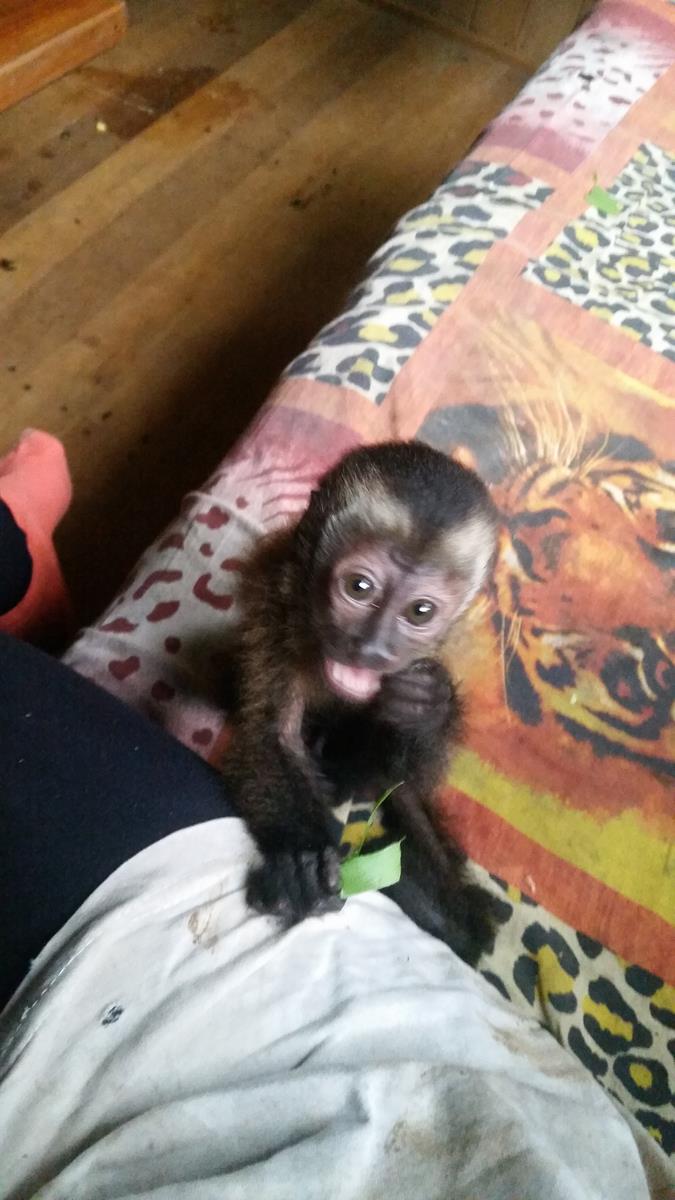
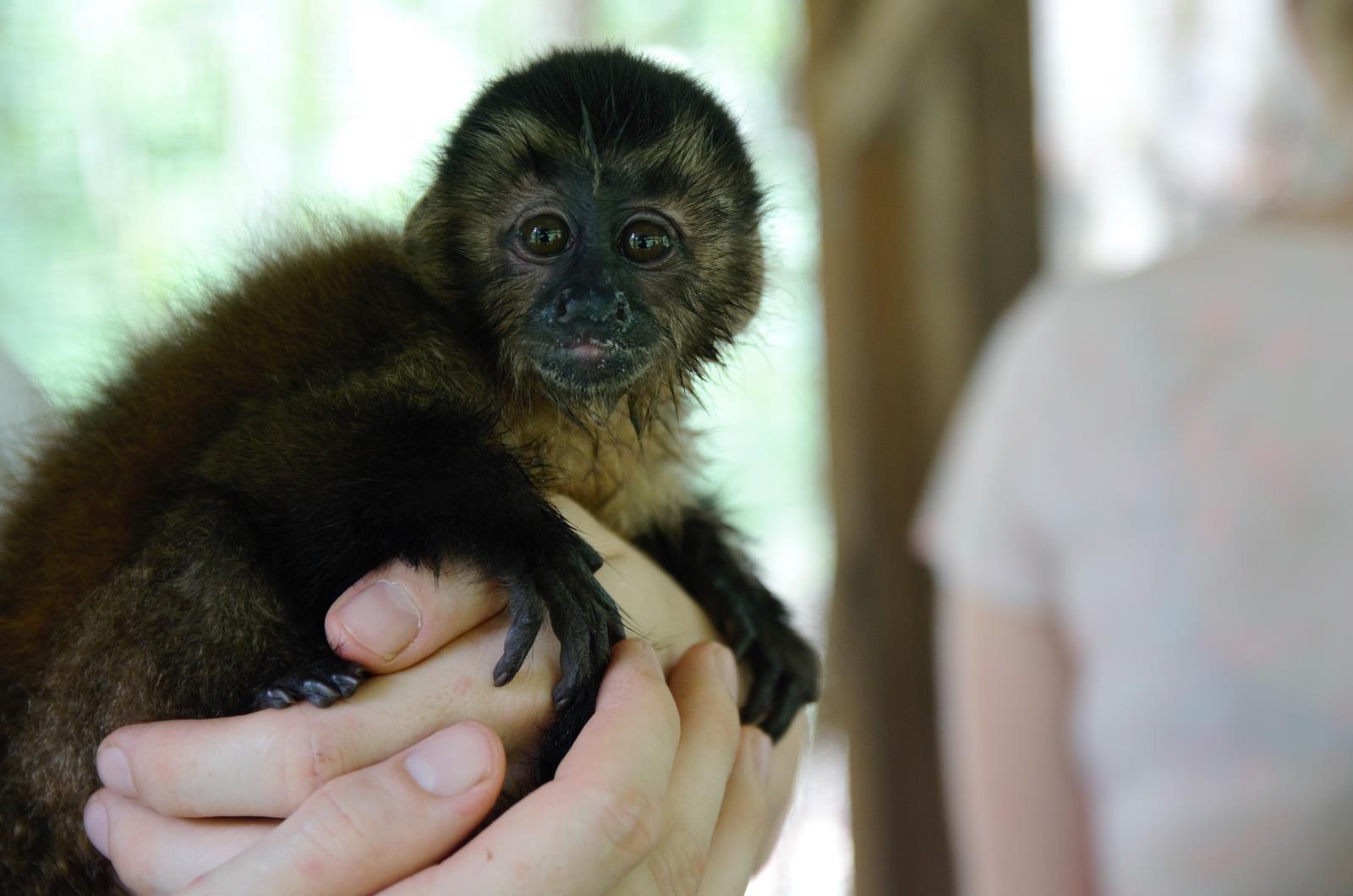
Chiquita (baby female woolly monkey), Khali & Cinty (baby male and female capuchin monkeys)

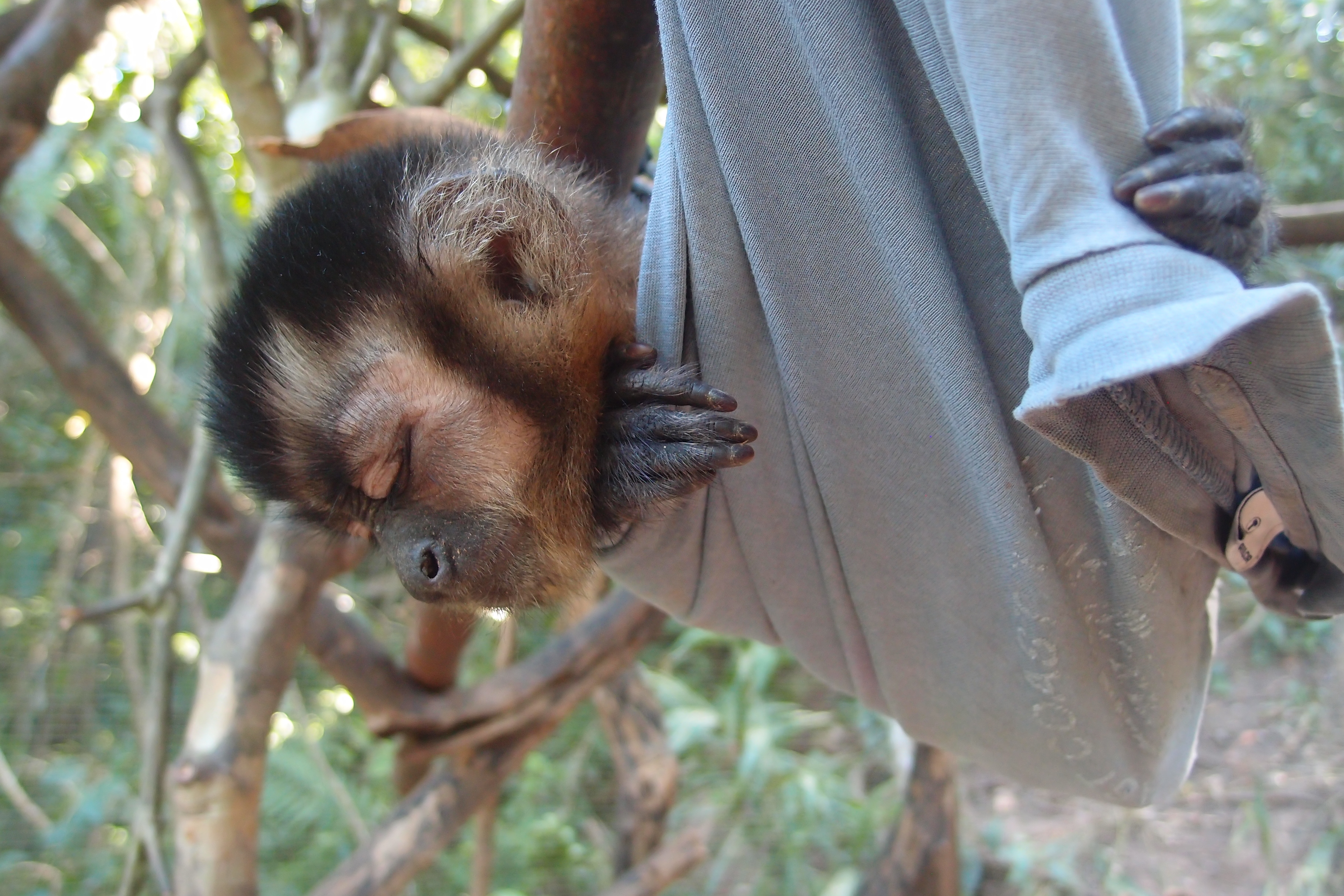
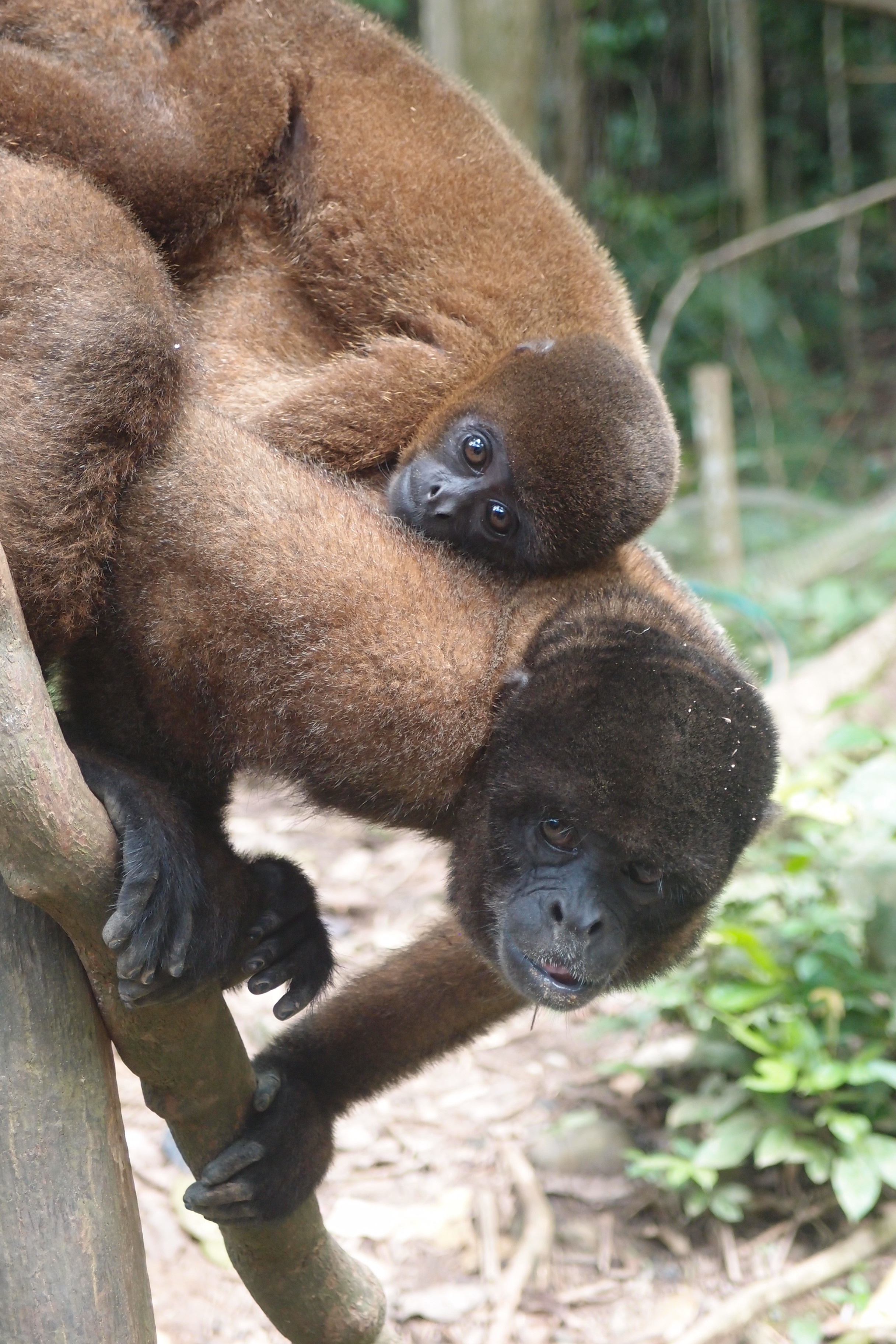
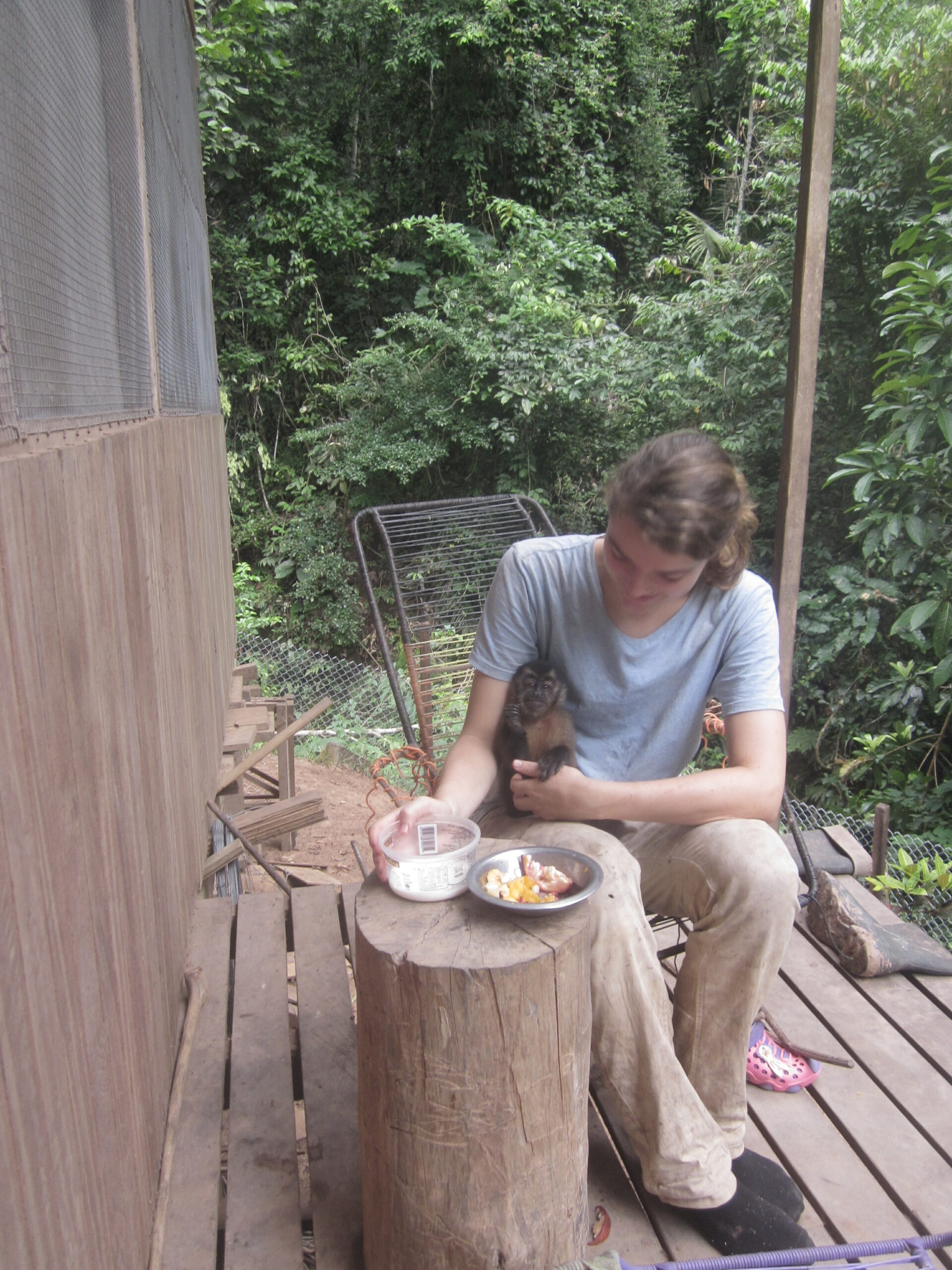
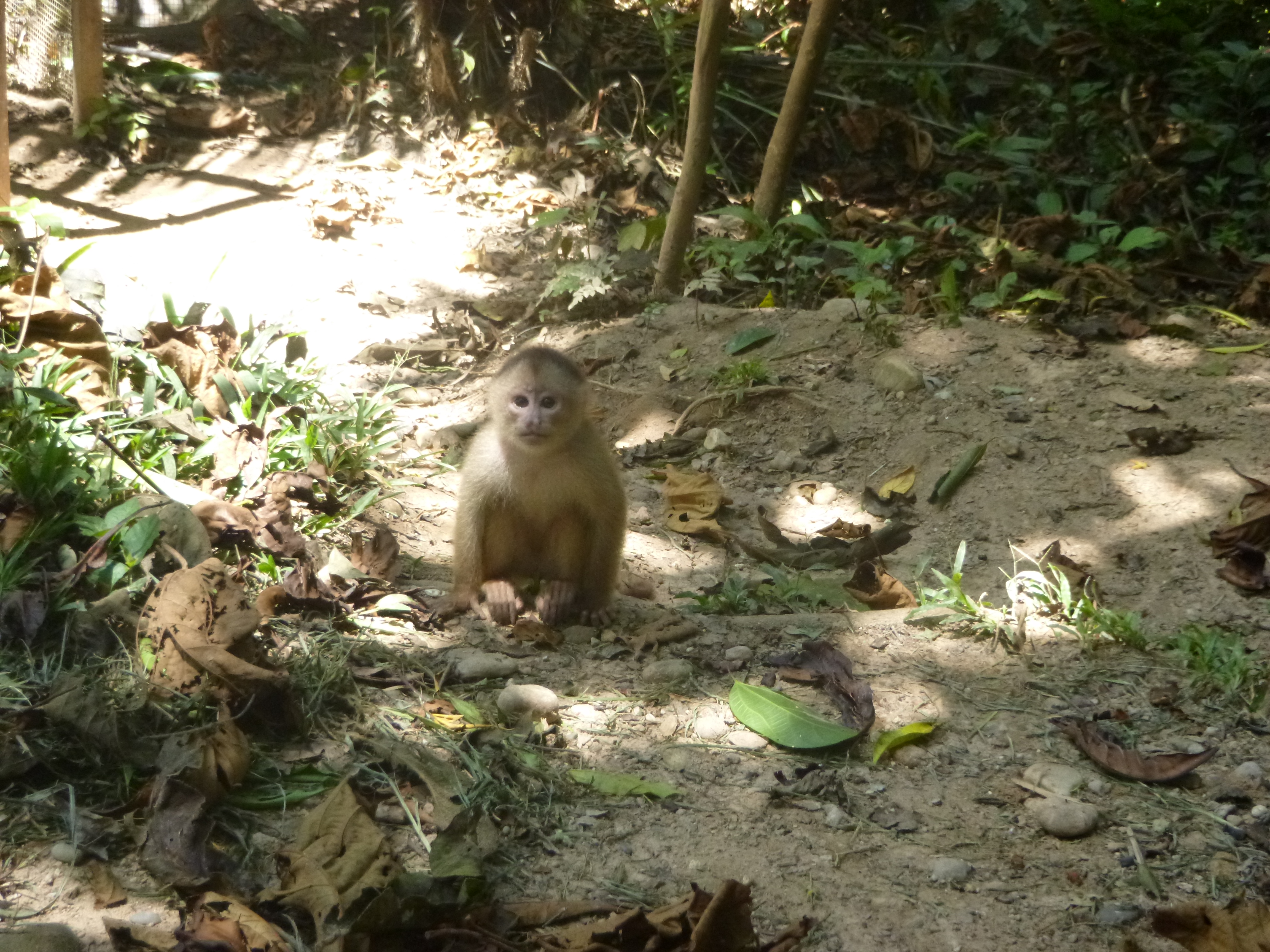
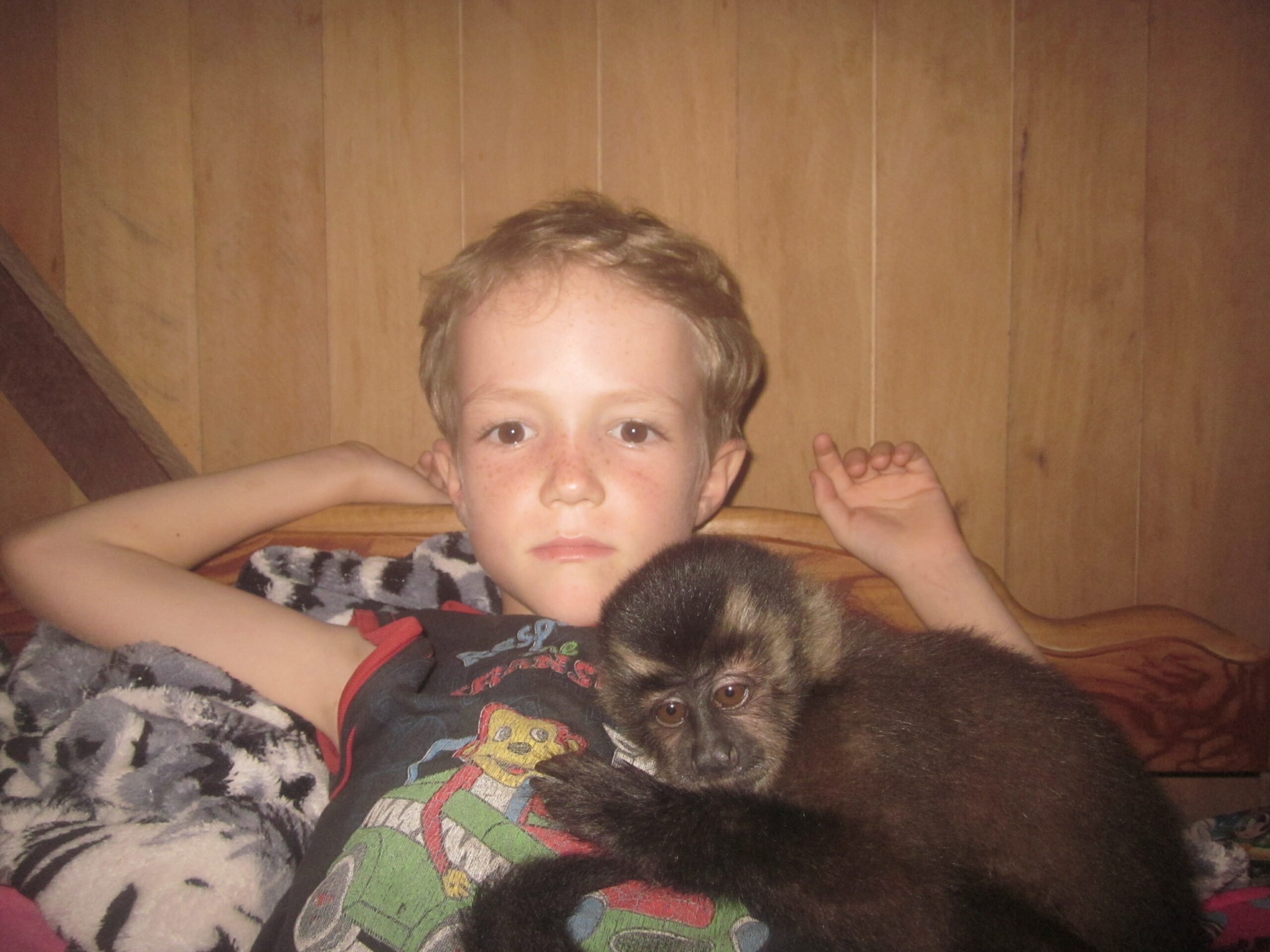
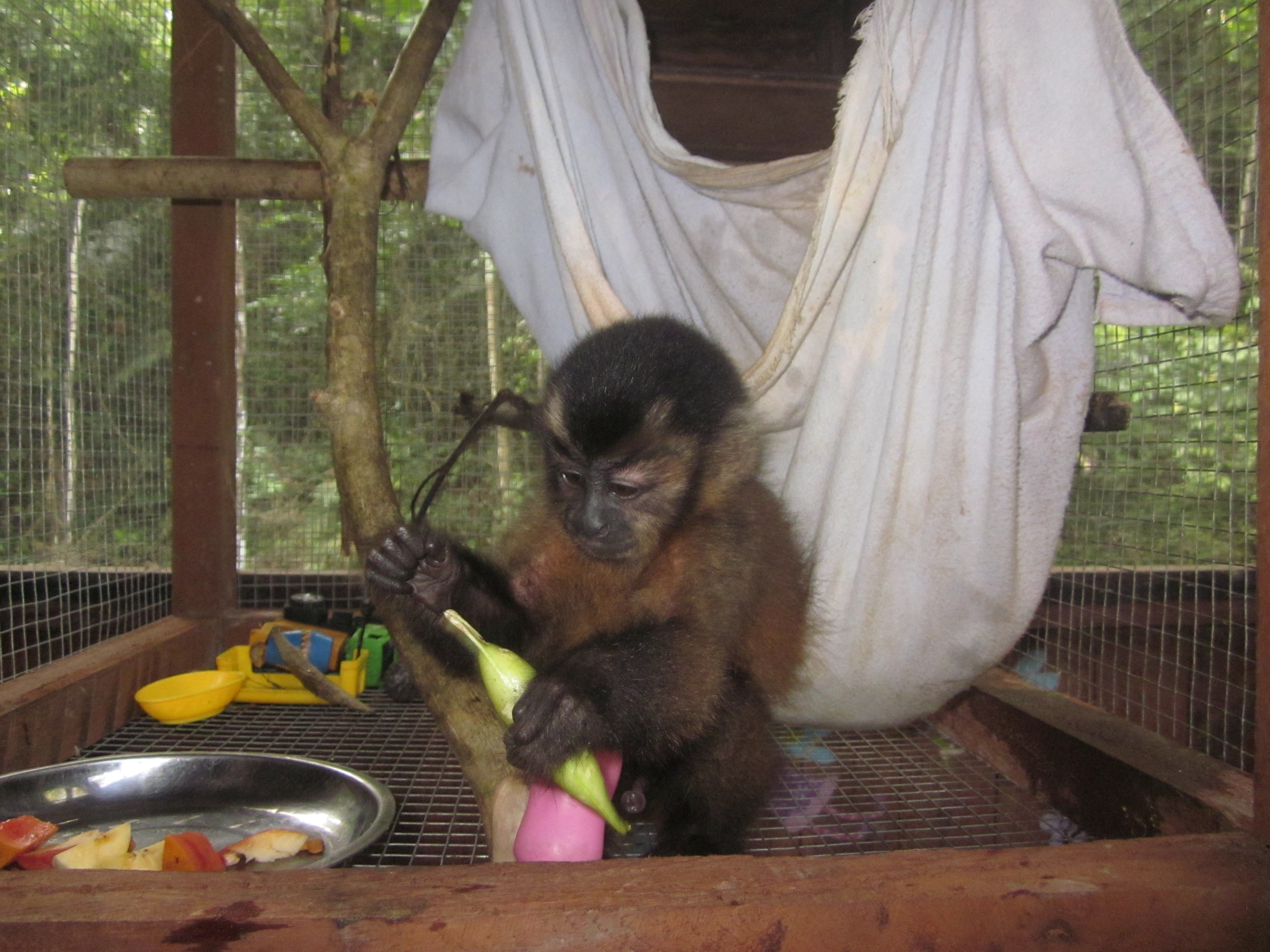
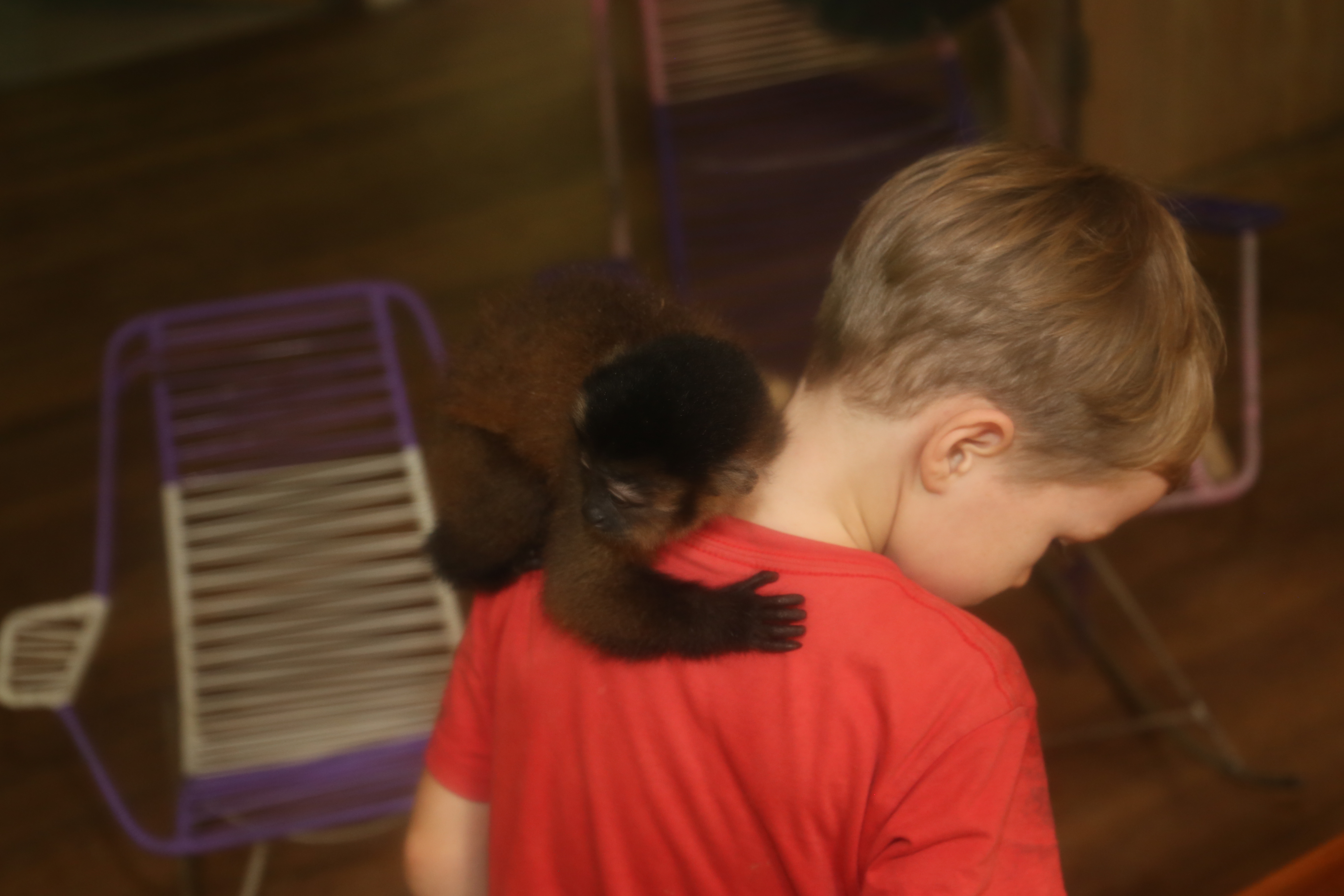
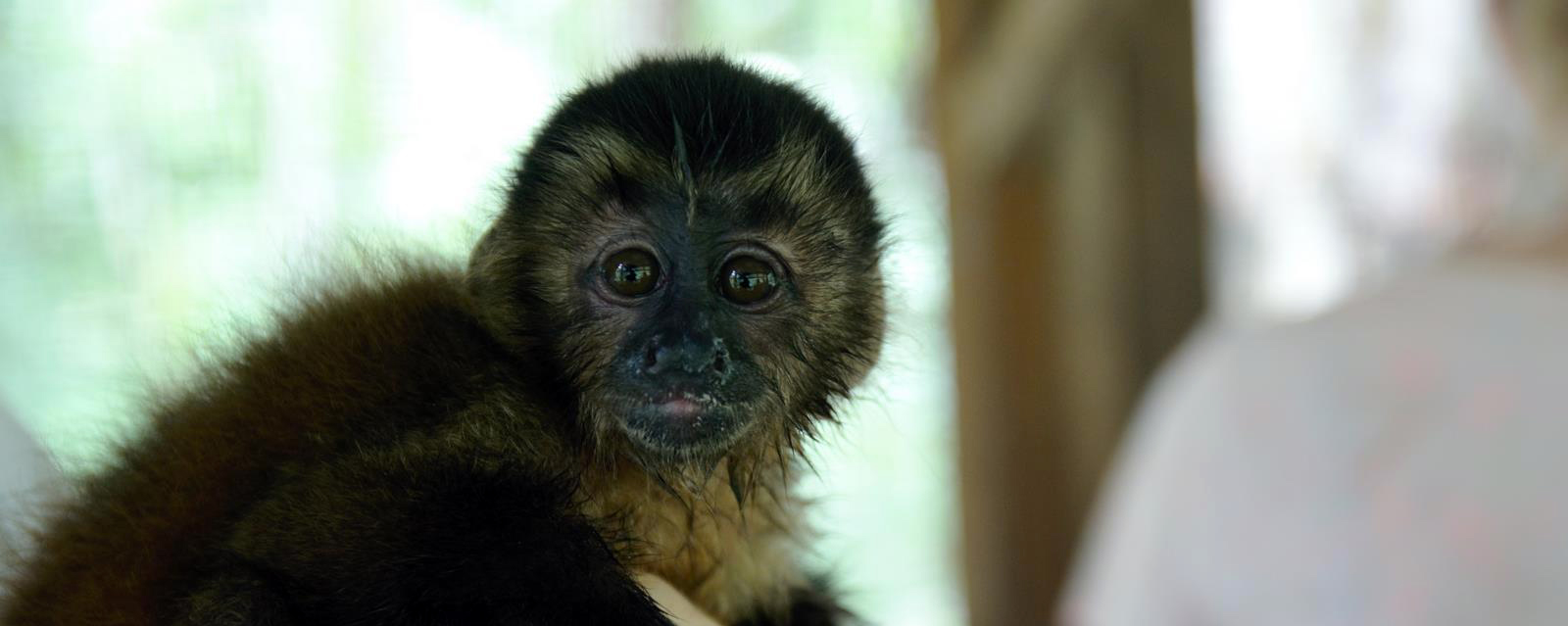
Two of the three babies, Chiquita and Cinty, made a big step last week: first night out and first sleepover outside the baby cage. Luckily baby Khali is giving us some more time to get used to this new teenager behavior by staying in his hammock overnight and still enjoying his milk out of a bottle. Nevertheless, all of them are getting more and more independent. The distance from people keeps getting bigger and they hardly seek human attention anymore. We are very happy about this development and find it great to watch them becoming a part of the big monkey family.
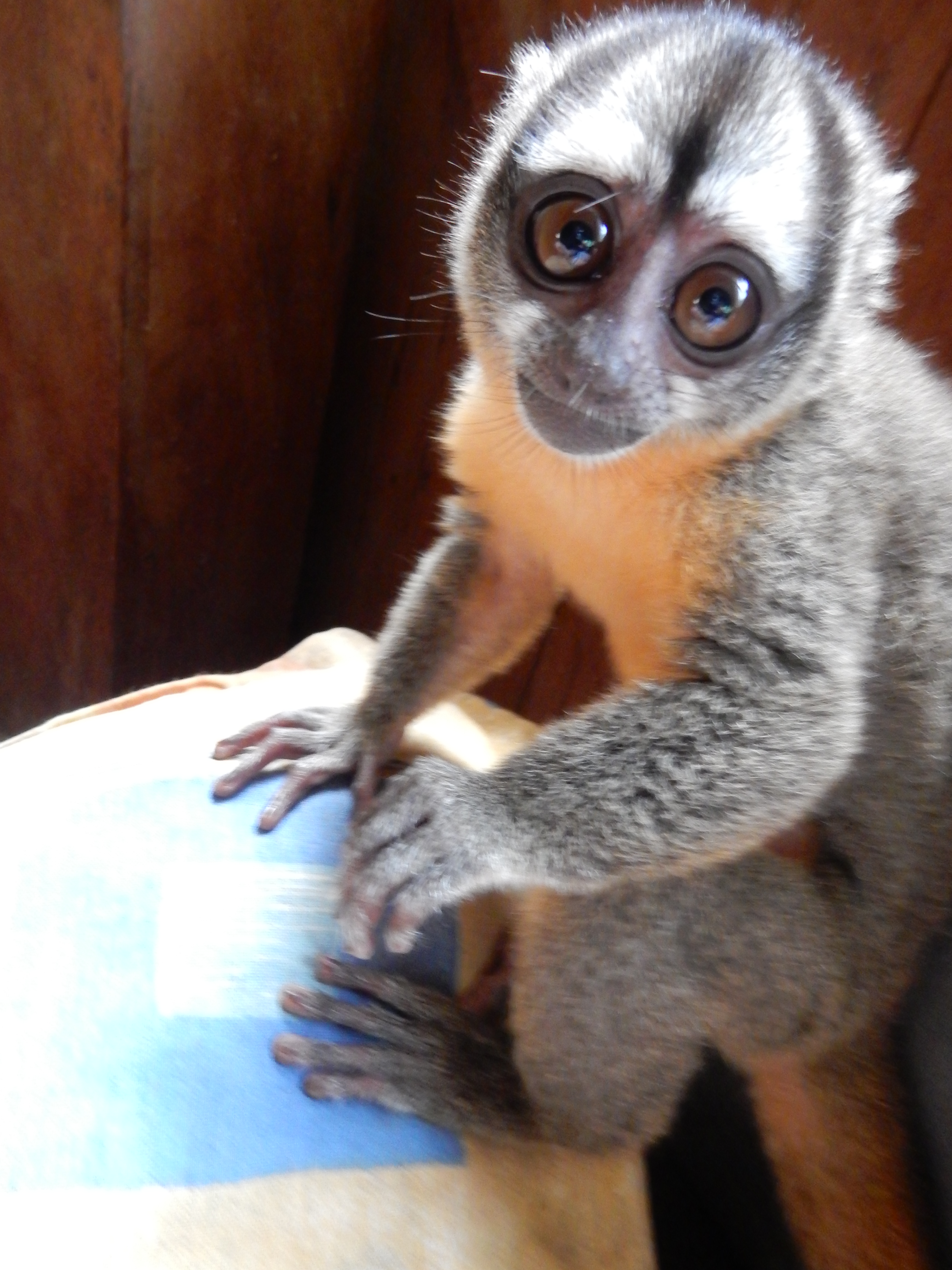
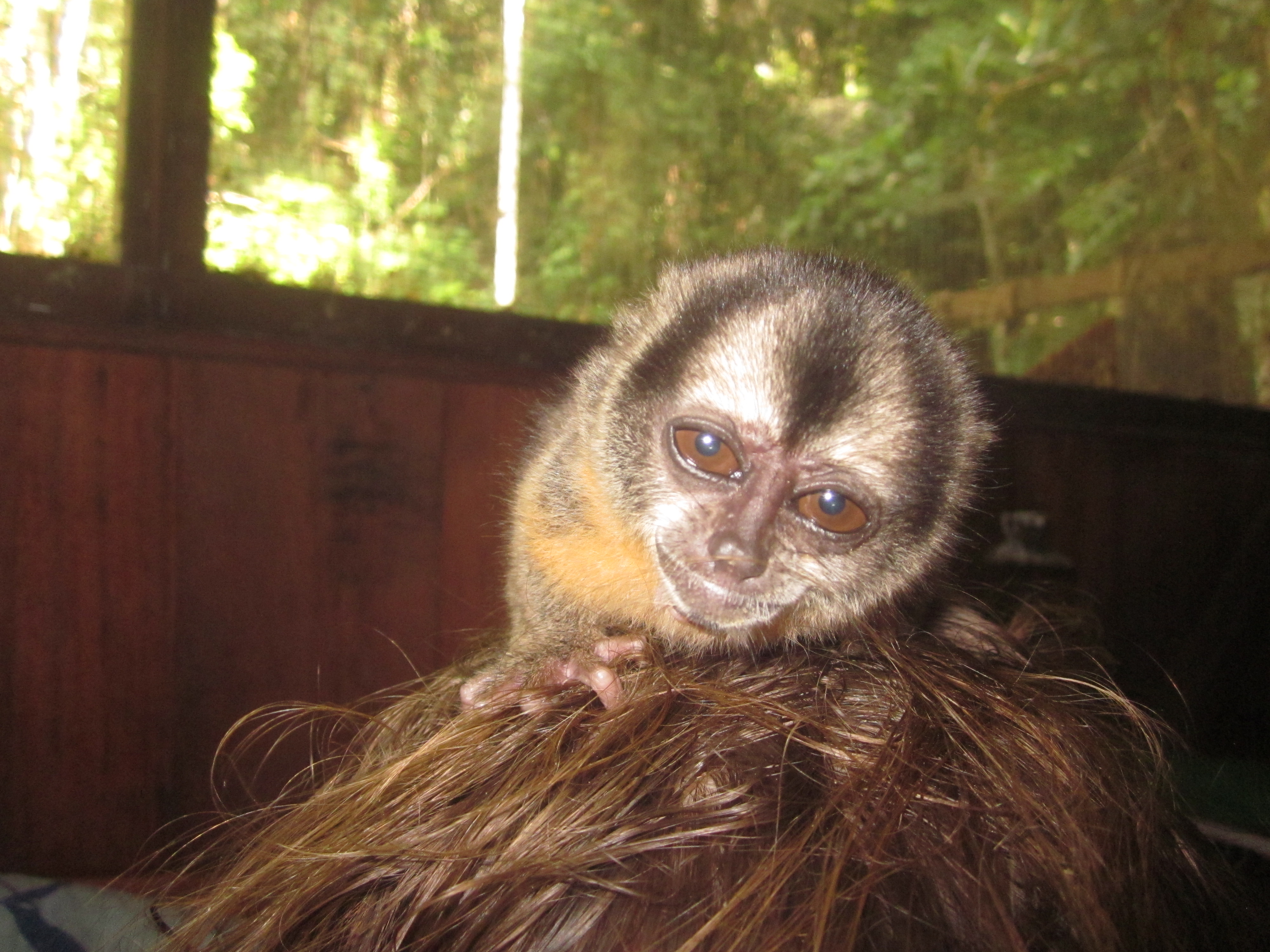
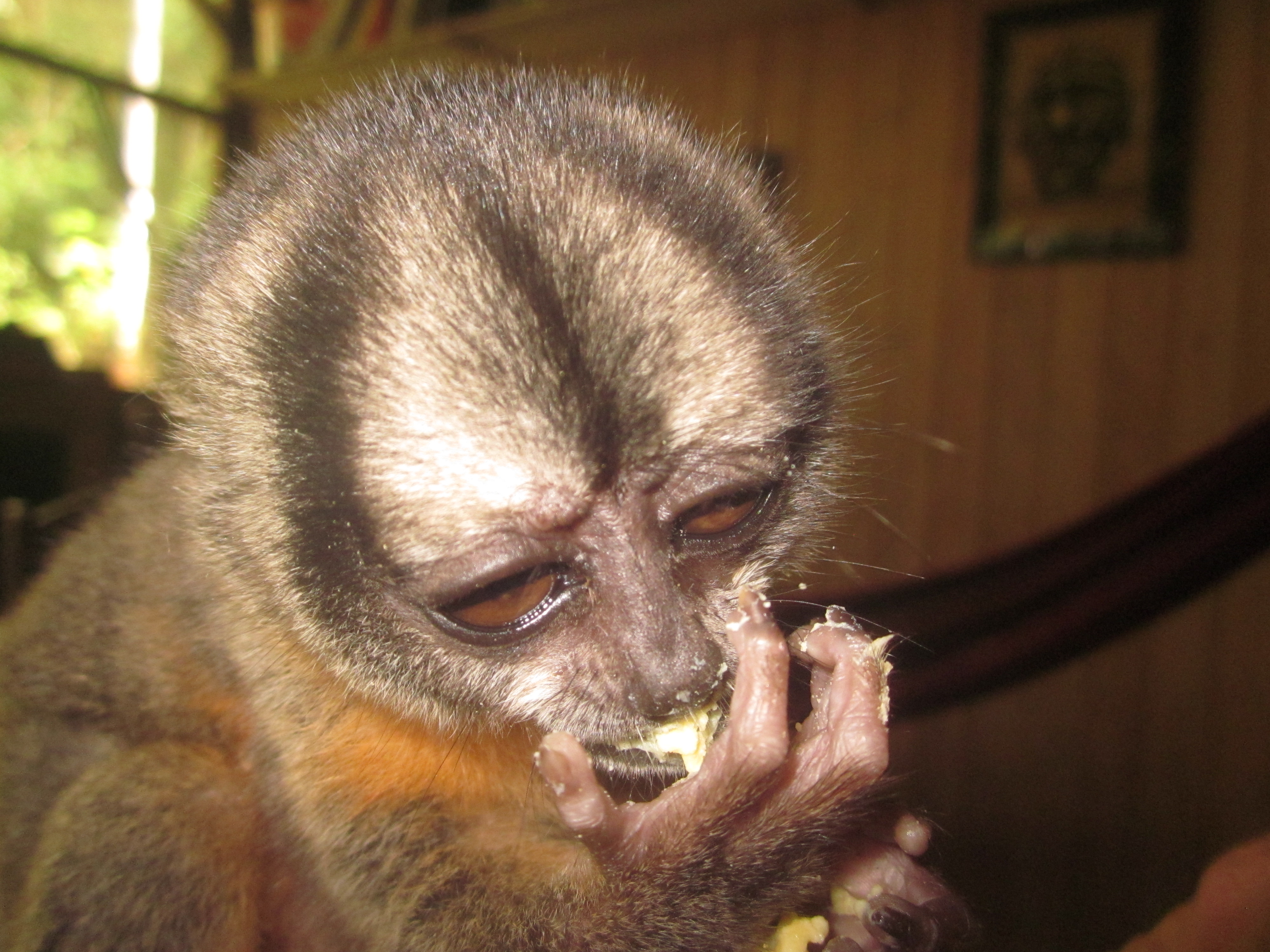
Sira (female night-monkey)

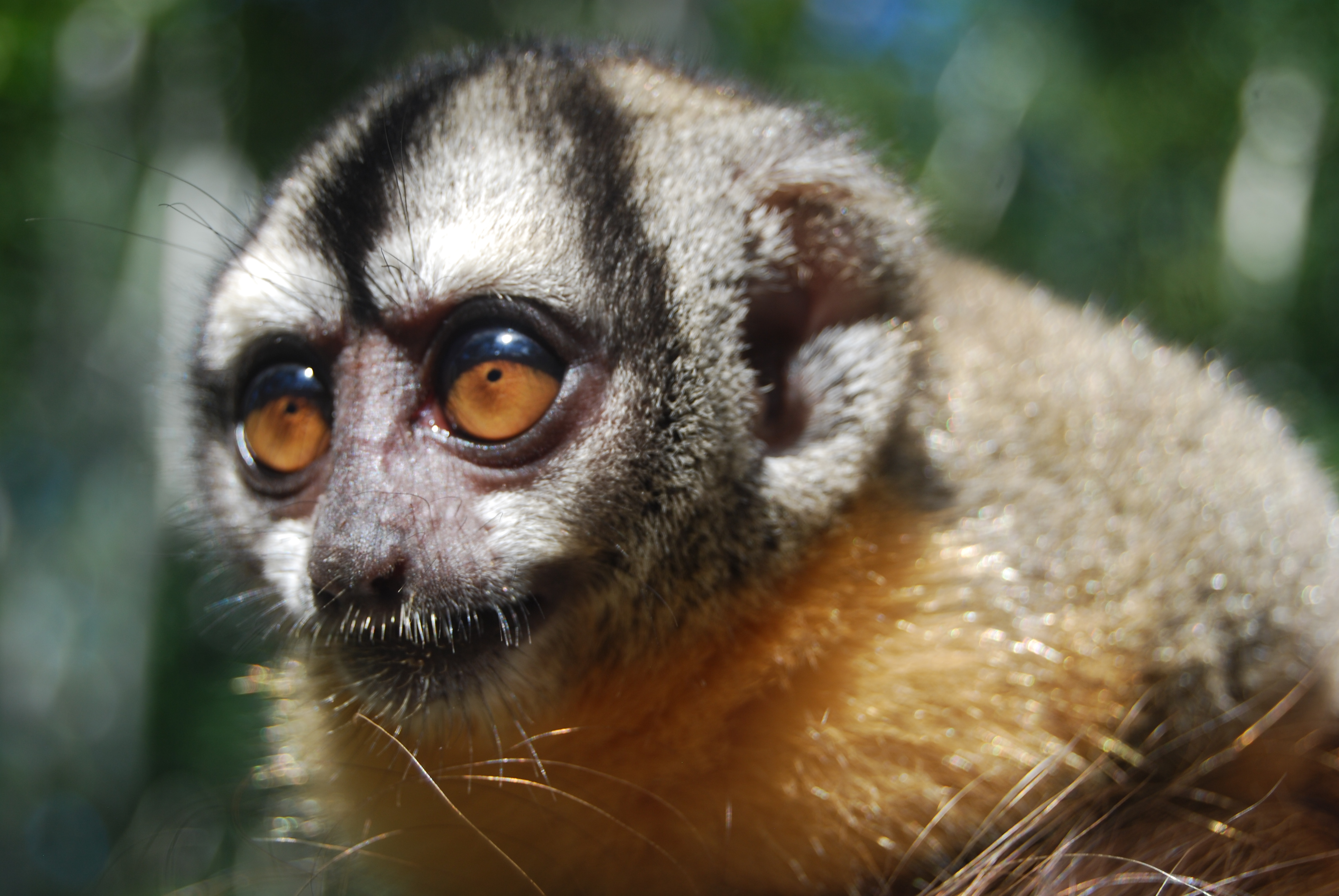
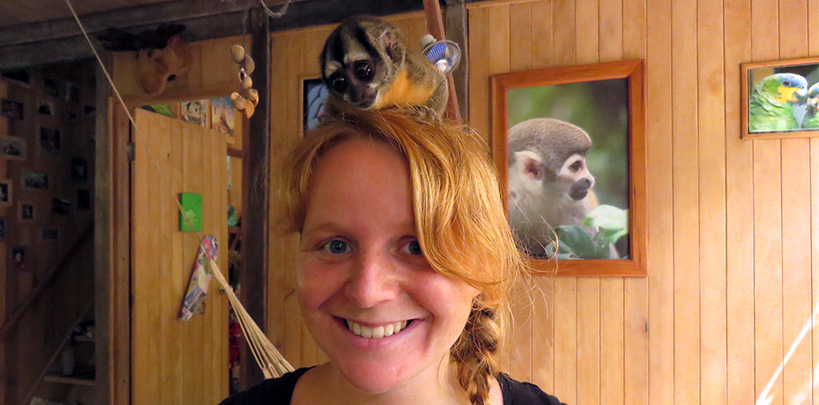
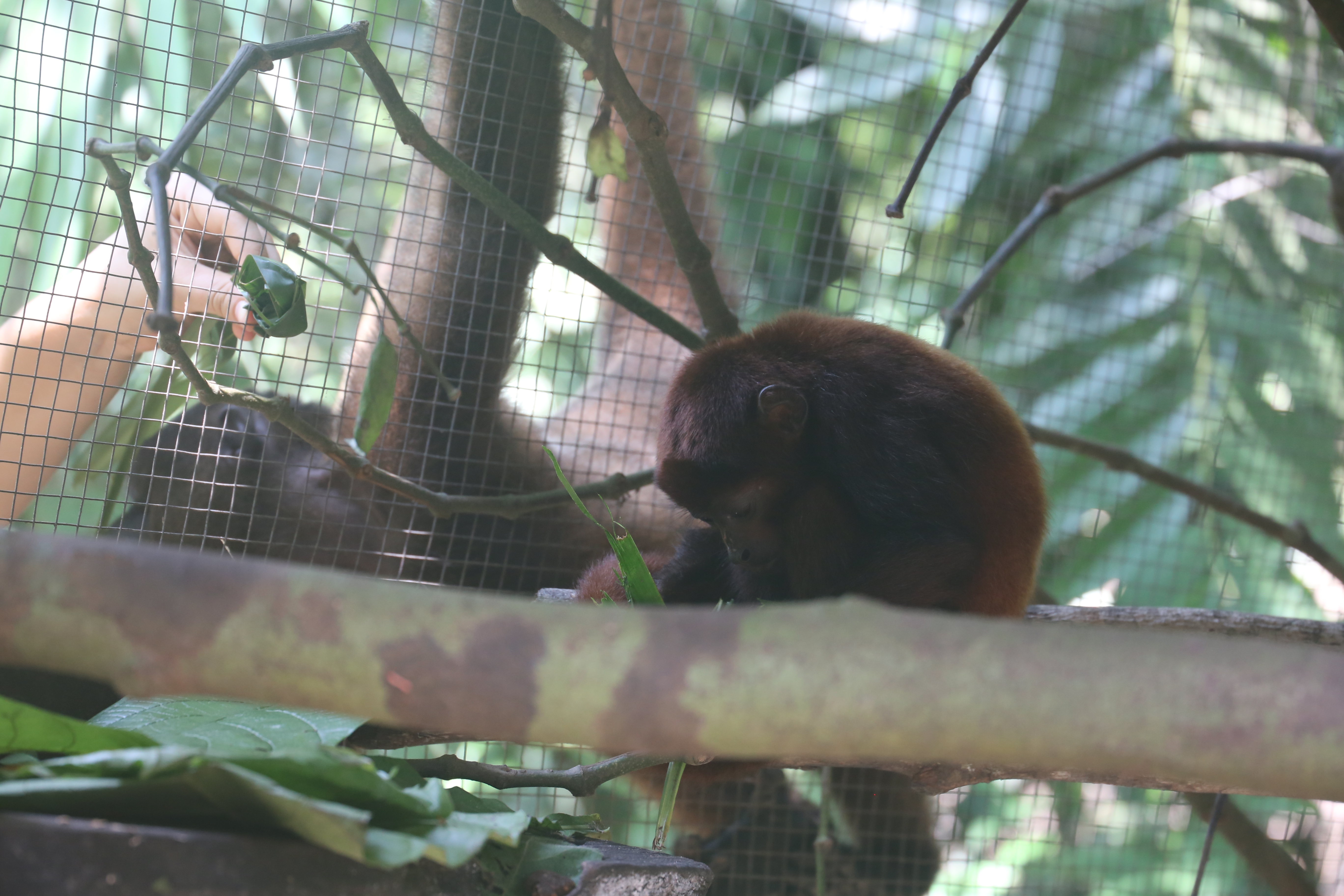
Sira is such a great enrichment to Esperanza Verde. Everybody enjoys giving attention to and spending time with her. She, on the other hand, rewards us with not only her hyperactive character but also with drinking a lot of milk, sometimes even double the amount she is supposed to drink. Since the baby monkeys are now higher up in the trees, she is lacking some play mates though. We try to give her a bit of extra attention to make up for it.
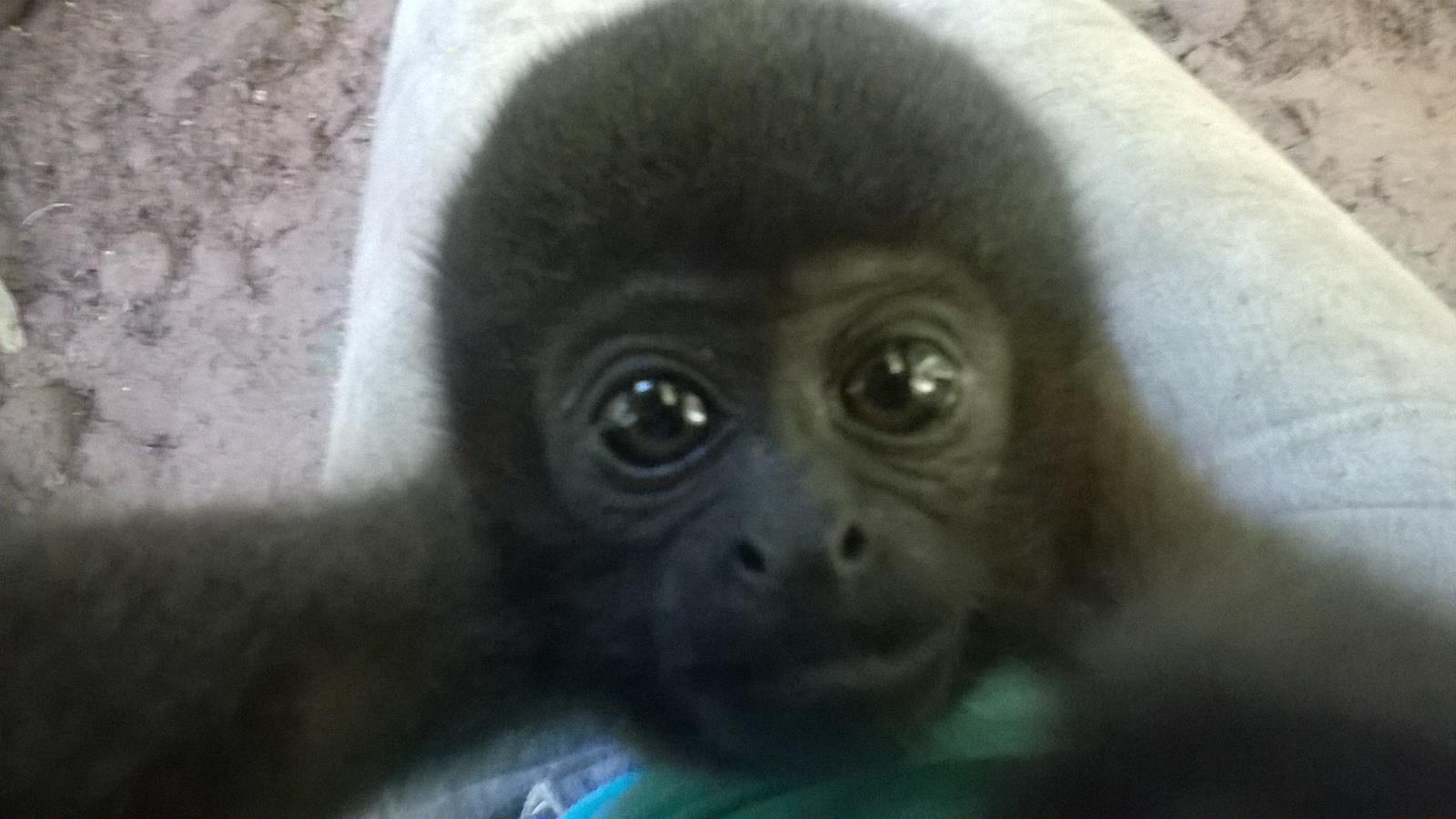
Lupa (baby female woolly monkey)


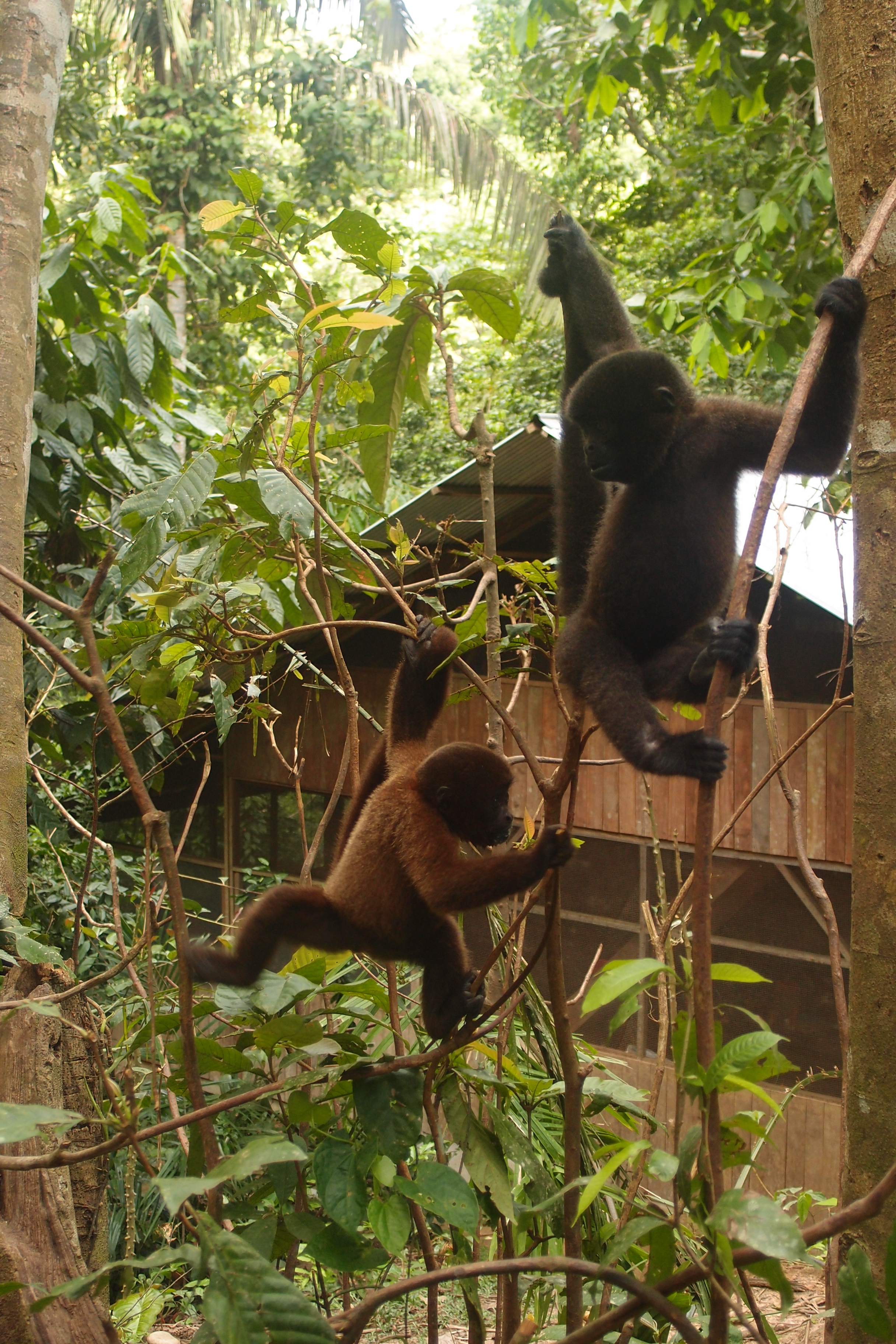
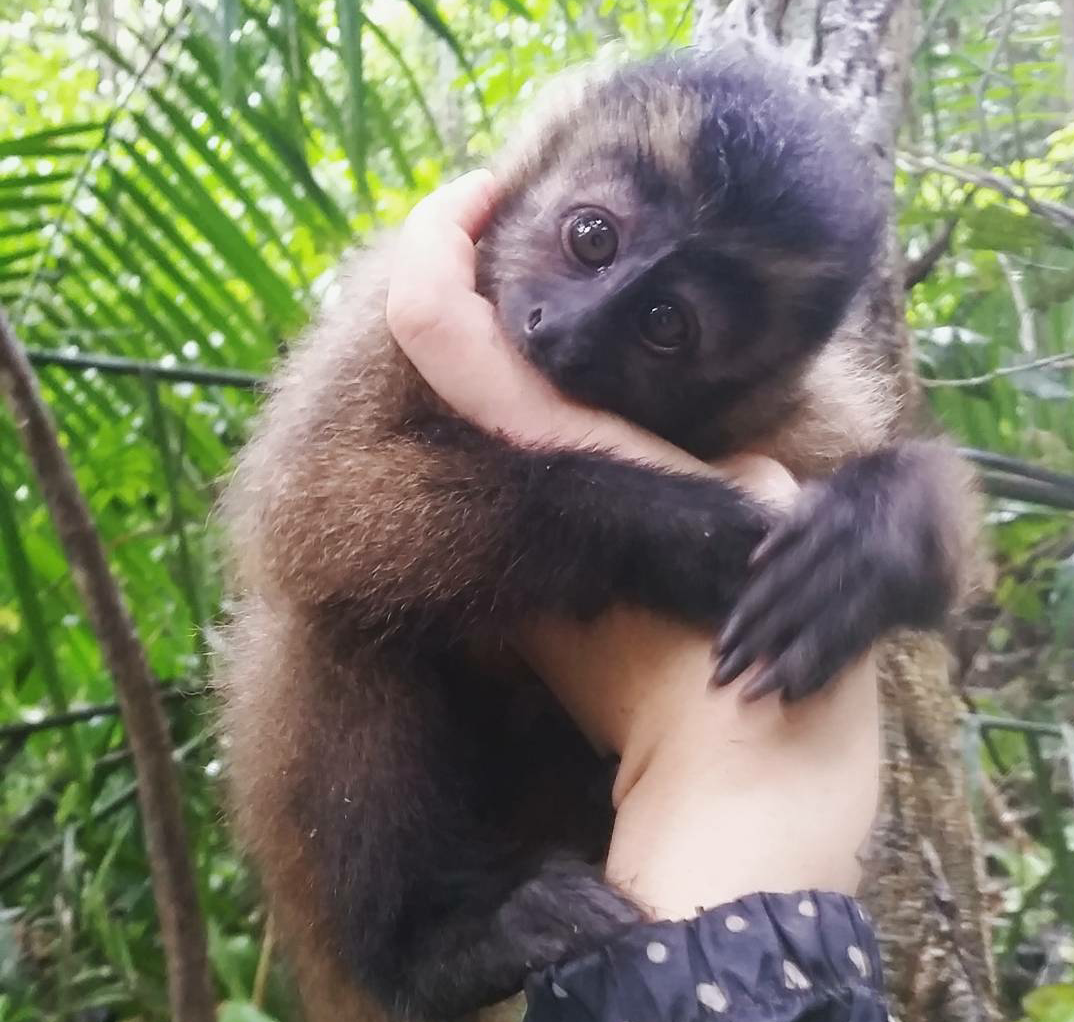
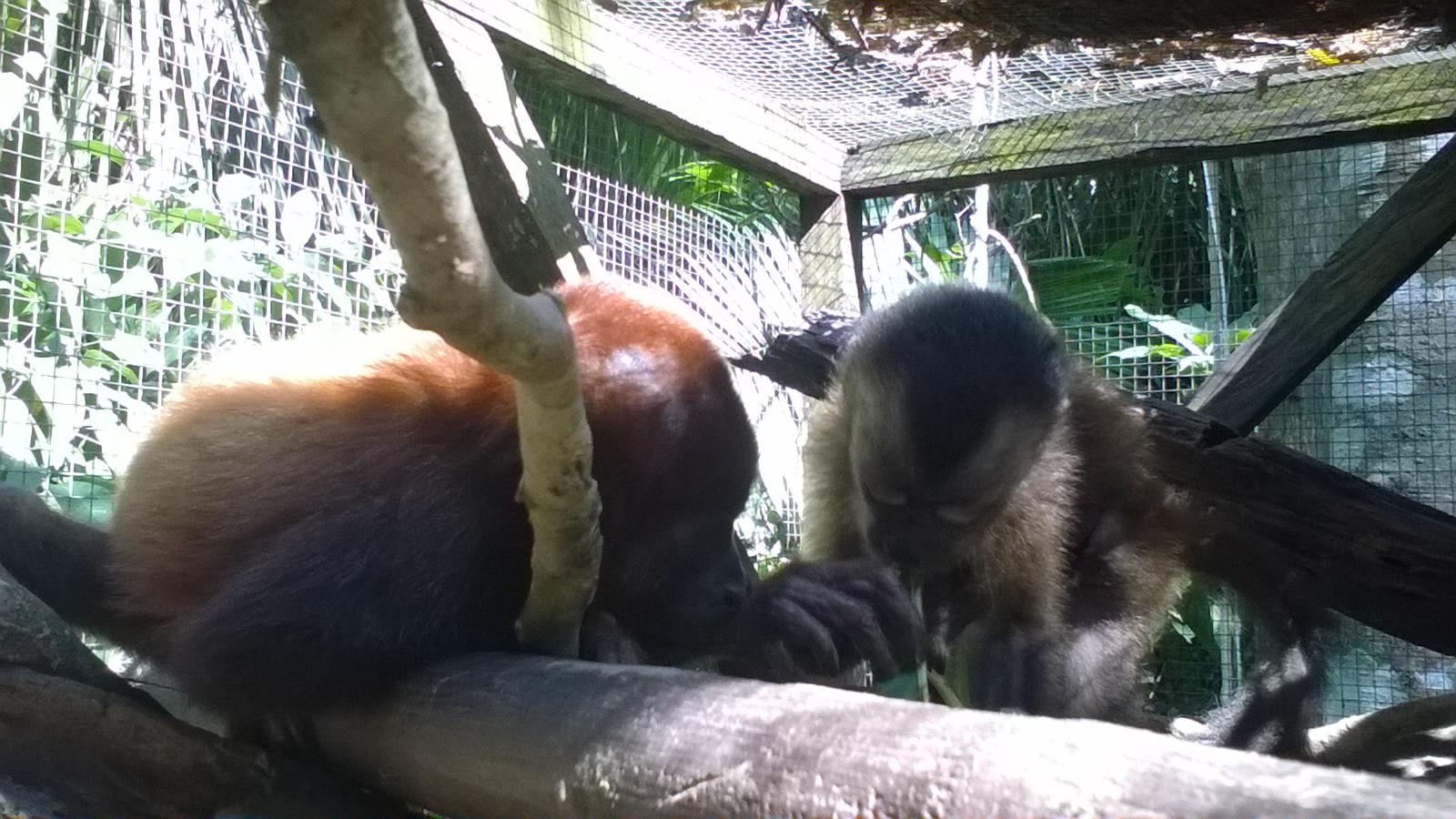
Lupa is still the most independent baby monkey of the group which is great to see; she can be an example for the other baby monkeys. Her search for safety at the other woolly monkeys is still the same, especially with Willow and Kamari. These grown up male woolly´s are really protective over her. But the last weeks, Lupa herself is changing. She often leaves them, to play along with the other baby´s or to see if there is something left from the food plates. She understands that the other woolly monkeys are creating a safe base for her, but she doesn’t want to spend all her time with them. It’s funny to see how Willow tries to boss around on her – behaving like a part-time father – and that Lupa is acting more and more like a teenager.
Nera (female capuchin monkey)


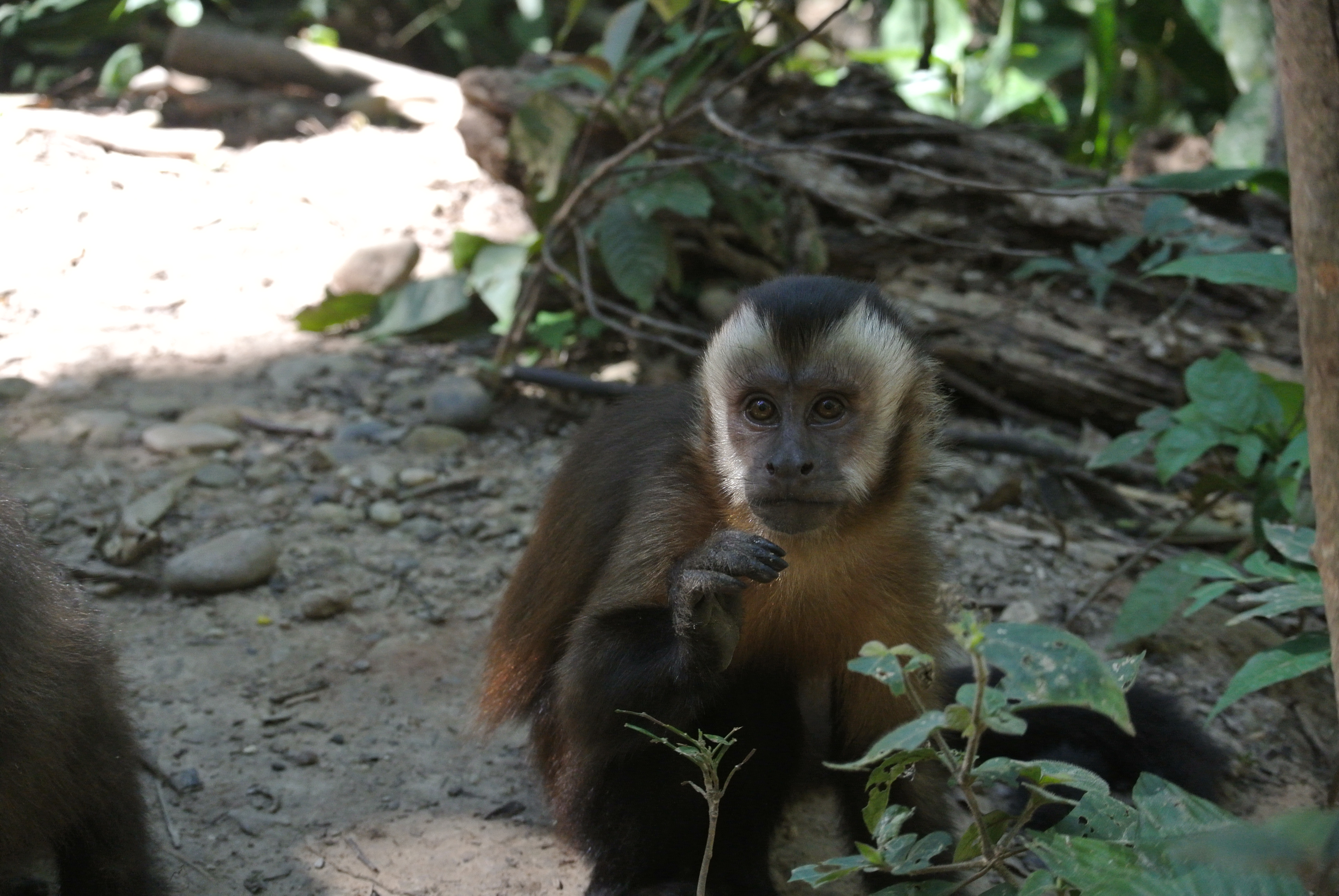
Within the varied group of capuchin monkeys, 1 ½ year old Nera was acting a bit strange. Many times she was sitting on her own without moving much. She also lost a lot of weight, so that we decided to bring her to the clinic for some deworming. We found out that she suffered from three different species of parasites as well had two worms in her neck and one in her belly from a botfly. Those parasites are relatively easy to remove, but other species were more difficult. She reacted well on the treatment and could be released after a week being in the clinic.
Other Mammals
Kiko (male kinkajou)
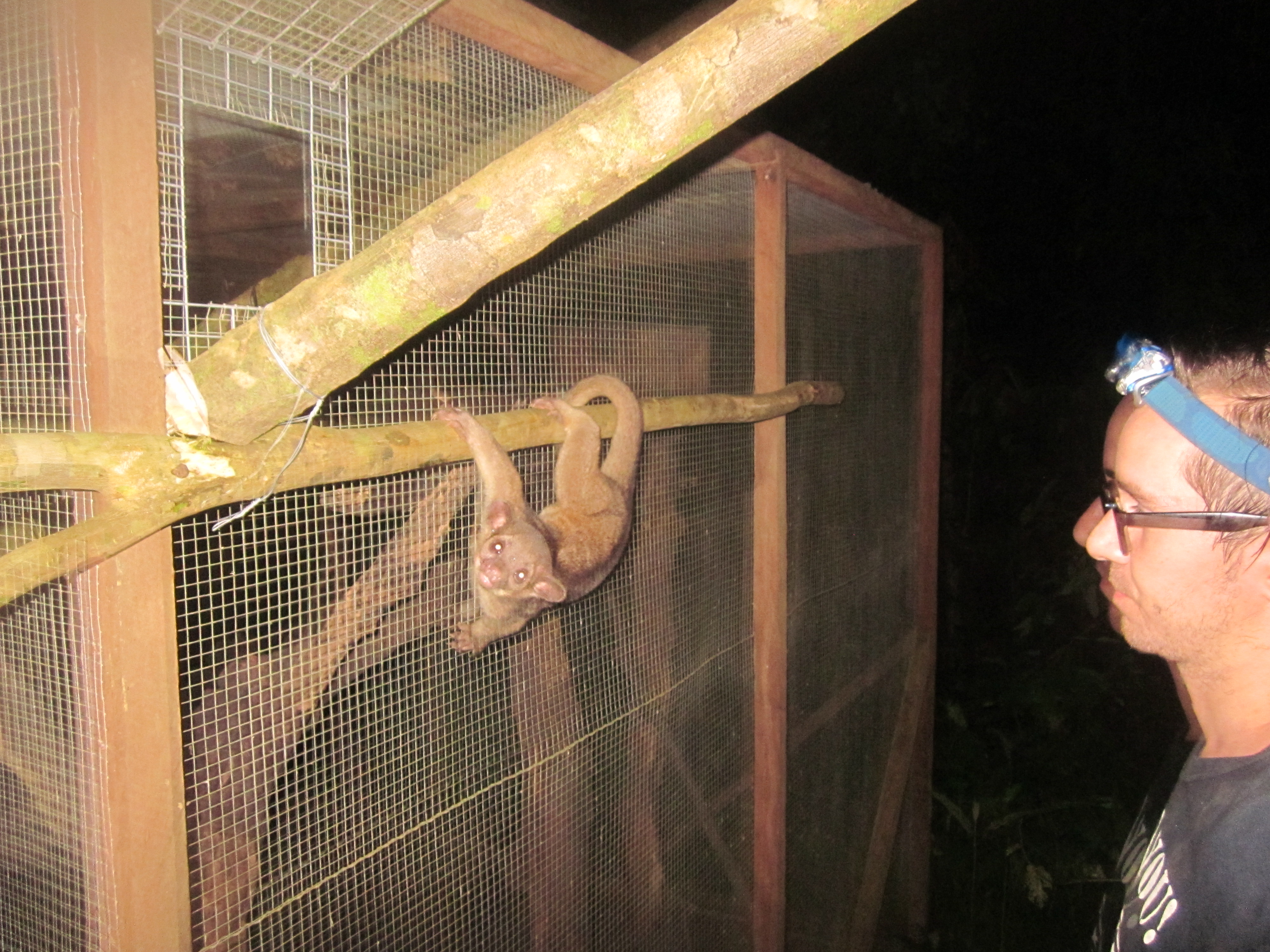
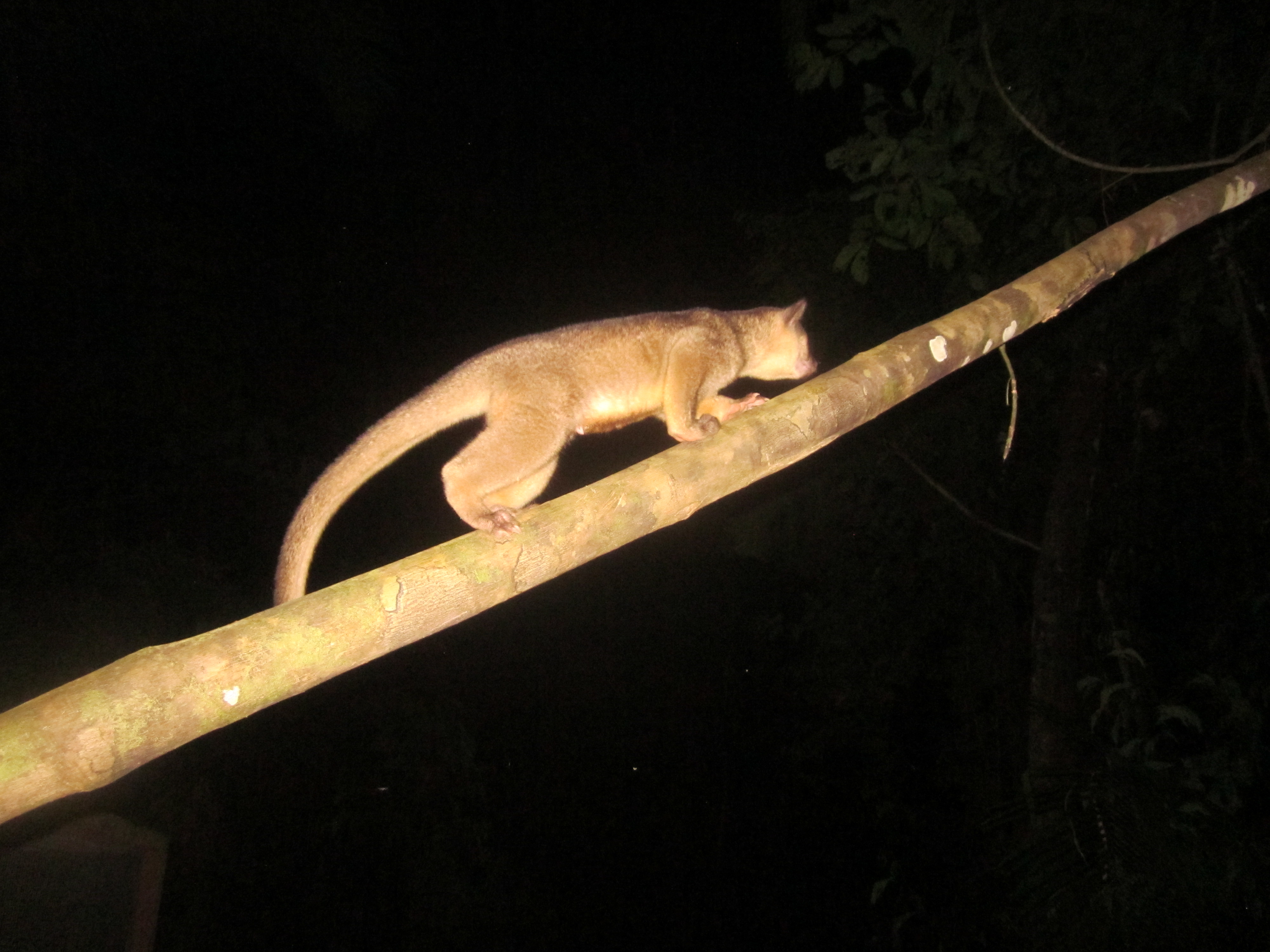
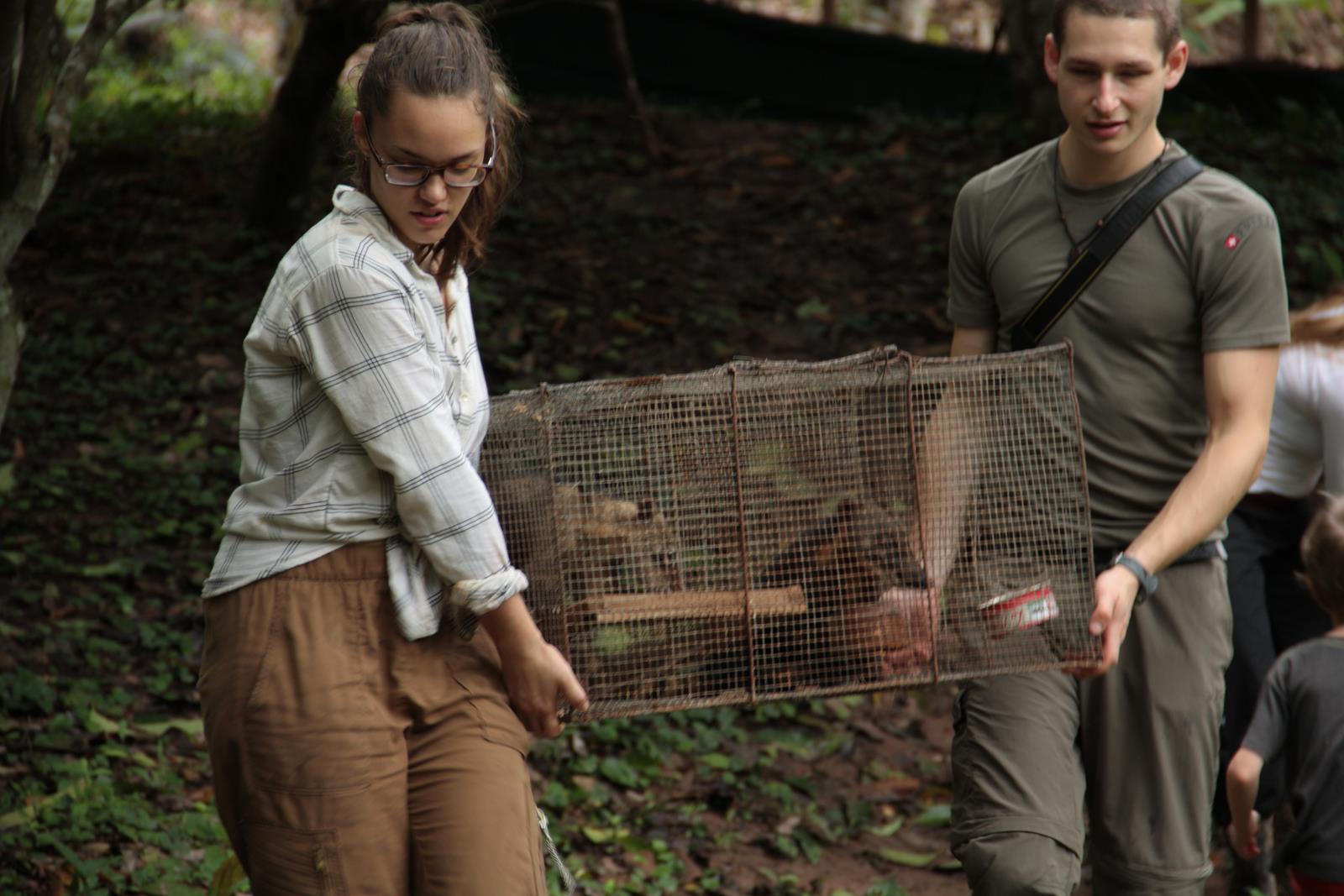
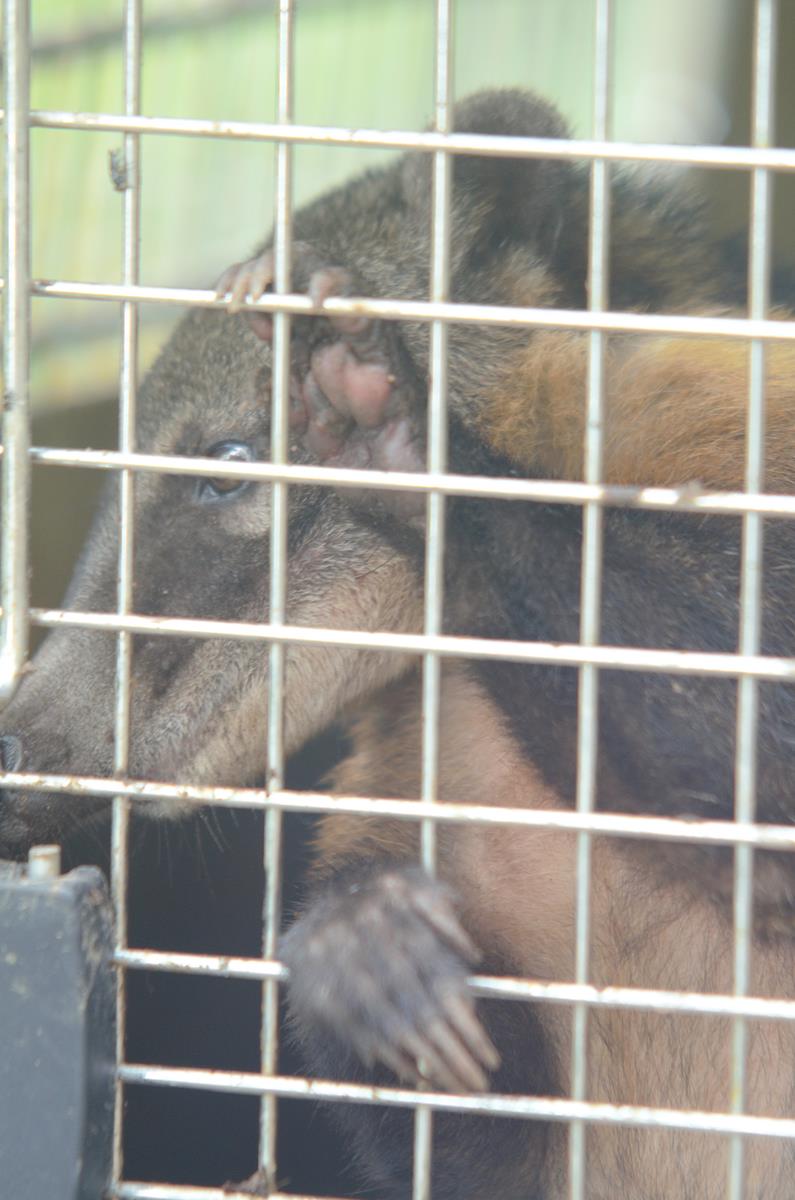
At this moment we are keeping Kiko back in his cage again, because he had been attacked by another wild male kinkajou. Olivia and Douwe heard some noises in the middle of the night and Douwe run out and could separate Kiko from the wild male. The wild male was holding Kiko’s head while biting him. His left eye was pretty damaged. We were a little bit afraid that he lost his sight, but for now it seems that it’s recovering slowly. The night-shine is back in his eye! We hope that he will gain confidence again and we hope to be able to try and release him soon.
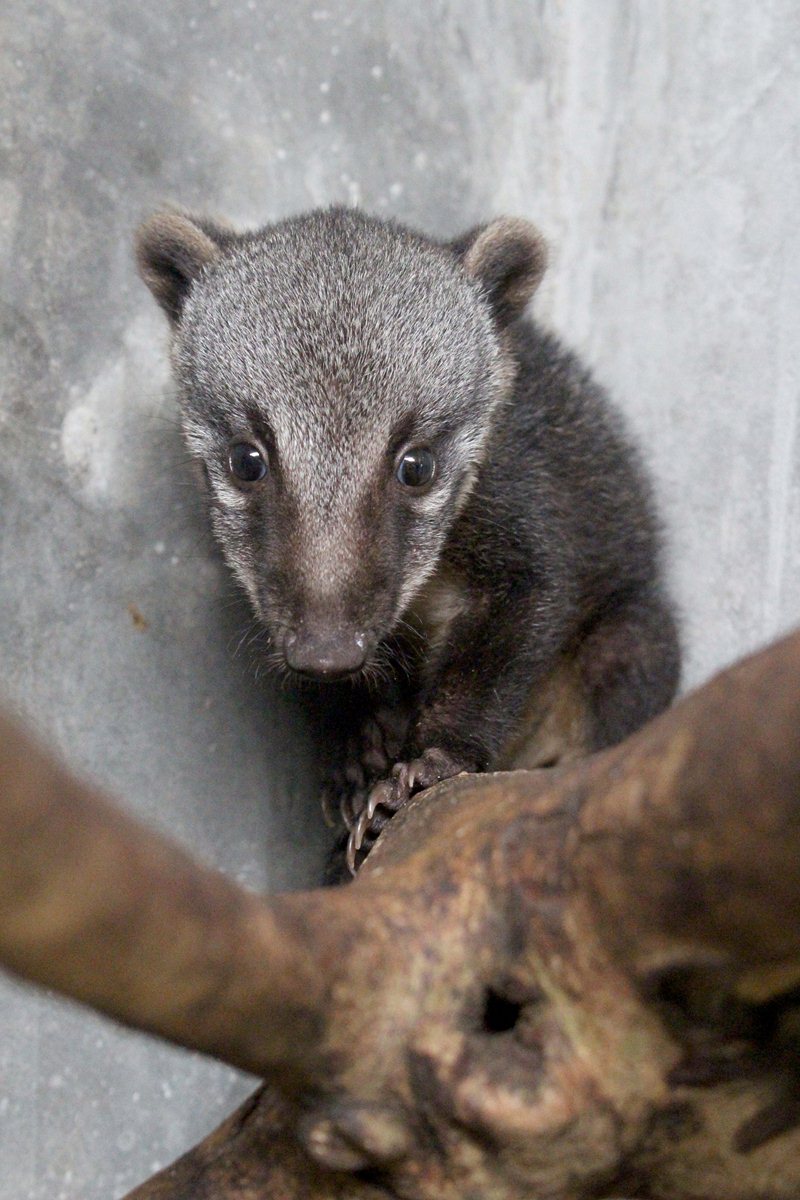
Zambo (young male tayra)

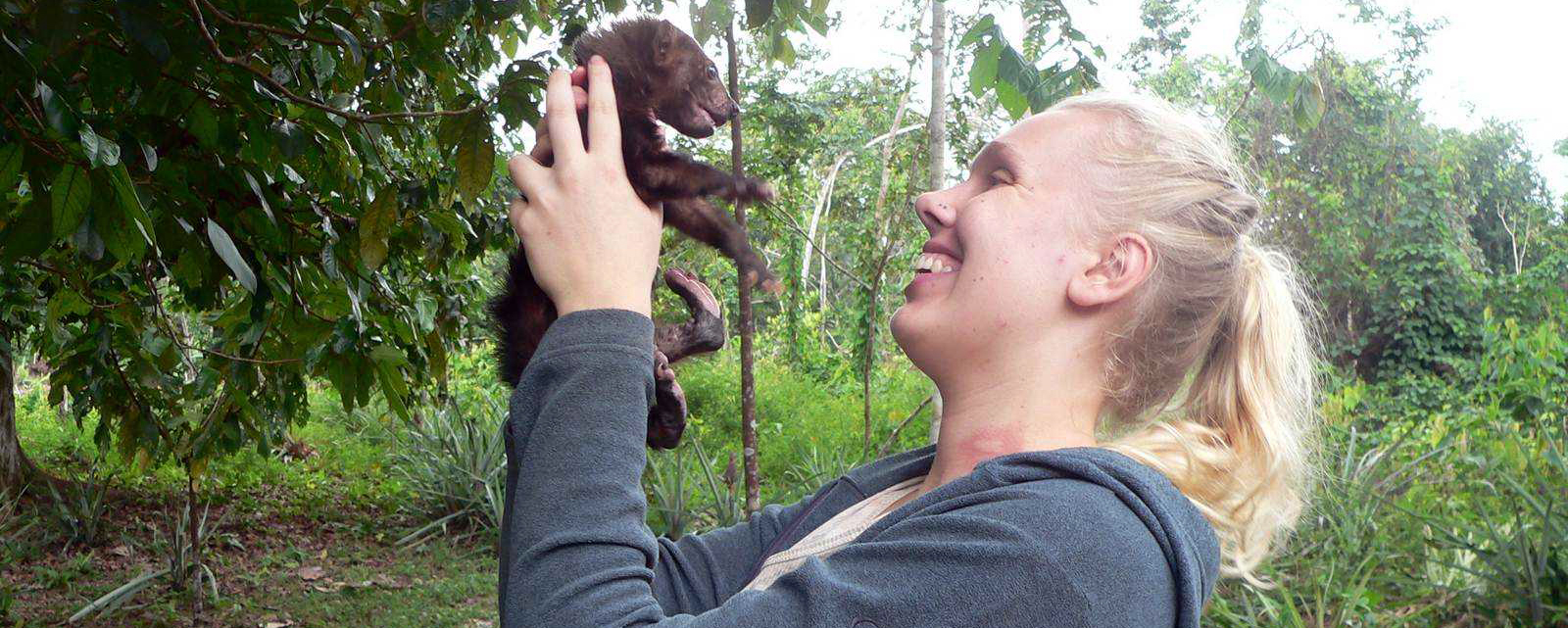
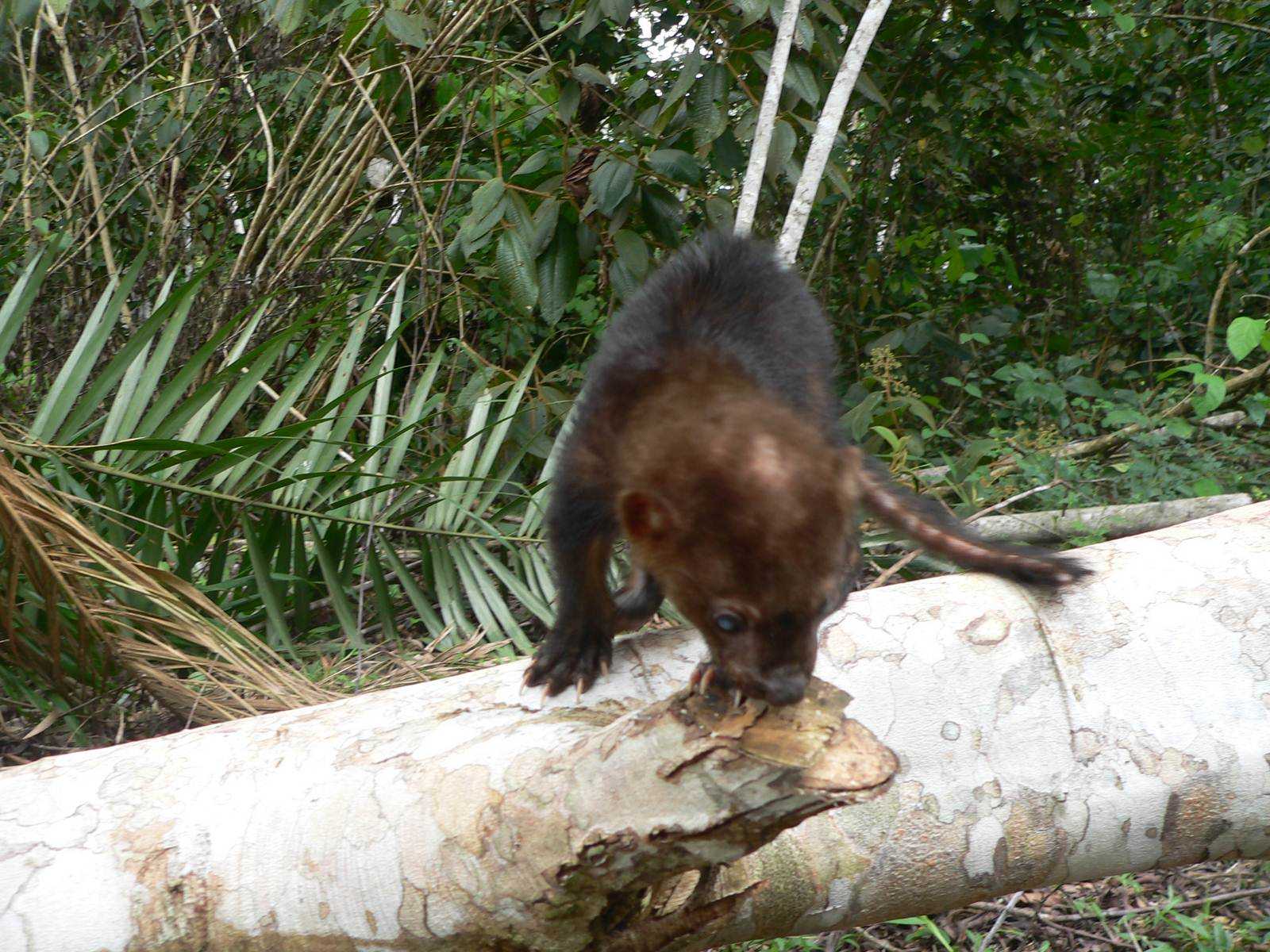
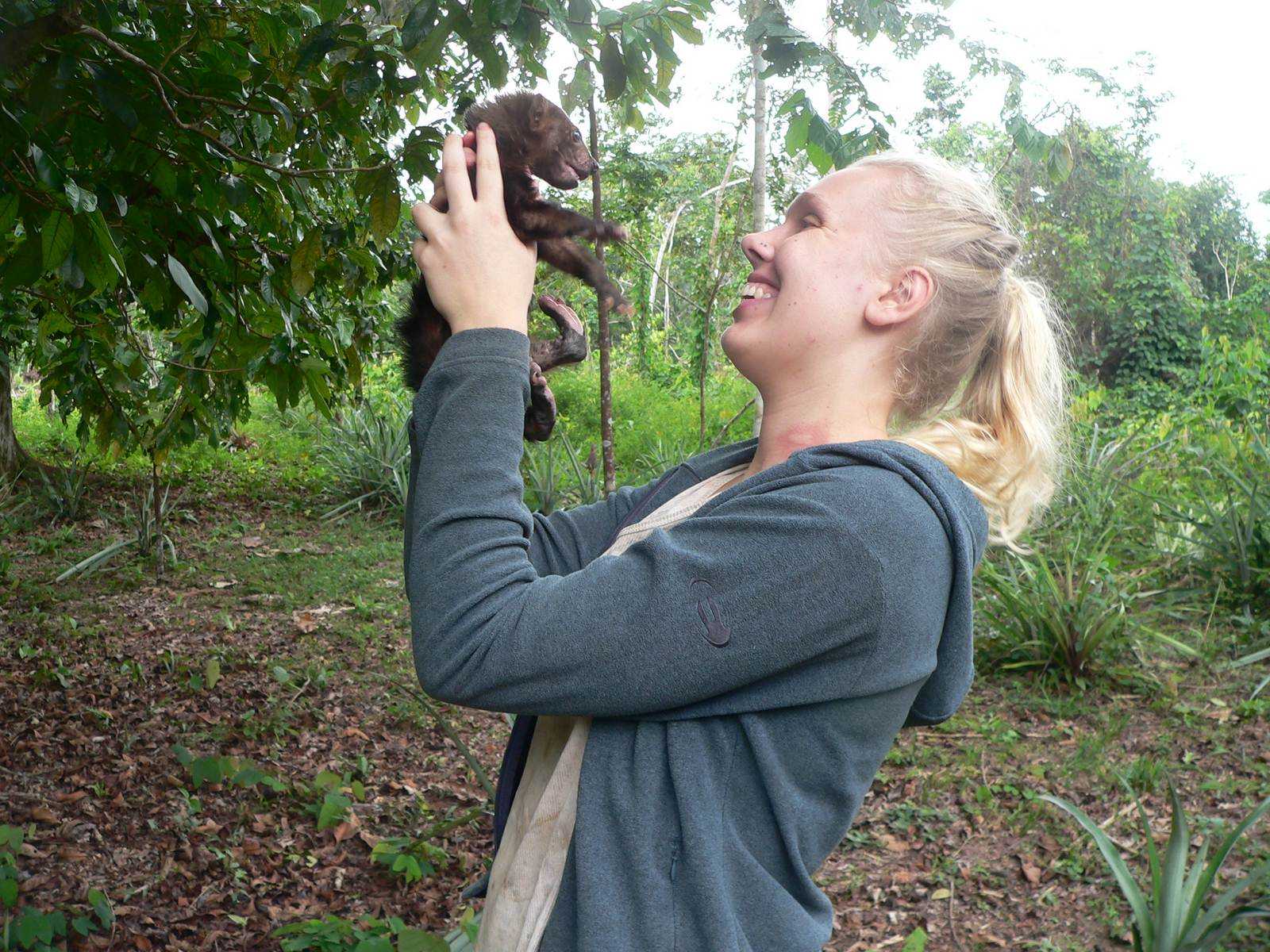
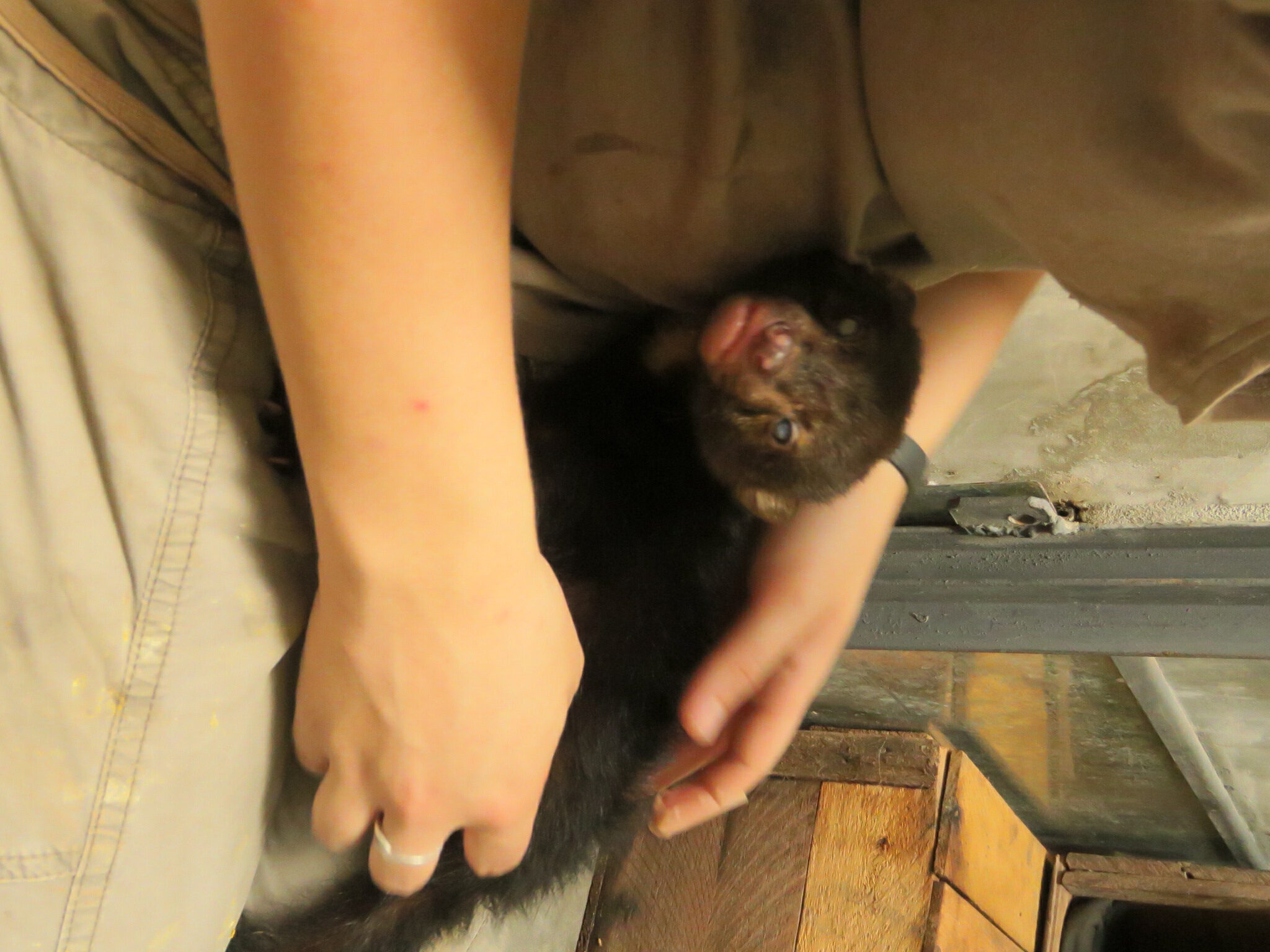
If you would not know in which condition this little tayra arrived, you wouldn’t guess how bad he was actually doing not that long ago. Judging from his energy and never-ending eagerness to live, he is now doing better than ever. Also, it seems like he recently discovered his teeth. What may sound cute in the first place, can get very exhausting the same time. He is literally biting everything from leaves to wellies which sometimes can be a big challenge for the volunteer working with him. For this reason we try to keep him busy with two long walks a day as well as some ball playing. He loves the extra attention and we in turn love to see him that happy and full of life!
Kohana (baby female peccary)

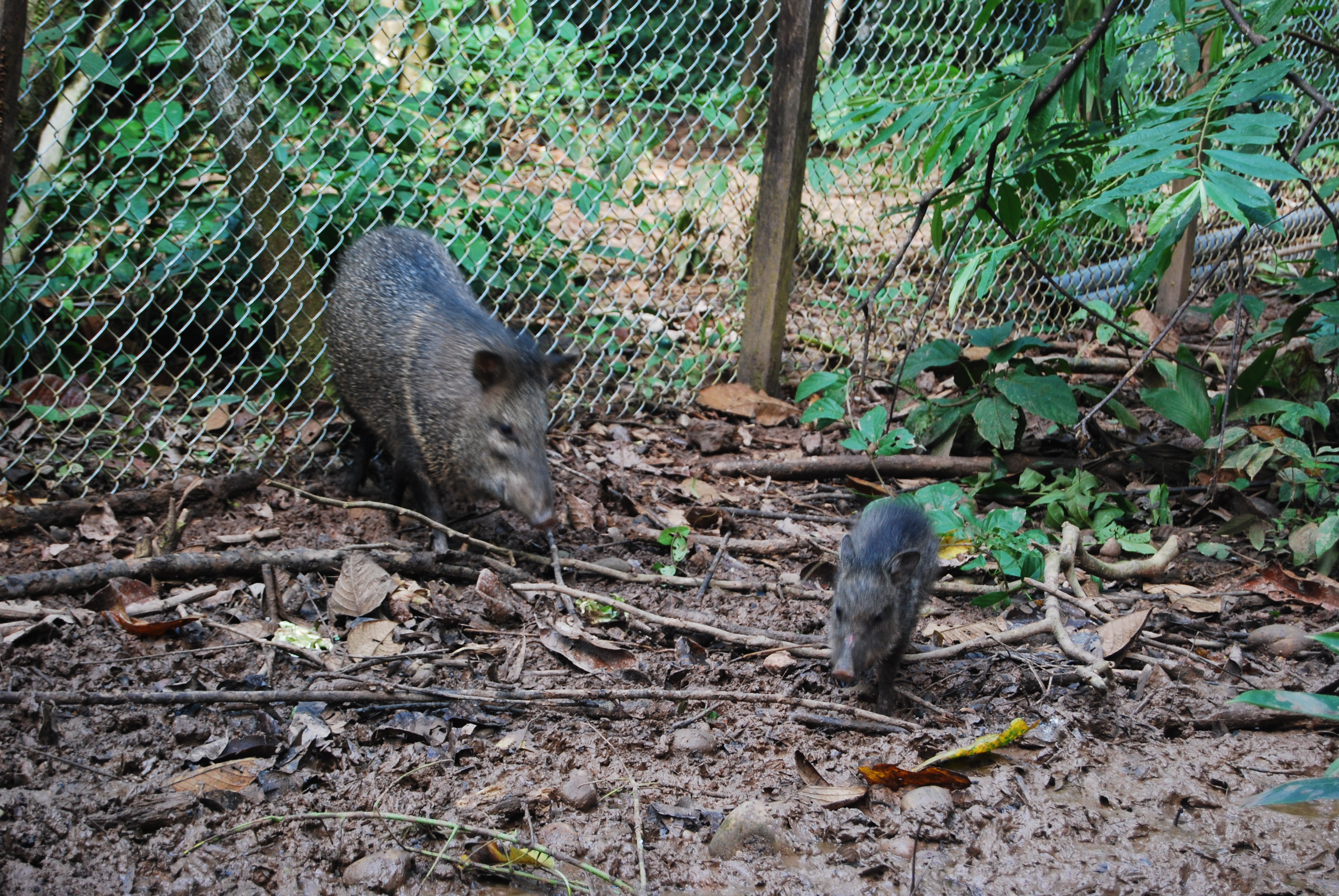
When we first put her in the cage with the adult female peccary Quintisha, the about 6 month old Kohana was a bit stressed and found a way to sneak out of the new situation. In search of escape she used a small hole in the fence and was later on found in Rincay´s (the tapir) cage. As he is best friends with almost everybody including all the animals, he didn’t really seem to care about his new company. Douwe fixed the fence and re-released her back into Quintisha’s cage. They are slowly getting to know each other and we hope this is the start of a long-lasting nice flat or better cage share. Quintisha seems to be really enjoying it and invites Kohana to lay with her.
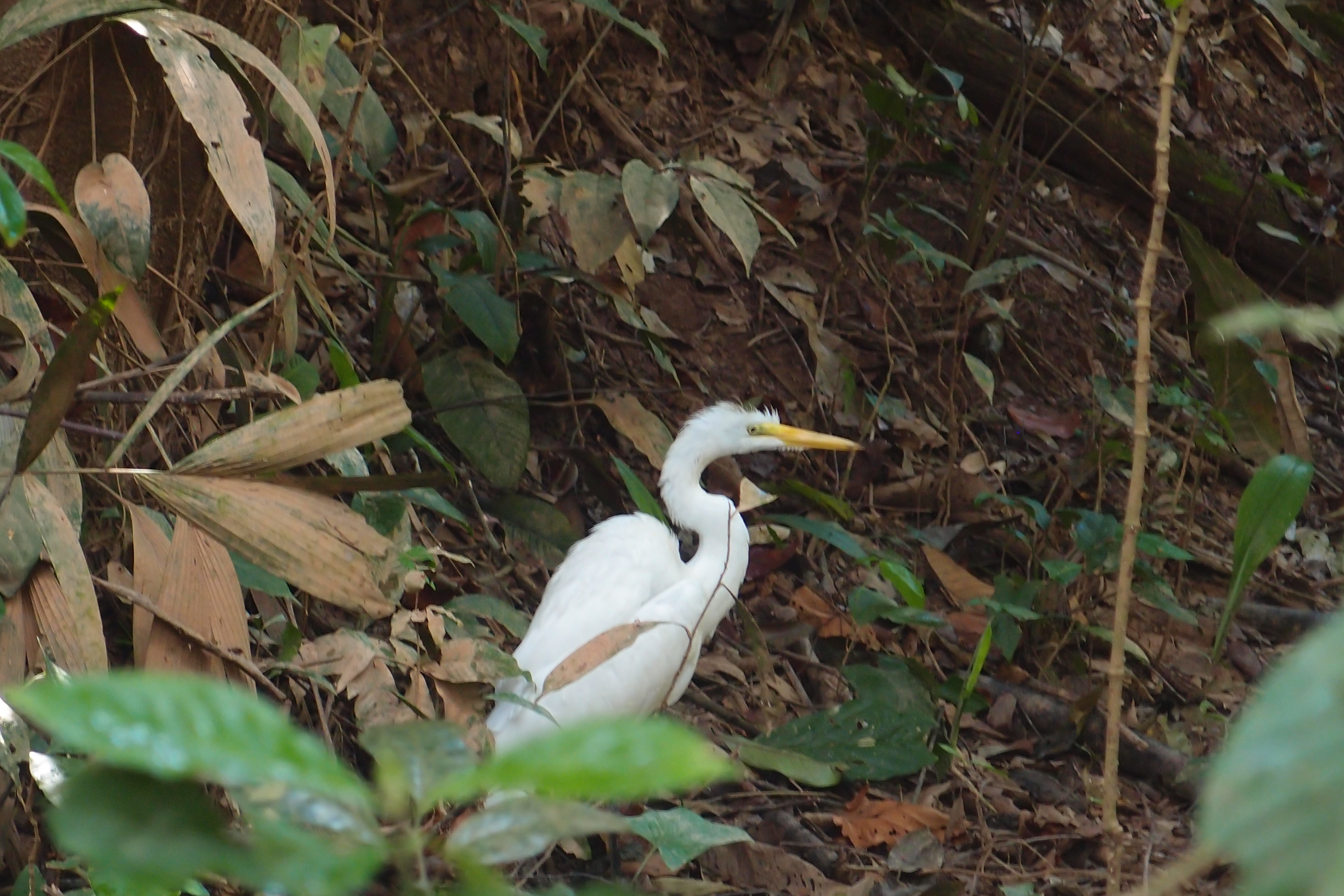
Great Egret

Unfortunately last week an egret became a victim of local kids throwing stones at him. Fortunately not all kids are this way and he was saved by other local children.
He needed some medical care for a head wound, and we took a fecal exam, which showed a high number of parasites in it. He was treated and released, but due to his, let’s say not really existent ability to fish, he needed an extra treatment and is now again one of the patients in the clinic. We released him again, and within a couple of hours he showed up at the clinic, and the release site was not that close by! So it seems he wants to join us living here at Esperanza Verde…giving us lots of work fishing for him! Let’s see what we can do for him!
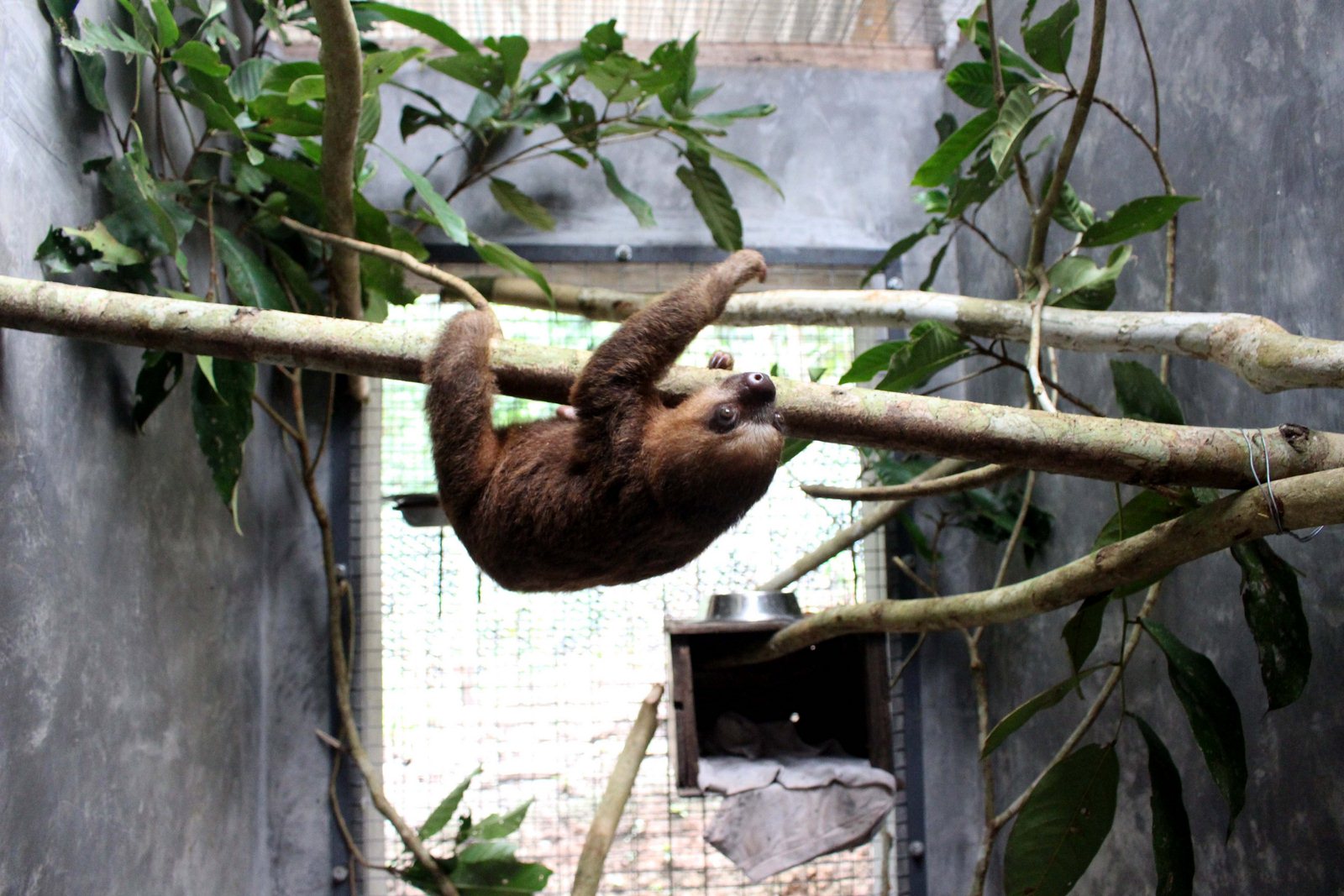
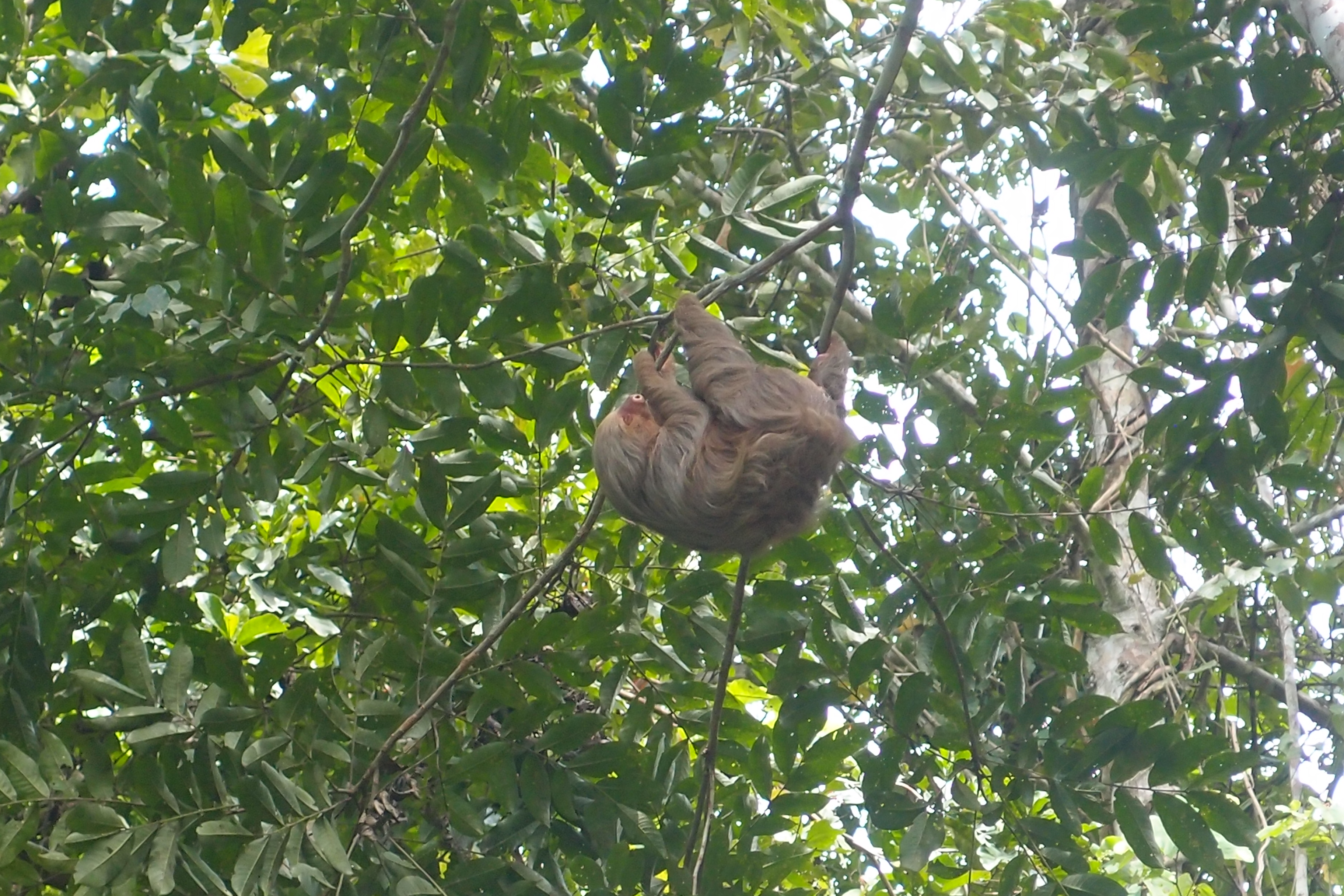
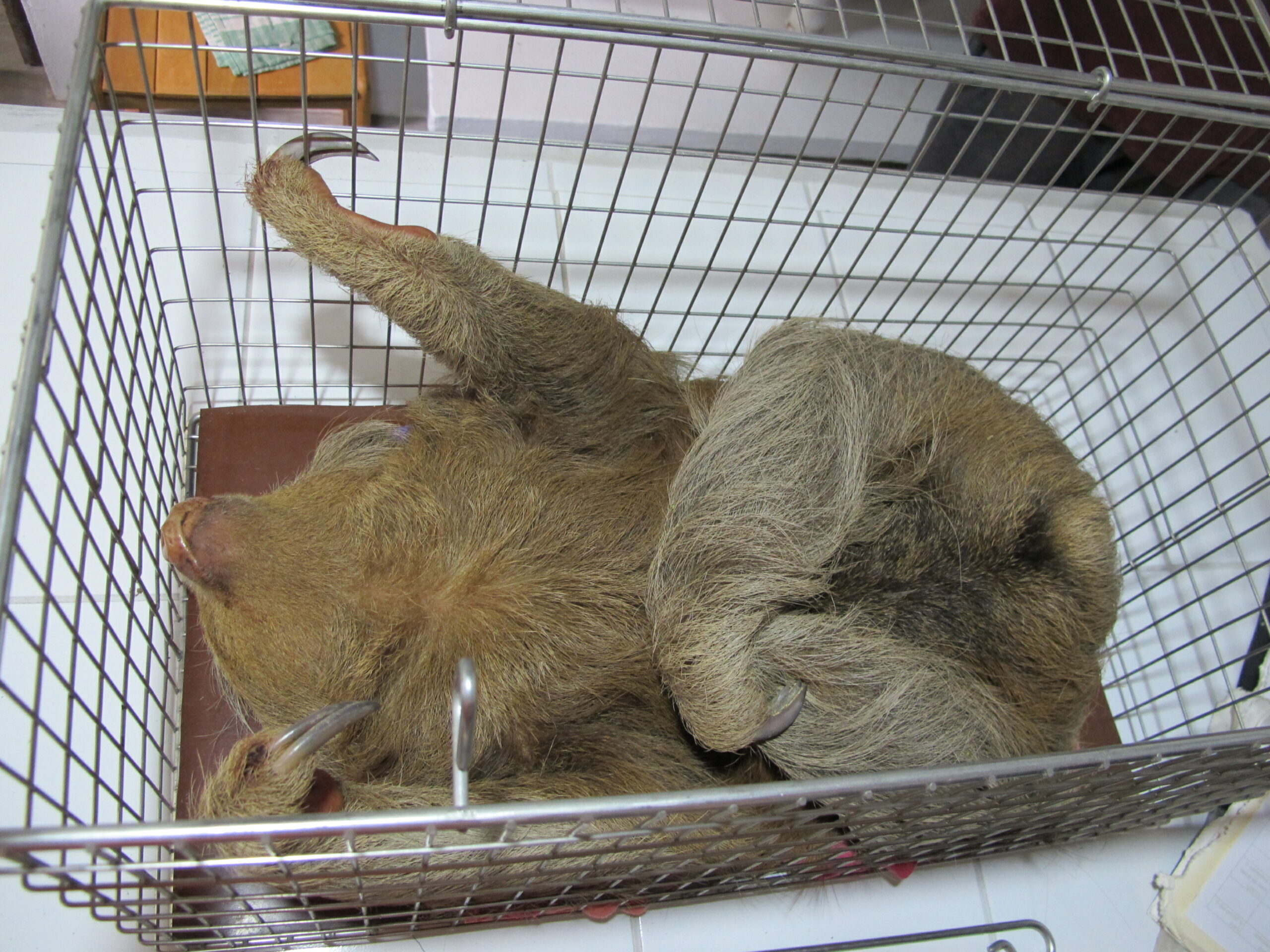
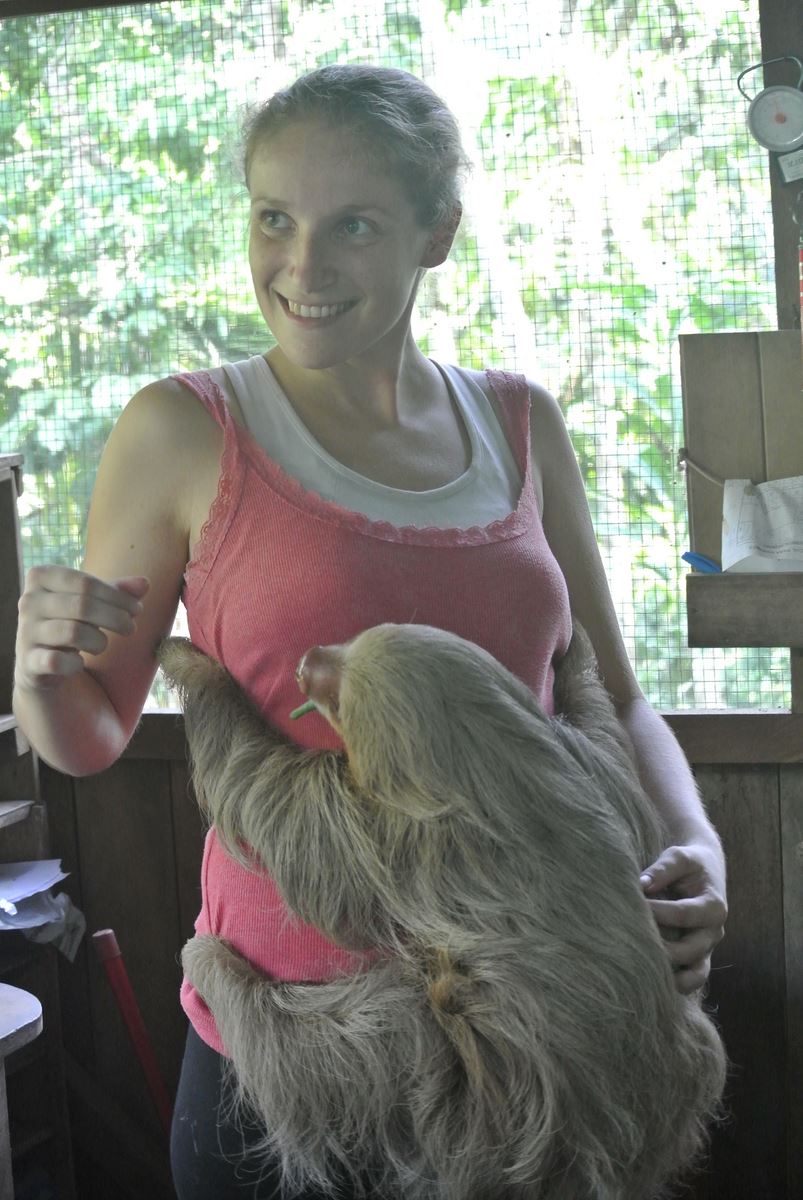
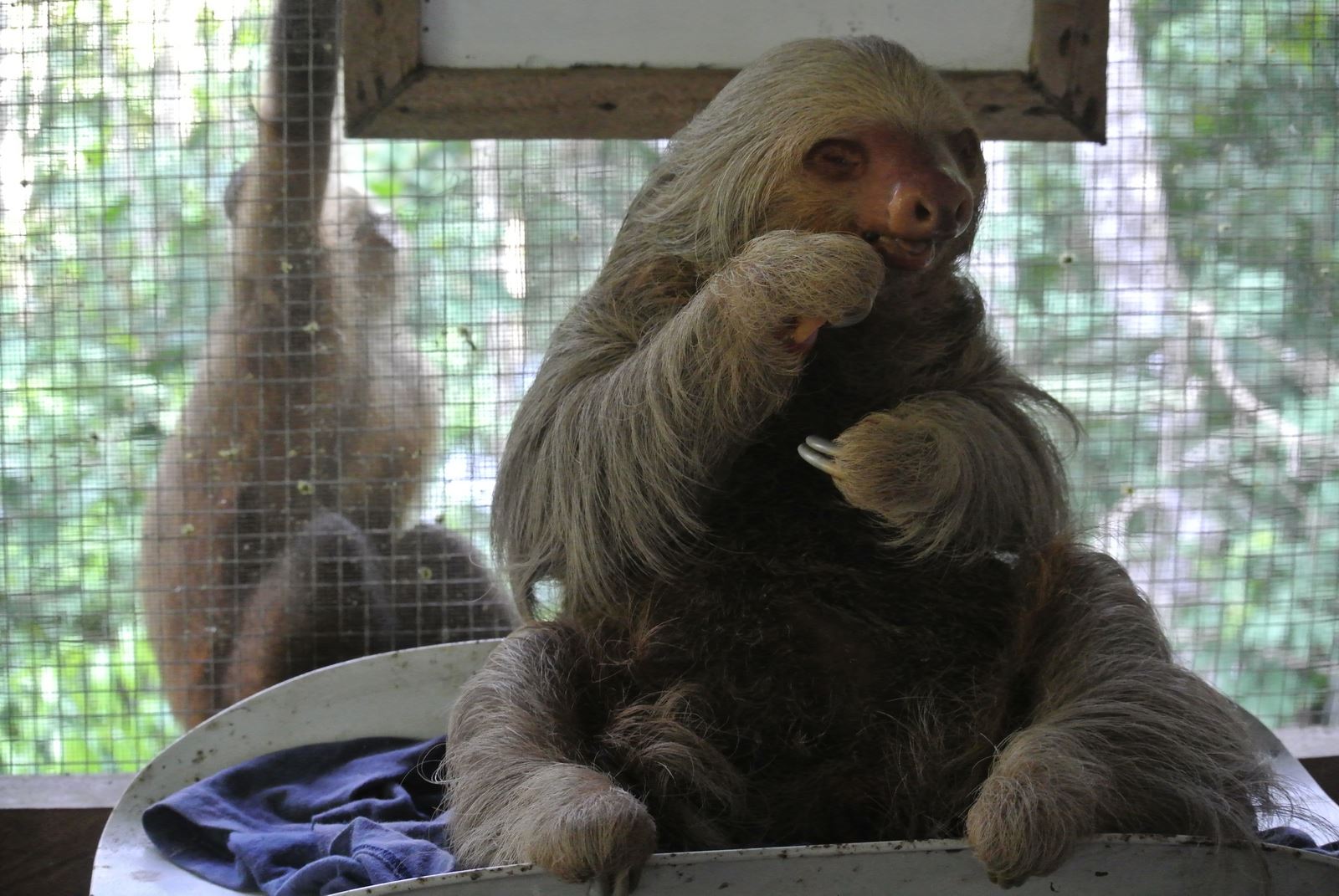
Elmo (sloth)

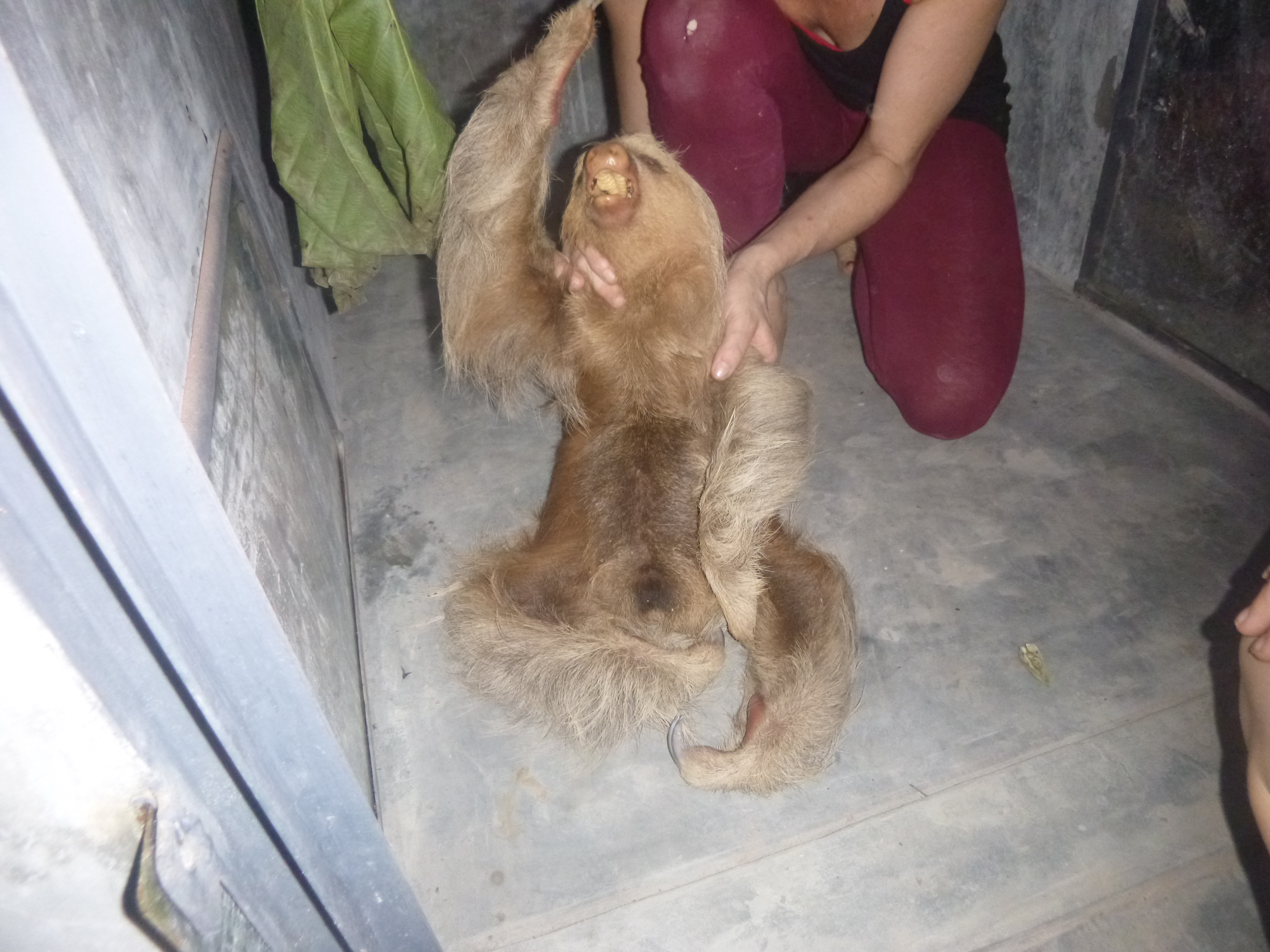
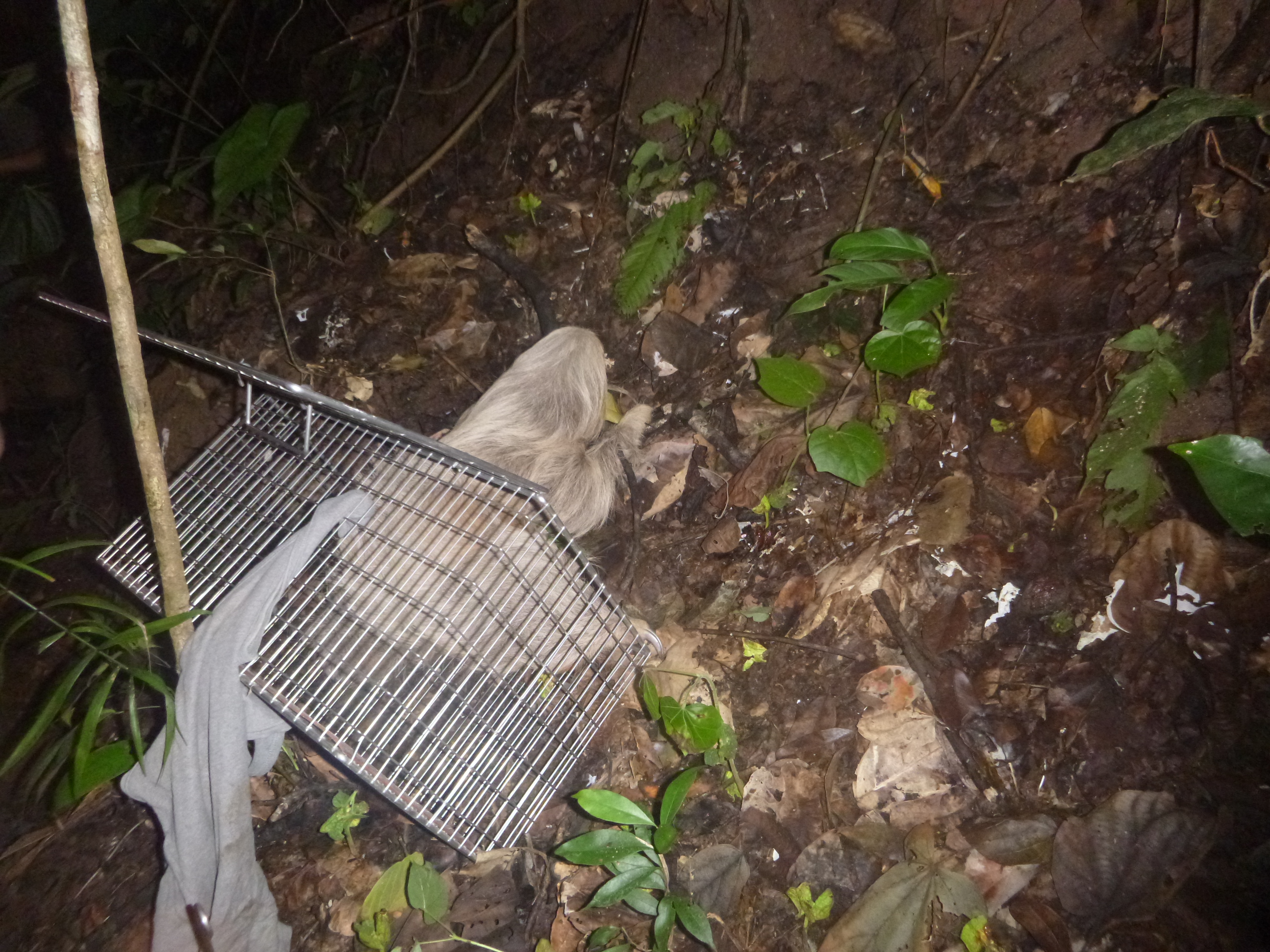
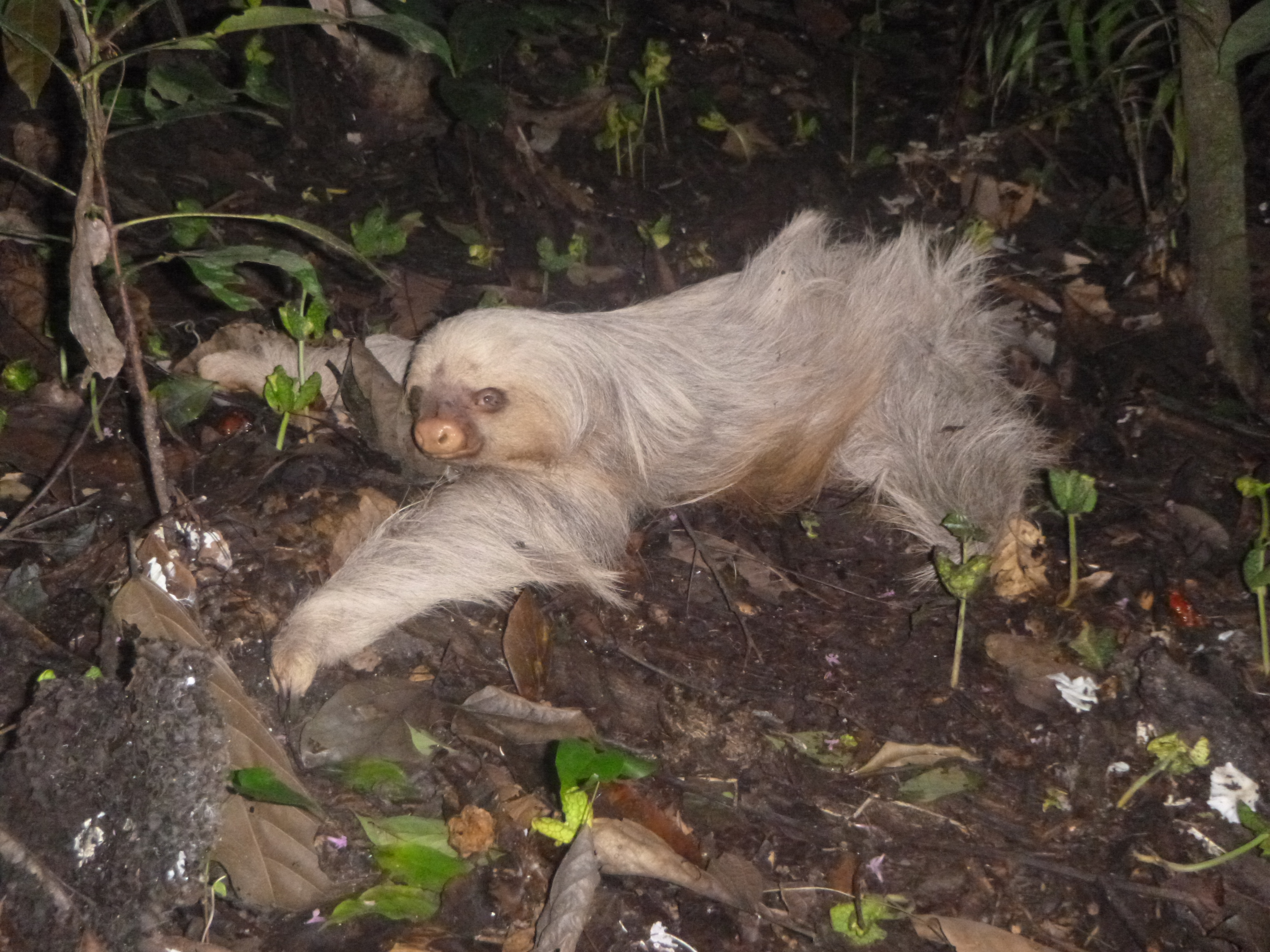
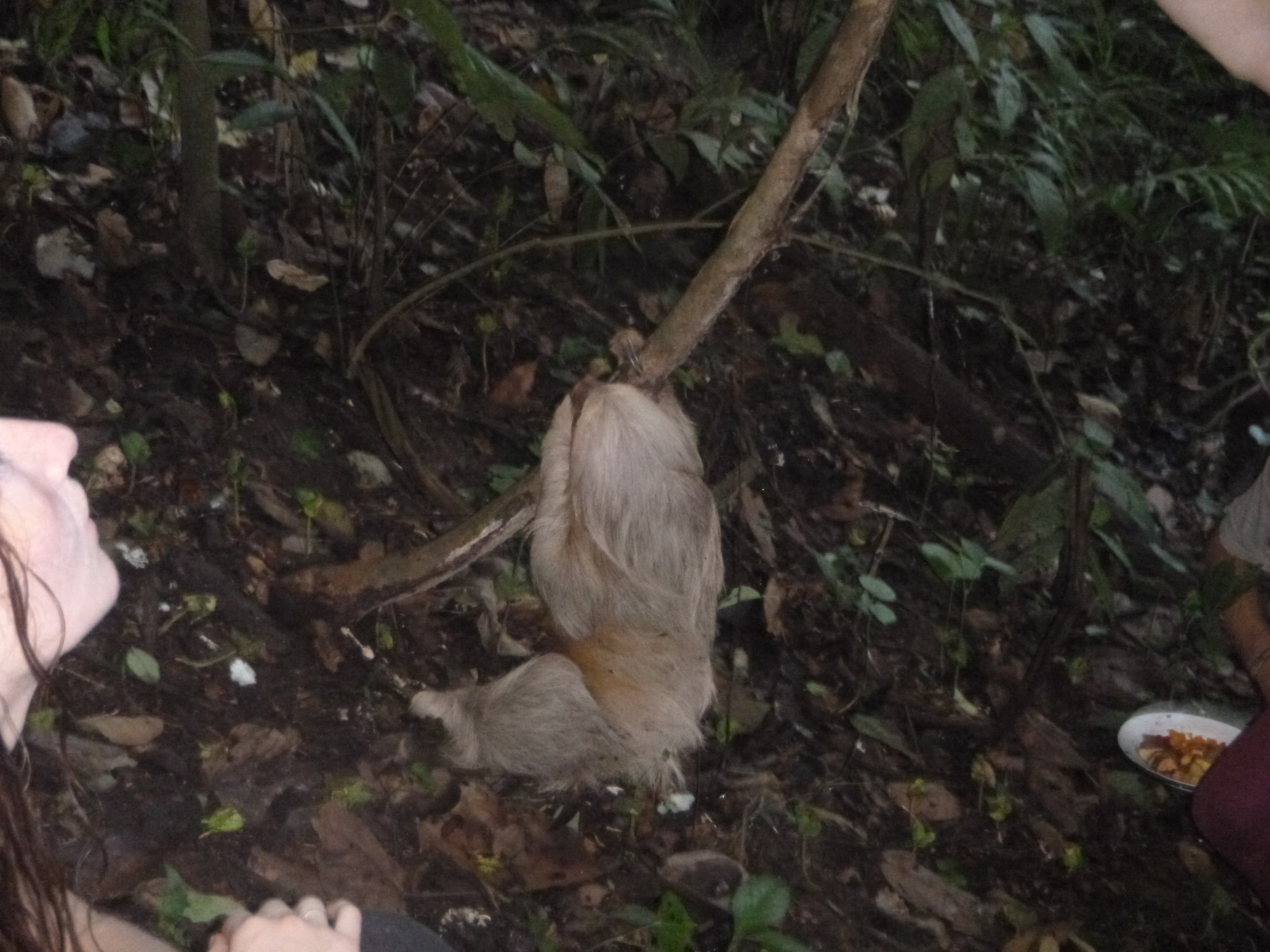
“Look, there is Elmo” said Geiler, one of the workers here at Esperanza Verde, probably not thinking about the impact these few words would have. Immediately everybody had a big smile on their face and stormed to the construction site of the new spider monkey cage where the sloth was sighted. What a nice surprise! This after several months of doing a no-show!

Construction
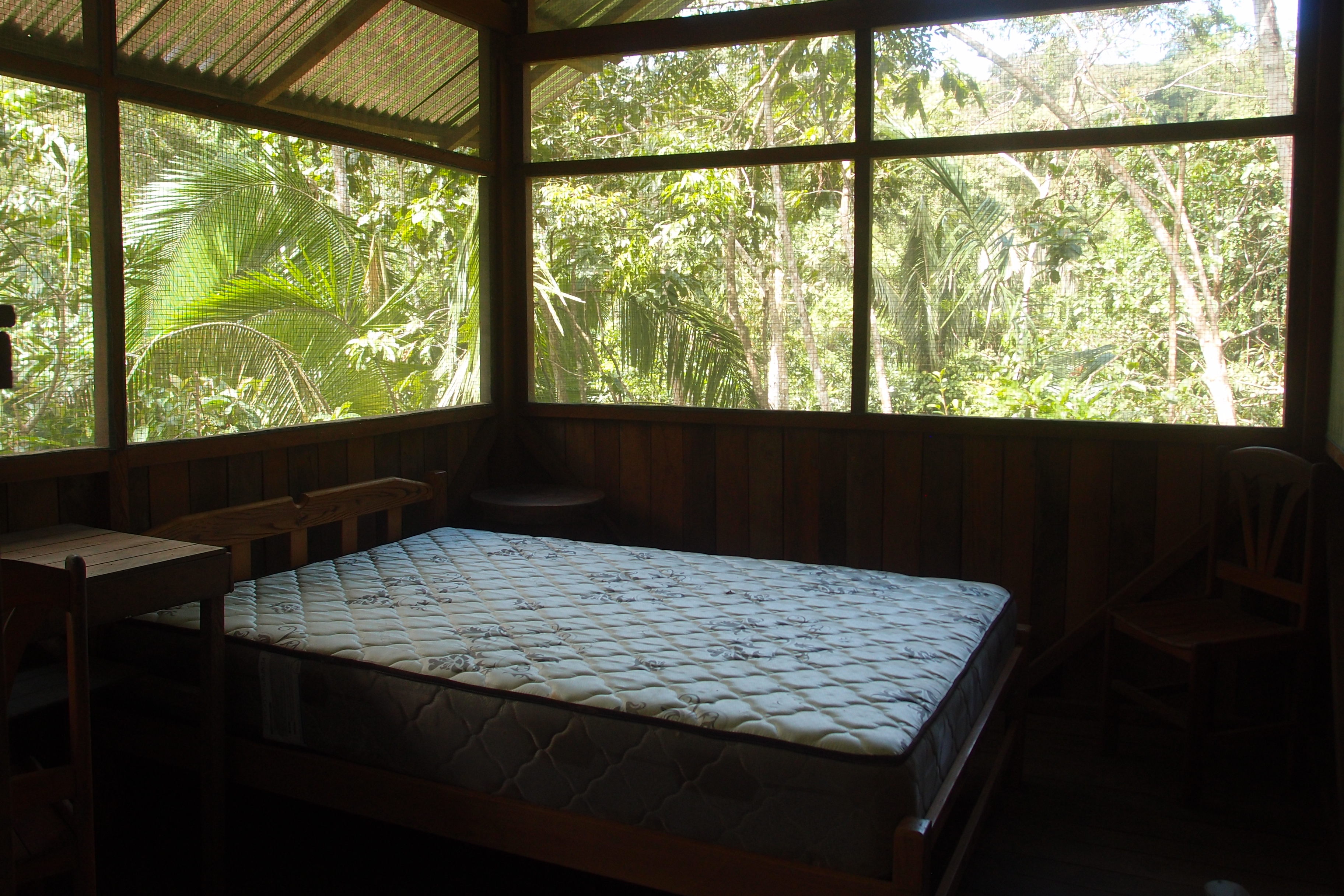
Cabin

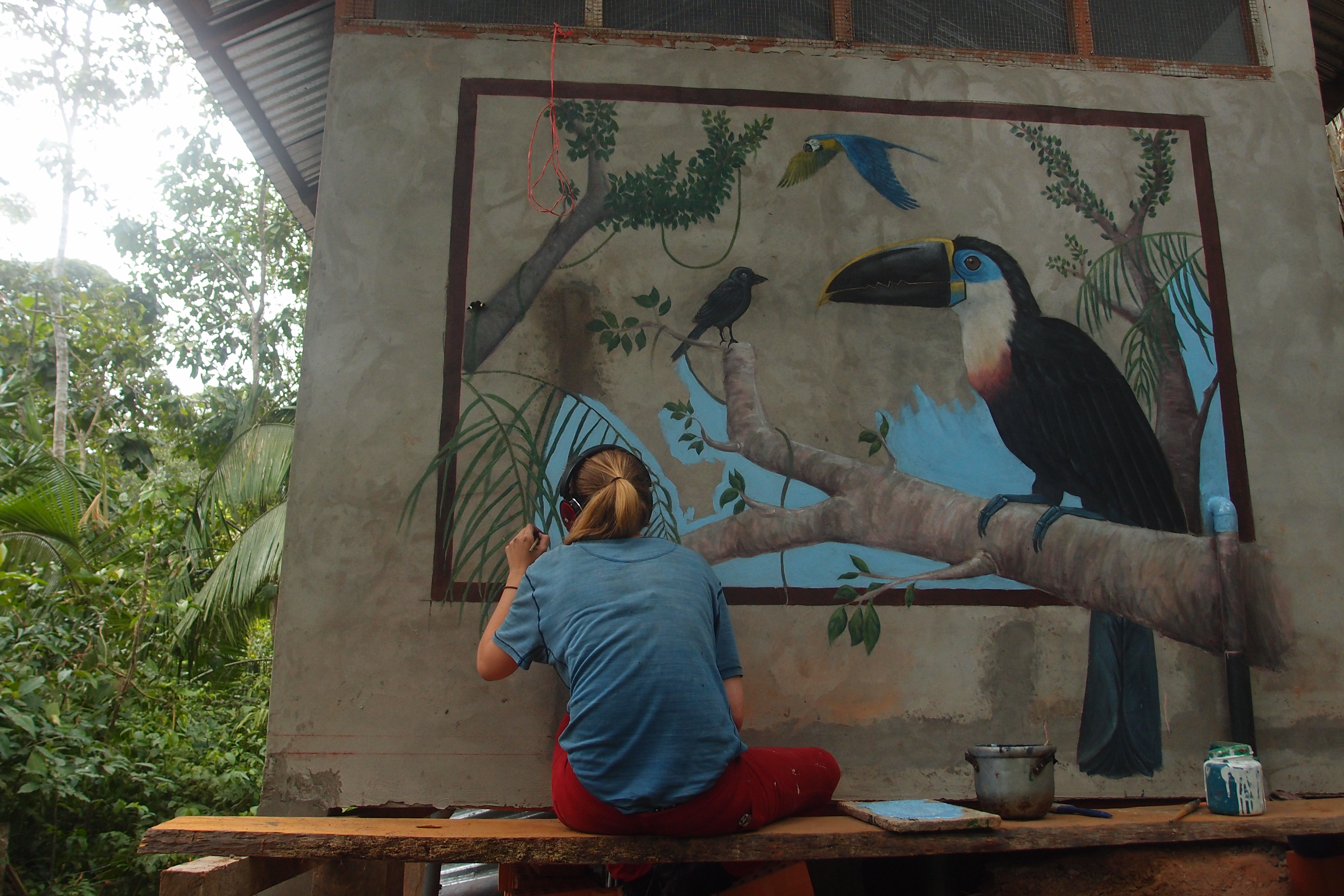
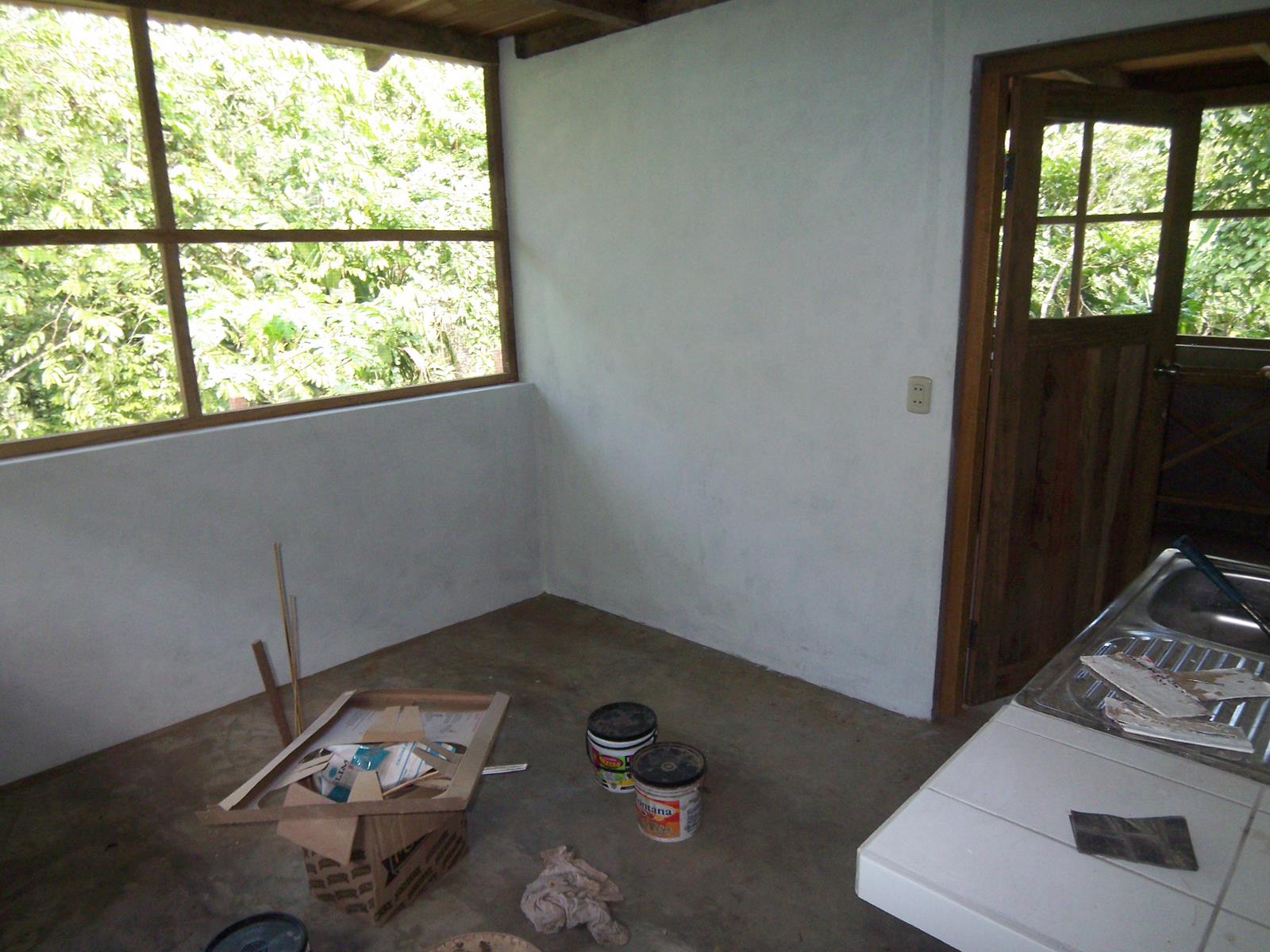
Bathroom: check!, Furniture: check!, nice exterior painting: check! Now it is only waiting for new (very lucky) long-term volunteers to be occupied by…
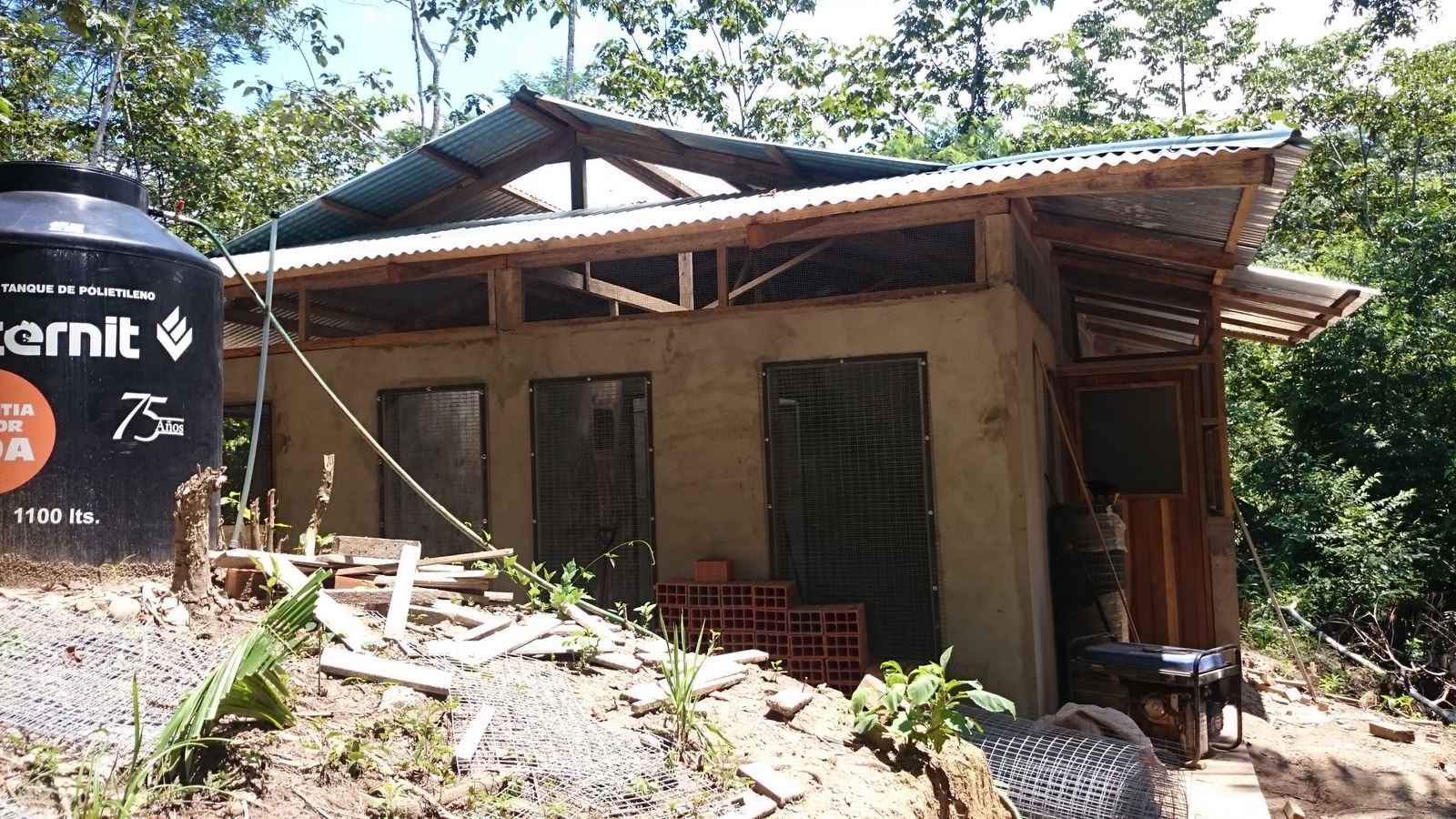
New spidermonkey enclosure
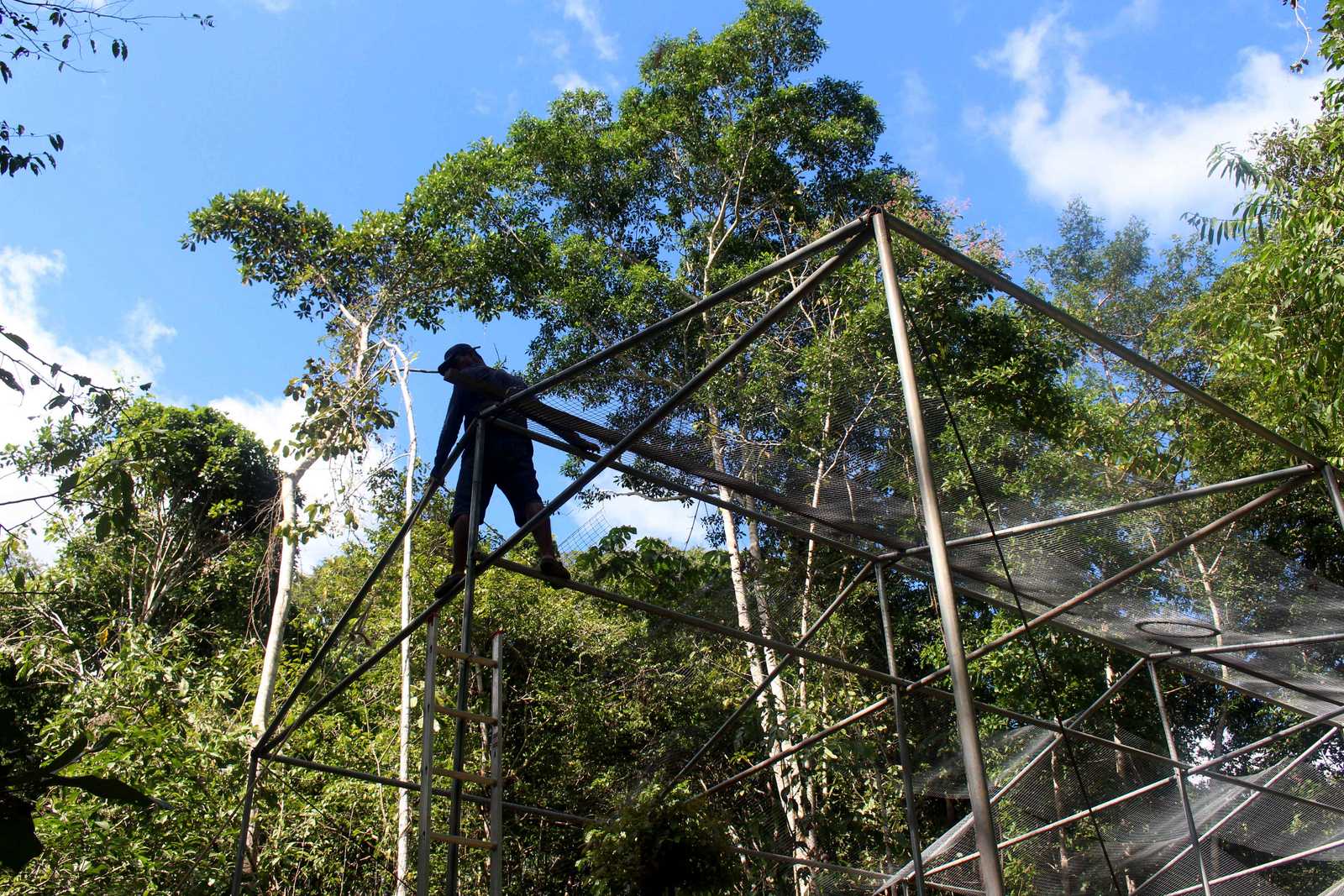
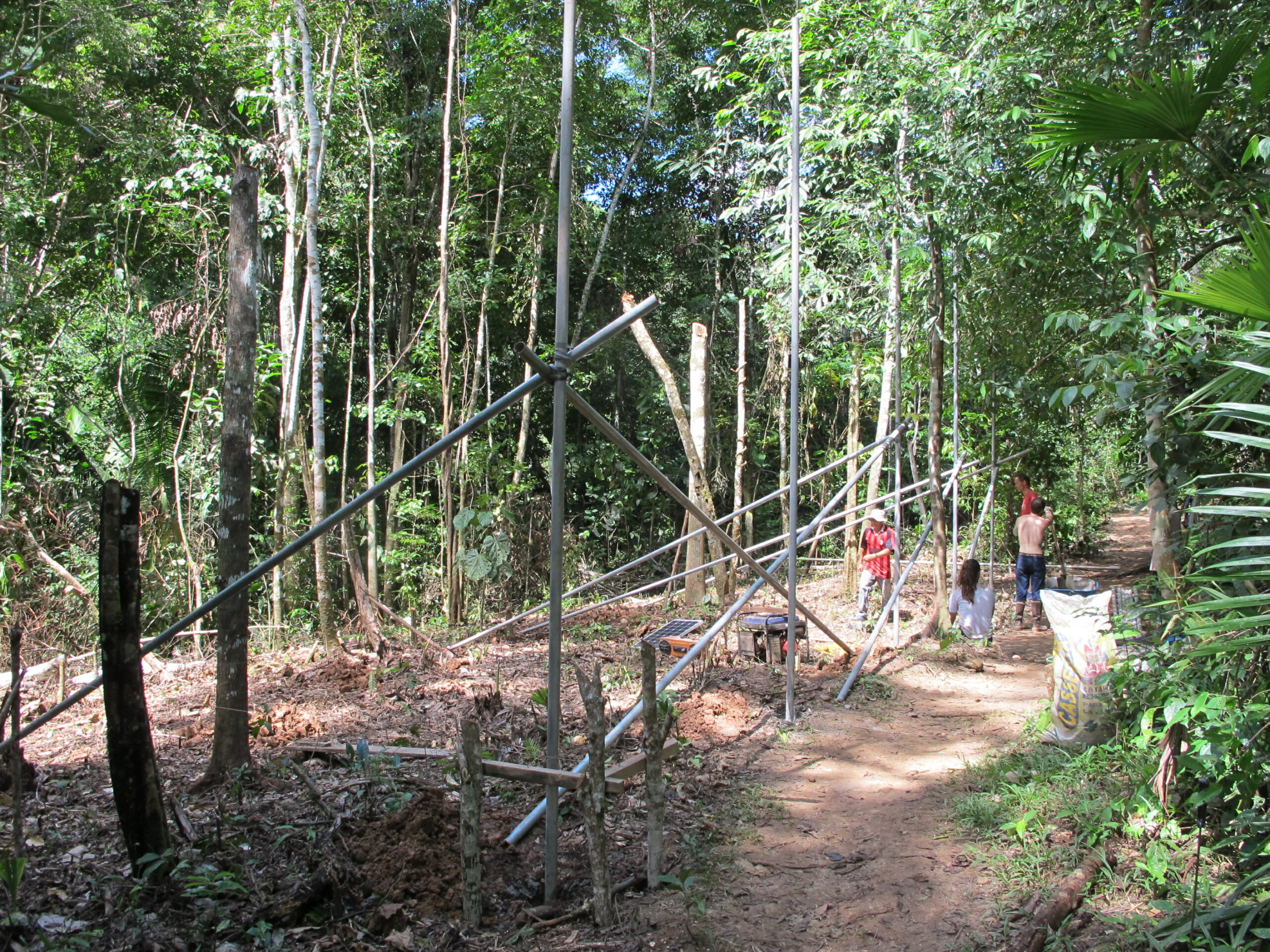
The new material that was ordered finally arrived, so we can continue the work on this new enclosure. This will be the biggest project for the time-being we will be working on.
Volunteers


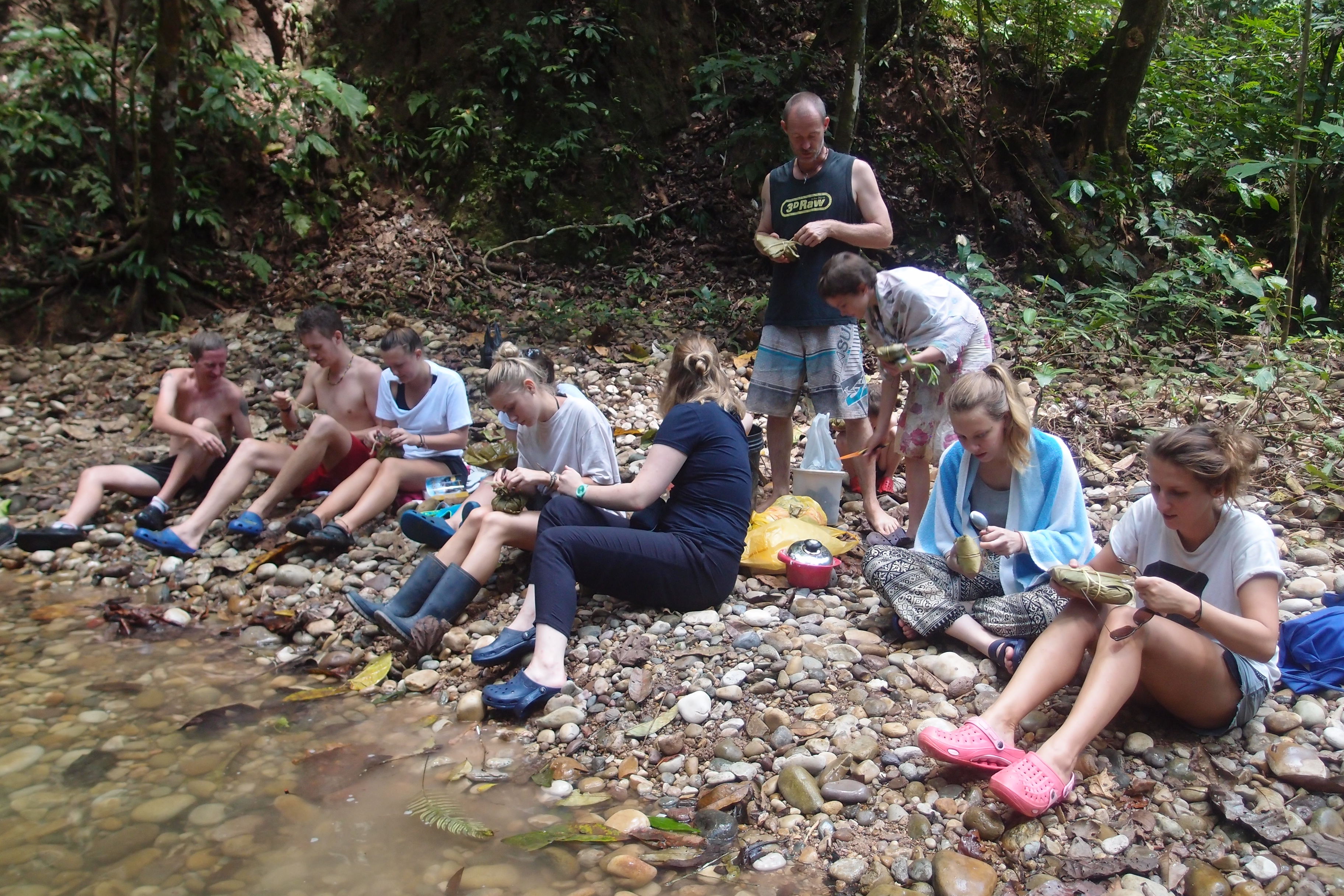
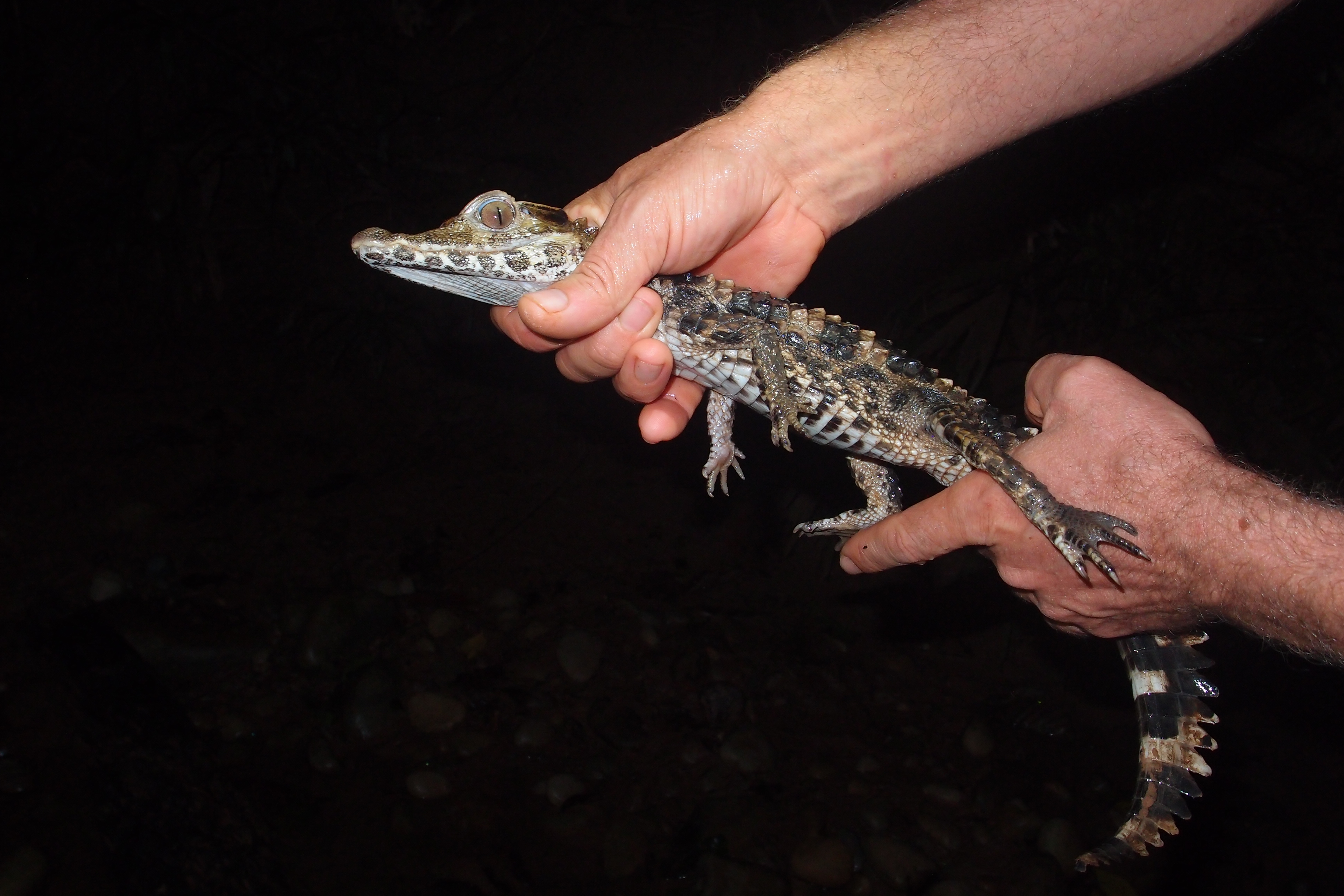
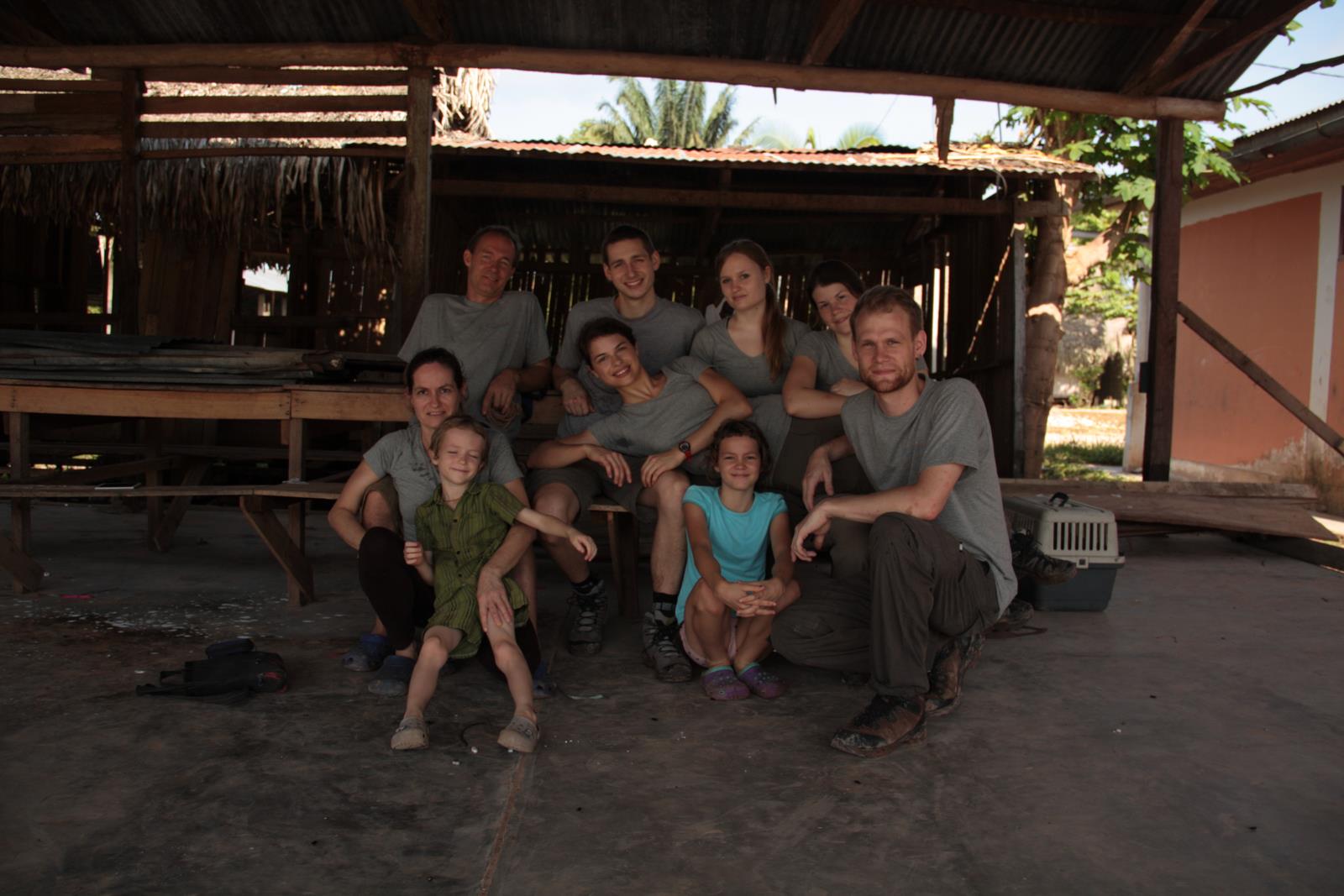
In the last period we experienced some very nice group activities such as two guided night walks with Douwe where we sighted a wild sloth, some caimans, snakes and loads of spiders. Also we had the chance to swim and jump off the big waterfall Regalia, do a forest walk and enjoy a delicious lunch in the jungle at the waterfall, on a local holiday. This made our stay even more enjoyable and exciting. Unfortunately, we also had to say goodbye to some very motivated volunteers: Melanie, Valentine, Lore and Mona – thanks for your hard work and great team spirit! And a big thanks to all supporters who enable us to keep this project running in this wonderful way it does.
Au revoir et à bientôt !
Esperanza Verde update / 20.05.16 – 10.06.16
Some weeks have passed here in Esperanza Verde and the last arrival of animals that Olivia brought from Pucallpa are now thriving and becoming a part of our daily routine. We are happy to have released more animals into the wild, as well as moving recovered animals from the clinic into cages. This leaves space to help new animals arriving in need of medical care and attention. From a tour to Pucallpa, Douwe brought back a young peccary and two tortoises, which the police confiscated from a bus.
Furthermore, life continues in the jungle and everyone enjoys seeing the many free animals around the house living in their natural environment in peace with the people around them.
Monkeys


Chiquita (baby female woolly monkey), Khali & Cinty (baby male and female capuchin monkeys)
The three baby monkeys are doing very well. They are all gaining weight now steadily, playing around with each other. They enjoy being with the older monkeys who are good at taking them along. They are getting more independent and we are now really working to distance them from people. For this reason we try not to have them on us at all anymore. Some of the babies and volunteers are finding it a bit hard though, but in general it is going very well. Especially Chiquita is becoming very independent and hardly seeks human attention which is really great!
Sira (female night-monkey)
Sira is doing great and is really enjoying her playtime with the other baby monkeys in the afternoon. We have been getting her used to one of the free cages at the clinic, and recently she spent her first night there. After having been 3 months at the family house, it was about time. The change was stressful at first for her, but she seems to adapt pretty well. In the afternoon she spends time with the baby monkeys outside and stays with them in the outside cage till about 9pm.


Lupa (baby female woolly monkey)
Lupa still doesn´t seek for human contact which is very good. We moved her out of the clinic into the outside (Roko) cage where she could get used to the monkeys around and sleep with the three other baby monkeys at night. After a week she was released to stay outside with the other monkeys. Willow directly took her on his back and carried her around, but unfortunately he does not always keep a keen eye. On the second night he left her behind at Rincay, the tapir, and she was picked up by Yanay, the female spider monkey. We took her in for some nights, as she did not seem to have eaten a lot and lost weight. Now she is outside again, but seems to have learned and comes to drink milk and takes some food from us. Willow is still claiming her a lot though!
Xira (female young white-fronted capuchin)
After her release in mid-April, Xira, has been doing fine playing around in the trees. However, we started to notice that she was getting very skinny which is why she is now getting milk twice a day to help her gain some weight again.
Other Mammals

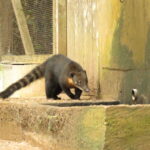
Kimsa (female coati)
After her release, Kimsa at first looked better but after a while her eye infection started to get worse. She was not walking around a lot anymore and mostly stayed near the volunteer kitchen. It was therefore decided to bring her back to the clinic to treat her and help her gain strength. Very sadly she gave up after one day in the clinic and left this world. The autopsy showed that the cause of death could have been many… Her eye infection had eaten some of the bone around it and might have also spread into her blood. She also had a lot of parasites in her intestines and even had a little internal bleeding from a fall as it looks like, but we do not know for sure. To make the story even more sad, we also found two small babies inside her which could have been born any day. Kimsa was a fighter but unfortunately very unlucky.

Zambo (young male tayra)
What seemed like a never ending de-worming treatment, it has finally ended. After many weeks Zambo is parasite free! But then the next thing came along, when an observant volunteer found maggots hiding inside his feet. Later on, it turned out that they were in his paws, mouth and under his eye lid. After an intense treatment he is now doing better and we hope no more things will show up. He is very curious, sniffs around a lot and goes out for a walk on a leash outside now. He is a strong and now very happy boy!

Milo & Chula (male and female agouti)
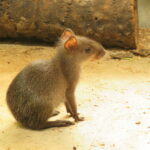
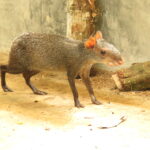
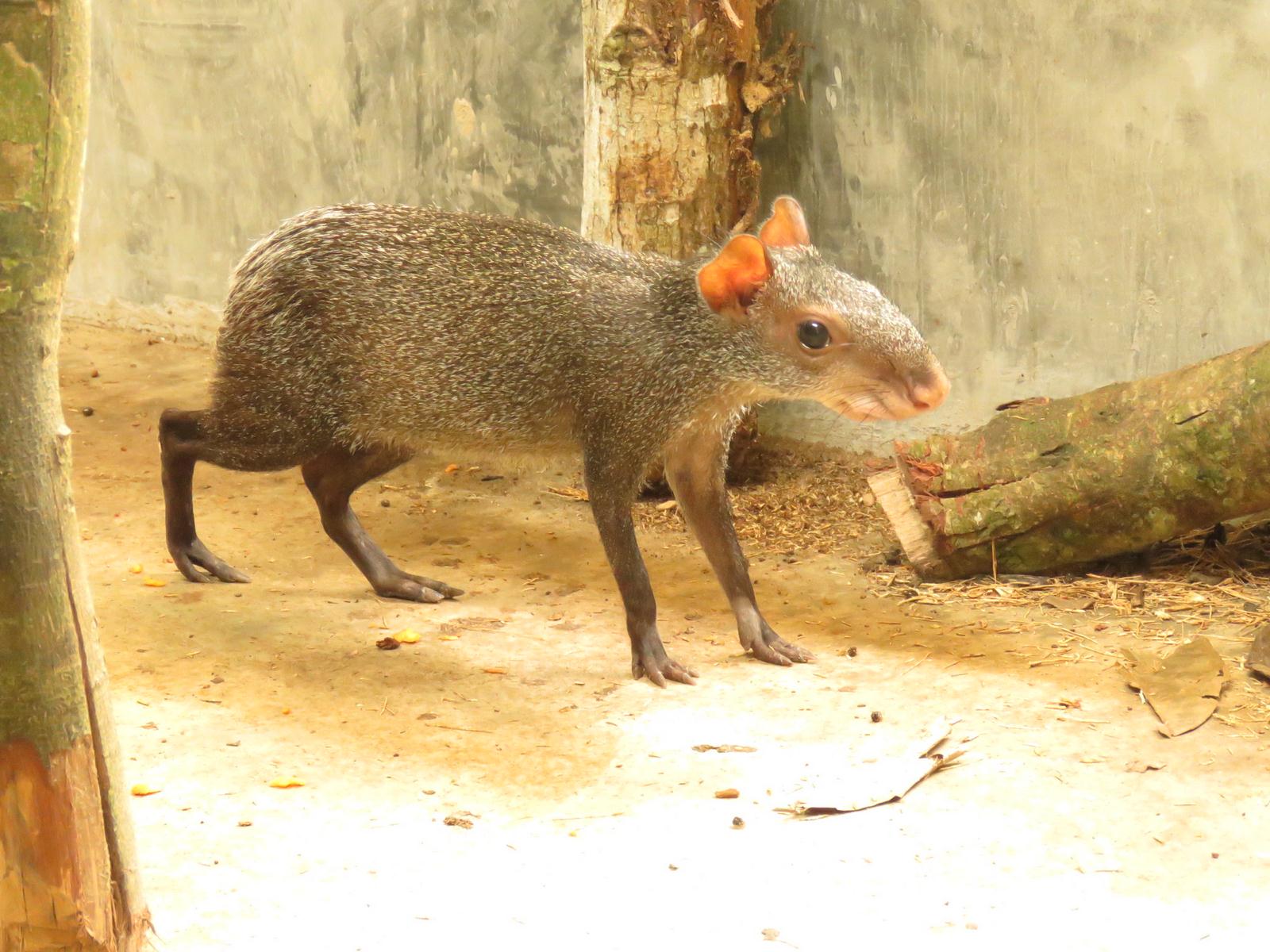
After some time being quarantined in the clinic the two agouties have been put into the reptile enclosure. Chula the juvenile probably jumped over the fence and was shortly outside, but seemed to have jumped back in again. She and Milo have been seen now regularly and seem to do well there. Of course if they decide to and Milo is big enough they will have the change to jump to the big world themselves someday.

Kohana (baby female peccary)
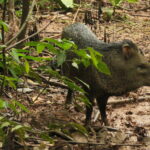
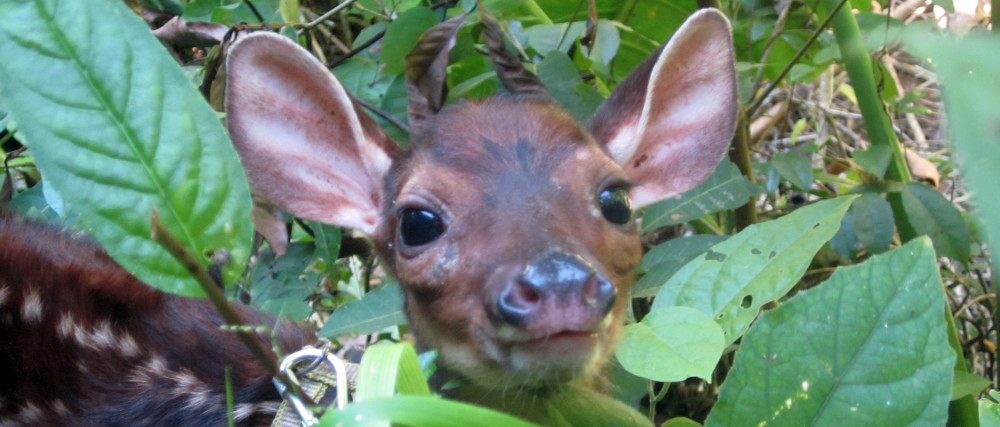
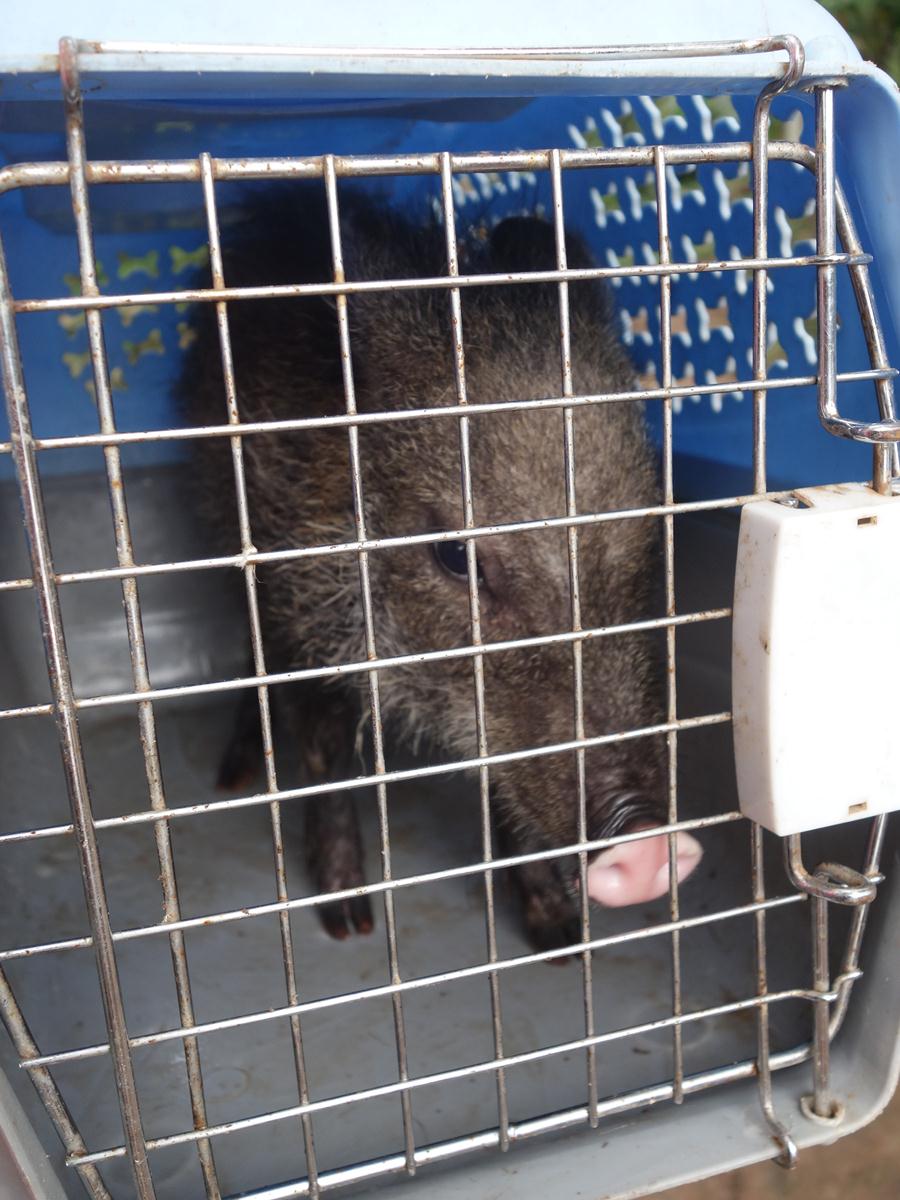
Our new arrival, a three-months old peccary brought by Douwe from the Ministry in Pucallpa, is now staying at the enclosure around the family house together with Ringo (the deer). After some de-worming she is doing very well and is always happy to welcome people to the house. In some weeks we are planning to put her into the cage with Quintisha so they can enjoy each other’s company.
Birds

Parakeets
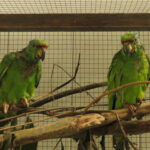
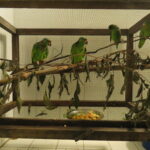
The 120 Parakeets in Igor cage are still getting ready to fly. Approximately half of them still need some more time to recover and grow back their feathers before we can release them.
Cobalt winged parakeets, Festive Amazon parrots and Blue headed parrot
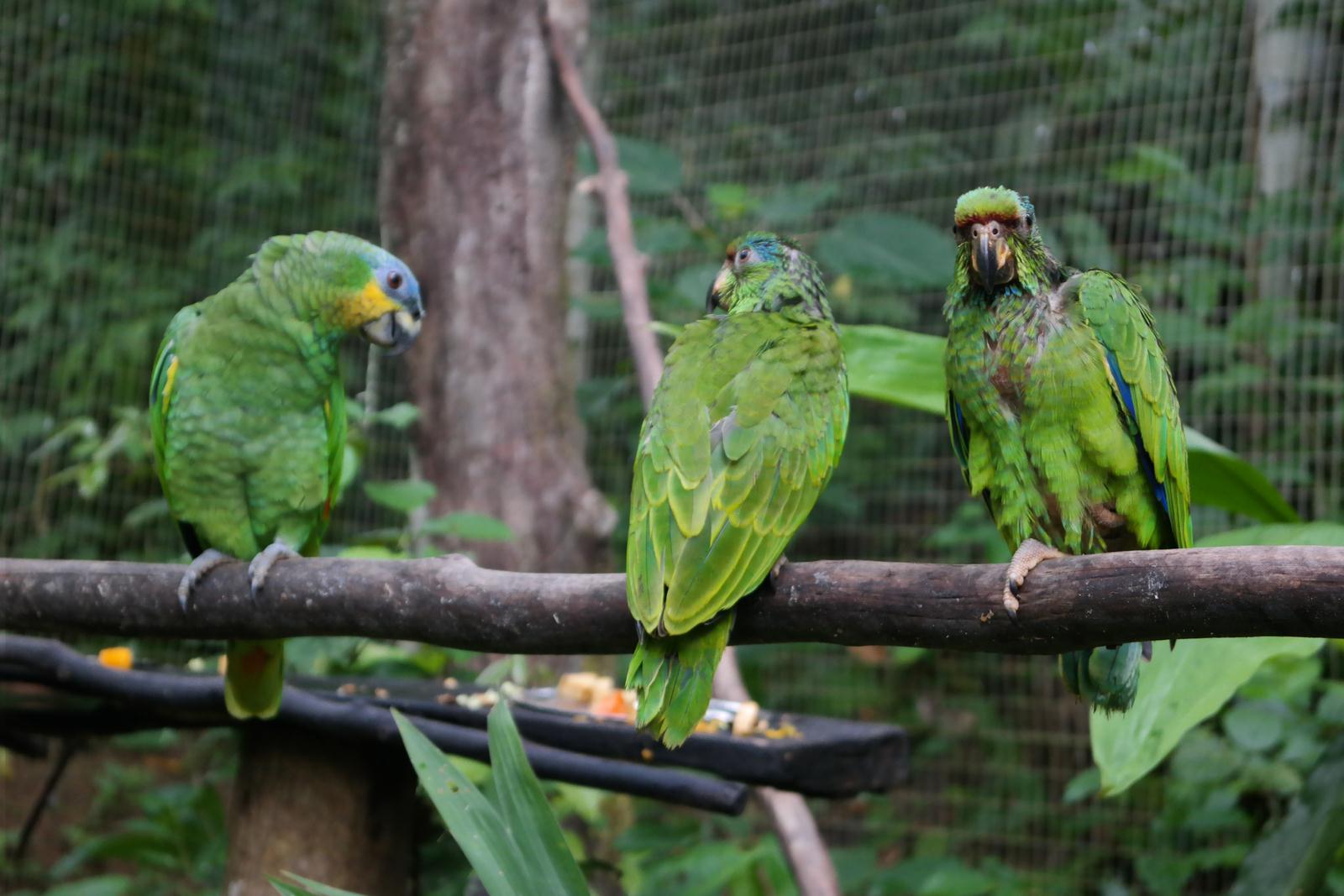
The cobalt winged parakeets and the festive amazons have been good in the clinic and past their quarantine period. The parakeets have been introduced into Igor cage, and are doing fine. The Festive amazons, Dali and Kipa, are now in the aviary and already after 15 minutes were happily eating together with some of the orange winged amazons.
Furthermore we just had a new arrival, which is a blue headed parrot staying in the clinic now. It was brought by a local boy from Bello Horizonte. Apparently it was caught in his uncles fishing net. It might be a wild one, just a bit in shock, and as soon as it has had its medical check-up, and we are sure it can fly well, we might be able to release it again.

Shakalaka, (speckled chachalaca)
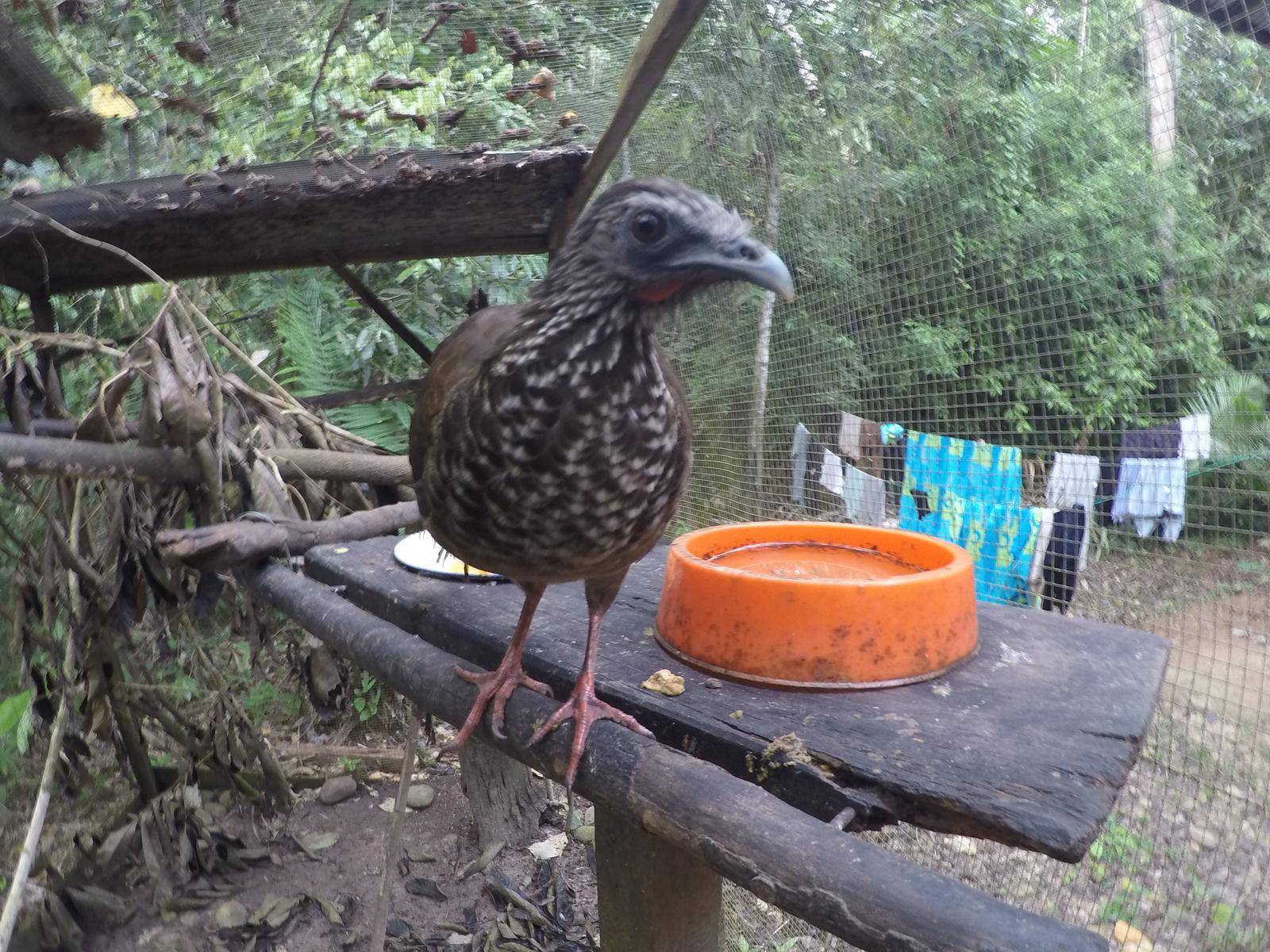
A bit more than a month has pasted since Olivia brought this beautiful bird from Pucallpa. Shakalaka is now good and healthy and has therefore been let out of its cage. She can fly enough to be able to get around and stay out of monkeys’ harm! For two days she has been out under the watchfull eye of a volunteer, but on the 3rd day she did not want to come out. We will see….She is a tame bird, and it will take some time for her to adjust to all these animals living out here as well.
Reptiles
The two yellow footed tortoises, that were at the clinic, have been treated for parasites and have been moved an outside enclosure to spend their quarantine period.
Their place in the clinic was quickly taken again by the two tortoises, Douwe brought from the Ministry together with Kohana, the peccary.
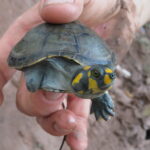
The three legged yellow spotted river turtle has happily moved in with the other turtles in the reptile cage.
Construction
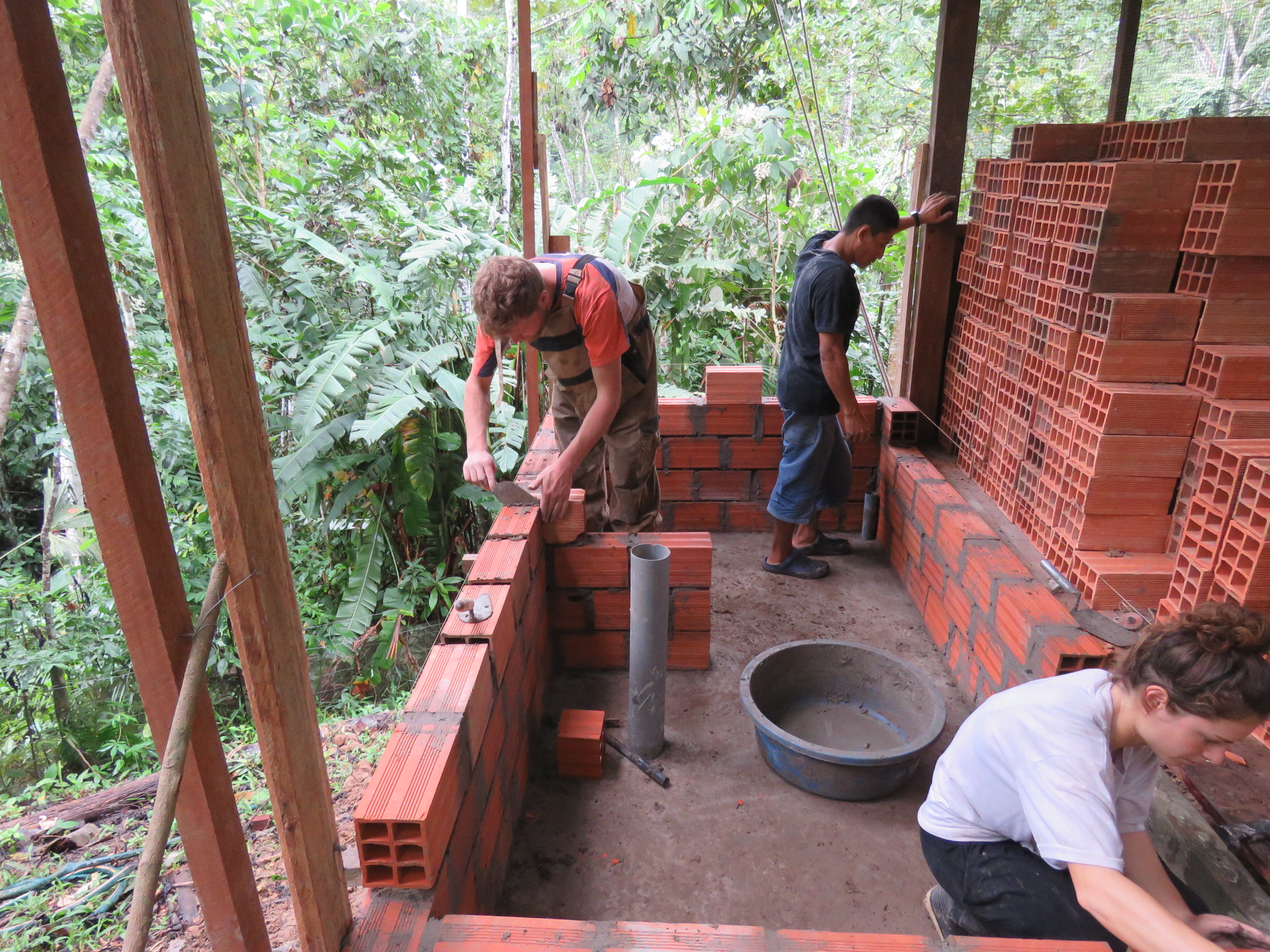
In between a lot dry days, we did have three days with a lot of heavy rain. This resulted in the river rising and the construction workers saw their chance to transport construction material much more efficient than normally as they could take it across the big river up to the small stream leading up to the volunteer kitchen.
Cabin
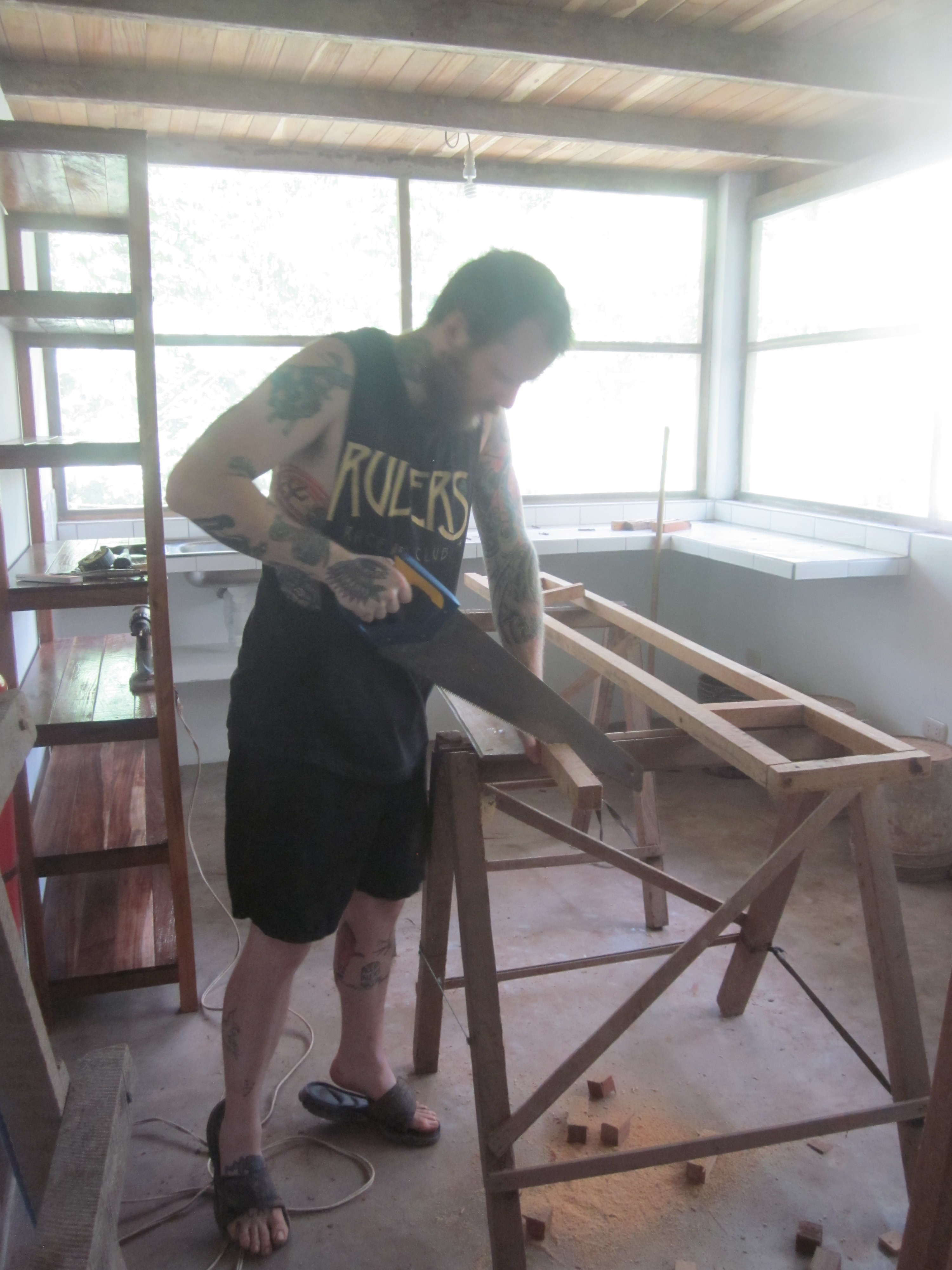
The material for the spider monkey cage still hasn´t arrived, so instead the construction time has been used to finish the cabin. All the mosquito mesh in the room is finished and we have been digging a big hole outside the cabin for the latrine (septic tank). This is now being build up so it will be ready for the bathroom that is being finalized with tiling.
Volunteers

In the last period we have had to say goodbye to some long time volunteers. Amongst them, Dominik, who had been here for nine months, gave a goodbye party for the total of four volunteers leaving the next day. In this group was also Morgane our head volunteer. We thank her for her hard work here and welcome Lore and Kimberley as our new head volunteers. When people leave new people come, that is how it works here and we are happy to welcome many new motivated volunteers who have already started with helping out.
Thanks to all the volunteers and donations that make all this possible! This little green hope in the jungle is growing bigger and bigger every day and love to watch the changes happening.
Cheers!
Esperanza Verde update / 22.04.16 – 20.05.16
After a calm week with less and less animals in the cages, due to a lot of releases, we received a couple of new ones to bring more variety back into our daily routine. The Ministry confiscated a few animals and phoned us. As they were not able to come here Olivia travelled to Pucallpa to have a look. She came back with a bit more than we thought but this is not surprising, as the animal trade in this region is such a problem, and there is no other rescue center to turn to.
Monkeys
Chiquita (Baby female woolly monkey), Khali & Cinty (Baby male and female capuchin monkeys)
The Babies did recover since the last update. All three of them are together again and playing outside as much as possible. They are also slowly gaining weight again. We still try to distance ourselves more from the monkeys, but it proves to be hard – especially for the long term volunteers. That in mind, it is fair to say, that they do very well outside and are eating and drinking good.
Willow, Kamari & Nakoya (Woolly monkeys)
As always an honorable mention. The “old” woollies are still around of course, but with all the new stuff happening, they sometimes get lost in the updates. Kamari and especially Willow start to show dominant behavior. They are protective around the babies and their canines are getting bigger every day. They break more branches while playing to show off their strength, too. We need to be really strict with the no-touching policy now, to keep them in a healthy distance towards us humans. That is better for them and for us as well. Nakoya on the other hand is only around the volunteers when there is food involved. We found out that she had parasites, so we had to deworm her. Now she finally seems to grow in weight.
Sira (female night-monkey)
As a result of the arrival of several new animals we had to occupy the cage, which we´ve been using for the night-monkey, for another animal. So we changed strategies and put Sira together with the other baby monkeys for some hours and the end of every day. Although she´s the smallest, her energy seems to last forever. Perfect for a play fight with the others and the more adult monkeys.
Lupa (Baby female woolly monkey)
Lupa is one of the new arrivals from this month. She is a young woolly, a bit older than Chiquita. She arrived in good condition and is not used to a lot of handling by humans. But the curiosity is strong in this little monkey, whenever we feed her, she closes up to us to see what we are doing. After a bit more than a week (having had a medical check-up), we transferred her to the baby monkey cage. All of them get along well, but for the moment only Chiquita, Cintyh and Kali go outside during the day.
Other Mammals
Kimsa (Coati)
One of the recent released coatis showed up with an infected eye. Having always had one bad eye, we didn’t expect much from the treatment at first, but it showed that under the infection Kimsa still has a healthy eye. One of the volunteers has a veterinarian education and put it upon herself to treat the coati until the eye gets better. Naturally we had to put her in an enclosure for the time, the clinic is in full use! She looks now much better and was released just recently, directly roaming the forest floor for insects and worms.
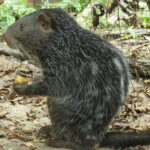
Takari, (male paca), and Capac ( male pacarana)
Both are new arrivals and both are rodents. They are nocturnal animals and therefore not active during daytime. Both are in very good health, they were very well taken cared for where they came from. This is something we rarely experience with new arrivals.
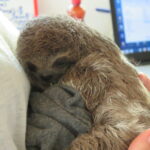
Suyai (about a month old baby three toed sloth, female)
The most notable arrival is probably the baby sloth Suyai. A three toed sloth, unlike Elmo (two toed sloth). Everybody went crazy over this cute furry little friend. One of the volunteers nearly fainted even! Three toed sloths are extremely hard to raise, though. Apparently most of the young sloths raised by humans, die within the first 3 months. That´s why only Olivia and Douwe almost all the time take care of it. They take it upon themselves to feed it milk and leaves, so it gets the highest chance of survival. Unfortunately it was not to be. After 14 days with us, he had diarrhea, and within 2 days he died. We knew it would be hard, or even not possible, but without hope you can’t keep going. Therefore as well the name Suyai, which means hope. We are very sad it did work out, as it really seemed promising. It all went very quick….
Zambo (young male tayra)
Zambo was a case to worry a bit. He arrived with one blind eye, and another seemingly infected possible also blind eye. Also the smell of the fur indicated, that he has been troubled by parasites or illness. So he got a cage in the clinic, where we treated his better eye and took feces samples. As expected we found a lot of parasites and started to deworm him. Sadly the eye seemed to be untreatable, which makes him a blind animal. But he is gaining weight since the arrival and he also started to climb without eyesight to the top of his cage, after effective training by volunteers. What a brave animal! In the future we might be able to walk with him on a leash outside, just like Pepe, another Tayra, which several might remember from the early beginings of Esperanza Verde.
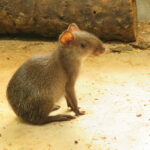
Milo & Chula (male and female agouti)
Another pair of rodents. Milo was brought to us by locals from nearby town and is still very young and also accustomed to humans. For a normally very shy and nervous animal, that is a bit extraordinary. He had his cage outside first besides the Volo House. Due to his small size, he could always escape to the front cage. So we decided to put him together with Chula in the clinic. Chula came with the other animals brought by Olivia from the Ministry and is – unlike Milo – extremely shy and nervous. Fortunately they get along well and even share a trunk together.
Birds
Parakeets
The Parakeet releasing is on halt, as we are now left with the last group of parakeets, of about 120, which all still have to grow back their feathers for a good flight. We still see several parakeets flying around every day. We have to be realistic though as we know not all of them might have survived, but we of course hope most of them made their way back to the wild again.
Pauki (Oropendola)
Pauki is back, ladies and gentlemen! After a mysterious absence of over two weeks, the lovely bird with his beautiful cry appeared again in Esperanza Verde. He seems to do fine on his own, but we love to have him around of course.
Cobalt winged parakeets & Festive amazon parrots
Alongside with all the rodents and woolly monkey, tayra and sloth, four birds arrived as well. All of them seem to have had experience with humans and are not too wild anymore. The festive are really nice looking parrots, but are not in very good condition at the moment. They share a cage with two vicious but very happy parakeets, that take every chance to pick your fingers while you´re cleaning the cage. They don’t just defend themselves when you come to close, they go for the attack. But then again, they can also make a nice whistle. Very funny birds.
Shakalaka, (speckled chachalaca)
Also together with all the animals Olivia brought from Pucallpa, was this beautiful speckled chachalaca. Very tame and always curious when you come up to feed him. We hope he will have a future here in Esperanza Verde outside, like Pauki, roaming around and visiting us frequently.
Supay (Shiny cow bird)
Some very sad news for the last part of this section. We have to announce the departure of a chirpy young bird. Supay fell victim to a boa in the aviary. It happened after work time, probably during the night. Nobody expected such thing to happen and his death is a tragedy, especially for long term volunteers. He was always super active, sitting on the volunteers, attacking them or just singing in the morning while everybody is cutting food in the bodega. Rest in peace Supay.
Reptiles
Next to the mammals Olivia brought were two yellow footed tortoises and 9 yellow spotted riverturtles of different sizes. The two tortoise are in the clinic for anti-fungal treatment and the turtles are in the enclosure surrounding the old office (the MOMO-cage) for a three-month period as quarantaine.
A woman from Bello Horizonte handed another, very small yellow spotted river turtle to Kayla It is only three legged but seems to do fine in a small pond in the clinic.
Construction

Cabin
As we are still waiting for the material from Lima for the new spider-monkey cage, we started with a new project: the cabin. It is basically old office being rebuilt. We will built an extra toilet and shower attached to it and remodel the room, so people can sleep there in peace (which can be important for head volunteers). At the moment the walls for the sanitary installation are almost done, but the mosquito mash in the room still needs redoing.
Volunteers
At the moment of writing the group of volunteers consist of 12 people. It is a very motivated group of people, be it for the animals or in construction. With the clinic done now and a lot of new, young animals people we sometimes have to work overtime, but everybody enjoys it to the end. Soon there will be a shift though and a good part of the group will leave. But as always we await more motivated people with new energy and enthusiasm.
Thanks and greetings from the jungle!
Esperanza Verde update / 01.04.16 – 22.04.16
The waning of the wet season here in the Peruvian Amazon has not been accompanied by a respite in things to keep us occupied! It has been a busy few weeks; whilst the end of the strike in the surrounding settlements meaning normal routine was restored, all manner of developments, both expected and otherwise, mean the work is no less taxing. The departure of several long-term volunteers have lead to a new stock of workers taking on the great responsibility of ensuring the smooth running of the center; a challenge eagerly accepted by all involved.
Aside from the eagerly anticipated restocking of our kitchen due to the conclusion of the strike, the process of releasing animals has resumed, with several of our residents being let loose. Of course, as one would presume working in this field, the releasing of the animals is accompanied by varying degrees of success, so difficult is it to predict exactly what impact environmental aspects will have on these creatures´ wellbeing, and vise-versa… expect the unexpected!
Monkeys
Chiquita (Baby female woolly monkey), Khali & Cinty (Baby male and female capuchin monkeys)
The last couple of weeks have been difficult for our babies. Recently the volunteers have been in the slow but steady process of distancing ourselves from the babies (a sad but necessary task!) This, on the whole, has been going very well, with the monkeys often happy to play amongst themselves or with the older monkeys, while always keeping an eye on them Khali, being the youngest of the three, is perhaps a little less independent, but this is likely to come with age.
Of course, as with any young animal in a developmental stage, extra care must be taken to prevent illness or infection with these three. Despite all the precautions we take, unfortunately all three have shown signs of a potential parasitic illness in the last few weeks, mainly in the form of diarrhea (most of which ended up in the volunteers´ laps, much to their horror…). This in itself is not too serious, as treatment was given and generally their behavior was more or less normal. However, Khali was noticeably under the weather, strange for a monkey who is normally a very chirpy character. In reaction to this, Khali took up residence in the family house with Olivia and Douwe for more intensive treatment, is thankfully much improved and, at the time of writing, due to be returned to the others (who he is surely missing!) in the next couple of days.
Chaira, Xira (female young white-fronted capuchins) and Nera (young female brown capuchin monkey)
With their scheduled release affected by the strike, the capuchin cage could finally be emptied of its inhabitants, who seem to have taken very well to the element of freedom! One of the white-fronted capuchins, Chaira, can be a challenge, as she seems very determined to interact with people. She will boldly attempt to place a curious monkey paw on any unwary volunteer, or inspect us through the kitchen windows. As with many of the animals here of course, it is important to keep physical or social contact with humans to a minimum, so sadly we must do our best to ignore her advances! The other capuchins however seem shier of humans, and are interacting well with the other monkeys.
Sira (young female night-monkey)
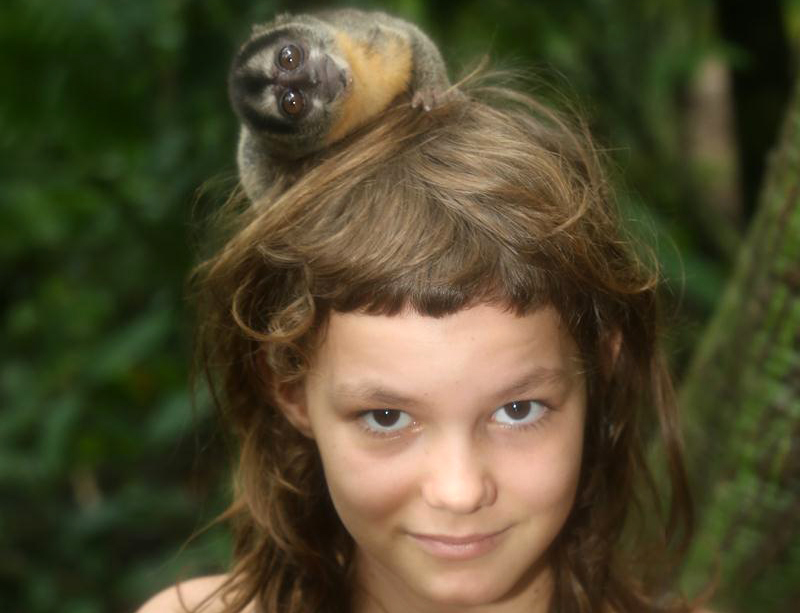
The hyperactive and very cute Sira continues to grow steadily, keeping Olivia awake even when not hitching a ride on her head! We are starting to begin the process of acclimatising her to the interior of a cage, with daily afternoon excursions to the clinic. A cage was prepared there especially for her to jump around on branches, vines and more.
The volunteers are happy with the prospect of more contact with Sira!
Sango (Young male howler monkey)
At the beginning of the 3 week period, Sango was one of the animals needing the most attention at Esperanza Verde. Howlers, very sociable creatures in the wild, are extremely difficult to care for in captivity, due to their specialized diet and being prone to depressive states. The howler did indeed seem depressed frequently, and would rarely emerge from his box at all. Often the most you could hope for was a half-hearted grab at any food you offered, accompanied by a grumpy wail. Every day volunteers were foraging for leaves from the forest for him to eat.
Several attempts at ´releasing´ the monkey had results that were difficult to interpret; he would spend some time simply lying in the sun (something he would rarely receive whilst hiding in his box), and would then climb a tree, where he would stay for hours on end. Constant supervision from volunteers was required when Sango was out of his cage, due to his delicate condition.
As Sango was not eating well, we began to encourage the drinking of a solution containing electrolytes in an attempt to maintain sufficient nutrition. (His reluctance meant this often had to be done using a syringe directly into his mouth; most of it promptly deposited on the floor by the howler.)
Sango´s condition worsened, not helped by an infested wound on his leg, and despite more intensive treatment at the clinic and family home, he sadly died.
The following autopsy (fascinating but difficult to witness) revealed little as to what could have killed him, leaving the family and volunteers to speculate that it may have simply been mal-nutrition.
Whilst very sad, the death of howlers in captivity is not a rare occurrence, as they are not adaptive animals. Specific food and environmental conditions are very important, but unfortunately not always available.
Other Mammals
Coatis
In more uplifting developments, our resident coatis (1 adult male, 3 adult females, 1 female young) have now been successfully released. With seemingly all habitants assembled to bear witness, volunteer and animal alike (even Pauki the oropendola showed up), the coatis cautiously made their first steps towards freedom. Despite an immediate scuffle with Yara the dog, the coatis seem to be doing very well, and generally keep themselves to themselves. After disappearing for days on end, every so often they will strut out of the bushes, and pester the volunteers for food like they never left. They seem to interacting well with the environment, with no obvious conflicts with the other animals despite the monkeys´ best efforts to irritate!

Kiko (kinkajou)
The recently released kinkajou, being nocturnal, is not an often seen animal. Often the only sign of his presence is the mysterious disappearance of the food we continue to leave in his cage. Occasionally however, we would be greeted with a pair of sleepy beady eyes and mass of fur upon entering his cage. As he is close to the family house, he generally is seen there every night climbing for some time on the mesh windows and trying to come in whenever Douwe or Olivia want to step out. Generally, he has taken well to his release; the only slight setback being a parasite bringing with it a loss of weight. After a spot of treatment he was back to seemingly full health. Nonetheless, this does demonstrate the importance of maintaining supervision of released animals to an extent, where possible.
Sloth (rescue)
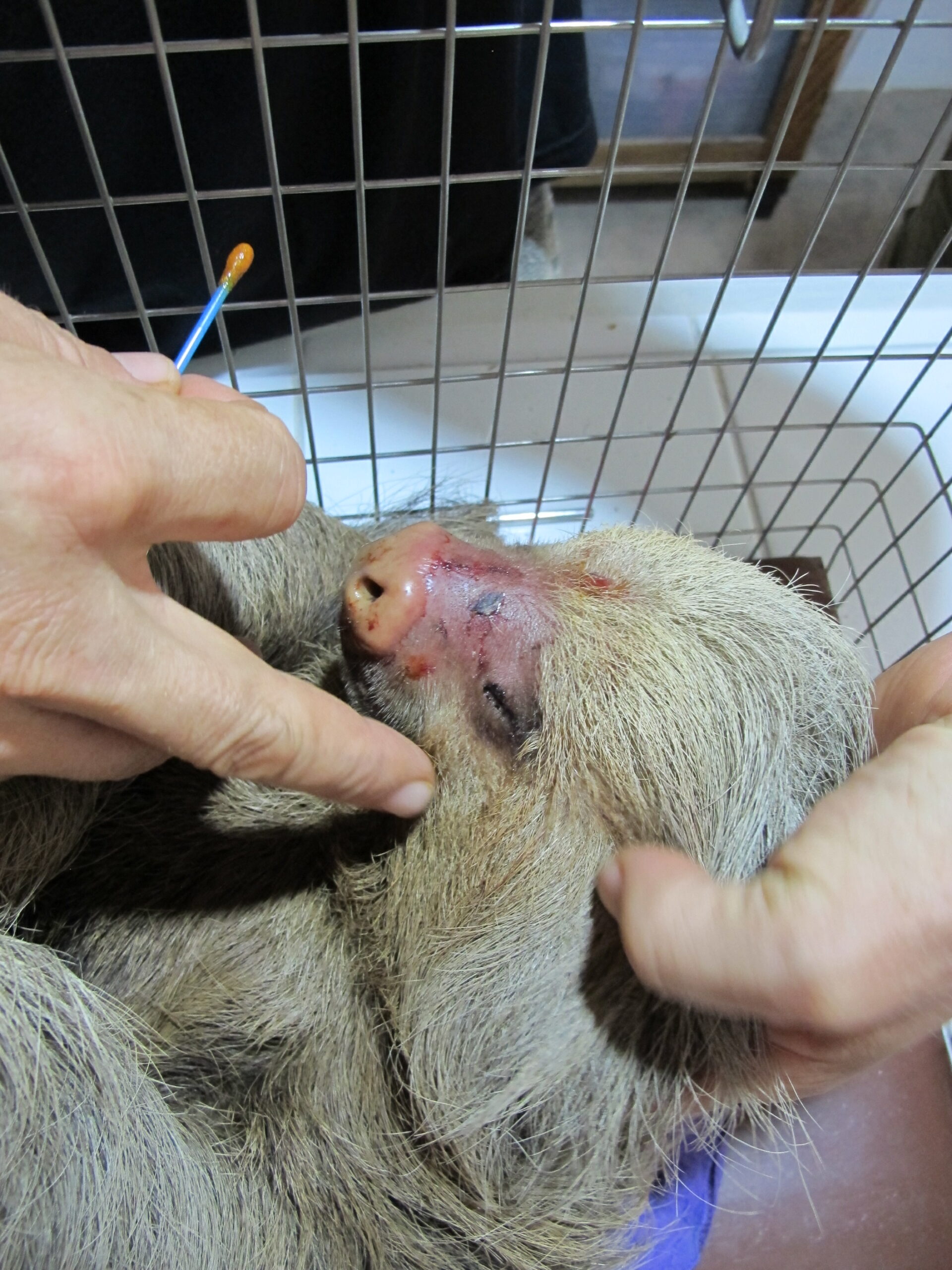
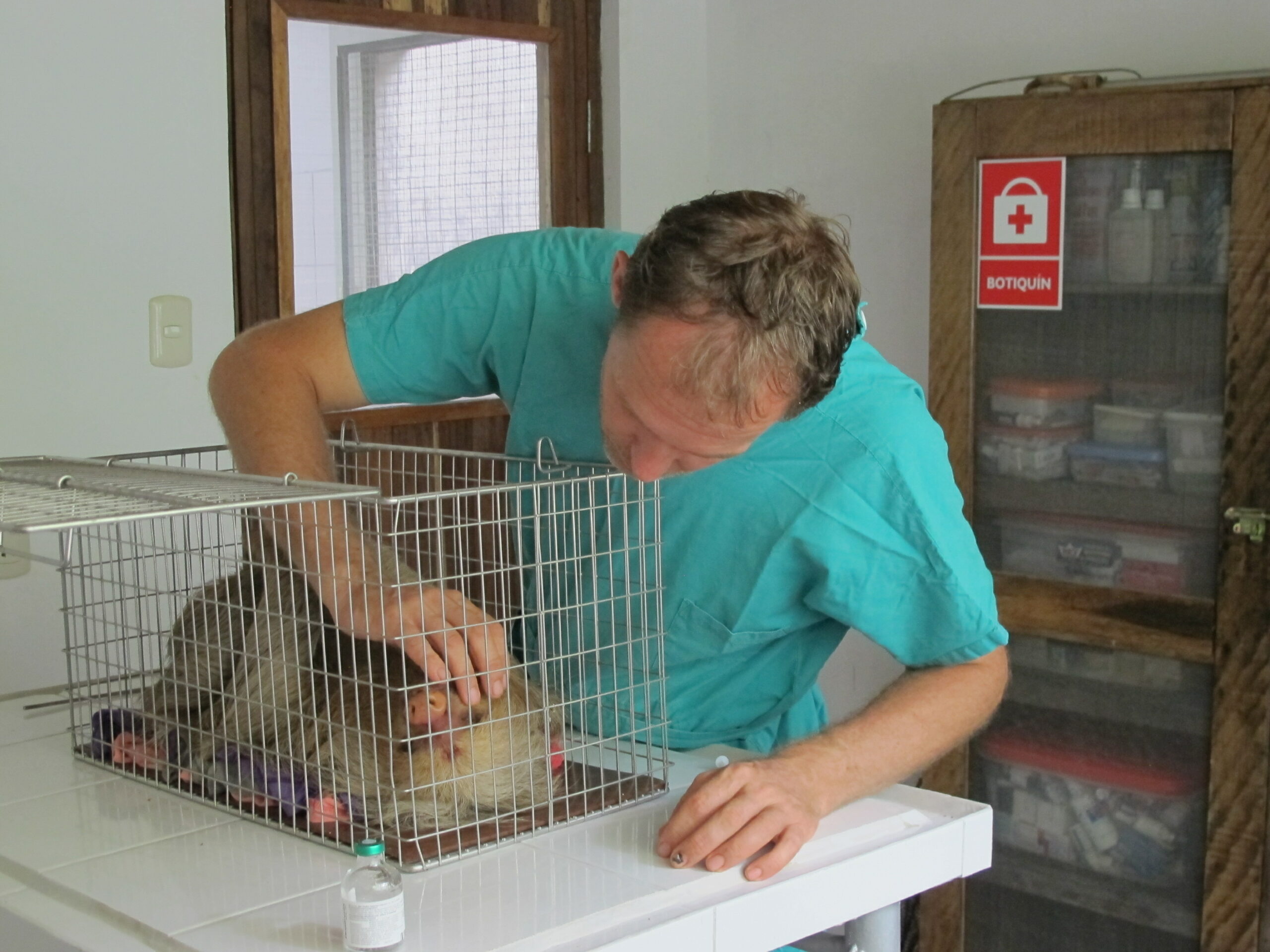
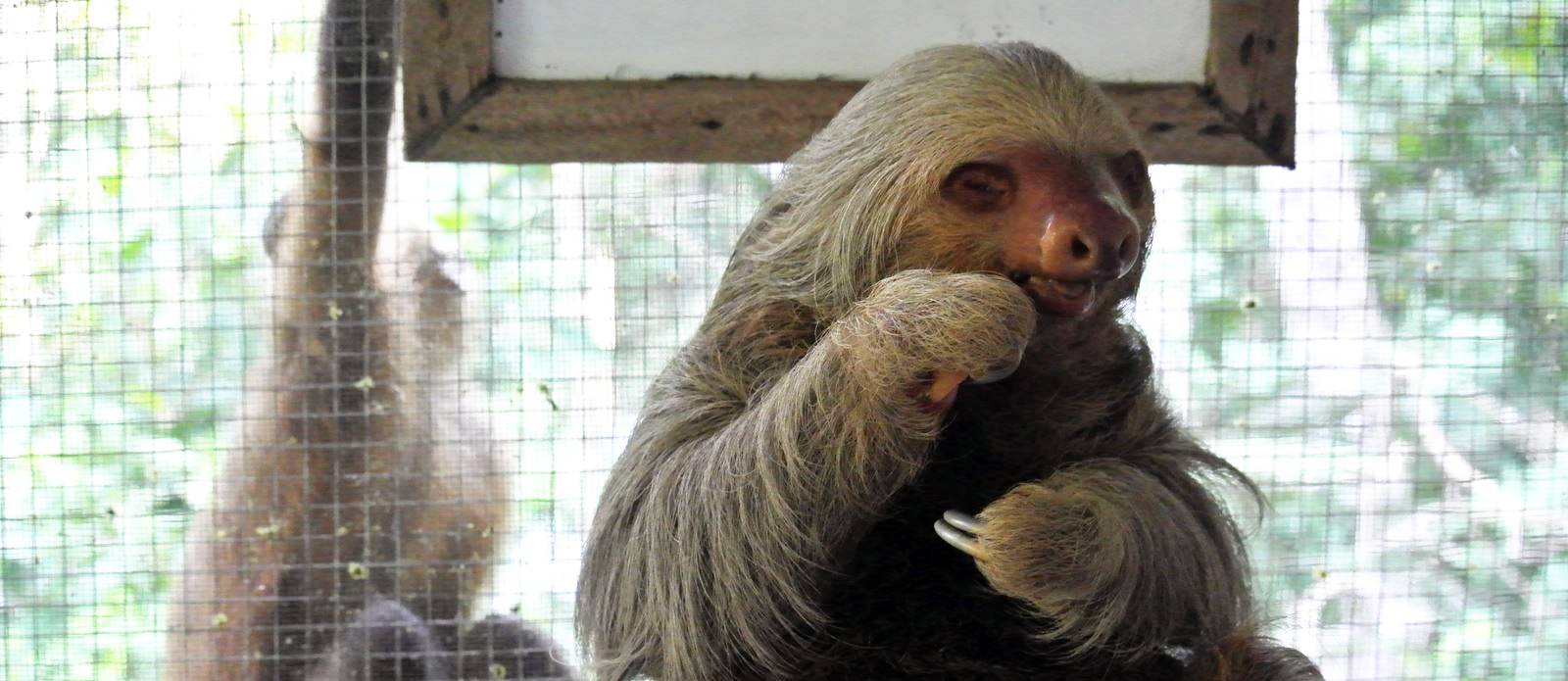
At Esperanza Verde, a new arrival seems lately an incredibly frequent occurrence. One of the more notable rescues though, was a sloth, who had unfortunately been hit out of a tree in Bello Horizonte by some children. Whether intending to cause injury or not, the children did not leave the animal in a good way: it was suspected the sloth had fallen on her head, and one eye was bloody. Other children though saved it and we were warned to pick it up.
After a few days under Douwe and Olivia´s wings, in the clinic, the sloth was much improved and we decided to release her. The initial stages of the release were worrying, as the sloth seemed to be struggling to climb at first. However, she persisted and eventually made it into a tree. She stayed there for 2 days before she moved on. Where she is now isn´t known, but we like to think she´s thriving!
Birds

Parakeets
In the last update, there were 11 parakeets remaining in Luca (the parakeet release-cage), and as luck would have it (Although they took their time about it,) they all have taken the plunge and left.
Strangely, there seems to be a growing population of parakeets at the port… A mystery!
Oropendola
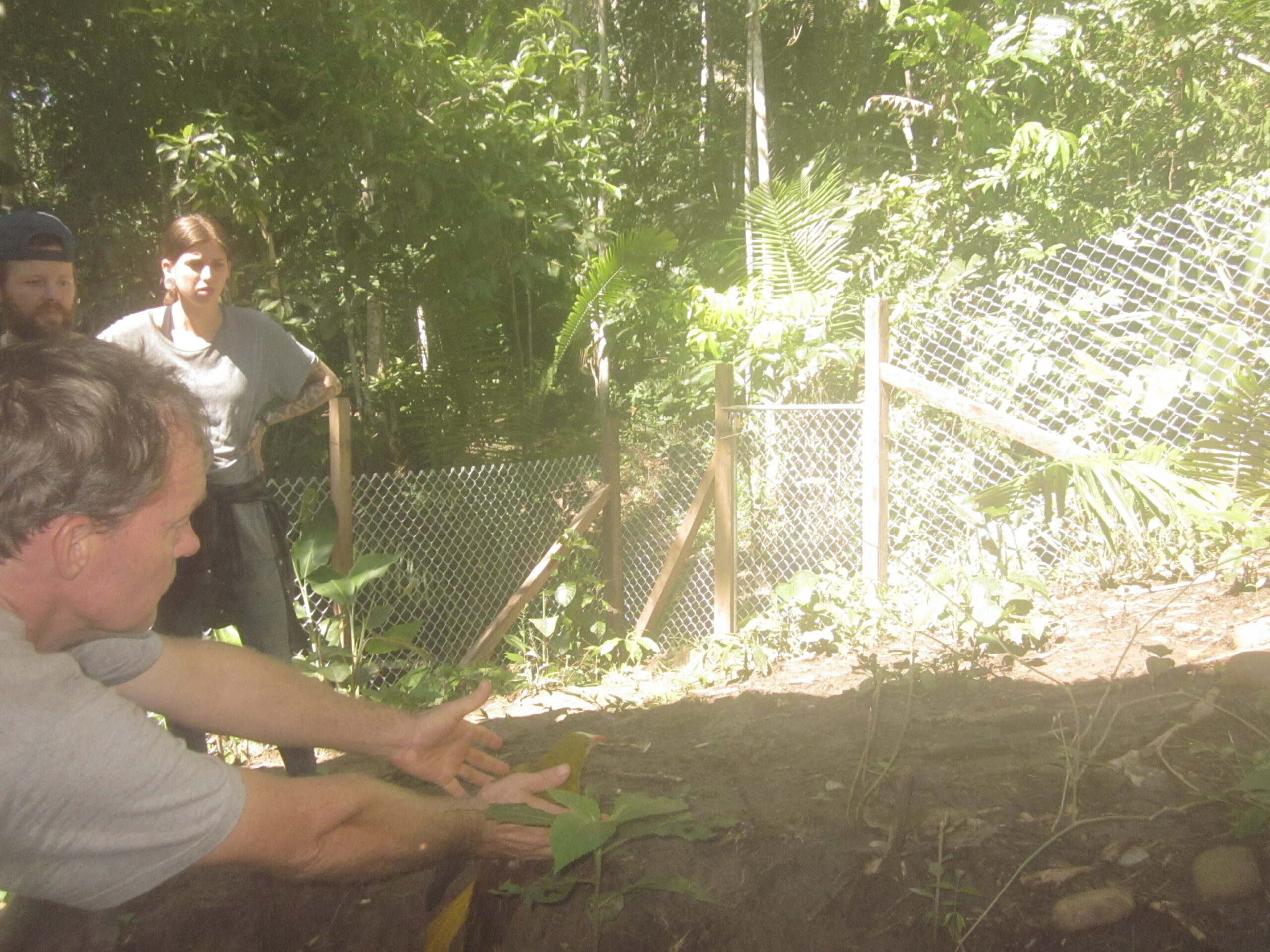
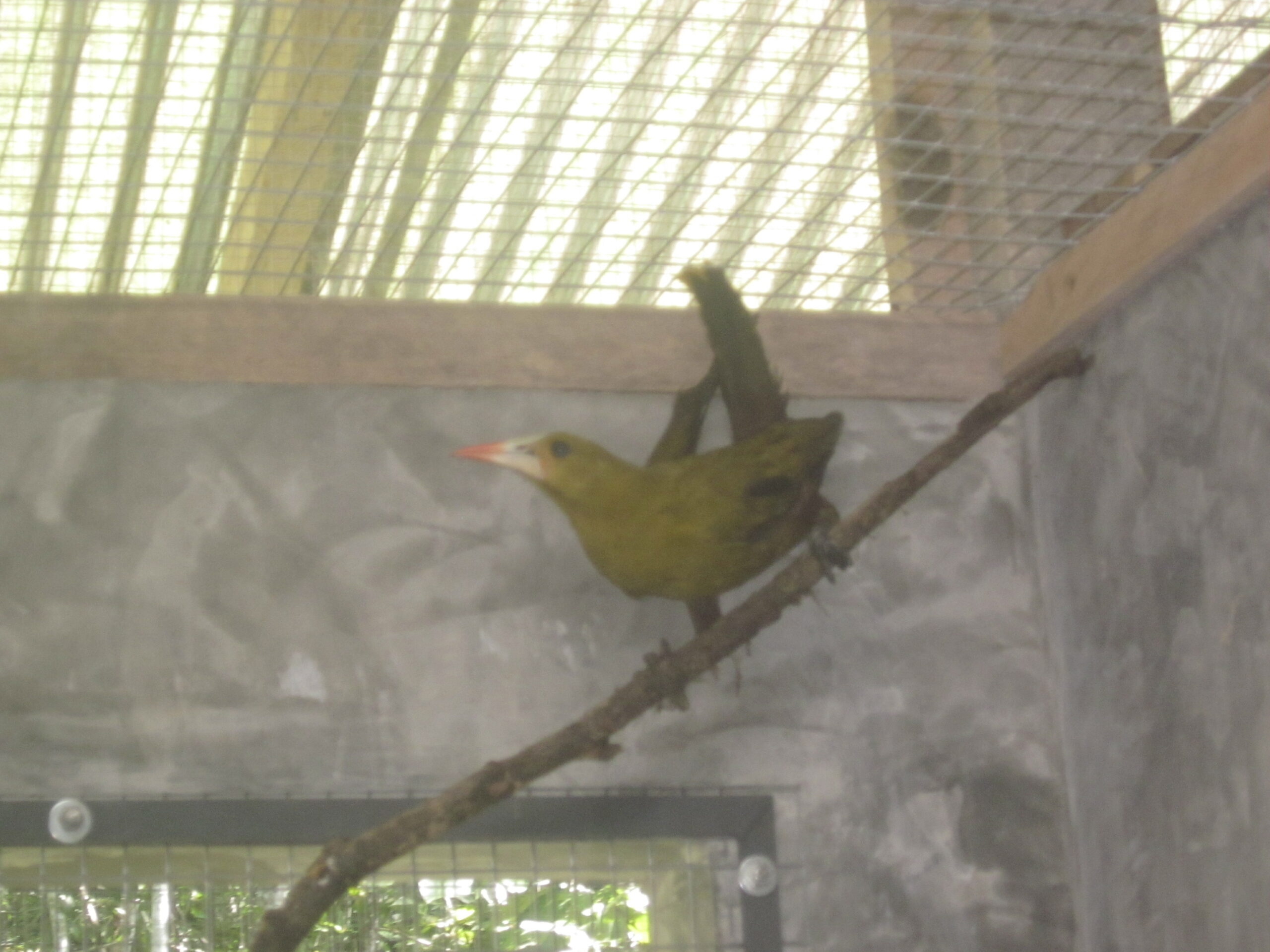
The children of Bello Horizonte are not earning themselves a good name. Kayla and Olivia came across a boy in the village one evening that had come into possession of an oropendola, somehow involving a rock and catapult…. The majestic but understandably distressed bird was quickly confiscated and whisked off to the clinic by Douwe, who checked it over. Fortunately, the bird was not seriously injured and could be released two days later.
As a side-note, interestingly, the bird was a green oropendola, a species which is supposedly very rare in the Southern Peruvian amazon… something which perhaps heightens the importance of protecting the individual!
Both this case and that of the rescued sloth highlight another incredibly important facet of the work done here by the family and volunteers: that of educating and gaining the co-operation of the local population in respecting and caring for the environment they live in.
Black fronted nunbird
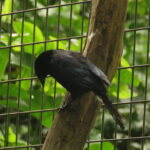
Unfortunately not all rescues end well. On a trip to Regalia, the waterfall an hour from here, Caña, the local man accompanying the volunteers, found this beautiful black bird on the forest floor. It probably had an encounter with a dog, taking most of the feathers out from one of its wings. Very wild, but not able to fly we took it in our care. Although it did accept the grasshoppers we were feeding, it died within two days. For a bird this wild it is very hard to accept captivity and will be easily stressed. It died of an acute pneumonia.
Reptiles
A young yellow footed tortoise was rescued by Kelly (volunteer) when she encountered a family on the path coming from out of the forest. A child basically handed the tortoise over when Kelly wanted to have a look. As Kelly does not speak Spanish it was a bit confusing, but the family seemed to intend for her to take the tortoise. We released it directly the next day.
The next turtles up for release are the recently arrived 5 six-tubercled river turtles, confiscated on the illegal market in Pucallpa. They have been dewormed, had a medical check, and will be released this week, when we expect a visit of some representatives of the ministry.
Construction
Clinic
At the time of the last newsletter the clinic was almost complete, and we are happy to report that the final touches had been put in place! The new facility has been immediately put to use, with many rescues and treatments in the last few weeks. A special thanks here to the Susy Utzinger Stiftung in Switzerland who financed the clinic! This update shows how much it was needed!
Spider-monkey cage
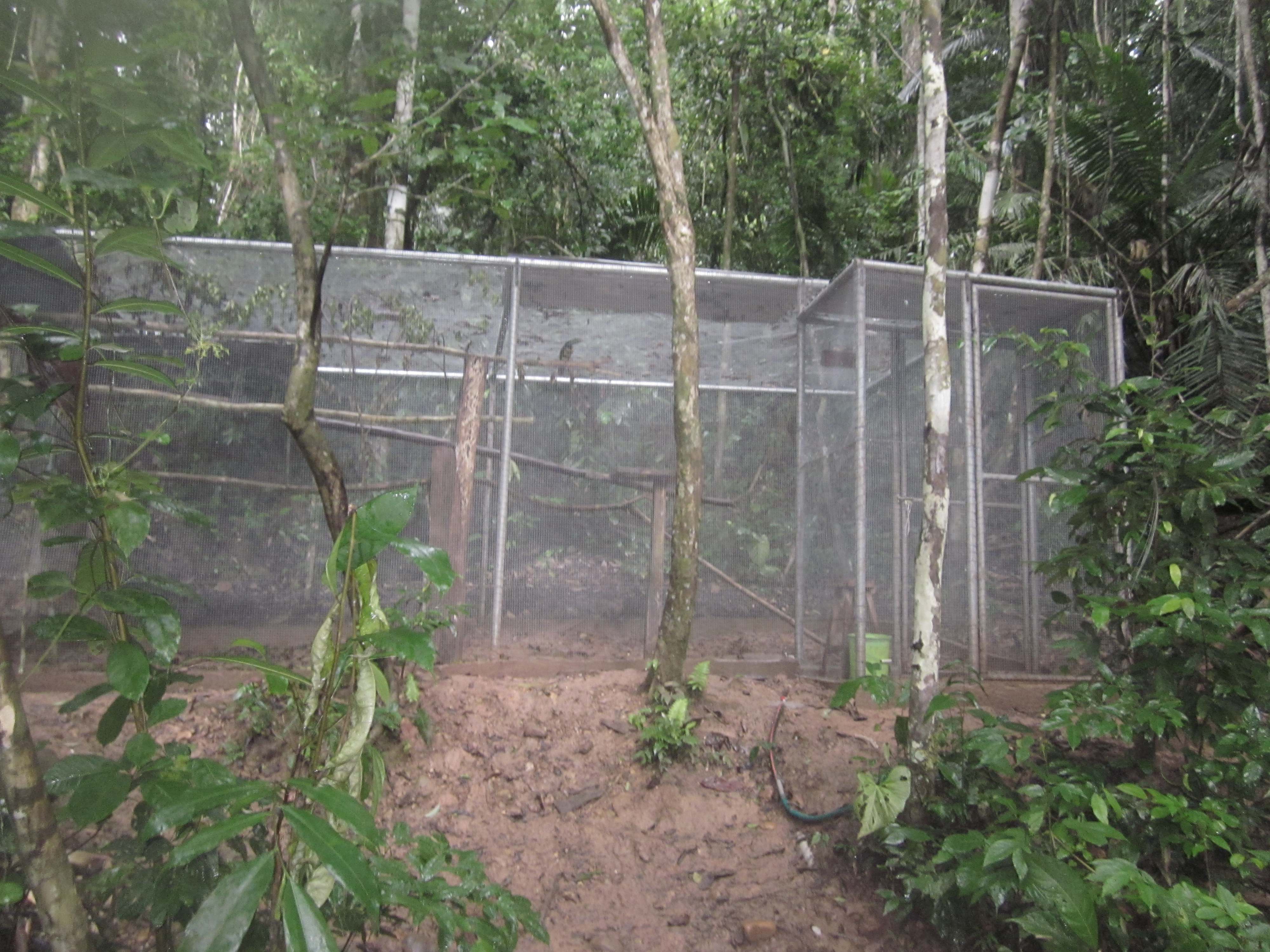
The erection of the new cage for our spider-monkeys is rapidly proceeding, and it shouldn´t be long before they are given a new and improved space to dwell in! Thanks to all the donations received by the Dutch Foundation Esperanza Verde, we will be able to construct this new enclosure for them.
Other cages
With several of the cages recently empty, we have taken the opportunity to clean and reconstruct the interior grounding. This is a very laborious task, so thank you to all volunteers who have helped with its undertaking!
Volunteers

There has been a lot of change recently with regards to personnel here in recent weeks. Both Shani and Morgane left at the start of the month, and whilst Morgane is due to return in the next few days, we´d like to give a big thanks to Shani for all her hard work as head volunteer. More recently, Dan and Kelly followed suite and have departed. Esperanza Verde will miss them and their valuable experience and skills, so a big thank you to them also.
Dominik has also left temporarily to see some of the country with his parents, but he will be returning to the fold in a couple of weeks.
As goes without saying, all help from volunteers and any other support is greatly appreciated, very valuable, and without which the work here could not happen, so a massive thank you to everyone involved.
Hasta luego, adios!
The latest news / 01.03.2016 – 01.04.2016
General Info

It’s that time again! As always we´ve got plenty to update you on, but we´ll start by saying Happy Easter !
Here at Esperanza Verde we celebrated Good Friday, with lunch and an Easter egg hunt by the waterfall, followed by chocolate eggs and a cake made by our own little dessert queen, Kayla. It was a great day, especially for our winner of the egg hunt, Lara, who got to take home a block of Lindt chocolate!
But it hasn´t all been chocolate and parties this month, with a strike affecting the whole of the Ucayali district for 2 weeks there was a large cut back on food and resources. There were major road blocks between towns, stopping most deliveries of fruit and vegetables so we had to get creative in the kitchen with our limited options, and ration the food for the animals to be as efficient as possible.
Fortunately the strike is now over, and we hope that the issue has been resolved. The strike also has caused a delay in the release of some of our animals, as there was no way for the ministry advisors to reach us with the necessary paperwork.
.
Monkeys


Cinty, Chiquita and Khali (our female baby woolly and capuchin monkeys) have been really enjoying their new enclosure, so much so that we are now able to leave them in there overnight! The volunteers still rotate looking after them throughout the day, making sure that they spend plenty of time outside interacting with the other monkey and continually encouraging food and milk, but this is a small step towards independence, eventually leading to release.

Chaira, Xera and Nera (young female capuchin monkeys) are some of the animals who´s release has been delayed. We still hope for it to happen sometime in the next couple of weeks though.


Sira, the young female night monkey, is in care of the family. She is an early riser, spends some time drinking milk and jumping around between 6-7am, then sleeps for almost the whole day. In the evening she is very active again and she now is taken at times outside where she loves to jump in some small trees. She is gaining weight, is a very jumpy and funny monkey.
Yanay is still very pregnant, her belly growing bigger every day. It´s getting closer and closer to the due date (april-ish we suspect) so our volunteers are getting excited to welcome another young one to the family.
Unfortunately a lot of our animal’s haven´t developed the necessary skills and behavior to survive and reproduce on their own, from being held in captivity for long periods of time prior to coming to Esperanza Verde. Yanay is definitely one of those, as she doesn´t have much interest in interacting with other monkeys, mainly just humans. Because of this, it is hard for us to predict whether she will naturally nurture and provide for her baby as a wild spider monkey would, or whether human intervention will be needed. Our level of involvement with raising the baby will solely depend on her ability and interest in caring for him/her.
Sango, the young male howler monkey, is going up and done with weight. We stay with him several times a day, stimulating him to eat leaves, vegetables and a few local fruit. He needs to go out. As Olivia could get a verbal allowance over telephone from the Ministry we decide to let him out. Unfortunately the weather was not helping. He did not want to move so we are now waiting for some sunny weather. He is bored in the cage and outside we hope he will be able to find a lot more leaves that he can eat. Howler monkeys are very difficult to keep healthy in captivity. They need a special diet, of mainly leaves, as they have special intestinal flora which can’t handle fruit well. They are very sensitive, and quickly stressed.
.
Other Mammals


Kiko, our young male kinkajou, was able to be released this month. We placed an opening in the side of his cage which we open at 7pm every night (kinkajou´s are nocturnal therefore active at night). He seems to stay in the area. The first nights he returned to his cage, so we closed the little door during day time. After this he did not return to sleep in the cage, but showed up as soon as it was dark. He then eats in his cage, and spends the rest of the time outside. Kinkajou´s are very territorial creatures and can be aggressive, usually travelling in family packs so we hope that if there is a family nearby that they will be able to coexist in peace. So far it has been going very well.

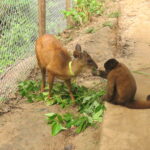
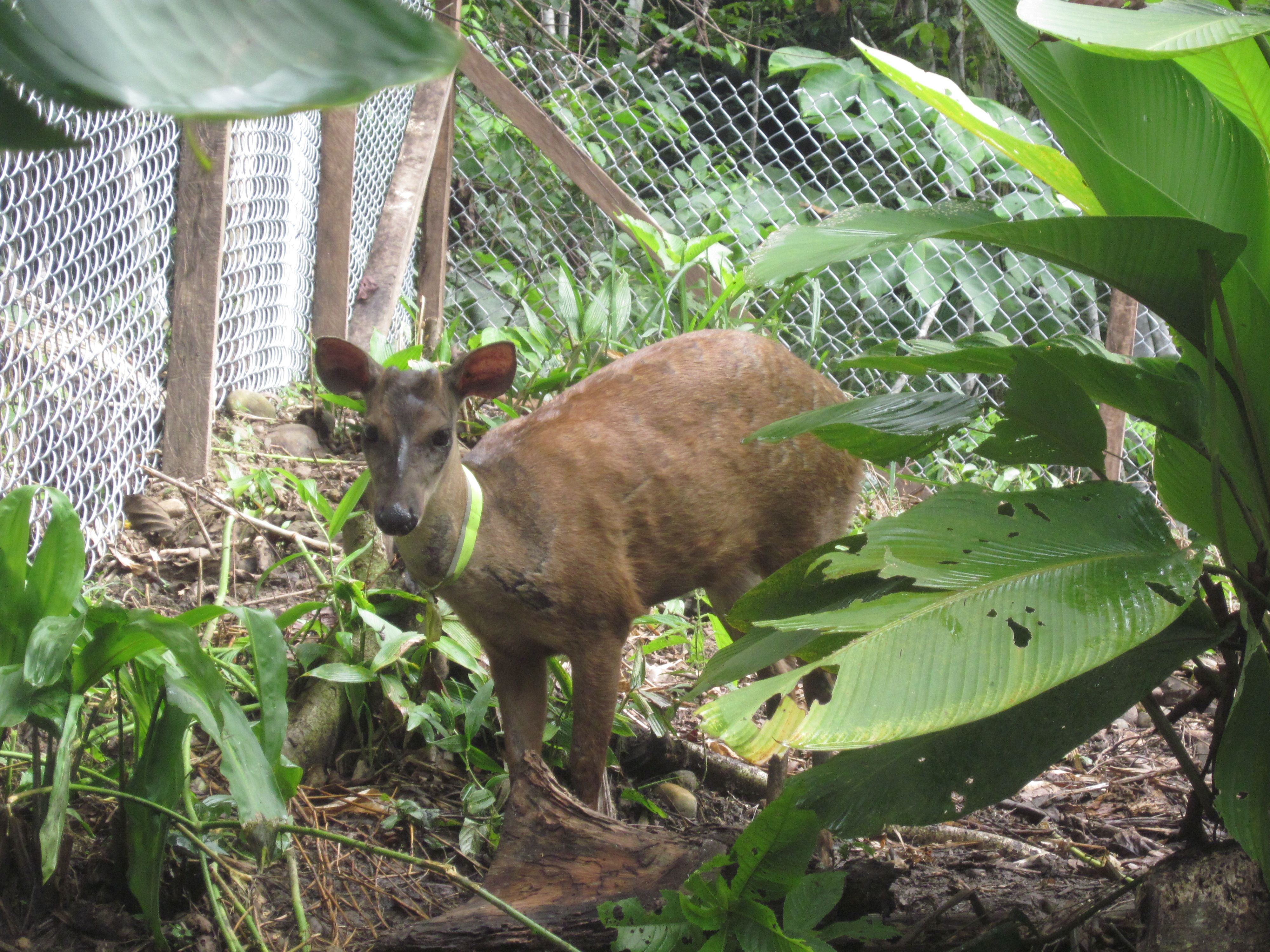
Rabito, the adult male deer we received last month is doing great. He now roams freely in the fenced area surrounding the clinic, and you can usually find him sitting on one of the hills under a plant or eating leaves. The wounds that he self-inflicted from the stress of being transported have healed, and he is much calmer. He enjoys being patted and hand fed, and will often lick your hand.


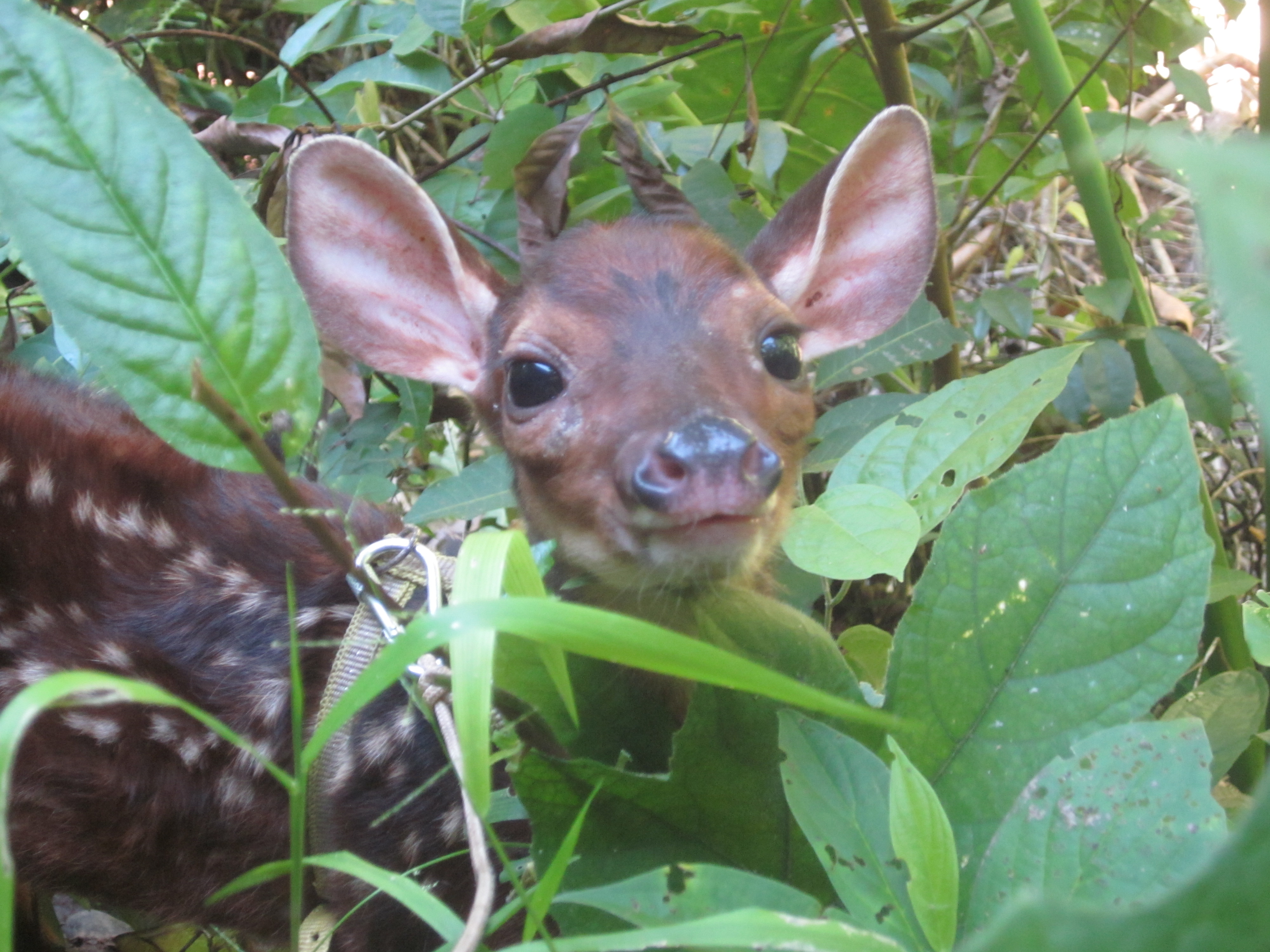
Ringo, the baby male deer is still living at the family home. Douwe and Geiler have just completed building a fence surrounding the family home, so Ringo has his own outdoor space now. The cats Simba and Lola will be happy that he´s not in the house anymore to steal their food anymore! The family that owned both deer before bringing them to Esperanza Verde came to visit last week from Curimana. They were happy to see that both were enjoying themselves and are well looked after.
As with the capuchins, we are still waiting on the release of the Coati´s. Two of the adults got into a bit of a fight recently over food, and the blind girl, Kimsa, got a cut on her blind eye. Luckily it was only superficial and didn´t need any further treatment.
.
Birds

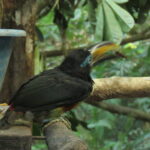
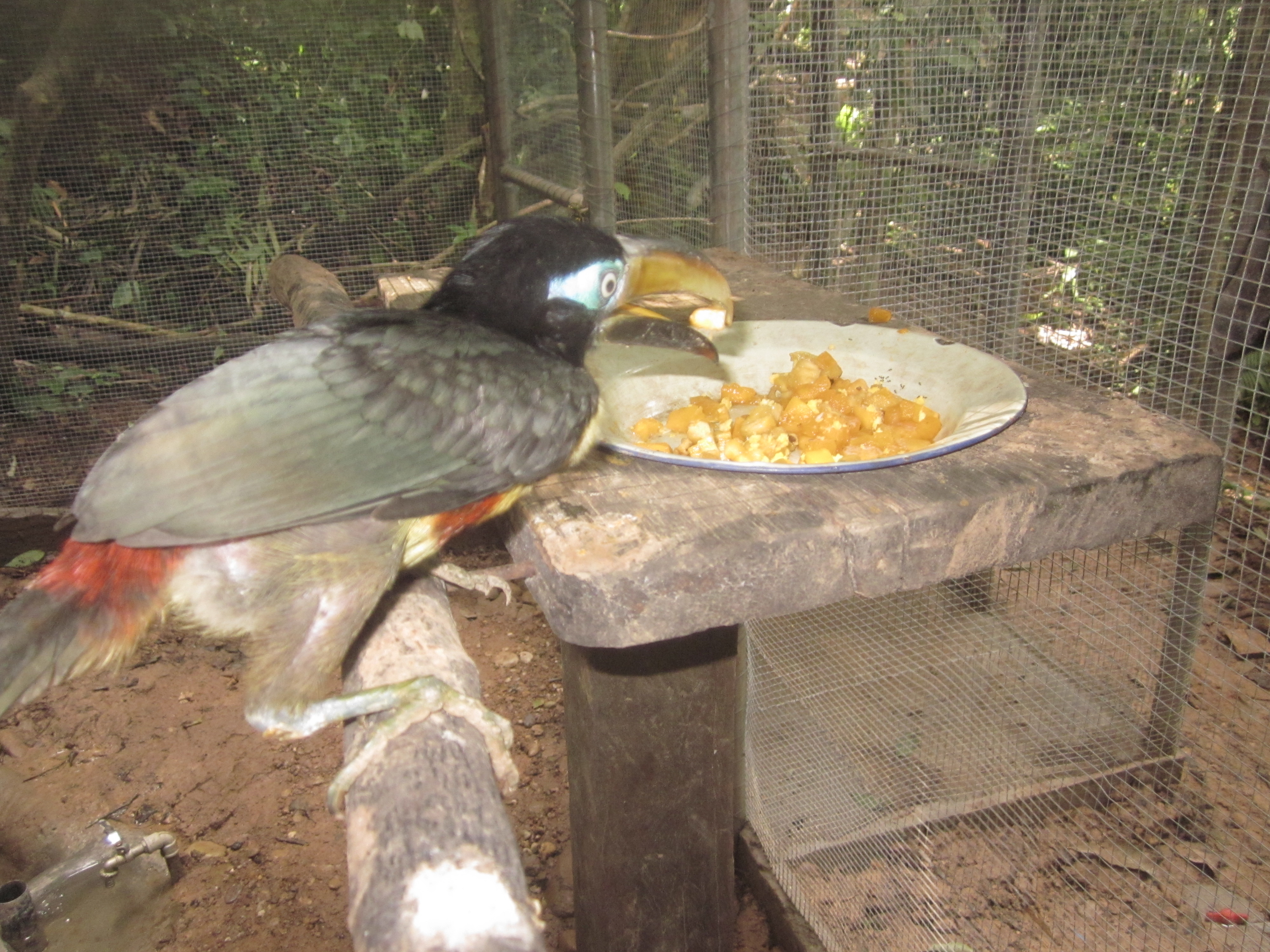
Churi, the many-banded arasari, has been moved from a small cage in the office to a large outdoor enclosure (the new Pepe-cage) which we have recently finished constructing. He seems much happier, and chirps every time you walk past and call his name, and will come and sit on your shoulder or your hand when you go into the cage. He also likes to be hand fed, so the volunteers always show him a little extra attention. We tried to move two of our white-winged parakeets (Picor and Ocor) into the cage with him, but unfortunately Churi was a little territorial and tried to attack them. They are back in their own cage now.
As mentioned last month we emptied the Rokko parakeet’s cage, separating the parakeets and aratingas by whether they can fly or not. All flying birds were put into the Luca cage for release and from starting with around 60 we are now down to only 11! Hopefully in the next week or so the cage will be completely empty, and all will be fine outside.
.
Construction


The clinic is finally almost finished! There is some shelving and cabinetry being built and varnished, with a couple of other final touches before all of the equipment and supplies can be moved in and ready for use. We will be moving all of the office equipment into the new office in the clinic, and will be able to turn our current office building into a private bedroom for long term volunteers to have their own space.

We spent the last couple of weeks working on a large enclosure, the new Pepe-cage. We have also been putting together the fence around the family house, which we completed this week.
New plans have already been made and put into labour. Thanks to all the donations given to the Dutch foundation Esperanza Verde, we can start the construction of a new enclosure for our two male spidermonkeys, Lucio and Rimaq. A special thanks here to the Dutch tv-programm ‘Floortje naar het einde van de wereld’, which aired in November 2015 in Holland, and the many viewers for donating.
As Esperanza Verde is growing, more space is needed for all the people who are helping on a daily basis. So as smaller projects, we will turn the old-office into a bedroom-bathroom for long-term volunteers, and we will build a storage unit outside the volunteer kitchen to store food and hardware supplies, making the kitchen more spacious.
.
Volunteers

For a long time we have had a steady group of volunteers, so many could work for a longer time in construction, helping to finalize several projects.
Dan, from the USA, who was with us as well in 2011, came back thanks to his fiancée Kelly. She gave this trip as a birthday gift! Dan has let his hands do some magic again, helping with constructions and especially carpentry. We now have some beautiful shelves and cupboards for the clinic. Kelly will take over from Shani as headvolunteer and help Dominik, who came back after a short holiday. Mara, also a long-term volunteer (staying for 5 months) is now responsible for enrichment, so everyday someone is working to keep the animals which are in enclosures from boredom.
As always, a big thank you to all of our supporters and volunteers, we look forward to sharing our progress with you again next month!
The latest news / 23.01.2016 – 23.02.2016
General Info
As always, we have been keeping busy!! We have a few more additions to the family again this month including a baby night monkey, a tamarin monkey and a young howler monkey. We also received a young aracari, as well as two tortoises, five six-tubercled river turtles, plus one adult and one baby deer! With a larger group of volunteers we have been able to get a lot of construction work done this month as well, which is great because with all the new arrivals comes the need for new cages. Of course there is always still plenty to do.
Our volunteers have been keeping themselves busy every day creating enrichment activities for all of our captive animals. It is important to keep them active physically and mentally, so several times a week we give them an item designed to stimulate them, usually using food as encouragement. This can include food wrapped in leaf packages hung up or buried around the cage, a box or bottle with food inside that they have to work out how to open, as well as swings and balancing beams. The animals are responding really well to a lot of these, and so are the volunteers who get to watch them.
Later this month, we will have a couple of members of the ministry staying with us for two days, to arrange the release of a few of our animals. The three young capuchins, the coati´s and Kiko the kinkajou are all under consideration for release.
.
Monkeys

Cinty (baby female capuchin) and Chiquita (baby female woolly monkey) are both making good progress. We were a little concerned about Cinty as she wasn’t gaining weight for a while and she is quite small for her age; however the last couple of weeks her weight has been slowly but steadily increasing.


Khali (baby male capuchin) has been treated for his parasites, and can now be in contact with Chiquita and Cinty. He is still living at the family house at night, but the volunteers get the three of them together every morning for a full day of play! Khali is still quite young and still developing motor skills and strength, but he is starting to climb up small trees and jump (not always too successfully) between branches. All three of them have also started to develop a good relationship with the outside adult monkeys, so quite often when the volunteers are caring for the babies the other monkeys will follow, particularly Willow (woolly male) and Mica (capuchin female).
We are preparing now the Rokko-cage for them as an outside cage. As mentioned before they currently don’t have a cage, so this large one will provide plenty of activity space for them, as well as allow us to put a couple of the semi-captive adult monkeys in with them to encourage stronger bonds. We hope Khali will be able to join Chiquita and Cinty there as well during night-time.


About a week ago we had three more baby monkeys brought to us by the ministry. A tamarin roughly 3-4 weeks old, a female night monkey (named Sira) of about 2-3 months old and a male howler monkey (named Sango) around 6 months. Unfortunately the tamarin didn’t make it through the first night. Being such a young animal he needed a lot of extra care, particularly with feeding and drinking , which it looked like he might not have received. There was no way to tell when he was captured; he was confiscated on a market. He received emergency fluids, but it was too late for him. He was already too weak.
After that, and having already lost a howler monkey (Kosho) recently everyone was a little nervous about the new howler that we received. Fortunately he has been eating plenty of vegetables, leaves and limited fruit, as well as receiving cereal and fluid several times a day… a great improvement from the behavior of Kosho. He is also very active and independent so we have given him his own cage next to the volunteer house. He is gaining weight! Willow (adult male woolly) quite often sits on the roof or hangs off of the side of the cage talking to him and keeping him company which he seems to like.


The baby night monkey Sira is staying at the family house as she needs to be fed by syringe throughout the day and the night, but she is doing really well and has already grown a fair bit. She loves to sit on top of your head and watch everything.
The young female white-fronted capuchins that we received last month (Chaira, Xira) and Nera (female brown capuchin) are very active and playful in their cage, although Chaira often bares her teeth at passersby. To the untrained this appears to be cute and a playful interaction, however it is a sign of dominance and potentially can lead to aggressive behavior when threatened. As the dominant, both Xira and Nera are likely to defend her, so we need to be careful to not do anything that they may take as a threat. They are however, incredibly adorable and all of the volunteers love working with them. These three capuchins will be some of those looked at by the ministry, so in the next week or so they will hopefully be released to live in the area surrounding Esperanza Verde.
All the other monkeys are doing well! There is a lot of interest in the baby monkeys so they are usually in the same area, some of them more to try and steal their food and milk, but mostly to interact with the young. It´s great to see everyone getting along so well!
.
Other Mammals
The coatis are doing really well, and are very friendly. One of the females, named Saya tries to climb up the legs of the volunteers, or jump on their shoulders when they come near their branches, so we have to always keep an eye out for her! They love to eat papaya, eggs and bread, which we put in leaf packages for them every day. If approved by the ministry, these guys will be released soon. We are about to start constructing an outside table for them so that if they decide to stay in the area they always have access to food.
Kiko, the kinkajou is another that may be released. He is steadily gaining weight and continuing to grow now, so we are considering opening a door in his cage so that he can come and go as he pleases.

Elmo hadn’t been seen for a couple of weeks, but he has made a number of visits lately, so we made sure to give him a big hug! He is still happy and healthy, slowly grazing away on leaves, fruits and vegetables. Willow was happy to see him too.


We also had the arrival of one adult deer named Rabito, and one baby deer that we haven’t chosen a name for yet. Both were being kept as pets in Curimana. The baby deer has been staying at Olivia and Douwe´s house, and Rabito has been at the clinic. The first inhabitant of the clinic!


Rabito was quite stressed from the move, and had injured his hooves from stomping, and his head and body from banging against the walls of the transport box. Olivia spend some hours to sit with him to calm him down, which seemed to work. Now he is getting more adjusted and he seems much calmer, letting you sit with him and pat him. We will now let him go outside into the enclosed area surrounding the clinic after the monkeys have gone to bed.
.
Birds
This week we emptied one of the bird cages, the Rokko cage, catching roughly 100 parakeets and 10 aratingas. They were separated, with 75+ non-flying put into the Igor cage, and roughly 30+ that can fly were put into the Luca cage. The Luca cage will now be a release cage, with a door to open in the morning and close in the afternoon. Igor was previously the release cage, which was greatly successful getting from around 60 parakeets earlier this month to only 9 earlier this week! The Rokko cage which is now empty will be cleaned and then used for the baby monkeys.
Pauki (Oropendola) came back to us after about 2 weeks, the longest that he has been away from home. He had some damage around his eyes when he first returned, but he has since received a parasite treatment and looks like he is in perfect health again! We have continued to see him every day since, back to his old ways. While he was away with a group of wild Oropendolas, he learnt to make a beautiful sound, somewhat like trickling water, which he had not previously done. Well done Pauki!
Last week we had the arrival of a young aracari who we have named Churi. Churi is absolutely beautiful, and very tame. His first day here we noticed that he was having some difficulty eating, so we now cut his food into quite small pieces and spend some time hand feeding him during the tours. He LOVES papaya, and if it were up to him he wouldn’t have anything else! Unfortunately he was brought from the north of Peru, so he cannot be released in this area, so we are still trying to work out what is his best option.
One of the volunteers saved one of the parakeets who had been captured by one of the outside capuchin monkeys (Mica). Luckily he wasn’t hurt, but is now kept in a small cage next to the aviary for observation, so thanks to our volunteers again for their prompt action.
.
Reptiles

And our last arrivals were two tortoises and five six-tubercled river turtles. The tortoises are currently being kept in the Sepa cage. One has a hole in his shell which was most likely drilled in so that he could be tied up and kept as a pet. It is unfortunate that there is a common misconception about the nerves of tortoises, and it is assumed that damage to the shell does not hurt or affect them. This is not true! A tortoise would die if his shell cracked, and they can feel pain when it is damaged. The five small turtles are in a small enclosure with a large pond, which they swim in all day.
Nasca is still doing well in the reptile cage, although it is a large cage and tortoises are surprisingly good at hiding! We have found her recently though, and it seems being away from Pepito is good for her.
.
Construction
The clinic is continuing to do well, still on schedule to be operational by April! We have a large group of volunteers at the moment, a few of them in particular who are very handy and interested in construction work, so it has been great to have their help to get a couple of projects going simultaneously.
We are currently building a new cage, suitable for parakeets or small mammals. Hopefully this cage will be done by the end of the week. We will start fencing the garden at the volunteer house, so there will be room for the baby deer, and maybe even the adult deer to roam around. And after this we will start with the preparations for the construction of a new enclosure for the spider monkey males.
As side projects Douwe and one of our volunteers Andrzej have removed some old cabinets and built in new shelving in the volunteer kitchen. This has created a lot more space in the living area, as well as more storage space for the food. Looks great guys, thankyou!
.
Volunteers


There are currently 12 volunteers so it’s just about a full house again! Thanks to a the Dutch programm Floortje Esperanza Verde has received a lot of attention and at times are completely booked. Hopefully soon we will be able to create more living space, so that we can take on more volunteers. Several of the volunteers this month arrived at the same time so there has been a lot of training happening, but everyone has a great attitude and is picking everything up really quickly, so we will be able to get a lot done over the next few weeks!
From the group of Swiss vets that recently spent two weeks with us, one stayed on for an extra two weeks as a volunteer. Rahel has been a great volunteer, not only participating in the tours and the care of the baby monkeys but she has continued to do parasite treatments for the animals, as well as checking blood and feces samples, so thank you!
The volunteers also offered to babysit the kids Kayla and Marlon for a day and a night as well as the nightmonkey, to give Olivia and Douwe a well deserved night to themselves.
Thank you to all of our volunteers for their help, and a big thank you to all of our supporters.
.
The latest news (23.01.2016 – 24.02.2016)
General Info
We are sorry for the delayed update this month, a lot has been happening at Esperanza Verde lately! We have had several new additions to the rescue centre including two baby and 3 young capuchin monkeys, a baby woolly monkey, a baby howler monkey, some coati’s and a giant Ant-Eater. Unfortunately though, we also had a few deaths. We all do our best at Esperanza Verde to ensure the safety, health and eventual release of the animals we care for, but in some cases nature has to run its course and we can only learn from it.


We have been fortunate to have Philipp Zerbe from Switzerland join us for 2 weeks, with 2 vet-students and 2 vets, also from Switzerland. They have been working hard every day, checking the animals for parasites, testing blood and feces samples, teaching Olivia and Douwe, and helping the volunteers. They also spayed the family’s cat Simba, as well as one male and one pregnant female cat, and a pig, belonging to one of the EV workers. They organized a deworming campaign in the village, so many dogs and cats were treated in the village. Aside from all of their amazing work, they also brought us medical equipment and transport cages and much more. Thank you vets! A special thanks to Philippfor making this all possible for us at Esperanza Verde as well for the learning experience for the veterinarians (and students). More news and photos of their visit soon can be found on the webpage of the Swiss Association Esperanza Verde.
We had a pretty full house with our guest, but it has been great to have all hands on deck, especially when there has been so much going on. It was a perfect timing with all these new animals arriving. Over the weekend we plan to bring everyone together for a big dinner and some well deserved drinks.
Monkeys


As mentioned, we have a few new monkey faces now. The first arrival included Cinty, a 6 month old female capuchin monkey; Chiquita, a 6 month old female woolly monkey and Kosho a 6 month old male howler monkey. They were brought to us by Noga who works with the Peruvian Government to rescue animals from illegal trade, so their ages are only rough estimates. Unfortunately one of the animals we lost this month was Kosho the howler after only 8 days. Howler monkeys have quite a complex digestive system and a high rate of depression so Kosho needed a lot of extra care for the time that he was with us, and a lot of encouragement to eat. He was showing good signs though, and his passing in the night was quite unexpected and sad for us all. Douwe performed an autopsy but the cause of his death is still uncertain.

On the positive side, both Cinty and Chiquita have been doing great! They have both been eating a range of fruits, vegetables and leaves, as well as drinking milk every day, and they love to play together. Cinty had some wounds around her waist when she arrived, from being tied up previously, but they have healed nicely now. Also Chiquita had a small lead pellet in her leg, which we have removed and has also healed really well. As with a lot of the monkeys that come here it was most likely from her mother being shot and killed.


Then there was the next arrival: 3 more monkeys (originating from the zoo in Pucallpa), 2 white-fronted juvenile female capuchins (now named Chaira and Xira), and a juvenile female brown capuchin (named Nera).
The ministry of Fauna and Flora from Pucallpa brought them together with a baby male brown capuchin (named Khali), which was confiscated in the illegal market in Pucallpa.
Nera, Chiara and Xira, all had a medical check-up by the veterinarians, were treated for parasites and are now adjusting in a outside cage, till it is time to be introduced in the outside world at Esperanza Verde.

Khali is under care of Olivia and Douwe, at there house. He was full of parasites, has been treated accordingly and will then start spending time with Cinty and Chiquita (see above).
Yanay (female spider monkey) is pregnant! Gestation periods for Spider monkeys is generally around 7 months, and we estimate that she is possibly at about 5, so we will expect to see another baby around March-April. She is still quite independent, although sometimes she can cling on to your leg, and being one of the larger and heavier monkeys here it can be difficult to get her off. As always, we have a no touching policy and don’t encourage this behavior (no matter how cute!).
Nakoya (female woolly monkey) has a parasite at the moment, so the vets are currently working closely with Olivia and Douwe to establish the best treatment plan for her.
As for the others, they are all happy, healthy and as always very playful.
Other Mammals
The opossums (mouse opossums) were recently released from their cage. We continued to feed them their usual food, but leaving their cage door open for them to roam freely, and for a few days afterwards we were still seeing them each day. Unfortunately after about 5 days one of the volunteers found one had died in the cage. The autopsy showed a puncture through one side, with a broken rib, lung puncture and some abdominal bleeding, so he was likely attacked by something. The other 4 we haven’t seen lately, but we hope they have had more success.
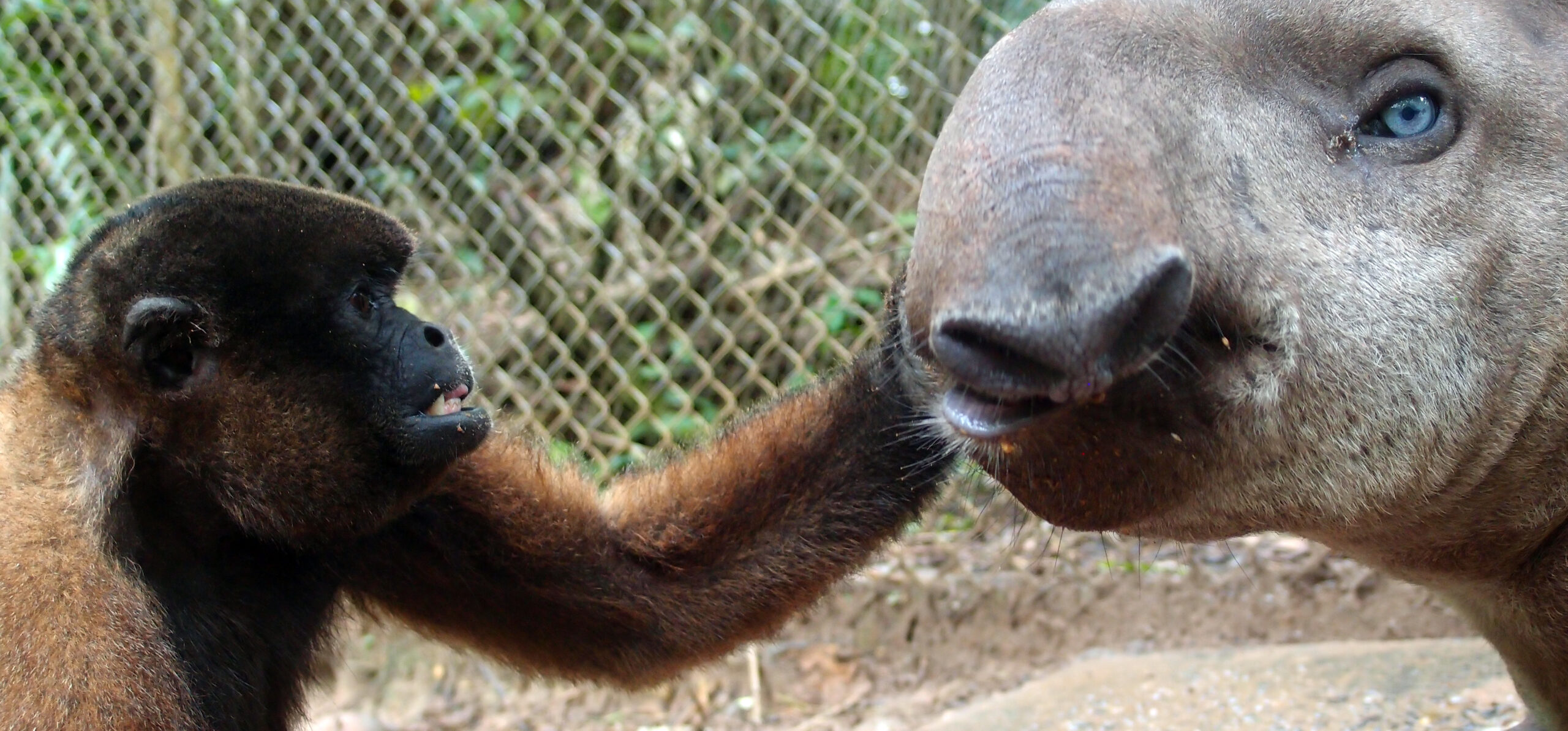
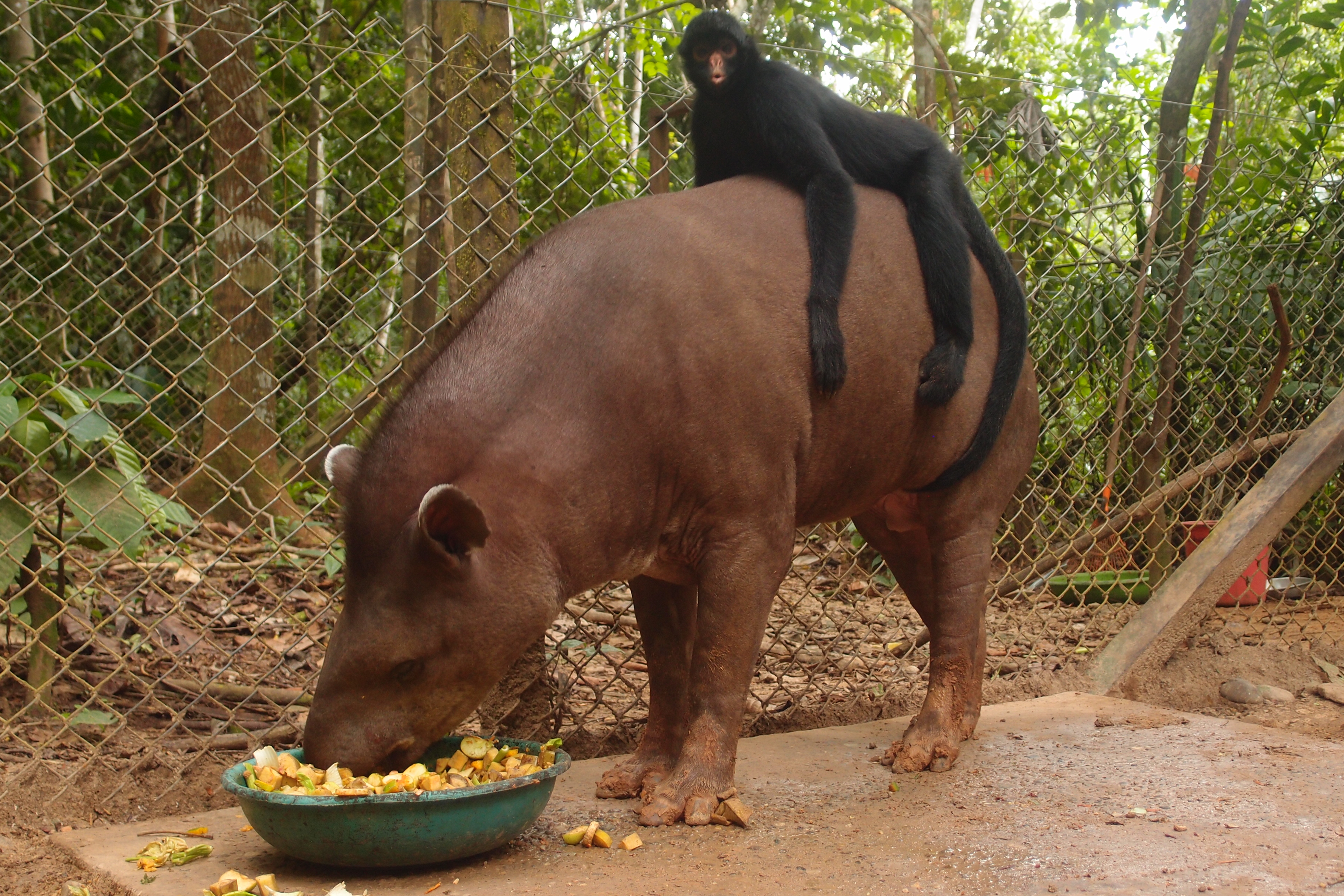
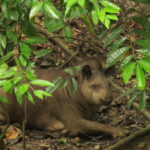
Rincay (male Brazilian tapir) has had some trouble lately with tics, particularly around his eyes and behind his ears. He received some treatment the other day, which has heavily reduced the amount of tics on him, but we still need to be vigilant in checking him every day. He is still happy though, and the friendship between him and Willow (male woolly monkey) is just too cute.


Together with the arrival of the capuchins came 7 Coatis, 4 adults (one male, three females) and 3 babies (two females, one male). They were given by the zoo in Pucallpa. They looked like they were relatively healthy and their behavior was fine, the mother started making a nest on one of the food tables so we had no reason to doubt that anything was abnormal. Unfortunately the next morning one of the veterinarians went to check on them and found that two of the babies had died. One of them was missing its brain, the other missing several other organs, eaten by the adult coatis, which is not abnormal behavior when a baby dies. From the autopsy, nothing could be established for the baby missing the brain, however the other had puncture wounds in its side and internal bleeding to suggest that it was injured and bled before it died, so it might have been attacked by one of the adults. The other young, a female, has been fine since, and her mother is taking good care of her.
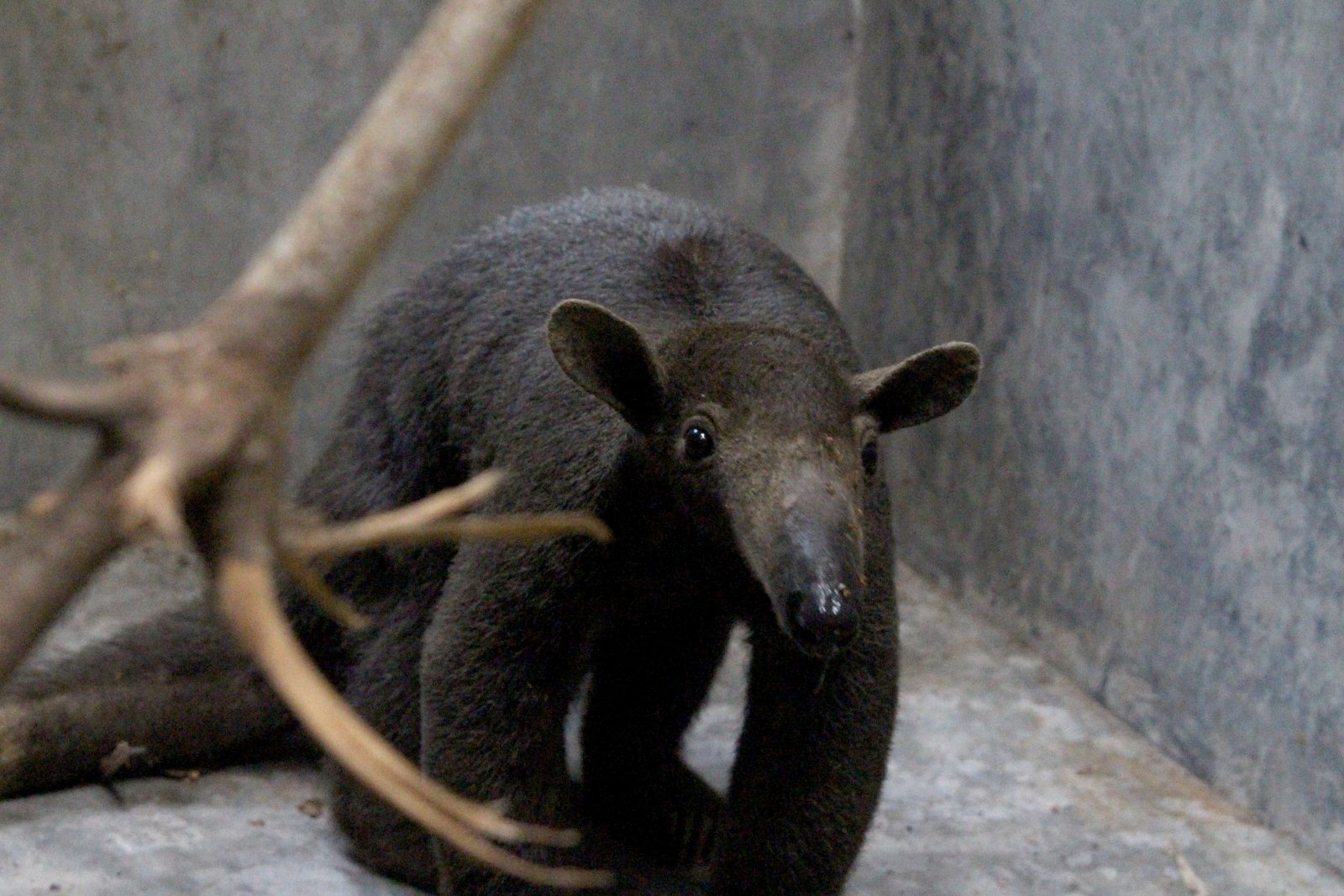
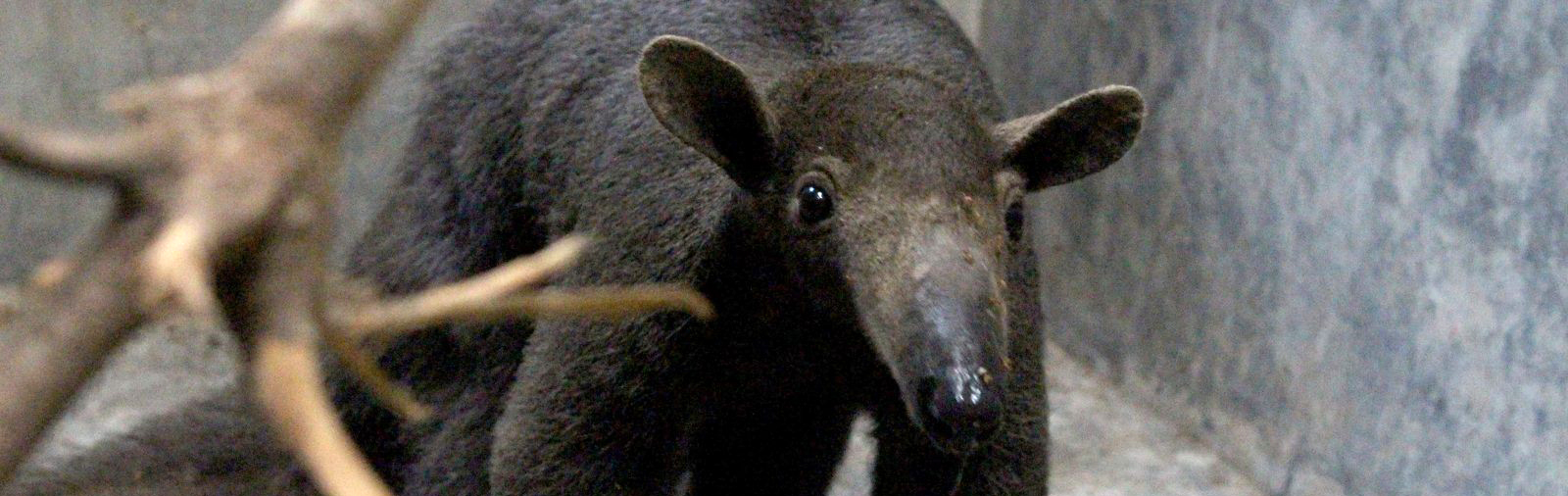
We also had the arrival of a giant anteater which arrived the day after the capuchins and coatis. Someone caught him in the wild and he was confiscated and within the same week brought to us. He received a medical check in Pucallpa and it was decided he should be released as soon as possible. After seeing all was well with him upon arrival, we released him instantly on the path to the viewpoint.
Birds
With the arrival of so many new family members, the birds have had to do some moving around. Two of the parakeet cages have been emptied, separating those that can fly and those that can’t. The parakeets that have full feathers and can fly have been moved into the Igor cage to be released, where we leave a latch door open during the day. Unfortunately the student vets have found that this cage contains some parasites, so we have stopped releasing them for the moment to determine where the parasite has come from. All the other parakeets remain together as they have had their wings cut or pulled out prior to coming to Esperanza Verde, which can take up to 1 year to grow back.
Pauki (Oropendola) is still flying freely, checking in on us and stealing the food as the volunteers are trying to work. The last few days we haven’t seen him as much, but this morning he was spotted with another wild Oropendola so he is probably having too much fun to come home.
From our Aviary, one of the volunteers found one of our parrots Tamaya with her wing stuck in the mesh of the cage, most likely during a fight with one of the macaws. Thanks to our volunteer Jack for his prompt action in helping her to be freed; she recovered quickly with the treatment the veterinarians gave her, while being in a separate cage in the office.
Construction

The clinic is coming along quite nicely now! All the windows have been completed; the sinks have been put in and the surrounding tiling completed. The painting is well under way as well, and it is looking fantastic! Unfortunately because of the arrival of new animals and the extra attention that the baby monkeys require the volunteers haven’t been able to spend as much time helping, but Douwe and Geiler have been working very hard to keep up the speed. We aim to have the clinic finished and operational by April.
There has also been some restoration of steps, and some volunteers helped Douwe to build a large rabbit cage at the family house. We have had a bit of wet weather lately, so the cages have needed some restoration and installation of roof plates so that the animals still have shelter from the rain.
Volunteers
There are currently 8 volunteers and 2 vets and 2 vet students, one of which will be staying on as a volunteer for 2 weeks after her course has finished. The house is quite full, with some of the students sleeping in the two spare beds above the volunteer kitchen, but they will be leaving in only one week. Our head volunteer Dominik has taken a well deserved break, travelling for two weeks, so two other long term volunteers Shani and Morgane have stepped in his place. Carl has just left us, but during his stay he spent a lot of his time helping with the reforestation project to plant new trees, check existing ones and also data entry. Using the GIS system, Carl managed to enter and map the location of over 700 trees that have been planted in recent years, allowing us to better track their growth, as well as determine new locations for future projects.
Thank you to all of our volunteers for their help, and a big thank you to all of our supporters.
The latest news (04.01.2016 – 23.01.2016)
General Info
Living around Esperanza Verde has become quieter, due to the leaving of several volunteers. On the other hand everybody seems to be busier and there is – as always – a lot to do.
Because it now rains on a regular basis, we can plant new trees in the Esperanza Verde area. We planted around 200 new trees, mostly cedro and shihuahuaco. The volunteer Carl Noyce used the data of the new planted trees and the records of the already planted trees to fulfill a map using QGIS.
We continue to release parakeets and were finally able to empty one of the several parakeet cages. So we are ready for new arrivals.
Monkeys

Yanay ( female spider monkey) is assumed to be pregnant. Her belly gets bigger and bigger each day and gets us wondering when she’s due. The length of pregnancy with this monkey species is about 7 months, so we calculate for May or April. Of course things like that are always unpredictable. She will become more protective about herself with time and this could be the cause for some problems. We keep an eye on her.
Silvana (female squirrel monkey) is doing well and taking good care of her baby.
Willow (male woolly monkey) seems to appreciate the company of female volunteers. He is double as excited for a new woman as he is for new man in the group. But nothing beats the friendship to Kamari (male wooly monkey) or Rincay (Tapir).

Nakoya (female wooly monkey) will be off of the milk in the next weeks. We already cut off the afternoon milk, now we want her to be independent of all the milk. Let`s see if she likes that. For now she still whines like a little baby in the morning and afternoon at the bodega.
By the next week we should get two more arrivals: a baby capuchin monkey and a young howler monkey. All of us are excited to see the new guests.
Other Mammals


The Opossums are now in the a small cage in the front cage of the aviary (Pichu) front cage. There they have a bigger cage then before, with more space to run around. The really big grasshoppers are their favorite food. They are going to be released soon, healthy and ready, which can make all of the volunteers who have been and are taking part of the raising proud.


We decided to weight Elmo (two toed sloth). He is doing great. This gave the volunteers the chance to check his firm grip and to make some cute pictures.
Birds
Pauki (oropendola) loves to be around the volunteers. He picks his favorites among them and follows this one around. Sometimes the whole day, or he follows Olivia around, so we are always warned of her coming.
Supay (shiny cowbird) is an enrichment for all the birds in the aviary, we all know that. But he gained a bit too much weight. So we cut his diet to one feeding a day. So far he looks okay and if he gets angry he will eat Asan‘s (macaw) food.
There are new plans for the office birds – Picor (parakeet), Apu (aratinga), and other parakeets. With the releasing going on, at some point we are able to put them into the cage nearby the volo house (casa). Especially Picor will be happy to have space to use his wings more.

The releasing of the parakeets is still the main focus right now. We transported more of the birds from a normal to a releasing cage. As mentioned one of the normal cages is finally empty. We see that as a sign, that we do the right thing, the right way.
Reptiles
We changed the feeding time from morning to the afternoon. This way, we see the tortoises more often and can make sure that they get to eat their food.
Nasca (female yellow-footed tortoise) is almost through with her quarantine period. Coming week it will be time to introduce Pepito (male tortoise living with Rincay) to his new lady-friend.
Construction

Some cages in the clinic are already finished and will get a clean-up in the next days. As soon as they are dust free, we will start painting the doors. And now the clinic is fully closed, the outside doors are in and all windows have mesh. Yanay, the spider monkey, will not be able to mess around anymore!
And when there is time, we will restore the mesh of the windows in the kitchen.
As the old boat had been worn down by all the transportations of materials for the clinic, and needed some repairs, we decided it was time for a new boat. The old boat is now newly painted, repaired and soon to be ready to enter the water again. Our fleet will then contain 2 boats, which is amazing.
Volunteers
We had a small group of four to six people for a while, but we are growing bigger by the end of January again. Pros are, that we can train the new volunteer well, cons are, that we have limited hands and can’t be everywhere. The evenings are quiet and relaxing though. Also making dinner is a lot easier, if you only have to cook for a few persons.
The latest news (19.11.2015 – 04.01.2016)
General Info
First of all, HAPPY NEW YEAR EVERBODY !
We are sorryfor not keeping you up to date lately. In between Christmas and New Year’s preparation the update got a bit forgotten. But as always there is a lot to tell.
There has been some restauration in several cages. The spider monkey cage (Sapa) and the Aviary (Pichu) got new branches and big bamboo sticks. The animals seem to enjoy having new options to play or hang around.
For the 5th of December the family and the volunteers came together to celebrate St. Nicolas, with typical Dutch snacks, presents and treasure hunts all over the Esperanza Verde area.

Of course we shan’t forget to mention Christmas. We have been busy building up the Christmas decoration, thus bringing the Christmas feeling into the jungle. The volunteers enjoyed a nice Christmas Eve in the volo kitchen with music, dance and drinks and on the 25th. All of us had a wonderful meal and we celebrated up until late in the evening.


We celebrated New Year’s eve with a special treat for dinner, roasted pork, champagne, Dutch sweets (oliebollen) and fireworks at the port.
.
Monkeys


Yanay (female spider monkey) is living with all the other monkeys now freely in the Esperanza Verde range. She is fully independent, but still loves to be around humans as well. Sometimes when you sit outside the kitchen she just sits at your side giving you company. The no touching policy is still active though and it helps them all to eventually spend more time in the trees, which of course is more healthy in many ways.

Nakoya (female woolly monkey) is maybe getting a bit too comfortable with us at the moment. She is very demanding and also naughty. She tries to steal food from the buckets and screams if somebody walks by her with an egg without giving it to her. It will slowly be time to get her totally off the milk, which she still receives by hand twice a day.

As for Mica (female capuchin monkey), the hormones helped for a while but then she showed the same behavior like before the treatment. After a night without sleep and a big headache for the chosen volunteer (at the moment always our headvolunteer Dominik), she got another hormone injection, which should keep her quiet for, probably, the next 2 months. It worked and Dominik could get some well-deserved sleep again.
Very happy new news was brought to us by a female squirrel monkey (Silvana), which we released in November 2014. One day we saw her carrying a baby on her back. She seems to really fine as mother. This is the first born squirrel monkey at Esperanza Verde. Unfortunately we have not succeeded in getting a photo of her and her baby, as she stays far away from us, but we will keep trying.
.
Other Mammals

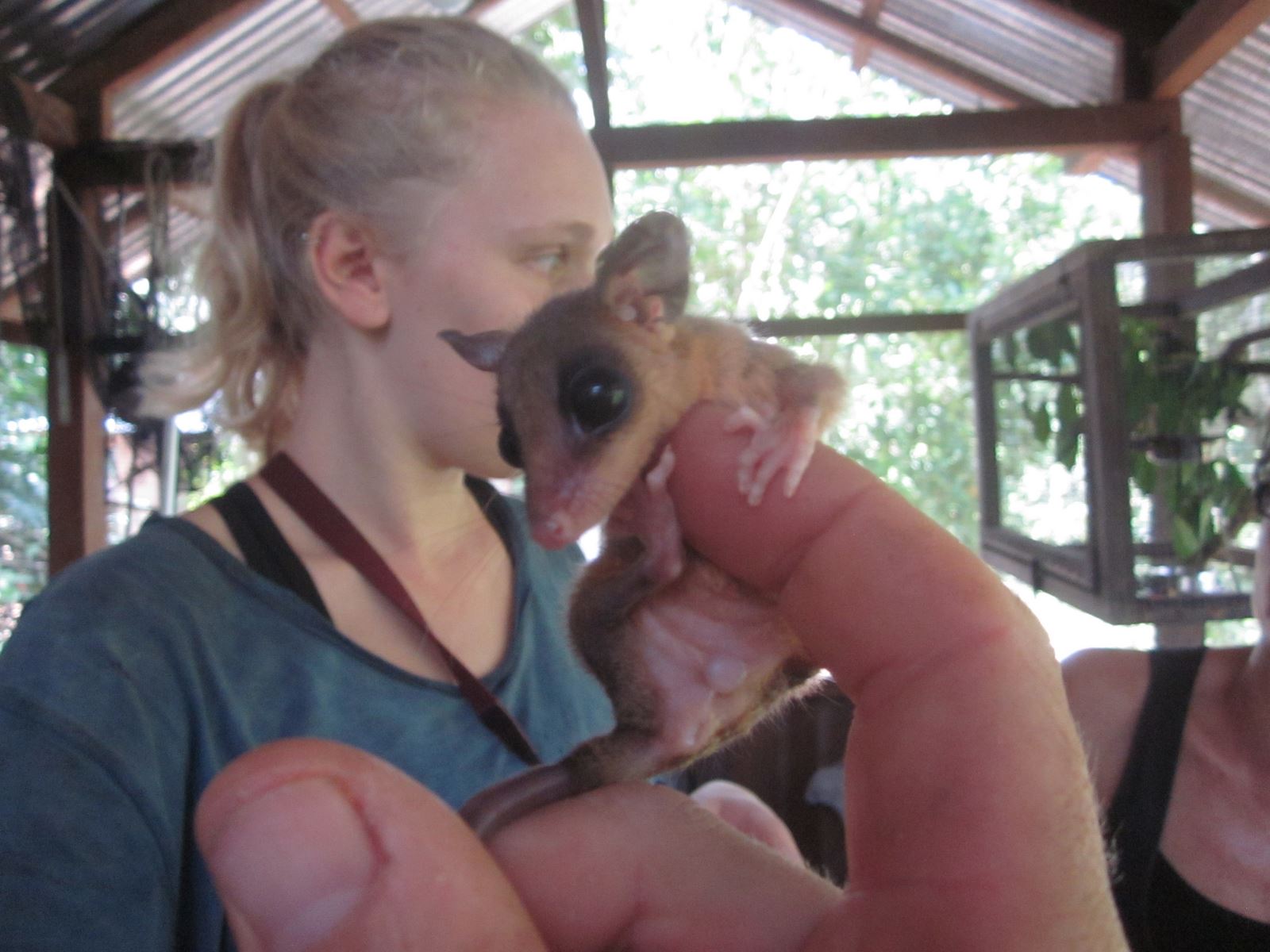
The Opossums (mouse opossums) are all growing up well and getting more independent every day. One of the originally six died; probably because of undernourishment. The others eat a lot of fruits – papaya and banan – mixed with some proteins from eggs or grasshoppers. They now have a little cage in the volo house, where, by night, they can be observed playing and discovering. We think of releasing them in the next few weeks.
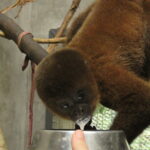
Little Kiko (male kinkajou) is not so little anymore. He grows pretty big and is very active by night. As soon as there is space in the cage near the family house (Tiliku), he will move there till he is old enough for release.
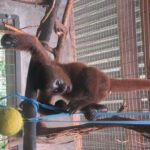
Quintisha (female peccary) likes to play with Willow (male woolly monkey) every once in a while. It is mostly playing but we do hope Willow is very careful, as Quintisha’s canines our not to joke with! Nevertheless both seem to have fun and none get hurt so far…..

Rincay (male tapir) really likes the female volunteers! He follows them around everywhere, to a point where some of them get a bit annoyed. Once he escaped into the front cage, but they lured him back with a clever strategy and lots of food.

Greetings from Yara by the way. She sends her regards to all the supporters of Esperanza Verde.
.
Birds

Tupak (female toucan) hardly shows up anymore. She seems to have chosen a life in wilderness and comes by only rarely. One of her sleeping places is still at the family house though. So we are able to keep track of her to some degree. We still like to remember how we raised her from a little bird over a half a year ago and now she is all on her own. How fast they grow!

Pauki (oropendola) does not go back to his cage anymore. He flies around all the Esperanza Verde region and even further away. But every day around 18:30 he passes by the volo house to say hello. If he is there when we feed him, he has no shame in jumping on the arms or shoulders of the poor volunteers to steal all the food they carry.

As a little side mention: Asan (blue-yellow winged macaw) loves to be petted. If you have the patience and the courage then you are able to touch him without him drawing blood from you. He can be picky, we know, but you really start to love him, once you see him blush while you touch him.


For the bigger news: After the ladies from the government left, we got the permission to release the healthy parakeets back in to the wild. So far we have been releasing over a hundred parakeets in the last month and are still counting. We also brought a group of 60 parakeets (all healthy and with grown-back feathers) to the Tiliku-cage (the first release cage build near the house of Douwe and Olivia). The little opening is now open and we are waiting till the first ones find the opening and try life in freedom again.
The one sick Aratinga Apu in the office has regained a lot of weight and if this continues on he will soon be brought back to Casa cage, where his old group of Aratingas is.
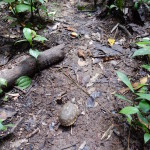
.
Construction


It is incredible how fast Douwe and the workers, Geiler and specialist in concrete Antonio Yance are progressing with the clinic. All the walls are now finished and with help of some volunteers the windows get completed soon. Additionally we bought a new water tank with which we will build a new water system exclusively for the volunteers` house. But this has to wait until the clinic is done. There has been some restauration of the old steps on the pathway to the port lately. We will restore the old and moldy ones and replace them with new and shiny ones.
Volunteers
12 Volunteers are living in Esperanza Verde as we write this update. The house is full, but half of them are leaving after New Year`s. Among them are 4 long terms, who have been here for more than two months. We will miss them and their dedication to our project big time but at the same time there is opportunity for new people to fill in these gaps.
For now we wish you all a happy new year, enjoy 2016!