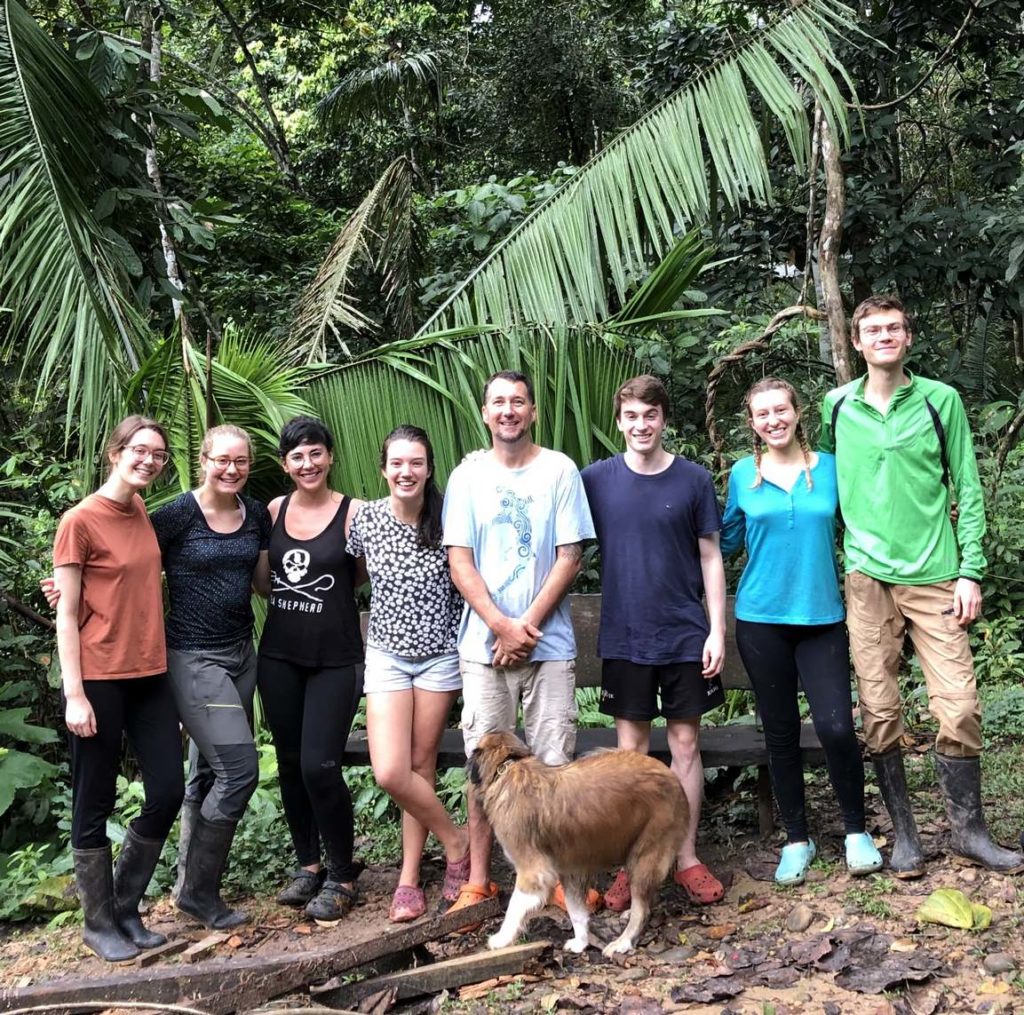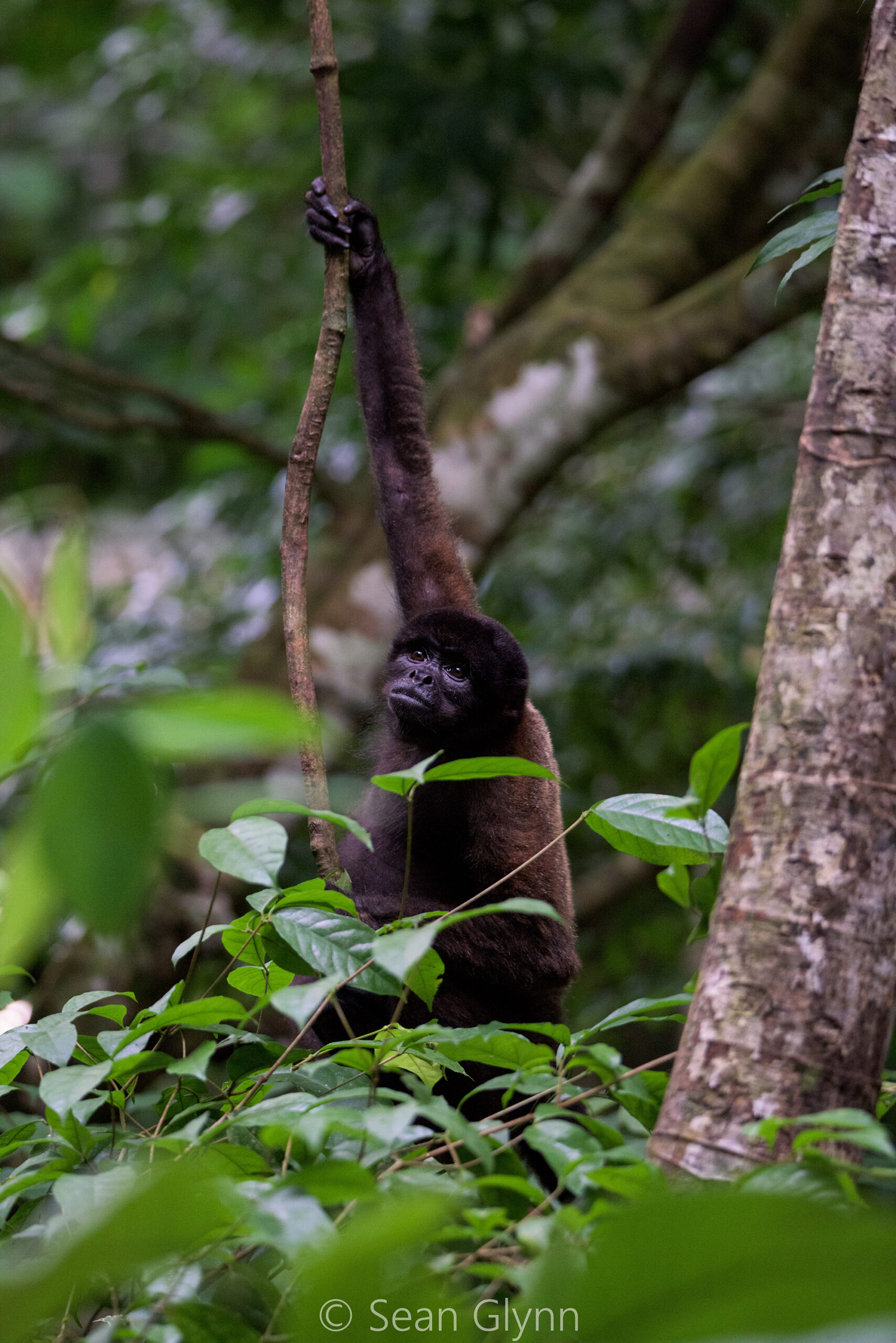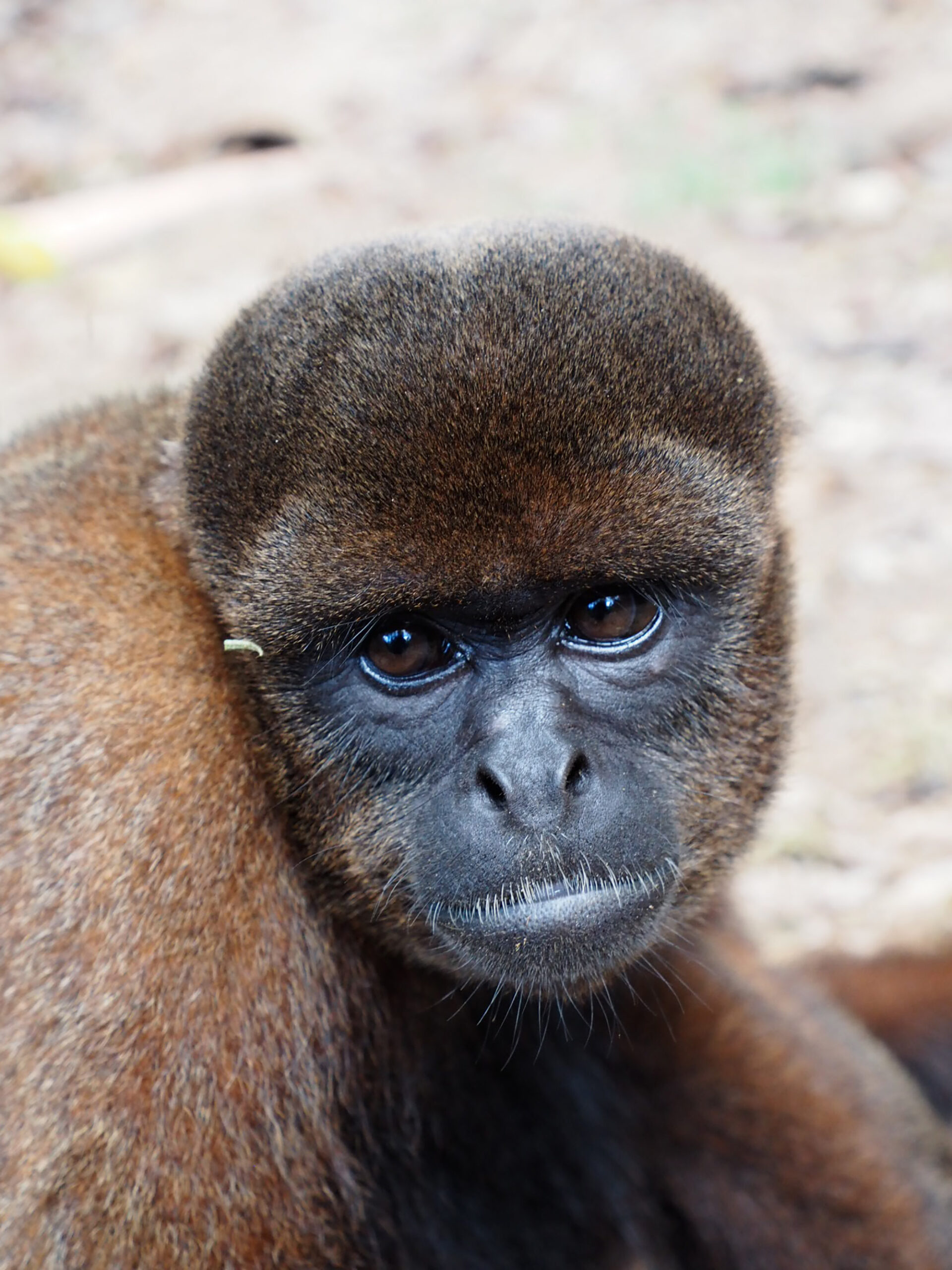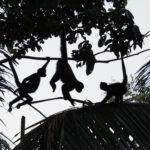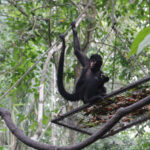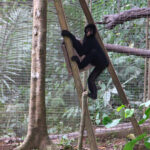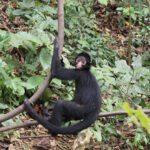
March 2020 Newsletter

COVID-19 has seen a worldwide escalation in travel and social restrictions. Esperanza Verde has been carefully monitoring the situation in our local region to ensure we are up to date with the most current information, and are able to make careful decisions on what is a rapidly evolving issue, to assure the safety of all volunteers, staff and animals.
Currently non-essential travel is not allowed within the country and as the month ended international flights into or out of Peru ceased. Although EV is not currently able to receive any new volunteers, we are fortunate that there are existing volunteers who are able to stay a little longer.
We continue to monitor the COVID-19 outbreak, and make key decisions based on the most current information available.
As you read on, you will notice that the animals, and thus the general work, is not greatly affected by the situation for the time being.

Every month at Esperanza Verde can offer something different and this month was no different. Douwe, Olivia and the family continued a well-deserved vacation away from E.V and although absent it was extremely comforting to all, knowing that the wealth of their knowledge and assistance was only a phone call away.
New animals, new volunteers and new challenges, but as is often the case the team reacted as required and the month ran as smoothly as anticipated.

Monkeys

Luna and Otis

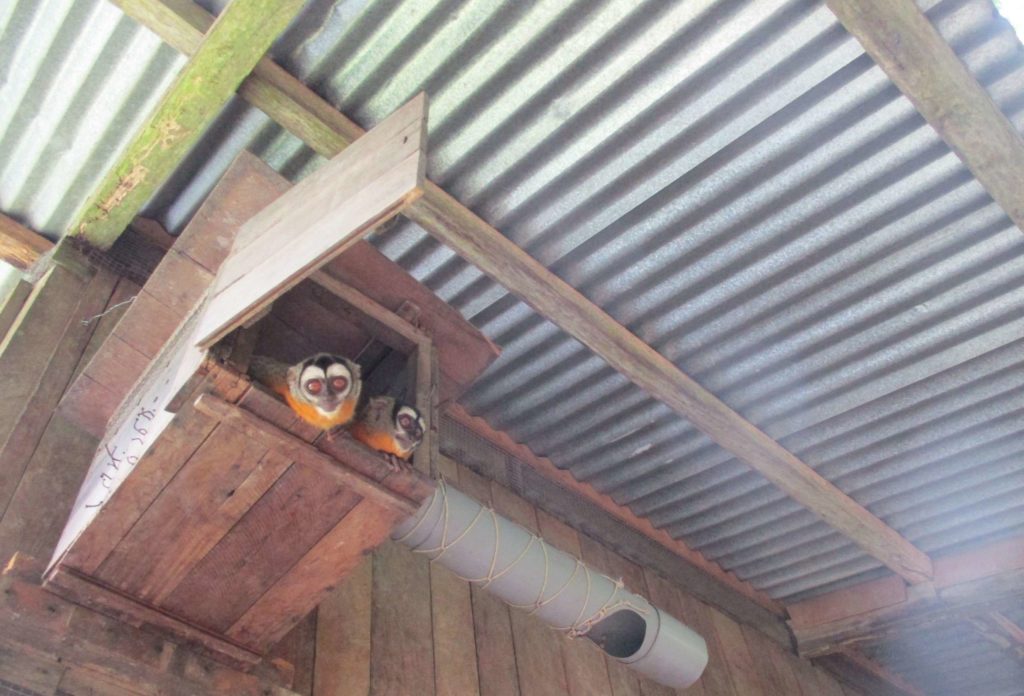
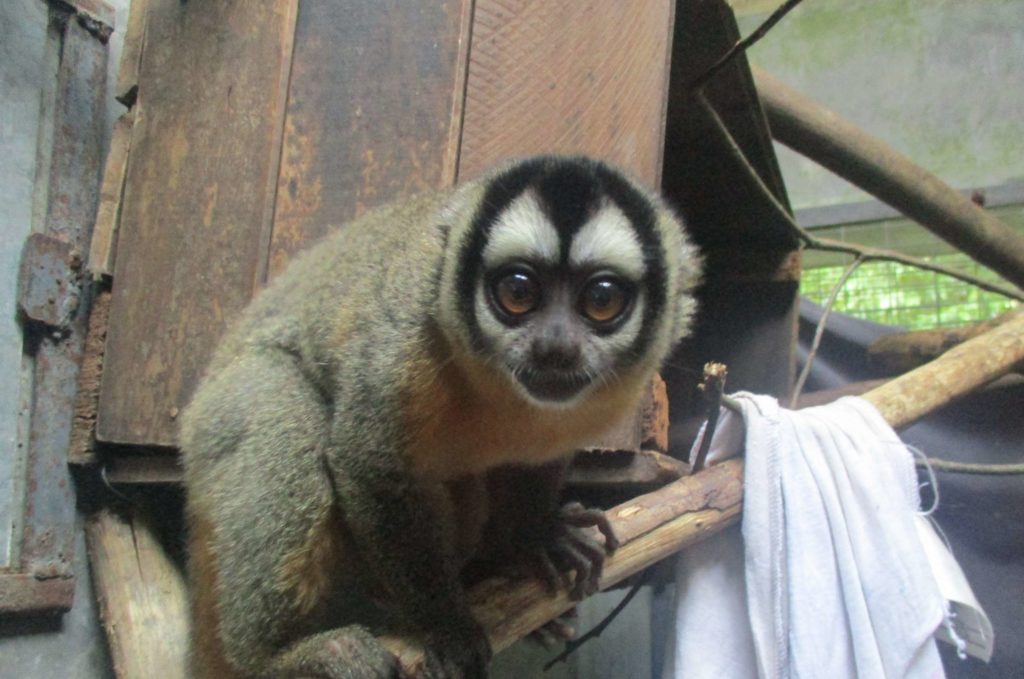
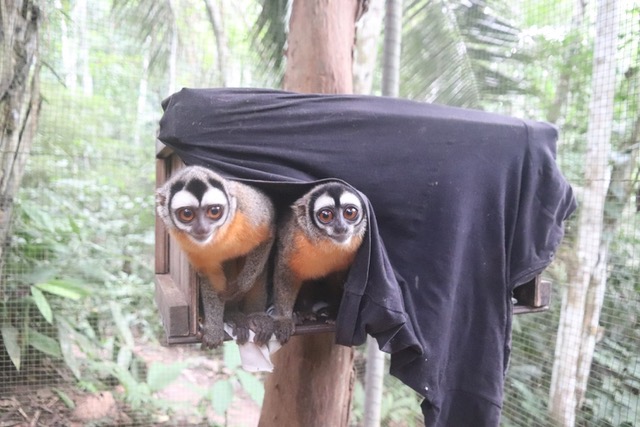
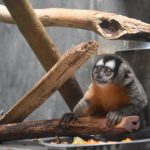
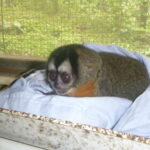
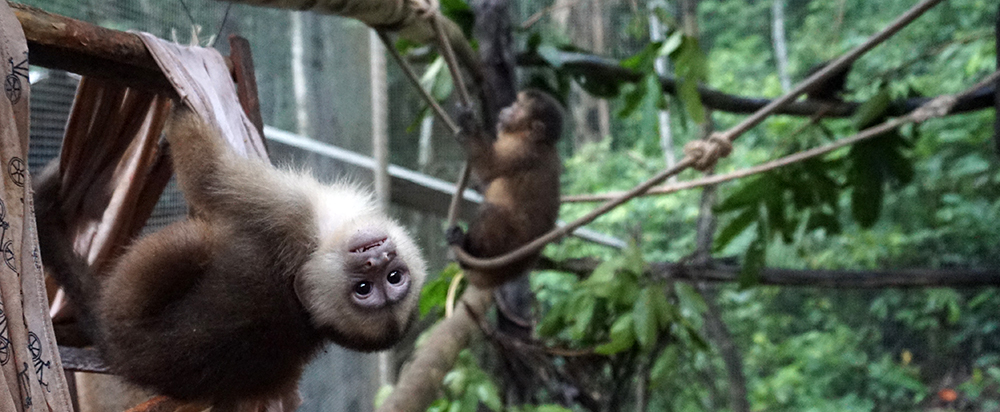
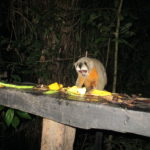
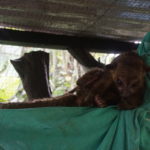
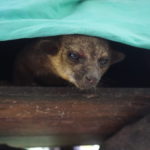
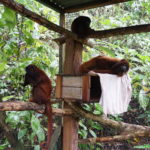
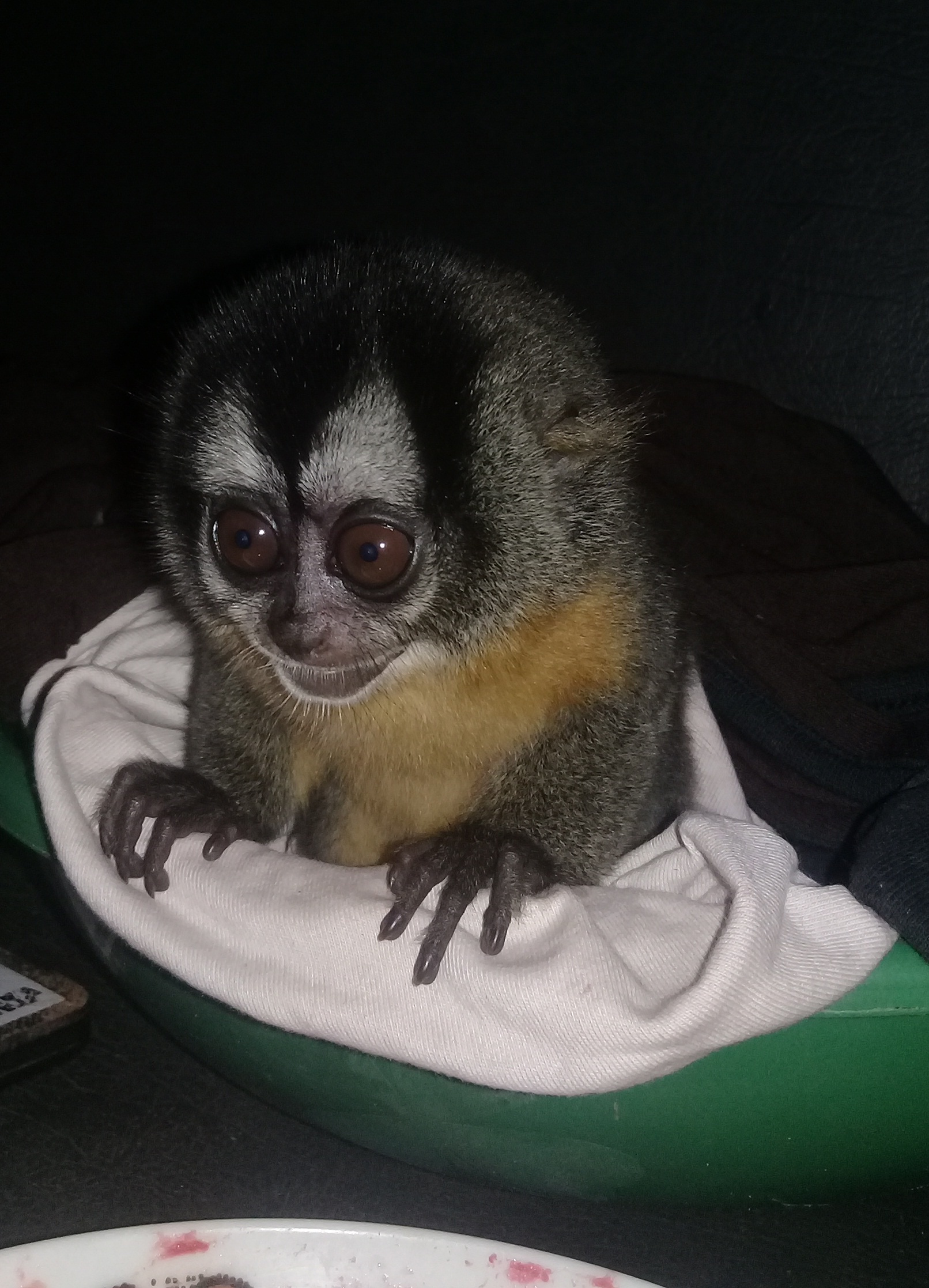
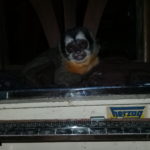
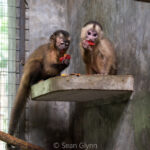
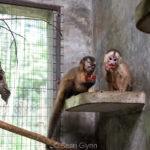
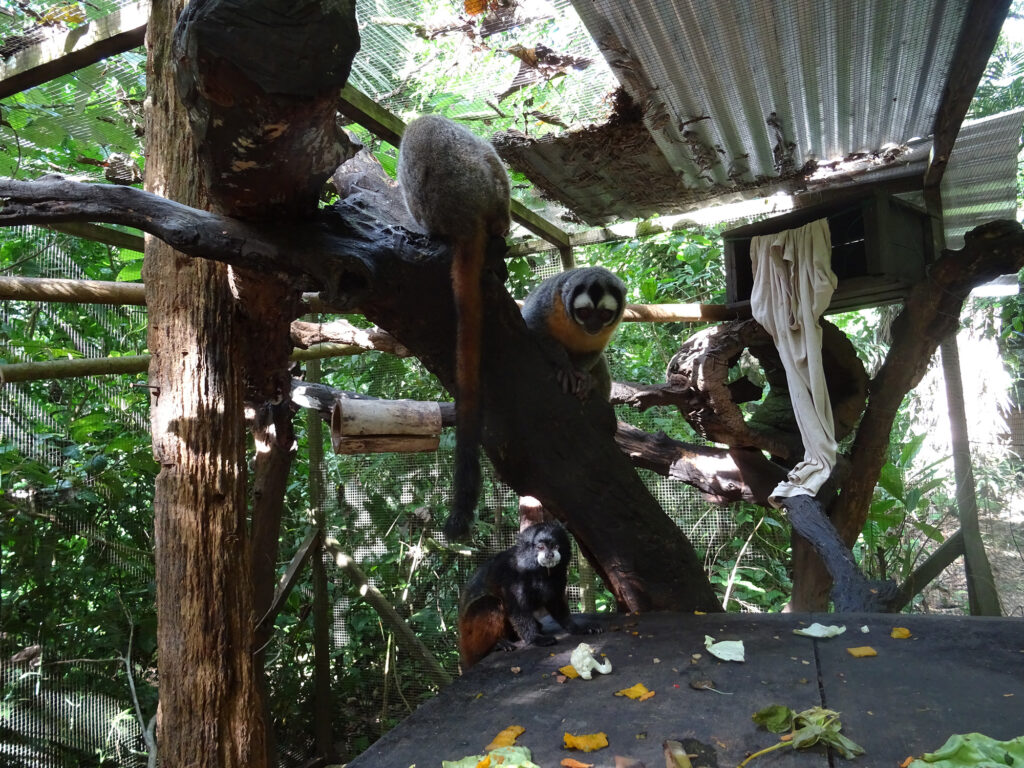
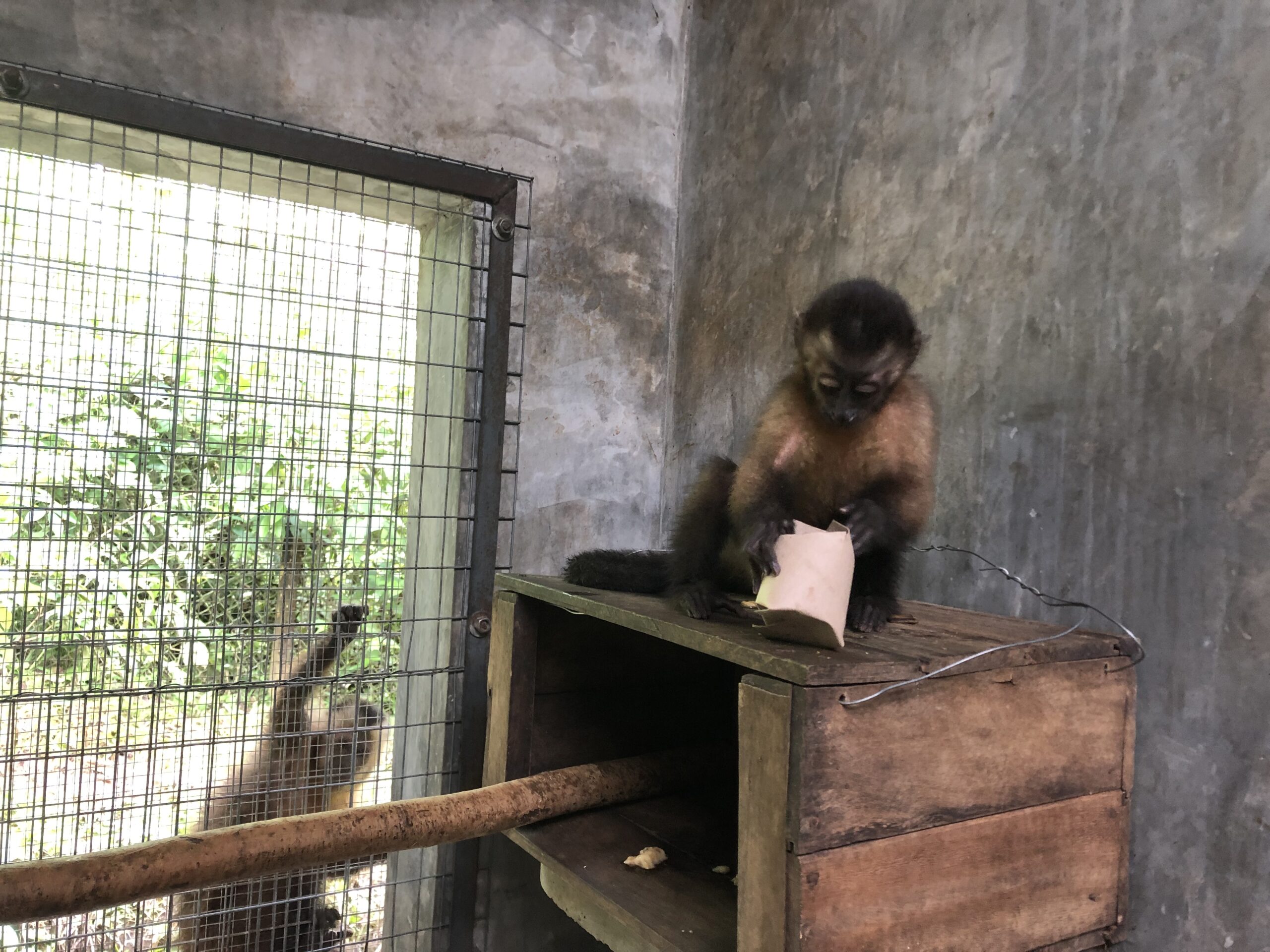
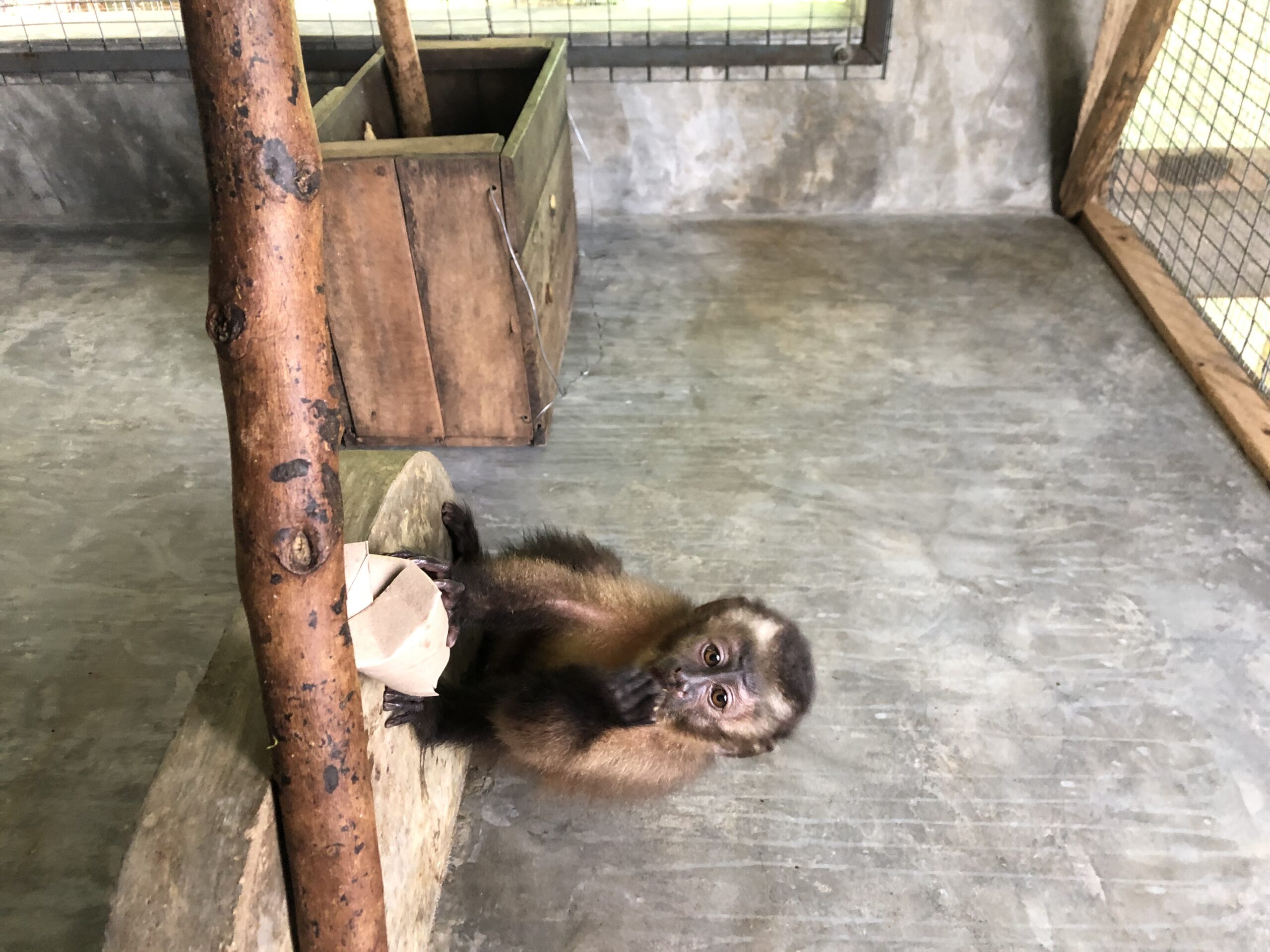
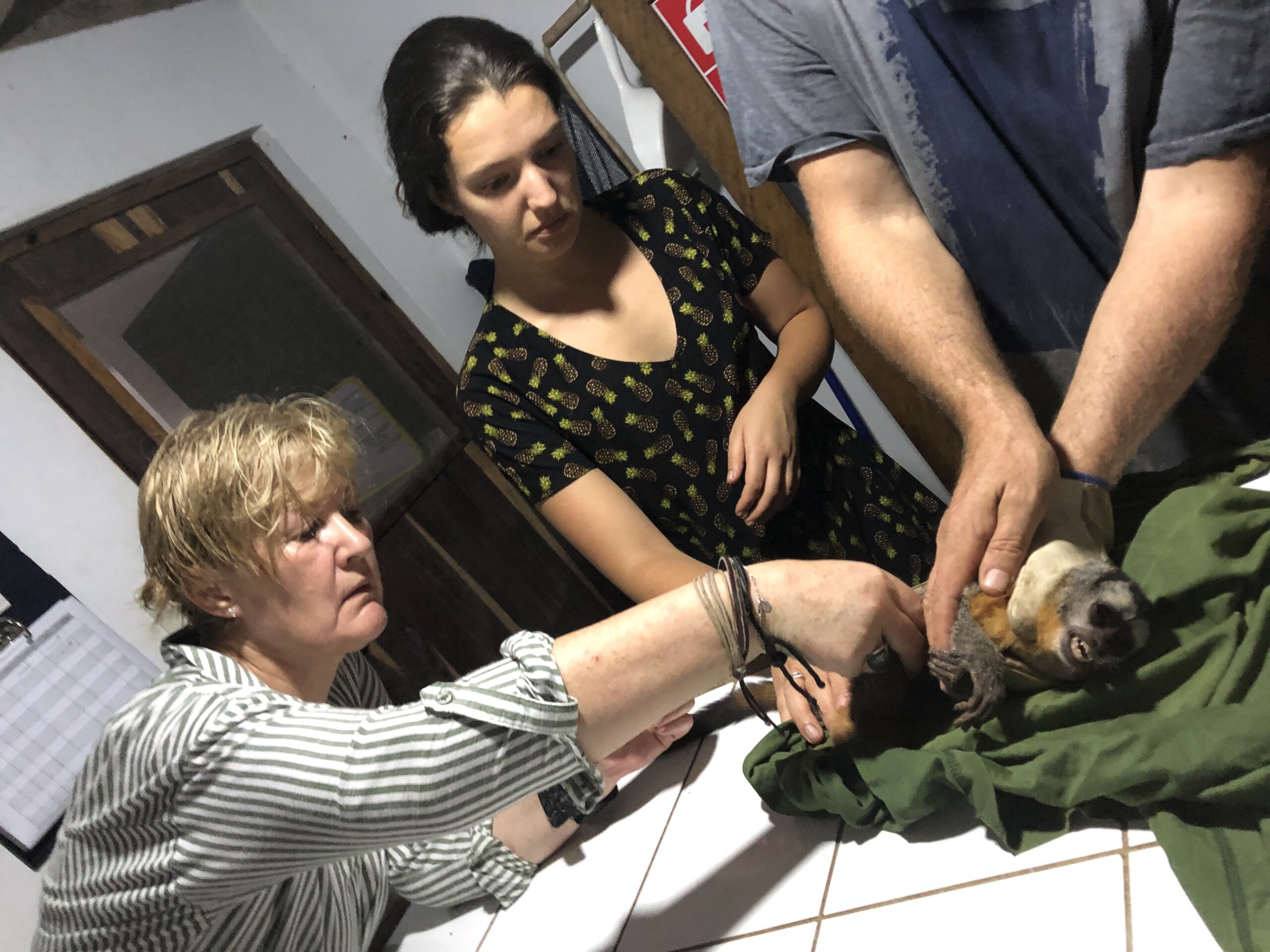
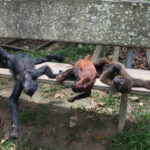
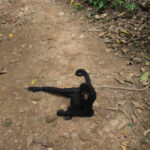
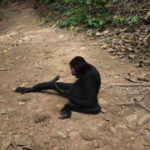
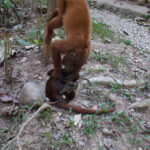
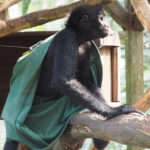
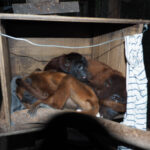
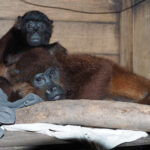
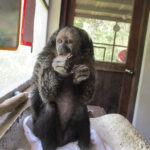
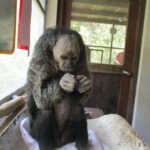
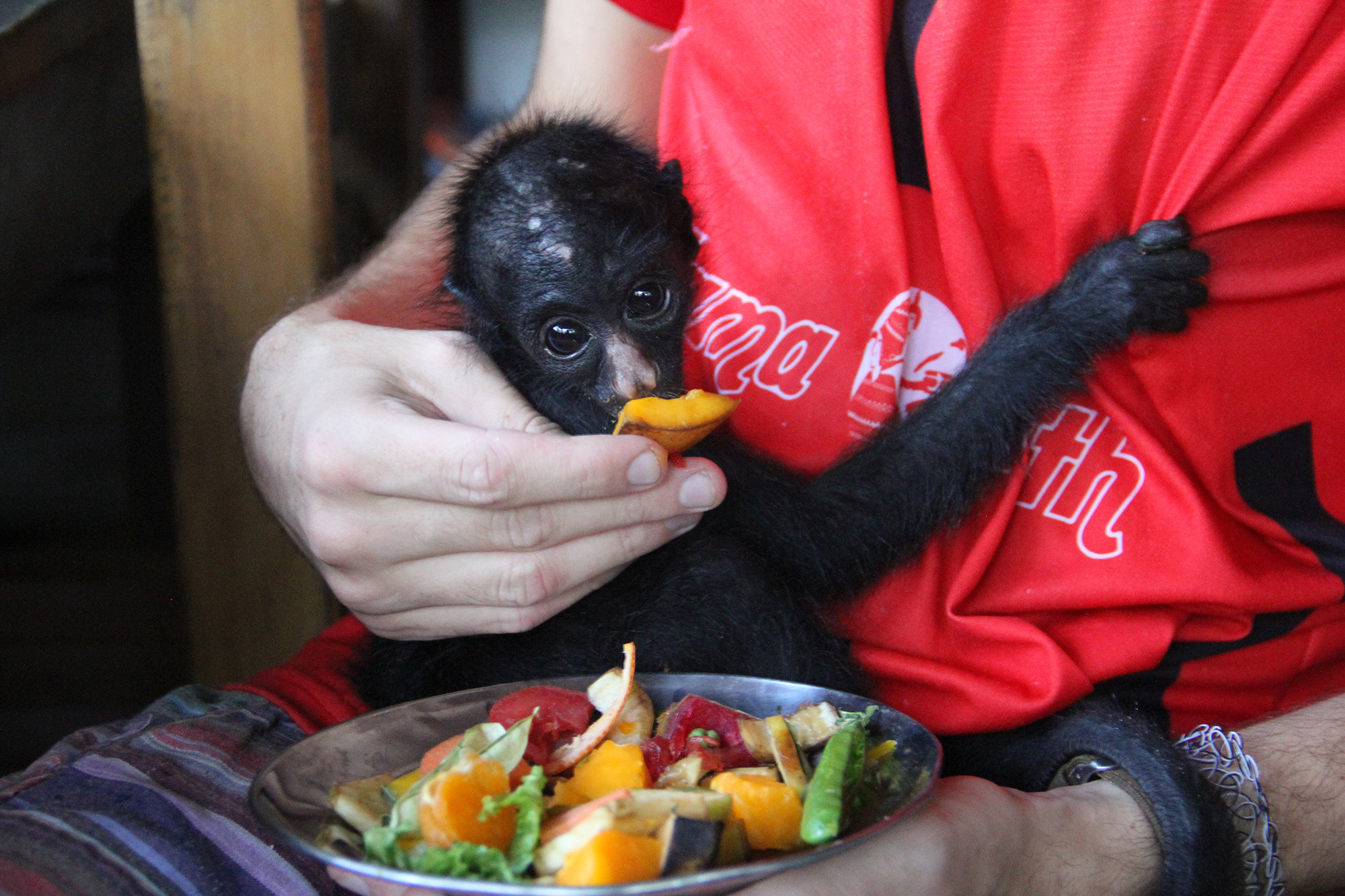
March saw all of our Ma’s Night Monkeys back in enclosures. Moira and Maru were both losing weight, so they have been enclosed to allow for closer monitoring of their health and diet. Otis had an injured foot, and being such a social animal, both he and Luna were closed into Tupac to allow Otis time to be medicated and observed. While Luna and Otis are in Tupac, it was a great opportunity to introduce our newest addition Kira (baby Night monkey), and get them comfortable in each other’s company. Kira is now spending time with a senior volunteer within Tupac most evenings, and although still apprehensive appears to be growing in confidence daily. Kira moved to the clinic briefly in March as space permitted but as you will see, a busy month in the SUSTAOH meant Olivia, Douwe and the family took responsibility for Kira with her moving back to a smaller cage in their attic.
In the closing days of the month all four night monkeys were released from their respective enclosures and life has returned to normal for them. As is always the case we continue to monitor their weights and general wellbeing.

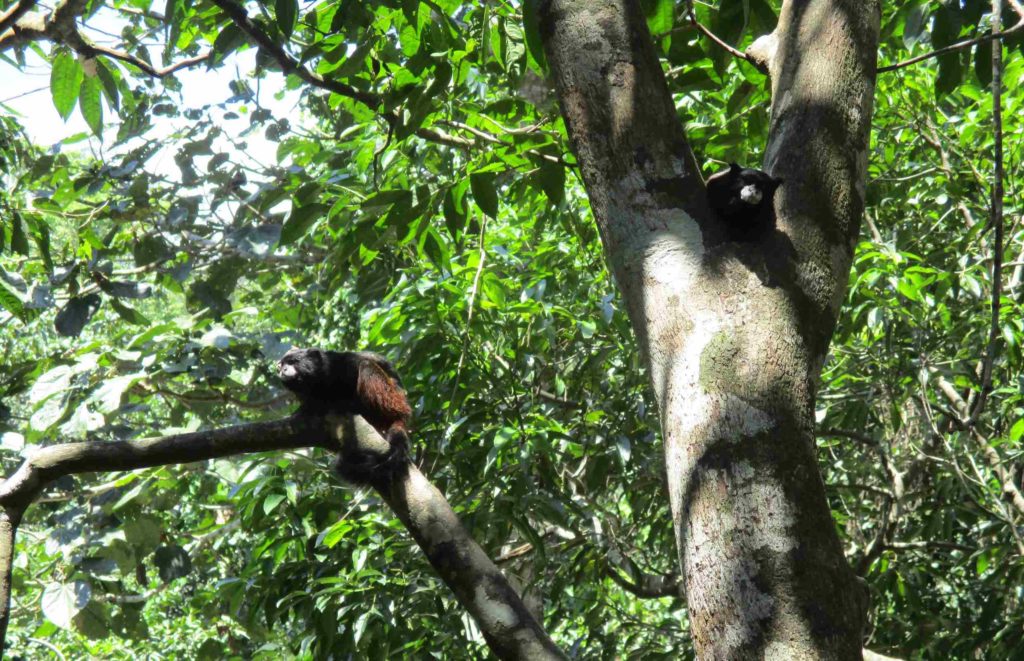
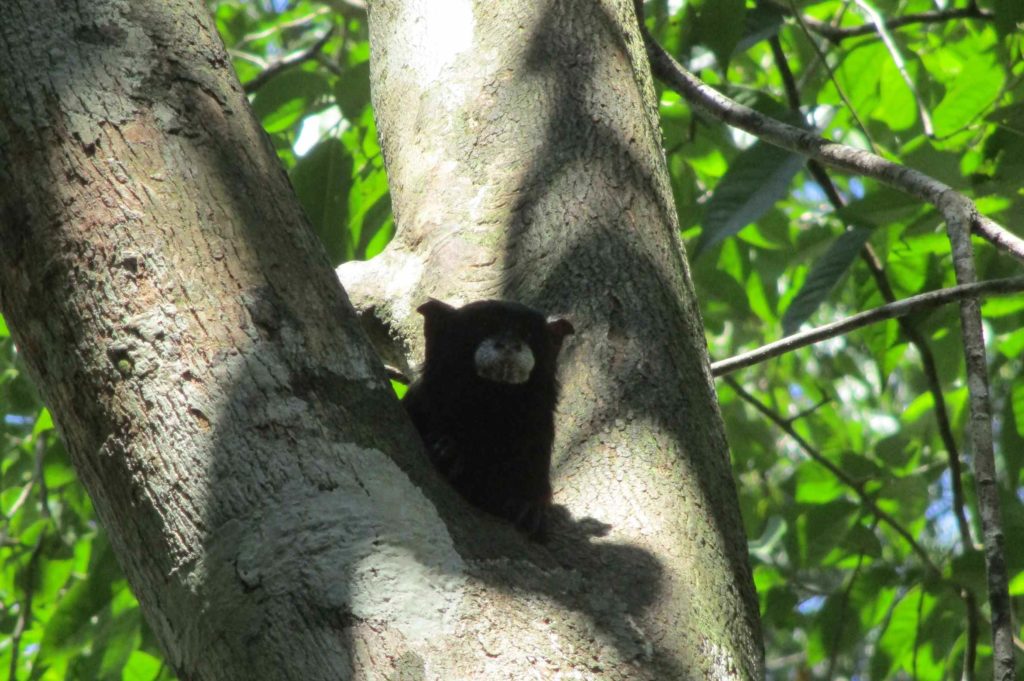
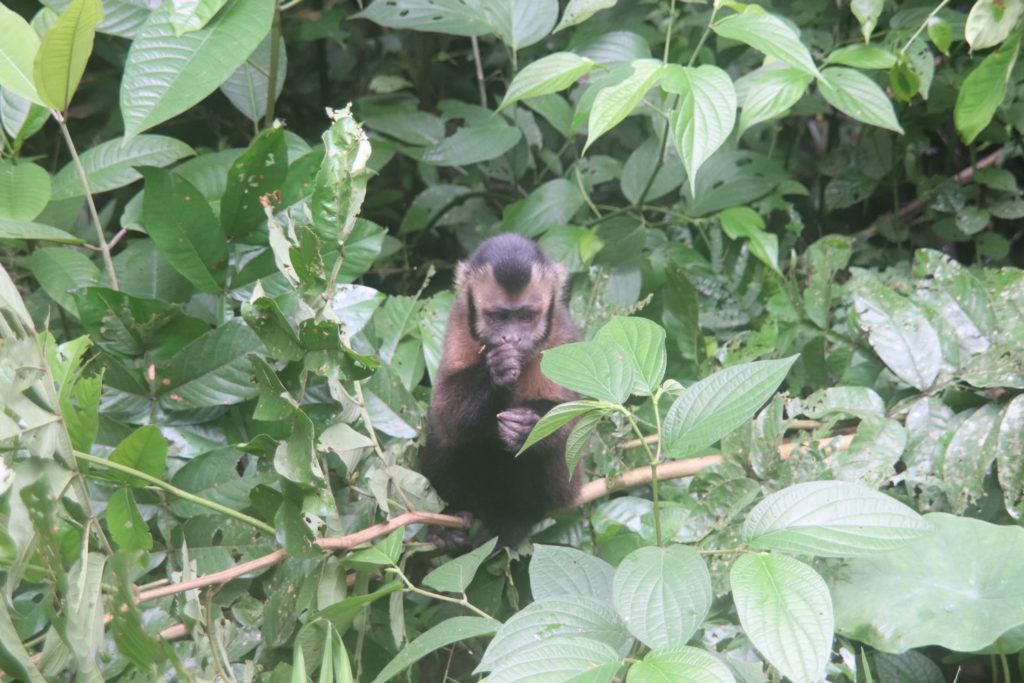
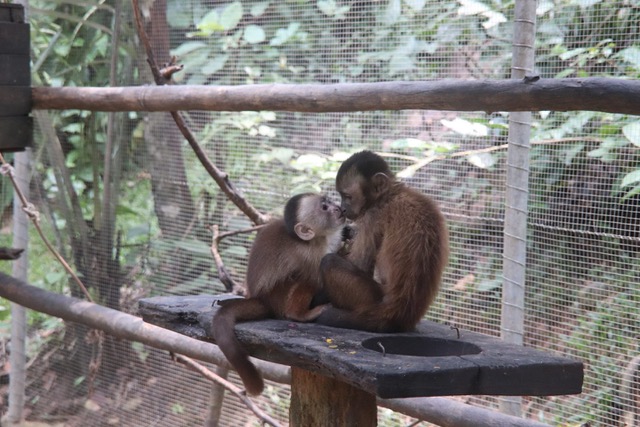
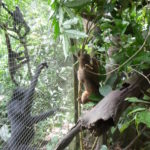
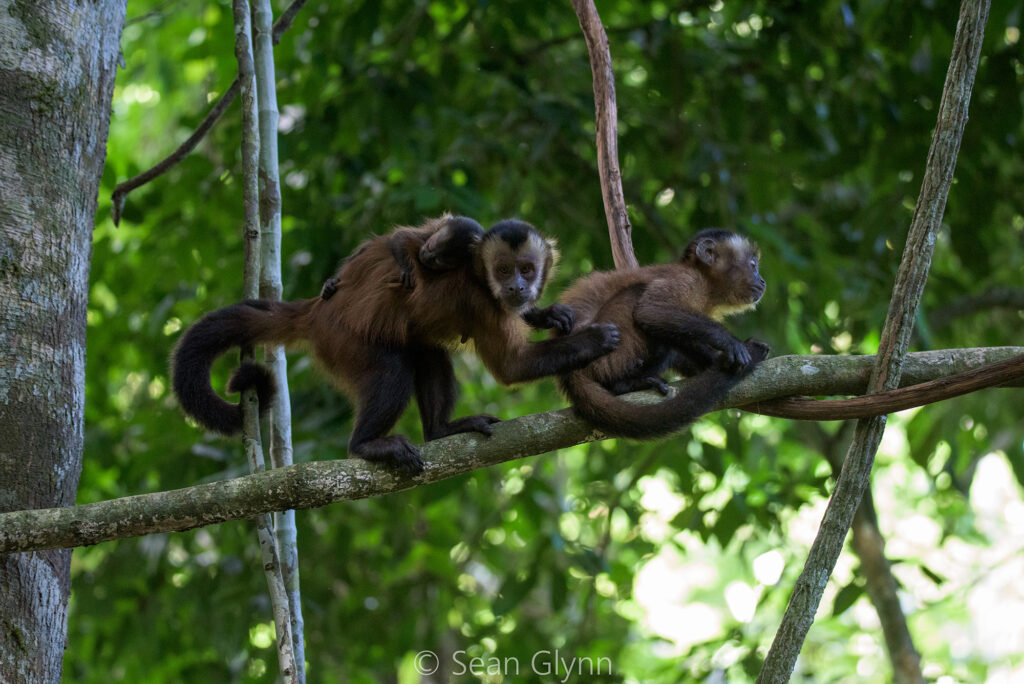
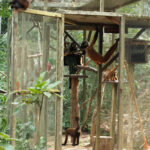
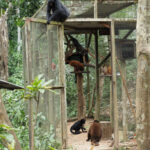
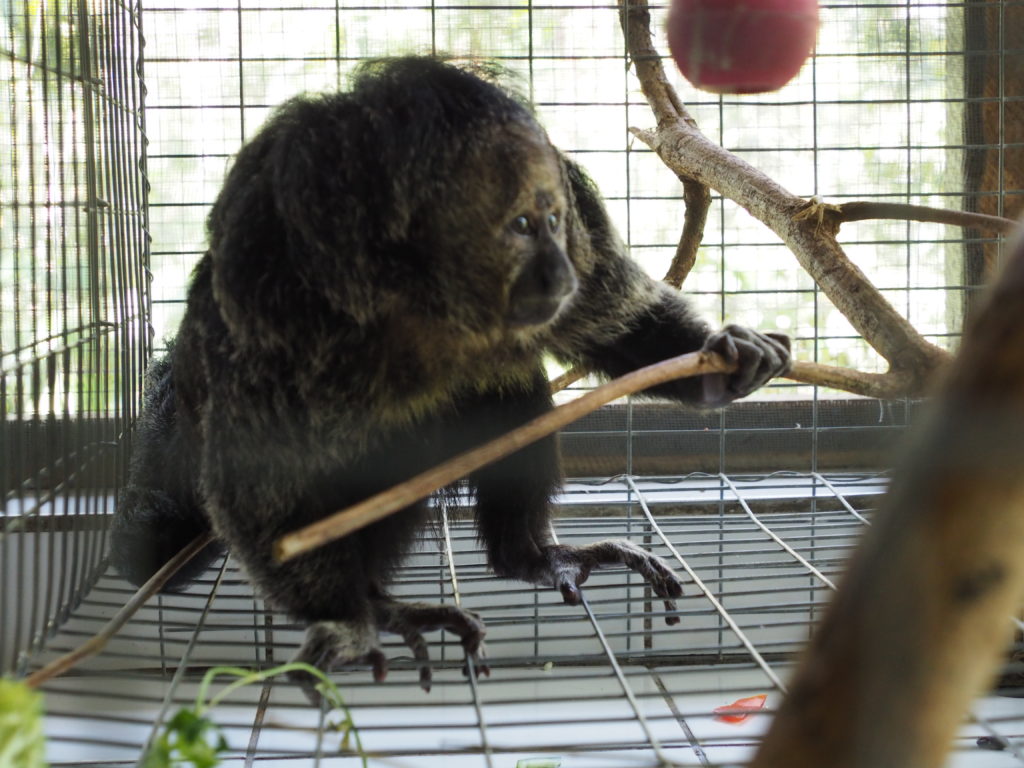
Lulu became one of the latest enclosures to liberate its residents this month. Daytona (female large headed capuchin monkey) and Tonka (male Andean saddleback Tamerin) readily accepted the newfound freedom, but with the option to be enclosed in the evenings if they wish.

Ezra meet Biko in Lulu cage after opening door

Ezra (Spix white chested capuchin) was not so quick to embrace emancipation, finding the experience of mixing with other monkeys all rather daunting. For the next few days dedicated volunteers observed Ezra outside ensuring they were available if she was struggling or became lost.

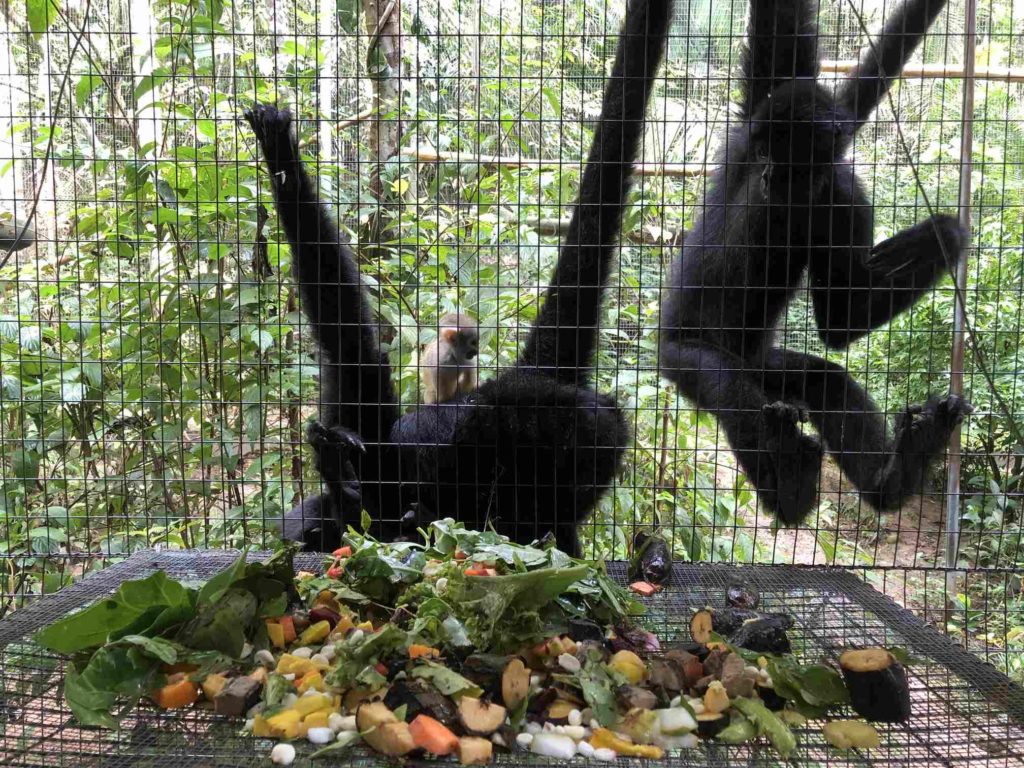
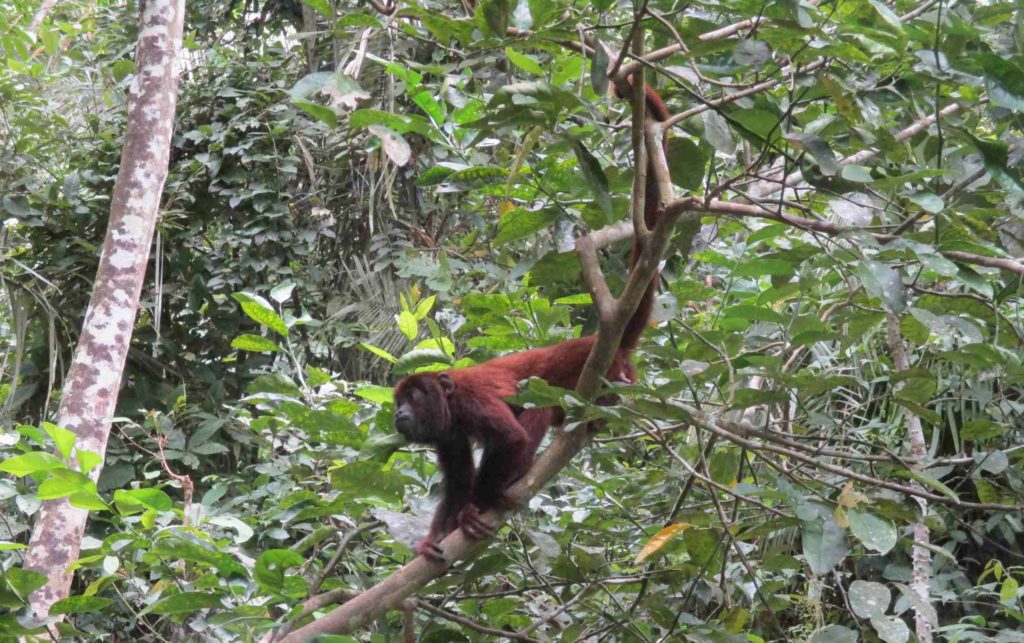
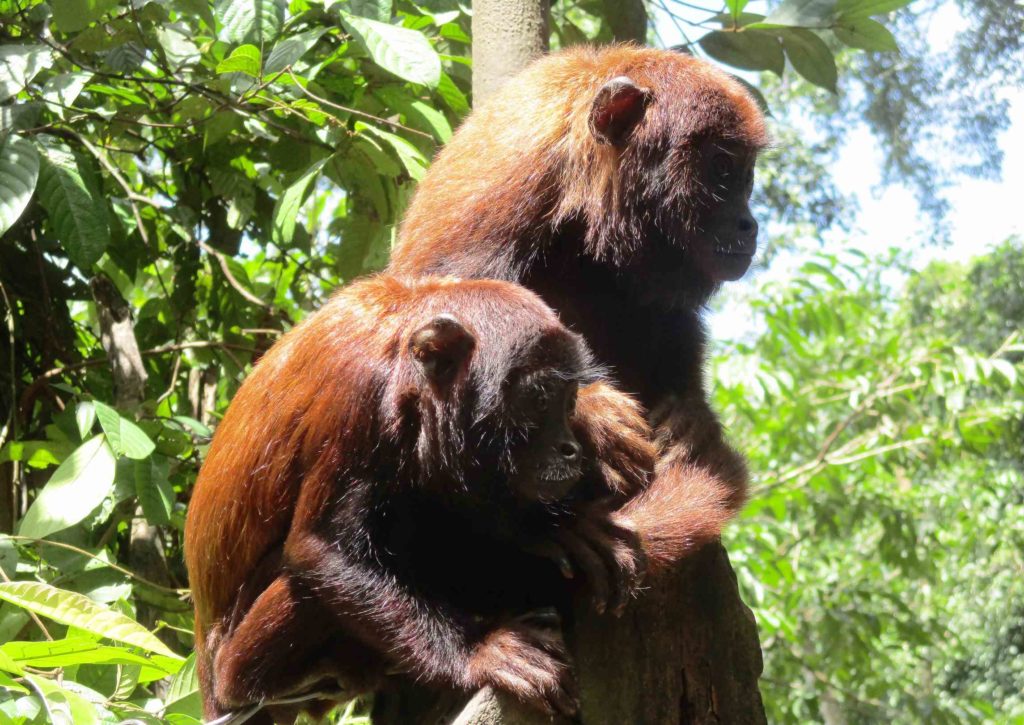
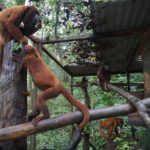
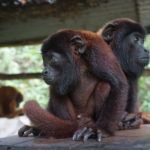
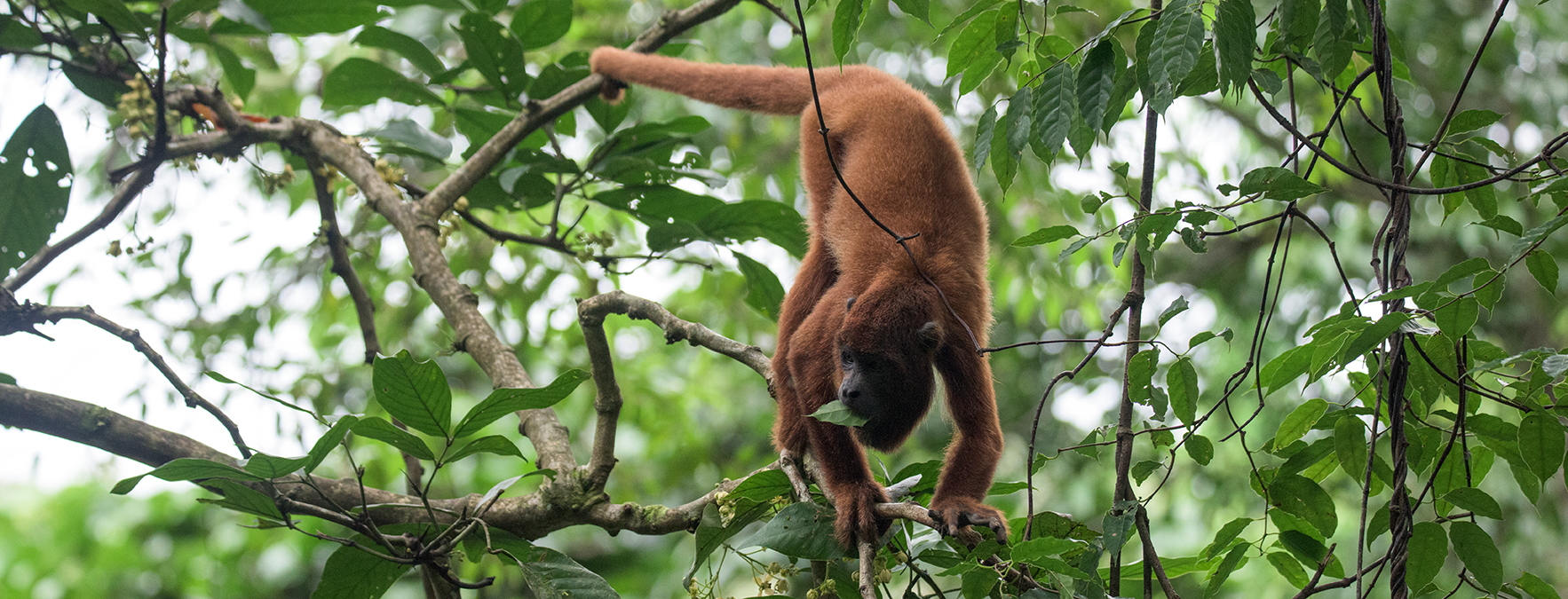
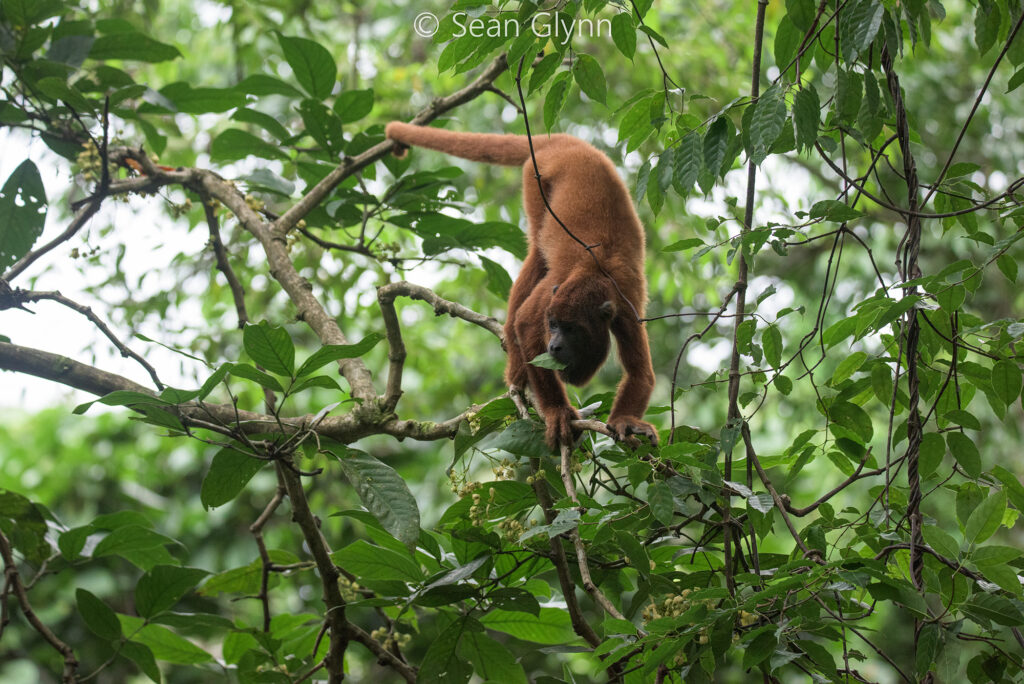
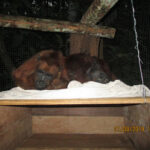
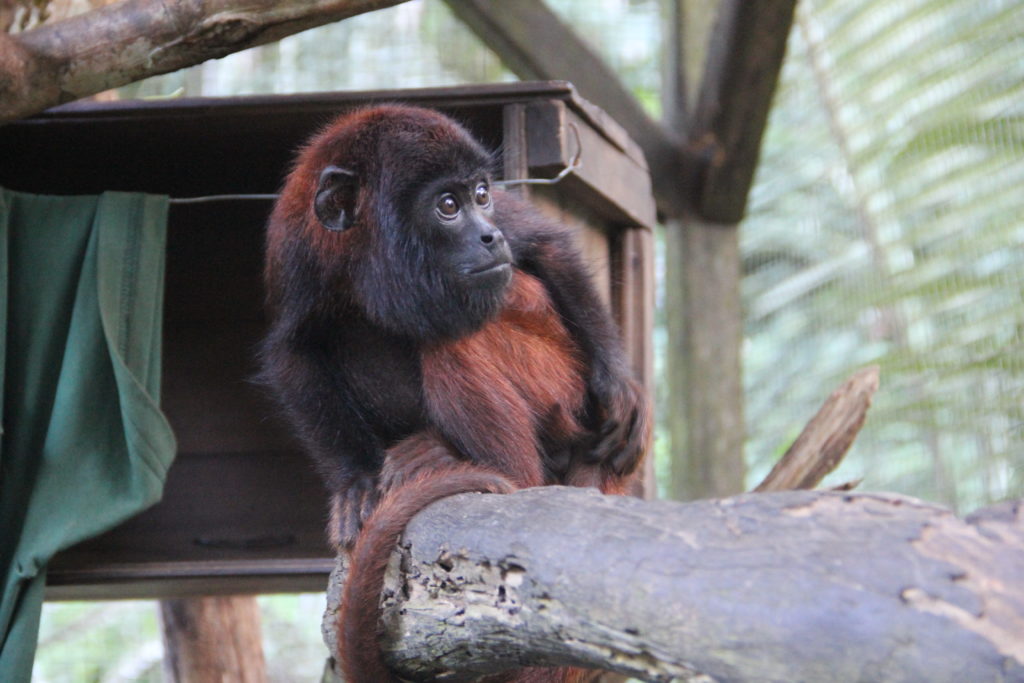
Alaya, (female Howler monkey) could give lessons to the other howlers about monkeying outside. Alaya now spends the occasional evening outside. As she has spent very little time in the company of humans, she is very independent and often snubs the idea of milk in the evenings in favour of freedom within the trees. Alaya’s weight has remained consistent since being introduced to Arana enclosure last month illustrating how well she has adapted to her new surroundings and enclosure.

Other Animals

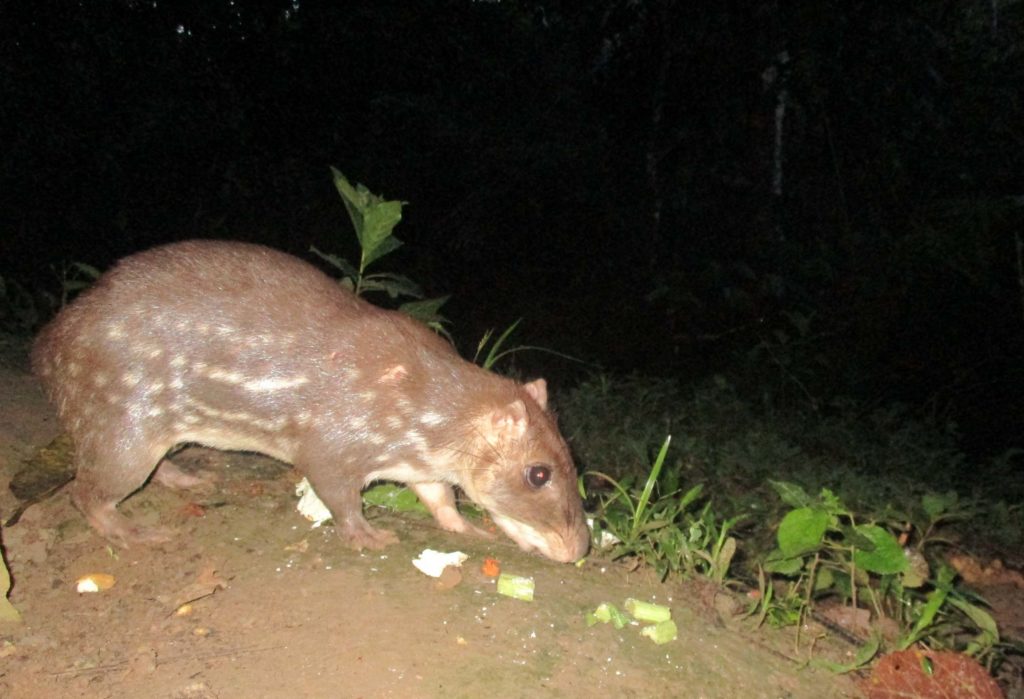
Sakura (female Agouti Paca) was always going to be released, but it seems patience is not a virtue and Sakura liberated herself twice before the decision was made to let nature run its course and allow her that which she so obviously desired. Sakura is still fed nightly and ironically it appears she sleeps just outside where she was in MoMo enclosure.

Fonzo

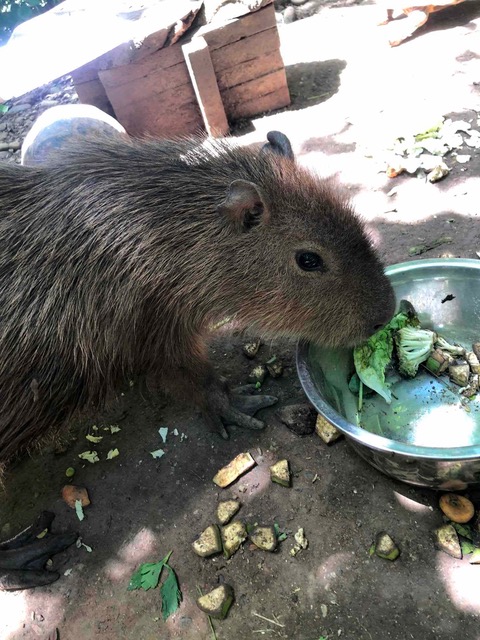
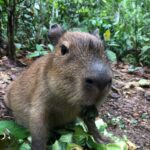
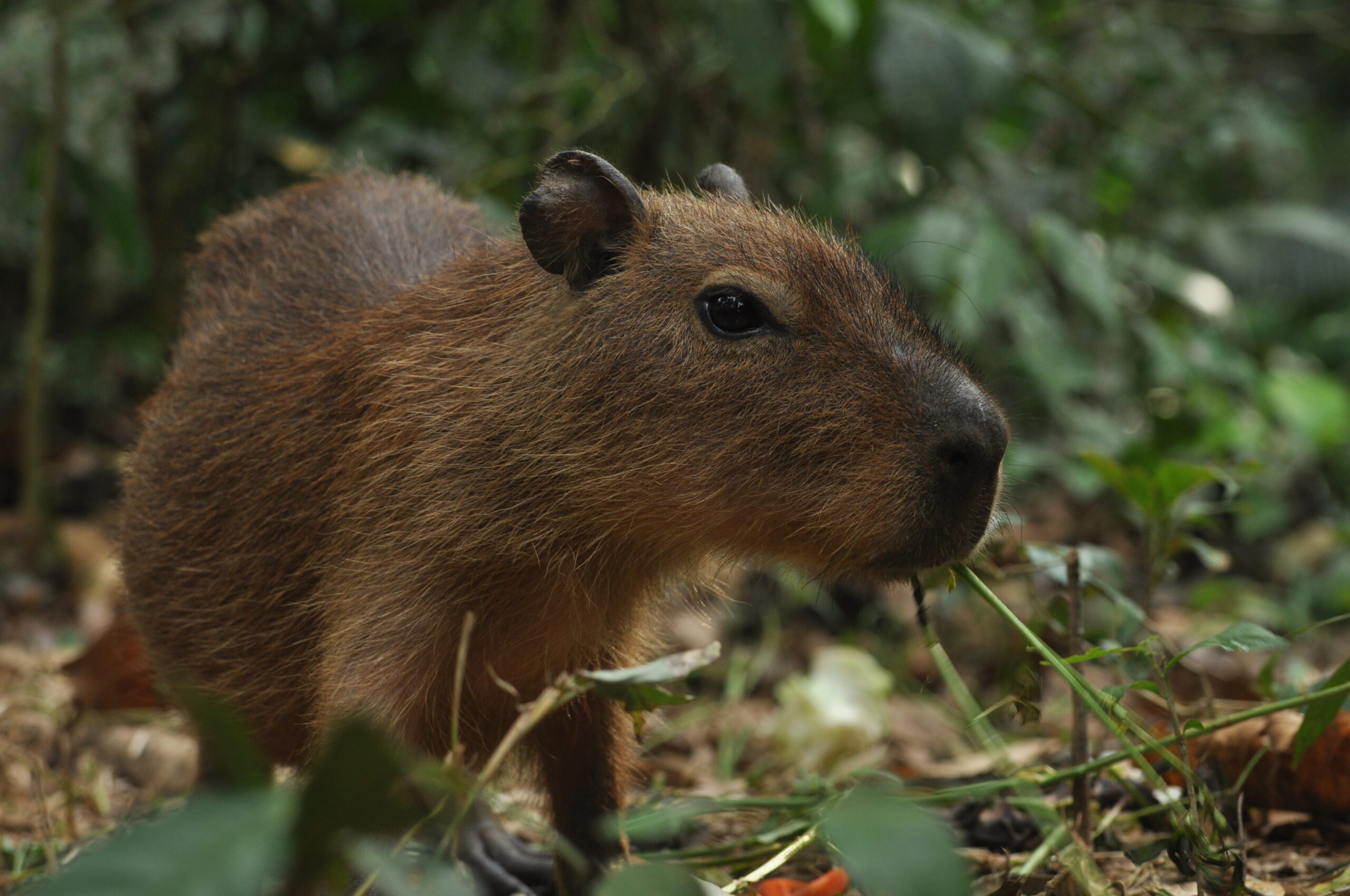
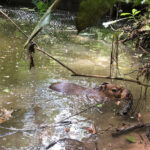
Another escape artist this month was a volunteer favourite who has been sighted since but is somewhat elusive. Fonzo (male cabybara), took advantage of a sudden deluge of water and the resulting hole underneath a cement drain. It is very unusual for Fonzo to miss a meal so it was quickly discovered that something was amiss. Douwe and Olivia spent many hours after dark until midnight that evening trying to catch or encourage Fonzo back into Rincay enclosure but he didn’t oblige. Being that there were only tortoises sharing the enclosure, Douwe made it so Fonzo was able to let himself in for the next few days but again it was not meant to be. We know there is plenty of food available to a Capybara around E.V and can only hope Fonzo can stay away from predators.

Birds
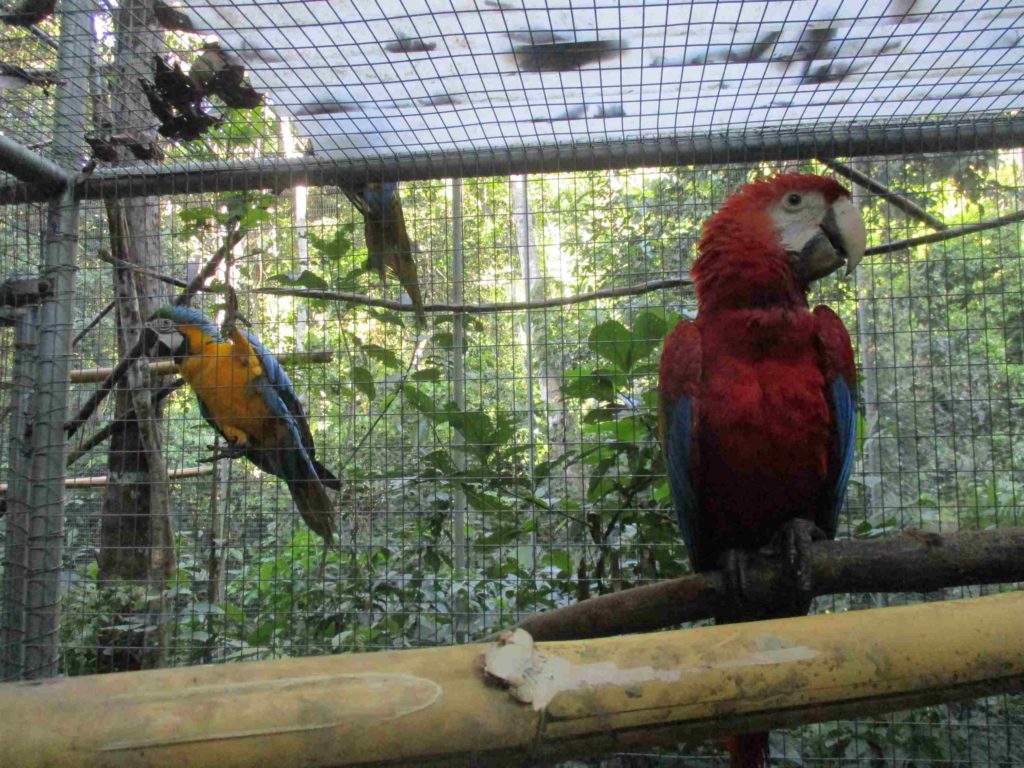
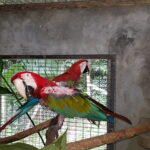
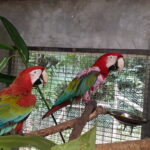
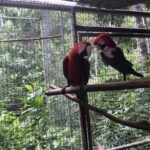
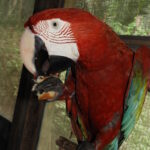
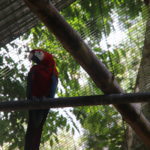
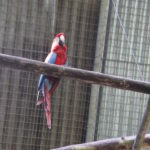
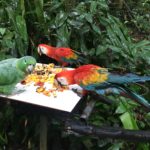
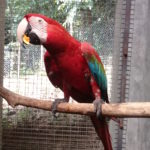
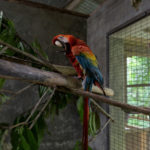
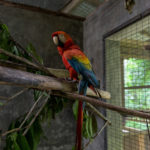
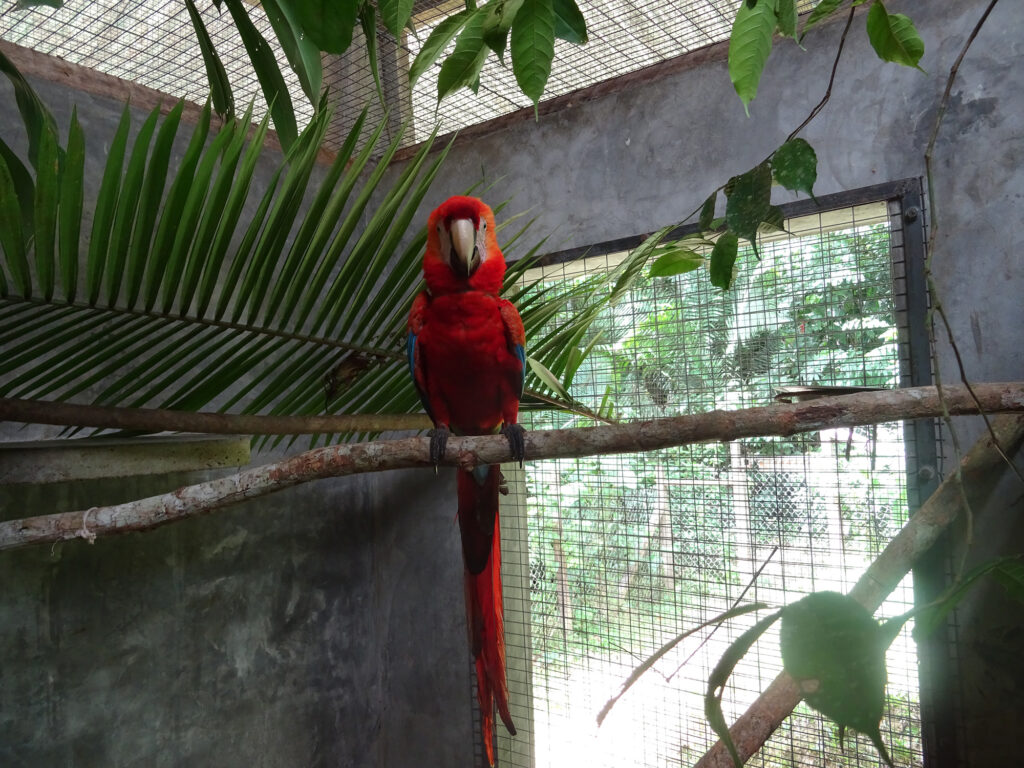
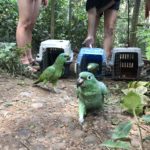
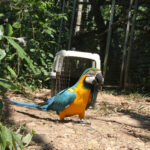
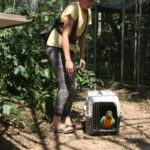
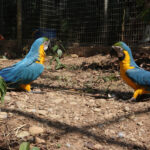
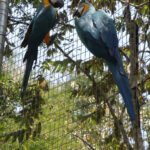
Ruiz and Rimona (male and female green winged macaw) have now joined the blue and yellow macaws in the main aviary of Elmo enclosure. All the birds appear comfortable with their new living arrangements with Ruiz and Rimona remaining comfortable in each other’s company.

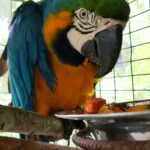
Rafiki (blue and yellow macaw), has had another big month with modifications being made to his cage, allowing him to be moved into the living area in the volunteer house. Rafiki thrives on the extra attention and with his cage modifications hygiene is easier to maintain leaving everyone more time to enjoy his company.

SUST Animal Orphan Hospital

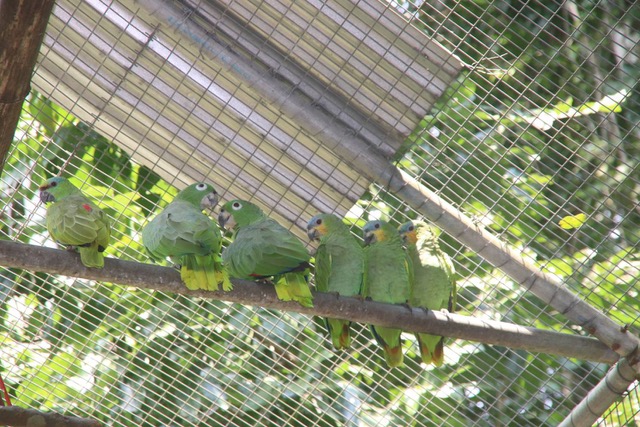
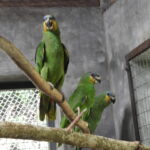
Last month’s new arrivals had a mixed bag for the month with the three Amazons joining the parakeets in Aguatena, as all of these birds are just awaiting feather regrowth prior to being released.

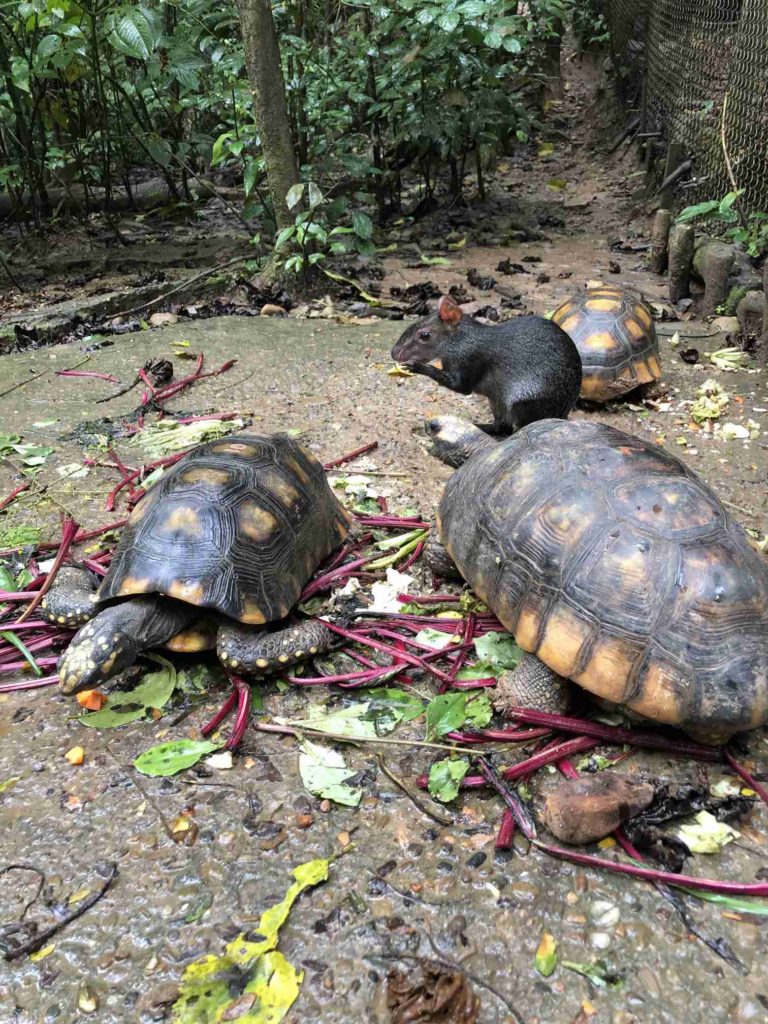
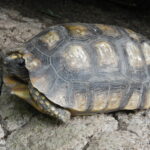
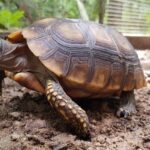
Angelito (yellow footed tortoise) remained in the clinic for most of the month until clear of parasites. Angelito was released and Diablito (yellow footed tortoise) opted for freedom, after a door was inadvertently left ajar, these two may discover each other again in the future.

Flora, one of the three

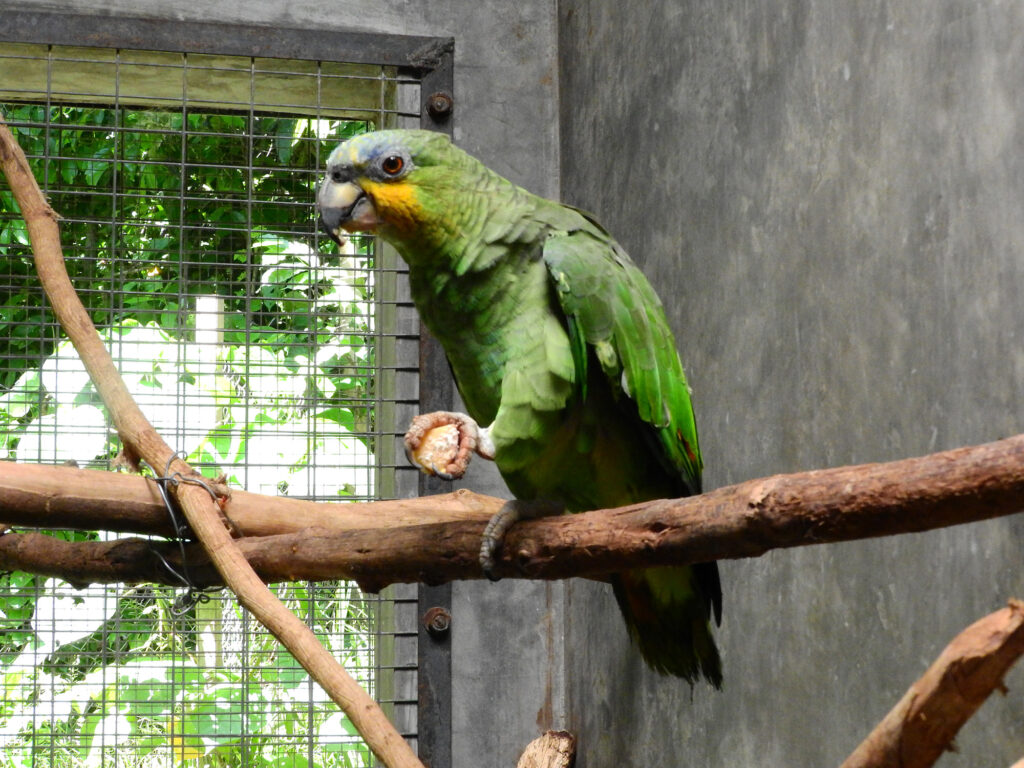
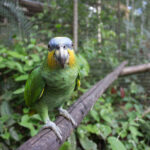
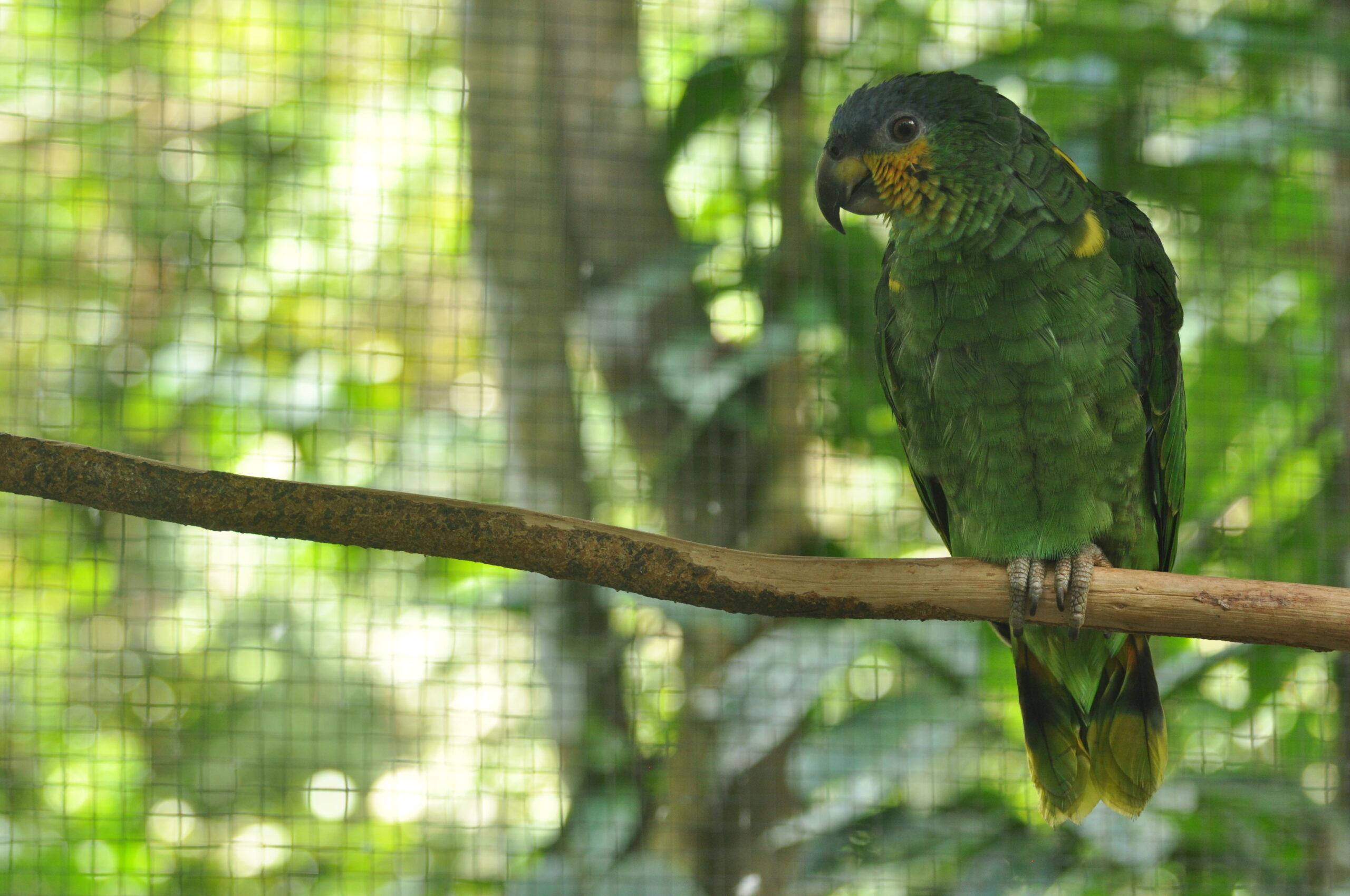
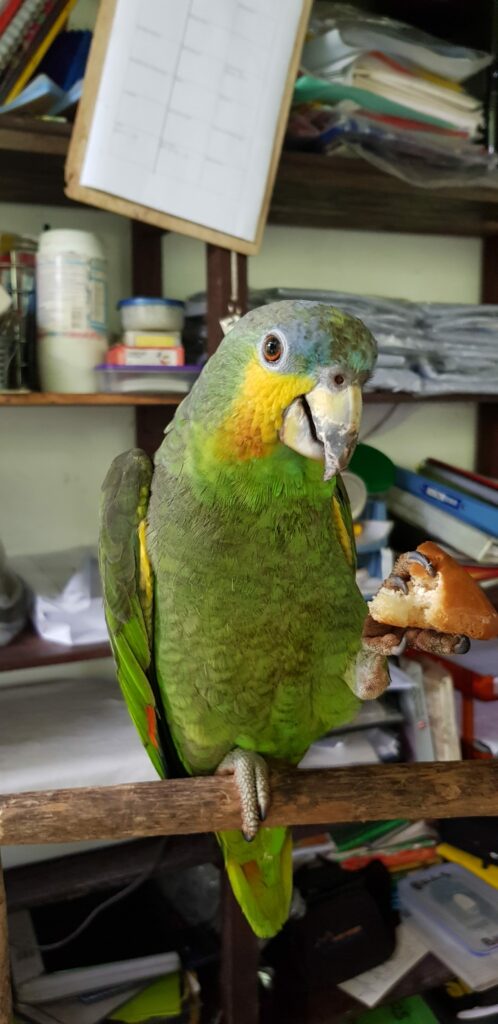
Flora (orange winged amazon) was another animal enjoying the accommodations at the family house. Space became a premium within the SUST AOH so while still in her quarantine and unable to join the other amazons in the Pichu aviary, Flora relaxed with all the comforts of home and the hospitality of Douwe, Olivia and family, prior to successful release into Pichu with the existing Amazons and Scarlett Macaws.

New arrivals

As is often the case, Douwe and Olivia passing through Pucallpa on holiday, generally results in new animals joining Esperanza Verde.

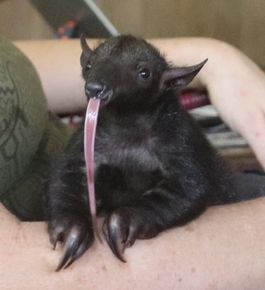
Kassai sticking tong out
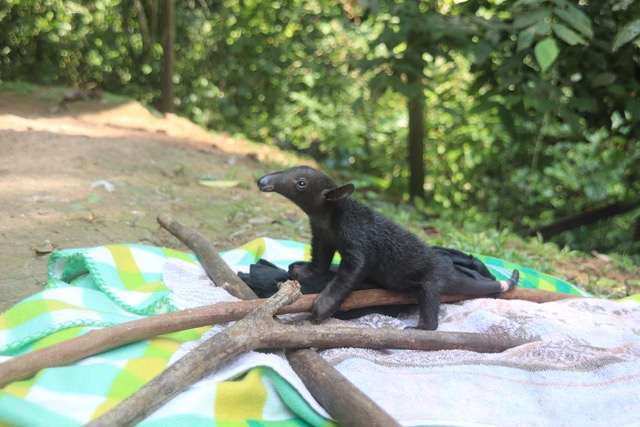
Kassai having a moment outside

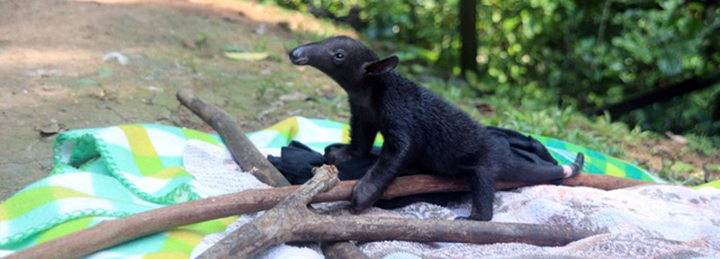
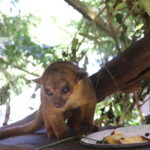
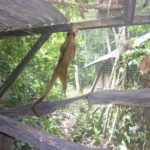
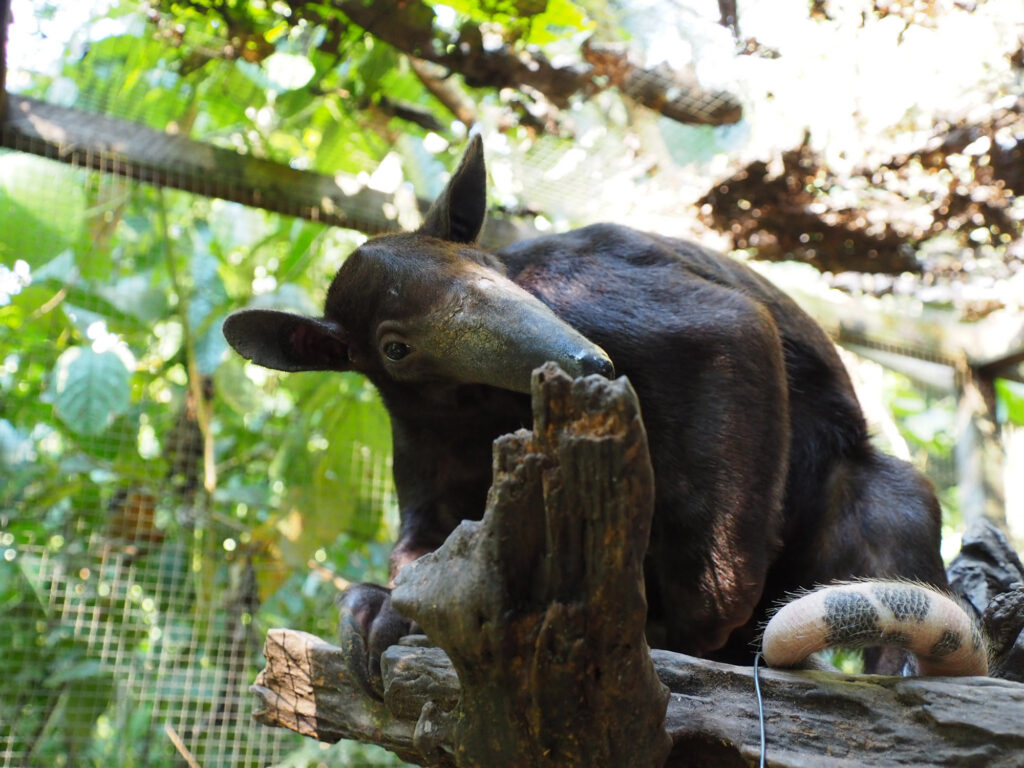
Kassai (tamandua mexiana) was only a few weeks old when brought back from Pucallpa, and although it can be touch and go with an animal of this age, Kassai is gaining weight through the diligence of both Olivia and Douwe. Having such a young animal living within your house can upset all sorts of routines and sleeping patterns, but it is just another example of the steps taken to ensure every animal gets the best survival opportunities.

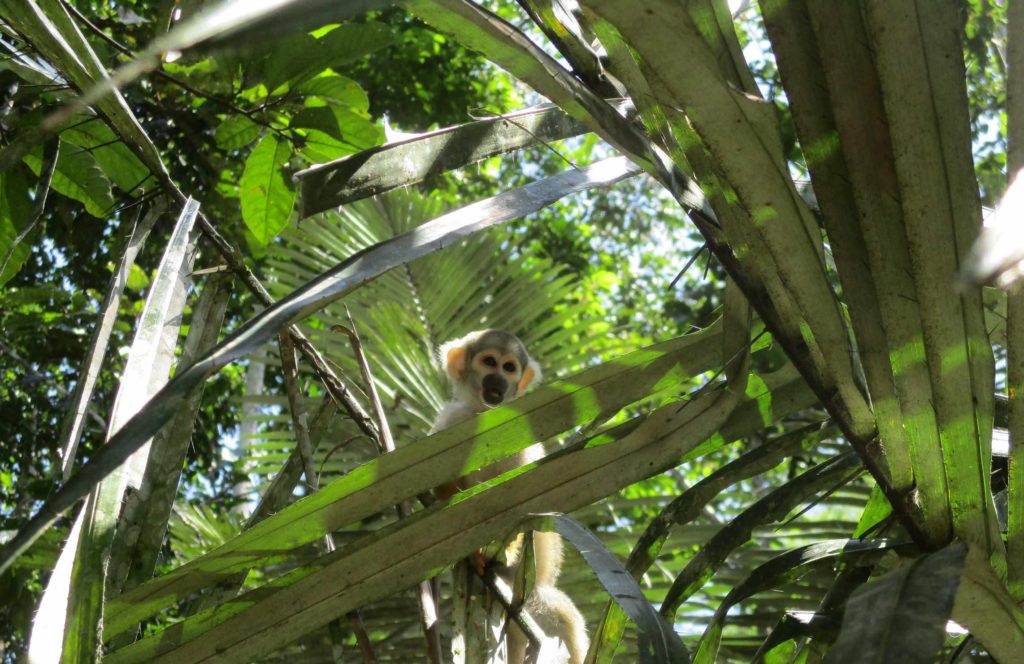
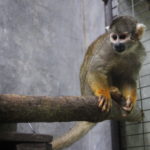
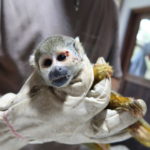
Two other animals to join the fray on the families return were Alu (Andean Saddleback Tamarin) and Shimi (Squirrel Monkey) who were obtained by a previous volunteer who is working on another project in Pucallpa. Both Alu and Shimi will share a cage within SUSTAOH through their quarantine period.

Douwe and Olivia were fortunate enough to have fore warning of the imminent arrival of many animals from the ministry in Pucallpa shortly after they came back from holiday. Where possible, cages were made ready and animals were moved. Although prior notice was given, final numbers, conditions of animals and their care needs are never truly realised until they arrive.

The following animals arrived :

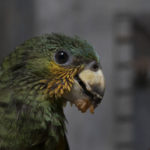
  • Three yellow crowned amazons, of which one died two days later, a fungal infection being the cause of death. The others are doing well and were named Upendi and Inuka.
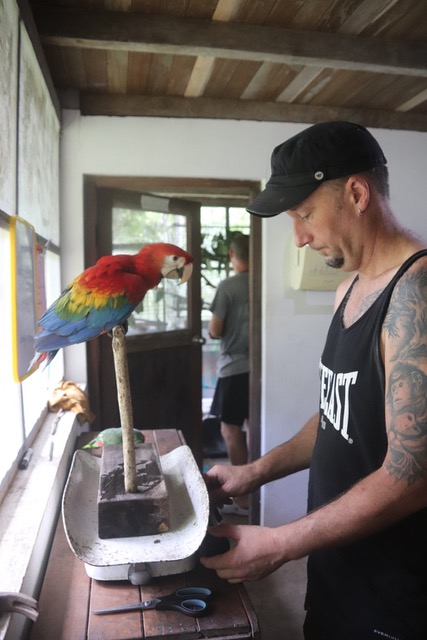
Weighing Ashanti arrival day
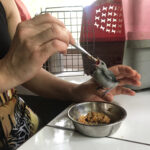
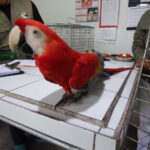
  • A very young scarlet macaw Ashanti. She still needs syringe and hand feeding until she will be able to feed herself.
  • Three yellow footed tortoises; Europa, Asia and Brutus
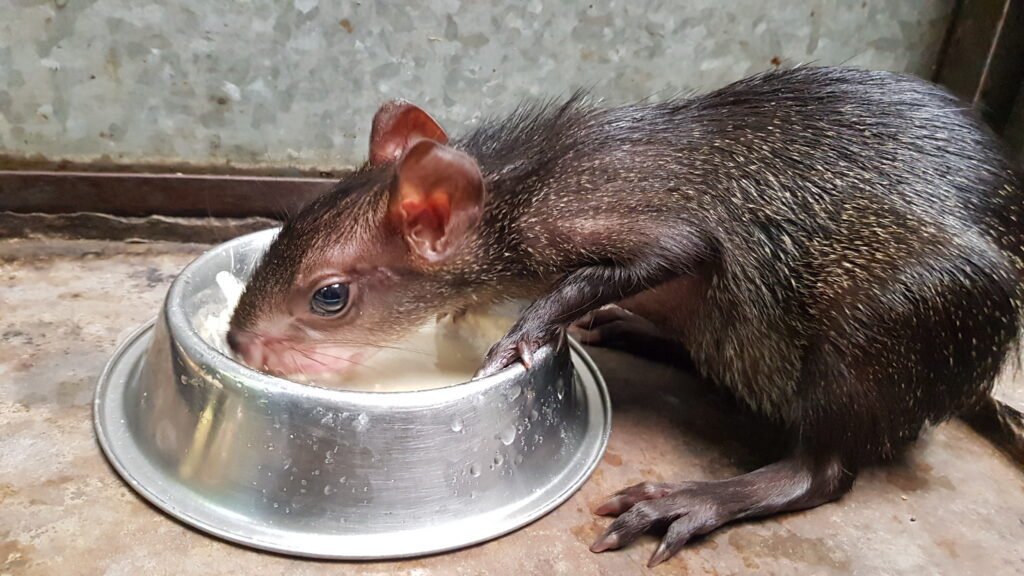
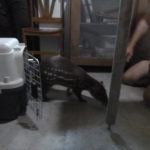
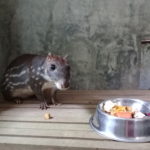
  • A young female agouti; Margarita
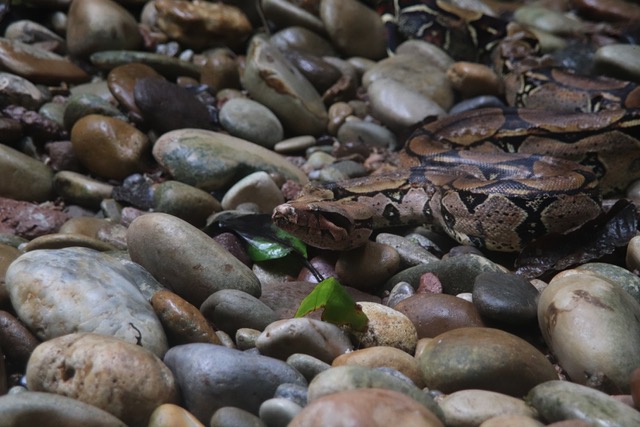
Bea release day
  • A Red tailed Boa, Bea. At nearly 8.5 kg and over 2.5 meters, Bea was an incredibly beautiful creature. She was only kept long enough for her to shed her skin, prior to being released away from the facilities
  • A sub-adult female tree porcupine, Casha. Casha stayed long enough to have treatment for any unwanted parasites and to confirm her health status before being successfully released one evening to enjoy her own independence.
Aiska in her pond
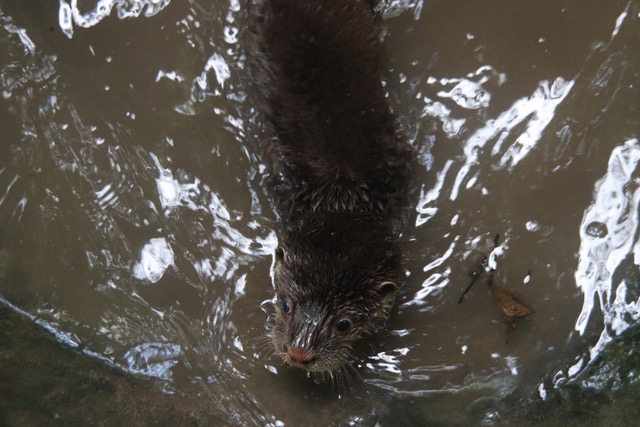
  • A young Neotropical River Otter, Aiska. Unfortunately after a week of seemingly doing well, she showed some fatigue when going on a walk to the stream for a swim. As she had just been well and active and enjoying her fish, we were not too concerned. Unfortunately within 48 hours we found her non-responsive and cold. Efforts were made to revive her, but were unsuccessful. Although she was only briefly with us, she found a place in many hearts with her joy full greeting every time you went into her enclosure.
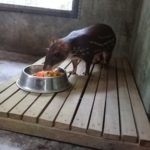
  • Sub adult female paka; Kapa
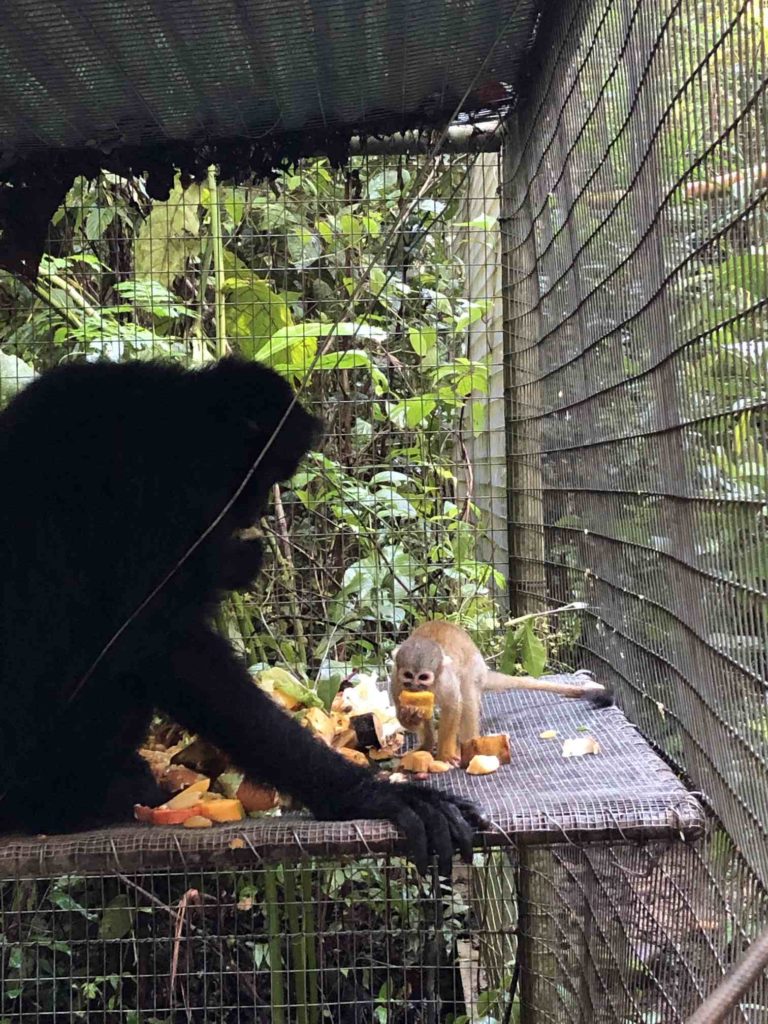
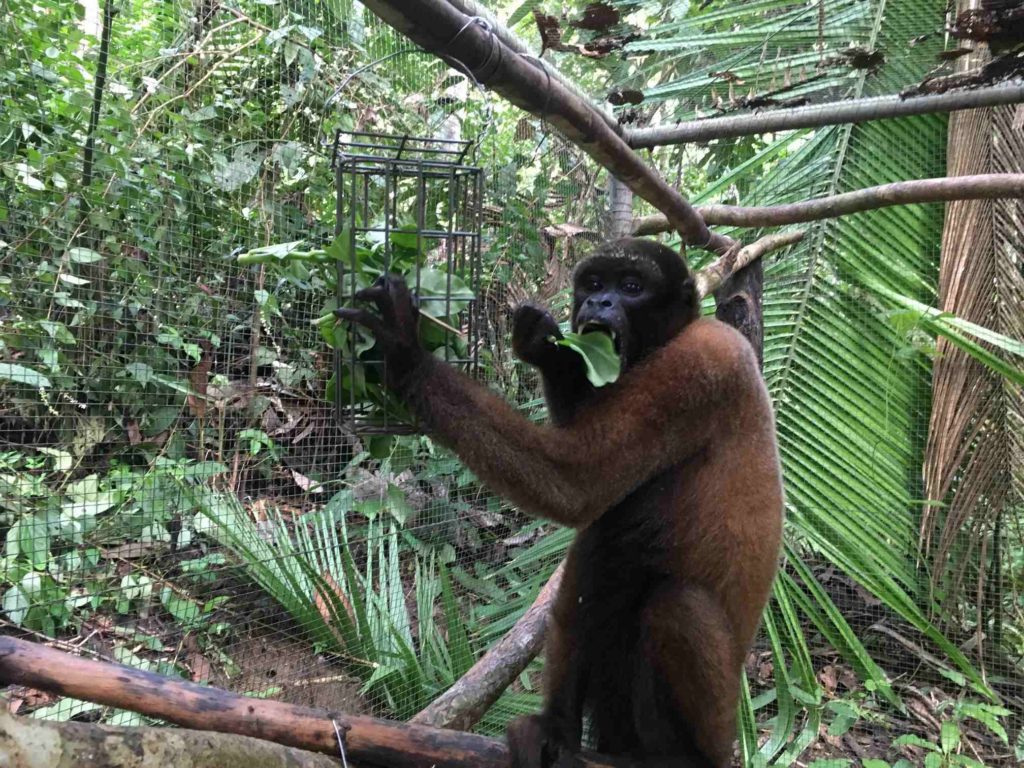
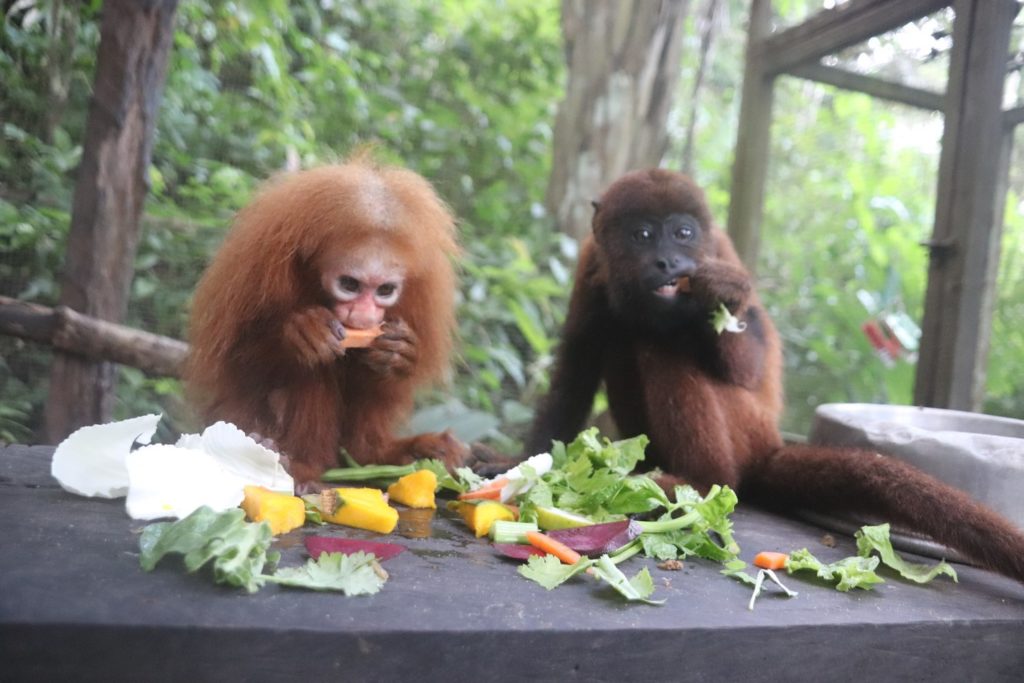
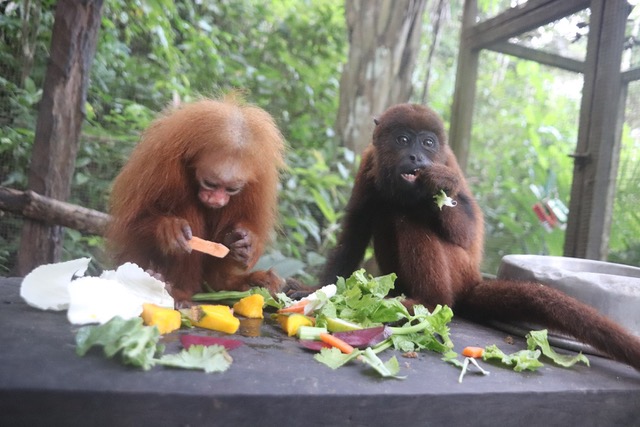
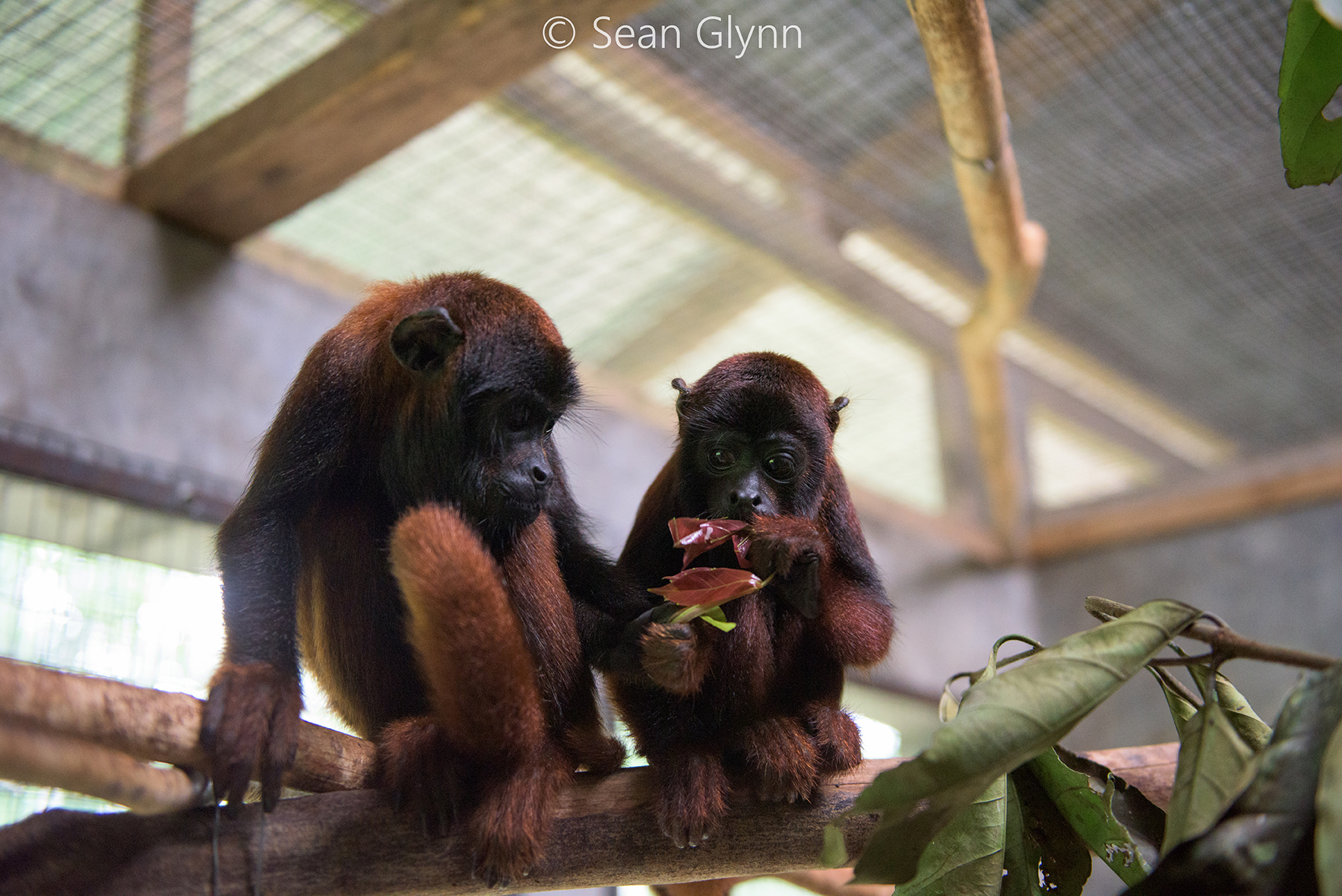
  • A young female red uakari; Zola. Esperanza Verde traditionally does not accept animals that are not native to the region, but given the options and the chance at survival otherwise, chose to accept this unique monkey. We hope she connects well the existing monkeys. She eats a very similar diet to both the Howler monkey and the Saki monkey.
Zola and Kaira eating in Arana
  • A juvenile female Jurua red howler Monkey; Kaira
Katara, razor billed currasow
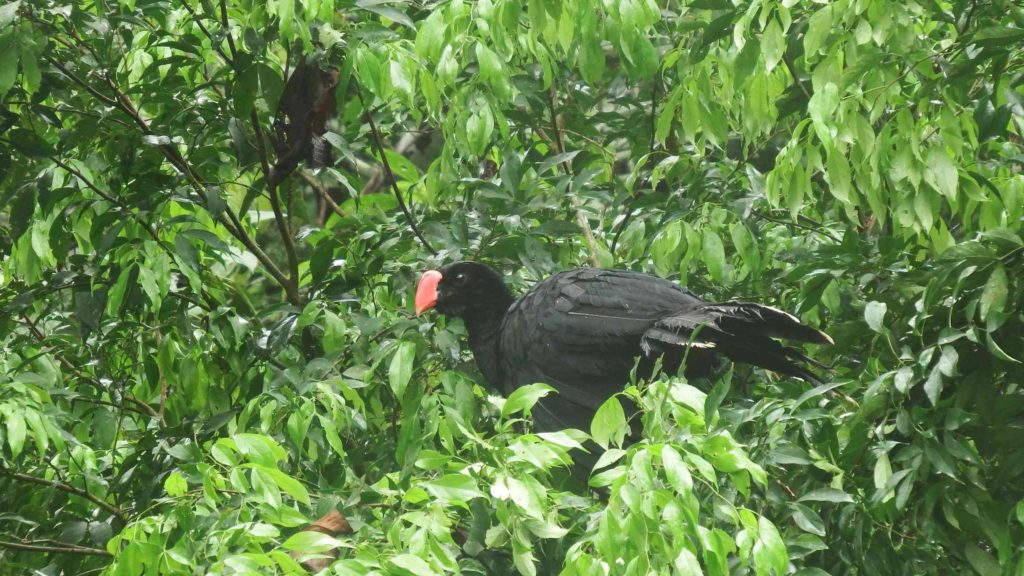
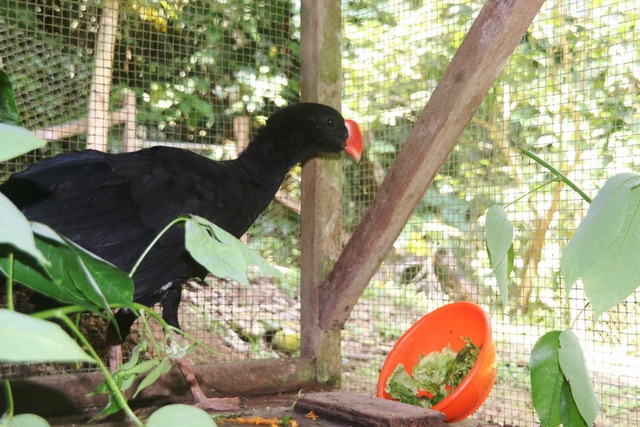
  • A razor billed curassow; Katara
  • Two large headed capuchin monkeys; Kaliba and Selda
Caimen health check
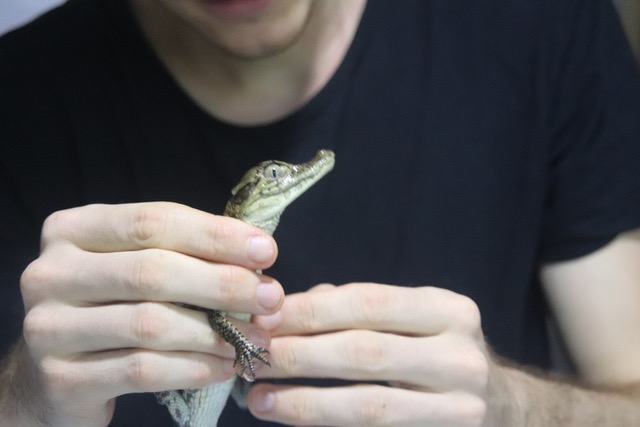
  • Five spectacled or white caimans.

Construction and other

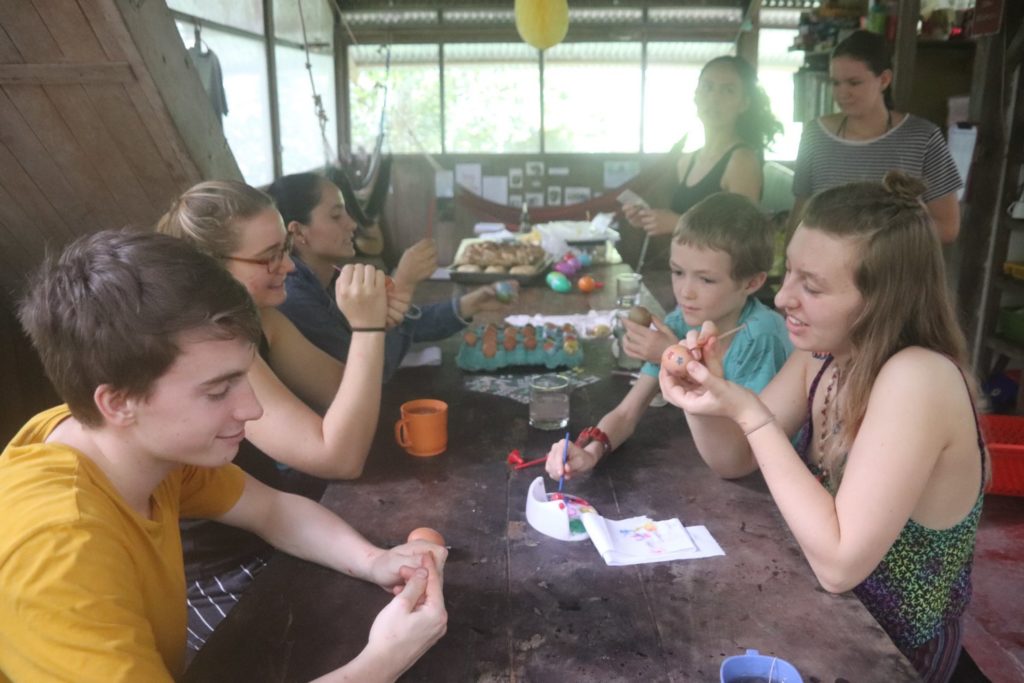
Volonteers staying postive

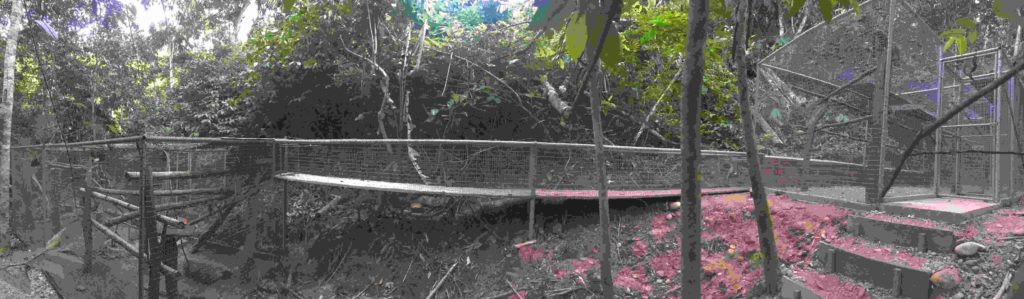
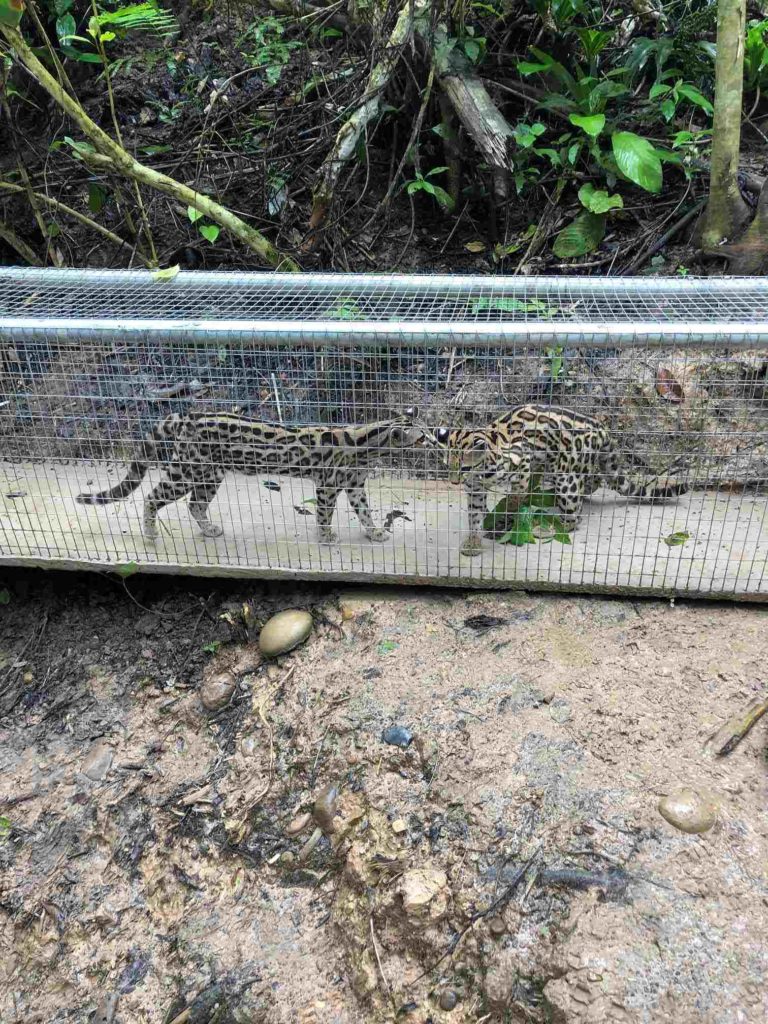
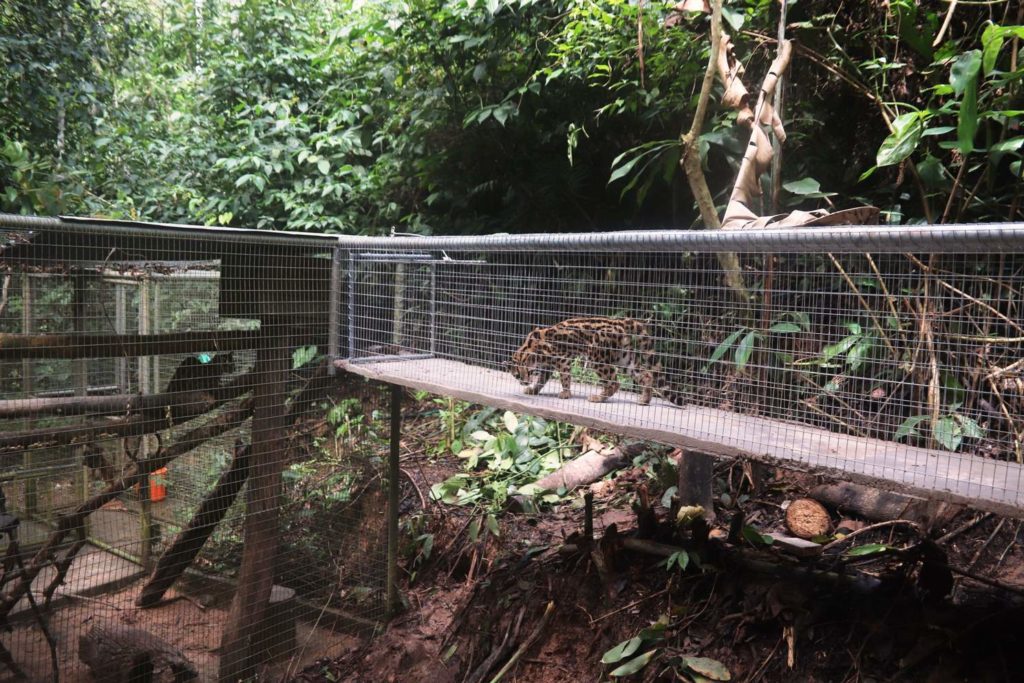
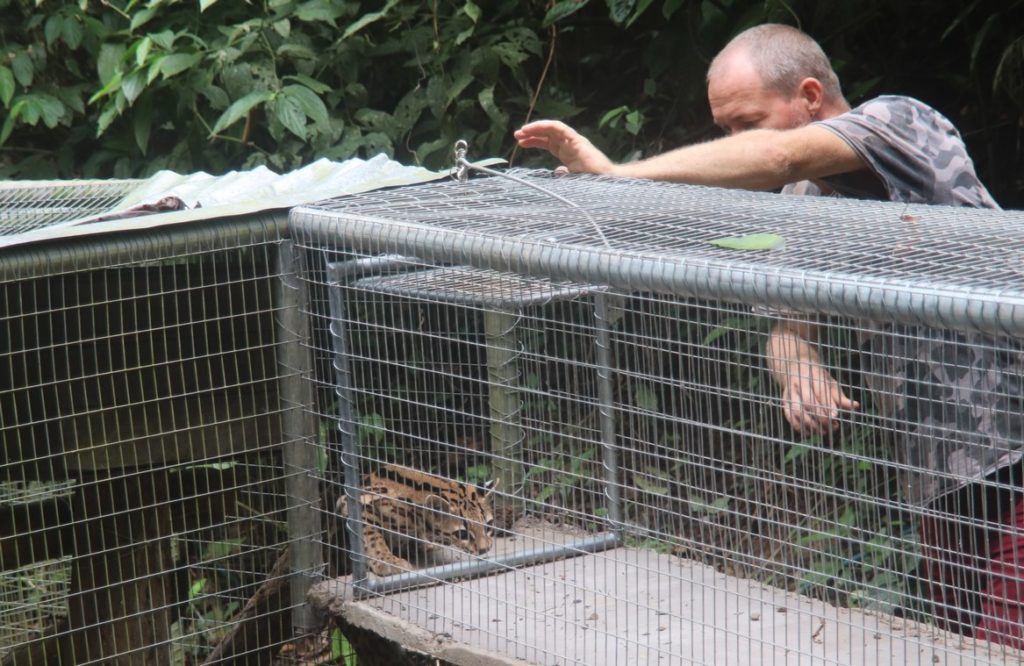
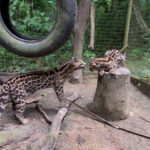
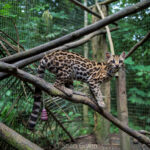
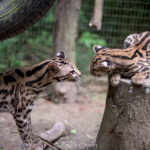
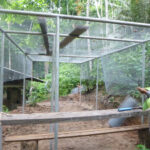
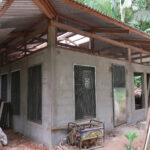
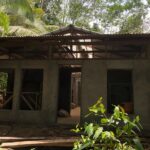
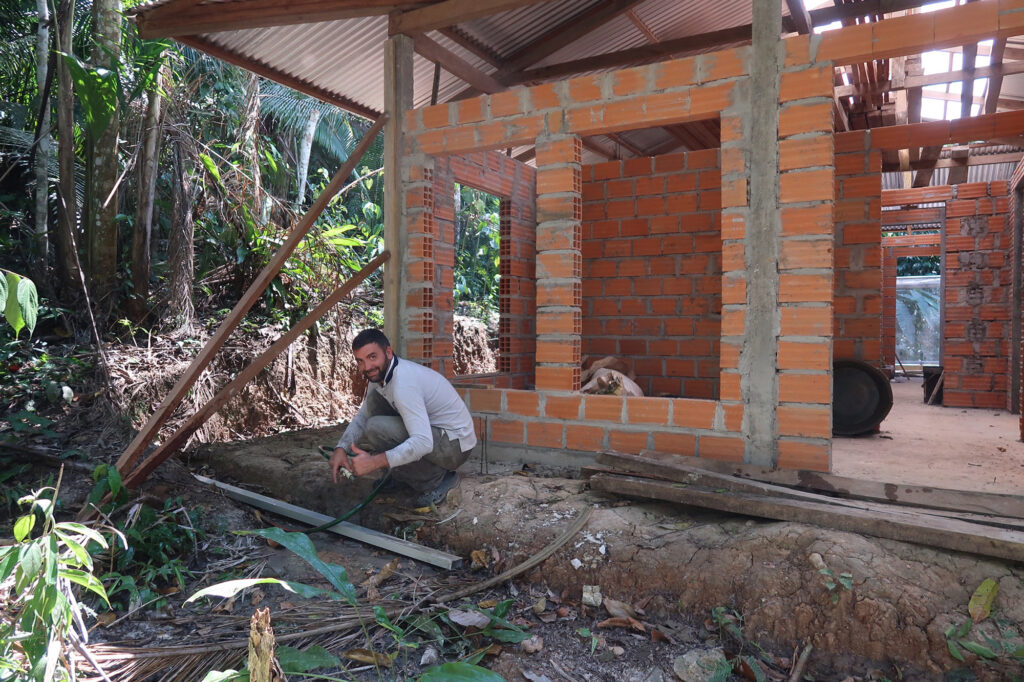
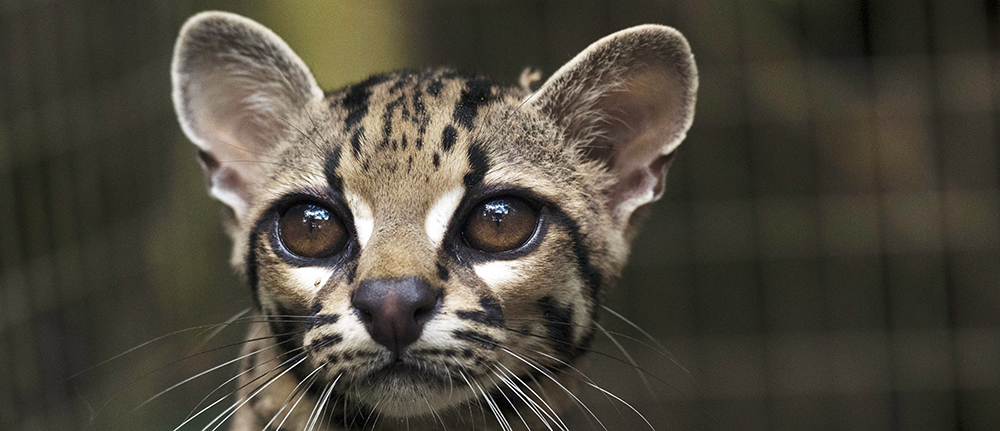
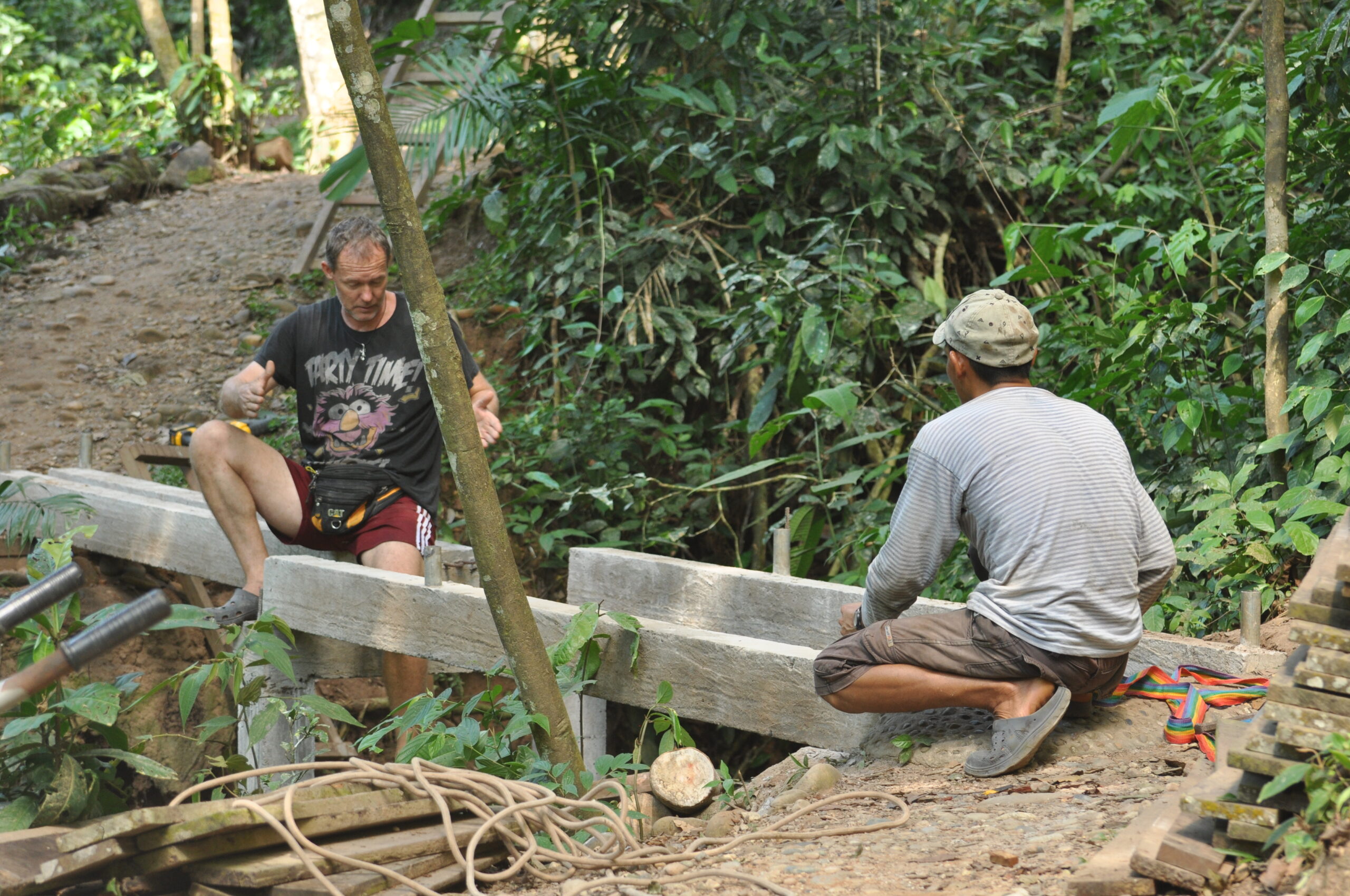
This month saw on-going progress on both the quarantine and the new margay enclosure. Weather and other “distractions” permitting, it is envisaged that the new margay enclosure will be completed in the next week, named Pedro, after the sponsor from Holland.
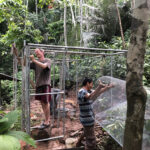
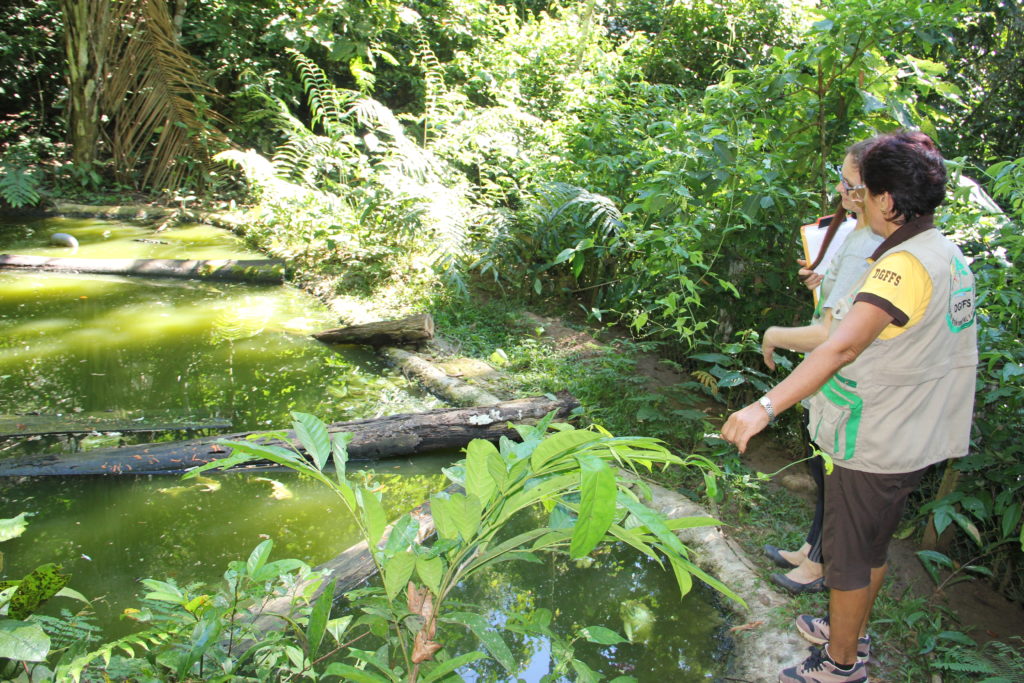
Having volunteers eager to do something a little outside their comfort zone has seen some of the more mundane projects receive a push in the right direction, with old storage sheds removed and excavation completed for a new recycling storage centre, as well as some finishing touches being completed in the quarantine. As is always the case with rainy season still in full swing, paths and drainage are also getting the valuable attention they require.

February 2020 Newsletter

February has been a fun and interesting month at EV; we’ve had new animals arrive, some have been released, some escaped (but came back) and the volunteers enjoyed a well-earned carnival party !


Monkeys

The female and male night monkeys Moira and Maru seem to be doing really well outside. They have a hatch in their enclosure (Tiliku) so they can come and go whenever they want, an opportunity they happily take. Sometimes they are in there for the food and a nice log to sleep in, but more recently they seem to have found a better place in the trees to spend the day in.

Alaya, the young female howler monkey was let out, after some bonding time with the male howler monkeys Armando, Ramon and Darwin in the Araña enclosure. It was a nervous time as she was still very timid and wary of humans but she was showing a lot of interest in the other monkeys outside. When we opened the enclosure she stayed in there for quite a few hours, before she started to explore and left Araña, sitting on the roof in the sun with some of the other monkeys. She spent the day out, and the other monkeys responded very well to her, being gentle and grooming her, it was a beautiful moment for everyone. Although Katinka, our young spider monkey did decide to tease her a bit by pulling her tail. She also went exploring up in the trees with the other howler monkeys. She is growing in confidence and enjoys being up in the trees. At the end of each day she returns to the enclosure with the other howlers.

We sadly also have some unfortunate monkey news this month. Samara (female woolly monkey) had her first baby, a female. It came a bit as a surprise, as we had already decided she was not pregnant! In the first days we saw the two together and everything seemed to be going well. On the 5th day the baby dropped from Samara and she didn’t come back to pick it up. We took both up to the clinic, tried to feed the baby and warm her, as she was very weak and dehydrated. After that we put both together in the clinic to give Samara another go at taking care of the baby. Unfortunately Samara was not being very attentive, so after careful consideration we decided to separate the baby from her mother again. We tried everything to keep her warm and hydrated, but she was too weak and died that same evening. It was very sad, but it also was a reminder of the importance of not having these animals as pets. Samara never had the experience of being raised by her own mum, neither did she see other monkeys taking care of an infant. We can only hope that she will learn and maybe copy some of the behaviour of our other monkey species such as Cumala, our adult spider monkey with her baby, and will be better prepared for it next time.


Other Animals

Ruiz, our green winged macaw from the aviary Pichu, joined Rimona, the new green winged macaw in the clinic. Maybe it was not exactly love at first sight, but neither were they aggressive to one other. They kept their distance in the beginning but after a week were seen grooming each other. Let’s hope Ruiz does not start to pick Rimonas feathers as much as he sometimes does with his own. They were moved together to the front cage of the Elmo enclosure, to meet all the blue and yellow macaws. If this goes well, both of them will be moved into the main enclosure soon.

Ermina (scarlet macaw) was living in the front cage of Elmo because she was previously bullied by Ruiz and Mebi. As this bully-couple has been separated now, Ermina was able to go into Pichu. It seems it has been a good decision for all scarlet macaws, they seem to be far more relaxed. Even Mebi doesn’t seem to be too put out by the absence of his friend Ruiz.

Rafiki our blue and yellow macaw, has had a long recovery, thanks to the bullying of Ruiz and Mebi. It was decided that he should be moved to the clinic again. He will never be able to be in a big aviary as the damage that has been done has left him without sufficient ability to climb or catch his own fall. He always seemed most happy with people around, even in a small cage, so in the clinic, we can keep him company and give him the best life possible.

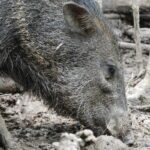
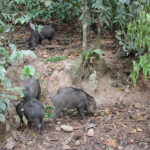
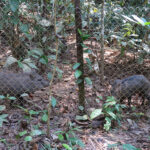
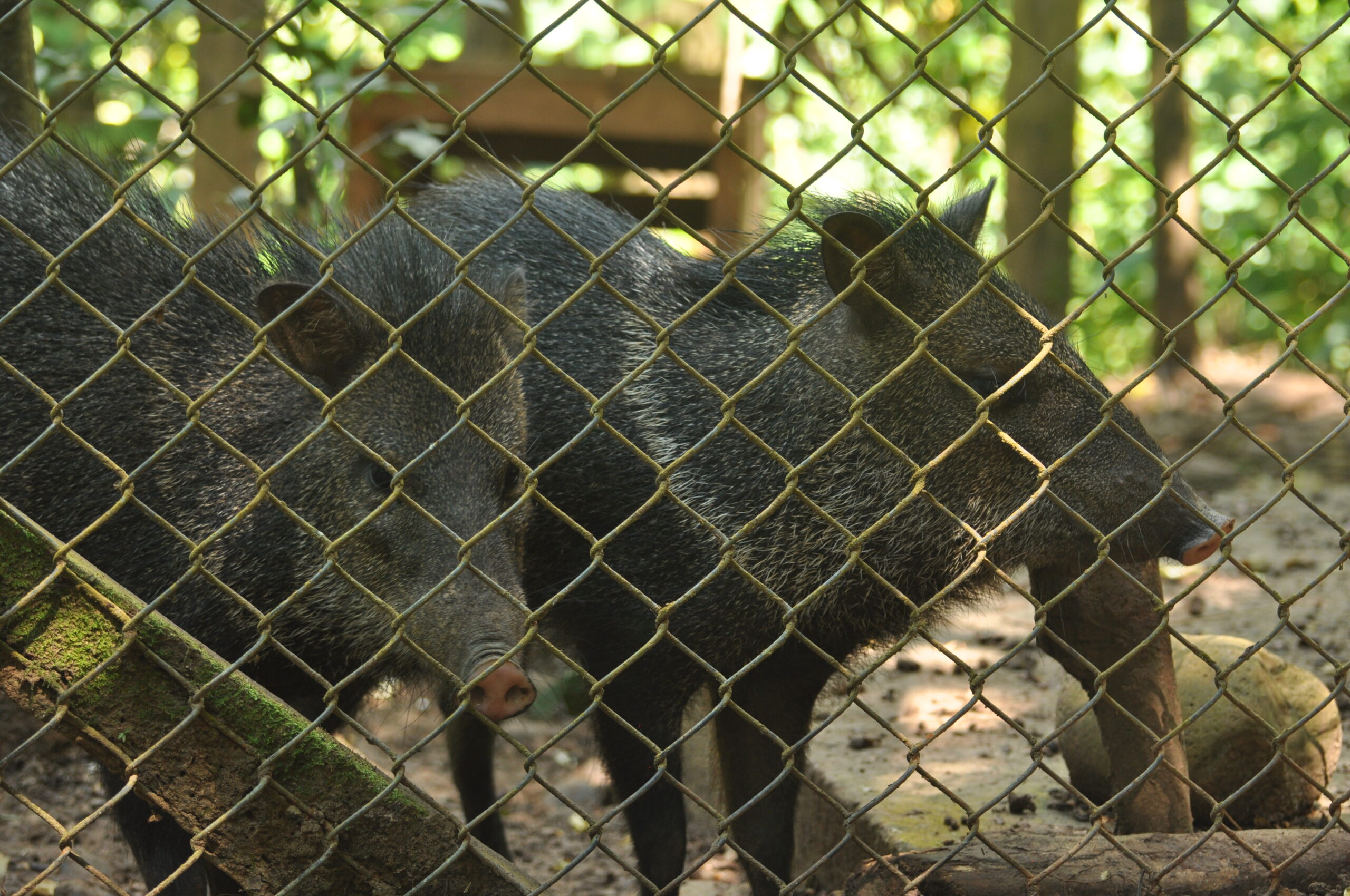
As if we never have enough to do… recent rainfall has caused some damage. The peccary enclosure developed a hole at the rear. Of course the peccaries spotted it before we did ! You can imagine the surprise Karole (our returning Dutch volunteer) had on one of her loved leaf walks ! Luckily for us, they didn’t enjoy being out, and most of them returned by themselves and the rest followed us back again. By the afternoon the fence was repaired and all 6 had been safely returned to Xena in time for their afternoon feeding.


SUST Animal Orphan Hospital

Last month we wrote about the parakeets from Tupak cage, which we had separated into different groups according to health and flight strength. The group of birds without any problems were moved to a cage ready for release. This month we opened the hatch of Aquatena cage to release these parakeets. After about 10 minutes of looking around they started going through the hatch and flew away.
At the moment, only 2 parakeets remain for further observation. The last 20 non-flyers are now in the Aguatena till they grow all their feathers back and can be released as well.

Kira (young female Ma’s night monkey) is doing well and has moved from the cage in the attic of the family house to one of the cages in the clinic. All the volunteers have quickly fallen in love with her and are taking turns in going to her cage before and after diner to feed her and stimulate some activity with her. Kira seems to love the attention; she is always very energetic and playful when a volunteer arrives.


New arrivals

It has been a busy month with new arrivals at EV. We received 3 amazons and a tortoise from the Ministry. The amazons were probably recently caught; they are wild and not used to humans at all. Unfortunately their wing feathers are cut, so they are currently living in the clinic waiting for their flight feathers to grow back. The tortoise, named Angelito (yellow footed tortoise), is spending his quarantine period in the clinic. We later received a tortoise from a man in Curimana, which we named Diablito. Since the clinic is quite full already, he is currently staying in a cage under the family house.

Mojita drinking milk

A baby agouti, named Mojita, was found on a plantation and was brought to E.V. She is still young but is doing well in the clinic. She is eating and drinking well, gaining weight and is very active and lively.

Flora in office

Flora, an orange winged Amazon, also arrived this month. She was found in the garden by a couple living in Lima, most likely escaped from her former owners. At the time unable to fly and sickly they took her into their care, and since then have found out many things about Flora and her species. Her owners brought her all the way from Lima, as they were going to Germany. They had learned that this species should not be held as a pet and should return to its habitat. Unfortunately, since Flora is very tame it will not be possible to release her again, she would not know where to find food, nor be up to the challenges of living in the wild. After her quarantine period in the clinic she will be moved into Pichu cage, where we are sure she will find a partner and/or friends among the other Amazons.


Construction and other

With a lot of construction projects going, Douwe and Geiler were happy to have some extra hands helping them out this month. Gelimer, a brother of Geiler, stayed for 2 weeks in Bello and helped out. Geiler was able to finish another cage in the quarantine, while progress could be made with the new Zambo cage for the margays.
Thanks to the donation by the company in Holland, De Graaf Afbouw, we could start this new enclosure swiftly, as it won’t be long before the margays will need more room or potentially separating for a period of time.
When there are sufficient volunteers, one or even two can enjoy some construction as well, especially when they are willing to work several days a week in construction. This helps Douwe to get a lot of jobs done, like the rebuilding of the interiors of cages like Pichu, Igor, La Sapa and Rimaq. Hopefully we will continue to have enough volunteers with interests in construction as well as in animals, so we can continuously have volunteers helping out in construction. So if this interests you or if you know somebody that might be interested, we are very happy to receive your help here in the jungle !


Volunteers

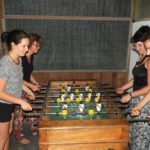
This month the football table arrived ! Both in the lunch break and in the evenings the table is very popular, with the family, the workers and the volunteers enjoying the game. The first volunteer-tournament was played, which got so exciting that the family could hear the excitement all the way over at their house !
We are very happy to welcome Craig back home again ! So with Puck and him running the show, and Emile as veterinarian at their side, the family was able to go on a well-deserved holiday in Peru.

January 2020 Newsletter

Happy New Year from Esperanza Verde! We started the New Year traditionally with the burning of a handmade puppet, representing the past year, and giving 2020 a fresh start. It was a great evening with nice pizza and traditional Dutch “oliebollen”.


Monkeys

Moira and Maru (female and male Ma’s night monkey) in the Tiliku cage, near the family house, were released through the small hatch at the back of the cage. At first they were a bit hesitant, but soon Maru climbed out of the cage. Shortly after Moira joined him, and we could hear and see them jumping around in the trees in front of their cage. The hatch is now open all of the time, so they have the option to go in and out whenever they want. Usually they go out at the end of the day, to return in the early morning to the comfort of an enclosure with food and a hollow log to sleep in.

Chula, the daughter of Cumala (female spider monkey) is very inquisitive and looks around at everything from her mothers back. Her big black eyes seem to take in all the activity happening around her. A very alert baby, and her mother loves showing her around.

Nikita, one of our adult female capuchins, showed up with a new born. Last year she lost her baby after several weeks, and we hope this time she will be more lucky. Nikita is one of the capuchins that doesn’t show up every day, as she spends most of her time further away with the squirrel monkeys. So far she has come by to show us her baby twice, so we are hoping for another peak at the new born soon!


Birds
This month it was time for Manto (scarlet macaw) to move out of the clinic. First he moved to the Pichu Aviary front cage, so that he could have some contact with the other 5 scarlet macaws. After a week we opened the door for him towards to enter the main aviary area. We were curious how it would go since we have two bullies amongst our macaws (Mebi and Ruiz (the only green winged macaw), but Manto is a good flyer and has kept his distance.

Ewia, the ruddy ground dove with the broken wing, has had an amazing recovery. After some time in a bigger cage at the clinic to strengthen her muscles she was successfully introduced to the birds in Igor, joining her friend Hercules again. She has been doing well ever since.
 

SUST Animal Orphan Hospital

Ezra (young female white fronted capuchin) and Daytona (young female large headed capuchin) were brought to the new outside cage, Lulu, so Ezra could meet the outside monkeys. Tonka, the only Andean saddleback tamarin joined them, so they can all be released together. Although in nature tamarins and capuchins don´t always do well together, Tonka proved to be tough enough to handle some young capuchins. He gets a pick of which capuchin he sleeps on, as both seem to enjoy his company a lot.

The clinic became busy when some of our white winged parakeets developed problems, prolapsed cloacas. We decided to catch all 65 of them and take the ones with symptoms to the clinic. The majority were moved to the quarantine. These can all fly and didn’t show symptoms. Two groups moved to the clinic, ones that can’t fly and a group requiring treatment. All groups got a generalized treatment, as we have still not determined the cause of the illness. Even with all the help from our International network of veterinarians, we have not been able to determine the cause. In the jungle we can only do so much with the techniques we have available to us.
Fortunately, with all of the help we were able to set up a good treatment protocol, with specific hygiene rules, and we seem to have stopped the spread and contained the problem. These poor parakeets have been through a lot already, as these all are the last of a group that arrived in March 2019, with the fungal disease Aspergillosis. We hope by telling this story people will have less incentive to buy animals from the wild. For every animal that survives being caught many don’t make it.

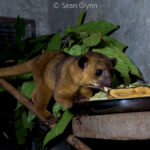
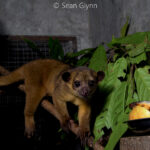
Chosko (male kinkajou) moved out of the clinic to the Lucia cage. The first day, the outside monkeys kept him awake as they all wanted to introduce themselves to the new animal. As if this was not enough excitement for Chosko, the outside male kinkajou, Kiko, visited him and was chasing him around the cage, from the outside. Finally it all calmed down and he could go to sleep in his box.


New arrivals

Alaya was the first arrival of the year. She is a young female howler monkey. She was handed over to Kayla in Bello Horizonte, where someone left her in a box. She had a rope tied around her, and was most likely recently caught from the wild. This means her mother was probably killed and eaten, and she was taken to be held or sold as a pet. Whilst she was clearly not used to being handled, without our intervention, she would not survive on her own.
At first she did not want to eat anything, but as soon as we brought in Armando, our youngest male howler, she started eating within minutes. Since then, she has spent many hours, day and night, with him. She eats well and is already trusting enough to take some milk, which is a vital step for her continued health. Recently she also joined the other males, Darwin and Ramon, during the late afternoon and night. For now she stays in during the day, but soon we will let her out together with the rest during the mornings.

One night, Douwe and Olivia heard a sound coming from the stream near their house. Douwe went into the water and found a very young night monkey trying, but unable, to climb out of the water. After taking her out and drying her, they put her outside in a tree in the hope that the mother would show up and take her with her. The baby was calling out for almost two hours but her mother didn’t show up. The attempt continued as the baby continued to call and was avoiding human contact. Unfortunately only Moira (our recently released female nightmonkey) was seen nearby. So at the end she was taken in. We have named her Kira and she is now in care of Douwe and Olivia.

Sakura, an adult female paca and Rimona, a green winged macaw, were brought by the Ministry, who confiscated them from an individual traveling by boat to Pucallpa, most likely to sell them. They are both tame, especially Rimona, so have probably been in captivity for some time already. For now they are at the clinic, where they will stay for their quarantine period.


Construction and other

The kitchen extension Douwe and Geiler started to build last month was painted by the volunteers and soon will be enriched with the football table Douwe got Olivia for her birthday. It was thrown away in the bushes in the village, and Douwe could get it for almost nothing. He restored it beautifully, and the family already got to enjoy it a lot at their house.
Apart from the kitchen, maintenance took most of the work of Douwe, fixing water problems, upgrading the structures in several cages, while Geiler also worked a lot at the quarantine, doing the fine cementing (walls and floors).
As if there was not enough to do, something else came up… A night of very heavy rainfall, even worse than usual, resulted in a collapsed bridge, the one that connects the family house to the rest of Esperanza Verde. Douwe and Olivia and the kids will have to take a detour for the coming months, as it will take some time to rebuild.
For more than half a year now we have been looking for someone who can assist Geiler, but unfortunately most people here only want to work short periods of time. Luckily one of the volunteers with us now, offered to work more days of the week on construction instead of with the animals. This will really help us to get things done.


Volunteers

The daily work that is done by volunteers is divided into different tours, each volunteer being responsible for several animals. For many years now they were divided into 3 tours: Resident tour, Monkey tour and Baby monkey tour. This month we decided to change this and divide the work into 4 tours. This has several advantages, of which the most important is that now there is more time for creating enrichment for the animals. It is great to see how the animals enjoy the enrichment projects made for them, from smelly tubes for the cats to a tent for the young capuchins.

December 2019 Newsletter

December is always a busy time at Esperanza Verde with Saint Nicolas, Christmas and New Year. Christmas presents came early for us with a new baby spider monkey being born and the arrival of a juvenile kinkajou.


Monkeys

This month saw a new arrival when Cumala (Black faced spider monkey) gave birth! We haven’t been totally sure about her being pregnant after her time with Rimaq and Lucio. The volunteers were delighted when they woke up to find a small baby attached to the side of Cumala. The baby has been named Chula and is a female.

Nera with baby Nawi and first born Namaru

Last month we saw Nera give birth to her second baby Nawi. They are seen a lot and are doing very well with the group of capuchins which is continuing to go further away for longer periods of time with the lead of the wild male Macu.
Daytona (young female large headed capuchin) was released this month to join the other monkeys outside. After spending time acclimatising in Pepe cage she was ready to go outside and has been playing with the other monkeys. She is doing well and socialising with the other monkeys but still every now and then sleeps in Pepe cage with the other baby monkeys. Her introduction was without problems and the monkeys were quick to accept her within the group. At the end of the month we decided to move her to the clinic to socialise with Ezra (a young female white fronted capuchin) to aid in the introduction of her to the group.

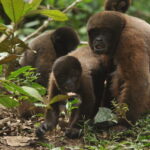
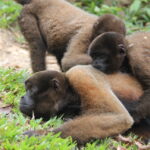
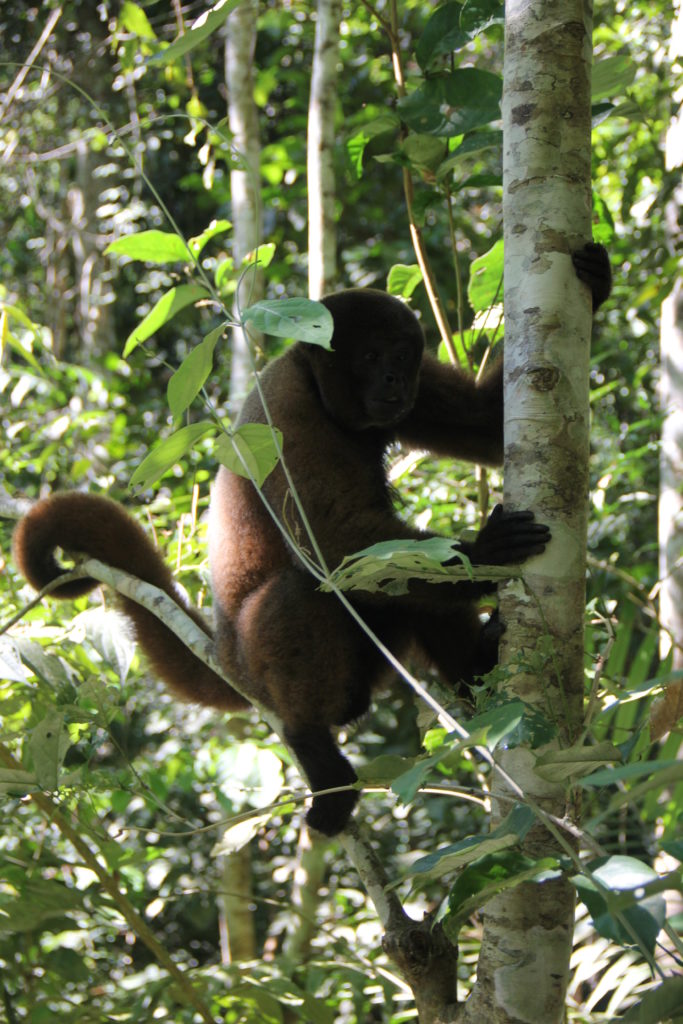
Chiquita, Lupa, Samara and Maruja (adult female woolly monkeys) and the adult males woollies Monano and Moyo continue to thrive at Esperanza Verde. They form a group of 12 woollies, together with the younger male and female woolly monkeys, living outside.

Darwin

Armando, Ramon and Darwin (male Howler monkeys) continue to put on weight and play with the other monkeys outside. As howler monkeys are more sensitive than the other species they spend their nights in Arana cage with a diet rich in fresh leaves picked by volunteers on a daily basis.

This month was not all great news and we unfortunately lost one monkey, Tito (saki monkey). He was found under the volunteer house one morning after a volunteer was looking for materials for construction. His necropsy was unfortunately unable to find a cause of death. The other saki monkey, Yuria, is still doing well and has been seen often interacting with the other monkeys.


Other Animals

Diego (young male margay) has been cared for by the family at their house for several months. As Diego will never have a chance for release, being raised from so young by humans, it was important to socialize him sufficiently with humans and offering him enough space for growth. This month we decided to introduce him to Grety, the female margay in Zambo cage. Introduction of animals can be problematic; however, Grety was accepting of Diego and their initial introduction was successful. The introduction was a slow process with a period in which Diego was in 1 part of the Zambo cage while Grety was in the other compartment of the cage. After that, they were introduced to each other in the same cage, spending a few hours together each day supervised by Douwe and volunteers to ensure that the introduction went well. They now spend longer periods of time unsupervised and seem to be settling in well together. Till we have built new enclosure to give them more space, we will leave them together during the day while being separated at night.

Delta in the clinic

Delta (orange winged amazon) was moved into Igor cage after her quarantine period in the clinic. There she met with Sayani, the orange winged amazon with only one functioning eye, and they seem to have found friendship as you will see them sitting next to each other most of the time.

The two ground doves, Hercules and Ewia, and Dido, the tanager, were also moved to Igor cage, Dido (tanager) and Hercules are doing fine. Ewia unfortunately was found with a broken wing and was taken back to the clinic with Hercules (for company). After her transition to the clinic and some good signs of recovery we moved Hercules back to Igor cage, leaving Ewia to recover in the clinic.


SUST Animal Orphan Hospital

The clinic has been fairly quiet this month for the Esperanza Verde animals. Douwe and Emile (our long term veterinarian from Belgium) carried out an emergency operation on a dog from Bello. The dog, Pucca, had deceased puppies inside which were unable to pass. Unfortunately as all of the puppies were already dead the uterus was removed by Douwe and Emile so the dog would survive. The dog made a speedy recovery and was running around Bello within a few days.
One of the white winged parakeets was brought into the clinic with a problem to its cloaca. Its problem remains uncertain and it is being kept at the clinic until the cloaca is healed and fully functioning.

Manto, the scarlet macaw, remains in the clinic after arriving last month, he is a favourite with some volunteers and is a picky eater, preferring to eat just pepino fruit and tuna.

Ezra (female white fronted capuchin) has finished her quarantine period at the clinic, however has remained there to settle in. Daytona was brought up from Pepe cage where she stays to keep Ezra company and hopefully Daytona can convince Ezra to move and explore a bit more, as most of the time she is laying in her hammock. Their introduction went without problems and we are confident that Ezra will be joining the group of wild monkeys soon.


New arrivals

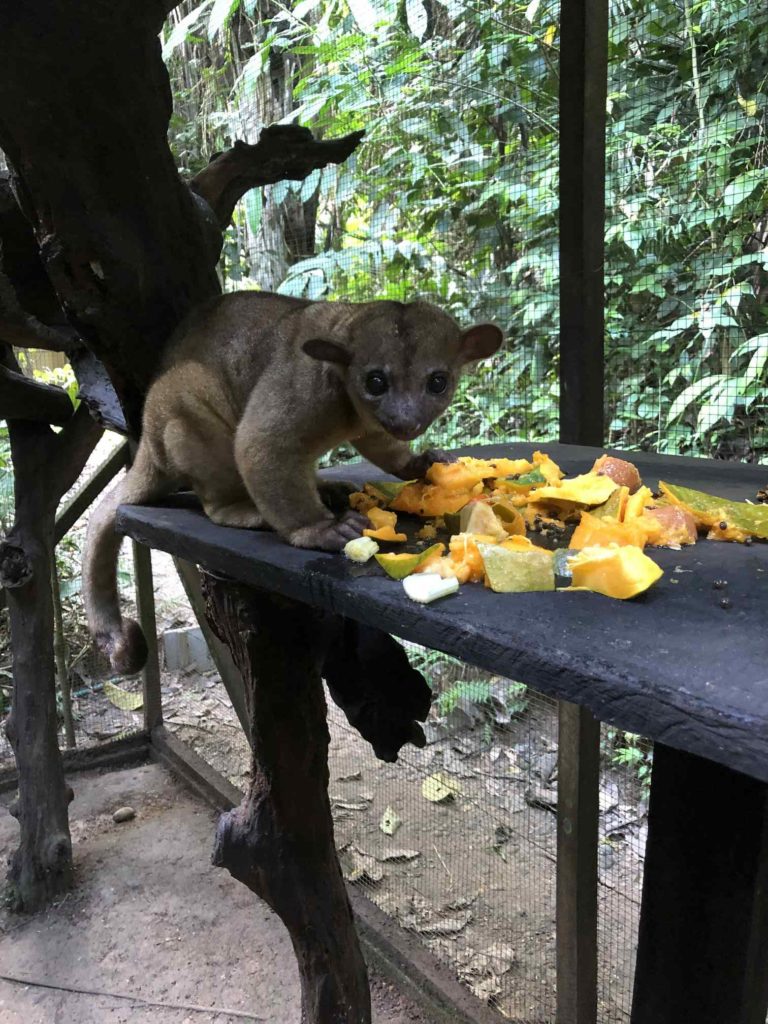
This month we have had one new arrival, a juvenile kinkajou called Chosko. He was weighed and given a health check as all new arrivals receive. He was estimated to be a year old when he arrived and is doing well in the clinic in his quarantine period.


Construction and other

Douwe and Geiler have been constructing an extension to the back of the kitchen. They are extending this space for volunteers and the highly awaited football table. This extension is likely to be finished within the new year.

While still work is being done at the quarantine, the Lulu cage has been completed this month, replacing the old Roko cage. Thank you Wild futures in Looe, UK, for making this happen.


Volunteers

The volunteer house has been full for most of November and December. There was a large group change with 10 volunteers including Alex (assistant manager) leaving and 5 arriving. This large change went well, with new volunteers learning their jobs quickly and settling in at the volunteer house. Both Sean and Lauren returned for short term visits spending Christmas at Esperanza Verde.
With a Dutch family running the place, Saint Nicolas was celebrated the Dutch way. It turned out to be the favourite event for many volunteers, with a lot of (self made) presents, Douwe going on a treasure hunt and Marlon receiving a beautifully decorated machete. As always there was a lot of dancing and partying, Dutch sweets and good food.

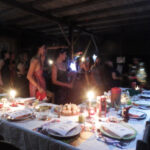
Christmas was celebrated at Douwe and Olivia’s house with all the volunteers. A total of 20 people for the festive dinner saw every table and chair being obtained from all over EV. The effort was worth the celebration. Once dinner had finished the tables were cleared to make way for cocktails and dancing!

November 2019 Newsletter

November was a month with a lot of animal action! Eight new arrivals, some releases, and a lot of animals moving around !


Monkeys

Since the end of August, we have had three young monkeys living in Pepe cage: Takari (young male spider monkey), Mashi and Almira (young woolly monkeys). It was time for them to join the outside monkeys. After opening the door, it took a bit of time for them all to go out. Mashi and Almira quickly made contact with the rest of the woollies. Takari was quite shy to begin with but showed interest with our oldest female spider monkey Yanay. Yanay and Maruja (female woolly monkey) have taken on the task of looking after our most recent releases. For the moment they are let our in the morning and brought back in at night so we can make sure they’re eating enough. It is wonderful to see how the other monkeys take care of them and how much they are enjoying the outside life.

Nera, one of our released adult Capuchins, recently gave birth. The newborn seems to be health and as Nera has successfully raised her first born, Namaru, we have confidence that this little baby grow strong as well. As soon as we know the gender it will be named.

Moira, Maru and Tonka in Tiliku

In the August update we wrote about Tonka, a young male Andean saddleback tamarin, and Maru, a male Ma’s night monkey. We had planned Maru’s and Tonka’s release, sadly Maru’s introduction to our released night monkeys hasn’t gone smoothly and he had a finger injured by them. For this reason we decided to move Tonka and Maru to Tiliku cage, where Maru will have some distance from them.


Other Animals

Fonzo (young male capybara) is a favourite animal for many volunteers. This means he always gets lots of special attention during the day. This is a fun, but also a necessary task; we want Fonzo to stay tame, as he can’t be released. This will make any future medical treatment easier for both him and us. As he is growing bigger it was time to move him to a more suitable enclosure with a large pond to swim in. In the Rincay enclosure there are several yellow-footed tortoises, so before the move, Fonzo was introduced to one of them in see how he would react on this species. Fortunately, there were no problems and, it was time for Fonzo to be moved to the Rincay enclosure. It only took 10 minutes before he took his first dive in the pond. He stayed in the pond for quite some time, enjoying the space to swim, and then wandered round the enclosure, making acquaintances with the rest of the tortoises, among them Pepito (the first tortoise in EV) He also took an opportunity to greet the peccaries in the neighbouring enclosure before heading back for another swim.


SUST Animal Orphan Hospital

Daytona (young female large headed capuchin) was moved to the Pepe cage, joining the three residing baby monkeys (Takari, Mashi and Almira). For now she stays in during the day while the other three are outside. At night she sleeps on top of Takari, the young spider monkey, (stealing Mashi´s favourite spot!). After a few weeks she will also join them outside.

Moira (female Ma’s night monkey), who arrived here with a broken leg and several other wounds from a dog attack, has been recovering well. After being confined in a small cage so that her leg would get the rest it needed, we recently moved her to a bigger cage in the clinic so she could start using her muscles again. Her leg will never fully recover, but she can climb again and move around sufficiently. She improved quickly thanks to all the extra attention, special mixes and vitamins she was given. Since we were moving Maru and Tonka, we decided to introduce her to Maru at the same time. Initially she was frightened of Maru but after some time she seemed to understand his intentions were friendly and they had their first nose to nose contact. Tonka also accepted Moira quickly, he must be relieved now that Maru has someone to play with during the night.

New arrivals

Marlon heard that some kids in Bello Horizonte had a snake in a small wire mesh cage. Douwe managed to retrieve the snake and took it back to EV. The red-tailed boa, Oba, had been trying to get out and wounded his teeth on the mesh. After some treatment we kept him in a special designed cage for snakes (without mesh!) to give him some time to recover. He recovered well, shed his skin, but refused to eat the rats that we tried to feed him. He was more afraid of us coming close than the food. Shortly after his shedding we released him so he could start hunting for himself again.

Delta (orange winged amazon), was brought from the ministry. One of the wings is permanently damaged so Delta will never be able to fly. She has not been handled a lot or mistreated, as she does not like humans coming close, but she does seem to enjoy it when Alex makes funny sounds for her.

Kike

Kike, a road side hawk was received from the ministry after having flown against a window. He had some minor injuries and appeared to be wild and very cautious around people. After a health check we moved him in the Aguatena enclosure, so he would not get used to being around people, and we could observe he flight ability from a distance. We opened the cage doors to release him a few days later. In the beginning he did not leave the cage, but soon, after his audience of 3 volunteers watching left, he found the courage to fly out of his cage. This further strengthens our hope of his survival due to his reluctance to be around people.

Manto

The Ministry also dropped off Manto, a scarlet macaw. The first few days Manto hardly ate anything, so we started moving some branches around in his cage and tried to give him food in different places. He started eating more after a few days, possibly because of the changes or maybe just because he got used to his new home.

Ezra (a young female spixs white fronted capuchin) was given to us from a local family from the village Bello Horizonte. She is still tiny even though she is already 9 months old, probably due to malnutrition. Since being at E.V. she has already started gaining weight, and we expect to see a lot more growth in the upcoming weeks. Ezra is quite afraid of people, but otherwise she seems to be doing well in the clinic.

The last arrivals were three baby birds (two ruddy ground doves and a blue and grey tanager). They were found on the floor in the village and handed over to us. Most likely they were trying to fly out of the nest for the first time, or were disturbed by predators or humans. The three of them stayed in a cage at the family’s house the first night and were then moved to the clinic, where two of the volunteers and Olivia took care of them. They needed hand feeding in the beginning, but incredibly quickly they have learned to pick their food by themselves. The blue grey tanager, named Dido and one of the ruddy ground doves, named Hercules, have been the strongest from day one, and are taking every opportunity to fly out of the cage. The other ruddy ground dove, Ewia, needed extra care in the beginning but now picks her food as well as Dido and has finally decided to spread her wings as well. Soon they will join the other doves and non-releasable birds in the Igor enclosure.
 

Construction and other

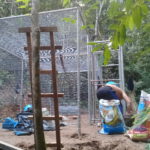
This month Douwe, Geiler, Hugo, and occasionally a volunteer have removed the old Roko cage to construct a new, larger and more stable cage in the same spot. We were able to do this thanks to a donation of The Monkey Sanctuary (Wild Futures) in Looe in the UK. It will be named Lulu in memory of one of their first woolly monkeys.
Esperanza Verde received two special visits this month.

Firstly, thirty children from the kindergarten from Curimana and several parents and some teachers were shown around by Douwe. Of course with so many monkeys outside some extra guidance was needed. Olivia, three volunteers stayed around, with Geiler enclosing the group, so no monkey would bother the group and no child or parent would try to touch an animal. Although the group was quite big everything went very well, and Douwe could explain a lot about the animals. By improving the knowledge of animals and their wellbeing we hope to discourage them from having them as a pet or putting them on the dinner table.

A group of representatives of the National Forest and Wildlife Service, SERFOR, visited the centre, as part of a workshop they had in Pucallpa about wildlife. The group included several administrative officials, representatives of the Ministry of Fauna and Flora of Pucallpa, and several veterinarians. They were especially interested in learning about how we handle different animals, what are the problems we encounter on a daily basis and how we solve any problems we encounter. It was an interesting visit with Douwe and Olivia exchanging knowledge and showing them through the centre.


Volunteers

Therese and Lisa

We welcomed the arrival of 3 new long-term volunteers who all have different areas of expertise: returning volunteer Karole who will mostly work in construction and in the clinic. Student-intern Carla, who will help Olivia with writing animal protocols, and veterinarian Emile who will start helping Olivia in the managing of the SUST AOH. On top of this, a good friend of the family and yearly returning volunteer, recently arrived and so the group is growing once more.

Since the group was big enough to also spend some time on extra jobs, we decided to give the opportunity for some people to experience some reforestation. Machico took the volunteers who were interested into the forest with a big backpack of trees. Together they managed to plant 52 new young trees.

October 2019 Newsletter

Finally the rain season seems to have returned, so the water pump can hopefully be stored away soon. Olivia came back after 6 weeks on Holiday, throwing Marlon’s 10th birthday party as well as celebrating her own. Besides the happy news of rain and Olivia’s return we have also gotten a lot of extra tasks done, with the clinic empty for the time being. As always, when it empties out it also quickly fills up!


Monkeys

The beginning of this month quickly got us on our toes, as Kres (female large headed capuchin) managed to open the Rimaq enclosure, letting out our two adult male spider monkeys. (Lucio and Rimaq). When, Alex, our assistant manager, walked by the enclosure to find that they were not in there she quickly notified Craig and Douwe and after some time we managed to get the two spider monkeys back into the cage without any accidents.

Lucio came to us after being confiscated from the circus and has been at EV since September 2014. His former owners broke off his canines so that he wouldn’t be too much of a danger when people took photos with him during the circus act. He is still a strong monkey though and can easily cause problems. He is very used to humans and would love to hug anyone he found, or worse. Rimaq came to EV with a female spider monkey Yanay in August 2014. They were both found in a cage near the road going to Pucallpa. Compared to Lucio; Rimaq does have his canines, and they are quite impressive. Due to their size and strength both of these monkeys will not be able to live outside in semi-captivity, like many others do at EV.

As Kres has been causing so many problems lately, not to mention the risks involved, we made the decision to close her in with Lucio and Rimaq. She entered the cage herself, and seems to be happy enough in the company of the big boys.

Nera, one of our adult female large headed capuchins, is quite pregnant! We estimate that it could be less than a month before she gives birth. Cross your fingers and keep an eye out in the next newsletter for some baby pictures!

In other monkey pregnancy news, although early in season, the first squirrel monkey baby has been spotted. Silvana (released several years ago) being the already experienced mother.

Tito outside

Tito has finally started gaining weight again which means that he and Yuria (male and female equatorial saki) are now allowed out during daytime. Weight is not the only thing Tito has gained; he finally seems to have found some confidence and courage to wander a bit further away from his cage during the day when they are both out. He’s becoming quite a climber even though his skills cannot compare with Yurias agility.


Other Animals
Sumo, male South-american coati, was released at the beginning of this month. With some trial and error, Suma was found to be Sumo and is enjoying his outside life. He tends to hang around the family house and spends a bit of time in the morning by the bodega when Douwe passes by to take Marlon to school.

Smyke

Smyke, the male yellow spotted river turtle, recuperating from a swollen leg in the Aguatena seemed to be recovered enough and was brought back to the reptile pond in the reptile enclosure. Volunteers checked on him each day and he seemed to be doing ok. But one day a volunteer came with the sad news that she had found Smyke dead in the pond. We were unable to determine the cause of death.

Diego eating solids

Diego, the small ‘ocelot’ who stole everyone’s heart last month when he arrived, was determined to be a margay after all. The similarity is very close except for the tail length which is shorter with an ocelot, while Diego kept growing, so did his tail! So far he is still in care by Olivia and Douwe and has just started eating solid food. He is a playful little cat who has rapidly learnt how to climb everything and jump everywhere.


SUST Animal Orphan Hospital

At the beginning of the month the four birds up in the clinic were introduced to the Pichu Aviary having completed their quarantine period. Kit (festive amazon), Rodi (Mealy amazon), Tango (Orange winged amazon) and Aleesa (scarlet macaw) all seem to enjoy being able to spread their wings and chitchat with the other birds.

With the birds gone it was a unique time with no animals in the clinic! A perfect time to clean house and do some repairs, like new mesh for all the windows. With or without animals the clinic is always busy during the day, milk for the baby monkeys is prepared here, Armando, the young male howler gets his food here, and the faeces of animals in the outside enclosures are checked. It was also a perfect timing to give a round of de-parasitation to all of our outside woolly monkeys.

As always the clinic is never empty for long. The ministry brought us an opossum, a night monkey and a capuchin. You can read more about them below.


New arrivals

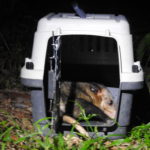
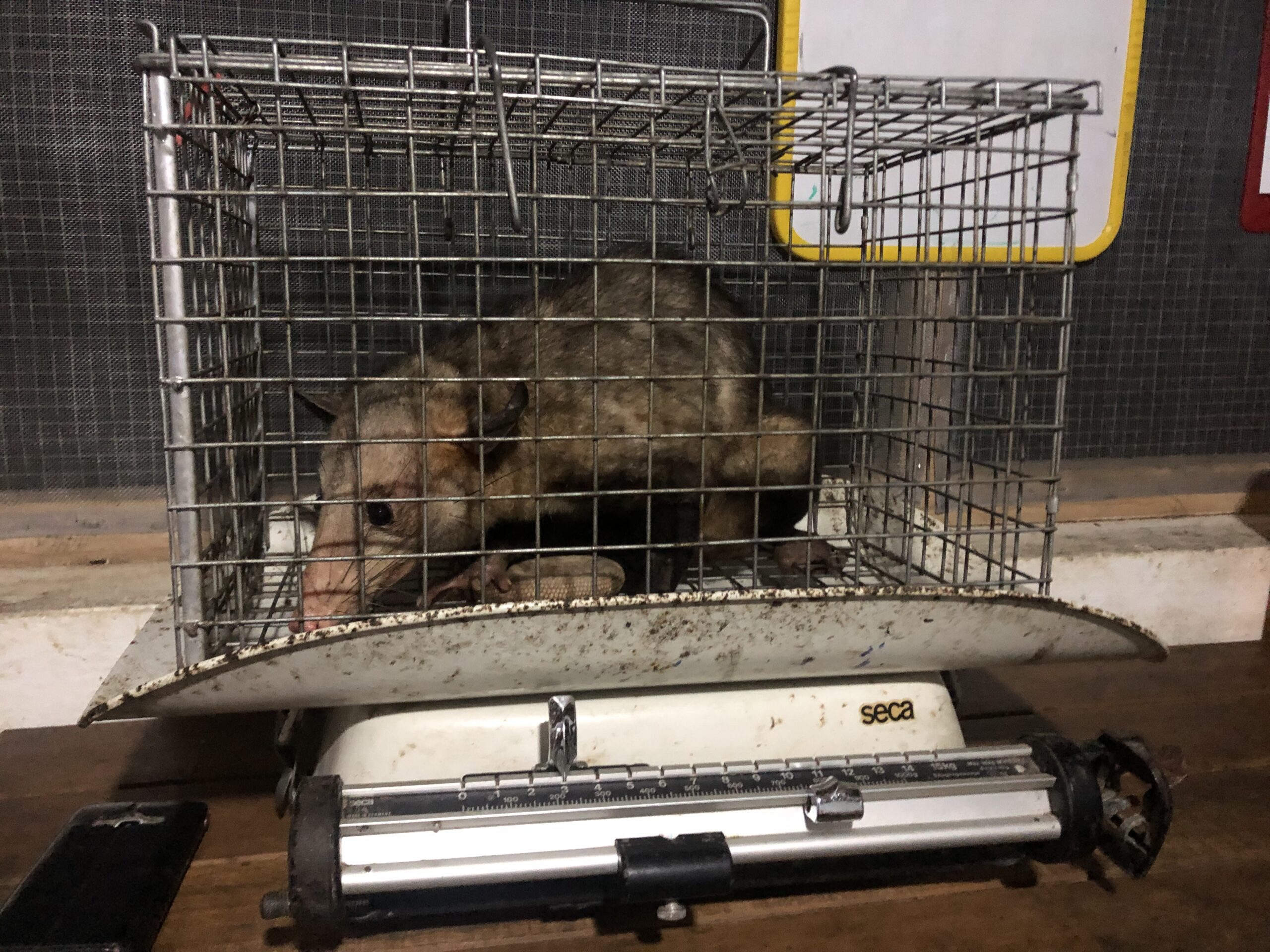
We received a male adult opossum which had apparently wandered into the storage shed of a university in the outskirts of Pucallpa, and was caught and brought to the ministry. After a quick health check which showed him to be a very wild and healthy individual it was decided to release him at our nearby plantation.

Daytona (juvenile female large headed capuchin monkey) was a pet before being seized by the ministry and brought here. She is a bit skinny, not too tame, and very active. She is being treated for parasites and will have a good chance to become part of the outside capuchin group in the future. For now the clinic volunteers have to come up with some nifty enrichment for our new energetic arrival.

Moira (female Ma’s night monkey) was found when some dogs got hold of her. Luckily the dog’s owner got her out and handed her to the Ministry. As she reacts calmly on handling we assume she has been a pet. The dogs got her badly; she has a broken leg, a bruised arm and other leg and a wound in the inner jaw. With monkeys it is really hard to make a sort of cast since they are very interested in everything and will most likely tear it apart themselves. We keep her in a small cage so she can’t move too much and hope the leg will heal enough in the position it is for her to start using it at least partly again. She is eating and drinking, and after a week she has started to move a small amount. It will take some time and we hope she will fully recover.


Construction and other

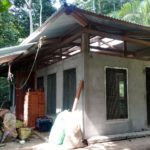
After some time with no electricity in the village Bello Horizonte, Douwe was finally able to complete the welding of the doors and windows for the Quarantine. It has made a remarkable difference when you view the quarantine from the outside. All that is left are the finishing touches of clips etc. on the doors before the focus can switch to the inside!

And as well after being one local worker short for a few months we are happy to welcome Hugo from the local village Bello Horizonte to our crew! A well needed help for Douwe and the other workers. He has been working in construction before, so he is now helping Geiler and Douwe on the Quarantine. Soon he will start on other construction projects that are still in the plans.

And last but not least, a big thank you to Ursel and Peter Kraus for the new scale for our quarantine facility.


Volunteers

Machico, who has been working with us since the first year took the volunteers on a forest walk. It was rainy but they managed to see a lot of amphibians and beautiful nature.
A trip to Regalia proved beautiful as always, the volunteers got it all to themselves and managed to see several species of birds including hoatzins and kingfishers. We celebrated Olivia’s birthday at the family house combined with a fun quiz night, had some cocktails and even did some dancing.

Sadly our New-Zealand long-term volunteer and overall assistant Craig left for home, but we will happy to have him back in 2020. He has been a great assistant to both Douwe and Olivia and we thank him for everything and we hope he has a great time with family and friends at home.

September 2019 Newsletter

Summer has officially started at Esperanza Verde! Temperatures are soaring and there’s only the occasional bit of rainfall to water the earth. It’s the time of year where the smaller streams dry up and water becomes a constant issue. However, when it does rain there’s a remarkable and immediate response from the plants, with the greens becoming more vibrant overnight and new growth being observed wherever you look.


Monkeys

La Sapa cage was still the place to be this month. The interior of the cage received a makeover with old branches rehung and new branches added. The quantity of monkeys passing through this cage over the previous few months has really taken its toll on the enrichment. It’s been great to see how quickly an enclosure can be refreshed to enrich the lives of its ever changing inhabitants. Kres (female large headed capuchin) was given the green light to join the outside group. She has since been seen reuniting with Biko and Rayka (male and female juvenile large headed capuchins). Increased vigilance with locks and wires will hopefully mean an uneventful outside life can be enjoyed by a monkey who is eternally keeping volunteers and staff on their toes.

Cumala (adult female black spider monkey) has continued to be the source of particular interest this month. After her time with the male spider monkeys it seems that Cumala is getting larger and larger. Watch this space as it may mean that a new baby spider monkey is on the way. Fingers crossed!

Armando (young male red howler monkey) is going from strength to strength. Climbing and playing with the other monkeys and finding more independence with each day. As grown up as he likes to think he is, he can still be heard grumbling when he isn’t getting the attention he thinks he deserves from the volunteer keeping an eye on him each day.

The soft release of Yuria and Tito (equatorial saki monkeys) has continued into October, with both monkeys appearing to get more comfortable with their new freedom and surroundings. After initially being bullied by the other monkeys, they both now seem far more acclimatised. A soft release means that their enclosure is kept available to them to sleep in and receive some additional dietary support as needed. After weekly weight checks showed Tito’s weight had declined more than we’d normally expect to see. The decision was made to give them a few more weeks within the enclosure to ensure there was no underlying reason for his weight loss. Early indications show Tito’s weight increasing again and Yuria eager to return to the outside world.

Panki (baby male woolly monkey) was a sad moment in an otherwise exciting month at E.V. If one of the baby monkeys ever misses milk feeding, red flags are always raised as this is a time when babies are generally guaranteed to be seen. Panki was found on the ground and taken to the clinic. He seemed lethargic and was uninterested in food or drink. Panki’s demise was rapid and later that evening he passed away. The cause of death was internal problems caused by parasites. Although only a recent arrival at E.V. Panki is a loss that is deeply felt but all.


Other Animals
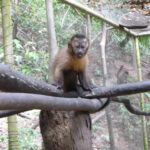
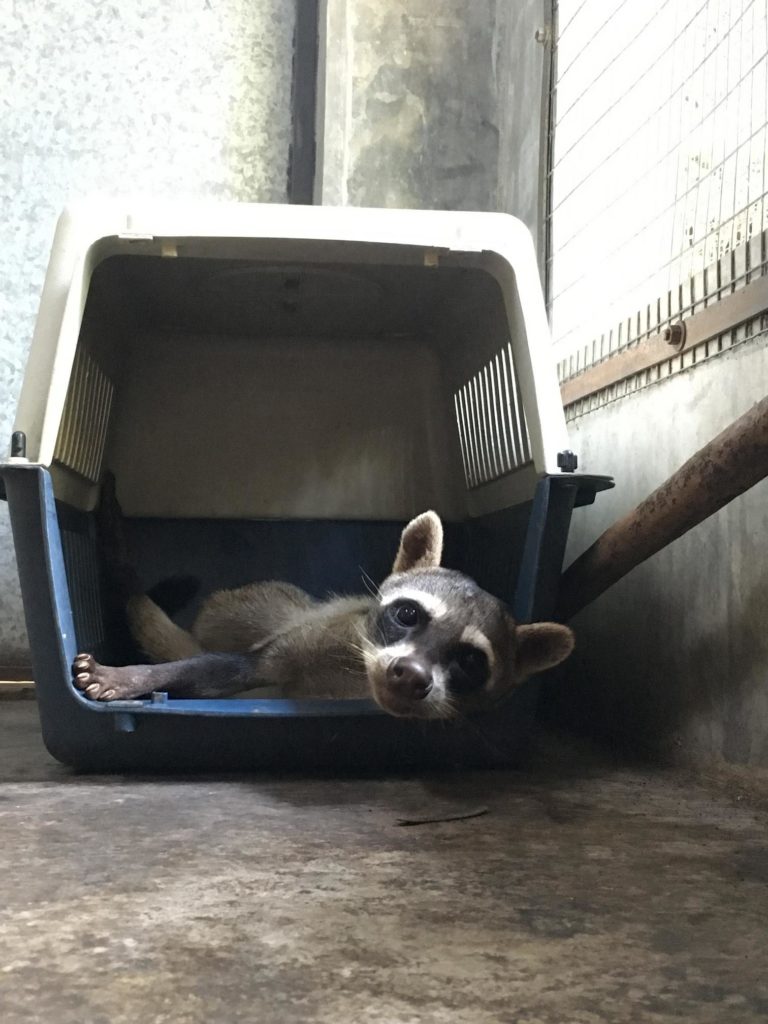
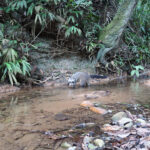
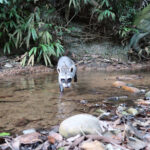
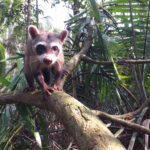
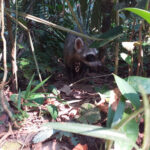
Mokwai and Rumani (crab eating raccoons) are still visiting every night, and eagerly await their evening feeding. Both raccoons are notching up superficial battle scars and it is unknown if they are from another animal or from each other. As they are both males it may come to a time where the more dominant of the two claim this as his territory while the other chooses to move on to a different area.

September saw of all of the remaining white winged parakeets in the Tupak enclosure caught, as it was apparent that a sufficient number had regained the ability to fly. After a quick wing quality check, the birds were again separated into flyers and non-flyers. Flyers were moved to a specially designed release cage, where they spent the evening de-stressing before the monkey proof hatch was opened to allow them to leave. After just two days another fifty birds had taken the opportunity at freedom, leaving just seventy in Tupak. In a few more months these birds will be revaluated for flight and hopefully released.


SUST Animal Orphan Hospital

Smyke (yellow footed river turtle) has been returned to the reptile enclosure. We are sure he will miss all the love and extra attention he received in the clinic, but it is great to have him back experiencing the greater freedom and the much larger pond.


New arrivals

This month saw another baby yellow footed tortoise come across from the village. After a quick check up it was released behind the family home. This was not the only new reptile arrival for September. A volunteer cleaning in the Pichu Aviary found a baby turtle (as yet unidentified species) residing in the aviary pond. It is unknown how it got in there, but as with the tortoise, a quick check up was in order prior to releasing back where he/she came from. At 120 grams it is only small but looks to be doing well while fending for itself. Volunteers were quick to name him Crush and although only small, everyone is keeping an eye out for sightings.

Government animal seizures are always welcome as they continue to hamper the illegal wildlife trade. This month saw four birds seized from a restaurant in Pucallpa. All four birds are in the SUSTAOH until the end of their quarantine period, when they will be moved to the Pichu Aviary. All four are too tame to be released into the wild, but should appreciate the added space to fly around in. The four birds are Tango (Orange winged amazon parrot), Rodi (Mealy parrot), Kit (Festive amazon parrot) and Aleesa (Scarlet Macaw).

Esperanza Verde had a visit from a couple from Pucallpa at the start of the month who wished to re-home two monkeys they had purchased. Douwe took time to explain the realities of purchasing illegal animals to the couple. Even if you believe you’re doing it with the best of intentions, it still adds momentum to the illegal wildlife trade. Seeing Douwe explain the stark realities shows the obvious passion both Olivia and Douwe have for their work here.

Yanamayu and Kuymi (adult large headed capuchins) spent their quarantine period in the SUSTOAH before being moved into La Sapa enclosure. Kuymi (female) is just over one year old and moved with Yanamayu into La Sapa so she was able to build a relationship with Kres. After this settling in period Kuymi was let out of the cage at the same time as Kres. Although sighted frequently, Kuymi is most often seen spending time on her own. Yanamayu remains in the enclosure with Apollo, another male capuchin. We hope that they will bond and form a strong friendship.

On visiting nearby Pucallpa, Douwe was asked if E.V was able to take an adult male Woolly monkey who was to be seized by the ministry. After seeing this magnificent animal chained to a tree out in the hot sun, there was only one decision to be made. Kamayo has now completed his quarantine period and has moved in to La Sapa. Moving went without a hitch and Kamayo appears unimpressed by the posturing of Loki (male woolly monkey). Both monkeys have so far kept their distance and other than a minor interaction appear to be living peacefully.

Animals coming to the rescue centre can appear from anywhere. Douwe was walking Marlon to school in nearby Bello Horizonte when he was given a Margay kitten. Initially the Kitten refused to eat and had to be force fed by Douwe for two days. Thankfully on day three the kitten (Diego) began to suckle and drink as expected. Diego is currently being cared for directly by Olivia and Douwe and is being fed milk five times a day.


Construction and other

More volunteers has freed up both Douwe and Gieler to concentrate on the quarantine.
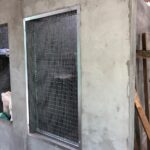
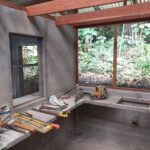
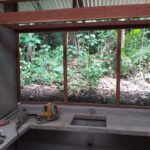
September has seen more of the smooth cement coat completed, one set of doors and windows fitted, and work has begun on the kitchen. When it’s written down it doesn’t sound like much, but the visual difference is huge! Take a look at the pictures and see what a vast improvement and mammoth workload has been completed this month. Work on completing more doors and windows has been hindered, as power cuts in the village has meant that it hasn’t always been possible to weld when Douwe is free to try.


Volunteers

This month the volunteers were treated to a night walk with Douwe. Although so many fabulous and new sights are to be seen every day at E.V. the nights offer a whole different world to ensure you are in awe all over again. Always the true entertainer, Douwe turned up fashionably late, but with a more than satisfactory excuse, as he had a small caiman in his arms. After a short explanation it was released again in the nearby stream. Quiz nights appear to have become a monthly ritual and now music quizzes have also joined the fray. Between that and the bonfires, there is never a dull moment.

August 2019 Newsletter

August was another great month, with a changing team of volunteers coming into their own and getting the hang of what is required when running a rescue centre. The dry season has kicked in and the amount of leaves on the ground shows that the flora is really feeling the effects. Even with everybody doing their best at water conservation it still needs to be pumped from the small stream every few days.


Monkeys

August was a continuation of July’s primate behaviour, with a lot of noise and bravado from monkeys trying to impress us. One again demonstrating that they should never have been with people in the first place!

Kres, Biko and Apollo

La Sapa seemed to be where all the action was this month. Biko and Rayko (young male large headed capuchins) were moved from the clinic and joined Apollo (adult male large headed capuchin), Kres (female large headed capuchin) and Nando (male white fronted capuchin) in La Sapa. Although we’d rather have them outside, it is rewarding to watch these rescued animals all interacting well and apparently enjoying their enclosure.

Following on from last months debate regarding Loki (male woolly monkey) the decision was made to enclose him. His behavior was a constant worry and we have to consider both human and animal safety.

Initially Loki was put in with Rimaq and Lucio (our adult male spider monkeys). Experience has taught us that careful observation was required as spider monkeys can be unpredictable when dealing with other adult males. Around dusk, Rimaq and Lucio decided to chase Loki. The situation was quickly controlled as Olivia acted instantly and there were no injuries. So much for a happy family of monkeys! The second choice was to put Loki in La Sapa with the group of capuchin monkeys (Nando, Apollo, Kres, Biko, and Rayko). Although looking unhappy being enclosed again, Loki fitted well within this group and is certainly the alpha, dominating the feeding table. This was only a short-term option as the capuchins were set to be released later this month. But even this was not to be… Unfortunately because of a momentary lack of concentration, all six monkeys were prematurely released from the enclosure. Sometimes animals can’t wait…

Despite the premature release everything seemed to be going fine to begin with but unfortunately on one day Apollo didn’t back off when Olivia was walking past and attacked her. Apollo ran off and fortunately Olivia avoided bites and only suffered some scratches. Since he’s been out he has not gone into the trees and his unpredictable behaviour and short fuse make him a potential danger to us. It seems that just like Loki he may have to be an animal enclosed for everyone’s safety. We can’t blame the animals for this, as their behaviour is the fault of the people who decided to take a wild animal as a pet. Apollo is back in La Sapa enclosure.

Not everything was sad though! Nando found the company of our adult female white fronted capuchin, Chaira, whilst Biko and Rayko are enjoying the outside and seem to be fine with the outside group of capuchins. We hope with some time and effort from us, we can teach these young capuchins to concentrate on their own species. We consider this one of the most important jobs here and is the reason for our no touch policy. If we can break these animals of their attachment to humans then we can avoid permanently enclosing them in the future.

Locking animals in cages is never a decision taken lightly. When animals have been taken from their natural environment, their behaviours may have been modified either intentionally or otherwise. They are “damaged”, often both physically and mentally. Rescue Centres like Esperanza Verde are the last link in the chain. Rehabilitation and release is an amazing feeling, but with some animals, release can result in death, either swiftly from a predator or slowly as the animal does not have the skills needed to fend for themselves. There are no easy decisions and we have to rely on our experience and expertise to guide us.

Cumala (adult female black spider monkey), who was in the Rimaq enclosure with the males this year, was released, along with Cesar a young male spider monkey. He was soon seen playing with the other baby spider monkey Katinka and has been seen interacting with with Cumala as well.

We now have separate Howler monkey and Saki monkey enclosures. Darwin and Ramon (male red howler monkeys) were moved so that there was space for Armando to spend the night with them. This was a big step for Armando as he is finally spending nights in an outdoors enclosure. Whilst nervous at first, once relaxed it was so adorable to see all three monkeys sleeping together. Armando still has a dedicated volunteer each day looking after his needs and keeping an eye on him. He can often be seen climbing or playing with other monkeys which is fantastic for his development and something we envisage will only get better and better.

With the howlers moved out there was room for Tito (male equatorial saki monkey) to move from the clinic into Roko with Yuria our female saki monkey. The initial hope was that these two monkeys would form a bond as a couple. Both monkeys united quickly but in more of a mother and son capacity. The door was opened to see of they fancied exploring. They didn’t, but the outside monkeys were delighted to go in to their enclosure and help themselves to the saki food! Anyway after being hassled enough we closed the door again, but it’ll open up again tomorrow. We will let you know in the next update how it went….


Other Animals
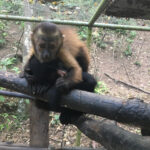
Rino, Celia and Merida (male and two female collared peccaries) made the big move into Xena enclosure with our resident peccaries, Timo, Kohana and Roxanna (male and two females). Introducing new peccaries to an existing group is always a high-risk period, as it is not always without conflict. Thankfully all went well and it seems the oldest female, Kohana, is taking an interest in the newcomers, but a real peccary hug has still to be seen between them all.

Moving the peccaries from the Rincay enclosure allowed the opportunity for the ten largest yellow footed tortoises to be moved back again, with Pepito, our “alpha” tortoise, leading the group of course. This allowed for more freedom for all involved. Tortoise ‘hunting’ is always a favourite job for the volunteers, as not only does it give the opportunity of contact with such interesting animals, but it is also a chance to share some knowledge about the species.

Tandoori

Tandoori (female tamandua or lesser anteater) was another August success. Coming from the Ministry a little less than two months ago, Tandoori was weak and not eating properly. A mixed diet of termites and a special power mix of proteins and carbohydrates saw a remarkable difference in Tandoori’s energy levels, and prior to release you could see her destroying termite nests on a daily basis.

Aldo and Afra (scarlet macaw) made the move from the clinic this month joining the remaining macaws and amazons in Pichu aviary. When these two came to EV they had been residing in a small cage that didn’t give them the chance to even stretch their wings. Although not able to be released into the wild, it is great to see these two now with the space to fly freely and socialise at will.

Asan and Ramara (blue and yellow macaw) were the last to be moved from the Pichu aviary, and after one day in the clinic to be chipped and for a general check up, they got moved to the Elmo enclosure. They both seem to be settling in well

After a few walks with Mokwai and Rumani (crab eating raccoons), where they just decided to stay out, and come back when they felt like it, we made the decision to give them some greater freedom. We have started to leave the door open each night allowing the racoons to come and go as they please, while putting their food in at night. At daybreak, Craig would then come and close the cage, with them in it or, not. It was beautiful to see how quickly they got used to this system. They sometimes came and some nights didn’t, maybe dependent on what they managed to catch that night in the stream.

Mastina (female agouti) was moved from her enclosure under the long term volunteer’s residence to join the tortoises in the reptile enclosure. We’ve had success in releasing agoutis from this enclose before. The fence is low enough for them to come and go, but high enough to offer protection if they need it. Mastina took the chance of freedom on the second day, but was found dead nearby two days later, possibly from a dog attack. An extremely unfortunate reminder of the stark truth, that regardless of the precautions taken, releasing animals comes with a high degree of risk, of which we learn in a harsh kind of way.


SUST Animal Orphan Hospital

The concern with empty cages within the SUSTAOH, is that somehow they all tend to fill up when you are least prepared for it. August was a great month with so many animals being released into either bigger enclosures or complete freedom.

Leo’s release

Leo (male squirrel monkey) spent less than a month in captivity while his arm and fingers healed. At the time of release Leo had started moving his arm again, and although the two fingers weren’t being used they certainly looked better than the day he arrived when we feared he would lose them. He joined his group again, and we hope, with breeding season ending and him having learned a lesson, he will avoid any fights with bigger males.

Mashi and Almira (male and female woolly monkey) are still within the SUSTAOH but are now awaiting space to free up in an outside cage so they can have more contact and visits by all the outside monkeys. This is an important stage in their release as it will allow them to bond with the released group.

Smyke (yellow footed river turtle) has moved back to the clinic from the Aguatena. Although not as comfortable as the purpose built Aguatena, by having Smyke close to the clinic it is easier to monitor the injury on his leg that currently requires antibiotics.


New arrivals

Release of baby tortoise

One of the new arrivals this month was a baby yellow footed tortoise, which was found on Geilers, one of EV’s workers, plantation. As tortoises are still eaten locally Geiler brought the tortoise to EV for its own safety. It wasn’t around long enough to even receive a name, and after a quick check to ensure it was healthy the tortoise was released behind the family house where it is able to live in relative safety.

The other new arrival for the month is Takari a small male spider monkey who is less than six months old. Takari was found by a lady in Pucallpa who came across him when she discovered some hunters preparing what is believed to be his mother for eating. Having saved the baby he was handed over to us and is now in the same cage as the woolly monkeys Almira and Mashi. Takari looks to be settling in well and plays actively with the two other baby monkeys.

baby peccary

Another short arrival was a very young baby peccary. She was found by locals from the village and handed over to us. They only had her for a few days but already had severe diarrhoea. Although she seemed lively and was actively drinking a special dehydration mixture, she died the next day. Too young to be without her proper mother.


Construction and other

The bridge between the bodega and volunteer kitchen was completed this month. Douwe, Geiler and Jeremie (one of the handier volunteers) did a fantastic job and a whole lot of heavy lifting to get the job completed with very little disruption to the daily activities going on around EV. One of the main benefits of the new cement bridge is that there is no concern of the beams rotting or being eaten by termites. Only one more hand rail is required before yet another major construction project can be added to the completed list.

Jeremy working at the quarantine

Last month in the quarantine a dedicated contractor was obtained to complete a layer of cement over the brick work to ensure water proofing and ease of cleaning. Unfortunately the contractor finished prior to the completion of the task at hand. Both Geiler and Jeremie handled it in their stride and work on the cement layer has not missed a beat. The first layer of cement was completed this month leaving only a smooth coat to be completed by Douwe and Geiler in September. It is always amazing the talents and skill that come through when dealing with such a great number of volunteers.

Again this month we had a special visit from a local conservation group named ‘Vida Verde’. This is an initiative to bring young people together to help conserve nature. They come together every week and organise days in which they go collect garbage, at the beach of the river Ucayali in Pucallpa for example. Showing this group around really demonstrated how important education is. It’s amazing to see these young people, so full of energy and motivation to help conserve nature and its inhabitants.


Volunteers

August was the last month many volunteers would have with Olivia before she heads away on a well-deserved 6 week holiday, leaving Douwe, Alex (returning assistant manager) and Craig (our long-term assistant) at the helm. What better excuse to have a get together and another attempt at a quiz night…

July 2019 Newsletter

Ministry’s visit

If June was a month of creative animal management then July took it one step further with the volunteers having to work with extra effort and passion. It was a quiet month for new arrivals with only a few new faces turning up on our doorstep. This month also saw the yearly ministry audit and we are pleased to say that we passed with flying colours yet again!


Monkeys

Armando in Roko cage

July has seen a great deal of mood swings from our monkeys, as for many of the species, the mating season has started. Many of our hormonal teenagers have been pushing the boundaries, both within their group and with us humans. Monkeys seek to improve their social standing at this time of year, which can lead to a lot of screaming as they square off against each other.

There were serious considerations made to put both Loki and Samara (adult male and female woolly monkeys) in an enclosure this month. Samara had recently been showing the volunteers a lot of attention as she reaches sexual maturity. This isn’t the first time we’ve had this problem at EV and a great deal of time and effort is taken to do what is best for the monkey whilst taking human safety into consideration as well. Samara had started following volunteers around, making their day to day jobs much harder. Additionally, Samara had started following volunteers into areas of the forest where the locals, and their dogs, frequent, putting her at increased risk.

Loki

Loki has been going through a growth spurt, and if the extra bulk and muscle showing is anything to go by, he will become quite a formidable monkey in the years to come. With the volunteer changeovers that have happened recently, Loki had decided that this was a chance for him to move up in the hierarchy and had started trying to intimidate new volunteers and generally being far less cautious than he should be. Loki is so good with the baby monkeys, it would be a real shame to have him locked away. Rather than enclosing at this time we are hoping that with increased training and consistency on our part and by modifying our behaviour we hope that both Samara and Loki can have a long and fruitful time outside as enclosing animals is something we always try and avoid.

Having spent a lot of time in captivity prior to arrival at EV, Kres (female large headed capuchin monkey), has always been a monkey which would rather try and interact humans than with her own kind. She has always been the first one to show us the shortfalls of any of our security designs. Recently she has learnt how to remove the wire which we keep on our most secure cages. With this, and increasingly destructive behaviour around the EV, the difficult decision was made to put Kres in La Sapa with Apollo (male large head capuchin), Nando (male white capuchin) and Cesar (male spider monkey). It is never the aim to enclose animals unnecessarily, but we hope that this will prove beneficial in the long run as the three capuchin monkeys might build a “family unit”, and when they are released stand a greater chance at survival together.

Panki and Loki

Panki (male woolly monkey) was released from the La Sapa enclosure this month and it has been interesting to see the growth in his personality and how comfortable he has become in such a short time. Loki had been showing a great deal of interest since Panki arrived, so when Panki was released, it was great to see the initial comfort Loki provided. Male Woolly monkeys often spend a great deal of time with the young and it is great to see Loki practicing his paternal skills.


Other Animals
Grety (female margay) has been benefitting from the sudden influx of rats, getting a rat some mornings as well as her normal afternoon meal of chicken and organs. It is hard to say whether Grety gets more enjoyment from hunting for a dead rat, or from eating it. Needless to say, watching Grety play can be quite enjoyable, if you have the stomach for it! All rats are killed humanely prior to feeding to Grety unless they are ones foolish enough to have entered her enclosure and she has caught them herself.

Aeris

Aeris (female opossum) is the last remaining opossum of our group of opossums that were released on the upper plantation. Although her door remains open 24/7 it appears she is more than happy with the arrangements as they are. Let’s see if August proves the month where she leaves her safety net and moves into the great wide world.

Ermina & Rafiki

Rafiki (blue and yellow macaw) now has company. He was joined by an old friend from the Pichu (aviary) enclosure. At the start of the month Ermina (scarlett macaw) was found having suffered a fall, she is incapable of flight already, now had minor damage to a leg as well. After a brief stay in the SUST Orphan Animal Hospital, Ermina has now joined Rafiki as a permanent roommate. Both birds are benefiting from the private space where they can stretch their wings and recover, without the fear of falling from a great height or being grabbed by the other maccaws.

Pekka, Kiara & Siro moving into Pichu aviary

Pekka, Kiara and Siro (orange winged amazon parrots) have completed their flight training and been moved to the Pichu enclosure (aviary) where they joined the other resident birds, allowing them plenty of space to fly and experience life closer to the real thing. The ultimate aim would have been to release these magnificent animals, but unfortunately having been removed from the nest so young, these birds will never learn the necessary skills to survive in the wild.


SUST Animal Orphan Hospital

So few new animals until the end of the month was a welcome reprieve which allowed volunteers and staff more time to focus on the needs of the current clinic animals and any new issues as they arose. Just as the clinic seemed to go for a quiet period, a new arrival and an injured squirrel monkey needed some help.

Leo (male squirrel monkey) had been spotted a few days prior to capture, with injuries on his face and one of his arms hanging limp. Thankfully with a small amount of encouragement, Craig, our long term volunteer, was able to lure him into a cage. It was evident he had encountered a larger male and come off second best, leaving him with very bad injuries on his left arm. He was moved to the clinic, where he now is receiving treatment and will stay until he is fully recovered.

Mayla (orange winged amazon parrot) unfortunately passed away in the latter parts of the month, succumbing to an abscess in the stomach cavity. Sayani, (orange winged amazon parrot) spent a few days alone in the cage they had shared, before she joined the birds in Igor enclosure. As she (or he) has only one eye and never has tried out her wings, she has now time to strengthen her flying and landing abilities prior to being moved to Pichu, where she can re-join the group she arrived with.

Fonzo (male capybara) was moved from the clinic and now resides in the Momo enclosure. This is an open topped enclosure around the long-term volunteer cabin. He seems to enjoy the large space and his own pond. Fonzo is adapting well to the situation, which we are grateful for as capybaras can grow up to sixty kilograms, so having him friendly certainly is advantageous.

Mashi (male woolly monkey) is out of the small cage and now in one of the main clinic cages with Almira (female woolly monkey). They were initially separated as Mashi would cling to Almira for comfort using her as his mother, but Almira is not much larger than Mashi and not able to sustain the extra weight of another monkey. Although appreciating the company, Mashi is now more independent which gives Almira more time to play.

Smyke in the Aguatena

Smyke (yellow footed river turtle) has been spending time in the clinic over the last month, having been found floating awkwardly in the reptile enclosure and not being shy of people, which is rather out of character. She was found to have a swollen leg and after spending time in the garden at the clinic, was moved to the Aguatena. Smyke certainly looks comfortable in the purpose built enclosure and once healed, she will be moved back to the reptile enclosure.


New arrivals

Rino, Celia and Merida (male and two female White collared peccaries) were dropped off on the first day of the month. They were all very young, but were in good condition as they had been purchased by a very kind gentleman in Pucallpa wishing to save them from becoming bush meat. Douwe did a lot of explaining about how this kind of purchase just stimulates the trade in wildlife, however we’re not sure if this message was really heard. Douwe and Olivia have always worked hard to explain that we will never purchase an animal and that all purchasing, in the long run, does more harm than good as it adds to the illegal wildlife trade.
All three, Celia, Merida and Rino (two females, one male) spent some time in the SUST Animal Orphan Clinic being treated for parasites before being moved to the Rincay enclosure. This gives all three peccaries plenty of space to roam and the first contact can be made with our resident peccaries, Timo, Kohana and Roxanna, while having the security of a fence separating them.

Tito in the clinic

Douwe and Olivia attempted to take a few days away from EV in the closing stages of the month, however you can take the grown-ups out of EV, but you can’t take the EV out of the grown-ups. A lot of their time was spent purchasing anything required for the centre, and of course, they weren’t able to go away without bringing a gift back for the volunteers, nope not chocolate! Tito (male Equatorial Saki Monkey), had been handed to the ministry in Pucallpa, so the timing was perfect for this little guy. He will spend his quarantine period in the clinic prior to joining Yuria (female Equatorial Saki Monkey), Ramon and Darwin (male Howler monkeys) This is great for both Tito and Yuria as they can be released at the same time. We hope that this will give them both some added comfort and confidence as they experience life outside at EV.


Construction and other

Construction on the quarantine certainly got a lift this month, with a dedicated contractor coming in to complete the cement layer over the brickwork making it waterproof and easy to clean when it is in use. later

The new bridge between the bodega and volunteer kitchen had its vertical supports sunk during the month, with Geiler doing a remarkable job in what is not the easiest of areas to work in. These supports needed to dry for a few weeks before the beams constructed last month can be added to the equation. Douwe envisages this project being completed early August, so stayed tuned for pictures!

This month also saw us receive a visit from a local volunteer group called, Voluntariado de Biodiversidad Ucayalina. A group of young people in Pucallpa started this initiative to help the flora and fauna of Peru and this month they gave us a generous donation to buy materials for EV. We hope in the future of few of these dedicated young people may also volunteer at our rescue centre.


Volunteers

You may have wondered regarding the opening comment about our volunteers going above and beyond. This month saw our volunteer count get down to five volunteers, including Laura. Several volunteers had to leave early due to unrelated personal reasons. Days off were given up and everybody worked well together. Douwe and Olivia were even brought in to do tours, which was a really nice change of pace for all involved. There is something to be said about working in a small team and a remarkable job was done by all those left manning the fort. The last two weeks of the month saw four new recruits join the team, returning some semblance of normality.

Anyone who has volunteered at EV in the last twelve months will know Laura the Assistant Manager and the difference she makes to the daily goings on. She is always very supportive, knowledgeable and keeps things pointing in the right direction. Laura finishes on the last day of the month and will be taking a well-deserved break before heading off on a new adventure. We all wish her well and she will be sorely missed.

July was the month when Kayla turned the magical 15 years old. A momentous occasion in South America and all those involved were treated to quite the affair.
A lot of preparation went into the night where very little was purchased premade, Kayla making a lot of the decorations, and Douwe making all of the more substantial items. It was impossible to tell decorations hadn’t been purchased, with the added satisfaction of knowing it had the personal touch. The entire family scrubbed up remarkably well, the guys looking suave and the ladies looking radiant. A great night was had by all who attended, and Kayla had the night she desired and deserved, looking beautiful the entire time.

June 2019 Newsletter

June was the month where cages were filled as fast as they were emptied. Thankfully the entire team was up to the challenge with 13 new animals arriving throughout the month. Creative animal management was the key to ensuring everyone was secure in the best environment to suit their needs.

Monkeys

Yuria moved to outside cage

This month saw Ramon and Darwin (male howler monkeys) move from their long term residence in Pepe enclosure, to the Roko enclosure, using it as a place to sleep in the evenings after a hard day of freedom playing with the other baby monkeys. There they joined Yuria (female Equatorial Saki) who was moved there from the clinic. Yuria seems quite relaxed about it all and primarily keeps to herself. Armando (youngest male howler monkey) also joins Yuria for a little time each day. The idea is he will slowly get more used to being with monkeys instead of hanging on to humans. However this process cannot be rushed as too much pressure could have the opposite effect and make Armando less enthusiastic about leaving the security of his caretaker. Baby steps are the key.

Tonka (male Andean Saddleback Tamarin) has moved and left the clinic for the outside enclosure Lucia. With him now outside and the fantastic calls you can hear him making, we hope this will soon encourage some interest from a wild troop of Tamarins.

Other Animals
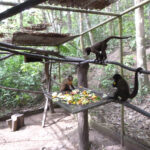
Mokwai and Rumani (crab eating racoons) were also moved from La Sapa to Pepe. We really hope you can keep up with all the changes; it’s a very common occurrence at a rescue centre! We had to make room for the monkey group from the clinic (see new arrivals), so we would be ready for new comers in need of rescue. Soon we will hope to have more time to take them on some well deserved outside walks.

June was an exciting month for our opossums. Cia had three babies and if that wasn’t enough, not only did they get a new home they also got the chance at release.
Two large cages were set up and then joined together in a tree in the plantation. After a week of getting comfortable with the new location, the doors were opened in the evenings. Initially Rubai was the only one to fully embrace the freedom and has not been seen since. Cia now disappears for a few days at a time and Aeris appears quite happy to come and go as she pleases, although she is always home for her evening meal, which is still diligently supplied by our team.

The new Elmo enclosure is finally seeing its full potential, with the seven blue and yellow macaws being transferred from the front cage to now roam freely throughout the full enclosure. It was slow going initially with the birds unwilling and uncertain about their new found space, but surely enough, once one led the charge the others were quick to follow.
For those volunteers fortunate enough to participate in the ‘release’, it was a moment to be cherished, savouring a moment that so many had worked tirelessly towards. These birds will never be returned to the wild as they were removed from the nest too young to know how to survive, but through the efforts of EV team they will be given the next best thing. These birds will now have the chance to interact with their own species freely and be surrounded by their natural habitat.

With the front cage of Elmo now free, it was a great opportunity to get everyone’s favourite blue and yellow macaw out of the clinic and back out into the open. Rafiki made the move with very little hassle and appears to be adjusting well. Plenty of interest was shown both ways between the seasoned veteran and the younger birds and it looks like they will all make very good neighbours. Rafiki won’t be able to join them in the big enclosures as there is too big of a risk of falling from a height, as unfortunately he can’t use his wings at all.

From the day they arrived in March, the white-winged parakeets have been a roller coaster ride of emotions, testing peoples will, and often making volunteers wonder if they were making a difference. To everyone who has ever had that thought, I really wish they could have been at EV this month. This month saw the remaining parakeets undergo a flying assessment to ascertain which individuals were suitable for release. They were later given a final dose of anti-parasite medication to prepare them for release. For the strongest flyers it was time to move to the Aquatena (at the new quarantine site) as a special hatch had been installed to allow the birds to leave as and when they felt comfortable. Seeing the birds leave their transport boxes was a sight to behold. Prior to their arrival, all these birds had had their feathers cut when they were captured, so seeing them fly at full strength again was confirmation that our hard work had paid off. After a day or so in Aquatena all birds had left and it was time to move on to assessing the next group.
Seeing and hearing parakeets flying around freely is now a common occurrence on site and although we can’t guarantee all of them will survive in the wild, the smiles on the people who have worked so hard to give these beautiful animals a second chance speaks volumes. There can be no doubt, YES we are making a difference!
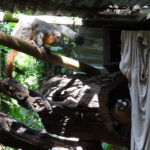
SUST Animal Orphan Hospital

You will have surmised from the above that the SUST Animal Orphan Hospital was busy all month and this culminated in the final few days of June with the another nine animals arriving on the last Thursday of the month.
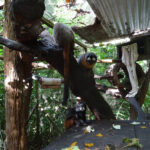
Sayani, and Mayla (orange winged amazon parrots) are still in the clinic and are both being treated for different eye conditions. We are still hopeful that they can both join the other birds in the Igor cage soon.

New arrivals

Arrival Tamandua, capuchins and spider monkey

Tandoori, a female tamandua or lesser anteater, showed up in a garden in the suburbs of Pucallpa and the Ministry was called to pick her up. She was taken care of for some time by a veterinarian in Pucallpa and it seems she had been used to people and had likely been in captivity before that. She was placed in the Tiliku cage, as Kiko and Kila (our male and female kinkajous) had not been using it that frequently, and are now fed on an outside table. She is receiving fresh termites daily as well as a power mix made by Olivia twice a day. Her strength and enthusiasm is coming ahead in leaps and bounds which is hugely positive as the aim is to release her as soon as she is strong enough.

Cesar (male spider monkey) and Nando (male white capuchin) were raised from a baby by a woman living in Pucallpa and then were later confiscated by the Ministry. Apollo (male large headed capuchin) was found on the streets. At first Apollo was separated but soon we noticed the interest he and the others had in one another, and as space was sparse we decided to introduce him to Nando and Cesar. Panki also joined the group as he would benefit from the company. He would get more stimulation to eat, as eating is a very social thing with most monkey groups.

While the ministry visited they mentioned another group of animals being held in poor condition in a tourist facility in Pucallpa. Douwe went to verify while being in Pucallpa and knew we had to make space for these animals, as we feared they would not survive long in their conditions.
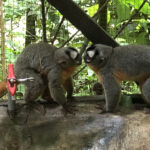
This was the instigator for all the moving of so many animals mentioned above. It is a true credit to both Olivia and Douwe’s organisation skills, as less than two weeks later the government arrived with the following animals.
In preparation Apollo, Nando, Cesar and Panki were move to La Sapa enclosure, and Panki directly received some hugging (through the mesh) from Loki, our biggest male outside woolly monkey.

So just about ready, with the happy note of many parakeets released, the ministry came with:

Aldo and Afra, two scarlet macaws, healthy and now in a small cage in our operation room.

Rayko and Biko, two large headed capuchin monkeys. Rayko being the smallest but both active and playfull but still a bit too skinny.

Almari & Mashi on arrival

Mashi and Almira, male and female woolly monkeys, very young. Almira is playful and estimated about 8-9 months old and is already happily playing with the capuchins. Mashi is about 6 months and very skinny. He sleeps separately at night in a small cage, while spending some time during the day with the capuchins and Almira, as well as spending some time with a volunteer to stimulate him to eat and teach him what he should eat.

Maru, a juvenile male Ma’s night monkey, a very curious species. He will be a nice future companion for our outside night monkeys Luna and Otis.

Fonzo on arrival

Fonzo, a very young male capybara stole every ones heart immediately, as he happily greets anyone entering the treatment room. Yes we had to make use of all the space in the clinic this busy time.

Mastina, young female agouti, is the one of this group that is less tame. She is in good health, and resides in the cage that once was made for a Paka, under the long-term volunteer cabin.

These animals were all seized from a tourism venture that had no idea of how to look after them and what their needs were from day to day. Most of them are very young and underweight and many have underlying issues yet to be diagnosed.
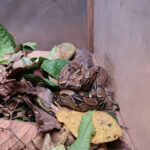
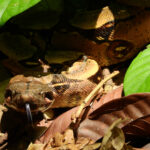
This is a great reminder to anyone that if you stay at a hotel that has animals as an attraction you are supporting the illegal wildlife trade. Most of these animals have come from the illegal market and were captured from the wild for profit.
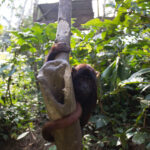
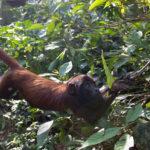
Complain to management and then if you are able, leave and find somewhere else to stay that does not support animal trade.

Construction and other

As mentioned above we saw a great deal of moving and shuffling of animals and enclosures. The work involved in cleaning and building up each enclosure to suit particular animals is considerable and soaked up a lot of the available construction time.
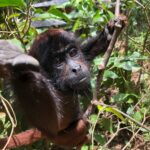
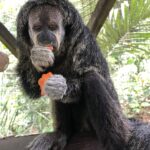
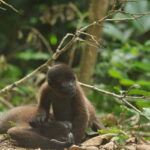
Other projects that gained momentum this month was the beginning of cement beams for a replacement bridge that is needed between the Volunteer kitchen and the Bodega. Likewise efforts were focussed on taking more bricks to the new quarantine.

Although work on the quarantine has appeared to slow, we should see the completion of the brickwork in the next eight weeks, giving the workers a change of pace with the next stage of construction beginning.

Volunteers

San Juan at the waterfall

Another quiz night between the volunteers happened this month which may well be testament to how much the last one was enjoyed. This time the entire family of Olivia, Douwe, Kayla and Marlon was to join the volunteers for a hearty roast before beginning the challenge. There were only three randomly selected teams, and it was a draw for first place. Bragging rights were to be had by none, but a lot of sarcasm was to follow for the next few days for the team that lost. Olivia was at the helm of the losing team and as punishment the entire team was sent out in the dark to “test” the electric fence around Arana. Childish you may say, but incredibly satisfying if you were on the winning teams watching.

San Juan, a local celebration of a saint took place this month, all of the volunteers were treated to a lunch down at the waterfall where lunch was supplied and is representative of the head of the saint. A great time was had by all, and the perfect weather and company made for a very pleasant atmosphere.

We all await what challenges and celebrations are to evolve during July.