May 2021 Newsletter

May seems to bring us a bit closer to getting back to ‘normal’. After a long period of having only a few volunteers, few new animals arriving and no ongoing construction, finally things seem to have turned around a bit. We hope this is something most of the world is experiencing. Now with more people to help us, we were able to accept more animals in need which had recently been confiscated by the Ministry of Fauna and Flora in Pucallpa.

Animals

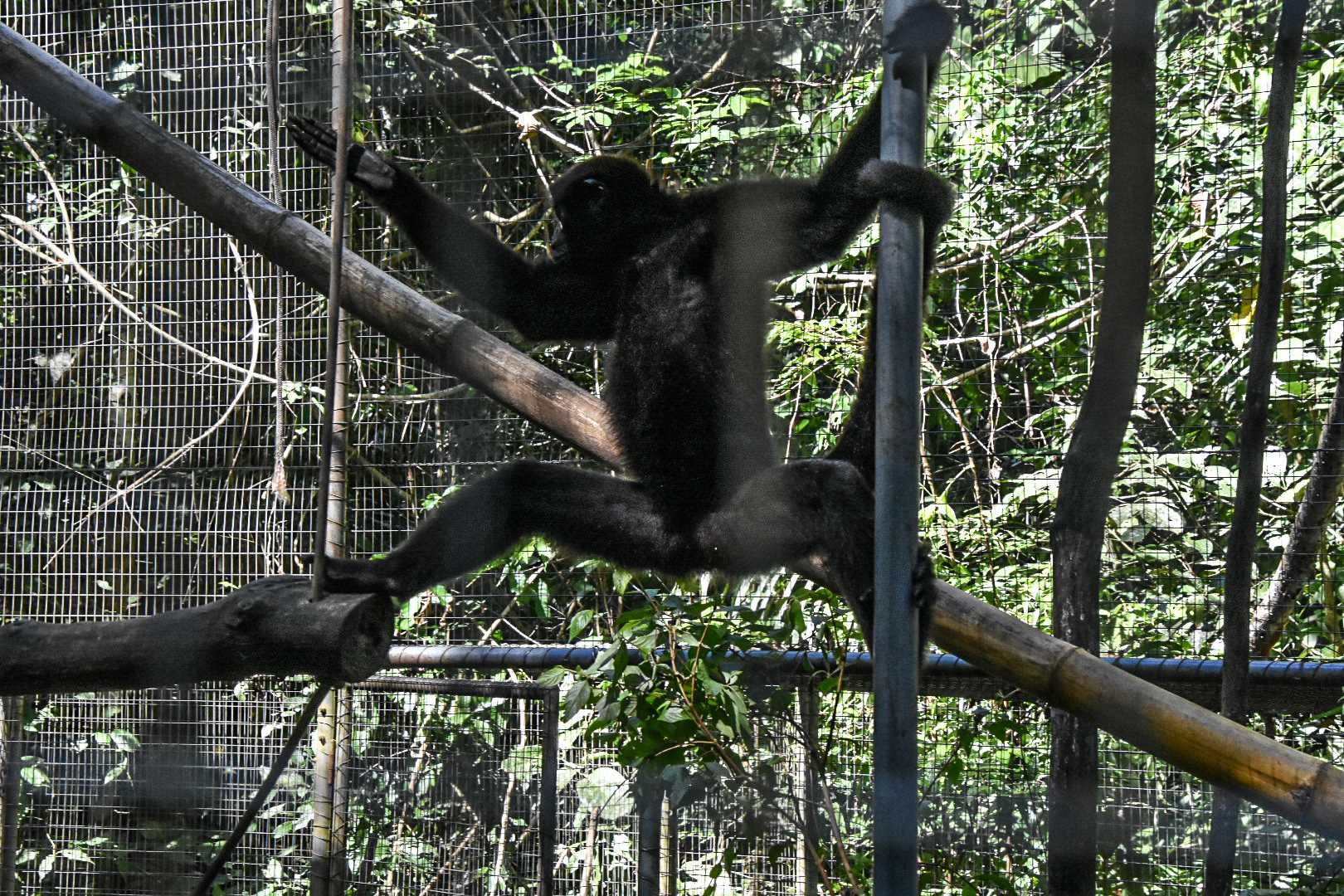
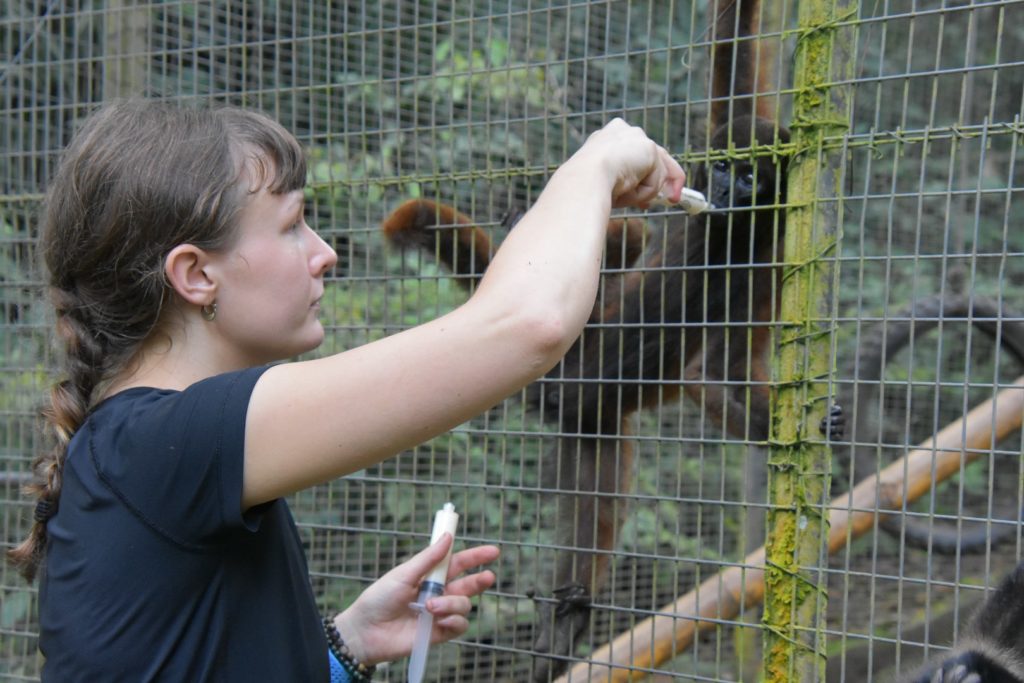
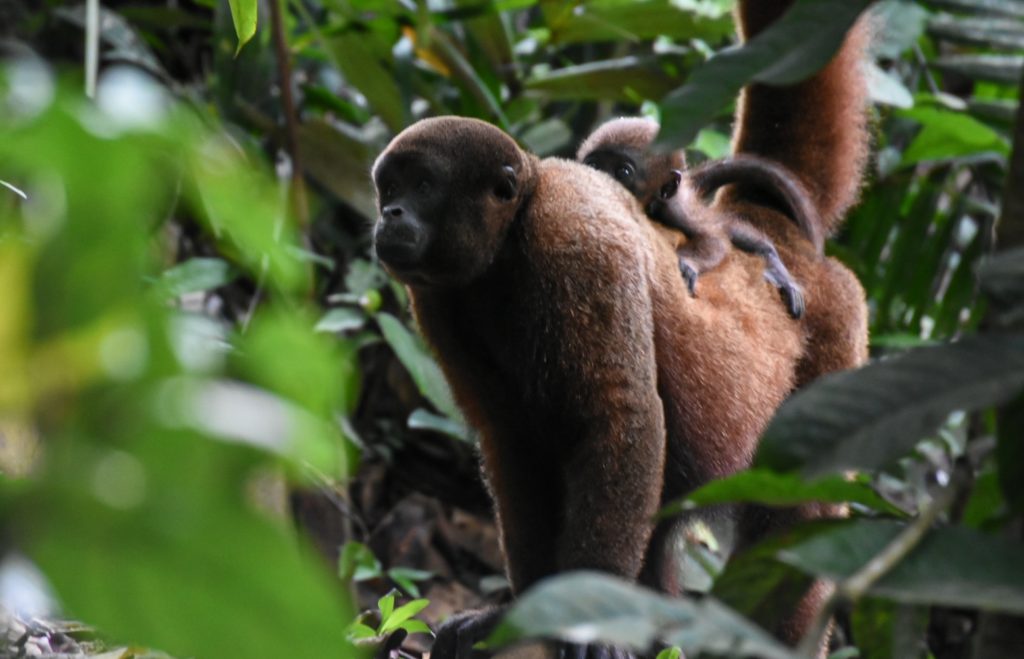
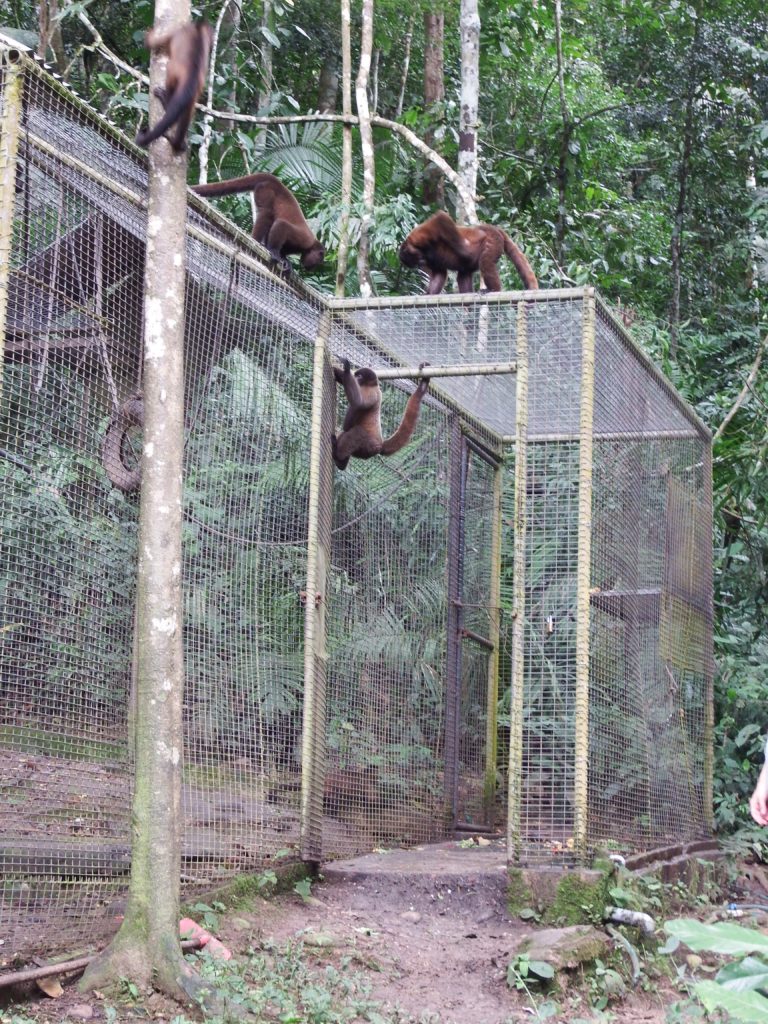
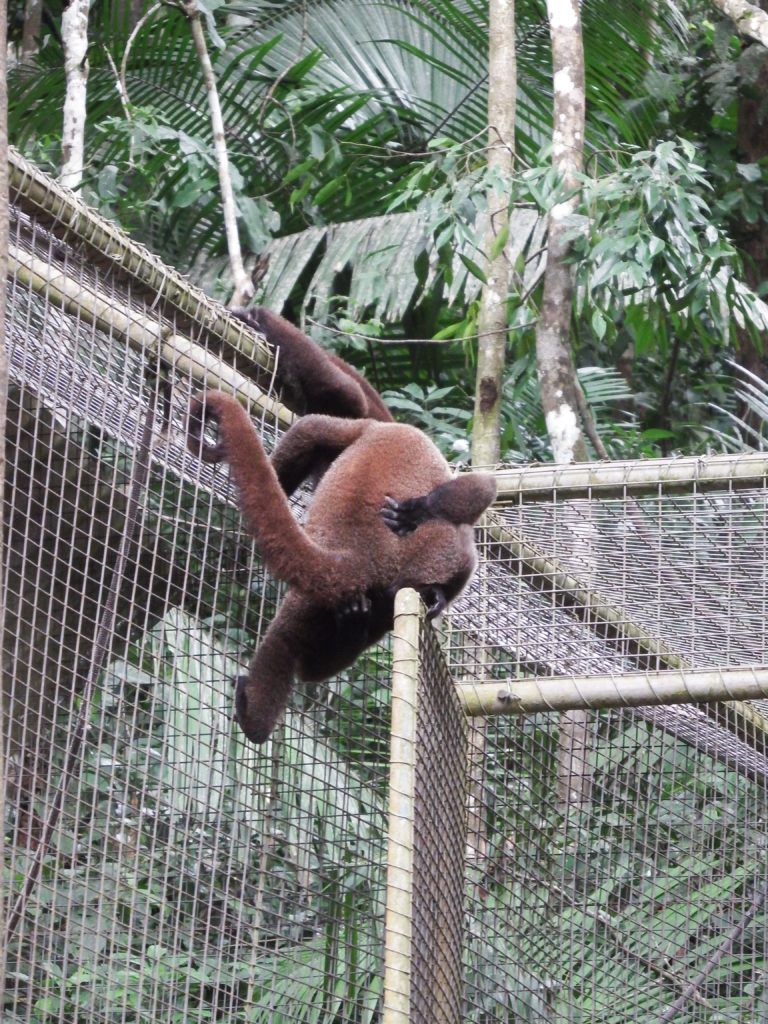
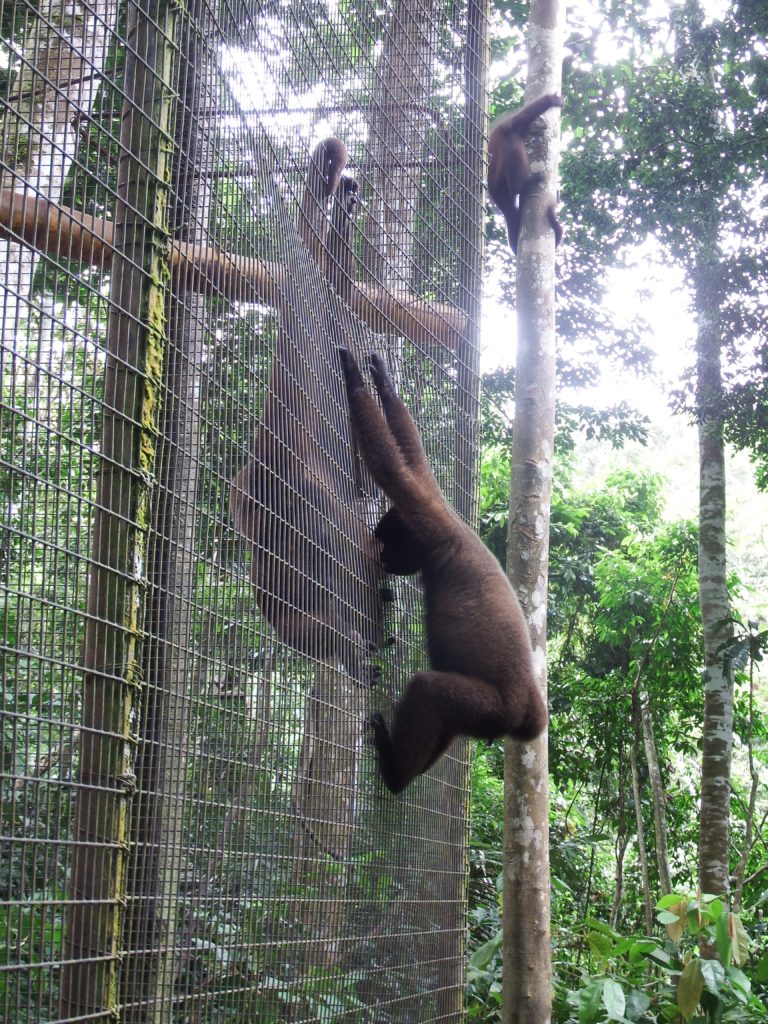
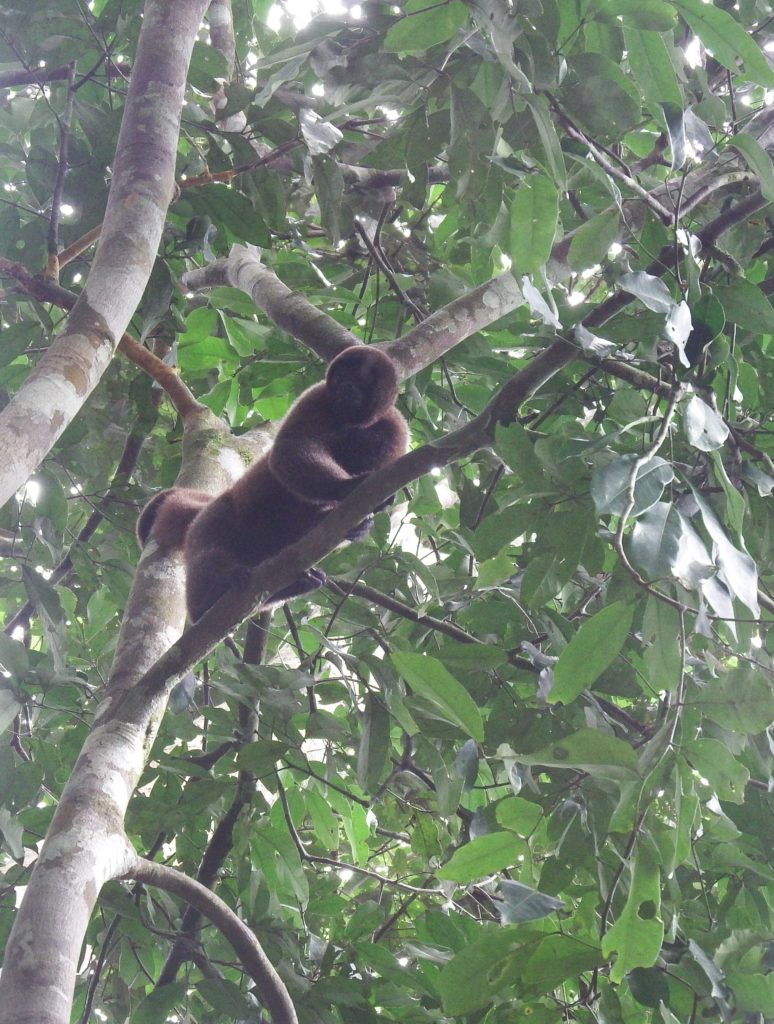
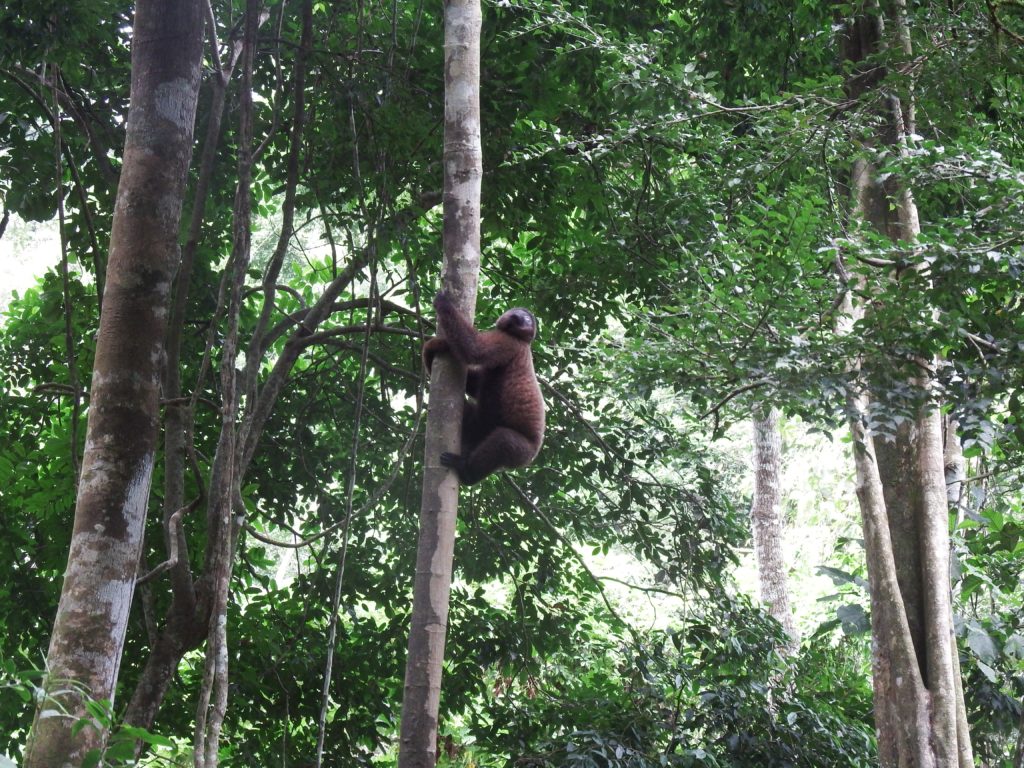
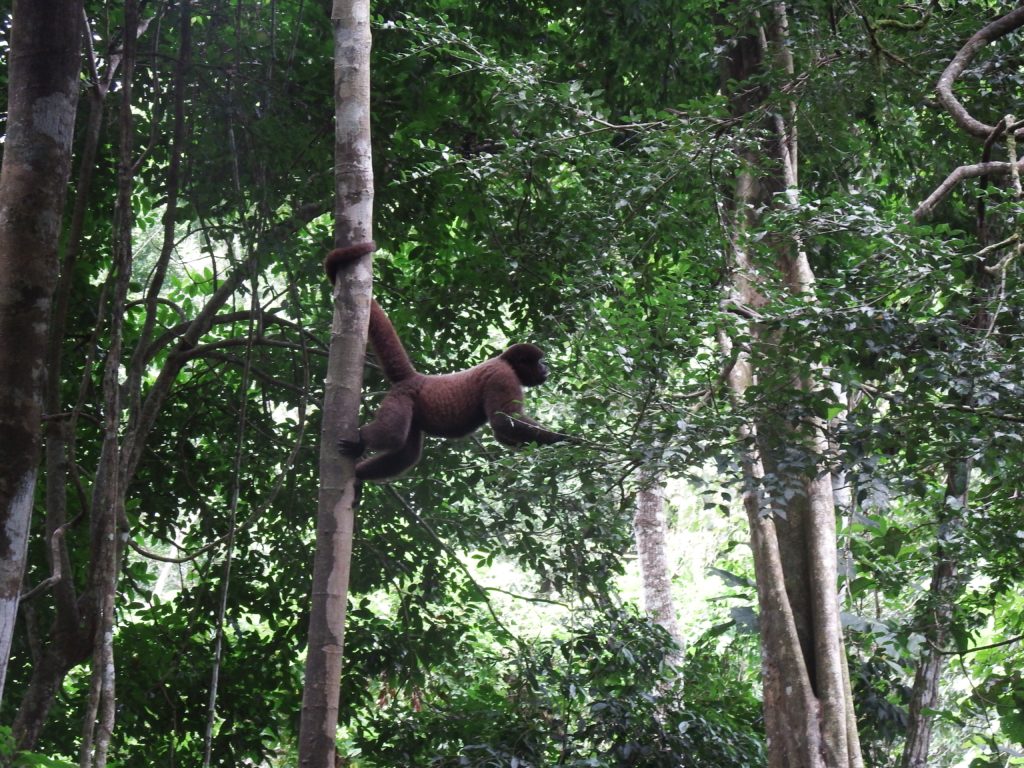
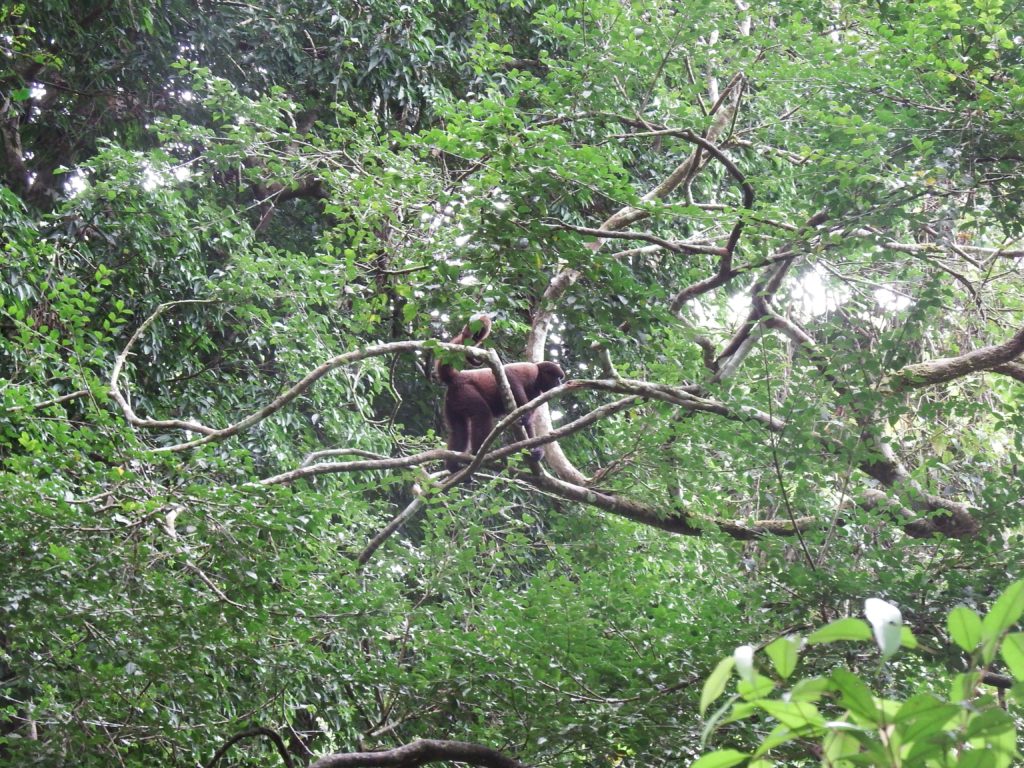
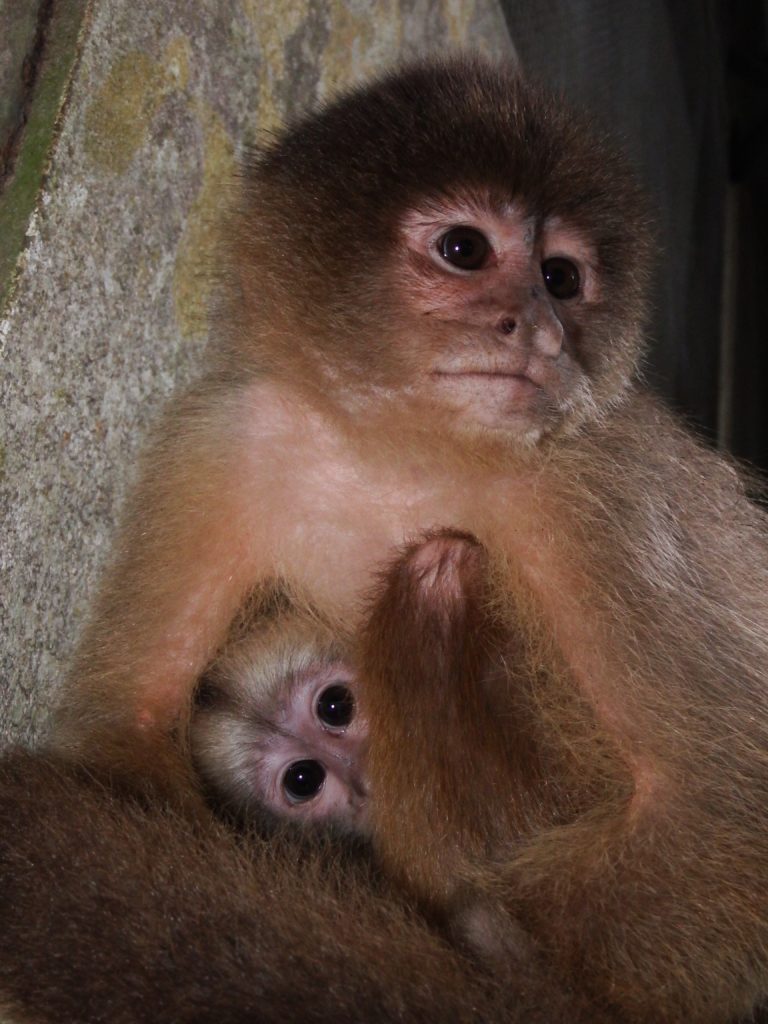
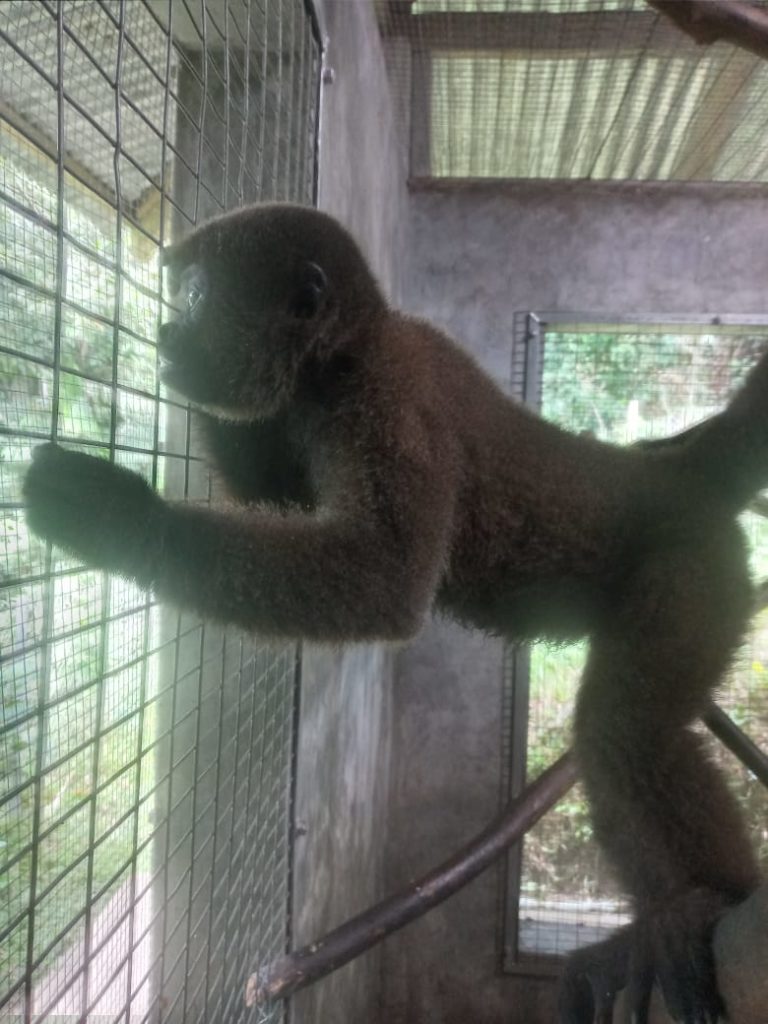
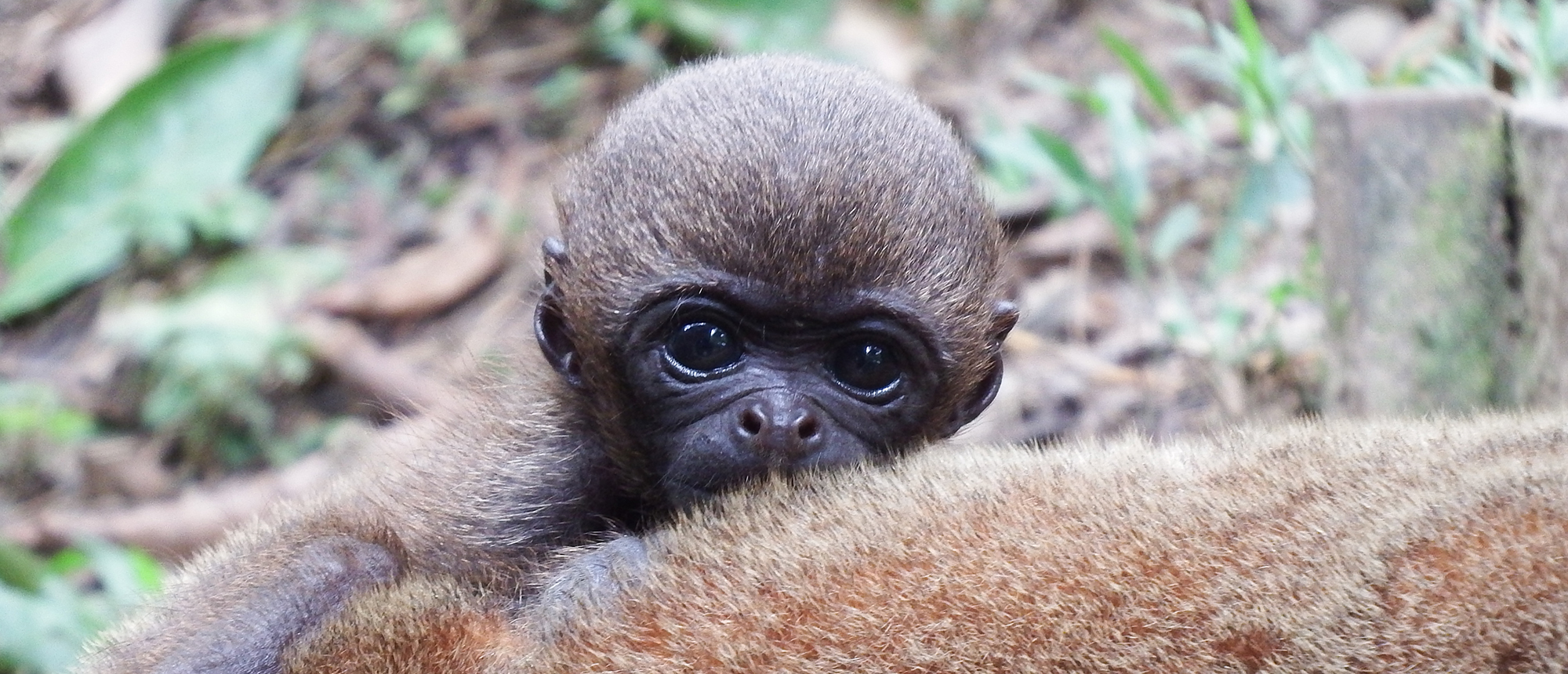
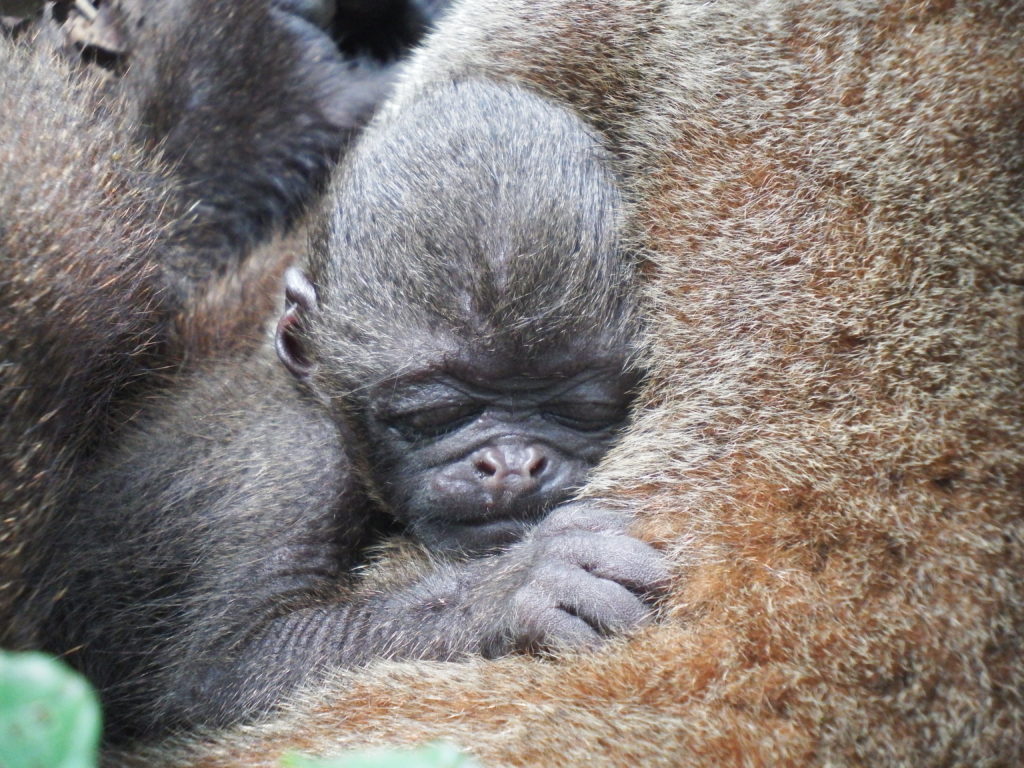
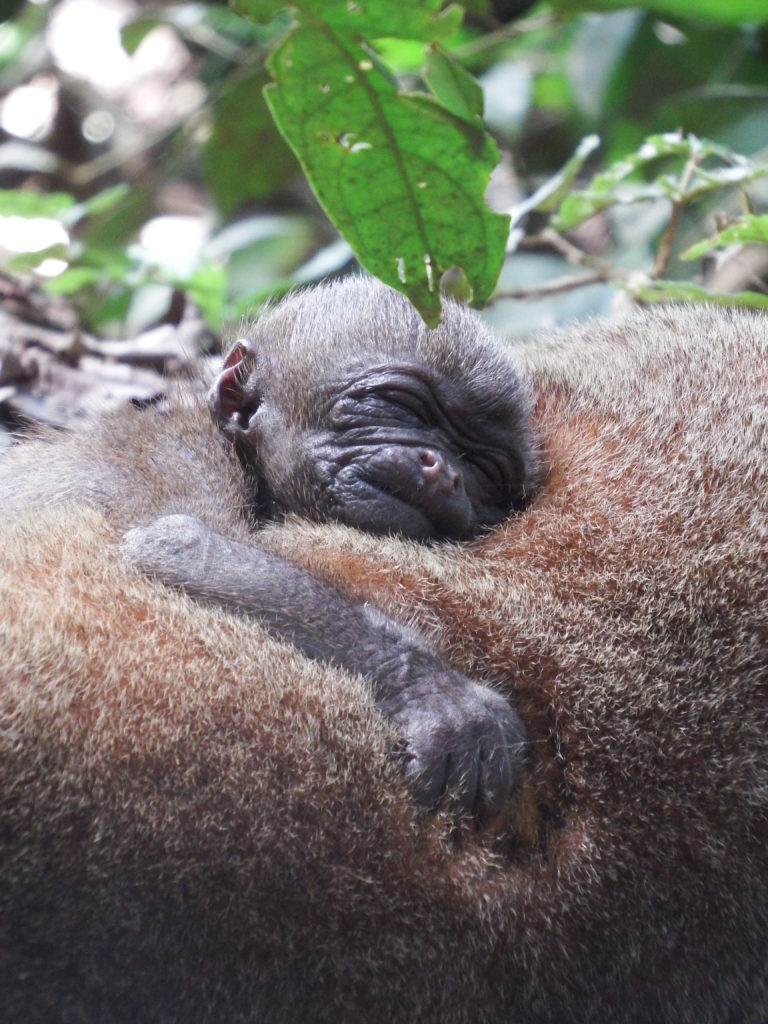
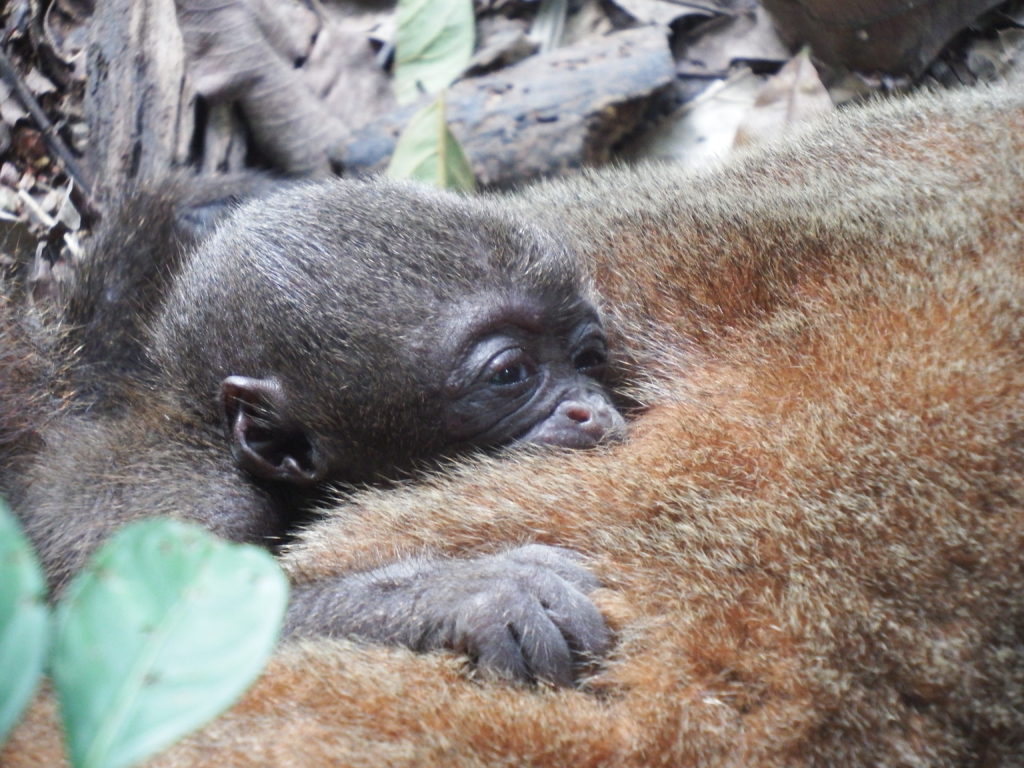
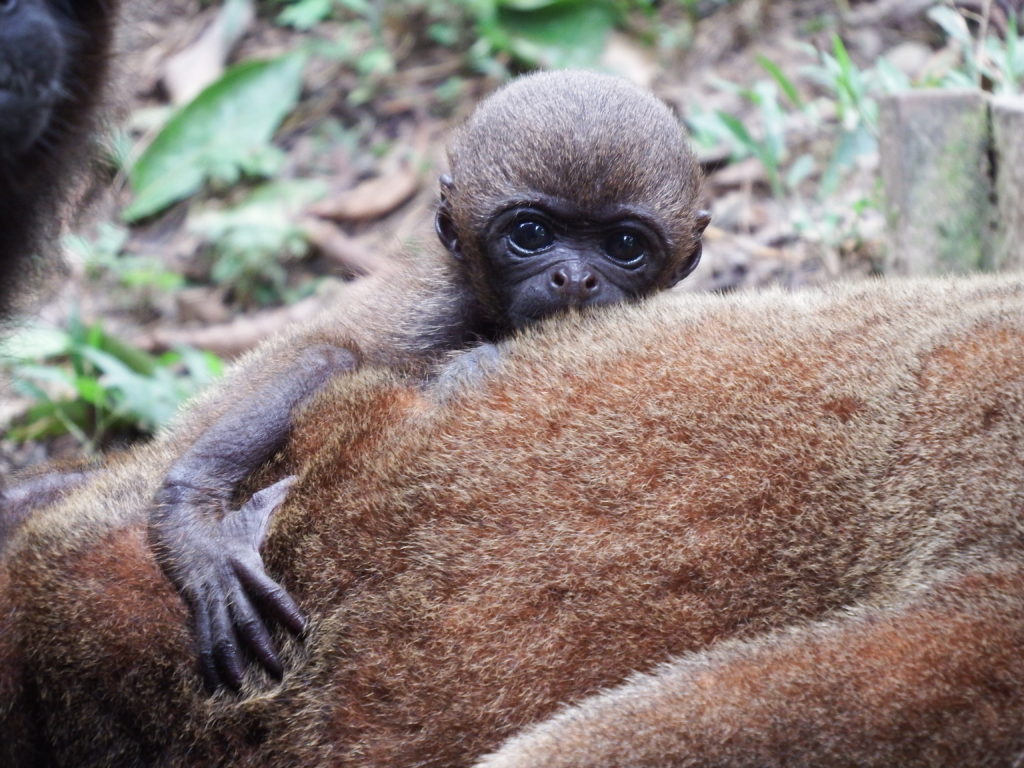
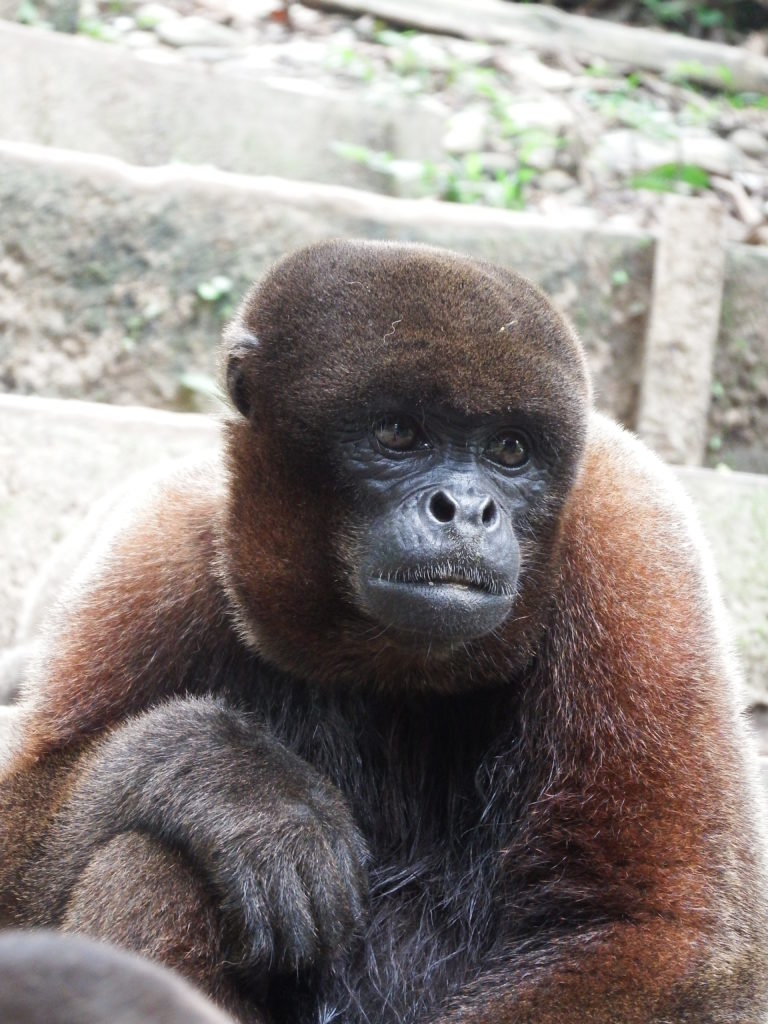
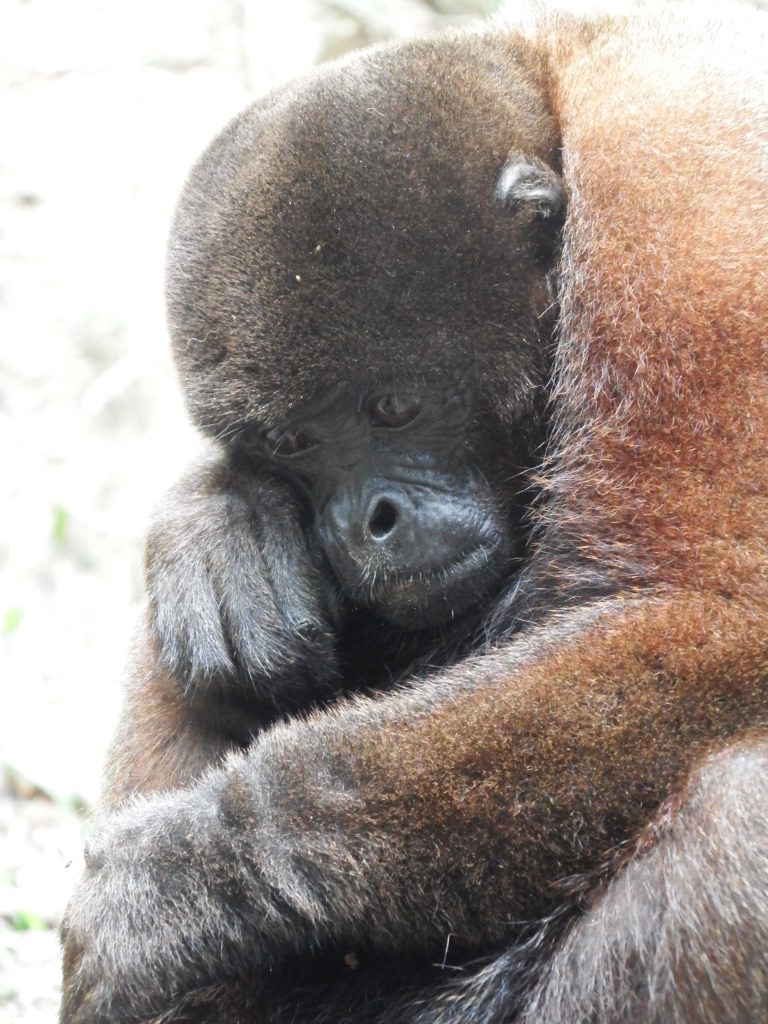
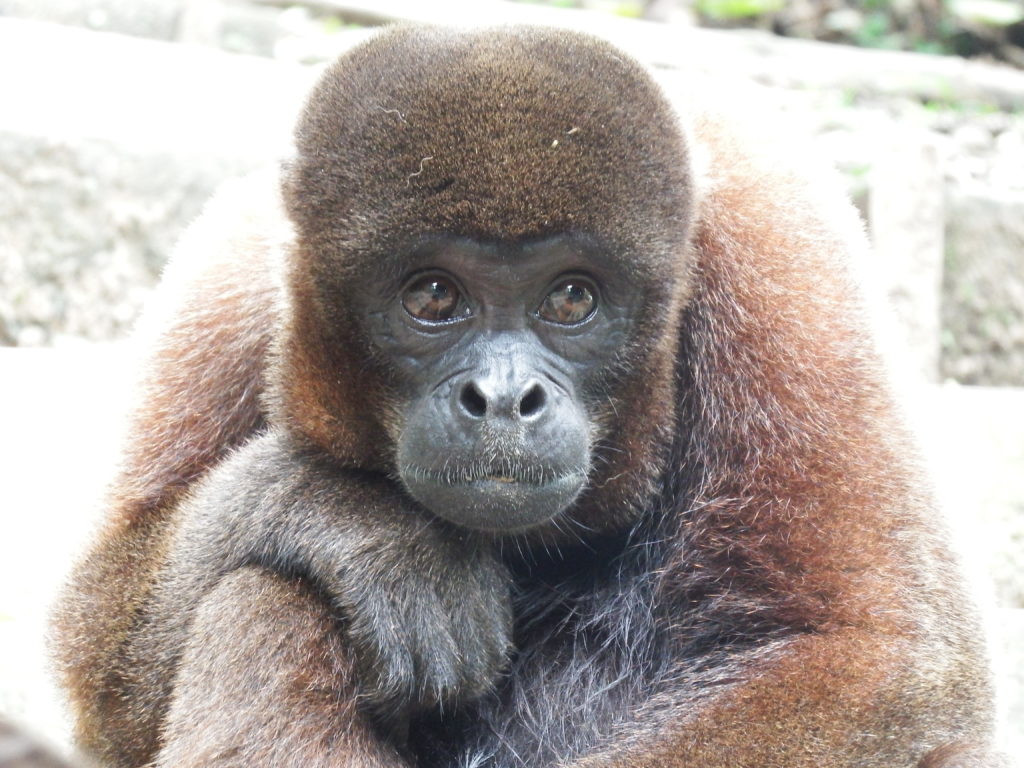
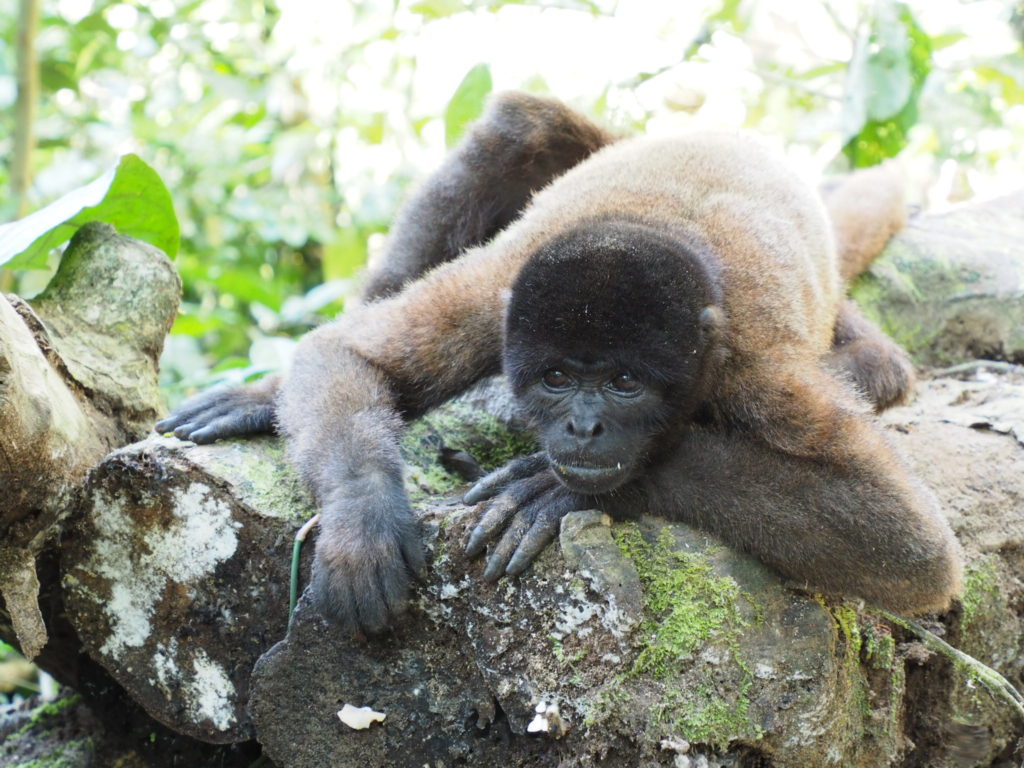
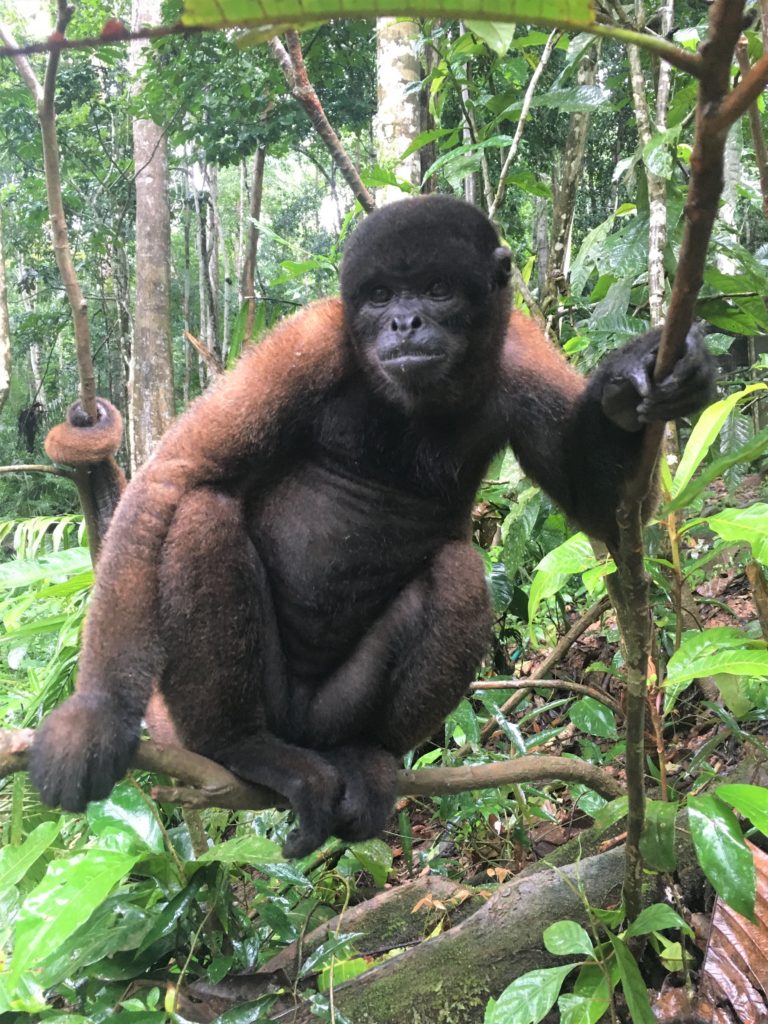
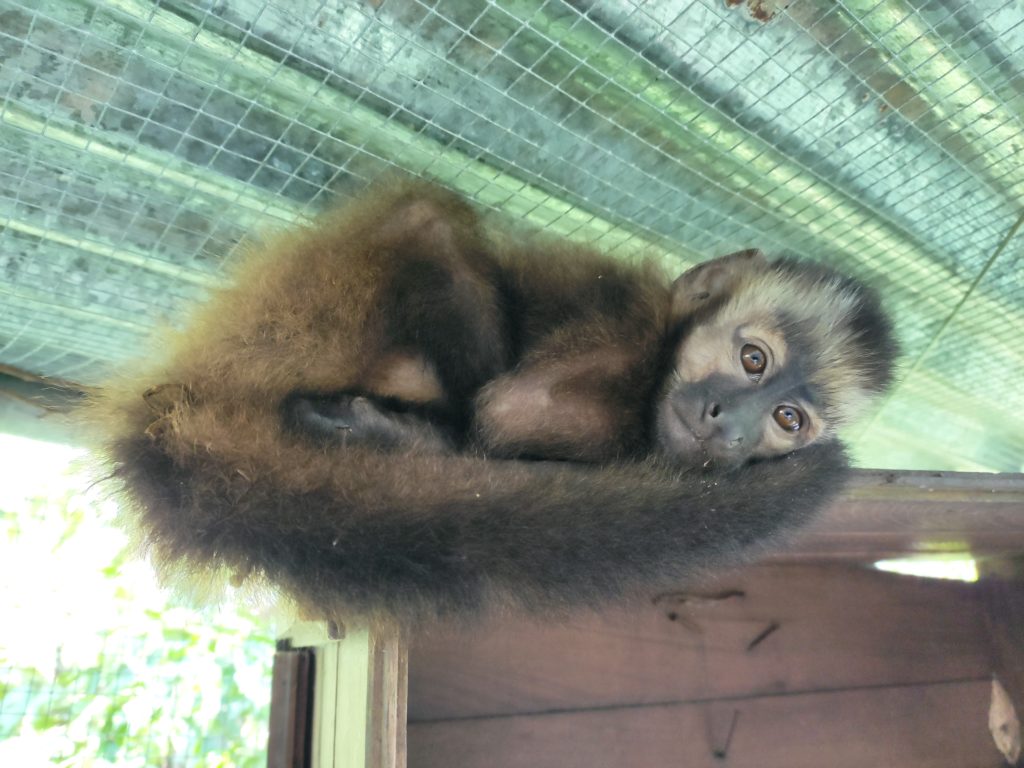
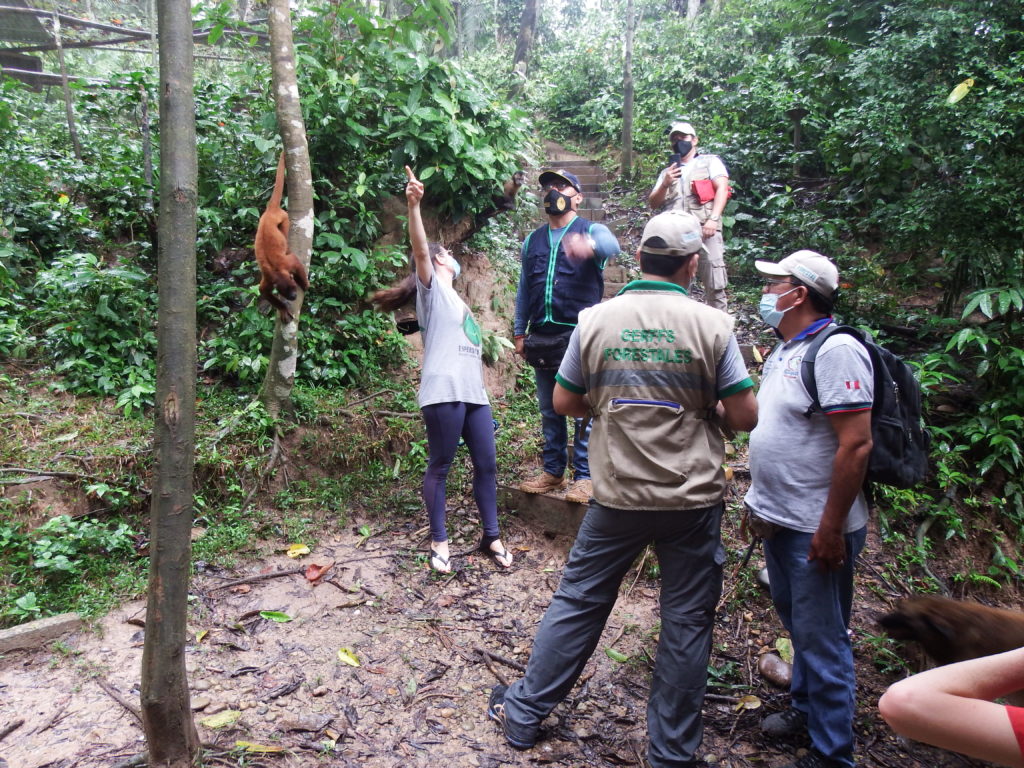
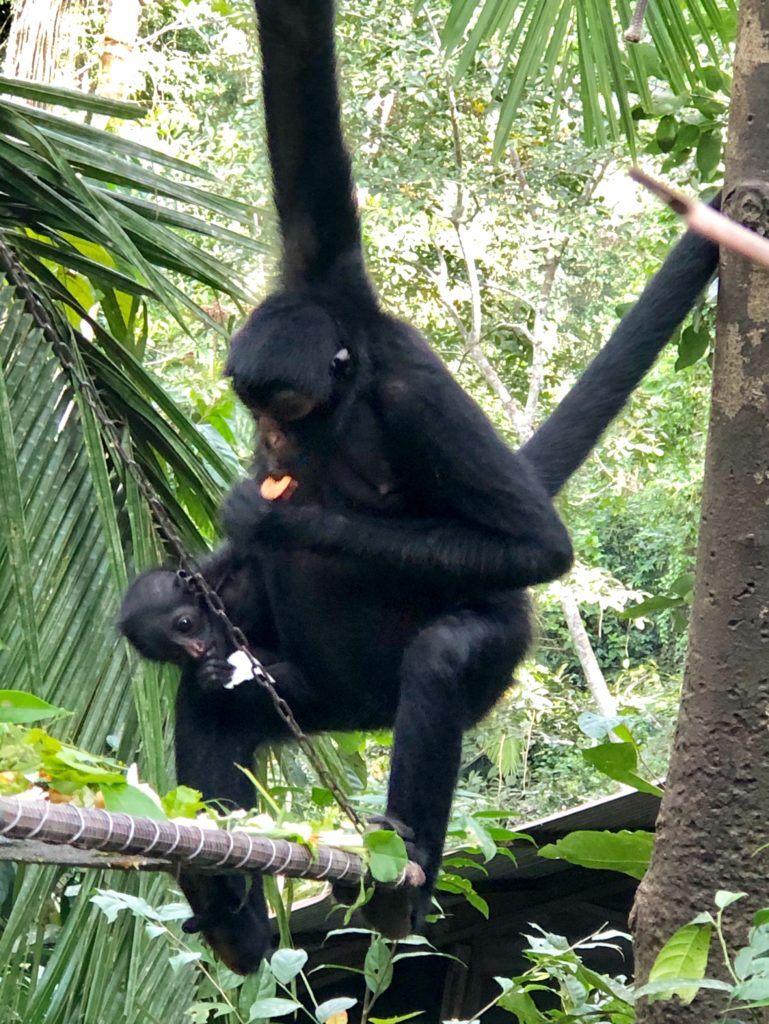
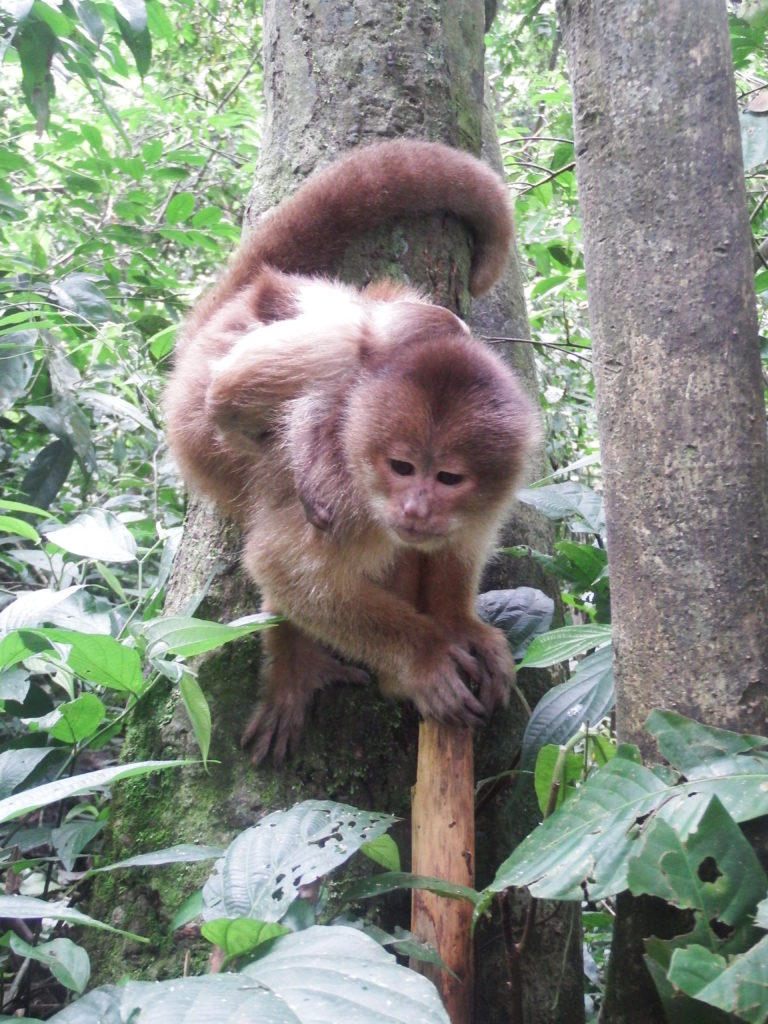
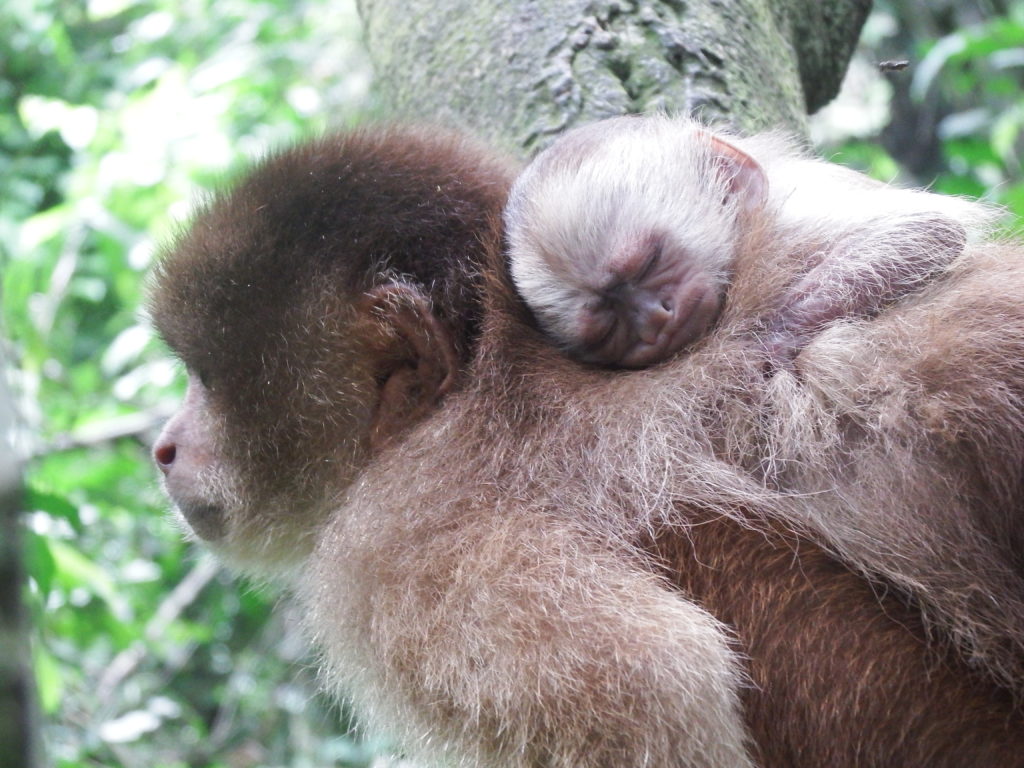
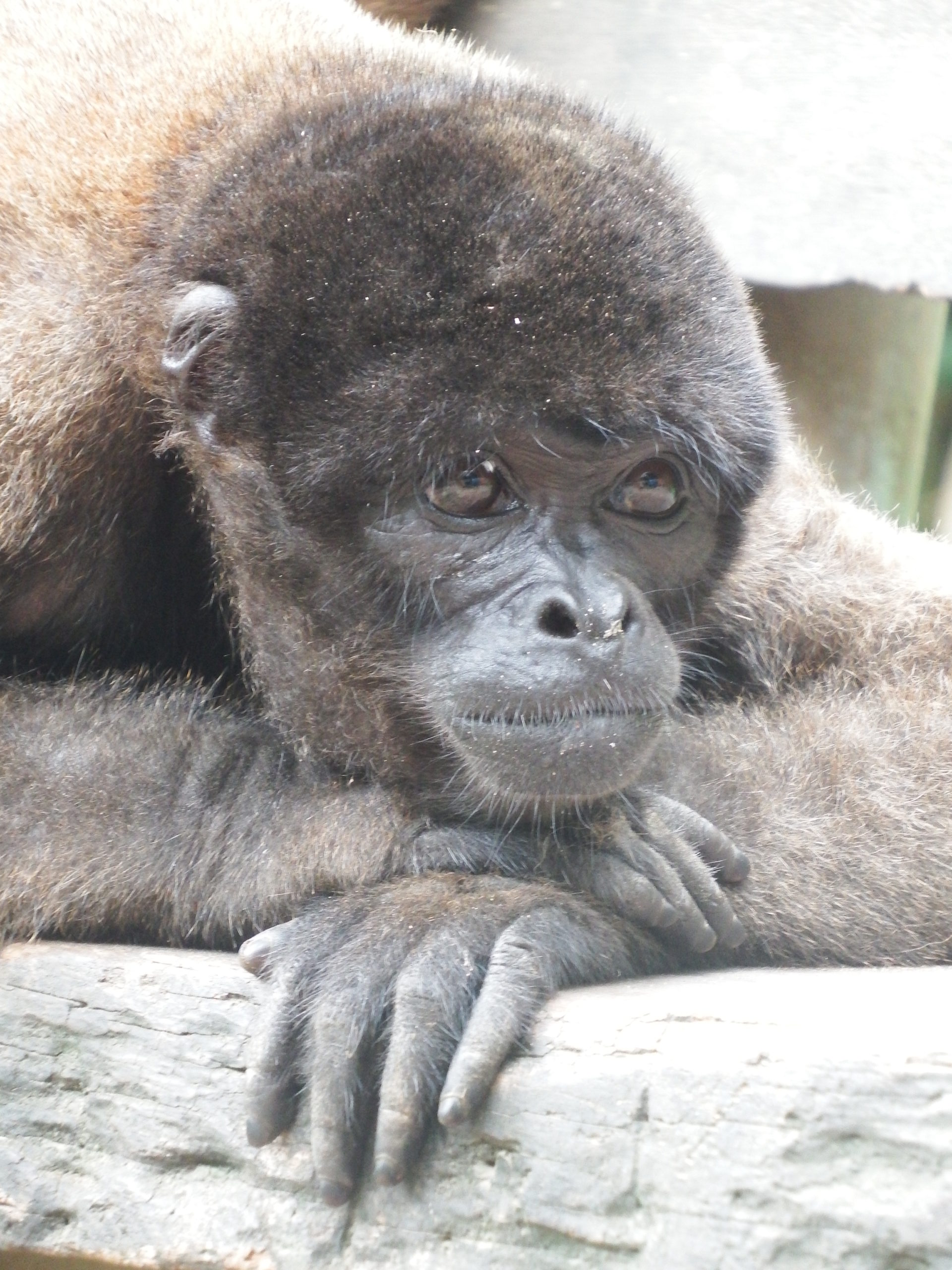
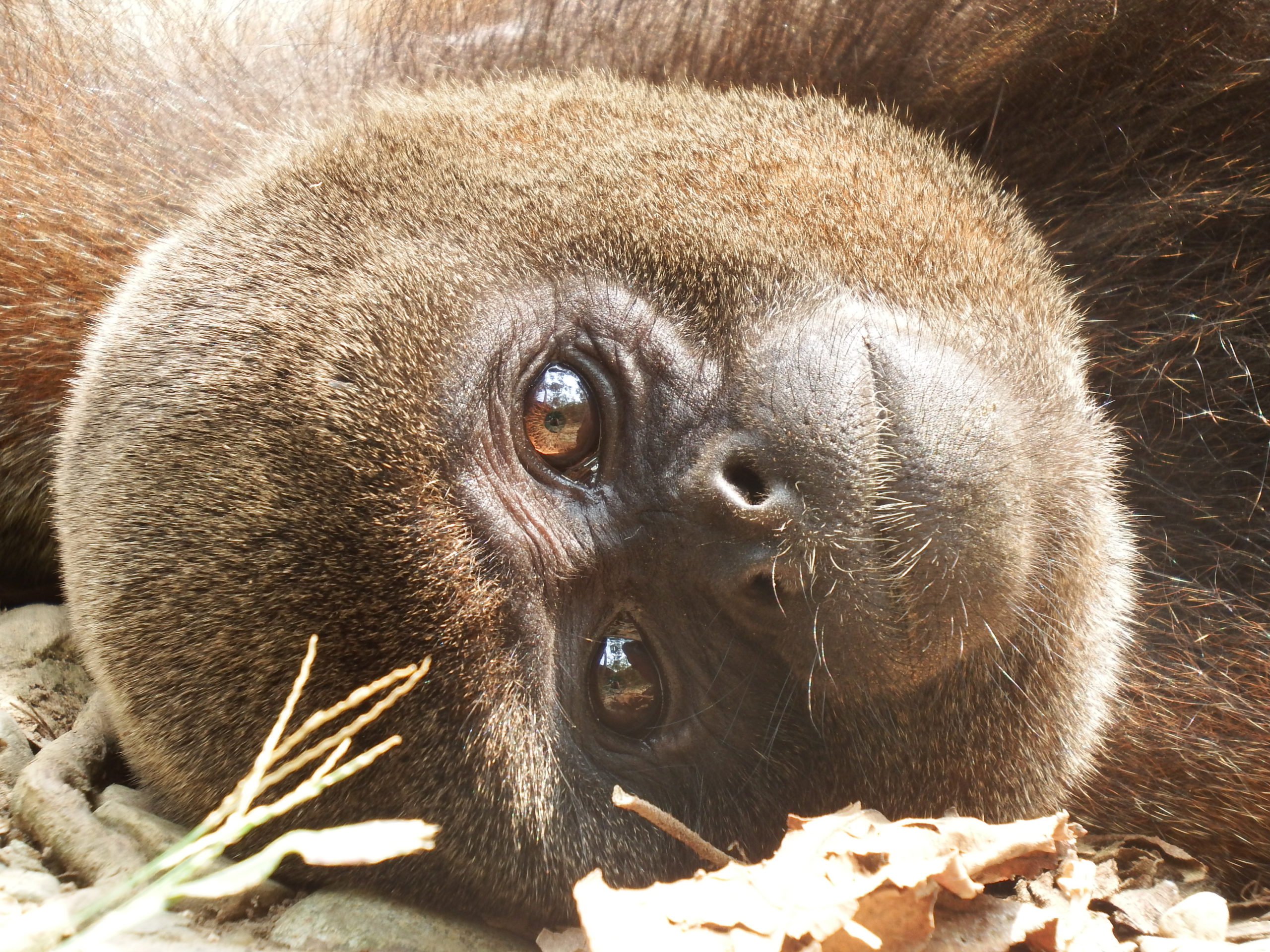
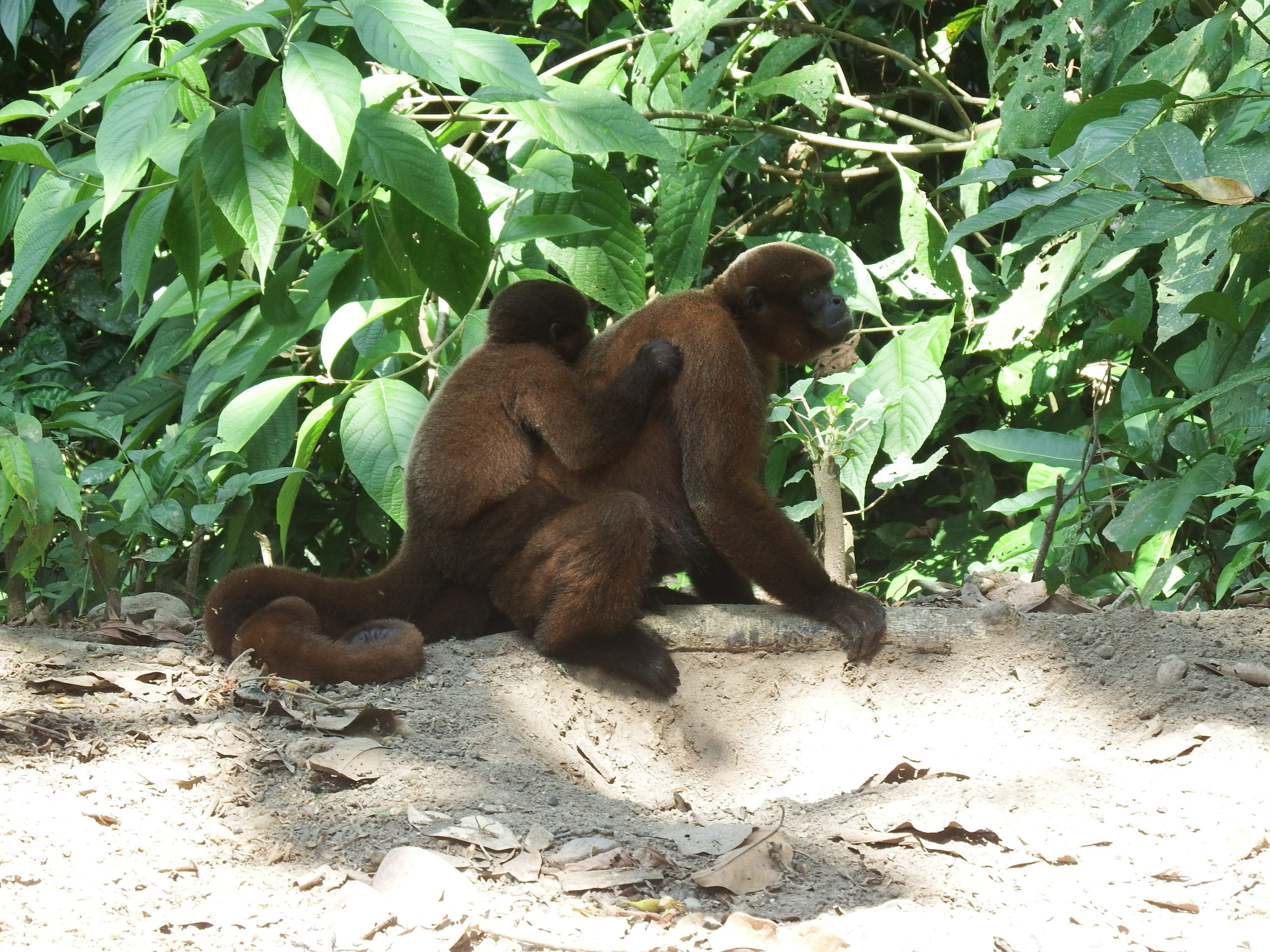
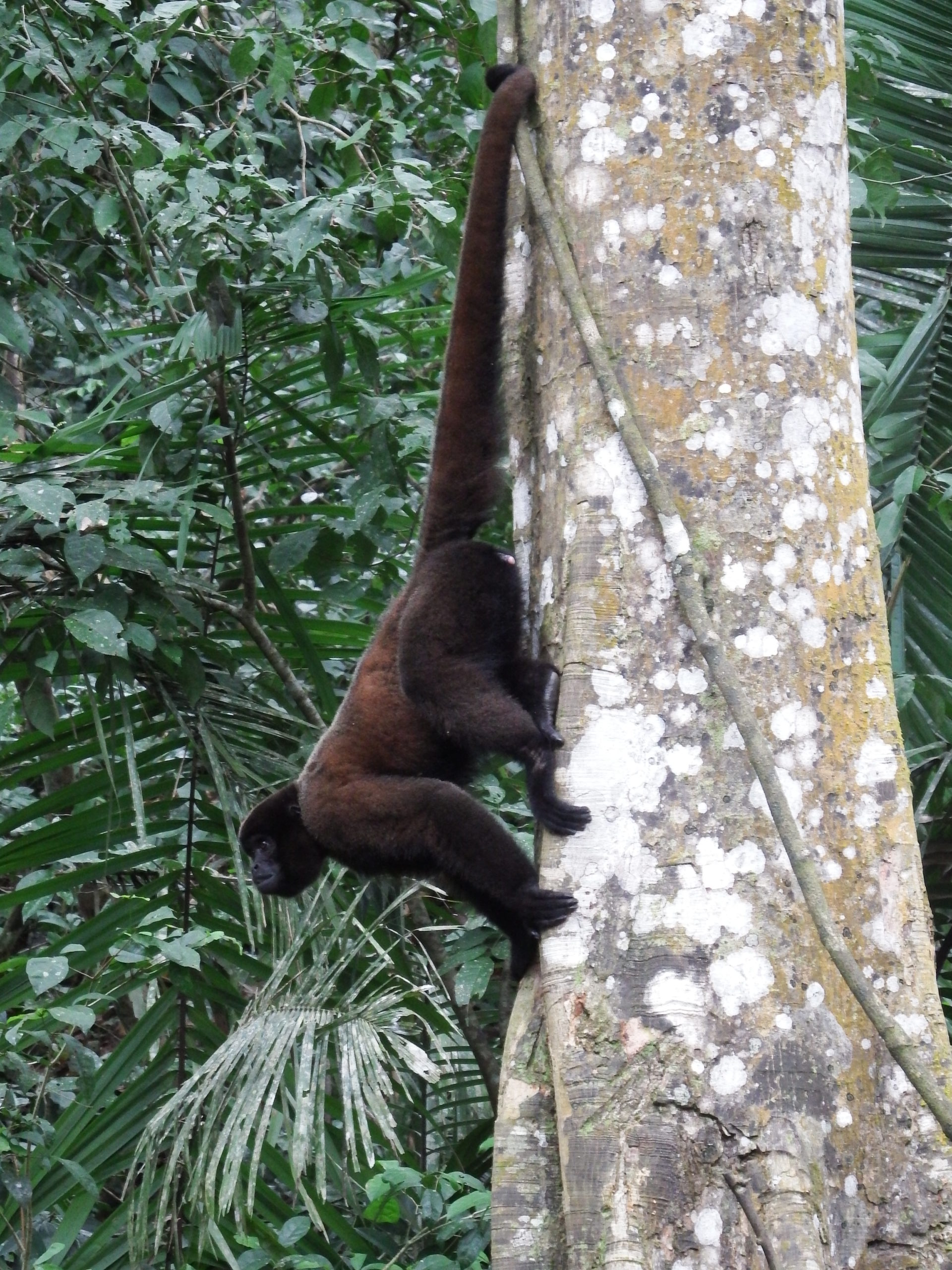
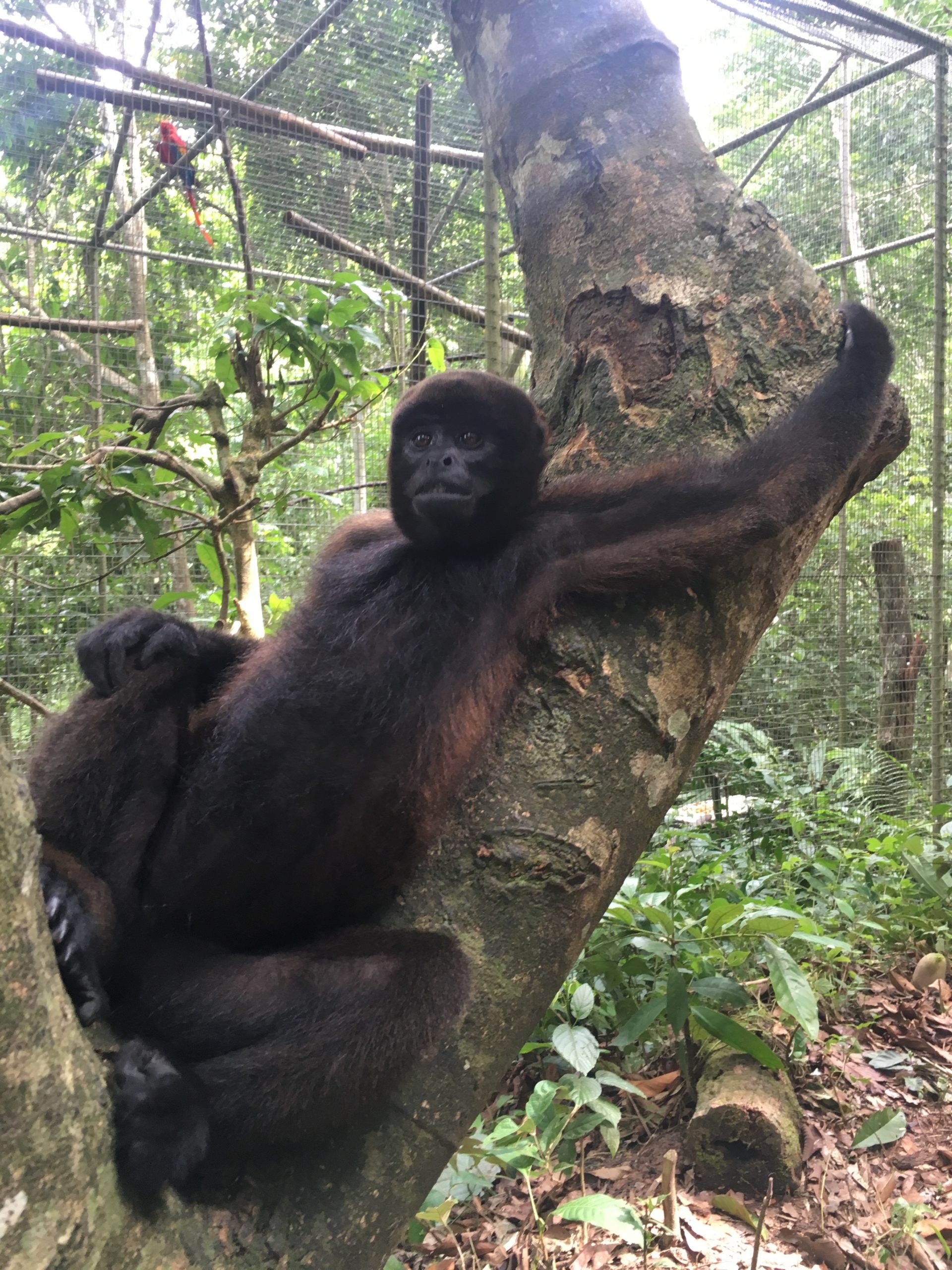
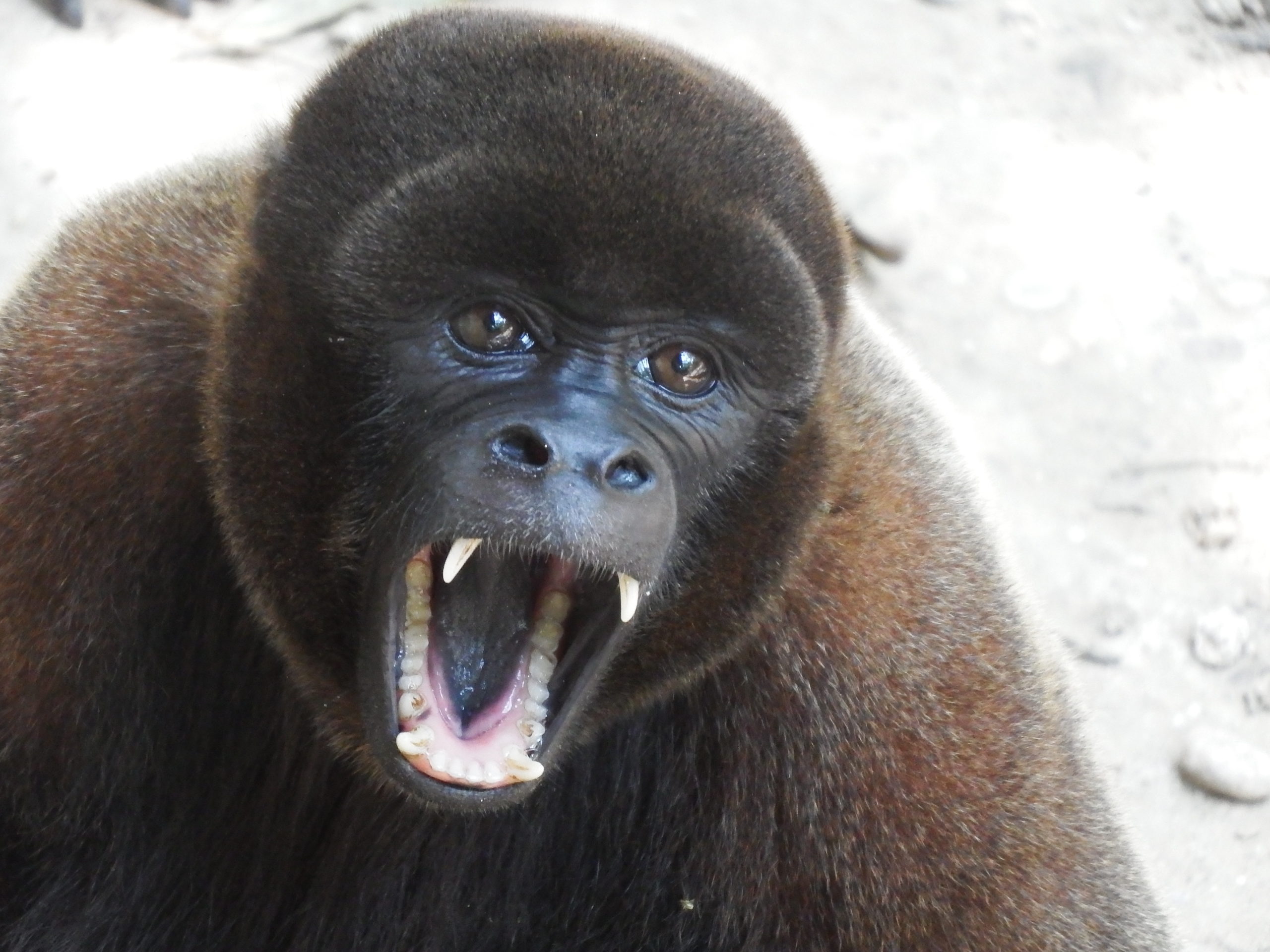
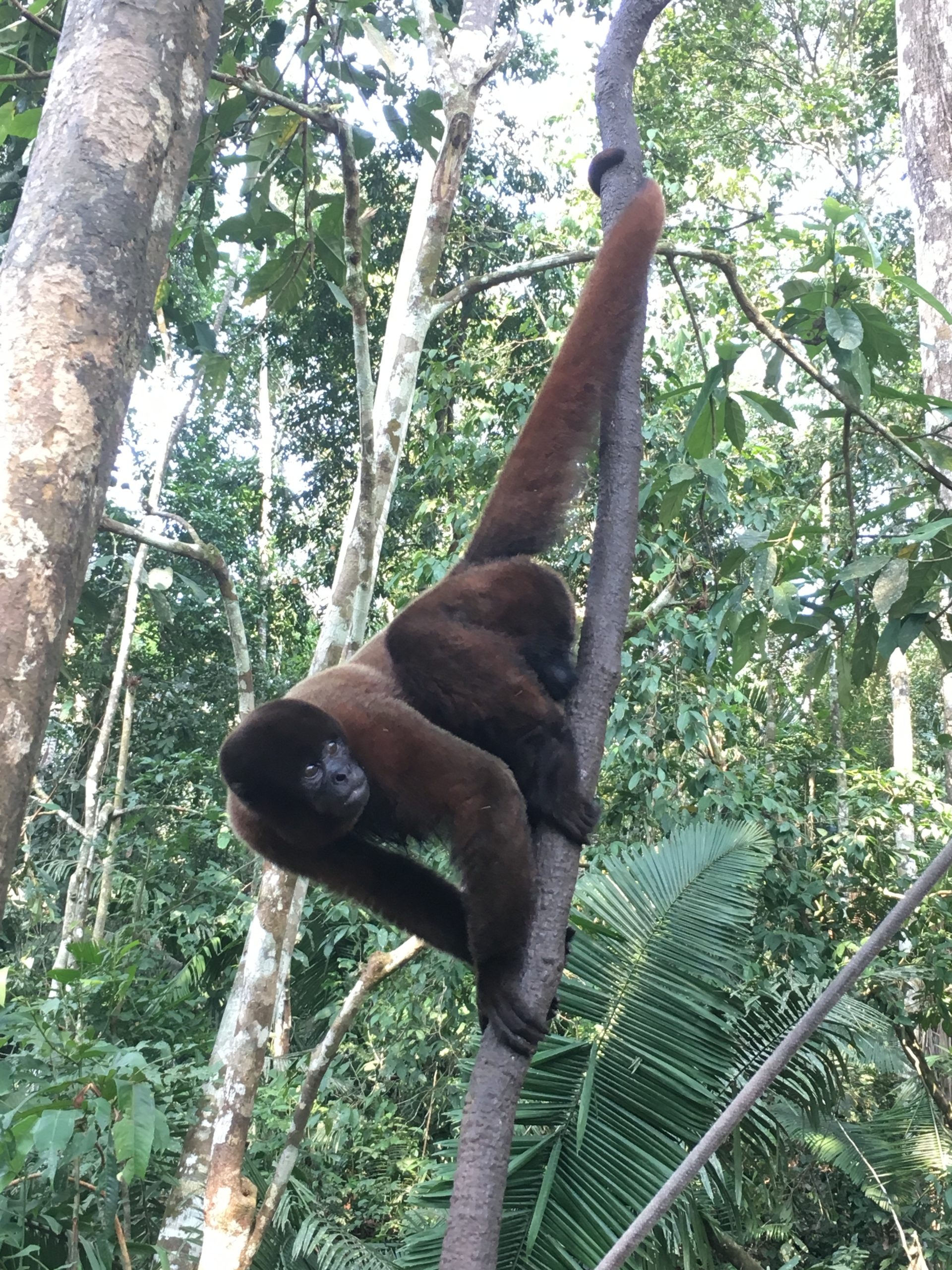
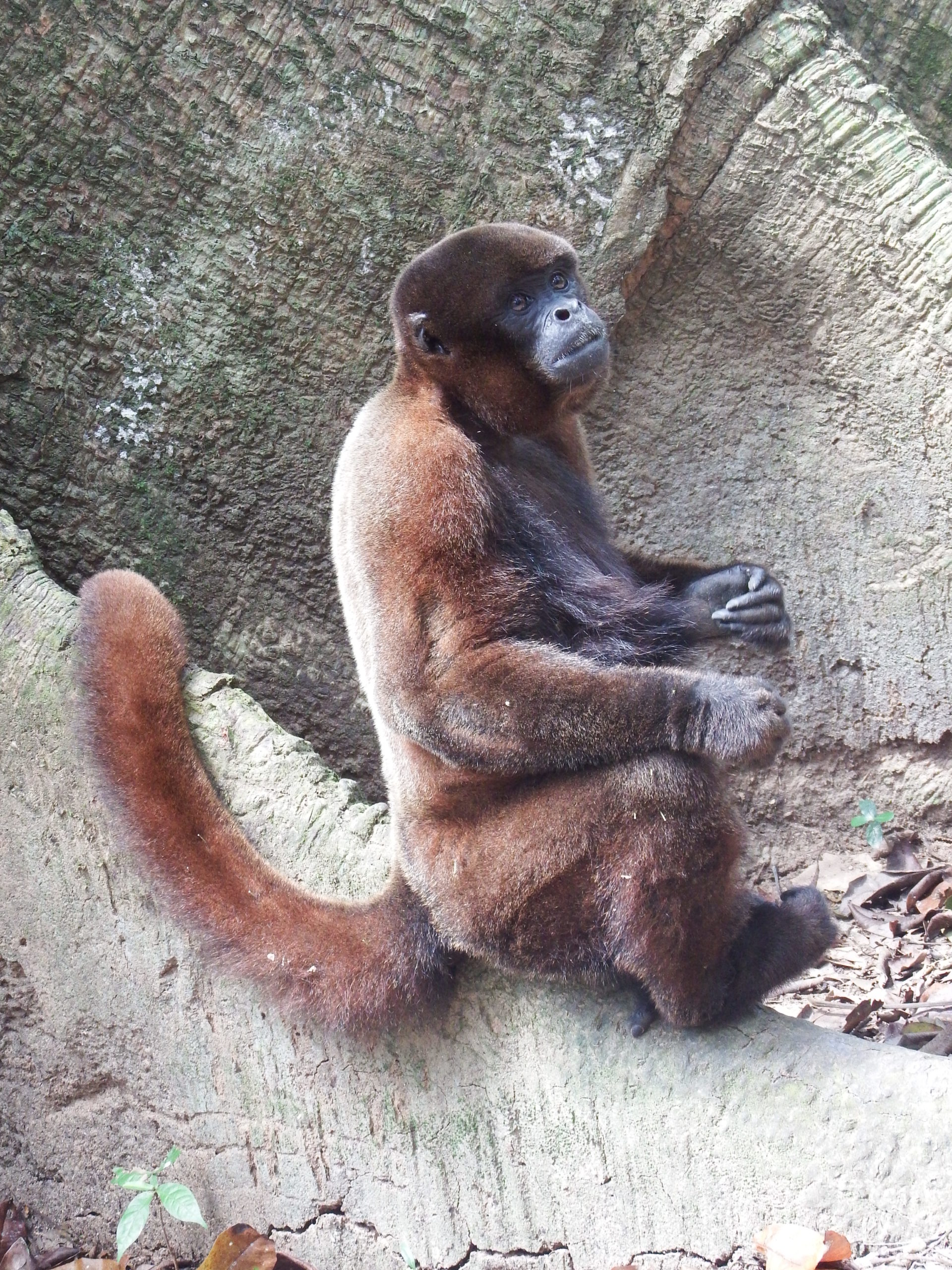
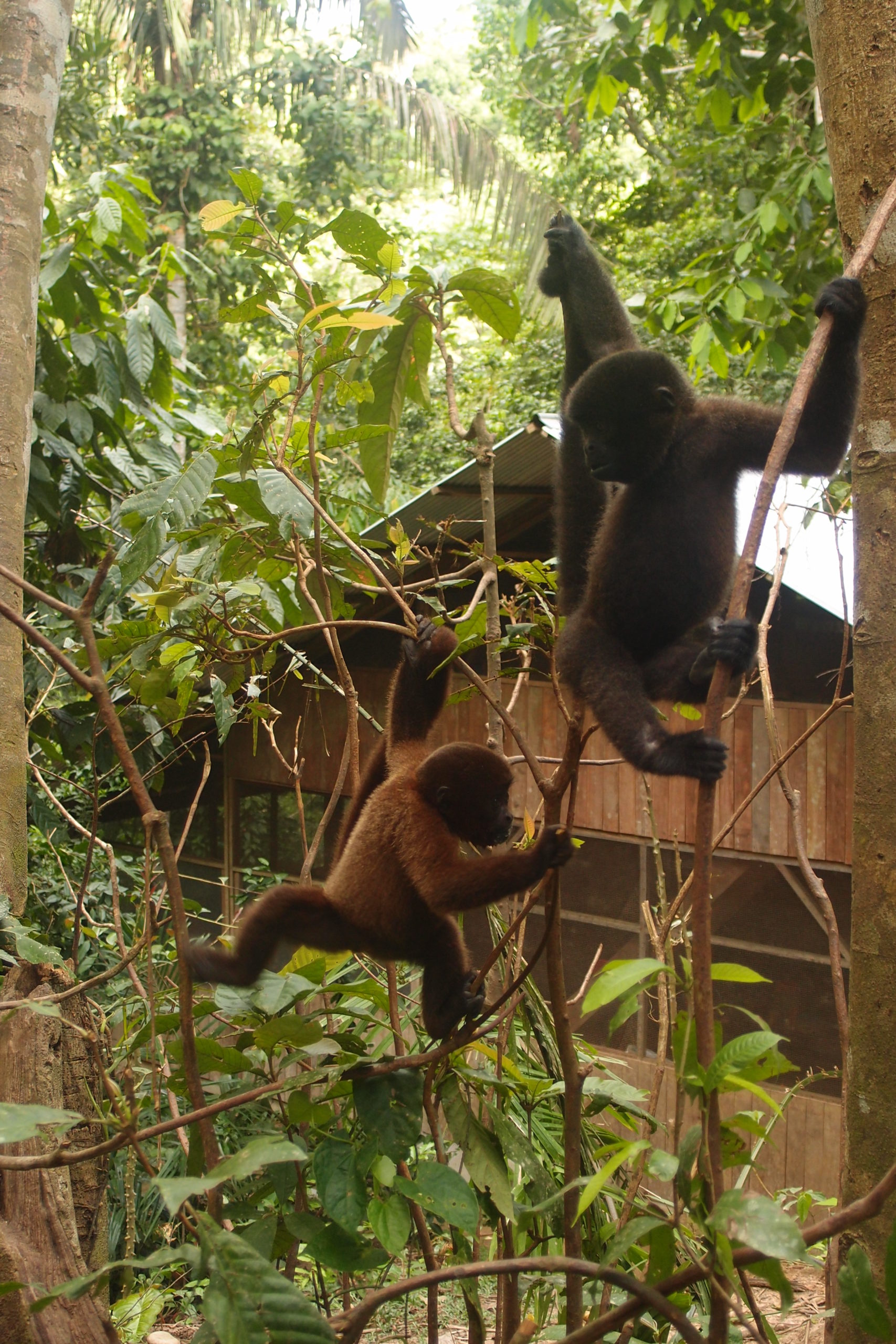
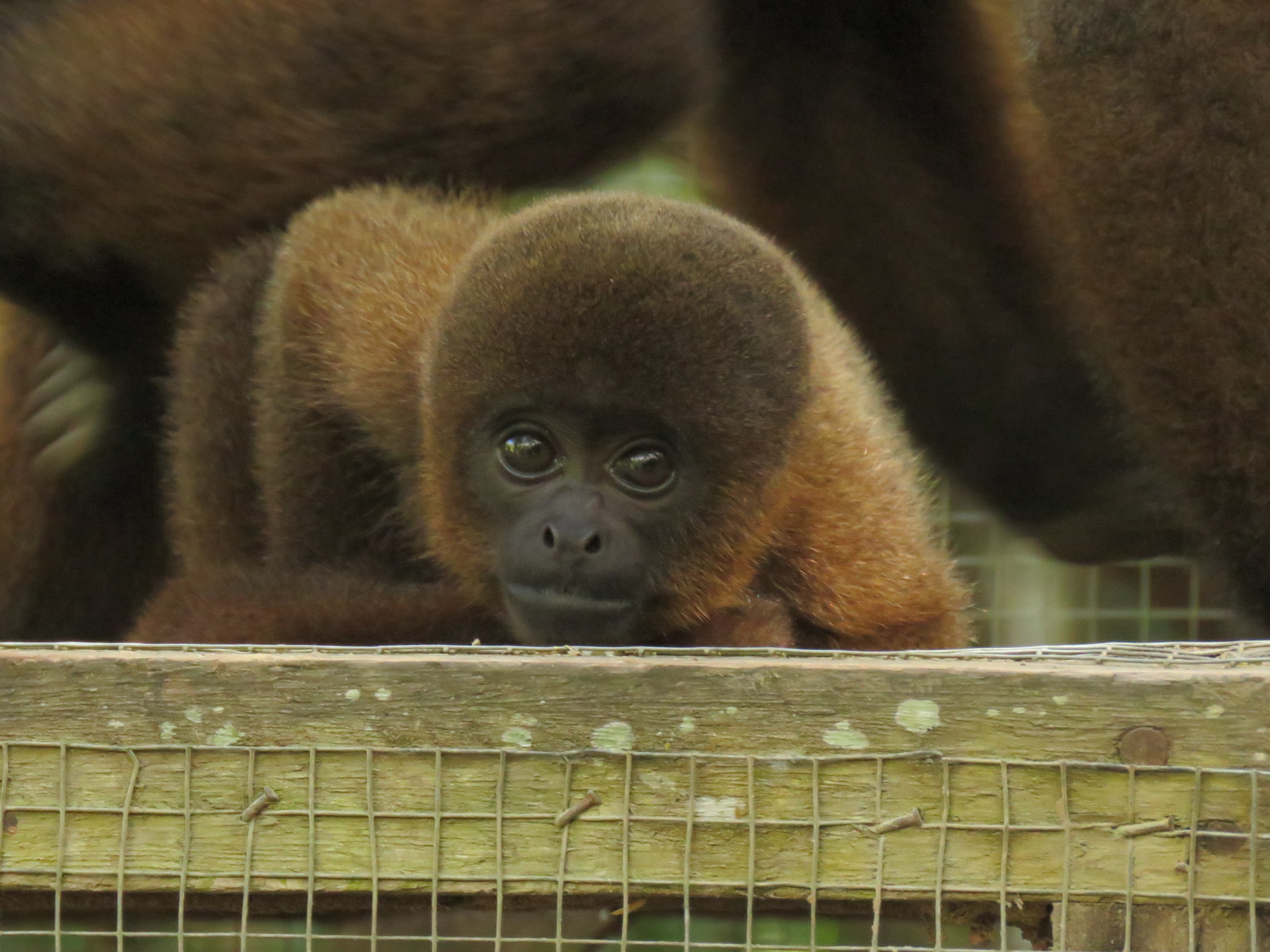
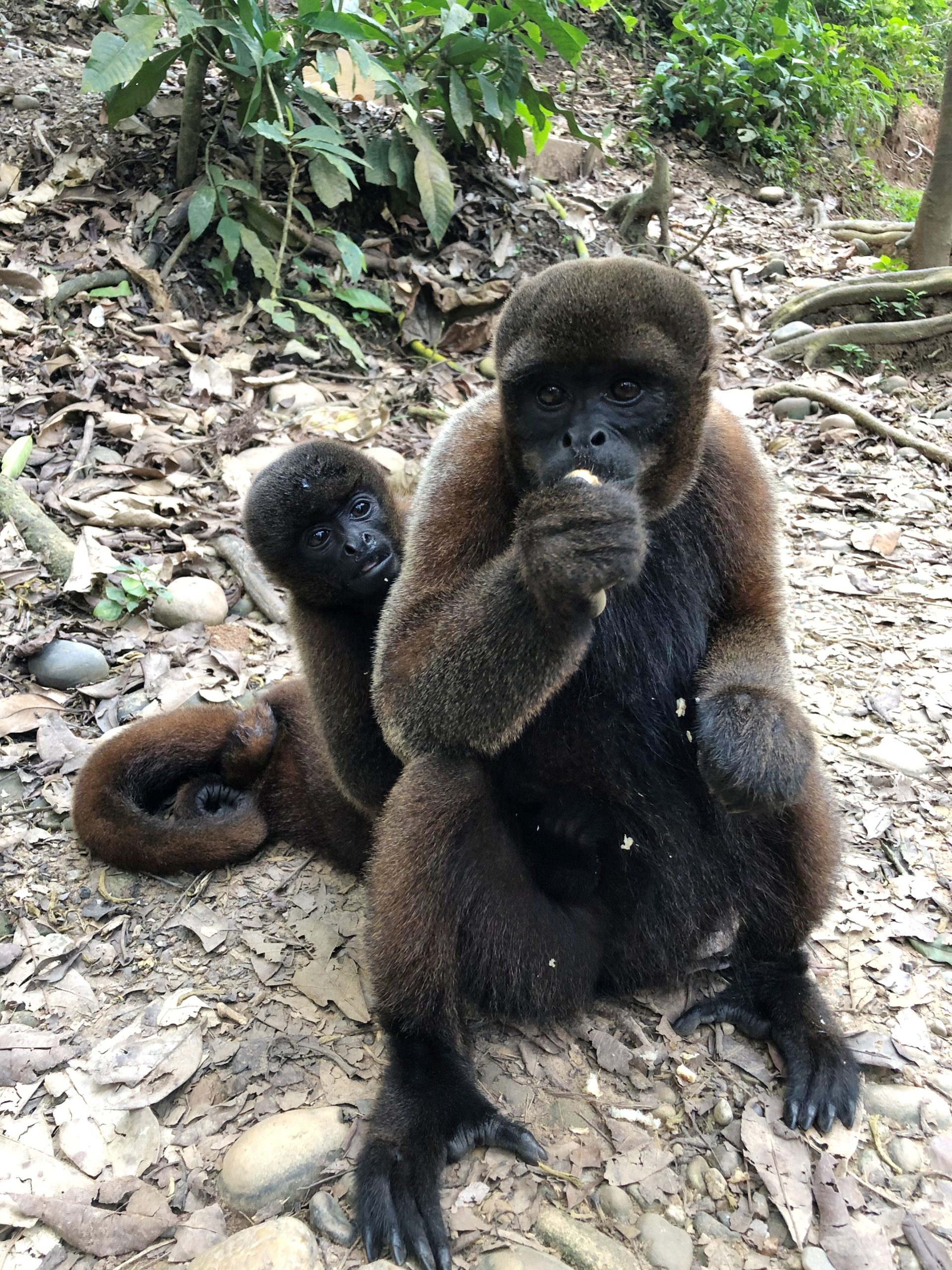
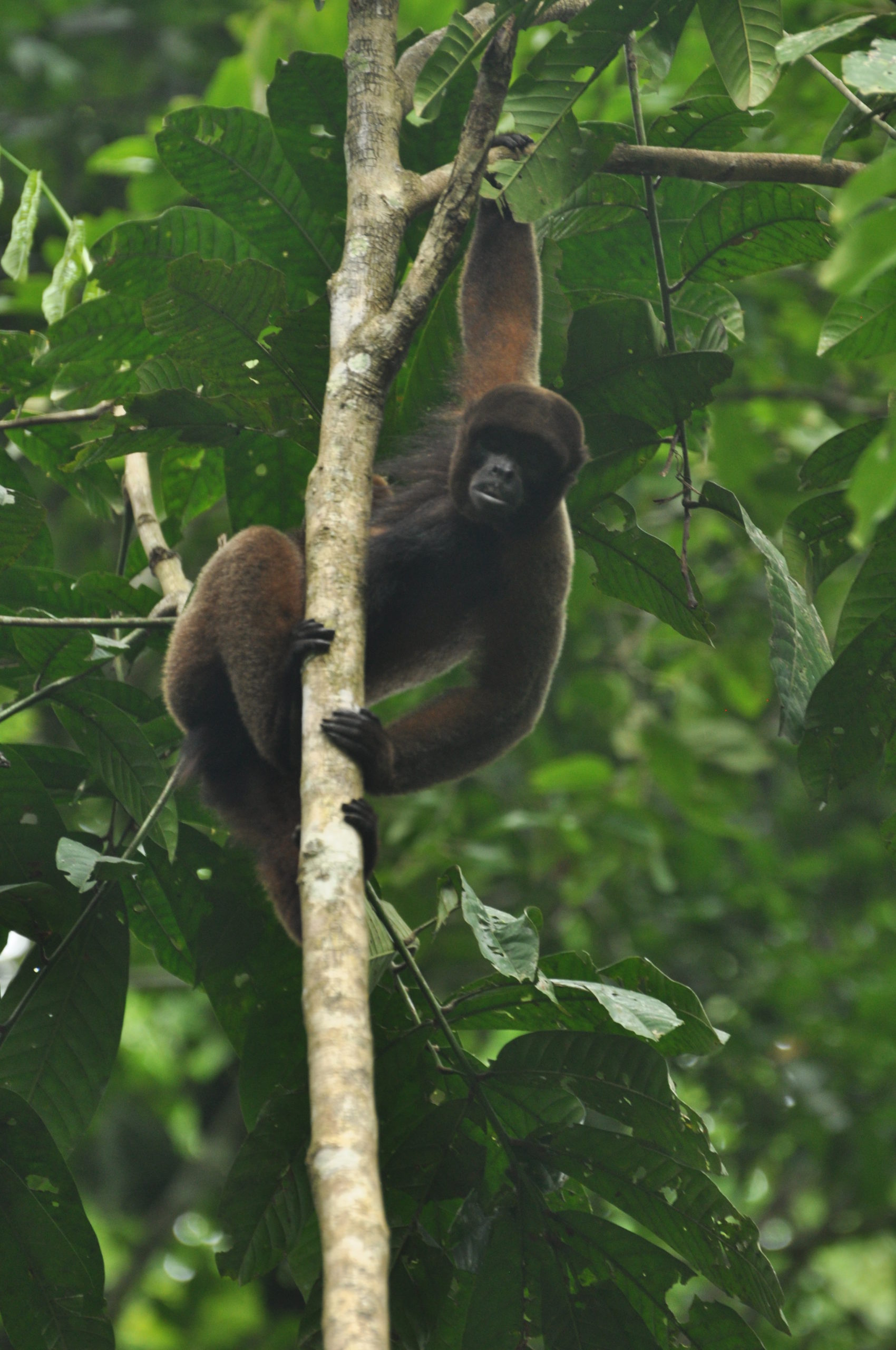
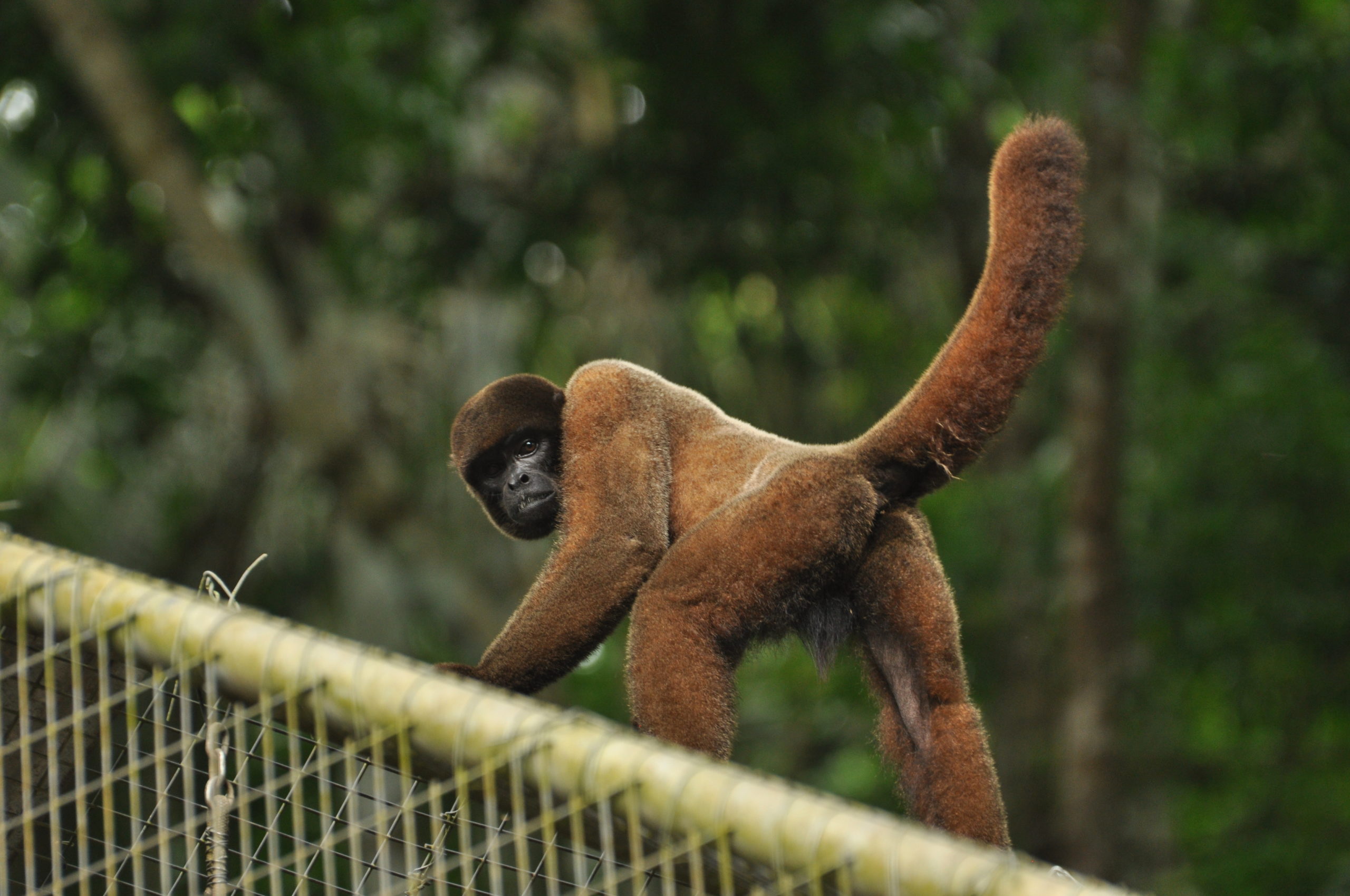
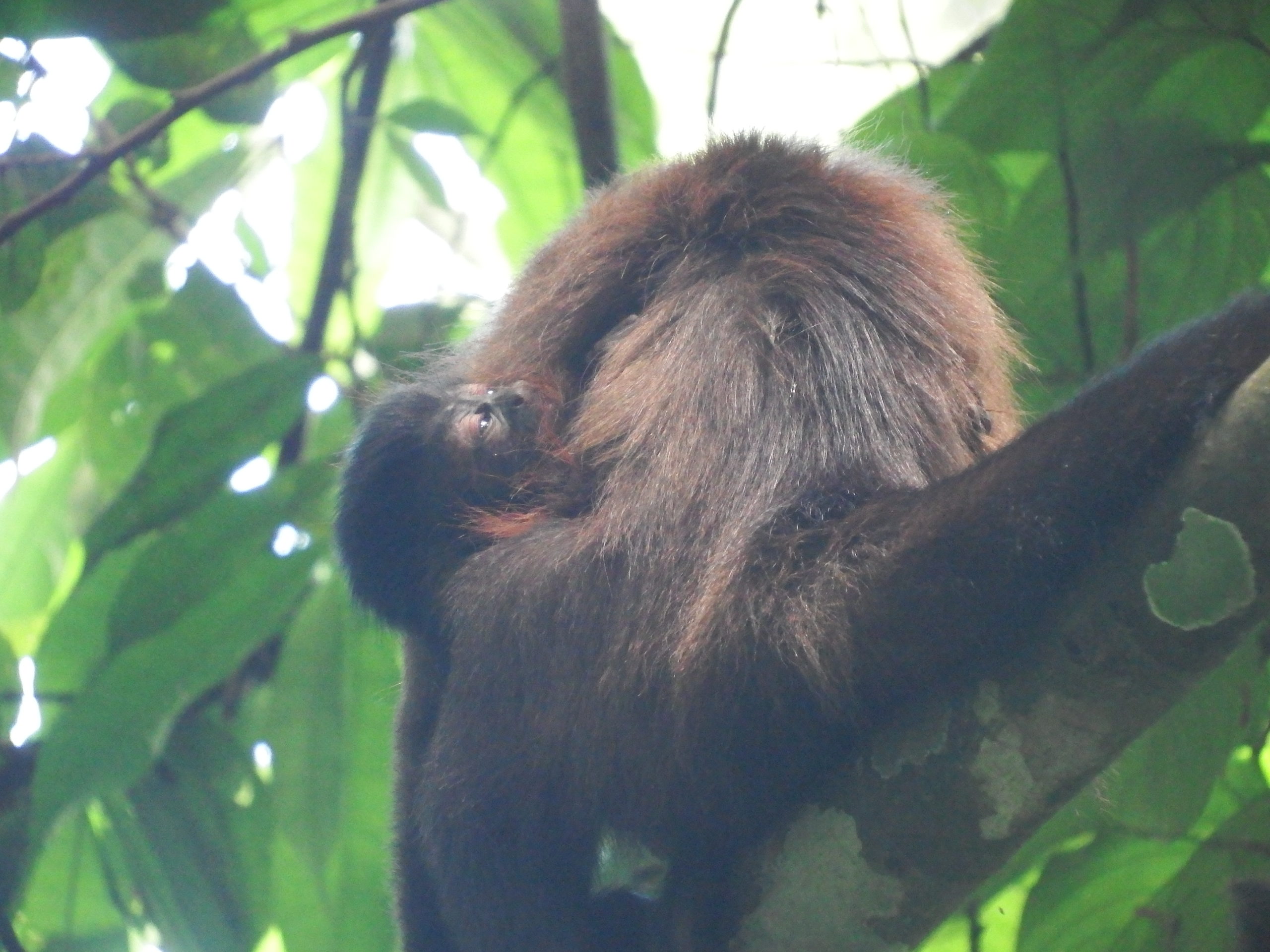
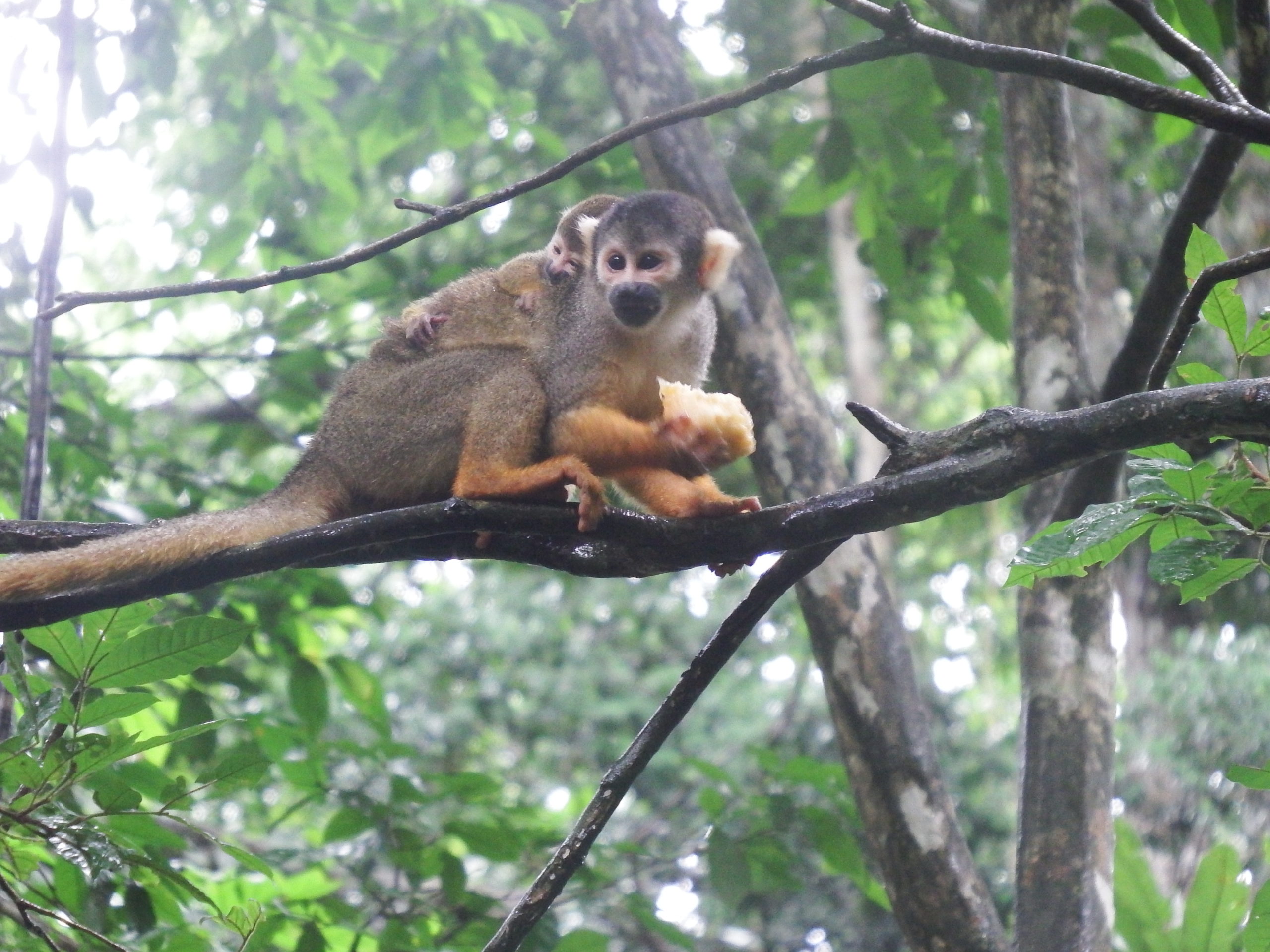
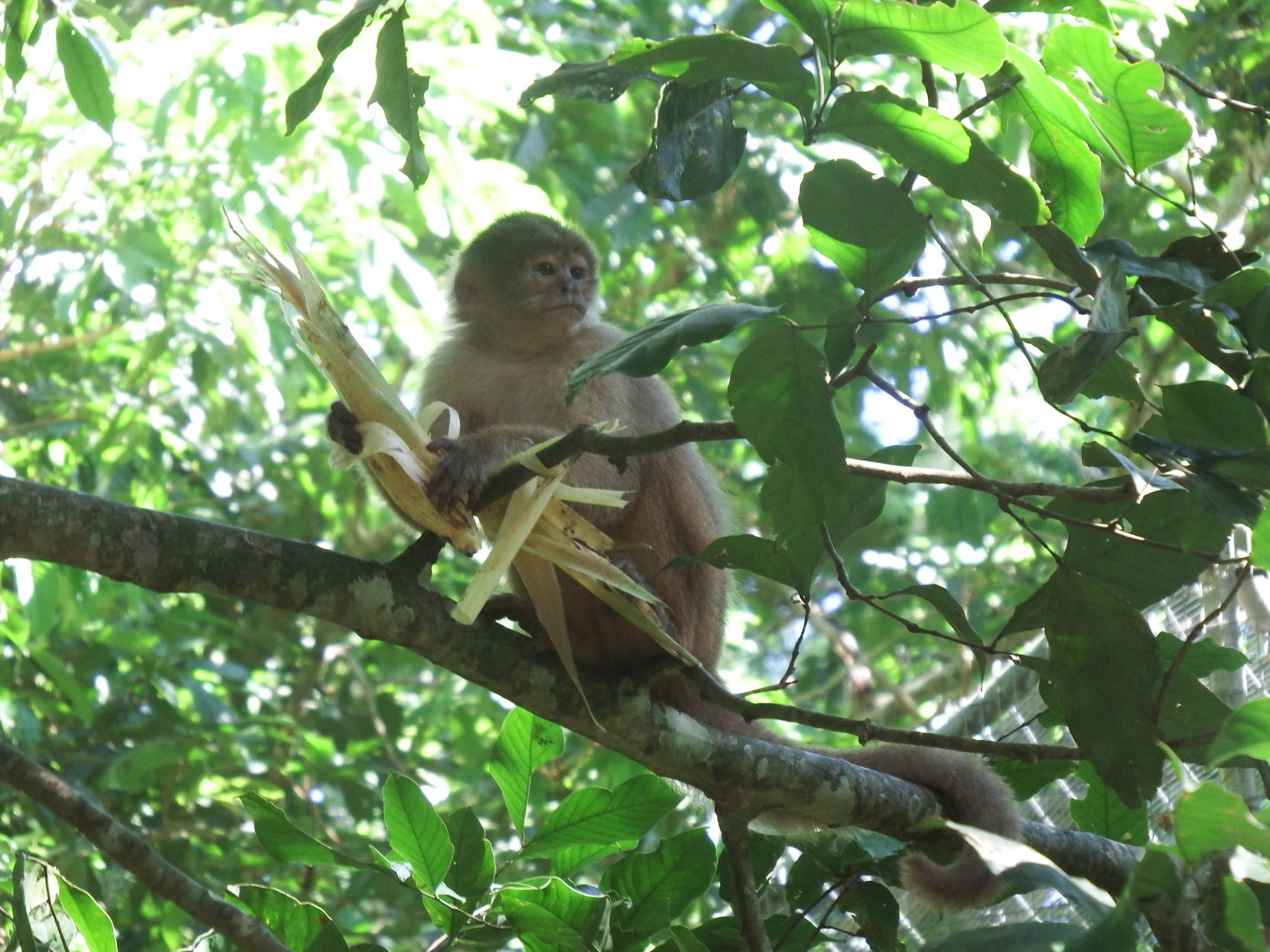
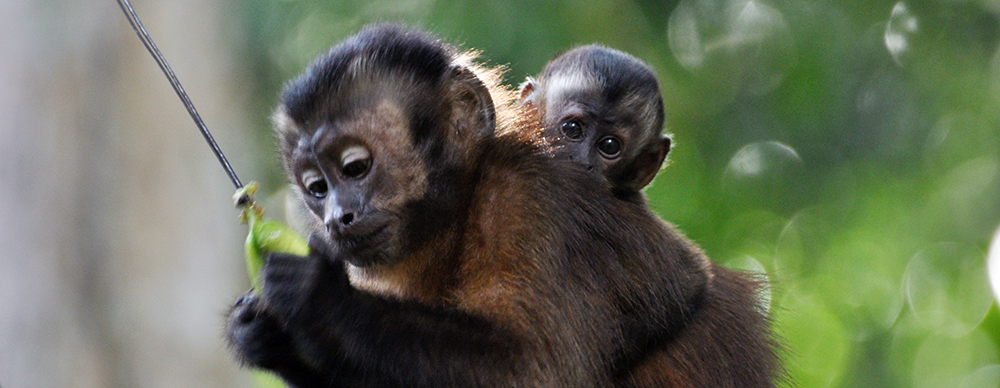
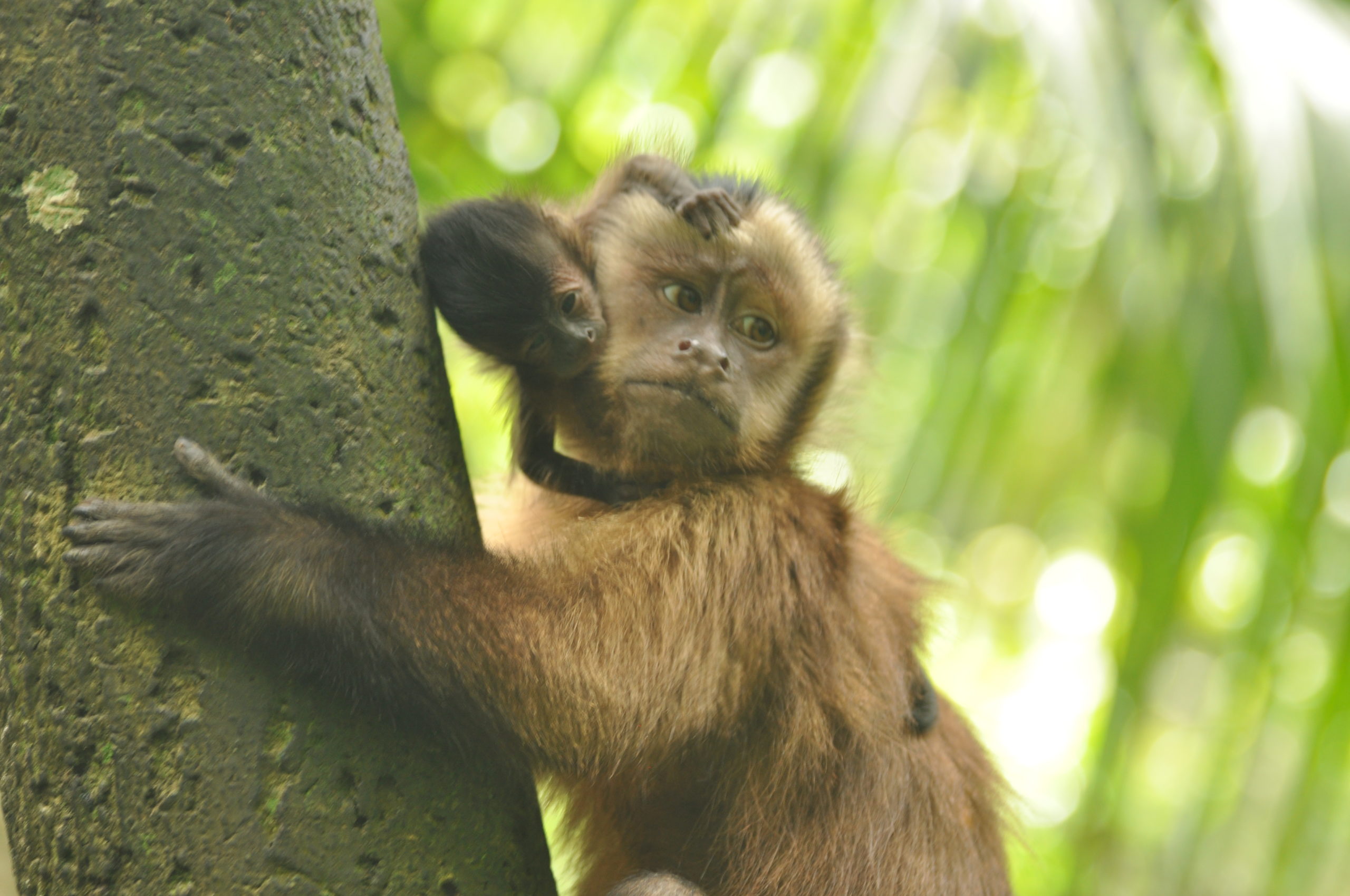
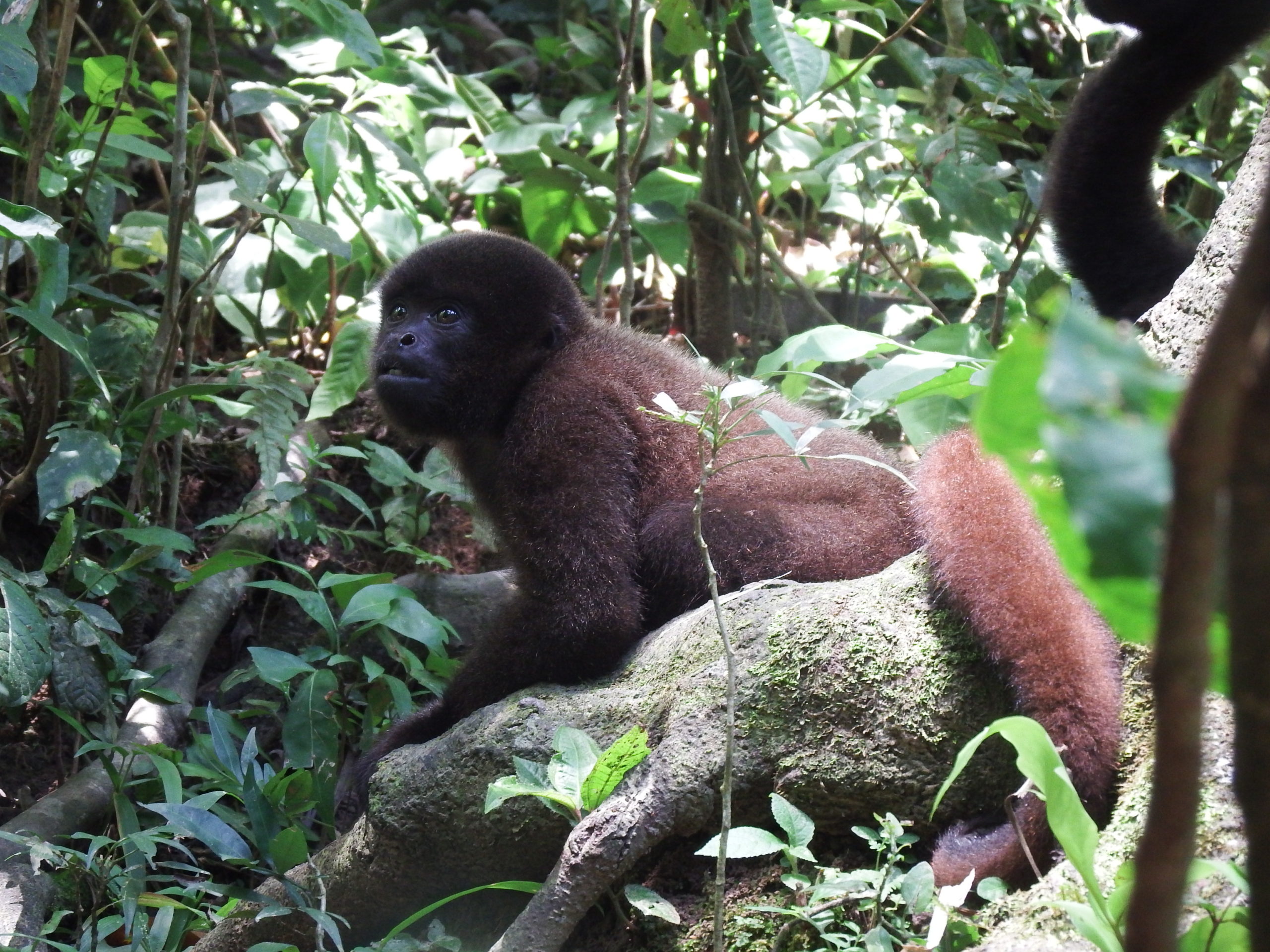
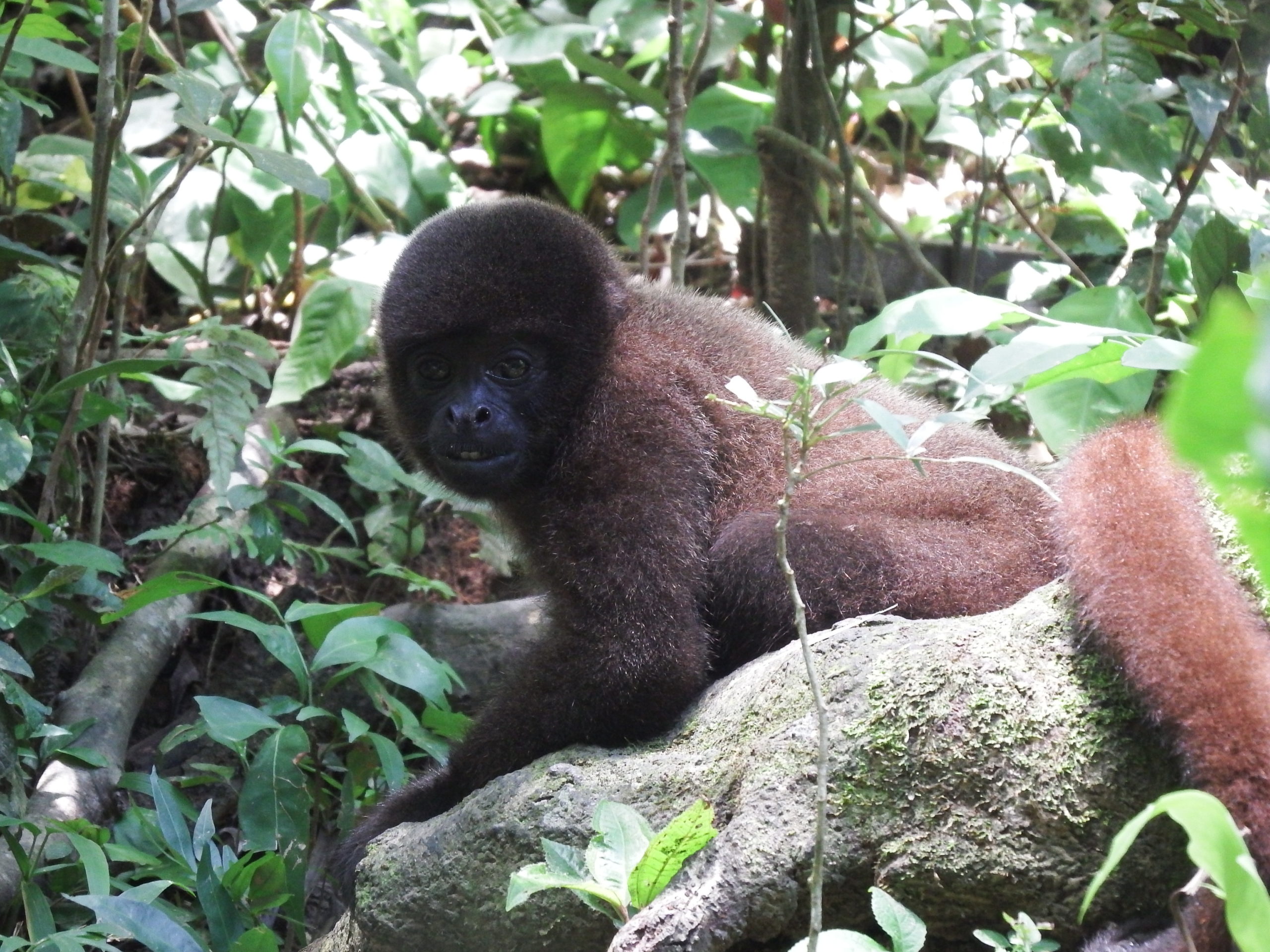
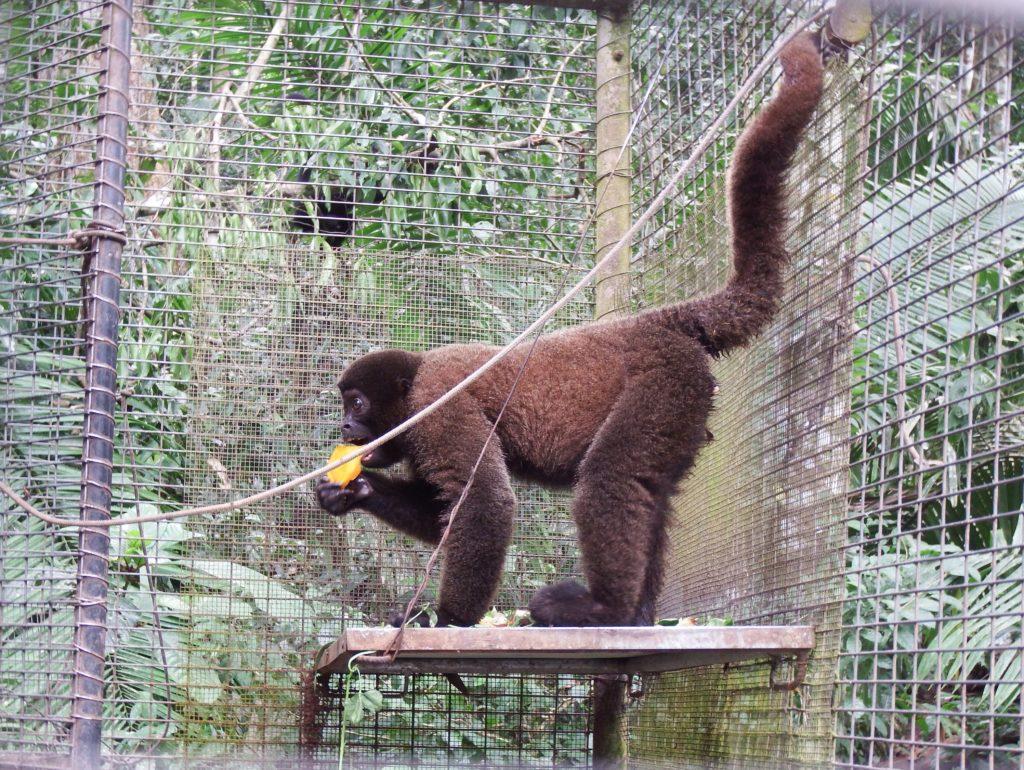
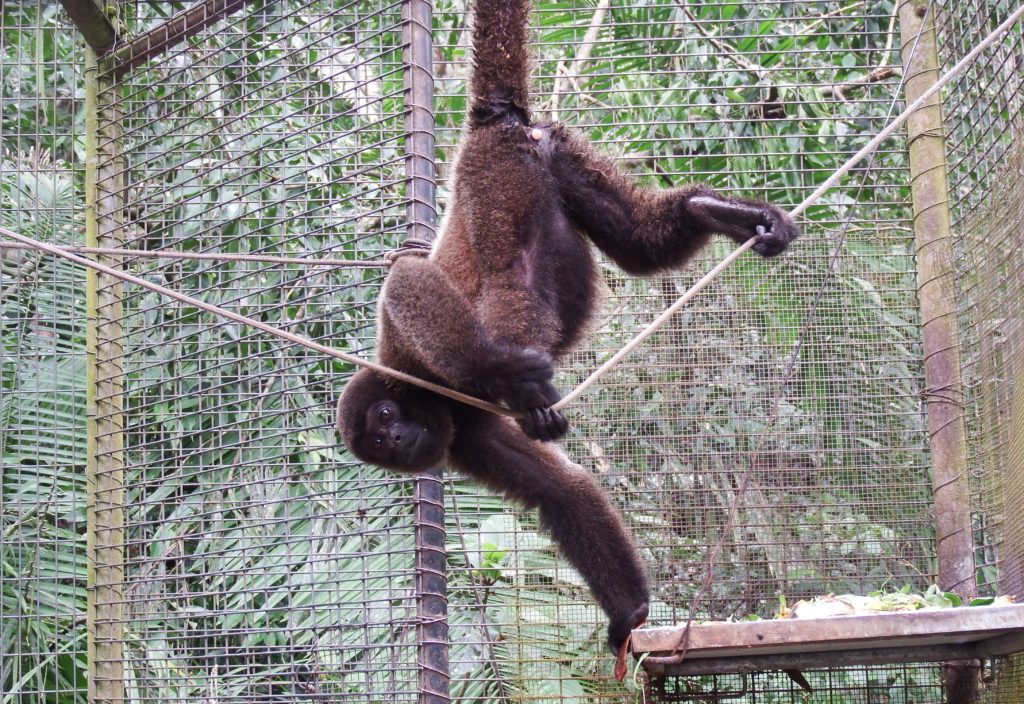
Manok, the newest male member of the woolly monkey family, is doing well. He shows a lot of interest in all the stimuli provided by the world around him. He and his mum, Maruja, are always being closely watched and protected by the alpha male, Monano.

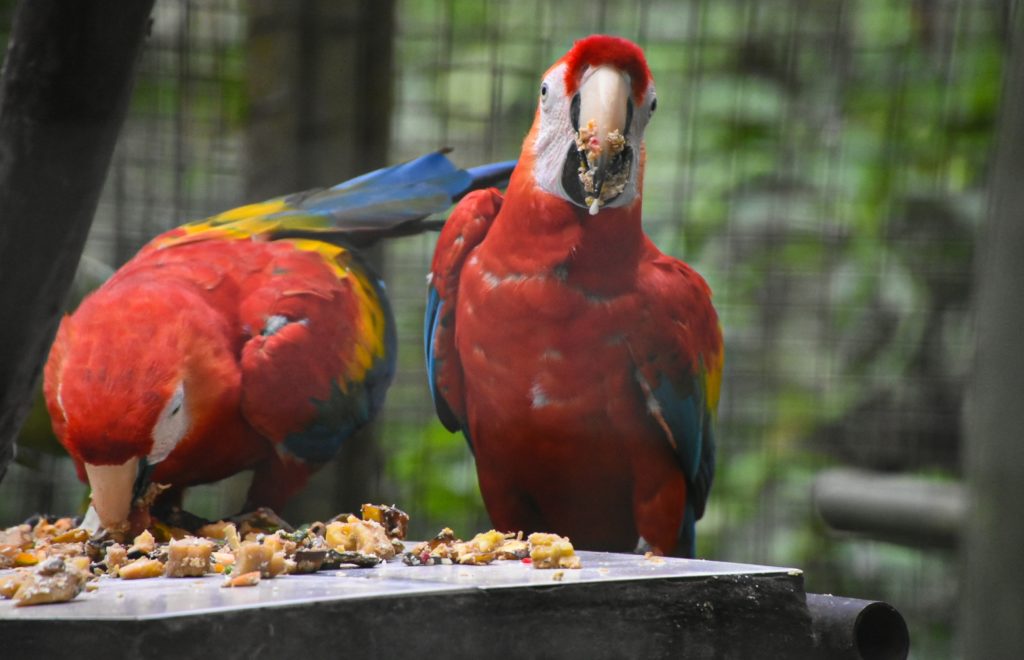
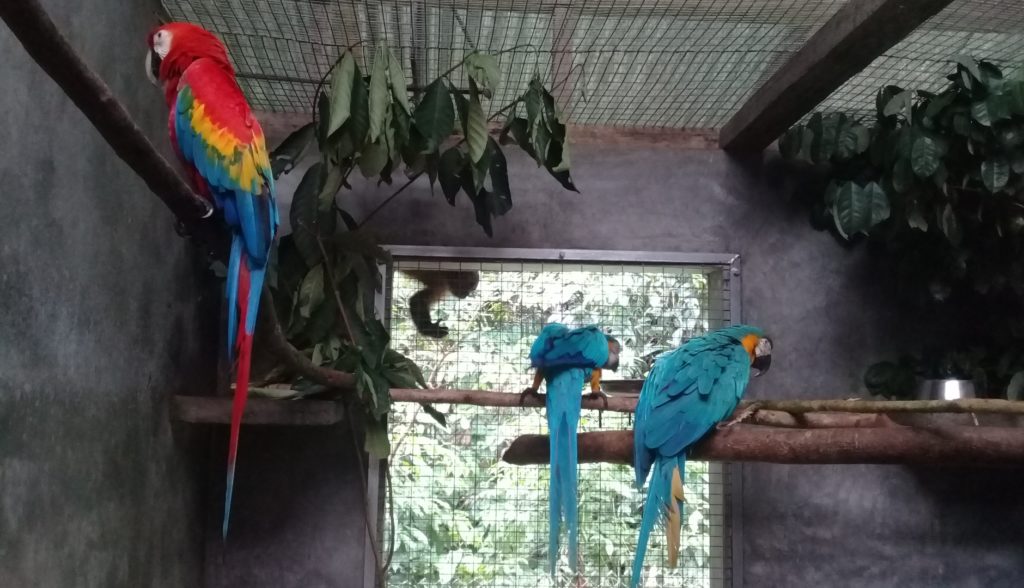
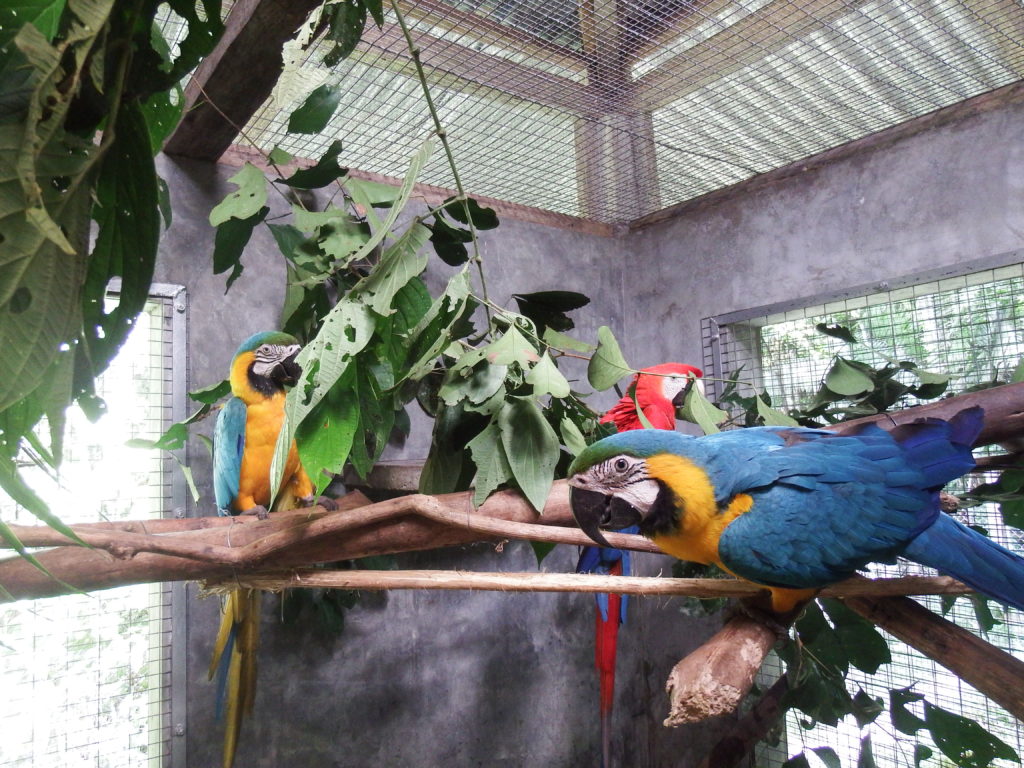
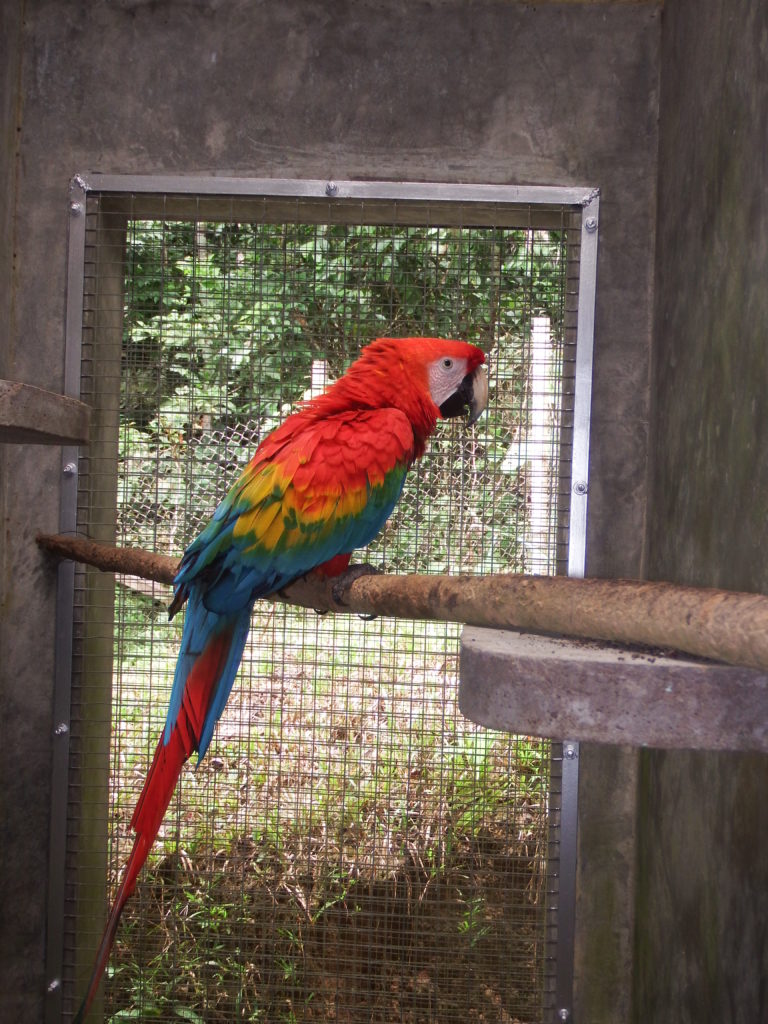
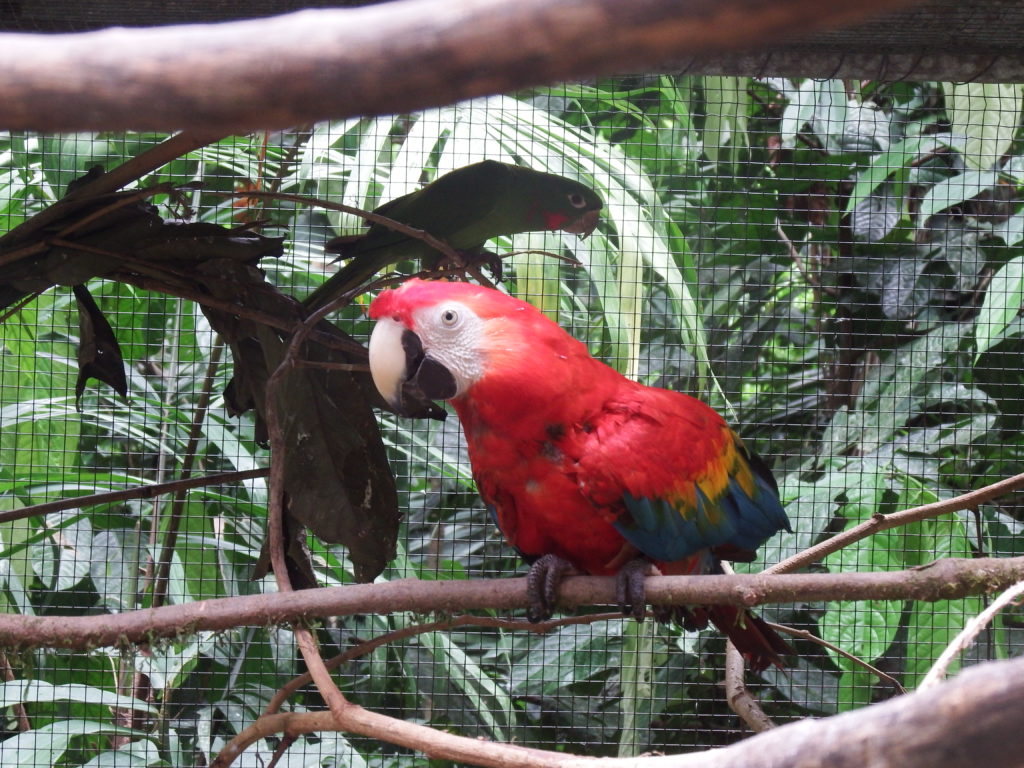
The scarlet macaw, named Wanda, has been moved from the clinic and introduced directly to the other scarlet macaws in the Pichu enclosure. The introduction was monitored closely by the watchful eyes of both Peggy (our French volunteer) and Douwe. Wanda seemed to stand her ground and has now found her place in the enclosure.

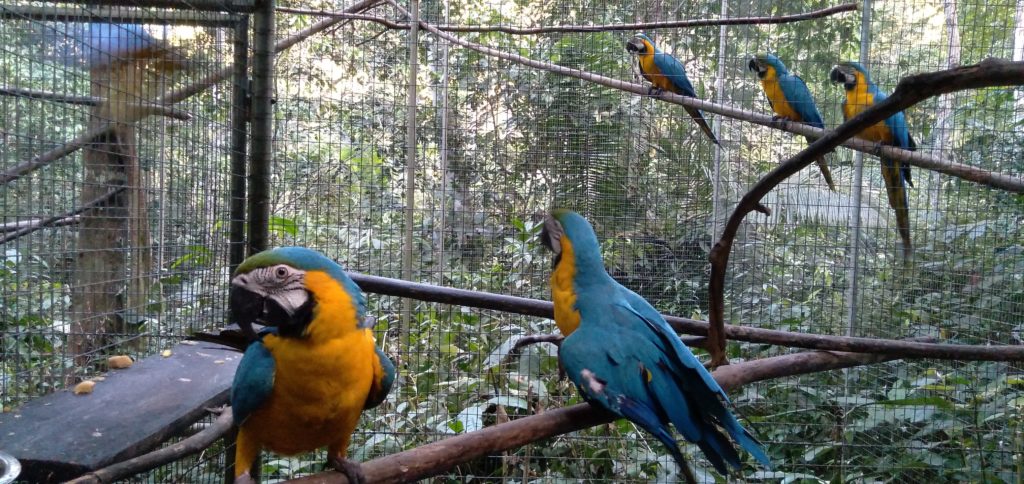
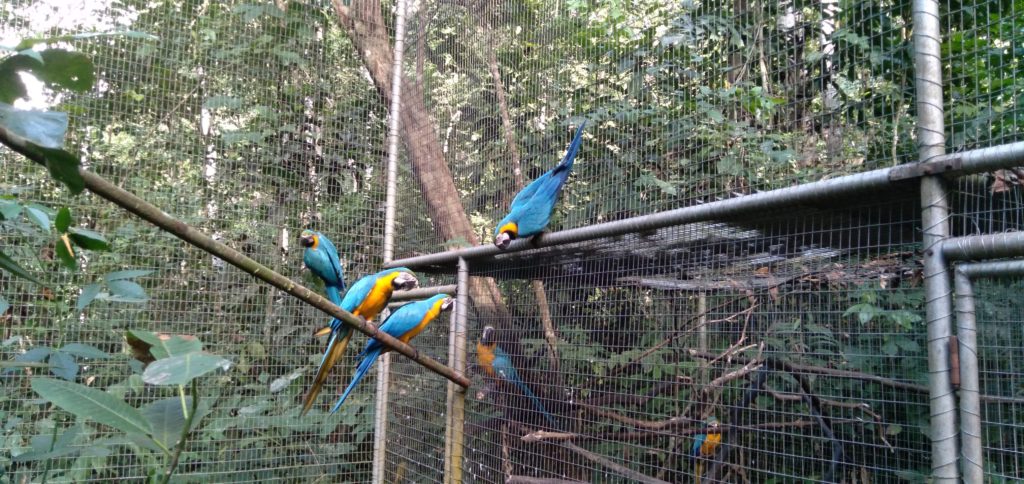
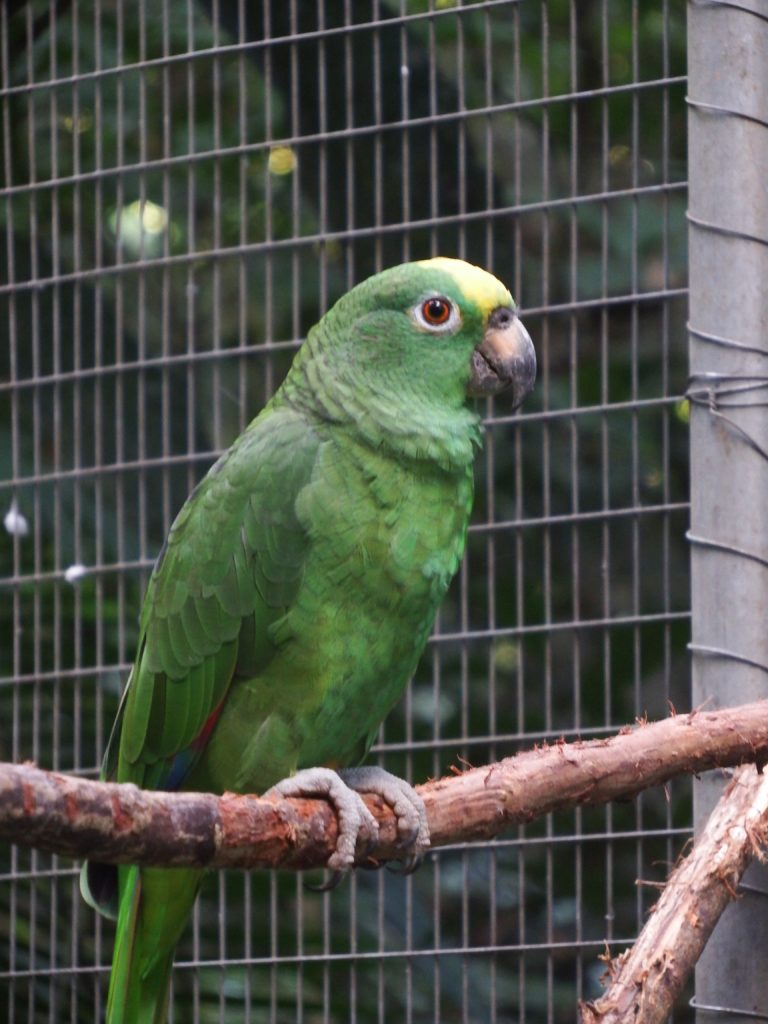
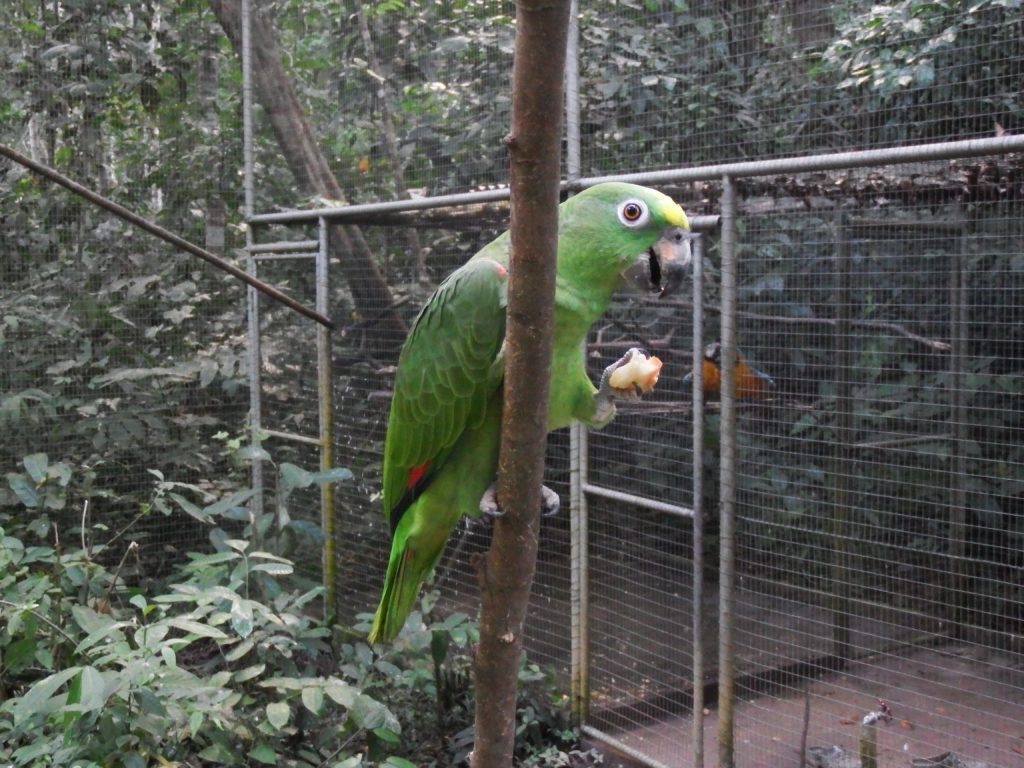
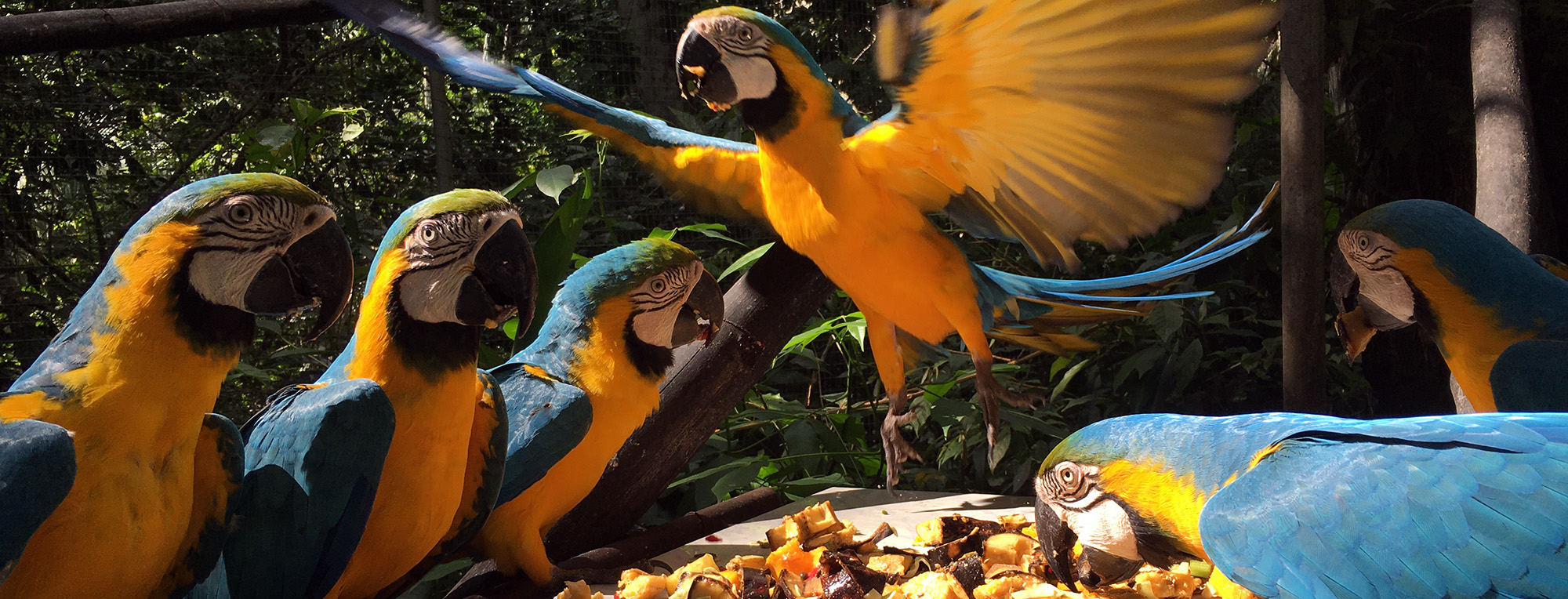
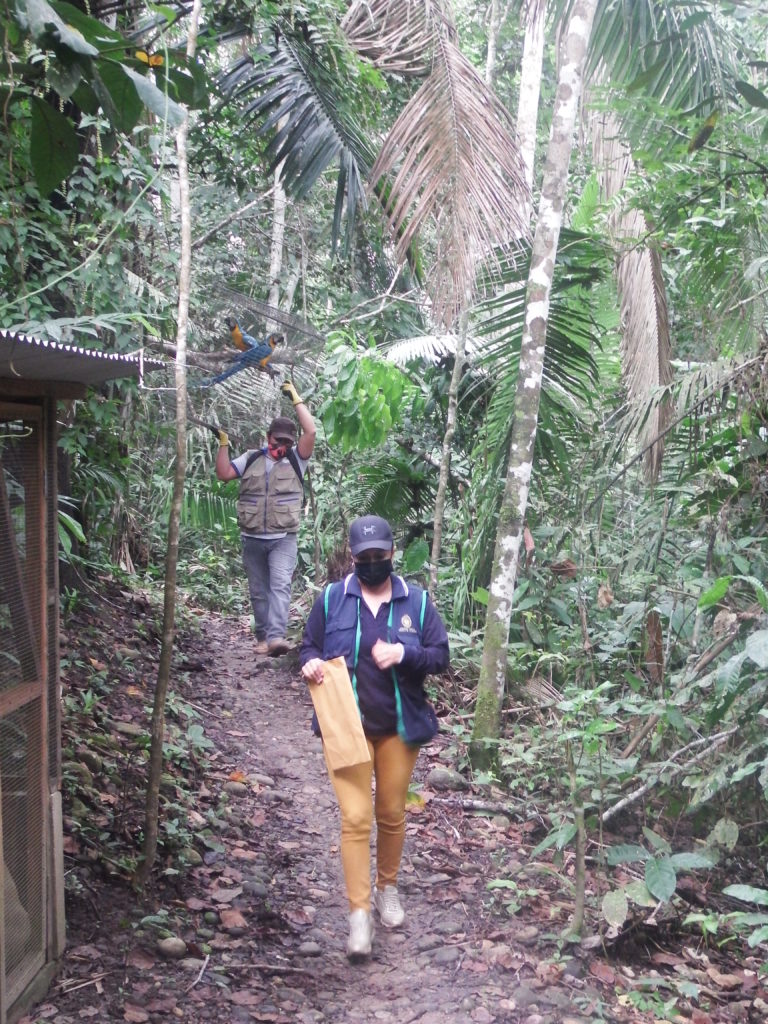
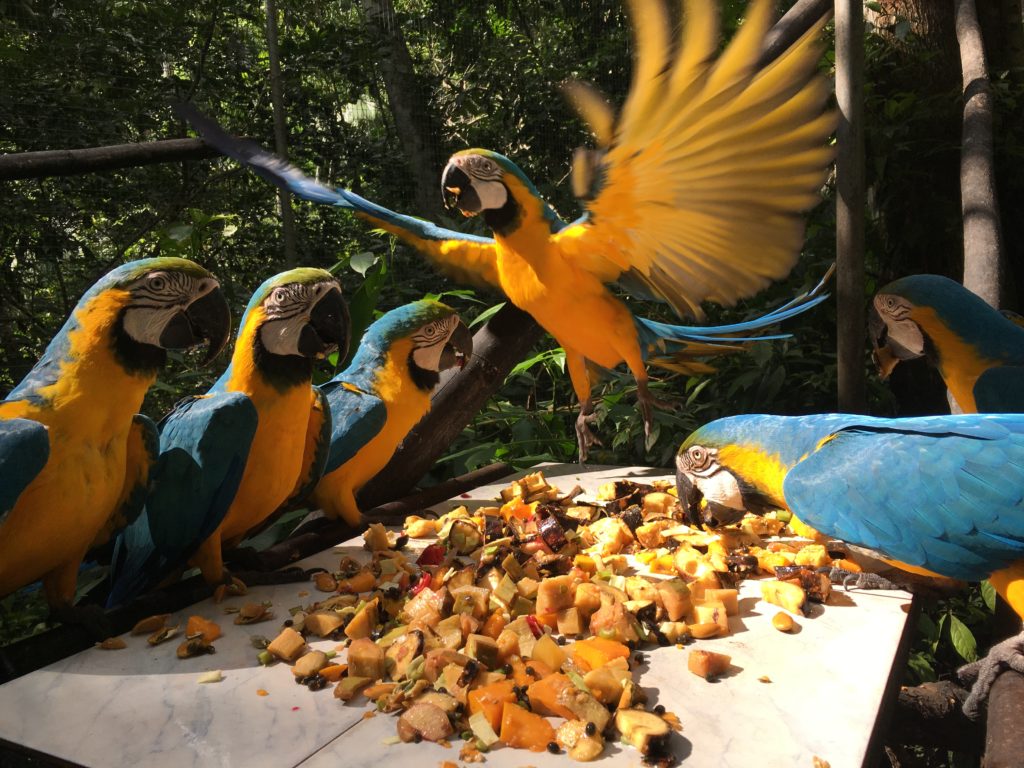
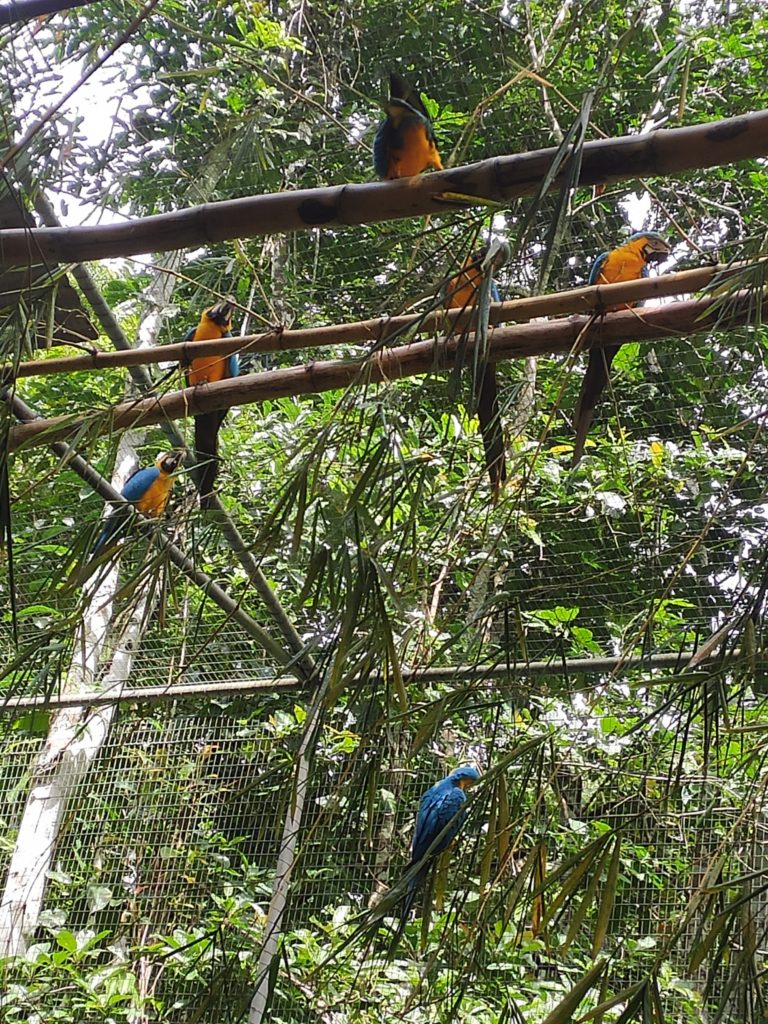
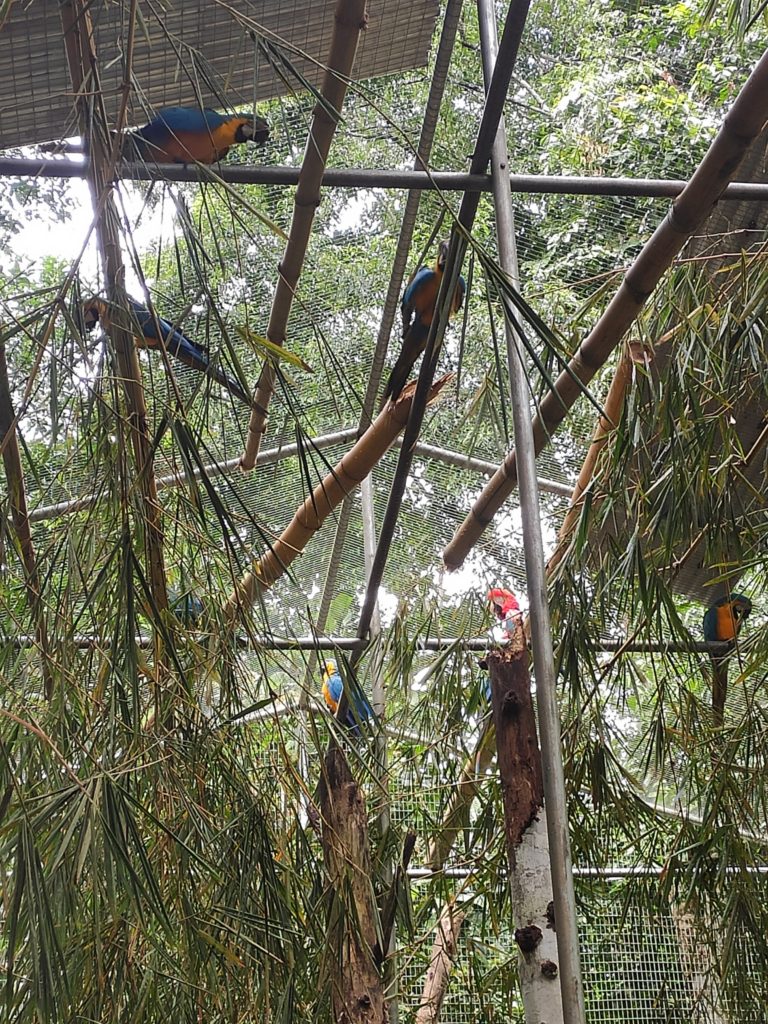
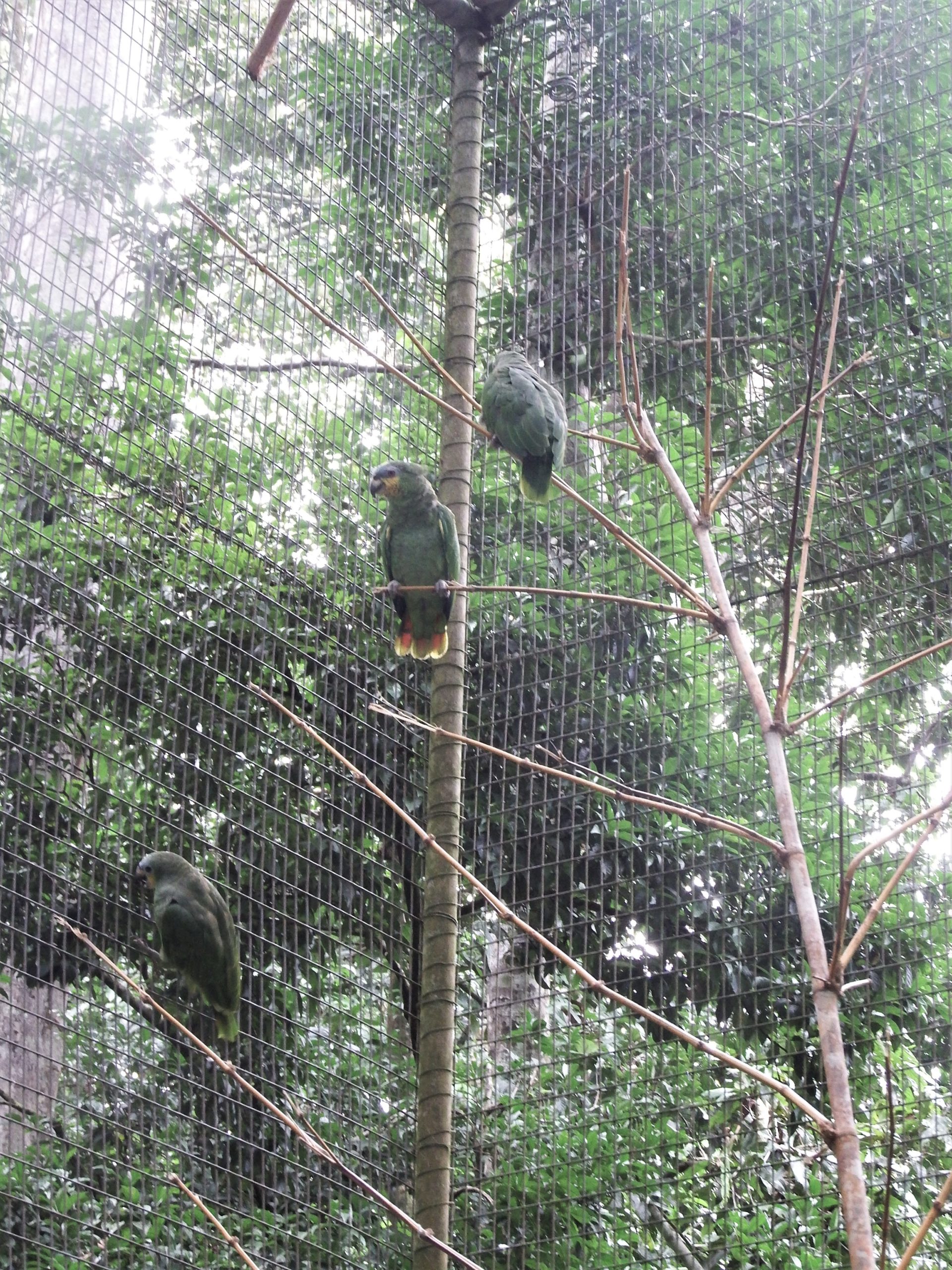
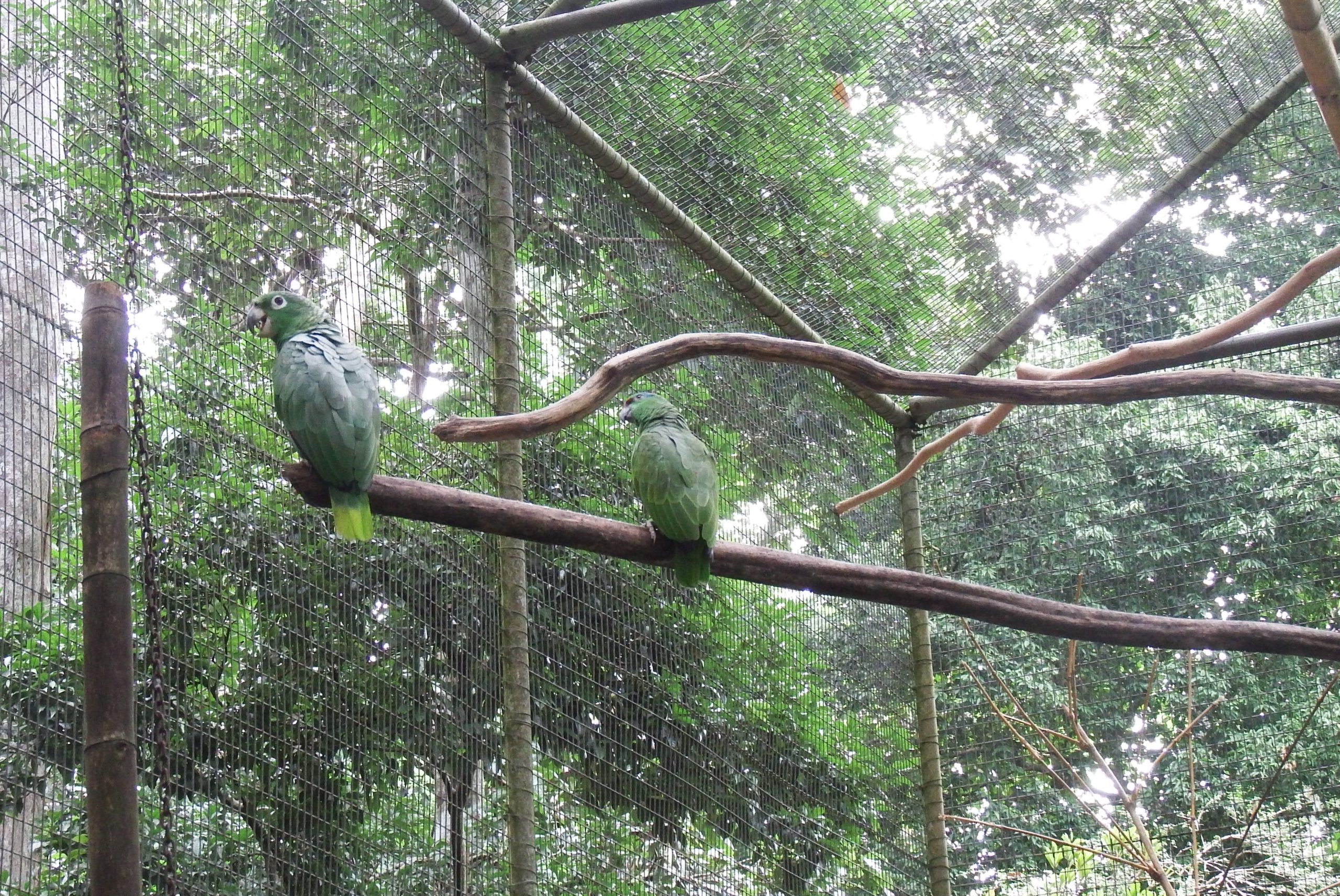
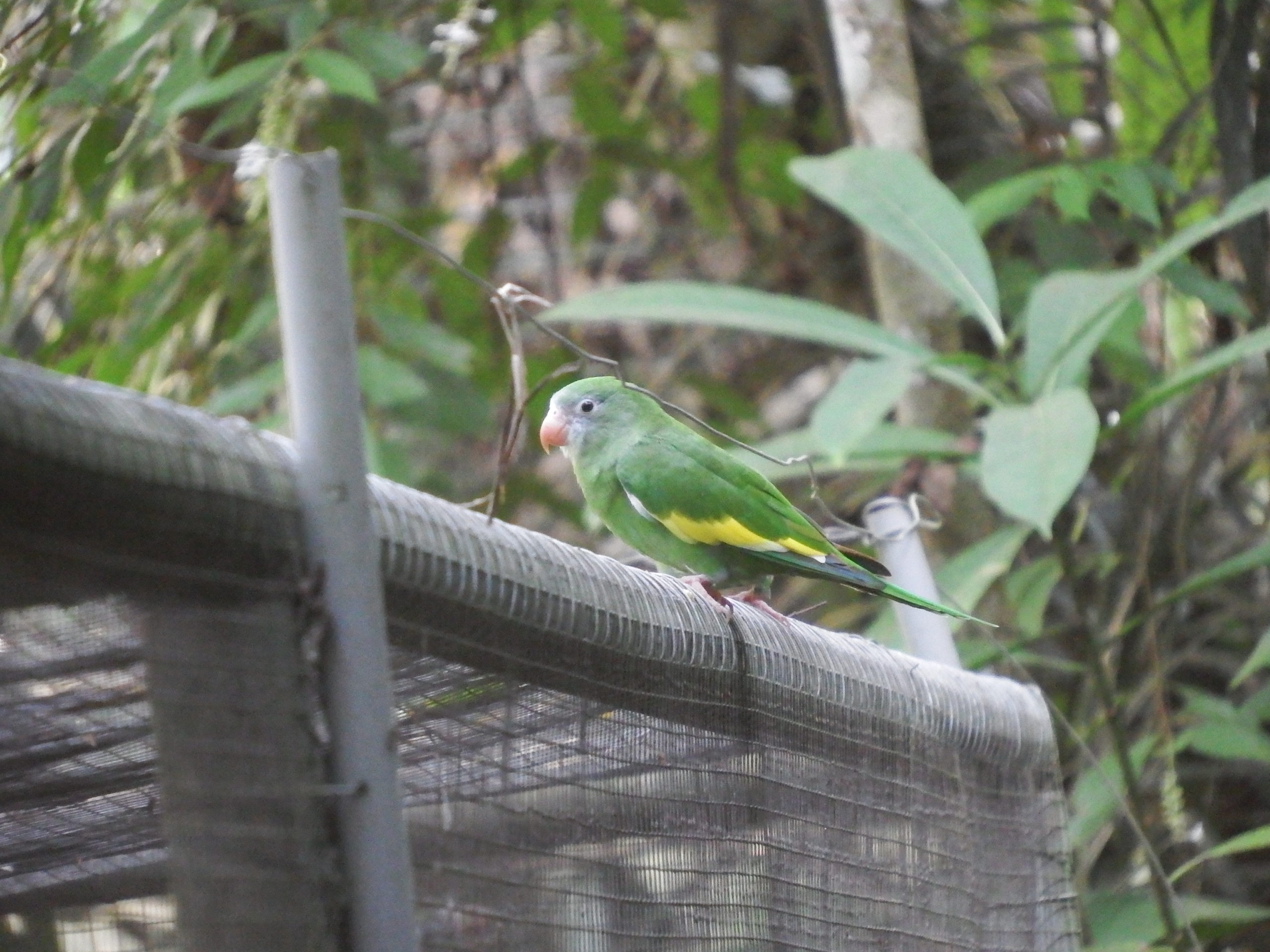
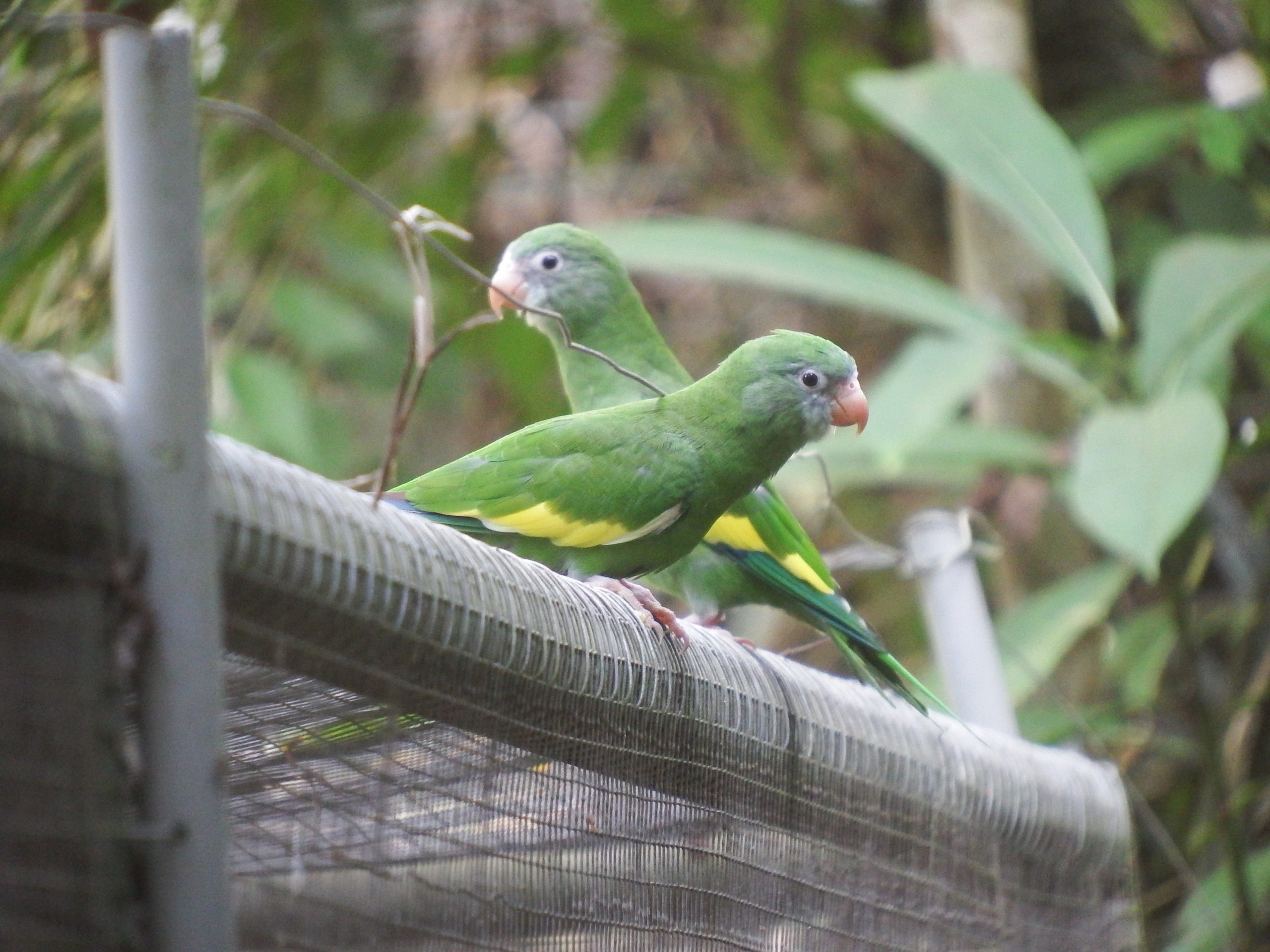
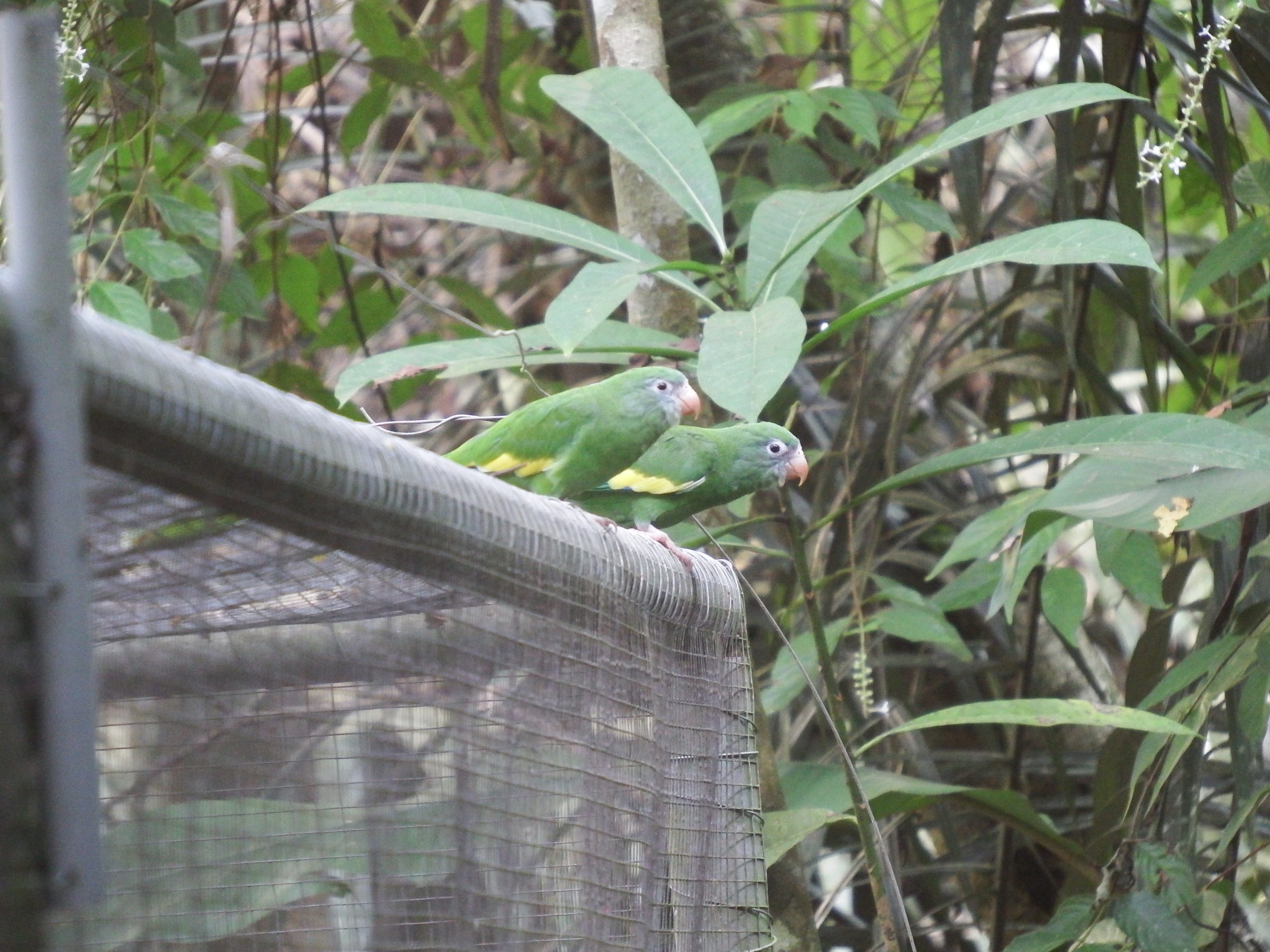
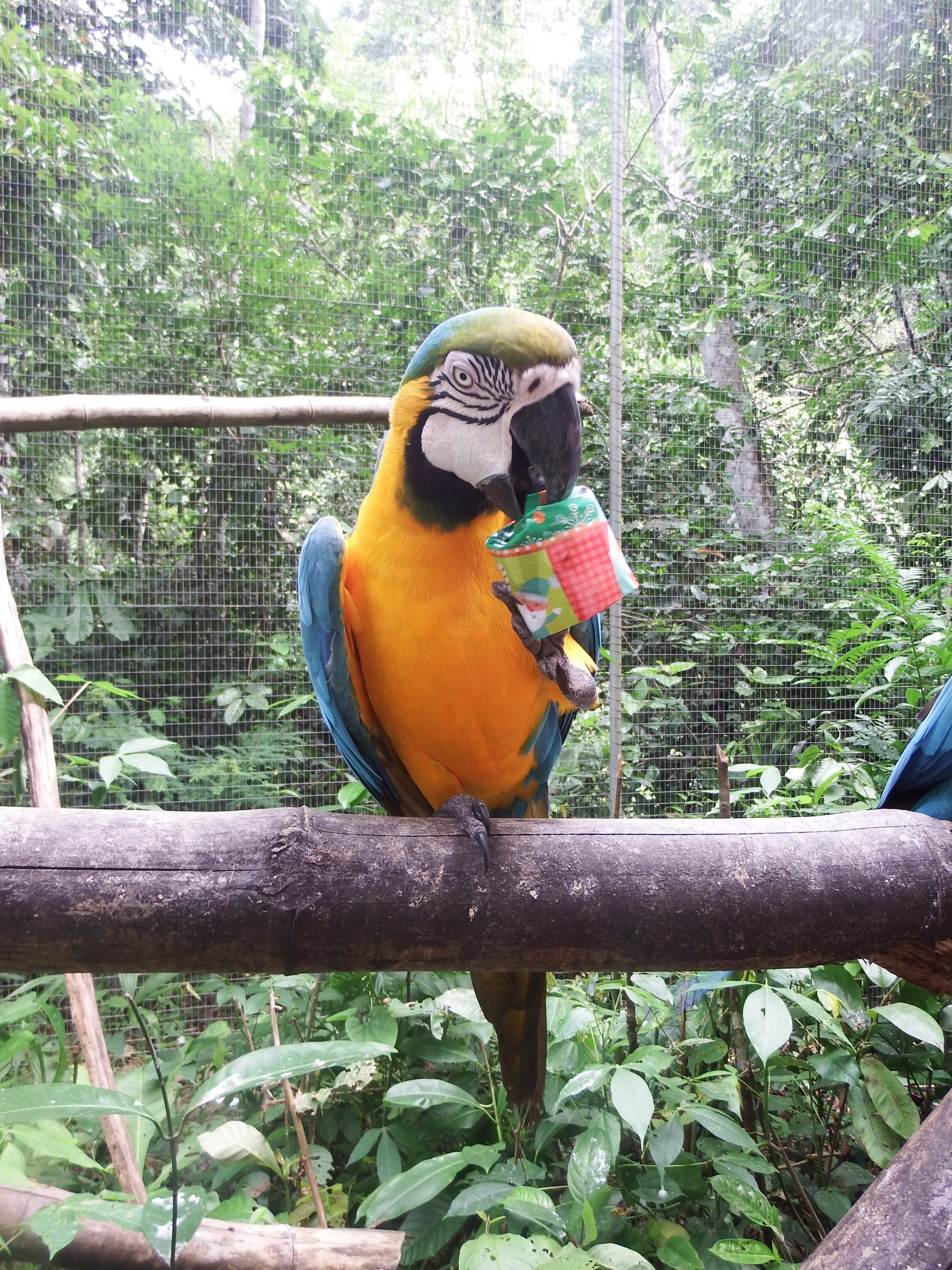
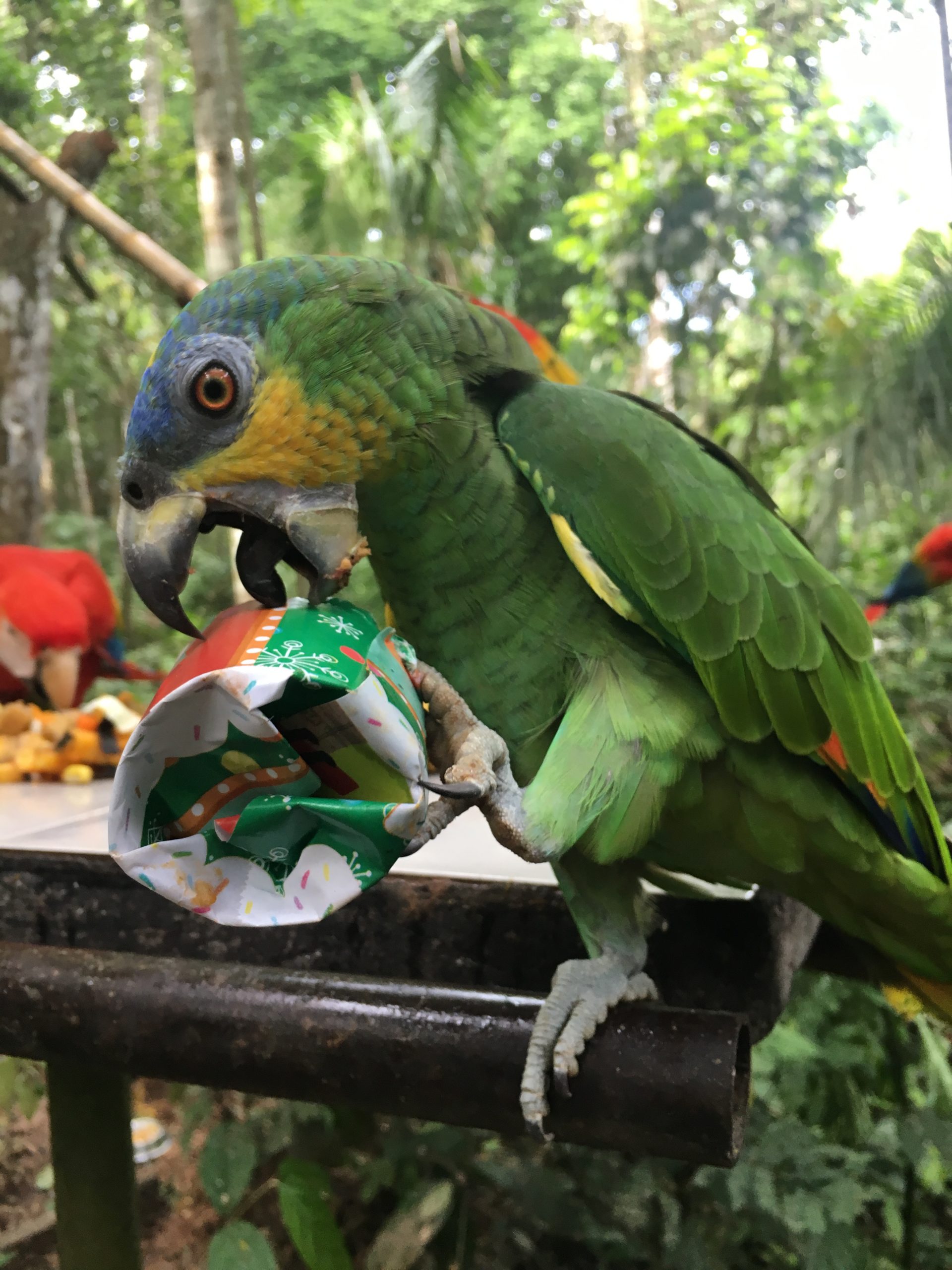
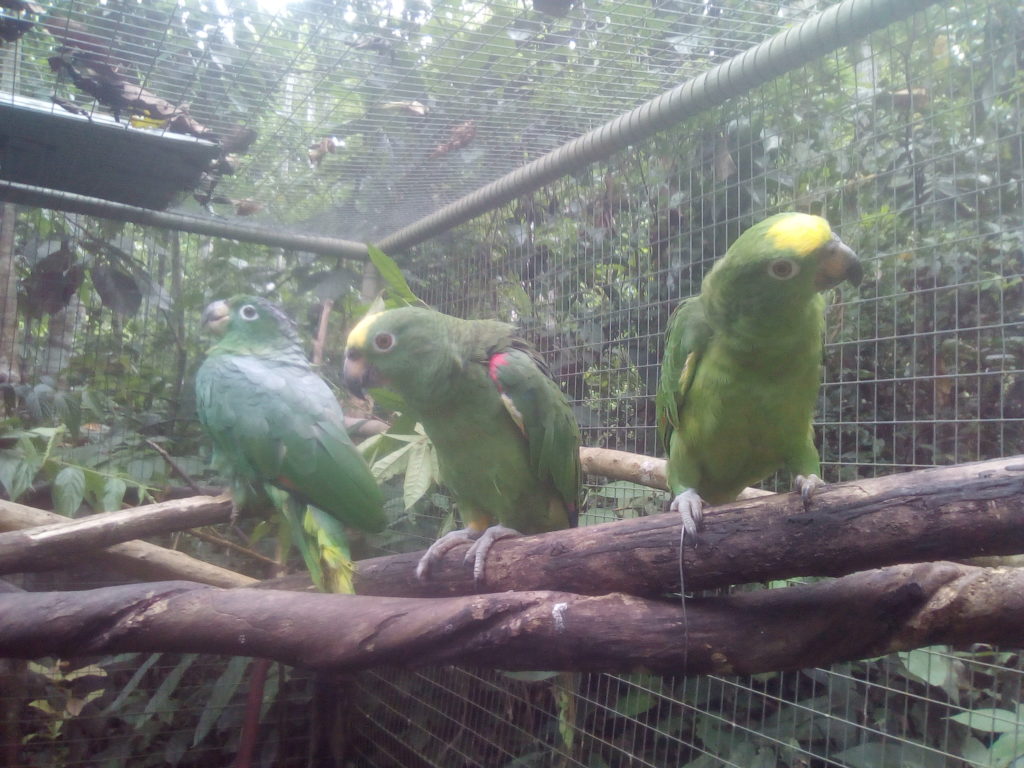
The two blue and yellow macaws, named Jada and Atlas, who were in the clinic together with Wanda were moved to the front cage of Elmo. Therefore, it was time for Inuka, Upendi (two yellow crowned Amazon parrots, and Dani/Daenarys (Mealy Amazon parrot) to make the transition to the main enclosure of Elmo. All went well for Inuka and Upendi, and they quickly showed their comfort in this big space by making their well-known noises: ‘’olla olla, Cuuricuuricuuri’’, and many more. Dani didn’t seem to be too happy, not being able to fly or fall gracefully; so we brought her back to the front cage, joining Jada and Atlas. Here Jada and Atlas will get the chance to adapt to their new surroundings.

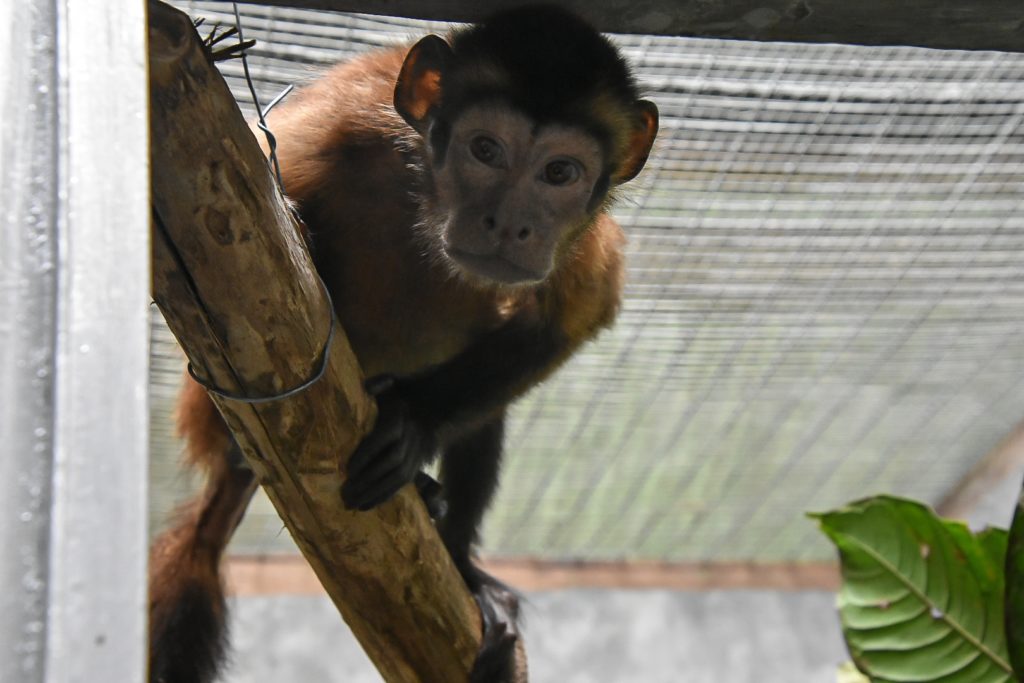
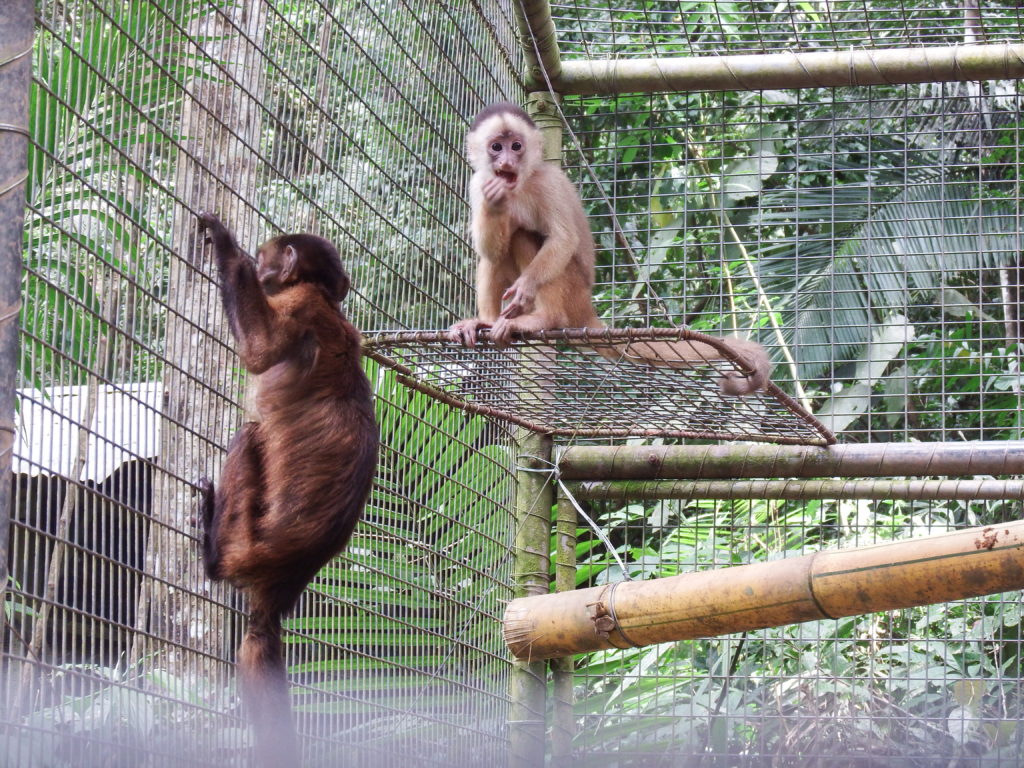
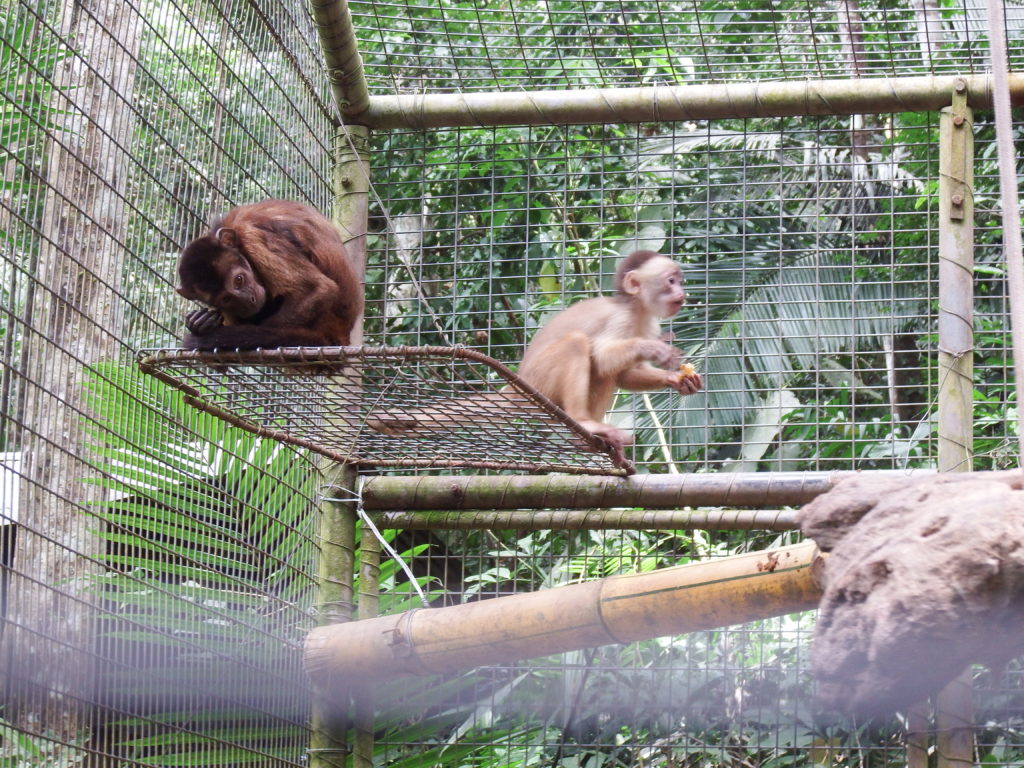
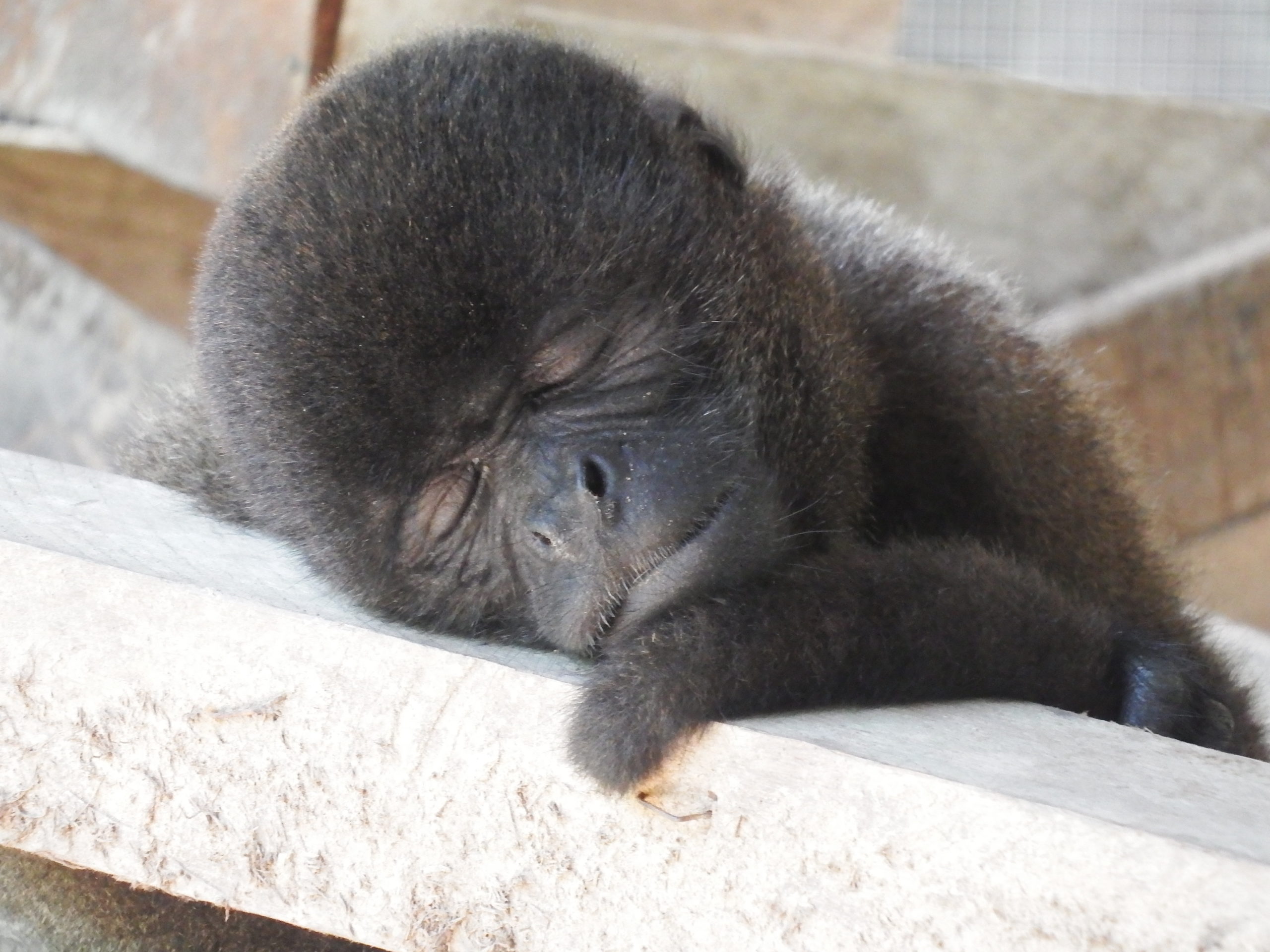
Kaluha, the juvenile female woolly monkey, who arrived some time ago, was released from the La Sapa cage, after spending a few weeks in there with Kamayo (adult male woolly) and the two capuchins she arrived with (Akemi and Kiano). She quickly adapted outside, being directly hugged by several of the outside woolly monkeys.

Releases

As the Ministry of Fauna and Flora from Pucallpa was bringing several new animals (read further in the paragraph; SUST Orphan Animal Hospital), we took the opportunity to release (or in some cases soft-release) of several animals;

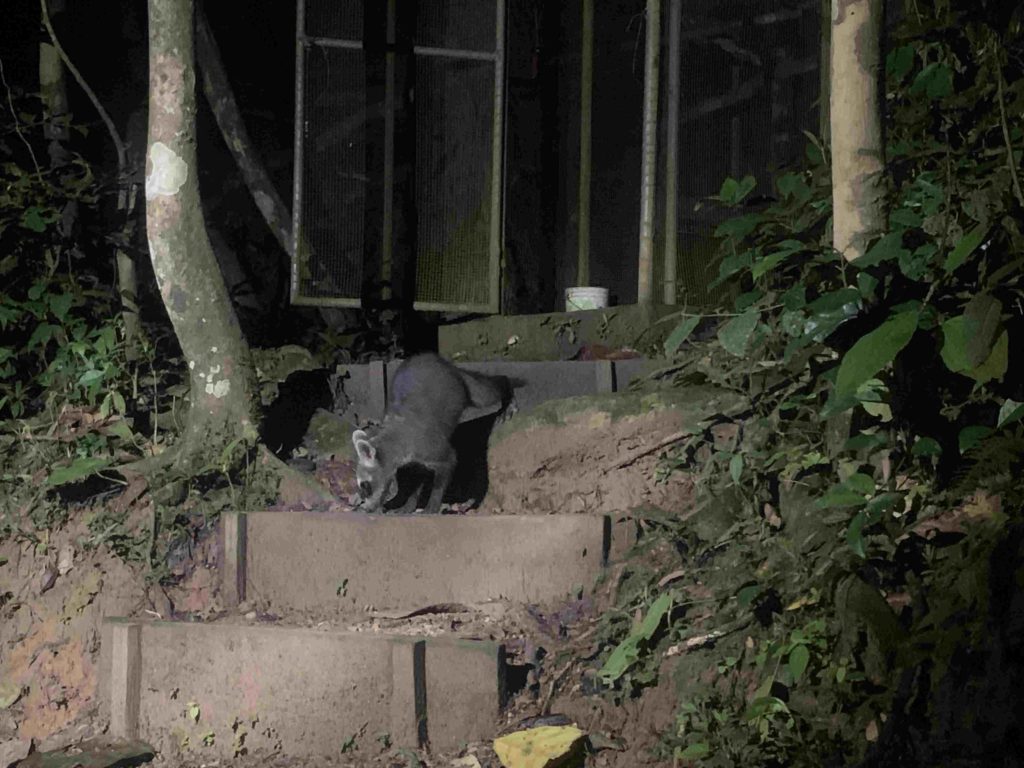
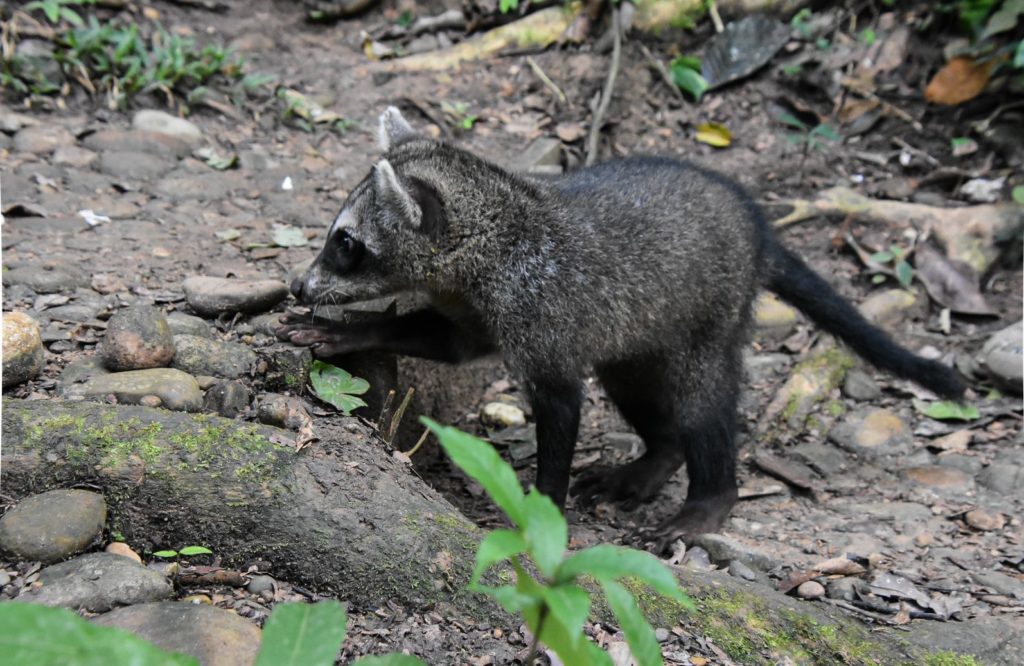
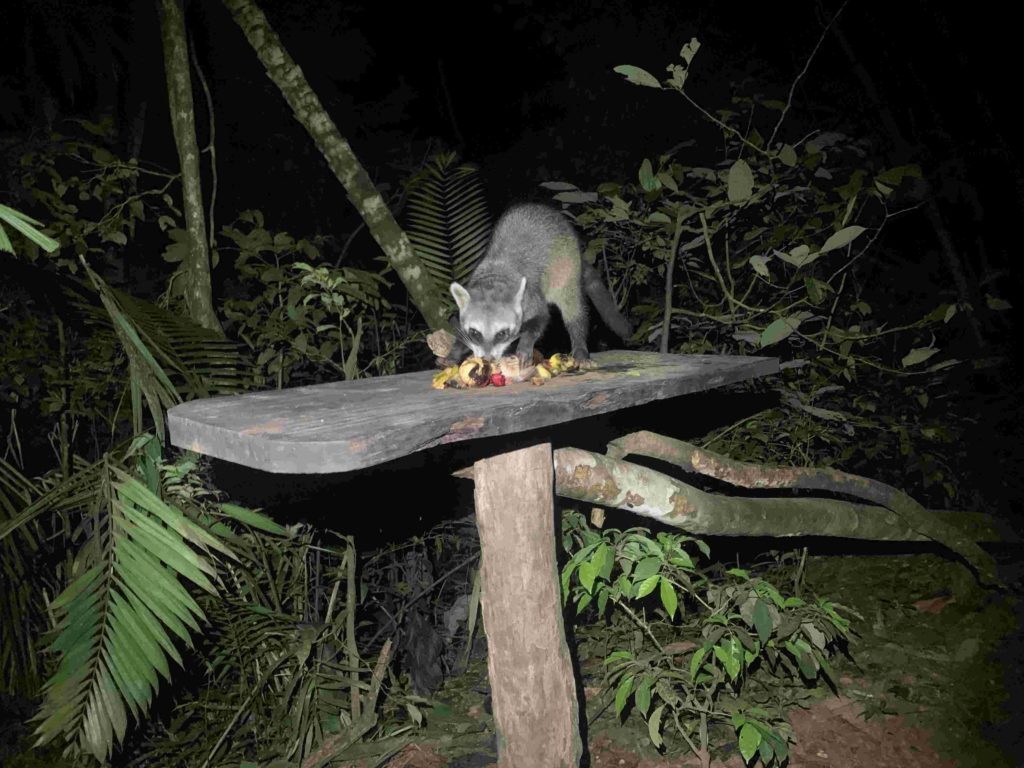
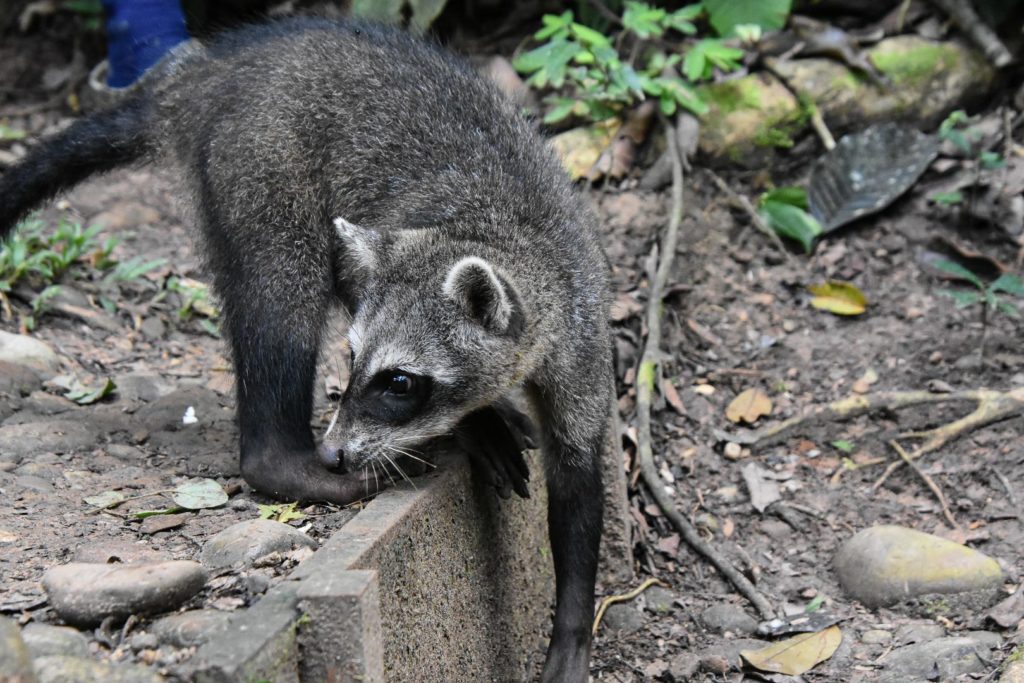
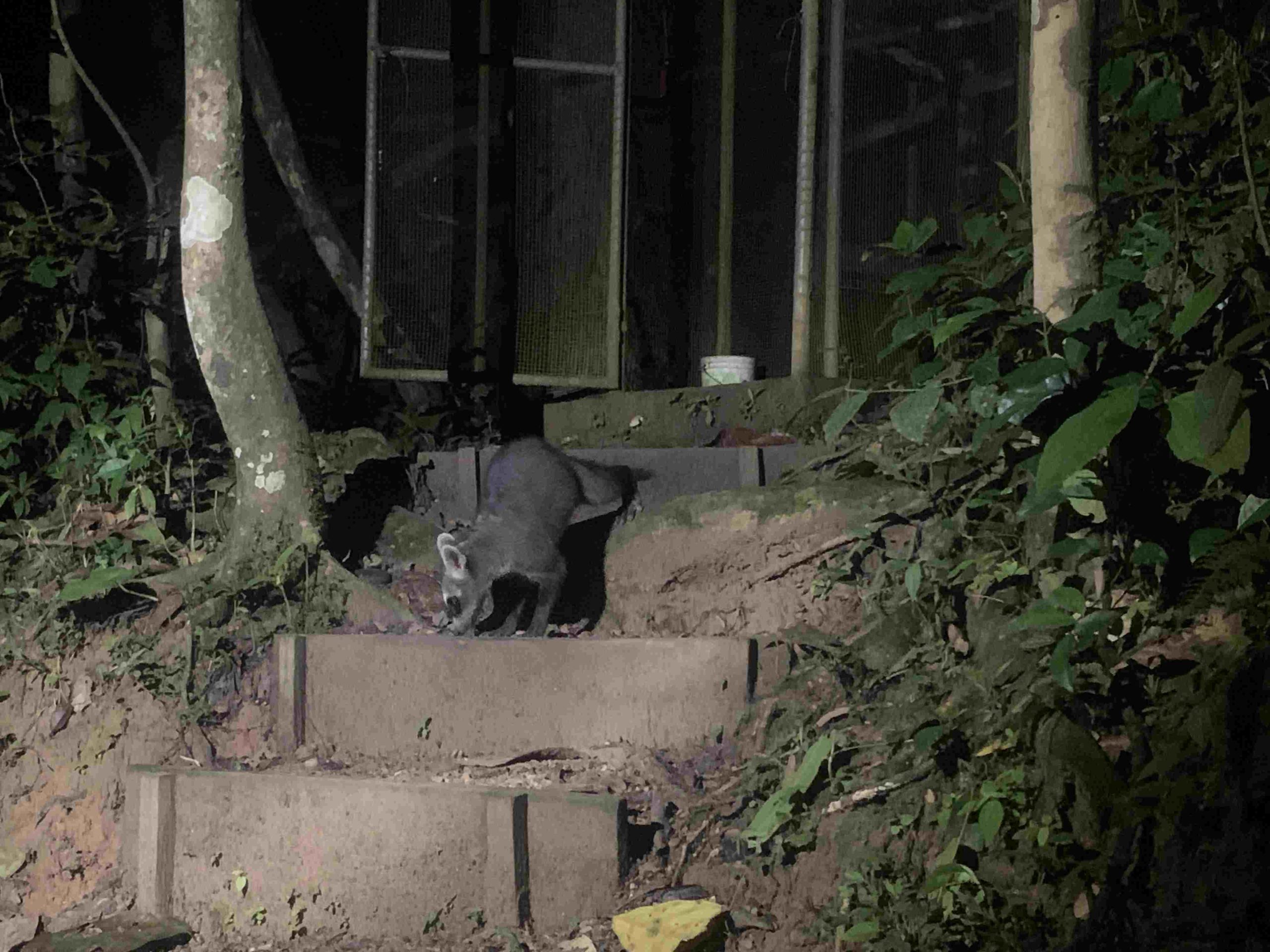
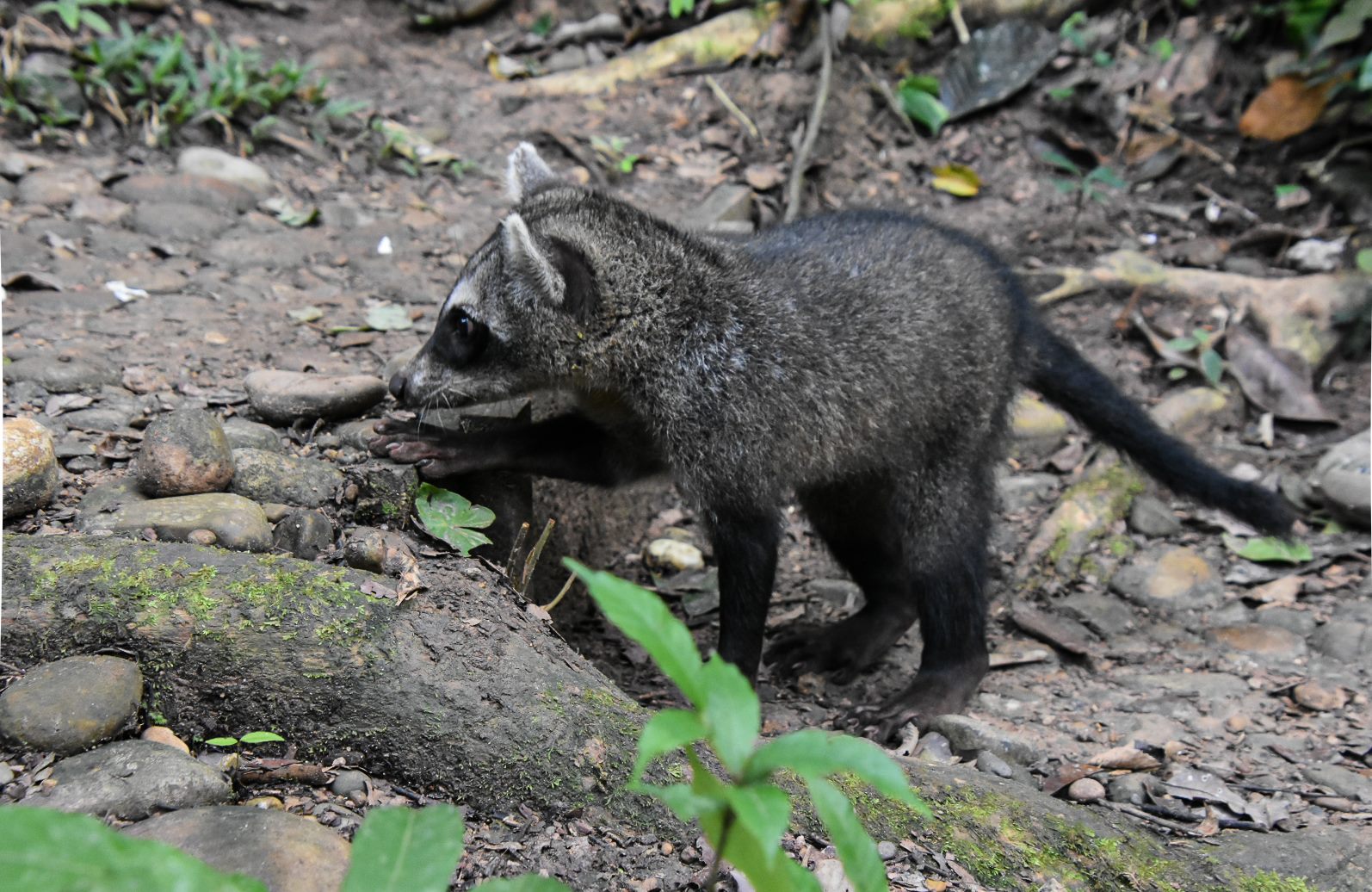
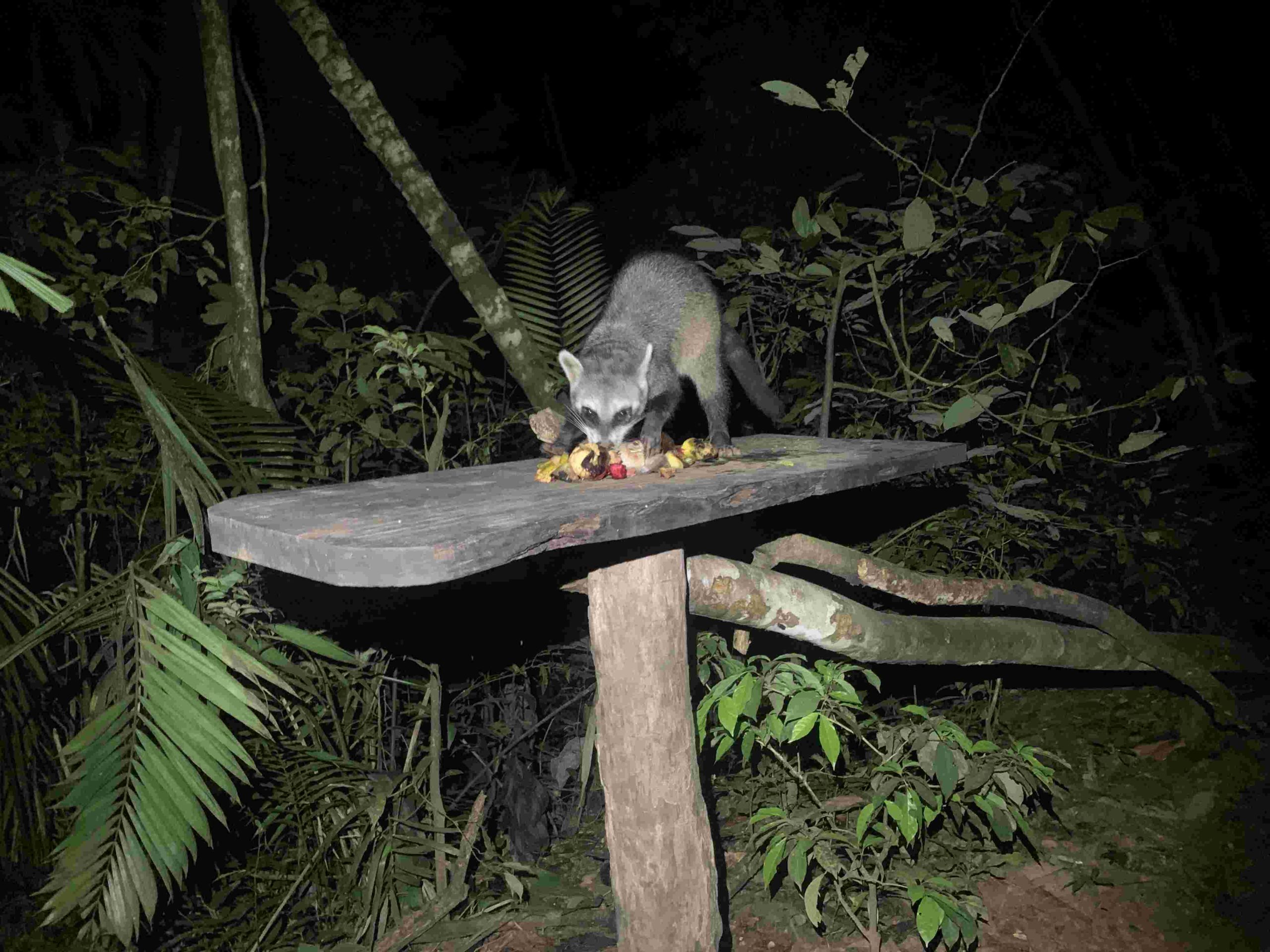
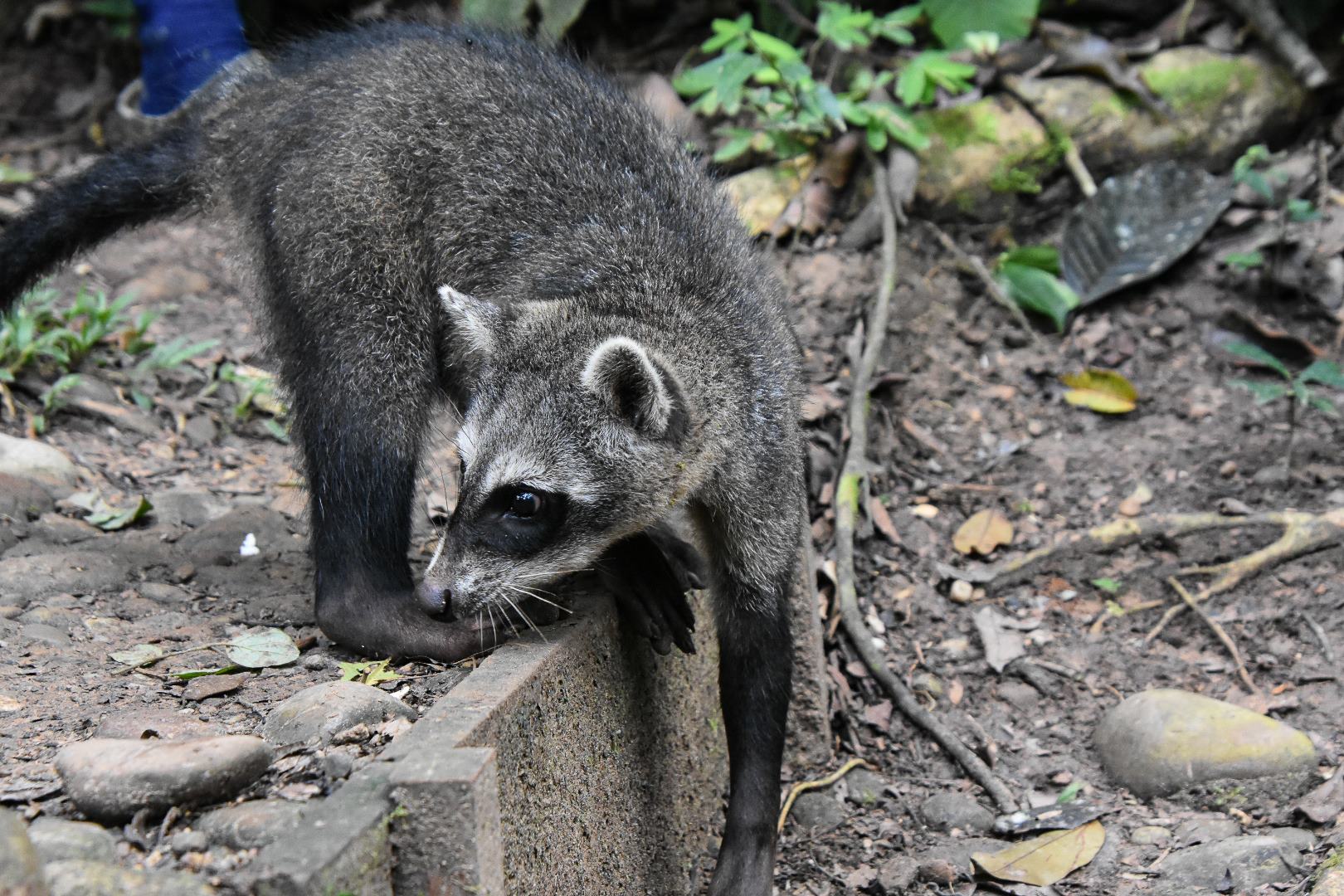
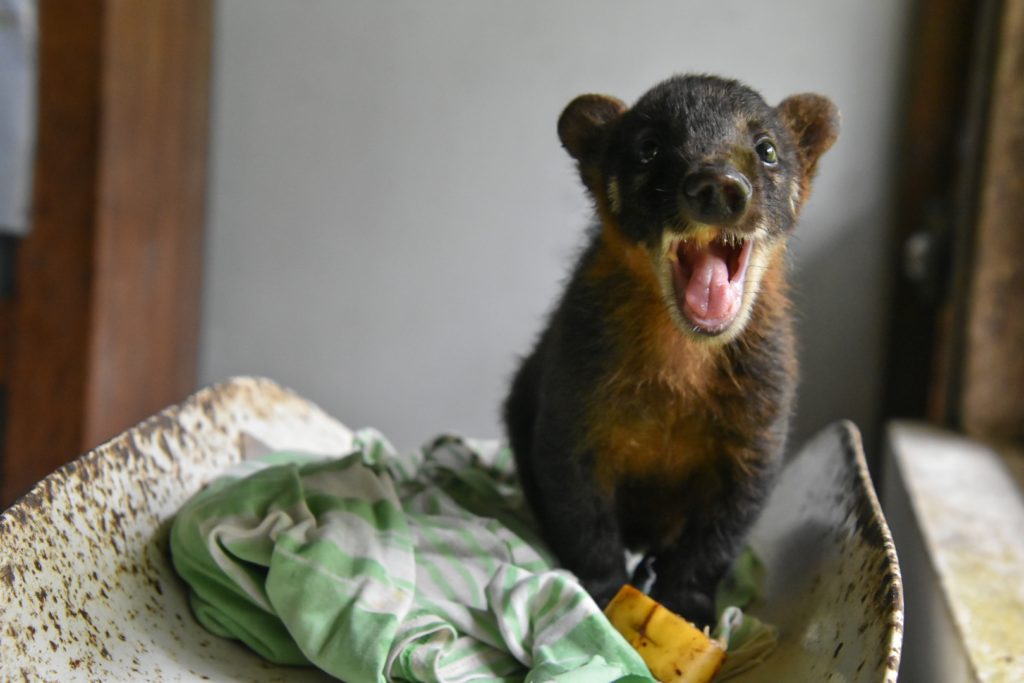
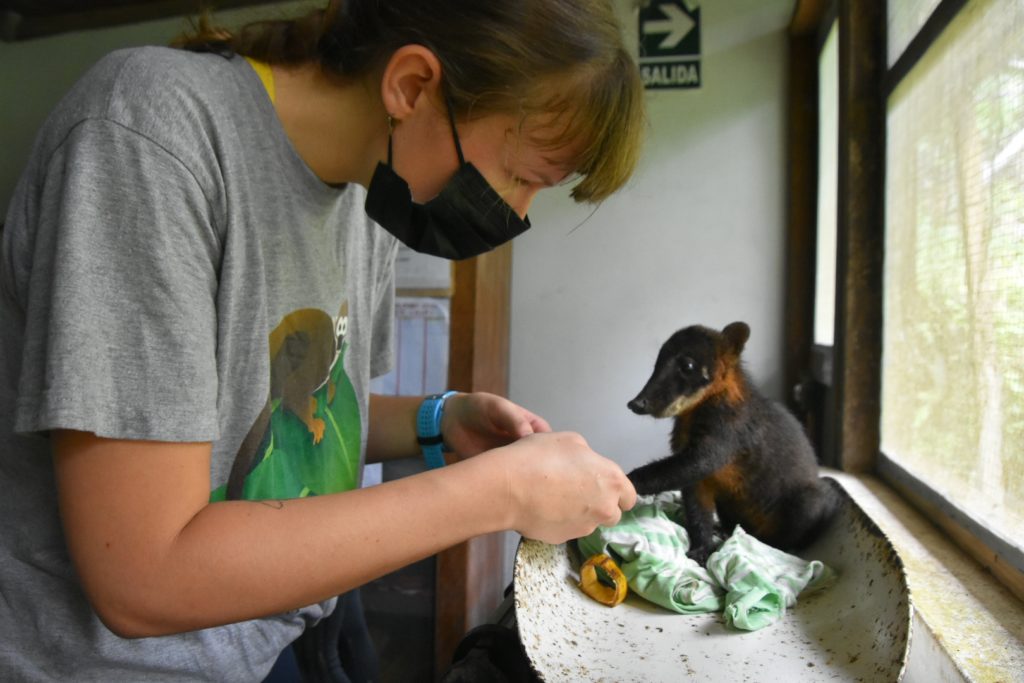
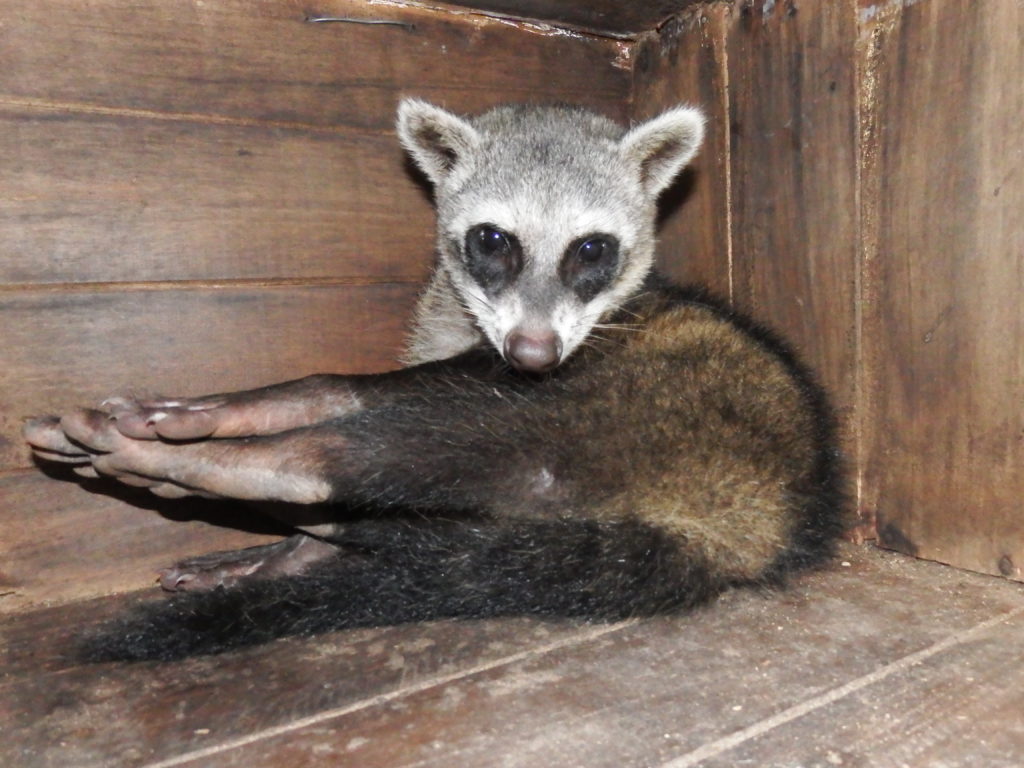
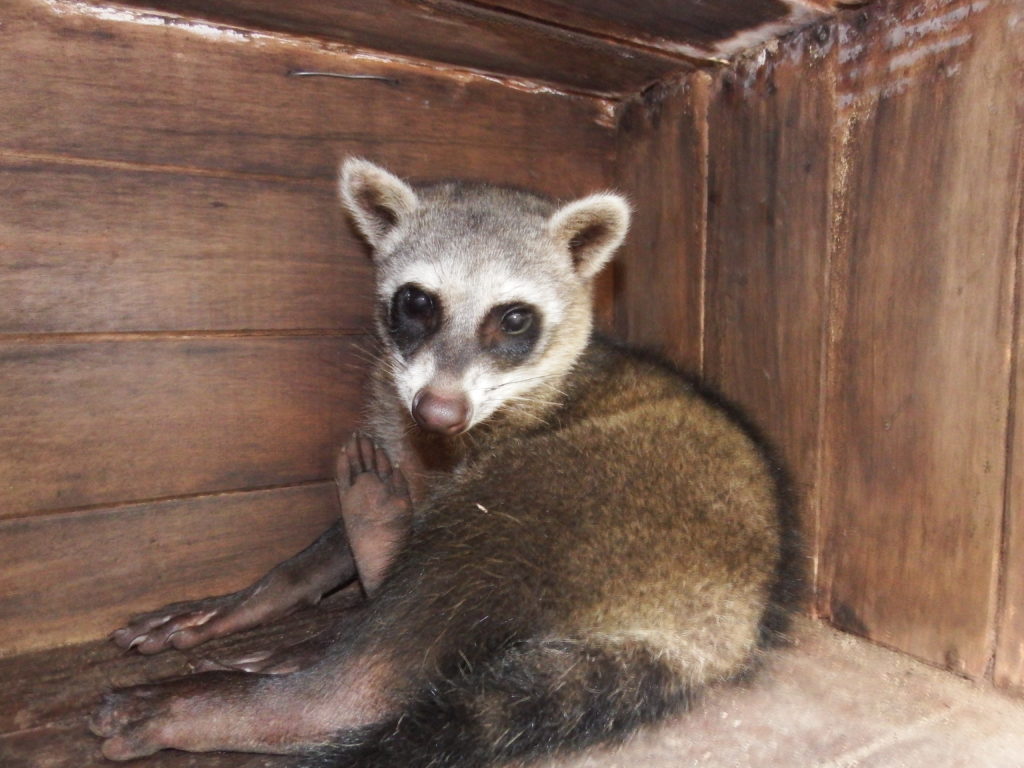
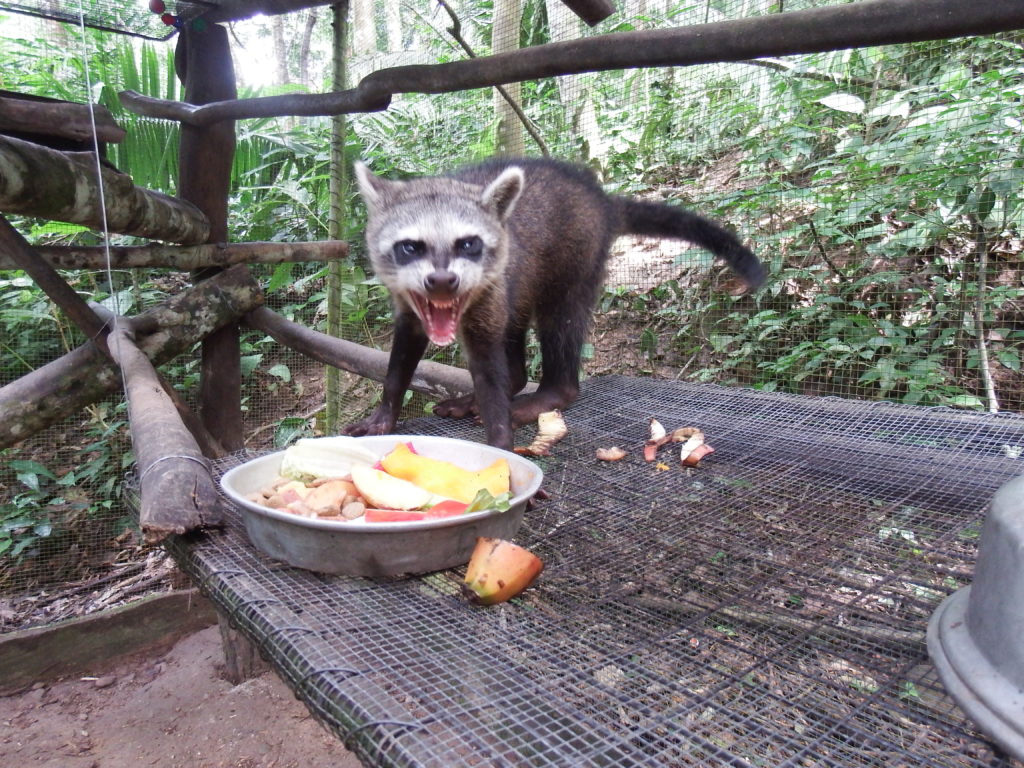
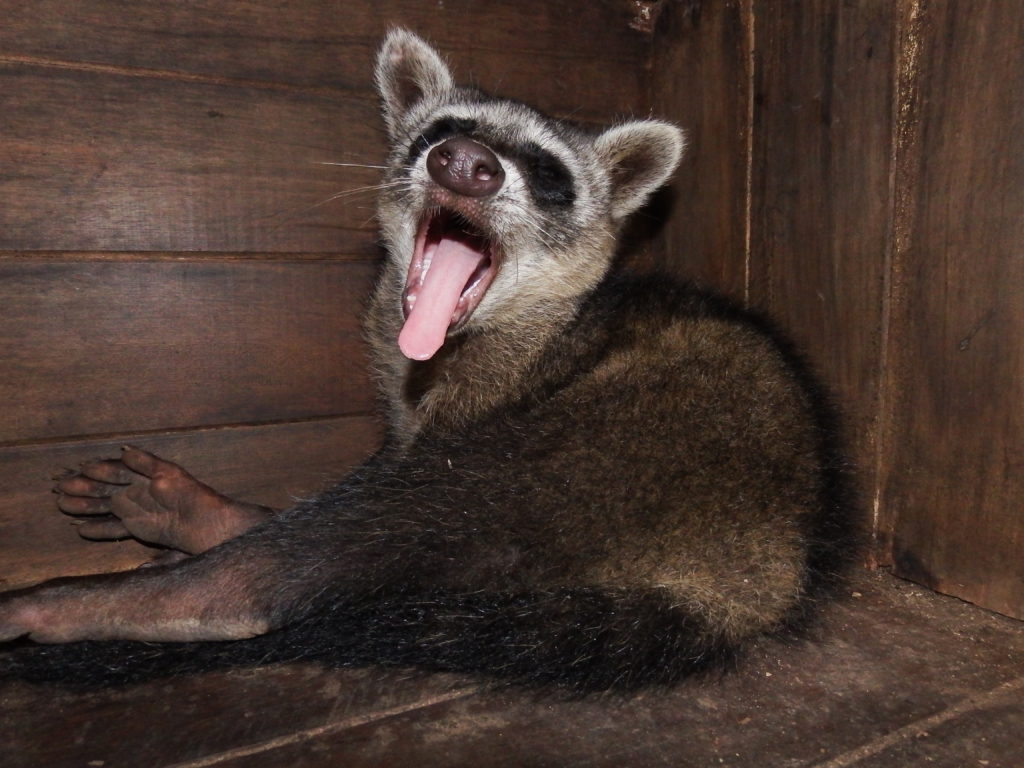
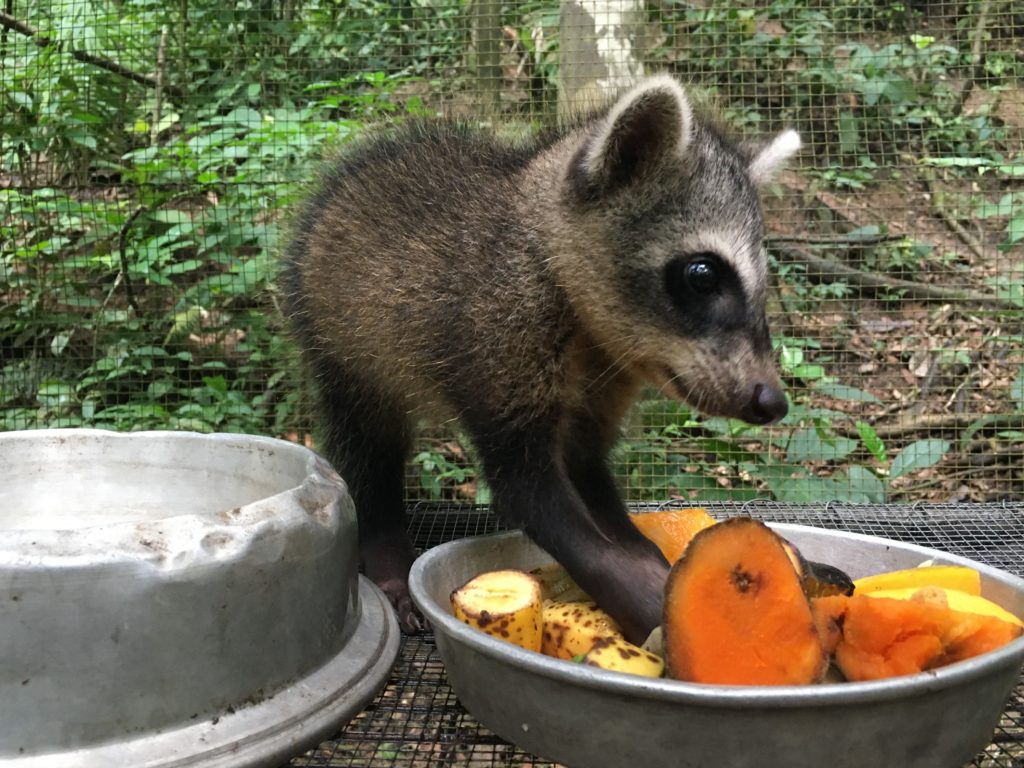
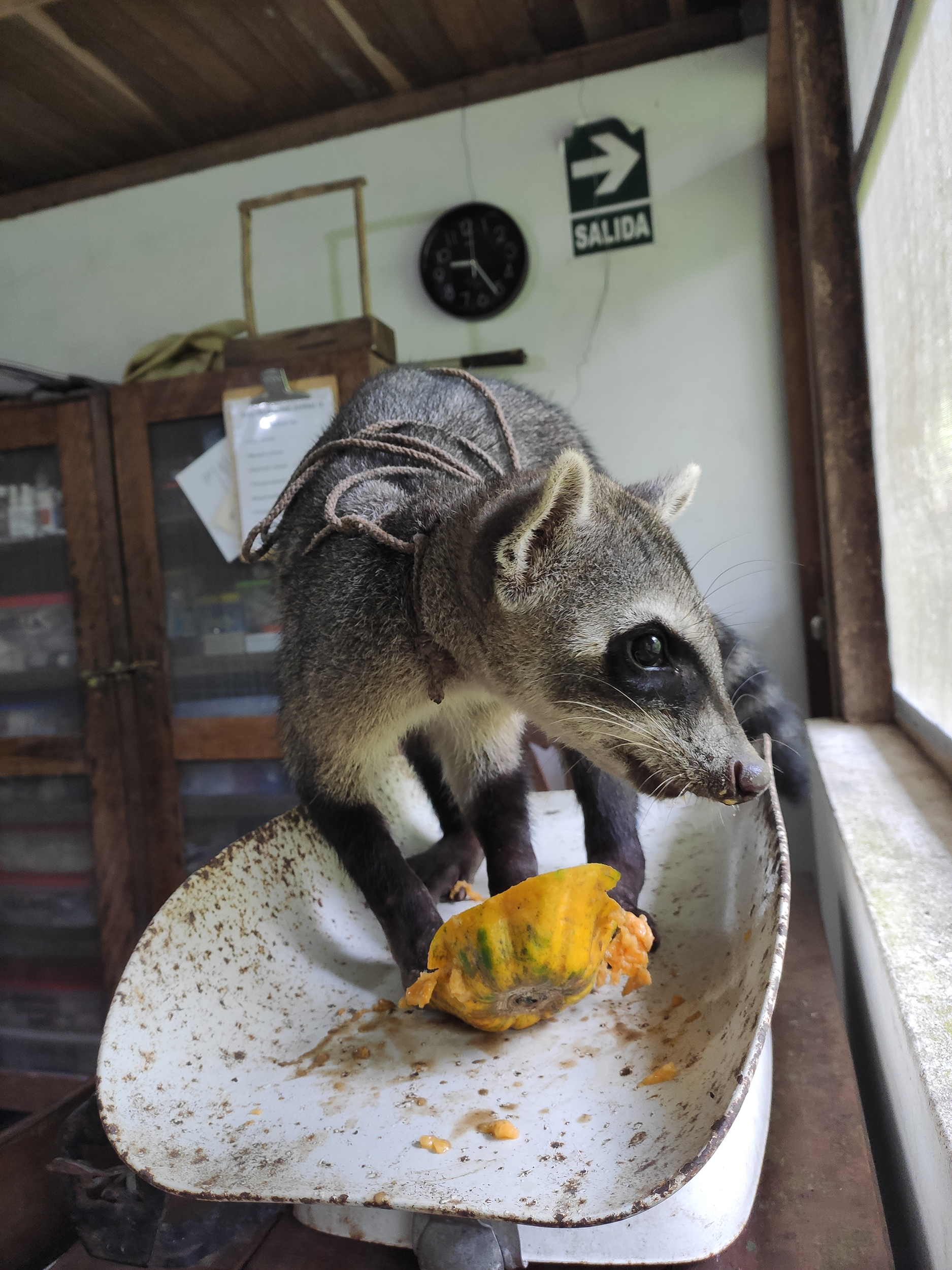
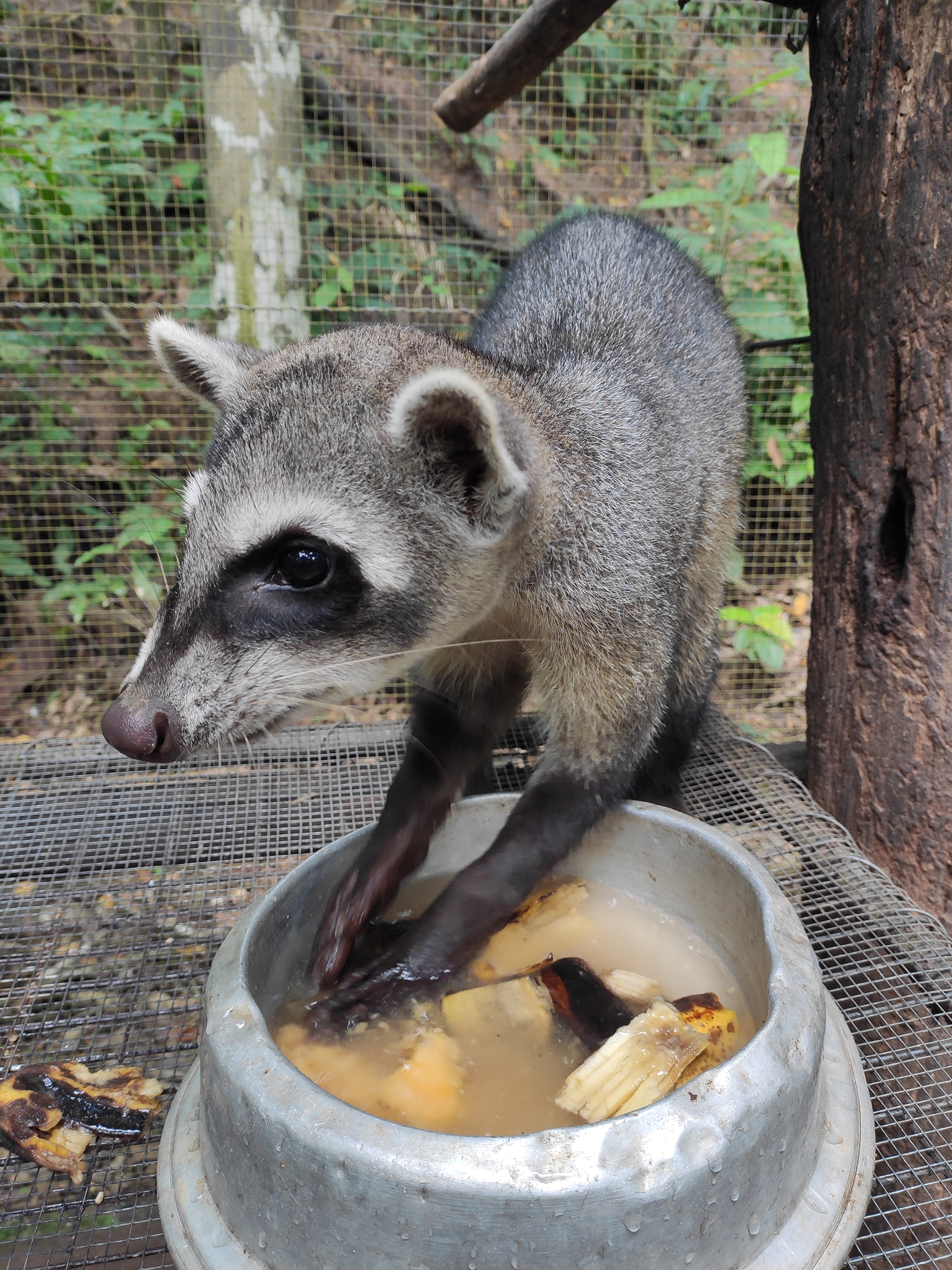
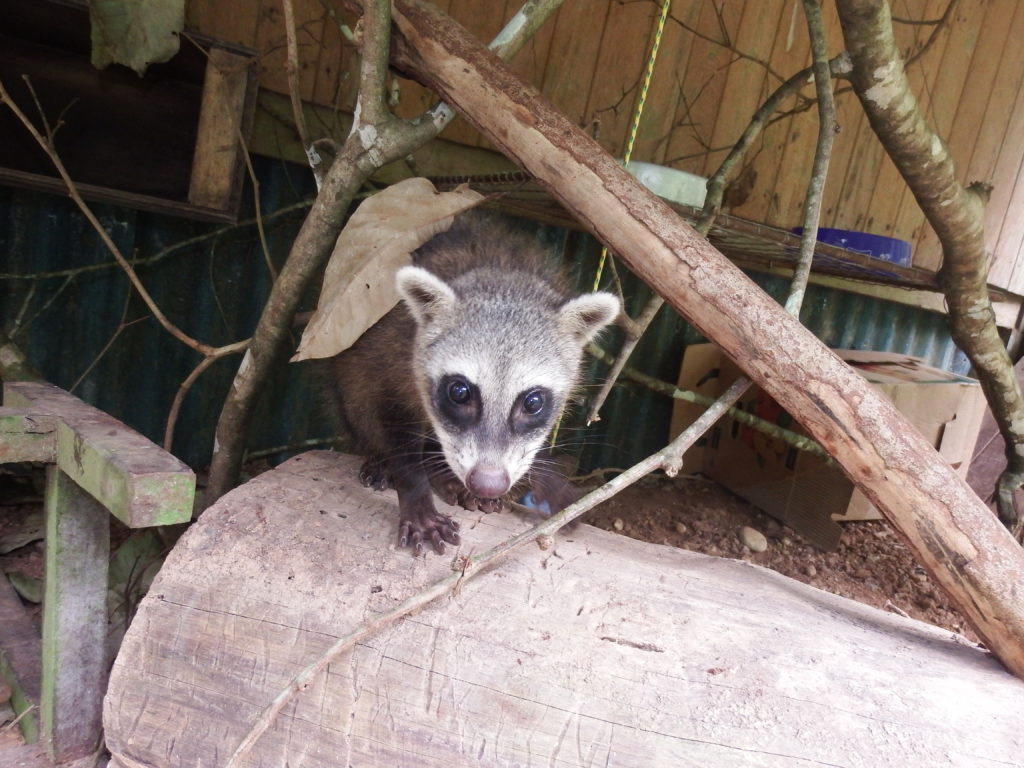
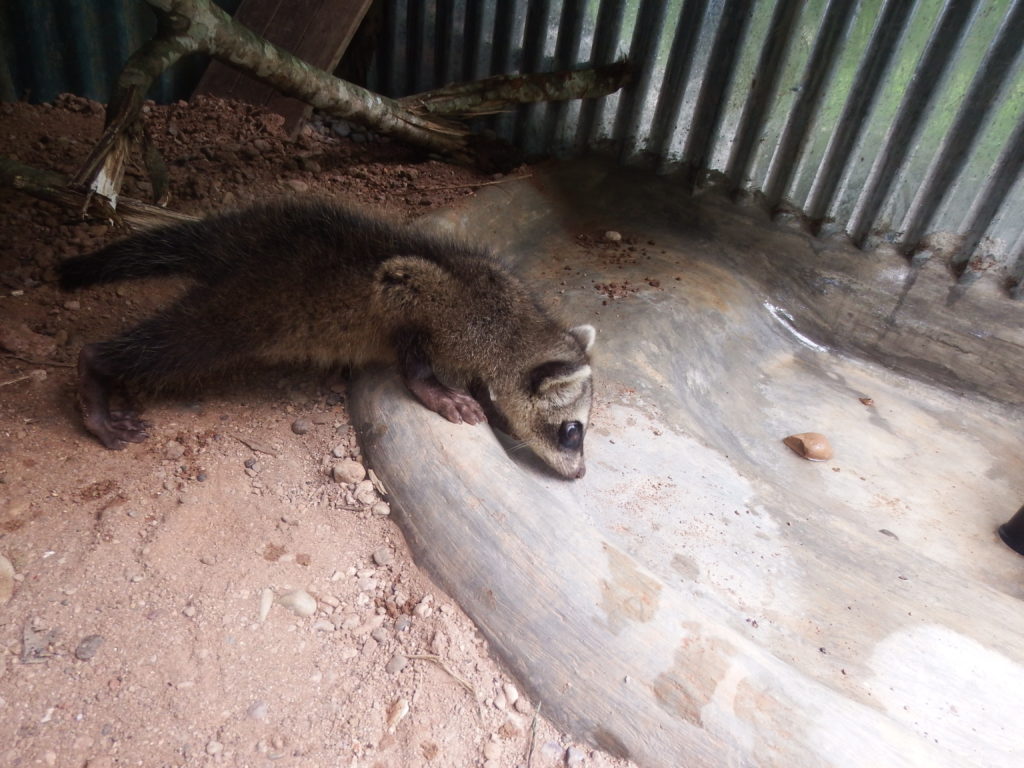
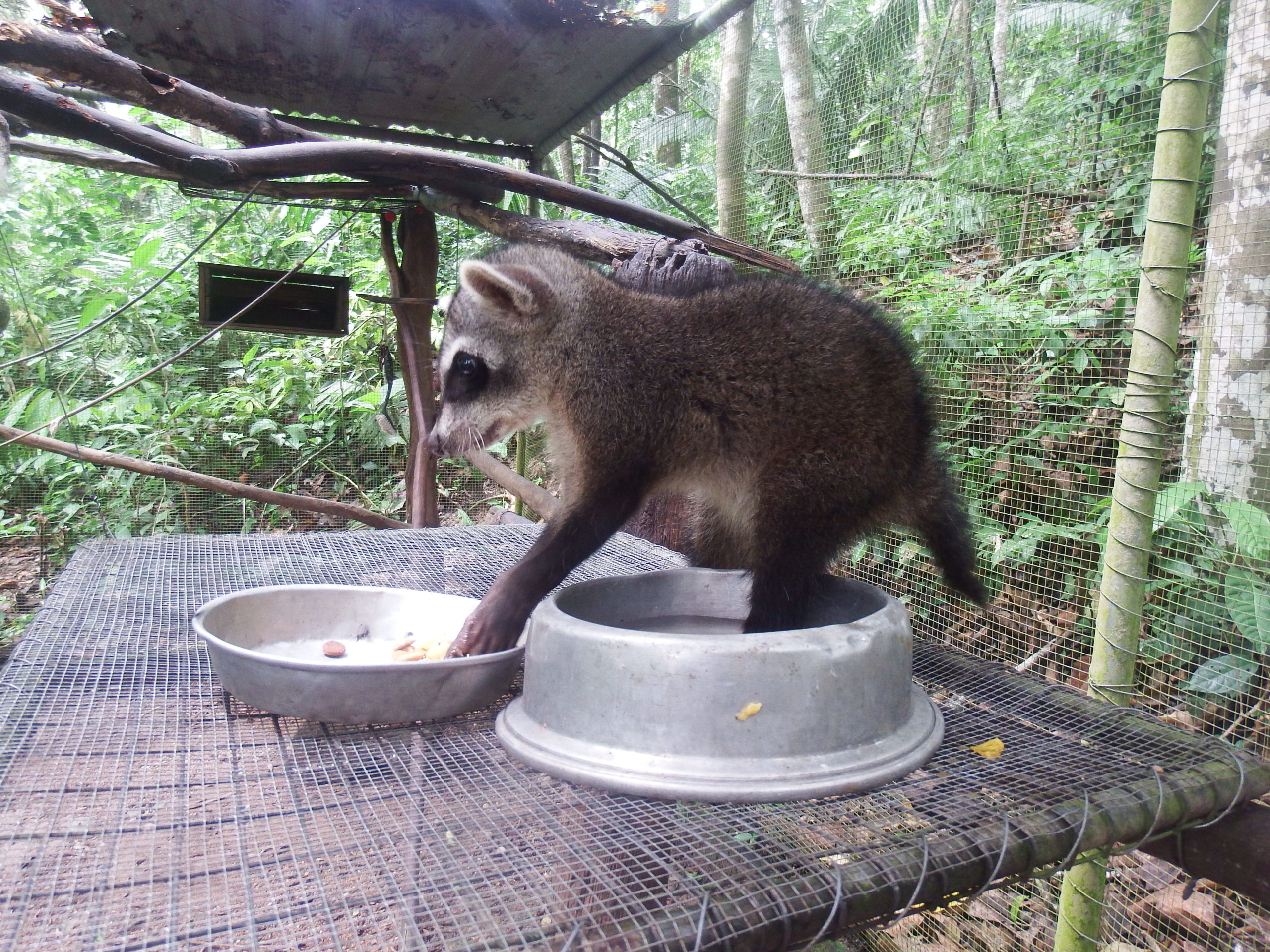
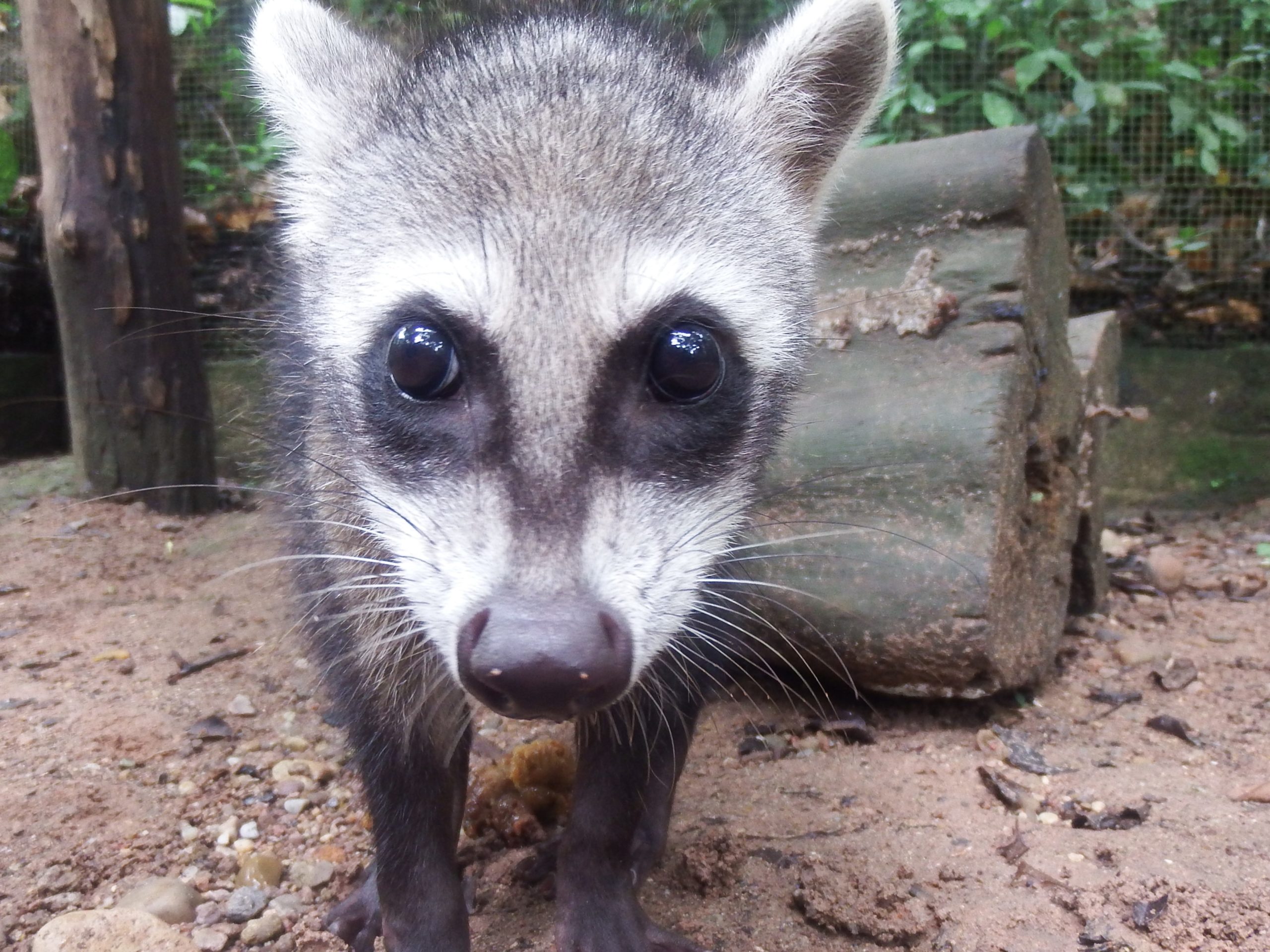
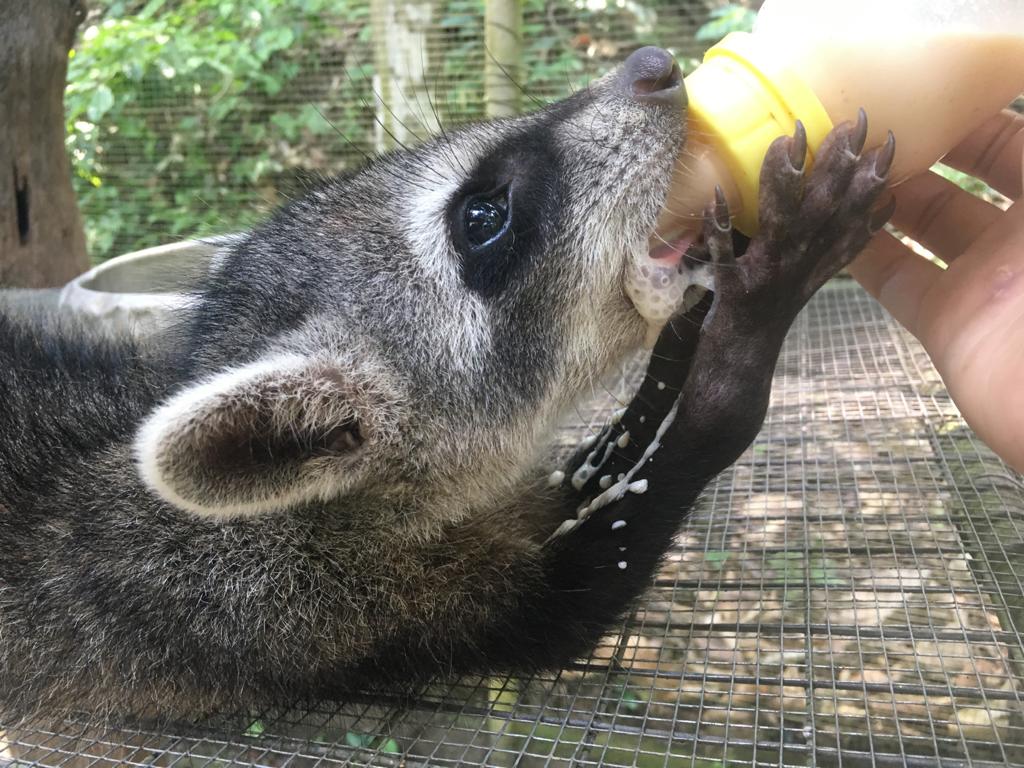
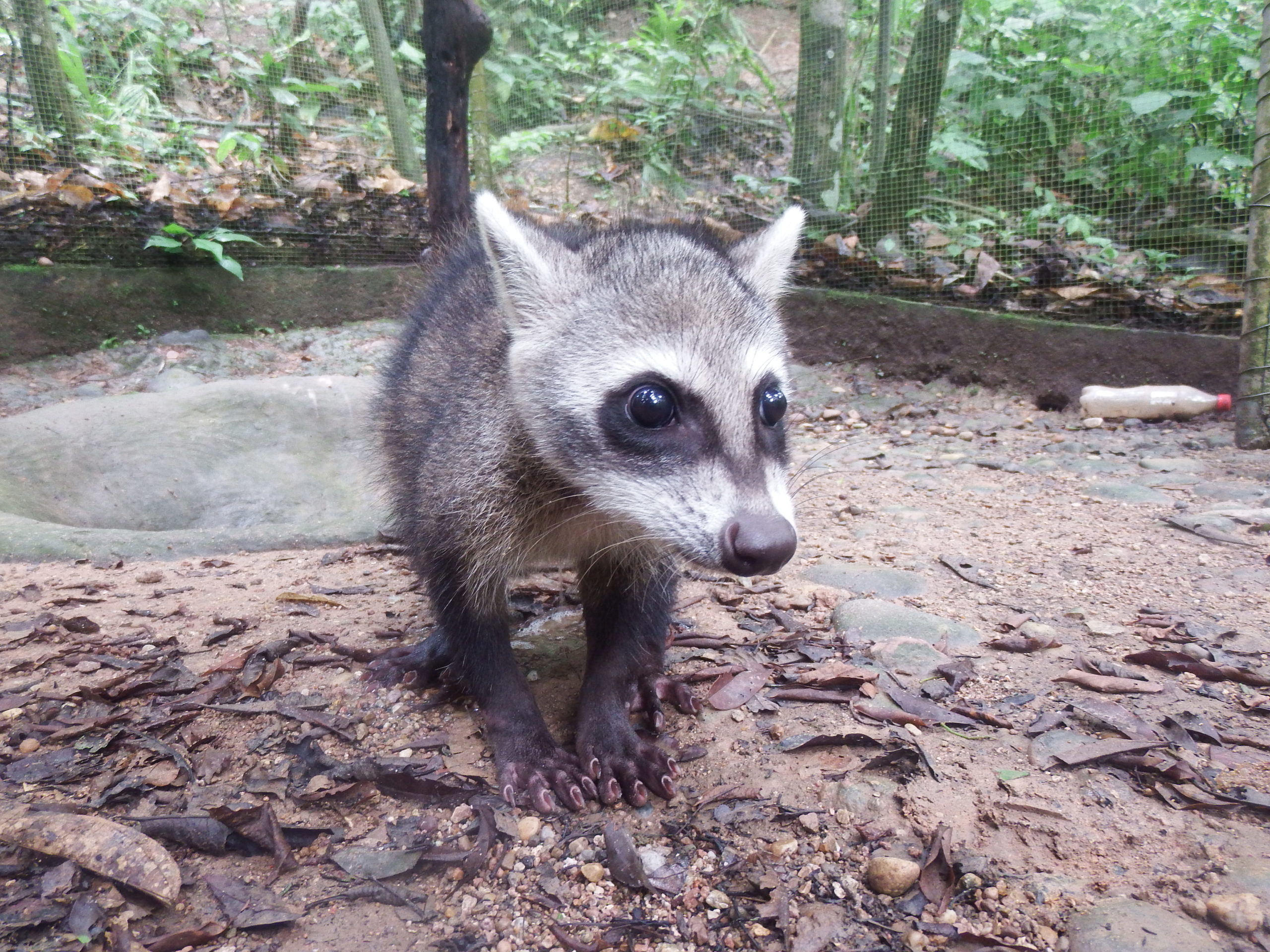
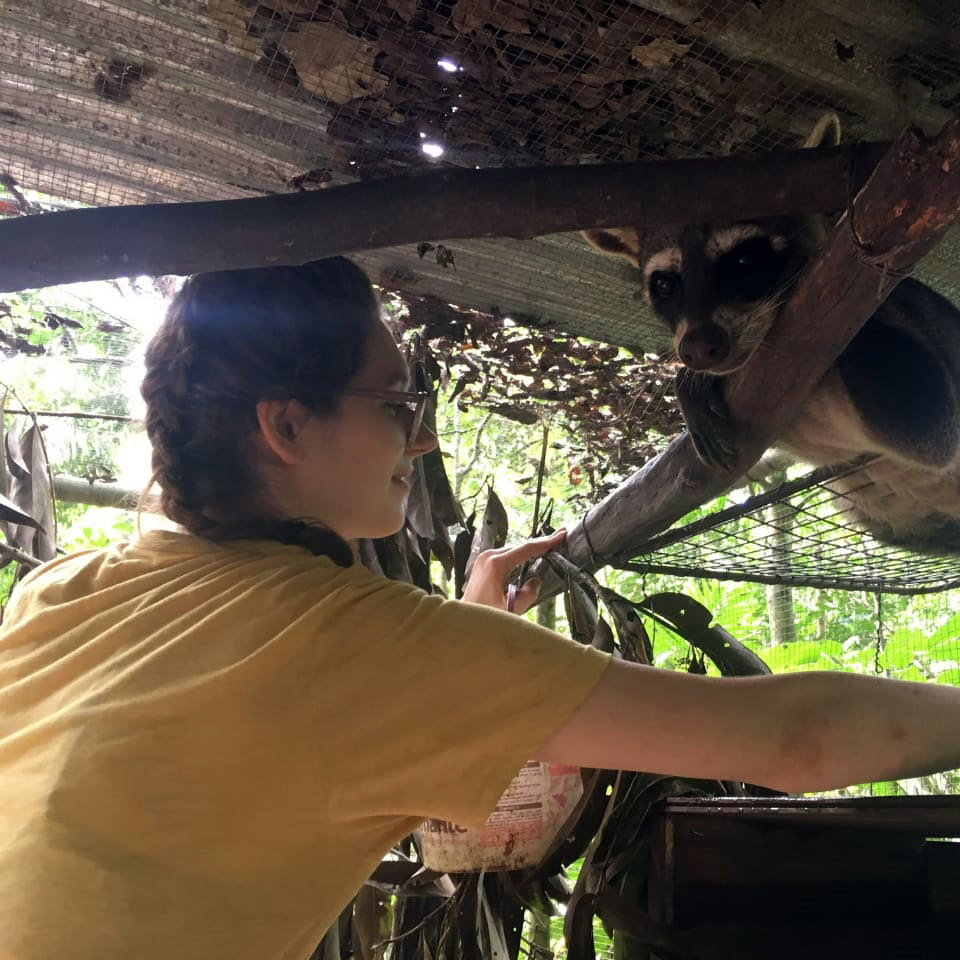
Payco, the male crab eating raccoon, has taken his first steps outside. Now it is a question of giving him a lot of practice while being with someone to guide him on late afternoon walks until he is accustomed enough to be outside on his own. He has a beautiful female, Eona (previously released), who has been visiting him during night time, and hopefully she will be able to show him the ropes about living outside.

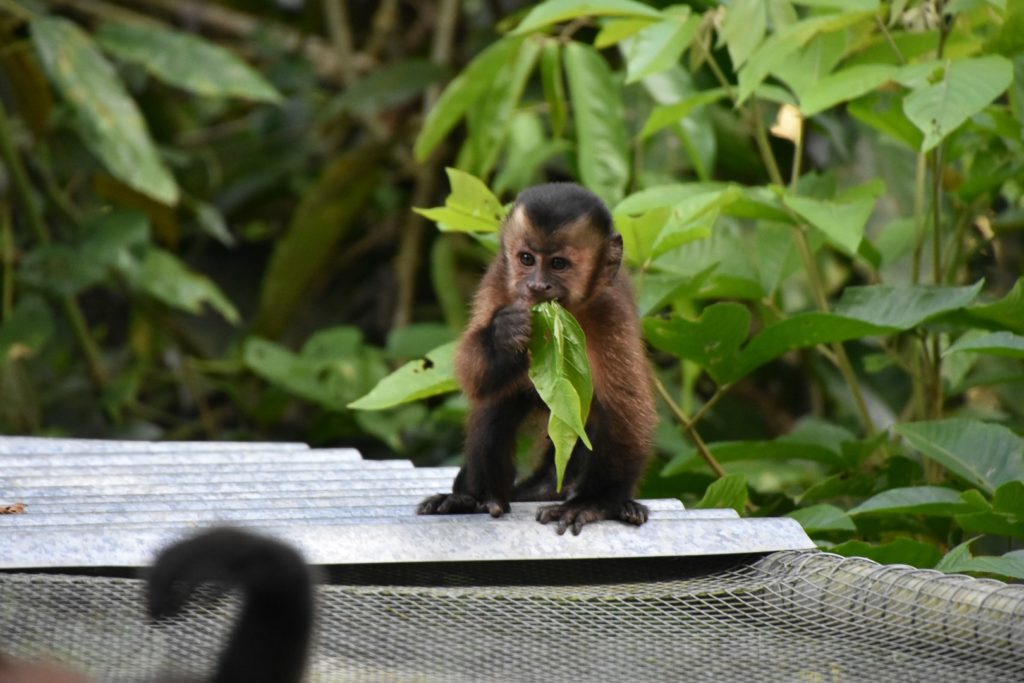
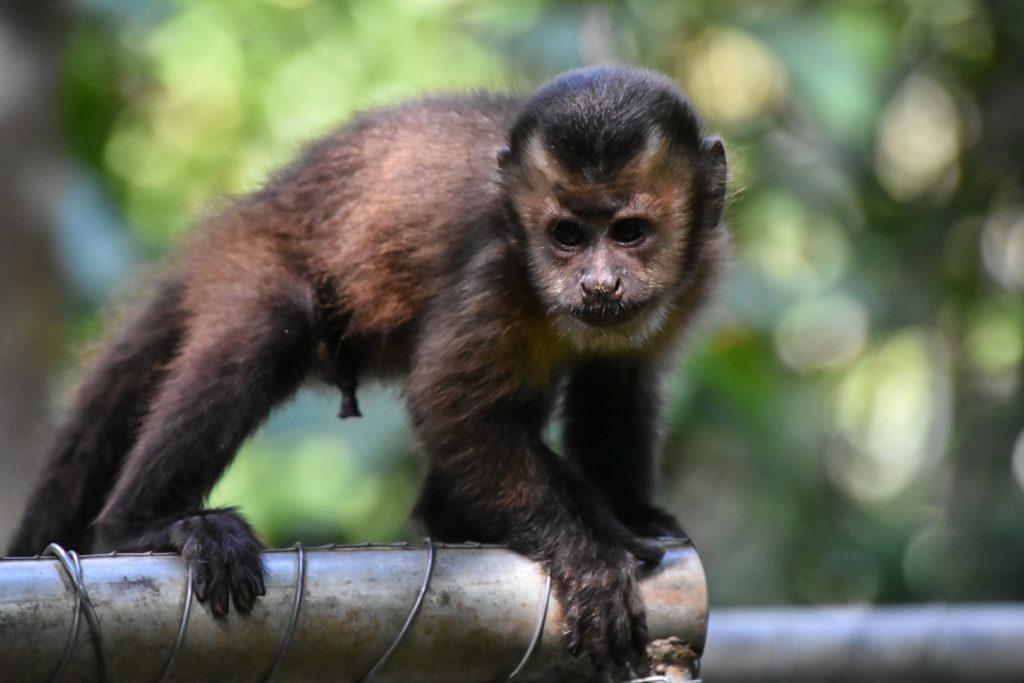
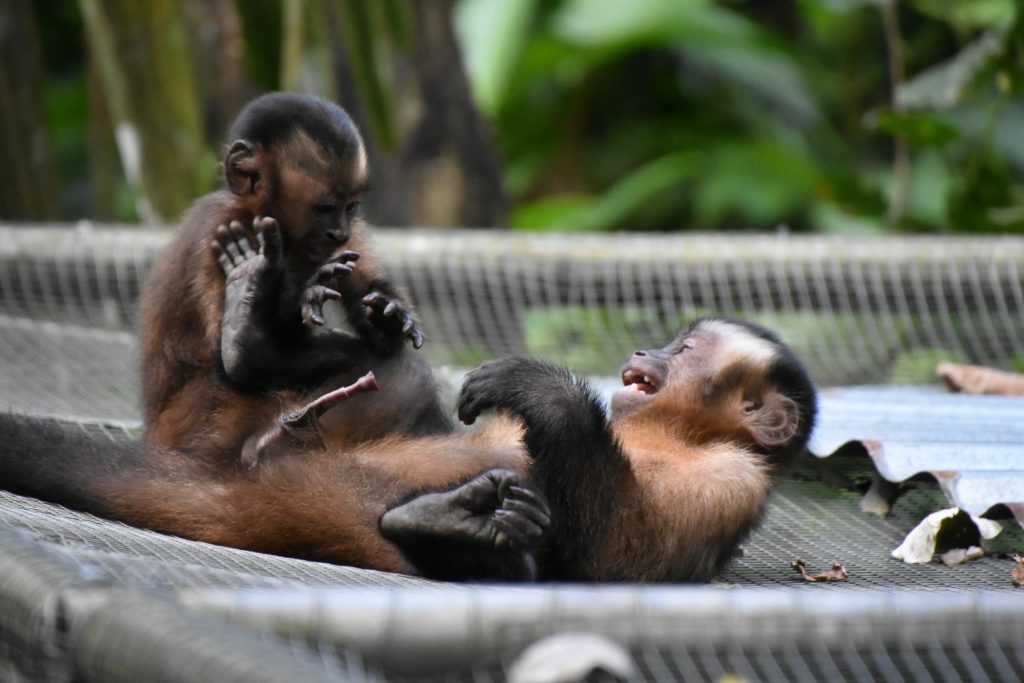
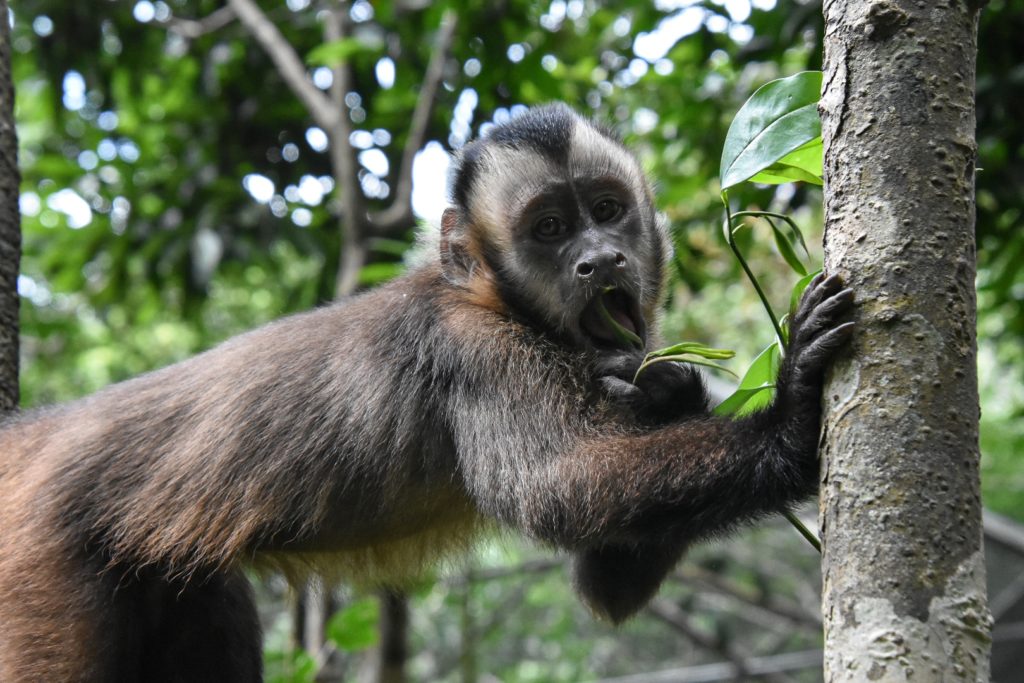
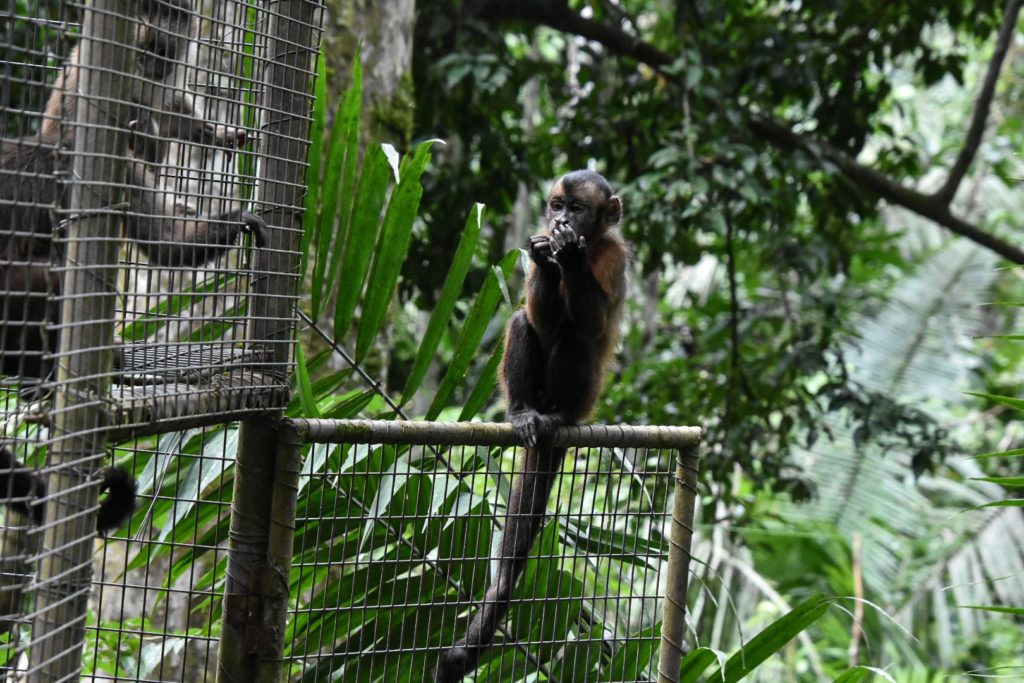
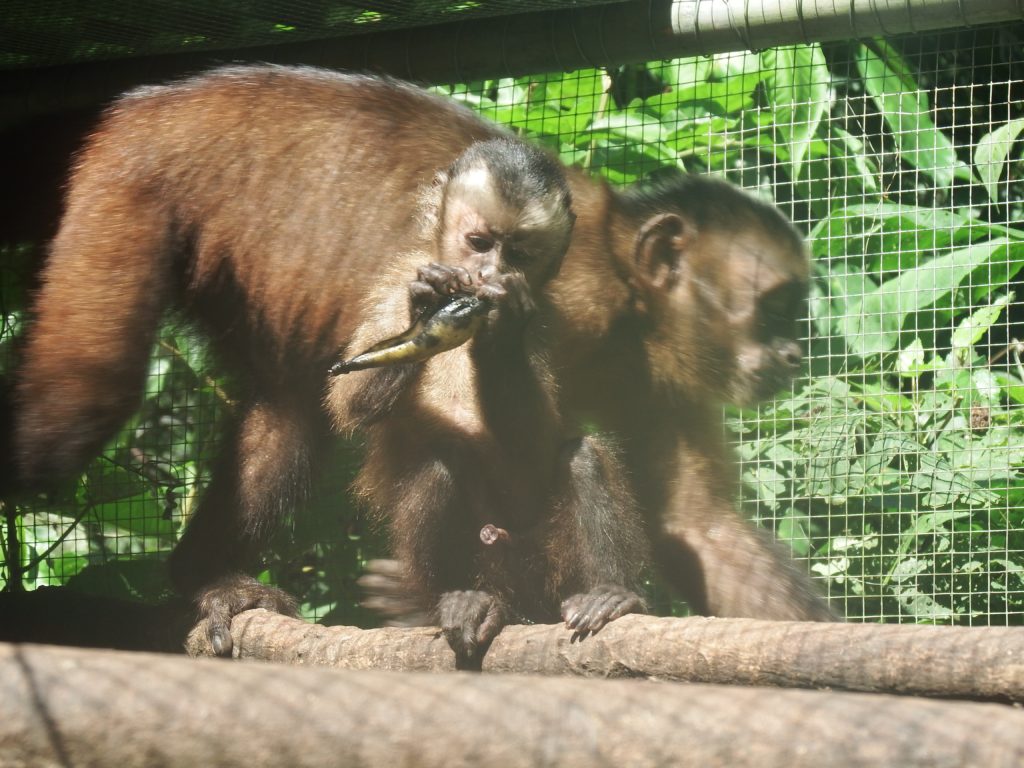
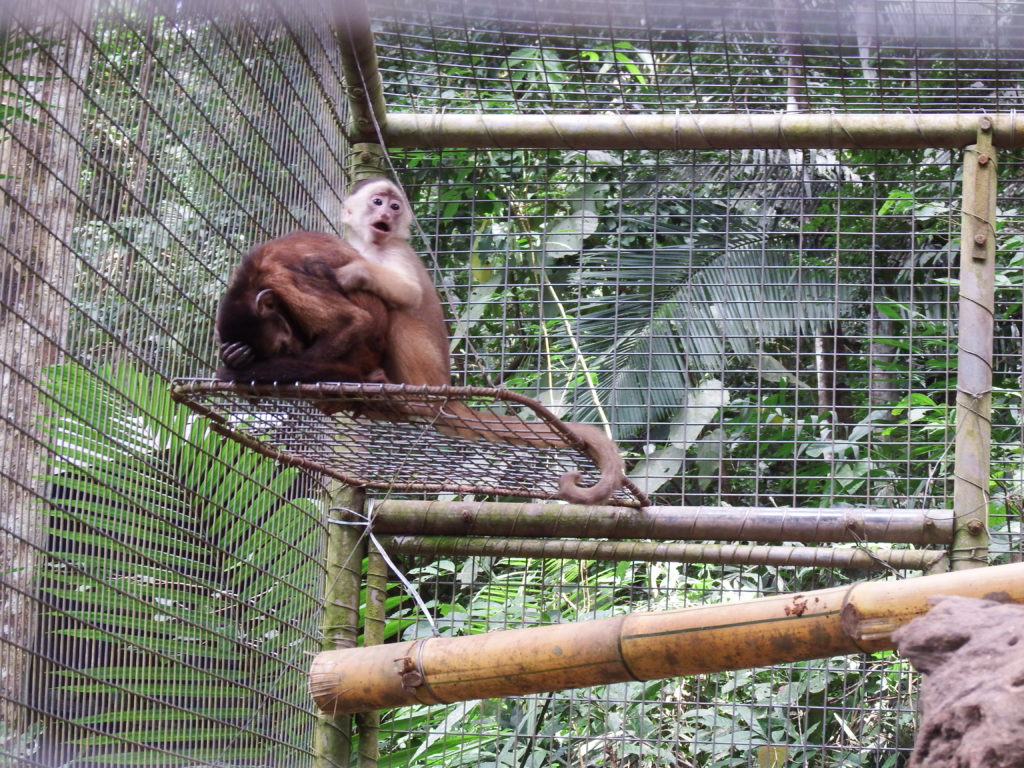
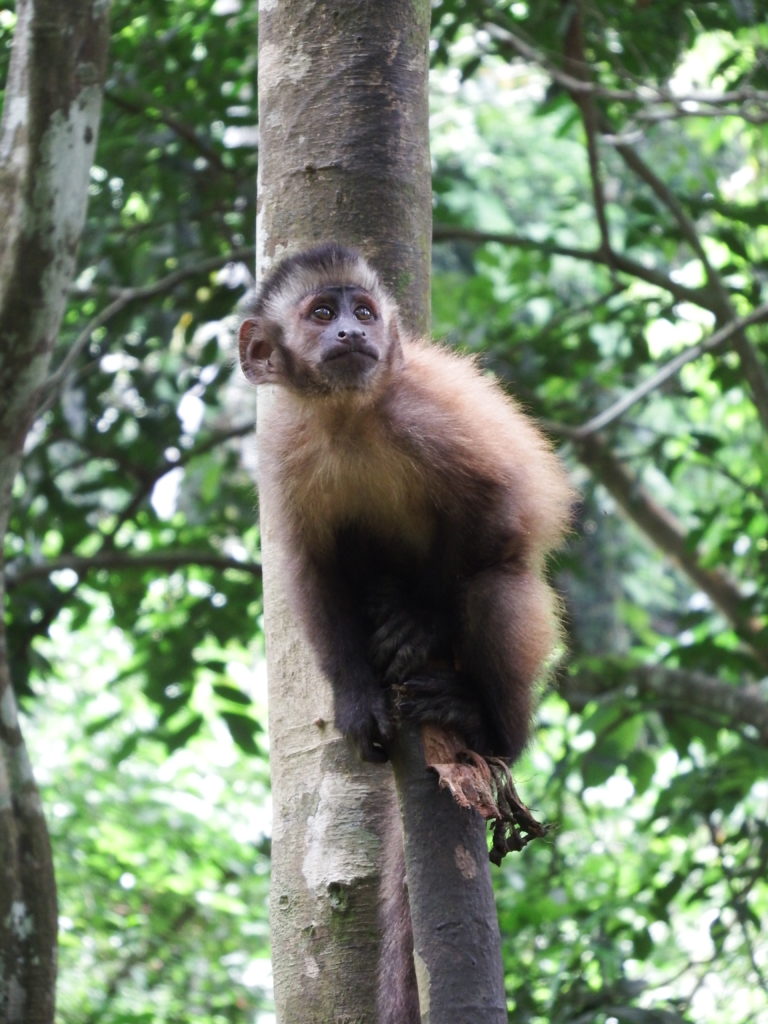
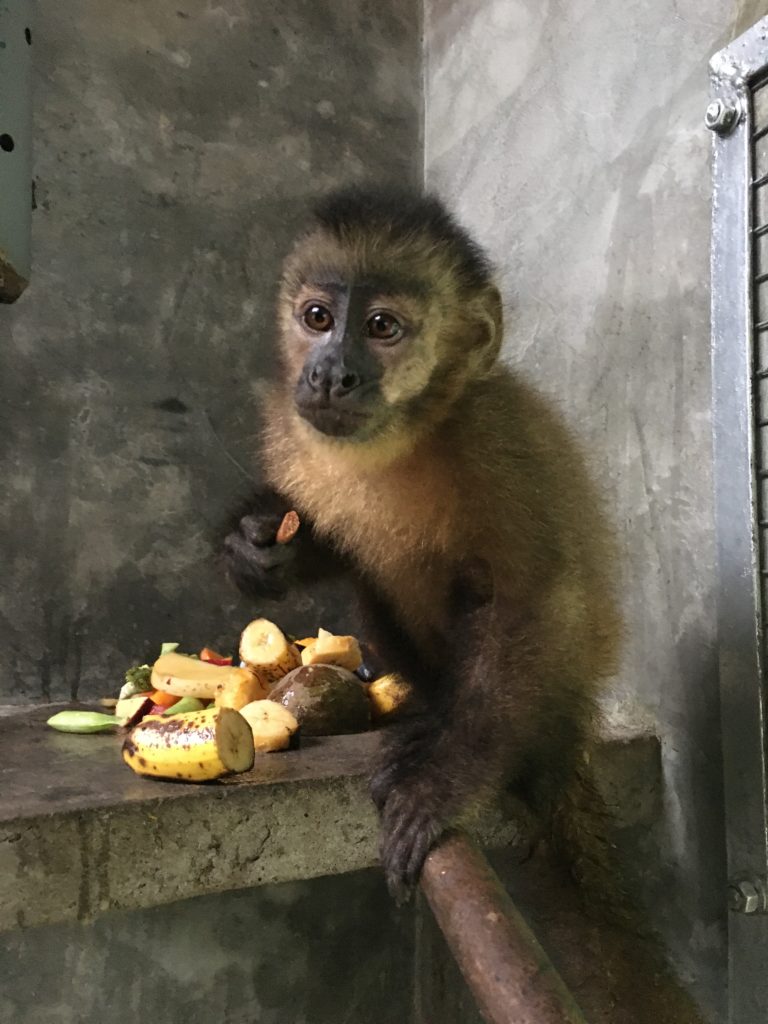
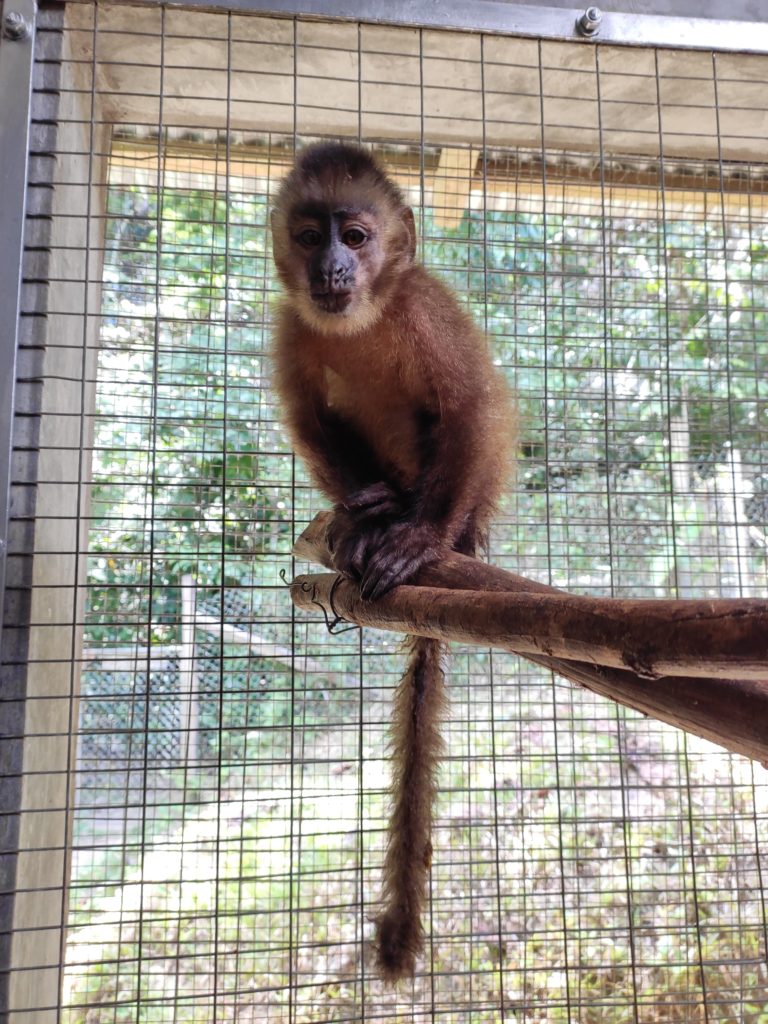
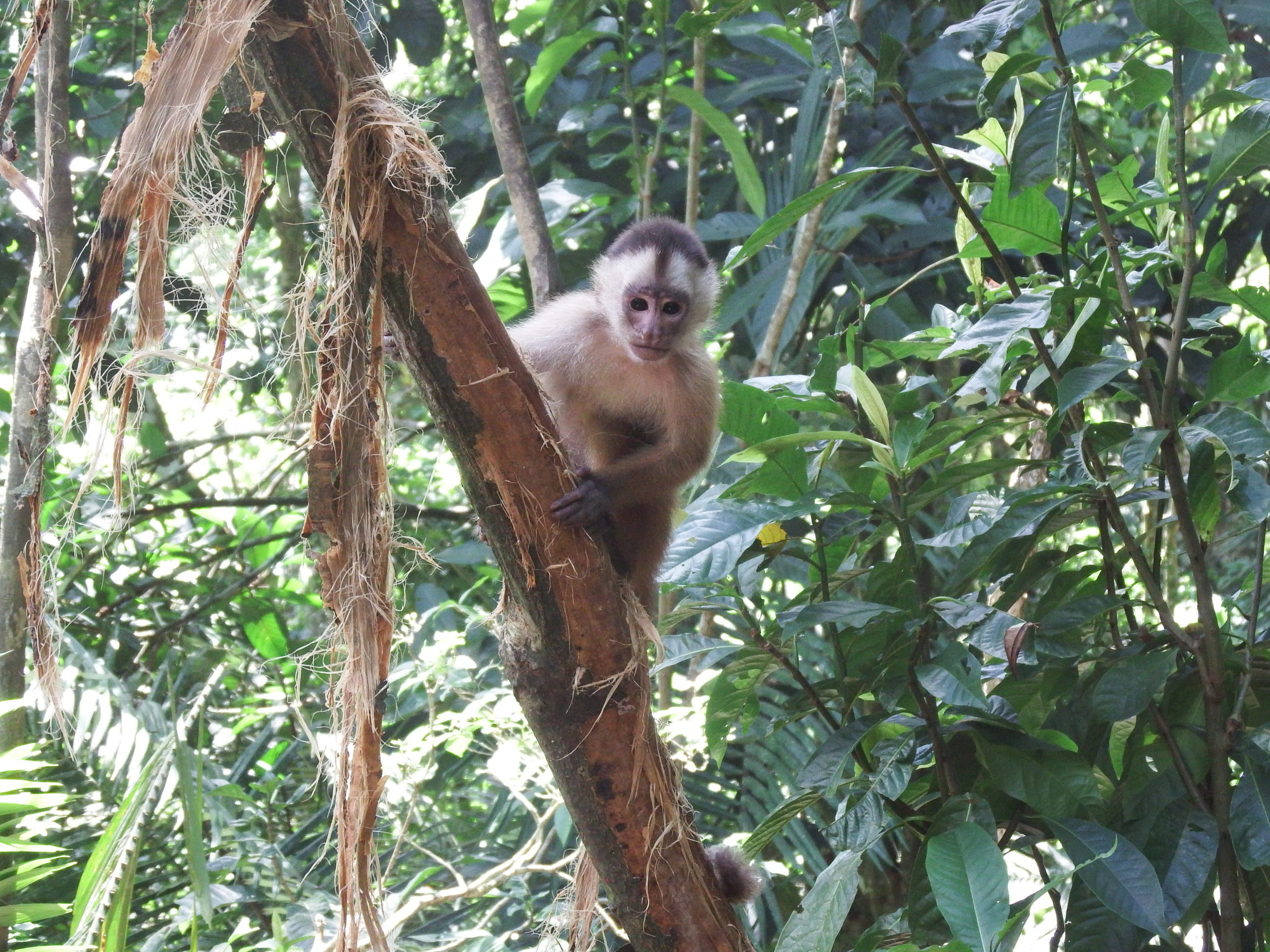
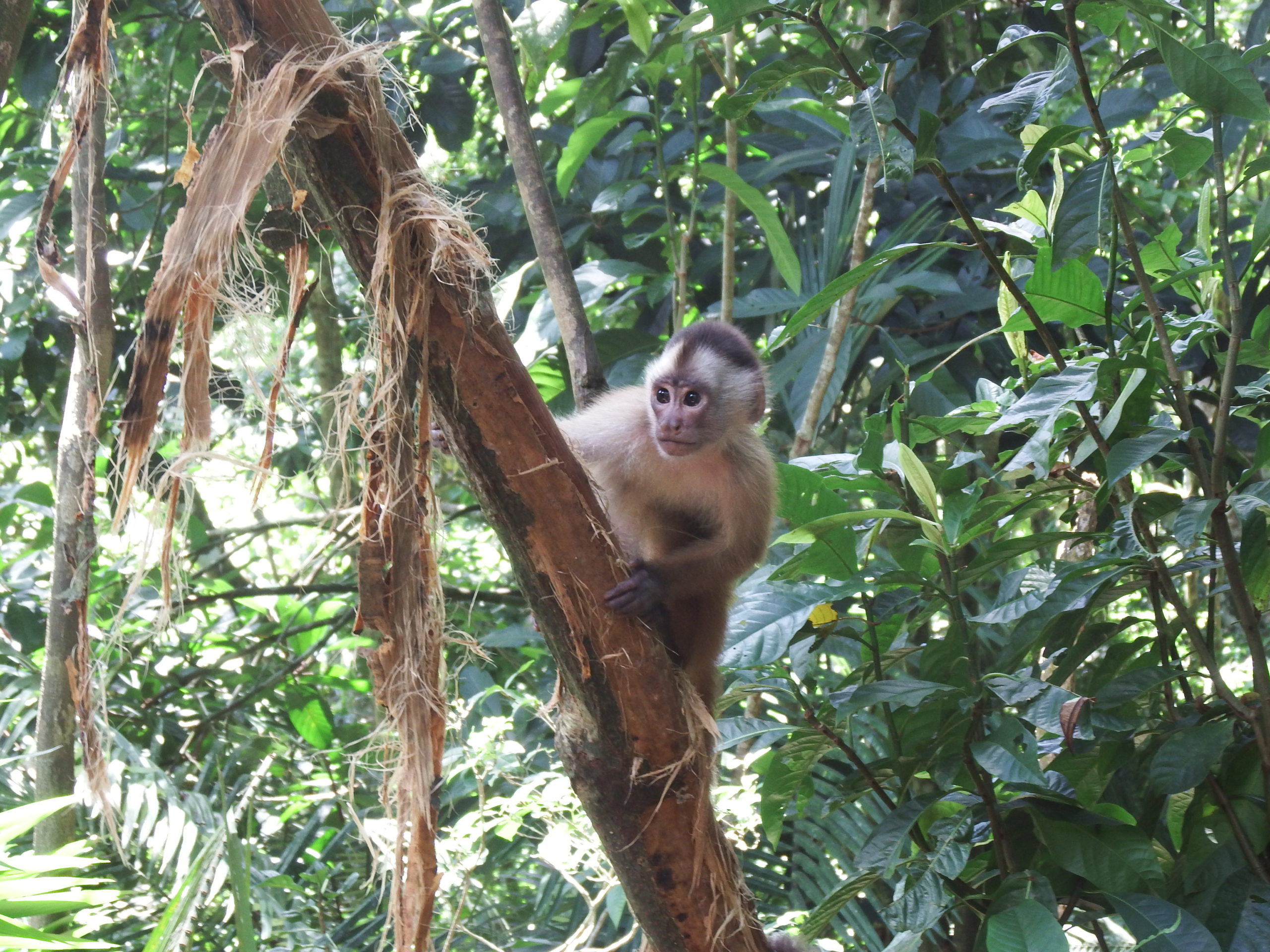
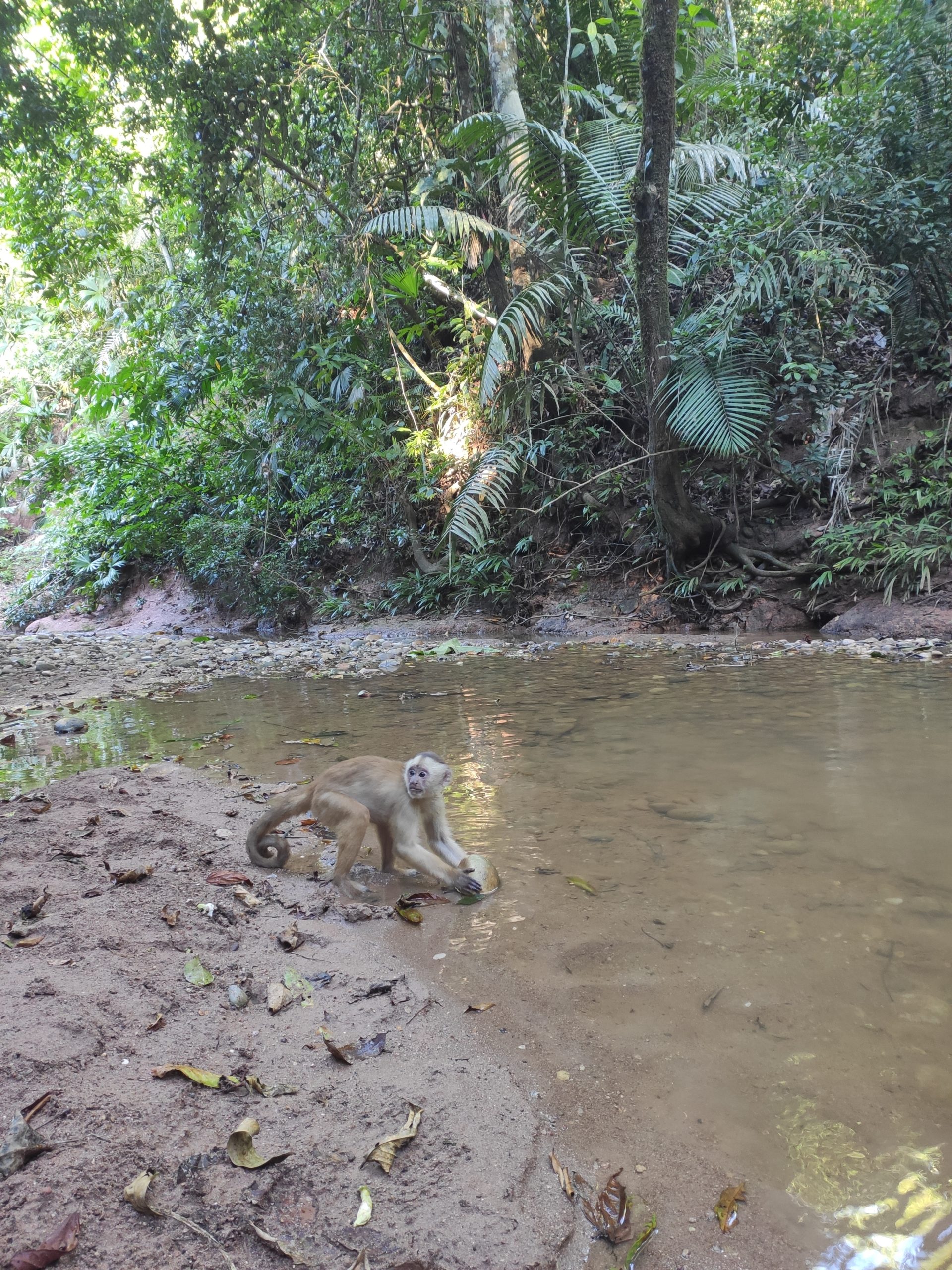
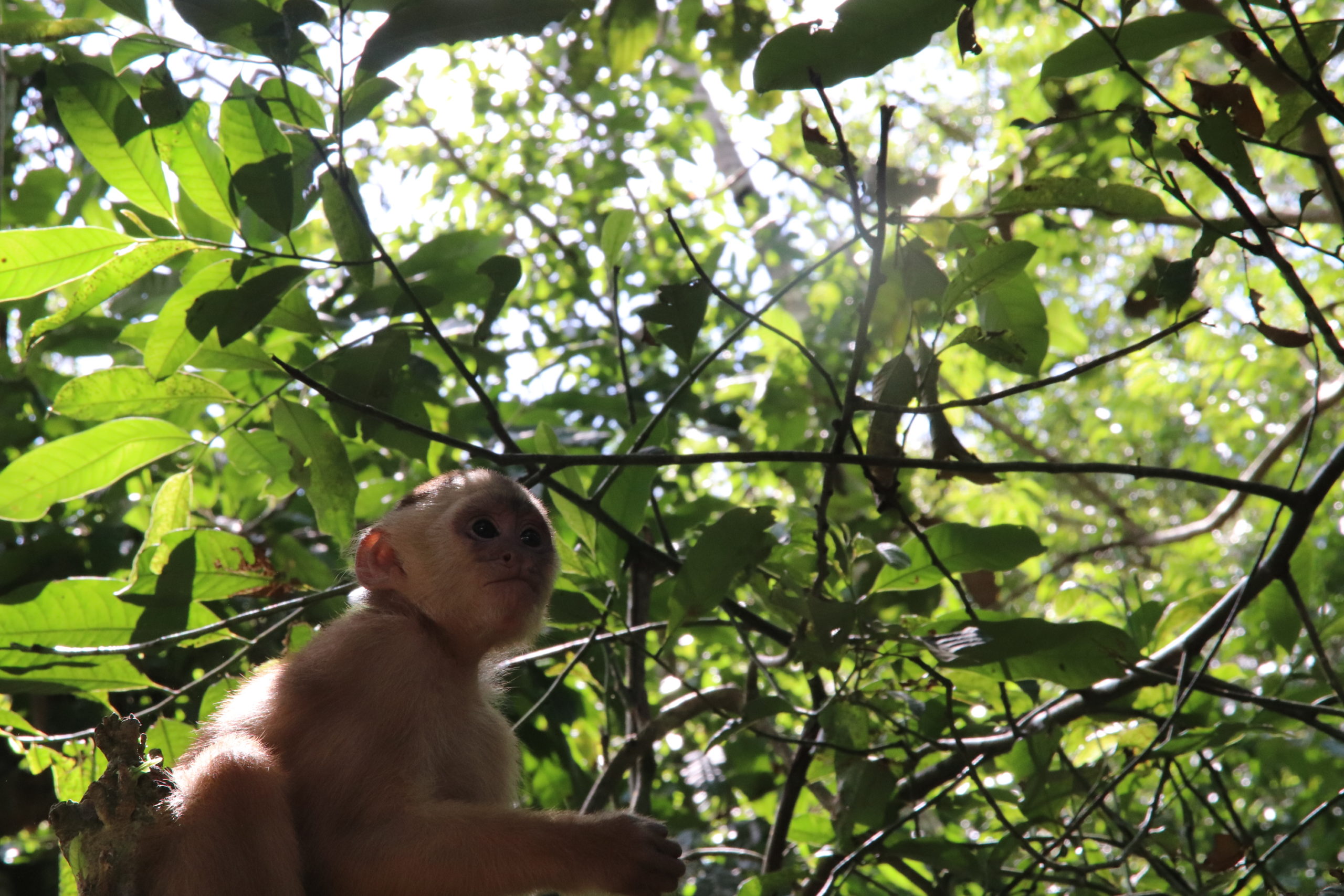
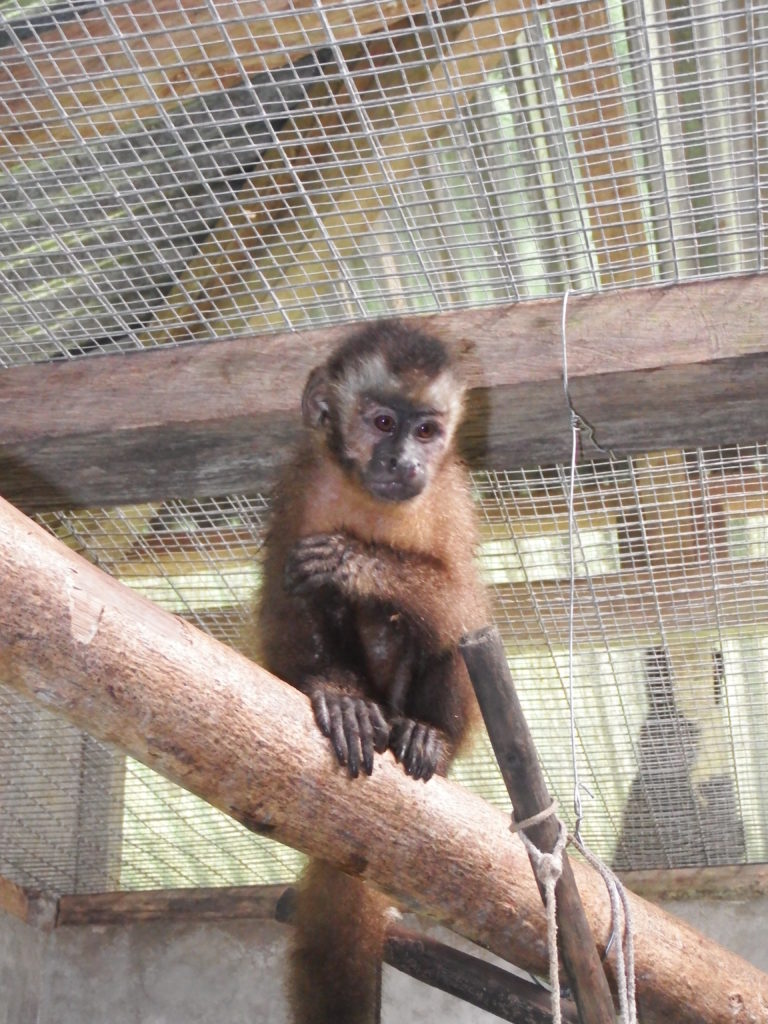
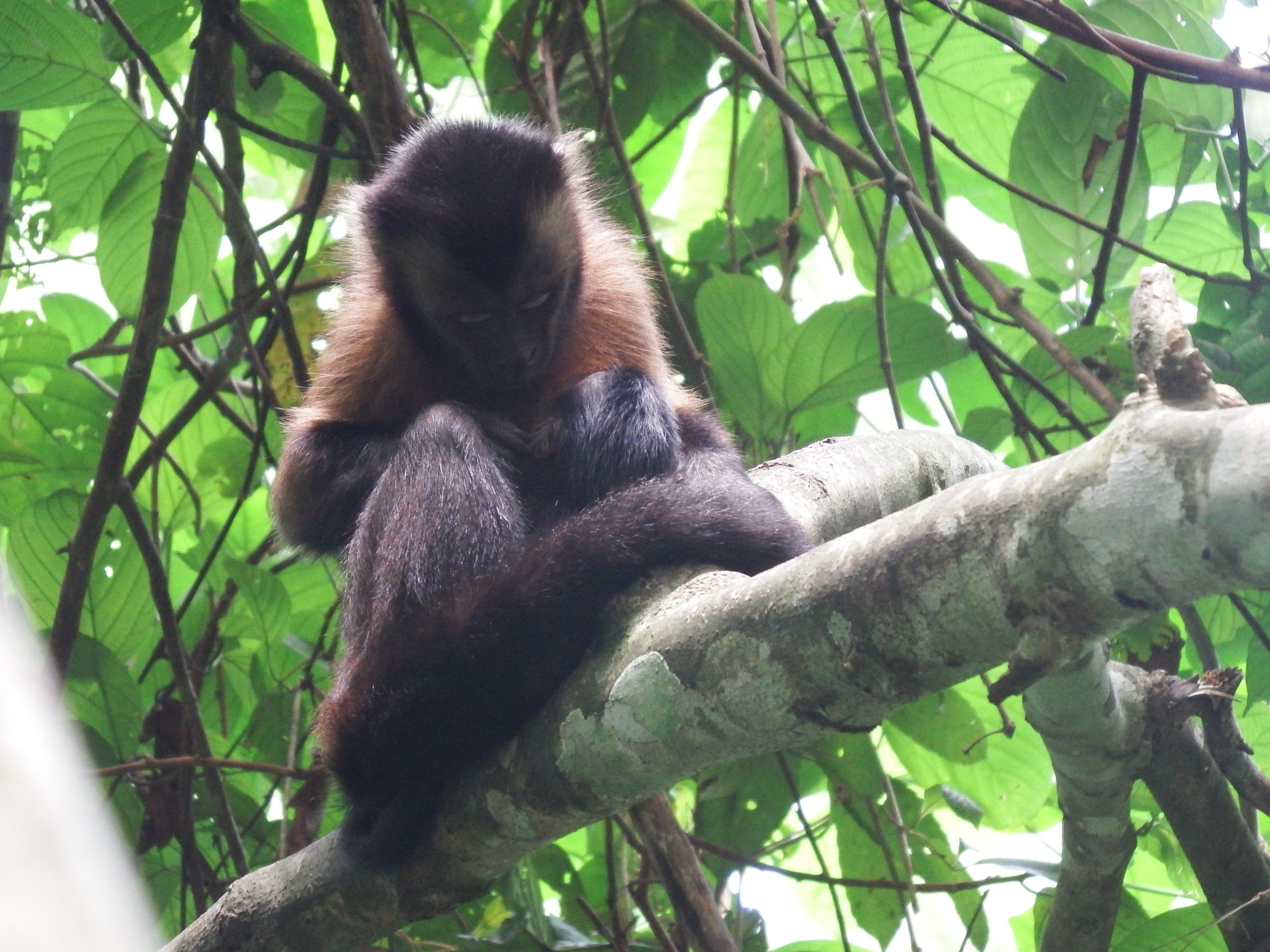
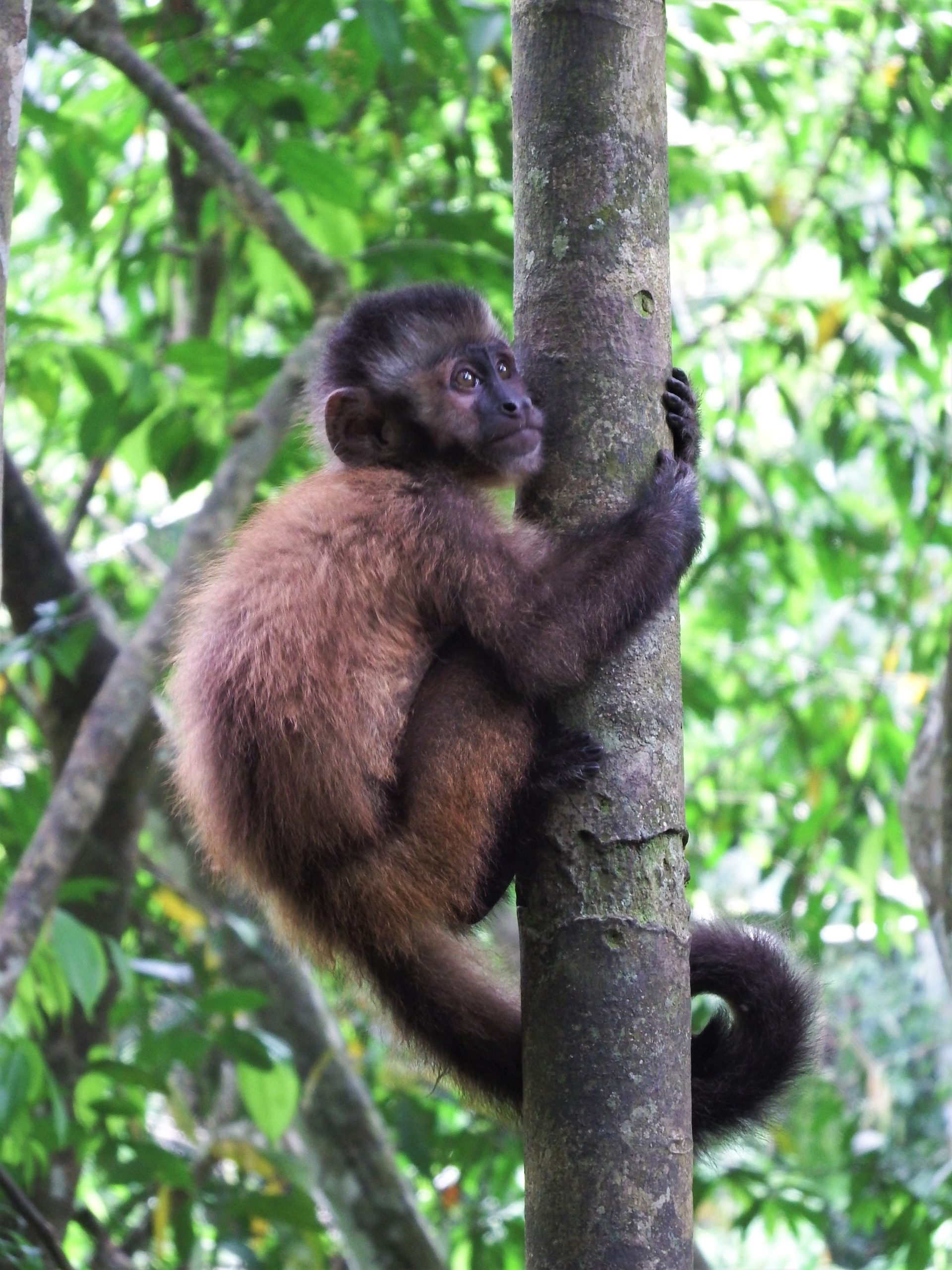
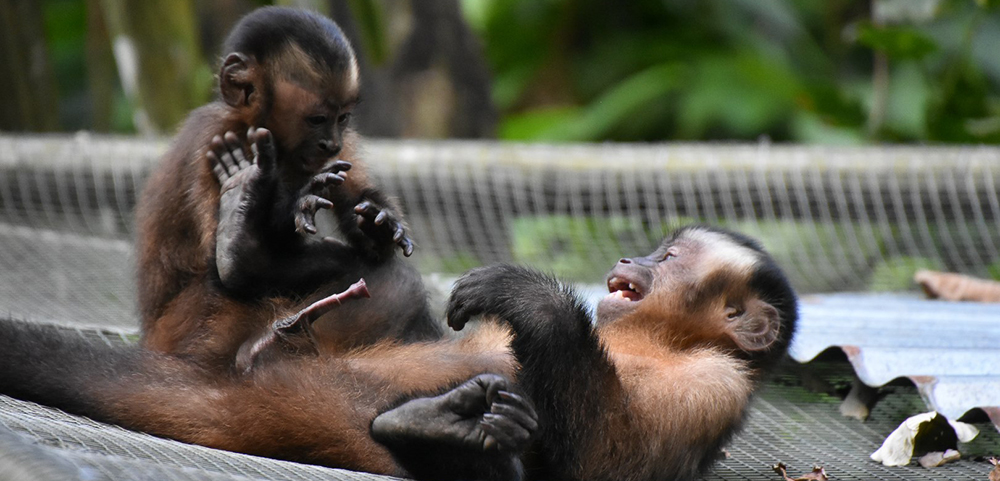
After adjusting to his new surroundings and meeting the resident monkeys, it was time to open the door for Akemi (juvenile male large headed capuchin) and Kiano (juvenile male Spix’s white fronted capuchin). They both are new at Esperanza Verde, and we hope they will adjust well in the outside group. Soon after his release Akemi tried to steal an egg from Samara (one of the adult female woolly monkeys) and learned the hard way that Samara is one you want to watch out for. He is doing fine, and Kiano, with his playful character already found his way to fool around with some of the other outside capuchins.

Selda, one of our adult female large headed capuchins previously enclosed in the Rimaq enclosure, joined Akemi and Kiano in La Sapa. After Selda was bitten by Kres during her stay in the Rimaq enclosure, we took her out and after some observation, and treatment at the clinic, we decided it was time for another attempt for her to be released at Esperanza Verde. Earlier releases were not successful, as she decided to follow some of us around even to the extent of knocking on the windows during evenings and sometimes at nights to get our attention. So for the last weeks she has been closed in with Kiano and Akemi, in the hope she will turn more to them for contact than to us, humans. Let’s hope for all our sake (including hers) it works out and she does not become another example of how much damage we humans can do to an animal by having them as a pet. So far so good, but she did show up directly on the first day hanging on the kitchen window peeking in.

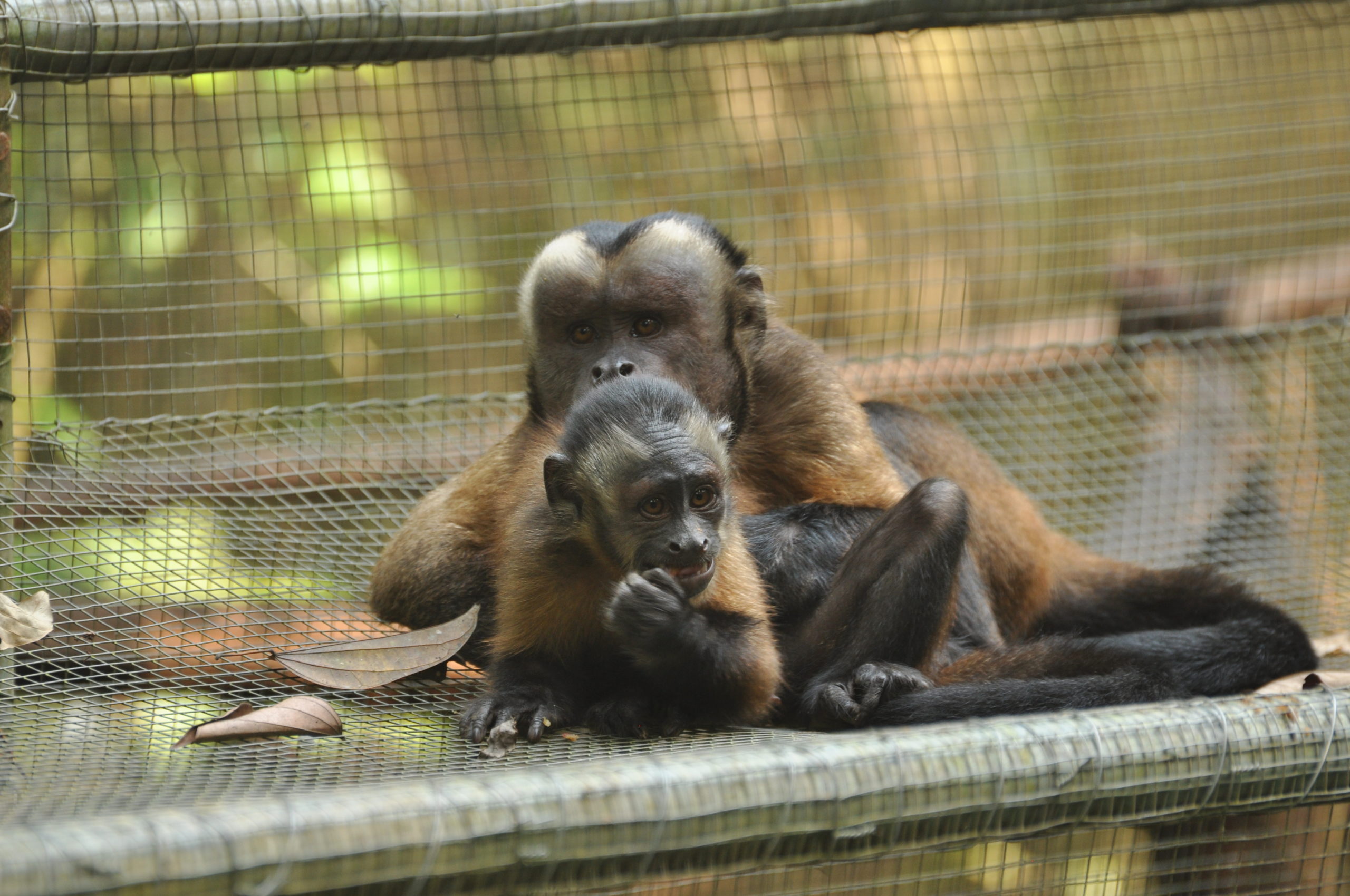
Kiro, (a young male large headed capuchin) who arrived with Kiano and Akemi, has been enclosed with Mica (our first female large headed capuchin) for several weeks. They seem to have bonded well, but we will give Kiro a bit more bonding time, before we let them both out.

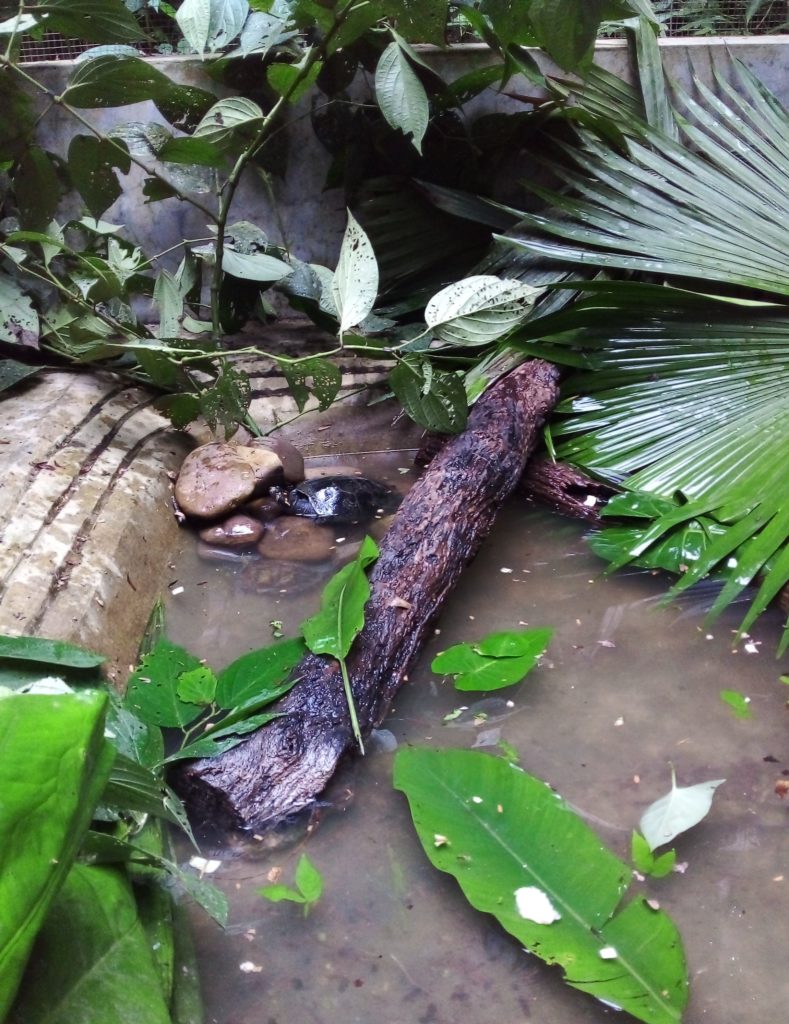
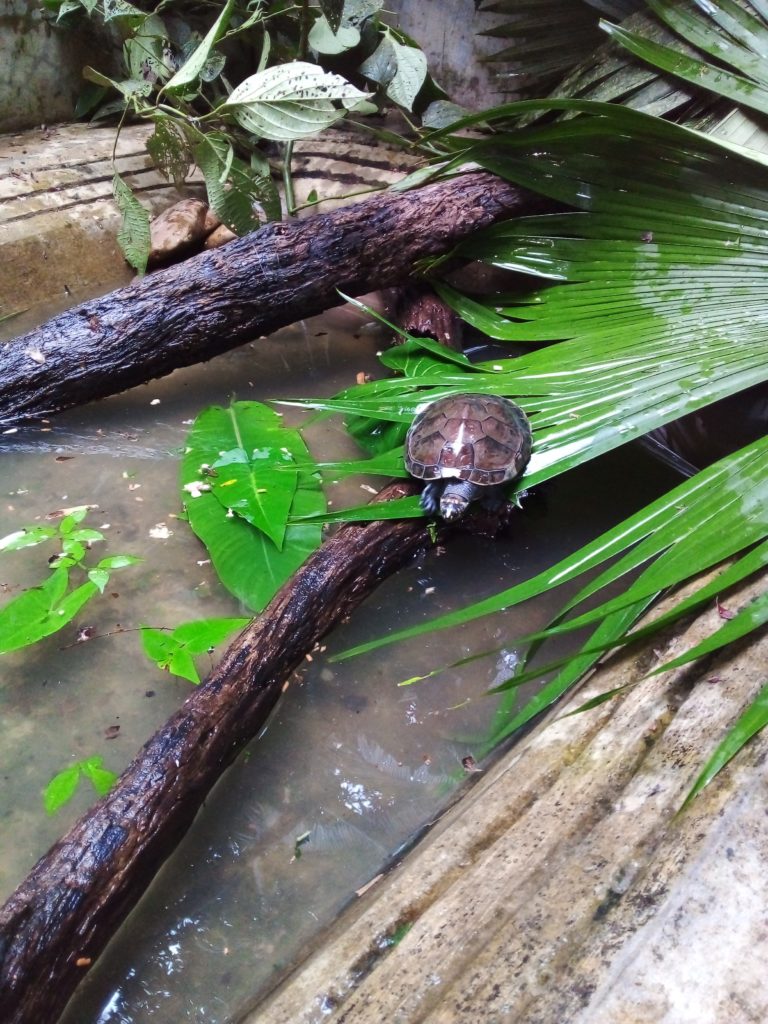
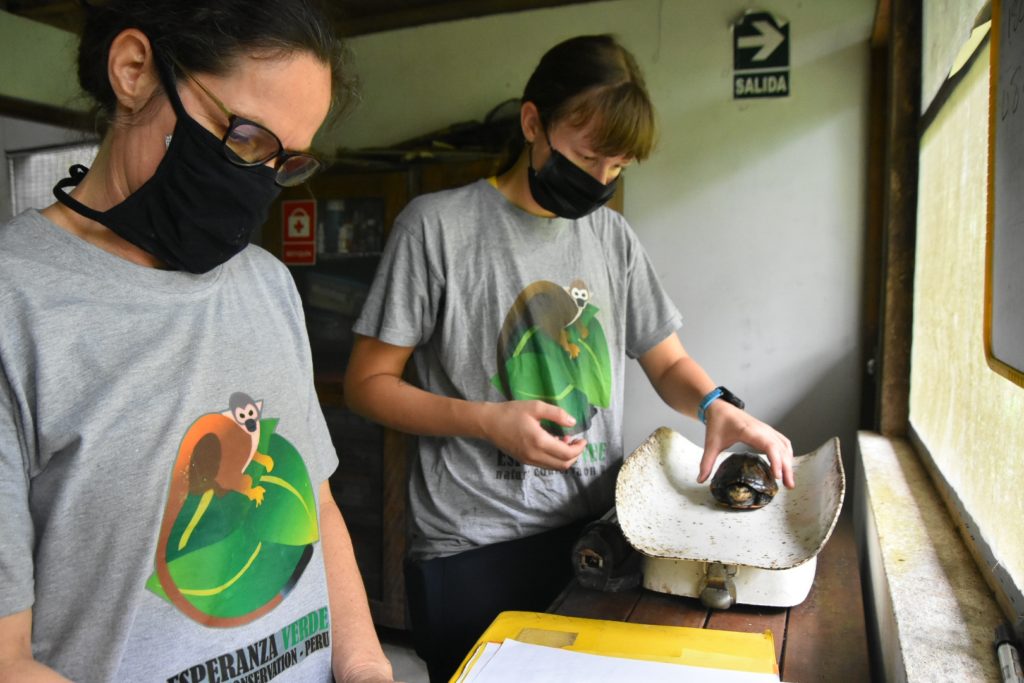
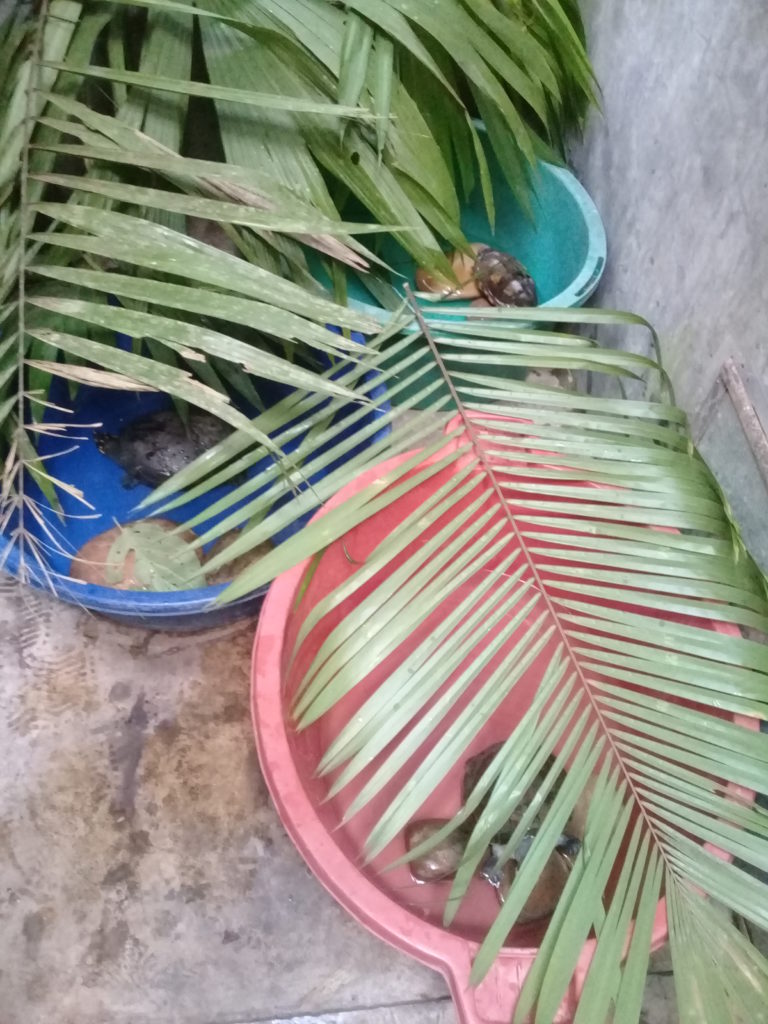
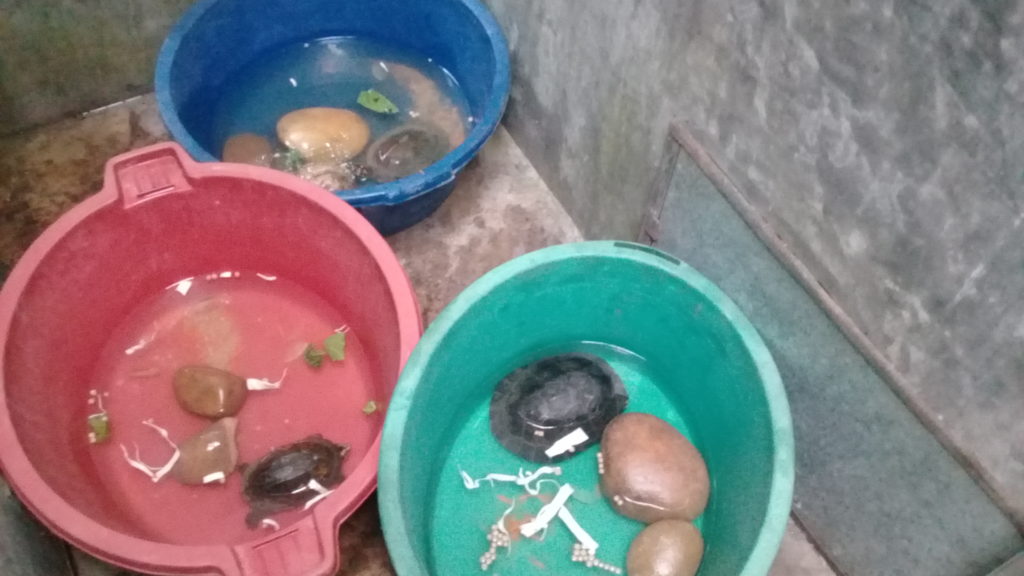
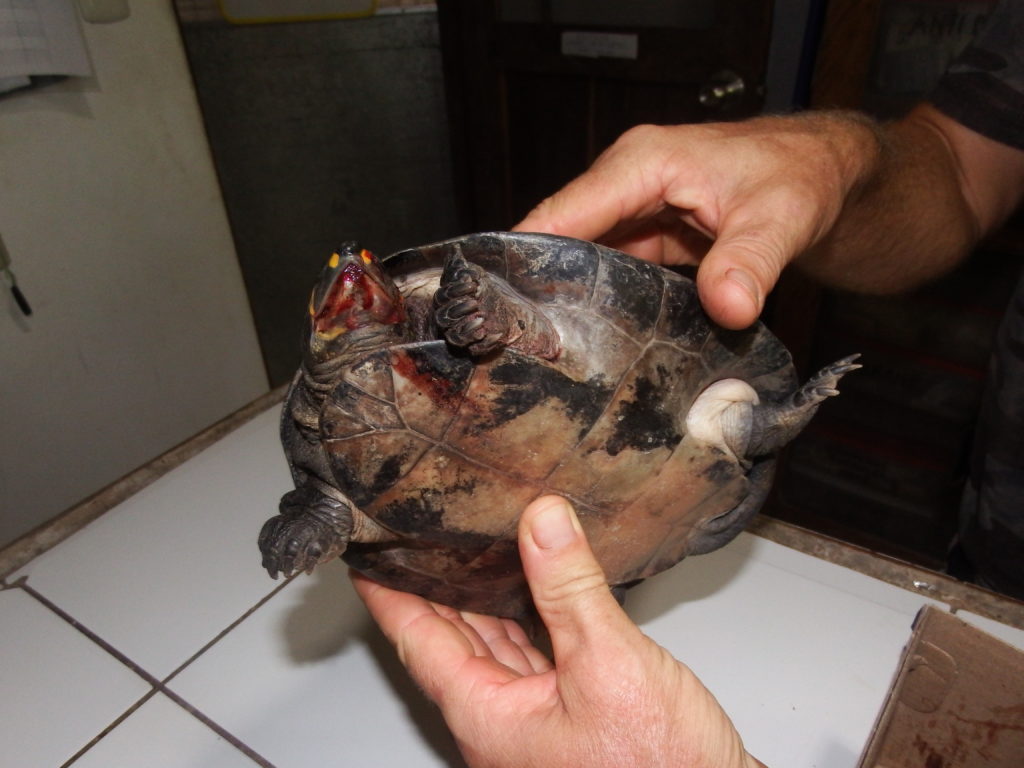
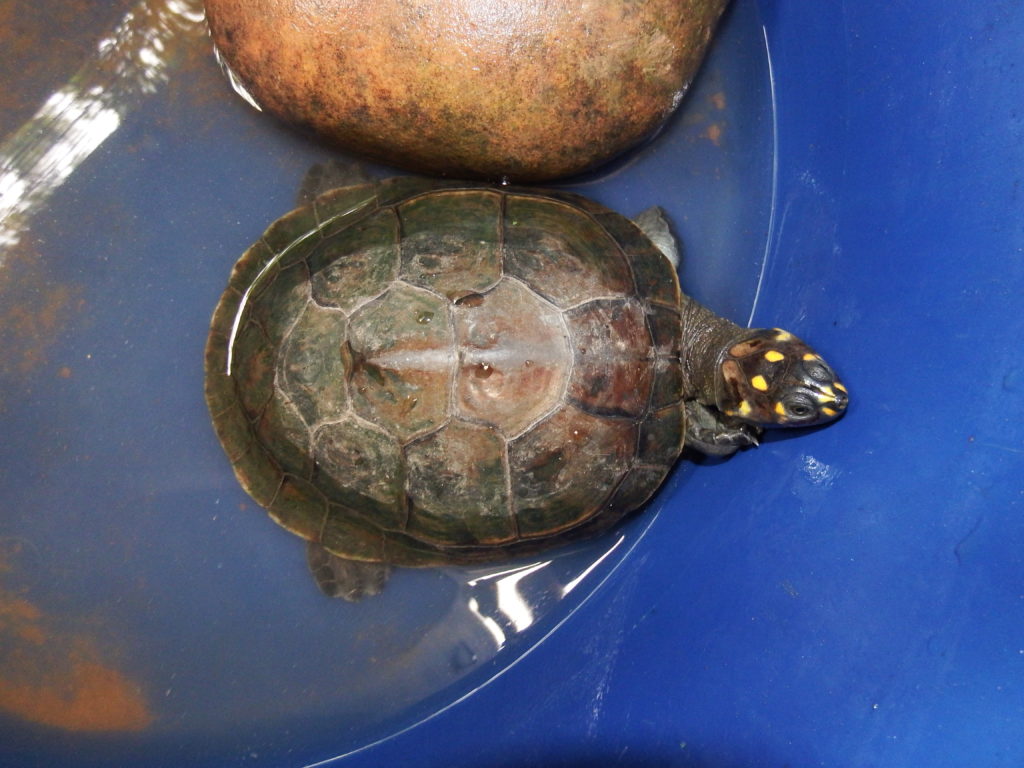
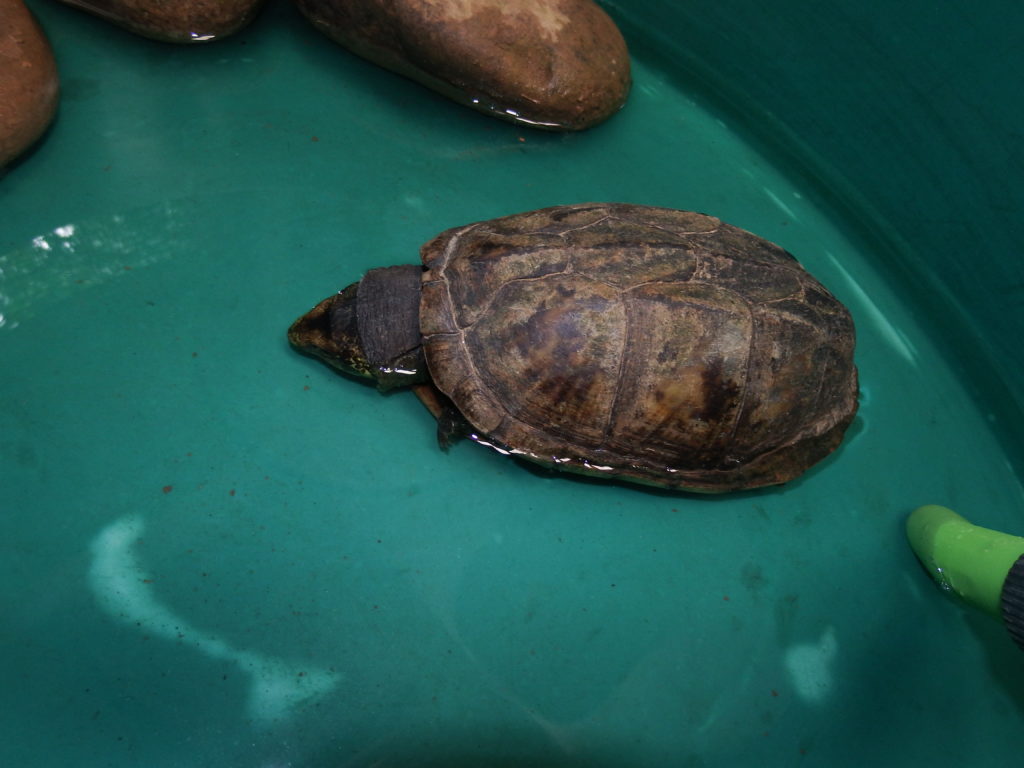
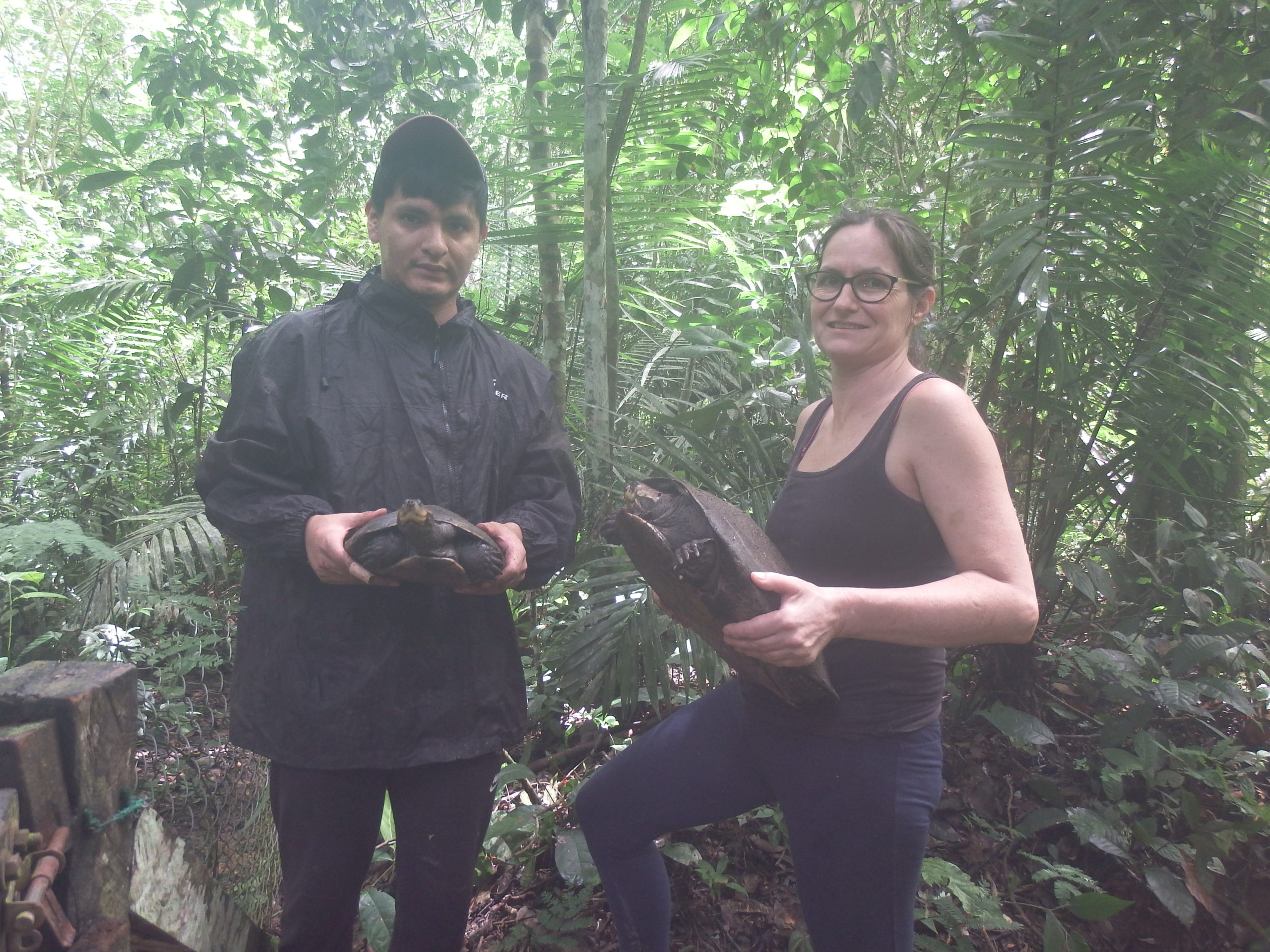
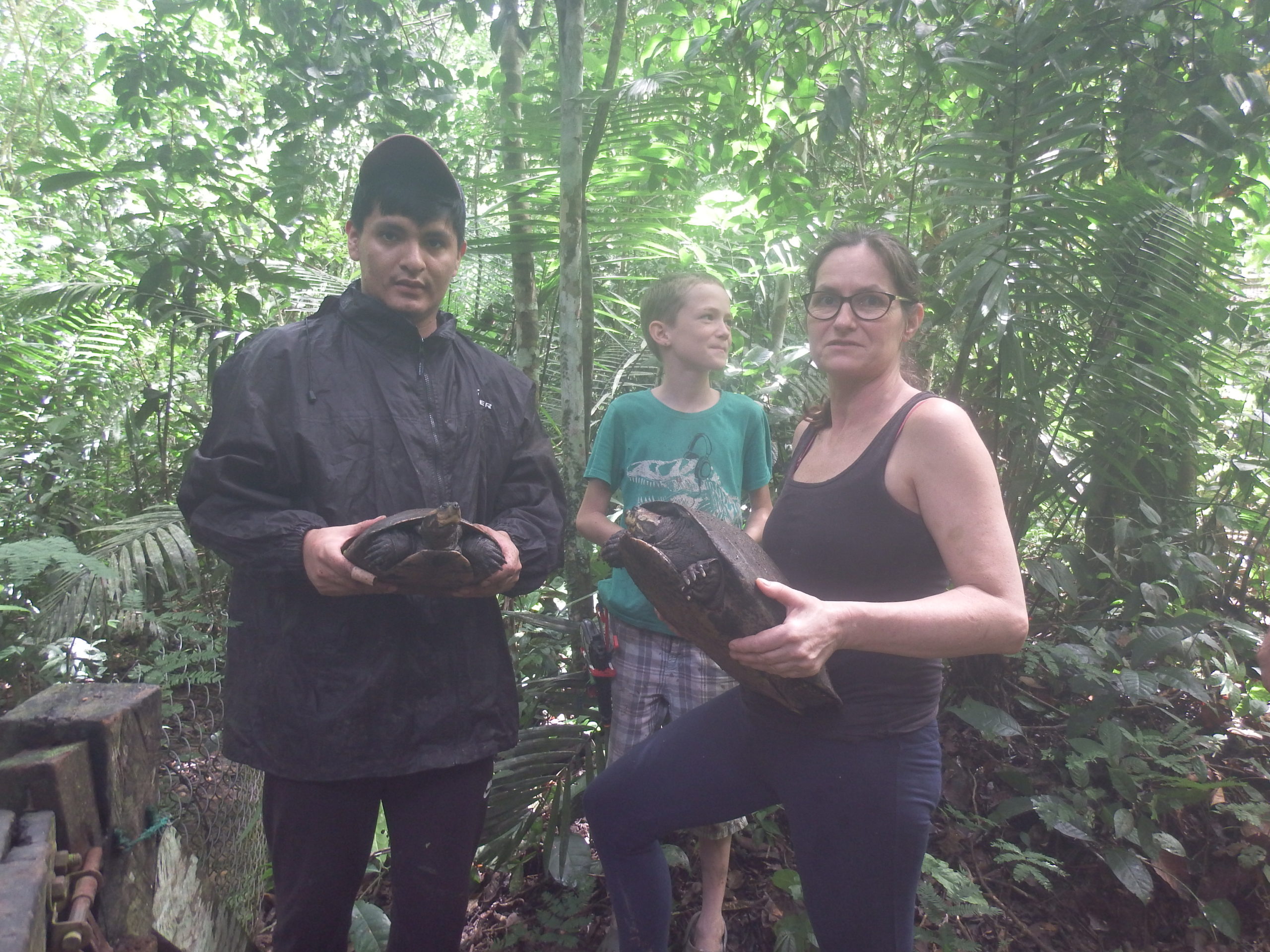
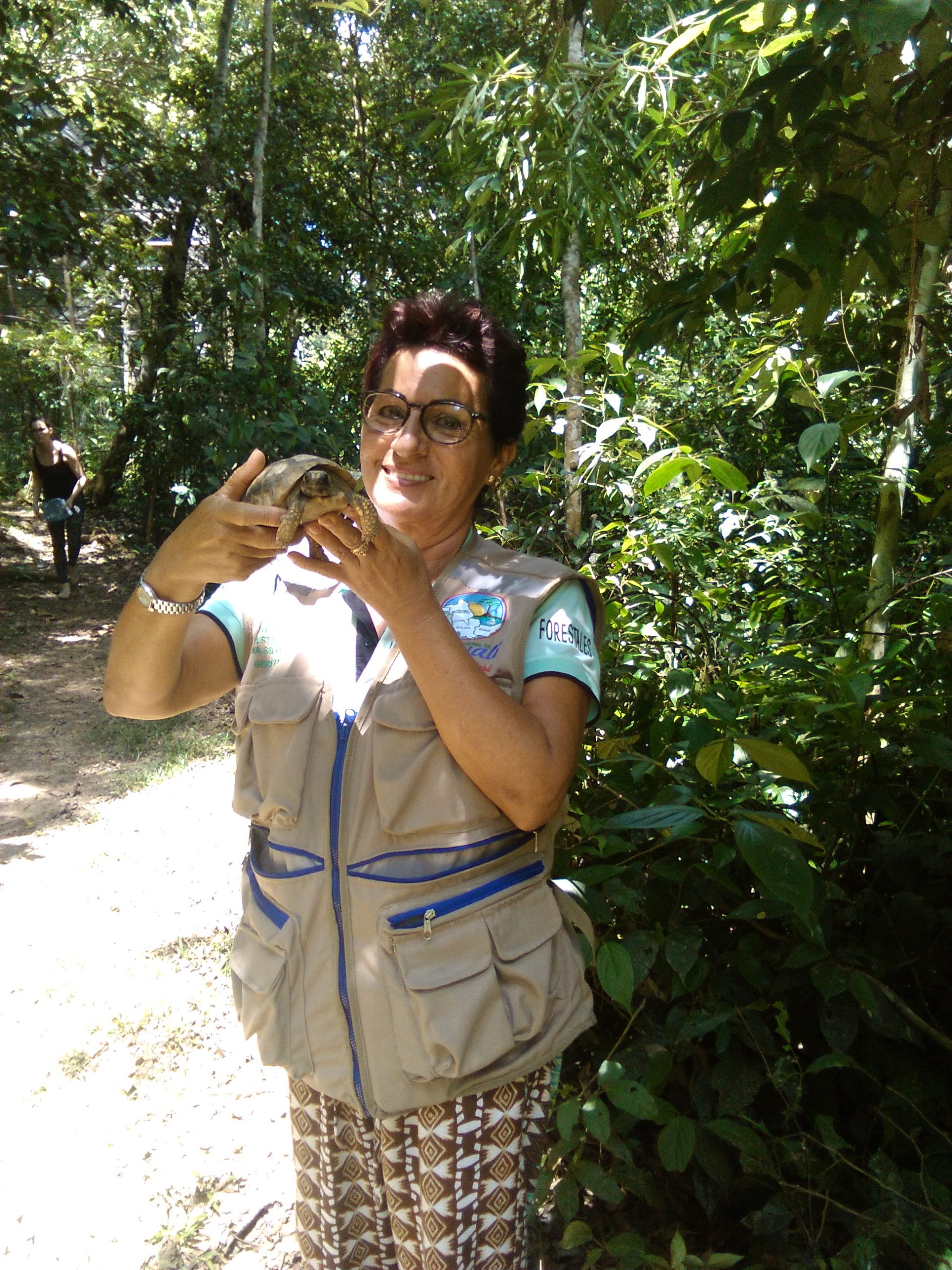
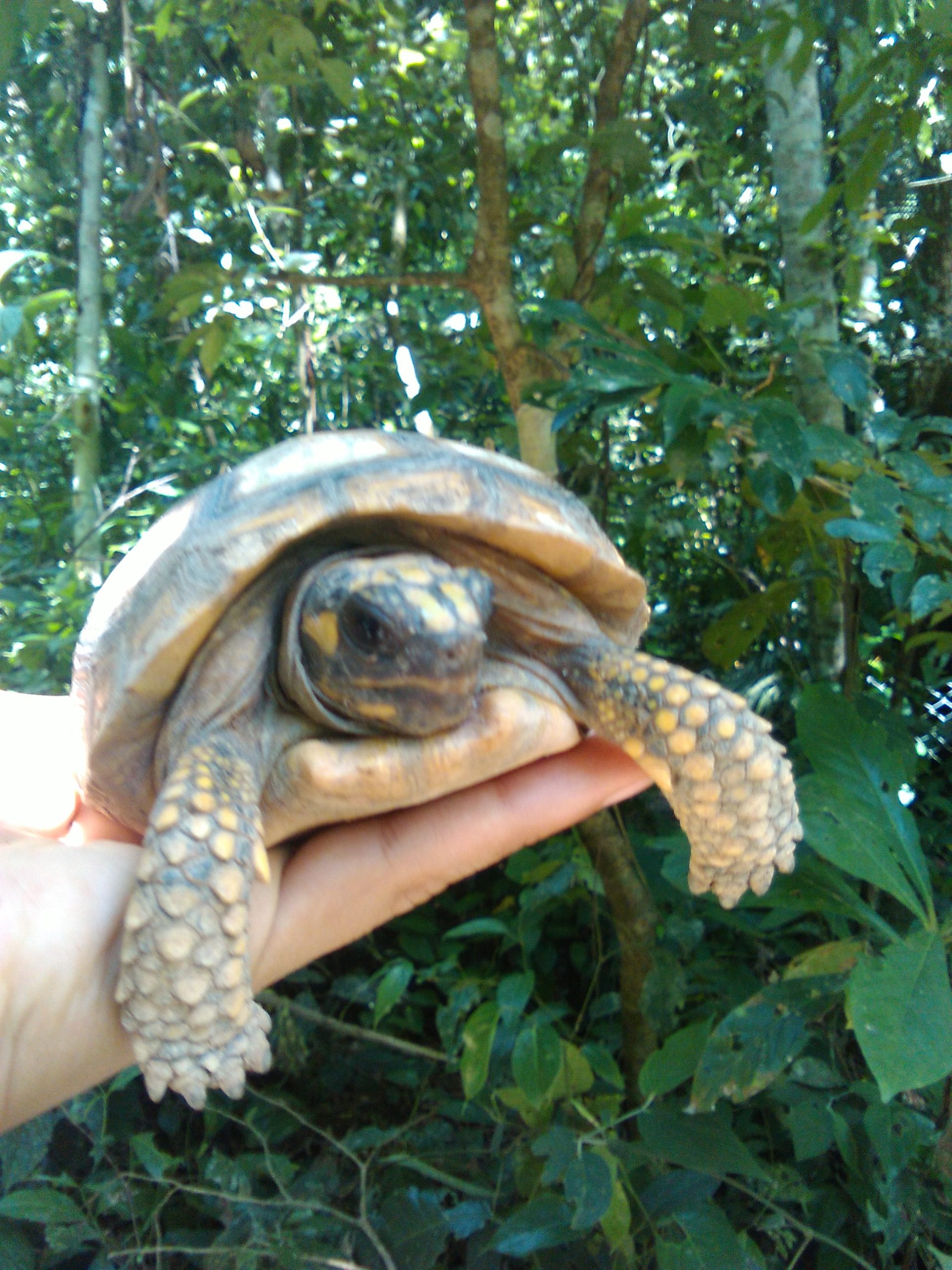
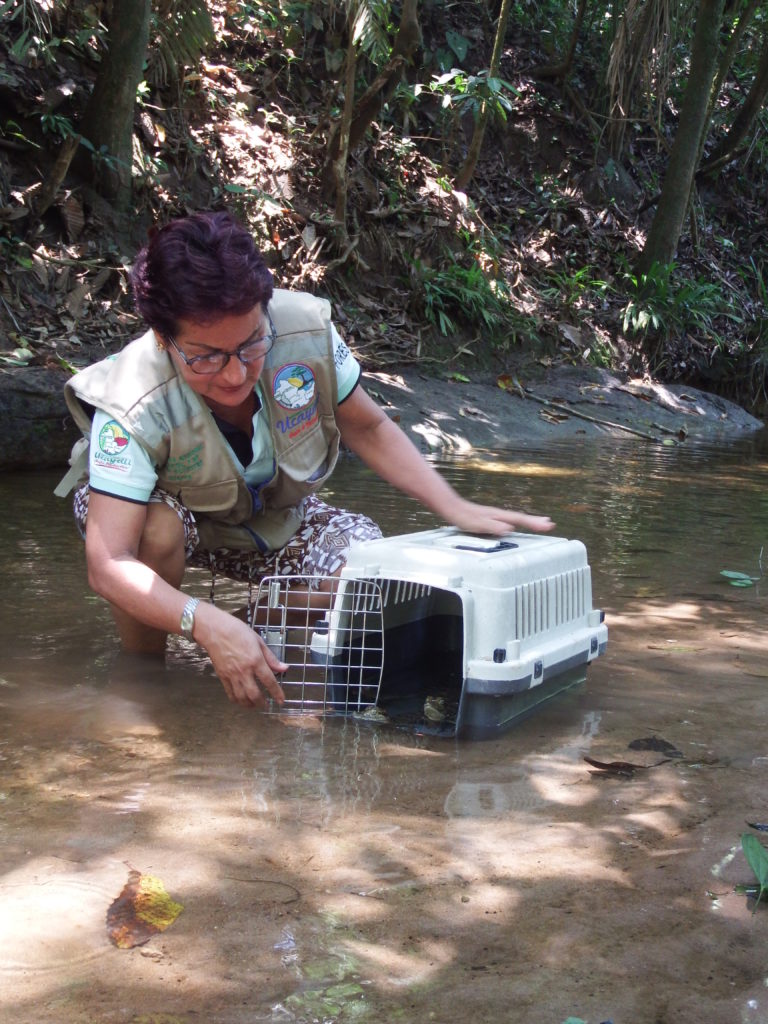
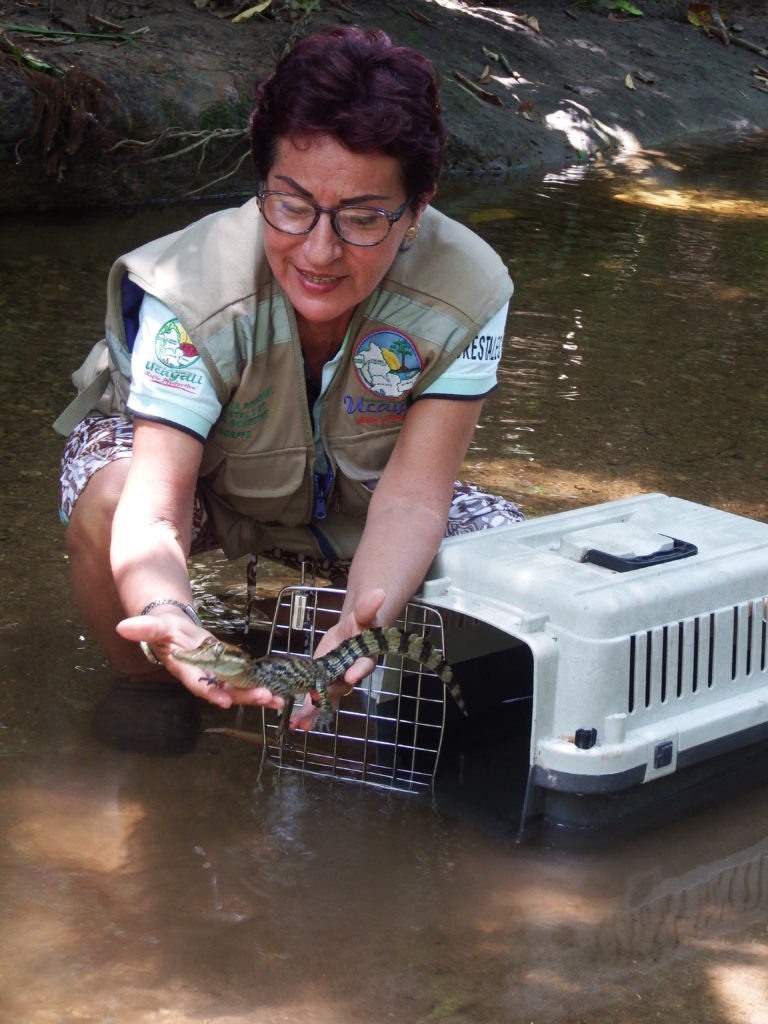
The two yellow spotted turtles, of which one had a damaged mandible, were moved, together with the Amazon mud turtle, to the Aguatena (a quarantine enclosure specially made for aquatic animals). They seemed to be very happy with the bigger surrounding and ability to swim, having some practice before their release. They were all released during the visit of the Ministry in the near surrounding at the small stream of Esperanza Verde.

SUST Animal Orphan Hospital

After a short visit of Selda, and the movement of the macaws and turtles, the clinic became very quiet, with only Yanamayu left. It was in many ways a good thing, as now we could prepare for the new arrivals.

Yanamayu, one of our enclosed adult large headed capuchin males, was moved last month to the La Sapa enclosure, but he still did not seem to thrive there. We moved him to the clinic, as space came available, were he underwent more intensive care. Finally after some weeks he seems to be more active, talkative and eating better. He is finally getting rid of some worms of the, for us so well-known, parasite; Prosthenorchis Elegans.

Only staying for some hours, was a three toed sloth. After being rescued from being pestered by some children, she was brought to us. The sloth, being well and coming straight from the wild, needed to be returned to the wild as soon as possible again. So after a medical check and as soon as it became dark, we released her in the safe surrounding of Esperanza Verde.

New animals
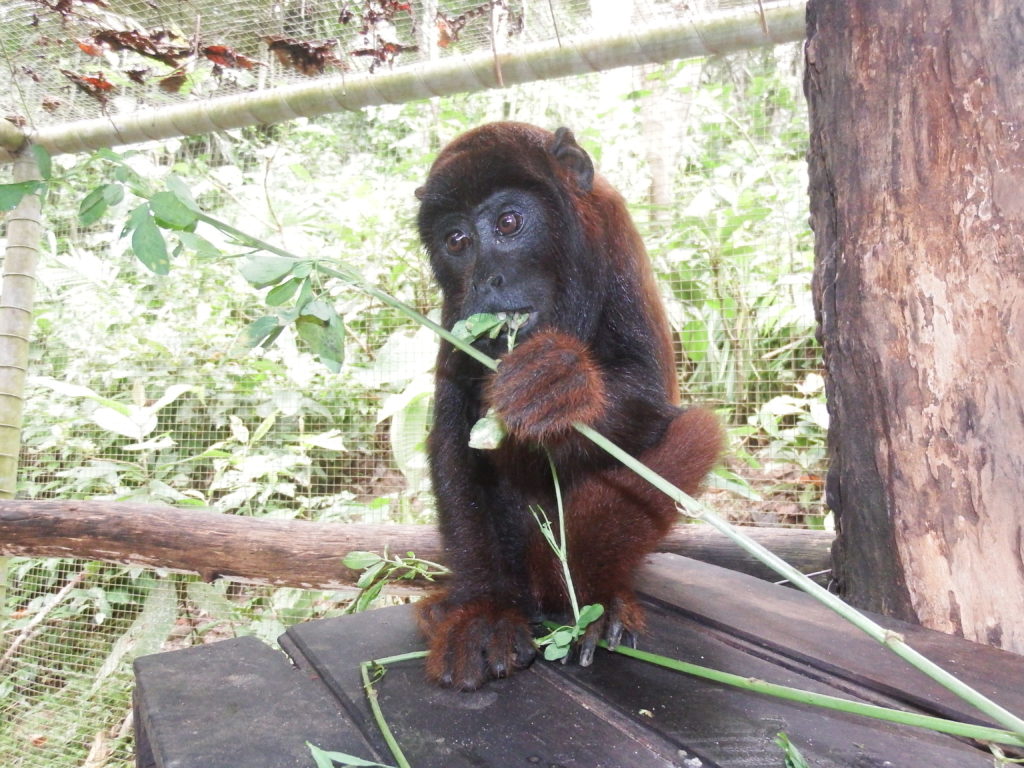
The Ministry brought us the following animals:

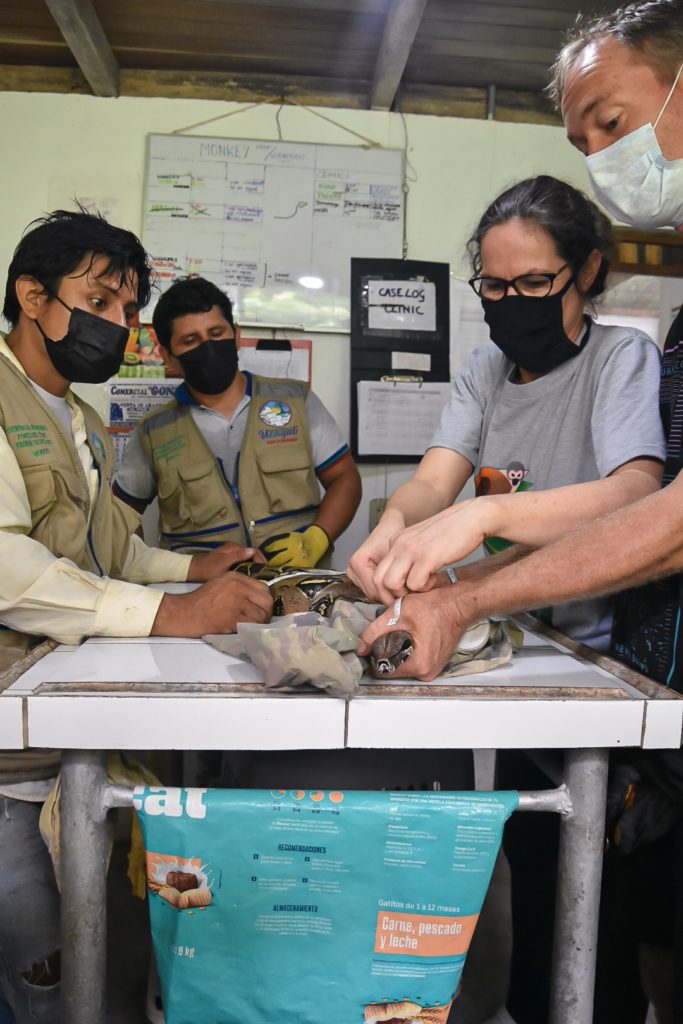
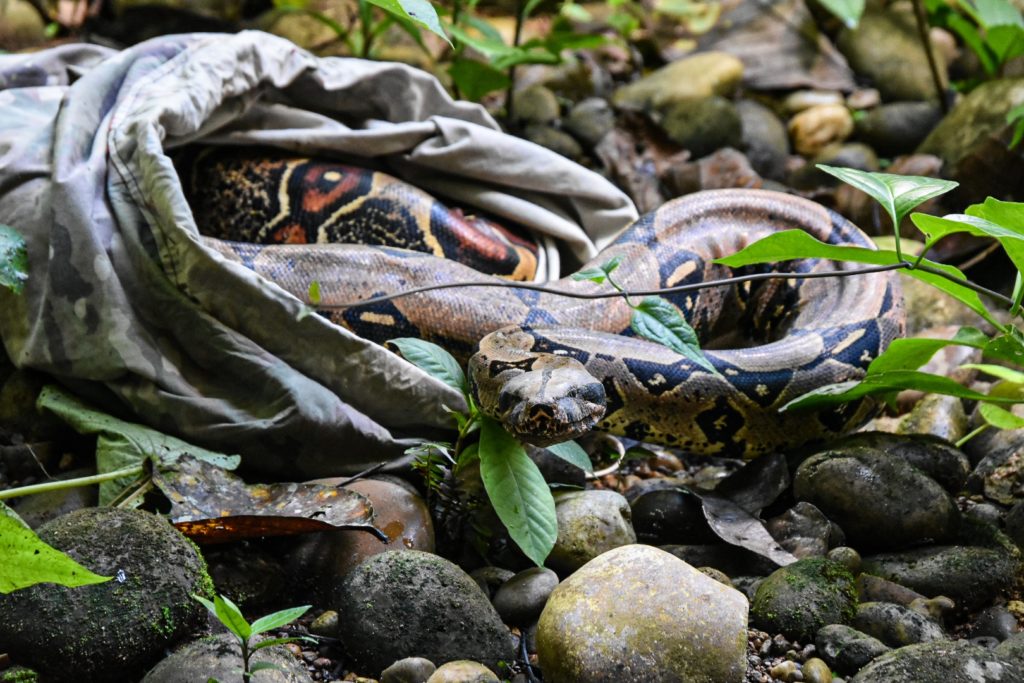
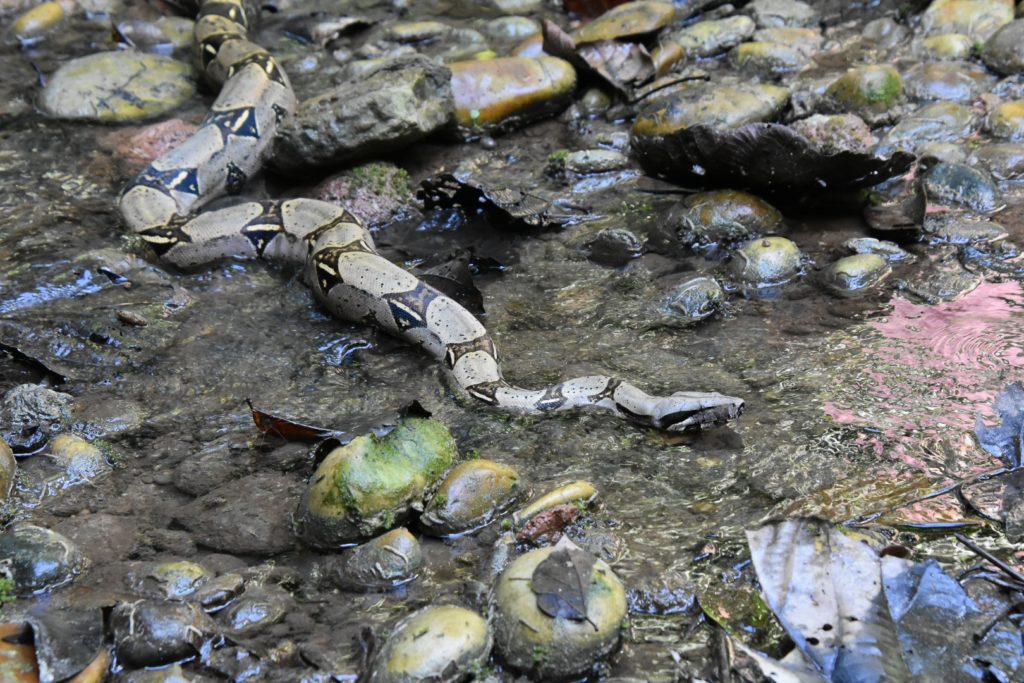
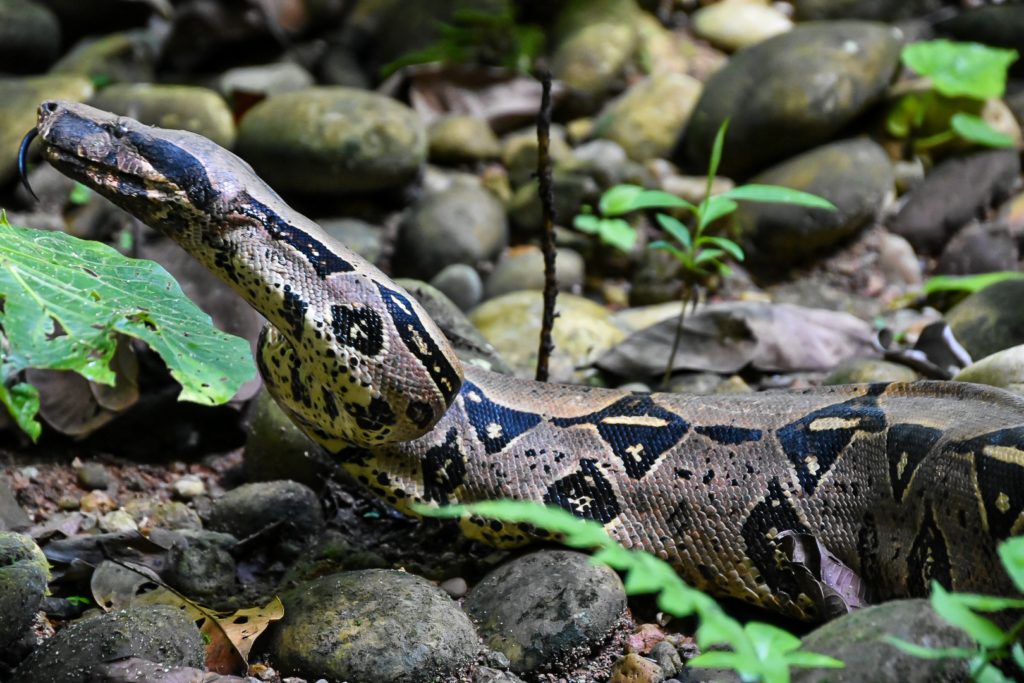
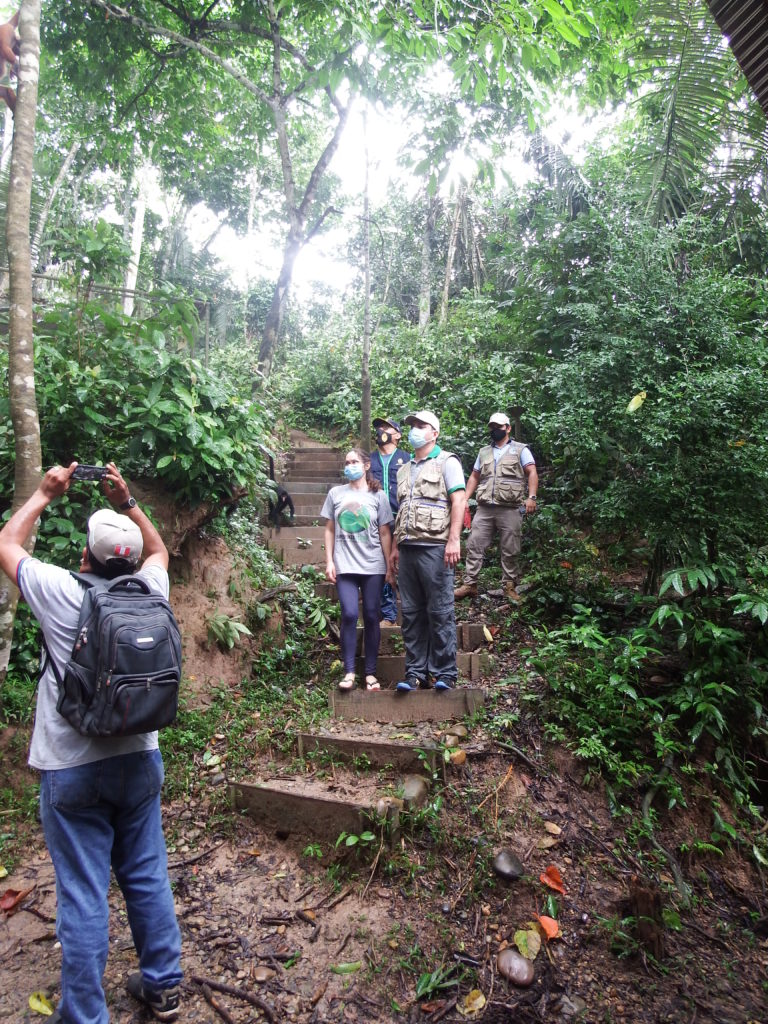
Two red tailed boas. Both were already checked medically in Pucallpa by the veterinarian of the Ministry, and were declared ready for their release. We gave them a final medical check upon arrival and took them further into the forest of Esperanza Verde to be released. As it is a nice experience and sight for all to be able to set free two beautiful creatures of nature, they were accompanied on their way to freedom by all volunteers.

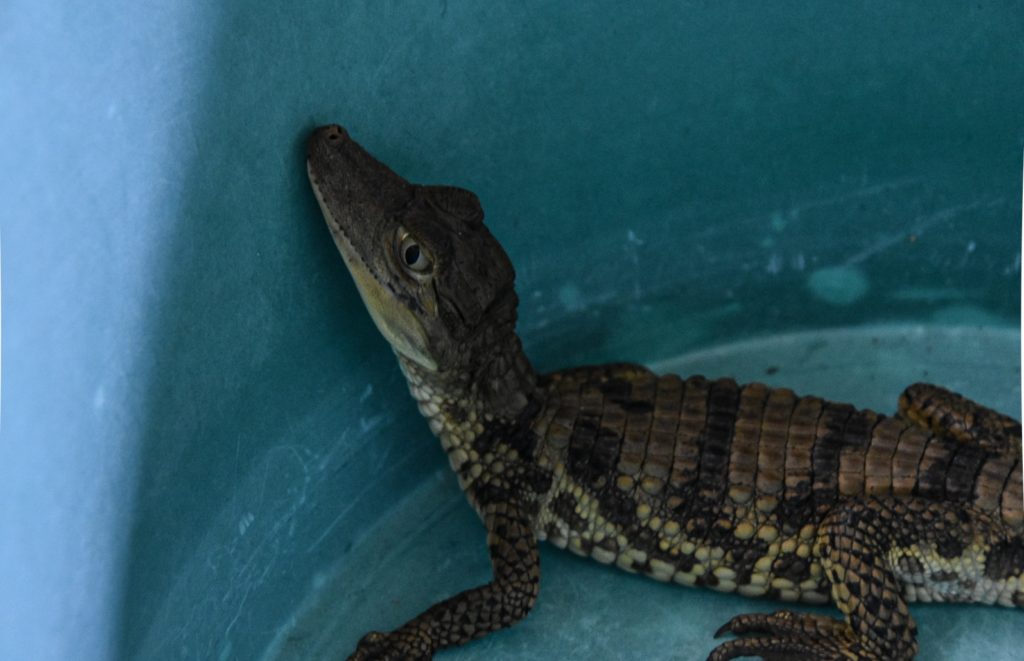
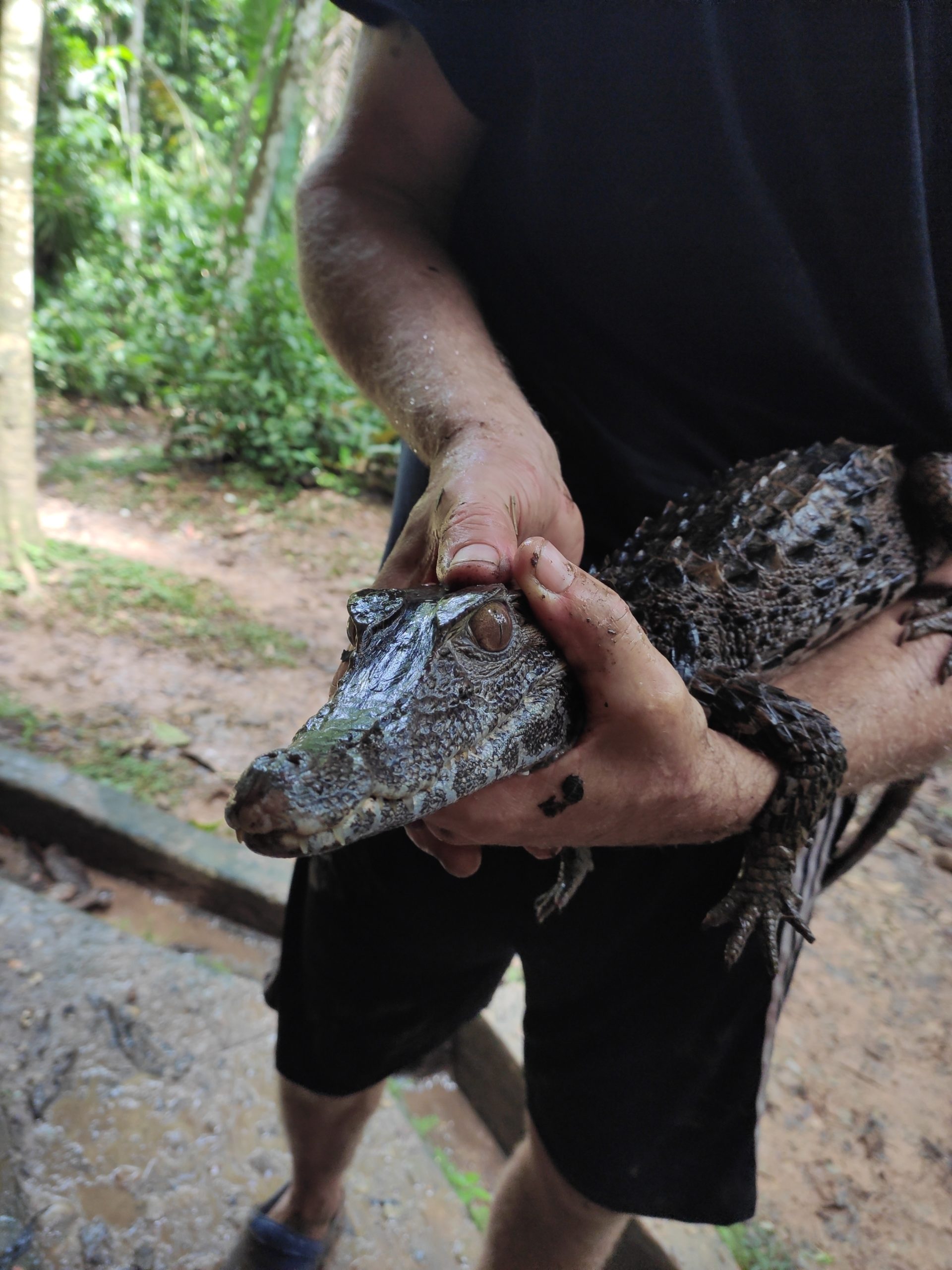
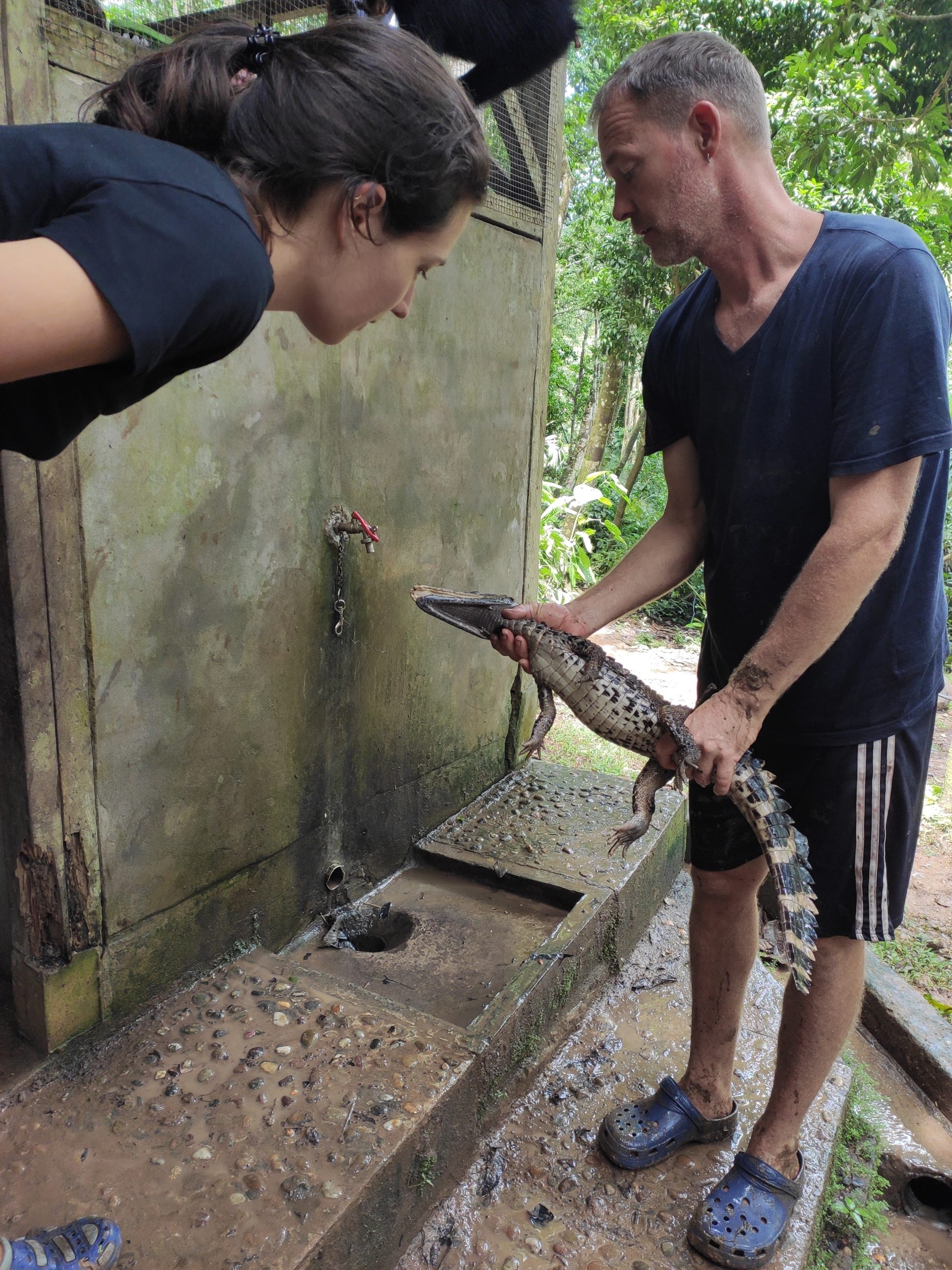
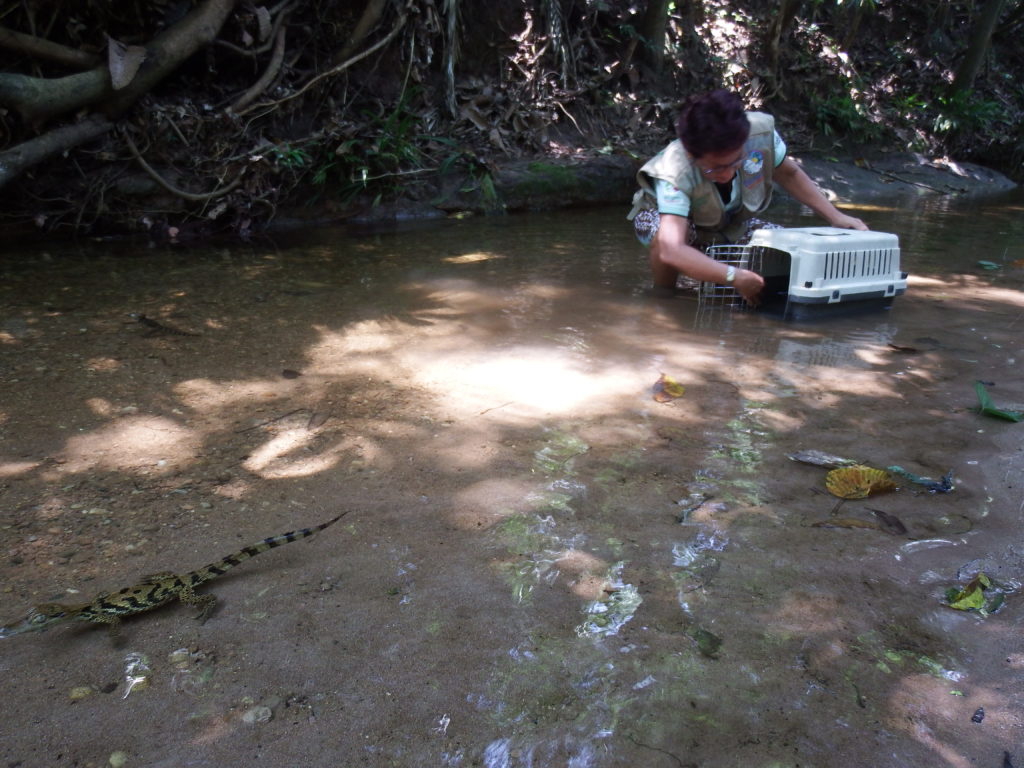
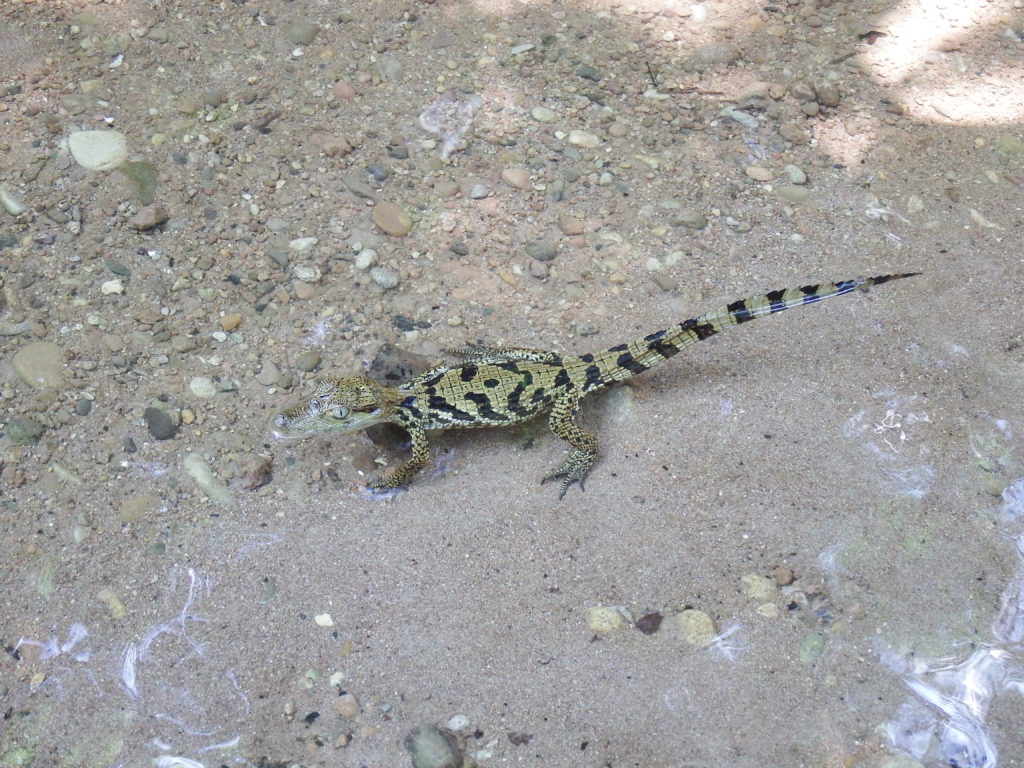
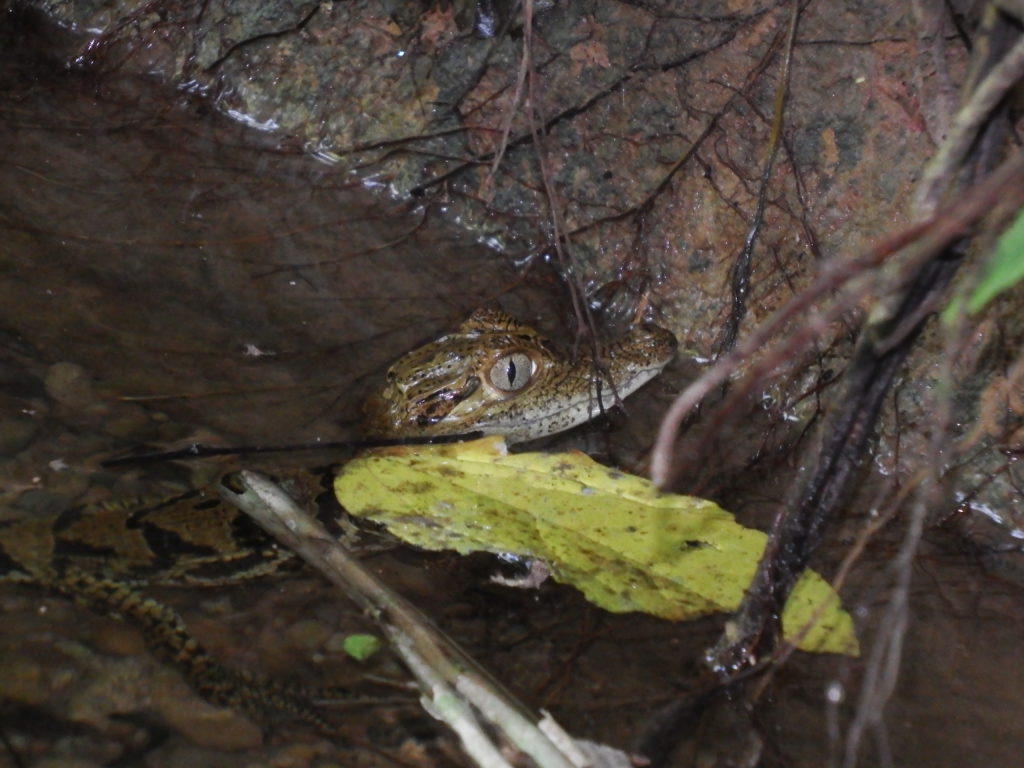
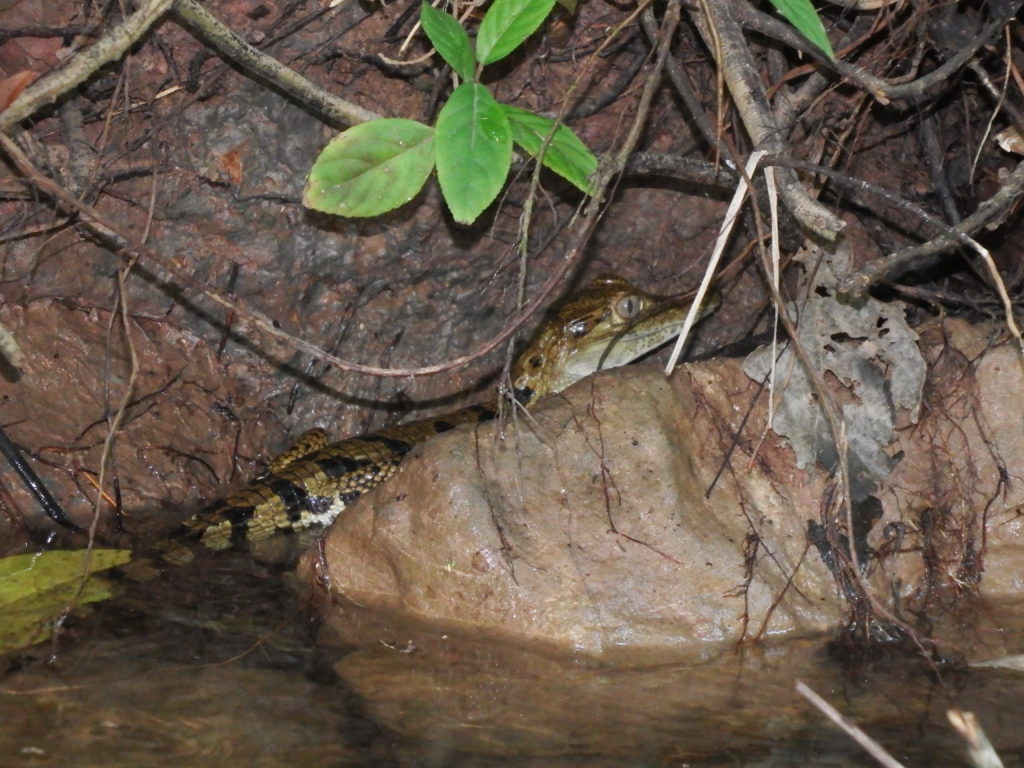
A young white caiman, which also received a medical check from the veterinarian in Pucallpa and was declared healthy for release, as soon as it has put on sufficient weight and growth to be able to survive on its own. For now it will stay in the Aguatena, where we can oversee his ability of catching his own food, before realizing his release.

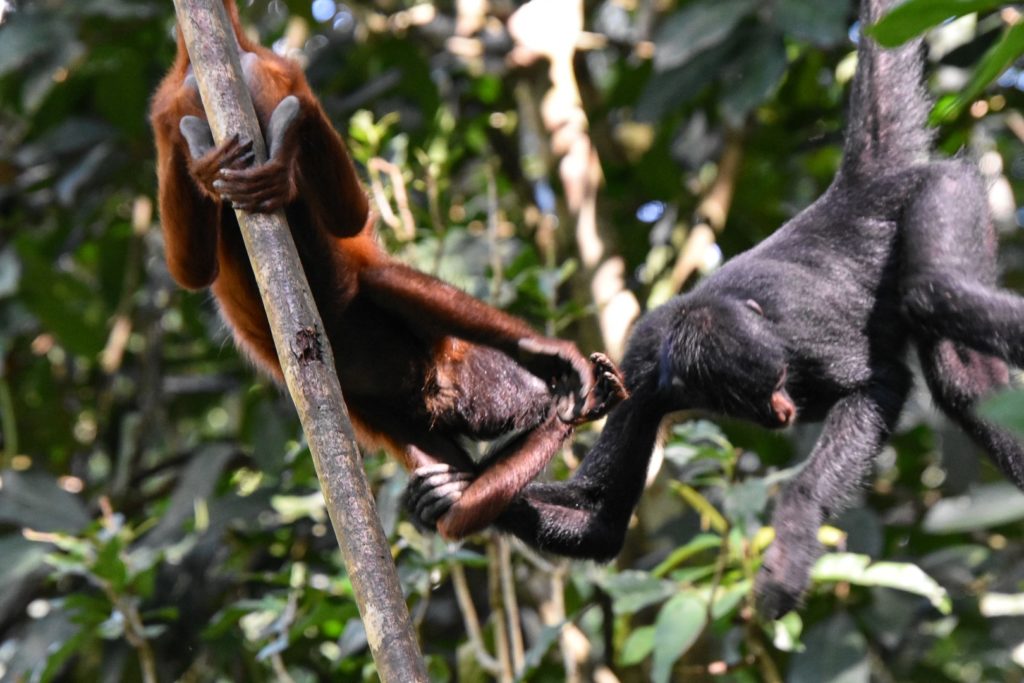
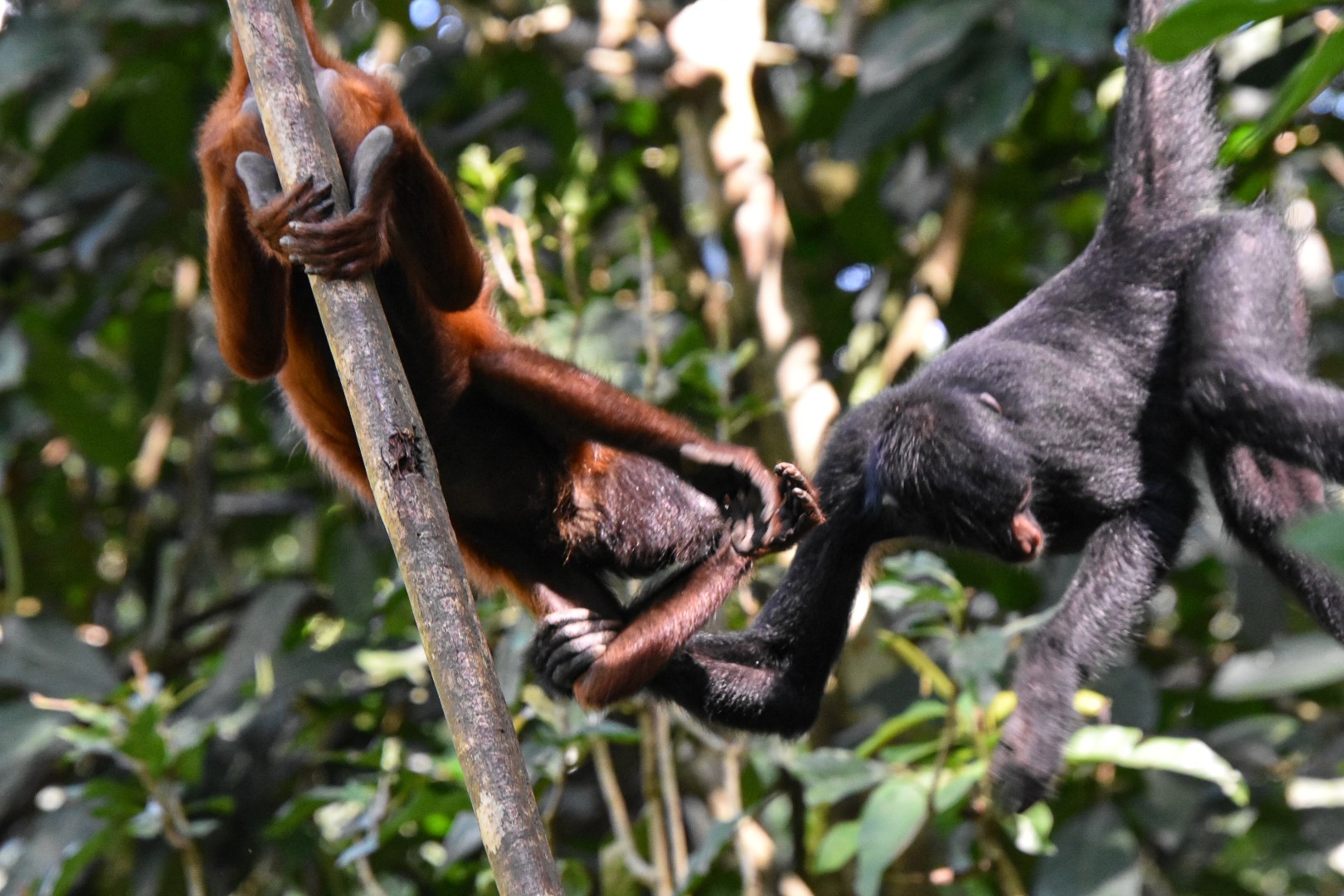
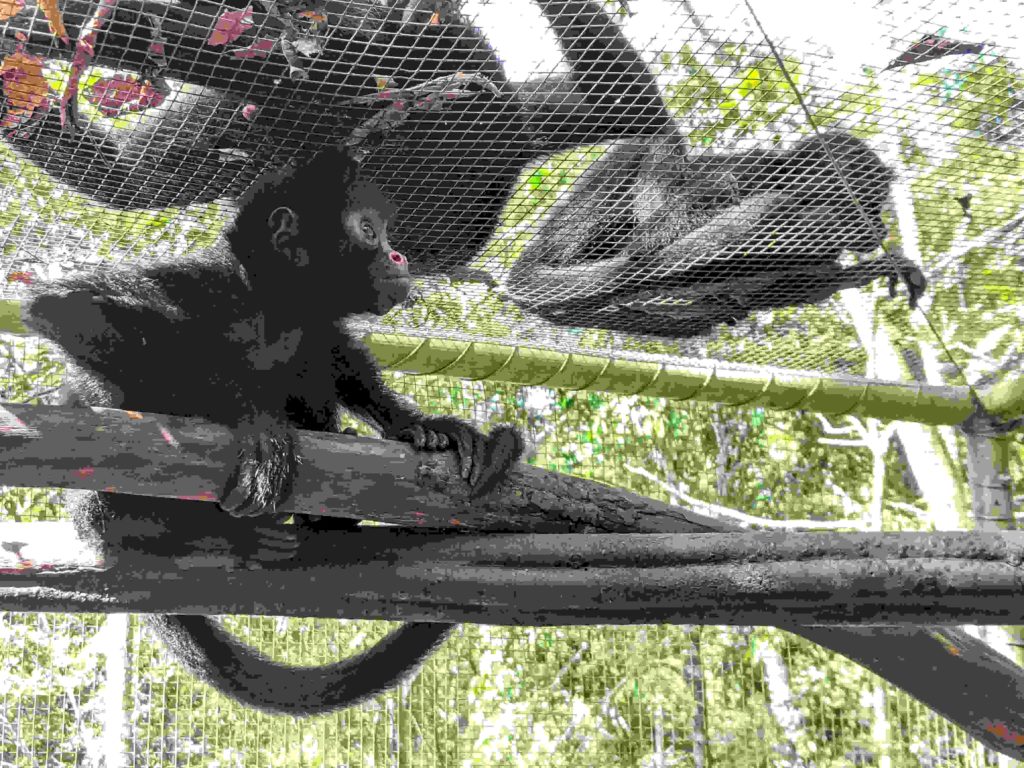
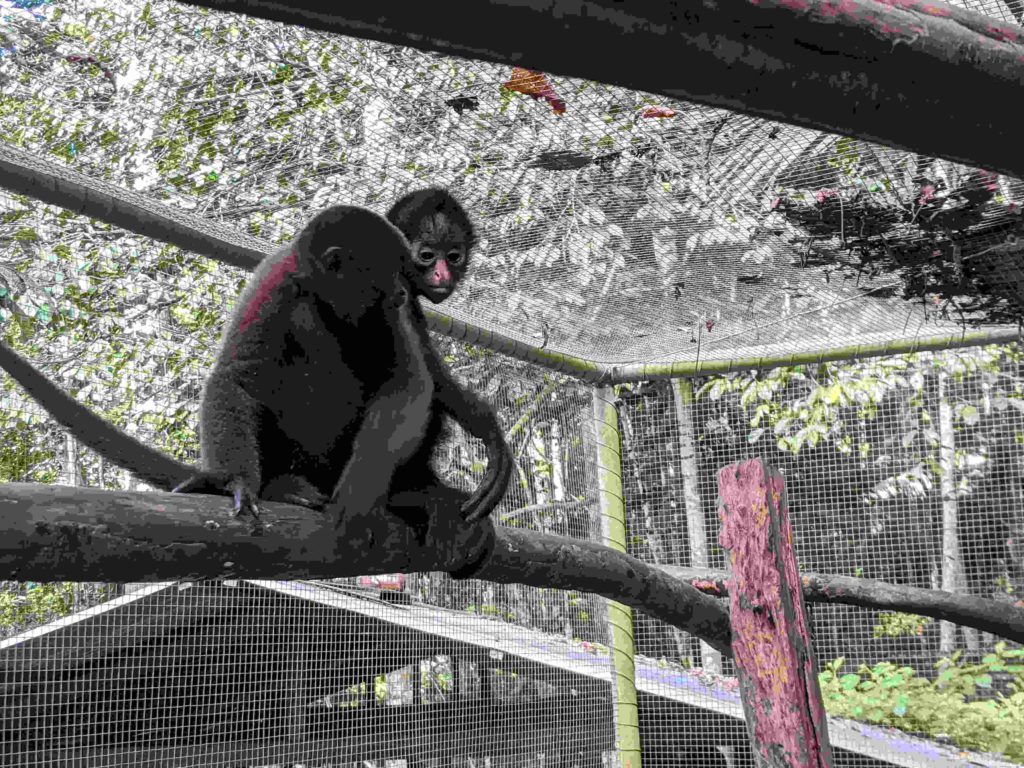
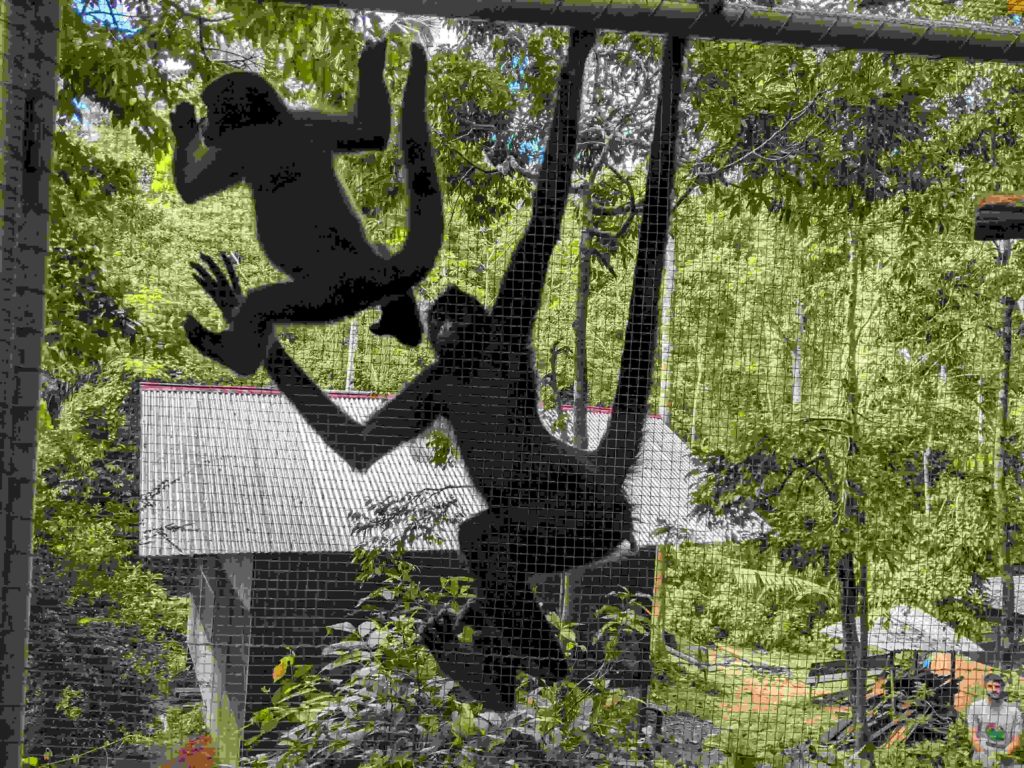
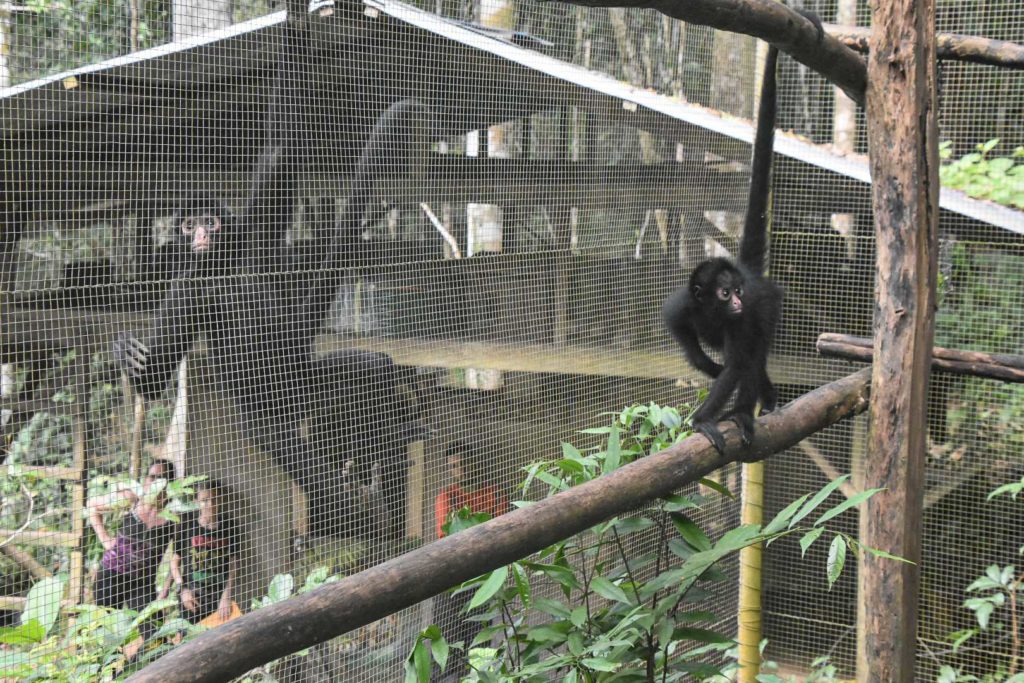
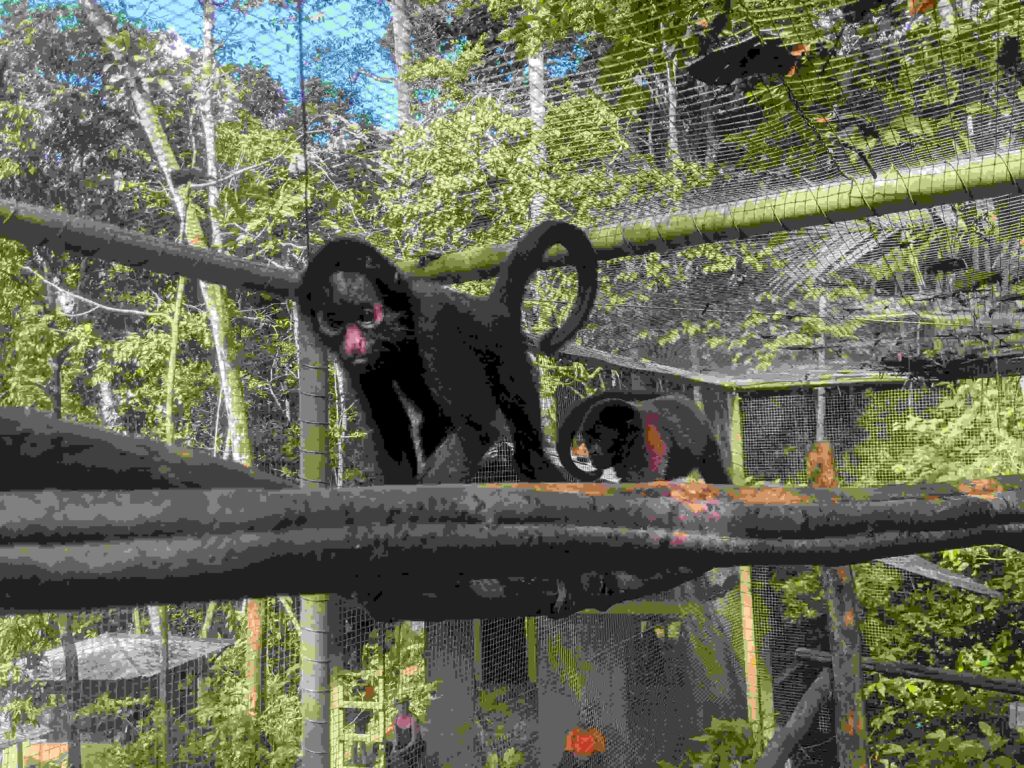
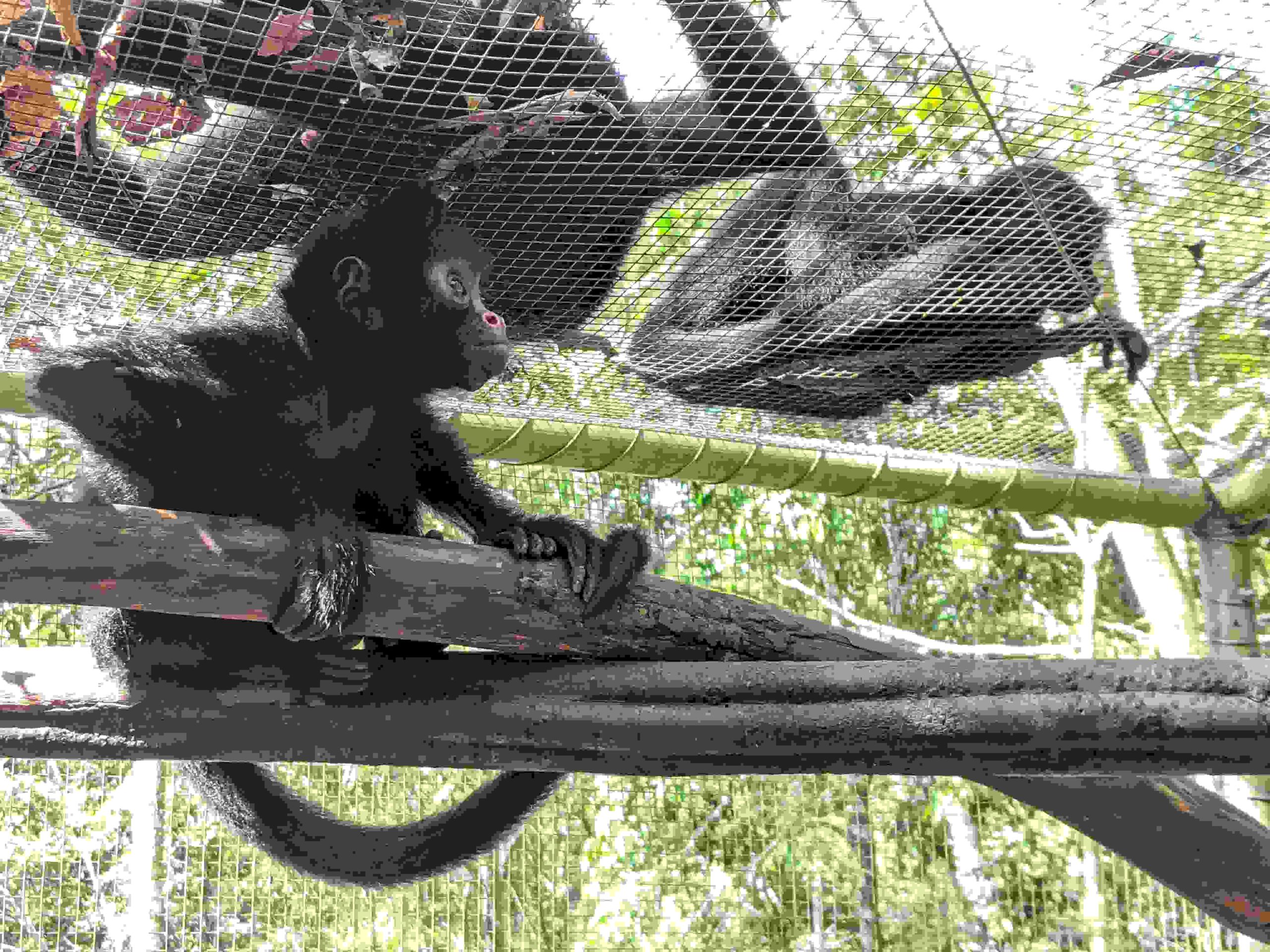
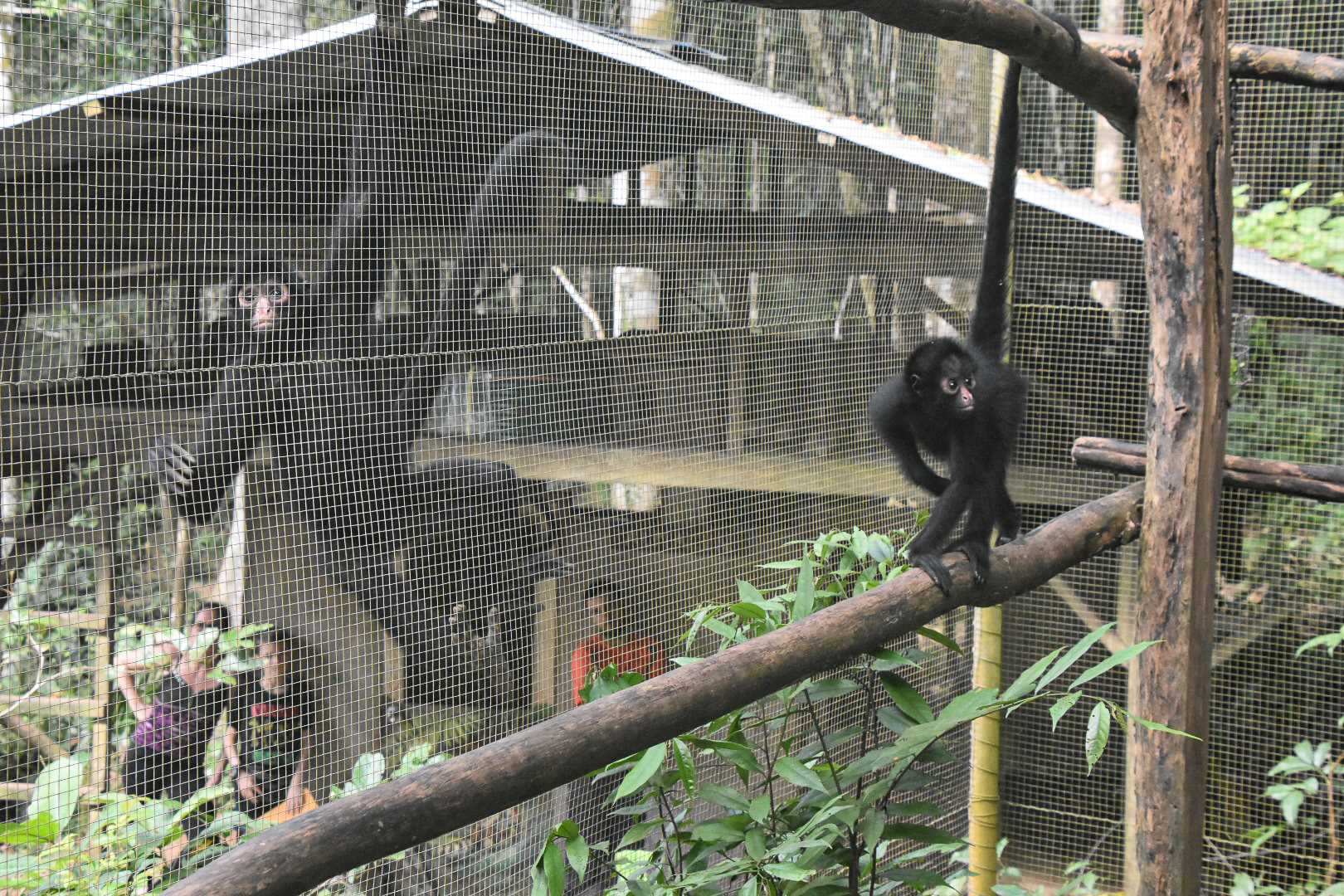
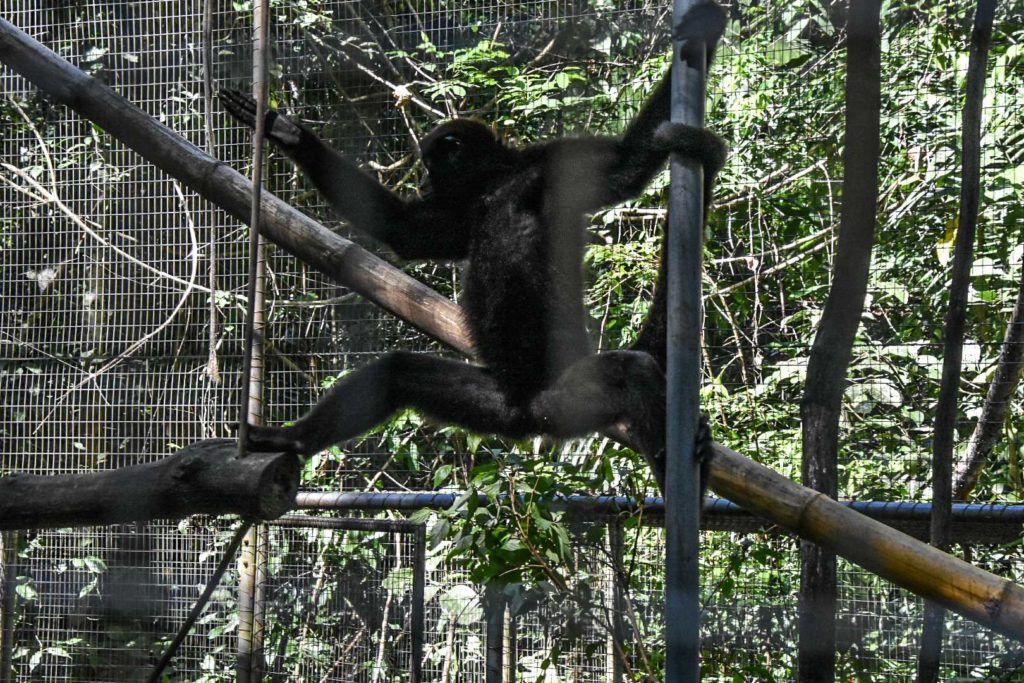
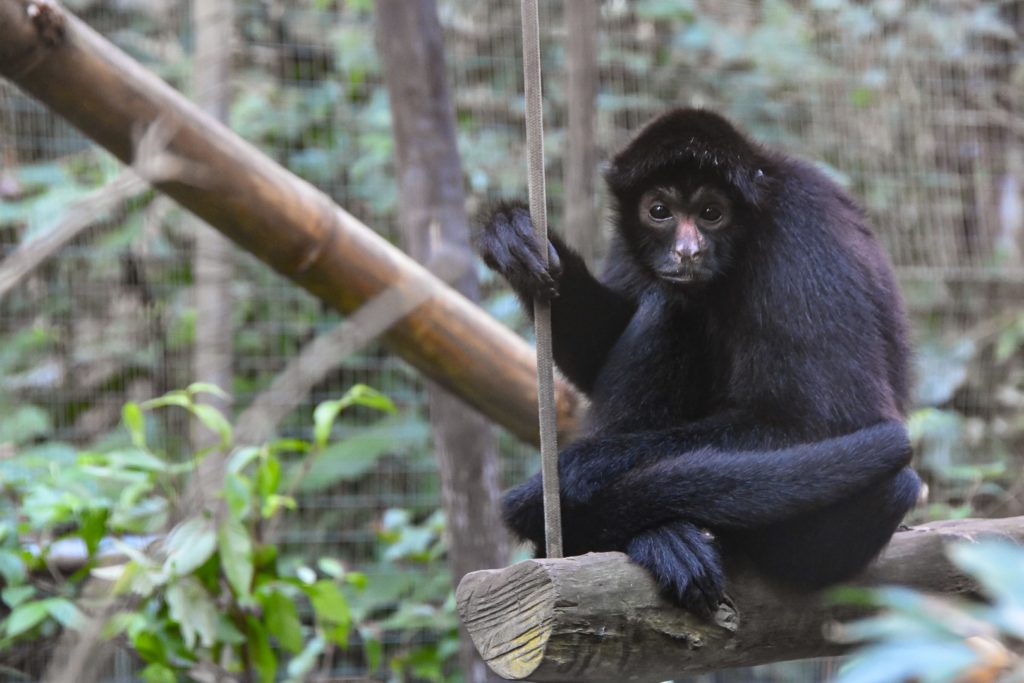
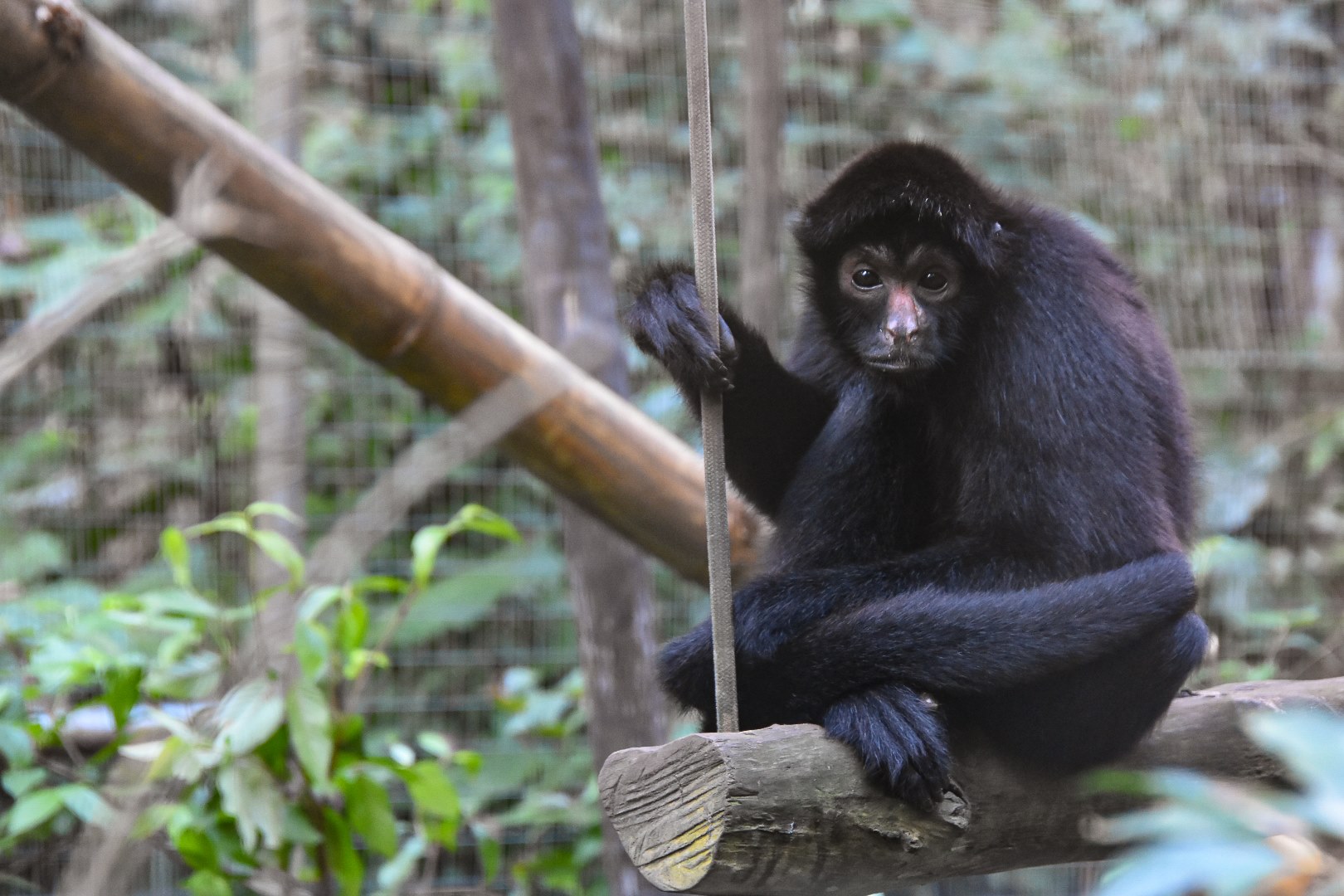
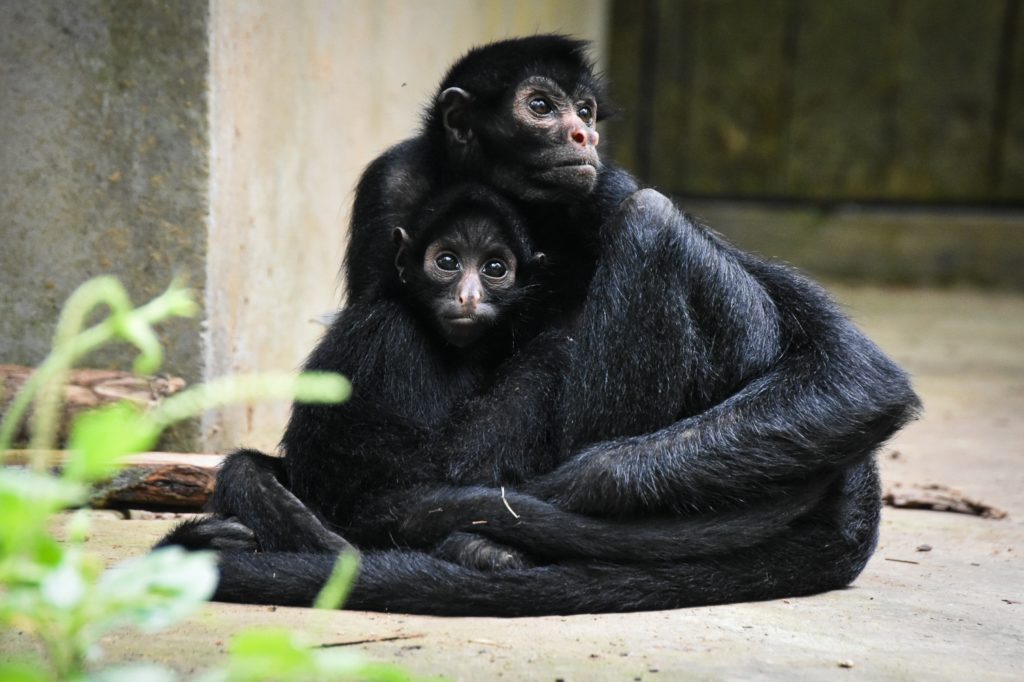
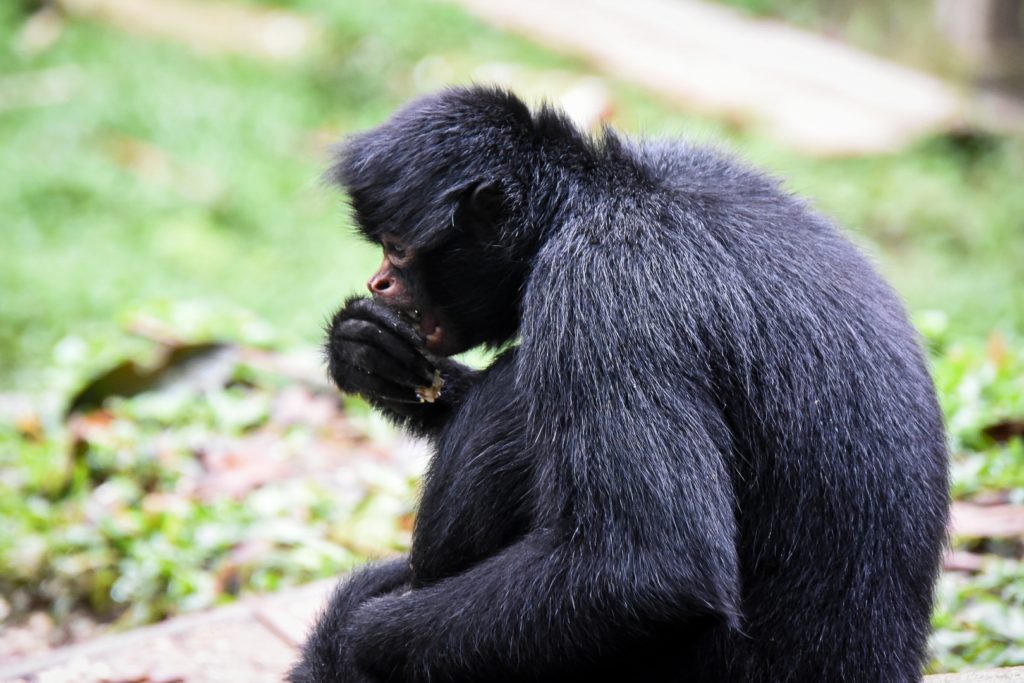
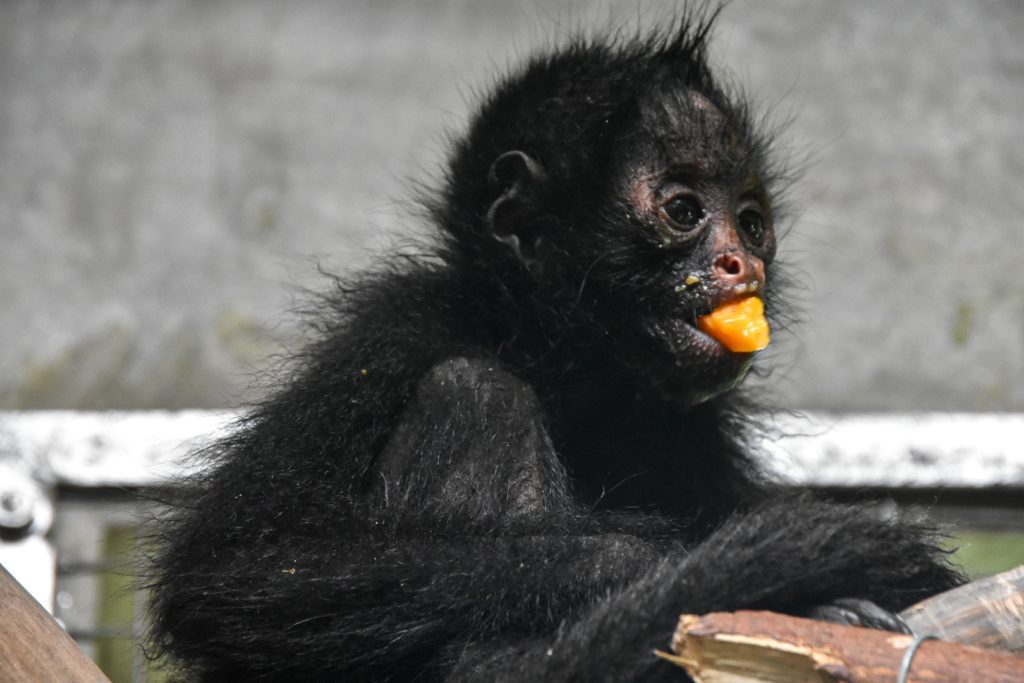
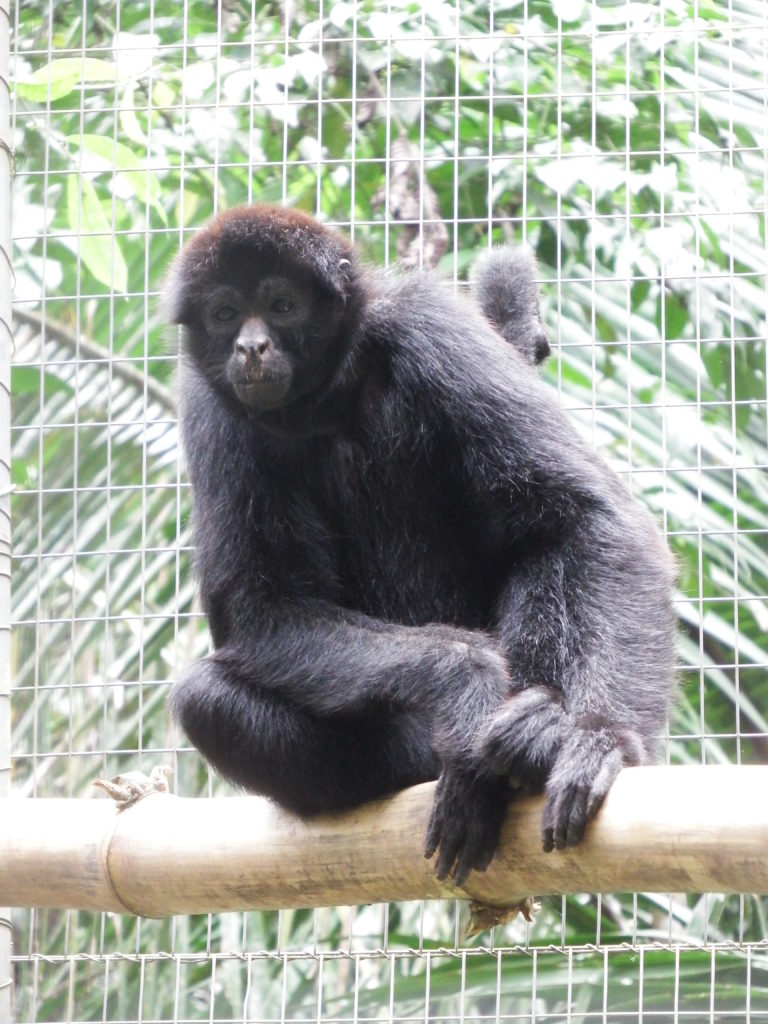
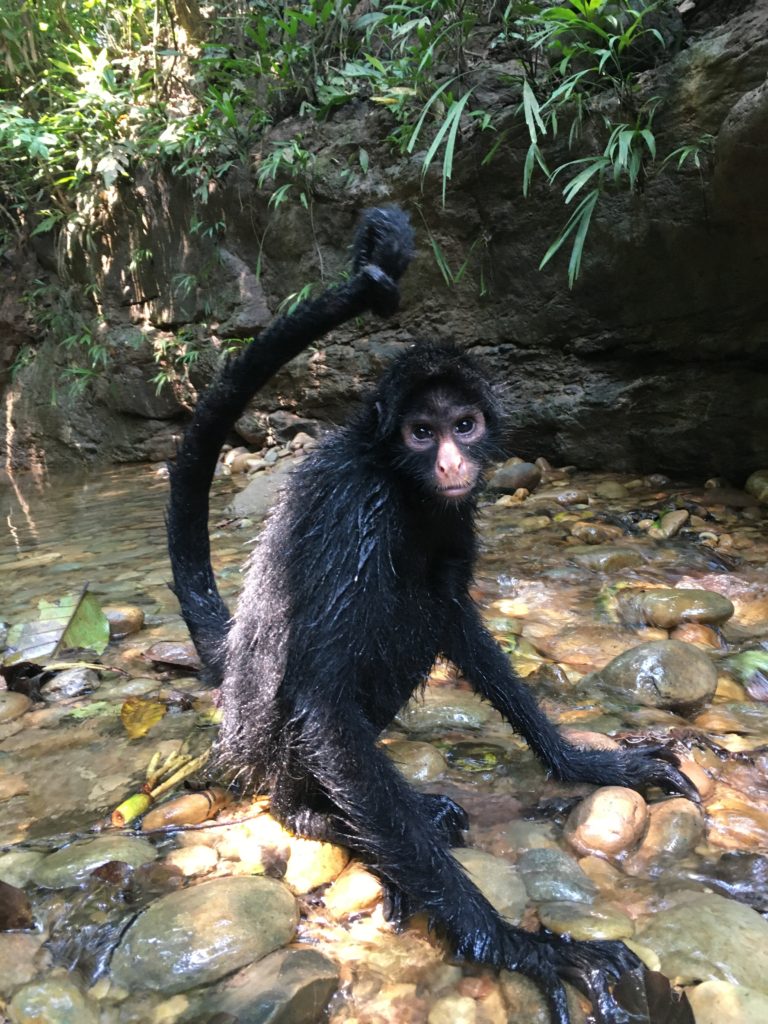
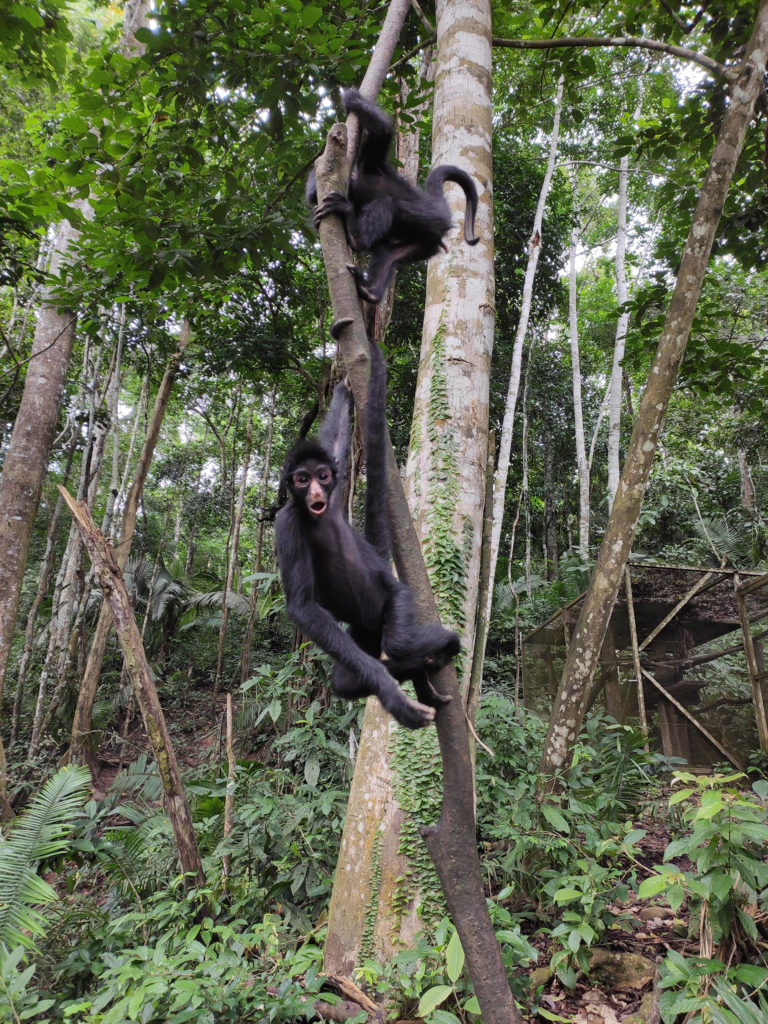
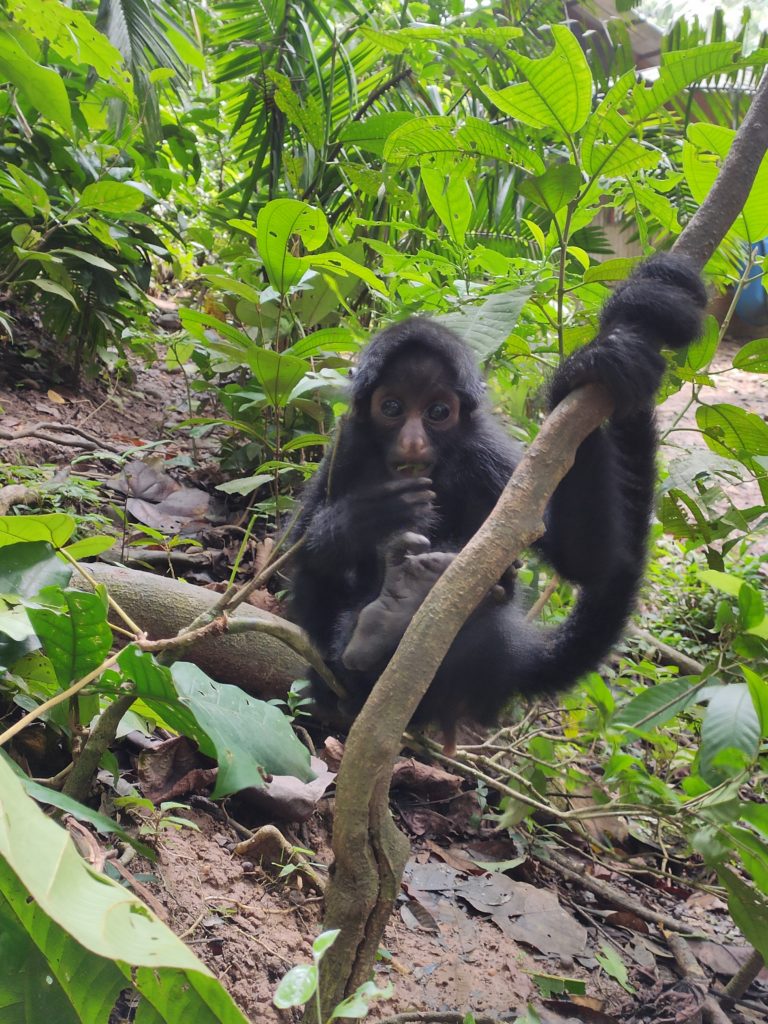
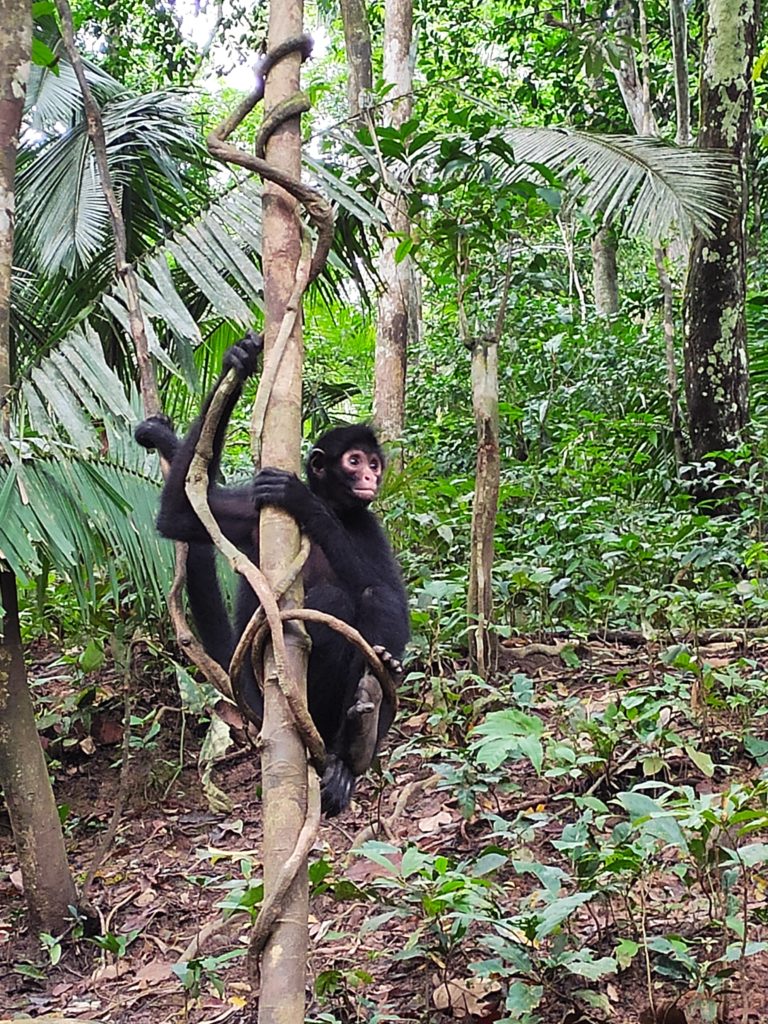
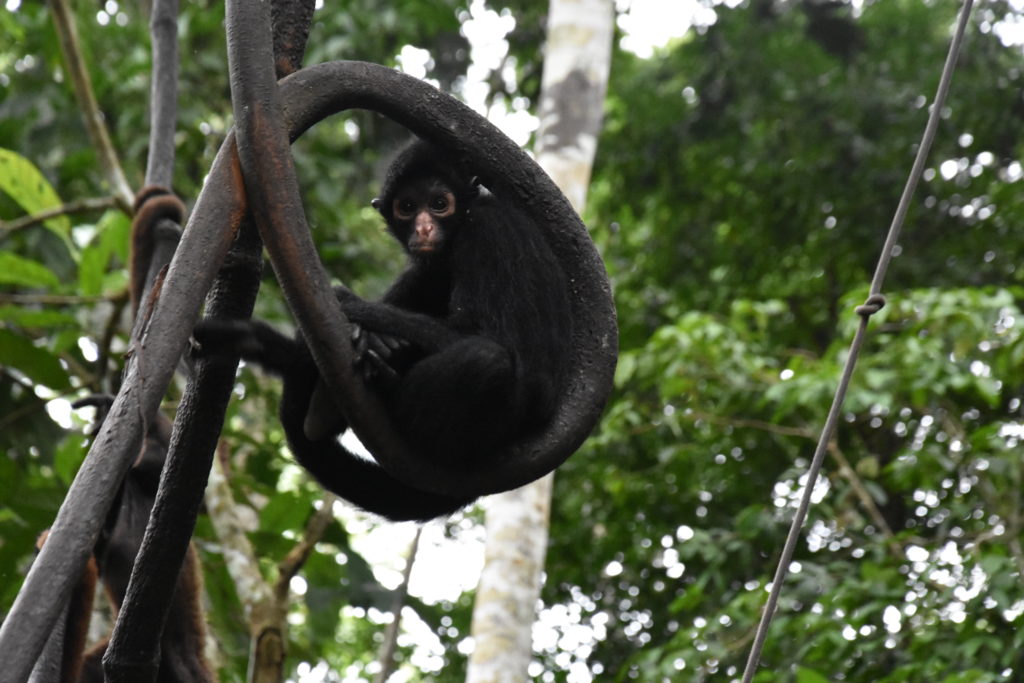
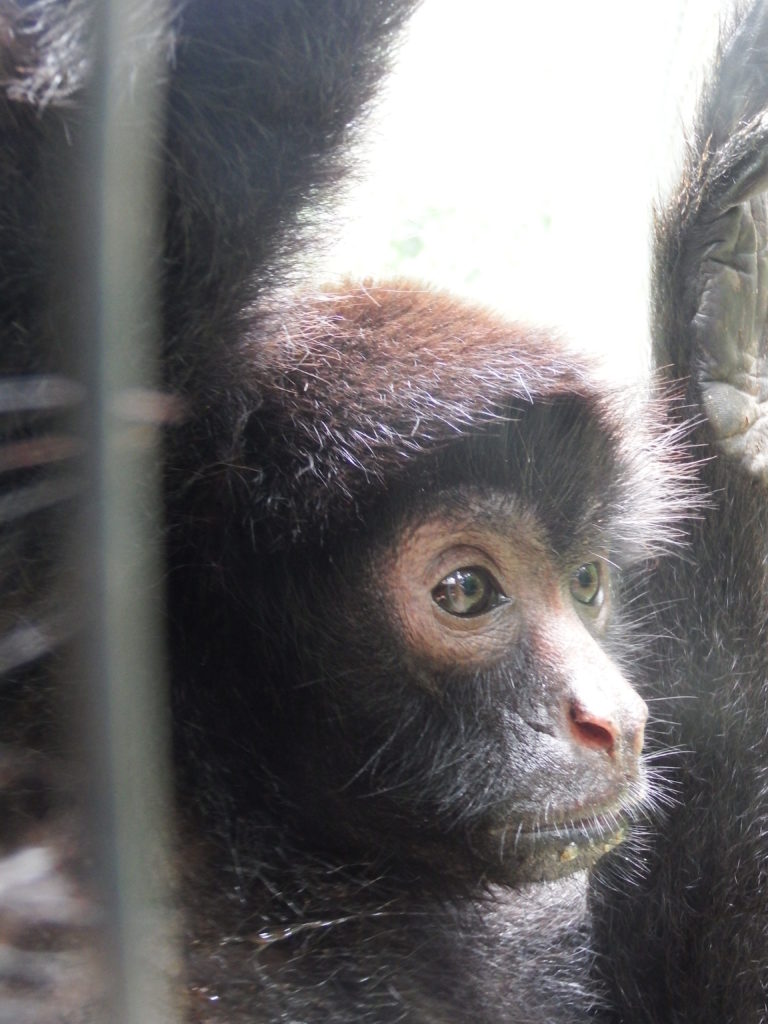
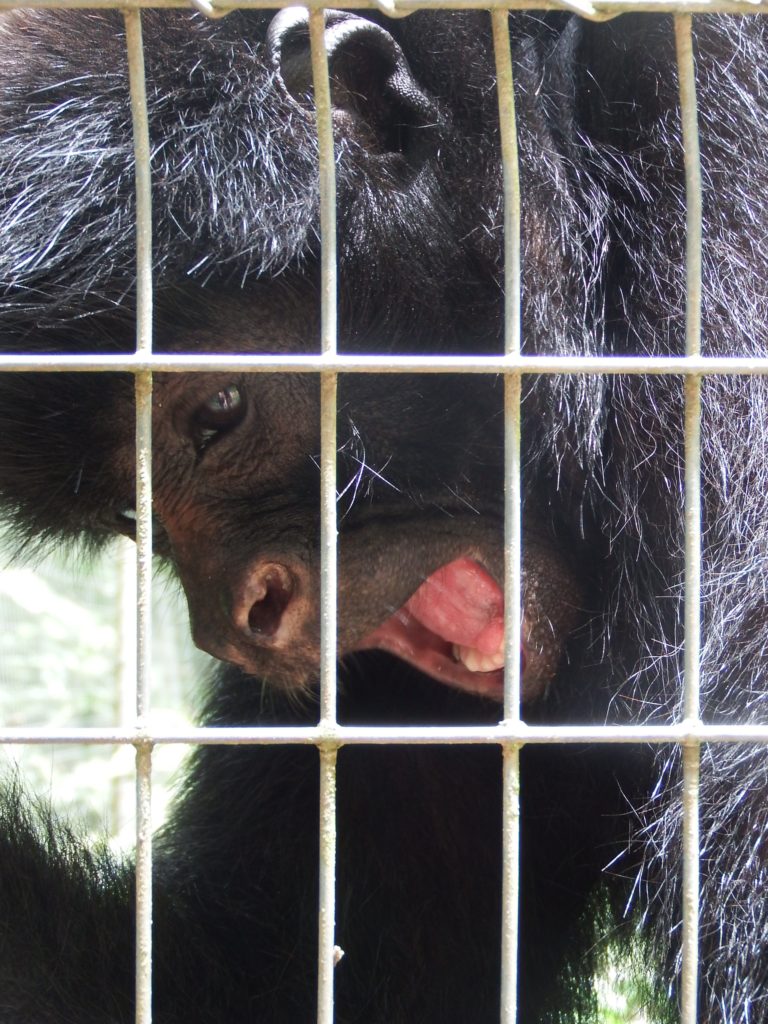
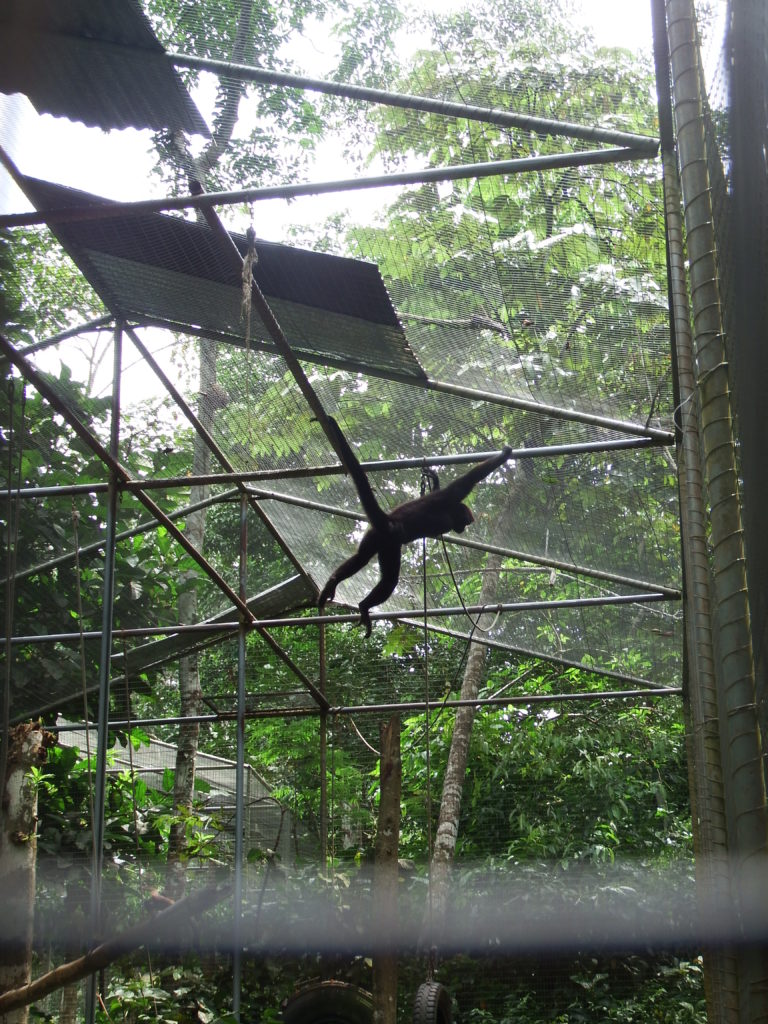
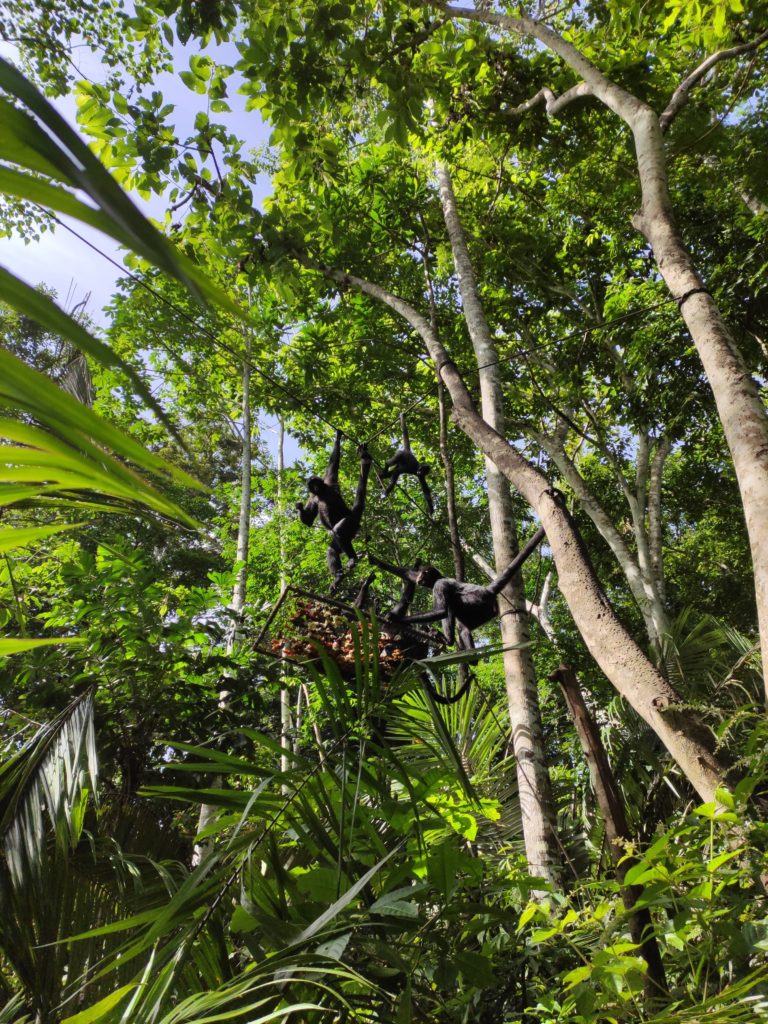
A young female black spider monkey, a bit skinny and with a small bump on the forehead but very well in spirit. She was happy to get some nice food and will for now reside in the clinic. Yanay (our adult female spider monkey living outside seems to be smitten, and is hanging outside of clinic from dawn till dusk talking to the newcomer. We foresee a great future for the new female, as you can’t have anybody better to protect you than Yanay!

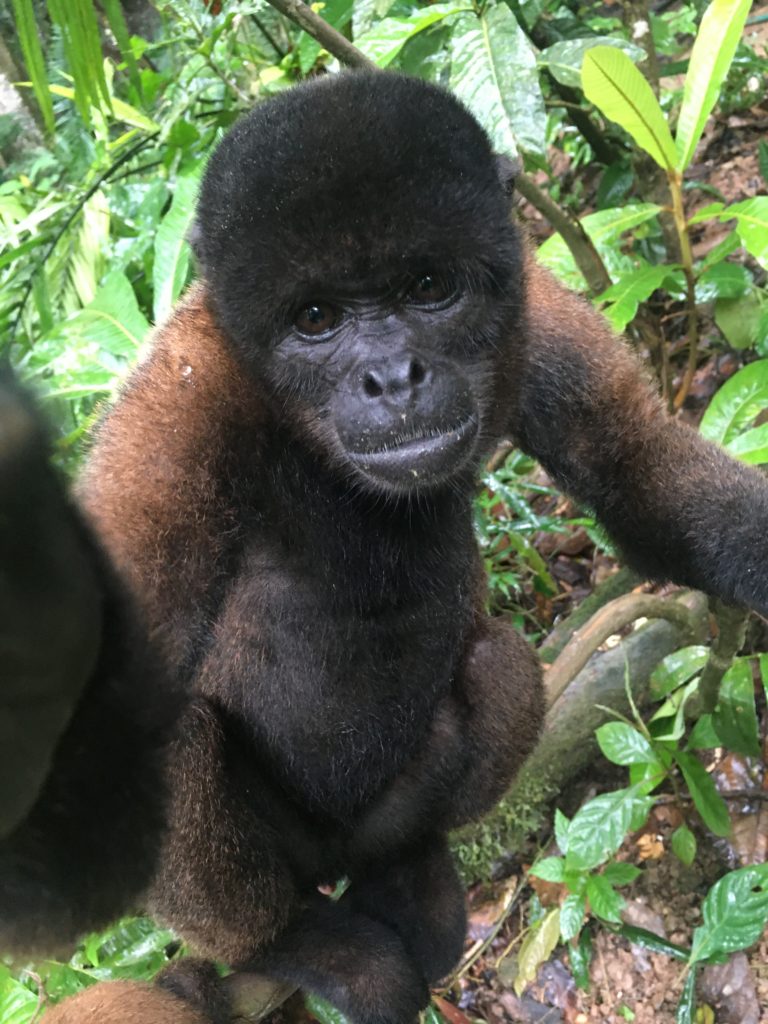
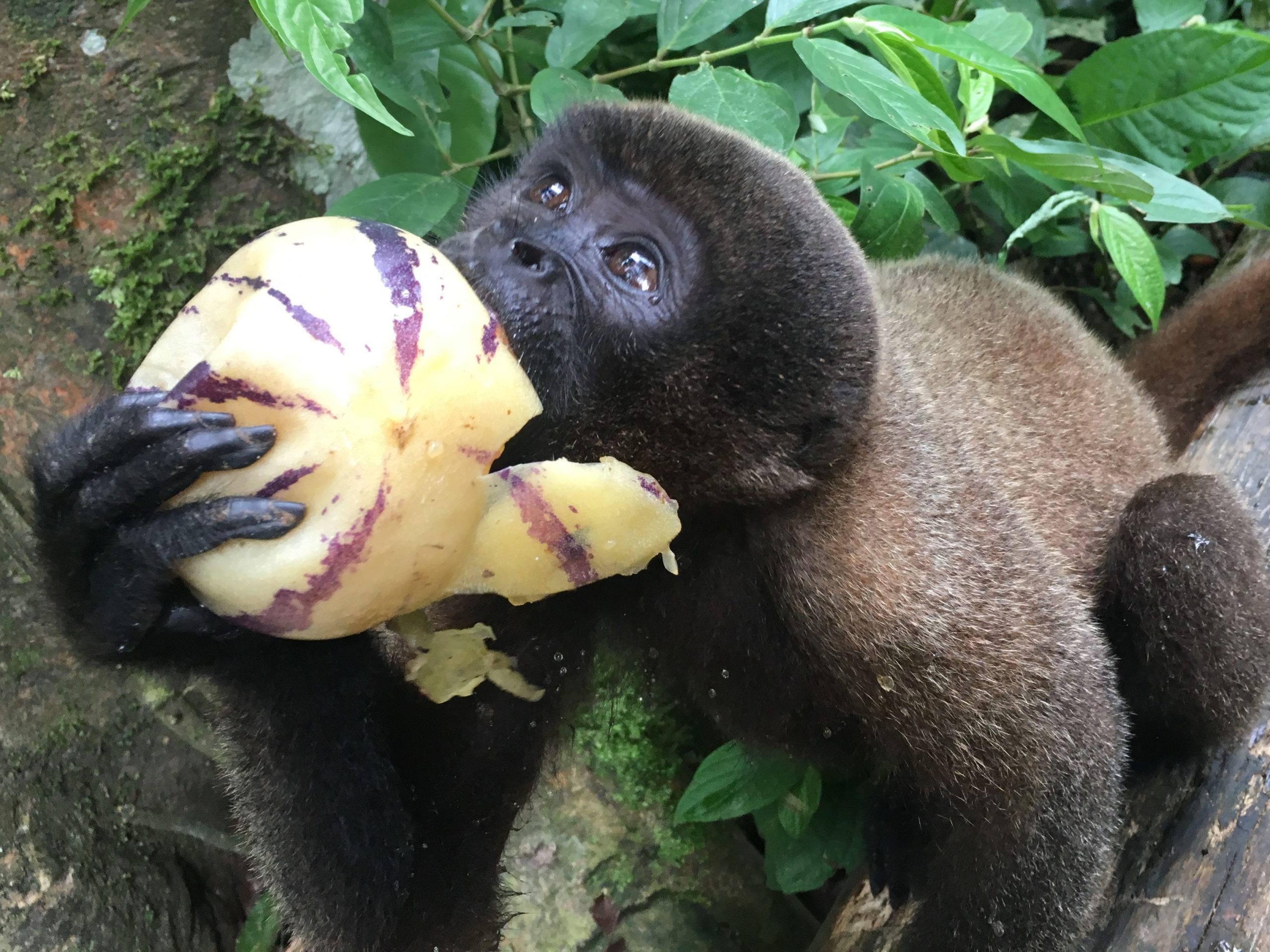
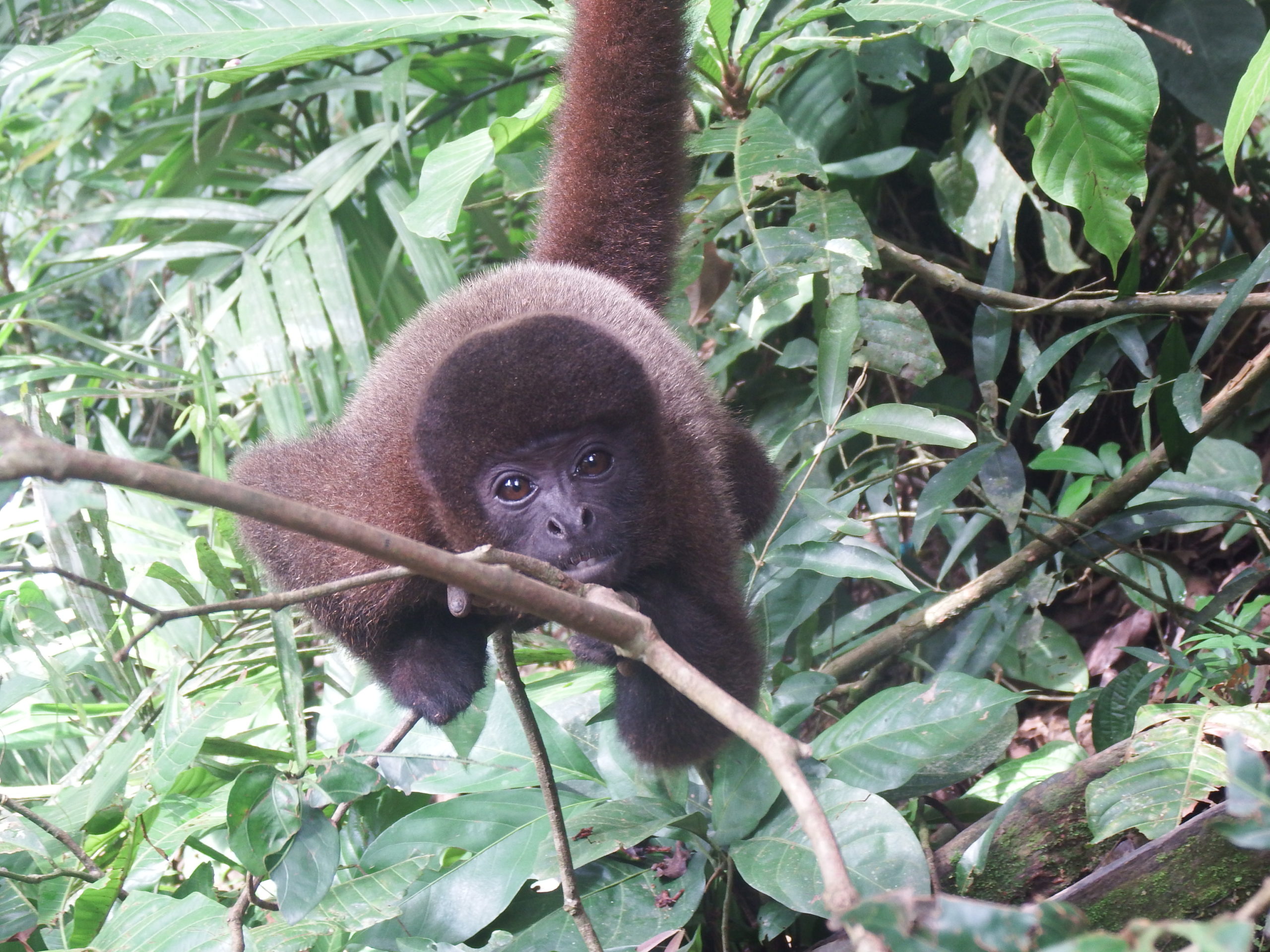
A young male woolly monkey, handed over to us from someone in the village. They had bought her, and as often the story goes: It is fun for a while, but then they notice it is not like a normal pet, a monkey is curious, does not use a toilet, and will just open everything, if not only out of boredom of being with people. So after some time, they decided to give it up. Another sad ending as we know, for a wild female woolly, being the mother of this male and most certainly killed to get to this male baby. So here at Esperanza Verde we will provide him with a second chance and hope he will be well with our outside woolly monkeys after his quarantine time. Both the young spider as this woolly at least have a good start of arriving at the same time, so they will be spending the quarantine time together at the clinic, giving them both more comfort and less stress.

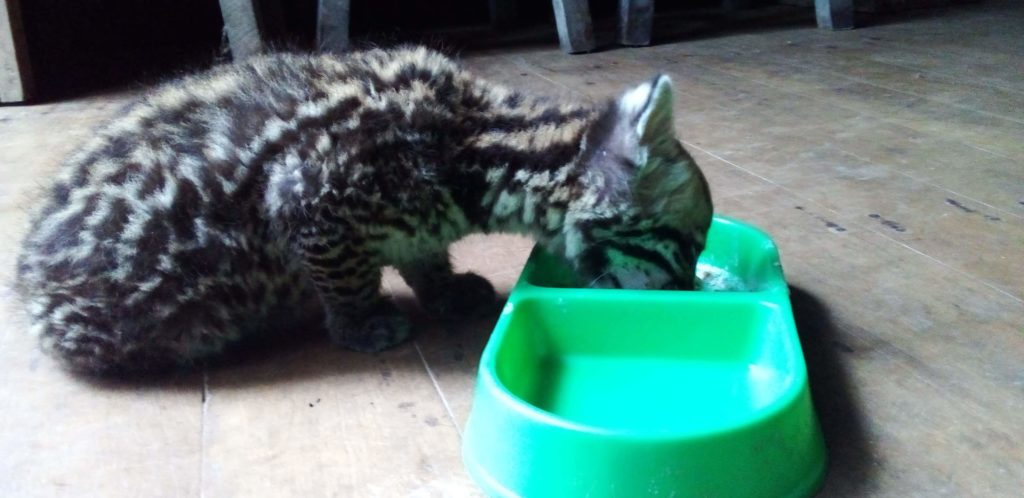
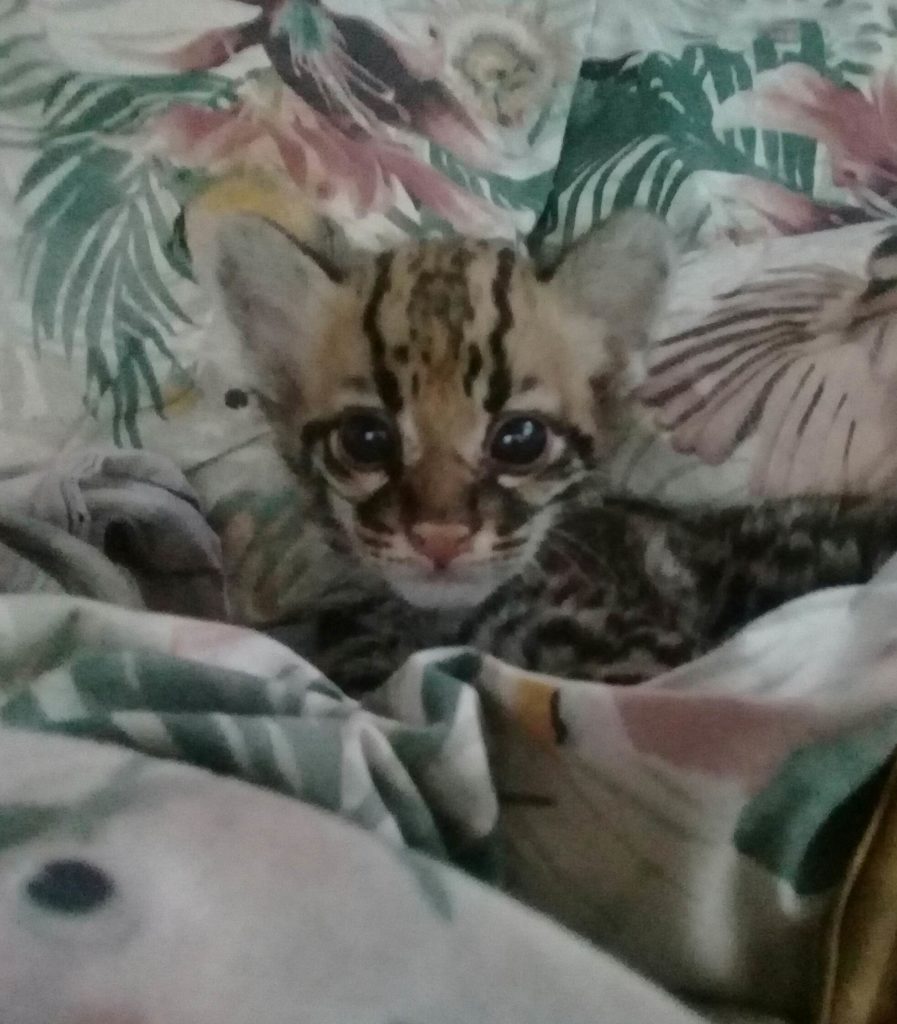
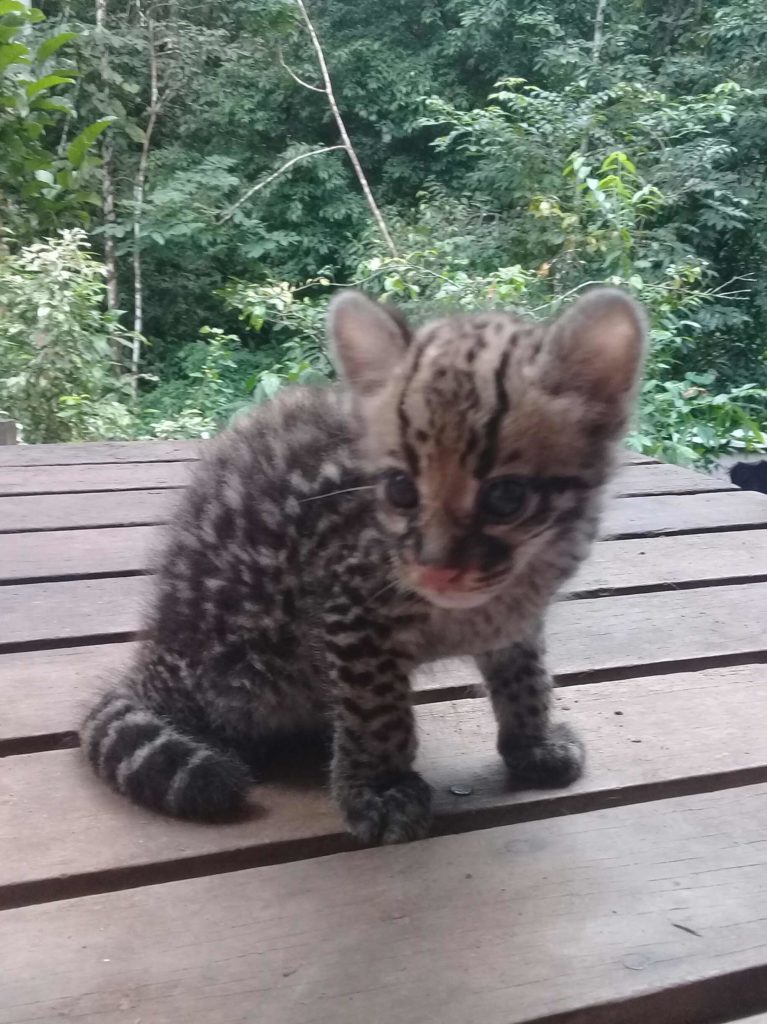
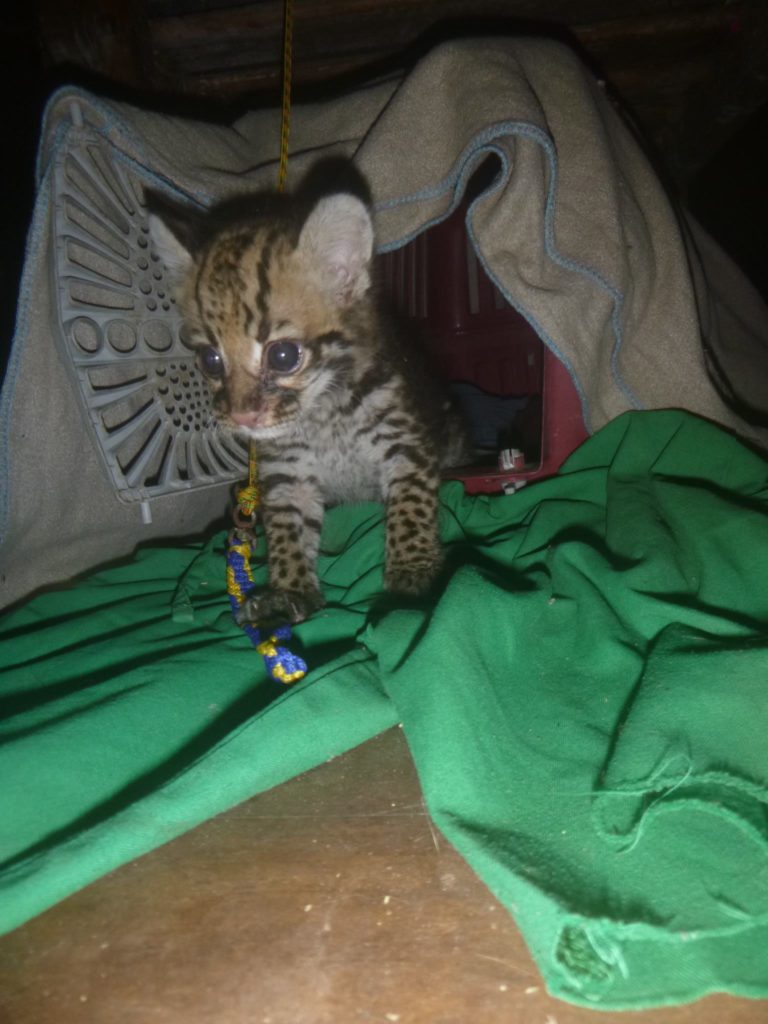
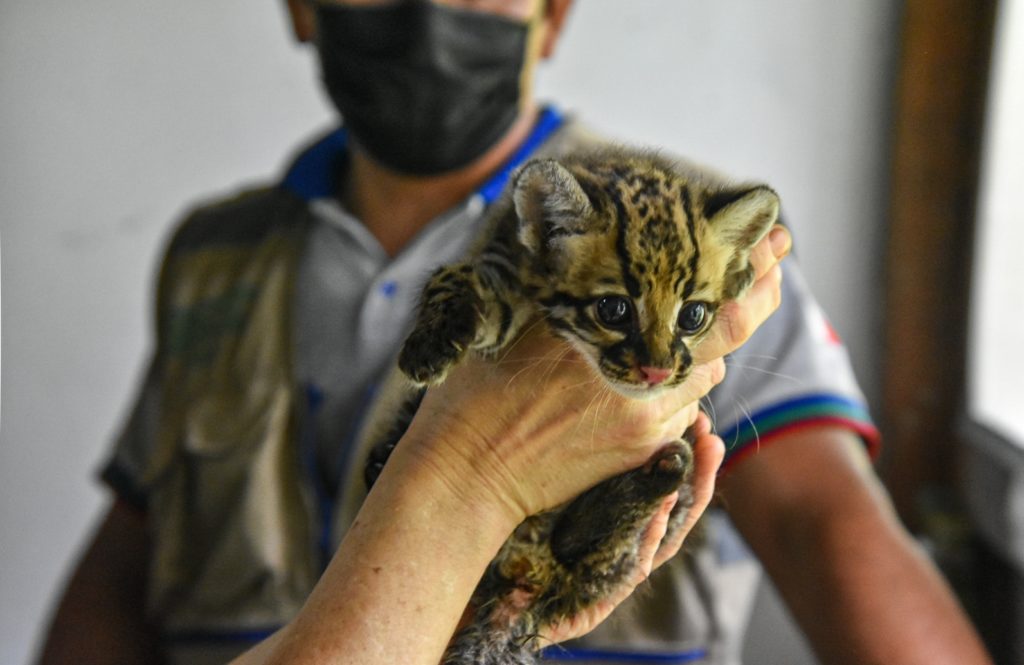
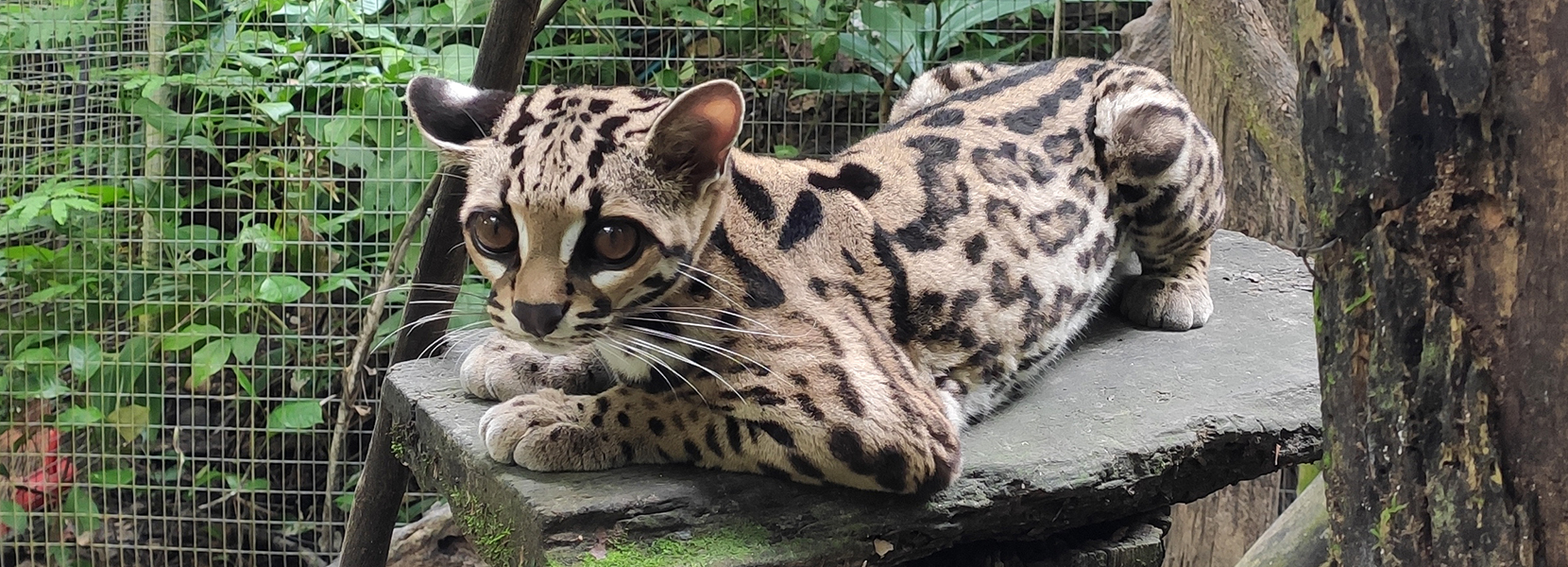
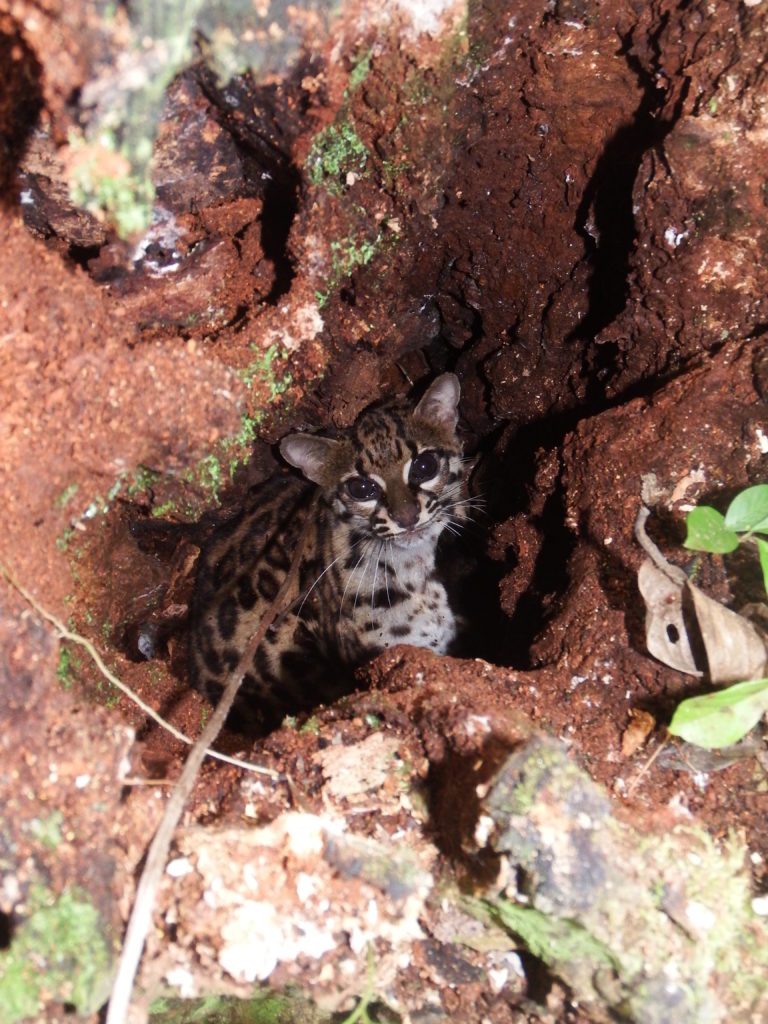
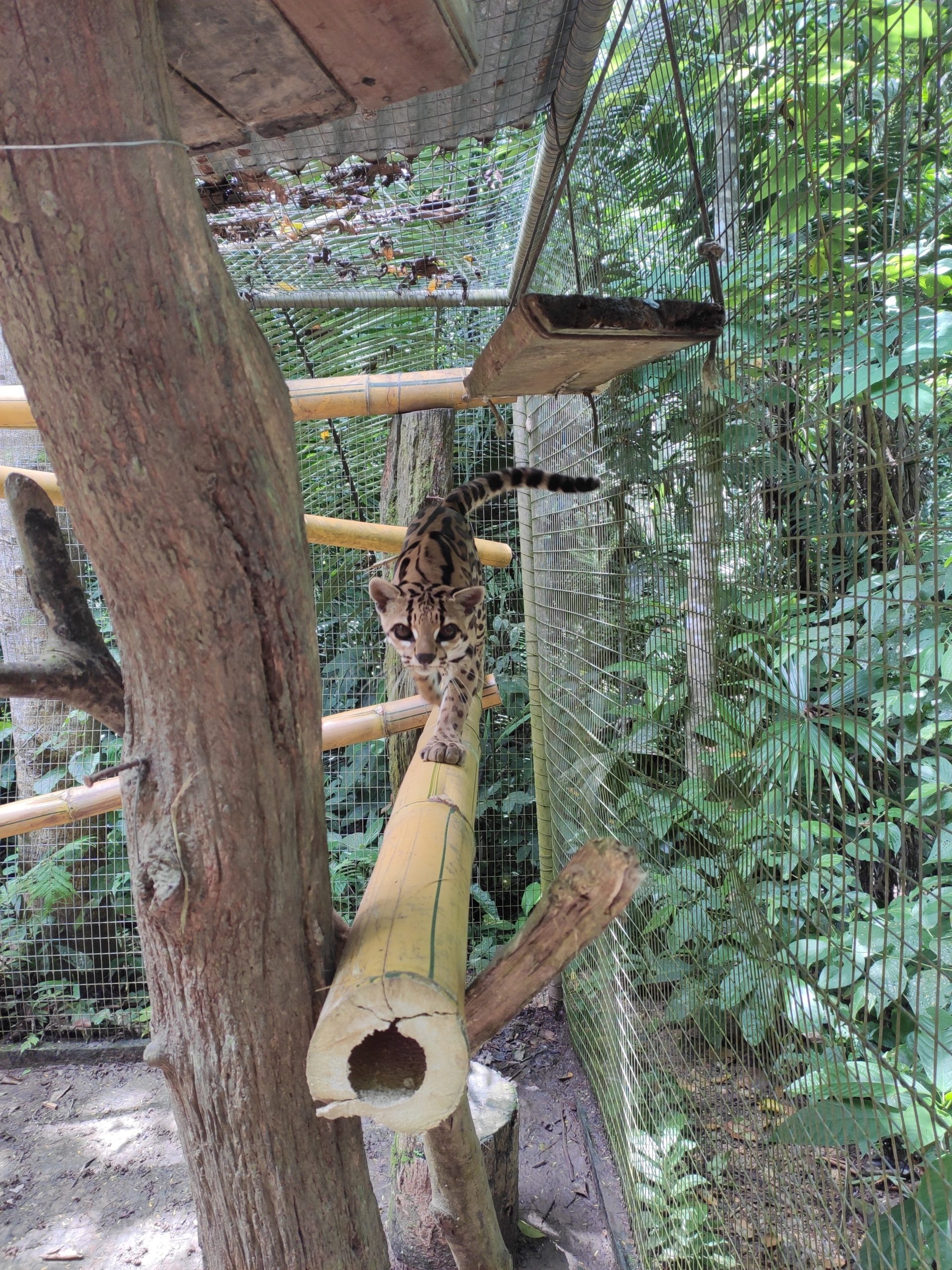
A young female margay or ocelot of about 6 weeks old. At first it was thought by the Ministry it is a ocelot, but finally was brought in officially as a margay. We are still a bit in doubt. As it is so small the distinctive features as the length of the tail, are making it hard, although we tend to go more to ocelot at this stage (the tail just seems a bit short for a margay). In any case the small female should at least be twice its weight, so the first priority is to get her healthy and growing steadily. Being this young it would normally be with its mother full time, dependent on her care, milk and protection. She has been taken in by Olivia and Douwe who can provide her the intensive care needed at this age, till we have a more long term solution for her future to be.

Construction and other

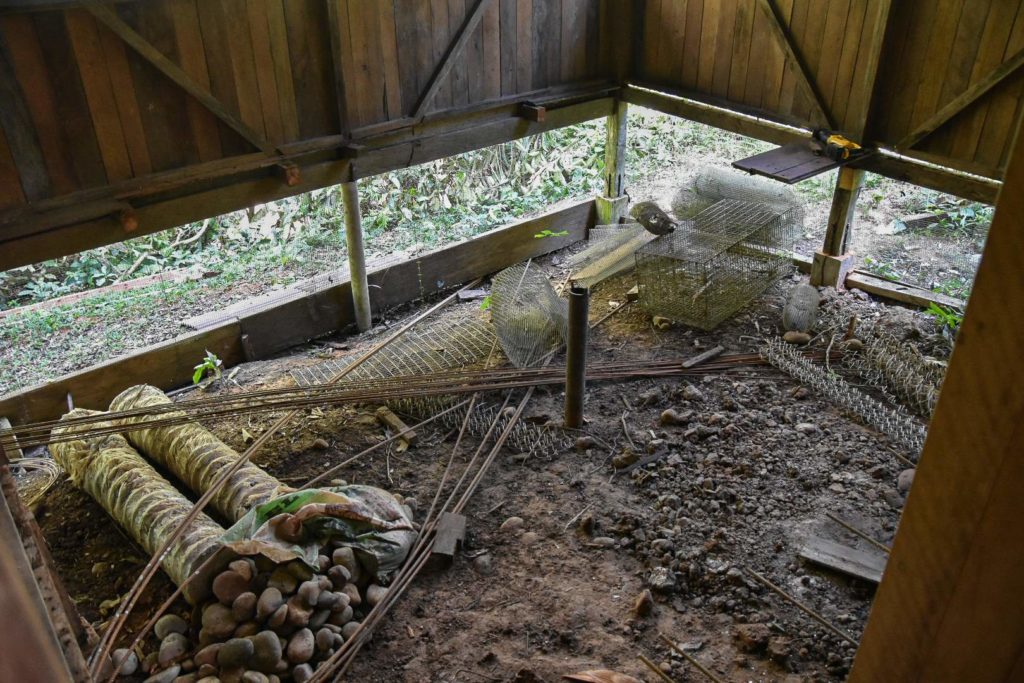
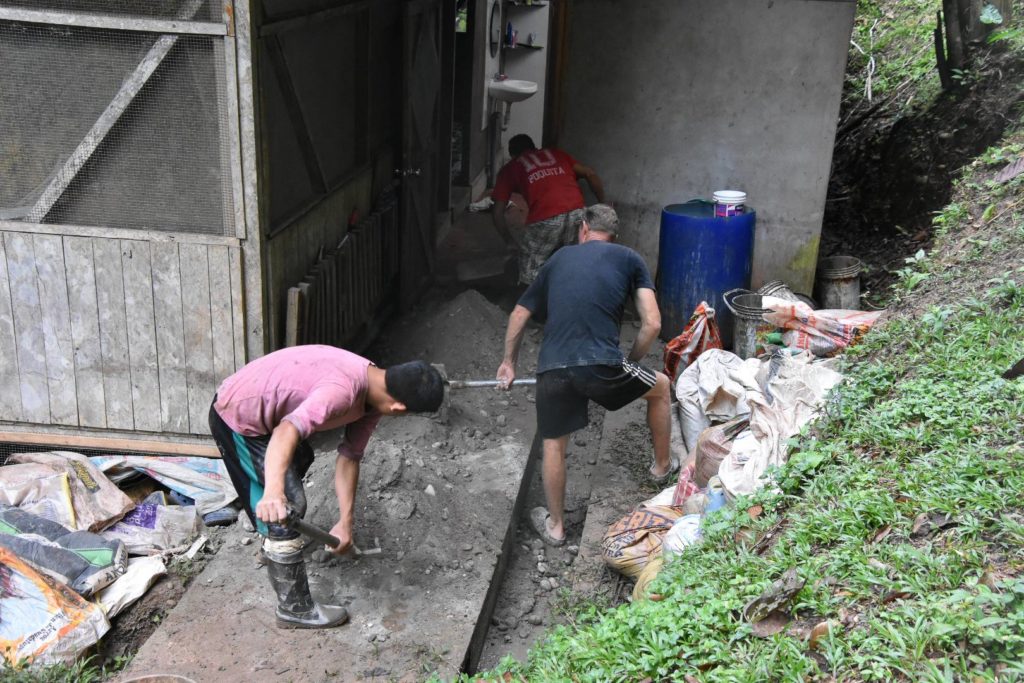
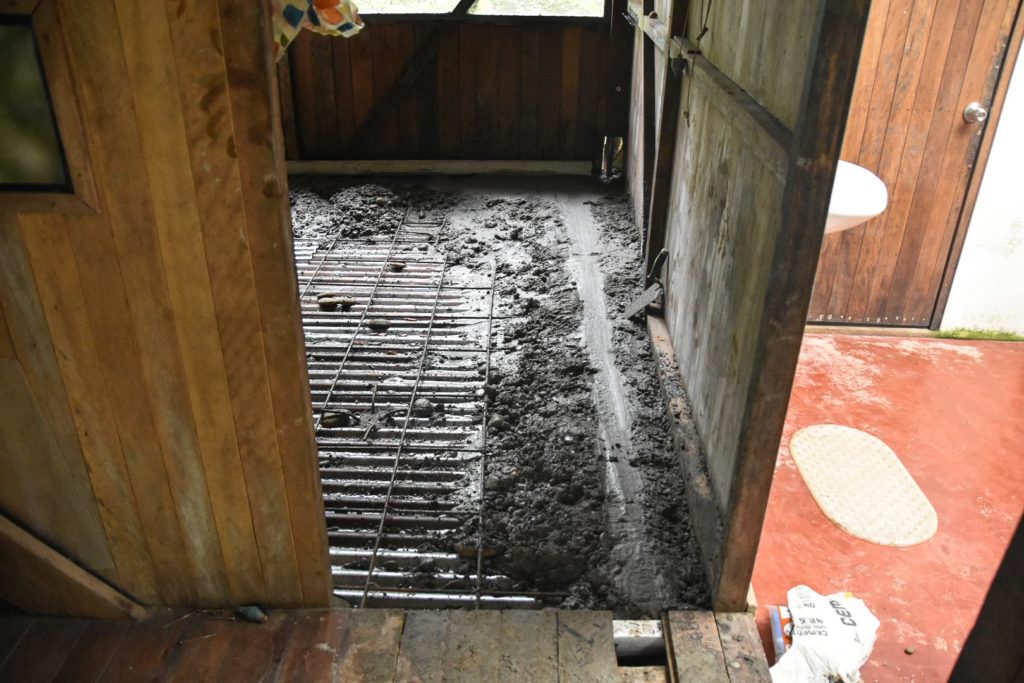
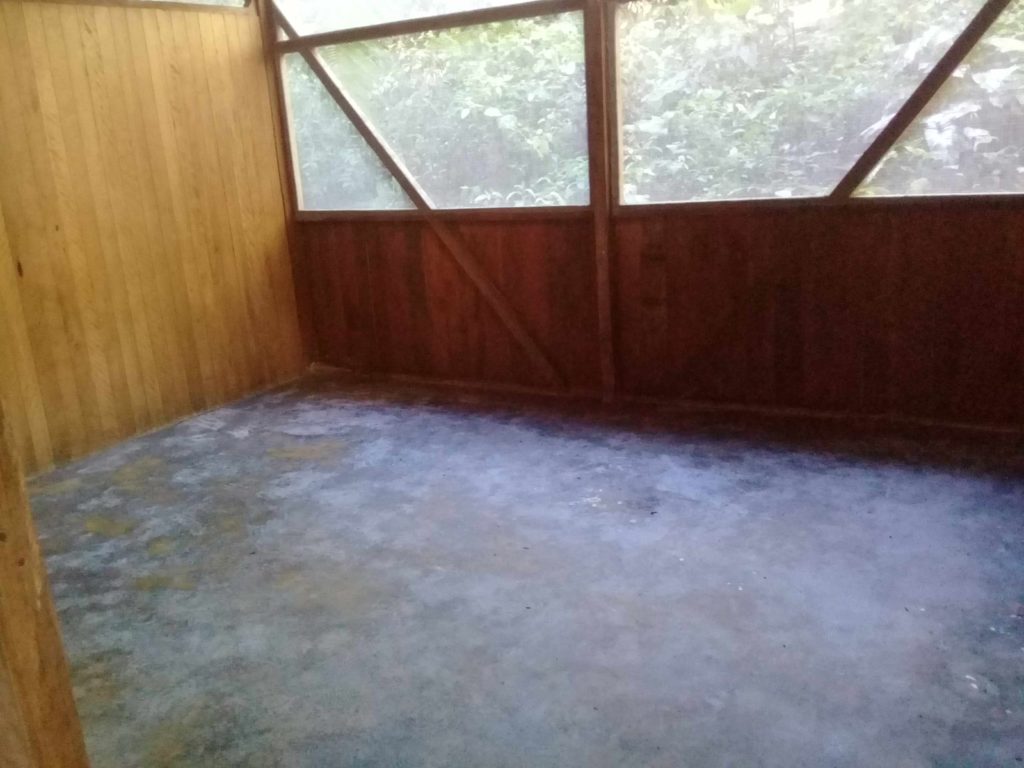
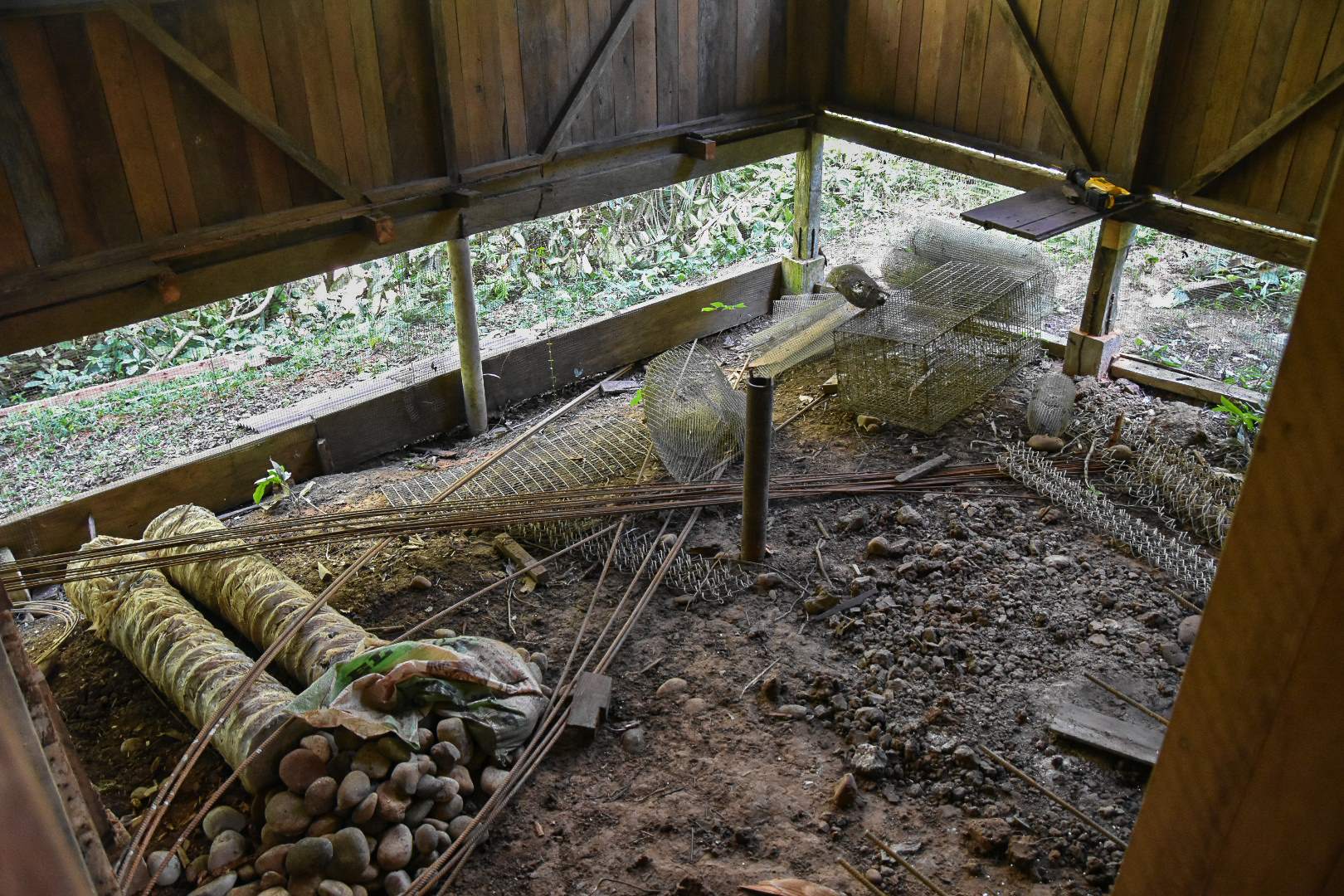
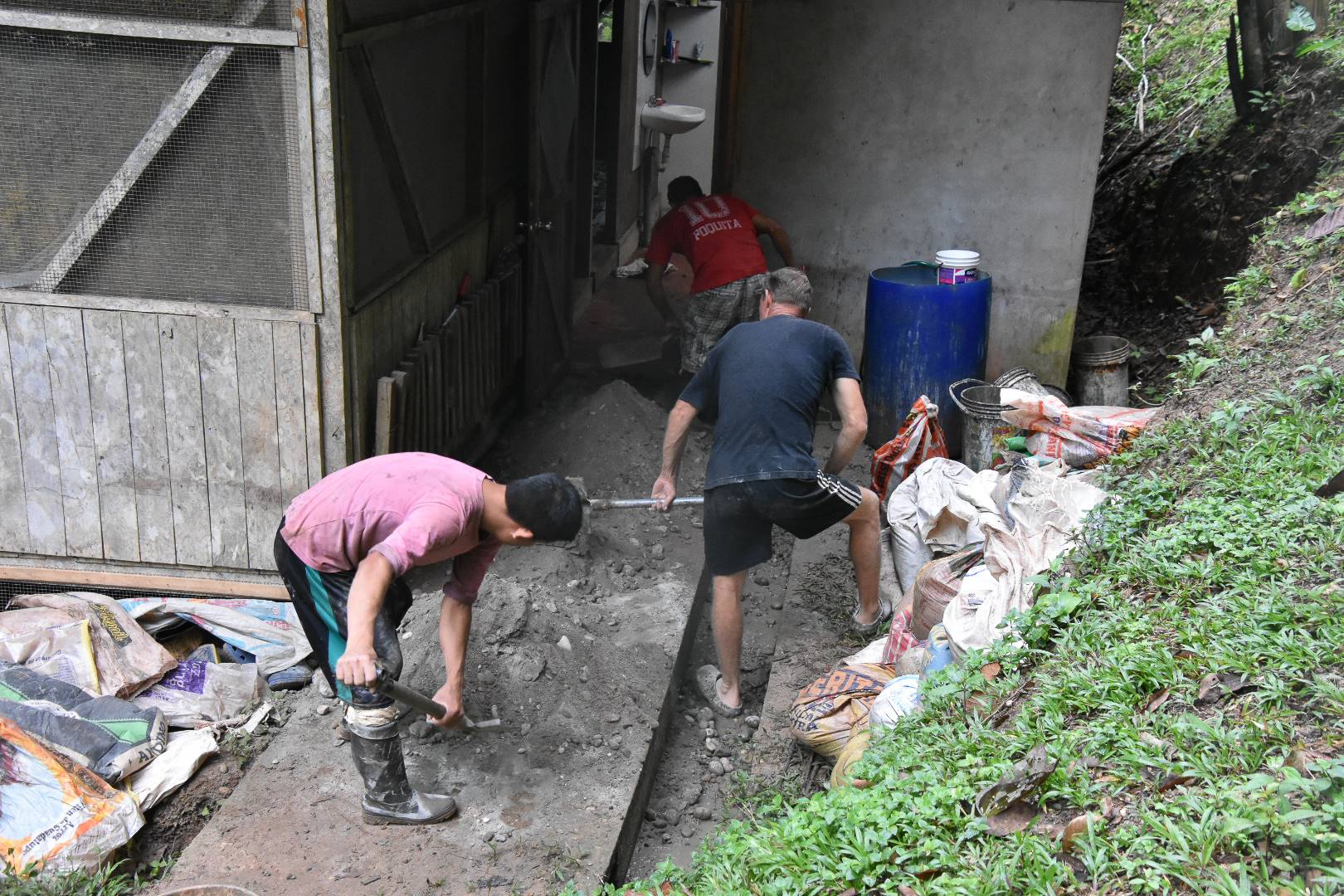
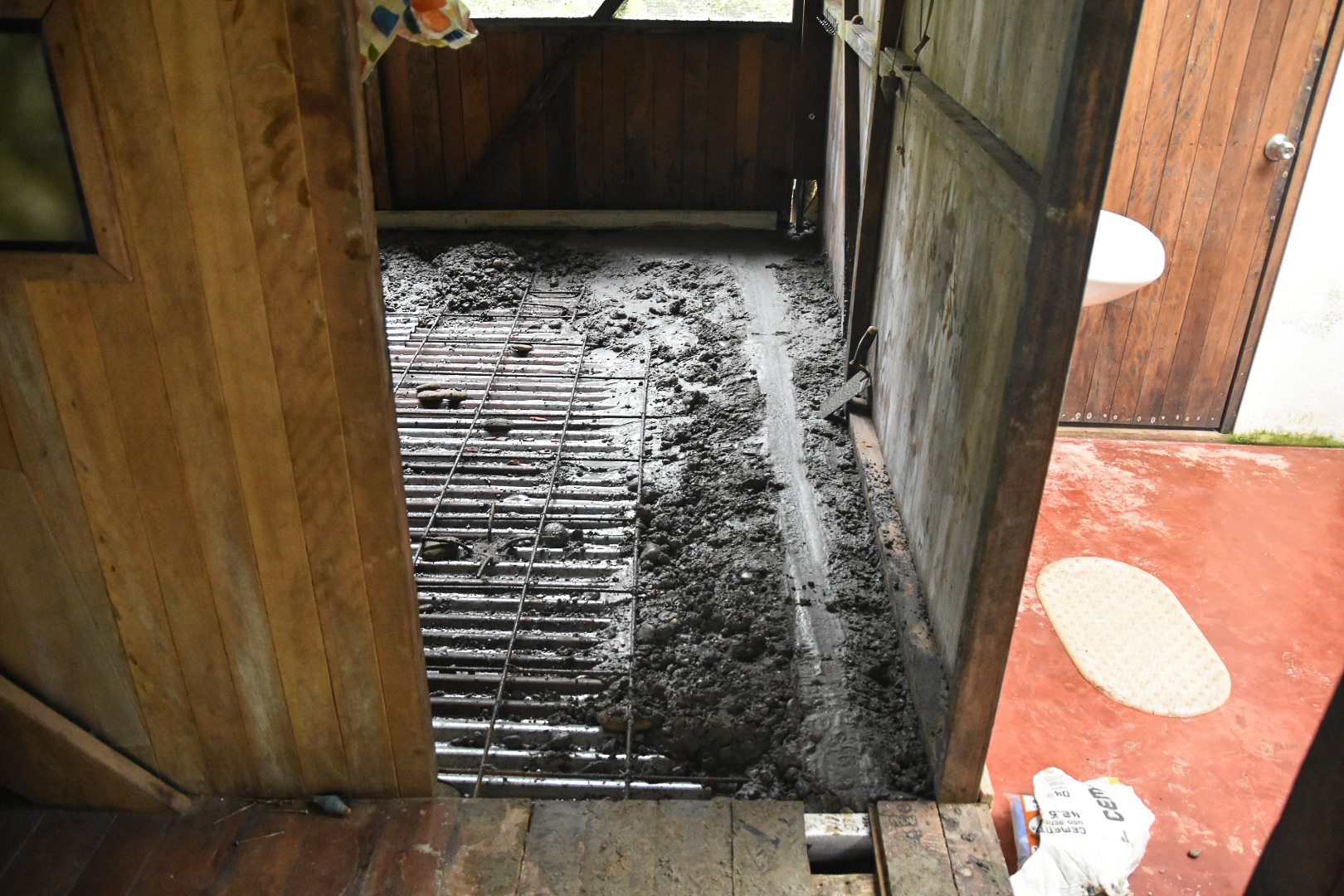
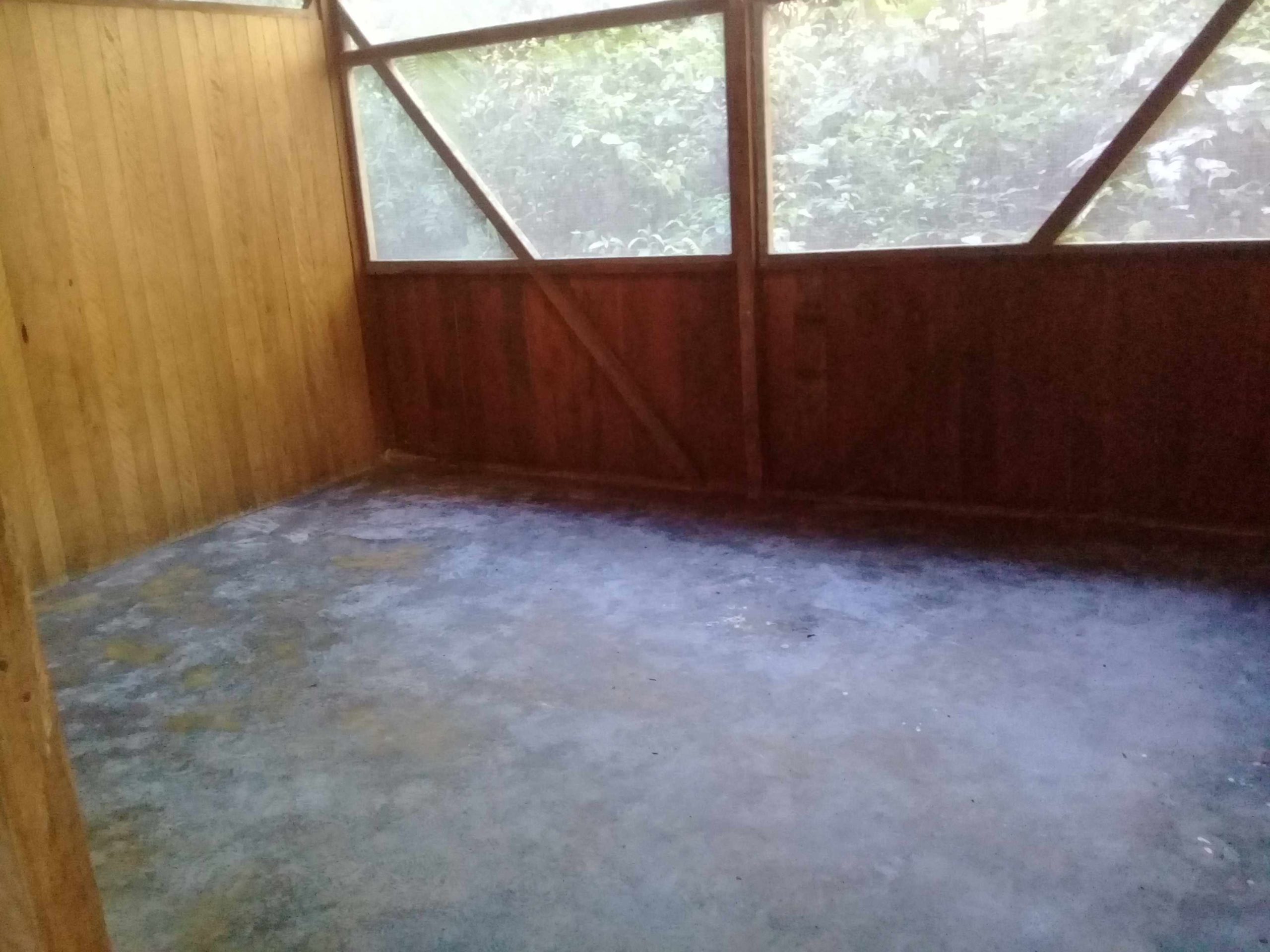
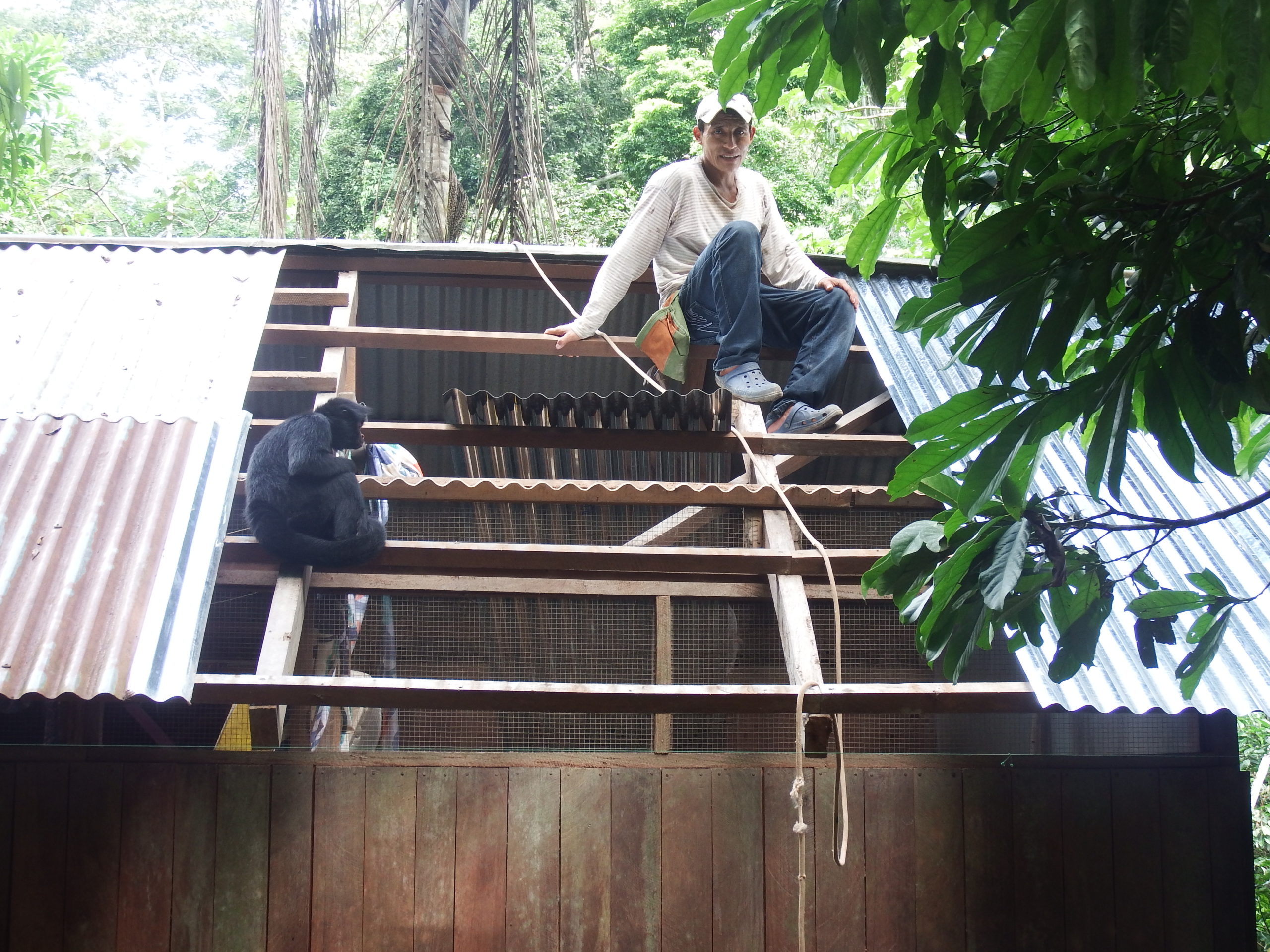
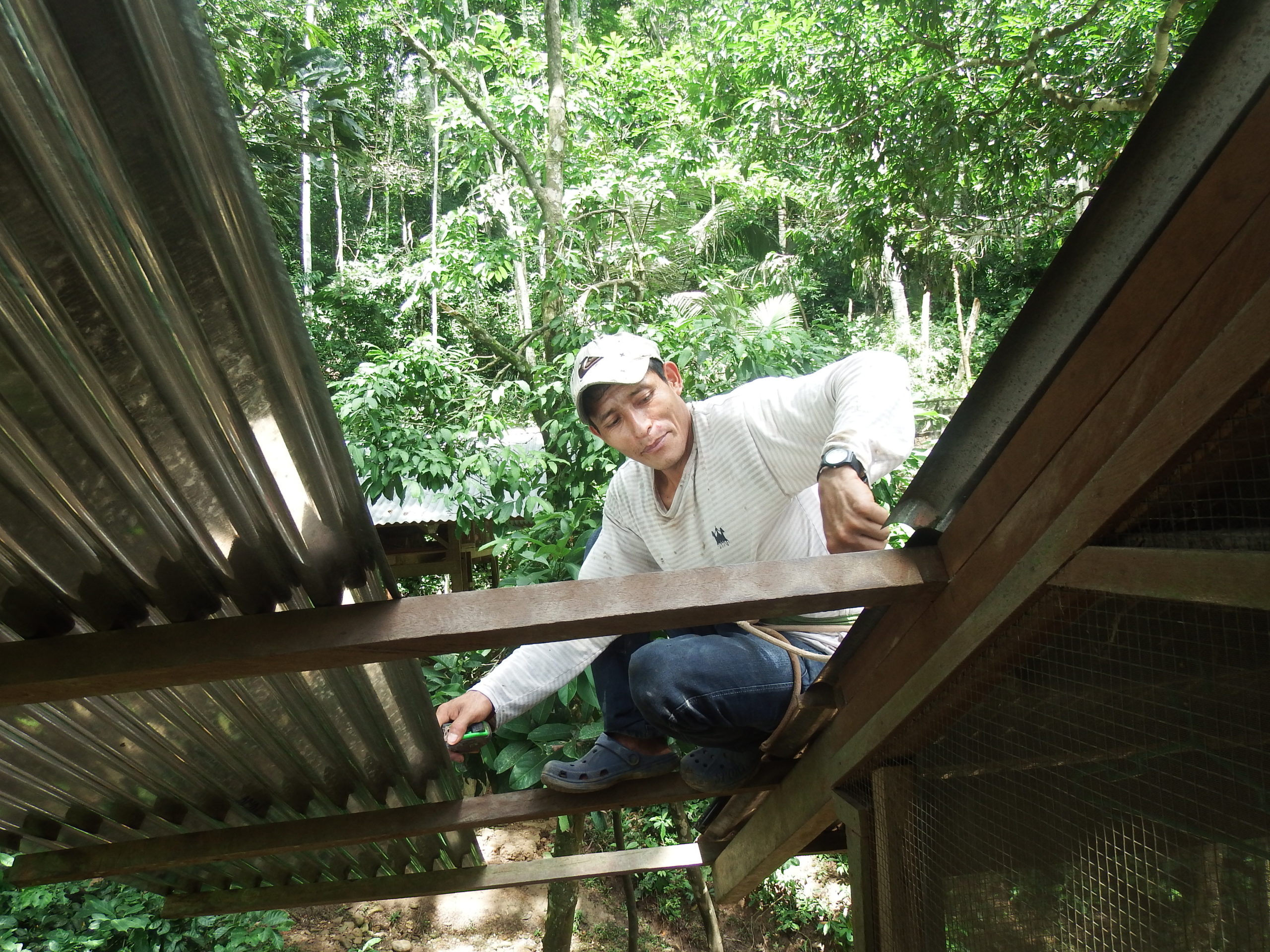
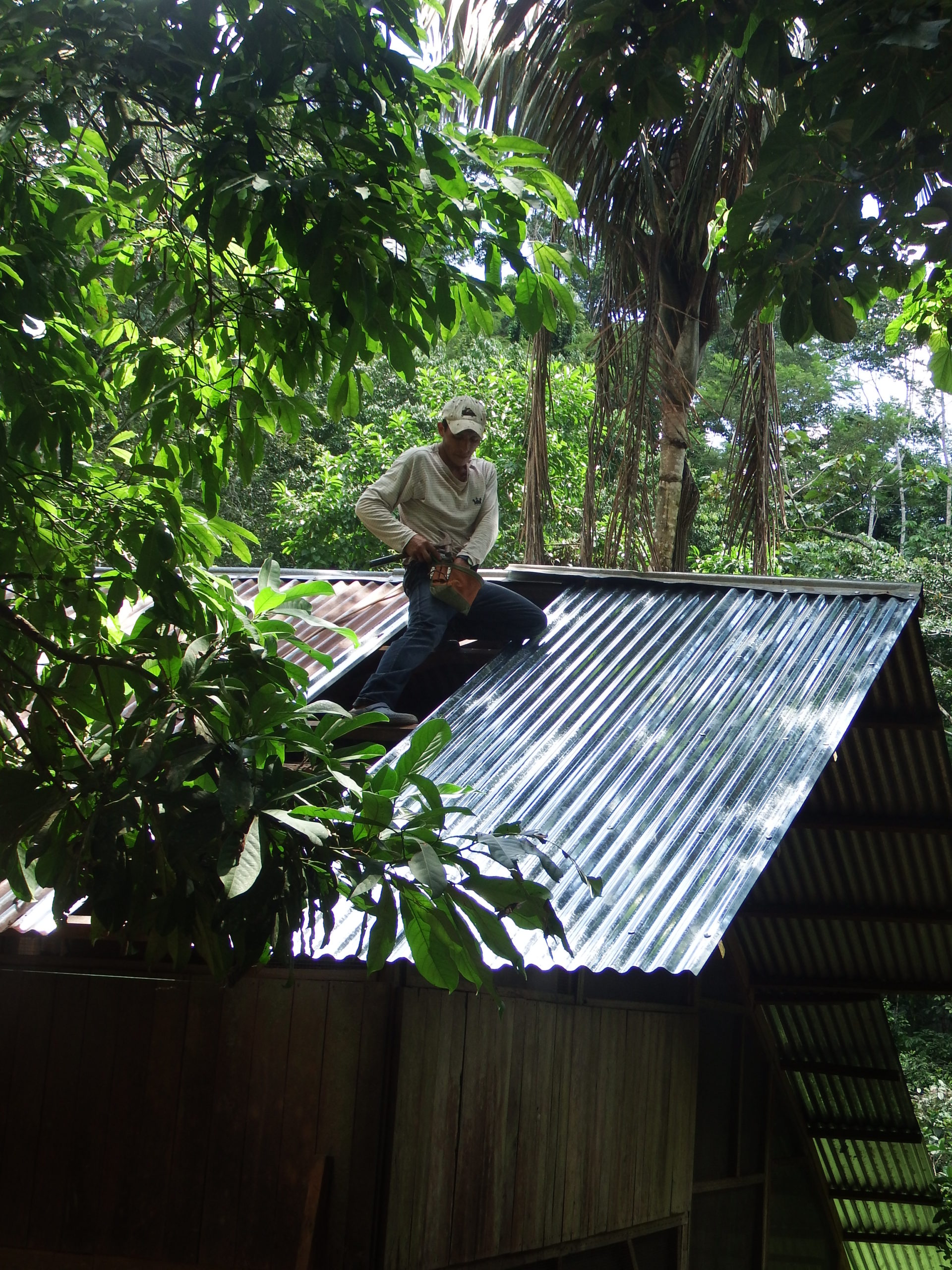
With Craig and Geyler back, from a well-deserved holiday, new volunteers on the team, and Alexandra taking the reign again in the general management, some bigger construction projects that were on hold could be started. The first priority was the start of the renewal of the floor of the volunteerhouse. This will take several months, as it will be done while the house is occupied. Douwe and Geyler will be busy the coming weeks with the first room, while Craig can take a lot of Douwe’s duties of the on-site constructions and maintenance.

Volunteers

This was a refreshing month with new energy with all new people. We now have a crew of 5 volunteers, most staying with us for several months. Together with Craig, Alexandra, Geyler, Machico and Rolli (working at the organic plantation, Finca Don Jorge), we have a good group to get Esperanza Verde back to its normal routine again.

April 2021 Newsletter

April has been a month of festivities and finding numerous reasons for celebration. The rainy season has lasted longer than usual, and although muddier, it comes with its own silver lining, vibrant new growth everywhere you look.

Animals

New babies are always a cause for celebration and this month did not disappoint. Douwe had realised a few weeks earlier that Maruja (female adult Humboldts woolly monkey) was carrying a lot of extra weight. On closer inspection Douwe was allowed to feel Marujas belly and found it was full of arms and legs. Then, after disappearing for almost two days, Maruja apparently thought it was time to show us her new born son. It was a great joy to see her with the new baby attached, both doing very well. It is always a beautiful sight to see the entire woolly monkey troop come to view their latest addition. The baby appears in very good health and surprisingly rapidly aware of what is going on around it. We decided to name him Manok.

Our alpha male Humboldts woolly monkey Monano, and most likely the father, is never far away from the action ensuring the safety of the newest addition.

Payco the crab eating raccoon has settled into his new enclosure and, other than a small finger injury, is in good health and high spirits. Although he has a different personality to our previous crab eating raccoons (Rumani, Mokwai, Eona) we envisage evening walks for Payco starting in the next month. This is always a welcome addition to the day, with many volunteers eager to take on this fun and rewarding role. Evening walks are vital in preparing Payco for release, which is ultimately a decision he will make when he is comfortable enough with his outside surroundings. Eona visits him sometimes in the evening laying on his cage, and seemingly having whole conversations together, so hopefully they will make a nice couple one day!

Yanamayu, one of our enclosed adult large headed capuchin males, was not doing well in the Rimaq enclosure under the dominance of female Kres (female adult capuchin), who hardly allowed him to get to the food. With Kamayo (Humboldts woolly monkey) having La Sapa enclosure to himself, the decision was made to put them together (as they have been together in that cage in the past). Kamayo is dominating in the cage La Sapa, however, as his nature is very relaxed, we hope that the change of location will benefit Yanamayu’s health and give him an opportunity to put on some weight.

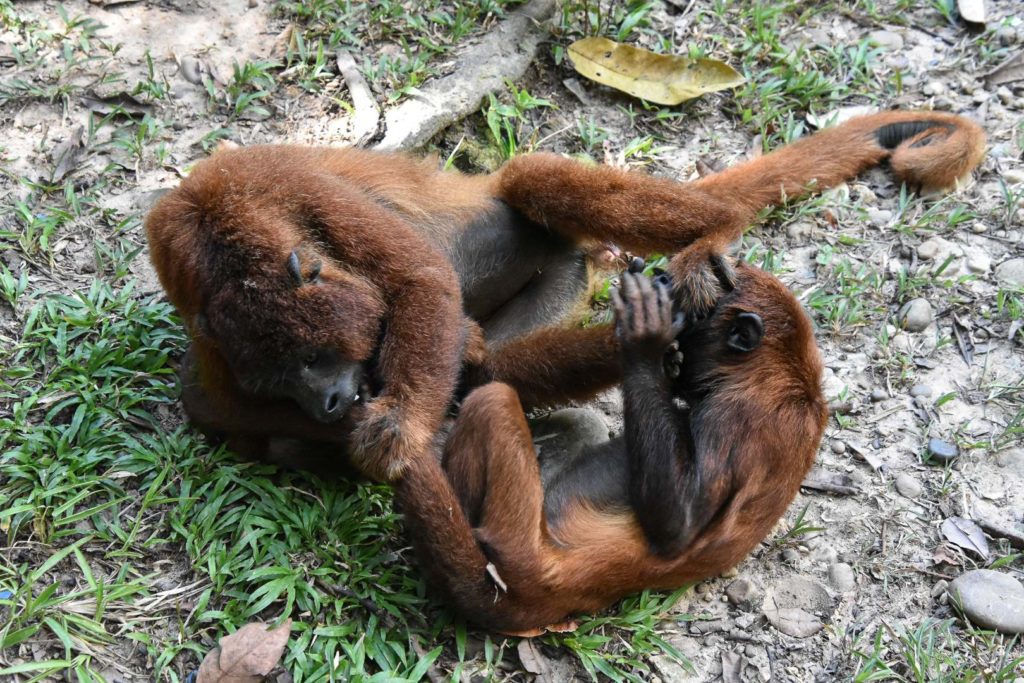
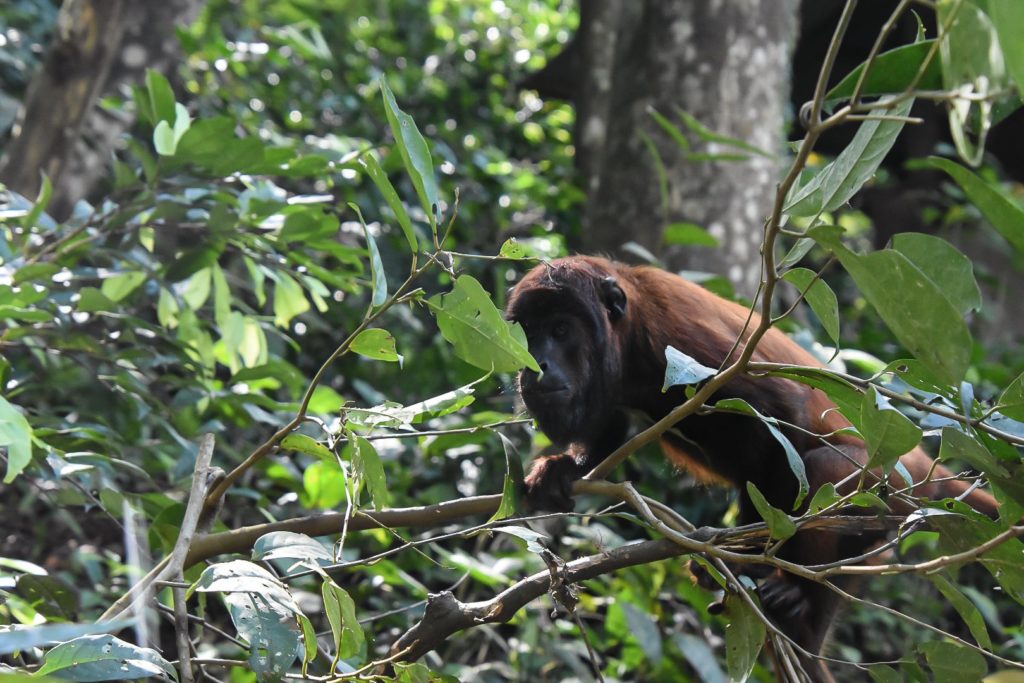
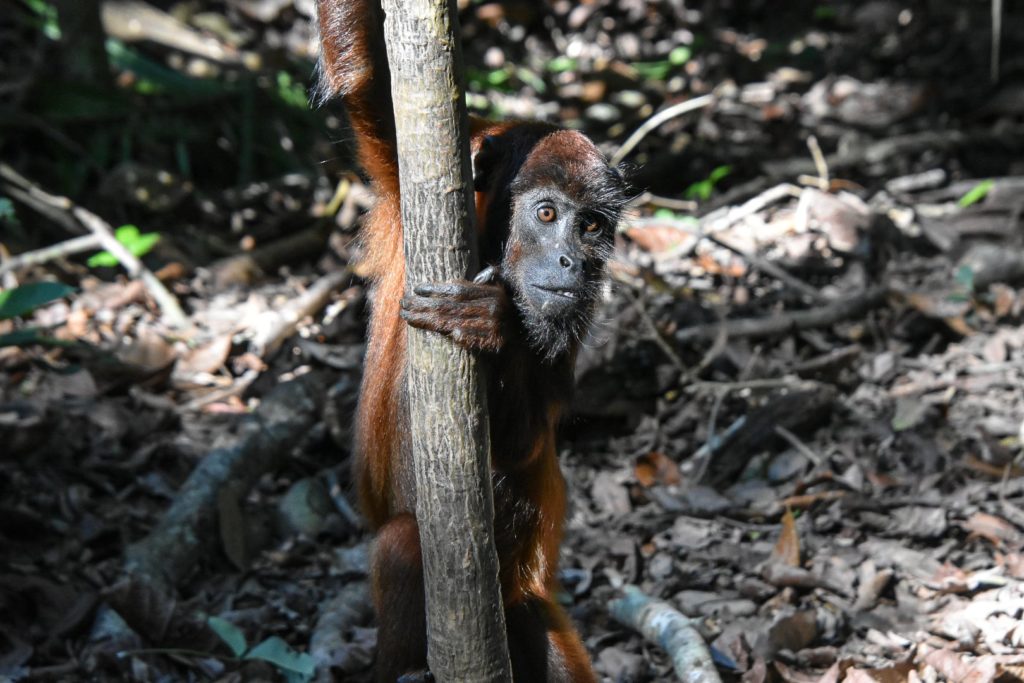
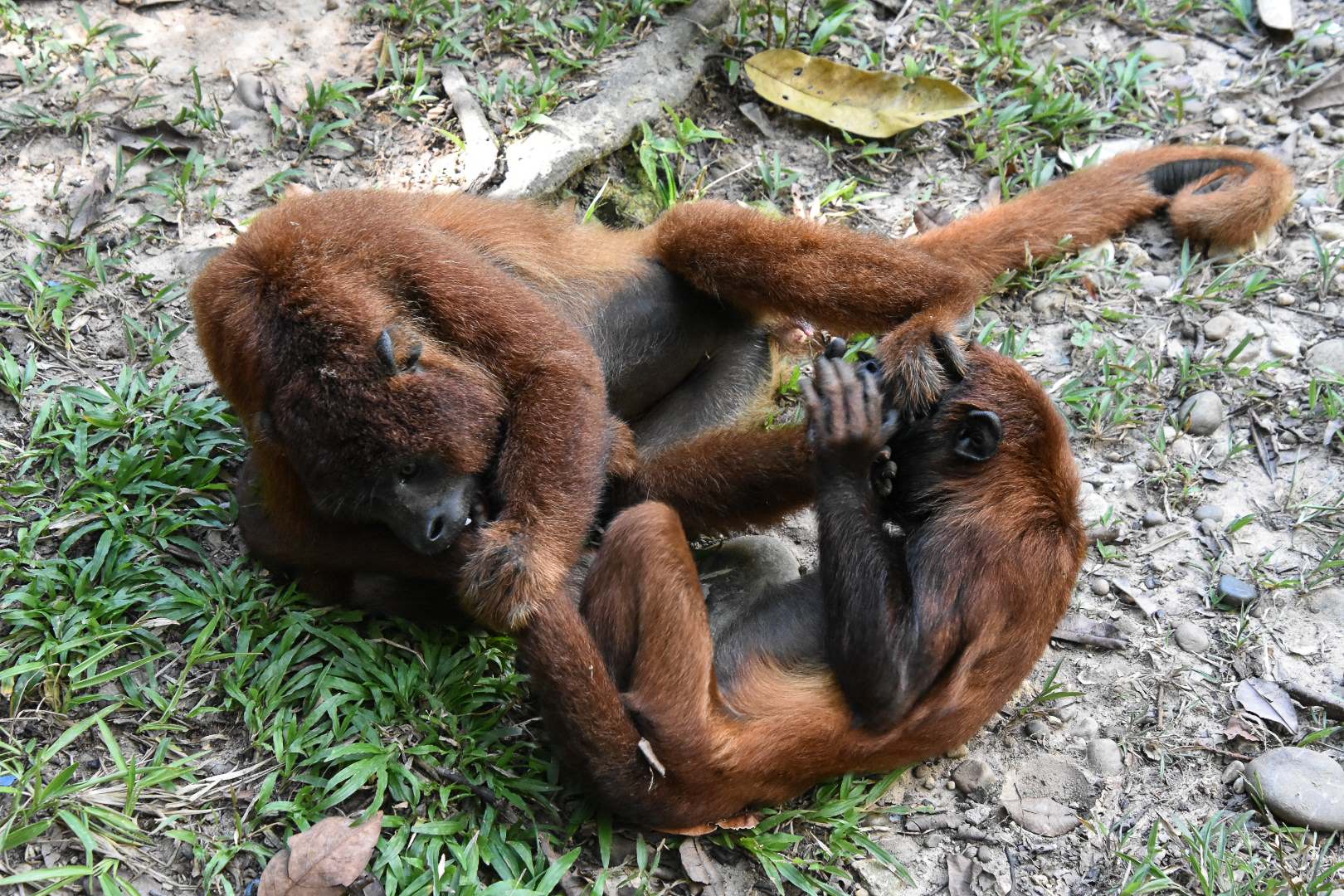
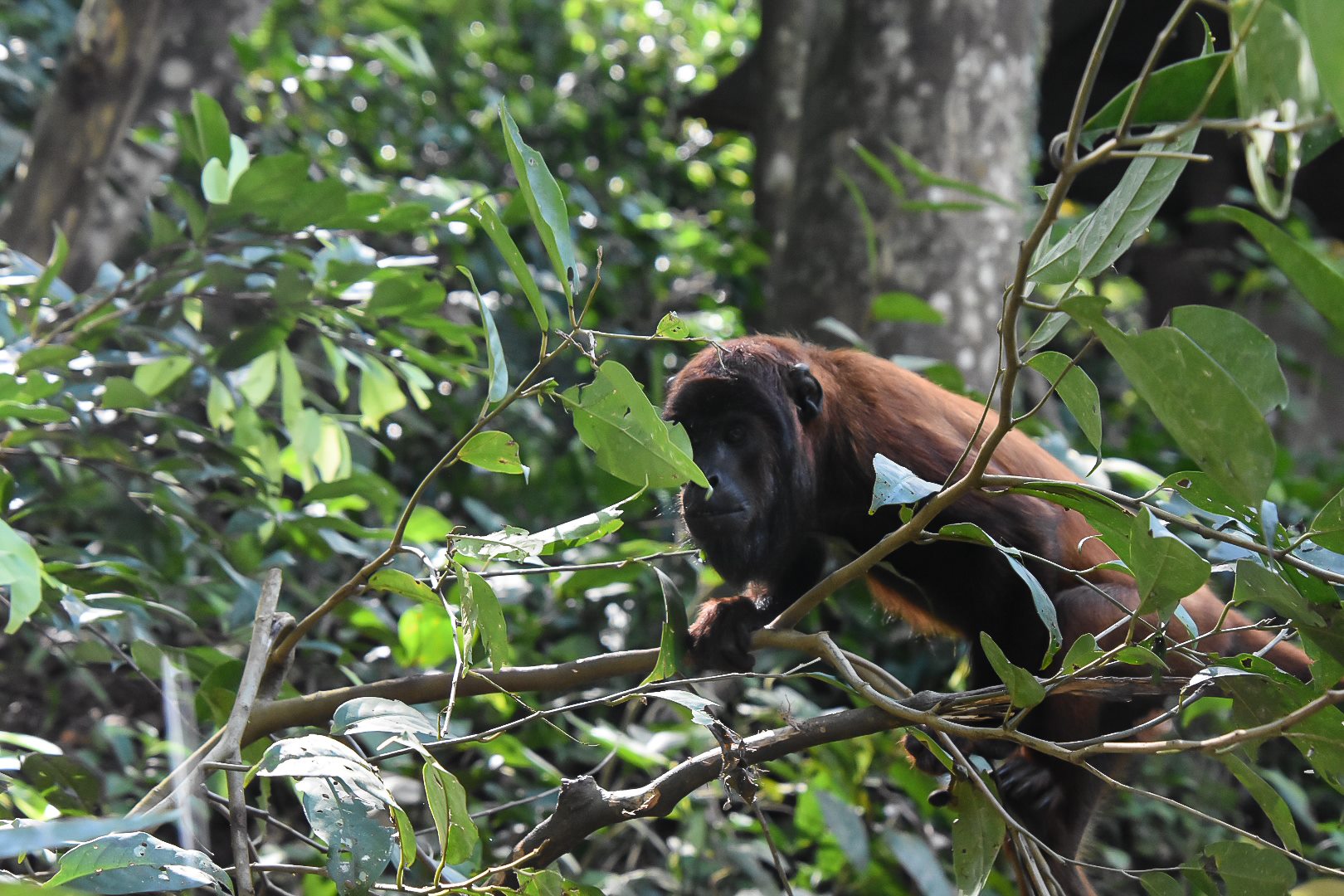
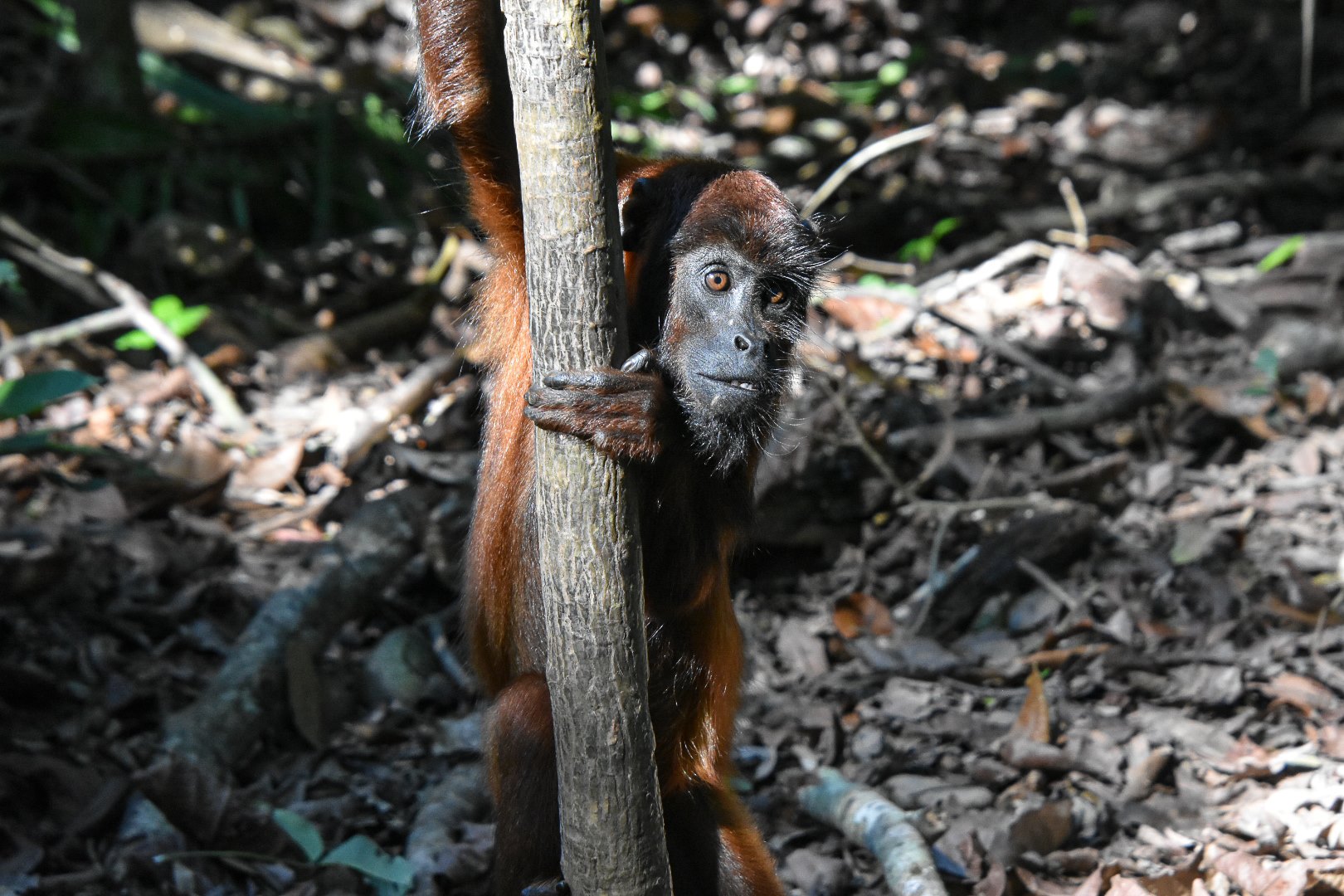
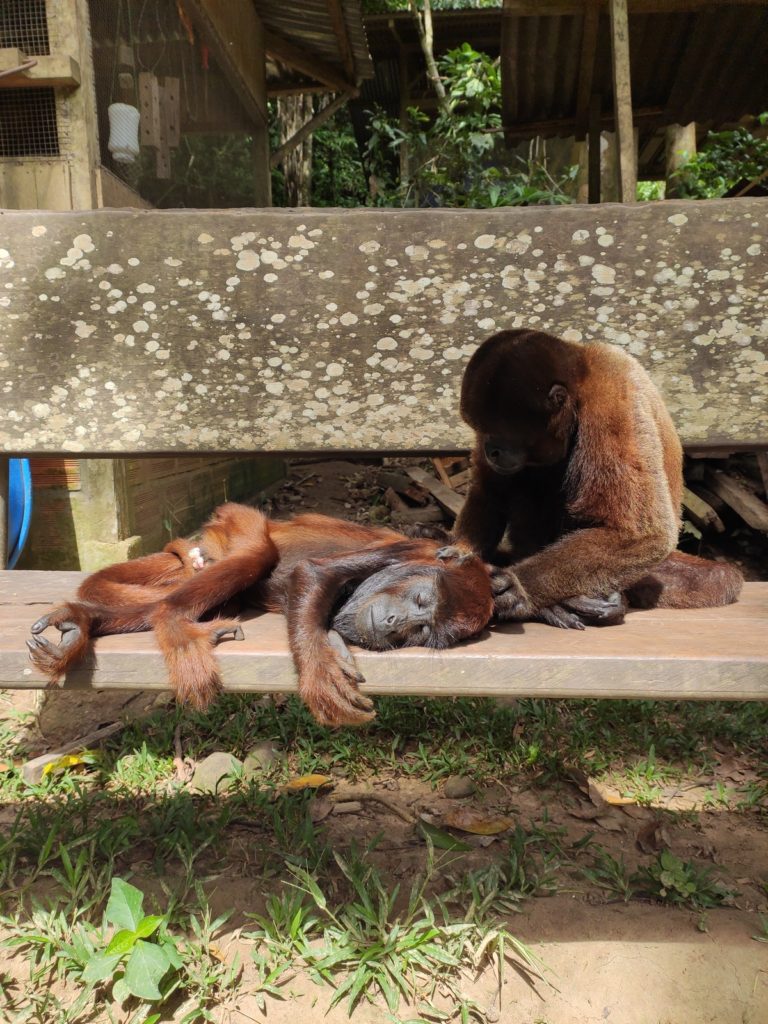
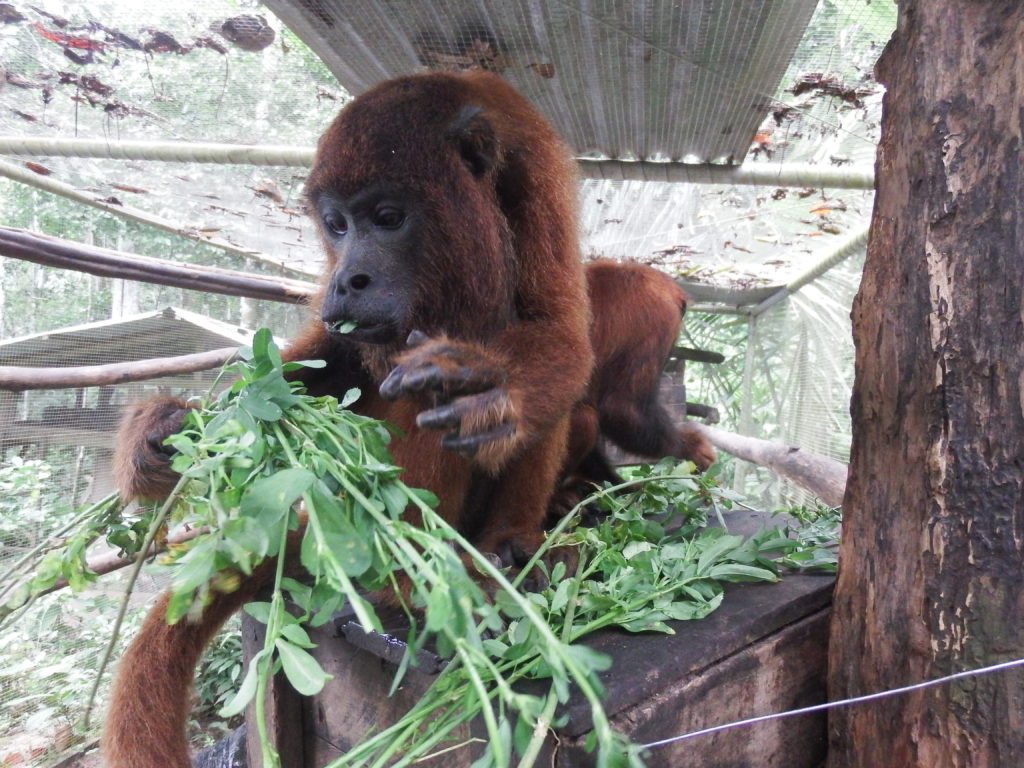
Often a favorite with volunteers Armando and Darwin are our resident Jurua red howler monkeys. Howler monkeys often require a lot more personal attention when they arrive at Esperanza Verde as they have special dietary requirements in addition to being very sensitive to stressful situations. Both Darwin and Armando still spend their night in the security of Lulu enclosure, before being let free every morning to roam throughout the day. This allows us to control their diet, feeding them leaves from the forest and vegetables in their cage, as outside they are more likely to eat foods which are great for the other monkeys but are not great for their dietary requirements. Darwin is doing great, and is a happy monkey, seen playing with several of the other monkeys, woollies, spiders and some of capuchins. Armando has a total different character; you could call it laid back or less social. We just hope it is the first, although sometimes we think the only thing he wants to do is lie around in the sun or be a baby again and lay in the arms of a surrogate mother, which used to be us! He does hang around with some of the woollies, who love grooming him and laying next to him. His weight gain is not very regular and gives us a lot of concern, we just hope that we really can teach him that you don’t need humans to make your life better and get him stronger!

SUST Animal Orphan Hospital

The new monkeys that were passing their quarantine time in the clinic were all moved by the end of the month.

One of our biggest concerns was the very young (large headed capuchin) male Kiro. To ensure his future well-being, we decided to take one of the outside female capuchins to join him in one of our outside cages; one which would protect and care for him, and hopefully will keep doing this after his release. There is no better monkey for this job than all-round experienced and first monkey (large headed capuchin) at Esperanza Verde: Mica, a female of now almost 11 years old. Mica was not all too happy of being encaged but with such a playful and needy youngster, we hope she will adjust and take care of him so he can slowly adjust to the surroundings and the outside monkey group before his final release. The first night might have been tough on both, but the second night they spent together Kiro was warmly on Micas back, a great sign that they are comfortable together.

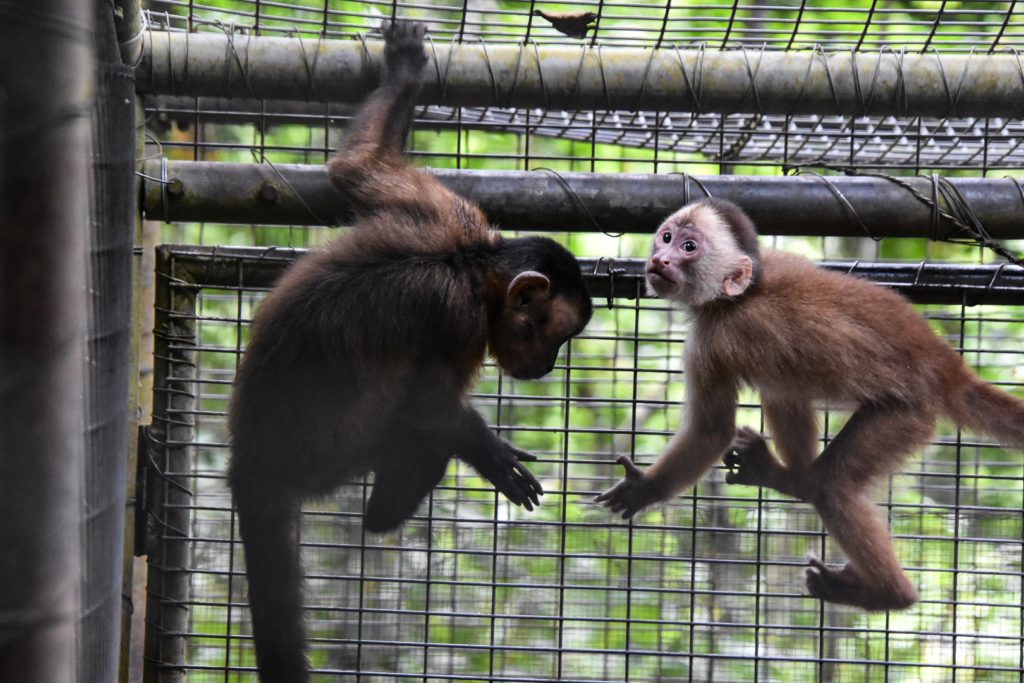
The other three monkeys, Akemi (juvenile large headed male), Kiano, (juvenile white-fronted capuchin) and Kaluha (female woolly monkey) were all brought to the La Sapa enclosure. The enclosure is a now full with activity as Kiano, being the youngest and apparently the most playful one, jumping around and directly looking for some contact with Yanamayu. It seems to be a good change for both Moyo and Yanamayu, getting some company of their own species, while the enormous and powerful Kamayo learns how to share a bit better and become a role model.

The two blue and yellow macaws and the scarlet macaw will stay a bit longer in the clinic, while we prepare the outside aviaries for their introductions. We regularly have to renew some of their branches as otherwise they try to use our heads as one! Not an easy cage to clean, while trying to avoid their sharp beaks.

The three turtles will soon move to an outside quarantine (the Aguatena) where they will have more space and can spend the rest of their quarantine period. We are happy to say that the yellow spotted river turtle with the damaged mandible is gaining weight and it seems his mandible is slowly healing.

Construction and other

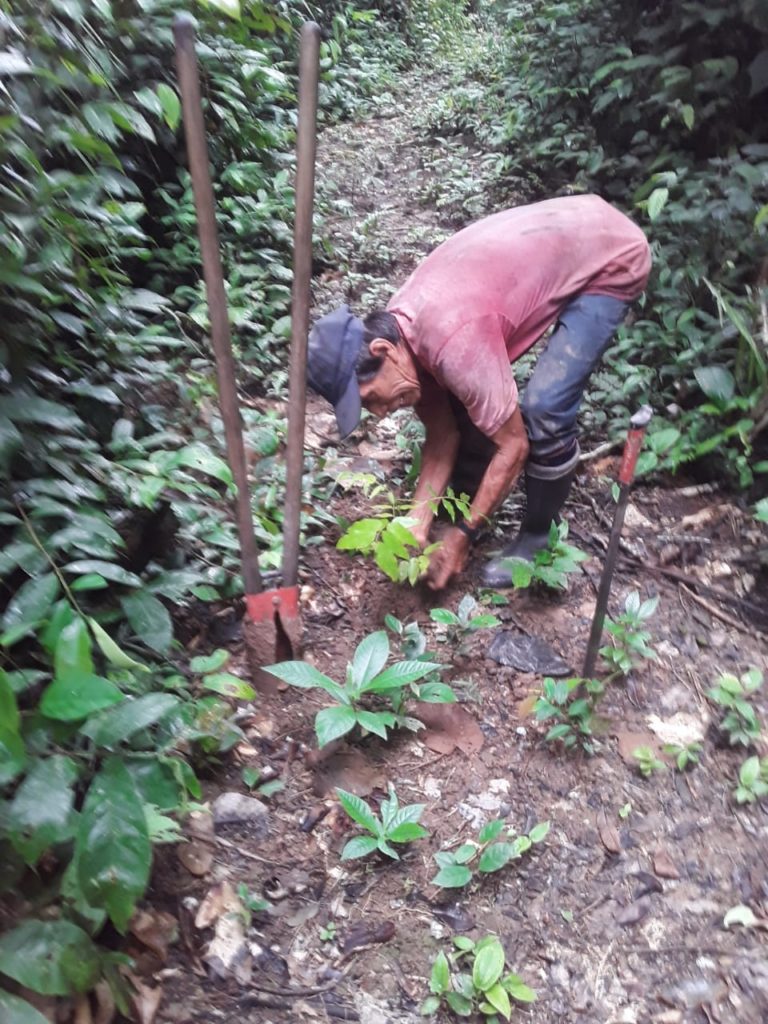
With extra rain comes additional maintenance and, although it was another month of no major constructions, it was a productive month nevertheless. Machico and Rolli were busy between both Don Jorge Finca Organica and Esperanza Verde cutting back the ever-present growth, maintaining land boundaries and ensuring the on-going food production. All three workers (including Geyler) also found time to plant a lot of new tree seedlings. This is an important on-going part of Esperanza Verde and one of the positives of an extended wet season, giving the new trees the best possible start.

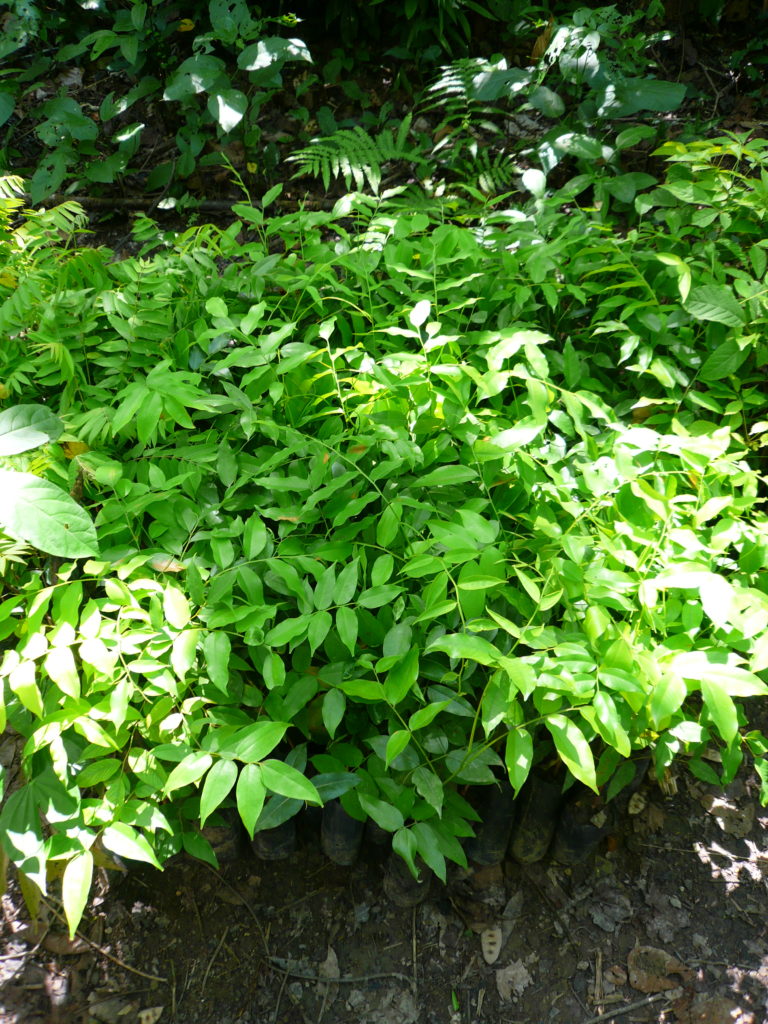
This time a lot of young seedlings of the species, locally called Shihuahuaco (Dipteryx sp.), were planted. In the international timber market they are traded under the name Cumaru. This wood became very popular in the 2010s for the use of parquet for flooring. They are giant trees that can grow up to 60 m and the trunk can grow to over 2m in diameter. As only a few tree species do, the fruit of the Shihuahuaco becomes ripe in the dry season, which makes them an important food source for many local animals. The fruit is eaten in the crown of this high tree by monkeys (e.g. spider monkeys), bats, opossums and macaws, dropping the seeds under the tree while they eat.

Volunteers

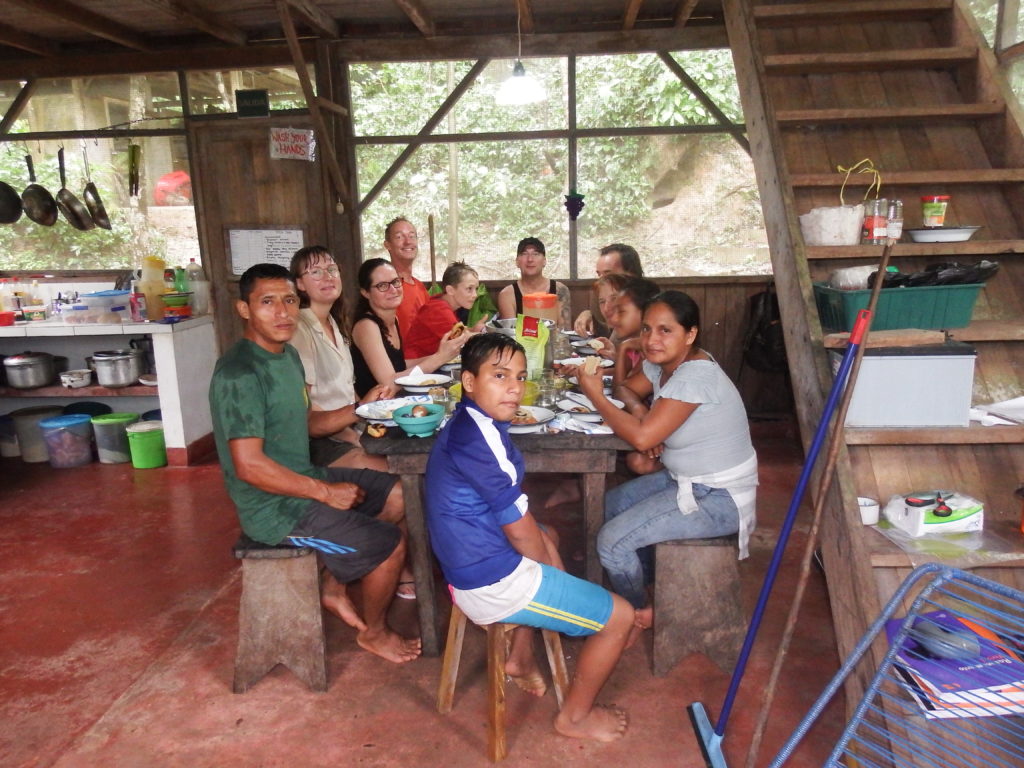
Easter was a welcome change from the daily routine and although still maintaining a very limited crew, we were able to make time to celebrate in style. One of our workers Geyler, brought his family across from the village and the morning was spent painting and decorating eggs for the mighty Esperanza Verde Egg Hunt. Something for the children you would think, but Douwe and Geyler were as active and competitive as their (MUCH) younger rivals. Geylers eldest Sergio, was triumphant at finding most eggs as well as the Queen-egg, before everyone returned to the volunteer kitchen for a delicious special lunch prepared by Kayla.

What a month for volunteers. After so long with such a small team the month of April saw three new volunteers arriving and a long-awaited Alex returning to fill the assistant manager’s role. Two of the new volunteers were already living in Peru while both Alexandra and Jannick (who has been here as a volunteer in 2018) have made the trip from Europe. It is always so exciting to have new volunteers and we are hugely grateful that after so long the route from Europe is again open to travel (at time of writing).

April would not be complete without wishing Douwe a very happy birthday and this year was certainly a year for celebration with Douwe turning the mighty 50! The birthday boy had the celebration of his choice and had a bbq at home enjoying the perfect weather and company of his family (including Craig and Alex 🙂).

March 2021 Newsletter

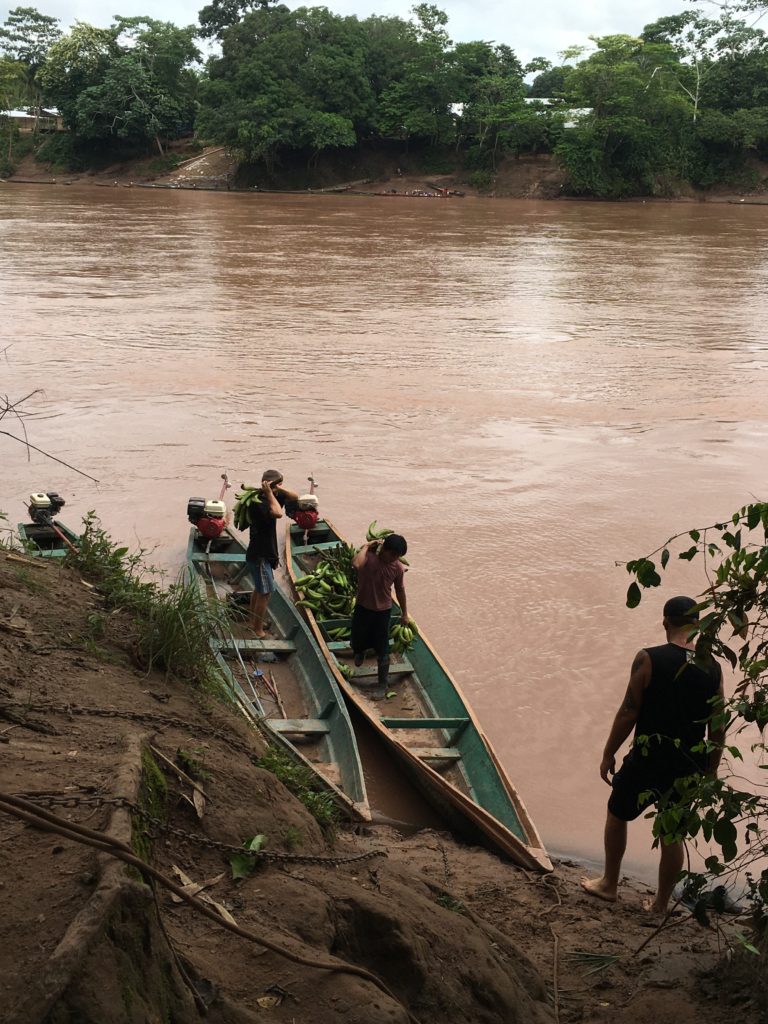
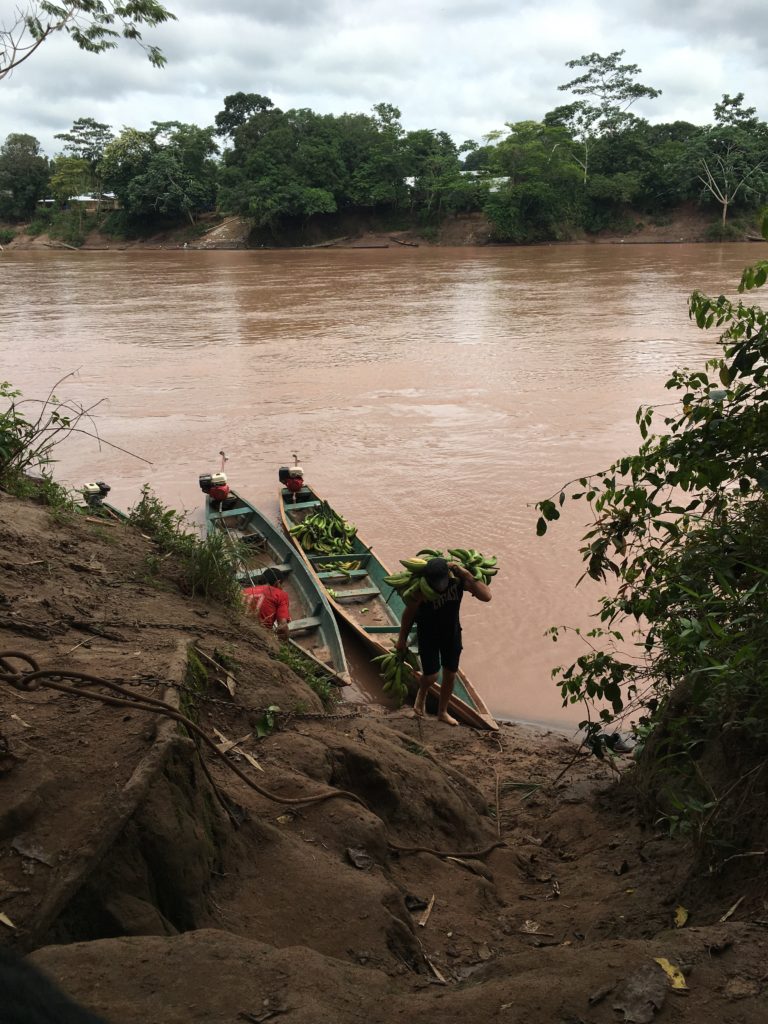
This month again proved how fortunate we are. Although we are currently only a very small group everybody pulls together when needed to achieve the intended outcome. Not often has it been necessary that the whole family had to help out with the daily chores at the same time, even Marlon helped sorting through the bananas! It was a month of new animals, a new local worker, one new volunteer and two departing volunteers. March reinforced the idea that there is never a dull day at Esperanza Verde.

Animals

Last month’s new arrival Payco (young male crab eating raccoon) moved into the recently vacated Pepe enclosure, but it wasn’t just a case of closing him in and leaving him to his own devices. Payco spent a few days within the enclosure and returned to the family house in the evenings so the transition period could be as stress free as possible. He is progressing well in his new home and already his diet is increasing to include more fresh meats and fish.

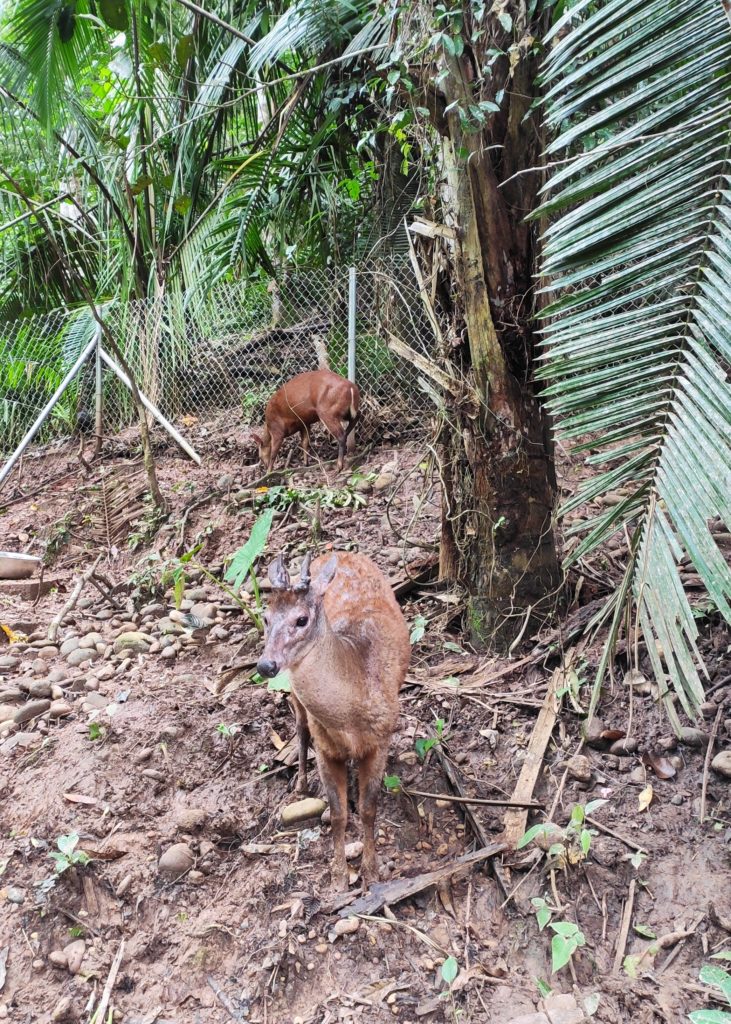
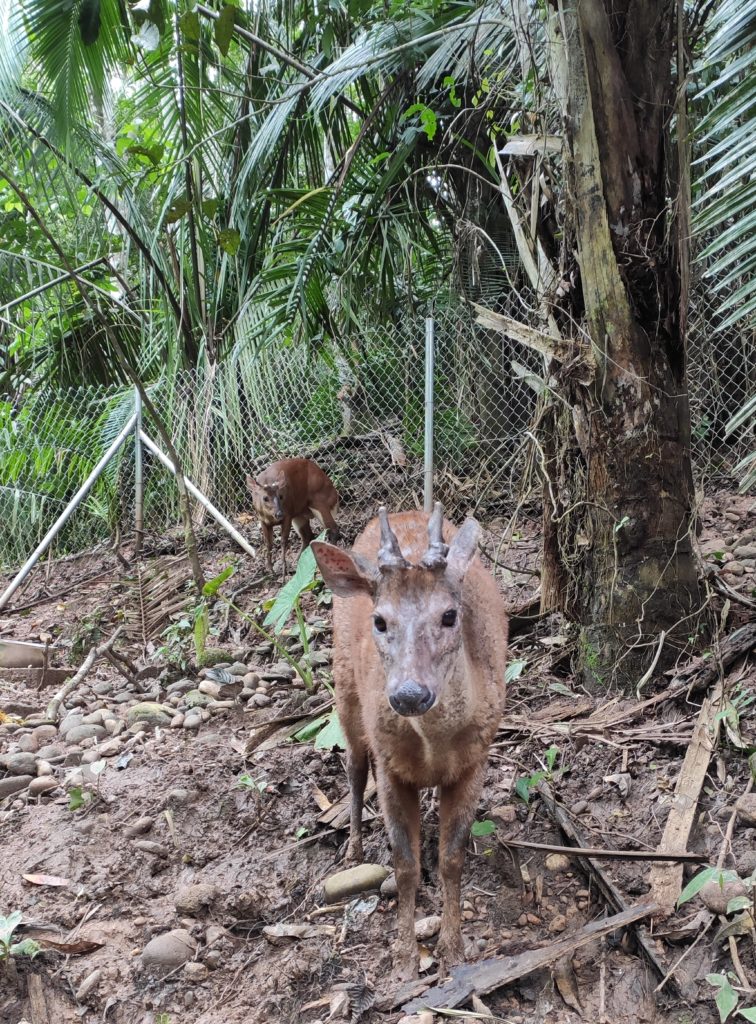
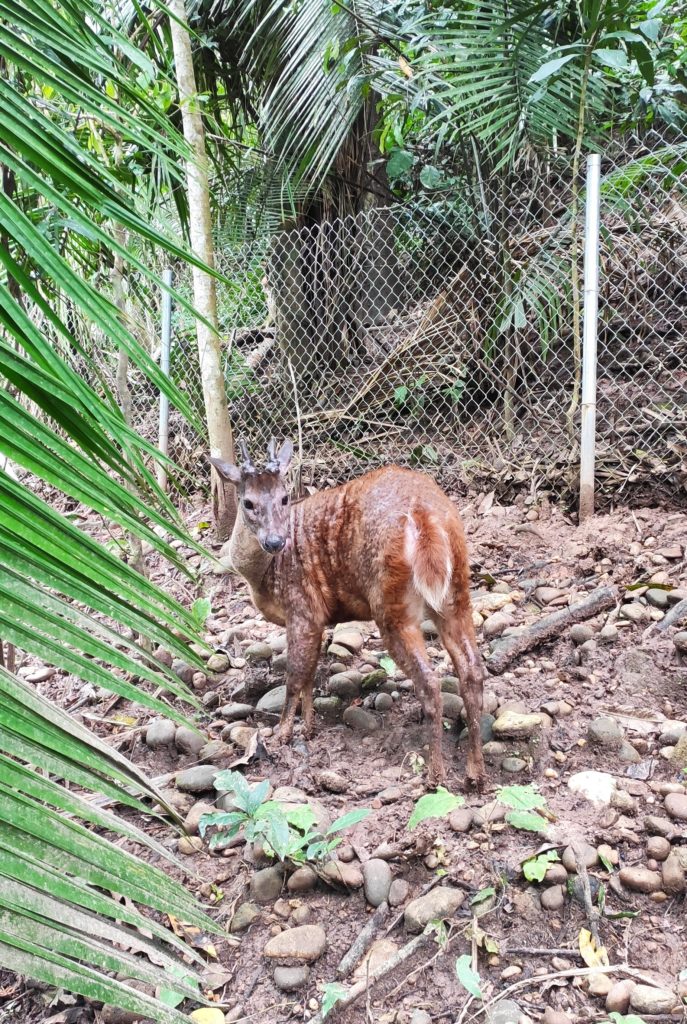
Rabito, one of our male resident red brocket deer, was unusually absent at consecutive feedings this month. On further investigation he was found to have wounds obtained when “scrapping” with another deer within his enclosure. His behaviour seemed to have changed, thus it was decided swiftly to start antibiotic treatment. Every day he received a nice treat (including the necessary medicine) while he was put through the perceived indignity of being sprayed with a purple disinfectant spray on his wounded tail. Rabito’s behaviour returned to normal quite quickly and is as eager as ever come feeding time.

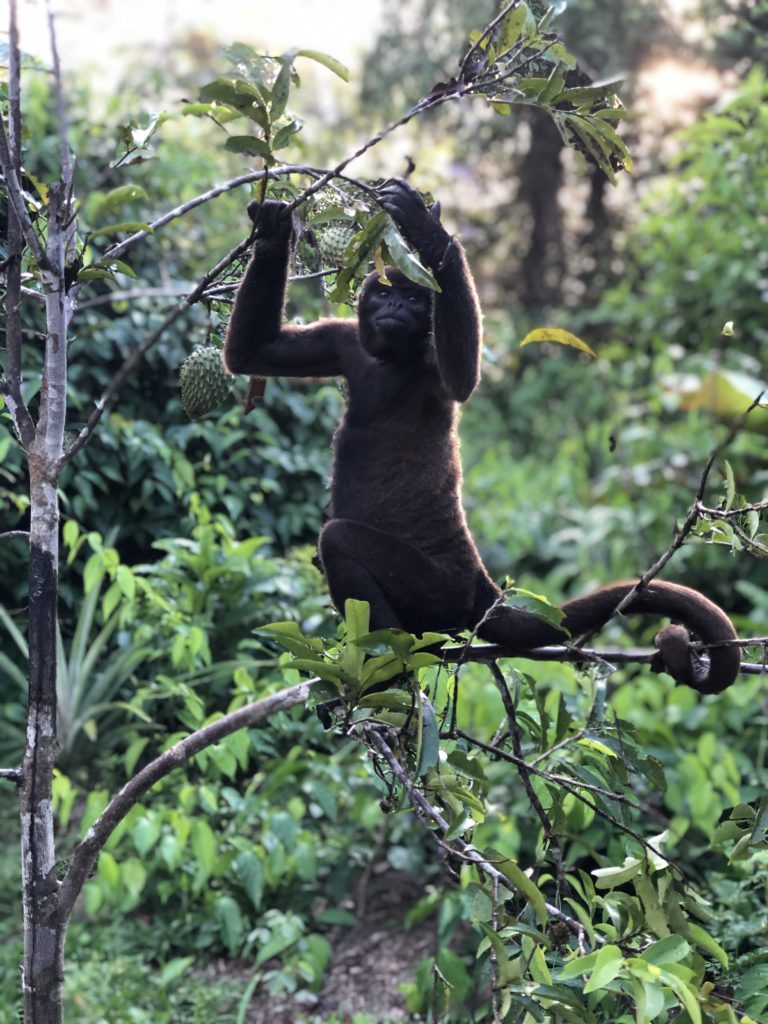
Samara (female adult Humboldts woolly monkey) is one monkey anybody fortunate to have spent any time at Esperanza Verde would be very familiar with. If she isn’t stealing milk bowls from unaware ‘rookie’ volunteers she is standing in her butter won’t melt in her mouth pose, with her arms in the air wanting something special. Another very recognisable attribute of Samara over the years has been her very obvious lack of fur. March is the month that we celebrate Samara being a very different monkey now sporting a full body of luscious fur. We hope this is a direct result of the changes we have made to her diet as well as supplementing her normal intake of vitamins through giving her adaily vitamin supplement.

If there is one animal that was always reminding you of his presence it is Loki (male adult Humboldts woolly monkey). The grabbing of any volunteer straying too close to the mesh of his enclosure, or the intense shaking of his enclosure numerous times throughout the day reinforced why such a big male was unable to enjoy the freedom so many of our more relaxed monkeys take for granted. One morning this month started without the usual banging and on closer inspection Douwe found Loki laying on the bottom of his enclosure not moving. Loki had died during the night and a necropsy was unable to find any conclusive evidence as to a cause of death and Loki appeared in very good physical health with not a drop of fat evident internally. Every one of the animals adds to the atmosphere and experience at Esperanza Verde and like every other animal Loki’s input will be missed.

SUST Animal Orphan Hospital

These times are not only hard for us, but they are as well for the local official entities that have to enforce the law. The illegal trade goes on and animals are confiscated or left at the local Ministry of Flora and Fauna, while they don’t have the facility to adequately take care of them. So when the Ministry called us, knowing we are still officially closed, we put our heads together and decided we had to make time and place for a few new comers.

As things were still quiet at the first part of this month, Puck took the opportunity to do a general deworming round for all monkeys. Many welcomed the piece of bread with marmalade and sugar or the extra vitamins or milk, unaware of what was hidden inside!

Traya, the young female, large headed capuchin monkey, who was admitted in the clinic last month seemed to get slowly stronger, but then suddenly took an unfortunate turn for the worst. She died as a result of the infestation of the parasite Prosthenorchis Elegans. A necropsy found that the parasite had caused a perforation of the intestines.

New arrivals

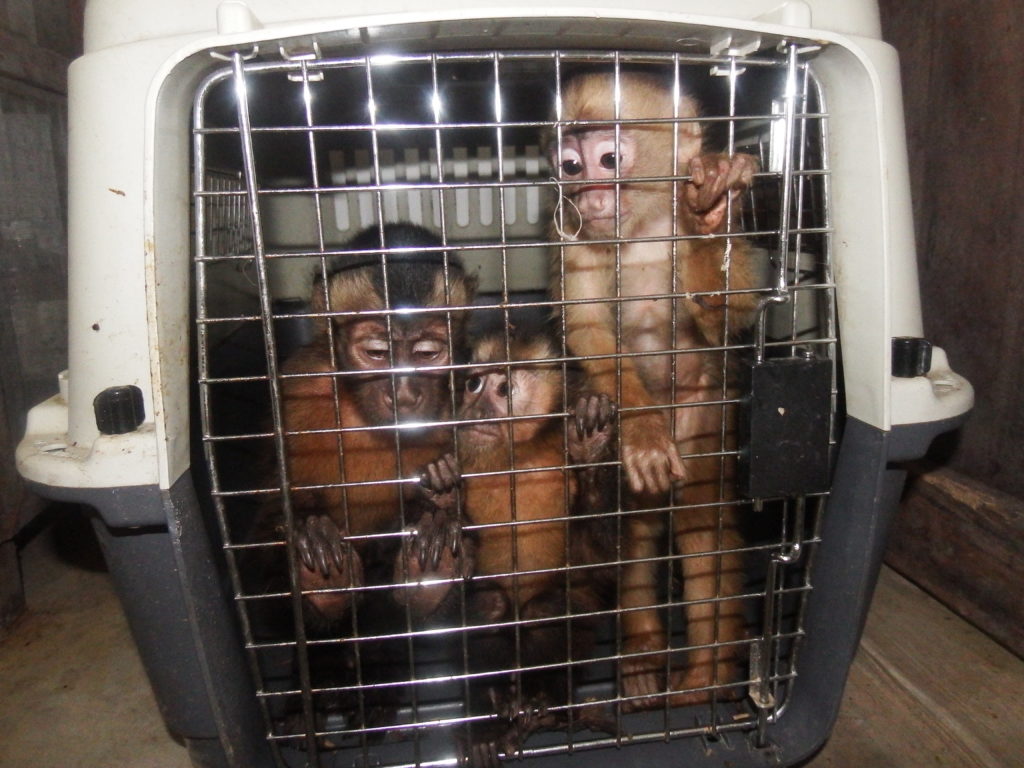
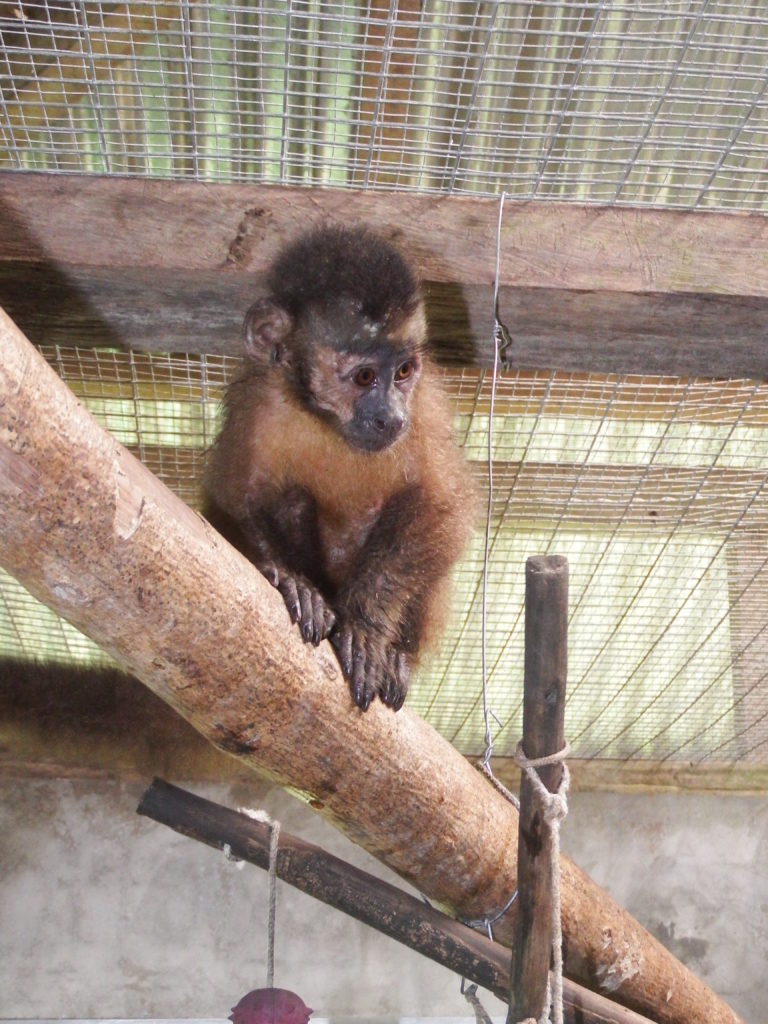
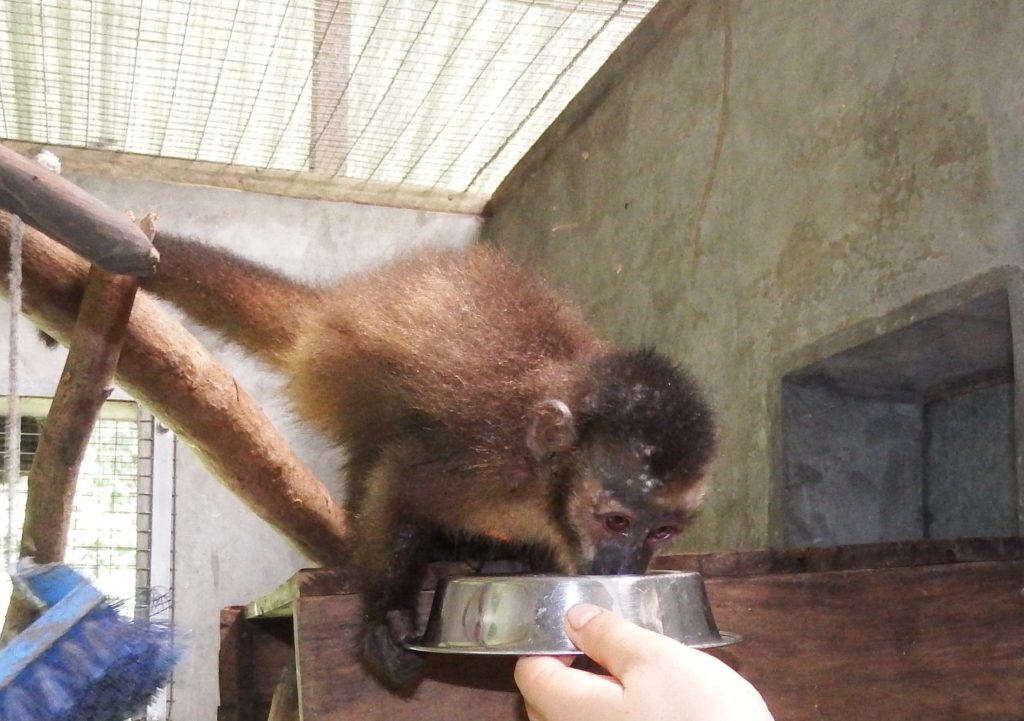
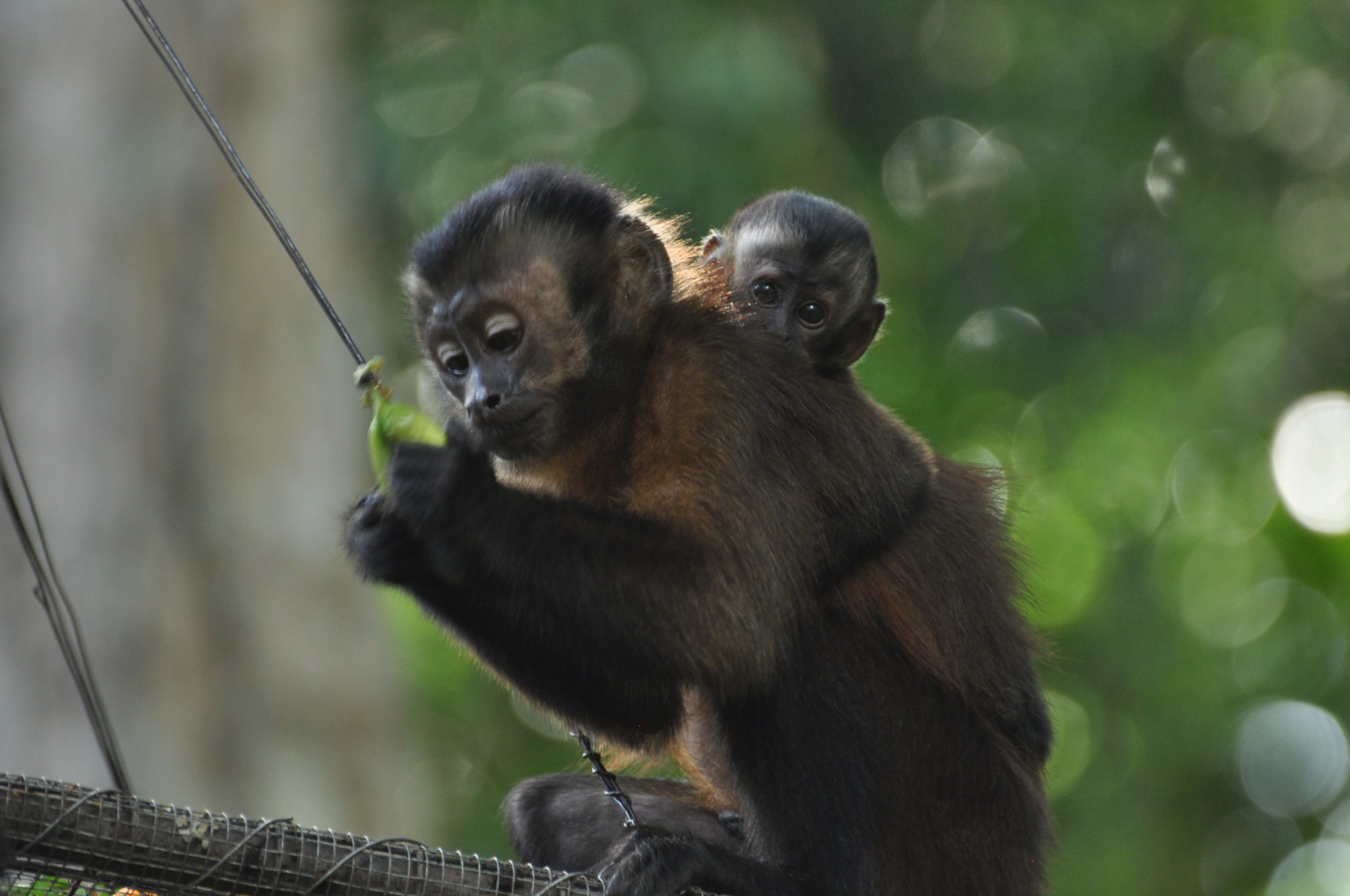
Two of the newcomers are now named Akemi and Kiro (young adult and a very young large headed capuchin, both males). Together with them also arrived Kiano (a juvenile Spixs white fronted capuchin). They all were confiscated some weeks ago by the Ministry. Together with them also arrived a juvenile female woolly monkey, now named Kaluha, who arrived at the Ministry only a few days before their trip to EV. Akemi looked really skinny, and after only a few days having sufficient food availability, his face looked already a lot healthy and fuller. Kiano is a typcal juvenile, happy and follows the lead of Akemi. Normally a young capuchin like Kiro would still be carried on the back by his mother, receiving her milk and learning from her what to eat. Kaluha has taken a bit of this care and carries Kiro on her back While Kiro can learn a lot socially within this group, we will have to provide him with some extra vitamins and keep a close eye on his growth.

Two yellow and blue macaws and a scarlet macaw were among the new animals. They all were confiscated in transport. They all seemed to have been handled for some time by people, as they are not afraid of us and very easily to be managed. They will stay in the clinic during their quarantine period before the next step of introducing them to the different aviaries.

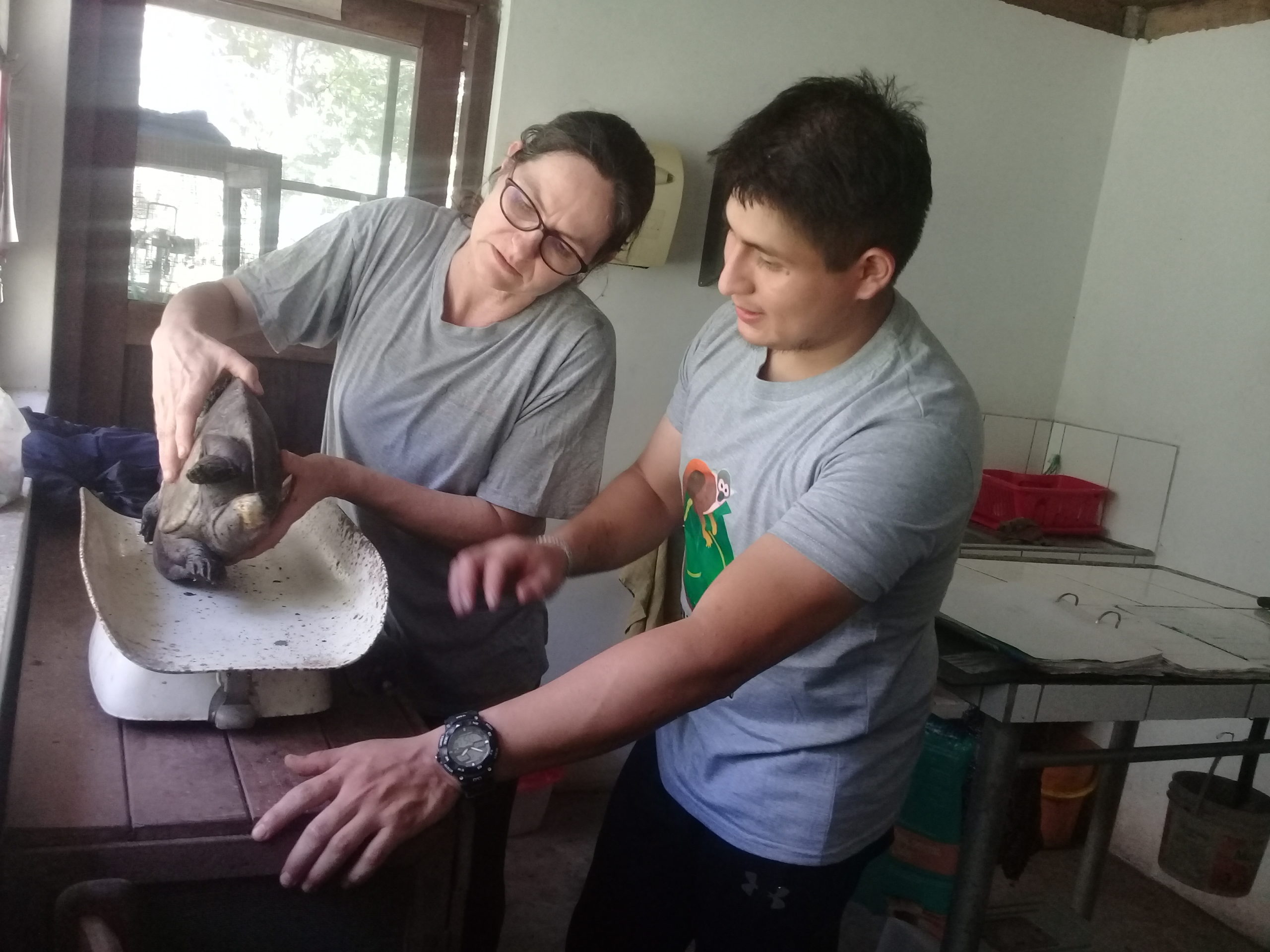
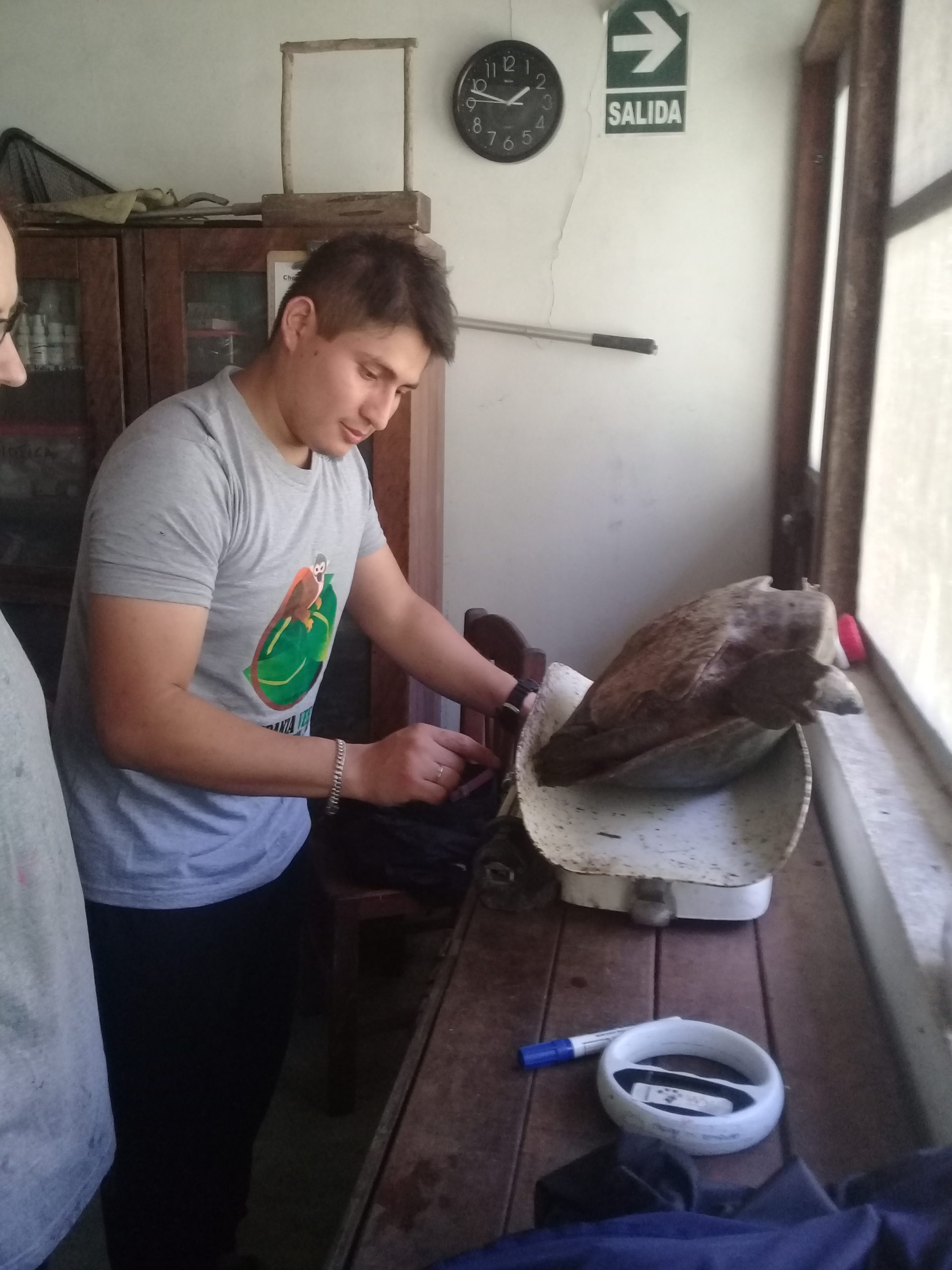
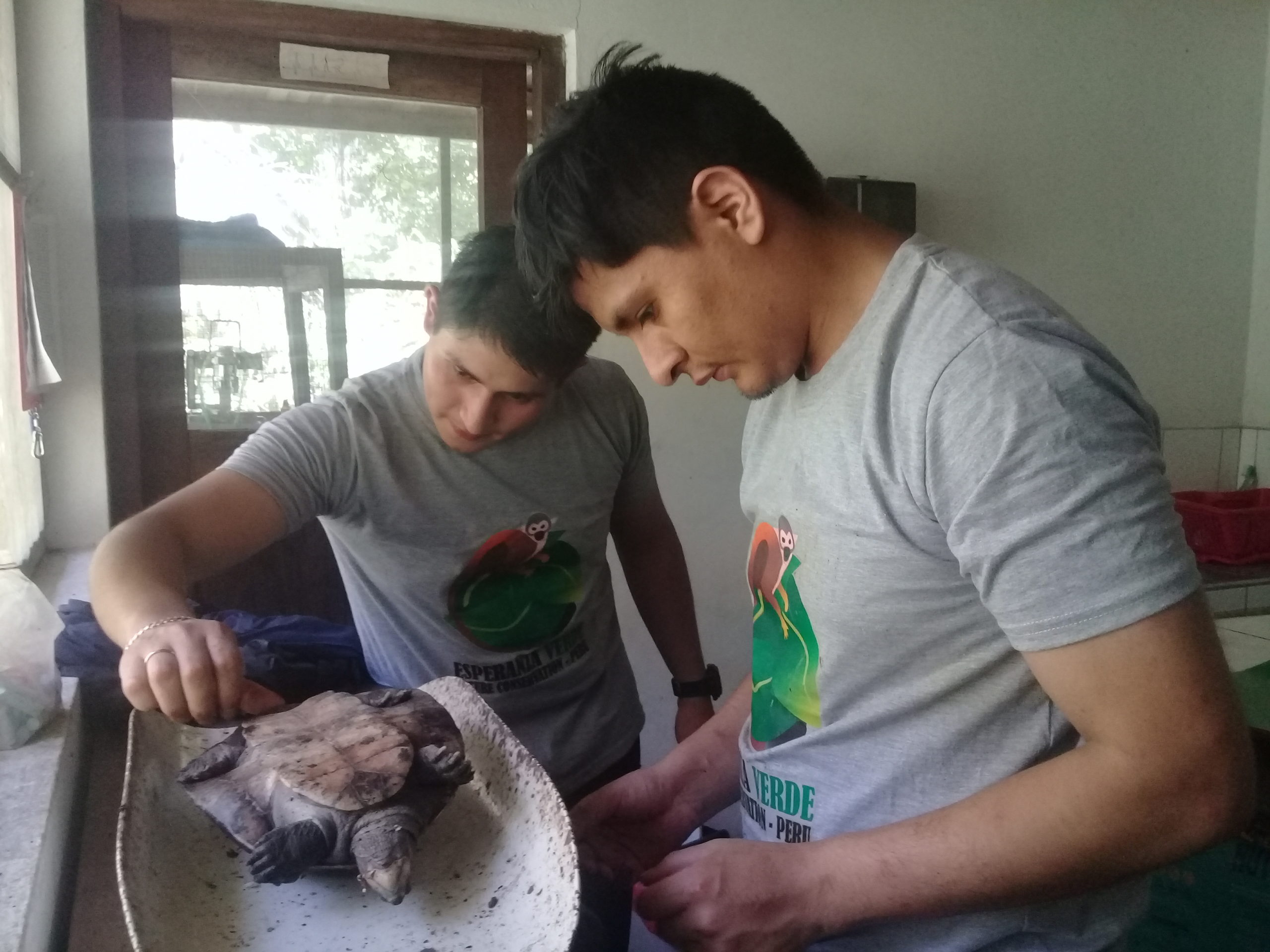
The last of the arrivals were 3 turtles (2 yellow-spotted river turtles and 1 Amazon mud turtle). One of the yellow-spotted river turtles had been most unfortunate, as it seems to have a broken mandible (jaw), as if something crushed it. For now he is under close observation and we hope it will heal sufficiently for him to be able to start eating again.

Construction and other

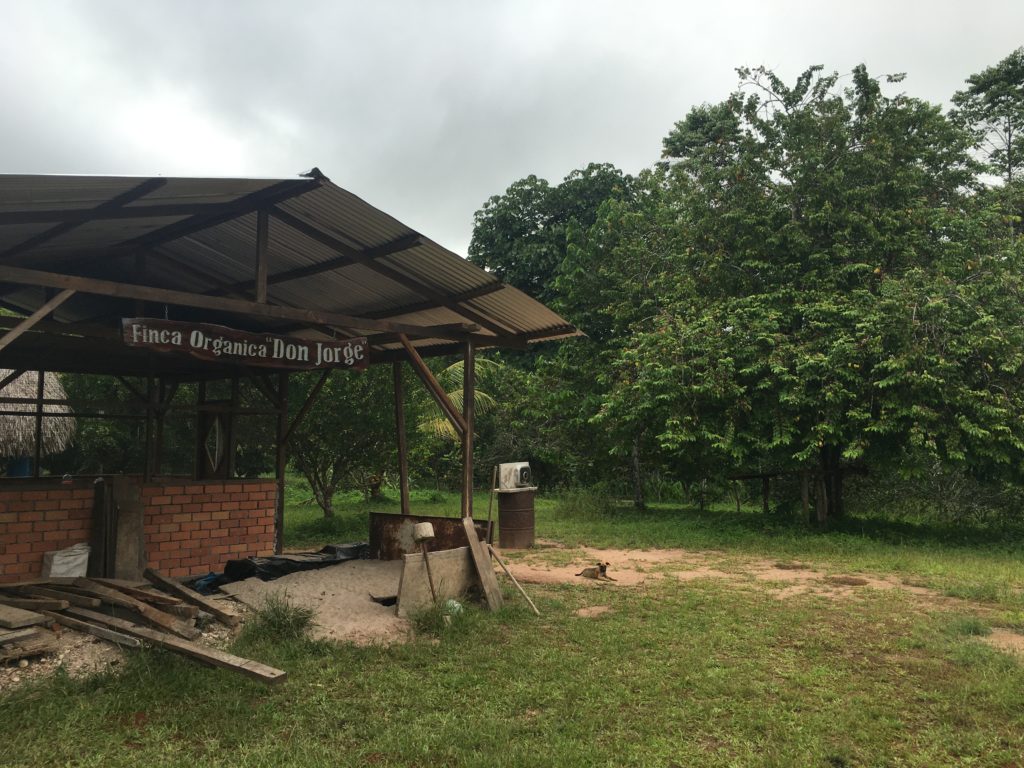
This month construction was put on hold, as priority was placed on taking care of all the resident animals, welcoming new animals, saying goodbye to volunteers and ensuring we have enough fruit for all the animals. With the Organic finca Don Jorge we are fortunate to be more self-sufficient as for the necessary supply of bananas, yuka, papaya and a variety of other fruit. We are happy to have found an extra local worker to help. We welcome Rolli, from Bello Horizonte, who has joined our team this month, helping at the Finca Don Jorge, as well as helping occasionally out at EV.

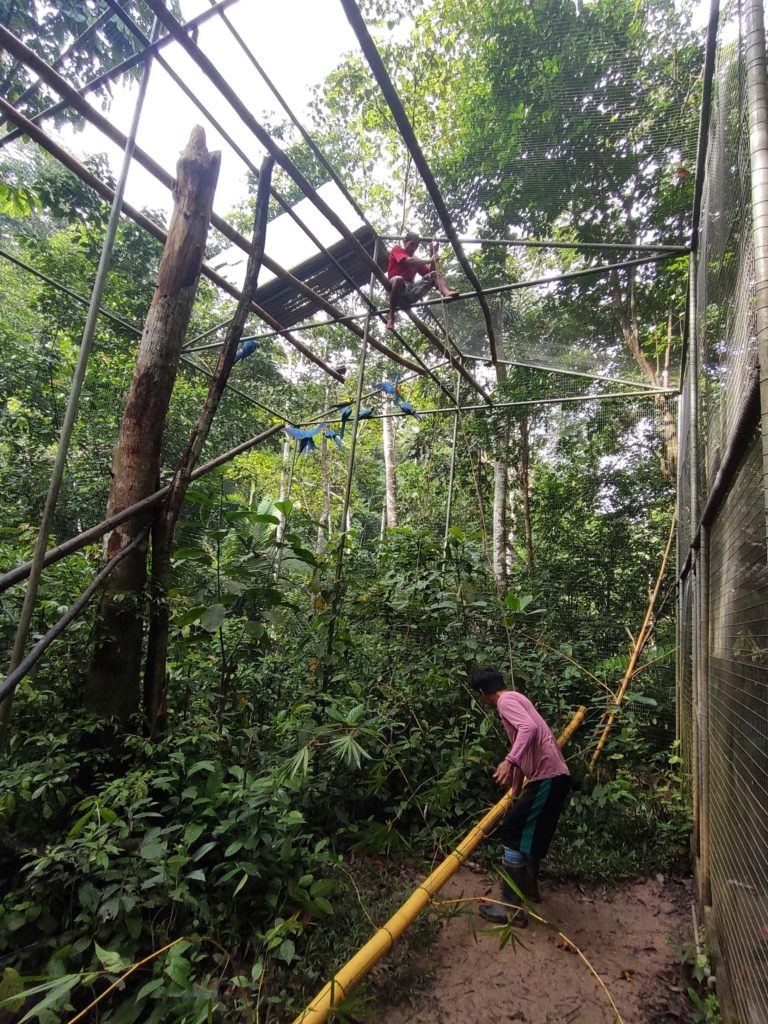
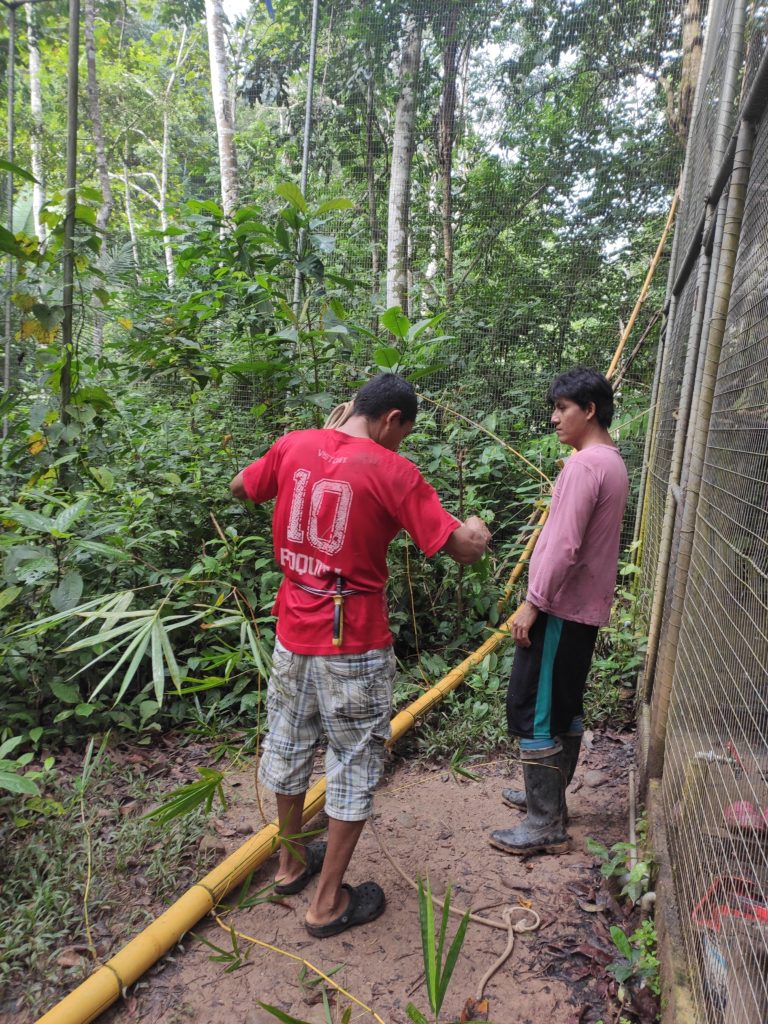
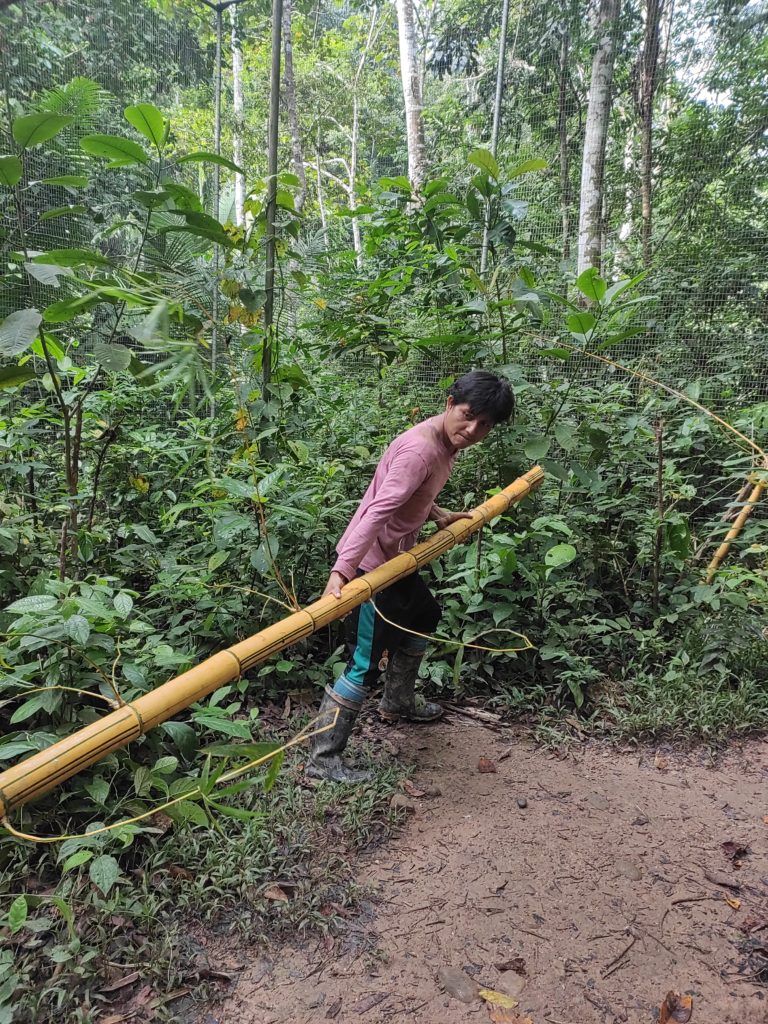
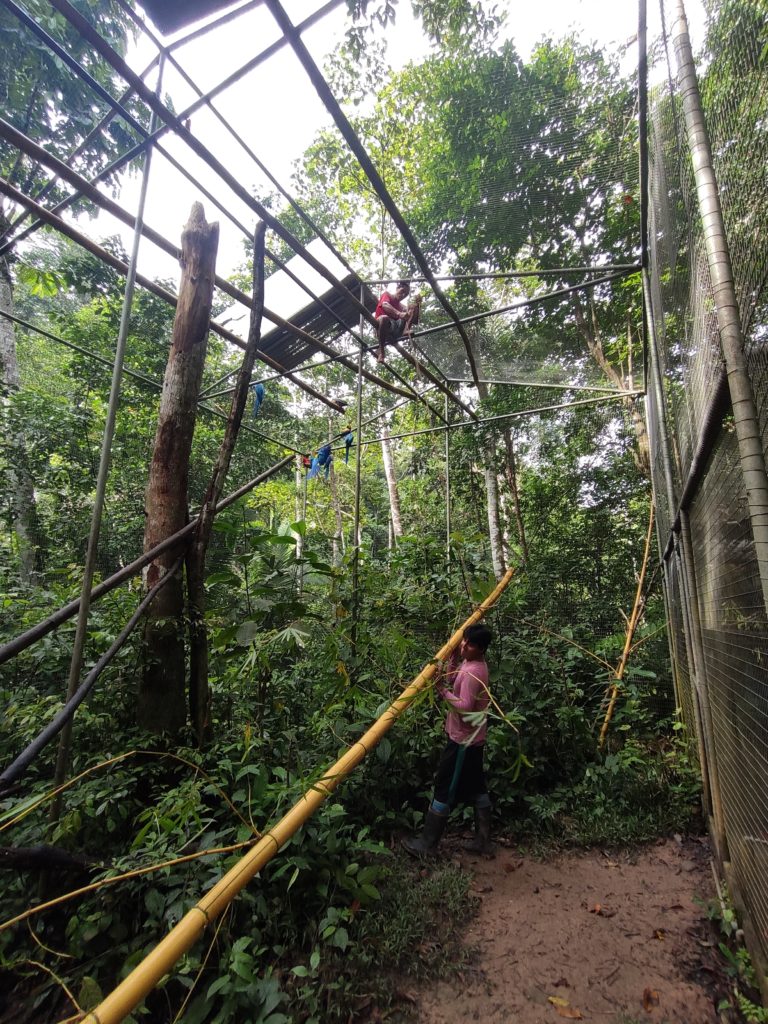
One of his first jobs was to get acquainted with our macaws in the Elmo enclosure, giving them some fresh bamboo.

Volunteers

So finally it was time to let Puck go! And with her Sandra left for Lima too. Puck has been our steady rock during this year, and we will miss her dearly. Thank you Puck for sticking around, helping us and the animals for such a long time, setting your own life in Holland aside for the time being. We wish you all the best, and will try and keep things running smoothly till your return! And after many months it was also time for Sandra to return home to Lima, and pick up her life again. Thank you Sandra for coming to EV to give us the necessary help.

Luckily for us, a new volunteer arrived, who had been stuck in Peru because of Covid, and decided to give us a hand. Welcome Peggy, from France!

February 2021 Newsletter

In the midst of another rising of Covid cases in Peru, we received a visit from the Ministry of Fauna and Flora to witness the release of several animals. At Esperanza Verde life goes on thanks to all the animals in our care, which depend fully on all our devotion. With the small group (counting the family, Puck, Craig and Sandra, and Machico and Geyler standing by us) we manage to keep life as normal as possible.

Animals

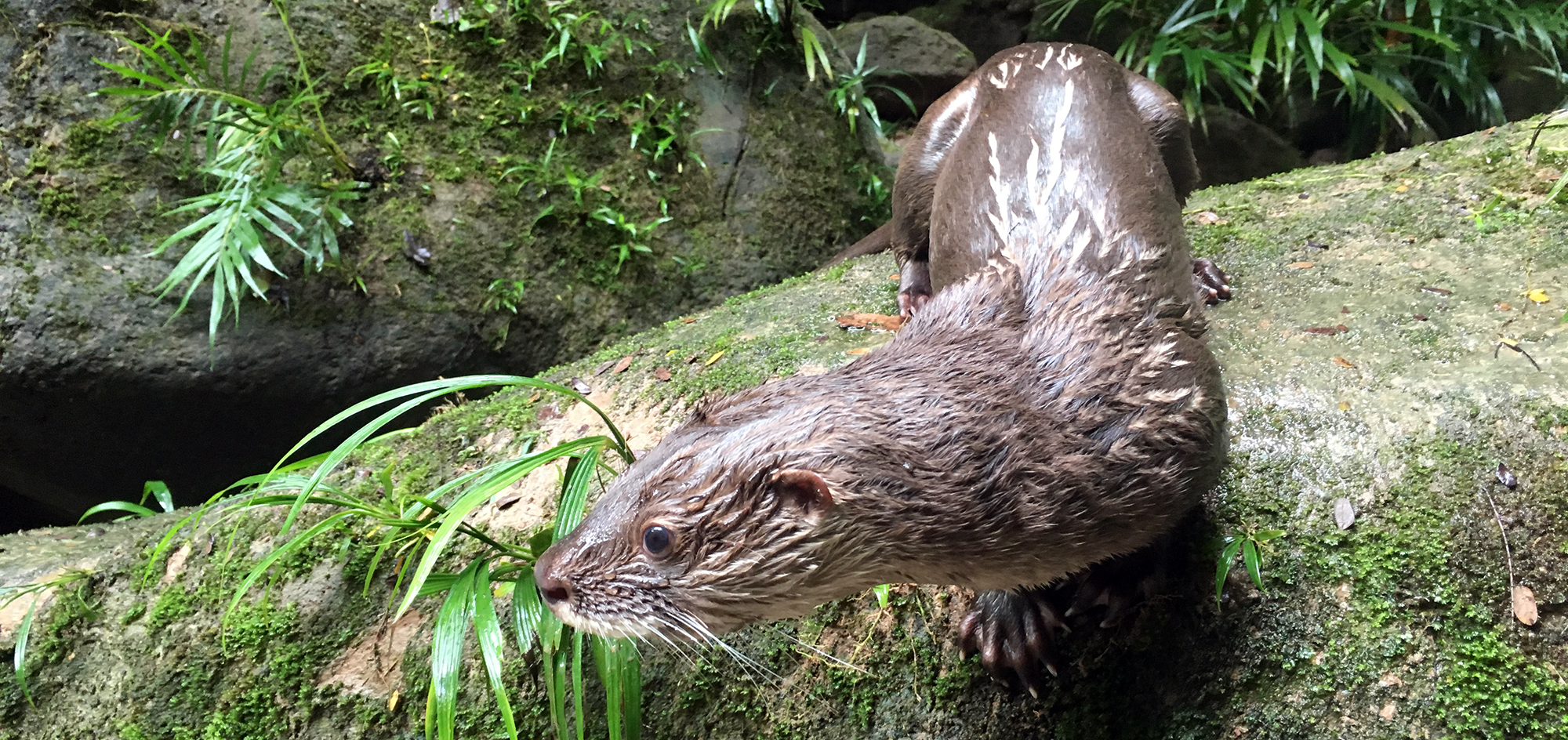
Our young female crab eating raccoon, Eona, was already getting used to living outside. Our dedicated volunteers Puck and Sandra took her out frequently at the end of the day for a walk towards the small stream to get her acquainted with the surroundings. One night she seemed to have decided freedom was a far better option than returning to the safety of her enclosure. The first few nights had us all very worried, but Puck quickly recognised one of the tell-tale signs that it was Eona coming to eat her food rather than an errant opossum. Crab eating raccoons have the habit of washing their food and so does Eona, putting it all in her water bowl, a fact that is hard to ignore in the morning when cleaning up the resulting mess. After a week we caught Eona again so that her weight and general health could be checked, before she was released again, during the presence of the Ministry from Pucallpa. Food is now left outside for Eona every night and she is frequently seen in the area around her enclosure. During the day she seems to have found a good sleeping spot outside.

As the Ministry was visiting, we took this opportunity to officially declare some other animals released as well. Two of these are Nando and Ezra, a male and female white capuchin, who both are doing so well outside. Nando, who was held as a pet before his arrival, together with Cesar, one of the male spider monkeys, is now more and more seen moving away with the outside capuchin group. Ezra is still hanging out nearby the volunteer kitchen, but bit by bit we believe she will follow the lead of the other capuchins.

Sumo, our only male coati, is another animal we officially now have released. He is generally seen on most days lurking around, trying to get some scraps of food from our buckets, as well as getting a cuddle from the family dog Tara. But more often than before, he is not seen for some days till he all of a sudden turns up having smelled the fish, while we are feeding Anishka, the otter.

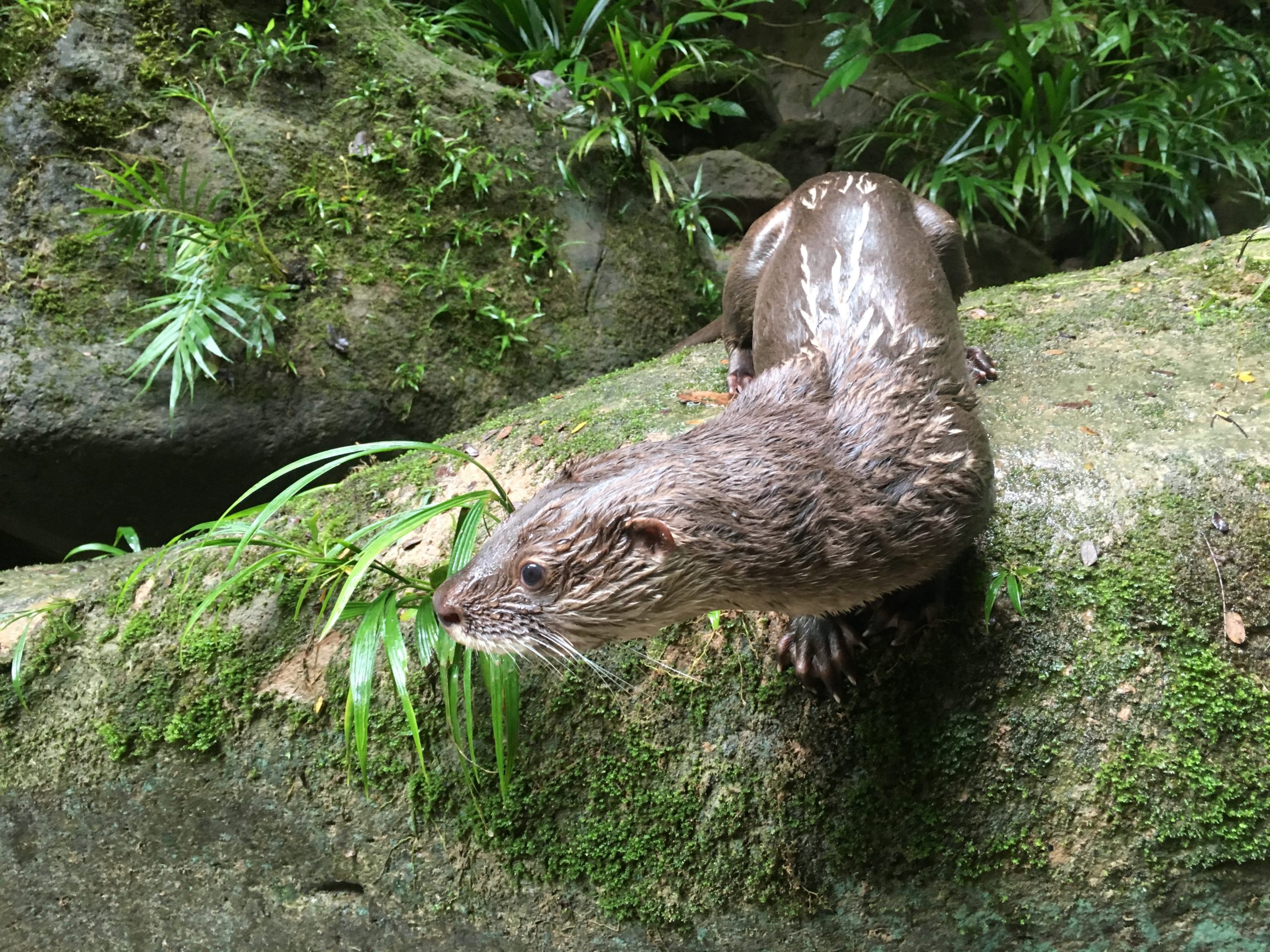
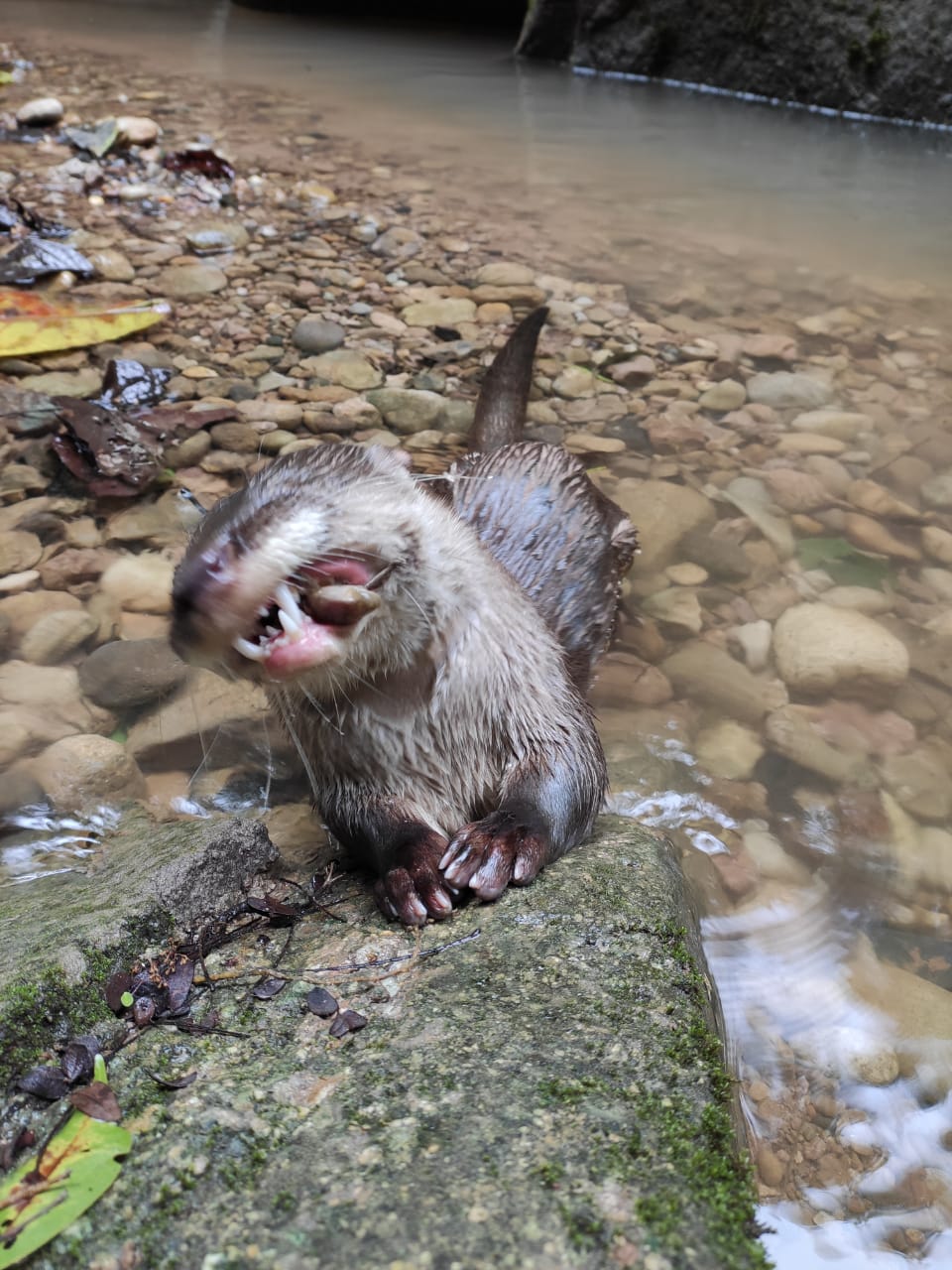
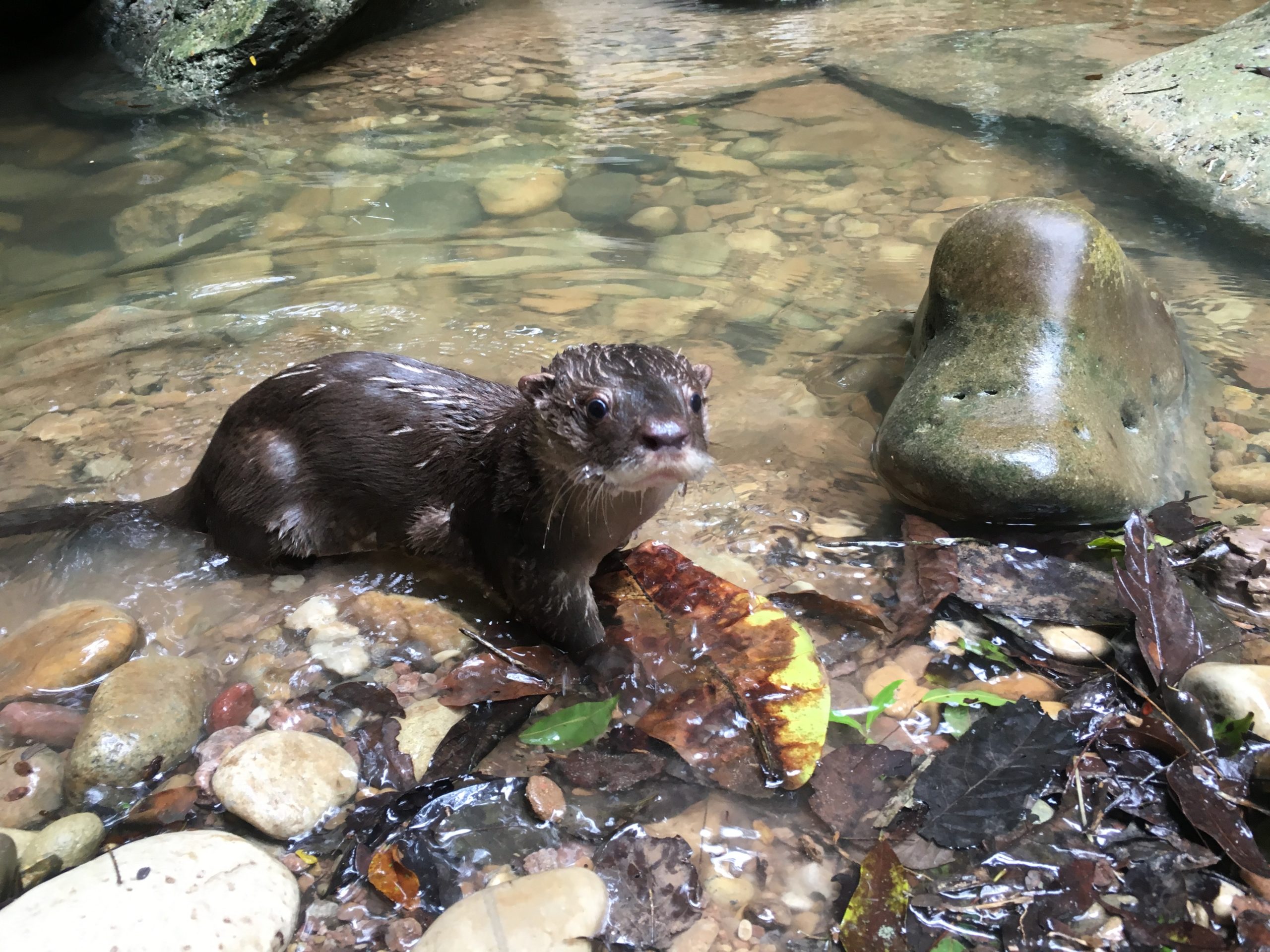
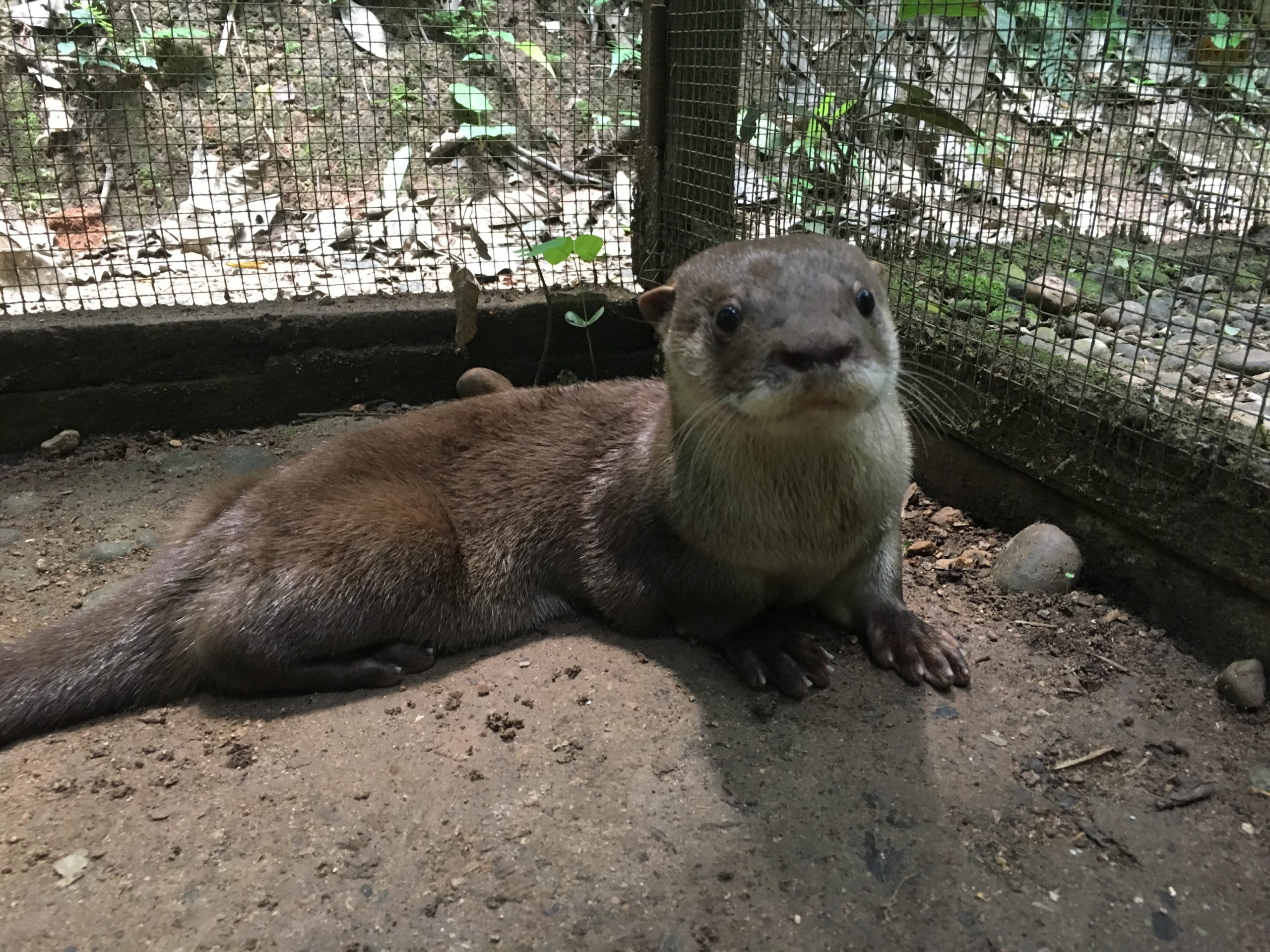
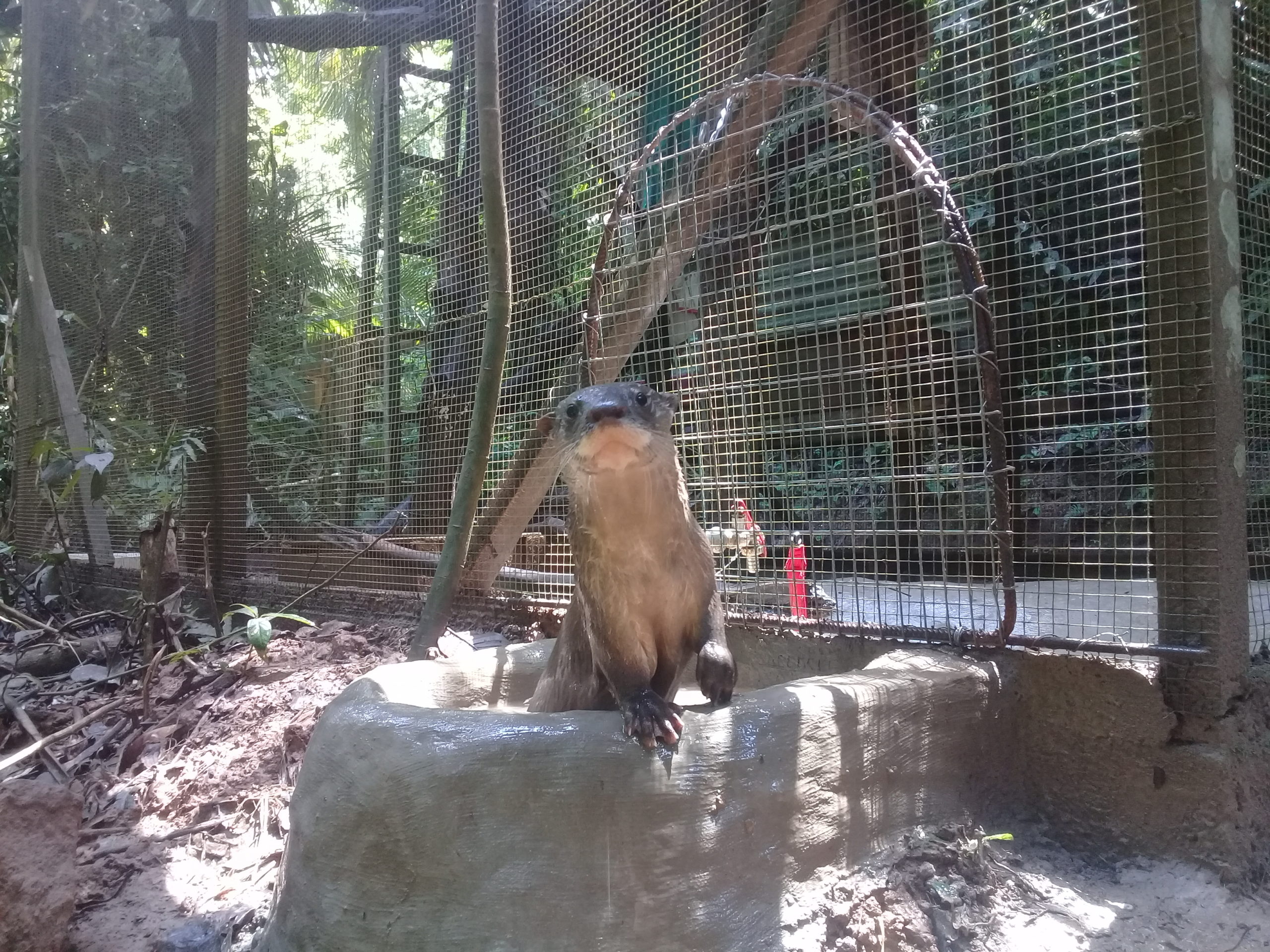
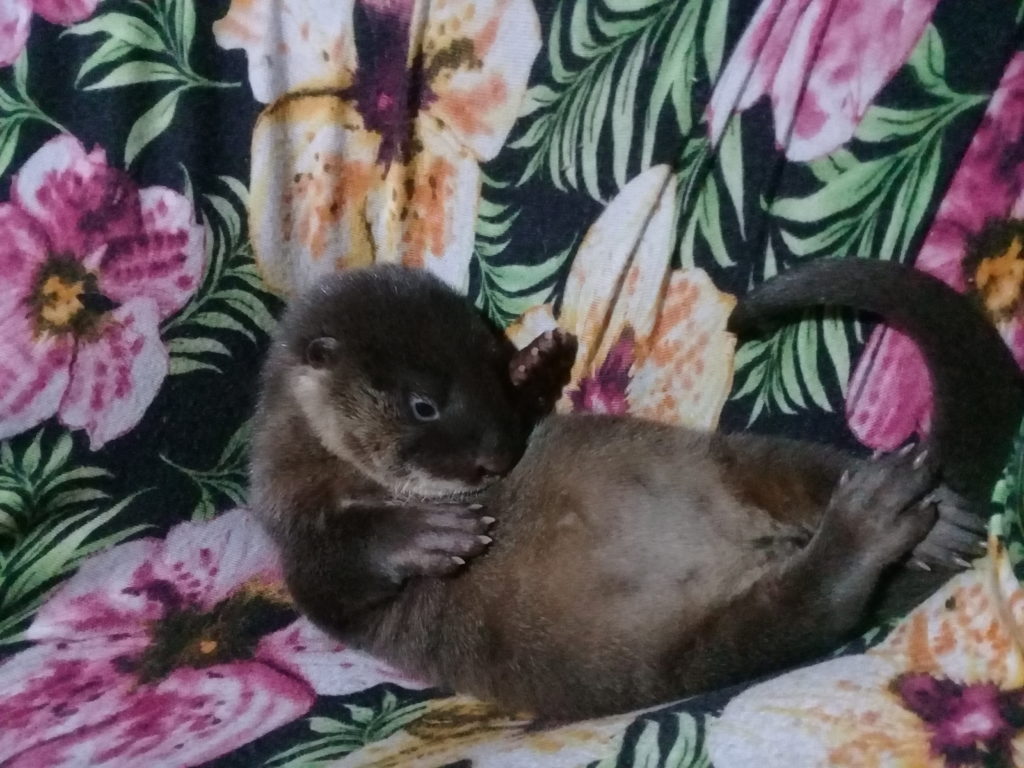
There could not have been a nicer moment for the Ministry to be present, as Anishka, our young adult female otter was taken out for a long walk through the stream. Every day she is taken for twice for long walks through the stream, so she gets to know the surroundings well, and learns to catch her food herself. Release of an animal is a slow process; it takes dedication, time and a lot of effort, for all involved. Anishka is getting better and better, catching some crabs, as well as some small fish, but she is still young, and has a long way to go. A walk with Anishka is an example of one of the privileges we have within the work we do. It shows so clearly the beauty of our work and of the animal. After having arrived here as a baby of only half a kilo, it is beautiful to see and experience the growth in size, health but also in character.

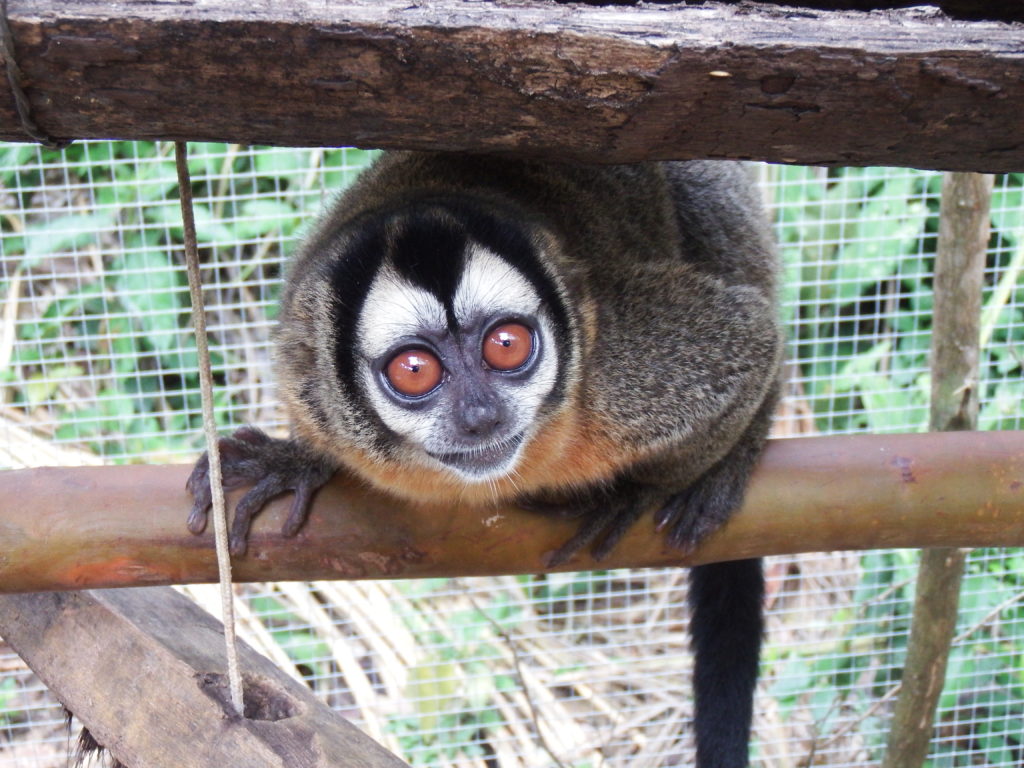
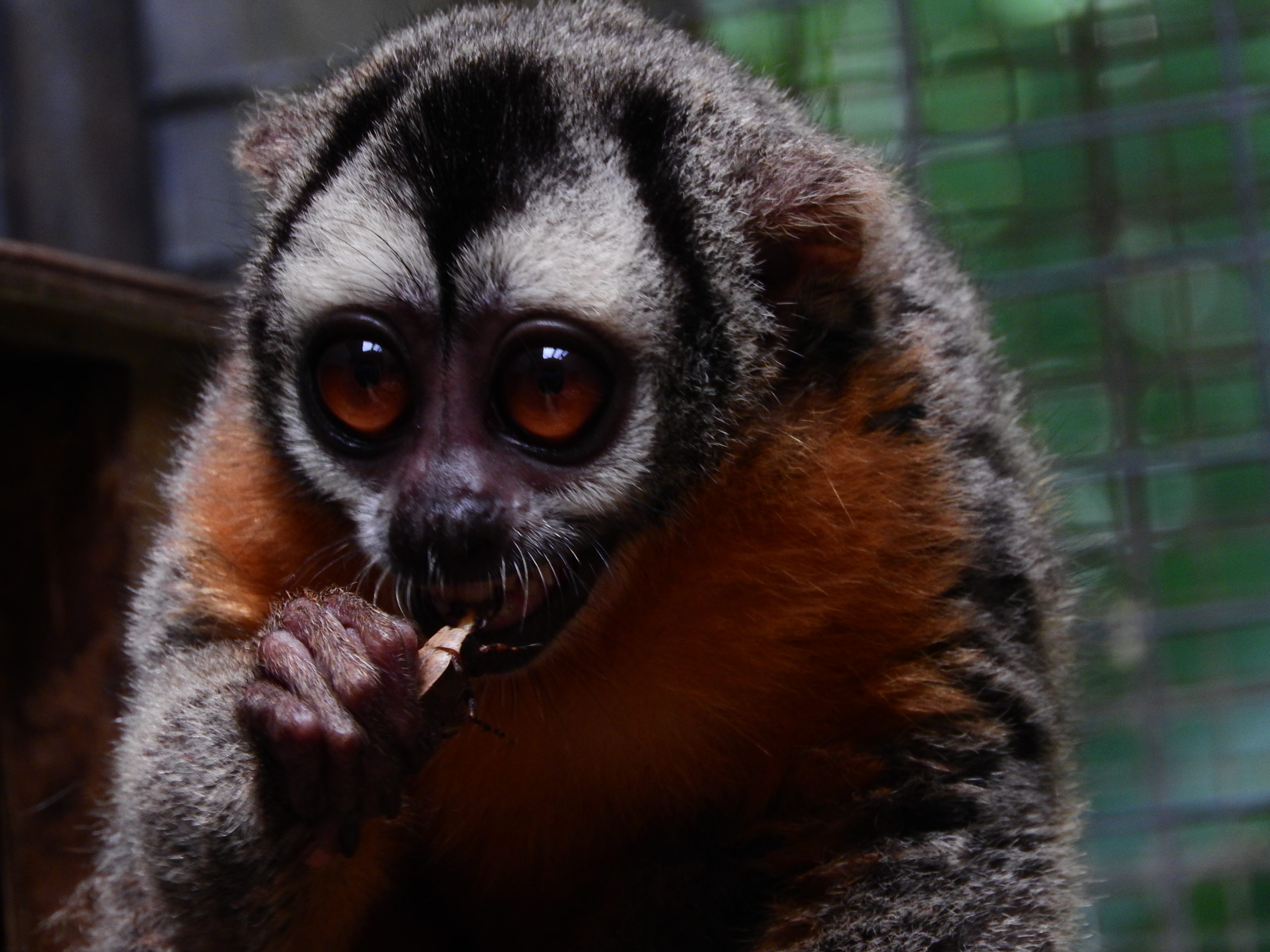
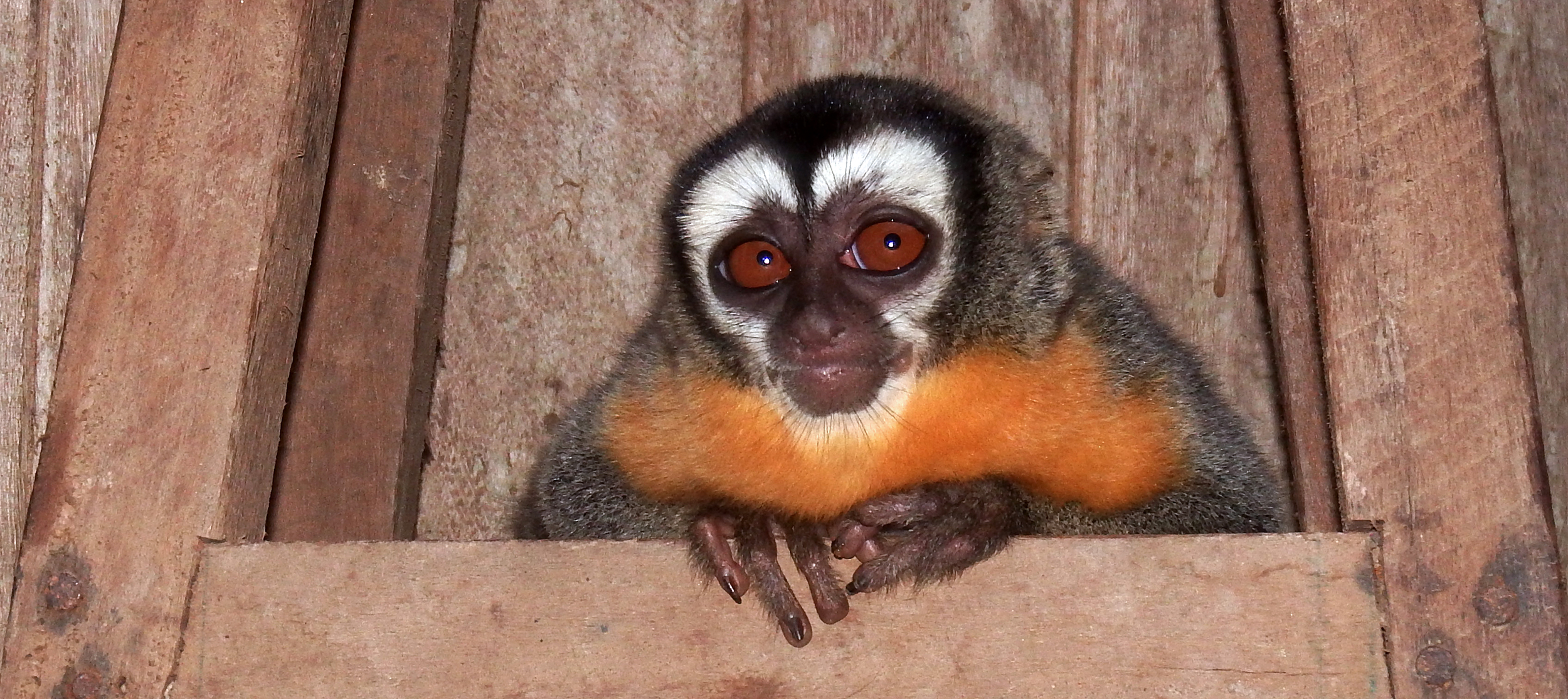
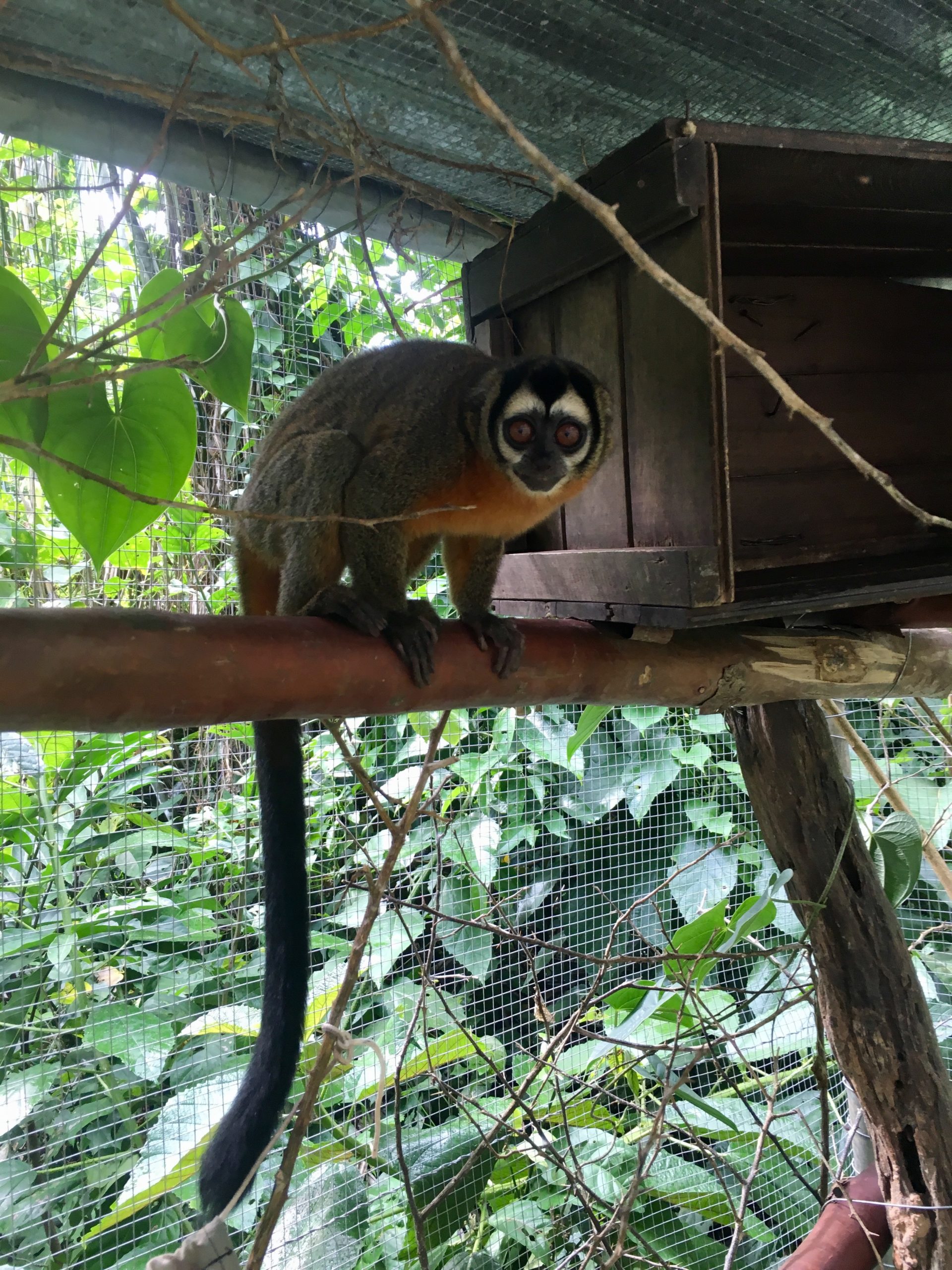
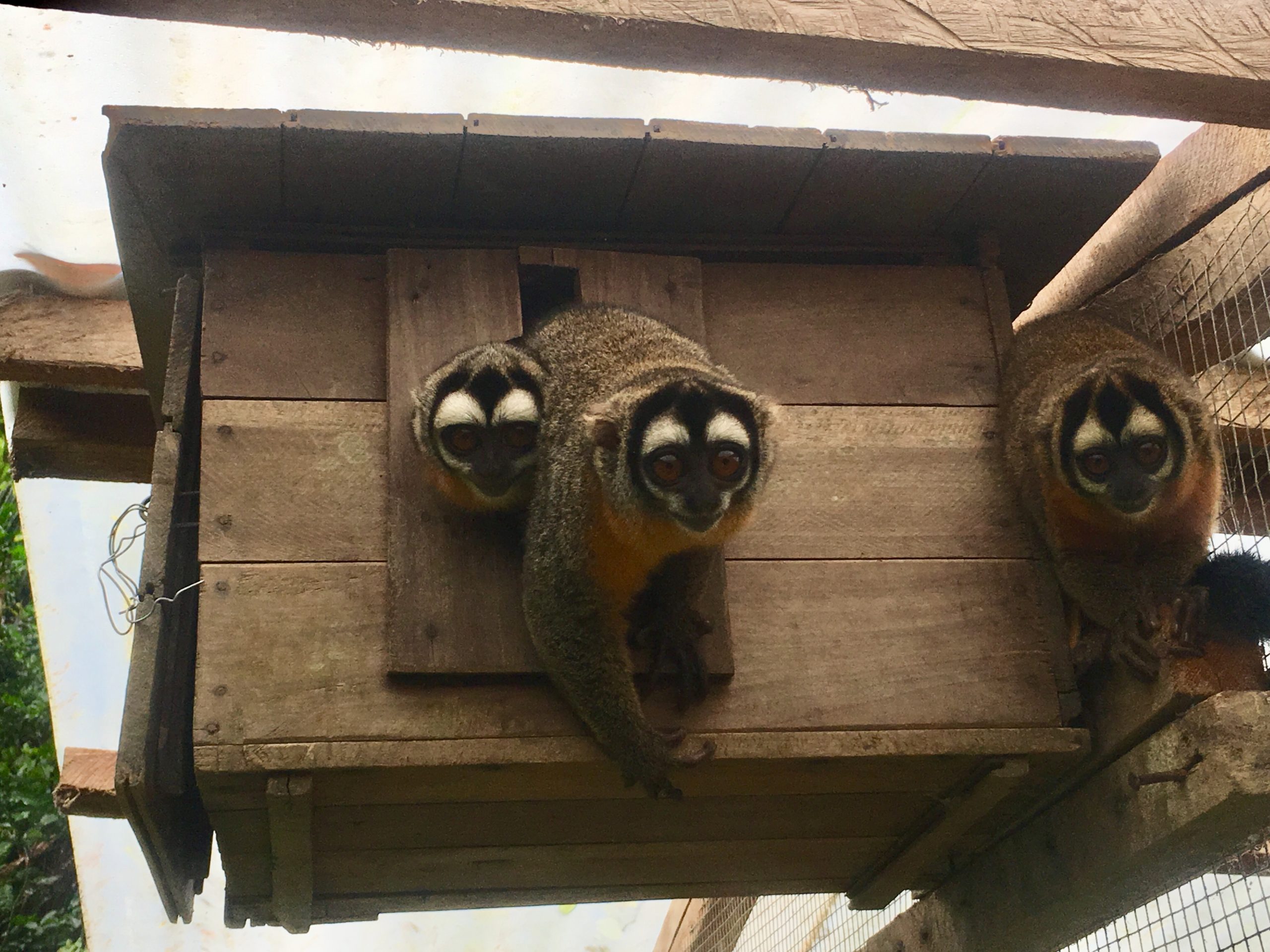
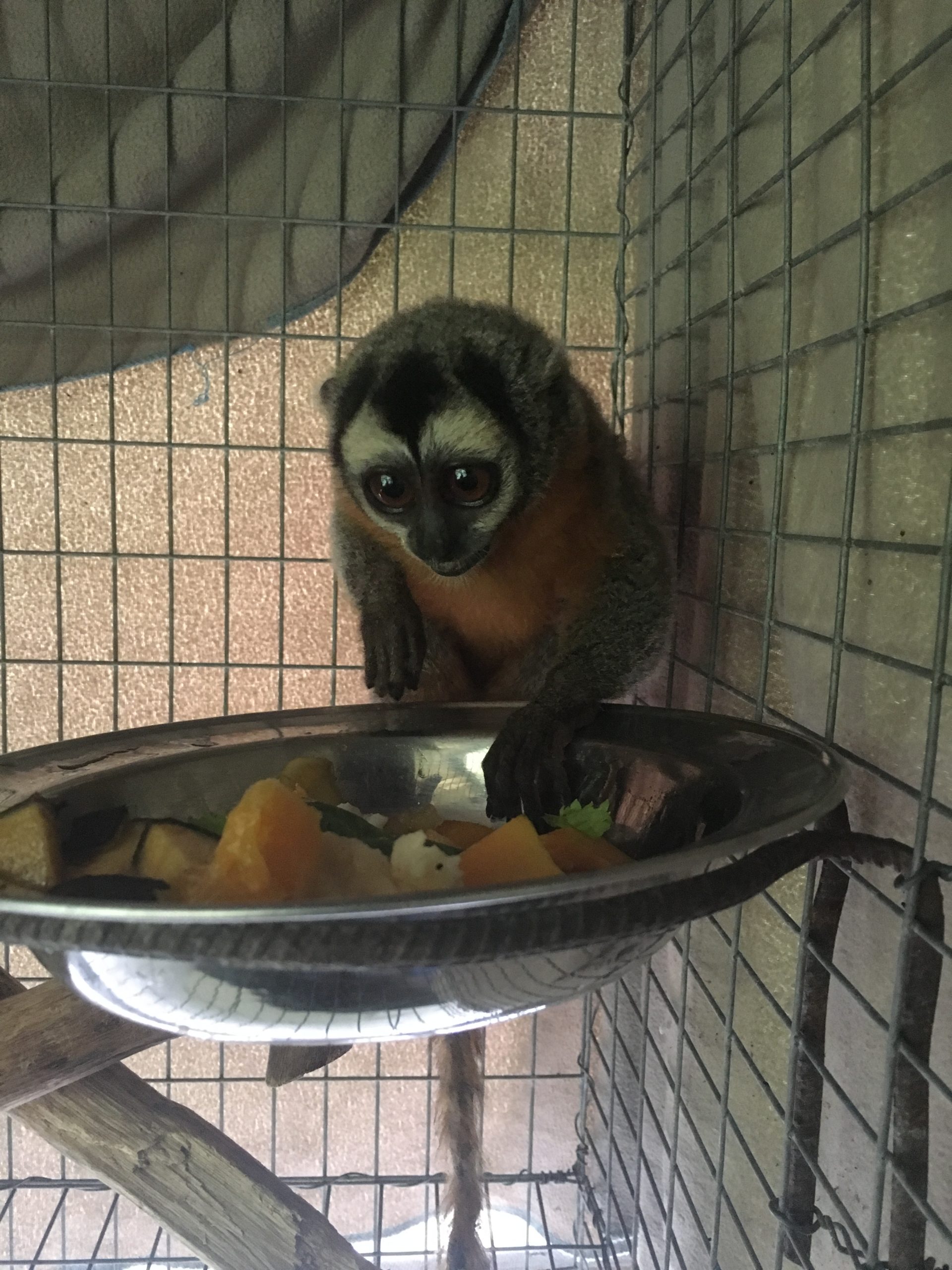
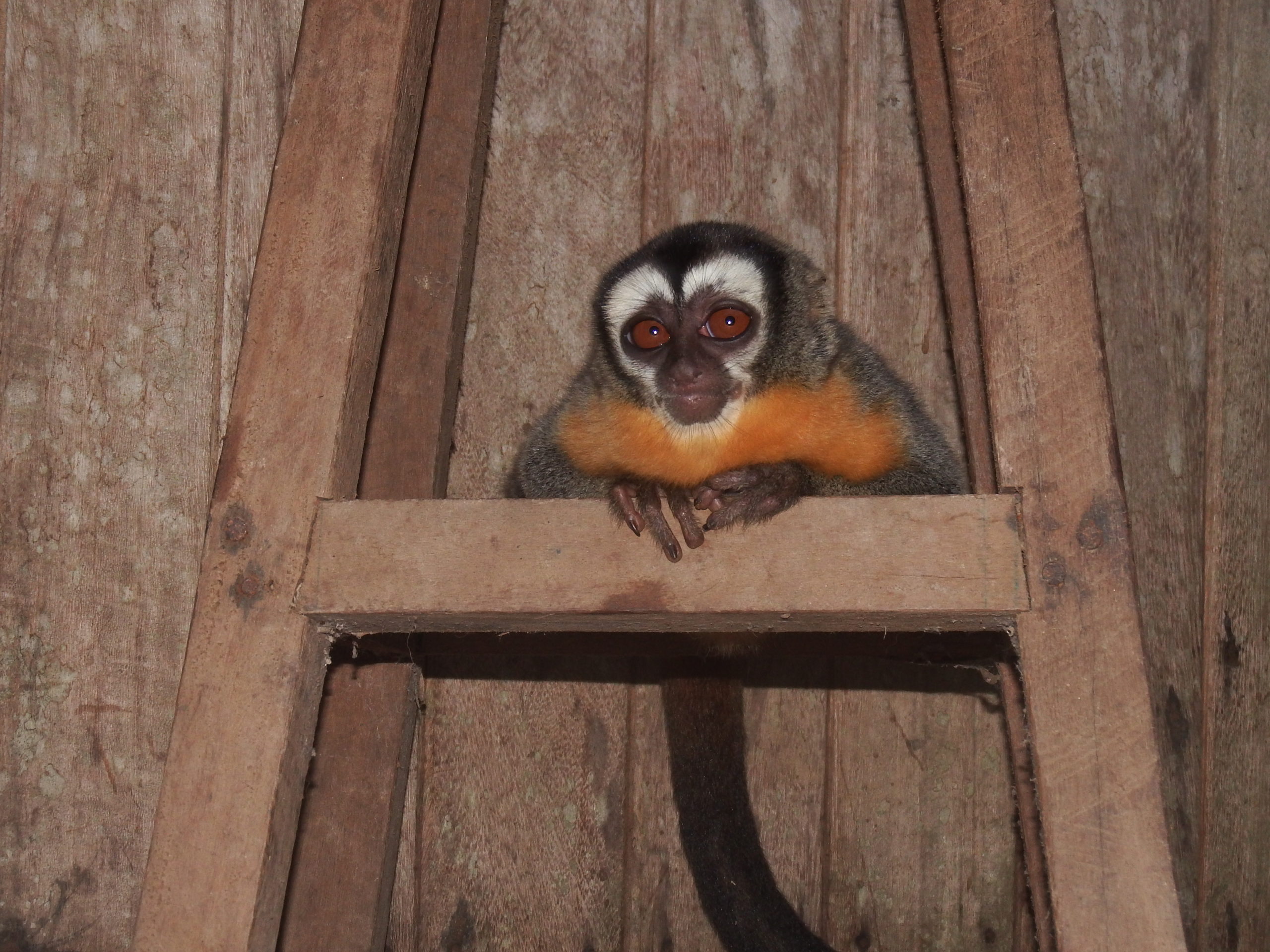
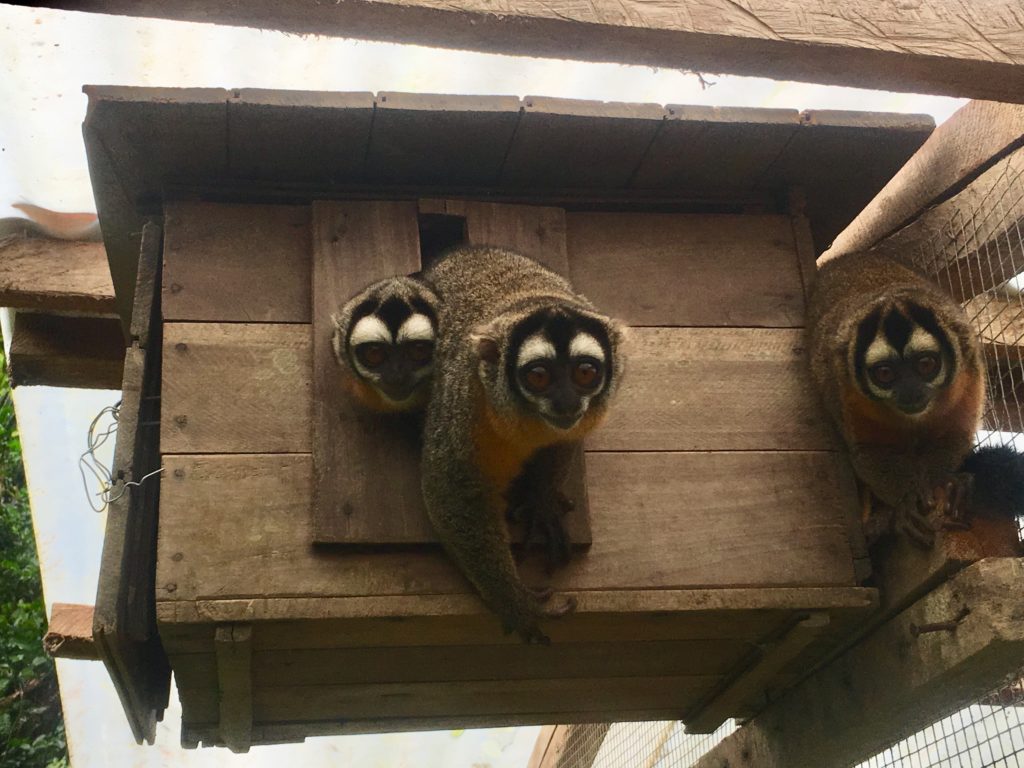
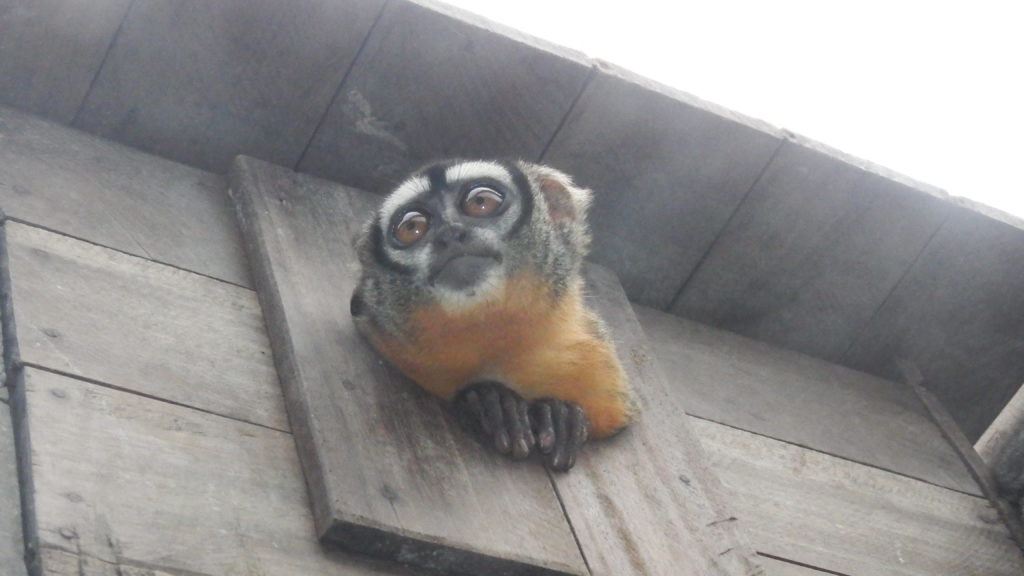
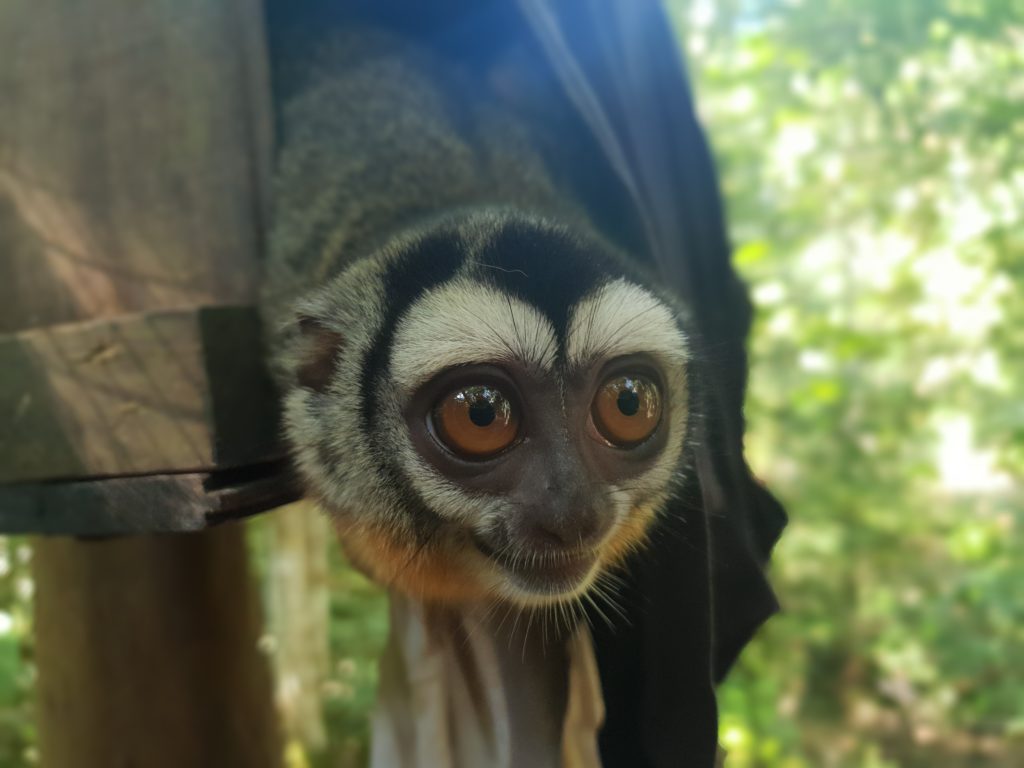
Luna, Otis and Kira (Ma’s night monkeys) were relocated this month, when the day of the Ministry’s visit was ending. Otis had become fairly territorial towards humans, threatening us often when we wanted to pass by their sleeping box (located near the volunteer house). So we decided it was time for them to move further away from the centre. We knew they would be ready for this, as they were doing fine on their own, being away during the night, not depending on us anymore for food, even letting us (well mainly Otis) know we were not welcome. So we caught them, gave them a final medical check-up and took them to an area a bit further away, still within their normal living range. We hope they will find a more suitable sleeping spot, without us humans waking them up during daytime. Maru, the other male Ma’s night monkey, stays in the direct surroundings of the family house, and is often seen late afternoon in the company of Chiquita, one of our female woolly monkeys.

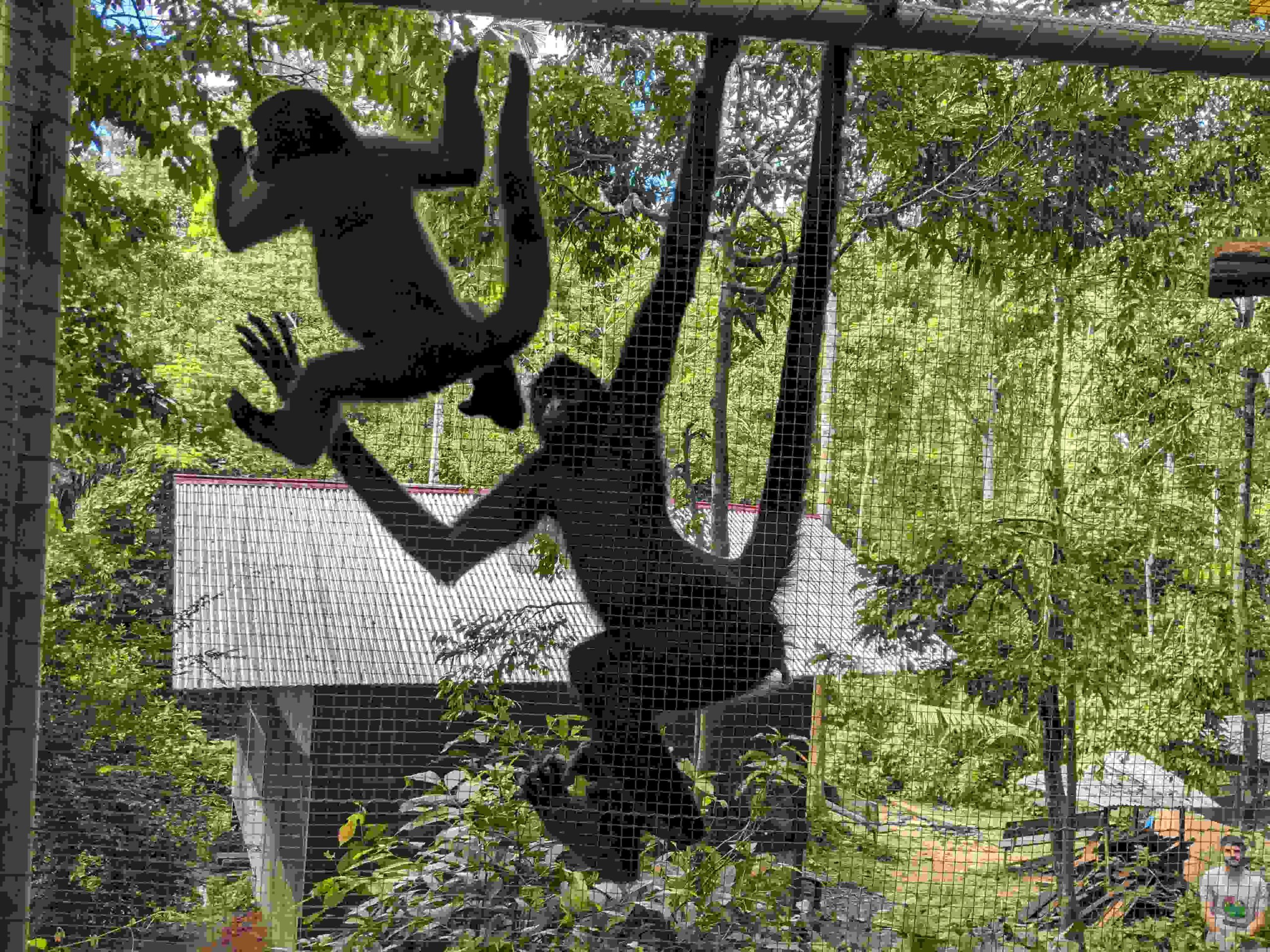
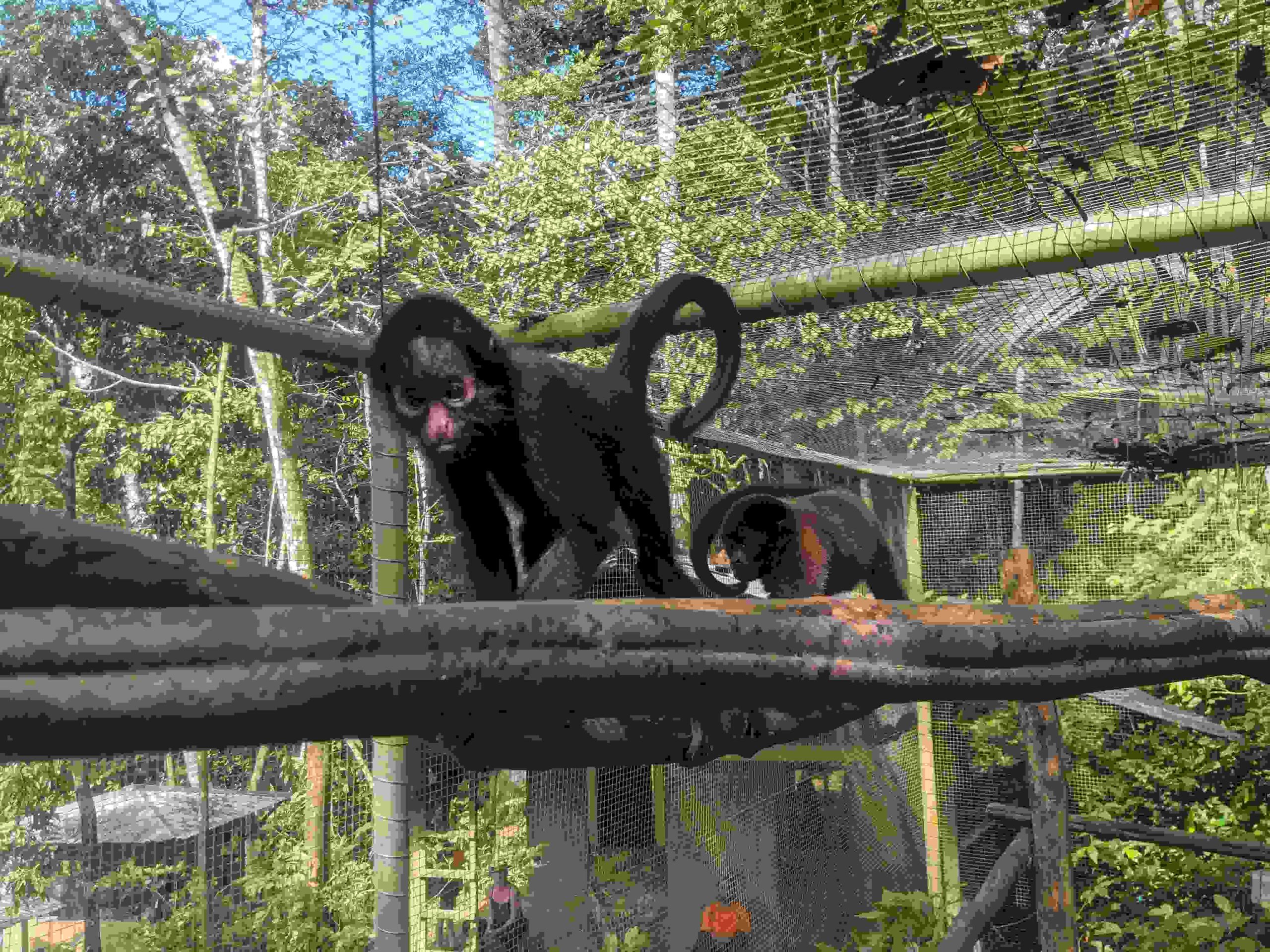
As we mentioned last month with the woolly monkeys, every monkey develops their own personalities and none so much as our eight Black Spider monkeys. Ranging in age from our newest baby Chula, who just celebrated her first birthday in December, to Lucio, one of our two big males who is estimated to be seventeen years old. Because of their size and their previous dealing with humans prior to Esperanza Verde our two biggest males Lucio and Rimaq reside within an enclosure they share with four capuchin monkeys, whereas the remaining six black spider monkeys roam free and are never far from sight causing mayhem and general tomfoolery. Chula was born at Esperanza Verde and is the product of a coupling between Rimaq or Lucio and Cumala (one of our larger females). Although Chula becomes more independent each day, Cumala is never far away keeping an eye out. Baby spider monkeys are normally weaned between 12 and 20 months so Cumala will have this growth attached for a while longer yet. Our two young males let their presence be known, trying to get volunteers’ attention by screaming or dancing to obtain responses. Takari, our youngest male is particularly good at doing pirouettes whenever a male volunteer or worker is in attendance. Cesar, who came here as a young juvenile, together and very attached to the male white capuchin, Nando, was mainly on his own in the first months. It took some time, but he now is very well adapted outside, has formed a close bond with the other spider monkeys, is playing with all, including still on occasion with Nando.

SUST Animal Orphan Hospital

The SUSTOAH had a relatively quiet month with more focus on general check-ups, weights, the occasional deparasitation and with only two ‘patients’ having prolonged visits.

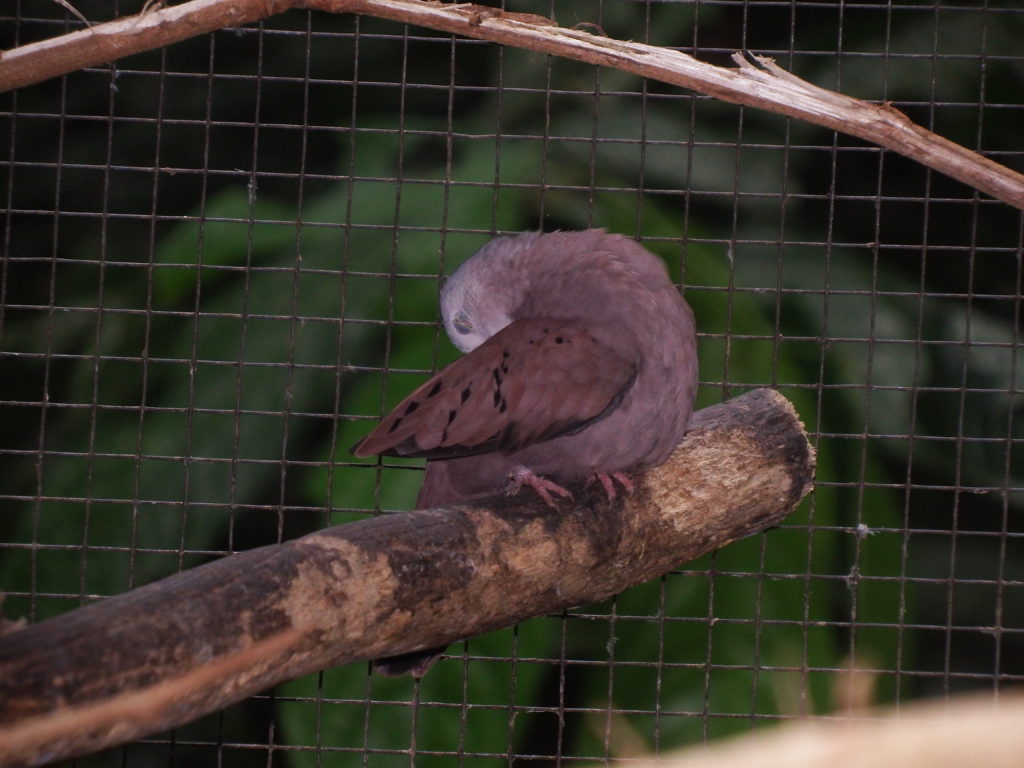
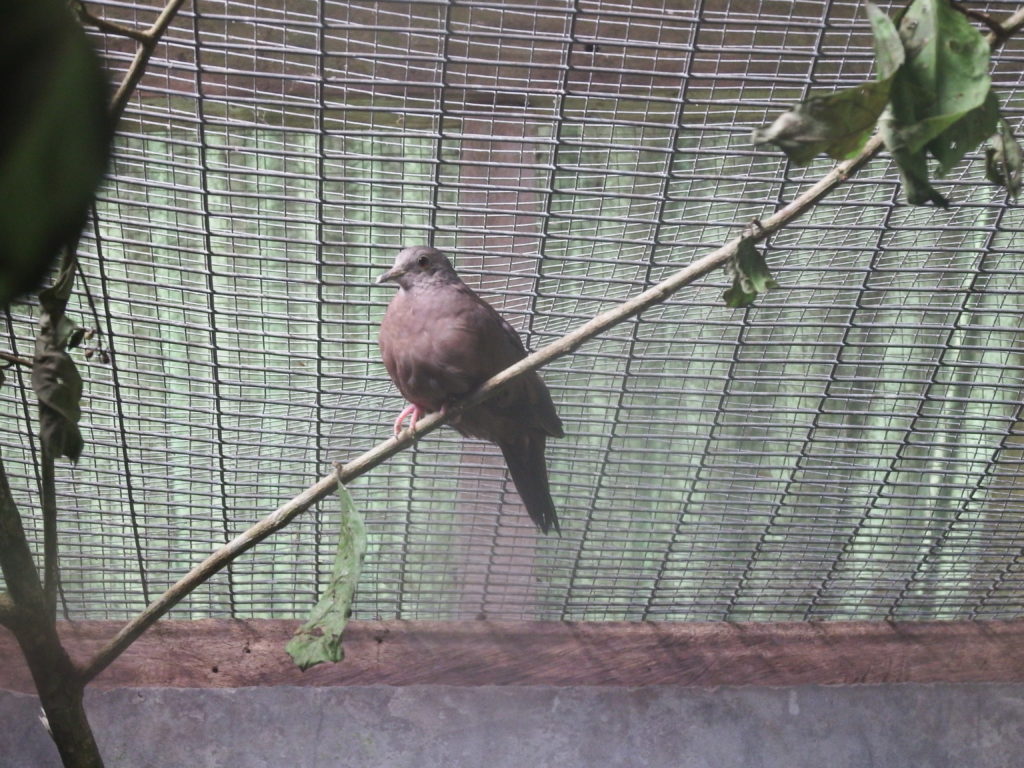
Icarus one of our Ruddy ground doves was found with a broken leg. There was not a lot to be done in such a situation, except for giving him some time and sufficient rest (not too much movement) in an environment of very little stress. After some weeks of rest he could return to the other doves and parakeets in the Igor enclosure.

Traya, a young female, large headed capuchin monkey, who is newest member of the outside capuchin group, having arrived less than half a year ago, seemed to have some problems with skin parasites. We brought her into the clinic for treatment, observation and some extra attention towards her diet. As she is one of the newcomers, she is low in the hierarchy and does not always get enough outside. She is interacts well with two of the younger, earlier introduces females, but does not receive a lot of attention from the adults, who could help her e.g. by grooming, and taking care of any parasites that might befall her outside. It will take some time for her to establish her place within the group and get sufficiently food intake. We will take some time to get Traya strong enough again so she can join her outside friends again and take her place within the group.

New arrivals

With the visit of the Ministry arrived a new animal, a young male crab eating raccoon, now named Payco, estimated about 3 months old. Although we officially are not excepting any new animals, we make an exception, if we know we can safeguard our resident animals, as well as can sufficiently take care of the new arrival. Payco will spend the first two weeks at a small cage attached to the family house before going into the former enclosure of Eona. He will follow the same path as Eona, taken for some walks outside letting him at some point decide to return or not to sleep in his enclosure during the day. Of course we hope that we can join Eona at some point with Payco to see if we can do some match making…..

Although not easy to surprise, Kayla got one this time on camera, while she was making her round of photoshoots for the monthly update. A newborn where it was not expected: our white capuchin Chaira, who has joined the large headed capuchin group since several years, has a baby!

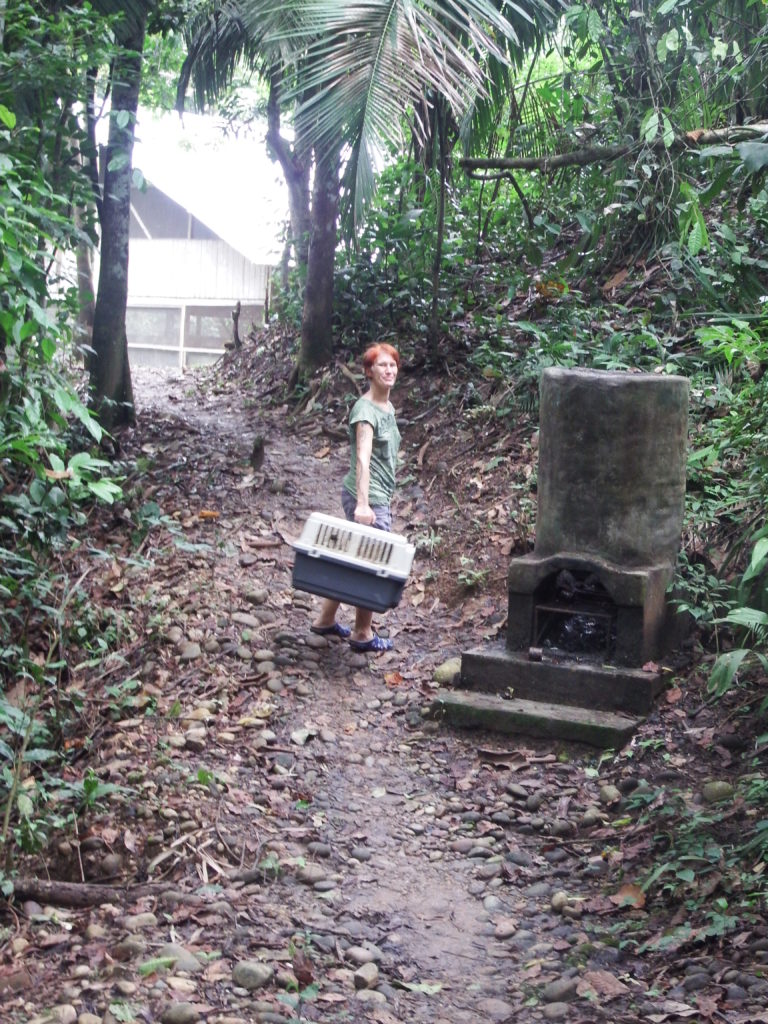
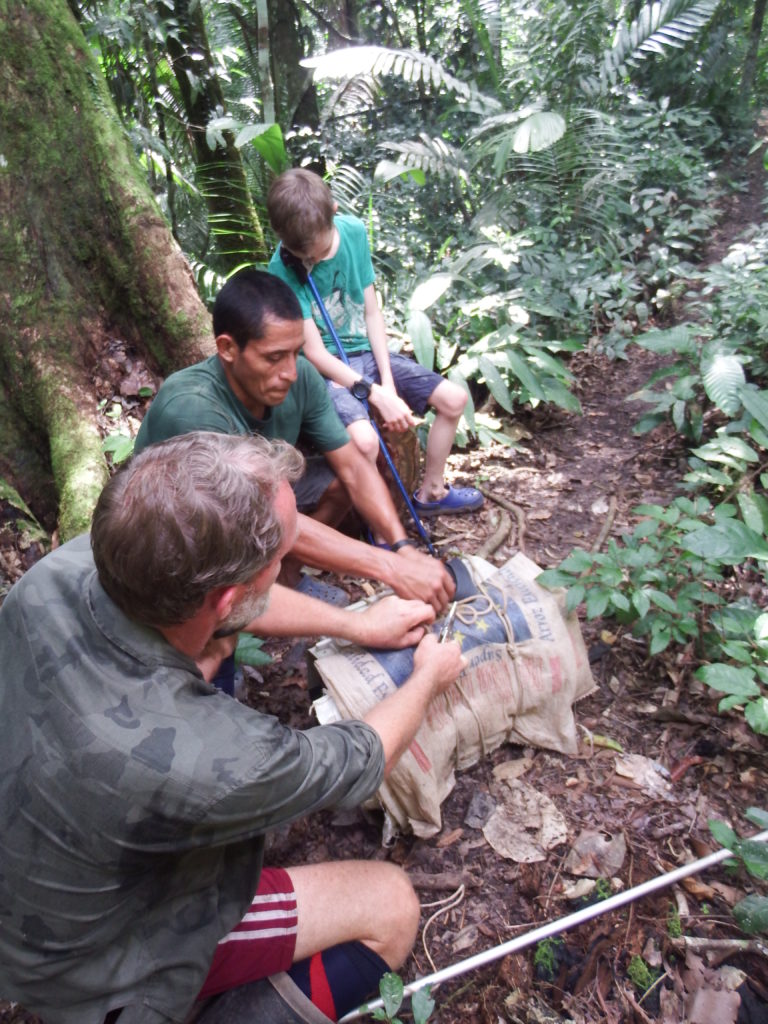
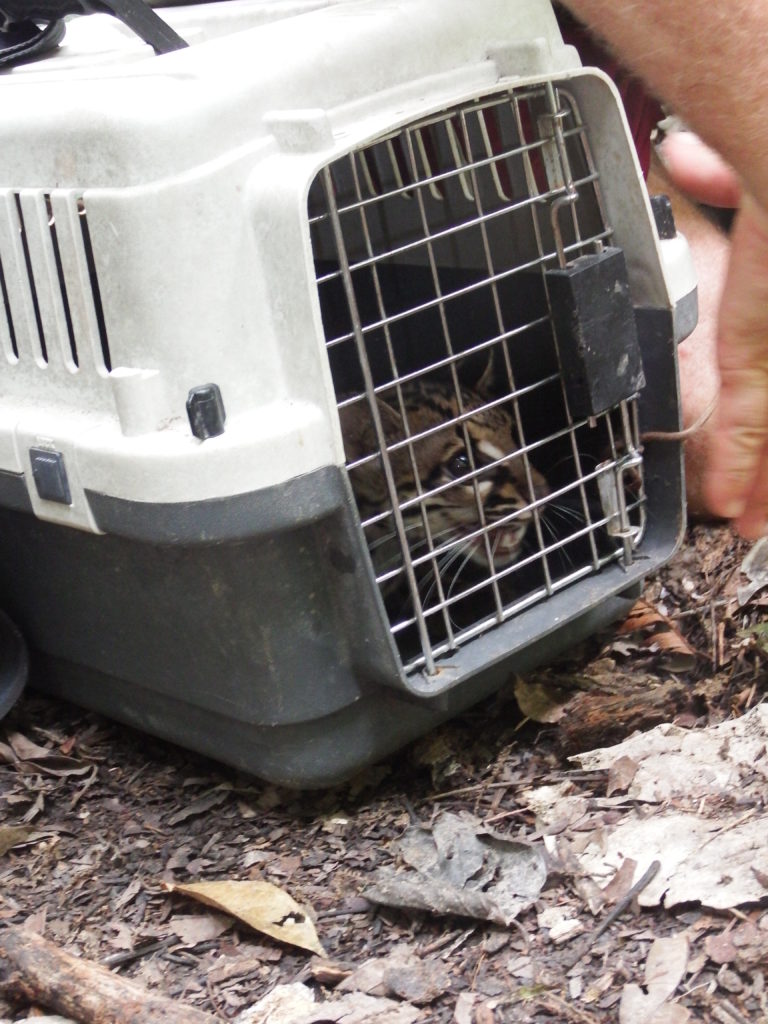
And then there was a neighbour at lunchtime asking if we were missing an ocelot. He had trapped one in a trunk next to his house…..but both our margays were happily sleeping in their cages. The neighbour did not want the animal to go and then killing his chickens, neither did we want him to kill the animal, so off went Douwe (with Geyler, Kayla and Marlon) to help him out. When they arrived they did not find an ocelot but a young adult margay, female, trapped in a trunk. The neighbour had closed her in. After some struggling with a rope, Douwe could get her into a transport box, and after some more walking, they released her back to where she belonged in the wild. As soon as she figured the door of the small box was open, she jumped out and off she went. We hope she learned from this experience, and will think twice the next time about getting to close to humans!

Construction and other

Variation is the key to keeping the animals entertained and if the same can be said about keeping people happy then Douwe, Geyler and Machico should be very happy men. This month has seen them all hard at work clearing boundaries and walking paths, tiling and painting in the new volunteer toilet, rebuilding enclosure interiors that have grown either tired or been destroyed by overzealous inhabitants, building a new secure storage at the Don Jorge Organic Plantation. All this and still finding time to harvest bananas, papayas, oranges, yuca, verdulaga, zapote, anonamacambo and araza, and thus keeping us humans and animals very happy with the added variety of fruits and vegetables.

And while having finally some time Craig and Geyler could start with the ever ongoing project of renewal of branches in the birdcages, by redecorating the Pichu enclosure, with new bamboo rods, new branches and some bamboo leaves. A grateful job, as all the birds directly after are seen interacting and demolishing the new put in refreshments.

Volunteers

With February coming to a close the official volunteer count remains at three. Kayla, Marlon, Olivia and Douwe taking time from their already busy schedules is essential in keeping things on track and heading in the right direction.

January 2021 Newsletter

January has been the month where the Amazon appears to have opened its lungs and embraced new beginnings. Rainy season officially started in October but January seems to the first month where rain has really begun and mosquitoes paid a visit in large numbers. Although many of the days have had rain, it is often followed by beautiful sunshine meaning we are treated to abundant new growth where ever we look. While the world holds its breath for the latest round of Covid restrictions, we can be grateful for the small miracles happening all around us.

Animals

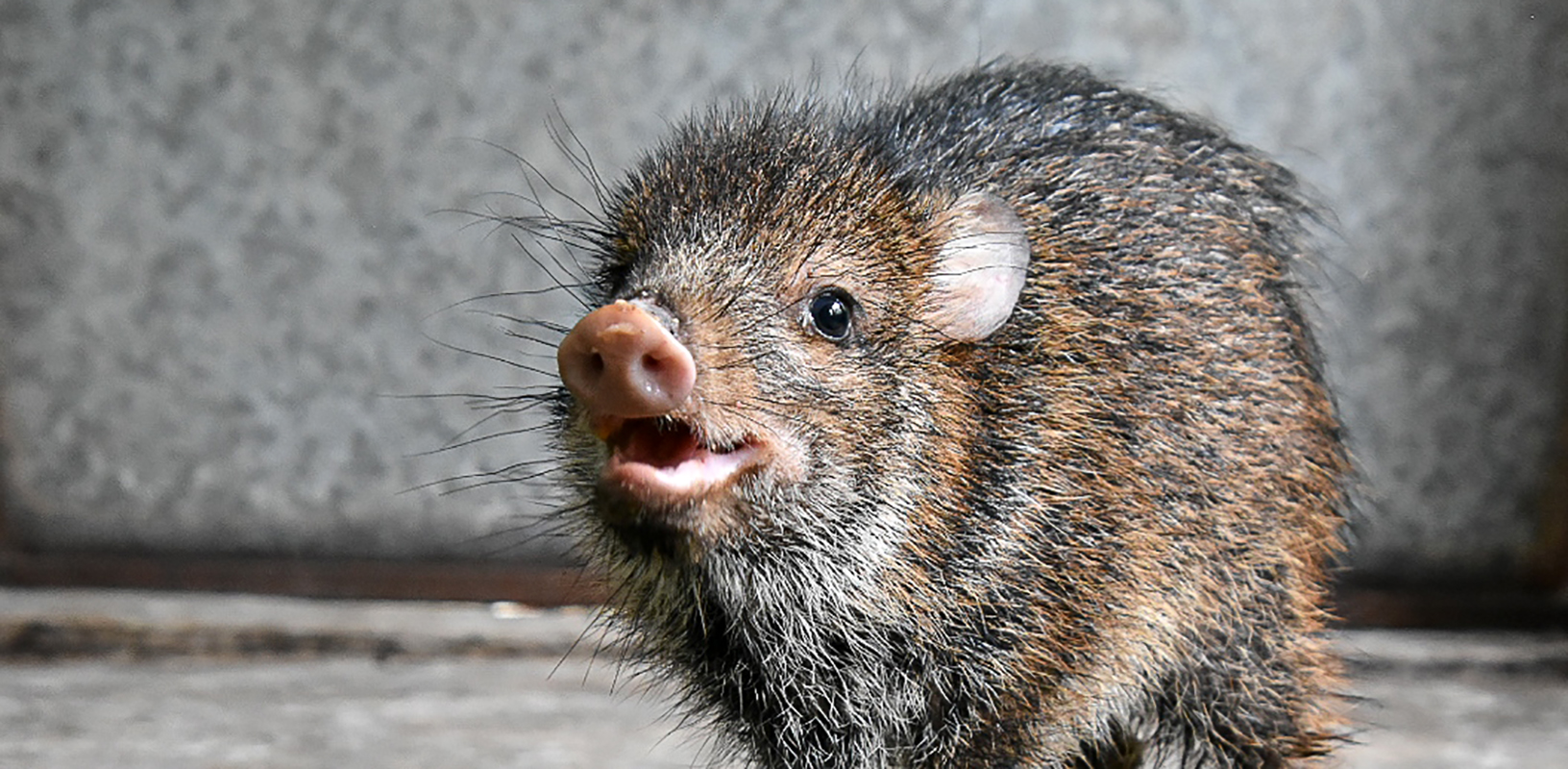
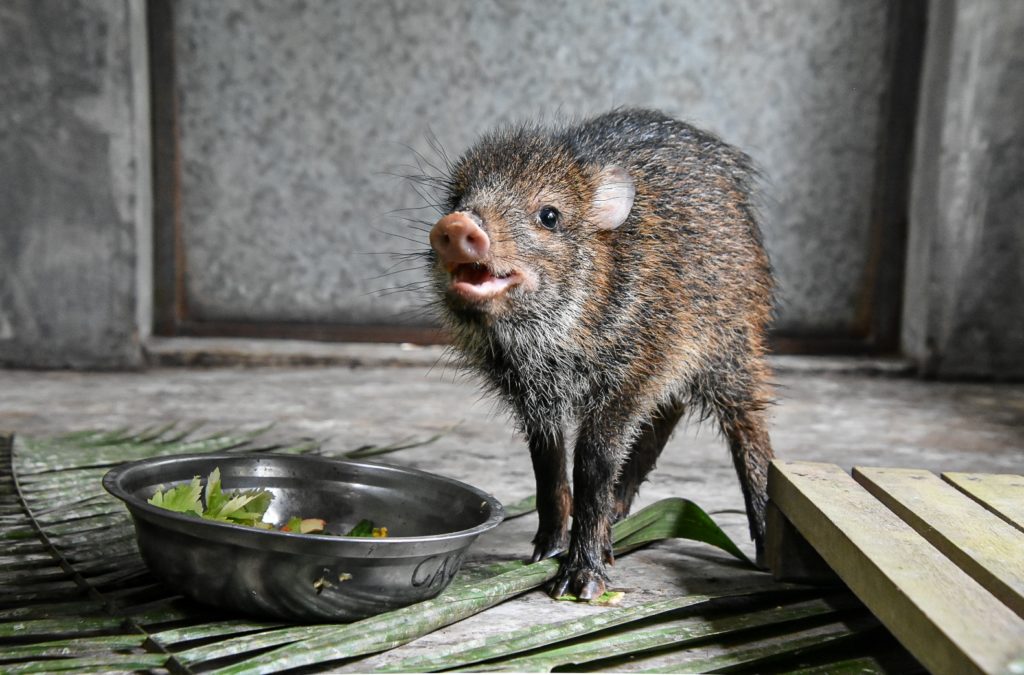
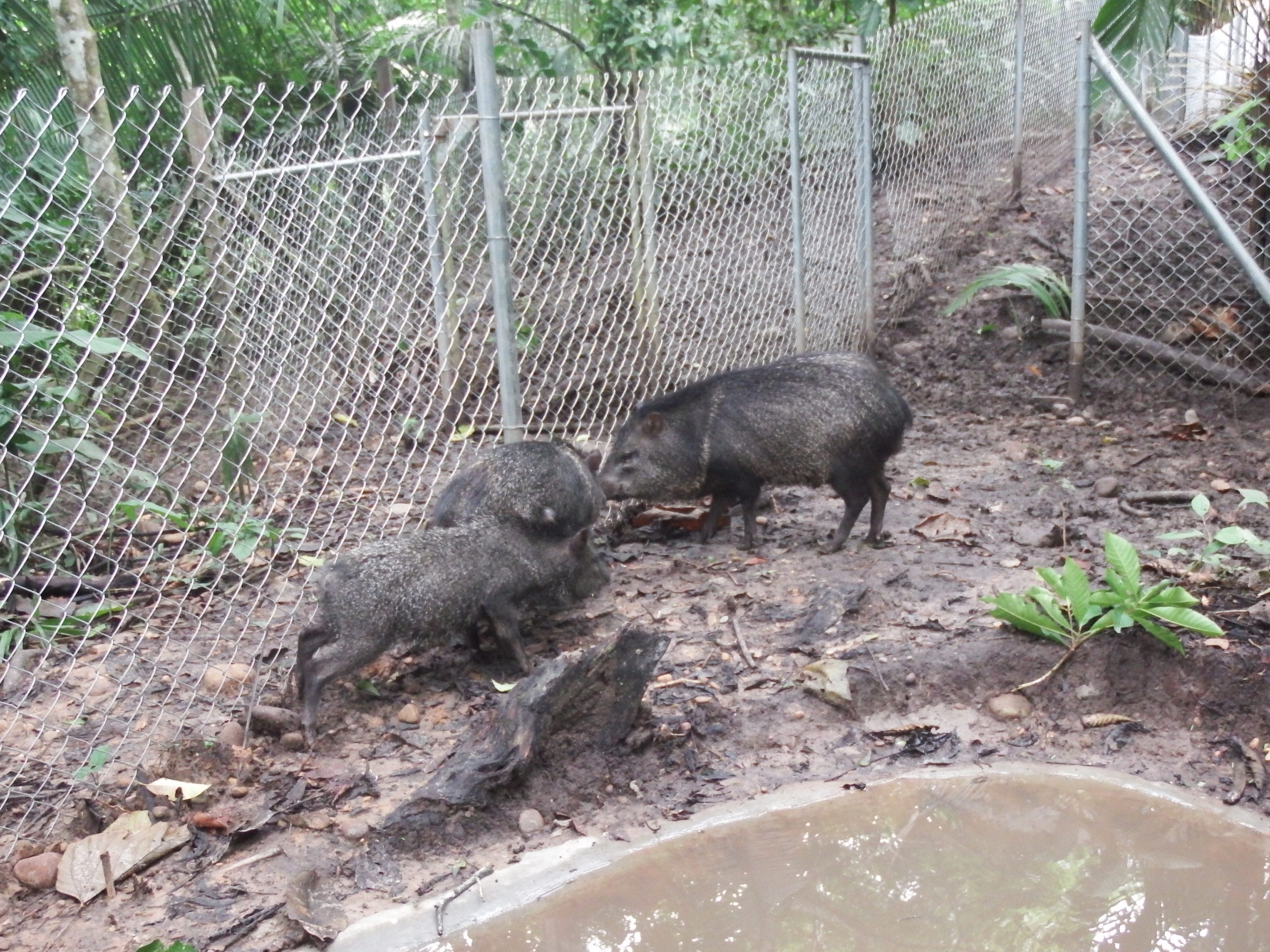
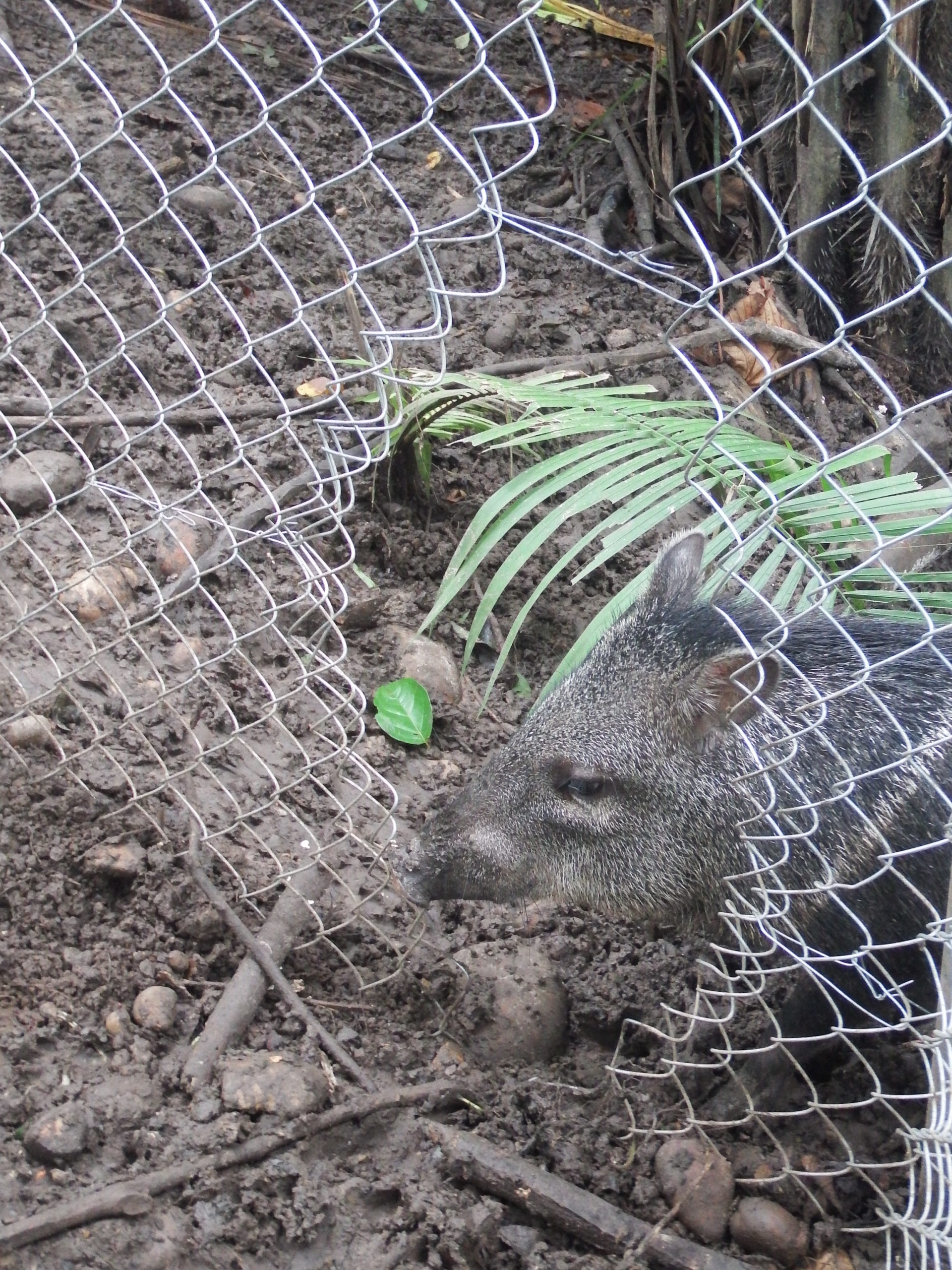
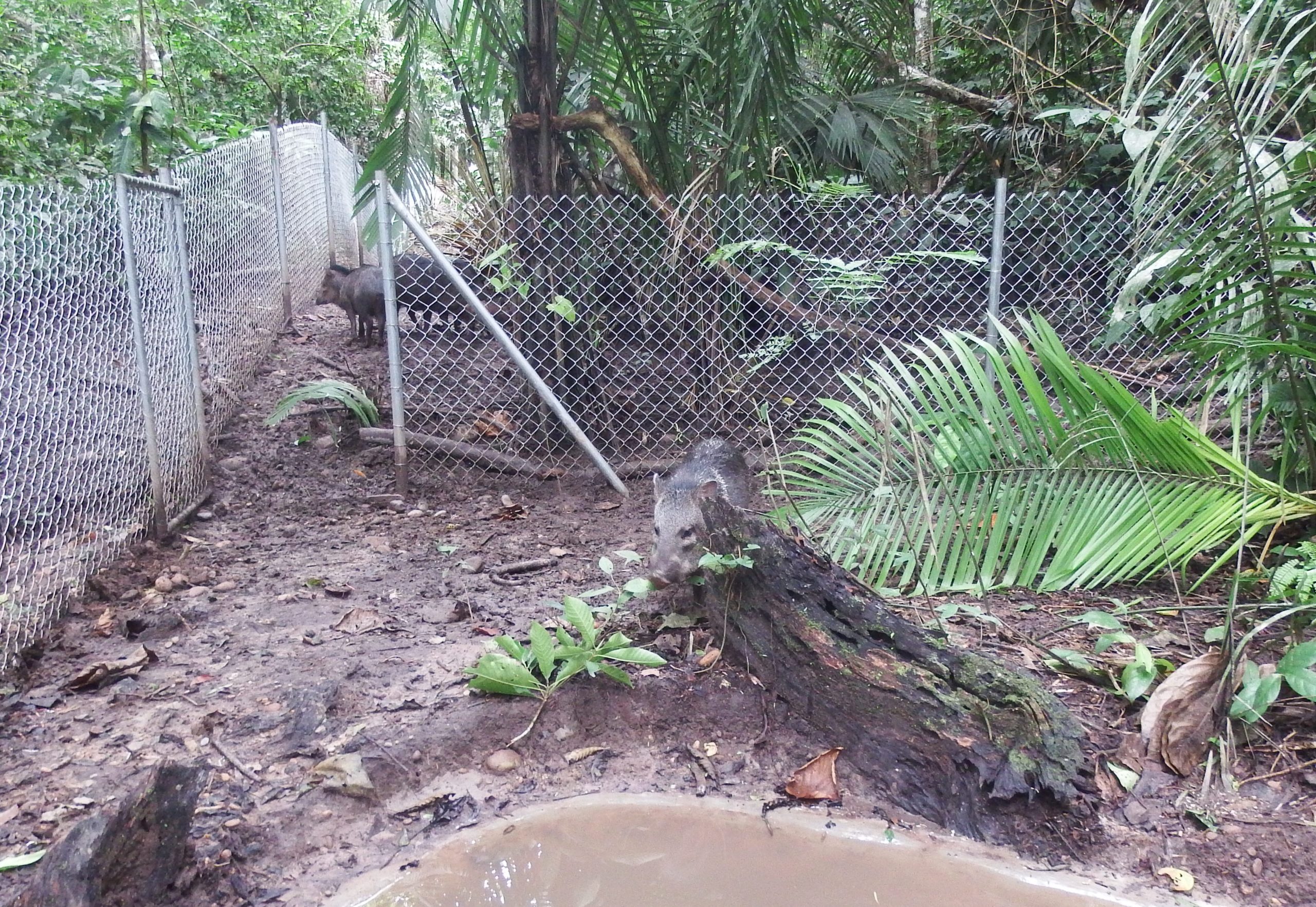
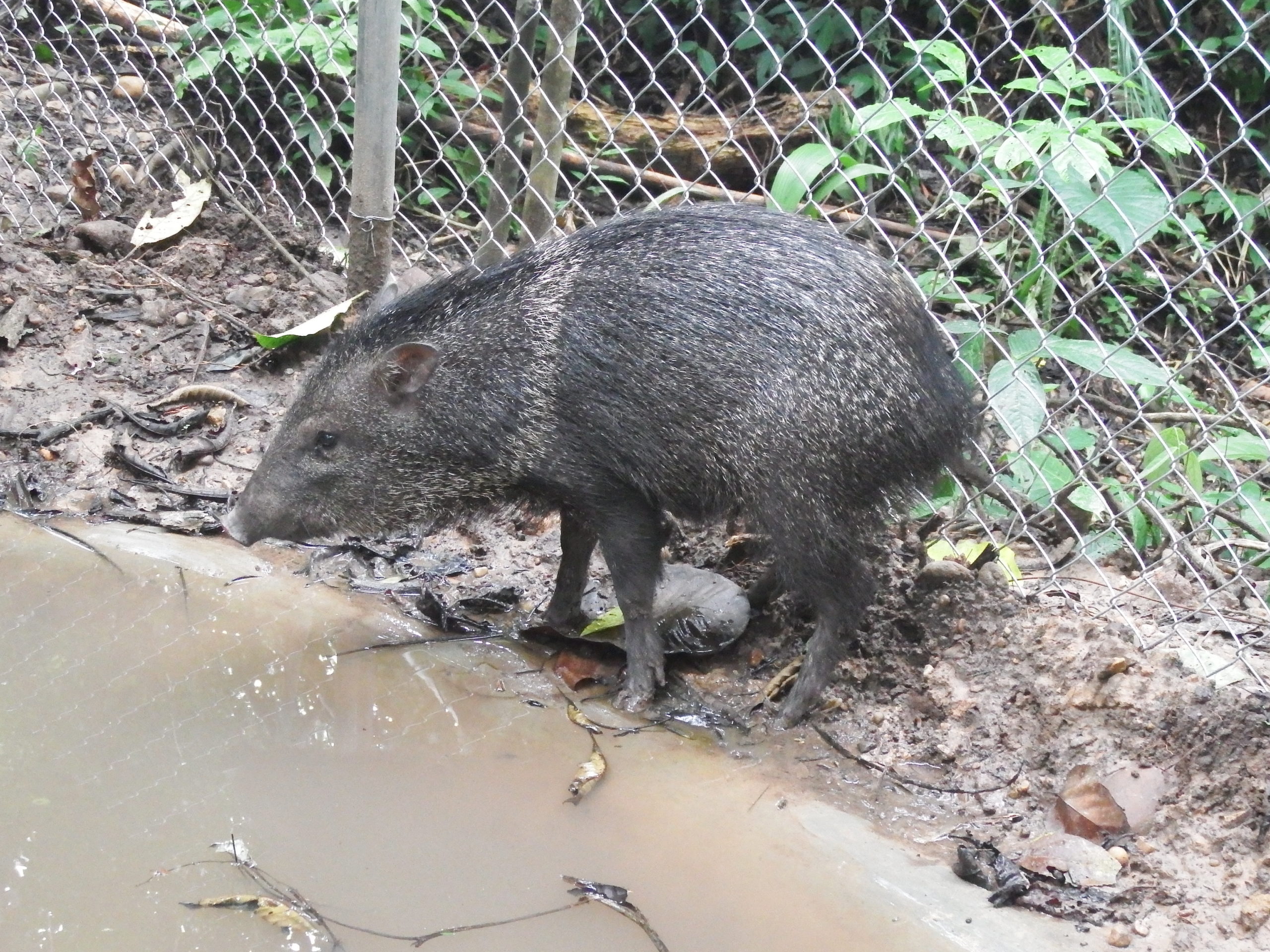
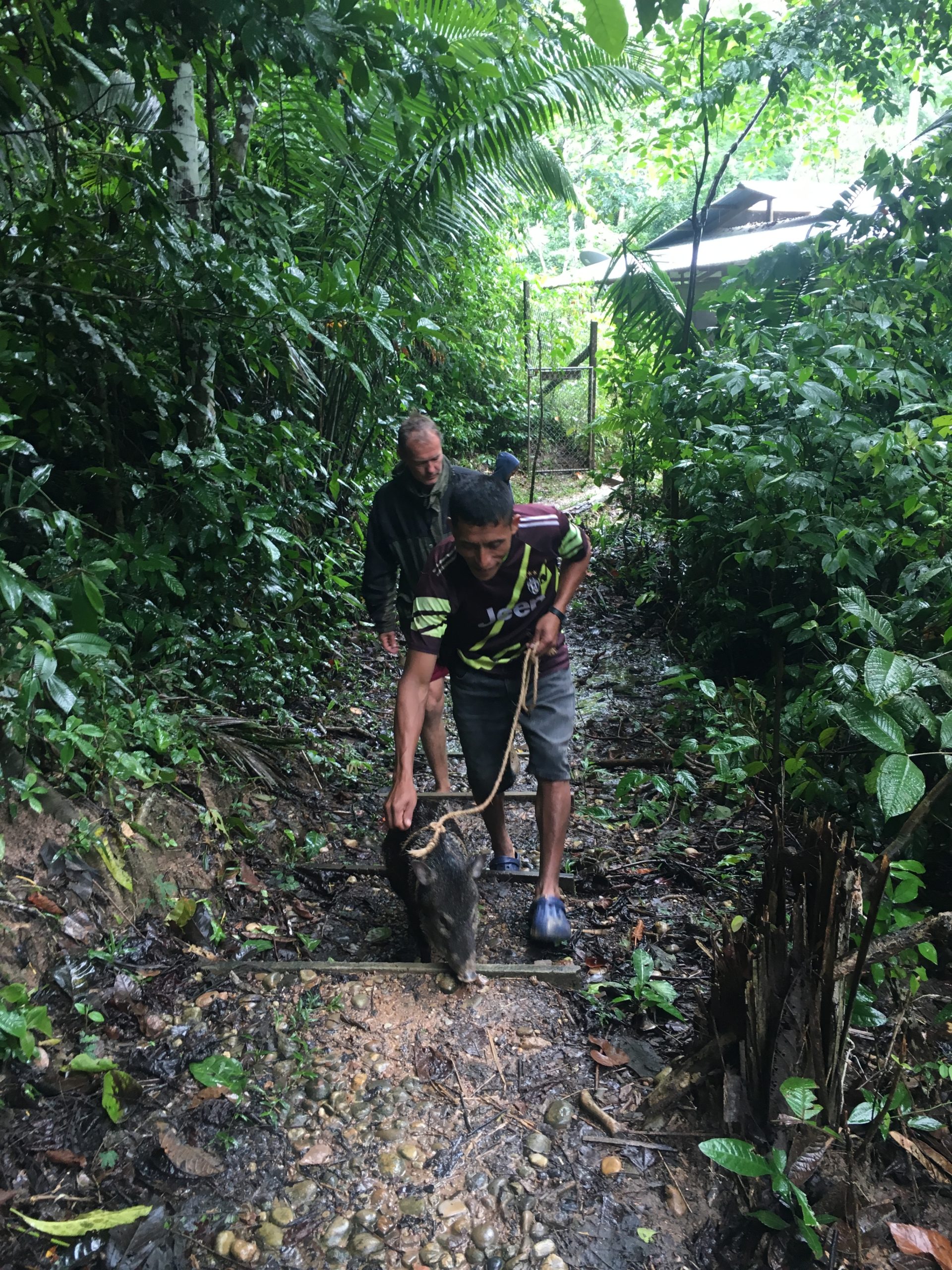
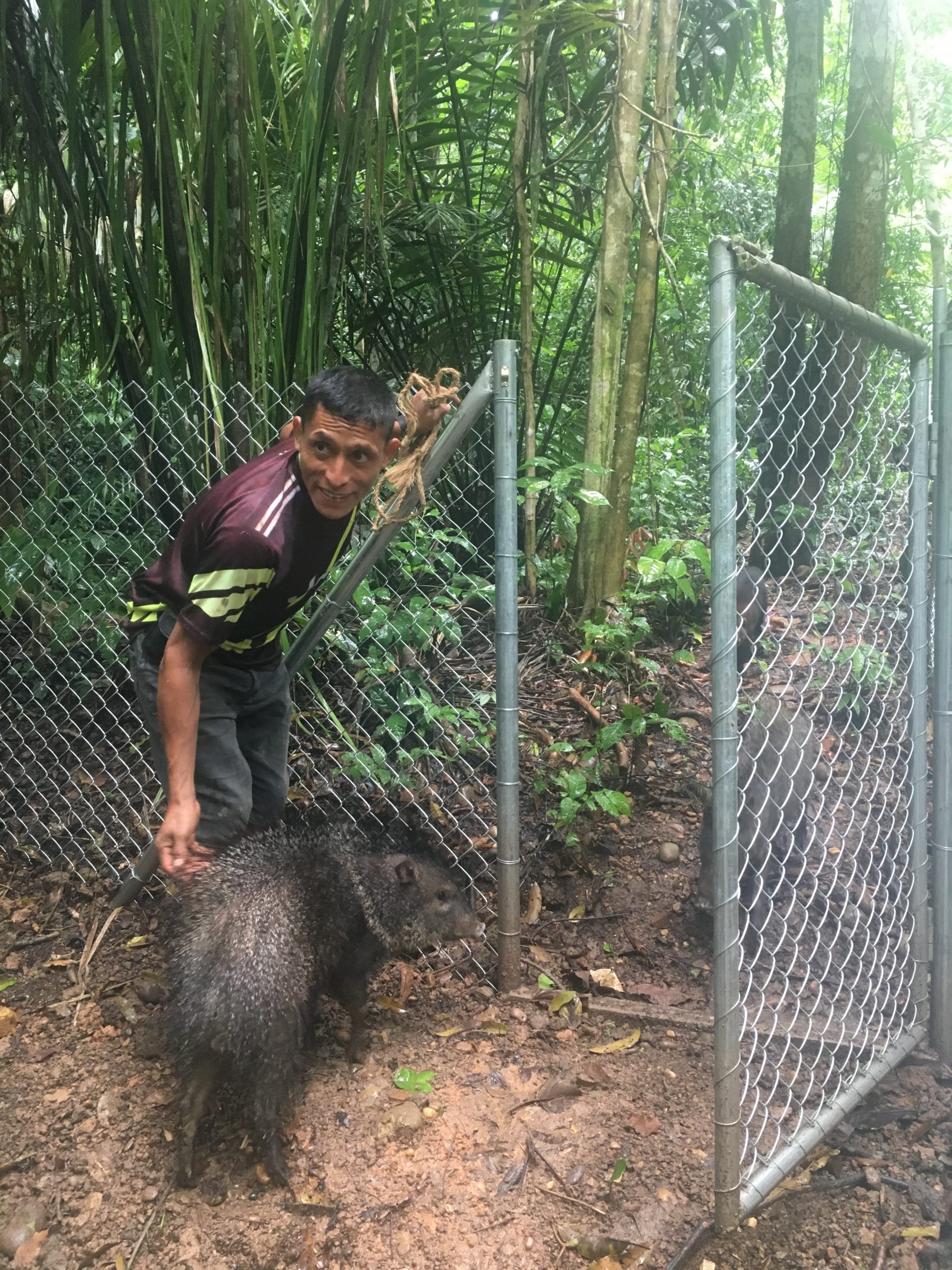
Last month we moved our three young male peccaries into their new purpose-built enclosure. This month the fence was opened allowing for Maccus, Conan and Alaric to be joined by the existing resident group of white collared peccary. While introducing new peccaries to the group is often tense and unpredictable, this was not the case this time. All animals are interacting well and revelling in the new enclosure.

The new enclosure also gained an identity this month and is now known as NOROC. Named after the dog of Suzy Utzinger whose foundation generously financed the construction of this vital new enclosurealong with their on-going funding for the Esperanza Verde clinic, SUSTOAH.

Although no new animals joined the ranks at Esperanza Verde this month, there is always plenty to do and plenty going on to observe. So let’s take some time to highlight one of our monkey groups here.
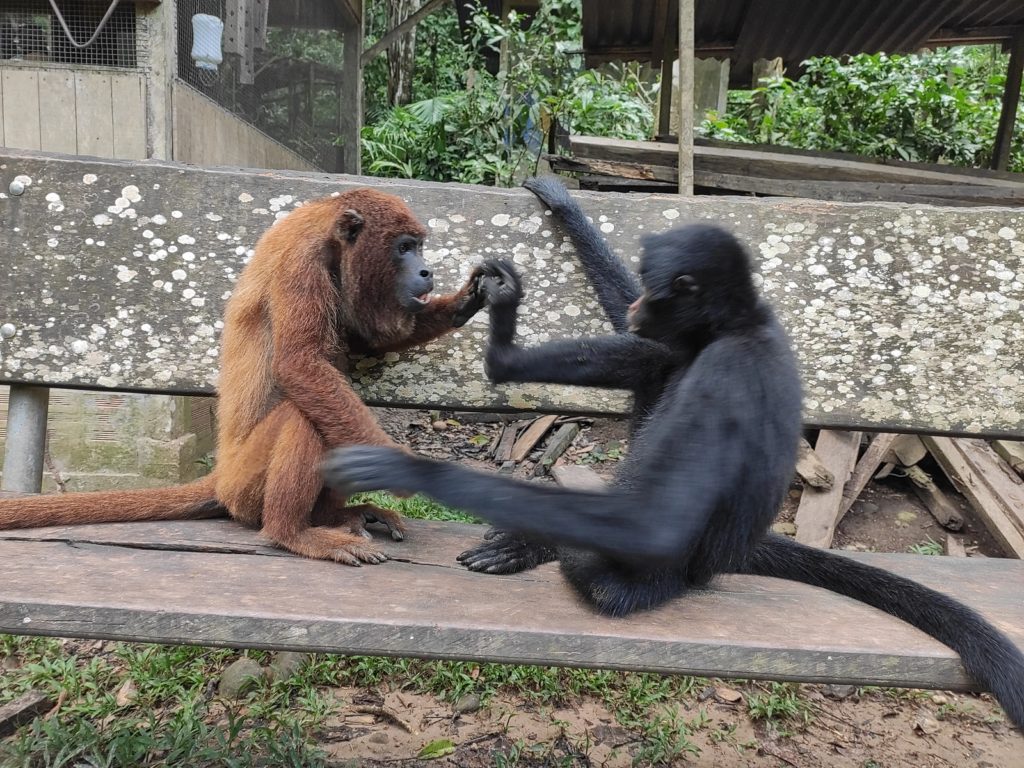
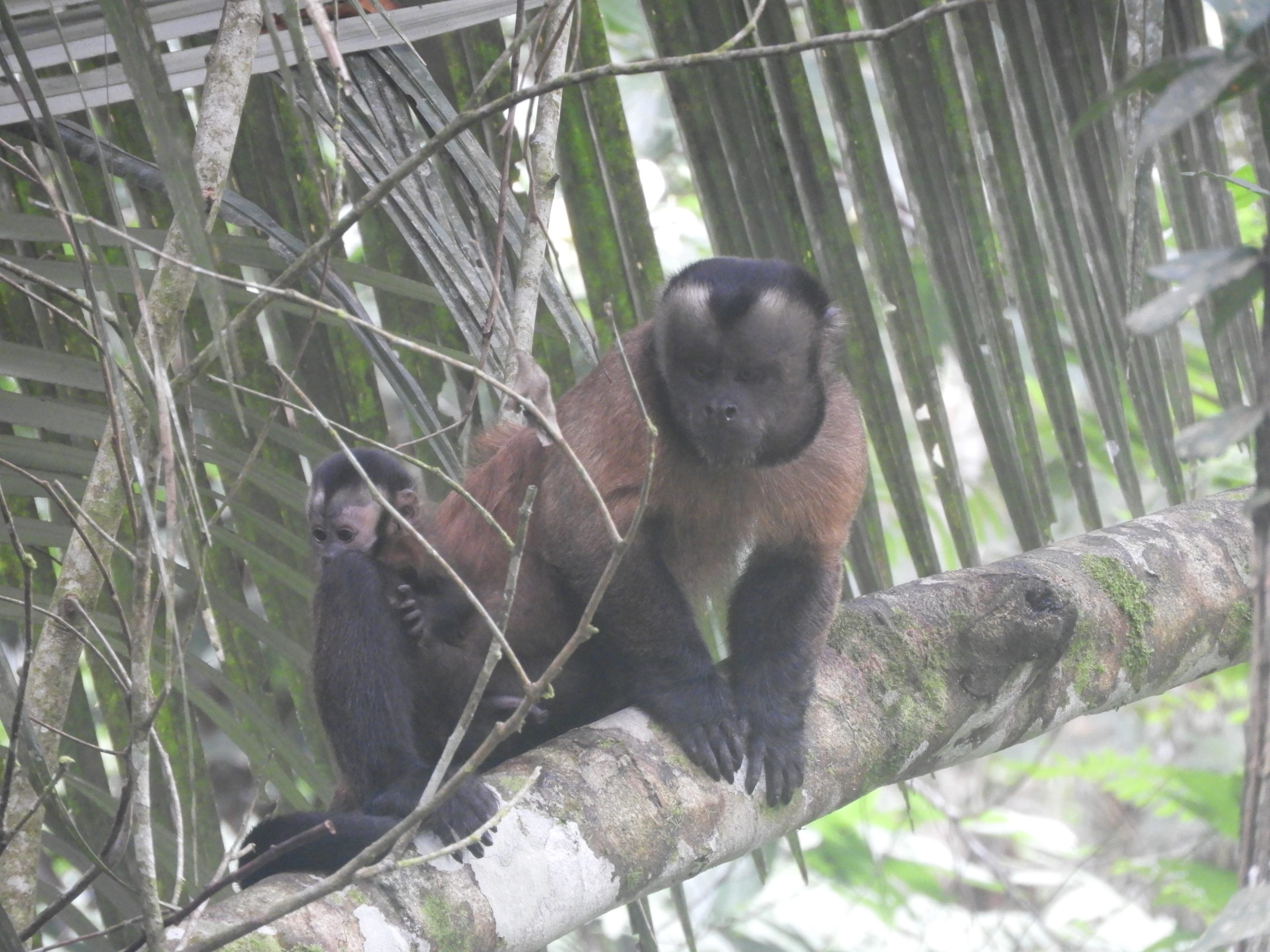
There isn’t a day goes past where each of our 12 Humboldt’s woolly monkeys living freelyaren’t sighted enjoying the security and sustenance made available to them at Esperanza Verde. We have 5 males and 7 females living semi wild at Esperanza Verde. Some have been with us already for almost 5 years, like the three now adult females; Chiquita, Lupa and Samara. Chiquita has conquered an episode at the clinic during that time of infestation by no-other than Prosthenorchis Elegans (the nasty parasite we mentioned earlier). She survived and thrived to the beautiful and strong female she has become.Every monkey develops different habits and characteristics and it is incredible to watch their interactions within everyday life. Lumisha, the youngest of the bunch, has gone from a juvenile monkey who was constantly attached to Lupa, to now being independent and is often seen playing with the other young monkeys. Monano, as the alpha male, is a calm male and seems to have a good grip on his group, while he has also accepted Moyo, the male with only half a tail, more and more in the group

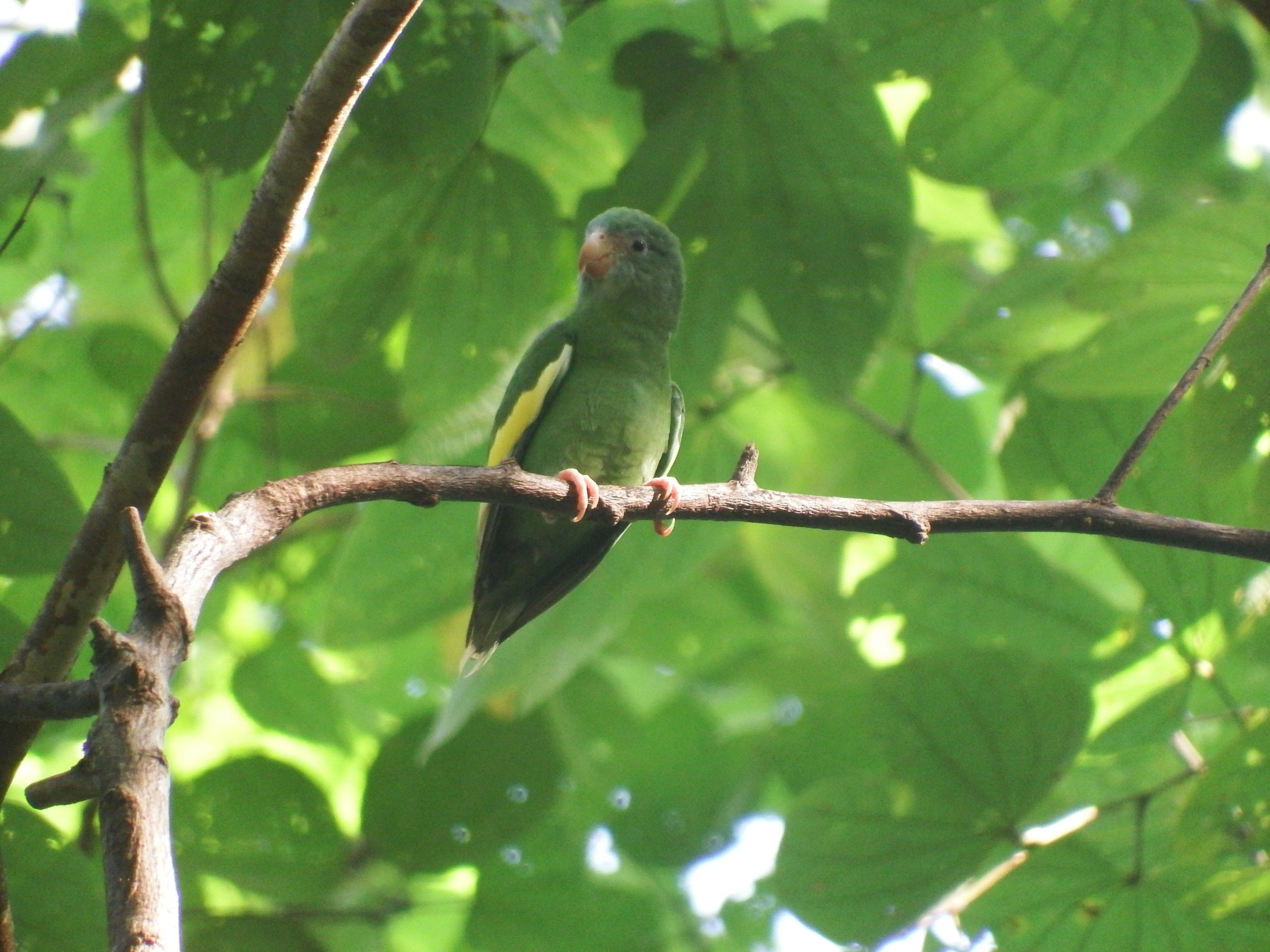
This month we guided the release of the parakeets in Tupak. They were first caught, deparasited and assessed for their possible release. These parakeets arrived in very bad condition, with many of them missing their important flight feathers. All birds grow new feathers and over half of these birds now have enough flight feathers to be released and have been transferred into a pre-release cage. There they were released after a few days of settling in, to enjoy the freedom they so richly deserved. After nearly nine months since their arrival, it is always fantastic to see these parakeets being returned to the wild.

SUST Animal Orphan Hospital

Moira’s(Ma’s night monkey) stay in the SUSTOAH appeared to be going in the right direction. Her weight was stable and appetite was as it should be. Unfortunately, Moira’s condition deteriorated quickly and she succumbed to the effects caused by the parasite Prosthenorchis Elegans. As we have mentioned this parasite before, it is a huge problem as it is transmitted through the consumption of cockroaches and other beetles that eat infected faecal matter. As these animals are freely living all over in the jungle it is hard to treat as the re-infestation rate is very high. So far there is no treatment that can cure them from this parasite, but we keep looking and investigating.
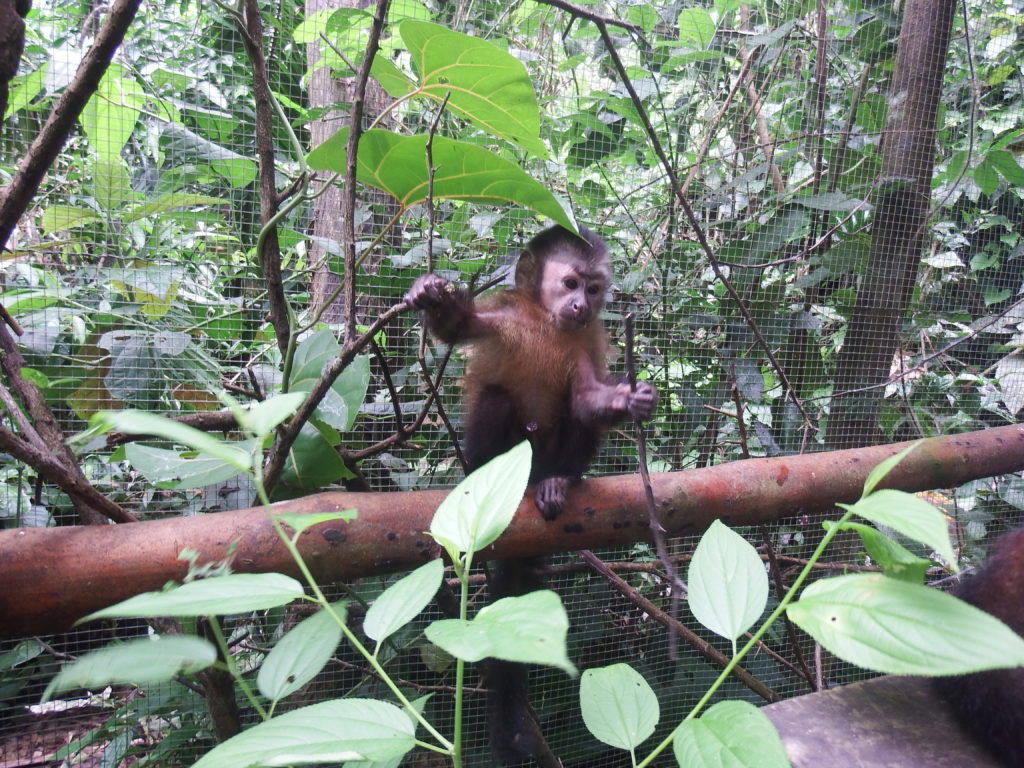
While the clinic is most of the time empty (a good sign as we don’t have many sick animals,) we still have a lot of work to do there. Puck and Olivia are still regularly examining faecal samples under the microscope and together (with Puck doing most of the practical work) they make sure all resident animals get their regular deparasitation treatment and/or weight check. And of course all the daily milk and vitamin products for the outside living monkeys are prepared here.
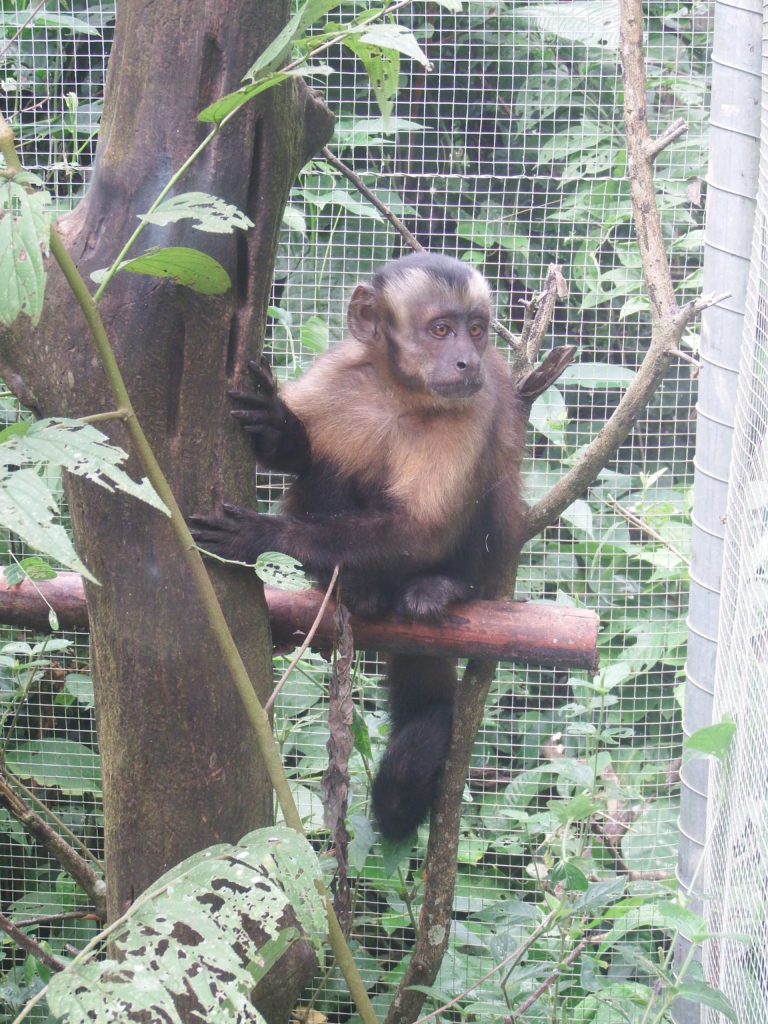
One of the benefits of having rain most days is that there is ample water available for the annual task of emptying and cleaning of the turtle pond. Turtle and tortoise “hunting” is always a volunteer favourite, and while cleaning was taking place it was a great opportunity to catch, weigh and deparasite our 14 yellow-spotted river turtles.

And as a surprise, while cleaning the pond, Geyler and Douwe came upon a wild dwarf caiman. After taking some data (weight, length) at the clinic, we put him back again. As he causes no problem, and he can come and go as he pleases (caiman are good climbers so the fencing that did not keep him out, would not keep him in neither), he can stay in the place he made himself home.

Construction and other

Last month we said farewell to Geyler and wished him well for the future. Thankfully his plans changed and he was able to stay for another month and now finished at the end of January. Douwe took this opportunity to cross another construction job off his everchanging list of things to do. This month saw the volunteer kitchen get an entire new roof. The roof was in need of repair due to not handling the elements (including having jumping monkeys on it on a daily basis) as well as expected. Needless to say, the new roof with the addition of some clear roof panels has made a remarkable difference to the kitchen, with internal ambient light being noticeably improved. And as the month progressed, Geyler, made another decision, to stay on, but not on a regular basis, but being gone for some weeks at a time to work at his land. So, all good for us, as we are happy to have him as much as we can, as new help in these days is hard to get.

Volunteers

Our two veterinarian students from Lima, Diego and Renzo sadly had to leave after just a short experience with us. And what a difference it made having two extra sets of hands after so many months running on the bare minimum. They were very enthusiastic and quick and eager learners, we were sad to see them go, but hopeful we will see them back again. Especially Marlon and Anishka (the female otter) will miss them.

Esperanza Verde is now back to operating with three volunteers and the family, but rest assured it is business as usual with every animal getting the essential care and attention.

🎆 New Year

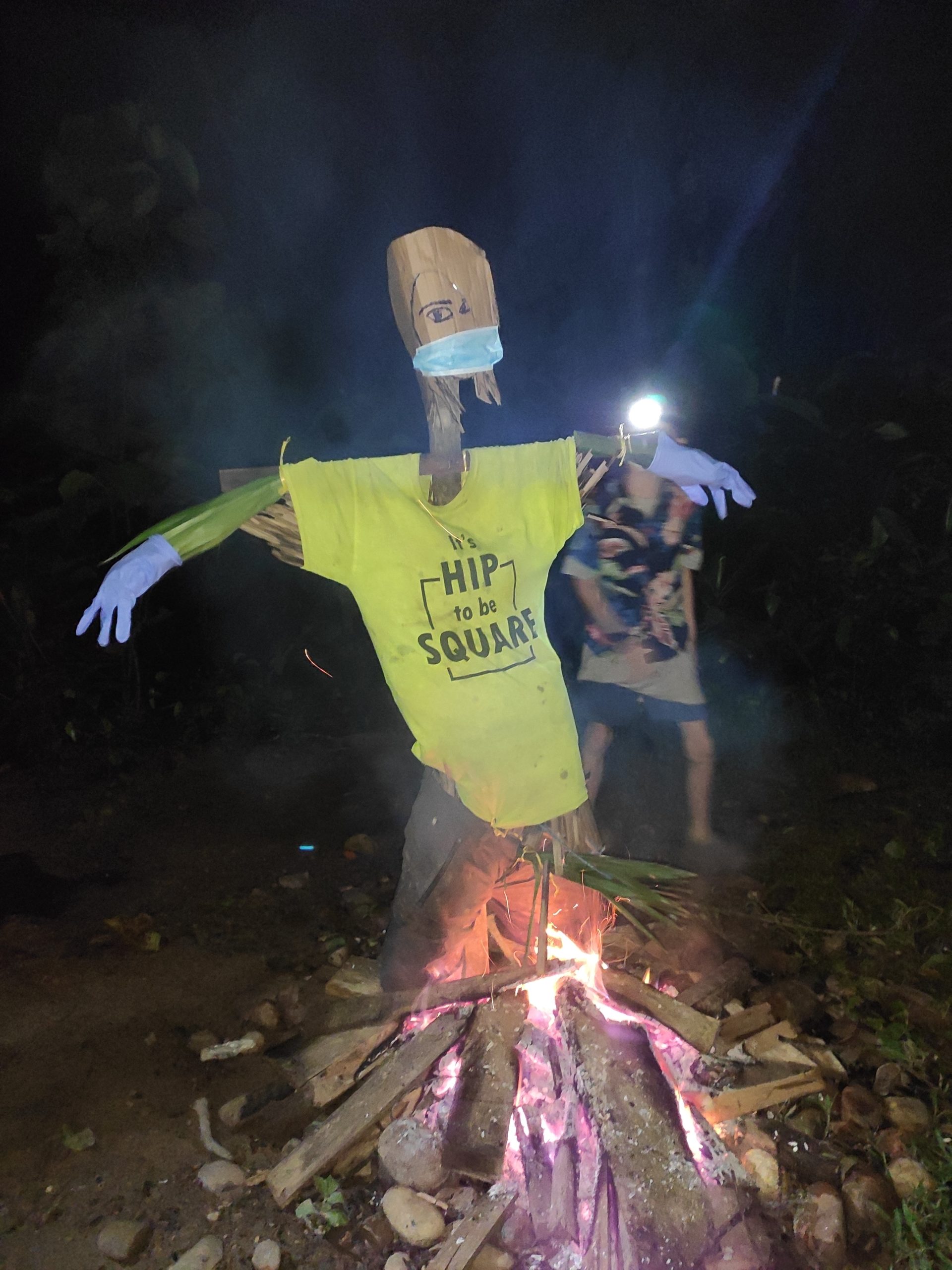
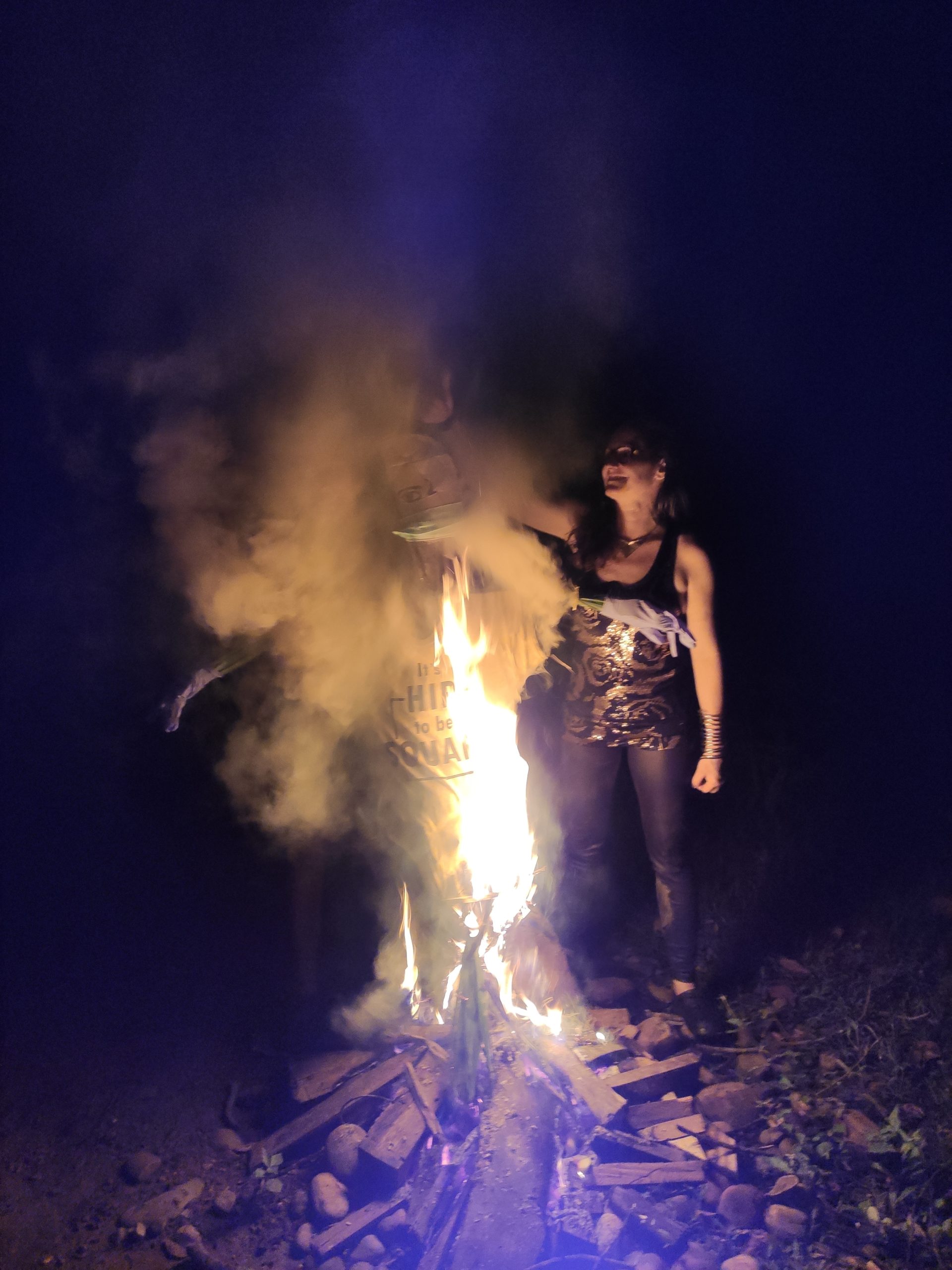
The New Year was marked in with typical Esperanza Verde flair. The rain parted just long enough after quite a significant downpour just till 23:30, to allow for a bonfire, a burning effigy (traditional burning puppet) and some fireworks down by the river away from the animals. Although anticipated village guests were unable to make it because of the rain,an amazing night of music and comradery was had by all.

December 2020 Newsletter

Another year has passed by, and although challenging at times, we can all celebrate and reflect the successes that have been achieved. Esperanza Verde has been very fortunate to have the support of so many people worldwide, for which we are all so very grateful. To close the year we had a nice meeting of EVI digitally, even represented by EV in Peru! With sustained support Esperanza Verde can continue to rescue and rehabilitate animals removed from their natural habitat.
Animals
This year, we are not only extremely grateful to the Dutch foundation St. Jaap van de Graaf for financing for the third year the largest part of the daily animal costs, but also to all the people who donated through out of this year through the foundations which help Esperanza Verde. With your money we have been able to cover all the daily food costs for the animals during this year. Thank you all for helping us out during these hard times.
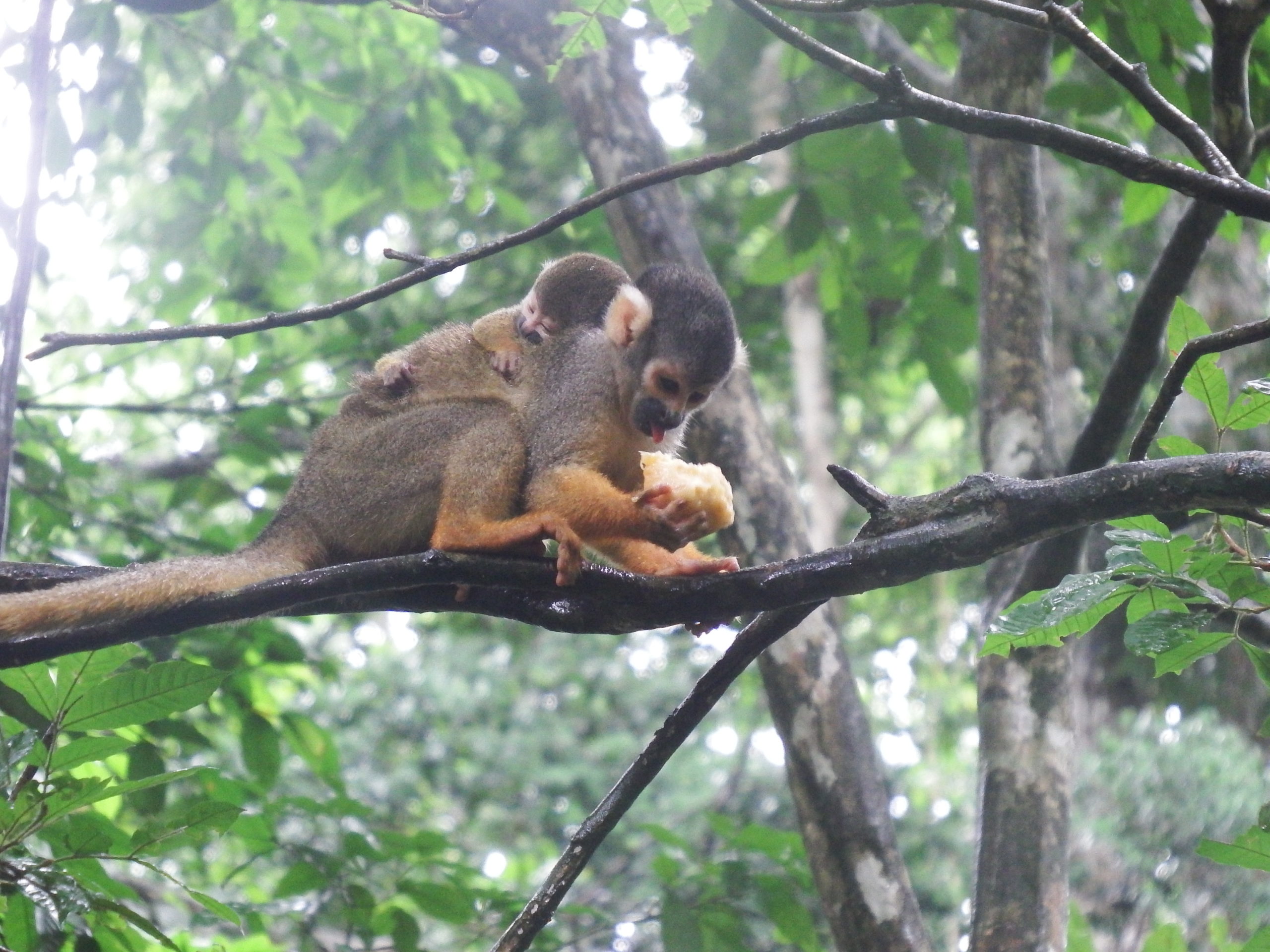
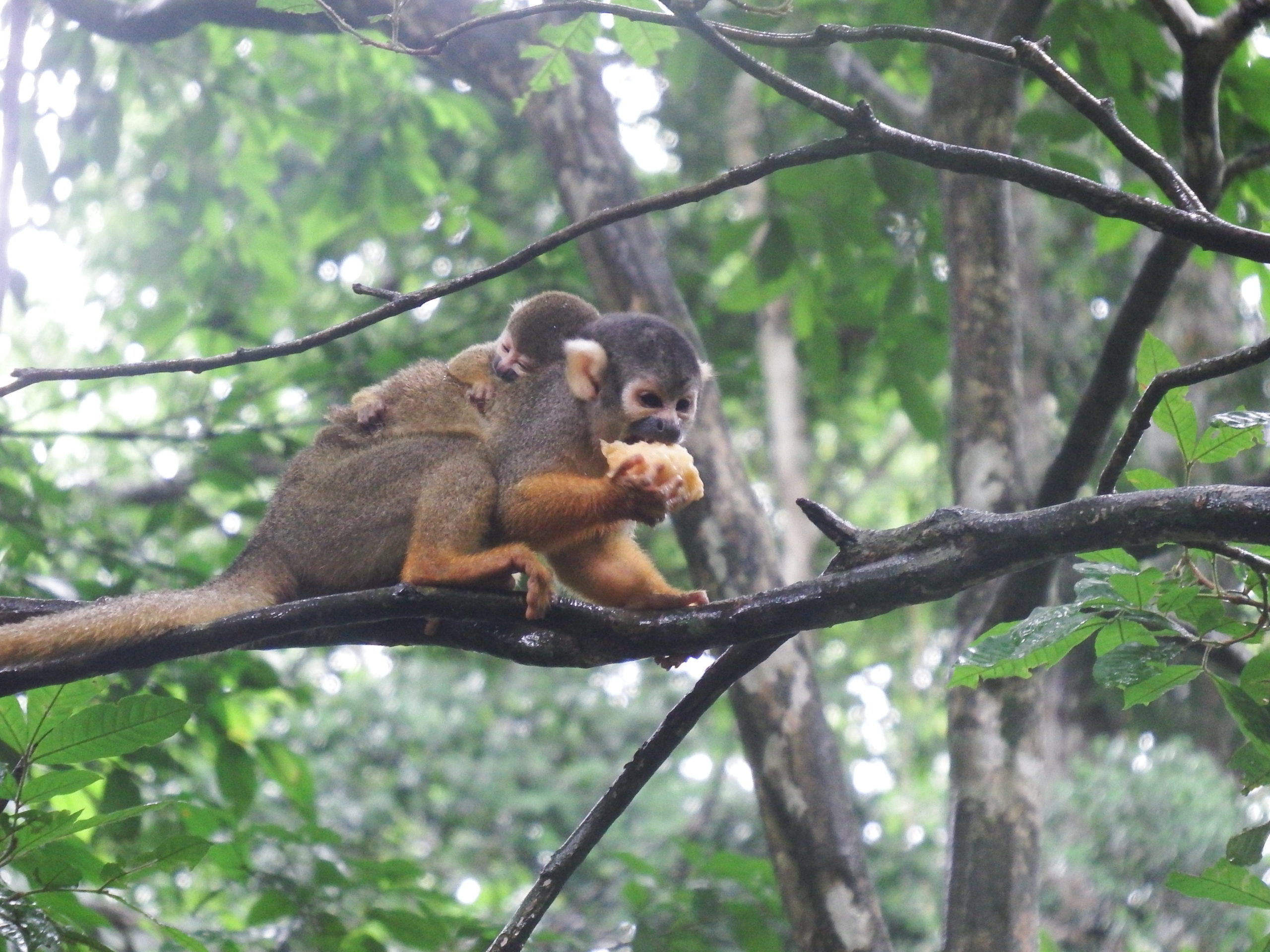
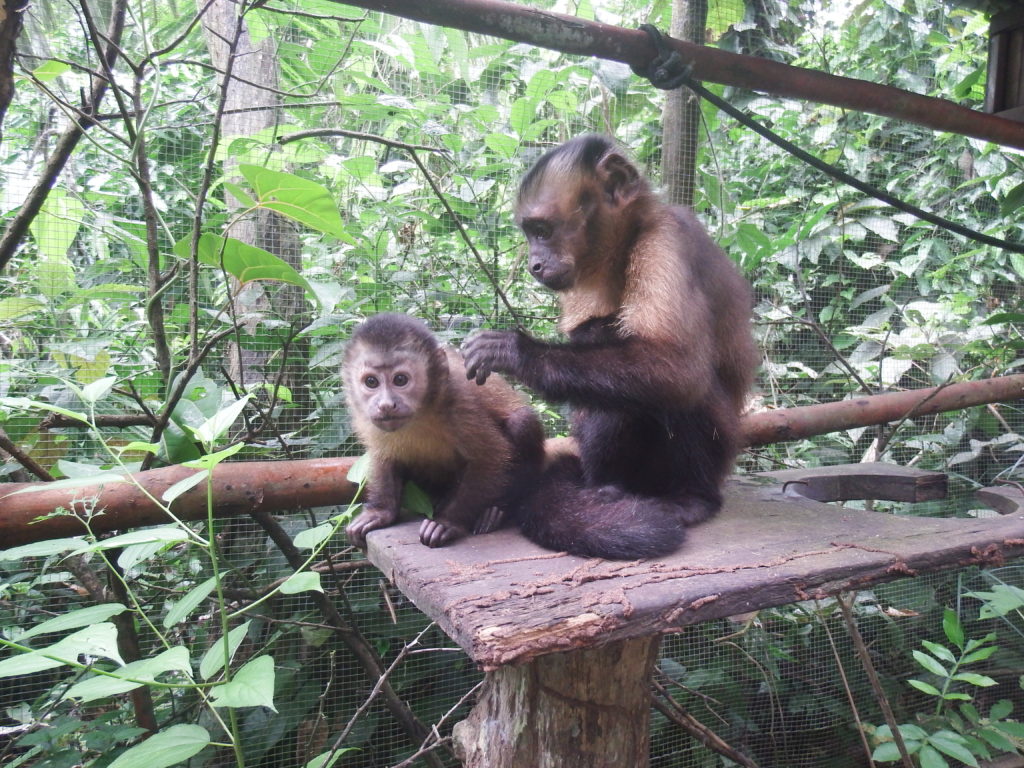
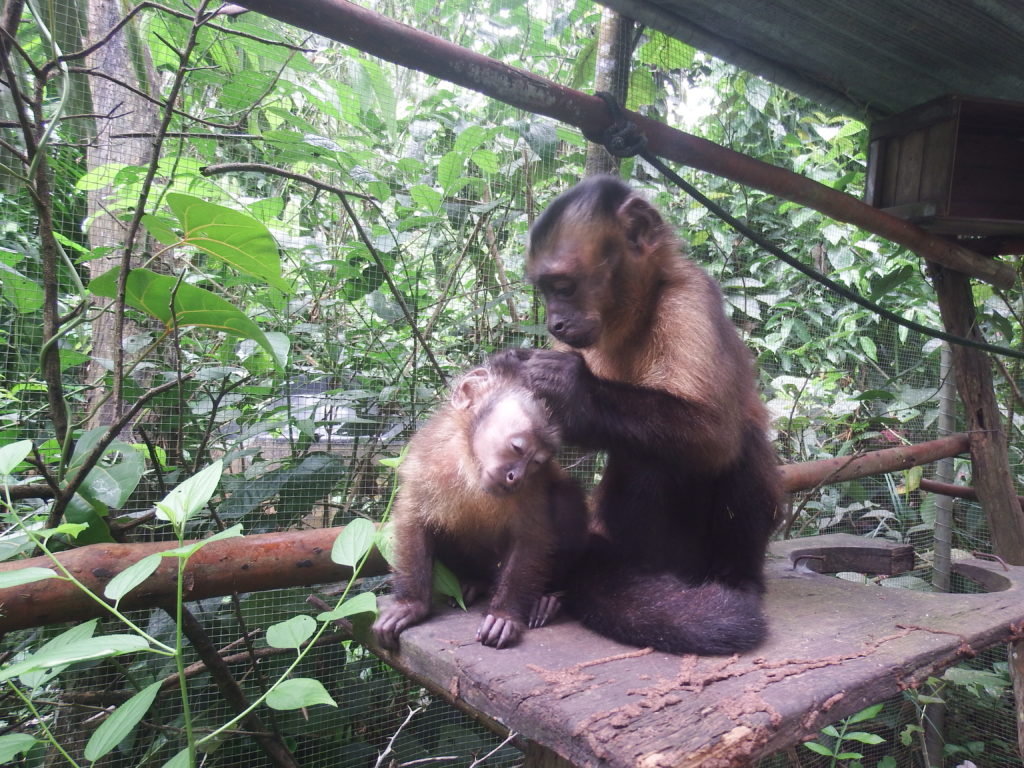
It is always rewarding to see new offspring being born and this December certainly was not a month to disappoint. Rioma (large headed capuchin) was the first of our released troop of capuchins to show off her latest baby. Never to be outdone, we also welcome three new squirrel monkey babies. The new monkeys are seen most days along with the other capuchin monkeys frequenting one of the three elevated feeding tables.

Kohana (our oldest female peccary) gave birth to two baby peccaries.

Life within the family house has gotten slightly less hectic this month with Anishka, our female neotropical otter, now becoming slowly accustomed to living in the newly refurbished Tiliku enclosure. Douwe has modified the pond allowing for an underwater exit and entry point. This allows Anishka to come and go at will without the concern of other animals entering. Although having not yet developed the skills to hunt for herself, this gives her very few restrictions while still having the security of daily feedings and a safe sleeping area.
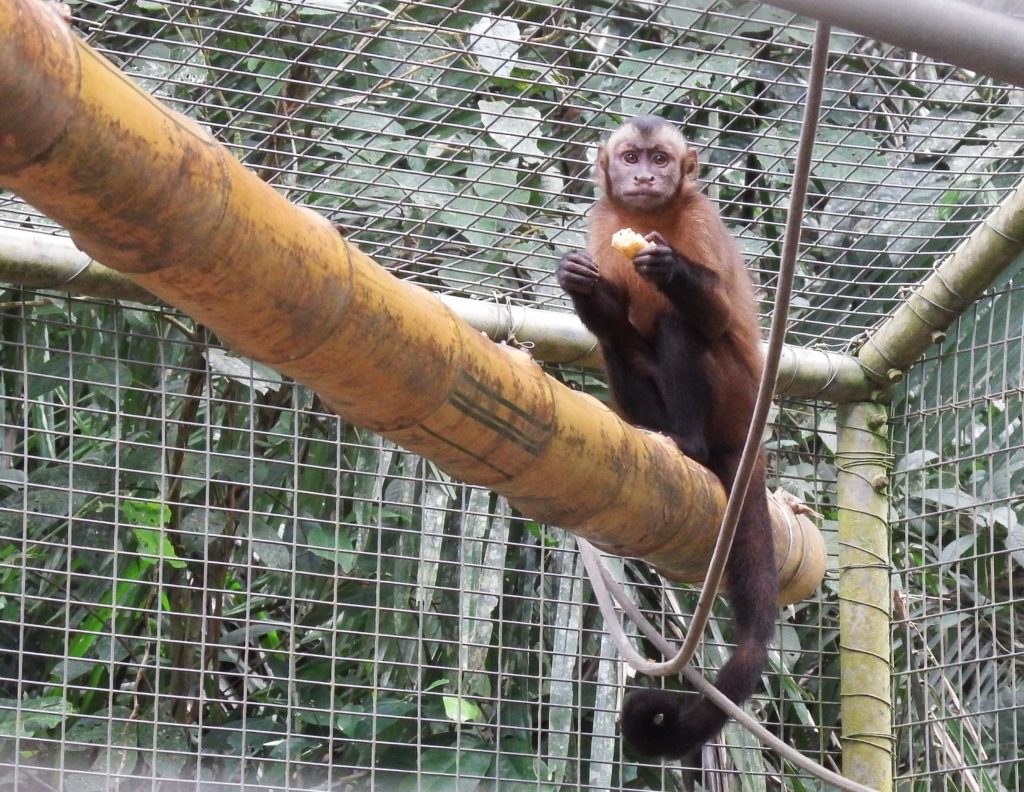
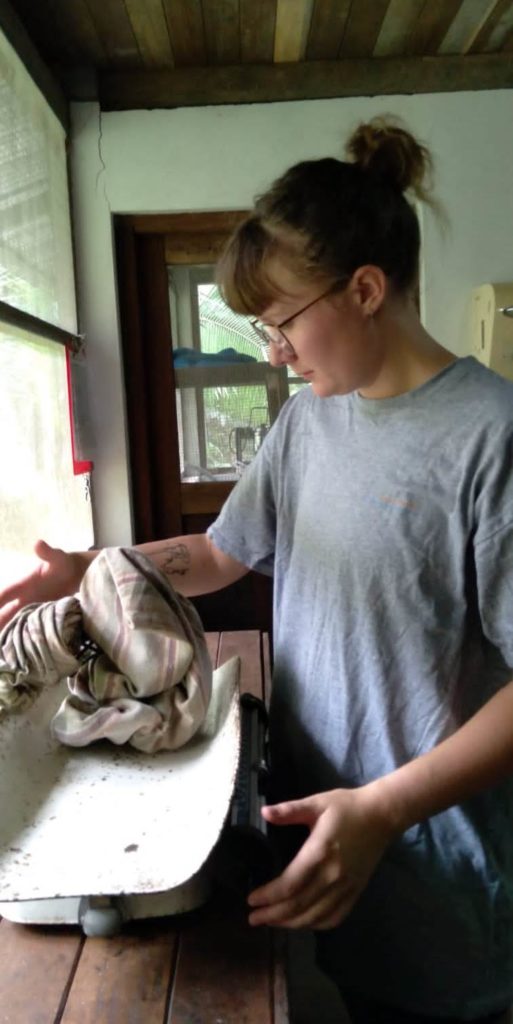
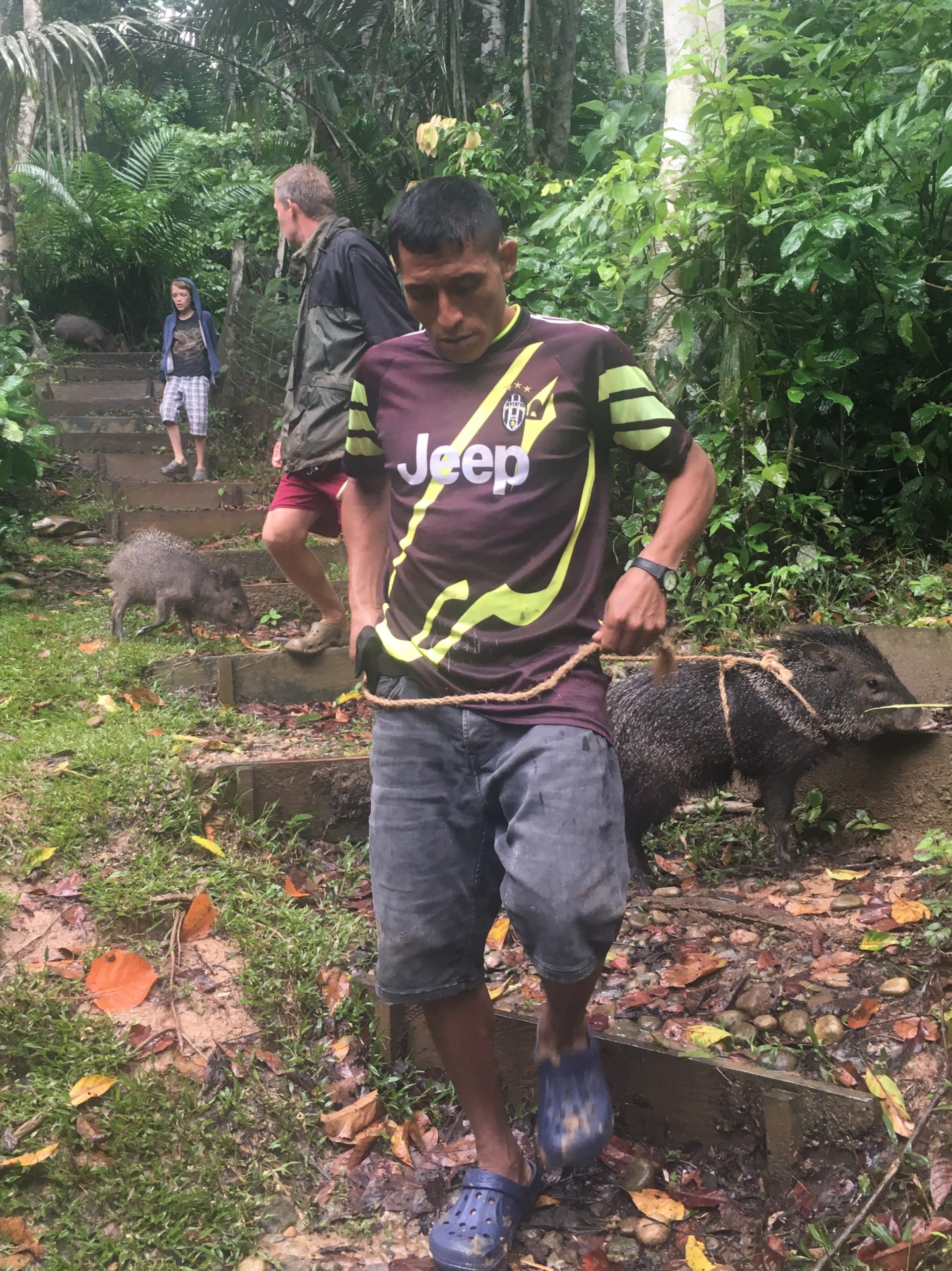
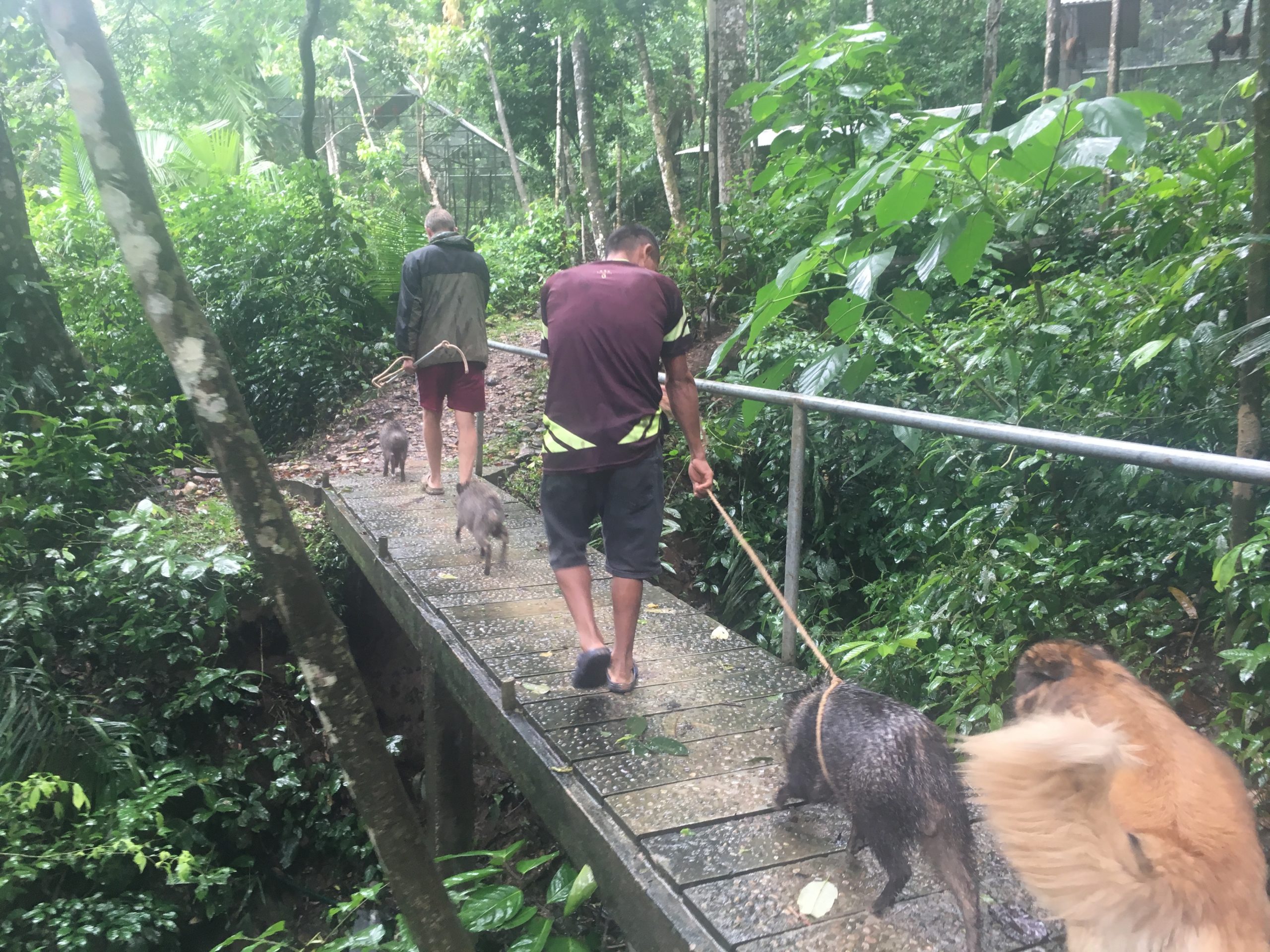
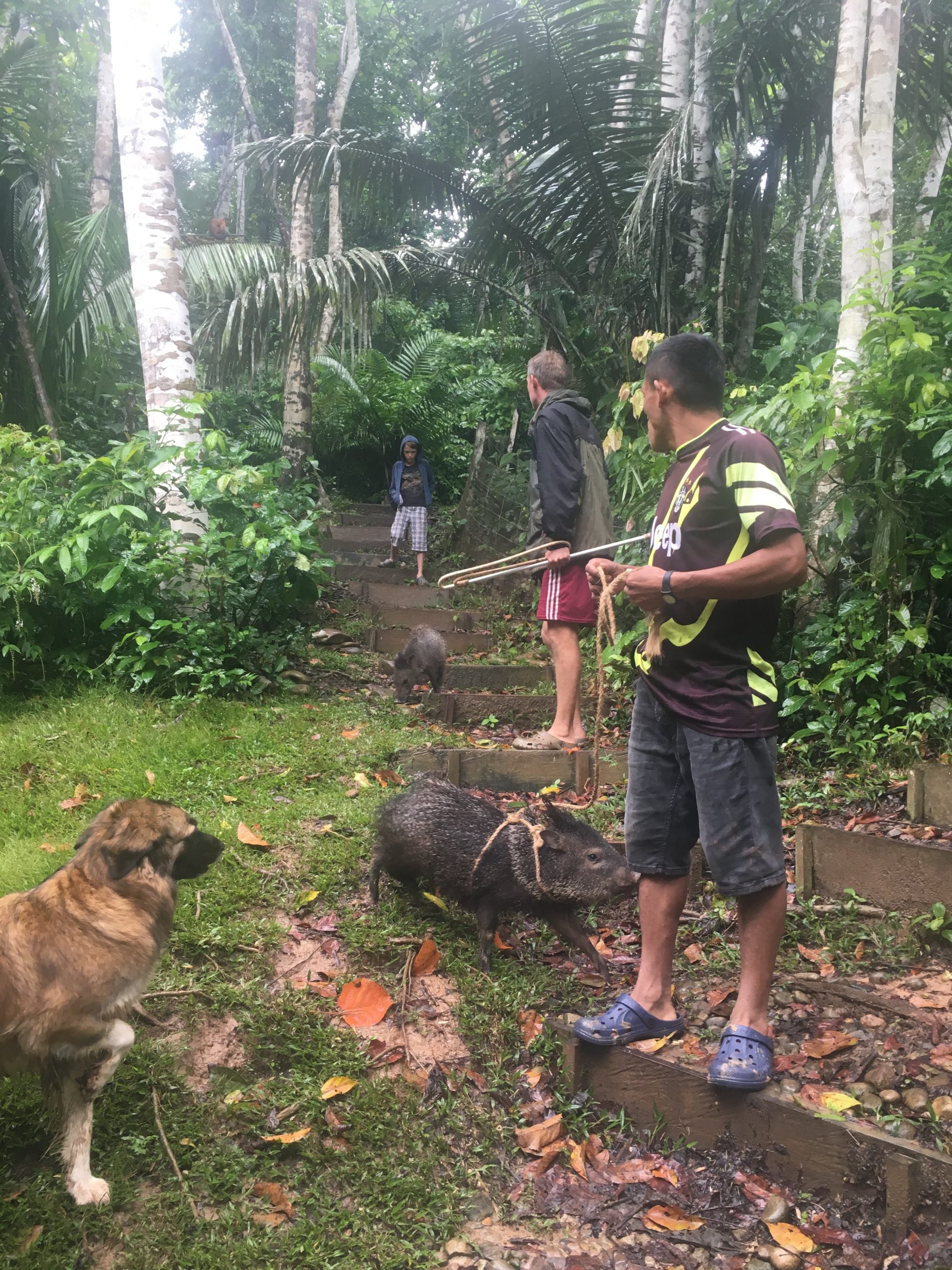
Maccus, Conan and Alaric (juvenile male white collared peccaries) were taken for a walk to the new peccary enclosure month by Douwe and Geyler. When moving animals Esperanza Verde always endeavours to move animals in the calmest way possible. And if you were fortunate enough to witness the three peccaries walking from one end of EV to the other you would have been amazed at how relaxed they all looked. All three peccaries are in the newly completed enclosure where they are being given time to settle in and familiarise themselves with their new territory. Then the ‘old’ group of 7 will be brought closer with a fence separating them from the three new peccaries, before bringing them together. New introductions can be complicated and every necessary step is being taken to ensure the introduction runs as smoothly as possible.
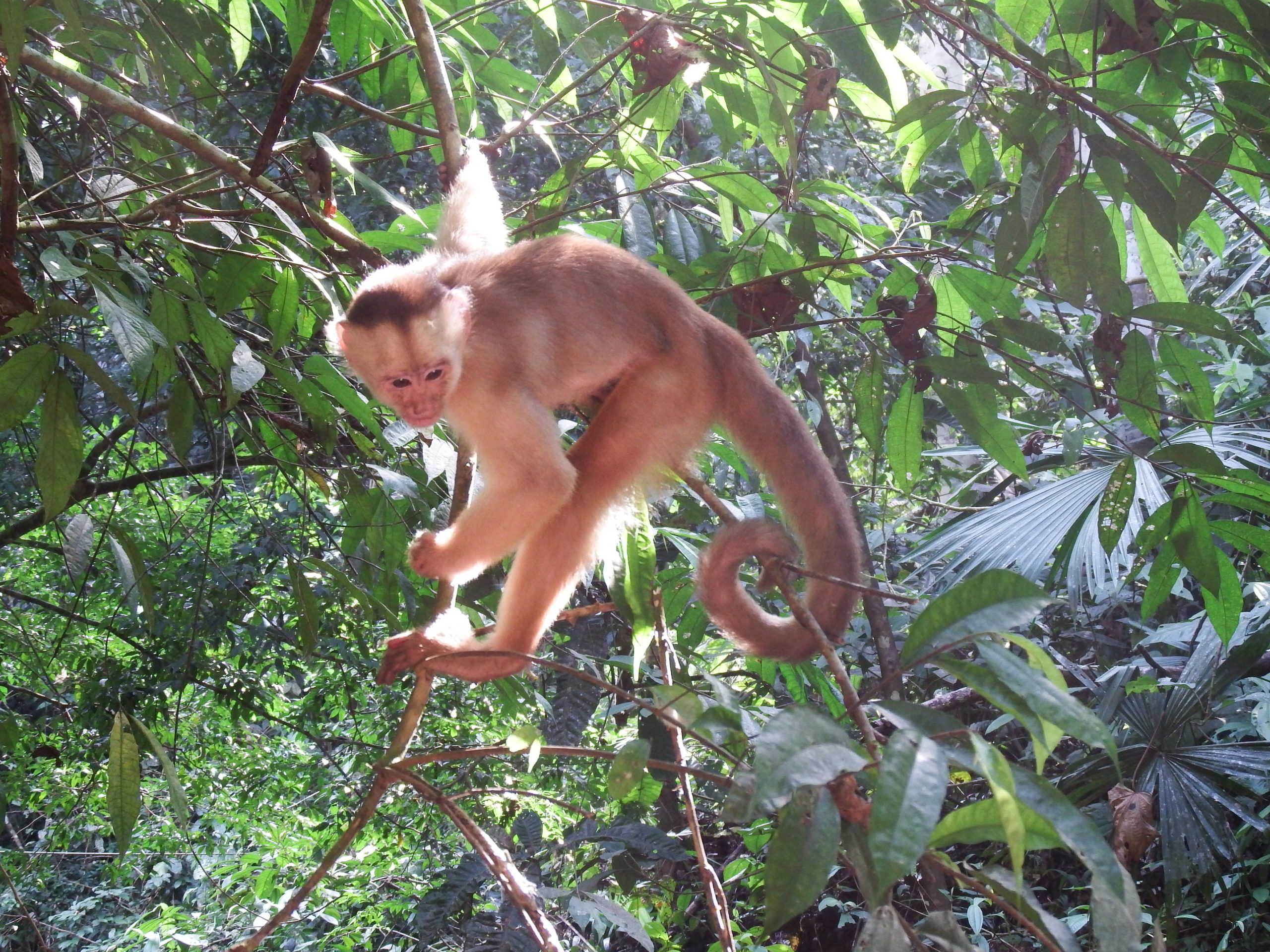
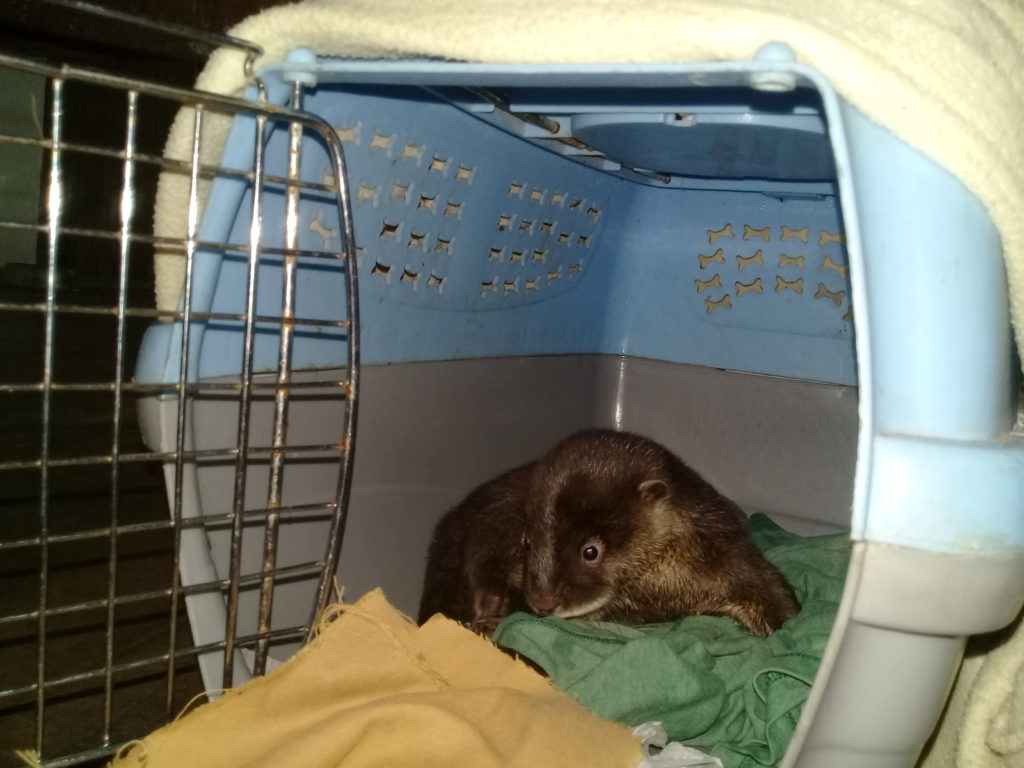
SUST Animal Orphan Hospital

Kira(Ma’s night monkey)had a brief stay in the SUSTOAH after being found with an injured leg. After a treatment of antibiotics to treat the infection Kira was back into Lucia enclosure where she remained until she had fully recovered and was let out again.

Our resident saddleback tamarin monkey Tonka was caught as he did not look well. After a check-up in the clinic, and established a problem due to the problematic parasite Prosthenorchis Elegans, we enclosed him in the Lulu enclosure for treatment. Unfortunately, the next day Tonka was found lying in his cage deceased. On necropsy it was discovered one of the worms had perforated his intestine. This parasite is a huge problem as it is transmitted through the consumption of cockroaches and other beetles that eat infected faecal matter. As these animals are freely living all over in the jungle it is hard to treat as the change on re-infestation is very high.
And while Kira went out, we admitted one of our other female night monkeys living outside, Moira, to the clinic. As we suspected her of having to deal with the same parasite that caused the death of Tonka earlier, we started her treatment quickly. Our small lab confirmed the diagnosis, and so far she has been reacting well on the treatment. She will stay some time to ensure hopefully a full recovery and the necessary weight gain. Her partner Maru (both were living nearby the manager house) will have to do without her company for now.

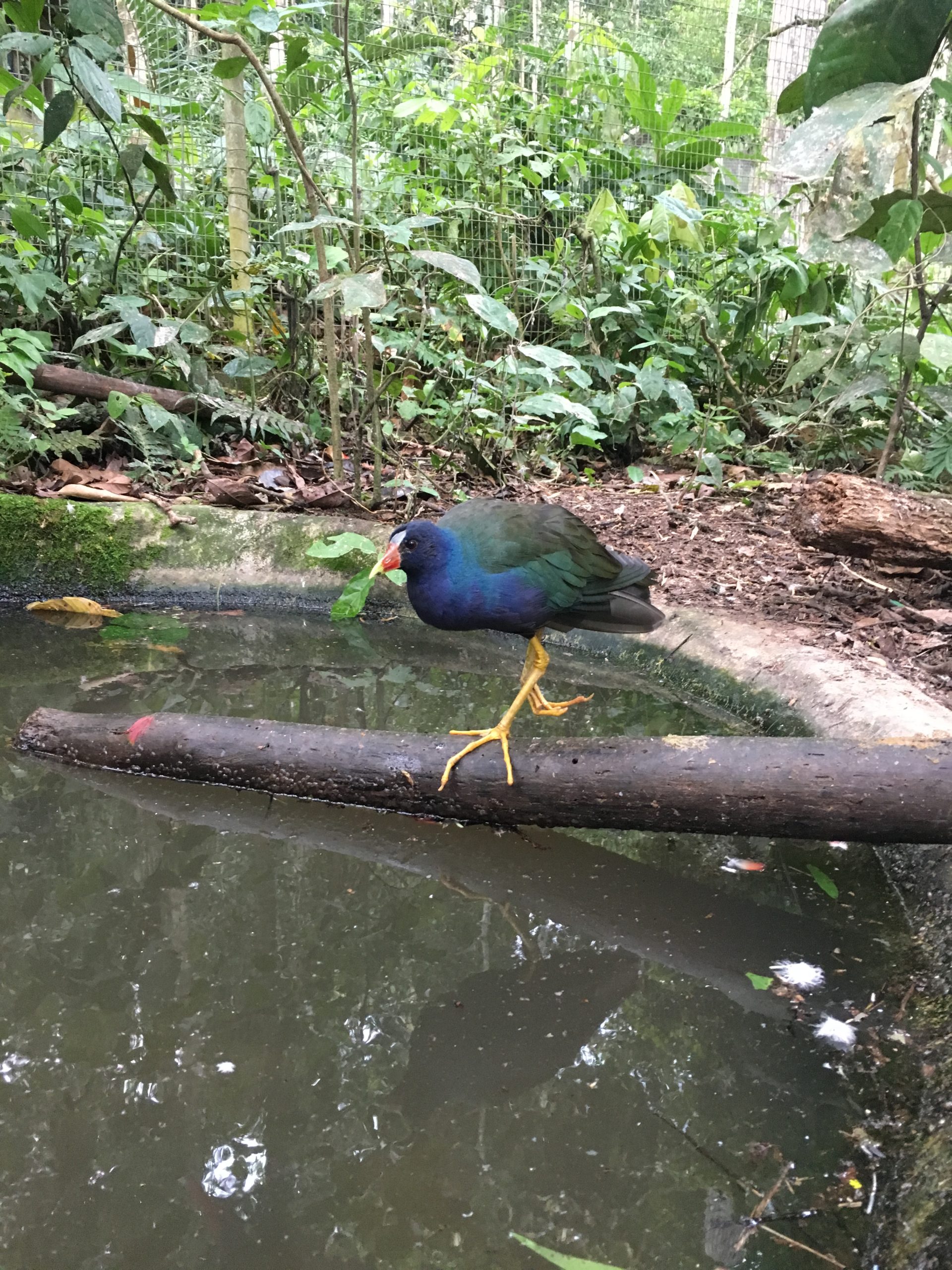
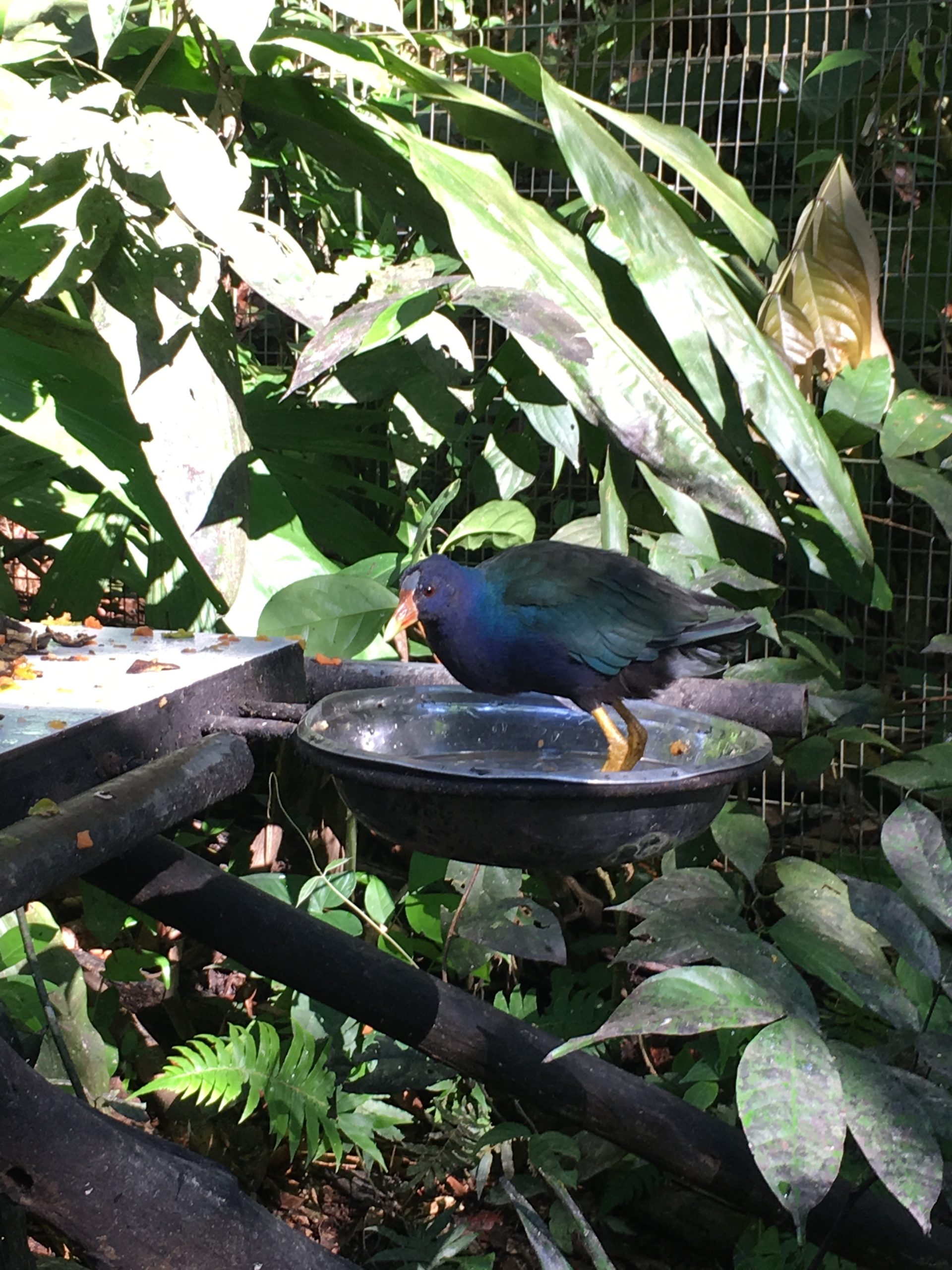
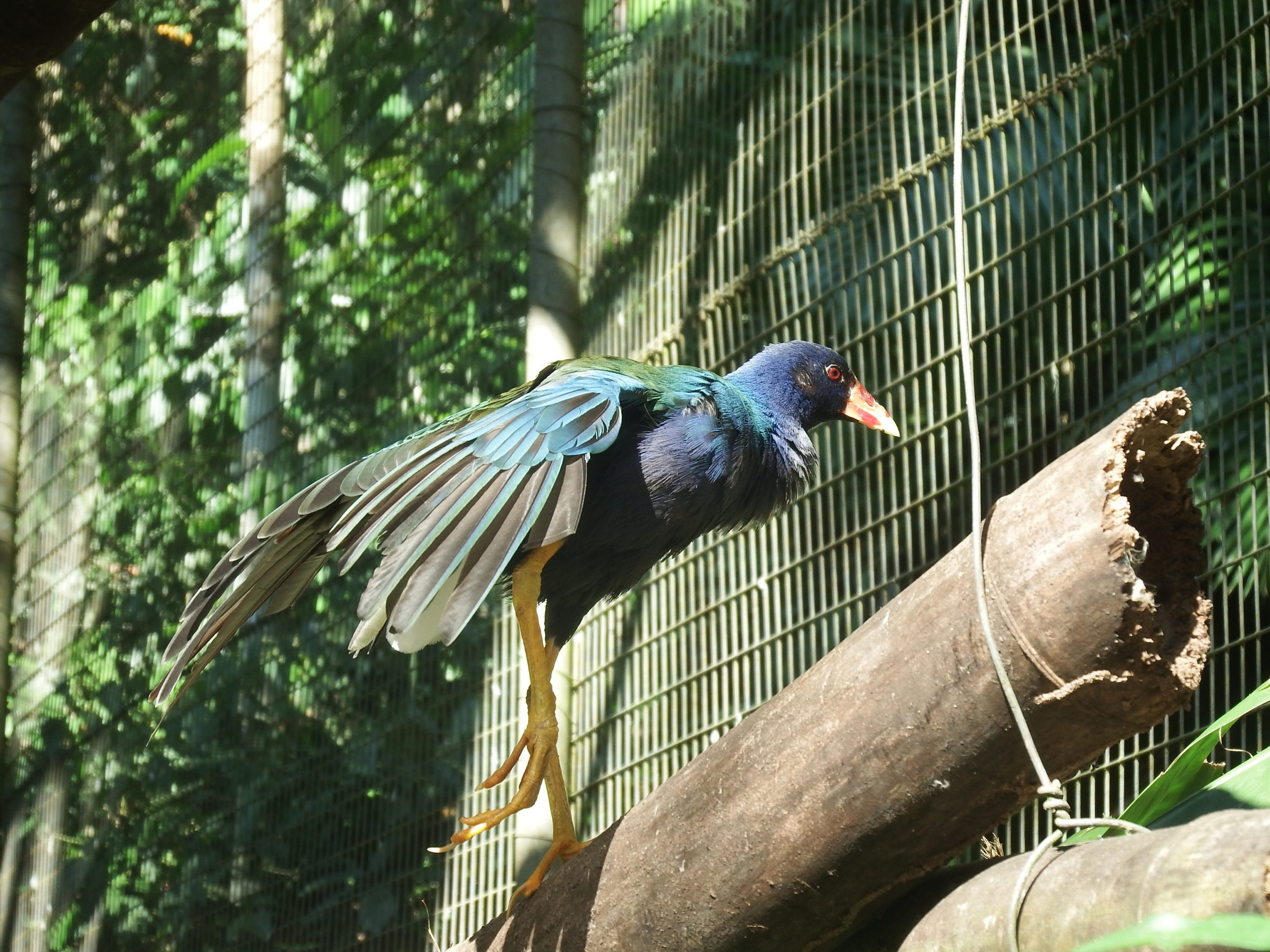
Rainy season is coming and this does not always come well for all. It sometimes comes with a lot of rain and cold all at once. While entering the Pichu (aviary) enclosure, Koru, our purple gallinule, was found in the pond, exhausted but still breathing. Normally he had no problems coming out of it, but we suspect that, with the heavy rainfall during the night, this time he had not been able. We tried our best to warm him up and give him extra support as quick as possible, but after several hours he succumbed of the effects of the near drowning syndrome.

Construction and other

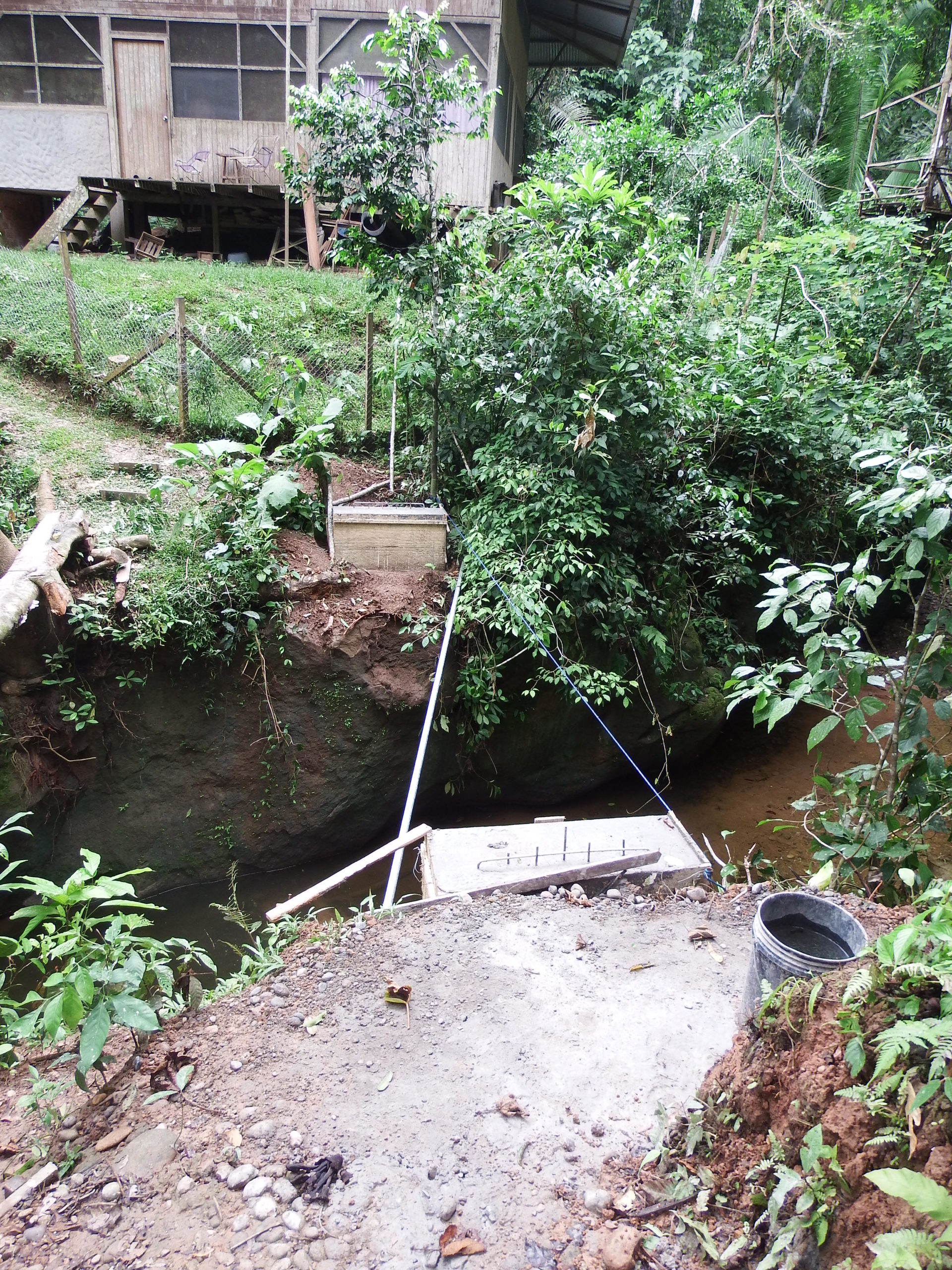
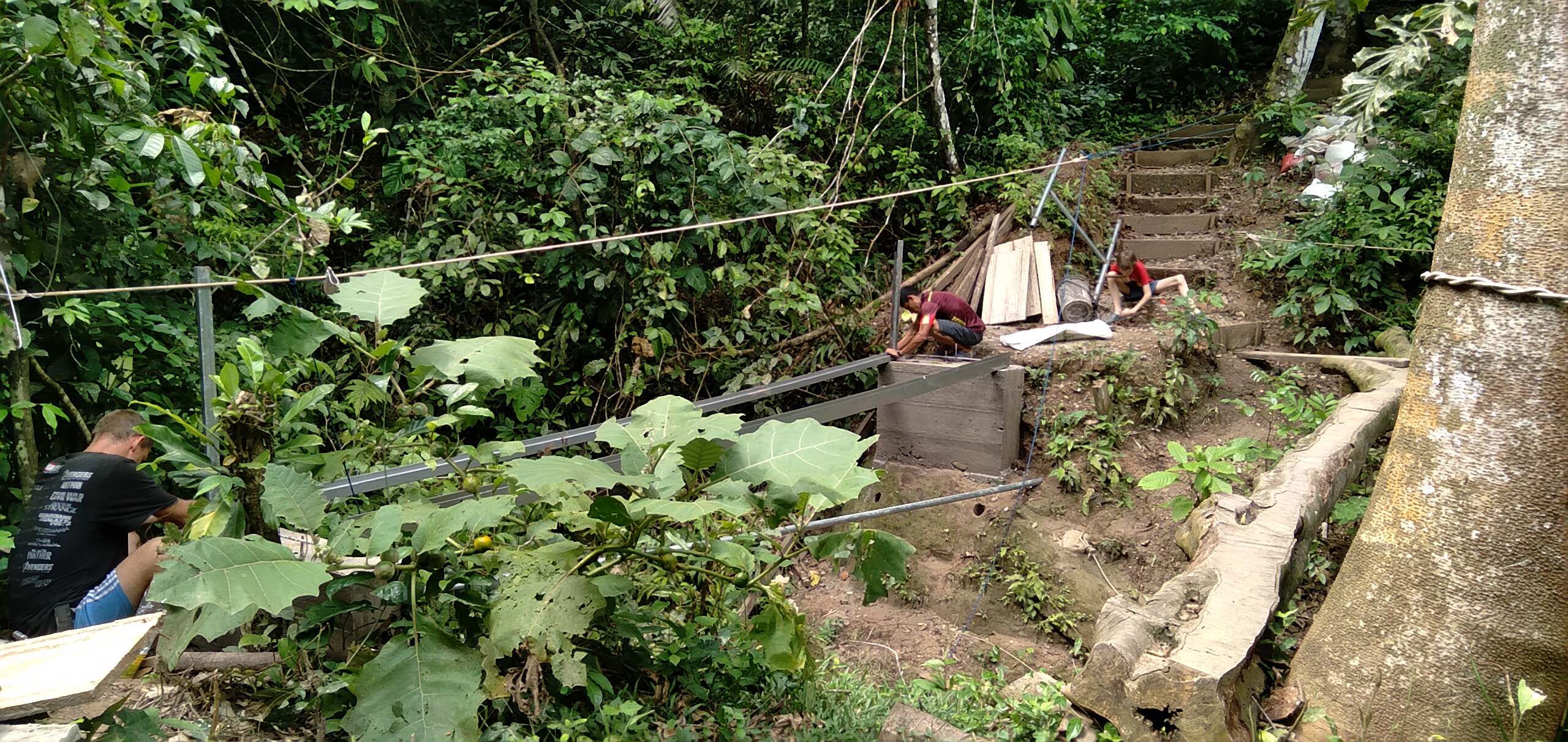
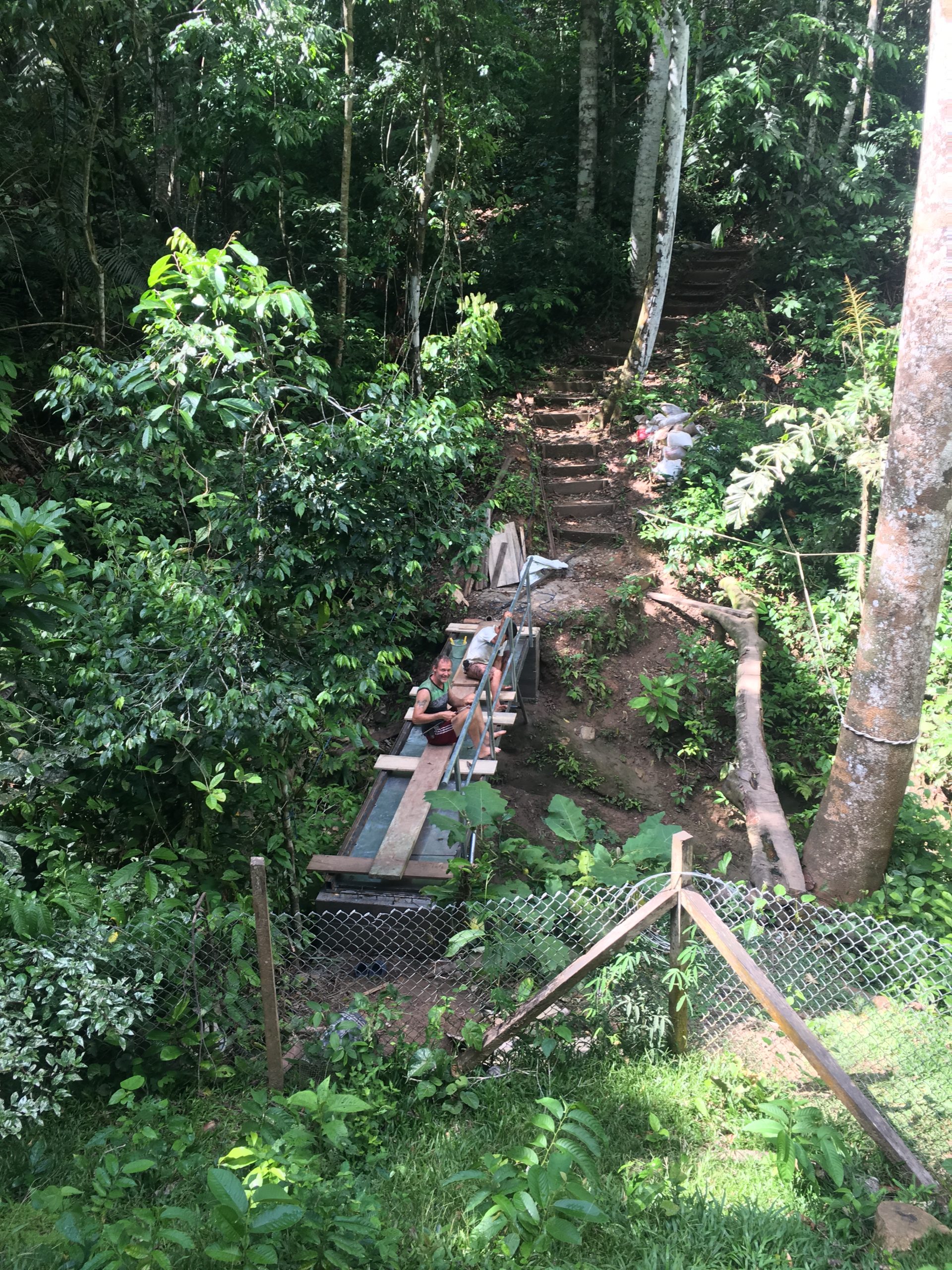
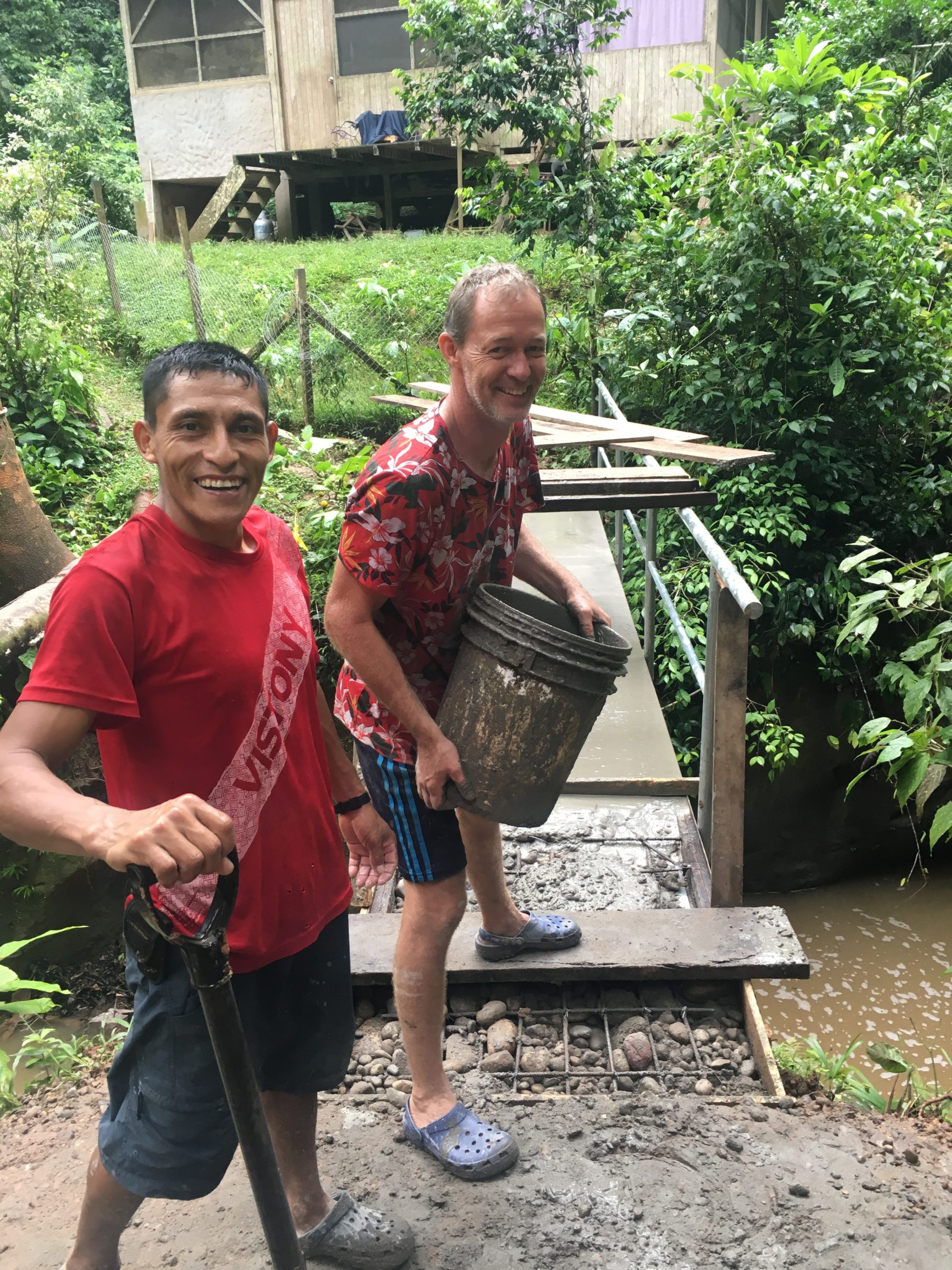
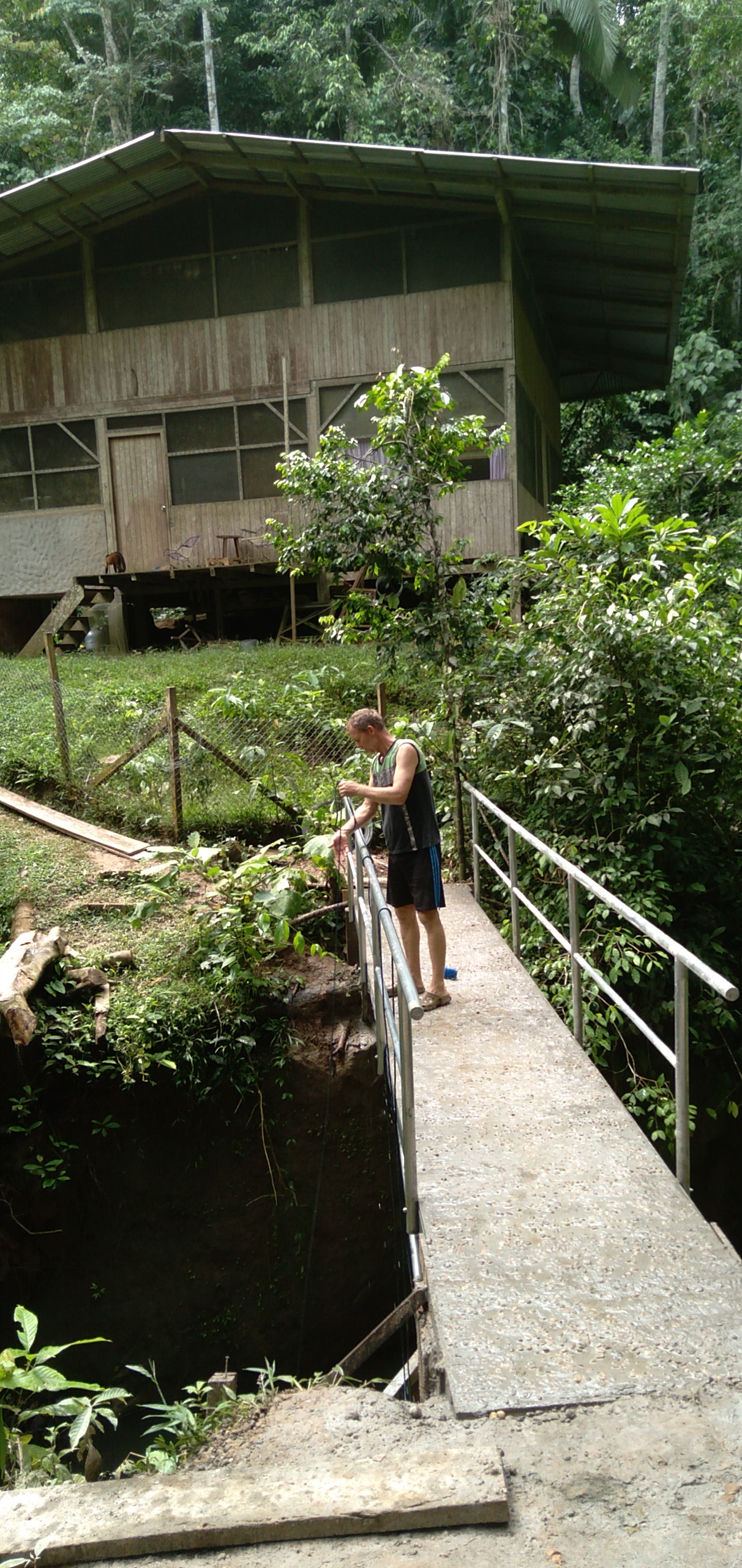
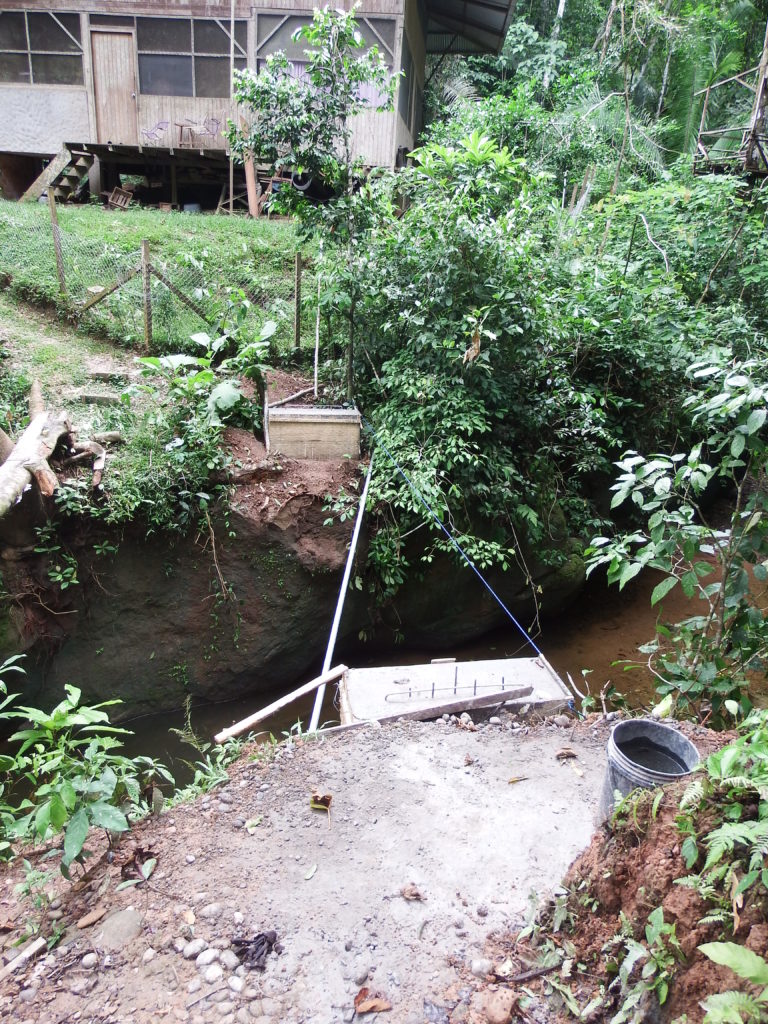
Another quality construction came to completion this month. The new bridge spanning the gap between Esperanza Verde and the Family house is finished and is truly a credit to both Douwe and Geyler. Douwe’s design, along with all the work completed prefabricating ensured that once the bridge placement was started in earnest, everything came together incredibly efficiently. Geyler and Douwe took only a matter of days to install all the frame work, pour the cement and complete any further excavations as required, ensuring even in the heavier rainfalls, the family house will always be accessible.

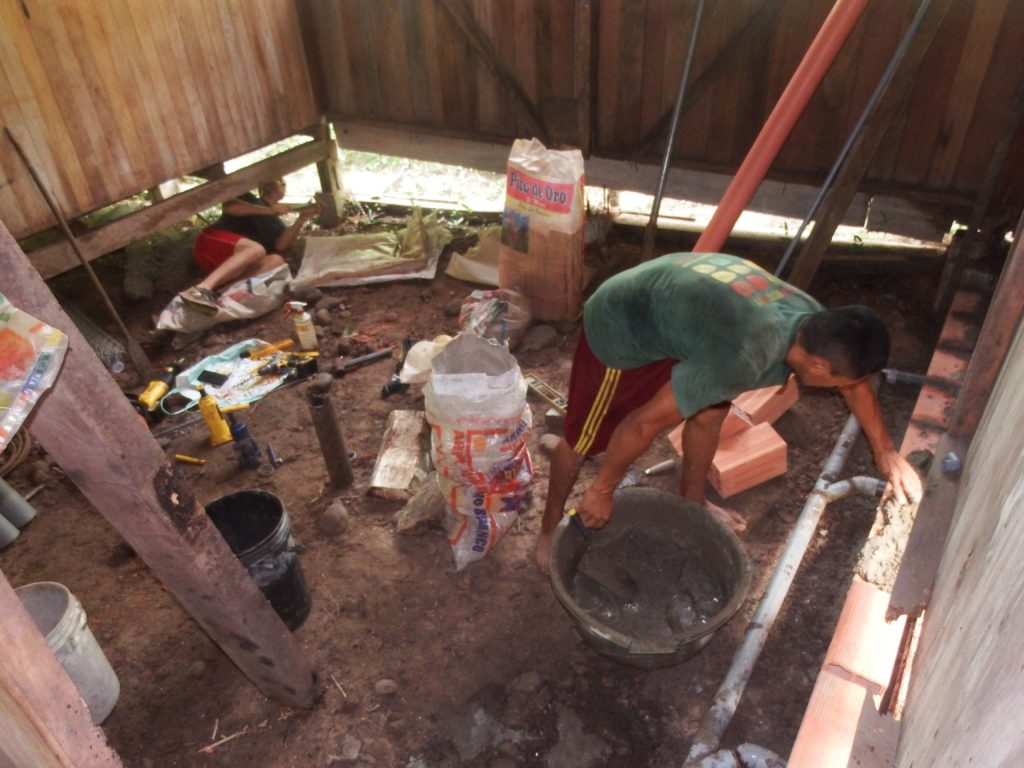
Both the new peccary enclosure (see November Update) and the bridge were completed as projects of urgency. Towards the end of December work was now able to continue on the extension to the bathroom in our volunteer house. Geyler has started the rendering over the block walls ensuring an even surface ready for further installations as they come ready.

Sadly, December is the month we say goodbye to Geyler. Geyler is leaving EV to focus on his own plantations and endeavours. After six years, Geyler has been a reliable and invaluable team member who knew so many different facets of the day to day running of Esperanza Verde and was always available to help with whatever required his attention. We are sure all previous volunteers and visitors to Esperanza Verde will join us in wishing Geyler well. We will miss him.

Volunteers

Joining the team for the next two months is Sandra, a returning volunteer helping out while her job is on hold due to Corona, from Lima, Peru. And just before New Year we were joined by two veterinarian students from Lima, who will help us out throughout January.

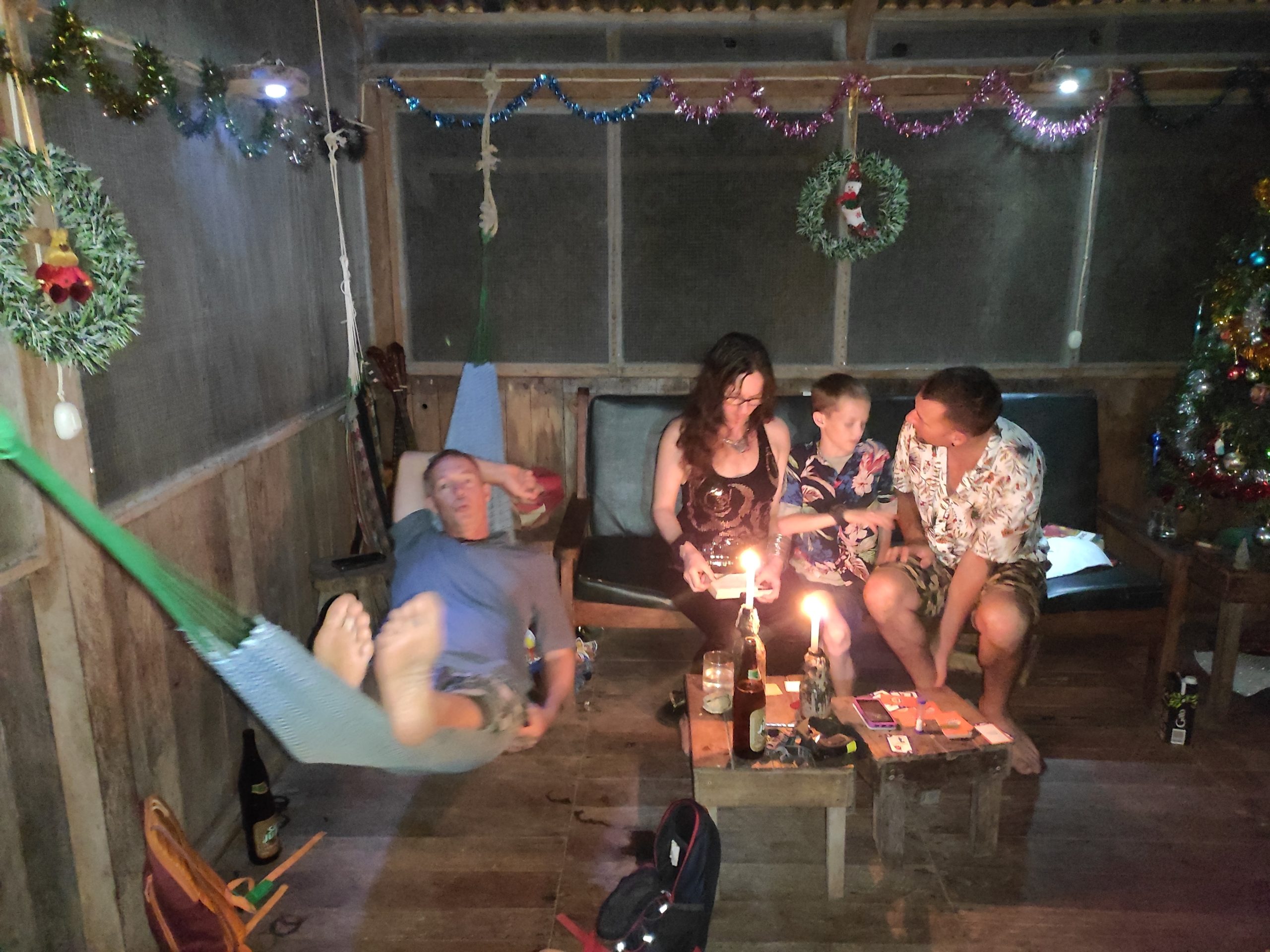
Sinterklaas (a typical Dutch tradition) was another chance for the entire crew (well our small group of the year) to get together, exchange gifts and have a great night together. To the uninitiated this may seem like another Christmas, but was so much more. Everybody selects names randomly and then there is a lot of thought and creativity put into making a gift and poem specifically relating to the person you have selected. Needless to say,the laughs were abundant and a magnificent night was had by all.

New land

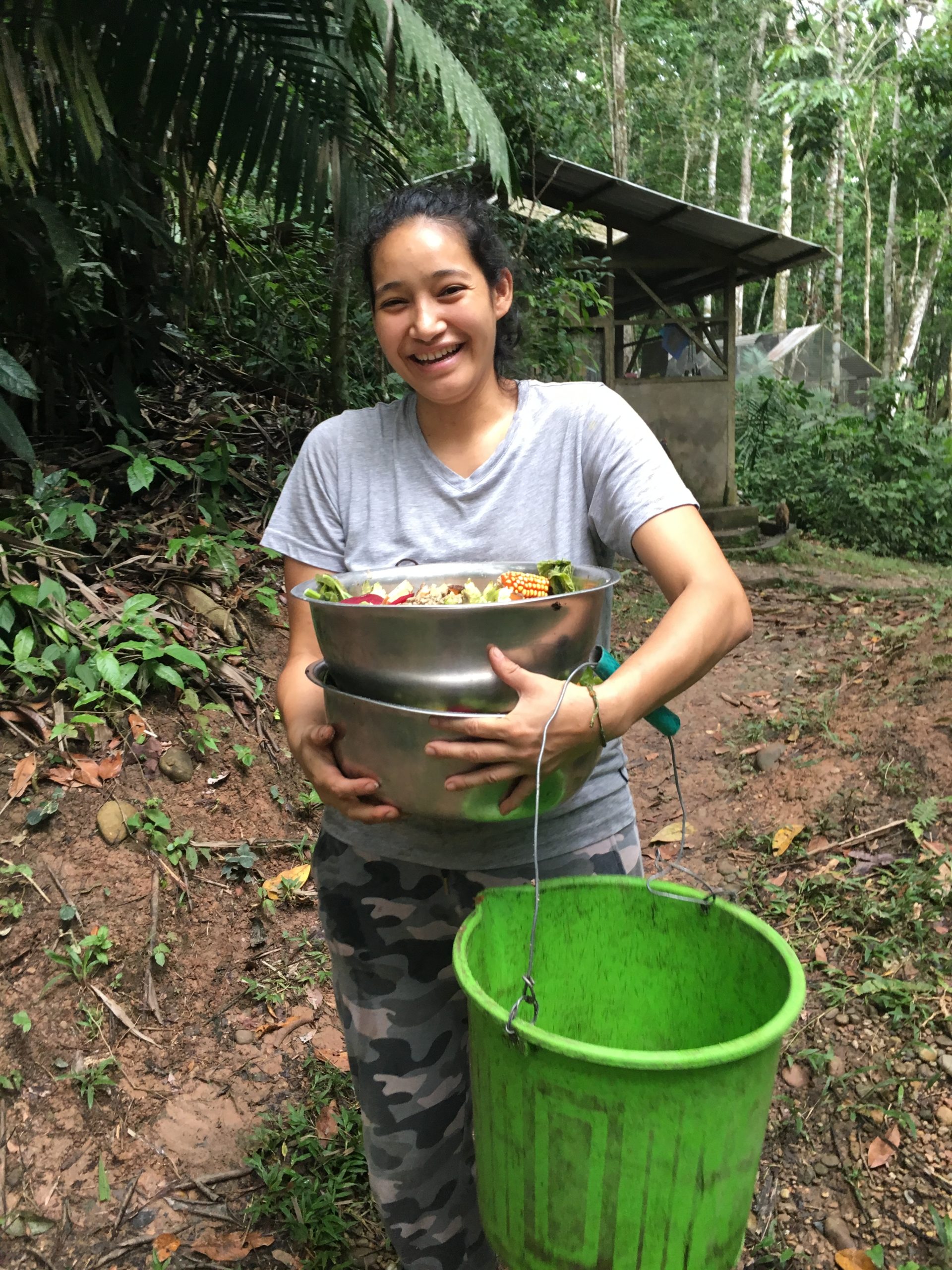
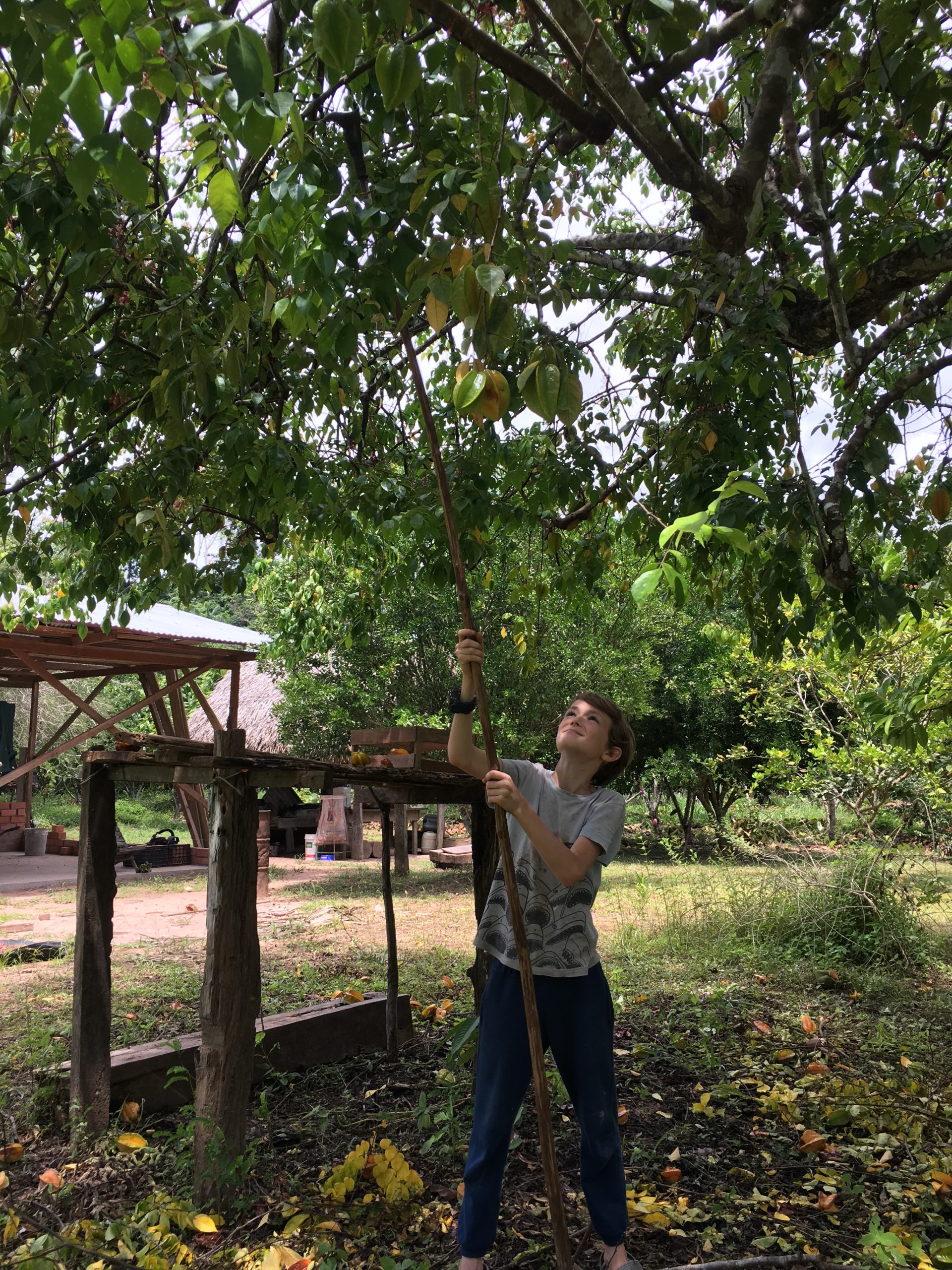
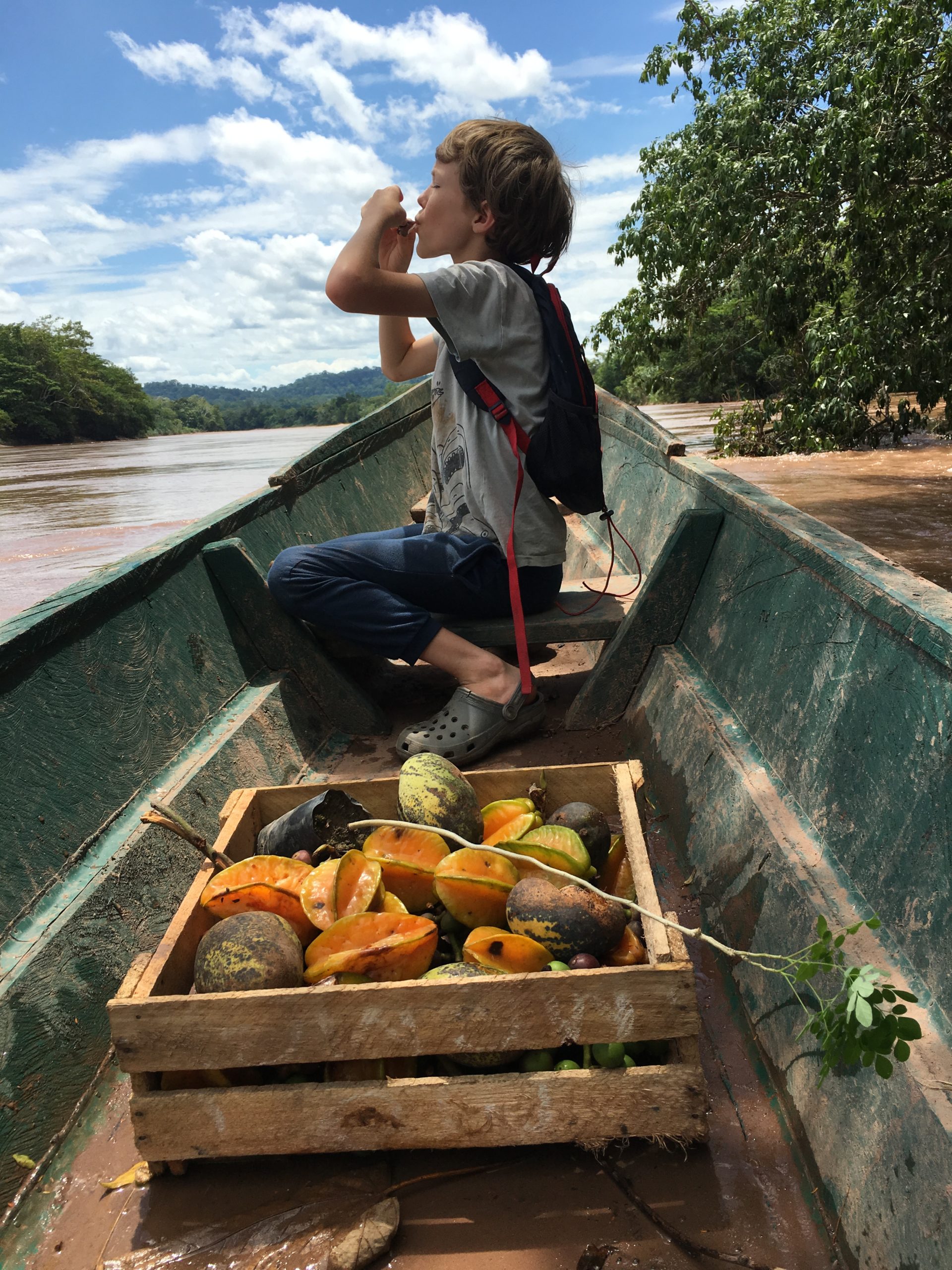
Not only is the new land purchase (see November update) future proofing supply of some of the daily essentials when feeding a multitude of different species. It is also providing added varieties of food that the animals don’t often get to enjoy. The last month has seen the first harvest of corn being fed to the animals and it appears to be a favourite with so many while also providing enrichment. Watching the variation in how each animal “attacks” the task of corn on the cob is a pleasure in itself. Other fruits already being enjoyed are fresh oranges, avocado, caimito, macambo and starfruit.
December also saw the purchase of 200 new trees to be planted on sight adding to the biodiversity within this organic paradise. Not only fruit trees but also hardwood trees that were near on extinct within the local region.

🎅 Christmas

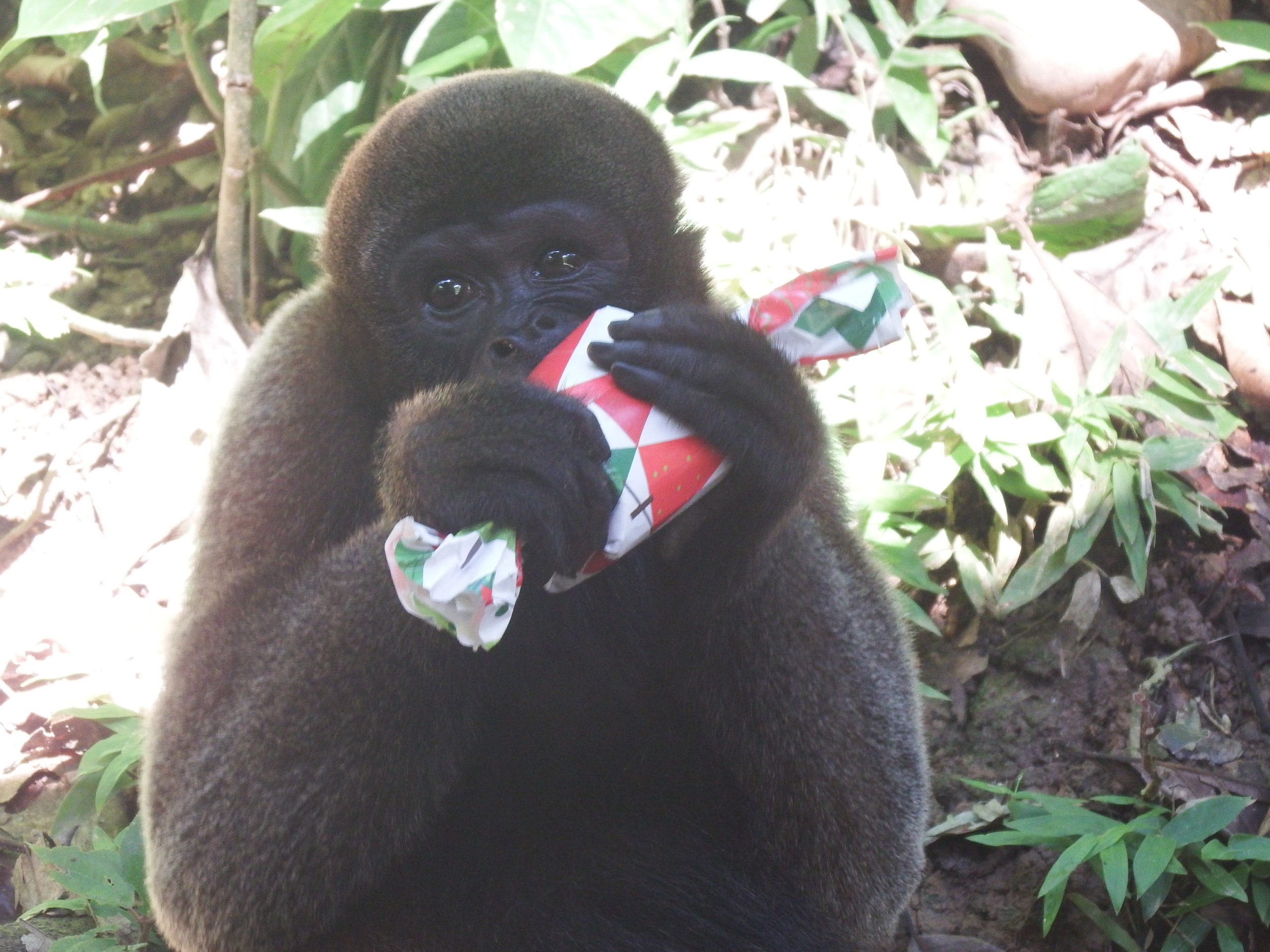
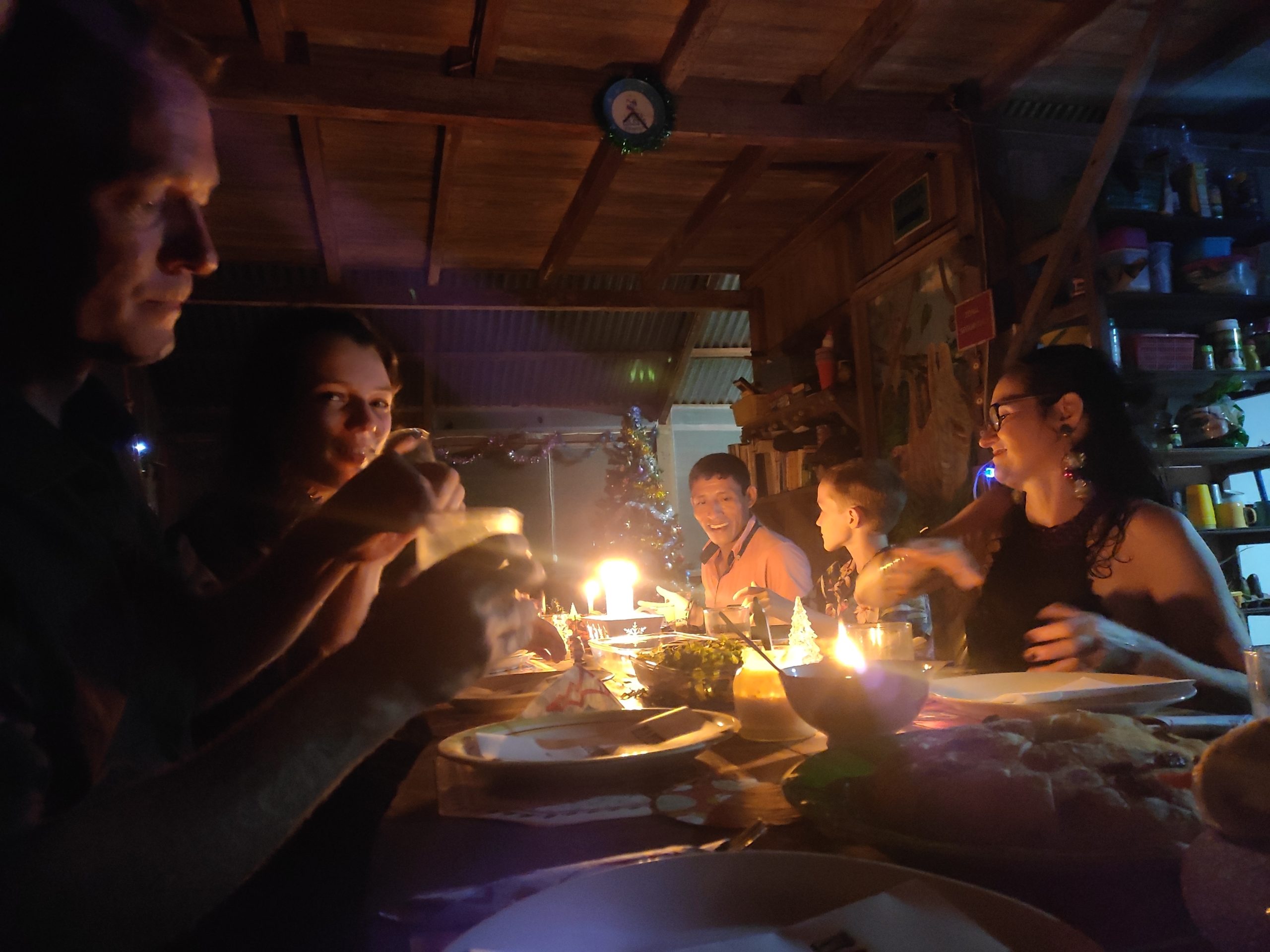
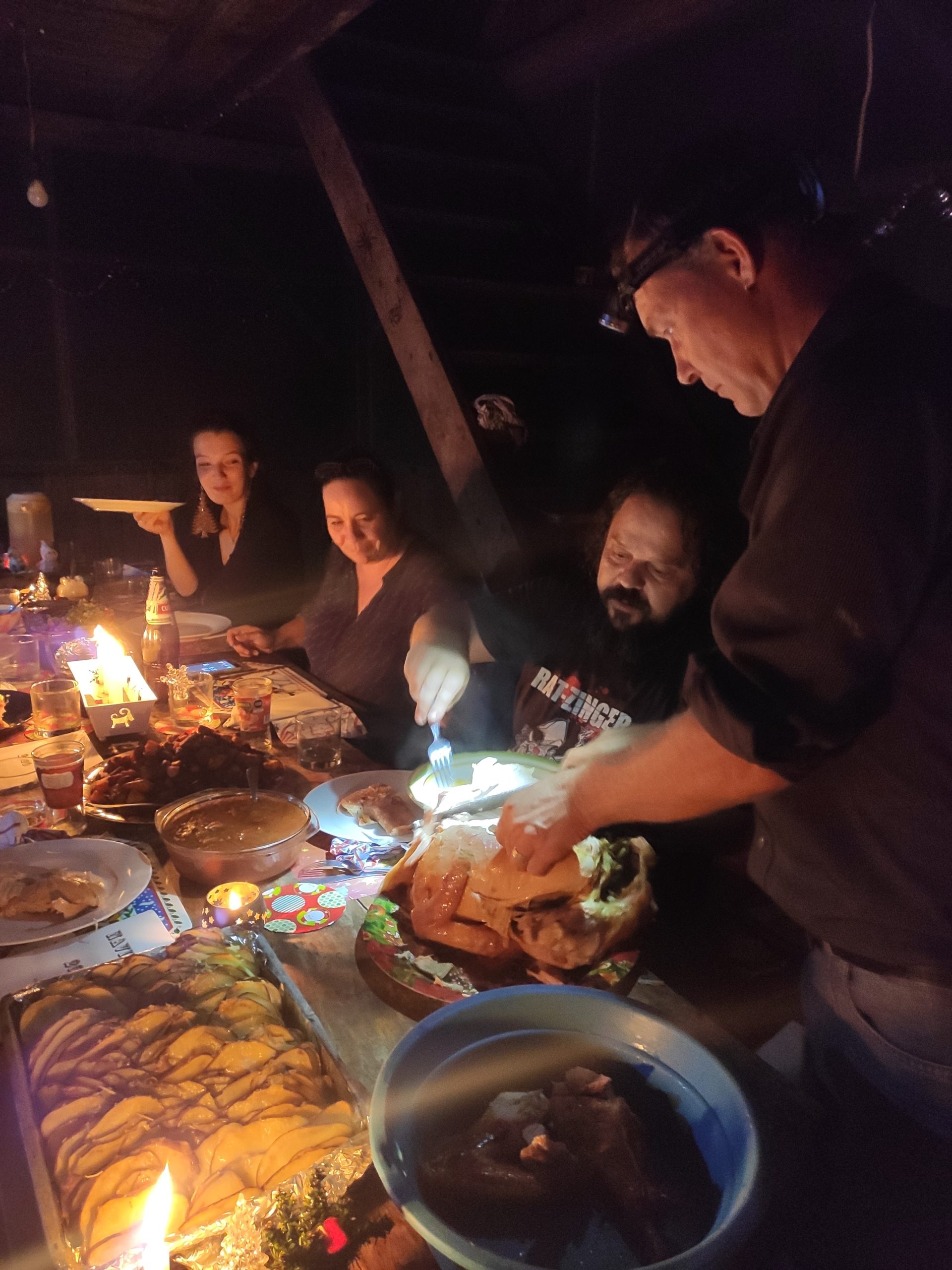
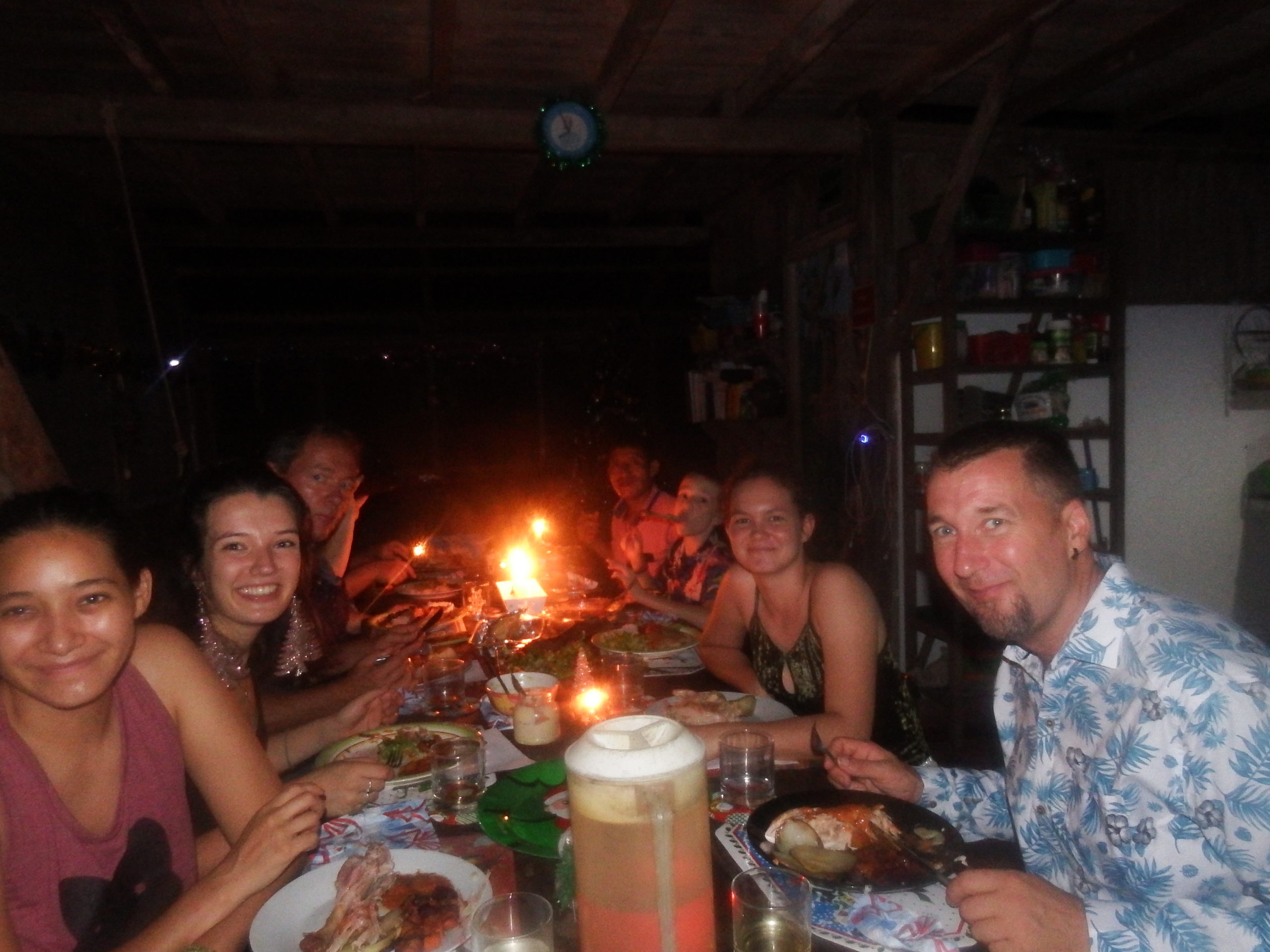
This year has been coming to its end and although it has been tough, we made its Christmas into a great happening. Puck and Kayla went to the effort of wrapping individual gifts for the animals and unquestionably the paper being ripped off is a sure sign of enjoyment. Guests from the village joined the team for dinner at the general kitchen where Craig had prepared us an amazing four-course dinner. The Christmas spirit was plentiful and we all came away happy and excited to see what the next year has to offer.
November 2020 Newsletter

As November comes to a close and we are all chasing down the season, we can all reflect on a year of incredible new experiences. With vital ongoing support from around the world Esperanza Verde continues on its mission to rehome and where possible release animals back into their natural habitats.
Animals
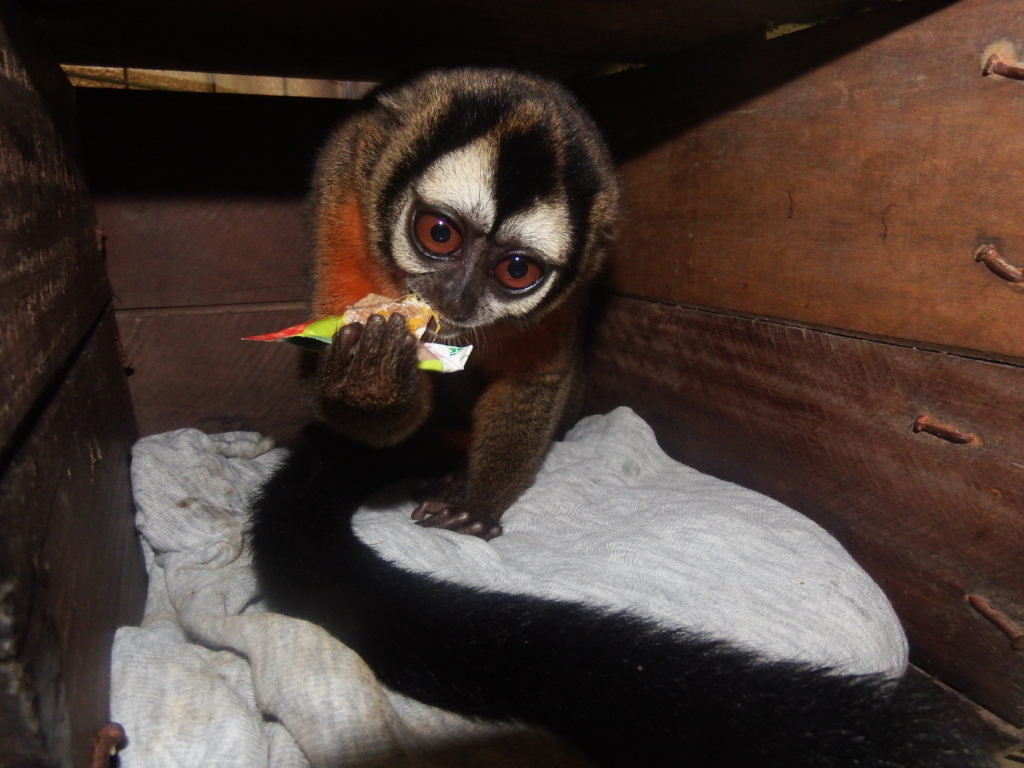
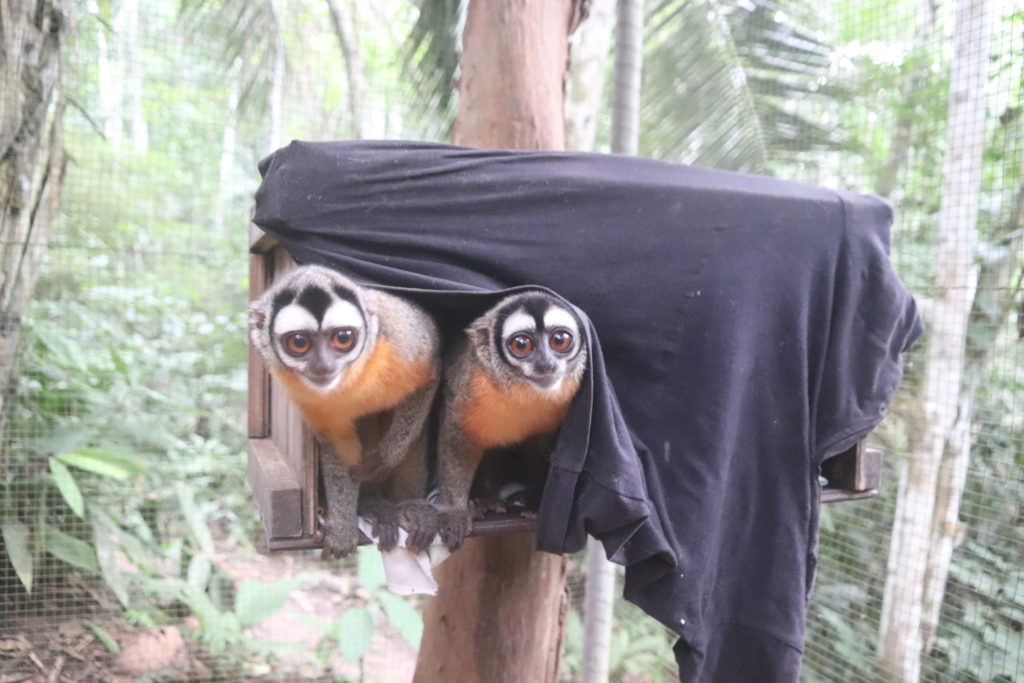
With November upon us, we welcomed a visit from the Peruvian Flora and Forestry ministry. It was a great opportunity to ensure Esperanza Verde was conforming to strict guidelines and procedures. It was also a fantastic opportunity to release some animals that had received the necessary care and were ready to enjoy freedom.

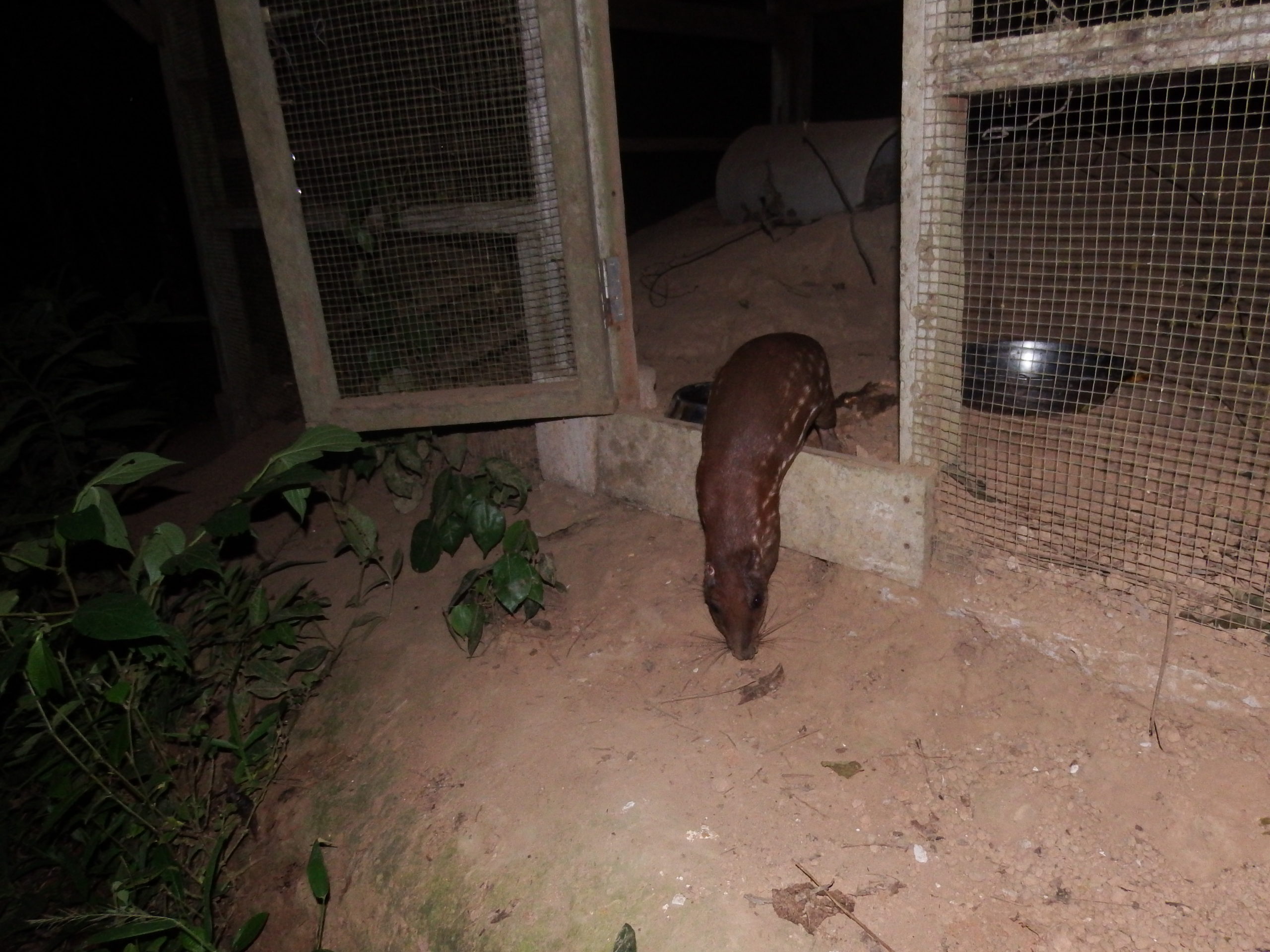
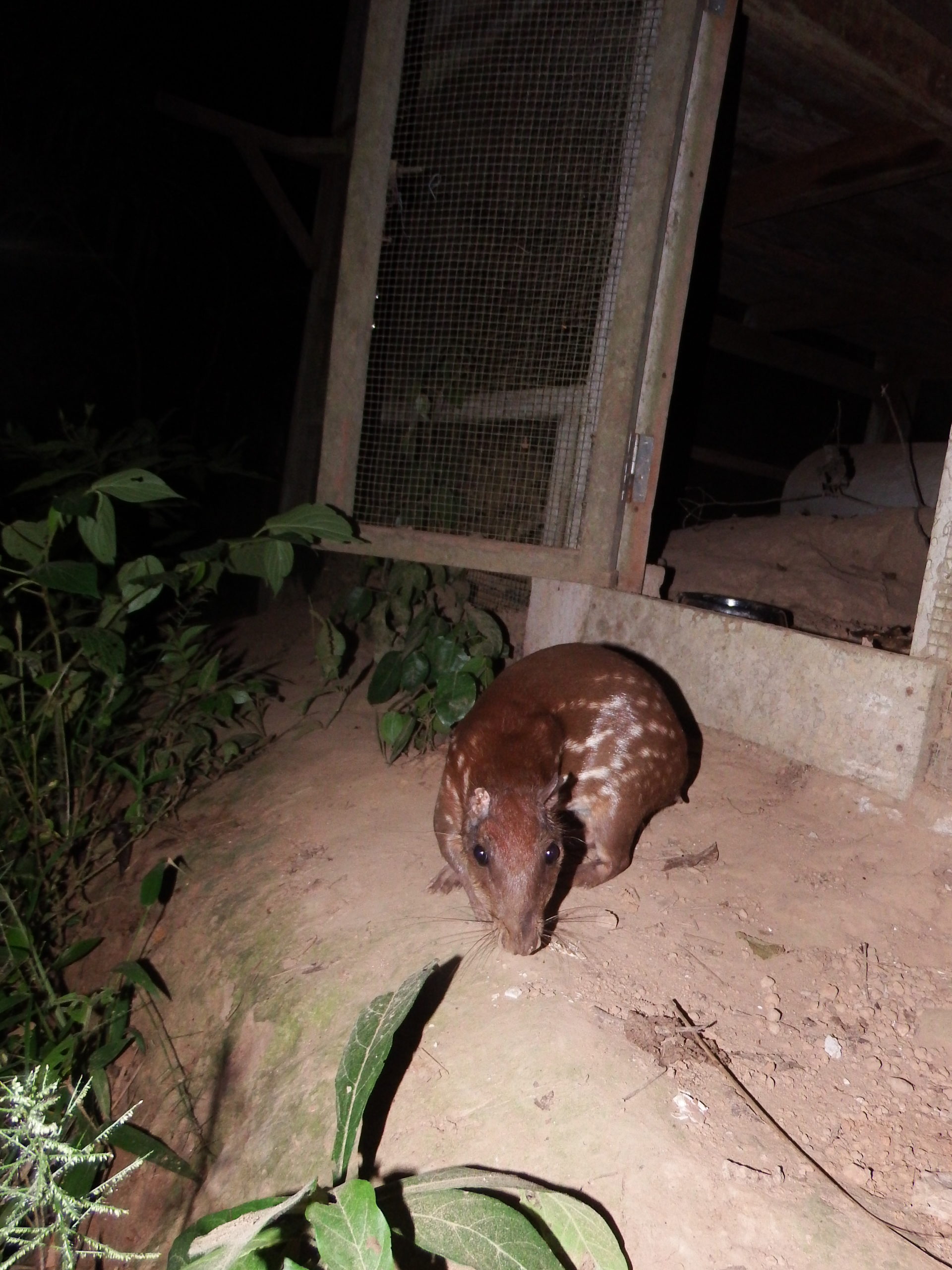
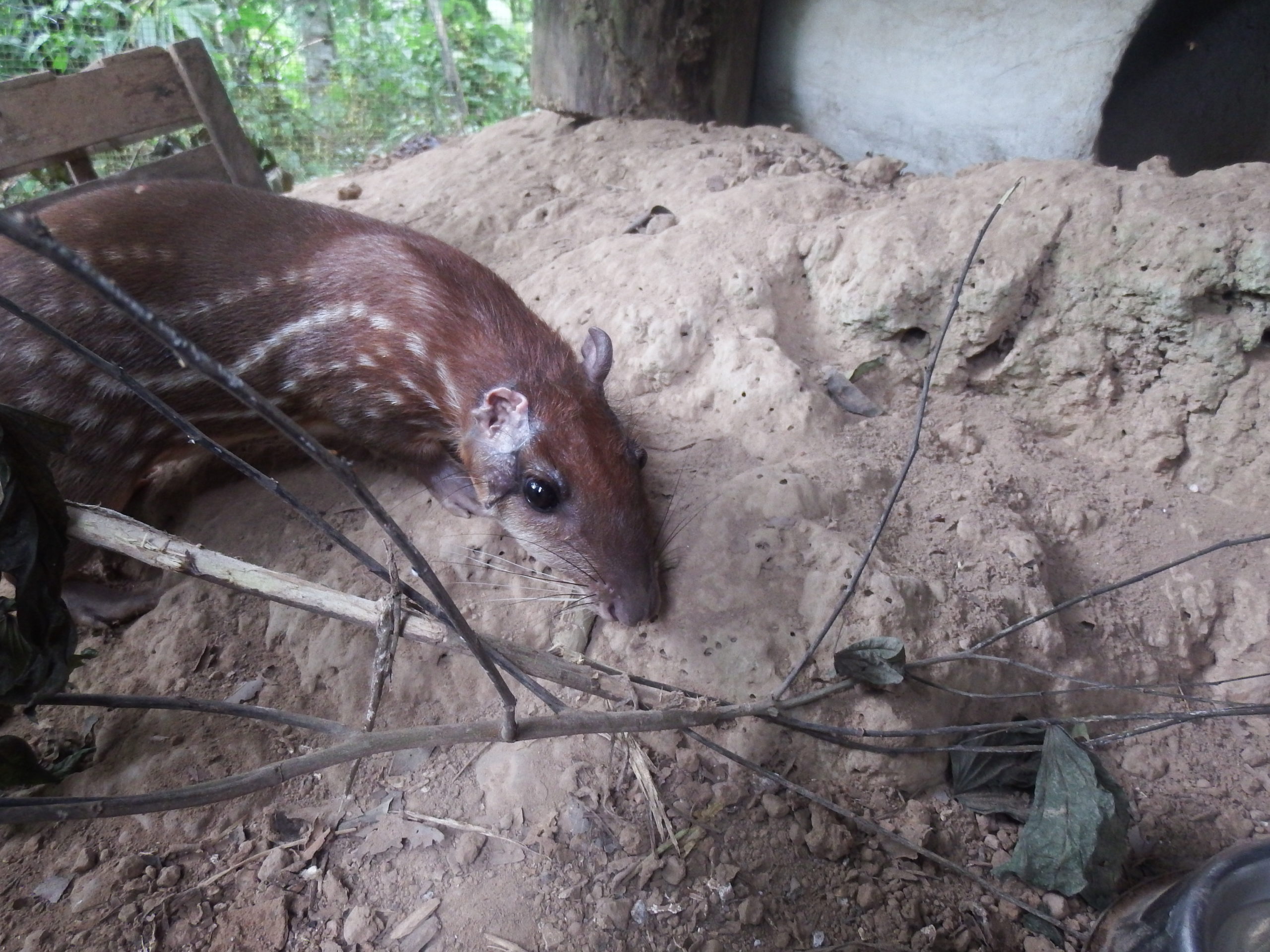
Last month we wrote of Machulin the male paca. After a few weeks in an outdoor enclosure, Machulin was released one evening and was quick to embrace his new found freedom. Feeding continues, however, it is difficult to ascertain if it is Machulin or one of the many other night creatures enjoying his fare each night.

Bajus (yellow footed tortoise) along with the five spectacled caimans were released into the small stream (quebrada) that runs through Esperanza Verde. After months within the confines of purpose-built enclosures, both Bajus and the caimans will appreciate having so much more space and independence.

If every cloud has a silver lining then this month surely proved the point. Last month we sadly lost Kiko (male Kinkajou). Kila (Kiko’s love interest) was seen with a new baby attached a fantastic surprise and a great addition to the wild kinkajou population. This is the second offspring between this pairing and leaves a total of three kinkajous frequenting the feeding table of Tiliku each evening. We haven’t been fortunate enough to catch a photo of the baby but hope to do so in the coming months.

Kassai (tamandua anteater) was still very active within his enclosure but was not gaining weight as expected. He was moved back to the family home for closer monitoring. Unfortunately, his condition deteriorated rapidly, and we lost him. No evidence was found on necropsy to establish cause of death. Kassai had previously damaged his tongue and it is believed this attributed to his demise as tamanduas have extremely long tongues which they depend on to feed successfully.

It’s only been a month, yet in that time Eona, our female crab eating raccoon has gone from strength to strength. Her weight has doubled and Eona now enjoys fruits, vegetables, fresh fish and meat daily as she progresses from her diet of milk. Early evenings you can catch Eona being taken for short walks to familiarise her with her new surroundings.

Esperanza Verde’s peccary population this month had a vital change in their feeding schedule. After a suggestion was put forth to start feeding the peccaries at nighttime. By doing so there is little to motivate monkeys to tempt fate by climbing into the enclosure during the day. Read on for other ways we are ensuring monkey safety while still giving the peccaries the best care possible.

SUST Animal Orphan Hospital

Aleesa (scarlet macaw) moved from the SUSTOAH after her brief month of dietary monitoring. She is now in Elmo front cage with Inuk and Upendi (yellow crowned amazon parrots), where there is less chance of this flightless macaw falling and injuring herself.

New arrivals

It certainly doesn’t happen often, but November was the month that there were no new arrivals, and yet still, every day was full of interesting and often fulfilling challenges.

Construction and other

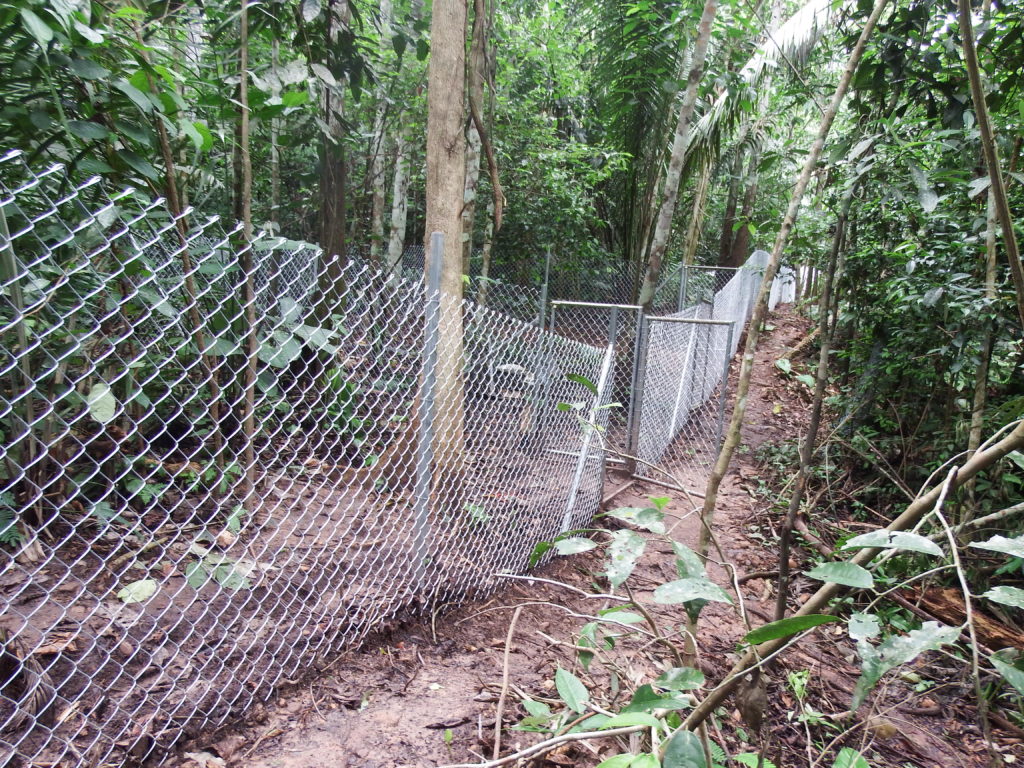
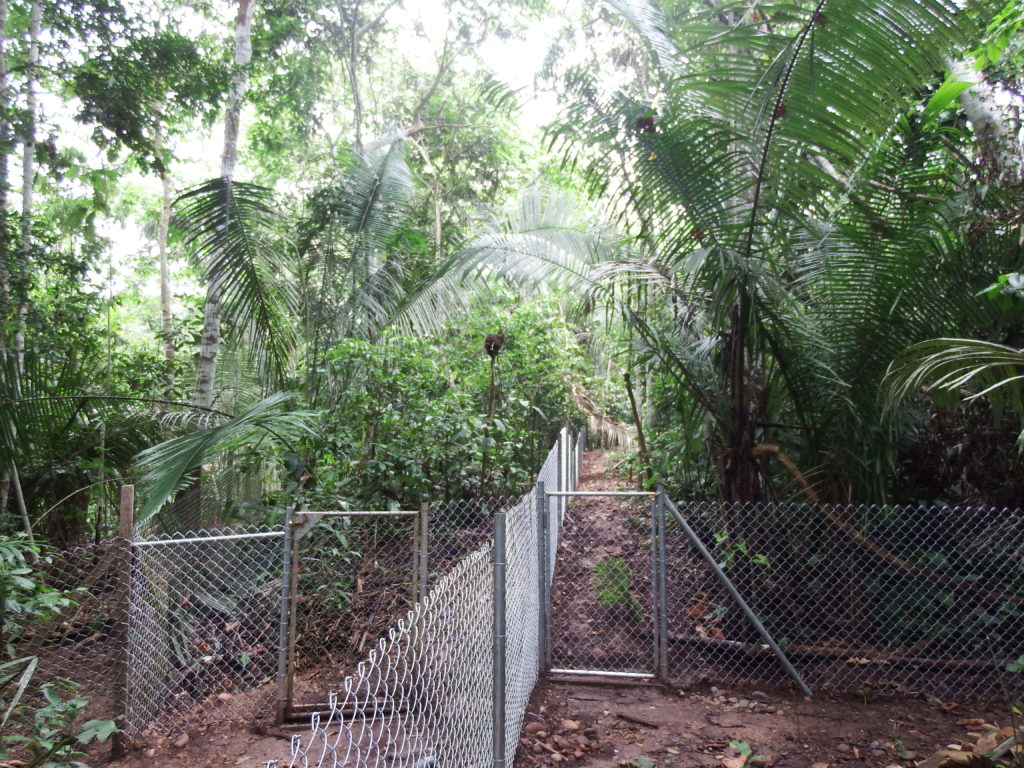
The finish line is insight as the new peccary enclosure nears completion. With the only addition required being a new pond. December will see our latest arrivals Maccus, Conan and Aleric join the existing seven peccaries in their new purpose-built accommodation. Creating and fencing an area so large while still maintaining the integrity of the existing environment was never going to be an easy task. And it is something Douwe, along with Geyler and Hugo (our local workers) have completed admirably. We were fortunate enough to secure two more local workers briefly this month to give this project a further push in the right direction ensuring completion as soon as possible.

We would like to thank The Susy Utzinger Stiftung für Tierschutz for organising a crowdfunding campaign to cover the costs for the building and completion of the new Peccary enclosure. The animal welfare association “Pfötler” from Liechtenstein jumped in and covered the majority of the costs. Without the ongoing support of people like Susy and her team we could not continue to fight the good fight. Thank you SUST for all that you do!

The new bridge spanning the gap between the family house and the rest of Esperanza Verde now has cement footings in place. After these have set sufficiently the bridge construction and assembly will be completed.

Volunteers

With so few volunteers the month came to a close with everyone on sight in good stead. Surely this is the calm before the storm as we all know December will be the month of significant socialising (although still maintaining corona protocols😊). Movie nights with the family were a great chance to all catch up removed from the daily goings on of jungle life.

New land

We recently purchased some new land on the Bello side of the river in order to increase the amount of fruit and vegetables that we can grow ourselves. During the lockdown we learnt that being independent from external food sources for the animals can be vital. This little farm already has some agroforestry growing on it which we already use to feed our animals. Thank you to our good friend Manuel Krauss for his financial help to purchase that land.

Meet the Corona crew ! Episode 13 : Carmen

Meet the Corona crew !
Episode 13 : Carmen

We find ourselves in a unique situation at EV: the whole team has been here for at least 3 months! We would like to introduce you to this ‘Corona Crew’, today meet Carmen!

Carmen is 19 and comes from The Netherlands. She initially planned to stay for 3.5 months, but it looks more like it’s going to be 5 months now. When we asked other volunteers to describe Carmen they all more or less agreed: she is always smiling and happy and she is excited by everything, a quality very appreciated by our volo-family.

What Carmen loves about the jungle is seeing the silhouette of the trees in front of the stars, the sounds, the simplicity but chaos of life and the colours. “It’s basically just beautiful!” The most difficult thing about being in the jungle is that your clothes have to dry for 3 weeks if it’s raining a lot. 

Meet the Corona crew ! Episode 12 : Kim

Meet the Corona crew !
Episode 12 : Kim

We find ourselves in a unique situation at EV with a very stable crew: the whole team has been here for at least 3 months! We would like to introduce you to this ‘Corona Crew’, today learn more about Kim!

This 21-years-old “Dutchie” arrived on the 9th of March and was supposed to stay 2 months, but is very happy to stay longer. For her co-volunteers it’s not difficult to imagine what made her stay longer: It’s definitely the kinkajous that convinced her. Kim, you must know, has a bit of a crazy obsession for kinkajous but she has some more obsessions, for example taking pictures. Kim happily combines these obsessions as well, which is the reason that we hear at least 10 times a day: “Who wants to see a cute picture of Kiko (our male kinkajou)?”

Definitely another of Kim’s obsessions is vegan food. Therefore, we couldn’t do anything else other than asking her for her favorite jungle-meal. Kim’s eyes started shining when she told us: “Guacamole for breakfast, lunch & dinner! But also veggie burgers, pasta white sauce & pizza” 

Meet the Corona crew ! Episode 11 : Manon

Meet the Corona crew !
Episode 11 : Manon

We find ourselves in a unique situation at EV: the whole team has been here for lots of months now! We would like to introduce you to this ‘Corona Crew’, today meet Manon!

Manon (28) is our “Frenchie” with her lovely accent. For how long is she staying? Manon: “That is a good question, between 1 year and 10 years.” Co-volunteer Emma describes Manon as “a very fancy lady in the least fancy place on earth, she definitely keeps the party going out here in the jungle.”

Manon is often spotted on the bench or on the stairs, watching the jungle and the animals she obviously loves a lot.

 What does she love so much about the jungle?

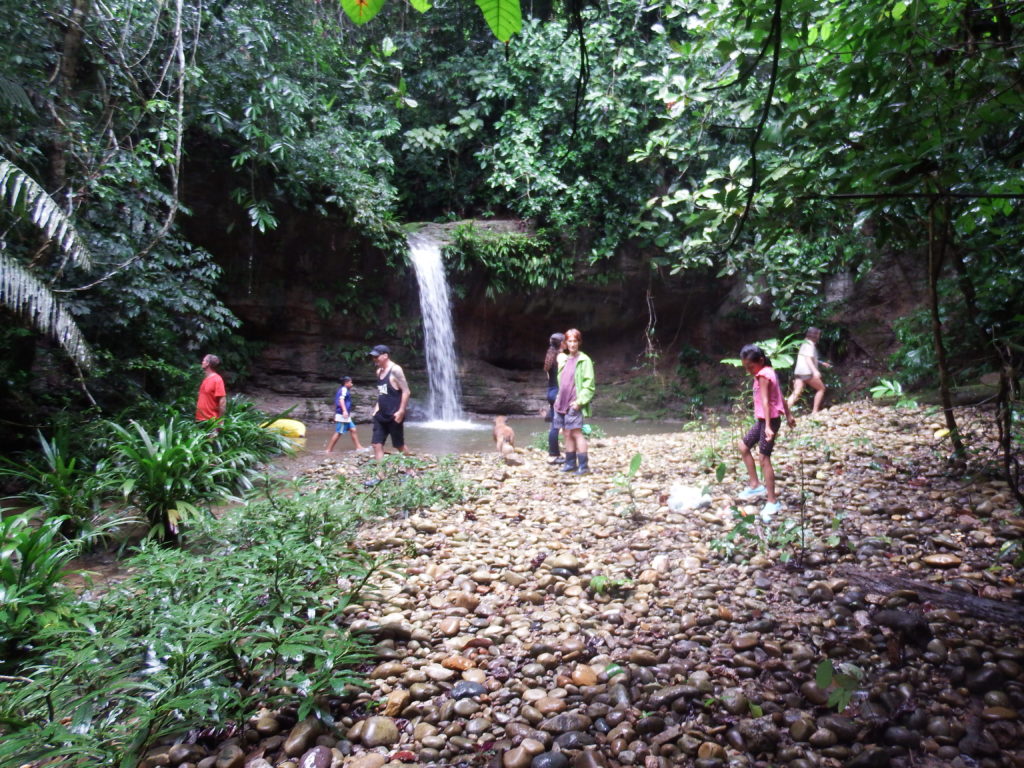
I love the noises; the rainforest is always alive. The jungle looks different every time. When you go to the waterfall for example, the path is never the same. The light is moving, the water is higher, trees have fallen down; you always find something different to see. My best moment is when I wake up around 5:30 and I see the clouds in between the trees. You feel how the rainforest wakes up and is breathing. And of course, I love all the animals you can find in the jungle, everywhere you walk there are some monkeys around!